Friday, August 28, 2026

Recommended Books That I Have Read: 2026

 (An ongoing year-long archive of what I have read and recommend to others)

Beatty, Paul. The Sellout. Picador, 2021.  ["A biting satire about a young man's isolated upbringing and the race trial that sends him to the Supreme Court, Paul Beatty's The Sellout showcases a comic genius at the top of his game. It challenges the sacred tenets of the United States Constitution, urban life, the civil rights movement, the father-son relationship, and the holy grail of racial equality—the black Chinese restaurant. Born in the "agrarian ghetto" of Dickens—on the southern outskirts of Los Angeles—the narrator of The Sellout resigns himself to the fate of lower-middle-class Californians: "I'd die in the same bedroom I'd grown up in, looking up at the cracks in the stucco ceiling that've been there since '68 quake." Raised by a single father, a controversial sociologist, he spent his childhood as the subject in racially charged psychological studies. He is led to believe that his father's pioneering work will result in a memoir that will solve his family's financial woes. But when his father is killed in a police shoot-out, he realizes there never was a memoir. All that's left is the bill for a drive-thru funeral. Fuelled by this deceit and the general disrepair of his hometown, the narrator sets out to right another wrong: Dickens has literally been removed from the map to save California from further embarrassment. Enlisting the help of the town's most famous resident—the last surviving Little Rascal, Hominy Jenkins—he initiates the most outrageous action conceivable: reinstating slavery and segregating the local high school, which lands him in the Supreme Court."]

Crabapple, Molly. Here Where We Live Is Our Country: The Story of the Jewish Bund. Penguin/Random House, 2026. ["In the aftermath of the Holocaust, Sam Rothbort created “memory paintings” with the hope of resurrecting the vanished world of his shtetl childhood. Decades later, his great-granddaughter, the award-winning artist Molly Crabapple, discovered these paintings and one stood out: a girl, her dress the color of sky, hurling a rock through a cottage window. Itka the Bundist, Breaking Windows. Itka is how Crabapple met the Jewish Labor Bund. Once the most influential Jewish political force in eastern Europe, the Bund was secular, socialist, and uncompromisingly anti-Zionist. The Bundists fought for dignity and equality, not in an imagined homeland in Palestine but “here where we live.” In the first popular history of the Bund, Crabapple re-creates their extraordinary world through dramatic portraits of insurgent poets and antireligious rebels, clandestine revolutionaries and lovers on the barricades. The Bundists live deeply within this violent, volatile, and somehow hopeful period, as their stories interweave with the Russian Revolution and the Holocaust. The Bund’s rise and fall raises the vital question: What can we learn from a movement that, for all its toughness, imagination, and moral clarity, was largely destroyed? Here Where We Live Is Our Country reanimates a band of idealists who broadened our global political imagination. As we once again contend with nationalism, repression, and the struggle for belonging, the Bund’s remarkable story and message—that liberation, dignity, and solidarity must begin where we stand—reaches across time as a guide to our own urgent moment." Print Version]

Everett, Percival. The Trees. Text Publishing Company, 2022. ["When hog thief Junior Junior Milam is found brutally murdered, the police of Money, Mississippi, are stumped. When his cousin is found dead in the same gruesome fashion, it’s time for the MBI—the Mississippi Bureau of Investigation—to step in. Special detectives Ed and Jim expect resistance from the local sheriff, the coroner and a string of racist White townsfolk. What they don’t expect is an inexplicable mystery: at each crime scene a second dead body was found—that of the same Black man. A man who looks eerily familiar. As similar murders are reported from Illinois to California, the detectives seek answers from a local root doctor who has been documenting every lynching in the country for years, uncovering a history that refuses to be buried. Provocative, fast-paced and morbidly funny, The Trees is an urgent novel of lasting importance, from an author with a finger on America’s pulse." Print version.]

Gibson, William. Neuromancer. Ace, 2020. [Reread: "Case was the sharpest data thief in the matrix--until he crossed the wrong people and they crippled his nervous system, banishing him from cyberspace. Now a mysterious new employer has recruited him for a last-chance run at an unthinkably powerful artificial intelligence. With a dead man riding shotgun and Molly, a mirror-eyed street samurai, to watch his back, Case is ready for the adventure that upped the ante on an entire genre of fiction. Neuromancer was the first fully realized glimpse of humankind's digital future--a shocking vision that has challenged our assumptions about technology and ourselves, reinvented the way we speak and think, and forever altered the landscape of our imaginations." Audio version.]

Harper, Jordan. A Violent Masterpiece. Mulholland Books, 2026. ["This epic crime novel tells a story of Los Angeles power brokers and those at the edge—and a single shattering incident that threatens to bring it all crashing down. Los Angeles, right now. America with its back up against the wall. This Frankenstein’s monster of crimes and lurid dreams sewn together into something like a city. A city ready to explode: A Hollywood pedophile is arrested, and is ready to tear down the city to get his freedom. A young woman goes missing—and men in black rubber gloves who look like cops clean out her apartment in the middle of the night. And the serial killer known as the LA Ripper is on the loose, leaving tragic/graphic/brutal crime scenes in his wake. Three people trying to keep their heads above the dirty water will find themselves coming together to unite these strands into one enormous, unspeakable crime … Jake Deal is a gonzo live-streaming nightcrawler, beaming the city’s chaos straight to his audience of blood-hungry subscribers, giving them the view from the top of the mushroom cloud—until a job he can’t refuse drags him back into his old life of Hollywood glamour, drugs, sex and sleaze. Armed with cameras and hidden mics, he’ll infiltrate private clubs, gather high-class dirt—and stumble onto a conspiracy woven into the center of LA’s most powerful men, who call themselves “The Kids in the Candy Store.” Doug Gibson is a street lawyer, who fights for his clients against the army of cops, prosecutors and judges—he is the knife they bring to the gunfight. But when he’s hired by a Hollywood pedophile ready to sell out his friends for a chance for freedom, he’ll take on a fight bigger than he could have imagined. And when his client “commits suicide” in prison, Gibson will have to stop being a weapon—and become a warrior. Kara Delgado works for an underground private concierge company—a make-a-wish foundation for the terminally rich. She scores drugs, makes connections, and plans multi-million dollar sex parties.She has learned the secret truth of this world: there are no rules, only prices. Her best friend Phoebe has gone missing, and Kara’s the only person who knows that Phoebe’s place was wiped clean of evidence by men in black rubber gloves. But when she begins to unravel the mystery of what happened to Phoebe, and its connection to the killer known as the LA Ripper, it will drag her into the dark heart of the city. As Jake, Doug and Kara all investigate these crimes, they’ll encounter ketamine-addled sitcom stars, bloody riots, homeless gangsters, a killer cop on death row, secret vaults in Beverly Hills, tech-bro orgies, medical cannibals, true crime junkies, private security wet-work teams, reality shows, street takeovers, car chases, coyotes, a sadistic Tarzan, and a three day, fifty million dollar wedding, before everything is revealed and they must each make their choice about how to fight back in this violent world before the bloody, blazing conclusion." Audio Version]

---. She Rides Shotgun. Ecco, 2018. ["A propulsive, gritty crime thriller about a girl marked for death who must fight and steal to stay alive, learning from the most frightening man she knows—her father. Eleven-year-old Polly McClusky is shy, too old for the teddy bear she carries with her everywhere, when she is unexpectedly reunited with her father, Nate, fresh out of jail and driving a stolen car. He takes her from the front of her school into a world of robbery, violence, and the constant threat of death. And he does it to save her life. Nate made dangerous enemies in prison—a gang called Aryan Steel has put out a bounty on his head, counting on its members on the outside to finish him off. They’ve already murdered his ex-wife, Polly’s mother. And Polly is their next target. Nate and Polly’s lives soon become a desperate life on the run, a series of narrow misses, of evading the bad guys and the police, of sleepless nights in motels. Out on the lam, Polly is forced to grow up early: with barely any time to mourn her mother, she must learn how to take a punch and pull off a drug-house heist. She finds herself transforming from a shy little girl into a true fighter. Nate, in turn, learns what it’s like to love fiercely and unconditionally—a love he’s never quite felt before. But can their powerful bond transcend the dangerous existence he’s carved out for them? Will they ever be able to live an honest life, free of fear? She Rides Shotgun is a gripping and emotionally wrenching suspense novel that upends even our most long-held expectations about heroes, villains, and victims. Nate takes Polly to save her life, but in the end it may very well be Polly who saves him."]

Hawkins, Scott. The Library at Mount Char. Penguin Random House, 2016. ["A missing God. A library with the secrets to the universe. A woman too busy to notice her heart slipping away. Carolyn’s not so different from the other people around her. She likes guacamole and cigarettes and steak. She knows how to use a phone. Clothes are a bit tricky, but everyone says nice things about her outfit with the Christmas sweater over the gold bicycle shorts. After all, she was a normal American herself once. That was a long time ago, of course. Before her parents died. Before she and the others were taken in by the man they called Father. In the years since then, Carolyn hasn’t had a chance to get out much. Instead, she and her adopted siblings have been raised according to Father’s ancient customs. They’ve studied the books in his Library and learned some of the secrets of his power. And sometimes, they’ve wondered if their cruel tutor might secretly be God. Now, Father is missing—perhaps even dead—and the Library that holds his secrets stands unguarded. And with it, control over all of creation. As Carolyn gathers the tools she needs for the battle to come, fierce competitors for this prize align against her, all of them with powers that far exceed her own. But Carolyn has accounted for this. And Carolyn has a plan. The only trouble is that in the war to make a new God, she’s forgotten to protect the things that make her human. Populated by an unforgettable cast of characters and propelled by a plot that will shock you again and again, The Library at Mount Char is at once horrifying and hilarious, mind-blowingly alien and heartbreakingly human, sweepingly visionary and nail-bitingly thrilling—and signals the arrival of a major new voice in fantasy." Audio version.]

Herbert, Frank. Dune. Penguin, 2005. ["Frank Herbert’s classic masterpiece—a triumph of the imagination and one of the bestselling science fiction novels of all time. Set on the desert planet Arrakis, Dune is the story of the boy Paul Atreides, heir to a noble family tasked with ruling an inhospitable world where the only thing of value is the “spice” melange, a drug capable of extending life and enhancing consciousness. Coveted across the known universe, melange is a prize worth killing for.... When House Atreides is betrayed, the destruction of Paul’s family will set the boy on a journey toward a destiny greater than he could ever have imagined. And as he evolves into the mysterious man known as Muad’Dib, he will bring to fruition humankind’s most ancient and unattainable dream. A stunning blend of adventure and mysticism, environmentalism and politics, Dune won the first Nebula Award, shared the Hugo Award, and formed the basis of what is undoubtedly the grandest epic in science fiction." Audio version]

Holt, Jim. When Einstein Walked with Gödel: Excursions to the Edge of Thought. Farrar, Strauss, and Giroux, 2018. ["From Jim Holt, the New York Times bestselling author of Why Does the World Exist?, comes an entertaining and accessible guide to the most profound scientific and mathematical ideas of recent centuries in When Einstein Walked with Gödel: Excursions to the Edge of Thought. Does time exist? What is infinity? Why do mirrors reverse left and right but not up and down? In this scintillating collection, Holt explores the human mind, the cosmos, and the thinkers who’ve tried to encompass the latter with the former. With his trademark clarity and humor, Holt probes the mysteries of quantum mechanics, the quest for the foundations of mathematics, and the nature of logic and truth. Along the way, he offers intimate biographical sketches of celebrated and neglected thinkers, from the physicist Emmy Noether to the computing pioneer Alan Turing and the discoverer of fractals, Benoit Mandelbrot. Holt offers a painless and playful introduction to many of our most beautiful but least understood ideas, from Einsteinian relativity to string theory, and also invites us to consider why the greatest logician of the twentieth century believed the U.S. Constitution contained a terrible contradiction—and whether the universe truly has a future." Print version]

Jones, Stephen Graham. The Buffalo Hunter Hunter. Titan Books, 2025. ["A chilling historical horror set in the American west in 1912 following a Lutheran priest who transcribes the life of a vampire who haunts the fields of the Blackfeet reservation looking for justice. Perfect for fans of Bury Our Bones in the Midnight Soil by V. E. Schwab and Interview With The Vampire by Anne Rice. Etsy Beaucarne is an academic who needs to get published. So when a journal written in 1912 by Arthur Beaucarne, a Lutheran pastor and her grandfather, is discovered within a wall during renovations, she sees her chance. She can uncover the lost secrets of her family, and get tenure. As she researches, she comes to learn of her grandfather, and a Blackfeet called Good Stab, who came to Arthur to share the story of his extraordinary life. The journals detail a slow massacre, a chain of events charting the history of Montana state as it formed. A cycle of violence that leads all the way back to 217 Blackfeet murdered in the snow. A blood-soaked and unflinching saga of the violence of colonial America, a revenge story like no other, and the chilling reinvention of vampire lore from the master of horror." Audio version]

Labatut, Benjamin. The MANIAC. Penguin, 2024. ["From one of contemporary literature’s most exciting new voices, a haunting story centered on the Hungarian polymath John von Neumann, tracing the impact of his singular legacy on the dreams and nightmares of the twentieth century and the nascent age of AI. Benjamín Labatut’s When We Cease to Understand the World electrified a global readership. A Booker Prize and National Book Award finalist, and one of the New York Times’ Ten Best Books of the Year, it explored the life and thought of a clutch of mathematicians and physicists who took science to strange and sometimes dangerous new realms. In The MANIAC, Labatut has created a tour de force on an even grander scale. A prodigy whose gifts terrified the people around him, John von Neumann transformed every field he touched, inventing game theory and the first programable computer, and pioneering AI, digital life, and cellular automata. Through a chorus of family members, friends, colleagues, and rivals, Labatut shows us the evolution of a mind unmatched and of a body of work that has unmoored the world in its wake. The MANIAC places von Neumann at the center of a literary triptych that begins with Paul Ehrenfest, an Austrian physicist and friend of Einstein, who fell into despair when he saw science and technology become tyrannical forces; it ends a hundred years later, in the showdown between the South Korean Go Master Lee Sedol and the AI program AlphaGo, an encounter embodying the central question of von Neumann's most ambitious unfinished project: the creation of a self-reproducing machine, an intelligence able to evolve beyond human understanding or control. A work of beauty and fabulous momentum, The MANIAC confronts us with the deepest questions we face as a species." Print version]

Langan, John. The Fisherman. Wood Horde, 2016. [Reread: In upstate New York, in the woods around Woodstock, Dutchman's Creek flows out of the Ashokan Reservoir. Steep-banked, fast-moving, it offers the promise of fine fishing, and of something more, a possibility too fantastic to be true. When Abe and Dan, two widowers who have found solace in each other's company and a shared passion for fishing, hear rumors of the Creek, and what might be found there, the remedy to both their losses, they dismiss it as just another fish story. Soon, though, the men find themselves drawn into a tale as deep and old as the Reservoir. It's a tale of dark pacts, of long-buried secrets, and of a mysterious figure known as Der Fisher: the Fisherman. It will bring Abe and Dan face to face with all that they have lost, and with the price they must pay to regain it. Print version.]

Leede, C.J.  Headlights. Pan Macmillan, 2026.  ["An FBI agent with an uncanny ability to sense danger must hunt down a serial killer through the wilderness of Colorado, in this tense and gripping thrill ride by bestselling author CJ Leede. Perfect for fans of The Shining, Longlegs and Twin Peaks. Every instinct tells him to run. Every memory tells him he can’t. Special Agent Daniel Stansfield is ready for a change. Burnt out and defeated by the job, it’s his last day with the FBI. But before he can turn in his badge, he’s summoned back to Denver, the city he ran from four years ago, with a chilling message: it's happening again. Seemingly innocent people are waking up on the side of the highway, with no memory of how they got there, wearing the skin of victims they've allegedly never met. And they each share one haunting detail: a strand of a stranger’s hair is tied around their tongue. Now Daniel is pulled back into the gruesome cycle, and every clue leads him deeper into the shadows of his own past. He will have to confront the ghosts of his traumatic childhood and face what’s been hunting him all along – before he and the people he loves become the next victims." Audio Version]

Lytle, Mark Hamilton. America's Uncivil Wars: The Sixties Era from Elvis to the Fall of Richard Nixon. Oxford University Press, 2006. ["In contrast with most histories of this period, America's Uncivil Wars: The Sixties Era from Elvis to the Fall of Richard Nixon does not treat the 1960s as a single historical moment or as successive waves of activism. Rather, it employs a chronological narrative to identify three distinct phases during which events of the era unfolded. The first began with the cultural ferment of the 1950s and ended with the assassination of John F. Kennedy. During the second phase, from 1964-1968, the "uncivil" wars began in earnest: Americans disagreed about new social and cultural mores, protests against the Vietnam War increased in size and vehemence, and American cities erupted in racial violence. From 1967 through 1968, all of these forces combined to divide Americans more deeply than they had been since the Civil War. In the third phase, Richard Nixon promised to bring Americans together. However, a host of new value and identity movements--environmentalists, consumer advocates, feminists, gay, Latino, and Native American activists--frustrated his design. Only after the Watergate scandals forced this polarizing figure from office did a measure of civility return to the nation's public discourse.America's Uncivil Wars captures the broad sweep of this tumultuous era, analyzing both the cultural and political influences on the movements of the 1960s. Paying particular attention to Latinos, Native Americans, feminism, and gay liberation, it integrates the politics of gender and race into the central political narrative. The book also covers such topics as McCarthyism; the FBI; rock and roll; teen culture in the 1950s; the origins of SDS, SNCC, and YAF; and the environmental and consumer movements. With its engaging narrative style and broad cultural emphasis, America's Uncivil Wars brings a fresh approach to our understanding of not only the 1960s but also U.S. history since 1945." Print version]

Mantel, Hillary. Wolf Hall. Fourth Estate, 2010. ["England, the 1520s. Henry VIII is on the throne, but has no heir. Cardinal Wolsey is his chief advisor, charged with securing the divorce the pope refuses to grant. Into this atmosphere of distrust and need comes Thomas Cromwell, first as Wolsey's clerk, and later his successor. Cromwell is a wholly original man: the son of a brutal blacksmith, a political genius, a briber, a charmer, a bully, a man with a delicate and deadly expertise in manipulating people and events. Ruthless in pursuit of his own interests, he is as ambitious in his wider politics as he is for himself. His reforming agenda is carried out in the grip of a self-interested parliament and a king who fluctuates between romantic passions and murderous rages. From one of our finest living writers, Wolf Hall is that very rare thing: a truly great English novel, one that explores the intersection of individual psychology and wider politics. With a vast array of characters, and richly overflowing with incident, it peels back history to show us Tudor England as a half-made society, moulding itself with great passion and suffering and courage." Print version]

Maughan, Tim. Infinite Detail. Farrar, Strauss, and Giroux, 2019. ["A timely and uncanny portrait of a world in the wake of fake news, diminished privacy, and a total shutdown of the Internet. BEFORE: In Bristol’s center lies the Croft, a digital no-man’s-land cut off from the surveillance, Big Data dependence, and corporate-sponsored, globally hegemonic aspirations that have overrun the rest of the world. Ten years in, it’s become a center of creative counterculture. But it’s fraying at the edges, radicalizing from inside. How will it fare when its chief architect, Rushdi Mannan, takes off to meet his boyfriend in New York City—now the apotheosis of the new techno-utopian global metropolis? AFTER: An act of anonymous cyberterrorism has permanently switched off the Internet. Global trade, travel, and communication have collapsed. The luxuries that characterized modern life are scarce. In the Croft, Mary—who has visions of people presumed dead—is sought out by grieving families seeking connections to lost ones. But does Mary have a gift or is she just hustling to stay alive? Like Grids, who runs the Croft’s black market like personal turf. Or like Tyrone, who hoards music (culled from cassettes, the only medium to survive the crash) and tattered sneakers like treasure. The world of Infinite Detail is a small step shy of our own: utterly dependent on technology, constantly brokering autonomy and privacy for comfort and convenience. With Infinite Detail, Tim Maughan makes the hitherto-unimaginable come true: the End of the Internet, the End of the World as We Know It." Audio Version]

McRobert, Neil. Good Boy. Wild Hunt Books, 2025. ["After a boy vanishes on the outskirts of a small Northern town, a woman spies from her window a mysterious man digging a grave in the exact spot of the disappearance. However, when she confronts him, the man's true purpose is far more chilling than she could have imagined and the history of the town's fatal past unfolds. What has been hiding in this small northern town all these years?" Print version]

Montell, Amanda. Cultish: The Language of Fanaticism. Harper Collins, 2021. ["The New York Times bestselling author of The Age of Magical Overthinking and Wordslut analyzes the social science of cult influence: how “cultish” groups, from Jonestown and Scientologists to SoulCycle and social media gurus, use language as the ultimate form of power. What makes “cults” so intriguing and frightening? What makes them powerful? The reason why so many of us binge Manson documentaries by the dozen and fall down rabbit holes researching suburban moms gone QAnon is because we’re looking for a satisfying explanation for what causes people to join—and more importantly, stay in—these cultish groups. We secretly want to know: could it happen to me? Amanda Montell’s argument is that, on some level, it already has . . . Our culture tends to provide pretty flimsy answers to questions of cult influence, mostly having to do with vague talk of “brainwashing.” But the true answer has nothing to do with freaky mind-control wizardry or Kool-Aid. In Cultish, Montell argues that the key to manufacturing intense ideology, community, and us/them attitudes all comes down to the specific language of fanaticism. In both positive ways and shadowy ones, cultish language is something we hear—and are influenced by—every single day. Through juicy storytelling and cutting original research, Montell exposes the verbal elements that make a wide spectrum of communities “cultish,” revealing how they affect followers of groups as notorious as Heaven’s Gate, but also how they pervade our modern start-ups, Peloton leaderboards, and Instagram feeds. Incisive and darkly funny, this enrapturing take on the linguistics and curious social science of power and belief will make you hear the fanatical language of “cultish” everywhere. This smart, journalistic deep dive into the language of fanaticism reveals:From Jonestown to SoulCycle: An inside look at how the same linguistic techniques empower notorious cults, modern fitness studios, and even Instagram influencers. The Social Science of Influence: Why vague talk of “brainwashing” isn’t the full story, and how specific verbal tactics create intense communities and us-versus-them attitudes. How the same patterns of speech that build cults show up in MLMs, start-ups, and online, shaping the world you interact with every day. A fascinating exploration of the psychology of power and belief that answers the secret question we all have when we fall down the cult research rabbit hole." Audio version]

Moor, Robert. In Trees: An Exploration. Simon & Schuster, 2026. ["From the acclaimed author of the New York Times bestseller On Trails comes a wondrous new journey through the wilds of nature and the gnarls of history, exploring how trees—from the mightiest sequoia to the tiniest bonsai—can teach us to grow wise. One day, on a whim, Robert Moor set out to climb a tree near his home—unwittingly embarking on what would become a decade-long, globe-spanning adventure of intellectual and spiritual transformation. Pursuing the hidden wisdom of trees, he scales to the very top of a giant sequoia while filming a nature documentary with David Attenborough; he treks through swamps in Papua to reach a treehouse-dwelling tribe of hunter-gatherers; and he journeys to a remote research camp in Tanzania, where he spends a memorable night sleeping in a chimpanzee nest, seeking to understand our deep evolutionary history. Eventually, having gained a radical new outlook on both our gnarled past and our ever-branching future, he joins an intrepid clan of climate activists risking everything to halt construction of a new oil pipeline and save an ancient forest. Along the way, Moor learns the art of “tree-thinking,” which, he discovers, has the power to break open some of humanity’s oldest questions: What is the secret to truly growing old? How do we set down deeper roots in an increasingly chaotic world? Most importantly, how should we—as individuals, as communities, as stewards of the earth—live? A witty and relentlessly curious excursion through philosophy, history, and science, what begins as an ode to the miracle of trees blossoms into a joyous, daring, fiercely hopeful endeavor to "arborize humanity." Audio Version]

---. On Trails: An Exploration. Simon & Schuster, 2016. ["From a talent who’s been compared to Annie Dillard, Edward Abbey, David Quammen, and Jared Diamond, On Trails is a wondrous exploration of how trails help us understand the world—from invisible ant trails to hiking paths that span continents, from interstate highways to the Internet. While thru-hiking the Appalachian Trail, Robert Moor began to wonder about the paths that lie beneath our feet: How do they form? Why do some improve over time while others fade? What makes us follow or strike off on our own? Over the course of seven years, Moor traveled the globe, exploring trails of all kinds, from the miniscule to the massive. He learned the tricks of master trail-builders, hunted down long-lost Cherokee trails, and traced the origins of our road networks and the Internet. In each chapter, Moor interweaves his adventures with findings from science, history, philosophy, and nature writing. Throughout, Moor reveals how this single topic—the oft-overlooked trail—sheds new light on a wealth of age-old questions: How does order emerge out of chaos? How did animals first crawl forth from the seas and spread across continents? How has humanity’s relationship with nature and technology shaped world around us? And, ultimately, how does each of us pick a path through life? Moor has the essayist’s gift for making new connections, the adventurer’s love for paths untaken, and the philosopher’s knack for asking big questions. With a breathtaking arc that spans from the dawn of animal life to the digital era, On Trails is a book that makes us see our world, our history, our species, and our ways of life anew." Audio version]

Nayler, Ray Where the Axe is Buried. Farrar, Straus, and Giroux, 2025. ["All systems fail. All societies crumble. All worlds end. In the authoritarian Federation, there is a plot to assassinate and replace the President, a man who has downloaded his mind to a succession of new bodies to maintain his grip on power. Meanwhile, on the fringes of a Western Europe that has renounced human governance in favor of ostensibly more efficient, objective, and peaceful AI Prime Ministers, an experimental artificial mind is malfunctioning, threatening to set off a chain of events that may spell the end of the Western world. As the Federation and the West both start to crumble, Lilia, the brilliant scientist whose invention may be central to bringing down the seemingly immortal President, goes on the run, trying to break out from a near-impenetrable web of Federation surveillance. Her fate is bound up with a worldwide group of others fighting against the global status quo: Palmer, the man Lilia left behind in London, desperate to solve the mystery of her disappearance; Zoya, a veteran activist imprisoned in the taiga, whose book has inspired a revolutionary movement; Nikolai, the President’s personal physician, who has been forced into more and more harrowing decisions as he navigates the Federation’s palace politics; and Nurlan, the hapless parliamentary staffer whose attempt to save his Republic goes terribly awry. And then there is Krotov, head of the Federation’s security services, whose plots, agents, and assassins are everywhere. Following the success of his debut novel, The Mountain in the Sea, Ray Nayler launches readers into a thrilling near-future world of geopolitical espionage. A cybernetic novel of political intrigue, Where the Axe is Buried combines the story of a near-impossible revolutionary operation with a blistering indictment of the many forms of authoritarianism that suffocate human freedom." Audio version]

O'Neil, Tom. Chaos: Charles Manson, The CIA, and the Secret History of the Sixties. Back Bay, 2020. ["A journalist's twenty-year fascination with the Manson murders leads to shocking new revelations about the FBI's involvement in this riveting reassessment of an infamous case in American history.Over two grim nights in Los Angeles, the young followers of Charles Manson murdered seven people, including the actress Sharon Tate, then eight months pregnant. With no mercy and seemingly no motive, the Manson Family followed their leader's every order-their crimes lit a flame of paranoia across the nation, spelling the end of the sixties. Manson became one of history's most infamous criminals, his name forever attached to an era when charlatans mixed with prodigies, free love was as possible as brainwashing, and utopia-or dystopia-was just an acid trip away. Twenty years ago, when journalist Tom O'Neill was reporting a magazine piece about the murders, he worried there was nothing new to say. Then he unearthed shocking evidence of a cover-up behind the "official" story, including police carelessness, legal misconduct, and potential surveillance by intelligence agents. When a tense interview with Vincent Bugliosi-prosecutor of the Manson Family, and author of Helter Skelter-turned a friendly source into a nemesis, O'Neill knew he was onto something. But every discovery brought more questions: Who were Manson's real friends in Hollywood, and how far would they go to hide their ties? Why didn't law enforcement, including Manson's own parole officer, act on their many chances to stop him? And how did Manson-an illiterate ex-con-turn a group of peaceful hippies into remorseless killers? O'Neill's quest for the truth led him from reclusive celebrities to seasoned spies, from San Francisco's summer of love to the shadowy sites of the CIA's mind-control experiments, on a trail rife with shady cover-ups and suspicious coincidences. The product of two decades of reporting, hundreds of new interviews, and dozens of never-before-seen documents from the LAPD, the FBI, and the CIA, CHAOS mounts an argument that could be, according to Los Angeles Deputy District Attorney Steven Kay, strong enough to overturn the verdicts on the Manson murders. This is a book that overturns our understanding of a pivotal time in American history." Print Version]

Price, Neil. The Children of Ash and Elm: A History of Vikings. Penguin Books, 2022. ["The 'Viking Age' is traditionally held to begin in June 793 when Scandinavian raiders attacked the monastery of Lindisfarne in Northumbria, and to end in September 1066, when King Harald Hardrada of Norway died leading the charge against the English line at the Battle of Stamford Bridge. This book, the most wide-ranging and comprehensive assessment of the current state of our knowledge, takes a refreshingly different view. It shows that the Viking expansion began generations before the Lindisfarne raid, and traces Scandinavian history back centuries further to see how these people came to be who they were. The narrative ranges across the whole of the Viking diaspora, from Vinland on the eastern American seaboard to Constantinople and Uzbekistan, with contacts as far away as China. Based on the latest archaeology, it explores the complex origins of the Viking phenomenon and traces the seismic shifts in Scandinavian society that resulted from an economy geared to maritime war. Some of its most striking discoveries include the central role of slavery in Viking life and trade, and the previously unsuspected pirate communities and family migrations that were part of the Viking 'armies' - not least in England. Especially, Neil Price takes us inside the Norse mind and spirit-world, and across their borders of identity and gender, to reveal startlingly different Vikings to the barbarian marauders of stereotype. He cuts through centuries of received wisdom to try to see the Vikings as they saw themselves - descendants of the first human couple, the Children of Ash and Elm. Healso reminds us of the simultaneous familiarity and strangeness of the past, of how much we cannot know, alongside the discoveries that change the landscape of our understanding. This is an eye-opening and surprisingly moving book." Audio version]

Rovelli, Carlo. There are Places in This World Where Rules are Less Important Than Kindness. Penguin, 2020. ["One of the most inspiring thinkers of our age, the bestselling author of Seven Brief Lessons on Physics transforms the way we think about the world with his reflections on science, history and humanity. In this collection of writings, the logbook of an intelligence always on the move, Carlo Rovelli follows his curiosity and invites us on a voyage through science, history, philosophy and politics. Written with his usual clarity and wit, these pieces range widely across time and space: from Newton's alchemy to Einstein's mistakes, from Nabokov's butterflies to Dante's cosmology, from travels in Africa to the consciousness of an octopus, from mind-altering psychedelic substances to the meaning of atheism. Charming, pithy and elegant, this book is the perfect gateway to the universe of one of the most influential scientists of our age." Audio version.]

Sayles, John. Crucible. Melville House, 2026. ["From the Oscar-nominated filmmaker comes a complex and sweeping historical novel about Henry Ford — the Elon Musk of his day — and his attempt to rule not only an automotive empire but the rambunctious city of Detroit. It is an epic tale ranging from the 1920s through the second World War, featuring violent labor disputes, misbegotten jungle expeditions, a tragic race riot, and the gestapo tactics of Ford’s private army . . . Already the gateway for illegal Canadian liquor during Prohibition, the Motor City becomes a crucible for American class conflict during the Great Depression, with an army of laid off Ford workers drifting into the ranks of the burgeoning union movement — Henry Ford's worst nightmare. To keep the hundreds of thousands still employed by him in thrall, the man who was formerly 'America's favorite tycoon' recruits black laborers migrating from the deep South to serve as 'strike insurance', and gives Harry Bennett, pugnacious as he is diminutive, free reign over the legion of barroom brawlers and ex-cons who make up the company’s 'Security Department'. The Model T mogul has also bought a sizable chunk of Brazil's Amazonian rainforest, vowing to grow his own rubber for tires, but stubbornly refusing to include a botanist in his troop of would-be jungle tamers. As a series of biological plagues descend on the Fordlandia plantation, the racial melting pot he has created in Detroit begins to boil over, and not even the Sage of Dearborn can control the forces that have been unleashed. The novel's cast — Ford workers black and white and their families, young radicals, cynical newsmen, gangsters, Brazilian rubber tappers, cameos from boxer Joe Louis and muralist Diego Rivera — create the tapestry of differing points of view that John Sayles has become famous for, the events portrayed fundamental to the country we live in today." Print Version]

Simmons, Dan. Hyperion. Crown, 1989. [Reread: "On the world called Hyperion, beyond the law of the Hegemony of Man, there waits the creature called the Shrike. There are those who worship it. There are those who fear it. And there are those who have vowed to destroy it. In the Valley of the Time Tombs, where huge, brooding structures move backward through time, the Shrike waits for them all. On the eve of Armageddon, with the entire galaxy at war, seven pilgrims set forth on a final voyage to Hyperion seeking the answers to the unsolved riddles of their lives. Each carries a desperate hope--and a terrible secret. And one may hold the fate of humanity in their hands." Print version]

---. The Fall of Hyperion. Spectra, 1995. ["The multiple-award-winning science fiction master continues the epic adventure that began in Hyperion, where the opening of the Time Tombs threatens to alter the very fabric of time and space, in the second novel in the Hyperion Cantos. The shadow of war has fallen on the Web. In the corridors of power on Tau Ceti Center, chaos reigns. Out of reach from the clashing empires, the artificial intelligences of the TechnoCore manipulate everyone and everything. And on Hyperion itself, where battle rages in the skies and on the streets, the mysterious Time Tombs are opening. And the secrets they contain mean that nothing—nothing anywhere in the universe—will ever be the same." Print Version]

Stern, Steve. A Fool's Kabbalah. Melville House, 2025. ["In the ruins of postwar Europe, the world's leading expert on the Kabbalah and Jewish mysticism goes on a hair-raising journey to recover sacred books stolen by the Nazis . . . At the end of the Second World War Gershom Scholem, the magisterial scholar of Jewish mysticism, is commissioned by the Hebrew University in what was then British-ruled Palestine to retrieve a lost world. He is sent to sift through the rubble of Europe in search of precious Jewish books stolen by the Nazis or hidden by the Jews themselves in secret places throughout the ravaged continent. The search takes him into ruined cities and alien wastelands. The terrible irony of salvaging books that had outlasted the people for whom they’d been written leaves Dr. Scholem longing for the kind of magic that had been the merely theoretical subject of his lamplit studies. Steve Stern's A Fool’s Kabbalah, a novel featuring numerous real-life historic figures, reimagines Gershom Scholem’s quest and how it sparked in him the desire to realize the legacy of his dear friend, the brilliant philosopher Walter Benjamin. At the heart of that legacy was the idea that humor is an essential tool of redemption. In a parallel narrative, Menke Klepfisch, self-styled jester and incorrigible scamp, attempts to subvert, through his antic behavior, the cruelties of the Nazi occupation of his native village. As Menke’s efforts collide with the monstrous reality of the Holocaust, we see—in another place and time--evidence that Dr. Scholem, in defiance of his austere reputation, has begun to develop the anarchic characteristics of a clown. A Fool’s Kabbalah intertwines the stories of these 2 quixotic characters, who, though poles apart, complement one another in their tragicomic struggles to oppose the supreme evil of history, using only the weapons of humor and a little magic." Print version.]

Taylor, Dennis E. We are Legion (We are Bob). S & S/Saga Press, 2025. ["Welcome to the Bobiverse. We are Bob. We are legion. And we never intended on this. Bob Johansson had a plan. After selling his software business, a leisurely retirement awaited him. And, if the cryogenic lab freezing his head succeeds, an even longer retirement in the distant future when his corpsicle gets reawakened. Everything was looking up for Bob. That is, until he’s killed crossing the street just moments after signing the papers. A century later, Bob wakes up, not in a utopia but an Earth on the precipice of war. America is run by an extremist government that stripped his rights as a frozen head, uploaded his consciousness into an AI, and selected him to search space for habitable planets as a self-replicating von Neumann probe. It’s not ideal, but if he declines, he’ll be switched off for good. With Earth in turmoil, space may actually be the safest place for Bob. But the government failed to mention that he isn’t alone...at least three other countries are looking to claim the next Earth, and they play dirty. Using his new abilities and the von Neuman technology he does what any engineer would do: He makes more Bobs—and a virtual cat—and sets to save humanity before it’s too late." Print version.]

Turner, Cadwell. No Gods, No Monsters. Blackstone Publishing, 2022. ["One October morning, Laina gets the news that her brother has been shot and killed by Boston cops. But what looks like a case of police brutality soon reveals something much stranger. Monsters are real. And they want everyone to know it. As creatures from myth and legend come out of the shadows, seeking safety through visibility, their emergence sets off a chain of seemingly unrelated events. Members of a local werewolf pack are threatened into silence. A professor follows a missing friend's trail of bread crumbs to a mysterious secret society. And a young boy with unique abilities seeks refuge in a pro-monster organization with secrets of its own. Meanwhile, more people start disappearing, suicides and hate crimes increase, and protests erupt globally, both for and against the monsters. At the center is a mystery no one thinks to ask: Why now? What has frightened the monsters out of the dark? The world will soon find out." Audio Version]

Whitehead, Colson. The Intuitionist. Vintage, 2000. ["It is a time of calamity in a major metropolitan city’s Department of Elevator Inspectors, and Lila Mae Watson, the first black female elevator inspector in the history of the department, is at the center of it. There are two warring factions within the department: the Empiricists, who work by the book and dutifully check for striations on the winch cable and such; and the Intuitionists, who are simply able to enter the elevator cab in question, meditate, and intuit any defects.
Lila Mae is an Intuitionist and, it just so happens, has the highest accuracy rate in the entire department. But when an elevator in a new city building goes into total freefall on Lila Mae’s watch, chaos ensues. It’s an election year in the Elevator Guild, and the good-old-boy Empiricists would love nothing more than to assign the blame to an Intuitionist. But Lila Mae is never wrong. The sudden appearance of excerpts from the lost notebooks of Intuitionism’s founder, James Fulton, has also caused quite a stir. The notebooks describe Fulton’s work on the “black box,” a perfect elevator that could reinvent the city as radically as the first passenger elevator did when patented by Elisha Otis in the nineteenth century. When Lila Mae goes underground to investigate the crash, she becomes involved in the search for the portions of the notebooks that are still missing and uncovers a secret that will change her life forever." Audio Version]

Winchester, Simon. Knowing What We Know: The Transmission of Knowledge From Ancient Wisdom to Modern Magic. Harper Perennial, 2024. ["With the advent of the internet, any topic we want to know about is instantly available with the touch of a smartphone button. With so much knowledge at our fingertips, what is there left for our brains to do? At a time when core skills of learning and memory seem to be stripped of all value—no need for math, no need for map-reading, no need for memorization—are we risking our ability to think? In this modern information age, as we empty our minds, will we one day be incapable of thoughtfulness? Addressing these questions, Simon Winchester explores the long history of knowledge and how humans have attained, stored, and disseminated it. Examining such disciplines as education, journalism, encyclopedia creation, museum curation, photography, and broadcasting, he looks at a whole range of knowledge diffusion—from the cuneiform writings of Babylon to the machine-made genius of artificial intelligence, by way of the printing press, Google, and Wikipedia to the huge Victorian assemblage of the Mundanaeum, the collection of everything ever known, currently stored in a damp basement in northern Belgium. Studded with strange and fascinating details, Knowing What We Know is a deep dive into learning and the human mind. Throughout this fascinating tour, Winchester forces us to ponder the crucial distinction between information vs. wisdom. What good is all this knowledge if it leads to lack of thought? What is information without wisdom? Does Rene Descartes’s Cogito, ergo sum—“I think therefore I am,” the foundation for human knowledge widely accepted since the Enlightenment—still hold? And what will the world be like if no one in it is wise?" Print Version]


Friday, August 21, 2026

ENG 102 2026: Resources Archive #15

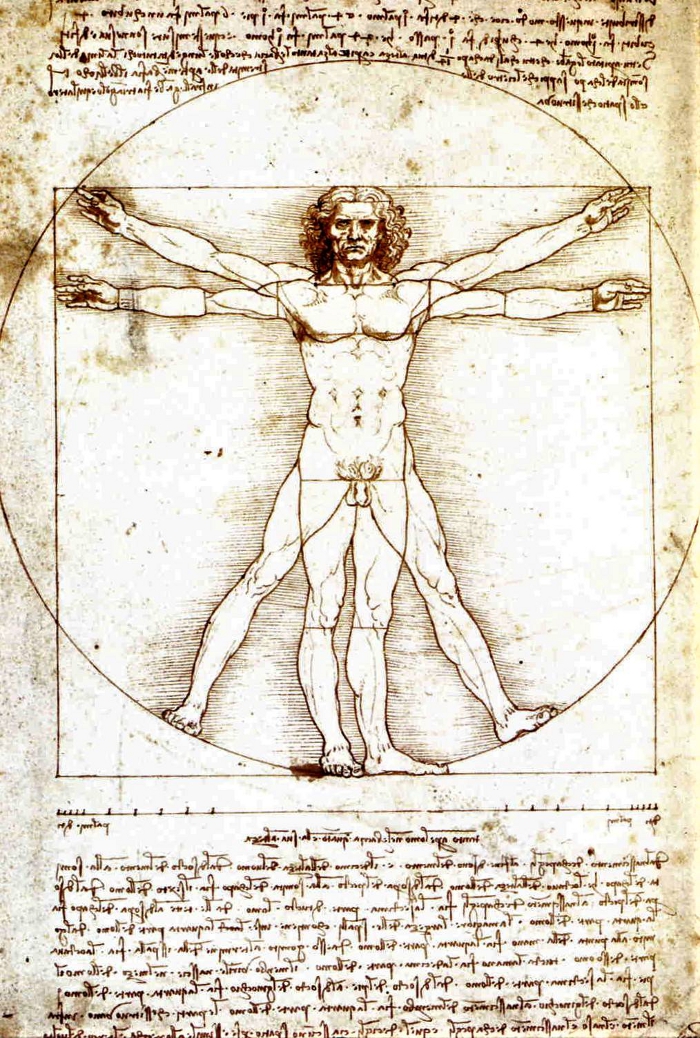
Leonardo da Vinci's (1452 - 1519) drawing of a male figue perfectly inscribed in a circle and a square, know as the Vitruvian Man (1490), illustrates what he believed to be a divine connection between the human form and the universe. Beloved for its beauty and symbolic power, it is one of the most famous images in the world.


--------------------------------------------------------------------


Babadi, Mehrdad. "Panahi's Laboratory: Ethical impasse in It Was Just an Accident." The Point (June 16, 2026) ["In Taxi (2015), Jafar Panahi stages a brief but haunting moment that, in retrospect, feels like the seed of his most recent film, It Was Just an Accident (2025). Near the end of Taxi, Panahi, playing the taxi driver, becomes visibly unsettled after picking up his friend Nasrin Sotoudeh, the prominent Iranian human rights lawyer and activist. When she asks what is wrong, he replies that he has just heard a voice he thought he recognized: the voice of his interrogator. Sotoudeh tells him that many of her clients report the same experience, a lingering effect of being blindfolded during prison interrogations. The conversation soon shifts elsewhere, almost casually. A decade later, Panahi has returned to that fleeting moment of fear and turned it into the central narrative and emotional core of It Was Just an Accident."] 

Barquin, Juan. "Committing to the Bit." Notebook (July 13, 2026) ["Just like Showgirls’ Nomi Malone can be both a stripper and a dancer, art can straddle the line between high and low, between funny and tragic. That is the beauty of drag and of camp: It allows us to unabashedly embrace and play with works that are reviled as much as those that are adored. What Early and his contemporaries are doing isn’t new by any means, but it does offer us a chance to explore other material in the same vein and the myriad influences without which they would not exist. Just as drag can pull from material as varied as memes and tossed-aside quotes, and classic films and musical hits from the last century, works like Maddie’s Secret follow suit in the way they build off of an existing canon. It isn’t just about queering that canon, though certainly queerness has a lot to do with the way these texts are interpreted and remixed. Rather, what these works do is show how a long cultural history can be positively and repeatedly reshaped into fresh stories whose comedy is inextricable from their sincerity. "]

Beaupre, Mitchell. "Moments of Grace: Mike Mills reflects on his feelings-forward approach to filmmaking." Letterboxd (July 21, 2026) ["“You can’t grab onto people,” Mike Mills told me the first time we spoke, before the release of C’mon C’mon in 2021. “Maybe you can get a slice, a sliver, a piece. For a film, that piece is huge. That piece is really dense, but it’s just a piece, and there are all these other contradictory things that you’re not going to be able to get.” Across his three most recent features—Beginners, 20th Century Women and C’mon C’mon—Mills has continued to chase those pieces, mining the deep reservoir of his personal relationships to bring to the screen myriad intricacies present in the dynamics between parents and children."]

Benjamin, Ruha. "On Imagination: A Manifesto." Poured Over (January 24, 2024) ["Imagination: A Manifesto by Ruha Benjamin reminds us that our imaginations already know what a better world looks like. From education to challenging our systems of oppression and more, this insightful work shows a new place for us all to start from. Benjamin joins us to talk about the split between imagination and technology, changing our narratives to tell new stories, the importance of community and more with Miwa Messer, host of Poured Over."]

Coppins, McKay. "A Year in the World of Online Sports Betting." Radio West (July 7, 2026) ["The journalist McKay Coppins wasn’t a gambling man. But when his employer The Atlantic staked him $10,000 to bet on the 2025 NFL season, he couldn’t say no. Step one was getting permission from his bishop. Coppins is a member of the Church of Jesus Christ of Latter-day Saints, which prohibits gambling. But since it wasn’t his money and it was for work, he got the go-ahead. And so began what Coppins calls his year as a degenerate gambler — because it wasn’t long before he started feeling, well, kind of addicted. He’s joining us to talk about sports betting, how it changed him, and how it came to be that last year alone Americans bet $160 billion on touchdowns scored, yards gained, buckets made and pretty much any other outcome you could imagine in sports." Guest: McKay Coppins | Staff writer at The Atlantic and co-host of the podcast Deseret Voices. His story is called Sucker: My Year as a Degenerate Gambler.]

Cunningham, Vinson, Naomi Fry, and Alexandra Schwartz. "The Golden Age of the American Idiot." Critics at Large (July 23, 2026) ["The new game show “Nation’s Dumbest,” flips the classic “Jeopardy!” script on its head. The format: twelve famous-ish contestants are peppered with basic logic and trivia questions. The twist is that those who perform well are sent home, with the last one standing receiving the title of “Nation’s Dumbest.” On this episode of Critics at Large, Vinson Cunningham, Naomi Fry, and Alexandra Schwartz consider how the figure of the idiot has evolved over time, from Shakespearean fools—whose position of apparent ignorance allows them to speak difficult truths—to more recent “happy fools” like Austin Powers and the goofy, stunt-obsessed heroes of the “Jackass” franchise. Once a laughingstock, the idiot has reached new heights of influence in the era of A.I. summaries and the infinite scroll. Resisting stupidity can feel like an uphill battle. “Whatever it is to be smart, I’m doing this Sisyphean thing of continuing to push it up the hill, and the rock feels heavy,” Cunningham says. “The question is: is society a wind at your back, or going in the opposite direction?”"]

---. "How Sinners Revives the Vampire." Critics at Large (May 1, 2025) ["The vampire has long been a way to explore the shadow side of society, and “Sinners,” Ryan Coogler’s new blockbuster set in the Jim Crow-era South, is no exception. On this episode of Critics at Large, Vinson Cunningham, Naomi Fry, and Alexandra Schwartz discuss what “Sinners,” which fuses historical realism with monster-movie-style horror, illuminates about America in 2025. They trace the archetype from such nineteenth-century texts as “The Vampyre” and “Dracula” to the “Twilight” moment of the aughts, when Edward Cullen, an ethical bloodsucker committed to abstinence, turned the vampire from a predatory outsider into a Y.A. heartthrob. What do he and his ilk have to say today? “The vampire is the one who can unsettle our notions, and maybe give us new notions,” Cunningham says. “The vampire comes in and asks, ‘But have you considered this?’ ”"]

Embree, Desirae. "Porno, Disco, and Summer of Sam: Spike Lee on Sexuality." Senses of Ciinema (July 2026) ["At the time of its release Summer of Sam (1999) was seen as a notable departure for Spike Lee, whose body of work up to that point had been predominately focused on the Black community and American race relations, but it was actually a return to the events that had formed him as an artist. In the summer of 1977, New York City was caught in a paroxysm fueled by rapid social change and the city’s fiscal crisis but ignited by the freak coincidence of a record-breaking heatwave, a massive blackout that plunged the city into anarchy, and a serial killer whose reign of terror extended from the city’s nighttime streets to the front page of the Daily News. Unable to find a summer job while home from his second year at Morehouse College, Lee took an 8 mm film camera and hit the streets, documenting a city in crisis. He returned to Morehouse in the fall determined to become a filmmaker, editing the footage from that summer into his first film, a short titled Last Hustle in Brooklyn (1979). While Last Hustle in Brooklyn is presumed lost, Lee’s twelfth feature film shows us the summer that produced one of America’s greatest filmmakers as he remembered it 22 years later. While there are many portraits one could paint of 1970s New York, in Summer of Sam, Lee depicts a sex-soaked city caught between the free love ethos of the previous decade and the sex panic that would define the next. The 1972 red-carpet premieres of Deep Throat (Gerard Damiano) and Behind the Green Door (Artie and Jim Mitchell) had heralded the beginning of a “porno chic” era in which going to see an X-rated flick was a sign of one’s sexual sophistication. As the public’s appetite for adult entertainment grew, New York’s Times Square became ground zero for what the early antipornography group, Citizens for Decent Literature (CDL), had described in 1963 as a “floodtide of filth…threatening to pervert an entire generation of American youth.”1 The question of perversion aside, the CDL’s prediction of a rapid swell in the adult industry was on the money. In 1965, there were nine businesses within the city designated for “adult use,” but by 1977, there were 245.2 Adult theatres and bookstores, video arcades, strip clubs, peep shows, live sex shows, massage parlours, and street-based sex work proliferated, turning Times Square into a commercial sex district that much of the city – including its burgeoning feminist antipornography movement – saw as less an indicator of sexual liberalism than of urban decay."]

Ford, Phil and J.F. Martel. "Artworks are People Too." Weird Studies #216 (July 22, 2026) ["'Now and then, a mysterious life and potency will flicker out of an artwork and confront you.' So began "Artworks Are People Too," a talk Phil presented at the Diverse Intelligences Summer Institute earlier this summer. In this episode, JF and Phil discuss the implications of this idea that some artworks break the mould of the inanimate and act as persons in the world. Are artworks mere creations, or creatures too?"]

 German, Emmaia. "The Anti-Defamation League & The Racial State." This is Hell (July 7, 20260 ["Emmaia Gelman joins This Is Hell! to talk about her new book “The Anti-Defamation League And The Racial State”, published by University of California Press. Emmaia Gelman is the founding Director of the Institute for the Critical Study of Zionism. She has taught social and cultural analysis at NYU and social sciences at Sarah Lawrence College. She is co-editor of, "The Anti-Defamation League: A Critical Reader”. Emmaia also co-hosts the podcast "Unpacking Zionism." Emmaia is also co-chair of the American Studies Association Caucus on Academic and Community Activism, and a longtime activist in New York City. Her writing appears in Jewish Currents, Boston Review, The Forward, and elsewhere."]

Hearing, David. "We're All Mad Here." Notes From the End of Cinema (August 10, 2025) ["The children in Weapons are unsettling for their agency – they’re not running away from but towards something. This brings another quote from Minima Moralia to mind, where Adorno talks about the effect of children growing up in a culture that has rescinded the social and economic promises it made to their parents: “Today we are faced with a generation purporting to be young yet in all its reactions insufferably more grown-up than its parents ever were.” Even someone as pessimistic as Adorno didn’t foresee the horror of regular school shootings, and the way in which a lottery-like acceptance of the death of a handful of children every year is considered by the government as an acceptable price to pay for the ownership of assault weapons. It is often remarked that this generation of children carry an existential weight not felt by any since those who served in the World Wars, with the exception that rather than a worldwide monoconflict, what exists instead is a series of overlapping crises that foreclose on the very concept of the future itself. This generation of children do not have a specific conflict to renounce as much as existing in a world amid the convergence of many. In this sense, the running children at the start of Weapons also hint at something paradoxical: that these children are both inexperienced and also existentially careworn in a way beyond those who parent them – they shouldn’t be in the street, but they’re already entangled in danger before they leave the house."]

Herbert, Mark. "This Is England: Shane Meadows's 2-Toned Look at Skins and Ska (with Jack O'Connell)." MUBI Podcast (July 16, 2026) ["Rico gets a primer on the skinhead history—and ska-fueled soundtrack—behind This Is England: The 2007 indie hit about misunderstood kids in a misunderstood subculture. Guests include stars Jack O'Connell (Sinners, 2025) and Andrew Shim (A Room for Romeo Brass, 1999), producer Mark Herbert, and Neville Staple, frontman for '80s ska legends The Specials."]

Hudson, David. "Steven Spielberg and Disclosure Day." The Current (June 10, 2026) ["For a film that suggests incontestable proof that we are not alone in the universe could move all of humanity to set aside our differences and come together as one, Steven Spielberg’s Disclosure Day has sparked a remarkably wide range of first reviews. However critical consensus takes shape in the years to come, Time’s Stephanie Zacharek finds that Spielberg’s thirty-fifth feature is “the greatest film he could have possibly made in this moment, at a time when humans worldwide are feeling bewildered and blindsided by a new order in which compassion, creativity, and respect for the natural world have become traits to be crushed, not nurtured. Disclosure Day is majestic, unnerving, and more than little wacky, though its pure unhinged quality is probably its secret sauce.”]

Iñárritu, Alejandro G. and Rodrigo Prieto.  "Alejandro G. Iñárritu & Rodrigo Prieto look back on AMORES PERROS." MUBI Podcast (July 9, 2026) ["Director Alejandro G. Iñárritu (THE REVENANT) and cinematographer Rodrigo Prieto (THE WORLD OF WALL STREET) have a blast telling host Rico Gagliano about the making of their high-octane 2001 breakthrough AMORES PERROS—the story of a car crash, its victims, and their dogs. Topics include: the pair's early days as ad men, discovering star Gael García Bernal, the movie's literally toxic visual process...and where they got the cojones to pull it all off."]

Jagt, Tyler. "My Students Can't Read." The Chronicle of Higher Education (June 2, 2026) ["I came into teaching as a skeptic of the anti-smartphone argument: I had a phone in my pocket throughout high school and college in the 2010s, and I read long books anyway. I now think I was wrong, because the neuroscience has caught up. In a 2017 paper, Adrian F. Ward and colleagues at the University of Texas at Austin’s McCombs School of Business showed that the mere presence of a participant’s smartphone — whether that be face down, powered off, untouched, or across the desk out of vision — measurably reduces available working memory and fluid intelligence on cognitive tests, with the largest effects on the most phone-dependent users. A 2022 study by Motoyasu Honma and colleagues at Japan’s Showa University used near-infrared spectroscopy to compare reading on a smartphone with reading the same passage on paper, and found that smartphone reading produced overactivity in the prefrontal cortex, suppressed sigh generation, and led to general lower comprehension scores; the authors argued that the sigh inhibition and prefrontal overload were causally linked to the comprehension decline. So when a student tells me they “kept losing track” of a 20-page article, I have to acknowledge that they may be describing a measurable neurological condition. The neural pathways that support sustained attention are built by use, and they atrophy without it. Your body is a use-it-or-lose-it system, and the brain is no exception. Another reason for the decline in student reading capability is increasing reliance on generative AI. In June 2025, Nataliya Kosmyna and colleagues at the MIT Media Lab released a preprint titled “Your Brain on ChatGPT.” They divided 54 participants into three groups writing SAT-style essays — one using ChatGPT, the second group using a search engine, the last group using nothing — and monitored brain activity with a 32-channel EEG. The ChatGPT group showed the lowest neural connectivity of the three, with up to 55 percent reduced connectivity compared with the brain-only group, and “consistently underperformed at neural, linguistic, and behavioral levels.” Eighty-three percent of LLM users could not quote a single line from essays they had written minutes earlier. When the LLM group was forced to write without AI in a follow-up session, their brain activity did not bounce back to baseline; the researchers coined the term “cognitive debt” for the lingering deficit."]

Klemperer, Victor. Language of the Third Reich. Continuum, 2010. ["Victor Klemperer (1881-1960) was Professor of French Literature at Dresden University. As a Jew, he was removed from his university post in 1935, only surviving thanks to his marriage to an Aryan. First published in 1957, The Language of the Third Reich arose from Klemperer's conviction that the language of the Third Reich helped to create its culture. As Klemperer writes: 'It isn't only Nazi actions that have to vanish, but also the Nazi cast of mind, the typical Nazi way of thinking, and its breeding ground: the language of Nazism.' This brilliant book is by turns entertaining and profound, saddening and horrifying. It is deservedly one of the great twentieth-century studies of language and its engagement with history."]

Knausgård, Karl Ove. "Sentimental Value: Between Trauma and the Sublime." The Current (May 27, 2026) ["The question is, What good is this? Why should we sit there choked up watching two actors say they love each other? Because, of course, there is a difference between understanding something rationally and understanding something emotionally. Not least because we control the rational, while emotions are beyond our control. They just rise up, as if by themselves. Why? What do they want? Why did I cry when I saw the scene with the two sisters? I didn’t want to—if there’s one thing I hate, it’s losing control of my emotions, and I see crying as shameful, something I fight with everything I have. Probably because emotional outbursts were frowned upon when I was growing up. Not just in my family, but in the culture. Crying was something girls did. Emotions were not something you showed. No hugs. I have never told my brother, my mother, or my father that I love them, and they have never said it to me. So much of what went on in my family was left unsaid, unspoken, if not secret then at least well hidden. There is nothing wrong with that; it is a way of life that is as good as any other. But it was probably all this unspoken, all this unthought, that Sentimental Value circulated within and brought to life, through emotions, and that thus became clear to me, without me really wanting it to. Or in other words: Sentimental Value tries to loosen something hard, and something hard loosened in me when I saw it."]

Mecca, Dan. "Partially Devoured: Daniel Kraus on digging into Night of the Living Dead and unearthing the legacy of an undead classic." Letterboxd (May 12, 2026) ["A new book by Daniel Kraus that dives headfirst into George A. Romero’s horror-movie classic, Partially Devoured: How Night of the Living Dead Saved My Life and Changed the World opens with a quote from Romero himself: “The first time you see a movie you say ‘I like it.’ You’re not quite sure why. Watch it a second time. You will either like it again or not like it. If you like it again, you will start to look at why you like it. That’s where the understanding comes from. I tell you, I promise you, the fourth time you watch it, you weep. The fifth time you watch it, you’re analyzing. The sixth time, all of a sudden, you get it.” bThis sentiment gleefully haunts Partially Devoured, a deeply personal work by the Pulitzer Prize-winning author of Angel Down, Whalefall and The Living Dead (that last one started by Romero and completed by Kraus following his death) that both dissects and demystifies Romero’s 1968 masterpiece. Structured like a DVD commentary in text form, Partially Devoured examines every second of Night of the Living Dead while expanding upon its complicated production history and interweaving cultural commentary with a memoiristic account of Kraus’s personal relationship with the film. Kraus was recently kind enough to speak with Letterboxd about Partially Devoured, his lifelong relationship with Romero’s filmmaking and the enduring legacy of Night of the Living Dead."]

Moyn, Sam. "Gerontocracy in America." Converging Dialogues (July 12, 2026) ["In this episode, Xavier Bonilla has a dialogue with Samuel Moyn about gerontocracy in America. They discuss how we live in a gerontocracy, coalitions, older institutions, avoiding ageism, oligarchies, elites and democracy, long term view, abundance, and many more topics. Samuel Moyn is Chancellor Kent Professor of Law and History at Yale University. He has his law degree from Harvard University and his PhD in modern European history from University of California, Berkeley. He is fellow at Quincy Institute for Responsible Statecraft and has received fellowships from the American Council of Learned Societies, the Berggruen Institute, and the John Simon Guggenheim Memorial Foundation. His main interests are in international law, human rights, and 20th century European moral and political theory. He was recently named one of Propsect Magazine’s top thinkers in the world for 2024. He is the author of numerous books including, Liberalism Against Itself: Cold War Intellectuals and the Making of our Times, and the most recent book, Gerontocracy in America: How the old are hoarding power and wealth and what to do about it."]

Pagels, Elaine. "On the Historical Mystery of Jesus." The New Yorker Radio Hour (December 30, 2025) ["Thirty years ago, David Remnick published “The Devil Problem,” a Profile of the religion scholar Elaine Pagels—a scholar of early Christianity who had also, improbably, become a best-selling author with “The Gnostic Gospels,” from 1979. Pagels’s latest book, “Miracles and Wonder: The Historical Mystery of Jesus,” is a summation of her lifetime of research on Christianity, as it takes on some of the central historical controversies of Christianity, including the stories of immaculate conception and the resurrection. She tells Remnick how she found and lost faith in the evangelical movement, but retained a lifelong interest in religion. “I have a sense that what we think of as the invisible world,” she feels, “has deep realities to it that are quite unfathomable.”"]

Rushkoff, Douglas. "What Camus Knew That Sam Bankman-Fried Didn't." Team Human (July 26, 2026) ["Rushkoff breaks down the intellectual hubris driving Silicon Valley: Effective Altruism (EA), Longtermism, and AI accelerationism. From Sam Bankman-Fried’s FTX collapse to the tech oligarchs attempting to optimize human presence through code, Rushkoff exposes how treating human lives as simple spreadsheet inputs creates a dangerous ends justify the means worldview. Drawing on philosophers like Albert Camus, Spinoza, and Martin Buber — and even recent statements from the Pope — Rushkoff argues that true moral action isn't calculated in hypothetical future outcomes, but lived out right now in local, face-to-face human connection."]

Schuster, Aaron. "The Ethical Dignity of Anora." E-Flux (November 20, 2024) ["Contemporary cinema might congratulate itself on having a harder-hitting approach to capitalism as compared to the saccharine fantasy of Pretty Woman. But today’s highly successful genre of anti-capitalist movies and television is above all pacifying and reassuring: the capitalists are punished, the rich get their comeuppance, and the downtrodden achieve some measure of revenge. Even when this genre displays real genius (particularly in its comedy of manners—the analytic precision with which it dissects the speech and behavior of the hyper-privileged), it still partakes of this impotent morality. Succession, White Lotus, The Menu, Triangle of Sadness, Glass Onion, Parasite, Saltburn, Industry: one can loathe the rich and love them too. This was put well by Martha Gill: 'We should recognize ‘eat the rich’ TV for what it is: not as any sort of cultural ‘reckoning’ for the prosperous and corrupt, but pure catharsis—a sort of inverted mirror of society. The more violently a culture squishes the undeserving wealthy on screen, the more it tends to valorize them in reality.' Truffaut once said that it’s impossible to make an anti-war film. What about an anti-rich film?"]

Towns, Brandon. "Radical Whimsy: Exploring the Creative Mind of Boots Riley." Roger Ebert (June 18, 2026) ["Boots Riley is the most dangerous man in Hollywood. He’s not a filmmaker. He is an enigma, a revolutionary fighting against capitalism with a pen and a lens. From his musical prowess as the frontman for the conscious hip-hop group The Coup to his community activism with the International Committee Against Racism (InCAR) and California’s Anti-Racist Farm Workers’ Union, Boots is the living embodiment of the phrase “artists must choose a side.” And he chose to fight for freedom. Riley is one of the few prevailing filmmakers who are deeply politically conscious, and his views ooze from script to screen. His filmography, best described as “Star Wars for Radical Politics,” focuses on helping people find the tools to change the world around them. By adopting comedy to smuggle his message past the capitalist gatekeepers and reach the masses, Boots creates his own film genre: radical whimsy. His work asks audiences how to create a movement that affects those in power."]

Tulleken, Chris van. Ultra-Processed People: The Science Behind Food That Isn't Food. W.W. Norton, 2023. ["A manifesto to change how you eat and how you think about the human body. It’s not you, it’s the food. We have entered a new age of eating. For the first time in human history, most of our calories come from an entirely novel set of substances called Ultra-Processed Food. There’s a long, formal scientific definition, but it can be boiled down to this: if it’s wrapped in plastic and has at least one ingredient that you wouldn’t find in your kitchen, it’s UPF. These products are specifically engineered to behave as addictive substances, driving excess consumption. They are now linked to the leading cause of early death globally and the number one cause of environmental destruction. Yet almost all our staple foods are ultra-processed. UPF is our food culture and for many people it is the only available and affordable food. In this book, Chris van Tulleken, father, scientist, doctor, and award-winning BBC broadcaster, marshals the latest evidence to show how governments, scientists, and doctors have allowed transnational food companies to create a pandemic of diet-related disease. The solutions don’t lie in willpower, personal responsibility, or exercise. You’ll find no diet plan in this book—but join Chris as he undertakes a powerful self-experiment that made headlines around the world: under the supervision of colleagues at University College London he spent a month eating a diet of 80 percent UPF, typical for many children and adults in the United States. While his body became the subject of scientific scrutiny, he spoke to the world’s leading experts from academia, agriculture, and—most important—the food industry itself. But more than teaching him about the experience of the food, the diet switched off Chris’s own addiction to UPF. In a fast-paced and eye-opening narrative he explores the origins, science, and economics of UPF to reveal its catastrophic impact on our bodies and the planet. And he proposes real solutions for doctors, for policy makers, and for all of us who have to eat. A book that won’t only upend the way you shop and eat, Ultra-Processed People will open your eyes to the need for action on a global scale."]


Thursday, August 20, 2026

ENG 102 2026: Resources Archive #14

Ball, Krystal and Saagar Enjeti. "Making & Breaking Points: Populism, New Media & More." The Weekly Show with Jon Stewart (August 12, 2026) ["As populist energy continues to reshape both parties, Jon is joined by Krystal Ball and Saagar Enjeti, co-hosts of "Breaking Points." Together, they explore how both the left and right have grown disillusioned with the establishment, discuss what new media gets right that legacy outlets miss, and consider what it would take for real economic populism to break through."]

Boustan, Leigh. "Immigration in America: Data and Myths." Capitalisn't (July 4, 2024) ["If democracy is a social contract, why don’t we allow everybody who is willing to sign it? Why don’t we have open borders for immigration? In their book "Streets of Gold: America's Untold Story of Immigrant Success," Princeton University’s Leah Boustan and Stanford University’s Ran Abramitzky provide insights from big data to explore how immigration shaped the United States by looking at the economic legacies of immigrants and their children. On this week’s encore episode, hosts Luigi Zingales and Bethany McLean talk with Boustan to unpack how immigrants and their progeny have impacted jobs, wages, and housing prices for native-born Americans. Conversely, how do immigrants’ countries of origin overcome obstacles to socioeconomic change when many of their most-motivated citizens leave? Can data move the U.S. immigration debate beyond the current border crisis?"]

Campbell, John and Tarun Ramadorai. "Our Personal Finance Mistakes Are The Industry's Profits." Capitalisn't (July 2, 2026) ["Is personal finance rigged against ordinary people? Economists John Campbell and Tarun Ramadorai argue the system rewards the wealthy and financially savvy at the expense of everyone else. Their book Fixed points to a troubling pattern: the fees you avoid by never overdrafting, or by refinancing on time, are paid for by people who don't, and they warn that the resulting resentment is fueling political discontent. But there is a tension at the heart of their argument. They don't want the government running finance or setting prices, yet they call for far more muscular rules. So what exactly are they proposing, and why do they insist it would expand your choices rather than limit them?"]

Fadiman, Lauren. "The Invention of Antifa." The Baffler (June 2026) ["As many scholars, journalists, and fact-checkers have noted, Donald Trump and his allies are continually producing and repeating falsities that veer into the realm of urban legend—tales of Muslims in New Jersey cheering during 9/11, of Haitian immigrants to Springfield eating cats and dogs, of the Mob fomenting concerns about asbestos so they could profit from its removal—and the “Antifa terrorist” is another favorite stock character. Fearmongering about Antifa, which Trump described as “a militarist, anarchist enterprise that explicitly calls for the overthrow of the United States Government” in an executive order signed last September, is a reinvigoration of a nineteenth- and twentieth-century storytelling tradition that conceived of the anarchist as an American political bogeyman. Just as was historically the case with anarchists and their heirs, the violence of the Antifa member is described in terms that far outstrip reality but legitimize some of our basest political instincts. Anarchist was once practically interchangeable with immigrant and Jew, making it a particularly convenient dog whistle, perhaps, for a Republican Party currently trafficking anew in antisemitism and xenophobia."]

Fong, Benjamin.  "America's Drug Binge."  Against the Grain (July 8, 2026) ["Americans as a population have an unusually large appetite for psychoactive drugs, whether legal or illegal. And American history has been marked by periodic moral panics over drug use and normalization or legalization, as we’re experiencing right now. Why is that? What is it about US society that makes drug use simultaneously so appealing and reviled? Writer and scholar Benjamin Fong weighs in." Benjamin Yen-Yi Fong, Quick Fixes: Drugs in America from Prohibition to the 21st Century  Verso, 2023. Book description: "Americans are in the midst of a world-historic drug binge. This is your nation's history on drugs Americans are stumbling through a world-historic drug binge. Opiates, amphetamines, benzodiazepines, marijuana, antidepressants, antipsychotics—across the board, consumption has shot up in the twenty-first century. At the same time, the United States is home to the largest prison system in the world, justified in part by a now zombified “war” on drugs. How did we get here? Quick Fixes blows away the pharmacological fog to take a sober look at how drugs have shaped American society. Though particularly acute in recent decades, the contradiction between America’s passionate love for and intense hatred of these sub - stances has been one of its defining characteristics for over a century. Through nine chapters, each devoted to the modern history of a drug or class of drugs, Fong examines Americans’ fraught relationship with psychoactive substances. As society changes, it produces different forms of stress, isolation, and alienation. These changes, in turn, affect the development and spread of medications and narcotics among the populace. By laying out the histories, functions, and experiences of our chemical com - forts, the hope is to help answer that ever-perplexing question: what does it mean to be an American?"]

Ford, Phil and J.F. Martel. "You've Always Been the Caretaker: On Kubrick's The Shining." Weird Studies #211 (April 29, 2026) ["In this episode, Phil and JF discuss Stanley Kubrick's adaptation of Stephen King's novel The Shining. That they are doing this eight years after starting the podcast is weird in itself, so fundamental is Kubrick's "chamber epic" to the modern weird in general, and the hosts' specific interests in particular. Well, as the Overlook Hotel's former caretaker Delbert Grady might put it, consider the situation corrrrected."]

Fraser, Nancy. "Gaza as World Event." New Left Review (March/April 2026) ["The meanings of Gaza continue to unfold. Eloquent, well-documented reports like those of the UN Special Rapporteur for the Occupied Territories; acclaimed cinematic works like The Voice of Hind Rajab (2025); poetry such as Refaat Alareer’s If I Must Die (2024); analysis by Palestinian historians such as Rashid Khalidi and jurists like Rabea Eghbariah—all these and many more have addressed the import of Israel’s scorched-earth assault, its repeated attacks on aid-distribution sites and ‘safe zones’, its tactics of siege and starvation, its displacement of millions of Palestinians into those ‘unthinkable wastelands of rubble, sewage and decomposing bodies’ described by the UN Rapporteur. Here, I want to examine a different aspect of Israel’s genocidal onslaught on Gaza: its significance as a ‘world event’, an epochal turning point that also serves to reveal, and so to signify, the nature of the times. I aim to do so in a register that will range between the political, the social, the philosophical and the personal. I argue that ‘Gaza’ signifies a crisis for the moral order that has held sway across much of the West for the past half century. Installed in the United States from the 1970s onward, and serving to justify its global hegemony along with Israeli expansionism, that order was centred on the Nazi Judeocide as the ultimate emblem of ‘radical evil’, delimiting the horizon within which wrong and its rectification could be thought. Today, however, Auschwitz itself is invoked as justification for a new genocide. The effect is to leave the Holocaust-centred Western moral order in tatters, no longer able to conceal or contain the glaring crimes committed by the Israeli state and its American backer. In the current period, ‘Gaza’ bids to replace ‘Auschwitz’ as symbol for the worst human atrocities of our time. That, in any case, is the scenario I explore here. I arrived at it by a circuitous route, which took me around the world, both literally and mentally, in 2024 and 2025: to Germany, where modest gestures of solidarity with Palestine were met with demands for recantation; to the US, where a great wave of campus protest against the unfolding genocide rose and was repressed; to ‘the Jewish community’, where extended families—including my own—were cancelling their annual Passover Seder because they could not talk to each another about what Israel was doing; and finally, to Japan, where I was invited to lecture about Gaza amid surprisingly widespread and uncontested pro-Palestinian sentiment, despite equally widespread and uncontested pro-Americanism."]

Galvani, Alison. "Yale Study Says Medicare for All Would Save U.S. $450 Billion, Prevent Nearly 70,000 Deaths a Year." Democracy Now (February 19, 2020) ["As the Democratic presidential hopefuls prepare to take to the debate stage tonight, we turn to a central issue of the campaign: Medicare for All. In a new study, Yale scholars have found that Medicare for All will save Americans more than $450 billion and prevent 68,000 deaths every year. The study in The Lancet — one of the oldest and most prestigious peer-reviewed medical journals — found that Medicare for All, supported by Bernie Sanders and Elizabeth Warren, will save money and is more cost-effective than “Medicare for All Who Want It, “a model supported by Pete Buttigieg. Sanders referenced the study at a campaign rally in Carson City, Nevada. For more, we go to New Haven, Connecticut, where we’re joined by Alison Galvani, director of the Center for Infectious Disease Modeling and Analysis at Yale’s School of Public Health. She is the lead author of the new Lancet study, “Improving the prognosis of health care in the USA.”"]

Garcia, Maria Cristina and Ruth Wasem. "The Ongoing Battle Over Asylum in America." Throughline (July 9, 2026) ["The U.S. has long professed to be a country where people can seek refuge. That's the promise etched into the base of the Statue of Liberty. But it's never been that clear-cut. And in June, the Supreme Court passed two rulings that could make seeking safe haven in the U.S. even more difficult. Today on the show, the story of how the U.S. asylum system was forged in response to moments of crisis, and where it left gaps: from Jewish refugees fleeing the Holocaust, to Cuban and Haitian asylum seekers during the Cold War, to the precarious system of today. Guests: Maria Cristina Garcia, Professor of History at Cornell University, studying immigrants, refugees, and asylum seekers Ruth Wasem, former Immigration Policy Specialist at the U.S. Library of Congress' Congressional Research Service and author of the forthcoming book, The Struggle for Fairness: Forging the Immigration Act of 1965."]

Hansen, Suzy. "Made in USA." The New York Review of Books (June 11, 2026) ["It is a condition of the Trump era, and particularly of this war, that we regularly, every day, every hour, see things online so ridiculous or obscene that they merge with images we’ve encountered in novels, Hollywood films, and TV satires. Heightening the disorientation, the Trump administration has spliced together real-life footage of bombings and scenes from action movies to make maniacal snuff films, something even the social critic Christopher Lasch could not have imagined. The videos provoke a cognitive confusion, a reflexive desire to dismiss what must not be real. Hegseth in particular, with his cowboy arms and crispy gelled hair, is a parody come to life. “We are punching them while they’re down, which is exactly as it should be,” he said in his first press briefing about February’s attack on Iran. And on the same occasion: “We have only just begun to hunt.” He loves to use the word “hunt” and to recite weapon names. He also frequently invokes God and Jesus, especially when talking about killing; in a Christian prayer service at the Pentagon, he called for “overwhelming violence of action against those who deserve no mercy … We ask [this] with bold confidence in the mighty and powerful name of Jesus Christ.” He compares Trump to Jesus and journalists to the Pharisees. He has fired or forced into retirement subordinates with significant expertise—as many as twenty-four top military officers, including the chairman of the Joint Chiefs of Staff and the head of the army. He has openly targeted black officers and women officers. He has also, according to numerous reports, routinely abused alcohol, and in 2020 he paid off a woman who said he had sexually assaulted her. Congress knew that when it confirmed him as secretary of defense. Extreme though Hegseth may be, he is a recognizable type: a jockish, puerile white man, a boy you knew in your public high school, if you went to one. He is the Jersey Shore as much as he is Kansas, Florida, Texas, and Oregon. You may recall him as the guy who shoved queer kids into trash cans in the cafeteria and said things about girls like “You’d need a crowbar to get her legs open.” As an adult, Hegseth is a man whom people have described leaving a bar, shit-faced, chanting “No means yes!” and “Kill all Muslims!” He is what the world thinks some Americans are, the bleakest caricature. But like the violence in the administration’s videos, Hegseth is real, and he is American, which means we have no choice but to ask what to do with him, and what to do with ourselves."]

Hochschild, Adam. "A Dream of a Socialist Commonwealth." The New York Review of Books (May 28, 2026) ["Two catastrophes haunt Molly Crabapple’s Here Where We Live Is Our Country. One is the Holocaust, which devoured the lives of many of the people in her pages. The other, more in the background but never far from her thoughts, is the ordeal of the Palestinian people. This includes the Nakba of 1948, in which some 750,000 men, women, and children were forced to flee their homes and land; the slow, creeping seizure of Palestinian farms and villages in the West Bank by Jewish settlers; and the Israeli military campaign that has left large parts of Gaza reduced to rubble, much as the Nazis left the Warsaw Ghetto. Are the two tragedies connected? “The Holocaust and the Nakba,” writes the Israeli-born genocide scholar Omer Bartov, “are inextricably linked,” despite “each group’s insistence on the exclusivity of its victimhood.” And, of course, Americans are implicated in both. We closed our borders to almost all Holocaust refugees, and many of those Gaza hospitals and apartment buildings were flattened with American bombs."]

Jackson, Greg. "What History Says About Today’s Supposedly Unprecedented Political Crises." Radio West (June 30, 2026) ["To a lot of people, the political challenges facing the country today feel unique in American history, but the historian Greg Jackson says that’s just not true. Fake news, hyper-partisanship, disputed elections, political violence – these all may seem to be unique problems in American history. But the country has been through a lot in 250 years, and the issues we’re dealing with today do have historical precedents. As Jackson puts it, “We’re the same brilliant and stupid, generous and stingy people we’ve always been,” it’s only the particulars that change. He joins us to recount how we confronted and overcame past political difficulties. If we’ve done it before, Jackson says, we can do it again. His book is called Been There, Done That: How Our History Shows What We Can Overcome."]

Norton, Bryan. "Our Tools Shape Ourselves."  Aeon (April 1, 2024) ["In the late 20th century, Stiegler began applying this idea to new media technologies, such as television, which led to the development of a concept he called pharmacology – an idea that suggests we don’t simply ‘use’ our digital tools. Instead, they enter and pharmacologically change us, like medicinal drugs. Today, we can take this analogy even further. The internet presents us with a massive archive of formatted, readily accessible information. Sites such as Wikipedia contain terabytes of knowledge, accumulated and passed down over millennia. At the same time, this exchange of unprecedented amounts of information enables the dissemination of an unprecedented amount of misinformation, conspiracy theories, and other harmful content. The digital is both a poison and a cure, as Derrida would say. This kind of polyvalence led Stiegler to think more deliberately about technics rather than technology. For Stiegler, there are inherent risks in thinking in terms of the latter: the more ubiquitous that digital technologies become in our lives, the easier it is to forget that these tools are social products that have been constructed by our fellow humans. How we consume music, the paths we take to get from point A to point B, how we share ourselves with others, all of these aspects of daily life have been reshaped by new technologies and the humans that produce them. Yet we rarely stop to reflect on what this means for us. Stiegler believed this act of forgetting creates a deep crisis for all facets of human experience. By forgetting, we lose our all-important capacity to imagine alternative ways of living. The future appears limited, even predetermined, by new technology."]

Laxe, Oliver. " The Raves, Philosophy, and Brutal Twists of "Sirāt" with Director Oliver Laxe."   Toolkit Podcast (February 10, 2026)  ["Sirāt" is a truly original experience, a journey into desert rave culture but also into the desert of our minds and souls. From the Oscar nominated sound design, to the haunting visuals and non-professional cast, Director Oliver Laxe opened up about the making of one of the most intense theatrical experiences of the year. (Spoiler Warning. Seriously, you don't want to know anything before seeing this one).]

Lewis, Helen. "The History of Bad Ideas: Hysteria." Past Present Future (July 8, 2026) ["For the first in a new set of episodes about bad ideas with interesting histories David talks to the writer and broadcaster Helen Lewis about hysteria, an ancient idea that became a very modern diagnosis. Why was hysteria associated with both madness and saintliness? How did Charcot and then Freud use hysteria to rationalise otherwise baffling female behaviour? What happens when group hysteria takes hold? And why do we still find it so hard to do without these kinds of labels?"]

McKay, Adam. "The Angel and the Devil on the Shoulder: Adam McKay on Surviving the Post-Holocene." Team Human (July 1, 2026) [""The most useful framework is that our country’s been invaded. But like all great invasions, it involves new techniques." - Adam McKay. Academy Award-winning filmmaker Adam McKay (Don’t Look Up, The Big Short, Succession) dissects the urgent cultural, political, and planetary moment we are living through. McKay brings a massive unified theory exploring how our prehistoric evolutionary limits - and the constraints of Dunbar’s Number - are colliding with a collapsing Holocene and modern corporate media systems designed to abstract us from reality. From Leonardo DiCaprio's ad-libbed line that broke the crew on the set of "Don’t Look Up" to a clear-eyed diagnosis of the macro "Hail Mary" phase of climate adaptation, Rushkoff and McKay chart a path through doomerism. Together, they argue that surviving a post-Holocene world requires breaking the digital illusion, reclaiming pro-social local networks, and finding the holy act of mutual connection on the deck of the Titanic."]

Muncer, Mike and Honey Ross.  "Man-Made Monsters Pt. #36: Poor Things (2023) and The Substance (2024)." The Evolution of Horror (May 1, 2026) ["Mike is joined by Honey Ross to discuss two recent films about female identity and bodily autonomy."]

North, James. "How mainstream media bias contributed to Israel’s genocide in Gaza." Mondoweiss (June 20, 2026) ["Robin Andersen's indispensable new book, The Complicit Lens, offers a comprehensive examination of the media's role in supporting the Israeli genocide in Gaza. Even those of us who closely followed U.S. mainstream media bias in its coverage of Israel’s murderous war on Palestinians since October 7, 2023 will find that The Complicit Lens, a superb, comprehensive new book, is indispensable. Author Robin Andersen is a veteran expert in media studies. Her success is two-fold. First, she exhaustively chronicles the day-by-day twistings, distortions and omissions in the New York Times, CNN and the rest. She uses an impressive, broad range of sources (including this site), and documents them in an astonishing 942 footnotes. And she weaves this enormous mass of information together, and outlines revealing patterns. For instance, she zeroes in on clear bias in the language that the mainstream used to describe deaths, right from the beginning. She points out that the New York Times from October 7, 2023 to November 24 “used the word ‘massacre’ fifty-three times when it referred to Israelis being killed by Palestinians but only once to refer to Palestinians being killed by Israel.” This linguistic dishonesty had immediate consequences. Andersen cites a U.S. opinion poll from March 2024: “At a time when the official death toll in Gaza stood at 32,000 Palestinians, compared with 1,200 Israeli killed, ‘half of Americans do not know which side has had a higher death toll.’”"]

Runciman, David. " Politics on Trial: Muhammad Ali vs. the Draft." Past Present Future (January 11, 2026) ["Today’s episode is about the epic battle between Muhammad Ali and the US government over its attempt to draft him during the Vietnam war and what happened when that fight reached the US Supreme Court. What were Ali’s grounds for claiming to be a conscientious objector? How did that argument cut across wider questions of race, religion and power? Why did the Supreme Court change its original decision against Ali to find unanimously in his favour? And who won and who lost as a result?"]

Sanders, Bernie. "Bernie Sanders Wants You to Own Half the Profits from AI." Uncanny Valley (June 30, 2026) ["While many politicians are still getting their bearings around AI, Vermont Senator Bernie Sanders has taken a leading stance. He’s proposed a sovereign wealth fund, to allow Americans to share in half of the financial profits made by big AI companies. He’s also calling for a moratorium on data center construction, until we’re able to answer some key questions – including how AI can improve our lives. Senator Bernie Sanders talks to Katie about the transformational power of AI, and why we need to keep talking about safely regulating it."]

Sterling, Andrea and Brooke Williamson. "A Tour Through the Epstein Files." On the Media (July 8, 2026) ["The Department of Justice collected more than 6 million pages of the Epstein Files, and released about 3 million under the Epstein Files Transparency Act. A few months ago, Brooke visited an art installation called the Donald J. Trump and Jeffrey Epstein Memorial Reading Room to behold the files... at least those we’ve been authorized to see. Plus, Andrea Sterling, an online content creator and a survivor of Jeffrey Epstein’s abuse, shares how to felt to see the files in real life."]

Suskind, Dana. "How to Raise Kids in the Age of AI." Big Brains (July 9, 2026) ["As AI rapidly changes how we work, learn, and communicate, it also raises an urgent question: What does it mean to grow up in a world dominated by smart technology? From smart-baby monitors to stuffed animals embedded with LLMs, kids and parents are increasingly bombarded with AI everywhere they turn. According to Prof. Dana Suskind, a renowned surgeon and pediatrician at the University of Chicago, AI might be able to mimic language, logic, and creativity, but it cannot replace the deeply relational, responsive human interactions that are crucial to a child’s development. In her latest book, Human Raised: Nurturing Connection, Curiosity & Lifelong Learning in the Age of AI, Suskind argues that the earliest years of life are more critical than ever—and that parents and caregivers cannot be replaced or outsourced in building a child's brain. Suskind explains how we can build a society that genuinely supports parents in raising the next generation, so that human connection does not become a “luxury good.""]

West, Stephen. "The modern day concentration camp and the failure of human rights: Giorgio Agamben." Philosophize This! #191 (December 4, 2023) ["Giorgio Agamben’s critique of human rights, influenced by Simone Weil, begins with the argument that legal frameworks fail to capture the essence of what they claim to protect—human dignity and freedom. Weil’s example contrasting a farmer’s legal right to sell eggs with the moral horror of forced prostitution underscores how legal language can flatten profound ethical violations. Agamben expands this critique, arguing that human rights are often weaponized as justifications for imperialist actions, such as U.S. and Russian military interventions framed as humanitarian efforts. He warns that the reverence given to human rights can obscure real political motivations and hinder discourse on equally urgent issues like inequality or climate change. Drawing on Aristotle’s concepts of zoe (bare life) and bios (political life), Agamben suggests that in states of exception—like concentration camps or Guantanamo Bay—individuals are stripped of both private autonomy and public representation, existing in a dehumanized limbo. He sees this logic extending through normalized practices like police brutality, pandemic lockdowns, international customs, and mass surveillance, arguing that these examples follow the same core political maneuver: suspending rights through emergency declarations. Additionally, Agamben critiques modern institutions for suppressing human potential in favor of control and productivity, proposing that societies rooted in potential rather than fear may offer a more humane future. Ultimately, his work asks whether the frameworks we depend on for justice are inherently flawed—and if moving beyond them is the only way forward. Further Reading [Books]: Homo Sacer: Sovereign Power and Bare Life by Giorgio Agamben (1998);  State of Exception by Giorgio Agamben (2005); Means Without End: Notes on Politics by Giorgio Agamben (2000)​"]

---. "The Myth of the Self-Made Person - Alasdair Macintyre." Philosophize This! #246 (April 26, 2026) ["Today we talk about Macintyre's book Dependent Rational Animals."  Book description: "In Dependent Rational Animals, Alasdair MacIntyre compares humans to other intelligent animals, ultimately drawing remarkable conclusions about human social life and our treatment of those whom he argues we should no longer call "disabled." MacIntyre argues that human beings are independent, practical reasoners, but they are also dependent animals who must learn from each other in order to remain largely independent. To flourish, humans must acknowledge the importance of dependence and independence, both of which are developed in and through social relationships. This requires the development of a local community in which individuals discover their own "goods" through the discovery of a common Good."]

Zirin, Dave. "Howard Zinn spoke to this moment, even decades ago." Los Angeles Times  (July 8, 2026) ["Not many historians have seen their work referenced on “The Simpsons” and “The Sopranos.” Not many historians have been condemned by name by a president on the White House lawn for the “crime” of researching and writing about this nation’s history. And not many historians have taught countless people that this country’s past looks quite different depending upon the perspective of those doing the telling. This is Howard Zinn, who shaped Americans’ understanding of themselves through seven decades of activism and whose insights should continue to color how we understand the news of the day. ... At the barest-bones level, detractors attack Zinn for the same reason teachers, students and readers celebrate him: because his work inspires people to think critically, fight back and make their own history. For the authoritarian, the thought of people being inspired in such a manner is chilling. It also contradicts their politically useful belief that history only happens at the behest of “great men.” Those who’ve read Zinn — and some of the generations of historians inspired by him — recognize this to be the greatest lie of all. As he wrote: “The good things that have been done, the reforms ... all of that was not done by government edict. ... It was all done by citizens’ movements. ... What really matters is what are people doing, and what are people saying, what are people demanding.” Dave Zirin is the author of The People's Historian: The Outsized Life of Howard Zinn]