Monday, October 3, 2016

"The Art of Manipulation" by Ben Russell (ENG 102: Fall 2016)


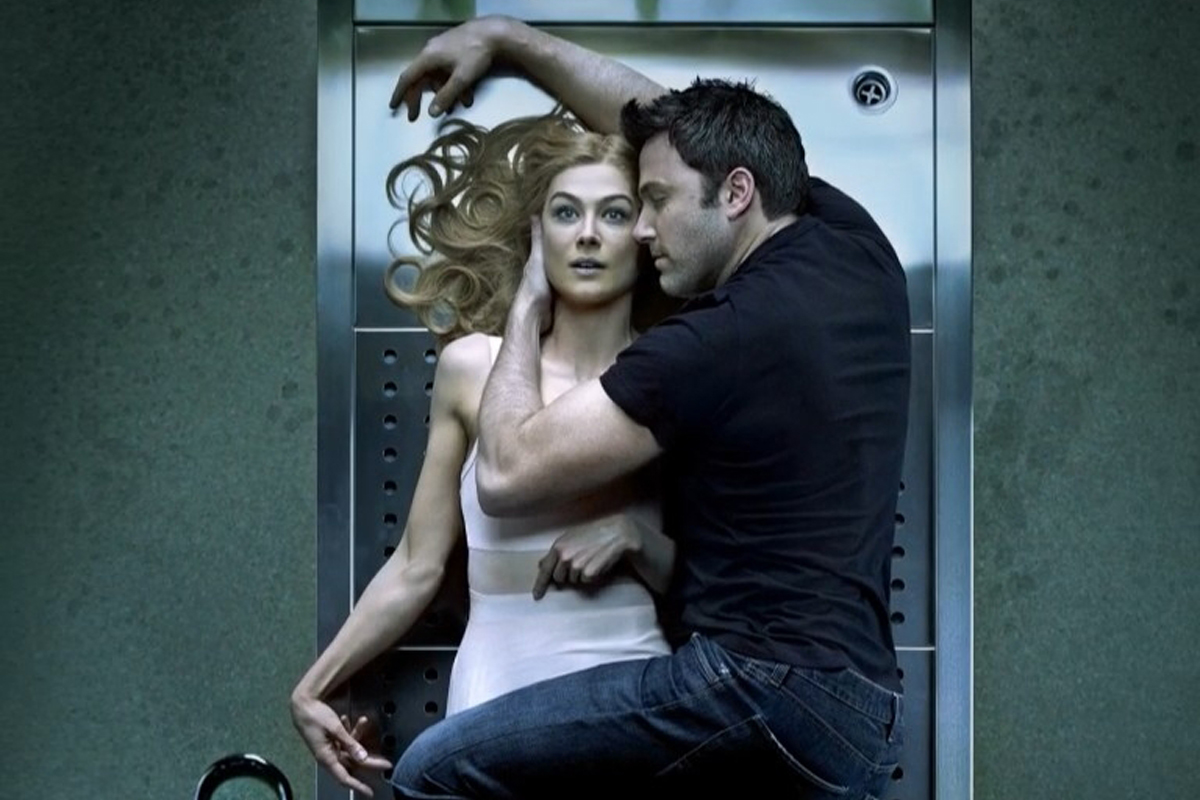
Films are often perceived as a simple means of entertainment, and they usually succeed in doing this. However, it’s easy to literally look over these small details that can tell us more about what is being shown on screen, and potentially what’s hiding behind it. Hollywood has a large pool of talented directors who pride themselves on such subtly. One of these directors is David Fincher, known for his precision in filmmaking. His most recent film, Gone Girl stands out based on his philosophy of film making. To briefly summarize the plot of Gone Girl, this is a film that explores the events surrounding a man named Nick Dunne and the disappearance of his wife, Amy. As the film progresses, the media’s perception of Nick changes based upon several plot developments in the film. This causes the media frenzy to increase surrounding their relationship, and ultimately Nick’s public persona. It is therefore clear that David Fincher’s Gone Girl is an exploration of how the media is able to manipulate what is true, and its abilities of persuasion towards the public.
            In the first twenty-five minutes of the film when Nick along with his mother and father in law make their first public appearance before the media, it’s important to focus on the tone of Nick’s voice when he speaks. His tone is lethargic, and almost sounds like he is uncaring about the current disappearance of his wife. After Nick makes his speech, we get a shot of detective Jim Gilpin’s face, which appears to be a foreshadowing of his attitude and opinion of Nick. Compare this to how Amy’s parents sound. Her father actually sounds somewhat similar to Nick, but his dialogue describing her as “she really is Amazing Amy” (which refers to her children’s book series) is a clear indication of how concerned he is, and is perhaps tired rather than uncaring. His short speech also implies that Amy is well known, when he says that “millions” of readers grew up with her books. The mother’s speech is perhaps the most professional, where she gives the location of the volunteer headquarters. It’s also interesting to note that while Amy parents are speaking, Nick looks tired, and uninterested, and often glances over towards his sister. Nick is also considerably far away from Amy’s parents, a clear visual indication that Nick is not personally close to Amy’s parents. After Amy’s mother has concluded her speech, Nick makes a fatal mistake, but it isn’t directly his fault upon further analysis. Nick poses with one of the two large missing posters with Amy’s smiling face while reporters take pictures, and his current expression doesn’t necessarily imply any sort of smirk or smug attitude. If you listen closely you can hear someone say “smile”, Nick does smile, and the cameras keep rolling. This scene, while short is very important because it’s the first time the media gets a good look at Nick Dunne, and his impressions on them are not going to be in his favor. This is where we need to look at some basic psychology. Vanessa Van Petten’s article titled “5 Ways To Make a Killer First Impression” starts off with the following:

            Most people will judge you within the first second of meeting you and their opinion will most likely never change. Making a good first impression is incredibly important,  because you only get one shot at it (Petten, 2011).

Scanning along the article, you’ll find that the third tip is to be mindful of your body language. She explains that posture and the angle of your body can go a long way to make a better impression. When Nick smiled, he only did this because someone from the crowd told him to. After he finishes posing with the photo, Amy’s parents are not smiling in any capacity, and their facial expressions show concern. Throughout the film Nick’s picture with the poster will be used to damage his public persona. A popular saying, “A picture is worth a thousand words” absolutely applies to this photo of Nick’s seemingly smug smile. On a final note about this scene, there is an interesting reason why Ben Affleck was cast to play the lead. Fincher picked him because Affleck is someone in the media who is constantly being covered, as well as a certain annoyance with it. Fincher also picked Affleck for his smile, which proves to be effective throughout the film, especially in this scene (Kashdan, 2015).
            Nick’s actions continue to build suspicion with the police. He drives over to his dad’s house (although he is currently in assisted living, therefore he is not there to visit his dad) and triggers an alarm when entering the home. While trying to disarm the alarm, he finds the third envelope of clues in his dad’s house, but doesn’t present this evidence to the police when they meet him. When he is confronted by detective Rhnoda and her partner, Jim. Nick then asks if they’re following him, since they were so quick to respond to the house intruder alarm. At this point both the media and police are not necessarily in a good relationship with Nick. Two days into Amy’s disappearance, the film takes viewers to the volunteer headquarters. Again, focusing on body language, Nick walks around greeting volunteers, and makes yet again another fatal mistake, and this time it’s is all on him. While Nick is walking around, Amy’s parents are keeping an eye on him. He walks past a group of women, where one in particular looks at him, and he gives a small smile. After she looks away, Nick looks to the right, and we see Amy’s parents, who witnessed the whole exchange. Que Nick’s sister, who says “you look like hammered shit”. Notice also how when Nick walks around, it appears almost as if everyone is circling around him, much like an arena. While talking to detective Rhonda, he excuses himself to help someone who appears to be homeless, by giving him a bag full of food. Her partner, Jim doesn’t buy his act of kindness, saying “Oh, look. He’s being a good guy, so everybody can see him being a good guy”. After Rhonda replies, he then says “What’s to like?”. After Nick helps the homeless man, he sees Amy’s stalker, and tries to talk to him. Instead, Nick yet again has a fatal encounter that will, again, go against his public persona. The woman Nick was looking at earlier greets herself as Shona Kelly, and wants to cook for Nick. Shona then rubs his left arm, and takes a picture, or “selfie” with him. When Nick sees the picture, he asks Shona to delete the photo. She dismisses the request at first, but again Nick asks twice and tries to reach for her phone. Shona gets annoyed and walks away, saying she will “share it with whoever I please”. Nick clearly knows that if this photo gets around, he will seem dishonest.
            Finally, the viewer gets their first news segment with Ellen Abbott’s news show, where we hear her say “…pie eating grin, from a guy whose wife is missing”. This scene takes place at Margo’s home (Nick’s sister). He sees the news segments but ignores it. This is the audience’s first true glimpse of how the media is projecting Nick’s persona, and thus the start of the media frenzy. Skipping ahead we see Nick is having an affair with a college student, and when his sister finds out, she forces Nick to watch the news, saying “they’re all over your shit”. We then see that “selfie” picture from the volunteer center that Nick did indeed try to get deleted, knowing it could potentially come back on him, which it did. Later, we see detective Jim Gilpin is watching Ellen’s news segment, and says “I can’t believe we haven’t arrested this guy”. At this point in the film, news stories have been running and the public is judging Nick based on his first impressions. Ellen Abbott’s news segment carries with it her own personal bias against Nick which is well known towards the viewers. There is absolutely nothing wrong about having a news segment whose anchor (often the primary appeal towards the show) gives their opinion. However, their audience will then take that information and potentially form their own opinions, which typically aligns with the anchor’s because it is what’s been presented towards them. This is obvious with Amy’s self-titled best friend, Noelle Hawthorne who is the target audience of Ellen’s show (who also makes a guest appearance on the show later on in the film), and is convinced that Nick is responsible for the disappearance of Amy. The character Ellen Abbott is also a parody of Nancy Grace both physically and mentally.
            To briefly summarize Nancy Grace, her website describes her as “An outspoken, tireless advocate for victims' rights and one of television's most respected legal analysts” (Grace, 2012). However, Nancy also has a reputation for her aggressive interviewing that some would call a live interrogation. David Carr describes Nancy Grace’s show as “presumption of innocence has found a willful enemy in the former prosecutor turned broadcast judge-and-jury”.  Carr goes on to list her series of misfires on the show, including an incident where she interviewed Melinda Duckett about her missing 2-year-old (Carr, 2011). During the interview, Nancy forcefully pressed her questions towards Ms. Duckett, implying that due to the mother’s lack of information she seemed suspicious. The next day after the interview was taped, Ms. Duckett committed suicide, and Nancy’s producers still ran the interview. Nancy ended up settling with Duckett’s family and paid $200,000 (Lohr, 2012). It would therefore seem that Nancy’s habits as a reporter seem to include looking at facts and bending them to fit her conclusions, much like Ellen Abbott in Gone Girl. This can therefore be considerably manipulative, rather than someone simply projecting her opinions and can thus lead to rash consequences. In the case of Nick Dunne, not only has he made a poor first impression, but his persona on national television has also been heavily damaged due to characters in the media, such as Ellen Abbott, resulting in the manipulation of what is true, and what is stretched.
            Even the film’s own marketing is manipulative in relation towards its plot. Gone Girl’s marketing was very secretive in respect towards the plot, which many film critics actually appreciate. Its trailers show scenes from the film that imply that Nick himself is guilty, which is a clever tactic to hook audiences that the film is simply a story of what exactly Amy’s husband did, when in fact it’s the polar opposite. How humorous is it then that a film about a variety of subjects, be it relationships, or in this case, media bias, uses that bias to sell itself towards potential film goers. Clearly the results were successful, as the film has a box office of $369.3 million, being Fincher’s most successful film (McClintock). The lesson from this is that if you present something a certain way that peeks the public’s interest, people will follow. The film’s trailers almost act as clues rather than a run-down of the film. Even if you were to re-watch the trailer for Gone Girl, it still hides a major turning point of the film.
            Towards the one-hour mark of the film, a big plot twist in Gone Girl is delivered, which is that Amy is not only alive and well, but she herself laid the foundation to destroy Nick’s life. This is given to us in a scene many called the “Cool Girl Monologue”. This scene shows us how Amy did it, from faking her pregnancy by befriending a “local idiot” to eventually fake her own pregnancy on her medical record, and even going as far as bleeding herself to leave blood residue on the kitchen floor for the cops to find. Essentially, Amy has laid out several booby traps for Nick, the police, and ultimately the media to follow. Nick eventually realizes this, turning to his sister and the lawyer featured on Ellen Abbott’s news show, Tanner Bolt to combat Amy’s plan and ultimately prove his innocence. The vessel that is carrying Amy’s manipulative narrative is the media, which will therefore ultimately build the basis of bias against Nick. Looking into Amy as a person, clearly there is some sort of personality disorder based on her actions.

            “However, it is a common view among therapists that patients with BPD often use             manipulation in order to achieve their own goals. This is confirmed by the study of  Gallop & Lancee, which demonstrated that as many as 90% of nurses stated that they associated BPD patients with manipulation. Other research has also confirmed the conviction of specialists that there is a strong link between the BPD personality and  manipulation” (Mandal, Kocur).

They further continue that people who suffer from BPD disorders also have an unclear image of who they are. Revisiting the “Cool Girl Monologue”, Amy says that when she first met Nick, she knew he wanted the “cool girl” who she basically describes a person she has no desire to be, but becomes that person to please others, in this case Nick. In a scene where Nick visits one of Amy’s former partners, Tommy O’Hara was a victim of Amy’s persona. Tommy had a relationship with Amy which ended with her accusing Tommy of first degree felony rape. The movie’s stance on Tommy’s innocence is made when Nick asks “Did you do it?” followed by Tommy’s instant response “Did you?”. When Nick asks for Tommy’s story, he says they met at a party and “instantly click”, describing her as a perfect match. Amy eventually attempts to mold Tommy to be her ideal partner. Tommy realized this, saying it was “too much”. Amy bought him ties frequently, and says they had arguments over the subject. Tommy then attempts to leave this relationship, distancing himself from Amy. Then one night, Tommy says she came over with liquor and a record from one of his favorite bands, where Amy soon initiated sexual activity. To be precise, Amy wanted rough intercourse. The next day Tommy sees that there’s two officers in his home, and Amy has “wounds that are consistent with rape”, where it appeared that Tommy tied Amy up the bed. Amy’s message to Tommy becomes clear when the police discover that the ropes used to tie Amy up were the ties Amy bought for him, which he wouldn’t wear. In these three examples, the situation comes out to be either Amy is attempting to mold herself to fit someone’s expectations or the opposite. When you combine this trait with Amy’s intelligence you have a dangerous person. Lauren Duca had a sit down with psychiatrist Dr. Paul Puri who also agrees that Amy has some sort of personality disorder, saying “It seems like Amy has definite aspects of that in terms of her conscience” (Duca, 2014). Dr. Paul Puri also looks at how Amy throughout the movie is willing to harm herself to build a false narrative. Another example proving Amy’s extreme methods exists in the film. Desi Collins is another former romantic partner of Amy. She accidently meets Desi while on the run. Seeing this as an opportunity, she accepts him literally with open arms, and Desi keeps her as a guest in his getaway lodge. One night, Amy sees Nick’s interview at Desi’s lodge and is won over by him. To get herself back home, she subdues Desi into sex. She then slices his throat, which yet again lays down the foundation that would place herself as a victim in the eyes of the media. This also solves the problem of Amy where she technically wasn’t pregnant until now. She returns home covered in Desi’s blood, fainting as Nick holds her.
            Now that the public knows Amy is alive, and that Nick is not responsible in any way for her disappearance, the media again follows what Amy wants them to see: a happy reunion. While the media eventually stops harassing Nick, this was only because Amy allowed Nick to be free of the media frenzy. This ultimately shows how easy it is to use the media as a tool to destroy someone’s life. Amy clearly had a well thought out plan to have Nick put in for what would have been her faked murder. Even when Amy’s plans backfire, she manages to adapt and continue to manipulate the media. While it is true that Amy purposefully laid out this false narrative for the media to follow, Gone Girl is nevertheless an example of what can happen when the media conveys misinformation.

Works Cited
"About - Nancy." Nancy Grace. (2012)
            http://www.nancygrace.com/about.html

Carr, David. "TV Justice Thrives on Fear." The New York Times (May 22, 2011):             http://www.nytimes.com/2011/05/23/business/media/23carr.html

Duca, Lauren. "A Psychiatrist Weighs In On Amy & Nick In 'Gone Girl'" The Huffington Post     (Oct. 3 2014)
            http://www.huffingtonpost.com/2014/10/03/amy-gone-girl- psychiatrist_n_5922842.html

Kashdan, Jason. "Ben Affleck on "Gone Girl" Wife Jennifer Garner and Career." CBS      Interactive (Jan. 01 2015)
            http://www.cbsnews.com/news/ben-affleck-on-gone-girl-wife-jennifer-garner-and-career/

Lohr, David. "Toni Medrano, Dubbed 'Vodka Mom' By Nancy Grace, Committed Suicide,           Police Say." The Huffington Post (July 11 2012)   http://www.huffingtonpost.com/2012/07/11/toni-medrano-vodka-mom_n_1665792.html

Mandal, Eugenia, and Dagna Kocur. "Psychological Masculinity, Femininity and Tactics of             Manipulation in Patients with Borderline Personality Disorder." Archives of Psychiatry     & Psychotherapy 15.1 (2013): 45-53
            http://blc-lrc.bluegrass.kctcs.edu:2233/ehost/pdfviewer/pdfviewer?sid=37ad3997-28a3-    4f21-b0b6-991ecdb64866%40sessionmgr4008&vid=1&hid=4213

McClintock, Pamela. "Box Office Milestone: 'Gone Girl' Sets U.S. Record for David Fincher."    The Hollywood Reporter, 1 Nov. 2014. Web. 20 Sept. 2016.       http://www.hollywoodreporter.com/news/box-office-milestone-gone-girl-745580


Petten, Vanessa Van. "5 Ways To Make a Killer First Impression." Forbes Magazine, n.d. Web.   20 Sept. 2016.
            http://www.forbes.com/sites/yec/2011/11/02/5-ways-to-make-a-killer-first-            impression/#55104eac10ce

Resources for October 3, 2016

Andrews, Mallory. "She's Lost Control, Again: Todd Haynes' Safe." Cleo 1.2 (July 25, 2013)

Bowen, Chuck. Fear Country: Night of the Living Dead speaks to a society that can’t process Black Lives Matter." Keyframe (October 1, 2016)

Dickey, Colin. "Oliver and Sarah: The Story of the Winchesters." The Los Angeles Review of Books (September 28, 2015)

Hassania, Tina. "Female Homelessness in Agnès Varda’s Vagabond and Kelly Reichardt’s Wendy and Lucy." Cleo 1.2 (July 25, 2013)

Jensen, Lindsay. "The Analog Mother: Joseph Kosinski’s Oblivion." Cleo 1.2 (July 25, 2013)

Koski, Genevieve, et al. "The Neon Demon/Suspiria, Pt. 1." The Next Picture Show #35 (July 12, 2016) ["Nicholas Winding Refn’s new THE NEON DEMON inspired us to look back at another tale of female rivalry that plays out in lurid colors and more than a little violence: Dario Argento’s classic 1977 horror movie SUSPIRIA. In this half, we explore the specific, lurid style in which Argento works, and consider how it functions as both cinema and horror. "]

---. "The Neon Demon/Suspiria, Pt. 2." The Next Picture Show #36 (July 14, 2016) ["We move our conversation of Dario Argento's 1977 film SUSPIRIA to Nicholas Winding Refn’s THE NEON DEMON, which works as a contemporary companion piece. In this half, we talk over the two films' respective uses of color, violence, and female competition."]

McGoff, Jessica. "Andrea Arnold’s Women in Landscapes: What does loneliness look like?" Keyframe (September 27, 2016)

"Nature's Notebook - The Life of a Dragonfly." Bernheim (September 27, 2016)

Puschak, Evan. "Children of Men: Don't Ignore the Background." (Posted on Youtube: September 9, 2015) [MB: This was a powerful film that looked to the future to examine the global politics of 2006 when it was released (highlighted even more by the collection of philosophers/theorists that provided commentaries on the imagery/narrative in the original DVD edition), and, as Evan Puschak demonstrates in this video essay, its relevance has only increased over the next decade. This analysis includes references to our current social/political issues to demonstrate its continuing relevance.  Don't ignore the background (context) - could be applicable in our own attempts to understand the issues of the world.]


Wednesday, September 28, 2016

Resources for September 28, 2016

Grossman, Pam. "The Witching Hour." (Posted on Vimeo: 2014)

Verongos, Helen T. "Beyond the Politics in Abortion: Stories Women Tell." The New York Times (August 11, 2016)

Nicholas, James Michael. "New Film Takes A Hard Look At Masculinity And Homophobia In America." Huffington Post (September 22, 2016)

Buckler, Dana. "The Dark Knight Trilogy Part 2: Chaos." H.I.T.M. (July 10, 2016)


Hassania, Tina, et al. "Life and Something More: Abbas Kiarostami Remembered." The Cinephiliacs (July 10, 2016) ["Abbas Kiarostami, born in 1940 in Tehran, turned to filmmaking in 1970 when he helped set up the Institute for Intellectual Development of Children and Young Adults. He had made a half dozen shorts and one feature, The Report in 1977, before the Iranian Revolution changed the public face of his country. While many filmmakers moved away in search of more creative freedom, Kiarostami continued to direct. Around the early 1990s, his films suddenly found an international foothold at festivals via the Koker trilogy and his most famous work, Close-Up. In 1997, he won a Palm D’Or for Taste of Cherry, helping paint the way for Iranian filmmakers to find an audience abroad. His filmmaking only became more cryptic and complex, especially with his early adoption of digital cinema with Ten and the self-reflexive documentary, Ten on Ten. His final films,Certified Copy and Like Someone In Love, were his only made outside his native Iran. Kiarostami passed away on July 4, 2016. In this special episode of the podcast, Amir Soltani, Tina Hassania, and Carson Lund join the podcast to celebrate the life and work of one of the legendary filmmakers to emerge on the world cinema stage."]

Buckler, Dana. "The Dark Knight Trilogy Part 3 : Pain." How Is This Movie (July 11, 2016)

Hanlon, Aaron R. "Are Ph.D Students Irrational?" The Los Angeles Review of Books (August 24, 2016)

Adler, Renata, et al. "David Foster Wallace, FTW: Life in the Internet Age." Open Source (August 25, 2016)

Monday, September 26, 2016

Resources for September 26, 2016

Sokolowski, Joanna and Kate Trumbull-LaValle. "Ovarian Psychos." Film School (July 8, 2016) ["Riding at night through streets deemed dangerous in Eastside Los Angeles, the Ovarian Psycos use their bicycles to confront the violence in their lives. At the helm of the crew is founder Xela de la X, a single mother and poet M.C. dedicated to recruiting an unapologetic, misfit crew of women of color. The film intimately chronicles Xela as she struggles to strike a balance between her activism and nine year old daughter Yoli; street artist Andi who is estranged from her family and journeys to become a leader within the crew; and bright eyed recruit Evie, who despite poverty, and the concerns of her protective Salvadoran mother, discovers a newfound confidence. Co-directors Joanna Sokolowski & Kate Trumbull-LaValle stop by to talk about the boldness of Ovas’ politics, their brazen approach to feminism, and unapologetic aesthetic: a hybrid mix of Chicana, Riot Grrrl, Zapatista and militant-punk cultural markers and the individual personalities that make Ovarian Psycos such a compelling watch."]

Hurne, Mark, Doug McCambridge and Aaron West. "The Player." Criterion Close-Up #43 (July 8, 2016) ["A Hollywood studio executive with a shaky moral compass (Tim Robbins) finds himself caught up in a criminal situation that would be right at home in one of his movie projects, in this biting industry satire from Robert Altman. Mixing elements of film noir with sly insider comedy, The Player, based on a novel by Michael Tolkin, functions as both a nifty stylish murder story and a commentary on its own making, and it is stocked with a heroic supporting cast (Peter Gallagher, Whoopi Goldberg, Greta Scacchi, Dean Stockwell, Fred Ward) and a lineup of star cameos that make for an astonishing Hollywood who’s who. This complexly woven grand entertainment (which kicks off with one of American cinema’s most audacious and acclaimed opening shots) was the film that marked Altman’s triumphant commercial comeback in the early 1990s."]

Ayres, Jackson. "The X-Men and the Legacy of AIDS." The Los Angeles Review of Books (September 21, 2016)

Jenkins, Jamie, Mark Mcgee and Mike White. "Invasion of the Body Snatchers." The Projection Booth #130 (September 3, 2013) ["From the deep reaches of space the pods arrive, ready to take over the human race, erasing our humanity and turning us into walking vegetables. We're looking at the four versions of Invasion of the Body Snatchers (and a few other films)."]


Refn, Nicholas Winding. "The Neon Demon." The Cinema Show (July 8, 2016)

Eves, Dave and James Hancock. "The Cinema of Jacques Tati." The Wrong Reel #159 (July 9, 2016)

Isenberg, Nancy. "'White Trash' and Class in America." On the Media (June 22, 2016) ["As the media have watched the ascent of Donald Trump with disbelief-going-on-horror, pundits have returned frequently to the question of who exactly his supporters are. Terms like "angry" and "white working class" are mentioned frequently, but the National Review several months ago put it the most pointedly and viciously. In an article lambasting Trump supporters, Kevin Williamson characterized them as lazy drug addicts, compared them to animals, and even suggested that they deserved to die. Though he did not say it directly, the implication was clear: these people were white trash. We took that opportunity to take a deeper look at the idea of "white trash," with the help of writer and professor Nancy Isenberg, author of the forthcoming book, White Trash: The 400-Year Untold History of Class in America. Isenberg described to Brooke how the notion of "white trash" has been around for a long time, belying the idea that America is a "classless" society. White Trash comes out this week, and we're re-running our conversation in honor of it."]

Raup, Jordan. "Ava DuVernay Takes on America’s Prison System in First Trailer For The 13th." The Film Stage (September 26, 2016) ["While Selma took a look at a very specific, vital part of American history, director Ava DuVernay is exploring its political and systemic reverberations over the span of many decades with her next film. The 13th chronicles the history of racial inequality in the United States, particularly how it relates to the prison system, and ahead of a NYFF opening and Netflix premiere, the first powerful trailer has arrived."]


Monday, September 19, 2016

Anomalisa (USA: Duke Johnson and Charlie Kaufman, 2015)


Anomalisa (USA: Duke Johnson and Charlie Kaufman, 2015: 90 mins)

Bradshaw, Peter. "Anomalisa review: A masterpiece about the human condition – with puppets." The Guardian (March 10, 2016)

Collin, Robbie. "Anomalisa is Upsettingly Brilliant." The Telegraph (March 9, 2016)

Graham, Bill. "‘Anomalisa’ Producer Rosa Tran on Bringing Charlie Kaufman’s Animation to Life." The Film Stage (February 8, 2016)

Scherffig, Claire Miranda. "Creepy Eyes in the Uncanny Valley." Keyframe (July 28, 2016)

Seitz, Matt Zoller. "Anomalisa." Roger Ebert (December 29, 2015)

Shoard, Catherine. "Anomalisa: The ending, the eggs and the sex toy – discuss the movie with spoilers." The Guardian (March 15, 2016)

Sims, David. "Anomalisa: An Agonizing Love Story, With Puppets." The Atlantic (January 8, 2016)

Singer, Leah. "Video: Eternal Sunsets of Charlie Kaufman’s Mind." Keyframe (March 10, 2016)

Thomas, Leon. "Anomalisa - Renegade Cut." (Posted on Youtube: June 21, 2016)

Tran, Rosa. "Anomalisa." DP/30 (Posted on Youtube: December 30, 2015)


Framing the Picture: Favorite Films of 2015 from Matt Marlin on Vimeo.


Resources for September 19, 2016

Yazdani, Masoud, ed. Why Does Film Matter?  Intellect, 2011.

Cimino, Michael, Scott Foundas and Kris Kristofferson. "Michael Cimino's Heaven's Gate." The Close-Up (July 13, 2016) ["The director broke through with his 1978 best picture Oscar winner, The Deer Hunter, which embodied the style and ethos of the New Hollywood movement that produced epics like The Godfather and Chinatown before it. Cimino’s follow up was Heaven’s Gate, an ambitious take on the western starring Kris Kristofferson as a federal marshal investigating a government-sanctioned plot to steal land from European settlers in Wyoming. Heaven’s Gate is widely known to be one of the biggest box-office flops in history, effectively ending the New Hollywood era and causing United Artists to go under. But the film has been reappraised in recent years, and many believe it to be a misunderstood classic. After a sold-out screening of the film’s Director’s Cut at the 50th New York Film Festival back in 2012, an emotional Cimino took the stage saying, “It’s difficult to be rational in this moment . . . it’s taken 33 years to get here.”]

Fox, Neil, Dario Linares and Kingsley Marshall. "12 Angry Men." The Cinematologists #10 (September 26, 2015)

Lane, Penny. "Nuts!" Film School (July 8, 2016) ["Inventive and wildly fun, NUTS! recounts the unbelievable true story of John Romulus Brinkley, a Kansas doctor who in 1917 discovered that he could cure impotence by transplanting goat testicles into men. From there, the story only gets more bizarre. Mixing hand-drawn animated reenactments, interviews, archival footage, and a very unreliable narrator,NUTS! traces Brinkley’s rise from poverty and obscurity to the heights of celebrity, wealth, and influence. Along the way, he transplants thousands of goat testicles, amasses an enormous fortune, is (sort of) elected Governor of Kansas, invents junk mail and the infomercial, builds the world’s most powerful radio station, and generally annoys the heck out of the establishment. Filmmaker Penny Lane has skillfully borrowed a page from her subject – charming viewers into believing the unbelievable, building their trust and excitement, until the final chapter bares the painful truth and reveals the doctor for what he truly was. NUTS! reminds us that our love of (and need for) compelling narratives is exactly what makes us so endlessly susceptible to being conned. Director Penny Lanestops by for a conversation on Brinkley, our collective need to believe in something and any contemporary parallels to be drawn from this bizarre story."]

Char, Jessie and Arik Devens. "Singin' In the Rain." Cinema Gadfly #6 (ND)

Anthony, West, David Blakeslee and Robert Nishimura. "The First Films of Samuel Fuller." The Eclipse Viewer #4 (October 24, 2012)

Kovalik, Dan. "America in Vietnam: The Enduring Myth of the Noble Cause." Counterpunch (September 14, 2016)

Pinter, Harold. "Art, Truth and Politics." Nobel Prize in Literature 2005 (Acceptance Speech)

Meyers, Mark. "How He Fell in Love." Film School (July 8, 2016) ["Travis (Matt McGorry), a young struggling musician, crosses paths with Ellen (Amy Hargreaves), an older married yoga teacher who is trying to adopt a child with her husband. Travis and Ellen begin an affair that slowly deepens into something more intimate and profound. As their encounters continue, Ellen is confronted with her failing marriage while Travis must face the consequences of his actions. Written and directed by Marc Meyers (HARVEST) and stars Matt McGorry (Orange is the New Black), Amy Hargreaves (Homeland, BLUE RUIN), Britne Oldford (American Horror Story) and veteran film and theatre actor Mark Blum (Mozart in the Jungle). Director Marc Meyersjoins us for a conversation on managing the responsibilities of writing, producing and directing his own unforgettably intimate film."]


Saturday, September 17, 2016

Resources for September 17, 2016

McCauley, Lauren. "Elizabeth Warren Demands Investigation Into President Obama’s Failure to Jail the Banksters." TruthDig (September 15, 2016)

Sragow, Michael. "Deep Focus: Snowden." Film Comment (September 15, 2016)

Cohen, Jeffrey Jerome. "Monster Culture (Seven Theses)." Monster Theory: Reading Culture. University of Minnesota Press, 1996: 3 - 25.

Lee, Kevin B. "Oliver Stone on How to Make History: Why authenticity is an unexpected through-line in this divisive director’s career." Keyframe (September 15, 2016)

Char, Jessie and Arik Devens. "Love Parade." Cinema Gadfly #5 (ND)

Peña, Richard. "Memories of Underdevelopment." The Cinephiliacs #32 (February 3, 2014) ["Without the help of Richard Peña, Peter would probably have never become interested in directors like István Szabó, Kim Ki-Young, or Souleymane Cisse, among countless others. As a professor at Columbia and the former programmer of the Film Society of Lincoln Center and the New York Film Festival, Richard used his years to expand the conversation of film history: as NYFF brought in directors from the cinemas of Iran, China, and Brazil, his yearly programming and classes expanded to search out those histories as well. Now a year out from his time at Lincoln Center, Richard sits down to recount his first curiosities toward cinema, his programming philosophies, and to lament the director he can never convince his students to love as much as he does. Finally, the two discuss Memories of Underdevelopment, a landmark film in Cuban film history, which provides a complex portrait of identity."]

Zinn, Howard. A People's History of the United States, 1492 - Present. Harper Perennial, 2005.

Hames, Peter, et al. "Valerie and Her Week of Wonders." The Production Booth #276 (June 21, 2016)

Ellwand, Calina. "Motor City’s Gendered Shift: Heidi Ewing and Rachel Grady’s Detropia." cléo 1.3 (November 28, 2013)

Žižek, Slavoj. "Zero Dark Thirty: Hollywood's gift to American power." The Guardian (January 25, 2013)

Thursday, September 15, 2016

Resources for September 15, 2016


Hoberman, J. "Behold the Man: Steven Soderbergh's Epic Film Biography of Che." VQR (Winter 2009)

"Neighbors and the Transition to Parenthood." Pop Culture Case Study #153 (July 7, 2016)

Greene, Robert. The 48 Laws of Power. Profile Books, 2002.

Gordon-Levitt, Joseph and Oliver Stone. "On Making New Film Snowden, Humanizing World's Most Wanted Man." Democracy Now (September 14, 2016) ["As the much-anticipated movie Snowden, about one of the most wanted men in the world, hits theaters, we spend the hour with its director, Academy Award-winning filmmaker Oliver Stone, and the actor who played Snowden, Joseph Gordon-Levitt, and feature clips from the film that tells the story of how NSA whistleblower Edward Snowden exposed massive surveillance programs by U.S. and British intelligence agencies. "Our goal was to humanize the man, to bring you … the feeling of his life," Stone says of Snowden, who he notes was originally politically conservative and tried to enlist in the military to serve in Iraq but joined the CIA instead."]

James, Clive. "Thrones of Blood: Binge-Watching the Most Addictive Show on Television." The New Yorker (April 18, 2016)

Toobin, Jeffrey. "Colin Kaepernick and a Landmark Supreme Court Case." The New Yorker (September 15, 2016)

Krauss, Lawrence M. "The House Science Committee's Anti-Science Rampage." The New Yorker (September 14, 2016)

Carhill, C. Robert and Brian Salisbury. "How 1986's Vamp Reminds Us of Martin Scorsese." Junkfood Cinema (July 7, 2016)

Bellamy, Brent. "We Still Need the Women’s Army: Form and Politics in Lizzie Borden’s Born in Flames." cléo 1.3 (November 28, 2013)

Smith, Justine. "Of Love and Other Demons: Cat People (Paul Schrader, 1982)." Vague Visages (September 15, 2016)


Tuesday, September 13, 2016

Resources for September 13, 2016

Davis, Wade. "The Wayfinders: Why Ancient Knowledge Matters in the Modern World." (Posted on Vimeo: 2012)

Ince, Kate, et al. "Eyes Without a Face." The Projection Booth #278 (July 5, 2016) ["Georges Franju's Eyes Without a Face (1960) is an atmospheric "anguish story" about a young woman who's lost her face and the overbearing father who works to give her a new one. Special Guest Kate Ince, author of the French Film Directors book Georges Franju, relates Franju's career and themes."] 


Desaulniers, Jake and Arik Devens. "Inception." Cinema Gadfly #4 (ND)

McCalmount, Jonathan. "The Valley of the Bees (1968) - The Cross or the Cock." Ruthless Culture (April 21, 2011)

Roan, Brian. "Interview – Director David Farrier Talks Tickled." The Film Stage (July 6, 2016)

Latella, Stephanie. "Lessons in Loss: Gender and Grief in Philippe Falardeau’s Monsieur Lazhar." cléo 1.3 (November 28, 2013)


Williams, Roger Ross. "Life, Animated." The Treatment (July 6, 2016) ["Roger Ross Williams has made a career of giving a voice to the voiceless. In his documentary Life, Animated, an adaptation of Ron Suskind’s book of the same name, he highlights Owen, an autistic child who identifies with and ultimately finds his own voice through animated Disney movies. Today, Roger discusses his long time struggle for representing the underdogs as well as what he learned, not only about raising a child with autism, but about the world of Disney."]

Gaiman, Neil. "How Stories Last." The Long Now Foundation (June 9, 2015)

Chomsky, Noam. Understanding Power: The Indispensable Noam Chomsky. The New Press, 2002.


Sunday, September 11, 2016

Resources for September 11, 2016

Houska, Tara. "National Guard on Standby in North Dakota Before Court Ruling on Dakota Access Pipeline." Democracy Now (September 9, 2016) ["North Dakota Governor Jack Dalrymple has activated the National Guard ahead of today’s ruling on the Standing Rock Sioux Tribe’s lawsuit against the U.S. government over the $3.8 billion Dakota Access pipeline. U.S. District Judge James Boasberg is set to rule today on an injunction in a lawsuit challenging the Army Corps of Engineers’ decision to issue permits for the pipeline, arguing it violates the National Historic Preservation Act. This comes as over 1,000 people representing more than 100 Native American tribes are gathered along the Cannonball River by the Standing Rock Sioux Reservation to resist the pipeline’s construction. It’s been described as the largest unification of Native American tribes in decades. We go to North Dakota for an update from Tara Houska, national campaigns director for Honor the Earth."]

Carhill, C. Robert and Brian Salisbury. "Rebel Without a Care: Spending a Day Off with Ferris Bueller." Junkfood Cinema (June 30, 2016)


Kuersten, Erich. "The Shrouds of Soavi: Cemetery Man, The Devil's Daughter." Acidemic (September 8, 2016)

Brookes, Chris, et al. "Vestigial Tales, Pt. 1." Ideas (August 11, 2016) ["Analysing stories is usually territory claimed by writers, critics, and university scholars. But recently, evolutionary psychologists have begun to look at the human propensity for storytelling from a scientific perspective.  Why are we humans such suckers for a good story? Literary critics find the answer in story structure, characters, and plotlines. The literary Darwinists find the answer in evolution.  Documentary-maker Chris Brookes looks at the evolutionary origins of human storytelling."]


Barry, Nick and James Hancock. "John le Carré & Our Kind of Traitor." Wrong Reel (July 1, 2016)

Rothenberg, David and Heather Ann Thompson. "45 Years After Legendary Attica Prison Uprising, New Book Reveals State Role in Deadly Standoff." Democracy Now (September 9, 2016) ["Today prisoners in at least 24 states are set to participate in a nationally coordinated strike that comes on the 45th anniversary of the prison uprising at Attica. Much like the prisoners who took over New York’s infamous correctional facility in 1971, they are protesting long-term isolation, inadequate healthcare, overcrowding, violent attacks and slave labor. We speak with the author of an explosive new book about the four-day standoff, when unarmed prisoners held 39 prison guards hostage, that ended when armed state troopers raided the prison and shot indiscriminately more than 2,000 rounds of ammunition. In the end, 39 men would die, including 29 prisoners and 10 guards. We are also joined by David Rothenberg, who was a member of the Attica observers’ committee that was brought into Attica to negotiate on behalf of prisoners. He is founder of The Fortune Society."]

Fox, Neil, et al. "Point Blank (Port Elliot Special, Pt. 1)." The Cinematologists (August 21, 2015) ["Dario is on Holiday so Neil is joined by filmmaker and academic Mark Jenkin to present and discuss John Boorman's 1967 classic Point Blank starring Lee Marvin. Point Blank was released in a zeitgeist year for crime cinema that also included Arthur Penn's Bonnie & Clyde, Jean-Pierre Melville's Le Samourai and Seijun Suzuki's Branded To Kill and it stands equal to those illustrious peers. This episode also features an interview with writer Tom Shone about his latest book Woody Allen: A Retrospective. "]

Cassidy, Brendan and J.D. Duran. "The Neon Demon, Dr. Strangelove - Extra Film." In Session (July 1, 2016) 

Desaulniers, Jake and Arik Devens. "The Spy Who Came in From the Cold." Cinema Gadfly #3 (ND) 


Richter, Brent. "Culture warrior - How anthropology can save the world." North Shore News (September 10, 2016) [Wade Davis: "“The great revelation of anthropology was that the world that you’re born into is just one model of reality, the consequence of one set of choices your cultural lineage made, however successfully,” Davis said. “The other peoples of the world remind us there are other ways of thinking, other ways of being, other ways of orienting yourself in social, physical, even spiritual space.”]

Thursday, September 8, 2016

Resources for September 8, 2016

Sudhakaran, Sareesh. "Cinematography of Roger Deakins." Wolfcrow (February 16, 2016)

Hedges, Chris. "America the Illiterate." Truthdig (August 31, 2016)

Head, Stephen Slaughter and Brett Michel. "Escape From New York (1981)." Diabolique #36 (July 28, 2015)

Cooper, Julia. "This Is the Rhythm of My Life: Failure in Claire Denis’ Beau Travail." cléo 1.3 (July 28, 2013)

Ehrlich, David. "Il Sorpasso both exemplifies and perfects the Italian comedy." A.V. Club (April 30, 2014)

"E.T. and Alienation." Pop Culture Case Study (June 30, 2016)

Noisecat, Julian Brave and Anne Spice. "A History and Future of Resistance: The fight against the Dakota Access Pipeline is part of a centuries-long indigenous struggle against dispossession and capitalist expansionism." Jacobin (September 8, 2016)

"The Battle of Algiers Turns 50." Current (September 8, 2016)

Kuersten, Erich. "The Ancient She-Shaman and her Shrooming Exhumer: Szamanka." Acidemic (November 30, 2014)

Bird, Daniel. "The Genre Mask." Electric Sheep (July 19, 2013)

Lola (West Germany: Rainer Werner Fassbinder, 1981)


"One of the most prolific and influential European filmmakers of the second half of the 20th century, Rainer Werner Fassbinder completed nearly 40 feature-length films between 1969 and 1982 (the year he died at age 37) and left behind one of the most cohesive and provocative bodies of work in the history of cinema. In his many melodramas, gangster movies, literary adaptations, and even sci-fi films, he returned obsessively to themes of love, crime, labor, and social and emotional exploitation. He was similarly fixated on his beloved performers, many of whom—Hanna Schygulla, El Hedi ben Salem, Ulli Lommel, and countless others—comprised a repertory company whose fierce, complicated devotion to their visionary leader defies comparison." -- Film Society Lincoln Center (2014)


Lola (West Germany: Rainer Werner Fassbinder, 1981: 113 mins)

Cheney, Matthew. "Fassbinder at 70." The Mumpsimus (June 1, 2015)

---. "First Fassbinder: A Romantic Anarchist From the Start (Video Essay)." IndieWire (September 11, 2013)

Ebert, Roger. "Fassbinder Films Capture a Frantic Life's Desperation." Chicago Sun-Times (April 27, 1997)

"The Films Of Rainer Werner Fassbinder: A Retrospective." IndieWire (July 29, 2011)

Hancock, James, Mikhail Karadimov and Aaron West. "The Meteoric Career Of Rainer Werner Fassbinder." Wrong Reel #233 (February 2017)

Jones, Kent. "Heartbreak House: Fassbinder's BRD Trilogy." Current (Septemvber 29, 2003)

Leadbetter, Kate. "Fugitive Physicality and Female Performance in Werner Rainer Fassbinder's The Marriage of Maria Braun, Veronika Voss and Lola." Movie (August 2010)

Mahani, Najmeh Khalili. "Mirroring History: Fassbinder’s The BRD Trilogy." Offscreen 17.2 (February 28, 2013)

Moeller, H.B. "Fassbinder's use of Brechtian aesthetics." Jump Cut #35 (April 1990)

Nelson, Max. "In the Case With the Insects: On Fassbinder's Top 10." Metrograph (April 20, 2016)

Ruffel, Joe. "Great Directors: Rainer Werner Fassbinder." Sense of Cinema (May 2002)

Töteberg, Michael. "The Candy-Colored Amorality of the Fifties: Lola Production History."  Current (September 29, 2003)

Trocan, Irina. "Fassbinder's History Lessons." Keyframe (January 9, 2016)


Fassbinder's Faces - Lola from Daniel Mcilwraith on Vimeo.


Tuesday, September 6, 2016

Resources for September 6, 2016

Waititi, Taika. "Hunt for the Wilderpeople." The Treatment (June 29, 2016) ["In 2005, director Taika Waititi’s adaptation of the novel Wild Pork and Watercress started as a much darker piece. Revisiting the work years later, however, allowed Taika to realize that comedy indeed prevails and he took the film The Hunt for the Wilderpeople in a different direction, while paying homage to the adventurous spirit of New Zealand. Behind films like What We Do In The Shadows and Eagle vs Shark, Taika Waititi shares the importance of humor through life’s tough times and dissects an artist’s ultimate quest for immortality."]

Piketty, Thomas.  "From the Introduction to Capital in the Twenty-First Century." (Harvard UP, 2014: posted on Harvard University Press website - for an archive of resources and reports on the book visit Harvard University Press)


Kenny, Glenn. "There's a Riot Goin' On." The Current (May 1, 2014)

Drain, Heather, et al. "Celine and Julie Go Boating." The Projection Booth #277 (June 28, 2016) ["Jacques Rivette's Celine and Julie Go Boating (1974) tells a story of friendship, adventure, and magic between two women (Juliet Berto and Dominique Labourier) in Paris."]

Lachman, Edward. "Howl." American Cinematographer #22 (2010) ["Edward Lachman, ASC, talks with American Cinematographer’s Iain Stasukevich about the concepts behind visualizing the works of artists like Bob Dylan and Allen Ginsberg, particularly regarding his work on the recent film Howl."]

Sunstein, Cass. "What Would Luke Skywalker Do?" Studio 360 (June 30, 2016) ["Sunstein recently had a job advising President Obama at the White House, and he’s appeared on lists of potential candidates for the Supreme Court. Sunstein’s new book, "The World According to Star Wars," came as a shock to many people who expected him to produce yet another scholarly tome. But the book isn't really all that different from his other work — it explores social, legal and political philosophy. The revelation for Sunstein was that the "Star Wars" universe contained so many of the moral quandaries that fascinate him."]


Bucsco, Gabe, Justine Smith and Josh Spiegel. "Nausicaä of the Valley of the Wind." Mousterpiece Theater (August 13, 2016) ["The film that led to the creation of Studio Ghibli, from director Hayao Miyazaki: it’s Nausicaä of the Valley of the Wind. Josh and Gabe are joined by Justine Smith of Vague Visages to talk about this early Miyazaki effort, and whether or not it might be his very best film. Or is this movie not as emotionally engaging as films like Princess Mononoke or Kiki’s Delivery Service? Did this movie set the foundation or raise the bar so high nothing else could clear it?"]

Devens, Arik and Herb van der Poll. "Bob Roberts." Cinema Gadfly #22 (June 30, 2016)

Smith, Justine. "Why Criticism: Mark Cousin's 50 Week Film Course." Vague Visages (September 6, 2016)

"They Live: John Carpenter's Brilliantly Simple and Hugely Enjoyable Assault on Reagan's America." Cinephilia and Beyond (September 2016)


Friday Night (France: Claire Denis, 2002)


No one creates a sensorial cinematic experience like Claire Denis. Watching Friday Night is akin to a grounding exercise. How it works its way into your mind and then down into your skin, your flesh, your bones. You feel every sensation these characters do. The amount of attention she gives to close-ups of hands invites us to inhabit that textural rush. Your fingers connecting with the steering wheel of your car, body parts of your lover, cigarette boxes, removed watches, buttons on a blouse, the check at a restaurant, the keys to a hotel room, the knob turning on the radiator. The way your feet feel as they’re grazing between your lover’s legs and the bedsheet. Friday Night lights up with the romanticism of late night in the world—the neon lights of store signs, the way that light shimmers off the wet road as you are rushed by the thrill of a chance encounter with a stranger who can take you on a journey before the sun comes up. -- Mitchell Beaupre


Friday Night (France: Claire Denis, 2002: 90 mins)

Cole, Kristin. "Claire Denis." Oxford Bibliographies (October 29, 2013)

Dinning, Samantha. "Great Directors: Claire Denis." Senses of Cinema (April 2009)

Funderburg, Christopher, et al. "Claire Denis." Wrong Reel #122 (April 3, 2016)

Gee, Felicity. "Claire Denis." The Cinematologist #61 (April 19, 2018) ["The episode covers a range of topics including aesthetics and feminism, the canonisation of Beau Travail, as well as the new film and how it fits into her body of work. Music in the episode comes from some of the collaborations Denis has undertaken with the band Tindersticks."]


Grant, Catherine. "35 Shots of Claire Denis (and More)." Film Studies For Free (April 23, 2009)

Hughes, Darren. "High Life and the 'Idea of a Claire Denis Film.'" Notebook (April 16, 2019)

Hughes, Darren and Michael Leary. "Claire Denis." Movie Mezzanine (April 13, 2015)

Hynes, Eric. "The Eyes Have It: Friday Night." Reverse Shot #29 (2009)

Koresky, Michael and Jeff Reichert.  "Claire Denis - The Art of Seduction: An Introduction." Reverse Shot (July 16, 2009)

Morrow, Fiona. "Claire Denis: That Friday Night Feeling." Independent (August 7, 2003)

Nelson, Max. "Claire Denis' Chemical Reactions." The New York Review of Books (April 27, 2018)

Phillips, Craig. "Seeing, Believing with Claire Denis." Keyframe (March 3, 2016)

Preziosi, Patrick. "“Why Don’t You Ever Take Me In Your Arms”: Claire Denis’ Cinema of Intimacy." Photogénie (November 16, 2018)

Reardon, Kiva. "Claire Denis and Objects of Desire." Keyframe (March 3, 2016)

Sarmiento, José. "The Strangers of Claire Denis: Her cinema speaks of the borders that divide humanity, and the people who cross them." Keyframe (March 24, 2017)

Walton, Saige. "Cinema and Sensation: French Film and the Art of Transgression by Martine Beugnet." Senses of Cinema #50 (April 2009) ["Those familiar with French director Claire Denis will be aware of the exquisite sensuality of her cinema. Whether coming together with another body in the world through the shared space and flesh of desire, or being driven apart from others by personal and sociopolitical circumstance, bodies – their gestures, bites and kisses, alternately languid or energetic movements, postures, habits and rituals – are the very “stuff” and substance of the film experience here. Given her privileging of the senses and her amenability to, as well as considered dialogue with, philosophers of the body, Denis is at the forefront of a number of contemporary directors (by no means exclusive to France, if we consider the work of figures such as Hou Hsiao-hsien, David Lynch or Wong Kar-Wai) who are generating much interest from sensually alert film scholars. Adrian Martin, for instance, identifies “the bedrock of Denis’ cinema [as] the flesh”, while Elena del Río comments that the “film body” of the cinema itself becomes a “sensation producing machine” in Denis, as if each film were “sending ripples of affect and thought across a diversity of its movements”, independent of the body of the viewer. The arresting materiality that infuses Denis forces us to look anew at sensory encounters with the cinema."]


Monday, September 5, 2016

Resources for September 5, 2016

Berkowitz, Roger. "The Human Factor - Hannah Arendt." Ideas (June 26, 2016)


Herzog, Werner, Peter Zeitlinger and Iain Stasukevich. "Bad Lieutenant." American Cinematographer #13 (ND)

Block, Fred. "Malthus, Market Fundamentalism, and Welfare’s Trajectory." Against the Grain (August 30, 2016) ["The idea that human society and markets are self-regulating, and that therefore political intervention to address poverty and equality is wrong-headed, has taken over the political landscape. Fred Block shows how that idea, advanced by T. R. Malthus and much later by Charles Murray, has pushed governments to abandon safety-net protections."]

Koski, Genvieve, et al. "Finding Dory / Memento, Pt. 1." The Next Picture Show #33 (June 28, 2016)


Koski, Genevieve, et al. "Finding Dory / Memento, Pt. 2." The Next Picture Show #34 (June 30, 2016)

Markowitz, Barry. "Crazy Heart." American Cinematographer #14 (ND)

Tobias, Scott and Kevin B. Lee. "Terence Malick: The Art of Voiceover." (Posted on Vimeo: 2014)

Graham, Bill, Brian Roane and Ethan Vestby. "The Neon Demon." The Film Stage #196 (June 28, 2016)

D., Margo and Margo P. "Carrie." Book vs. Movie (December 28, 2014)

Crudo, Richard and Victor J. Kemper. "The Friends of Eddie Coyle (1973)." The American Cinematographer #19 (ND)