Saturday, November 30, 2013

Thursday, November 28, 2013

Resources for Thanksgiving 2013


Anthropologist/Geographer David Harvey outlining the roots of the global financial crisis right at the beginning: "A Financial Katrina – Remarks on the Crisis."

Kevin Brown's Interviews for History for the Future:

Journalist Doug Henwood discusses the global financial crisis: Economy and Politics

Journalist Charles C. Mann: "The Americas Before Columbus

Historian John Enyeart: "John Enyeart on American Social Democracy in the Rocky Mountain West"

Historian Marcus Rediker: On the Slave Ship

Historian John Soluri: "On the Banana in Honduras

Historian Brian Black: "On the Ecology of Oil"

Cultural Historian Heather Steffen: On the Labor of Academia"


a l'allure garconniere on the recent Gap controversy and The Huffington Post's response: "(Culture) Gap"

Wednesday, November 27, 2013

Resources for November 27, 2013

Merriam-Webster Word of the Day

insuperable \in-SOO-puh-ruh-bul\

adjective: incapable of being surmounted, overcome, passed over, or solved

EXAMPLES

Though it had appeared that the visiting team had an insuperable lead, the home team rallied to win in the end.

"The project faced a perpetual lack of funding, constant bureaucratic delays, and, by the '30s, the near-insuperable hurdles of reconciling parts of Tolstoy's work (especially his religious writings) with the state's demands." — From a post by Sal Robinson on Melville House Press's MobyLives blog, October 21, 2013

DID YOU KNOW?

"Insuperable" first appeared in print in the 14th century, and it still means now approximately what it did then. "Insuperable" is a close synonym of "insurmountable." In Latin, "superare" means "to go over, surmount, overcome, or excel." The Latin word "insuperabilis" was formed by combining the common prefix "in-" (meaning "not" or "un-") with "superare" plus "abilis" ("able"). Hence "insuperabilis" meant "unable to be surmounted, overcome, or passed over," or more simply, "insurmountable." The word "insuperabilis" was later anglicized as "insuperable." Related words such as "superable," "superably," and even "superableness" have also found a place in English.


Rise like Lions after slumber
In unvanquishable number -
Shake your chains to earth like dew
Which in sleep had fallen on you -
Ye are many - they are few.
Percy Bysshe Shelley, "The Mask of Anarchy" (1819)


Robert Koehler for Cinema Guild: "Sweetgrass and the Future of Nonfiction Cinema."

Hand, Judith L. Women, Power, and the Biology of Peace. San Diego, CA: Questpath, 2003>

Alinsky, Saul. Rules for Radicals: A Pragmatic Primer for Realistic Radicals. NY: Vintage Books, 1971.


I am literally exploding with geeky joy as a result of this new series from America's Test Kitchen: Cooking with the Classics


Divarication Dithyramb
by Wesley Houp

While reading William Duiker’s
sweeping biography of Ho Chi Minh,
I hear Ken Chenault, CEO and Chairman of
American Express, tout his commitment to
American Small Businesses, exhorting
American People to support their local economies
on Small Business Saturday in addition to supporting
Multinational Corporations on Black Friday,
assuring distant and faceless consumers
that American Express is committed
to serving “a” common good.

And while MSNBC hosts clamor to be first
to express on behalf of a nation of “shareholders”
a profound gratitude for such life and liberty-affirming acts
of selfless sacrifice, generosity, and collective hope,
“Uncle Ho,” the heart and soul
of the long and bloody Vietnamese struggle for independence
from European and American Imperialism,
bends in a grainy photograph, hoe in hand,
to tend his small garden at the edge of the Presidential Palace,
an opulence he shunned for simplicity of a small Stilt House
built in the style of the Viet Bac,
emblematic of a life lived close to the earth
along side poverty and despair and terror and hope
and solidarity with a nation of ten million peasants.


The Dirty Sheep - Wolf Like Me (TV on the radio cover) from evolufilm on Vimeo.


Alan Noble for Patheos: "The Knockout Game Myth and its Racist Roots."


Last minute food ideas for the holiday? Check out America's Test Kitchen


Pope Francis causes a stir: In The Guardian - "Pope Francis calls unfettered capitalism 'tyranny' and urges rich to share wealth." and Joe Weisenthal for The Business Insider - "The Pope Just Published One Of The Most Powerful Critiques Of Modern Capitalism That You Will Ever Read" (on the second one, obviously Weisenthal has never bothered to read Karl Marx or the countless critics of capitalism that followed his important writings)


James D. Schwartz for The Urban Country: "Dad Arrested For Picking Up Kids At School By Foot."


James Mooney in Filmosophy: "The Problem of Evil in Film"


Belle Beth Cooper for Lifehacker: "The Science Behind Posture and How It Affects Your Brain."

Niall Lucy for Screening the Past re-assesses Nicholas Ray's 1954 film Johnny Guitar: "The Western Suburbs."


Tuesday, November 26, 2013

Johnny Guitar (USA: Nicholas Ray, 1954)


Johnny Guitar (USA: Nicholas Ray, 1954: 110 mins)

Laczkowski, Jim and Sergio Mims. "Nicholas Ray." Director's Club #115 (August 27, 2014)

Longworth, Karina. "Six Degrees of Joan Crawford: The Middle Years (Mildred Pierce to Johnny Guitar)." You Must Remember This (August 29, 2016) ["Joan Crawford struggled through what she called her “middle years,” the period during her 40s before she remade herself from aging, slumping MGM deadweight into a fleet, journeywoman powerhouse who starred in some of the most interesting films about adult womanhood of the 1940s and 1950s. That revival began with Mildred Pierce (for which Crawford won her only Oscar), and included a number of films, such as Daisy Kenyon and Johnny Guitar, directed by men who would later be upheld as auteurs, subversively making personal art within the commercial industry of Hollywood."]

Lucy, Niall. "The Western Suburbs." Screening the Past (October 2013)

McGee, Patrick. From Shane to Kill Bill: Rethinking the Western. Malden, MA: Blackwell, 2007.[Professor has copy]

"Miriam Bale (Johnny Guitar)." The Cinephiliacs #16 (April 21, 2013)

Sanjek, David. Johnny Guitar Senses of Cinema #59 (2011)


Monday, November 25, 2013

Resources for November 26, 2013

Latourian Diagrams


Robert Reich states on Facebook:

"At least a dozen U.S. mega-retailers are opening for the first time this Thanksgiving Day. It’s the latest example of the race to the bottom led by Walmart, the nation’s largest employer, which for years has scheduled work on Thanksgiving. The expansion of hours will take more than a million employees away from their families during the holiday. The big retailers say it’s their employees’ choice, but it's hardly a choice: If they’re scheduled but don’t work, it’s counted as a missed day, and too many missed days mean they’re fired. If they’re working part-time (as an increasing number are) they can’t afford not to work when they’re scheduled to.

Last week the general counsel of the National Labor Relations Board found Walmart had “unlawfully threatened, disciplined and/or terminated employees” at stores in 13 states, for protesting pay and working conditions in the last year’s “Black Friday” walkouts. Please support Walmart workers – and, by extension, low-wage workers across America – by boycotting Walmart this Friday. You might go a step further: Don’t shop in any big retailer Thanksgiving Day. Spread the word.


Molly Brost for Americana: "Negotiating Authenticity: Coal Miner's Daughter, the Biopic, and Country Music."

Emma Roller for Slate: "Sorry, Right-Wing Media: The "Knockout Game" Trend Is a Myth."

Heather Gautney for The Washington Post: "The tea party is giving anarchism a bad name."

Erin Gloria Ryan for Jezebel: "Boom: Four Steubenville School Officials Indicted in Teen Rape Case"


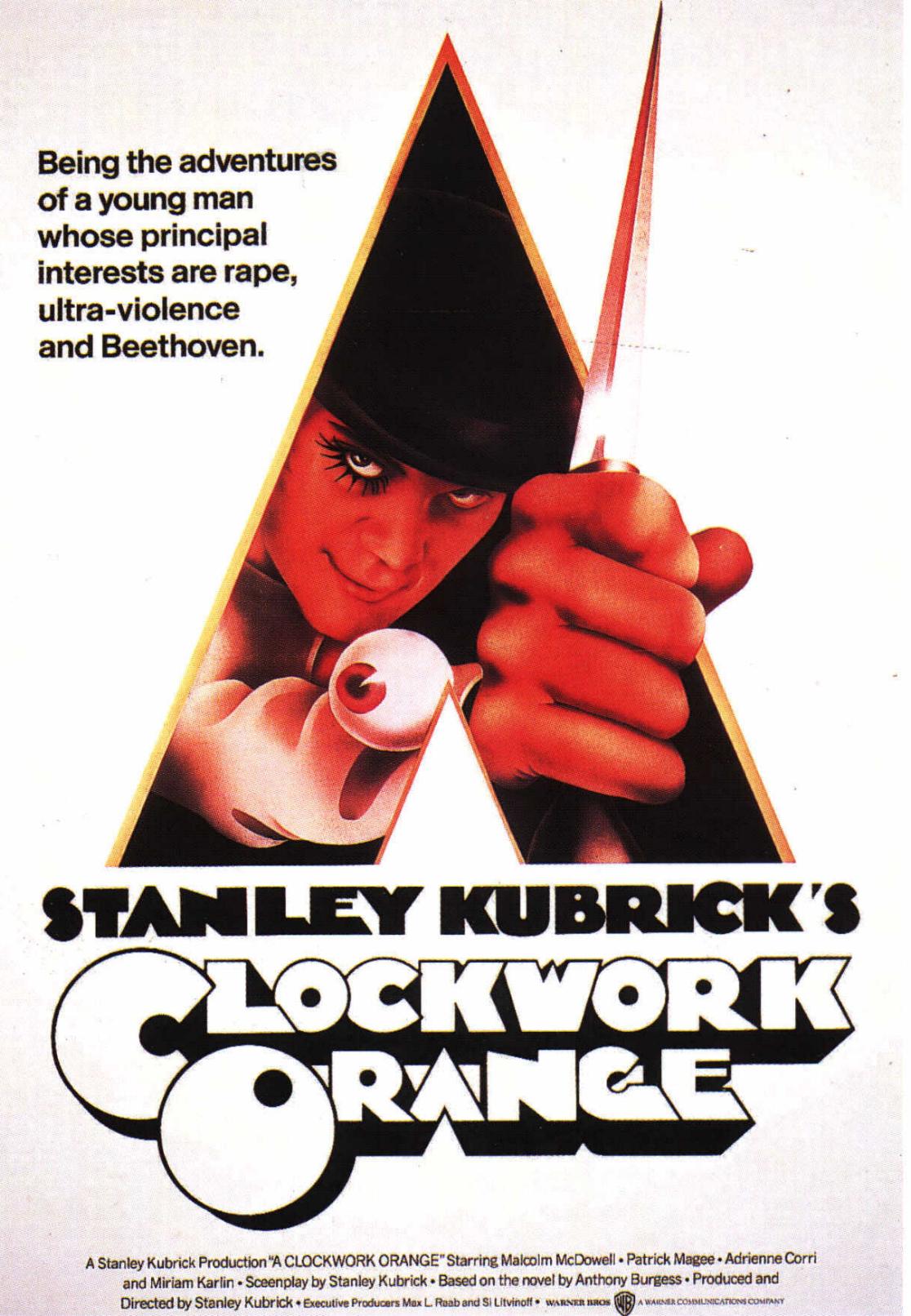
Anthony Burgess' 1962 dystopian novel A Clockwork Orange


Humots

Resources for November 25, 2013


Roger Ebert's classic: "How To Read a Movie."

Alison Nastasi for Flavorwire: "The Most Emotional Scores."

David Hudson for Keyframe: "Georges Lautner, 1926 – 2013: The French director worked with the likes of Ventura, Belmondo, and Delon."


Kelly Heyboer for the Star-Ledger: "Tensions rise at Kean U. as officials recommend denying tenure to 2/3 of eligible professors"

Cara Buckley for The New York Times: "Police Unsure if Random Attacks Are Rising Threat or Urban Myth: ‘Knockout Game’ a Spreading Menace or a Myth."

Noah Isenberg and Rob White in Film Q!uarterly "debate the politics of Roman Polanski's stage play adaptation": "Carnage and All: A Discussion."

Sanford Schwartz for The New York Review of Books: "Surrealism Made Fresh."

Andy Battaglia for Film Comment reviews a new modern score acompanying a recent DVD release of the 1921 classic film The Phantom Carriage: "The Metal Beast: A most unorthodox Victor Sjöström remix."

Merriam-Webster's Dictionary Word-of-the-Day:

dragon's teeth Pronunciation\DRAG-unz-TEETH\
noun
1 : seeds of strife; 2 : wedge-shaped concrete antitank barriers laid in multiple rows

EXAMPLES

The political analyst insisted that the government's policy was misguided and would only sow dragon's teeth by increasing poverty and discontent.

"Assiduously sown by the Kremlin, the dragon's teeth of demagoguery, paranoia, xenophobia, anti-Westernism, intolerance, and obscurantism are bound to yield a toxic harvest when the regime falters or loses control outright." — From an article by Leon Aron, posted October 24, 2013 at american.com

In Nathaniel Hawthorne's The Scarlet Letter, Hester Prynne's child, Pearl, "never created a friend, but seemed always to be sowing broadcast the dragon's teeth, whence sprung a harvest of armed enemies, against whom she rushed to battle." In Hawthorne and elsewhere, "dragon's teeth" alludes to a story involving Cadmus, the legendary Phoenician hero reputed to have founded Thebes and invented the alphabet. The tale holds that Cadmus killed a dragon and planted its teeth in the ground. From the teeth sprang fierce armed men who battled one another until all were dead but five. These founded the noblest families of Thebes and helped build its citadel.

Sunday, November 24, 2013

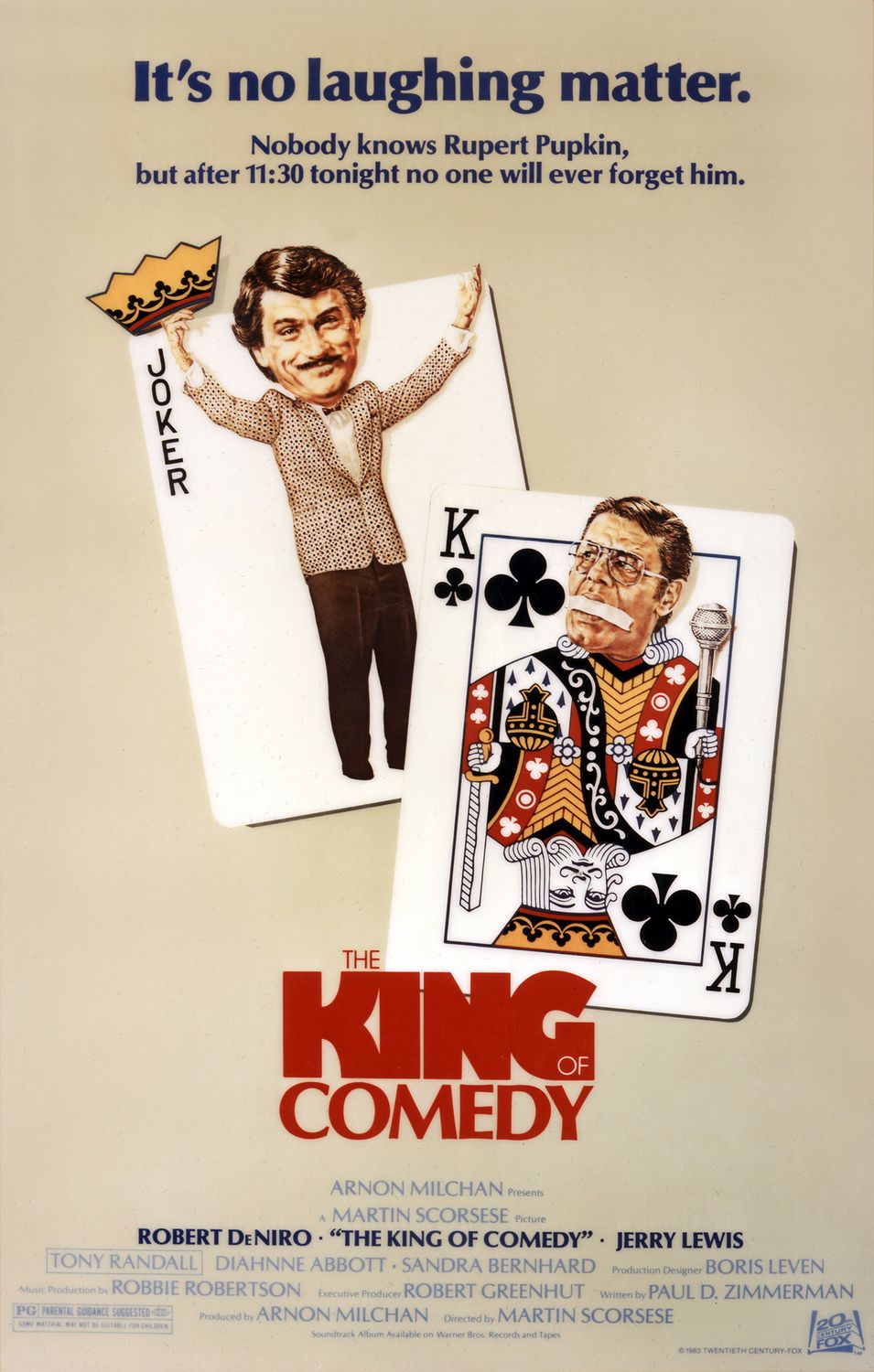
The King of Comedy (USA: Martin Scorsese, 1982)


The King of Comedy (USA: Martin Scorsese, 1982: 109 mins)

Bégaudeau, Francois. "Répliques : Scorsese, A New Overview." Translated by Sally Shafto. Cahiers du Cinema #599 (March 2005): 80-82.

Carvajal, Nelson and Max Winter. "Video Essay: Women in the Works of Martin Scorsese." Press Play (February 7, 2014)

Hynes, Eric, et al. "The King of Cinema." Film Comment (February 14, 2017) ["The lively conversation covers the film’s unsettling mix of humor and discomfort, its open-ended slippage between fantasy and reality, its place in the careers of Scorsese and De Niro, and the myriad ways in which Rupert Pupkin’s name gets hopelessly botched. Listen and enjoy, whether or not your office happens to be a Pupkin-esque setup in a Times Square phone booth."]

Koresky, Michael and Jeff Reichert. "Martin Scorsese: He Is Cinema." Reverse Shot (September 17, 2014)

"A Life in Pictures: Martin Scorsese." BAFTA (April 6, 2011)

Newland, Christina Marie. "Satirical Excess and Empty Vessels: Martin Scorsese's The King of Comedy." Bright Lights Film Journal #80 (May 2013)


Resources for November 24, 2013

A conversation between Manohla Dargis and A.O. Scott in The New York Times: "Film Is Dead? Long Live Movies: How Digital Is Changing the Nature of Movies."

Alison Nastasi for Flavorwire celebrates the 50th Anniversary of Maurice Sendak's Where the Wild Things Are with: "The Greatest Monsters in Children’s Literature."

David Hudson for Keyframe presents Taiwan's 2013 film award winners: "ILO ILO tops the 2013 Golden Horse Awards: The complete list of the winners."

Errol Morris is now making short documentaries for The New York Times: "Errol Morris’ take on the JFK Assassination, “Umbrella Man” is A Cautionary Tale of Non-Conspiracy." and Pt. 2 below:

November 22, 1963 from The New York Times - Video on Vimeo.


Christopher Lydon interviews for Radio Open Source:

James Douglas: "JFK and the Unspeakable. Part One." and "JFK and the Unspeakable, Part Two."

Robert Dallek: "Three Last Questions about JFK."


Frank Bruni for The New York Times examines how class stratification and inequality is becoming a daily part of American lives and is increasingly a part of many of our social/leisure activities: "The Extra Legroom Society"

James Mooney at Filmosophy: "What is Film Studies?"

Vinzenz Hediger for Screening the Past: "What Do we Know When We Know Where Something Is? World Cinema and the Question of Spatial Ordering."

Andrew O'Hehir for Salon: "The movies’ surprising blind spot: Corporate greed."


Frontline is hosting online Steve James' powerful 2011 documentary about former Chicago gang members working on the streets to effectively bring about peace and community: The Interrupters

Saturday, November 23, 2013

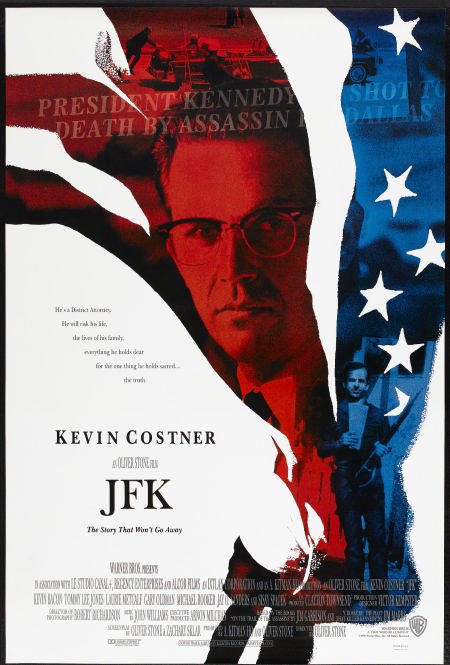
JFK (USA/France: Oliver Stone, 1991)


JFK (USA/France: Oliver Stone, 1991: 189 mins)

Dallek, Robert. "Three Last Questions About JFK." Radio Open Source (November 13, 2013)

Douglas, James. "JFK and the Unspeakable, Pt. 1" and "JFK and the Unspeakable, Pt. 2" Radio Open Source (October 2 and 5, 2013)

Fishko, Sara. "Covering the JFK Assassination." On the Media (October 27, 2017)  ["The day that President John F. Kennedy died, TV was still relatively young. Live, on-site reporting was extremely cumbersome, costly and rare. But that day, the medium, and America’s relationship to it, changed forever. In this piece, originally aired in 2001, WNYC’s Sara Fishko, host of the Fishko Files, spoke with the TV anchors who covered the assassination, the president’s funeral and the attack on Lee Harvey Oswald in real time."]

Kiang, Jessica. "50th Anniversary: 8 JFK Assassination Films That Revisit History." The Playlist (November 20, 2013)

Lee, Kevin B. and Matt Zoller Steitz. "Unreliable Narratives: JFK and the Power of Counter-Myth. [Oliver Stone, Part 2]." Moving Image Source (October 15, 2008)

Morris, Errol and Josiah Thompson. "Errol Morris’ take on the JFK Assassination, “Umbrella Man” is A Cautionary Tale of Non-Conspiracy." The New York Times (November 22, 2011)

---. "November 22, 1963." The New York Times (Hosted on Vimeo: November 22, 2013)

Rosenbaum, Ron. "What the JFK Conspiracy Theories Say About Us." On the Media (October 27, 2017) ["Thousands of previously classified documents related to the assassination of President John F. Kennedy were released this week, while President Trump ordered a review of a few hundred files that were withheld for national security concerns. The document release has been anticipated by conspiracy theorists who still question whether Lee Harvey Oswald acted alone in November 1963, and why. Brooke speaks with journalist Ron Rosenbaum about his long-time interest in the case and how 50 years of searching for answers has changed the "landscape of the American mind.""]

Sampson, Benjamin. "Essay Meets Plot: JFK and the Boundaries of Narrative." [in]Transition (December 12, 2014)

Raging Bull (USA: Martin Scorsese, 1980)


Raging Bull (USA: Martin Scorsese, 1980: 129 mins)

Bégaudeau, Francois. "Répliques : Scorsese, A New Overview." Translated by Sally Shafto. Cahiers du Cinema #599 (March 2005): 80-82.

Carvajal, Nelson and Max Winter. "Video Essay: Women in the Works of Martin Scorsese." Press Play (February 7, 2014)

Hancock, James and Jacob Rivera. "The Sweet Science in Cinema." The Wrong Reel #129 (April 2016)

"'The Invisible Thelma Schoonmaker,' Martin Scorsese's Editor." Filmmaker (July 12, 2017)

Koresky, Michael and Jeff Reichert. "Martin Scorsese: He Is Cinema." Reverse Shot (September 17, 2014)

"A Life in Pictures: Martin Scorsese." BAFTA (April 6, 2011)

LoBrutto, Vincent. "Subtext in Personal Expression: Raging Bull." Becoming Film Literate: The Art and Craft of Motion Pictures. Westport, CT: Praeger, 2005: 236-242. [BCTC Library: PN1994 L595 2005]

Winkler, Irwin. "On Raging Bull." The Metrograph (May 29, 2019) ["They Shoot Horses, Don’t They?, the Rocky franchise, Raging Bull, Goodfellas, De-Lovely, The Wolf of Wall Street: The producing credits of Irwin Winkler are not short on era-defining, money-making classics. In another time, Winkler may have been a household name on the level of a Goldwyn or a Zanuck, but until now, Winkler was content to let his work speak for itself. With the release of his memoir, A Life In Movies, the 88-year-old producer is finally unleashing fifty years of stories behind Hollywood’s defining movies. Ahead of his weekend of screenings at Metrograph, we are pleased to present an exclusive excerpt from Winkler’s memoir. Have you ever seen Raging Bull and wondered how in the world that movie ever got made? Well, now we know."]


Martin Scorsese - The Art of Silence from Tony Zhou on Vimeo.


Resources for November 23, 2013


Ben Blatt for Slate: "A Textual Analysis of The Hunger Games: Suzanne Collins’ favorite adjectives, adverbs, and ways of starting a sentence."

Theodore Dalrymple for City Journal writes about the significance of Anthony Burgess' novel A Clockwork Orange: "A Prophetic and Violent Masterpiece"

Robert W. McChesney and John Nichols for Monthly Review: "The Bull Market: Political Advertising"

Andrea Bennett for Adbusters: "Disaster Advertising: Your mental environment just got a little more saleable."

Garry Watson in Cineaction: "Michael Moore: A Man on a Mission or How Far a Reinvigorated Populism Can Take Us"

I've been working to expand my year-by-year top films from two to three choices (with the ultimate goal of a top ten running from 1930 - present). So it was a pleasant surprise when I came across Justine Smith on House of Mirth and Movies and saw that she has compiled an impressive and daunting year-by-year top ten list of films from 1925-2011 (she also has an interesting regular series of postings on the top ten films viewed each month)

Jeremy Daw for AlterNet: " Mass Federal Raids on Colorado Pot Hint at a Crackdown Pattern: This week's raids occurred almost simultaneously with Colorado's issuance of the first retail marijuana license in the world." Jacob Sullum at Forbes also reports on this: "Medical Marijuana Raids In Colorado Raise Questions About Federal Forbearance"

Donovan Norris for The Eastern Progress: Colonel Mascot Evokes Eastern Kentucky University's Racist Past

Two discussions in Progress Lex about the future of Lexington, KY. Check out the comments on both posts by Danny: Tanzi Merritt: "We Support Local and International Art" and Steve Kay: "Lean Urbanism and Gentrification"

Anthropologist/Geographer David Harvey is interviewed in Jadaliyya: "On Why Struggles Over Urban Space Matter."

Sarah Goodyear for Atlantic Cities: "A Horrifying Story of 'Stop and Frisk' Taken to Its Logical Extreme."

Friday, November 22, 2013

Resources for November 22, 2013

Emily Badger for The Atlantic: "The Next Housing Crash: When the Boomers downsize, what will happen to the suburbs?"

Aisha Harris for Slate shares a satirical video: "If Gravity Was Set in IKEA, It Would Look Like This."

Miriam Krule for Slate: "The Hunger Names"

In case you are not sure what is wrong with police profiling of people who have not committed any crimes or are doing nothing wrong, Julie K. Brown for the Miami Herald: "In Miami Gardens, store video catches cops in the act"

Christopher Lydon Interviews for Radio Open Source:

Biographer Stephen Kinzer: Are the Dulles Brothers finally out of power?

Poet C. D. Wright in Triumph: One With Others


Jane Stadler for Screening the Past: "Affectless Empathy, Embodied Imagination and The Killer Inside Me."

Michel Gondry's new animated film featuring interviews with Noam Chomsky is premiering in theaters this weekend:


Sarah Marie at True African Original posts Egyptian street art protesting sexual terror against women protestors: "Street Graffiti in Cairo: 'Nefertiti' by El Zeft

Shadowboxing posts some photographs of The Women of Asgarda in the Carpathian Mountains (Ukraine) who supposedly banded together to develop as warriors for self-defense against sexual trafficking The Women of Asgarda. Reports about The Women of Asgarda first started surfacing in 2009, but most of them just assumed this was a radical feminist movement. Instead, as Serena N. Kutchinsky reports for Prospect, they are a maternalist nationalist group and reject feminism: "Asgarda: The secrets of Ukraine’s warrior women". Still, as Laura prompted me, even as this nationalist perspective troubles me, I have to admit they seem to be much better than Hollywood's notion of empowered amazons in:


Thursday, November 21, 2013

Resources for November 21, 2013

Matt Taibbi for Rolling Stone created a poetry challenge for his readers, send in a haiku on Chase bank's recent dealings, the response was impressive: "The Winners of the 'Chase Twitter Fail' Haiku Contest"

David Dayen for Salon provides a more sobering look at JP Morgan/Chase's settlement with the Justice Department: "The Much-Ballyhooed JP Morgan Settlement Is Just a Scam! Here's how this so-called "big" fraud settlement is itself a big fraud"


Do you ever wonder what your cat is dreaming about:


Highly recommended film: WR: Mysteries of an Organism


Over at Current they are featuring a new video of Adam Sternbergh interviewing Greta Gerwig on Frances Ha and an interview of the director Noah Baumbach by Peter Bogdanovich on the "Look of Frances Ha"


Raz Greenberg at Strange Horizons reviews Ari Folman's new film The Congress and here is a trailer:


Seamus Milne for The Guardian: "Orthodox economists have failed their own market test: Students are demanding alternatives to a free-market dogma with a disastrous record. That's something we all need."

Wednesday, November 20, 2013

Frances Ha (USA: Noah Baumbach, 2012)

“The perfect movie about what it is to be young and lost and hopeful.” — Tom Charity


Frances Ha (USA: Noah Baumbach, 2012: 86 mins)

Baker, Annie. "Frances Ha: The Green Girl." Current (November 12, 2013)

Baumbach, Noah and Peter Bogdanovich. "The Look of Frances Ha." Current (November 15, 2013)

"Frances Ha, cinematic movement, and the French New Wave." The Film Doctor (November 24, 2013)

Hudson, David. "Noah Baumbach’s Frances Ha: 'You gotta love Greta Gerwig.'” Keyframe (September 4, 2012)

Leuven, Jop. "Frances Ha and the Framing of Friendship." Framed (November 9, 2016)

Murphy, J.J. "Frances Ha." J.J. Murphy on Independent Cinema (January 8, 2014)


Monday, November 18, 2013

Resources for November 19, 2013

Anthony Macris for Screening the Past: "The Immobilised Body: Stanley Kubrick’s A Clockwork Orange."

The new trailer of Darren Aronofsky's upcoming film Noah -- I guess someone thought it was time for a reboot of the Biblical superheroes? or maybe the pitch, was apocalyptic films are hot no more, and nothing is more ol' skool apocalyptic than the story of Noah!:


"13-part documentary series from 1980 - Hollywood: A Celebration of the American Silent Film - is narrated by James Mason for Thames Television."


Christopher Lydon interviews for Radio Open Source:

"David Bromwich on the Disappointment of Obama."

Chef Barbara Massaad in Beirut: Make Food, Not War. Seriously!"

War Reporter "Nir Rosen: the Iraq and Af-Pak Wars, at the Receiving End."

Composer-Conductor Paul Phillips: "Anthony Burgess: Language as Music, and Vice Versa."

Artist/Historian Gregory Buchakjian in Beirut: A Course of Catastrophe

Biographer Jon Szwed: "Alan Lomax and the Salvation of American Song"


James Mooney at Filmosophy: "The Bicycle Thieves and Italian Neorealism"

Léopold Lambert for The Funambulist: "Enveloping Locutions: Body, Racism and Language"

In The Guardian: "Nadezhda Tolokonnikova's (Pussy Riot) prison letters to Slavoj Žižek"

Peter Bradshaw for The Guardian: "Top 10 Arthouse Movies

At Buzzfeed Arnelle Calderon compiles a list of: "27 Surreal Places To Visit Before You Die."

W.R.: Mysteries of an Organism (Yugoslavia/West Germany: Dusan Makavejev, 1971)


W.R.: Mysteries of an Organism (Yugoslavia/West Germany: Dusan Makavejev, 1971: 84 mins)

Barker, Jennifer Lynne. The Aesthetics of Antifascist Film: Radical Projection. Routledge, 2013. [Get through interlibrary loan]

Davidson, David. "Raymond Durgnat (and WR: Mysteries of the Organism)." Toronto Film Review (April 29, 2011)

Durgnat, Raymond. WR: Mysteries of the Organism. London: British Film Institute, 1999. [Professor has a copy]

Halligan, Benjamin. "WR: Mysteries of the Organism by Raymond Durgnat." Senses of Cinema (December 2000)

Mortimer, Lorraine. Terror and Joy: The Films of Dušan Makavejev. University of Minnesota Press, 2009.

---. "WR: Mysteries of the Organism." The Projection Booth #126 (August 6, 2013)

Porton, Richard. "WR: Mysteries of the Organism: Anarchist Realism and Critical Quandaries." LOLA #1 (2011)

Rosenbaum, Jonathan. "WR, Sex, and the Art of Radical Juxtaposition." Current (June 18, 2007)

A Clockwork Orange (UK/USA: Stanley Kubrick, 1971)


A Clockwork Orange (UK/USA: Stanley Kubrick, 1971: 136 mins)

"A Clockwork Orange: Kubrick and Burgess' Vision of the Modern World." Cinephilia and Beyond (ND)

Ager, Rob. "'The Power Drug': An in-depth analysis of Stanley Kubrick’s A Clockwork Orange." Collative Learning (2010)

Aisenberg, Joseph. "Counter Clockwise Or Lay Quiet Awhile with Ed and Id Molotov: Re-examining the Crossed Wires in Kubrick's and Burgess' A Clockwork Orange." Bright Lights Film Journal #61 (August 2008)

Anderson, Nathan. Shadow Philosophy: Plato's Cave and Cinema. Routledge, 2014. [This link provides access to the first 30 pages.]

Beyl, Cameron. "The Directors Series: Stanley Kubrick, Pts. 1-5." The Film Stage (February 11, 2015)

Biswell, Andrew. "A Clockwork Orange." Radio West (August 19, 2016)

Burgess, Anthony. A Clockwork Orange. NY: W.W. Norton, 1986.

---. "A Clockwork Orange Resucked." A Clockwork Orange, Resucked (Introduction to the restored 1986 Norton edition of A Clockwork Orange)

---. "Nadsat Dictionary."

Dalrymple, Theodore. "A Prophetic and Violent Masterpiece." The City Journal (Winter 2006)

Figueras, Mark Anthony. "Kubrick in Color." (Posted on Vimeo: January 2016)

Human Resources: Social Engineering in the 20th Century (Canada: Metanoia Films, 2010: 119 mins)

Kaneria, Rishi. "Red: A Kubrick Supercut." (Posted on Vimeo: 2015)

Kubrick, Stanley. "Screenplay for A Clockwork Orange."

Landekic, Lola. "Pablo Ferro: A Career Retrospective, Part 2." Art of the Title (April 15, 2014)

Macris, Anthony. "The Immobilised Body: Stanley Kubrick’s A Clockwork Orange." Screening the Past (September 2013)

McDowell, Malcolm. "How We Made A Clockwork Orange." The Guardian (April 2, 2019)

Phillips, Paul. "Anthony Burgess: Language as Music, and Vice Versa." Radio Open Source (March 8, 2011)

Rose, Steve. "A Clockwork Orange: The droog rides again." The Guardian (May 11, 2011)


The Work of Stanley Kubrick from Stefano Westerling on Vimeo.


Resources for November 18, 2013


Jay Livingstone for Sociological images provides a look at the critiques of the recent racist comments of Washington Post columnist Richard Cohen: "The New Conventional: Anything Goes."

Mickey Huff and Peter Phillips for Project Censored review the top censored news stories of 2012-2013; discuss with Nolan Higdorn about his new report “Disinfo Wars: Alex Jones’ War on Your Mind”; and play segments from the new Project Censored, The Movie including segments with Howard Zinn: Project Censored - 10/08/13

Charlie Ornstein and Steve Engleberg discuss two reports on the Affordable Care Act for ProPublica: "Why Is Healthcare.gov So Flawed?" and "What Happens to Those Losing Health Coverage Under Obamacare?"

I'm working with a collective of critical criminologists to build a new portal/website - "We are a critical social justice collective dedicated to fostering an appreciation of the dialectics of crime, justice, and social harm. This international multidisciplinary collaborative effort is founded on the radical perspective that altering the social relations of work and learning can generate substantial structural social change. Our goals are to (1) provide our audience with alternative resources regarding criminalization, inequality, and social harm as well as (2) encourage more action-oriented relationships with groups or social phenomena of study. We also come together in attempt to foster social change through critical, creative, and productive resistance.": Uprooting Criminology: A Reasoned Plot

Recommended film:


Interviews conducted by Chris Lydon for Radio Open Source:

Archaeologist Ian Morris: "Ian Morris’s East-West History of an Endangered Species: Us"

Poet C.K. Williams: "C. K. Williams on Whitman’s Music: Whose Words These Are (30)."

Damion Searls: " Rainer Maria Rilke for Beginners: Whose Words These Are (31)."

Friday, November 15, 2013

Resources for November 15, 2013

Jandy Hardesty for Row 3: "Guy Maddin Blogathon: Confessions of a Maddin Newbie>"

Pernicone, Nunzio. Carlo Tresca: Portrait of a Rebel. Oakland, CA: AK Press, 2010.


Annie Baker for Current convinced me that I should see Noah Baumach's Frances Ha (2012): "Frances Ha: The Green Girl

Nick Turse is interviewed on Democracy Now about his recent history of the Vietnam War: "Kill Anything That Moves: New Book Exposes Hidden Crimes of the War Kerry, Hagel Fought in Vietnam."


Michael Dean Benton for North of Center: "“he could resist”: The Lexington Tattoo Project and A Noosed Life."

Dialogic Cinephilia operates from the perspective/belief that in order to understand world cinema, one must attempt to learn about the world. To help people explore news/cultural resources beyond the mainstream corporate media: "Resources for (Re)Thinking the World

David Graeber for The Baffler: "A Practical Utopian’s Guide to the Coming Collapse."


Sam Buntz for Fare Forward: "A Flaw in the Light: Thoughts on The Counselor."

Susan Courtney for Genders: "Picturizing Race: Hollywood's Censorship of Miscegenation and Production of Racial Visibility through Imitation of Life"

Julien Allen for Moving Image Source: "Modern Romance: A fresh look at Roberto Rossellini's newly restored masterpiece Journey to Italy"


Carole McGranahan for Savage Minds: "Made in China: Notes from the CIA Giftshop."

Recommended film:

Thursday, November 14, 2013

My Winnipeg (Canada: Guy Maddin, 2007)


My Winnipeg (Canada: Guy Maddin, 2007: 80 mins)

Baker, Nicholson, et al. "Autobiography/Biography: Narrating the Self." Philoctetes (December 13, 2008)

Fitch, Alex. "Guy Maddin and the Mythologising of Winnipeg." Electric Sheep Magazine (July 1, 2011)

Hardesty, Jandy. "Guy Maddin Blogathon: Confessions of a Maddin Newbie." Row 3 (September 23, 2011)