Saturday, September 17, 2022

Film Studies Resources: September 17, 2022

Almaric, Matthieu and Vicky Kreps. "Hold Me Tight." Film At Lincoln Center Podcast (September 8, 2022) ["Vicky Krieps (Phantom Thread, Bergman Island) gives another riveting performance as Clarisse, a woman on the run from her family for reasons that aren’t immediately clear. Widely renowned as an actor but less well-known here for his equally impressive work behind the camera, Mathieu Amalric’s sixth feature directorial outing—his most ambitious to date—is a virtuosic, daringly fluid portrait of one woman’s fractured psyche. Alternating between Clarisse’s adventures on the road and her abandoned husband Marc (Arieh Worthalter) as he struggles to take care of their children at home, Amalric’s film keeps viewers uncertain as to the reality of what they’re seeing until the final moments of this richly rewarding, moving, and unpredictable portrait of grief."]

Borden, Carol. "Flux Gourmet (UK 2022)." Monstrous Industry (September 13, 2022) ["Flux Gourmet contains many of Strickland’s pre-occupations: the creation of art; presenting one’s work to an audience; the line between popular art and fine / avant garde art; attempting to access senses that are hard to access through film–here, smell, taste, and a somatic sense of gastric pressure; “Eurosleaze” and “Eurotrash” film, including a nice reference to Danger: Diabolik (1968); almost operatic fashion; and, of course, soundscapes and sound design. It’s all presented in Strickland’s lush, polished visuals; warm, saturated colors; and deep, mesmerizing sound design much of which is created by Strickland’s Sonic Catering Band."]

Crim, Brian and Lia Paradis. "Who Can You Trust?" New Books in Popular Culture (September 7, 2022) ["Can you imagine living in a society that is ostensibly a democracy but secret forces are working behind the scenes to manipulate events? What if our intelligence agencies run amok with no oversight? What if the president is a criminal and would do anything to stay in power? These sound like current events, but they were major preoccupations during the 1970s in the wake of Watergate and congressional hearings about CIA and FBI abuses. Hollywood responded by dramatizing the unfettered power of what some like to call “the deep state” in three films we cover this episode - The Parallax View (1974), The Three Days of the Condor (1975), and All The President’s Men (1976). Each features protagonists unraveling conspiracies at the heart of our national security state, but is exposing the truth enough?"]

Kiang, Jessica. "TÁR: a sly, scabrous symphony." (September 2, 2022) ["Cate Blanchett is mesmerising as a monstrous orchestra conductor in Todd Field’s latest masterpiece, one of the most grippingly brilliant films of the year."]

Mooney, Shannon. "Sticking to the Script: Constructions of Sonic Whiteness in Get Out and Sorry to Bother You." Supernatural Studies 7.2 (131-154) ["This article places Jordan Peele’s Get Out (2017) into conversation with Boots Riley’s Sorry to Bother You (2018) in order to explore how both films represent whiteness as a penetrative sonic force that can be both heard and recognized. I explore how these two films challenge the popular notion that whiteness, unlike Blackness, is an empty and neutral signifier; instead, these films present whiteness as a racial category that possesses distinct sonic registers. Through their engagements with neoslavery, minstrelsy, and racial passing, these films parody the ways that Blackness has become socially and culturally constructed as “sounding” a certain way, and instead depict whiteness as something that can be aurally recognized and imitated. Through probing at their constructions of sonic whiteness, both Get Out and Sorry to Bother You problematize how popular audiences have been trained to hear (as well as see) race and respond to a longer history of the racialization of sound."]

Nolan, Amy. "The Sunken Place and the 'Electronic Elsewhere' of Jordan Peele’s Get Out." Supernatural Studies 7.2 (2022) ["One of the most compelling uses of analog technology in contemporary horror thus far is Jordan Peele’s use of the television as reflection of and portal to the Sunken Place in Get Out (2017). From the time that the television was invented, the combination of sound and image has magnified the ghostly possibilities of reproduction. According to Jeffrey Sconce, “the paradox of visible, seemingly material worlds trapped in a box in the living room and yet conjured out of nothing more than electricity and air, [wherein] the ‘electronic elsewhere’ generated by television was thus more palpable and yet every bit as phantasmic the occult empires of previous media’” (126). Peele shows us the “electronic elsewhere” by connecting the Sunken Place to the analog television set as a signifier of protagonist Chris Washington’s repressed memory of his mother’s death. The television becomes an extension of the national nightmare and personal trauma that overshadow Chris’s adult life. Get Out is a distinctive, twenty-first century story, yet it draws from earlier horror films that focus on humanity’s relationship with technology."]

Pritz, Alex. "The Territory." Film School Radio (August 18, 2022) ["In his debut feature documentary THE TERRITORY Alex Pritz provides an immersive look at the tireless fight of the Amazon’s Indigenous Uru-Eu-Wau-Wau people against the encroaching deforestation brought by farmers and illegal settlers. With awe-inspiring cinematography showcasing the titular landscape and richly textured sound design, the film takes audiences deep into the Uru-Eu-Wau-Wau community and provides unprecedented access to the farmers and settlers illegally burning and clearing the protected Indigenous land. Partially shot by the Uru-Eu-Wau-Wau people, THE TERRITORY relies on vérité footage captured over three years as the community risks their lives to set up their own news media team in the hopes of exposing the truth. Director Alex Pritz joins us for a informative conversation on the importance that he placed an even-handed approach to conveying the disparate strands of a complex story whose outcome will have a profound impact on the indigenous Uru-Eu-Wau-Wau people, the region surrounding the Amazon rainforest and planet Earth."]

"Pulse." Horror Vanguard #222 (September 6, 2022) [Movie description: "Two groups of people discover evidence that suggests spirits may be trying to invade the human world through the Internet."]

Sweedler, Milo. "Art, activism, sales calls, and slave labor: Dialectics in Sorry to Bother You." Jump Cut #61 (Fall 2022) ["Boots Riley’s debut film, Sorry to Bother You (2018), is one of the great anti-capitalist films of the early twenty-first century. Although Riley characterizes the movie as “an absurdist dark comedy with magical realism and science fiction,” which it is, the film also provides one of the most clear-sighted accounts of grassroots class struggle to appear in mainstream North American narrative cinema in decades (“Beautiful Clutter”). As witty, playful, and delightfully quirky as it is, Riley’s tale of an ethically compromised telemarketer, his artist-activist girlfriend, and the labor organizer that unionizes their workplace sheds brilliant light on the class struggle today. I analyze here two different kinds of dialectics that Riley uses in telling his story of class conflict in an alternate present-day Oakland, California. One the one hand, a narrative technique used repeatedly in the film is dialectical in the Ancient Greek sense of staging a debate between interlocutors holding different points of view. On the other hand, numerous scenes in the film set up a contradiction that the movie momentarily resolves, often in unexpected ways, before introducing a new element that complicates the resolved contradiction. If, as Karl Marx argued more than 150 years ago, “What constitutes dialectical movement is the coexistence of two contradictory sides, their conflict and their fusion,” Sorry to Bother You is dialectical in this way, too (Poverty of Philosophy 108). This article examines how these two dialectics shape Riley’s class-conscious film."]



Tuesday, September 13, 2022

ENG 101/102 Resources: September 13, 2022

Biagetti, Samuel. "China, pt. 2 -- Water and Music: Early Chinese Philosophy." Historiansplaining (August 30, 2022) ["We consider how the crisis of legitimacy and breakdown of order following the downfall of the Zhou dynasty spurred on a flowering of philosophy, as various scholars and sages sought new principles to guide life and achieve harmony, giving rise to the enduring teachings of Taoism and Confucianism, as well as other long-forgotten sects ranging from draconian legalists to humanitarian pacifists."]

Biltsted, Tauno. "Black Sheep of all Classes: Fifty Years of Consensus Politics in Christiania."  The Institute for Anarchist Studies (August 4, 2022) ["Anyone who has been involved in a group project that strives for consensus knows that working shit out together is hard. It’s challenging to collectively do the work of assessing options, making decisions, and executing plans that sometimes carry real individual and collective risks, even when members of a group are aligned through culture, ideology, issue, place, or common interests. And it sometimes feels impossible when there are cleavages along lines of race, gender, class, experiences of trauma, generational differences, and other differences within a group. And where even one person has shifting moods and states of mind, any group of people contains a confounding palette of shifting unconscious drives, implicit biases, and personal idiosyncrasies that can harden into a clash of personalities or factionalism that has sunk many a revolutionary project, cooperative, band, collective, or community gardening group. The Freetown of Christiania, in Copenhagen, Denmark, has been practicing a form of medium-scale consensus democracy for half a century. This look at Christiania’s system of direct democracy is written with the hope that considering some of the social and political qualities that contribute to the durability of Christiania’s sustained experiment in direct democracy might be useful to other groups and places practicing their own forms of horizontal self-governance."]

Carlsson, Chris. "Who’s Processing Whom? Digital Commons, Digital Blinders, and a Fraught Social Future." The Institute for Anarchist Studies (August 16, 2022) ["By the mid-1990s, a so-called New Economy based on the Internet was becoming visible. A Gold Rush mentality quickly took over with a frenzy of frothing investments in vaporware and cyber-fantasies of all sorts. A few got very, very rich before the storied bust of 2001. Public policy further exacerbated the concentration of wealth and the rise of dire poverty. The “miracle” of computer riches hovered over the Bay Area, even while the vast majority of the population struggled on in the same jobs with the same wages, if they had work at all. But the inflation of housing costs thanks to the tidal wave of new wealth that poured into real estate radically disrupted the daily lives of millions. During the early years of the century, few of us knew that a whole new model of wealth accumulation was being developed behind the shiny noise of the New Economy. Surveillance capitalism was born in the advertising trenches, primarily at Google, but was soon expanded upon by the likes of Facebook, Microsoft, Twitter, and other behemoths. As Shoshana Zuboff aptly analyzes it in The Age of Surveillance Capitalism, the tech giants had turned our everyday lives into the objectified raw material from which it extracted the data that it sold to advertisers. As she notes, “[Google] thus created out of thin air and at zero marginal cost an asset class of vital raw materials derived from users’ nonmarket online behavior.” To a real extent, this represented a peculiar new form of capitalist enclosure, but this time, rather than being focused on land, it was ingeniously applied to everything we do."]

Ehrenreich, Barbara. "RIP Barbara Ehrenreich: Exposed Inequality in “Nickel and Dimed,” Opposed Health-Industrial Complex." Democracy Now (September 5, 2022) ["We remember the author and political activist Barbara Ehrenreich, who has died at the age of 81 after a career exposing inequality and the struggles of regular people in the United States. In a brief interview, Democracy Now! co-host Juan González recalls working with Ehrenreich as part of the Young Lords and says she was instrumental for the movement against the American health-industrial complex. “She’s really one of the towering figures of the radical and progressive movement in America, and it’s a tremendous loss, not only to her family but to all who knew her and benefited from her work,” he says. We also air part of a 2011 interview with Ehrenreich on Democracy Now! upon the re-release of her landmark book, Nickel and Dimed: On (Not) Getting By in America. “Jobs that don’t pay enough to live on do not cure poverty. They condemn you, in fact, to a life of low-wage labor and extreme insecurity,” she said." Ehrenreich is also the author of Bright-sided: How Positive Thinking Is Undermining America and Bait and Switch: The (Futile) Pursuit of the American Dream ]

Enns, Peter. The Sin of Certainty: Why God Desires Our Trust More Than Our "Correct" Beliefs. Harper Collins, 2016. ["The controversial evangelical Bible scholar and author of The Bible Tells Me So explains how Christians mistake “certainty” and “correct belief” for faith when what God really desires is trust and intimacy. With compelling and often humorous stories from his own life, Bible scholar Peter Enns offers a fresh look at how Christian life truly works, answering questions that cannot be addressed by the idealized traditional doctrine of “once for all delivered to the saints.” Enns offers a model of vibrant faith that views skepticism not as a loss of belief, but as an opportunity to deepen religious conviction with courage and confidence. This is not just an intellectual conviction, he contends, but a more profound kind of knowing that only true faith can provide. Combining Enns’ reflections of his own spiritual journey with an examination of Scripture, The Sin of Certainty models an acceptance of mystery and paradox that all believers can follow and why God prefers this path because it is only this way by which we can become mature disciples who truly trust God. It gives Christians who have known only the demand for certainty permission to view faith on their own flawed, uncertain, yet heartfelt, terms."]

Gershman, Samuel J. "On Thomas Kuhn's The Structure of Scientific Revolutions." Writ Large (September 8, 2002) ["In 1962, American philosopher of science Thomas Kuhn published The Structure of Scientific Revolutions. Kuhn was struck by Aristotle’s beliefs about motion. Actually, he thought that those theories didn’t make any sense. But he also knew that Aristotle was one of the smartest philosophers of the ancient world. Kuhn realized that if Aristotle was stuck within his own way of seeing the world, then so are we. His ideas about scientific revolutions changed the way we perceive and teach science. Samuel J. Gershman is an associate professor in the Department of Psychology at Harvard University. His research focuses on environmental knowledge and adaptive behavior, memory, and computational neuroscience."]

Mangual, Rafael. "America's Failed Criminal Justice Experiment." Conversations with Coleman (August 22, 2022) ["Rafael is a fellow at the Manhattan Institute and Head of Research at their policing and public safety initiative. His new book is called Criminal (In)Justice: What the Push for Decarceration and Depolicing Gets Wrong and Who It Hurts Most. In this episode, we discuss the nationwide push for defunding and de-policing starting in the summer of 2020. We talk about the so-called root causes of crime. We talk about Ava DuVernay's documentary "13th" and Michelle Alexander's book The New Jim Crow. We discuss the causes of mass incarceration. We talk about cash bail and bail reform. We also go on to talk about legalizing weed and much more."]

Nolan, Amy. "The Sunken Place and the 'Electronic Elsewhere' of Jordan Peele’s Get Out." Supernatural Studies 7.2 (2022) ["One of the most compelling uses of analog technology in
contemporary horror thus far is Jordan Peele’s use of the television as reflection of and portal to the Sunken Place in Get Out (2017). From the time that the television was invented, the combination of sound and image has magnified the ghostly possibilities of reproduction. According to Jeffrey Sconce, “the paradox of visible, seemingly material worlds trapped in a box in the living room and yet conjured out of nothing more than electricity and air, [wherein] the ‘electronic elsewhere’ generated by television was thus more palpable and yet every bit as phantasmic the occult empires of previous media’” (126). Peele shows us the “electronic elsewhere” by connecting the Sunken Place to the analog television set as a signifier of protagonist Chris Washington’s repressed memory of his mother’s death. The television becomes an extension of the national nightmare and personal trauma that overshadow Chris’s adult life. Get Out is a distinctive, twenty-first century story, yet it draws from earlier horror films that focus on humanity’s relationship with technology."]

Sweedler, Milo. "Art, activism, sales calls, and slave labor: Dialectics in Sorry to Bother You." Jump Cut #61 (Fall 2022) ["Boots Riley’s debut film, Sorry to Bother You (2018), is one of the great anti-capitalist films of the early twenty-first century. Although Riley characterizes the movie as “an absurdist dark comedy with magical realism and science fiction,” which it is, the film also provides one of the most clear-sighted accounts of grassroots class struggle to appear in mainstream North American narrative cinema in decades (“Beautiful Clutter”). As witty, playful, and delightfully quirky as it is, Riley’s tale of an ethically compromised telemarketer, his artist-activist girlfriend, and the labor organizer that unionizes their workplace sheds brilliant light on the class struggle today. I analyze here two different kinds of dialectics that Riley uses in telling his story of class conflict in an alternate present-day Oakland, California. One the one hand, a narrative technique used repeatedly in the film is dialectical in the Ancient Greek sense of staging a debate between interlocutors holding different points of view. On the other hand, numerous scenes in the film set up a contradiction that the movie momentarily resolves, often in unexpected ways, before introducing a new element that complicates the resolved contradiction. If, as Karl Marx argued more than 150 years ago, “What constitutes dialectical movement is the coexistence of two contradictory sides, their conflict and their fusion,” Sorry to Bother You is dialectical in this way, too (Poverty of Philosophy 108). This article examines how these two dialectics shape Riley’s class-conscious film."]

Zadra, Antonio. "Why and How Do We Dream." The Joy of Why (August 24, 2022) ["Dreams are so personal, subjective and fleeting, they might seem impossible to study directly and with scientific objectivity. But in recent decades, laboratories around the world have developed sophisticated techniques for getting into the minds of people while they are dreaming. In the process, they are learning more about why we need these strange nightly experiences and how our brains generate them. In this episode, Steven Strogatz speaks with sleep researcher Antonio Zadra of the University of Montreal about how new experimental methods have changed our understanding of dreams."]


Tuesday, September 6, 2022

ENG 101/102 Resources: September 5, 2022

Arıkan, Yağız. "Get Out." Film Critique (2018) ["When we see a horror film, we usually have a faint idea on the style or the content. We expect to be scared or surprised by a creepy clown, a monster or a killer. In the horror film "Get Out" by Jordan Peele, we do get surprised, not by one of the mentioned above but with an unexpected message on racism, and on our society. In this video, I explain how this message is portrayed, and if he really stays true to the roots of the horror genre."]

Blackard, Cat, et al. "The Lighthouse (2019)." Horror Queers (August 24, 2022) ["We know yer fond of our lobster because we're talking about Robert Eggers' 2019 treatise on homoeroticism and toxic masculinity, 'The Lighthouse.' Joining us to discuss yet another wet'n'wild island movie is The Call of Cthulhu Mystery Program's Cat Blackard. We discuss Eggers' trademark dedication to technical precision, shooting conditions in Nova Scotia, Androeroticism, defending Robert Pattison (and his accent), 'The Lighthouse' as rom com (with farts) and Cat’s own epic monologue around the 43:30 minute mark."]

Brown, Alfie. "Dream Lovers: The Gamification of Relationships (Pluto Press, 2022)." New Books in Science, Technology, and Society (August 24, 2022) ["We are in the middle of a 'desirevolution' - a fundamental and political transformation of the way we desire as human beings. Perhaps as always, new technologies - with their associated and inherited political biases - are organising and mapping the future. What we don’t seem to notice is that the primary way in which our lives are being transformed is through the manipulation and control of desire itself. Our very impulses, drives and urges are 'gamified' to suit particular economic and political agendas, changing the way we relate to everything from lovers and friends to food and politicians. Digital technologies are transforming the subject at the deepest level of desire – re-mapping its libidinal economy - in ways never before imagined possible. From sexbots to smart condoms, fitbits to VR simulators and AI to dating algorithms, the 'love industries' are at the heart of the future smart city and the social fabric of everyday life. Alfie Bown's Dream Lovers: The Gamification of Relationships (Pluto Press, 2022) considers these emergent technologies and what they mean for the future of love, desire, work and capitalism."]

Chappell, Paul K. Soldiers of Peace: How to Wield the Weapon of Nonviolence with Maximum Force. Easton Studio Press, 2017. ["Soldiers of Peace, by West Point graduate and Iraq War veteran Paul K. Chappell, is the sixth book in his seven-book Road to Peace series. The titles in this important series can be read in any order. All are about waging peace, ending war, the art of living, and what it means to be human. In a world where so many “solutions” deal with surface symptoms rather than the root causes of our problems, Chappell's books provide real guidance we can follow to change ourselves and change the world for the better. In Soldiers of Peace, Paul discusses how to wield the weapon of nonviolence with maximum force so that we can understand, confront, and heal our personal and societal wounds. To create realistic peace we must be as well trained in waging peace as soldiers are in waging war. Chappell discusses how our misunderstanding of peace and violence originate from our misunderstanding about reality and the human condition itself. This book offers a new paradigm in human understanding by dispelling popular myths and revealing timeless truths about the reality of struggle, rage, trauma, empathy, the limitations of violence, the power of nonviolence, and the skills needed to create lasting peace. Through the educational initiative of peace literacy and the metaphor of the constellation of peace, Soldiers of Peace offers a practical framework so that all of us can apply this new paradigm to our daily lives, and therefore create realistic peace within our friendships, families, workplaces, communities, nations, and the entire world. In a time of increased strife and violence in our society, this book is more critically needed than ever."]

Cockburn, Jay, et al. "Gamify Everything: Turning Work Into Play." Darts and Letters (August 24, 2022) ["Setting goals for the new year? Learning a language? Going for a run? Delivering food? Picking packages off a warehouse shelf for delivery? There’s a game for that. Or, at least, a gamified system designed to nudge you in a series of pre-programmed directions in the service of the state, techno-capitalist overlords, or any number of other groups and entities that chart the course of our hyper-connected, cutting-edge, dystopian 21st century lives. On this episode of Darts and Letters, guest host Jay Cockburn and our guests take us through the gamification of…everything."]

Jan, Ammar Ali. "The Floods Devastating Pakistan Are More Than a Natural Disaster."Jacobin (September 3, 2022) ["A decade since the last mega-floods that hit Pakistan in 2010, the country is once again reeling from devastation on an unimaginable scale. Monsoon rains and melting glaciers have combined to displace at least 35 million people from their homes while over a thousand people are already reported dead. It is estimated that Pakistan is losing at least $10 billion due to the widespread destruction caused by the floods. Moreover, agriculture and livestock has been destroyed on a massive scale, triggering fears of severe food shortages in the coming months."]

Kafalier, Utku. "Call Me By Your Name." FilmCritique #1 (ND) ["When one finishes watching Call Me by Your Name (Guadagnino, 2017), the image that is stuck with them is the main character Elio, crying in front of a fireplace as the credits roll and Sufjan Steven's song plays out. This is not surprising since it is the last image of the movie and it is stuck there for a long time. Naturally we are likely to remember it the most. What is interesting is why this is chosen as the image that the movie wanted to leave us with in this particular way. There may be several implications for this choice and in this essay I will go through it from the realist movie perspective by dissecting the nature of the long take and its placement within the movie. After that, I will talk about the scene with its archetypal implications with mythic theories and will try to understand why the movie specifically wanted this image to be representative of the film."]

Mialon, Melissa. "Big Food & Co. (Thierry Soucar Editions, 2021)." New Books in Food (August 26, 2022) ["In the 1960s and 1970s, the exposure of Big Tobacco’s aggressive lobbying and internal efforts to obscure science showcasing the harmful effects of smoking changed U.S. public opinion of the industry and of product safety protocols, both of which had largely obscured these harms from public view for decades. Public awareness grew, triggering regulation on disclosure related to political influencing strategies, marketing tactics, and transparency regarding the devastating toll of tobacco products on many communities, including and especially children. As similar approaches to assessing the public health impacts of Big Oil and Big Pharma, among other industries, have gained traction in recent decades, Dr. Mélissa Mialon’s new book, Big Food & Co (Thierry Souccar Editions, 2021), adds the amalgamation of multinationals and transnational supply chains that make up Big Food, to that list. Rising health inequities across race, class, and geography are subtle, yet central themes throughout Dr. Mialon’s meticulous accounting of a complex puzzle in which the marketing and distribution strategies of soft drink companies and ultra-processed food manufacturers are quietly but steadily ushering in a new globalized era of related public health crises – measured by increasing rates of of diabetes, cancers, and heart disease, etc– a crisis that has long been felt in the United States. Whether branding t-shirts and games at summer camps in France for underprivileged children or blanketing entire streets in Mauritius with the unmistakable bright red and white flag of Coca-Cola, Dr. Mialon describes a taxonomy of commercial determinants of health common to nearly every example – whether multinational food companies’ policy advocacy in Colombia, public-private partnerships in Brazil, or culturally responsive branding for holidays in Southern Africa. Between academic research and investigative journalism, the survey of trends in Big Food’s operation, marketing, and regulatory capture, offered throughout the book are additionally grounds for laying out a policy roadmap with public health indicators at the center of a wide range of potential reforms including campaign finance and heightened disclosure protocols for public-private partnerships to mitigating conflicts of interest in scientific studies related to food, agriculture, and health, among many others. Dr. Mélissa Mialon is Research Assistant Professor at Trinity College Dublin, in Ireland. She is a food engineer with a PhD in nutrition and co-coordinates the « Governance, Ethics and Conflicts of Interest in Public Health » (GECI-PH) network, based out of the American University of Beirut in Lebanon. Her research focuses on commercial determinants of health, and particularly on the practices used by corporations to influence public health policy, research and practice."]

Scott, Brett. "Cloudmoney: Cash, Cards, Crypto, and the War for Our Wallets (Harper Business, 2022)." New Books in Economics (August 24, 2022) ["In Cloudmoney: Cash, Cards, Crypto, and the War for Our Wallets (Harper Business, 2022), Brett Scott tells an urgent and revelatory story about how the fusion of Big Finance and Big Tech requires “cloudmoney”—digital money underpinned by the banking sector—to replace physical cash. He dives beneath the surface of the global financial system to uncover a long-established lobbying infrastructure: an alliance of partners waging a covert war on cash. He explains the technical, political, and cultural differences between our various forms of money and shows how the cash system has been under attack for decades, as banking and tech companies promote a cashless society under the banner of progress. Cloudmoney takes us to the front lines of a war for our wallets that is also about our freedom, from marketing strategies against cash to the weaponization of COVID-19 to push fintech platforms, and from there to the rise of the cryptocurrency rebels and fringe groups pushing back. It asks the most pressing questions: Who benefits from a cashless society and who gets left behind? Is the end of cash the end of true privacy? And is our cloudmoney future closer than we think it is?"]

Sonnenberg, Rhonda. "Unbanning History: Georgia teen organizers fight back against school censorship." Southern Poverty Law Center (September 2, 2022)


Film Studies Resources: September 6, 2022

Ackerman, Bill, et al. "Stephen Sayadian." Director's Club #203 (August 15, 2022) ["Guest host Bill Ackerman invites film/culture writer Heather Drain and writer/programmer Justine Smith to discuss the films of Stephen Sayadian (aka Rinse Dream), the singular talent behind films like NIGHTDREAMS, CAFÉ FLESH and DR. CALIGARI. As an added bonus, Bill also includes a new interview with writer/historian/film preservationist Daniel Bird, who produced the 2021 4K restoration of DR. CALIGARI and is presently working on an upcoming restoration of CAFÉ FLESH."]

Acolytes of Horror. "The Green Knight: The Uncanny Horror of Masculinity." (Posted on Youtube: October 29, 2021) [Movie description: "WHEN HONOR WAS EVERYTHING. An epic fantasy adventure based on the timeless Arthurian legend, The Green Knight tells the story of Sir Gawain, King Arthur’s reckless and headstrong nephew, who embarks on a daring quest to confront the eponymous Green Knight, a gigantic emerald-skinned stranger and tester of men."]

Arıkan, Yağız. "Get Out." Film Critique (2018) ["When we see a horror film, we usually have a faint idea on the style or the content. We expect to be scared or surprised by a creepy clown, a monster or a killer. In the horror film "Get Out" by Jordan Peele, we do get surprised, not by one of the mentioned above but with an unexpected message on racism, and on our society. In this video, I explain how this message is portrayed, and if he really stays true to the roots of the horror genre."]

Beyl, Cameron. "Christopher Nolan: Tenet." The Directors Series (August 22, 2022)

Blackard, Cat, et al. "The Lighthouse (2019)." Horror Queers (August 24, 2022) ["We know yer fond of our lobster because we're talking about Robert Eggers' 2019 treatise on homoeroticism and toxic masculinity, 'The Lighthouse.' Joining us to discuss yet another wet'n'wild island movie is The Call of Cthulhu Mystery Program's Cat Blackard. We discuss Eggers' trademark dedication to technical precision, shooting conditions in Nova Scotia, Androeroticism, defending Robert Pattison (and his accent), 'The Lighthouse' as rom com (with farts) and Cat’s own epic monologue around the 43:30 minute mark."]

Bushi, Ruth. "The Witch Explained (2015): The Horrors of True History." The Haughty Culturalist (March 23, 2022) ["Religious extremism, misogyny and madness stoke fears of the supernatural in The Witch, a folk tale rooted in horror and history."]

Kafalier, Utku. "Call Me By Your Name." FilmCritique #1 (ND) ["When one finishes watching Call Me by Your Name (Guadagnino, 2017), the image that is stuck with them is the main character Elio, crying in front of a fireplace as the credits roll and Sufjan Steven's song plays out. This is not surprising since it is the last image of the movie and it is stuck there for a long time. Naturally we are likely to remember it the most. What is interesting is why this is chosen as the image that the movie wanted to leave us with in this particular way. There may be several implications for this choice and in this essay I will go through it from the realist movie perspective by dissecting the nature of the long take and its placement within the movie. After that, I will talk about the scene with its archetypal implications with mythic theories and will try to understand why the movie specifically wanted this image to be representative of the film."]


Rosen, Ido. "Divine Smells: Odorama, Melodrama, and the Body in John Waters' Polyester." Open Screens 5.1 (2022)  ["The comedy Polyester (John Waters, 1981) introduced a new cinematic experience. The screenings were accompanied by the Odorama technique in the form of a ‘scratch and sniff’ card that was handed to viewers in the movie theater. There has yet to be a serious examination of Odorama, which is usually dismissed as nothing more than a gag. This essay shows that Odorama has sophisticated subversive qualities. It confirms scholars’ and critics’ view that Polyester was a turning point in the career of Waters, one of the most important queer filmmakers of all times. The film is frequently seen as his transition from the realm of anarchistic midnight movies to mainstream cinema. This shift was disappointing to many fans, some of whom even considered it betrayal. By contrast, it is argued here that although the film was made by a distinguished auteur, it is also a parody of classic Hollywood melodramas, and playfully adopts the genre’s conventions. Unlike Waters’ previous films, in Polyester the critical ideas are all beneath the surface. It criticizes social norms, middle class values, hypocritical and fraudulent images, ‘conventional’ families, and gender dichotomies in society and their representations in the cinema. However, this is disguised in a borrowed aesthetic, and expressed through a cunning tactic which some audiences and critics missed entirely."]

"The Wailing." Horror Vanguard #218 (August 9, 2022) [The Wailing description: "NEVER BE TEMPTED. A stranger arrives in a little village and soon after a mysterious sickness starts spreading. A policeman is drawn into the incident and is forced to solve the mystery in order to save his daughter."]

"We're All Going to the World's Fair." Horror Vanguard #219 (August 16, 2019) ["We can't believe that we didn't get to this one sooner. Director Jane Schoenbrun absolutely kills it with a deeply jarring, but also deeply honest, exploration of the horrors lurking in contemporary online isolation."]

Saturday, September 3, 2022

ENG 102 Resources: September 3, 2022

Acolytes of Horror. "The Green Knight: The Uncanny Horror of Masculinity." (Posted on Youtube: October 29, 2021) [Movie description: "WHEN HONOR WAS EVERYTHING. An epic fantasy adventure based on the timeless Arthurian legend, The Green Knight tells the story of Sir Gawain, King Arthur’s reckless and headstrong nephew, who embarks on a daring quest to confront the eponymous Green Knight, a gigantic emerald-skinned stranger and tester of men."]

---. "Saint Maud: God As A Self-Portrait." (Posted on Youtube: May 12, 2021) ["Having recently found God, self-effacing young nurse Maud arrives at a plush home to care for Amanda, a hedonistic dancer left frail from a chronic illness. When a chance encounter with a former colleague throws up hints of a dark past, it becomes clear there is more to sweet Maud than meets the eye."]

Bordwell, David.  "Movies By the Numbers." Observations on Film Art (July 14, 2022)  ["James Cutting’s Movies on Our Minds: The Evolution of Cinematic Engagement, itself the fruit of many years of intensive studies, builds on these achievements while taking wholly original perspectives as well. Comprehensive and detailed, it is simply the most complete and challenging psychological account of film art yet offered. I can’t do justice to its range and nuance here. Consider what follows as an invitation to you to read this bold book."]

 Bushi, Ruth. "The Witch Explained (2015): The Horrors of True History." The Haughty Culturalist (March 23, 2022) ["Religious extremism, misogyny and madness stoke fears of the supernatural in The Witch, a folk tale rooted in horror and history."]

Freeberg, Ernest, et al. "American Socialist (2020)." Throughline (September 1, 2022) ["It's been over a century since a self-described socialist was a viable candidate for president of the United States. And that first socialist candidate, Eugene V. Debs, didn't just capture significant votes, he created a new and enduring populist politics deep in the American grain. This week, the story of Eugene V. Debs and the creation of American socialism." Books on the topic: Democracy's Prisoner: Eugene V. Debs, the Great War, and the Right to Dissent by Ernest Freeberg and Eugene V. Debs: Citizen and Socialist by Nick Salvatore.]

Kriegman, Zac. "The Revolution Will Not Be Criticized." Conversations with Coleman (July 8, 2022) ["My guest today is Zac Kriegman. Zach was a director of data science at Thomson Reuters before he got fired for posting a fact-based criticism of Black Lives Matter in an internal memo. This is one of the worst examples of Cancel Culture and enforced orthodoxy around the issue of race that I've seen in a while. Zach was fired for pointing to research by Roland Fryer who I just had on the podcast, and others, which showed that there was no anti-black bias in police shootings as well as that DOJ investigations into police departments in certain cases caused an increase in homicides due to the police pulling back. Now as a director of data science at a major media company that has a respected fact-checking wing, part of Zac's job was to ensure that Thomson Reuters was using data accurately and he got fired for doing exactly that. Now he's suing Reuters for wrongful termination. In the meantime, Zac has a substack, where he has posted the memo which got him fired, as well as some other essays. You should definitely go check that out. In this conversation, we talk about the circumstances surrounding his firing and we primarily speak on the substantive issue of BLM and the effect it has had on policing and crime."]

Mchangama, Jacob. Free Speech: A History From Socrates to Social Media. Basic Books, 2022. ["Hailed as the “first freedom,” free speech is the bedrock of democracy. But it is a challenging principle, subject to erosion in times of upheaval. Today, in democracies and authoritarian states around the world, it is on the retreat. In Free Speech, Jacob Mchangama traces the riveting legal, political, and cultural history of this idea. Through captivating stories of free speech’s many defenders—from the ancient Athenian orator Demosthenes and the ninth-century freethinker al-Rāzī, to the anti-lynching crusader Ida B. Wells and modern-day digital activists—Mchangama reveals how the free exchange of ideas underlies all intellectual achievement and has enabled the advancement of both freedom and equality worldwide. Yet the desire to restrict speech, too, is a constant, and he explores how even its champions can be led down this path when the rise of new and contrarian voices challenge power and privilege of all stripes. Meticulously researched and deeply humane, Free Speech demonstrates how much we have gained from this principle—and how much we stand to lose without it."]

Postman, Neil. Technopoly: The Surrender of Culture to Technology. Knopf Doubleday, 2011. ["The story of our society's transformation into a Technopoly: a society that no longer merely uses technology as a support system but instead is shaped by it—with radical consequences for the meanings of politics, art, education, intelligence, and truth."]

Rose, Caryn. "Why Patti Smith Matters (University of Texas Press, 2022)." New Books in Pop Culture (July 22, 2022) ["Patti Smith arrived in New York City at the end of the Age of Aquarius in search of work and purpose. What she found—what she fostered—was a cultural revolution. Through her poetry, her songs, her unapologetic vocal power, and her very presence as a woman fronting a rock band, she kicked open a door that countless others walked through. No other musician has better embodied the “nothing-to-hide” rawness of punk, nor has any other done more to nurture a place in society for misfits of every stripe. Why Patti Smith Matters (University of Texas Press, 2022) is the first book about the iconic artist written by a woman. The veteran music journalist Caryn Rose contextualizes Smith’s creative work, her influence, and her wide-ranging and still-evolving impact on rock and roll, visual art, and the written word. Rose goes deep into Smith’s oeuvre, from her first album, Horses, to acclaimed memoirs operating at a surprising remove from her music. The portrait of a ceaseless inventor, Why Patti Smith Matters rescues punk’s poet laureate from “strong woman” clichés. Of course Smith is strong. She is also a nuanced thinker. A maker of beautiful and challenging things. A transformative artist who has not simply entertained but also empowered millions."]

Rosen, Ido. "Divine Smells: Odorama, Melodrama, and the Body in John Waters' Polyester." Open Screens 5.1 (2022)  ["The comedy Polyester (John Waters, 1981) introduced a new cinematic experience. The screenings were accompanied by the Odorama technique in the form of a ‘scratch and sniff’ card that was handed to viewers in the movie theater. There has yet to be a serious examination of Odorama, which is usually dismissed as nothing more than a gag. This essay shows that Odorama has sophisticated subversive qualities. It confirms scholars’ and critics’ view that Polyester was a turning point in the career of Waters, one of the most important queer filmmakers of all times. The film is frequently seen as his transition from the realm of anarchistic midnight movies to mainstream cinema. This shift was disappointing to many fans, some of whom even considered it betrayal. By contrast, it is argued here that although the film was made by a distinguished auteur, it is also a parody of classic Hollywood melodramas, and playfully adopts the genre’s conventions. Unlike Waters’ previous films, in Polyester the critical ideas are all beneath the surface. It criticizes social norms, middle class values, hypocritical and fraudulent images, ‘conventional’ families, and gender dichotomies in society and their representations in the cinema. However, this is disguised in a borrowed aesthetic, and expressed through a cunning tactic which some audiences and critics missed entirely."]


Wednesday, August 31, 2022

Film Studies Resources: August 31, 2022

Acolytes of Horror. "Saint Maud: God As A Self-Portrait." (Posted on Youtube: May 12, 2021) ["Having recently found God, self-effacing young nurse Maud arrives at a plush home to care for Amanda, a hedonistic dancer left frail from a chronic illness. When a chance encounter with a former colleague throws up hints of a dark past, it becomes clear there is more to sweet Maud than meets the eye."]

Bordwell, David.  "Movies By the Numbers." Observations on Film Art (July 14, 2022)  ["James Cutting’s Movies on Our Minds: The Evolution of Cinematic Engagement, itself the fruit of many years of intensive studies, builds on these achievements while taking wholly original perspectives as well. Comprehensive and detailed, it is simply the most complete and challenging psychological account of film art yet offered. I can’t do justice to its range and nuance here. Consider what follows as an invitation to you to read this bold book."]

Elbri, Bilge. "Event Horizon Gets Better With Age." Vulture (August 18, 2022) ["Twenty-five years ago, Paul W. S. Anderson released one of the gnarliest, most unforgettable science-fiction horror films ever made, but it took most people a few years to realize it. Starring Sam Neill, Laurence Fishburne, and a spaceship that had just returned from a journey through Hell, Event Horizon came out in August 1997 and bombed with critics and audiences alike. (Those of us who were fans of the picture back then can tell you how lonely an experience that was.) But over the years, Anderson’s film grew in reputation. This was due partly to the indelible quality of its imagery: its brief but deliriously grotesque glimpses of Hell, the medieval-torture-device-like design of its titular spaceship, not to mention a final act that featured a mad Sam Neill running around naked and on fire after gouging out his own eyes. (“Where we’re going, we won’t need eyes to see.”) Anderson understood how to shock audiences — maybe too well, since members of his studio were notoriously outraged when they first saw the film — but Event Horizon carries a fascinating cautionary tale about our inability to let go of the past, a tale enhanced by a cast that brings real depth to what might, on paper, have looked like fairly disposable genre work."]

Gardner, Caden Mark. "Polyester." Reverse Shot (August 3, 2022) ["Polyester (1981) was the first John Waters film of the eighties, and it has an unmistakably different vibe from his earlier films. Waters and his muse, Divine, had not worked together since her tour de force performance as Dawn Davenport in 1974’s Female Trouble, and with Polyester, the Waters-Divine collaboration feels less content to ride on pure shock value. Instead, they are stretching their artistry and deepening their approach to performance with a devilish wink. Polyester is on its surface a cocktail of pop culture artifacts where the cross-gender drag casting of Divine as Francine Fishpaw becomes less of a punkish transgression than an homage to the tradition of the “women’s picture” melodramas of the 1950s—with the added stunt of Odorama scent, achieved with scratch-and-sniff cards. While Polyester is an undeniable transition film for Waters, which feels informed by the changing standards of Hollywood and the world around him, it’s also very much the work of a prankster."]

Gould, Steve. "The Elgin and El Topo plunge NYC into Midnite Madness."  MUBI Podcast (July 7, 2022) ["In 1970, a scruffy repertory theater — led by the visionary Ben Barenholtz — quietly placed a print ad in the Village Voice, advertising midnight screenings of a Spanish-language western they claimed was "too heavy to be shown any other way." The movie was Alejandro Jodorowsky's EL TOPO, and it'd kick off the "Midnite Movie" craze that changed moviegoing. Hear the history of the Elgin Theater and its legendary, weed-soaked screenings of EL TOPO, featuring commentary from ex-Voice critic J Hoberman, Amy Nicholson of the podcast "Unspooled," ex-Elgin programmers Chuck Zlatkin and Steve Gould...and Jodorowsky himself."]

Levenson, Joey. "Graphic Design on Screen: Inside Once Upon a Time in Hollywood with Tina Charad." It's Nice That (August 13, 2022) ["The 2019 film is littered with parodic references and allusions to a very real and very specific time and place, of which Tina was responsible for. She approached the film as it is: a period piece. “On historical projects, I like to work with the researcher, especially on big budget features like this one,” she explains. After breaking down the sets needed, plus the props and all the small details in the script from Tarantino, Tina would get to work coming up with endless design concepts to fill the visuals of the film. Tarantino’s star-studded release was a more meticulous project than most, as Tarantino is a director known for his incredible attention to detail in the mise en scene. “We started with props and then went store-by-store in Hollywood looking to see what was there for inspiration for the film’s location shoots,” Tina says. “It was quite hard to recreate storefronts for old Hollywood, as a lot of photographs of them weren’t even in colour. So we took some artistic liberty with Quinten [Tarantino].” Additionally, the film is known for its abundance of fake – and incredibly convincing – movie posters featuring the cast playing actors in old Hollywood, as well as entirely made-up products, stores and studios they all engage with. “We tried to mimic that time and place of the 60s. But if I couldn’t find a reference, I’d go into the advertising of that time, mainly by browsing historical newspapers from California,” Tina explains on the process of world-building. “I treated every prop and storefront as if it was real, taking it back into a 60s style or maybe even 50s.”"]

Mulvehill, Charles. "Harold and Maude find new life at The Westgate." MUBI Podcast (July 14, 2022) ["Hal Ashby's HAROLD AND MAUDE debuted to generally poor reviews, and worse box office. But in suburban Minneapolis, a humble second-run neighborhood theater called The Westgate found the film an audience...and helped turn it into one of the biggest cult hits of all time. Host Rico Gagliano gets the story from HAROLD AND MAUDE producer Charles Mulvehill — one of the few living members of the film's creative team — and an endearing cast of local characters who, back in 1972, found themselves part of a one-in-a-million phenomenon."]

Russell, Nicholas. "An American Werewolf in London." Reverse Shot (July 14, 2022) ["John Landis claims the inspiration for 1981’s An American Werewolf in London came in 1969, when, as a production assistant on Brian G. Hutton’s World War II caper Kelly’s Heroes, he witnessed a Roma ritual. “It was an elaborate gypsy funeral rite which the film’s crew witnessed from the back of a truck as they passed by,” The Telegraph recounted in a retrospective piece on the film in 2016. “The corpse was being buried feet-first, wrapped in garlic, in a deep grave right in the middle of a crossroads.” Later, the piece mentions Landis’s love of the 1941 Universal classic The Wolf Man, which, coincidentally, features a Roma caravan harboring a werewolf that goes on to infect Lon Chaney Jr.'s Larry Talbot. The similarity seems a little too involved to be true. At the very least, even if Landis’s story checks out, it is the necessity of the Roma element that, in some way, concretizes and emboldens the cinematic character of the werewolf: an ethnic outsider, perceived as a monstrous abomination. In his film, Landis trades overt exoticism of the creature’s origins for a narrative about exoticism itself."]

Schnelbach, Leah. "Want a Movie About an Eldritch Glory Hole of Surprising Depth? Try Glorious." Tor (August 24, 2022) ["Mostly I’m glad that Glorious exists. The last few years have seen amazing additions to the horror canon, and the fact that a small movie can be unapologetically gross and splatter-y, but also make a big thematic swing, and mostly work, and find large-scale distribution, makes me very, very happy. Join me in the rest stop bathroom for a non-spoiler review, won’t you?"]

The Worst Person in the World (Norway: Joachim Trier, 2021) [Ongoing Archive for the film: "Chronicles four years in the life of Julie, a young woman who navigates the troubled waters of her love life and struggles to find her career path, leading her to take a realistic look at who she really is."]


Monday, August 29, 2022

ENG 102 Resources: August 29, 2022

Benton, Michael and Michael Marchman. "So long—it’s been good to know ya: Remembering Howard Zinn." North of Center (February 13, 2010) ["Zinn, as much as anyone in our lives, revolutionized how we understand our history, ourselves, and, our roles as educators. “In a world where justice is maldistributed,” he wrote, “there is no such thing as a neutral or representative recapitulation of the facts.” We agree. There is tremendous injustice in the world and as educators we feel a deep responsibility to our students, our community, and ultimately to ourselves, to acknowledge these injustices, to seek explanations for them, and to challenge them. Zinn provided a model for us, urging us to encourage our students to be active participants in democracy rather than passive spectators. And he showed us how to do it." Howard Zinn is the author of the landmark A People's History of the United States and many other books/articles.]

Eisen, Lauren-Brooke. Inside Private Prisons: An American Dilemma in the Age of Mass Incarceration. Colombia University Press, 2017. ["When the tough-on-crime politics of the 1980s overcrowded state prisons, private companies saw potential profit in building and operating correctional facilities. Today more than a hundred thousand of the 1.5 million incarcerated Americans are held in private prisons in twenty-nine states and federal corrections. Private prisons are criticized for making money off mass incarceration—to the tune of $5 billion in annual revenue. Based on Lauren-Brooke Eisen’s work as a prosecutor, journalist, and attorney at policy think tanks, Inside Private Prisons blends investigative reportage and quantitative and historical research to analyze privatized corrections in America. From divestment campaigns to boardrooms to private immigration-detention centers across the Southwest, Eisen examines private prisons through the eyes of inmates, their families, correctional staff, policymakers, activists, Immigration and Customs Enforcement employees, undocumented immigrants, and the executives of America’s largest private prison corporations. Private prisons have become ground zero in the anti-mass-incarceration movement. Universities have divested from these companies, political candidates hesitate to accept their campaign donations, and the Department of Justice tried to phase out its contracts with them. On the other side, impoverished rural towns often try to lure the for-profit prison industry to build facilities and create new jobs. Neither an endorsement or a demonization, Inside Private Prisons details the complicated and perverse incentives rooted in the industry, from mandatory bed occupancy to vested interests in mass incarceration. If private prisons are here to stay, how can we fix them? This book is a blueprint for policymakers to reform practices and for concerned citizens to understand our changing carceral landscape."]

 Gardner, Caden Mark. "Polyester." Reverse Shot (August 3, 2022) ["Polyester (1981) was the first John Waters film of the eighties, and it has an unmistakably different vibe from his earlier films. Waters and his muse, Divine, had not worked together since her tour de force performance as Dawn Davenport in 1974’s Female Trouble, and with Polyester, the Waters-Divine collaboration feels less content to ride on pure shock value. Instead, they are stretching their artistry and deepening their approach to performance with a devilish wink. Polyester is on its surface a cocktail of pop culture artifacts where the cross-gender drag casting of Divine as Francine Fishpaw becomes less of a punkish transgression than an homage to the tradition of the “women’s picture” melodramas of the 1950s—with the added stunt of Odorama scent, achieved with scratch-and-sniff cards. While Polyester is an undeniable transition film for Waters, which feels informed by the changing standards of Hollywood and the world around him, it’s also very much the work of a prankster."]

Gould, Steve, et al. "The Elgin and El Topo plunge NYC into Midnite Madness."  MUBI Podcast (July 7, 2022) ["In 1970, a scruffy repertory theater — led by the visionary Ben Barenholtz — quietly placed a print ad in the Village Voice, advertising midnight screenings of a Spanish-language western they claimed was "too heavy to be shown any other way." The movie was Alejandro Jodorowsky's EL TOPO, and it'd kick off the "Midnite Movie" craze that changed moviegoing. Hear the history of the Elgin Theater and its legendary, weed-soaked screenings of EL TOPO, featuring commentary from ex-Voice critic J Hoberman, Amy Nicholson of the podcast "Unspooled," ex-Elgin programmers Chuck Zlatkin and Steve Gould...and Jodorowsky himself."]

Herzog, Katie. "The Pride Generation." Conversations with Coleman (July 17, 2022) ["In this episode, we talk about Katie's upbringing as a lesbian in a less than accepting environment. We also discuss the rapid rise in the salience of trans issues in the past couple of years, the element of social contagion, and the recent rise of Gen Z girls with gender dysphoria. We talk about the mission creep of gay rights organizations and the increasing salience of drag queens in the culture as well as the backlash against them. We discuss the concept of being non-binary and the difference between male and female sexuality. We also talk about pedophilia and so-called virtuous pedophiles. We discuss puberty blockers, hormone therapy, and gender reassignment surgery. Katie also gives advice to parents with gender dysphoric children. We go on to talk about trans women in sports and the so-called "Don't Say Gay" bill and much more."]

Kumar, Bhavik and Mini Timmaraju. "Trigger Laws Make Abortion Off Limits for Millions; Patients Face 'Intolerable' Risk & Uncertainty." Democracy Now (August 26, 2022) ["Millions of pregnant people in the United States have now lost access to abortion in their state since the Supreme Court overturned Roe v. Wade. Anti-abortion “trigger laws” have gone into effect in numerous states across the country, including Texas, where it became a felony to perform an abortion starting Thursday,​​ punishable by up to life in prison. We speak to Dr. Bhavik Kumar, a Texas-based abortion provider, and Mini Timmaraju, president of NARAL Pro-Choice America, about how doctors are navigating the legal environment after the end of Roe v. Wade. “What I’ve seen over the last seven years of providing abortion care in Texas is that politics has found its way into my exam room, into my health center. It’s soaked its way into everything I do as a healthcare provider,” says Kumar, who adds that conservative politicians have attacked both abortion and trans healthcare in similar ways. Meanwhile, Timmaraju says even anti-abortion laws that allow abortion under extreme circumstances undercut bodily autonomy by leaving life in the hands of a panel of judges or hospital staff. “It’s an absolutely intolerable way to manage reproductive healthcare in this country,”"]

Russell, Nicholas. "An American Werewolf in London." Reverse Shot (July 14, 2022) ["John Landis claims the inspiration for 1981’s An American Werewolf in London came in 1969, when, as a production assistant on Brian G. Hutton’s World War II caper Kelly’s Heroes, he witnessed a Roma ritual. “It was an elaborate gypsy funeral rite which the film’s crew witnessed from the back of a truck as they passed by,” The Telegraph recounted in a retrospective piece on the film in 2016. “The corpse was being buried feet-first, wrapped in garlic, in a deep grave right in the middle of a crossroads.” Later, the piece mentions Landis’s love of the 1941 Universal classic The Wolf Man, which, coincidentally, features a Roma caravan harboring a werewolf that goes on to infect Lon Chaney Jr.'s Larry Talbot. The similarity seems a little too involved to be true. At the very least, even if Landis’s story checks out, it is the necessity of the Roma element that, in some way, concretizes and emboldens the cinematic character of the werewolf: an ethnic outsider, perceived as a monstrous abomination. In his film, Landis trades overt exoticism of the creature’s origins for a narrative about exoticism itself."]

Ryan, Chris. "Civilized to Death." Dosed #16 (August 22, 2022) [Chris Ryan is the co-author of Sex at Dawn: How We Mate, Why We Stray, and What it Means for Modern Relationships. His latest book is Civilized to Death: The Price of Progress: "Most of us have instinctive evidence the world is ending--balmy December days, face-to-face conversation replaced with heads-to-screens zomboidism, a world at constant war, a political system in disarray. We hear some myths and lies so frequently that they feel like truths: Civilization is humankind's greatest accomplishment. Progress is undeniable. Count your blessings. You're lucky to be alive here and now. Well, maybe we are and maybe we aren't. Civilized to Death counters the idea that progress is inherently good, arguing that the "progress" defining our age is analogous to an advancing disease. Prehistoric life, of course, was not without serious dangers and disadvantages. Many babies died in infancy. A broken bone, infected wound, snakebite, or difficult pregnancy could be life-threatening. But ultimately, Christopher Ryan questions, were these pre-civilized dangers more murderous than modern scourges, such as car accidents, cancers, cardiovascular disease, and a technologically prolonged dying process? Civilized to Death "will make you see our so-called progress in a whole new light" (Book Riot) and adds to the timely conversation that "the way we have been living is no longer sustainable, at least as long as we want to the earth to outlive us" (Psychology Today). Ryan makes the claim that we should start looking backwards to find our way into a better future."]

Sale, Anna, et al. "No Call Goes Unanswered: A Lifeline in Wyoming." Death, Sex, and Money (July 13, 2022) ["As the National Suicide Prevention Lifeline becomes a 3-digit number, 988, I visit a call center in Wyoming, which had the highest suicide rate per capita in the US in 2020. If you or someone you love is at risk of harming themselves, or needs some help with mental health, call the National Suicide Prevention Hotline at 800-273-8255. After July 16, you can just dial ‘988.’"]

West, Steven. "Bruno Latour - We Have Never Been Modern." Philosophize This! #169 (August 20, 2022) [Bruno Latour's book We Have Never Been Modern: "With the rise of science, we moderns believe, the world changed irrevocably, separating us forever from our primitive, premodern ancestors. But if we were to let go of this fond conviction, Bruno Latour asks, what would the world look like? His book, an anthropology of science, shows us how much of modernity is actually a matter of faith. What does it mean to be modern? What difference does the scientific method make? The difference, Latour explains, is in our careful distinctions between nature and society, between human and thing, distinctions that our benighted ancestors, in their world of alchemy, astrology, and phrenology, never made. But alongside this purifying practice that defines modernity, there exists another seemingly contrary one: the construction of systems that mix politics, science, technology, and nature. The ozone debate is such a hybrid, in Latour’s analysis, as are global warming, deforestation, even the idea of black holes. As these hybrids proliferate, the prospect of keeping nature and culture in their separate mental chambers becomes overwhelming—and rather than try, Latour suggests, we should rethink our distinctions, rethink the definition and constitution of modernity itself. His book offers a new explanation of science that finally recognizes the connections between nature and culture—and so, between our culture and others, past and present. Nothing short of a reworking of our mental landscape. We Have Never Been Modern blurs the boundaries among science, the humanities, and the social sciences to enhance understanding on all sides. A summation of the work of one of the most influential and provocative interpreters of science, it aims at saving what is good and valuable in modernity and replacing the rest with a broader, fairer, and finer sense of possibility."]


Blindspotting (USA: Carlos López Estrada, 2018)


Blindspotting (USA: Carlos López Estrada, 2018: 95 mins)

Eggert, Brian. "Blindspotting." Deep Focus Review (August 7, 2018)

Enzo and Eve. "Wakanda Deferred." Hammer & Camera #16 (July 12, 2019) ["Enzo and Eve of the Marxist "propaganda circle" Unity & Struggle to discuss their article, "Black on Both Sides: Grappling with BLM in Movies", and to review the past year of Black cinema. Among the films discussed are Black Panther, Blackkklansman, Sorry to Bother You, Blindspotting, and Us."]

Henderson, Odie. "Blindspotting (2018)." Roger Ebert (July 20, 2018)

King, Graham. "Blindspotting and Seeing Both Sides of the Picture." Difference, Power, and Discrimination in Film and Media: Student Essays. ed. Stephen Rust. (Open Publication: 2018)

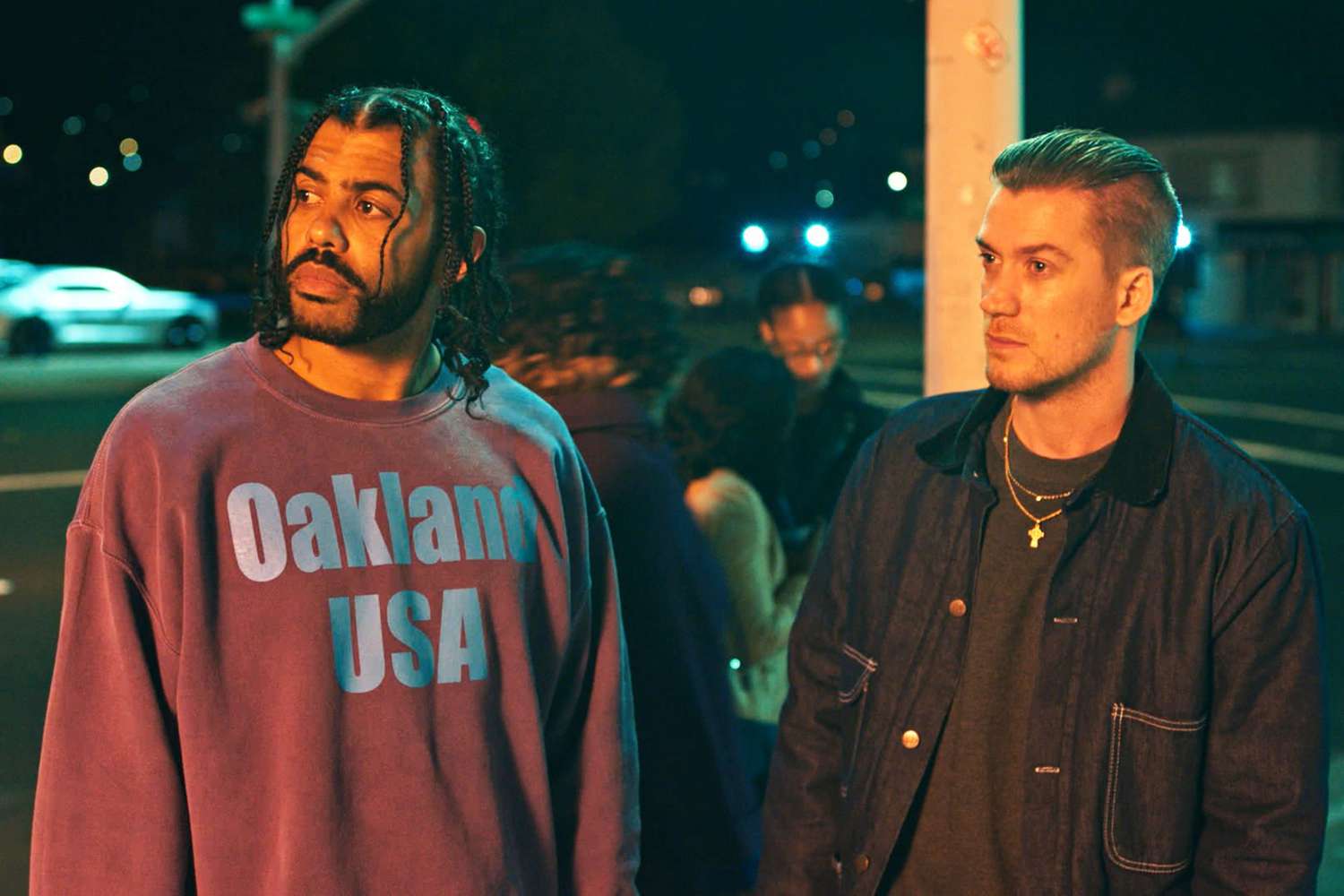
Lazy Dog Films. "Blindspotting (2018): Identity Politics In A Gentrifying Oakland." (Posted on Youtube: October 18, 2020) ["Blindspotting, released in 2018, follows Daveed Diggs and Rafael Casal as two men navigating through a gentrifying Oakland. With Collin (Diggs) just days away from his probation, he witnesses a police shooting, sending him down a path where he questions his identity. Written over ten years, Diggs and Casal tackle complex issues from race to identity with ease. Blindspotting’s core theme is explored through a black and white man's eyes as their environment forces them to put their identity in perspective. Blindspotting, in its 90-minute runtime, manages to present issues like racism, police brutality, and gentrification while examining toxic masculinity and identity without feeling bloated."]

Reyes, Steven. "Blindspotting and the Perception of Blackness." (Posted on Youtube: July 3, 2020) 


Thursday, August 25, 2022

Film Studies Resources: August 25, 2022

 An analysis of the metaphorical meanings of multiverse stories, and what they reflect about the burdens of modern existence.


Ethan Hawke has been talking to IndieWire’s Eric Kohn and Peter Rinaldi at Filmmaker about—among many other things—his six-part documentary series The Last Movie Stars. As David Fear writes in Rolling Stone, the careers of Paul Newman and Joanne Woodward span “many eras and way stations of twentieth-century cultural history: the Actor’s Studio generation, the Method-mad 1950s, the rise of TV, the theatrical revolution happening on Broadway, the socially conscious Sixties, the anything-goes New Hollywood Seventies.” But Hawke’s series “also doubles as a portrait of the agony and ecstasy of matrimony—an affectionate yet psychologically fraught, zero-prisoners-taken look at a union that had been lionized as a fairy-tale come true and was anything but.” - David Hudson (July 22, 2022)


-----------------------------------------------------------------------------------------

Eggert, Brian. "The Gray Man." Deep Focus Review (July 14, 2022) ["A good action movie is difficult to find. Although dozens are released every year, few have more to offer than some impressive stunts, fast-paced fight choreography, or eye-popping sequences of destruction. They supply the requisite thrills, but once the credits roll, they often fade from memory. The problem isn’t the action; it’s the banal characters. Rarely do action movies give us compelling heroes or villains who make a lasting impression. The Fast and Furious series may provide one over-the-top vehicular extravaganza after another, but its dopey family and one-note baddies couldn’t be less engaging. Sure, the John Wick movies started with a compelling revenge story, but the character’s unwavering composure doesn’t have many dimensions. Invulnerable heroes from the killing machine John Rambo to the infallible Dominic Toretto obliterate their opponents and come away barely dented. By contrast, consider characters such as John McClane in the original Die Hard (1988) or Furiosa in Mad Max: Fury Road (2015) that elevate all the trappings of an entertaining actioner, lending humanity and vulnerability to their heroes. Enduring action movies give their characters a sense of humor or depth of feeling beyond point and shoot. "]

Hudson, David. "Lessons From Bob Rafelson." Current (July 28, 2022) ["The first shot is to grab the audience and the last shot is to redeem yourself,” writer, director, and producer Bob Rafelson told the Los Angeles Times’s Kristine McKenna in 1986. Rafelson, who died last week at the age of eighty-nine, often didn’t know what that redemption would look like until a day or two before he shot the final scenes of his films. Two of his best, Five Easy Pieces (1970) and The King of Marvin Gardens (1972)—together, they “stand as a kind of bitter eulogy diptych said over the shallow grave of American Dreamism,” writes Michael Atkinson for Sight and Sound—were shot in sequence and strayed from the screenplay long before the final crack of the clapboard."]

Jones, Eileen. "Bodies Bodies Bodies Is a Bad Class Satire and a Boring Film." Jacobin (August 18, 2022) ["Like so many horror films attempting to be subversive, Bodies Bodies Bodies tries to satirize the upper class. But all it delivers are tired, lazy tropes about Gen Z."]

Loayza, Beatrice. "David Cronenberg’s Tableaux of Pain and Pleasure." The Nation (July 21, 2022) ["The body, that object of eternal obsession, perpetually surveilled and self-policed, is a site of great danger. Errant bodies, then, are as much a threat to the status quo, testing our willingness to embrace the monstrous. In Crimes of the Future, prior to a scene in which a live surgery is staged as a public performance, the phrase “Body is reality” flashes on a small television set: It is through the body, Cronenberg argues, that we experience and make sense of our lives; through the body that ideas, desires, and fears find palpable expression. If his films promiscuously stake out the possibilities of the future and the novel ways in which we might inhabit it, then the body is a testing ground where the ineffable and the unthinkable might be grasped for the first time."]

Mikulec, Sven. "Neil Marshall’s Dog Soldiers: A Force to Be Reckoned With." Cinephilia and Beyond (July 17, 2022) ["A squad of six British soldiers head into the Scottish Highlands to perform a routine training exercise against a Special Air Services unit, but upon reaching their destination, they find the mauled remains of their SAS colleagues. The single survivor is either unable or unwilling to clearly explain what the hell happened, so the group retreat to a lonely, seemingly abandoned house in the company of Megan, a zoologist who they happen to stumble across along the way. As the night quickly approaches, they realize nothing is like it seems and the danger they’re facing is much darker than they could have possibly anticipated. Repeatedly attacked by werewolves, killed off one by one by a horrifying force far more superior than anything they had encountered before, the unit tries to stand their ground and survive through the night. Morning might indeed bring salvation, but until the sun rises they are stranded in the middle of enemy territory, forced to fight on unequal terms."]

O., Kenny. "Breaking conventions? Political ideology of films with explicit sex." Open Screens 5.1 (2022) ["Explicit sex in films on general release remains rare, even if it has significantly increased since the late 1990s. Commentary on explicit arthouse films has tended to focus on those also containing sexual violence, and debates have often revolved around whether explicit imagery constitutes art or pornography. Relatively little attention has been paid to explicit romantic films, and to what leads some of them to gain notable international visibility, while others languish in obscurity. This article examines 9 Songs and Love, two of the most discussed and financially successful arthouse films with a romantic storyline that also devote significant screen time to explicit images of sex. It argues that their success can be attributed in part to their conservative sexual and gender politics, and their ideological proximity to conventional heterosexual pornography. They are contrasted with The Story of Richard O. and Daughters of Fire, two explicit films that struggled to gain critical attention or financial reward. These latter films are shown to have fundamentally different ideological foundations, including radical ideas about sex and gender, and an embrace of the artistic value of the pornographic. Such an ideological gap can be considered a contributory factor in the divergent destinies of these explicit romantic films."]

Subissati, Andrea and Alexandra West. "Class Act: Society (1989)." The Faculty of Horror #109 (Jule 30, 2022) ["The elite are literally a different breed in Brian Yuzna’s cult classic film about the perils of popularity and privilege. In this episode, Andrea and Alex dive into the mystique that surrounds the wealthy and explore why they need the rest of us to survive."]

Tafoya, Scout. "The Unloved, Part 104: Ambulance." Roger Ebert (August 1, 2022) ["Somehow, it happened. Michael Bay earned a place in the Unloved. He made his best movie and no one liked it and it made no money. Well sir, you're welcome around these parts anytime. Enjoy this look at our premiere vulgarian's attempt to go "straight," and shake your head with me in horror at the culture that said no to a film as electrifying as Ambulance."]


Wednesday, August 17, 2022

ENG 102 Resources: August 17, 2022

Berkshire, Jennifer, et al. "Reading the Room." On the Media (August 12, 2022) ["An old threat has returned to classrooms across the country — and it’s made of pages and ink. On this week’s On the Media, hear what it means to ban a book, and who has the right to choose what kids learn. Plus, meet the student who took his school board all the way to the Supreme Court in the 80s. 1. Kelly Jensen, editor for Book Riot who writes a weekly update on “book censorship news,” on what it means to ban a book. 2. Jennifer Berkshire and Jack Schneider, hosts of the education podcast “Have You Heard,” on the rights—both real and fictional—of parents to shape what their kids learn. 3. OTM reporter Micah Loewinger takes a deep dive into our nation's history of taking books off shelves, with the 1982 Supreme Court decision in Island Trees School District v Pico. Featuring: Steven Pico, then student and plaintiff in the case and Arthur Eisenberg, New York Civil Liberties lawyer, who represented him."]

Coffee, John C. "How Corporations Get Away With Crime." Capitalisn't (July 22, 2022) ["When it comes to corporate rulebreaking, data from 2002 to 2016 reveals that the US government arranged more than 400 "deferred protection agreements" as a means of deterrence. Under these, a company acknowledges what it did was wrong, pays a fine, promises not to misbehave for a period of time -- and thus is largely let off the hook. Columbia Law School Professor and author of "Corporate Crime and Punishment: The Crisis of Underenforcement", John C. Coffee, says these have done little to deter future wrongdoing. Coffee joins Luigi and Bethany, both of whom have also extensively researched and exposed corporate wrongdoing, to discuss how to reform aspects of enforcement, such as self-reporting mechanisms, internal investigations, independent external auditors, whistleblowers, and even shame and humiliation."]

Eggert, Brian. "The Gray Man." Deep Focus Review (July 14, 2022) ["A good action movie is difficult to find. Although dozens are released every year, few have more to offer than some impressive stunts, fast-paced fight choreography, or eye-popping sequences of destruction. They supply the requisite thrills, but once the credits roll, they often fade from memory. The problem isn’t the action; it’s the banal characters. Rarely do action movies give us compelling heroes or villains who make a lasting impression. The Fast and Furious series may provide one over-the-top vehicular extravaganza after another, but its dopey family and one-note baddies couldn’t be less engaging. Sure, the John Wick movies started with a compelling revenge story, but the character’s unwavering composure doesn’t have many dimensions. Invulnerable heroes from the killing machine John Rambo to the infallible Dominic Toretto obliterate their opponents and come away barely dented. By contrast, consider characters such as John McClane in the original Die Hard (1988) or Furiosa in Mad Max: Fury Road (2015) that elevate all the trappings of an entertaining actioner, lending humanity and vulnerability to their heroes. Enduring action movies give their characters a sense of humor or depth of feeling beyond point and shoot. "]

Forsthoefel, Andrew, et al. "Walden & the Natural World of Transcendentalism." Open Source (July 21, 2022) ["It’s one of many odd points to notice about Thoreau at his 200th birthday: that the non-stop writer was equally a man of action, a scientist and a high-flying poet whose imagination saw that “the bluebird carries the sky on his back;” and still a workman with callused hands, at home in the wild, a walker four hours a day on average, in no particular direction. His transcendentalism was all about the blossoming intersection of nature-study and introspection, fact and idea, detail and ideals. In his pine grove, on his river, at his pond, the outdoor Thoreau."]

Hannah-Jones, Nikole. "The Country We Have." Throughline (July 28, 2022) ["Is history always political? Who gets to decide? What happens when you challenge common narratives? In this episode, Throughline's Rund Abdelfatah and Ramtin Arablouei explore these questions with Nikole Hannah-Jones, an investigative journalist at the New York Times and the creator of the 1619 Project. Since the project launched in 2019, a majority of U.S. states have tried to ban teaching about race, racism or the 1619 Project specifically. And there has been a significant rise in the number of book challenges and bans. Yet many classrooms across the country have embraced the curriculum and resources that have spun out of the original project. It has pushed people on both sides of the political spectrum to ask how our framing of the past affects the present, to interrogate what we remember and don't remember as a society — and whether we need a shared historical narrative to move forward." If you would like to read more on the topic, here's two books: The 1619 Project: A New Origin Story, by Nikole Hannah-Jones and Before the Mayflower: A History of Black America, by Lerone Bennett, Jr.]

Hudson, David. "Lessons From Bob Rafelson." Current (July 28, 2022) ["The first shot is to grab the audience and the last shot is to redeem yourself,” writer, director, and producer Bob Rafelson told the Los Angeles Times’s Kristine McKenna in 1986. Rafelson, who died last week at the age of eighty-nine, often didn’t know what that redemption would look like until a day or two before he shot the final scenes of his films. Two of his best, Five Easy Pieces (1970) and The King of Marvin Gardens (1972)—together, they “stand as a kind of bitter eulogy diptych said over the shallow grave of American Dreamism,” writes Michael Atkinson for Sight and Sound—were shot in sequence and strayed from the screenplay long before the final crack of the clapboard."]

Hughes, Peter. "A History of Love and Hate in 21 Statues (Aurum Press 2021)." New Books in History (July 4, 2022) ["The ongoing debate surrounding who gets to determine the subjects of public commemoration, particularly in the form of statues, has become more heated over the past few years. In his timely book, A History of Love and Hate in 21 Statues (Aurum Press, 2021), Peter Hughes examines the long history of statues being used to articulate the values of rulers, governments, organizations, and average citizens. Of course, that also means statues are often targets of people who want to challenge those values. In this wide-ranging conversation, we discuss whether the motivation for public commemorations, as well as the opposition to them, can be found first and foremost in a society’s emotional relationship to the person (or god, for that matter) being commemorated, as is suggested in the book’s title; or, if the timeless debate over who does and doesn’t get commemorated is really about power."]

Keegin, Joseph M. "What is Punk?" What is X? (August 15, 2022) ["The dog days of late summer call for a break from discussions of concepts like Time, War, and Virtue and a turn to a subject that, though significant, probably lacks its own Platonic form: Punk. Joining Justin for this episode of “What Is X?” is our own Joey Keegin—a contributing editor at The Point and a veteran of punk scenes of the 1990s and 2000s. Once a hitchhiker and freight train hopper and DIY participant, Joey is estranged from punk now yet still inspired by it. Why? To ask what punk is, Joey points out, is to ask more than simply what punk music is—because it’s “a promise,” he says, “of a way of living, a promise of a way of being together with other people.” But when it’s just as punk to be straight-edge as it is to be addicted to heroin, how do you sort the good from the bad? Can there even still be punk after the death of rock? Together, Justin and Joey attempt to sort out these distinctions. Along the way, they discuss whether it’s possible for a punk to age gracefully, what punk understands about modernity that hippies didn’t, and why Socrates was not a punk—but was maybe a hardcore kid."]

Stone, Asa B. and Eli Revelle Yano Wilson. Beer and Society: How We Make Beer and Beer Makes Us. Lexington Books, 2022. ["Beer and Society: How We Make Beer and Beer Makes Us takes readers on a lively journey through the social, cultural, and economic dimensions of the modern beer world. This book illustrates that beer is far more than a beverage. As a finely-crafted cultural product, beer can be a part of our identity, a source of pleasure and camaraderie, an object of connoisseurship, and a livelihood for those who are behind the beer itself. Drawing on leading sociological and psychological perspectives, the authors argue that our enduring relationship with beer reflects the very roots of our society, including its collective values and norms, power structures, and persistent inequities based on race, gender, sexuality, and social class. Beer and Society explores beer as an embodiment of who we are and a force to energize social change."]

Tafoya, Scout. "The Unloved, Part 104: Ambulance." Roger Ebert (August 1, 2022) ["Somehow, it happened. Michael Bay earned a place in the Unloved. He made his best movie and no one liked it and it made no money. Well sir, you're welcome around these parts anytime. Enjoy this look at our premiere vulgarian's attempt to go "straight," and shake your head with me in horror at the culture that said no to a film as electrifying as Ambulance."]