Tuesday, August 15, 2023

ENG 102: Fall 2023 Resources #2

 Odell, Jenny."Another Kind of Time." Emergence Magazine Podcast (April 25, 2023) ["How we experience time is, ultimately, how we experience our lives. In this conversation with Jenny Odell, artist and author of Saving Time: Discovering a Life Beyond the Clock, she describes the social and cultural ideas that underpin our sense of standardized, mechanized time, which has laid an abstract grid over the living world. What choices, what futures, might become possible, she asks, if we allowed ourselves to slip free of the grip of linear, predictable chronos time and be swept into dynamic, interruptive kairos time?"]

Pin-Fat, Veronique and Maja Zehfuss. "How Do We Begin to Think of the World." Global Politics 2nd Edition. ed. Veronique Pin-Fat and Maja Zehfuss. Taylor and Francis, 2013: 1 - 19. ["Ethics and politics look at both how we should regard and accommodate each other and what kind of things make it possible to, for example, treat each other with respect and what kinds of things don't. That I might view you as "weird" or even "inhuman" (politics) may very much dictate how I then treat you (ethics). When we examine more closely how we think about the world, it turns out that ethics and politics are inseparable. (21)"]

Reichardt, Kelly. "On Showing Up." The Film Comment Podcast (April 4, 2023) ["Kelly Reichardt’s latest feature, Showing Up, is a delicate, witty, yet deeply profound film about the messy ways in which living and surviving can get in the way of art-making. The film follows a ceramics artist, Lizzy (Michelle Williams), who prepares for an upcoming gallery show while wrangling family issues, the interpersonal politics of her day job at an art school, and problems with her landlord, who happens to be none other than her more successful colleague, Jo (Hong Chau). Not to mention the injured pigeon that Lizzy is suddenly forced to care for... It’s a new riff on themes familiar from Reichardt’s work, like friendship and the ways in which precarity impinges upon community, but it’s also the director's funniest film yet, one that finds joy and comedy in its milieu of eccentric, sometimes petty, yet infectiously passionate artists. With Showing Up arriving in theaters this week, Film Comment Co-Deputy Editor Devika Girish interviewed Reichardt about the making of the film, the casting of Williams and Chau, the work of Cynthia Lahti, Michelle Segre, and the various other artists who are featured in the film, and much more."]

Robin, Corey. "Clarence Thomas' Unshaken Belief in Big Money." On the Media (April 21, 2023) ["Earlier this month, ProPublica broke the news that Supreme Court Justice Clarence Thomas had been accepting luxurious gifts from Texas real estate billionaire Harlan Crow for two decades. The gifts included lavish vacations, trips on private yachts and jets — and even a trip to Indonesia valued at half a million dollars. Most of these gifts went undisclosed, despite that being required by law. But this isn’t Thomas’ first rodeo. He has reportedly accepted a slew of gifts in the past, including $1200 worth of tires from an Omaha businessman, and a bust of President Lincoln valued at $15,000. This week, Brooke speaks to Corey Robin, a journalist and political science professor at Brooklyn College and the City University of New York Graduate Center, about the long history of Clarence Thomas' connection to the wieldy power of money in politics and Robin’s recent article in Politico, The Clarence Thomas Scandal Is About More Than Corruption. It’s about his jurisprudence." Corey Robin is the author of the book The Enigma of Clarence Thomas.]

Slobodian, Quinn. "Crack-Up Capitalism: Market Radicals and the Dream of a World Without Democracy (Metropolitan Books 2023)." New Books in Intellectual History (April 17, 2023) ["Look at a map of the world and you'll see a colorful checkerboard of nation-states. But this is not where power actually resides. Over the last decade, globalization has shattered the map into different legal spaces: free ports, tax havens, special economic zones. With the new spaces, ultracapitalists have started to believe that it is possible to escape the bonds of democratic government and oversight altogether. Crack-Up Capitalism: Market Radicals and the Dream of a World Without Democracy (Metropolitan Books, 2023) follows the most notorious radical libertarians--from Milton Friedman to Peter Thiel--around the globe as they search for the perfect space for capitalism. Historian Quinn Slobodian leads us from Hong Kong in the 1970s to South Africa in the late days of apartheid, from the neo-Confederate South to the former frontier of the American West, from the medieval City of London to the gold vaults of right-wing billionaires, and finally into the world's oceans and war zones, charting the relentless quest for a blank slate where market competition is unfettered by democracy. A masterful work of economic and intellectual history, Crack-Up Capitalism offers both a new way of looking at the world and a new vision of coming threats. Full of rich details and provocative analysis, Crack-Up Capitalism offers an alarming view of a possible future. Quinn Slobodian is a professor of the history of ideas at Wellesley College."]

Subissati, Andrea and Alexandra West. "Fear of Folk: The Blood on Satan's Claw." Faculty of Horror #117 (April 25, 2023) ["We’re back on our old stomping grounds of Salem Horror Fest to plow the fertile fields of themes and metaphors to unearth why the British folk horror classic, The Blood on Satan’s Claw, left us feeling so icky. From teens and occultism to PSAs and power, we dig deep."]

Tubali, Shai.  "Hannah Arendt and the Human Duty to Think." Philosophy Now #125 (2018) ["Many complain nowadays that their thinking is too active. What they mean is they feel that their brain is chattering with itself too much; that there are too many thoughts of worry and distress, frustration and struggle, going on in their mind. They then try to quieten their stormy over-thinking through different methods of meditation or relaxation. Indeed, quietude in one’s mind, especially when life’s challenges are unbearably intense, sounds a very nice state to be in. However, Arendt’s reflections tell us the very opposite: that our thinking is often not active enough – that people tend to shut down the activity of right thinking and judging. In light of Arendt’s own thinking, it becomes clear that most of the time we are not really actively thinking, we are daydreaming. Daydreaming may be intense at times, yet it does not help us develop a thinking which leads us to wakefully engage with the world. Thinking as an act of gathering one’s mental forces in order to understand or to realize something for oneself, is a relatively rare phenomenon in peoples’ lives. Interestingly, recent research affirms this criticism of human thinking. As research into cognitive bias informs us, the human brain does not really like to think. In fact, most of the time it puts itself in a mode of energy preservation. Most of the time, when things are relaxed, the brain/mind shifts to an ‘automatic pilot’ mode, a state of reaction without much creative thinking. We undergo the mental strain of reflective thought only when we don’t have a choice – for example, when confronting new difficult tasks at the office or facing acute and demanding challenges elsewhere. The brain’s natural effort is dedicated to maintaining an effortless state. Moreover, for the brain, the privilege of ‘being lazy’ implies much more: it means there is no threat, that everything is going well. That is why cognitive ease is associated with good mood and good feeling, and intense thinking with crisis. Things become more complicated when we realize that cognitive ease is also associated with truthfulness, and that our telling right from wrong is too often guided by the hidden wish of the brain not to think too much about things. According to research, most of our judgments are made by the brain’s lazy system of reactive thinking, not at all by our capacity to deeply engage in consideration and thoughtful observation. Therefore the brain’s default position is that an easy answer is also a true answer, and that a quick judgment is a right judgment."]

Warren, Ethan. "The Cinema of Paul Thomas Anderson: American Apocrypha (Columbia University Press, 2023) New Books in Film (March 29, 2023) ["Paul Thomas Anderson’s evolution from a brash, self-anointed “Indiewood” auteur to one of his generation’s most distinctive voices has been one of the most remarkable career trajectories in recent film history. From early efforts to emulate his cinematic heroes to his increasingly singular late films, Anderson has created a body of work that balances the familiar and the strange, history and myth: viewers feel perpetually off balance, unsure of whether to expect a pitch-black joke or a moment of piercing emotional resonance. The Cinema of Paul Thomas Anderson: American Apocrypha (Columbia UP, 2023) provides the most complete account of Anderson’s career to date, encompassing his varied side projects and unproduced material; his personal and professional relationships with directors such as Jonathan Demme, Robert Altman, and Robert Downey Sr.; and his work as a director of music videos for Fiona Apple, Joanna Newsom, and Haim. Ethan Warren explores Anderson’s recurring thematic preoccupations―the fraught dynamics of gender and religious faith, biological and found families, and his native San Fernando Valley―as well as his screenwriting methods and his relationship to his influences. Warren argues that Anderson’s films conjure up an alternate American history that exaggerates and elides verifiable facts in search of a heightened truth marked by a deeper level of emotional hyperrealism. This book is at once an unconventional primer on Anderson’s films and a provocative reframing of what makes his work so essential."]

West, Stephen. "Why is Consciousness Something Worth Talking About?" Philosophize This! #179 (April 24, 2023)

Wilson, Charles Reagan. "The Southern Way of Life: Meanings of Culture and Civilization in the American South (University of North Carolina Press, 2023)." New Books on the American South (April 29, 2023) ["How does one begin to understand the idea of a distinctive southern way of life--a concept as enduring as it is disputed? In this examination of the American South in national and global contexts, celebrated historian Charles Reagan Wilson assesses how diverse communities of southerners have sought to define the region's identity. Surveying three centuries of southern regional consciousness across many genres, disciplines, and cultural strains, Wilson considers and challenges prior presentations of the region, advancing a vision of southern culture that has always been plural, dynamic, and complicated by race and class. Structured in three parts, The Southern Way of Life: Meanings of Culture and Civilization in the American South (UNC Press, 2023) takes readers on a journey from the colonial era to the present, from when complex ideas of "southern civilization" rooted in slaveholding and agrarianism dominated to the twenty-first-century rise of a modern, multicultural "southern living." As Wilson shows, there is no singular or essential South but rather a rich tapestry woven with contestations, contingencies, and change."]

Zweerde, Evert van der. "Russian Political Philosophy: Anarchy, Authority, Autocracy (Edinburgh University Press, 2022)." New Books on Russia and Eurasia (April 26, 2023) ["Evert van der Zweerde in his 2022 book Russian Political Philosophy: Anarchy, Authority, Autocracy (Edinburgh University Press) details a thorough history of political thought from the very beginning of the Rus' era up to the 21st century. Political philosophy in Russia has always sought, and sometimes found, a middle way between embracing anarchy and searching for authority. Political philosophy in Russia has never before been the subject of a scholarly monograph. While historical factors make this understandable, the topic deserves our attention more than ever, now that Russia, after a short Soviet century, has regained self-assurance as a world power. Its unique historical trajectory, and the specific role of philosophy in it, are of interest to many fields of research and, beyond that, broader audiences. A focus on political philosophy as it existed and exists in Russia despite periods of marginalisation and suppression, allows us to understand its specific character, importance and relevance, and to realise that, in trying to think philosophically, critically, and reflectively about the political reality that shapes them, Russian thinkers are not essentially different from philosophers elsewhere. Hence, many lessons that can be learned from this subject."]

ENG 281 Intro to Film Studies: Fall 2023 Responses

Exemplary Responses:

Chiane Ireland - Bones and All: This World Can Eat You Alive

Charity Colley - The Matrix: Forces Beyond Comprehension

Autumn Blees - Interview With The Vampire: The suffering of immortality

Annica Johnson - Us: Follow the White Rabbit

Taylor Knox - Portrait of a Lady on Fire: It's not Merry, but It's Lively

Maria Brockman - Grief and Celtic Mythology in Song of the Sea

Maria Brockman - Petite Maman: A Beautiful and Cautionary Tale

Luke Howard - Louder Than Bombs: Who Do I Hate?

Luke Howard - Gravity: The Tragedy of Space

Gustavo Jimenez - Ponyo: Relationships

Emily Dixon - Gravity: Cinematography Masterpiece

Bradley Bond - Petite Maman: A Touching Tale for All

Abby Russell - Snowpiercer: Freedom in Different Eyes

Nick Vessels - A Dark Song: “I’m gonna unshackle… the house from the world.”

Nathan Garr - Train to Busan: A Film of Fatherhood

Michael Eastham - Cemetery Man (1994): A Weird but Still Thoughtful Zombie Movie

Kate Baker - “Re-Animator:” A Gory-ous Depiction of Horror & Dark Comedy

Autumn Blees - Saw X: Continuing the legacy of John Kramer

Arrielle Senior: The Shining - Spiraling Thoughts

Annica Johnson - Videodrome: “I just can’t handle the freaky stuff.”

Maria Brockman - Roma: Absent Fathers

Luke Howard - First Cow: The Rough Way to Get Milk

Gustavo Jimenez - Licorice Pizza: The Epitome of Life

Emily Dixon - Wendy and Lucy: Step by Step

Bradley Bond - Get Out: An Explosive Entrance

Nick Vessels - Night of the Living Dead: "They ain't comin' through that!"

Nathan Garr - Night of the Living Dead: A Familiar Zombie Tale

Nathan Garr - Midsommar: An Elusive Tapestry of Meaning

Jody Boles - Unveiling the Supernatural Portal: "Poltergeist" and the Haunting of Suburbia

Jody Boles - Unraveling Madness and Isolation in Stanley Kubrick's "The Shining"

Jody Boles - "The Fog": Unveiling the Haunting Atmosphere of John Carpenter's Supernatural Tale

John Melton - The Invitation: Real-World Cult Horror

Jared Gagle - Midsommar: A Trippy Breakup?

Jared Gagle - The Texas Chain Saw Massacre: A Symbolic Masterpiece

Chiane Ireland - “Deliverance” 1972 - The Hillbillies Have Eyes

Charity Colley - The Texas Chain Saw Massacre and the Chaos of the Sawyer Family

Autumn Blees - Color Symbolism in Get Out

Autumn Blees - Blind Faith in the Wicker Man

Autumn Blees - The Ring: Tormenting the Innocent

Annica Johnson - Zombie Flesh Eaters: Fresh Meat

Annica Johnson - Midsommar: The Terror of Grief

Annica Johnson: The Wicker Man - Fear of The Unknown

Alanya Freeman - Get Out

Alanya Freeman - The Ring: The Ring: The Fear of and Attachment to Technology

Luke Howard - Get Out

Gustavo Jimenez - US: We're Americans

Tayshaun Marshall - The Texas Chainsaw Massacre: Fight for Animal Rights and the Struggling Economy of Rural America

Sabrina Prater - The Texas Chainsaw Massacre: A Masterpiece of Horror

Nick Vessels - Deliverance: “They’re gonna rape this whole landscape. They’re gonna rape it.”

Nick Vessels - Tigers are Not Afraid: “There’s nothing. Not even tigers.”

Nathan Garr - The Texas Chain Saw Massacre: A Slasher with Something to Say

Kate Baker - The Devil's Backbone: What is a Ghost?

Jesus Gomez - The Ring (2002) - The Circle of Technology and Horror

John Melton - Stanley Kubrick’s Mastery of Framing in The Shining

Jared Gagel - Candyman: Building Upon an Urban Legend

Jared Gagel - The Shining: Ambiguity and Insanity

Charity Colley - The Cabin in the Wood: Desensitized to Horror

Annica Johnson: Kuroneko

Tayshaun Marshall - The Shining: The Horrors of Men

Sabrina Prater - The Cabin in the Woods: A Metamodern Exploration of Horror

Nick Vessels - The Cabin in the Woods: Monsters? Magic? Gods?

Michael Eastham - M. Night Shyamalan’s Debut Ghost Story

Michael Eastham - The Cabin in the Woods: Goddard’s Necessary Rebellious Horror

Kate Baker - The Fog: A Minimalist Marvel

Kate Baker - The Cabin in the Woods: A Meta-nificent Dissection of Horror

Jody Boles - Kuroneko (1968) - Exploring the Ethereal Intersection of Revenge and Empathy

Jody Boles - Exploring the Haunting Allure of Folk Horror in "Woodlands Dark and Days Bewitched"

Jody Boles - Deconstructing Fear and Fandom: "The Cabin in the Woods" (2011) Analysis

John Melton - The Cabin in the Woods: A Comedic Love Letter to the Horror Genre

Ashley Daily: The Cabin in the Woods (2011, Goddard) – Meta-Commentary on Human Sacrifice

Annica Johnson - The Cabin in the Woods: Satirical Horror


ENG 281: 16 week course

Ahmed Abuasba (The Shining; The Ring; The Texas Chainsaw Massacre; Midsommar; Night of the Living Dead; Zombieland; The Witch; The Matrix; Bones and All; Invasion of the Body Snatchers) - 10 [Completed Both]

Alayna Fryman 10 (The Ring; Get Out; Night of the Living Dead; The Empty Man; Us; Bones and All; Invasion of the Body Snatchers; Prey; The Sixth Sense; Train to Busan) - 10 [completed both]

Annica Johnson 10 (The Cabin in The Woods; Kuroneko; The Others; Publication of Kuroneko; The Others; Zombie Flesh Eaters; Train to Busan; Videodrome; Saw X; The Exorcist) - 10 [Finished the responses and FP]

Arielle Senior 10 (Poltergeist; The Others; The Invitation; Reanimator; The Craft; Train to Busan; The Exorcist; The Shining; The Witch; Carrie) 10 [Completed Both]

Ashley Daily 1 (The Cabin in the Woods) - 1

Autumn Blees 10 (Poltergeist; The Ring; The Wicker Man; Get Out; Film Matters publication; Re-animator; Zombieland; The Craft; Saw X; The Witch) 10 [Completed Both]

Charity Colley 10 (The Cabin in the Woods; The Shining; The Texas Chainsaw Massacre; Night of the Living Dead; 28 Days Later; The Ring; The Witch; The Matrix; Mulholland Dr; Invasion of the Body Snatchers) - A [Completed Both]

Chiane Ireland  (The Cabin in the Woods; Oldboy; Poltergeist; The Devil's Backbone; Deliverance; The Invitation; Bones and All; The Thing; Annihilation; Valerie and Her Week of Wonders; Only Lovers Left Alive) 10 (no FP responses)

Jacob Boyers 10 (The Cabin in the Woods; The Shining; Candyman; The Texas Chainsaw Massacre; Zombieland; Night of the Living Dead; The Exorcist; Carrie; Alien; Mulholland Dr) - A [Completed Both]

Jared Gagel 10 [Cabin in the Woods; The Shining; Candyman; The Texas Chainsaw Massacre; Midsommar; Re-Animator; Train to Busan; The Craft; The Empty Man; The Matrix] - A [Completed Both]

Jesus Gomez 10 [Cabin in the Woods; The Sixth Sense; The Ring; The Wicker Man; Midsommar; Night of the Living Dead; Shaun of the Dead; The Exorcist; The Witch; The Matrix] - A [Completed Both]

Jody Boles 10 (Cabin in the Woods; Woodland Dark and Days Bewitched; Kuroneko; Nightmares in Red, White, and Blue; Horror Noire; American Nightmare; The Fog; The Shining; Poltergeist; The Sixth Sense) - A [Finished the responses and FP]

John Melton 10 [Cabin in the Woods; Nightmares in Red, White, and Blue; The Shining; The Devil's Backbone; Blood on Satan's Claw; The Invitation; Shaun of the Dead; Night of the Living Dead; The Craft; The Witch] - A [Completed Both]

Kaitlyn Vieu 10 (Cabin in the Woods; The Sixth Sense; Candyman; The Texas Chainsaw Massacre; Get Out; Night of the Living Dead; Train to Busan; Kill List; The Craft; The Empty Man) - A [Completed Both]

Karlee Mitchell  (Cabin in the Woods; Poltergeist; The Girl with All the Gifts; The Witch; The Matrix; It Follows; They Live; Nope) 10 [Completed Both]

Kate Baker 10 (Cabin in the Woods; The Fog; The Devil's Backbone; The Blood on Satan's Claw; Midsommar; Re-Animator; Shaun of the Dead; The Craft; The Empty Man; Ginger Snaps) - A [Completed Both]

Katherine Roberts 0 

Logan Kidd 10 (The Fog; Candyman; Texas Chainsaw Massacre; The Invitation; Zombieland; The Empty Man; The Matrix; Cam; Nope; Bram Stoker's Dracula) - A [Completed Both]

Makenzie Thompson 10 (The Shining; Candyman; Texas Chainsaw Massacre; The Kill List; Night of the Living Dead; 28 Days Later; The Exorcist; A Dark Song; Alien; District 9) - A [Completed Both]

Michael Eastham  (The Cabin in the Woods; The Sixth Sense; The Devil's Backbone; Texas Chainsaw Massacre; Get Out; Cemetery Man; Zombieland; The Witch; Ginger Snaps; The Lobster) - A [Completed Both]

Nathan Garr 10 (The Cabin in the Woods; Texas Chainsaw Massacre; Midsommar; Night of the Living Dead; Train to Busan; The Exorcist; The Witch; Film Matters Publication; The Matrix; It Follows) - A [Completed Both]

Nick Vessels 10 (The Cabin in the Woods; The Fog; Tigers are Not Afraid; The Texas Chainsaw Massacre; Deliverance; Night of the Living Dead; Shaun of the Dead; The Craft; A Dark Song; The Matrix) - A [finished the responses and FP]

Sabrina Prater 10 (The Cabin in the Woods; The Shining; The Ring; Texas Chainsaw Massacre; Night of the Living Dead; The Witch, Carrie, Us; Thing; Annihilation) - A [completed both]

Tayshaun Marshall 10 (The Cabin in the Woods; The Shining; The Texas Chainsaw Massacre; The Invitation; Candyman; Night of the Living Dead; The Girl with All the Gifts; The Empty Man; Carrie; Cam) - A [Completed both]


Final Projects:

Ahmed Abuasba - Five Extra Films 5 [District 9; Bram Stoker's Dracula; The Exorcist; Get Out; Pan's Labyrinth]
Alayna Fryman - Five Extra Films [Midsommar; Carrie; Bram Stoker's Dracula; The Shining Poltergeist] 5
Annica Johnson - Five Extra Films 5 [Suspiria; The Witch; The Matrix; Us; American Mary] - 5
Arielle Senior - Five Extra Films  [It Follows; Midsommar; The Thing; Get Out; Under the Skin] 5
Autumn Blees - Five Extra Films [Interview with the Vampire; Carrie; Bones and All; The Matrix; The Thing] 5
Charity Colley - Five Extra Films 5
Chiane Ireland - Five Extra Films
Jacob Boyers - Five Extra Films  [District 9]  5
Jared Gagel - Five Extra Films 5
Jesus Gomez - Five Extra Films [Saint Maud; Alien; Nope] 5
Jody Boles - Five Extra Films 5 [The Ring; Candyman; The Texas Chainsaw Massacre; Deliverance; The Wicker Man]- 5
John Melton - Five Extra Films [Carrie] 5
Kaitlyn Vieu - Five Extra Films [Wake in Fright; Bones and All; Doctor Sleep; Us] 5
Karlee Mitchell - Five Extra Films 5
Kate Baker - Five Extra Films  [Saint Maud; Invasion of the Body Snatchers; Annihilation] 5

Logan Kidd - 5
Makenzie Thompson - Five Extra Films 5
Michael Eastham: Five Extra Films [Thing; District 9; The Addiction] 5
Nathan Garr - Five extra films  [The Prey; The Thing] 5
Nick Vessels - Five extra films 5 [Saint Maud; Starship Troopers; Bram Stoker's Dracula; The Thing; The Addiction] - 5
Sabrina Prater - Five Extra Films 1 (Bram Stoker's Dracula) 5
Tayshaun Marshall - Five Extra Films (Starship Troopers; Arrival; The Addiction) 4


ENG 281: 12 Week Course

Abby Russell 12 (Us; Phantom Thread; Certain Women; Snowpiercer; The Worst Person in the World; Portrait of a Lady on Fire; Spirited Away)

Agnes VanderPutten 9 (The Cabin in the Woods; Phantom Thread; Louder Than Bombs; Certain Women; Roma; Portrait of a Lady on Fire; Howl's Moving Castle; The Holdovers; Napoleon)

Ahmed Adeel 11 (The Master; Old Joy; Children of Men; Parasite; Portrait of a Lady on Fire; Spirited Away; Arrival; The Lighthouse; )

Aiden G Portillo-Macias 11 (Nope; Night Moves; Roma)

Bradley Bond 12 (Get Out; The Master; Night Moves; Children of Men; Snowpiercer; Petite Maman; Howl's Moving Castle; Thelma; Arrival; The Northman; Napoleon)

Dana Dotson - never gave me the profile link

Emily Dixon 12 (Get Out; Punch Drunk Love; Wendy and Lucy; Gravity; Parasite; Petite Maman; Nomadland; Louder Than Bombs; Polytechniqu; The Witch)

Gabe Byrne - 0

Gustavo Jimenez(Us; Licorice Pizza; Gravity; Parasite; Petite Maman; Ponyo; Louder Than Bombs; Arrival; The Lighthouse) - 9

Harrison Richards (Get Out; There Will Be Blood; Prisoners; Spirited Away; Parasite; Oldboy; Us; Seven Psychopaths; Sicario) - 9

Lidie Richards - 0

Luke Howard  (Get Out; Inherent Vice; First Cow; Gravity; Petite Maman; Princess Mononoke; Louder Than Bombs; Dune; The Northman; Stoker; Seven Psychopaths; Nausicaa) 12

Maria Brockman (Phantom Thread; First Cow; Roma; The Host; Petite Maman; Song of the Sea; Louder Than Bombs; Dune; The Northman; Napoleon; Arrival; In Bruges) 12

Taylor Lenox (Snowpiercer; Portrait of a Lady on Fire; Spirited Away; Louder Than Bombe; Dune) 5

Whitley Clifton x(Get Out) - 1


ENG 281 Intro to Film Studies: 1st Week Film Options (16 Week)

 To start off the semester we have two required films:

1) A metafictional horror film that will hopefully provoke us to begin the semester by asking: "Why do we watch horror films?"  I would recommend coming into this film with as little information as possible. Here is an archive of resources for after you watch the film: 

The Cabin in the Woods (USA: Drew Goddard, 2012)


2) To get a bit more in-depth about the horror genre, choose one of these documentaries to watch:

Nightmares in Red, White, and Blue: The Evolution of Horror (USA: Andrew Monument, 2009) This is available for free on Youtube (click on the link to watch). It is a look at the socio-political context of horror films.

Horror Noire: A History of Black Horror (USA: Xavier Burgin, 2019) Description: "Delving into a century of genre films that by turns utilized, caricatured, exploited, sidelined, and finally embraced them, this is the untold history of black Americans in Hollywood through their connection to the horror genre." Here is a collection of resources that go with the film: Horror Noire syllabus

Woodlands Dark and Days Bewitched: A History of Folk Horror (USA: Kier-La Janisse, 2021) Description: "Explores the folk horror phenomenon from its beginnings in a trilogy of films – Witchfinder General, Blood on Satan’s Claw and The Wicker Man – through its proliferation on British television in the 1970s and its culturally specific manifestations in American, Asian, Australian and European horror, to the genre’s revival over the last decade."

The American Nightmare (USA: Adam Simon, 2000) This is available for free on Youtube. How the horror genre changed post 1968.


3)  Resources to help you with our other themes (in addition to the horror genre):

Weird Studies - my definition:

I classify "weird fiction" as not necessarily a genre-in-itself, instead it operates in the interstices of mainstream genres, creating through poetic prose, vivid imagery, hallucinatory experiences, existential angst, dream logic and shocking stories, a powerful effect upon the reader, provoking them to start to see the mundane world with a slant. If you look at the etymology of 'wyrd' it originates as the "power to control destiny" (no doubt in a magical or ritual sense) and morphs to the latter "weird" meaning of "unearthly" or strange. These stories stay with you, taking root deep inside your consciousness, reverberating like the ripples of a deep pond disturbed by a thrown rock and provoke you to rethink what you have always taken for granted. There is a commercial genre called "the new weird" (also an older pulp magazine "weird" usually involving cosmic horror) and some of these books/authors would be slotted into my broad genre classification here (many are not), but in the spirit of actual weirdness I include other books/films that operate under the aesthetic classification described above without being marketed as "new weird." The disturbance to perceived reality also may take place through a decoding/encoding process that challenge and restructure (exposing the myths and inconsistencies) dominant narratives/pathways (also see situationist détournement and derive). Often these weird narratives represent/present a dream logic as being just as important/relevant as our waking logic. The purpose is to expose the cracks in the foundations of controlling narratives, destabilizing them through weird narratives that shake the assured assumptions of its adherents. The concepts of carnivalesque revelry and the dialogic nature of consciousness as theorized by Mikhail Bakhtin are equally important, in that they involve the reversal of a dominant order and/or an exposure of the fantasy of the controlling order, in the process revealing the many perspectives/voices that are silenced/masked. As disturbing as these can be for many, perhaps the most problematic aspect of many weird narratives would be the decentering of humans (as the center of the universe) and explorations/recognitions of non-human perspectives. Importantly, in the context of my own American culture, this also involves narrative & theoretical displacement of our particular hegemonic way of seeing & being as the baseline for thinking about and understanding the world. In film studies there has also been a classification of Mind Fuck films which would be included here. All of these can provide a cathartic release from the anxiety/terror of the really weird situation we are living through and the twisted creatures that our at the helm of planet earth. [Editorial note: my definition was originally written during the 2020 COVID-19 Pandemic]. Under no circumstance is weird meant in a derogatory way.  Anyone who does a deep dive into science, especially theories of consciousness and reality, knows that science is seriously weird. I appreciate works that challenge our constructed reality, pushing us to see that there is not just one way. Also it should be understood that what seems weird to some may seem obvious and normal to others. One of the great benefits of learning across time and space/places is that it can, following Bertolt Brecht, "make the familiar strange." Michael Dean Benton (May 2020; revised July 2022)

Monster Theory:

"Monster Culture (Seven Theses)." by Jeffrey Jerome Cohen (1996)


The Cabin in the Woods (USA: Drew Goddard, 2012)


The Cabin in the Woods (USA: Drew Goddard, 2012: 92 mins)

Cook, Adam. "Drew Goddard's The Cabin in the Woods" Notebook (April 13, 2012)

Cwik, Gregory. "Cabin in the Woods: Slasher-Films, and Meta-Horror." Acidemic 8.1 (2012)

Darke, Becky, Mike Muncer, and Rob Watts. "The Cabin in the Woods." The Evolution of Horror (ND)

Fernandez, Maria Elena. "‘The Cabin in the Woods’ Spoilers: Drew Goddard Speaks Freely." The Daily Beast (April 16, 2012)

Frevele, Jamie. "People Can’t Figure Out Why The Cabin in the Woods Is So Awesome, So Here Are a Few Solid Reasons For You." The Mary Sue (April 25, 2012)

Habib, Conner. "The New Old Real Fake Ones: The Conspiracy and Spectacle of The Cabin in the Woods." Peaches Christ (April 23, 2012)

McGovern, Bridget. "Joss Whedon, John Hughes, and Torture Porn: What The Cabin in the Woods Says About the Current State of Pop Culture." Tor (April 23, 2012)

Prewitt, Zach. "The Best Horror Cinema of the 21st Cinema." (Posted on Vimeo: October 2016)

"Slasher Film." Wikipedia (No Date)

Smith, Paul Julian. "Scare Quotes." Film Quarterly 65.4 (Summer 2012)

Woener, Meredith. "The Psychotic Cabin in the Woods Monsters You Didn’t See in Theaters! io9 (September 14, 2012)


Monday, August 14, 2023

ENG 102: Fall 2023 Resources #1

 Borden Carol. "Unabsolved Transgressions, Surrealism, and a Chorus of Furies: A Wounded Fawn (2022)." The Cultural Gutter (December 22, 2022) ["Travis Stevens’A Wounded Fawn (USA, 2022) is entirely my thing. It’s a nice mix of art house and genre, which is one of my favorite things. It blends fine art—in this case the art of Surrealists (and friends) Leonora Carrington, Remedios Varo and Kati Horna—1970s horror/giallo, Classical Greek tragedy, themes involving snakes and dogs, glorious art and costuming design, saturated colors, and excellent cinematography. It probably has too much gore for many art house audiences and too much looking at paintings and sculpture for a lot of horror fans. I love A Wounded Fawn and maybe even the vision of future movies of that it presents. In short, I would love more thoughtful, creative and fun films that consciously examine generic conventions. Films that playfully bend, blend, or even burst out of increasingly rigid generic film conventions and categorizations—and I don’t just mean “genre” film. I like a movie that sidesteps expectations of not only what a movie should be about, but how a movie should be about it. And A Wounded Fawn successfully makes a serial killer pathetic in comparison to his victims."]

"Breath." The Book of Symbols: Reflections on Archetypal Images. Taschen, 2010: 16-17. ["Breath animates the clay of our being. It is the lusty cry of the newborn, and the essence of the wind, spirit, muse, sound. Our feeling states manifest in changes of breath, from the panicky shortness of breath to the sighs too "deep for words" of intense sorrow. Breath carries other things like diseases, harsh words and rank odors. Everything 'breathes.' Think of woods on a spring day, the susurration of leaves, the rippling grasses, the trembling of dappled light. 'The Tao is the breath that never dies. It is a Mother to All Creation,' says the Tao Te Ching (37). Classical Greece perceived breath as something vaporous within, dew-like, sometimes visible, blending and interacting with the air (Onians, 48). To hear, see, smell or speak was to send out breath, something as a ray or as fire; the breath mixed with the 'intelligence' in the breath of others, and taken back in, added to one's knowledge. Breath was identified with consciousness, locating both thought and feelings in the lungs, which interacted with the heart, blood and pulse. "In men of understanding the eyes and tongue and ears and mind are rooted in the midst of their breasts' (ibid, 70). And the gods as inspiration, Latin inspirare, 'to breath,' might be experienced in a sudden influx of love, courage, wrath, prophecy or brilliance.
    That breath is imagined as essence and exchange is consistent with its chemical reality. Breathing is the taking-in of oxygen and the release of carbon dioxide from the body by a complicated internal pumping mechanism that changes the air pressure inside the body, and so causes oxygen-filled air to enter. Breath links animal and plant life: Animals require oxygen and release carbon dioxide, while plants need carbon dioxide and yield up oxygen. The body stores up almost no oxygen, so that breathing is an urgent matter; death is literally, as in the Inuit language, 'losing your breath.' Because breath is what quickens the body, it is equated with soul, which is thought to take wing on the last breath of life. Do we breathe or are we breathed? The Sanskrit prana, 'breathing forth,' refers to the source and force of life and vibratory energy of all manifestations (Eliade, 483-485). The sacred texts of India describe the vital breath of the living being, rhythmic and pulsating, as the microcosmic form of the alternating day and night, activity and rest, of cosmic time. In the interval between successive creations, the god Vishnu, having withdrawn the universe back into himself, sleeps, floating on the cosmic ocean in the coils of the serpent Ananta, 'Endless.' His breathing is deep, sonorous, rhythmical, 'the melody of the creation and dissolution of the world' (Zimmer, 35). It is the song of the immortal gander, the soft ham-sa of divine life-breath within the body within the body of the universe and the nucleus of the individual. 'Just as spokes are held together in a wheel-hub, everything is held together in the breath' (Roebuck, 189). The yogi, in controlled inhalation-ham, exhalation-sa, hears the same melody as the inner presence of the Atman, or supreme self, being revealed."]  

Dhont, Lukas. "Close — Lukas Dhont's Quietly Powerful Coming-of-Age Movie." MUBI Podcast (April 20, 2023) ["In his Oscar-nominated CLOSE, filmmaker Lukas Dhont uses the sparest dialogue, the gentlest music, and the most pastoral of images...to tell a shattering story about the brutal ways society turns boys into men. We're taking a mid-season break from our series on movie music to bring you this candid interview with Dhont—in which he tells host Rico Gagliano how he writes like a dancer, why this quiet film is intended as a loud political statement, and what it has in common with James Cameron's TITANIC."]

Doctorow, Cory. "How Chokepoint Capitalism is Strangling Creative Industries." Darts and Letters (December 19, 2022) ["Many of the creative industries look like an hourglass. On the one side, you have creators; on the other, the rest of us. In the middle, Rebecca Giblin and Cory Doctorow say there's often a 'chokepoint.' Corporate behemoths -- be they streaming apps, publishers, tech giants, or others -- put on the squeeze, exploiting their market power to extract rents, push down wages, and push up costs. But Cory and Rebecca have solutions to break the stranglehold, and in this episode of Darts and Letters Cory helps Jay explore various chokepoints, from concert tickets to audiobooks, and how we can open up the industries and get workers paid."]

Dorian, MJ. "Marina Abramović • IMMATERIAL • Part III: Sublimation." Creative Codex #38 (April 19, 2023) ["This is the final part of a three part series about the legend of performance art: Marina Abramović. In this episode we explore Marina & Ulay's hypnosis inspired performance pieces, we follow them into the Australian outback for their six months living with aborigines, and finally explore what leads to their last performance–walking the Great Wall of China."]

Ellinger, Kat. "The Beast (1975) and The Company of Wolves (1984)." To The Devil a Daughter #2 (April 17, 2023) ["Kat Ellinger explores the intersections between Polish director Walerian Borowczyk and British feminist author Angela Carter; especially their shared interest in shapeshifting, fairy tale, eroticism, and female empowerment through embracing the animal within. The main focus of the episode is a discussion of Borowczyk’s 1975 film The Beast and Neil Jordan’s filmic adaptation of Carter’s The Company of Wolves (1984) — the latter co-scripted by the author herself."]

Kelly, Annie, et al. "The Hearts of Men." Darts and Letters (April 12, 2023) ["Online masculinity is getting weirder and weirder. We’re way past mere misogyny and sexual predation (though, that’s still certainly there). Now, we’ve also got bro science, ball tanning, ball eatin,’ piss drinkin,’ and who knows what’s next. Eat your hearts out, Hugh Hefner and the old kings of male revolt–in fact, these kings of this new manosphere will literally eat hearts. However, perhaps these mockable male influencers are onto something, in a roundabout way. There is just something broken in the hearts of men, as Barbara Ehrenreich once put it. If there wasn’t, male influencers wouldn’t be as popular as they are. This new mansophere offers a simple remedy for whatever ails: yearning for old gendered hierarchies, obsessing over self-improvement and dieting, and ceaselessly grinding under capitalism. In response, we ask: what’s really wrong with men, and how might we fix it?"]

Lapointe, Tanya. The Art and Science of Arrival. Titan Books, 2022. ["Official retrospective companion book to the Paramount film Arrival starring Amy Adams, Jereny Renner and Forest Whitaker, featuring concept art, sketches, behind-the-scenes photography and interviews with key creative and scientific team members. Since its release in 2016, Denis Villeneuve’s Arrival, based on the Hugo-nominated short story Story of Your Life by Ted Chiang, has embedded itself firmly in the minds of moviegoers around the world. The film garnered many accolades, including nine BAFTA nominations and eight Academy Award® nominations, proceeding to win an Oscar® for Best Sound Editing and a BAFTA for Best Sound. Since then, the film has generated larger conversations within the cultural landscape of academia including film, philosophy, and linguistics. In The Art and Science of Arrival, author and producer Tanya Lapointe revisits the film and its legacy with the production’s key team members. This lavish hardback volume recounts the genesis of this modern classic, from Ted Chiang’s short story The Story of Your Life to its premiere in Venice and its subsequent eight Academy Award(R) nominations. It explores the film’s concept of non-linear time, and showcases the remarkable concept art that brought the aliens, their ships and their startling logogram language to life."]

Rohr, Richard. "Christianity and Unknowing." Sounds of Sand #28 (March 30, 2023) ["Richard Rohr, as a Catholic priest and Franciscan Friar, offers a concise history of how Western Christianity once had, soon lost, tried to retrieve, and now is roundly rediscovering its own traditional understanding of unitive consciousness (which was our word for non-dual thinking). The Christian contemplative mind was usually a subtext, and yet it was always clearly there too, and much closer to the surface, but only for those exposed to the mystical base that was revealed in the Gospel of John, the Desert Fathers and Mothers, the Celtic and monastic traditions, and what was generally referred to as the apophatic or wisdom stream of Christianity. These were our many saints and mystics. This possibility was brought to the fore by Thomas Merton in the middle of the last century, and is now flowing in many positive directions. It is now our task to rediscover the pre-Enlightenment Christianity that reveled in "the cloud of unknowing", what some called "learned ignorance", and the very notion of Mystery itself. Only when we got into competition with rationalism and secularism, did we adopt this rather recent mania for certitude and a very limited kind of scientific knowing. Almost the entire history of Protestantism emerged in this period, and thus the contemplative mind is an utterly new revelation for them, and frankly for all of us, as we again learn to be comfortable living on the edge of both the knowable and the unknown. Fr. Richard Rohr is a globally recognized ecumenical teacher bearing witness to the universal awakening within Christian mysticism and the Perennial Tradition. He is a Franciscan priest of the New Mexico Province and founder of the Center for Action and Contemplation (CAC) in Albuquerque, New Mexico. Fr. Richard’s teaching is grounded in the Franciscan alternative orthodoxy—practices of contemplation and self-emptying, expressing itself in radical compassion, particularly for the socially marginalized. Fr. Richard is the author of numerous books, including Everything Belongs, Adam’s Return, The Naked Now, Breathing Under Water, Falling Upward, Immortal Diamond, and Eager to Love: The Alternative Way of Francis of Assisi."]

Sidorsky, Kaitlin and Wendy J. Schiller. "Inequality Across State Lines: How Policymakers Have Failed Domestic Violence Victims in the United States (Cambridge University Press, 2023)."  New Books in Policy Studies (April 16, 2023) ["In the United States, one in four women will be victims of domestic violence each year. Despite the passage of federal legislation on violence against women beginning in 1994, differences persist across states in how domestic violence is addressed. Kaitlin Sidorsky and Wendy J. Schiller's book Inequality Across State Lines: How Policymakers Have Failed Domestic Violence Victims in the United States (Cambridge UP, 2023) illuminates the epidemic of domestic violence in the U.S. through the lens of politics, policy adoption, and policy implementation. Combining narrative case studies, surveys, and data analysis, the book discusses the specific factors that explain why U.S. domestic violence politics and policies have failed to keep women safe at all income levels, and across racial and ethnic lines. The book argues that the issue of domestic violence, and how government responds to it, raises fundamental questions of justice; gender and racial equality; and the limited efficacy of a state-by-state and even town-by-town response. This book goes beyond revealing the vast differences in how states respond to domestic violence, by offering pathways to reform."]

Thursday, July 20, 2023

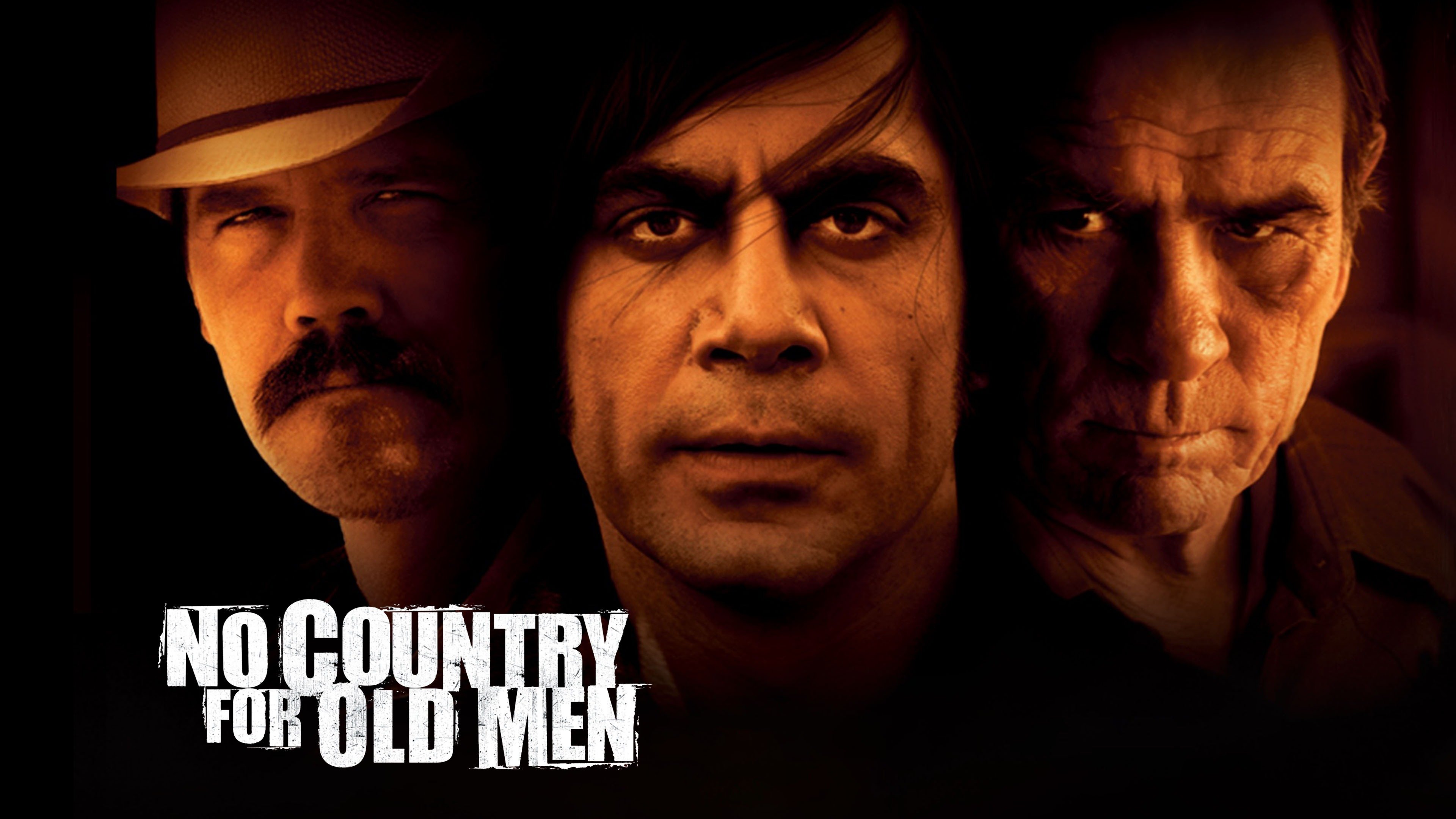
No Country for Old Men (USA: Ethan Coen and Joel Cohen, 2007)


No Country for Old Men (USA: Ethan Coen and Joel Cohen, 2007: 122 mins)

Flight, Thomas. "Why Do Movies Feel So Different Now?" (Posted on Youtube: May 23, 2023) ["In this video I dive into what Metamodernism is and what it looks like in film, and chart how the movies have evolved since their modernist origins."]

Lindert, Hattie. "Why No Country For Old Men is still the gold standard for page-to-screen adaptations." A.V. Club (November 9, 2022)  

Long, Ericca and Cole Roulain. "No Country for Old Men." The Magic Lantern #8 (November 9, 2015) ["There aren’t many films more personal to me than Joel and Ethan Coen’s No Country for Old Men (2007). I grew up at the foot of the Wichita Mountains in Oklahoma, so I am intimately familiar with this scrub brush landscape and these hard-bitten, laconic plainsfolk. They are my people. That land and that mindset are never far away, as I carry that red dirt in my heart however far I may roam. My father is the thing that ties this film to me the most, though. I know that one of these days he’ll go out there ahead of me and make a fire in all that dark and all that cold and he’ll be waiting for me. It will be a privilege and a reward to sit with my old man by that fire, not having to say a thing. Until then, we carry on. What you’ll find in this episode: fate versus self-determination, Cormac McCarthy book recommendations, how spoilers are for sissies, fathers and sons (and uncles), and how to steal two million dollars."]

Rosenbaum, Jonathan. "All the Pretty Carnage." The Chicago Reader (November 8, 2007) ["Remorseless murder isn't all there is to No Country for Old Men, but it's all anyone seems to care about."]

Rutigliano, Olivia. "Scene of the Crime: "The Coin Toss" from No Country for Old Men." Crime Reads (January 31, 2025)

Sudhakaran, Sareesh. "Cinematography of Roger Deakins." Wolfcrow (February 16, 2016)


Wednesday, July 19, 2023

Crimes of the Future (Canada/France/Greece: David Cronenberg, 2022)


 Crimes of the Future (Canada/France/Greece: David Cronenberg, 2022: 107 mins)

Alexander, Travis. "Power and Flesh." Aeon (October 31, 2025) ["The reigning biopolitical disputes hinge on deceptively simple questions: what is the body for? What should we do with it? Are there levels of biology where a difference of degree becomes a difference of kind? If a human body changes (or is changed) beyond a certain point, does it stop being an altered human body and become, instead, something else? There’s no shortage of modern artists and thinkers wrestling with these questions. The choreographer Meg Stuart pushes bodies to extremes of movement; the multimedia artist ORLAN and the transgender artist Cassils use performance to test the boundaries of flesh and identity; another performance artist, Stelarc, stages the body as machine, grafted with prosthetics. Patricia Piccinini’s sculptures imagine hybrid anatomies, while the films of Julia Ducournau – director of the body horror Titane (2021) – and Claire Denis probe bodily desire and transformation. In scholarship, Yuval Noah Harari tracks the future of the human species, Kate Crawford critiques the bodily costs of AI, and Paul B Preciado theorises on gender transition and pharmacopolitics. And yet, few voices have been as persistent – or as transformative – as David Cronenberg’s. Since the 1970s, he has been cinema’s great anatomist, staging dramas of growth, decay and mutation. Over the decades, his vision has shifted: from a romantic belief that altered bodies deserve celebration, to a more careful insistence that people should be free to alter themselves only if they choose. The arc feels natural, but it is also urgent right now. At a moment when the fight over bodies threads through disputes on everything from vaccines to elder care, Cronenberg offers a framework we need: a way to affirm bodily autonomy without stoking the panic that casts every transformed body as a threat. His cinema points toward a politics of protection – one that secures the vulnerable while refusing to weaponise their difference, and that shows how the defence of bodies can be a form of solidarity rather than a spark for fear."]

Bodrojan, Sam, et al. "Body Talk: A Cronenberg Roundtable." Reverse Shot (July 1, 2022) ["For this special, Reverse Shot–hosted, supersized edition of Willow Maclay and Caden Mark Gardner’s ongoing Body Talk series of conversations, Maclay and Gardner invited critics and RS contributors Sam Bodrojan and Mackenzie Lukenbill to discuss the work of David Cronenberg and specifically his latest film, Crimes of the Future, now in current release and opening today at Museum of the Moving Image. According to Maclay and Gardner, “It feels appropriate to enlist other trans voices on this subject and how they see Cronenberg, his body horror, and his cinema in relation to the trans film image.”"]

Booker, M. Keith. "The Imagination of Deterioration: Dystopia, Climate Change, and the Society of the Spectacle in David Cronenberg’s Crimes of the Future." Comments on Culture (ND)

---. "The Imagination of Deterioration: Human Exceptionalism, Climate Change, and the Weird Eco-Horror of David Cronenberg’s Crimes of the Future." Monstrum 6.1 (June 2023) ["To an extent, David Cronenberg’s Crimes of the Future (2022) represents a rousing return to the body horror with which its director exploded onto the independent-film scene in the 1970s and 1980s. In this case, though, the film updates Cronenberg’s earlier concerns via an especially strong focus on the impact of environmental deterioration on human beings and human society, placing the film in the realm of eco-horror as well. The action of the film occurs in a decaying near-future world in which climate change and other worsening conditions have led not only to a general decline in the quality of life (both material and emotional) but also to strange (and sometimes macabre) mutations in the human body itself. The strangeness of these climate-related mutations places Crimes of the Future in the realm of ecological horror, and especially of the recent turn toward the “weird” in eco-horror. Nature seems to have been almost obliterated in this future world, but these weird mutations, beyond the control of any of the human forces in the film, challenge the notion that humans stand apart from a nature that they can easily understand, dominate, and control. These mutations also contribute to a growing sense in the future world of the film that things are getting out of hand and that there is no identifiable fix for the general deterioration of conditions, a sense that resonates with widespread attitudes in the world of the early 2020s."]

Brody, Richard. "Crimes of the Future: It’s the End of the World as David Cronenberg Knew It." The New Yorker (June 6, 2022)

Devi, Gayatri. "'A Great Future in Plastics': Crimes of the Future and Cronenberg’s Story of Evolution." Bright Lights Film Journal (October 5, 2022) ["The voice-over tells us that as a result of this neo-venereal disease, his colleague’s body is creating new organs, each one complex, perfect, unique, but without function. Each time these superfluous organs are surgically removed, new ones immediately regenerate inside his body. The patient has begun to steal these organs since he considers his body a galaxy and these new organs solar systems. He cannot bear to part with them. So he steals them. A nurse calls them his “creative cancer."]

Eggert, Brian. "Crimes of the Future." Deep Focus Review (June 5, 2022)


Goi, Leonardo. "The Current Debate: The Shocks of Cronenberg’s Crimes of the Future." Notebook (June 9, 2022) ["It’s in the unsettling, eerily prophetic ideas that Cronenberg’s latest body-horror foray finds its most shocking material."]

Hudson, David. "Cronebergiana." The Current (July 5, 2022)

Loayza, Beatrice. "David Cronenberg’s Tableaux of Pain and Pleasure." The Nation (July 21, 2022) ["The body, that object of eternal obsession, perpetually surveilled and self-policed, is a site of great danger. Errant bodies, then, are as much a threat to the status quo, testing our willingness to embrace the monstrous. In Crimes of the Future, prior to a scene in which a live surgery is staged as a public performance, the phrase “Body is reality” flashes on a small television set: It is through the body, Cronenberg argues, that we experience and make sense of our lives; through the body that ideas, desires, and fears find palpable expression. If his films promiscuously stake out the possibilities of the future and the novel ways in which we might inhabit it, then the body is a testing ground where the ineffable and the unthinkable might be grasped for the first time."]

Maher, Dave. "Crimes of the Future." Tender Subject (March 12, 2026) ["It's a world with no pain, new organs and performance art is all the rage! Join Kayte and Dave as we delve into the gorgeously grotesque Crimes of the Future. We talk about pain, wounds, pleasure and art through the film and through some of Kayte's favorite performance art texts."]

Rice, David Leo. "Art is the New Puberty: David Cronenberg's Portraits in Flesh." The Baffler (July 7, 2022)  ["The 2020s have come to resemble the ’60s and ’70s in all of these ways and many more. A shortlist would include wild inflation, racial and sexual unrest, bitterness at the prospect of any collective values, escalating conflict with Russia and China, a weak and out-of-touch government, mounting street violence and militia activity, and a massive growth in doomsday cults, psychotropic drugs, and alternative realities. Given such a post-millennium redux, it’s no surprise that the film’s central conceit, that of humanity evolving to meet its moment by metabolizing that moment’s poisoned atmosphere, is so resonant right now. It speaks directly to an era where we, too, must wonder whether we’re evolving. And, if so, into what?"]

Zaretsky, Adam. "Love and Radio." Future Ecologies (June 5, 2023) ["Adam Zaretsky is a bioartist who explores the manipulation of DNA, the fringes of genetic modification, and butts up against the ethical boundaries of science and beyond."]


Thursday, June 15, 2023

Black Panther: Wakanda Forever (USA: Ryan Coogler, 2022)


 Black Panther: Wakanda Forever (USA: Ryan Coogler, 2022: 161 mins)


Flight, Thomas and Tom van der Linden. "Black Panther: Wakanda Forever." Cinema of Meaning #40 (December 1, 2022) ["Thomas Flight and Tom van der Linden discuss the implications of Wakanda entering the world stage and upsetting the global status quo, Marvel’s reluctance to really dig into revolutionary and post-colonial politics, and the struggle to continue the Black Panther story after the tragic passing of Chadwick Boseman, in Ryan Coogler’s Black Panther: Wakanda Forever."]

Pierrot, Grégory. "Black Panther: Wakanda Forever— Eternal Return of the Afro-Horn." Evergreen Review (Spring/Summer 2023) ["Having completed an initial cycle of the Marvel Cinematic Universe, Disney has begun to unleash the first installments in its new ten-year plan. Brace for the onslaught and a new opportunity to wonder how many variations on the same generic plot structure are needed to screw in the neon sign of the Marvel Cinematic Universe, a galaxy as full of variety and promise as it is frustrating in its commitment to the generic. It is arguably one of the great frustrations of the Age of Marvel that after it finally figured out the special effects to do justice to the expansiveness of the original comic books, Disney also worked overtime to distill and dilute all that was weird, silly, garish, elating about them into a surefire, hit-making formula. The hero may have a thousand faces and Disney a hefty roster of them at hand, but inside they’re also all made of the same flesh, and a lot of it is twice lab-grown, having gone through comic book assembly lines before reprocessing in Hollywood. In those circumstances, departures from formula become all the more significant. When Ryan Coogler directed Black Panther, he did not just bring fifty years of Black superhero comics to the screen; he was expressly inspired by all the Black writers and artists, from Billy Graham, Christopher Priest, Brian Stelfreeze, and Alitha Martinez to the Hudlin brothers, Ta-Nehisi Coates, and Roxane Gay, all of whom contributed along the years to turn an often corny cat into a cultural icon. Coogler brought as Black Panther’s main foe Killmonger, a cousin and polar inversion who could have been as cringeworthy as Bizarro, but turned out as existential a nemesis as Poe’s William Wilson, and sharing the same sharp fate. The film managed to simultaneously propose and absorb a notion that Killmonger made something painfully clear: however cool and well-meaning, a monarch—and both these guys were monarchs—can’t be a revolutionary. Still, working within these limits, Coogler made a way out of no way with humor and by sprinkling historical and political Easter eggs for those who would explore."]


Tuesday, June 6, 2023

Chungking Express (Hong Kong: Wong Kar-Wai, 1994)


 Chungking Express (Hong Kong: Wong Kar-Wai, 1994: 102 mins)

The whiplash, double-pronged Chungking Express is one of the defining works of 1990s cinema and the film that made Wong Kar Wai an instant icon. Two heartsick Hong Kong cops (Takeshi Kaneshiro and Tony Leung Chiu Wai), both jilted by ex-lovers, cross paths at the Midnight Express take-out food stand, where the ethereal pixie waitress Faye (Faye Wong) works. Anything goes in Wong’s gloriously shot and utterly unexpected charmer, which cemented the sex appeal of its gorgeous stars and forever turned canned pineapple and the Mamas & the Papas’ “California Dreamin’” into tokens of romantic longing. -- Criterion Collection

Bordwell, David. "Narrative Symmetry in Chungking Express." Current (March 26, 2018)

Chow, Vivienne, et al. "Chungking Express — Wong Kar Wai puts "Dreams" on the menu." MUBI Podcast (April 27, 2023) ["Shot on a shoestring in six wild weeks, CHUNGKING EXPRESS is the movie that put legendary Hong Kong filmmaker Wong Kar Wai on the international map—along with his star, pop diva Faye Wong...and her Cantonese cover of The Cranberries's hit "Dreams." Host Rico Gagliano learns how the song, the director, and the singer all came together to capture Hong Kong at a moment of anxiety and hope—and how the tune still unites people in karaoke bars across Asia. Featuring Cranberries guitarist Noel Hogan, Hong Kong-born indiepop star Emma-Lee Moss (aka Emmy The Great), Variety and Artnet writer Vivienne Chow, "Chungking" score co-composer Roel A. Garcia, and NPR critic-at large John Powers—the author, with Wong Kar Wai, of "WKW: The Cinema of Wong Kar Wai.""]

Flores, Steven. "The Auteurs: Wong Kar-Wai." Cinema Axis (January 5, 2014)

Jenkins, Barry. "What Wong Kar-wai Taught Barry Jenkins About Longing." Current (November 29, 2016)

Kotzathanasis, Panos. "Film Analysis: Chungking Express (1994) by Wong Kar-wai." Asian Movie Pulse (April 7, 2022)

Martin, Emily. Lonely Cinema: Urban Alienation, Solitude, and Longing in Wonk Kar-Wai's Chungking Express." The Daily Fandom (December 28, 2021)</

Taubin, Amy. "Chungking Express: Electric Youth." Current (Movember 16, 2018) 

Tsui, Curtis. "Cop 223 Gets Lucky." Current (October 24, 2018)

Wang, Oliver. "A Cantopop Dream Girl’s First Film Reverie." Current (October 21, 2019)


Monday, May 29, 2023

Triangle of Sadness (Sweden: Ruben Östlund, 2022)


 Triangle of Sadness (Sweden: Ruben Ã–stlund, 2022: 147 mins)

Eggert, Brian. "Triangle of Sadness." Deep Focus Review (November 13, 2022)

Fry, Naomi. "In Triangle of Sadness, the Crudity Is the Point." The New Yorker (October 28, 2022)


Lazzarini, Sylvie and Jan Lumholdt. "Ruben Östlund • Director of Triangle of Sadness." Cineuropa (2022)

Lumholdt, Jan. "Triangle of Sadness." Cineuropa (May 5, 2022) ["Östlund helms a diabolically mischievous “Rubensonade” among the rich and the filthy."]

Power, Nina, Helen Rollins, and Benjamin Studebaker. "Triangle of Sadness." The Lack (April 12, 2023)

Rutigliano, Olivia. "Triangle of Sadness is a Satire That Skillfully Goes Overboard." LitHub (October 14, 2022)

Strong, Hannah. "Triangle of Sadness." Little White Lies (October 26, 2022)


Sunday, March 19, 2023

Isabel Wilkerson: Journalism/History/Caste/Migration (Shooting Azimuths)


---------------------------------------------------

Crawford, Jarmahl, Peniel Joseph and Isabel Wilkerson. "Stokely Carmichael and Black Power." Radio Open Source (March 6, 2014) ["Stokely Carmichael was a down-home organizer and radical off-beat visionary of racial equality in America 50 years ago, a quicksilver activist, theorist, street hero, preacher and prophet of black revolution in America and the world. He’s in the civil rights pantheon, for sure, but he’s still struggling in spirit with the leadership, especially the example of Martin Luther King; and he’s still a scarecrow in the memory of white America. Stokely Carmichael had some of Malcolm X’s fury and fire, and some of the comedian Richard Pryor’s gift with a punchline, too. “Black power” was his slogan that became a chant, that built his bad-boy celebrity and awakened a political generation but may also have been his undoing in the 1960s. So what does a half-century’s hindsight make of the man and his Pan-African vision? And while we’re at it: what would Stokely Carmichael make of black power today – looking at Hollywood, Hip Hop, the White House, and prisons and poverty?"]

Lepore, Jill. "Uprooting: Chronicling the Great Migration." The New Yorker (August 30, 2010)

Wilkerson, Isabel. Caste: The Origins of Our Discontents. Random House, 2020.

---. "Isabel Wilkerson’s Leaderless March that Remade America." Open Source (October 12, 2010) [Should they go or should they stay? That was a question millions of African Americans living in the South asked themselves in the 20th Century. For many the answer was simple. Life in the South was hard and dangerous, with lynching, Jim Crow laws, and lack of economic opportunities. From 1910 to the 1960s an estimated 6 million African Americans left the South and moved North, in what became known as 'The Great Migration.]


---. "The Leaderless March that Remade America." Open Source (October 12, 2010) ["Isabel Wilkerson is the epic tale teller of the Great Migration of Southern black people that remade America — sound, substance and spirit — in the 20th Century. The proof is in the soundtrack — musical highlights of a comprehensive revolution. It was one of two modern migrations, it’s been said, that made American culture what it is — of blacks from the Jim Crow South, and of Jews from Central and Eastern Europe. The movement of masses is an ageless, ongoing piece of human history: in India and China today, more people migrate internally from village to city in one year than left the South from the onset of World War I (1915) to the end of the Civil Rights era (1970), as Isabel Wilkerson frames her story. But was there ever a migration that beyond moving people transformed a national culture as ours did? Songs, games, language, art, style, worship, every kind of entertainment including pro sports — in fact almost all we feel about ourselves, how we look to the world, changed in the sweep of Isabel Wilkerson’s magnificent story, The Warmth of Other Suns. Great swaths of the pop and serious culture I grew up in – my children as well – were fruit of Ms. Wilkerson’s story: Jazz and its immortals like Louis Armstrong, Nat King Cole, Illinois Jacquet, Miles Davis, the Basie and Ellington bands and stars like Duke’s greatest soloist Johnny Hodges, whose family moved from Virginia to Boston very early in the century; Mahalia Jackson and Gospel music; Rhythm and Blues, Ray Charles, the Motown sound, the Jackson family and little Michael; sports immortals like Bill Russell and Jackie Robinson, and athletes without number are players in this story. Writers, actors, politicians, comedians… Toni Morison, Spike Lee, Michelle Obama are all children of the Great Migration."]

---. "The Warmth of Other Suns: Isabel Wilkerson on the Great Migration." Making Contact (February 25, 2014) ["Should they go or should they stay? That was a question millions of African Americans living in the South asked themselves in the 20th Century. For many the answer was simple. Life in the South was hard and dangerous, with lynching, Jim Crow laws, and lack of economic opportunities. From 1910 to the 1960s an estimated 6 million African Americans left the South and moved North, in what became known as 'The Great Migration.'"]

---. The Warmth of Other Suns: The Epic Story of America's Great Migration. Knopf Doubleday, 2010. ["In this beautifully written masterwork, the Pulitzer Prize–winnner and bestselling author of Caste chronicles one of the great untold stories of American history: the decades-long migration of black citizens who fled the South for northern and western cities, in search of a better life. From 1915 to 1970, this exodus of almost six million people changed the face of America. Wilkerson compares this epic migration to the migrations of other peoples in history. She interviewed more than a thousand people, and gained access to new data and official records, to write this definitive and vividly dramatic account of how these American journeys unfolded, altering our cities, our country, and ourselves. With stunning historical detail, Wilkerson tells this story through the lives of three unique individuals: Ida Mae Gladney, who in 1937 left sharecropping and prejudice in Mississippi for Chicago, where she achieved quiet blue-collar success and, in old age, voted for Barack Obama when he ran for an Illinois Senate seat; sharp and quick-tempered George Starling, who in 1945 fled Florida for Harlem, where he endangered his job fighting for civil rights, saw his family fall, and finally found peace in God; and Robert Foster, who left Louisiana in 1953 to pursue a medical career, the personal physician to Ray Charles as part of a glitteringly successful medical career, which allowed him to purchase a grand home where he often threw exuberant parties. Wilkerson brilliantly captures their first treacherous and exhausting cross-country trips by car and train and their new lives in colonies that grew into ghettos, as well as how they changed these cities with southern food, faith, and culture and improved them with discipline, drive, and hard work. Both a riveting microcosm and a major assessment, The Warmth of Other Suns is a bold, remarkable, and riveting work, a superb account of an “unrecognized immigration” within our own land. Through the breadth of its narrative, the beauty of the writing, the depth of its research, and the fullness of the people and lives portrayed herein, this book is destined to become a classic."]

---. “We all know in our bones that things are harder than they have to be.” On Being (March 9, 2023) ["In this rich, expansive, and warm conversation between friends, Krista draws out the heart for humanity behind Isabel Wilkerson’s eye on histories we are only now communally learning to tell — her devotion to understanding not merely who we have been, but who we can be. Her most recent offering of fresh insight to our life together brings “caste” into the light — a recurrent, instinctive pattern of human societies across the centuries, though far more malignant in some times and places. Caste is a ranking of human value that works more like a pathogen than a belief system — more like the reflexive grammar of our sentences than our choices of words. In the American context, Isabel Wilkerson says race is the skin, but “caste is the bones.” And this shift away from centering race as a focus of analysis actually helps us understand why race and racism continue to shape-shift and regenerate, every best intention and effort and law notwithstanding. But beginning to see caste also gives us fresh eyes and hearts for imagining where to begin, and how to persist, in order finally to shift that."Isabel Wilkerson won a Pulitzer Prize while reporting for the New York Times. Her first book, The Warmth of Other Suns, brought the underreported story of the Great Migration of the 20th century into the light, and she published her best-selling book Caste: The Origins of Our Discontents in August 2020. Among many honors, she was awarded the National Humanities Medal from President Barack Obama.]