Tuesday, September 5, 2023

ENG 281 - Week 4: Classic Folk Horror (16 Week)

Background on the Folk Horror Genre:

(This one has spoilers for some of this week's films - so you might want to wait until after you have watched your film)


This week's film options:

The Blood on Satan's Claw (UK: Piers Haggard, 1971)
MB: Considered one of the pivotal early Folk Horror films, it draws on a British interest in and fear of its pre-Christian pagan roots.
Film description: "The accidental unearthing of Satan’s earthly remains causes the children of a 17th-century English village to slowly convert into a coven of devil worshipers."

Resources for after you watch the film:

Bradley, S.A. "Addendum of Doom: The Folk Horror Edition." Hellbent for Horror #2.5 (March 23, 2016) [Discussion of the films The Blood on Satan's Claw (1971), Wake Wood (2009), and Kill List (2011).]

Handorf, Jen and Mike Muncer. "Folk Pt. 2: Witchfinder's General (1968) and The Blood on Satan's Claw (1971)." The Evolution of Horror (2021)

Kuersten, Erich. "CinemArchetype #5: The Human Sacrifice." Acidemic (February 28, 2012)


Wake In Fright (Australia: Ted Kotcheff, 1971)
MB: A legendary Ozploitation (independent genre films from Australia of the 1970s/1980s) that was difficult to get a hold of until a new print was released in the 21st Century. Unrelenting in its folk horror themes and deserving of its cult film status.
Film description: "
Wake in Fright is the story of John Grant, a bonded teacher who arrives in the rough outback mining town of Bundanyabba planning to stay overnight before catching the plane to Sydney, but as one night stretches into several he plunges headlong into his own destruction."

Resources for after you watch the film:

Buckley, Anthoney, et al. "Wake in Fright." The Projection Booth #271 (May 17, 2016) ["Based on the novel by Kenneth Cook, Ted Kotcheff's Wake in Fright stars Gary Bond as a teacher in the Outback who loses all his money and goes on a wild, bloody holiday."]

 
Deliverance (USA: John Boorman, 1972)
MB: A controversial film that popularized problematic Southern "backwoods" stereotypes (hicksploitation) in its intense and engaging tale of city men testing their mettle (manliness) by canoeing down a dangerous river. 
Film description: "
Intent on seeing the Cahulawassee River before it’s turned into one huge lake, outdoor fanatic Lewis Medlock takes his friends on a river-rafting trip they’ll never forget into the dangerous American back-country."
Resources for after you watch the film:

MB - this is a great look at the film and its enduring legacy: Machado, Isabel. "Revisiting Deliverance: The Sunbelt South, The 1970s Masculinity Crisis, and the Emergence of the Redneck Nightmare Genre." Study the South (June 19, 2017) 

Elena Lazic and Mike Muncer discuss Straw Dogs (1971) and Deliverance on The Evolution of Horror Part 7 of Folk Horror


Texas Chainsaw Massacre (USA: Tobe Hooper, 1974)
MB: This is one of those films that is a must see for those interested in the horror genre. For me, it is one of the best classic horror films, and it does it in a way that most contemporary horror films have forgotten (to their detriment - our imagination is better than anything you can put on the screen). It is also a great film for anyone interested in actually making films - low budget, but still artful in its way. The ending of this film - stunning! There are two remakes and a couple sequels, make sure you watch the 1974 original by Tobe Hooper (FYI - he also directed our earlier film 
 Poltergeist in the Classic Ghost films section).
"Tobe Hooper’s influential feature is three distinct films: the shocker promised by the title; the near bloodless (and mostly chainsaw-free) restraint of the actual film; and the gorefest that we imagine we have seen. As young travellers encounter a family of retrenched, cannibalistic slaughtermen, unexpected domestic comedy offsets the grisly horror. But from the outset a pervasive atmosphere of dirty, doom-laden wrongness gets right under the skin, and once Sally Hardesty (Marilyn Burns) starts screaming (and does not stop), viewers are treated to one of the most sustained and harrowing nightmares of unhinged madness ever caught on film. – Anton Bitel"

Resources for after you have watched the film:

Archive of resources for Texas Chainsaw Massacre


The Wicker Man (UK: Robin Hardy, 1973)
MB: Another influential Folk Horror film that reflects and plays off the UK's pre-Christian pagan heritage. Make sure it is the 1973 film, not the 2005 remake.
"Police sergeant Neil Howie is called to an island village in search of a missing girl whom the locals claim never existed. Stranger still, however, are the rituals that take place there."

Resources for after you watch the film:

Bradley, S.A. "The Old Gods of Springtime Horror." Hellbent for Horror (April 10, 2018) ["Things might look bright and warm during Springtime, but there's something sinister underneath the surface. The pastel colors of the flowers camouflage the blood and death in the soil that helped them grow. When the difference between life and death depended on a bountiful harvest, people made human sacrifices to appease the Old Gods of the earth. In this episode I talk about horror movies devoted to the Old Gods of Springtime, man's uneasy connection to the earth, and how groups of people can be scarier than the Old Gods themselves."]

Kuersten, Erich. "CinemArchetype #5: The Human Sacrifice." Acidemic (February 28, 2012)


Monday, September 4, 2023

The Texas Chain Saw Massacre (USA: Tobe Hooper, 1974)


The Texas Chain Saw Massacre (USA: Tobe Hooper, 1974: 83 mins)
Tobe Hooper’s influential feature is three distinct films: the shocker promised by the title; the near bloodless (and mostly chainsaw-free) restraint of the actual film; and the gorefest that we imagine we have seen. As young travellers encounter a family of retrenched, cannibalistic slaughtermen, unexpected domestic comedy offsets the grisly horror. But from the outset a pervasive atmosphere of dirty, doom-laden wrongness gets right under the skin, and once Sally Hardesty (Marilyn Burns) starts screaming (and does not stop), viewers are treated to one of the most sustained and harrowing nightmares of unhinged madness ever caught on film. – Anton Bitel
Acolytes of Horror. "Texas Chainsaw Massacre: Soundscape of Sally's Screams." (Posted on Youtube: November 2, 2019)

Barbé-Brown, Isabel. "Bloody Perfect: Ride, Sally, Ride." Bloody Women (January 6, 2021)

Barbé-Brown, Isabel and Anna Bogutskaya. "The Texas Chainsaw Massacre (1974)." The Final Girls 4.1 (September 10, 2021)  ["Joining us this week is writer/actor Isaura Barbé-Brown. We dive deep into Isaura's love of this film, where it stands culturally, how it influenced horror films, and show a little sympathy for overwhelmed Leatherface."]

Bradley, S.A. "Mr. Bad Example: The Legend of Tobe Hooper." Hell Bent for Horror #52 (September 5, 2017)

Cribbs, John, et al. "Geeking Out About Tobe Hooper." Wrong Reel #247 (March 2017)

Koski, Genevieve, et al. "Tex-Mess, Pt. 1 — The Texas Chainsaw Massacre (1974)." The Next Picture Show (March 29, 2022) ["Ti West’s new horror film X is very openly inspired by THE TEXAS CHAINSAW MASSACRE, carrying through the spirit of Tobe Hooper’s 1974 shocker more capably than most of the subsequent films in what would become a nine-film franchise (in particular this year’s dreadful remake). Before getting into how it does that next week, this week we’re revisiting Hooper’s film with the help of film critic and series expert Katie Rife, to consider what made this film hit the way it did at the time, why it so often gets lumped in with the slasher genre it preceded, and whether it's a film that gets more brutal — or, perhaps, more comforting — with time."]

---. "Tex-Mess, Pt. 2 — X (2022)." The Next Picture Show (April 5, 2022) ["Ti West’s new X is very much inspired by Tobe Hooper’s 1974 shocker THE TEXAS CHAINSAW MASSACRE (and to an extent, Hooper’s lesser-known EATEN ALIVE), following another bunch of ill-fated van passengers, this one a group filming a low-budget porno, who wind up on the wrong side of the owners of a remote Texas farmhouse. The film’s late-’70s setting invites all sorts of analysis and interpretation about sex, death, and their intersection with cultural and religious conservatism at the dawn of the 1980s, which we dig into, once again with the help of film writer and horror aficionado Katie Rife, before turning our focus to some of the specific echoes between X and TEXAS CHAINSAW MASSACRE."]

Long, Ericca and Cole Roulain. "The Texas Chain Saw Massacre." The Magic Lantern #6 (October 12, 2015) ["The Texas Chain Saw Massacre (1974) ripped into my life on Thanksgiving 1984 and I have, gratefully, never fully recovered. It was spawned from the belly of a country that was sick and sad during my earliest formative years. As a nation, we were burdened with post-Watergate paranoia, the exhaustion of the waning days of the Vietnam War and the insecurity of the energy crisis. Cobbled together from all that bad news came this truly American nightmare that was equal parts disillusionment and dismemberment. It defines true horror for me and has yet to be surpassed, in my estimation. I doubt it will ever yield the claim it has staked on my imagination. The saw is family. What you’ll find in this episode: family dinners, crematorium reminiscences, how much I hate Franklin, asking pigs for gasoline and Ericca’s repulsive protein shakes."]

"Marxist Film Analysis: The Texas Chain Saw Massacre." Revolutionary Left Radio (October 30, 2017)

Merritt, Naomi. "Cannibalistic Capitalism and other American Delicacies: A Bataillean Taste of The Texas Chain Saw Massacre." Film-Philosophy 14.1 (2010)

Saperstein, Pat. "Tobe Hooper, Texas Chain Saw Massacre and Poltergeist Director, Dies at 74." Variety (August 27, 2017)

Sharrett, Christopher. "Tobe Hooper and the American Twilight." Film International (August 7, 2021)

Williams, Evan Calder. "Sunset with Chainsaw: A New Way of Reading Horror Film Politically." Film Quarterly 64.4 (Summer 2011): 28-33. [I have a copy for students]


Thursday, August 31, 2023

ENG 102: Fall 2023 Resources #9

 Bakan, Joel and Raj Patel. "The WEF is Actually Bad, but Not Like That." Darts and Letters (July 24, 2023) ["The WEF is yet another example of the scrambled ideologues of our moment. Conservatives condemn the WEF, and news organizations like Rebel cover it doggedly; at the same time, left-leaning NGOs speak there, and progressive news organizations say little. What’s going on? On this episode, we examine the shifting political discourse surrounding our global financial elites. How can the left operate in this ideologically confusing moment? First, we take it back to the heyday of the 90s global justice movement. Activist, author, and academic Raj Patel revisits the Battle in Seattle. Then too, there were some reactionary forces pushing an anti-globalization line against the WTO. However, the real politics there were different: it was built on global justice and global solidarity. Could we bring back the spirit of the 90s? Then, we go to Davos and look for left-leaning protesters organizing against the WEF. Each year, there is a planned “protest hike,” quite far from the actual WEF site, because Swiss authorities push demonstrates away. Yet, the WEF also invites individual activists in. Producer Marc Apollonio speaks with three Swiss organizers — from Strike WEF, the Young Socialists of Switzerland, and from Greenpeace — to learn about how they are pushed and pulled by the WEF. Finally, academic and documentarian Joel Bakan is well-known for his hit documentary The Corporation, which was released in 2003–not long after the Battle in Seattle. Today, he tells us the politics are completely different: corporate leaders, including those at WEF, tell us they’re actually the good guys. His new follow-up film The New Corporation: The Unfortunately Necessary Sequel says that this new warm-and-fuzzy branding makes the corporation even more dangerous."]

Bates, Douglas C. "The Ancient Greek Version of Buddhism." The Imperfect Buddha (April 17, 2023) ["“It is not events that disturb us, but what we believe about them.” Is this true? Well, apparently Pyrrho, a rather obscure Greek philosopher claimed it to be the case and he may have been influenced by Buddhism in his creation of what today is called “Pyrrhonism”. Pyrrho agreed with the Buddha that delusion was the cause of suffering, but instead of using meditation to end delusion, Pyrrho applied Greek philosophical rationalism. Pyrrho’s Way: The Ancient Greek Version of Buddhism (Sumeru Press, 2020) lays out the Pyrrhonist path for modern readers on how to apply Pyrrhonist practice to everyday life. Its author is Douglas C. Bates, founder of the Modern Pyrrhonism Movement. He has been a Zen practitioner for over 25 years, was a founding member of Boundless Way Zen, and is a student of Zeno Myoun, Roshi."]

Bordwell, David. "Asteroid City: Adrift in the Cosmos." Observations on Film Art (May 23, 2023) ["Anderson’s geometric framing and staging demand a stream of small details. Moment by moment we have to take in gorgeous Populuxe furnishings, rapid dialogue, enigmatic signage, non sequiturs, abbreviated gestures and glances, and flickers of facial expression. For a few seconds a cigarette lighter is casually refilled with a squirt of gasoline (a good example of Brecht’s gestus, the piece of performance that crystallizes a social attitude: we’ll have oil forever). Soon enough a gizmo pulled from Augie’s decrepit engine thrashes on its own: Is this the alien? Just the range of cultural references dazzles. Anderson’s love of theatre emerges in recollections of plays from Lost in the Stars to Bus Stop, by way of Wilder and Williams. And are all the variants on a nonexistent play text his contribution to multiverse storytelling?"]

Brown, Shane and Marc Jancovich. "'The Finest Examples of Motion Picture Art': Prestige, Stardom and Gender in the Critical Reception of Silent and Early Sound Horror." Monstrum 6.1 (June 2023) ["Although research on horror often presents the genre as a disreputable one, the following essay demonstrates that a very different picture is suggested if one examines the critical reception of horror films released during silent and early sound eras. Certainly, during the 1910s, the US film industry made a bid for respectability, so that it could appeal to affluent, middle class audiences; and those aspects of horror that were understood as lower class, melodramatic entertainment were a problem for this bid. However, by no means were all horror materials seen as a problem and, by the 1920s, the genre was primarily understood as “artistic” and one that demonstrated the potential of the new medium of cinema. Consequently, as we will demonstrate, the horror film not only attracted top directors and stars but was also associated with female audiences, audiences that were crucial to Hollywood’s bid for cultural respectability."]

Crimes of the Future (Canada/France/Greece: David Cronenberg, 2022) Dialogic Cinephilia (Ongoing Archive of Online Resources) ["As the human species adapts to a synthetic environment, the body undergoes new transformations and mutations. Accompanied by his partner, celebrity performance artist Saul Tenser showcases the metamorphosis of his organs. Meanwhile, a mysterious group tries to use Saul's notoriety to shed light on the next phase of human evolution."]

DePillis, Lydia. "Understanding Greedflation." On the Media (July 14, 2023) ["In late 2021, Isabella Weber, an economist at University of Massachusetts, Amherst published a paper with a new idea. The theory, what she called "seller's inflation," sought to address the confounding fact that the economy was seeing rising high prices and skyrocketing corporate profits. The idea quickly moved from the halls of academia to the political arena. And quicker still, it was dismissed—at one point called a "conspiracy theory." But now, in 2023, "greedflation" is popping up across headlines. This week, OTM correspondent Micah Loewinger sits down with Lydia DePillis, a reporter on the business desk at The New York Times, to talk about her 2022 article dissecting the arguments for and against the impact of"greedflation" on the economy, and everything that's happened since."]

Dorian, MJ. "Carl Jung & Alchemy • Part I: Dreams, Art, & Synchronicity." Creative Codex #39 (June 9, 2023) ["What is alchemy? Where does it come from? When did it begin? What does Jung find in alchemy? What does it represent to him that is so important, so profound, that it causes him to abandon his inspired work of the Red Book? It’s time to find out."]

Fairie, Paul and Micah Loewinger. "Why Do We Argue About the Same Things Over and Over Again?" On the Media (June 9, 2023) ["OTM correspondent Micah Loewinger takes a look at some of the big media narratives that continue to animate online debates and panicked press coverage. He speaks with political scientist Paul Fairie, who has devoted his Twitter account to investigating refrains like "nobody wants to work anymore" and "people are losing their sense of humor" to show that seemingly modern moral panics have been repeated in the American press every decade for over a century. With the help of voice actors (see below), listen as Paul and Micah dive deep into the newspaper archives to demonstrate how little has changed in our political discourse."]

Gray, Martin. "Sacred Places." Sounds of Sand #44 (July 20, 2023) ["Martin Gray is a seasoned explorer, photographer and travel writer renowned for his profound insights into pilgrimage to sacred sites around the world. He created the World Pilgrimage Guide website in 1996, which has received more than 100 million visitors and shares lists of places, writings and photos of sacred sites in over 160 countries around the planet. In 2004 National Geographic published “The Geography of Religion” of his photos. In 2007 Sterling published Sacred Earth, a collection of 200 of photographs."]

Leland, Andrew. "The Country of the Blind." Open Source (July 27, 2023) ["In The Country of the Blind, where the writer Andrew Leland is guiding our tour, they do things differently. They have their own identity riddles, their network of heroes and not-so-heroes. They have their own senses of beauty and of sexual interest. They have their own sore spots when sighted people speak of their disability. They have their own Facebook pages and their own panic attacks—their own wacky humor, as well. They have their own Hall of Fame, back to Homer, among the ancients. They have a sense of their modern selves as strivers, even adventurers, more than victims. They argue fine points among themselves, like whether Lady Justice in front of the courthouse is, or ought to be, blind, and whether a male gaze persists among men who cannot see."]

Tuesday, August 29, 2023

ENG 281: Week 3 - Contemporary Ghost Films (16 Week)

The Devils Backbone (Spain/Mexico: Guillermo del Toro, 2001)
Guillermo del Toro is considered one of the great contemporary filmmakers making dark fantasy/horror films (his film Pan's Labyrinth, which will be an option later, is one of my favorite films of the 21st Century) "One of the most personal films by Guillermo del Toro, The Devil’s Backbone is also among his most frightening and emotionally layered. Set during the final week of the Spanish Civil War, it tells the tale of a twelve-year-old boy who, after his freedom-fighting father is killed, is sent to a haunted rural orphanage full of terrible secrets. Del Toro expertly combines gothic ghost story, murder mystery, and historical melodrama in a stylish mélange that, like his later Pan’s Labyrinth, reminds us the scariest monsters are often the human ones." - Criterion Collection

The Others (Spain/USA/France: Alejandro Amenábar, 2001)
If I remember correctly, this film was championed by Guillermo del Toro, and has since been considered to be one of great ghost films of the 21st Century. If you choose this film, do not read anything about it, it will be a better viewing if you let the mystery unfold naturally.
"Grace is a religious woman who lives in an old house kept dark because her two children, Anne and Nicholas, have a rare sensitivity to light. When the family begins to suspect the house is haunted, Grace fights to protect her children at any cost in the face of strange events and disturbing visions."

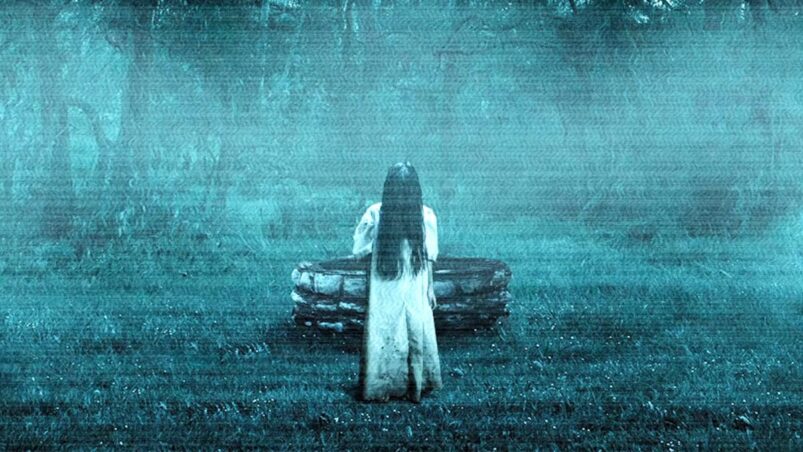
The Ring (USA/Japan: Gore Verbinski, 2002) 
[This is a rare example of a good American remake of a foreign horror film. The original is Ringu (Japan: Hideo Nakata, 1998) and it set off a flood of Japanese ghost films that took the world by storm for a time. The Ring is a very timely film that explores our relationship with technology and provides some truly creepy feelings and jump scares.]
"It sounded like just another urban legend: A videotape filled with nightmarish images, leading to a phone call foretelling the viewer’s death in exactly seven days. As a newspaper reporter, Rachel Keller was naturally skeptical of the story, until four teenagers all met with mysterious deaths exactly one week after watching just such a tape. Allowing her investigative curiosity to get the better of her, Rachel tracks down the video… and watches it. Now she has just seven days to unravel the mystery of the Ring. "


Tigers are Not Afraid (Mexico: Issa López, 2017)
[Issa López's film explores some of the contemporary socio-political issues/problems in Mexico and expands/examines it through a magical/mystical lense. How do traumatic events haunt a society?  You might want to check out this video essay on Magical Realism for thinking about this film AFTER you have watched it.]
"A haunting horror fairytale set against the backdrop of Mexico’s devastating drug wars, Tigers are Not Afraid follows a group of orphaned children armed with three magical wishes, running from the ghosts that haunt them and the cartel that murdered their parents. Filmmaker Issa López creates a world that recalls the early films of Guillermo del Toro, imbued with her own gritty urban spin on magical realism to conjure a wholly unique experience that audiences will not soon forget."


Candyman (USA: Nia DaCosta, 2021)
[A remake of Bernard Rose's classic and influential 1992 Candyman, Nia DaCosta integrates contemporary concerns of gentrification and the Black Lives Matter movement to bring this powerful tale to a new audience] "Anthony and his partner move into a loft in the now gentrified Cabrini. After a chance encounter with an old-timer exposes Anthony to the true story behind Candyman, he unknowingly opens a door to a complex past that unravels his own sanity and unleashes a terrifying wave of violence."
If you watch this film, you should check out this article (which serves as an introduction to many of the films we will be watching throughout the semester) How Black Horror Storytellers are Using Horror to Battle Hate 


Talk to Me (Australia: Michael Philippou and Danny Philippou, 2022)
[This film may still be in the theaters near you. It is not only my favorite horror film of the year, but currently it is my favorite movie of the year. This is the debut film from these brothers, but they brought a lot of experience producing short videos for their very popular Youtube channel. I believe they artfully capture the energy and perspectives of the current generation, the concerns about viral technologies and their effect upon our psyches, and some good old horror genre tropes. I walked out the theater very excited by what I had seen.]
"When a group of friends discover how to conjure spirits using an embalmed hand, they become hooked on the new thrill, until one of them goes too far and unleashes terrifying supernatural forces."  Here is an interview with the directors, for after you watch the film "Terrifying Twos: Danny and Michael Philippou on Racka energy and Talk To Me."


The Ring (USA/Japan: Gore Verbinski, 2002)


 The Ring (USA/Japan: Gore Verbinski, 2002: 115 mins)


Jarvis, Brian. "Anamorphic allegory in The Ring, or, seven ways of looking at a horror video." Irish Journal of Gothic and Horror Studies #3 (November 2007)

Ozawa, Eimi. "Remaking Corporeality and Spatiality: U.S. Adaptations of Japanese Horror Films." 49th Parallel (Autumn 2006)

Prewitt, Zach. "The Best Horror Cinema of the 21st Cinema." (Posted on Vimeo: October 2016)

Wada-Marciano, Mitsuyo. "J-horror: New Media’s Impact on Contemporary Japanese Horror Cinema." Horror to the Extreme: Changing Boundaries in Asian Cinema. ed. Jinhee Choi & Mitsuyo Wada-Marciano. Hong Kong University, 2009: 15-37.

Xu, Gang Gary. "Remaking East Asia, Outsourcing Hollywood." Senses of Cinema (November 2004)

ENG 102: Fall 2023 Resources #8

Adichie, Chimamanda Ngozi. "Freedom of Speech." The Reith Lectures (November 13, 2022) ["Best-selling Nigerian author Chimamanda Ngozi Adichie gives the first of four 2022 Reith Lectures, discussing freedom of speech. She argues that it feels like freedom of speech is under attack. Cancel culture, arguments about “wokeness" and the assault on Salman Rushdie have produced a febrile atmosphere. Meanwhile autocrats and populists have undermined the very notion of an accepted fact-based truth which lives above politics. So how do we calibrate freedom in this context? If we have the freedom to offend, where do we draw the line?"]

Anderson, Ellie and David Pena-Guzman. "Boredom." Overthink (May 23, 2023) ["One must imagine Sisyphus…bored. Take a break from boredom and listen to episode 78 of Overthink as David and Ellie guide you through the fabulously idle realm of this “bestial, indefinable affliction.” They discuss the peaceful highs and painful lows of their middle school summer slumps, the endless days of pandemic panic, and the sluggish mornings of monks during the Medieval period. What can boredom teach us about existence? Is Kierkegaard right that the masses are boring while the nobles bore themselves? Can 9-year-olds be existentially bored? Maybe all we need to overcome boredom is a little bit of fun, perhaps a holiday. Or is it?"]

Booker, M. Keith. "The Imagination of Deterioration: Human Exceptionalism, Climate Change, and the Weird Eco-Horror of David Cronenberg’s Crimes of the Future." Monstrum 6.1 (June 2023) ["To an extent, David Cronenberg’s Crimes of the Future (2022) represents a rousing return to the body horror with which its director exploded onto the independent-film scene in the 1970s and 1980s. In this case, though, the film updates Cronenberg’s earlier concerns via an especially strong focus on the impact of environmental deterioration on human beings and human society, placing the film in the realm of eco-horror as well. The action of the film occurs in a decaying near-future world in which climate change and other worsening conditions have led not only to a general decline in the quality of life (both material and emotional) but also to strange (and sometimes macabre) mutations in the human body itself. The strangeness of these climate-related mutations places Crimes of the Future in the realm of ecological horror, and especially of the recent turn toward the “weird” in eco-horror. Nature seems to have been almost obliterated in this future world, but these weird mutations, beyond the control of any of the human forces in the film, challenge the notion that humans stand apart from a nature that they can easily understand, dominate, and control. These mutations also contribute to a growing sense in the future world of the film that things are getting out of hand and that there is no identifiable fix for the general deterioration of conditions, a sense that resonates with widespread attitudes in the world of the early 2020s."]

Rohr, Richard. "Christianity and Unknowing." Sounds of Sand #28 (March 30, 2023) ["Richard Rohr, as a Catholic priest and Franciscan Friar, offers a concise history of how Western Christianity once had, soon lost, tried to retrieve, and now is roundly rediscovering its own traditional understanding of unitive consciousness (which was our word for non-dual thinking). The Christian contemplative mind was usually a subtext, and yet it was always clearly there too, and much closer to the surface, but only for those exposed to the mystical base that was revealed in the Gospel of John, the Desert Fathers and Mothers, the Celtic and monastic traditions, and what was generally referred to as the apophatic or wisdom stream of Christianity. These were our many saints and mystics. This possibility was brought to the fore by Thomas Merton in the middle of the last century, and is now flowing in many positive directions. It is now our task to rediscover the pre-Enlightenment Christianity that reveled in "the cloud of unknowing", what some called "learned ignorance", and the very notion of Mystery itself. Only when we got into competition with rationalism and secularism, did we adopt this rather recent mania for certitude and a very limited kind of scientific knowing. Almost the entire history of Protestantism emerged in this period, and thus the contemplative mind is an utterly new revelation for them, and frankly for all of us, as we again learn to be comfortable living on the edge of both the knowable and the unknown. Fr. Richard Rohr is a globally recognized ecumenical teacher bearing witness to the universal awakening within Christian mysticism and the Perennial Tradition. He is a Franciscan priest of the New Mexico Province and founder of the Center for Action and Contemplation (CAC) in Albuquerque, New Mexico. Fr. Richard’s teaching is grounded in the Franciscan alternative orthodoxy—practices of contemplation and self-emptying, expressing itself in radical compassion, particularly for the socially marginalized. Fr. Richard is the author of numerous books, including Everything Belongs, Adam’s Return, The Naked Now, Breathing Under Water, Falling Upward, Immortal Diamond, and Eager to Love: The Alternative Way of Francis of Assisi."]

 Sulzberger, A.G. "At an Embattled Moment, the New York Times’ Publisher Makes a Stand." The New Yorker Radio Hour (June 9, 2023) ["Over the past several years, as more democratic institutions and norms have come under attack, many journalists have raised the question of whether it is ethical to adhere to journalism’s traditional principles of non-bias, objectivity, and political neutrality. In May, A. G. Sulzberger, the publisher of the New York Times, staked out his position in the traditionalist camp in an essay for the Columbia Journalism Review. “The traditionalists in the ranks have long believed that their long-standing view speaks for itself. I became increasingly convinced that the argument doesn’t make itself,” he tells David Remnick. Sulzberger shies away from the term objectivity, instead describing the “posture of independence” as one that prizes “an open mind, a skeptical mind,” and a clear-eyed pursuit of truth––even if it leads to uncomfortable conclusions. Sulzberger, whose family has owned the paper since 1896, says he wants to push back on a culture of “certitude” in journalism. “In this hyper-politicized, hyper-polarized moment, is society benefiting from every single player getting deeper and deeper, and louder and louder, about declaring their personal allegiances and loyalties and preferences?” he asks."]

West, Stephen. "Belief." Philosophize This! #41 (November 3, 2014) ["On this episode of the podcast, we discuss the many facets of belief. We start out by discussing two major complications that belief brings to the table. First, absolute certainty is impossible--even certainty about the fact that "certainty is impossible”. Second, we can convince ourselves to believe in literally anything we want (such as the belief that demonic possession is achieved through rustling curtains and slamming doors). Next, we talk about justified, true belief and the multitude of ways our beliefs can be proven wrong. Finally, we learn how to put our beliefs under a microscope and why it’s absolutely necessary to do so in order to achieve true knowledge."]

---. "Optimism." Philosophize This! #42 (November 11, 2014) ["On this episode, we explore the benefits and drawbacks of optimism. First, we examine the various motivations for pessimism, and hear what Winston Churchill, Ralph Waldo Emerson, and Marcus Aurelius have to say about optimism. Next, we think about the vastly different implications of optimism in our personal lives and optimism on a societal level. Finally, we find out why Voltaire thought it was preposterous to think that we’re living in the best of all possible worlds and why he said, "Optimism is the madness of insisting all is well when we are miserable." ]

---. "Superstition." Philosophize This! #40 (October 16, 2014) ["On this episode of the podcast, we explore superstition in its various forms and examine the ways Berkeley and Voltaire tried to eliminate it in their work. First, we think about the superstitions we subscribe to in our everyday lives, whether it’s “an apple a day keeps the doctor away” or “the key to happiness is buying lots and lots of stuff.” Next, we learn why Berkeley wanted to throw out the notion that true reality lies behind the veil of perception and find out his answer to that cliché question about a tree falling in the forest. Finally, we begin our discussion of Voltaire and find out why he called Christianity "the most ridiculous, the most absurd and the most bloody religion which has ever infected this world."]

Wray, Ben. "The Battle to Control Microchip Supplies Will Define the Twenty-First Century." Jacobin (February 26, 2023) ["Semiconductors are as important for global capitalism today as access to energy resources. Only a handful of countries can produce the most advanced microchips, and control over their supply is becoming a key battleground in the US-China trade war. Review of Chip War: The Fight for the World’s Most Critical Technology by Chris Miller (Scribner: New York, 2022)."]

Zadeh, Joe. "Rise of the Plant Destroyer." NOEMA (July 6, 2022) ["Pandemics aren’t just for humans — they can sweep through the plant world too. As the planet warms, devastating diseases are being carried to new lands by the infrastructure of global capitalism, wreaking havoc on undefended crops and ecosystems."]

---. "The Secret History and Strange Future of Charisma."  NOEMA (May 24, 2023) ["At times of crisis, confusion and complexity, [Max] Weber thought, our faith in traditional and rational institutions collapses and we look for salvation and redemption in the irrational allure of certain individuals. These individuals break from the ordinary and challenge existing norms and values. Followers of charismatic figures come to view them as “extraordinary,” “superhuman” or even “supernatural” and thrust them to positions of power on a passionate wave of emotion. In Weber’s mind, this kind of charismatic power wasn’t just evidenced by accounts of history — of religions and societies formed around prophets, saints, shamans, war heroes, revolutionaries and radicals. It was also echoed in the very stories we tell ourselves — in the tales of mythical heroes like Achilles and Cú Chulainn. "]


Monday, August 28, 2023

The Devil's Backbone (Spain/Mexico: Guillermo del Toro, 2001)


One of the most personal films by Guillermo del Toro, The Devil’s Backbone is also among his most frightening and emotionally layered. Set during the final week of the Spanish Civil War, it tells the tale of a twelve-year-old boy who, after his freedom-fighting father is killed, is sent to a haunted rural orphanage full of terrible secrets. Del Toro expertly combines gothic ghost story, murder mystery, and historical melodrama in a stylish mélange that, like his later Pan’s Labyrinth, reminds us the scariest monsters are often the human ones. - Criterion Collection


The Devil's Backbone (Spain/Mexico: Guillermo del Toro, 2001: 106 mins)

"Adventures in Moviegoing with Guillermo del Toro." The Current (May 25, 2017)

Barry, Angie. "Vivisect the Director: Guillermo del Toro and The Devil’s Backbone (2001)." The Criminal Element (April 7, 2014)

Cathcart, Abigail M. "An Outsider Amongst Outsiders: Psychosocial Impact of The Devil’s Backbone, The Orphanage, and Mama." (A Thesis Submitted to the Honors College of The University of Southern Mississippi in Partial Fulfillment of the Requirement for the Degree of Bachelor of Fine Arts in the Department of Theatre: 2015)

"Cleansing of the Soul for a Clean Slate: Guillermo del Toro’s The Devil's Backbone." Cinephilia & Beyond (ND)

del Toro, Guillermo and Cornelia Funke. "Guillermo del Toro's Influences." The Current (October 19, 2016)

Ebert, Roger. "The Devil's Backbone." Chicago Sun-Times (December 21, 2001)

Goldberg, Matt. "The Films of Guillermo del Toro: The Devil’s Backbone." The Collider (October 9, 2015)

"Guillermo del Toro's Ghostly Encounter." The Current (July 29, 2013)

Heumann, Joseph K. and Robin L. Murray. "Through an Eco-Lens of Childhood: Roberto Rossellini's Germany Year Zero and Guillermo Del Toro's The Devil's Backbone." Monstrous Nature : Environment and Horror on the Big Screen. University of Nebraska, 2016: 57-80.

Ibarra, Enrique Ajuria. "Permanent hauntings: spectral fantasies and national trauma in Guillermo del Toro's El espinazo del diablo [The Devil's Backbone]." Journal of Romance Studies 12.1 (Spring 2012)

Kermode, Mark. "The Devil's Backbone: The Past is Never Dead." The Current (July 30, 2013)

Lázaro-Reboll, Antonio. "The Transnational Reception of The Devil's Backbone (Guillermo del Toro 2001)." Hispanic Research Journal 8.1 (February 2007): 39–51.


Smith, Michael Glover. "Giving The Devil’s Backbone Its Due." White City Cinema (October 15, 2010)


ENG 102: Fall 2023 Resources #7

Adjetey, Wendell Nii Laryea. "Cross-Border Cosmopolitans: The Making of a Pan-African North America (University of North Carolina Press, 2023)." New Books in Intellectual History (August 4, 2023) ["Twentieth-century African American history cannot be told without accounting for the significant influence of Pan-African thought, just as the story of U.S. policy from 1900 to 2000 cannot be told without accounting for fears of an African World. In the early 1900s, Marcus Garvey and his followers perceived the North American mainland, particularly Canada following U.S. authorities' deportation of Garvey to Jamaica, as a forward-operating base from which to liberate the Black masses. After World War II, Vietnam War resisters, Black Panthers, and Caribbean students joined the throngs of cross-border migrants. In time, as urban uprisings proliferated in northern U.S. cities, the prospect of coalitions among the Black Power, Red Power, and Quebecois Power movements inspired U.S. and Canadian intelligence services to collaborate, infiltrate, and sabotage Black organizations across North America. Assassinations of "Black messiahs" further radicalized revolutionaries, rekindling the dream for an African World from Washington, D.C., to Toronto to San Francisco to Antigua to Grenada and back to Africa. Alarmed, Washington's national security elites invoked the Cold War as the reason to counter the triangulation of Black Power in the Atlantic World, funneling arms clandestinely from the United States and Canada to the Caribbean and then to its proxies in southern Africa. By contending that twentieth-century global Black liberation movements began within the U.S.-Canadian borderlands as cross-border, continental struggles, Cross-Border Cosmopolitans: The Making of a Pan-African North America (University of North Carolina Press, 2023) reveals the revolutionary legacies of the Underground Railroad and America's Great Migration and the hemispheric and transatlantic dimensions of this history."]

George Carlin's American Dream: What George Meant To Me (Trailer for HBO Featurette posted May 20, 2022) ["He created the scientific method for comics." Comedians Stephen Colbert, Jon Stewart, Hasan Minhaj, Sam Jay, and many more share how the legendary comic influenced their own work."]

Hoeksema, Jason. "Unraveling the Mysteries of Mycorrhizal Networks." In Defense of Plants #427 (June 25, 2023) ["In this episode, we continue our journey in the world of mycorrhizal interactions with Dr. Jason Hoeksema. Join us as we investigate the ecological and evolutionary consequences of interactions between trees and mycorrhizal fungi and learn how complex and complicated these relationships truly are."]

Maass, Peter. "The Day Saddam Hussein's Statue Came Down." On the Media (May 3, 2023) ["On April 9, 2003, a US marine battalion rolled triumphantly into Firdos Square, in the center of Baghdad, two and a half weeks after the US invasion of Iraq began. Hours later, the marines toppled a statue of Saddam Hussein, amongst what seemed like a roaring, jubilant crowd of Iraqis. It became, perhaps, the most televised image of the Iraq War — and it seared itself into the minds of its viewers. Twenty years later, that image is still circulated, and sometimes celebrated. Peter Maass, then a contributing writer for the New York Times Magazine, stood at the edge of Firdos Square that day. What he witnessed, was vastly different from what viewers were seeing on their television screens across the world. Years later, Maass reconstructed the chain of events that led to the toppling to see what went wrong. For this week's podcast extra, he speaks with Brooke about how the media subconsciously creates events for itself to cover — and how the rampant misconceptions that followed in the wake of the toppling led to a pernicious view of the Iraq War that we're still trying to divorce from today."]

Maté, Gabor.  "The Myth of Normal," Healing in a Toxic Culture & How Capitalism Fuels Addiction." Democracy Now (Posted on Youtube: November 24, 2022) ["In an extended interview, acclaimed physician and author Dr. Gabor Maté discusses his new book, "The Myth of Normal: Trauma, Illness, and Healing in a Toxic Culture." "The very values of a society are traumatizing for a lot of people," says Maté, who argues in his book that "psychological trauma, woundedness, underlies much of what we call disease." He says healing requires a reconnection between the mind and the body, which can be achieved through cultivating a sense of community, meaning, belonging and purpose. Maté also discusses how the healthcare system has harmfully promoted the "mechanization of birth," how the lack of social services for parents has led to "a massive abandonment of infants," and how capitalism has fueled addiction and the rise of youth suicide rates."]

Miéville, China. "The Communist Manifesto Through the Ages." On the Media (July 14, 2023) ["The Communist Manifesto was first penned by Karl Marx and Friedrich Engels in 1848, a year simmering with revolutionary possibility in Europe. In the years since, the text has served as a refuge, and an inspiration, for those betrayed by the free market. It has ebbed in and out of popularity, its sales rising by 700 percent in the aftermath of the 2008 global financial crisis, and may be, according to some accounts, the second best-selling book in the world after the Bible. It’s a phantom, always lingering, not quite out of sight. China Miéville writes speculative fiction, but his latest book, “A Spectre, Haunting: On the Communist Manifesto," traces the subversive text's place in the world throughout history. This week, he chats with Brooke about why the text refuses to fade from our consciousness, and how best to read it at this moment in time."]

Oreskes, Naomi. "How American Business Taught Us To Love the Free Market."  On the Media (July 14, 2023)  ["For decades the so-called "free market" has been seen as a fundamental part of American society, often lauded in debates about the success of capitalism. But with wealth inequality in the U.S. at an all-time high, debates about capitalism have ramped up. This week, Brooke sits down with Naomi Oreskes, professor of the history of science at Harvard University and the co-author with Erik M. Conway of The Big Myth: How American Business Taught Us to Loathe Government and Love the Free Market, to trace the evolution of what Oreskes calls "free-market fundamentalism" back to a century-old public relations campaign that still impacts American politics."]

Pierrot, Grégory. "Black Panther: Wakanda Forever— Eternal Return of the Afro-Horn." Evergreen Review (Spring/Summer 2023) ["Having completed an initial cycle of the Marvel Cinematic Universe, Disney has begun to unleash the first installments in its new ten-year plan. Brace for the onslaught and a new opportunity to wonder how many variations on the same generic plot structure are needed to screw in the neon sign of the Marvel Cinematic Universe, a galaxy as full of variety and promise as it is frustrating in its commitment to the generic. It is arguably one of the great frustrations of the Age of Marvel that after it finally figured out the special effects to do justice to the expansiveness of the original comic books, Disney also worked overtime to distill and dilute all that was weird, silly, garish, elating about them into a surefire, hit-making formula. The hero may have a thousand faces and Disney a hefty roster of them at hand, but inside they’re also all made of the same flesh, and a lot of it is twice lab-grown, having gone through comic book assembly lines before reprocessing in Hollywood. In those circumstances, departures from formula become all the more significant. When Ryan Coogler directed Black Panther, he did not just bring fifty years of Black superhero comics to the screen; he was expressly inspired by all the Black writers and artists, from Billy Graham, Christopher Priest, Brian Stelfreeze, and Alitha Martinez to the Hudlin brothers, Ta-Nehisi Coates, and Roxane Gay, all of whom contributed along the years to turn an often corny cat into a cultural icon. Coogler brought as Black Panther’s main foe Killmonger, a cousin and polar inversion who could have been as cringeworthy as Bizarro, but turned out as existential a nemesis as Poe’s William Wilson, and sharing the same sharp fate. The film managed to simultaneously propose and absorb a notion that Killmonger made something painfully clear: however cool and well-meaning, a monarch—and both these guys were monarchs—can’t be a revolutionary. Still, working within these limits, Coogler made a way out of no way with humor and by sprinkling historical and political Easter eggs for those who would explore."]

Roane, J.T. "The Divine City: On J. T. Roane’s Dark Agoras." The Los Angeles Review of Books (June 15, 2023) ["Dark Agoras (the title is a riff on the Greek agora, meaning public space) provides us with a view of the lives lived and worlds built by Black migrants who made their way from the rural South to Philadelphia across the 20th century. Roane’s entryway into Black working-class life was inspired in part by the groundbreaking work of W. E. B. Du Bois’s The Philadelphia Negro. In that 1899 text, Du Bois identified two social categories associated with Black migrant cultures."]

Rosen, David. "The Great Panic: Trans-Sexuality and the Erosion of Patriarchy." Counterpunch (May 25, 2023) ["We’ve witnessed tragedy play out in the long, long battle to overcome patriarchy’s subordination of women. We saw a less tragic version of it play out in the battle over gay rights. We are now witnessing patriarchy play out as farse in today’s culture wars campaigns to repress transgender identity, suppress challenging reading materials and enforce electoral gerrymandering."]

Seth, Anil. "What Is the Nature of Consciousness?" The Joy of Why (May 31, 2023) ["Consciousness, our experience of being in the world, is one of the mind’s greatest mysteries, but as the neuroscientist Anil Seth explains to Steven Strogatz, research is making progress in understanding this elusive phenomenon."]

Tuesday, August 22, 2023

ENG 102: Fall 2023 Resources #5

Adam, Barbara. Time. Wiley, 2004. ["What is time? How has our relationship to time changed through history and how does time structure our social lives? In this lively introduction, Barbara Adam explores the changing ways in which time has been understood and how this knowledge is embedded in cultural practices. She takes the reader on a journey of discovery that extends from ancient mythology and classical philosophy to the contemporary social world of high-speed computer networks and globalized social relations. The book poses key questions about the nature of time, how it is conceptualized, what it means in practice and how the parameters set by nature have been transcended across the ages by the human quest for time know-how and control. It provides the reader with a good basis for understanding the role of time in contemporary social life. This book assumes no previous knowledge. Through its broad perspective and transdisciplinary approach it provides an accessible and wide-ranging introduction for students and teachers across the social sciences."]

Abdelfetah, Rund, et al. "Before Roe: The Physicians Crusade." Throughline (June 8, 2023) ["Abortion wasn't always controversial. In fact, in colonial America it would have been considered a fairly common practice: a private decision made by women, and aided mostly by midwives. But in the mid-1800s, a small group of physicians set out to change that. Obstetrics was a new field, and they wanted it to be their domain—meaning, the domain of men and medicine. Led by a zealous young doctor named Horatio Storer, they launched a campaign to make abortion illegal in every state, spreading a potent cloud of moral righteousness and racial panic that one historian later called "the physicians' crusade." And so began the century of criminalization. In the first episode of a two-part series, we're telling the story of that century: how doctors put themselves at the center of legal battles over abortion, first to criminalize — and then to legalize."]

Allen-Hermanson, Sean, Philip Goff, and William Seager. "Panpsychism." The Stanford Encyclopedia of Philosophy (February 13, 2022) ["Panpsychism is the view that mentality is fundamental and ubiquitous in the natural world. The view has a long and venerable history in philosophical traditions of both East and West, and has recently enjoyed a revival in analytic philosophy. For its proponents panpsychism offers an attractive middle way between physicalism on the one hand and dualism on the other. The worry with dualism—the view that mind and matter are fundamentally different kinds of thing—is that it leaves us with a radically disunified picture of nature, and the deep difficulty of understanding how mind and brain interact. And whilst physicalism offers a simple and unified vision of the world, this is arguably at the cost of being unable to give a satisfactory account of the emergence of human and animal consciousness. Panpsychism, strange as it may sound on first hearing, promises a satisfying account of the human mind within a unified conception of nature."]

Austin, Thomas. "Horse-People and White Voices: Neoliberalism and Race in Sorry to Bother You." Senses of Cinema #105 (May 2023) ["The comedy drama Sorry to Bother You (2018), written and directed by Boots Riley, follows the trials and tribulations of Cassius, aka “Cash”, Green (played by Lakeith Stanfield), a new employee at RegalView, a fictional telemarketing firm based in “an alternate reality” version of Oakland, California.1 Here I consider two of the many sonic and visual devices through which the film develops its social commentary and political critique of contemporary America."]

Barndt, Deborah, et al. "Learning for Liberation: The Life & Legacy of Paulo Freire." Darts and Letters #79 (May 25, 2023) ["Paulo Freire offers activists and academics everywhere a lesson in what it means to be a radical intellectual. He is known as the founder of critical pedagogy, which asks teachers and learners to understand and resist their own oppression. His subversive books have been banned and burned in many countries, including his native Brazil, where the military dictatorship of the 1960s imprisoned and then exiled him. On this episode, we learn about Freire’s life and the basics of his foundational text, Pedagogy of the Oppressed, with help from professor emeritus John Portelli. Then, we explore how Freire’s legacy is still shaping our ideas of teaching and learning today. Academic/activist/artist Deborah Barndt takes us to York University’s faculty of Environmental and Urban Change, which is rooted in the work of Freirean scholars. Next, we learn about how Freire’s pedagogy is put into practice to advocate for disabled learners, with Marc Castrodale, a teacher, disability officer, and scholar of critical disability and Mad studies. Finally, social worker Sharon Steinhauer tells us the story of the University at Blue Quills, and how an act of Indigenous resurgence led to the beginning of a network of decolonial universities in Canada."]

Baynham, Jacob. "The Myriad Lives of People and Water." NOEMA (May 4, 2023) ["Our lives are grand voyages, far more entangled with everything around us than we know. This is as true for a person as it is for a creek."]

Blackston, Dylan McCarthy and Susan Stryker. "The Transgender Studies Reader Remix (Routledge 2022)." New Books in LGBTQ Studies (April 24, 2023) ["This is a book that’s as big as it is rich. It brings together 50 previously published articles that track both the history and the current directions in the interdisciplinary field of transgender studies. The reader shows the conversations taking place not only within transgender studies but also between transgender studies and such fields as feminist theory, queer theory, Black studies, history, biopolitics, and the posthumanities. In our conversation, editors Stryker and Blackston gives us a sense of this range and also the crucial issues that inform the creation of the reader itself and the importance of transgender studies as a field. Blackston is an Assistant Professor of Gender, Women’s, and Sexuality Studies in the Department of Interdisciplinary Studies at Appalachian State University. Stryker is Professor Emerita of Gender and Women’s Studies at the University of Arizona, founding co-editor of TSQ: Transgender Studies Quarterly, founding co-editor of Duke University Press’s ASTERISK book series, and co-editor of Routledge’s two previous transgender studies readers. And here’s our conversation."]

Brown, Krista and Moe Tkacik. "Taylor Swift Tickets." On the Media (June 7, 2023) ["On January 24, the Senate Judiciary Committee held a hearing on Ticketmaster. The hearing followed in the aftermath Taylor Swift's "Eras Tour" tickets going on sale last November, a debacle during which Ticketmaster broke down during the presale, leaving millions of fans without tickets. Senators convened to hear testimony from a top Live Nation executive (Ticketmaster’s parent company), competitors in ticketing and concert promotion, antitrust experts, and a musician. The hearing represented a step toward a potential antitrust case against Live Nation and Ticketmaster, which merged in 2010. Moe Tkacik and Krista Brown are researchers at the American Economic Liberties Project, a left-leaning think tank which is part of a consortium that is pushing for the DOJ to break up the Live Nation monopoly. In February Micah Loewinger spoke to them about an article they co-wrote for The American Prospect about Ticketmaster’s forty-plus-year-history, and how the company came to dominate, and in some ways reshape, the live music landscape."]

Chungking Express (Hong Kong: Wong Kar-Wai, 1994) Dialogic Cinephilia (Ongoing Online Archive) ["The whiplash, double-pronged Chungking Express is one of the defining works of 1990s cinema and the film that made Wong Kar Wai an instant icon. Two heartsick Hong Kong cops (Takeshi Kaneshiro and Tony Leung Chiu Wai), both jilted by ex-lovers, cross paths at the Midnight Express take-out food stand, where the ethereal pixie waitress Faye (Faye Wong) works. Anything goes in Wong’s gloriously shot and utterly unexpected charmer, which cemented the sex appeal of its gorgeous stars and forever turned canned pineapple and the Mamas & the Papas’ “California Dreamin’” into tokens of romantic longing."]

Craze, Joshua. "After Solidarity." New Left Review (May 18, 2023) ["Tori et Lokita (2022), the latest film by Jean-Pierre and Luc Dardenne, opens with a shot that has become a signal part of their visual repertoire: a face in the centre of the screen, crumbling under the voice of an unseen speaker. We see Lokita as she is interrogated by an immigration officer. At first, she seems impassive, but eventually she hesitates, and then breaks down in tears, unable to answer the officer’s questions. We witness the consequences of power, inscribed on a face."]

Denbeaux, Mark and John Kiriakau. "From Waterboarding to Rape, Abu Zubaydah Depicts Torture at Black Sites & Gitmo in Graphic Sketches." Democracy Now (May 18, 2023) ["The Center for Policy and Research has just published a new report titled “American Torturers: FBI and CIA Abuses at Dark Sites and Guantánamo,” which compiles a series of 40 drawings by Guantánamo Bay prisoner Abu Zubaydah that chronicle the horrific torture he endured since 2002 in CIA dark sites and at Guantánamo Bay, where he has been detained without charge since 2006. The United Nations Working Group on Arbitrary Detention has issued a new call for the United States to release him immediately. We speak with one of his attorneys, Mark Denbeaux, and CIA whistleblower John Kiriakou, who exposed the Bush-era torture program and was the only official jailed in connection to it."]

ENG 281: Week 2 - Classic Ghost Films (16 Week)

 Lyons, Kevin, Mike Muncer, and Adam Nyman. "Ghosts Pt. 1: An Introduction." The Evolution of Horror [This is a conversation on the history of ghost films and was the initial episode in a season on the subgenre - the rest of the episodes are located here ]

-------------------------------------------------------------------------------------

Ghosts: Classic Films

Our film options this week:

Kuroneko (Japan: Kaneto Shindo, 1968) [Shindo's film is a beautiful and eerie tale.]
"In this poetic and atmospheric horror fable, set in a village in war-torn medieval Japan, a malevolent spirit has been ripping out the throats of itinerant samurai. When a military hero is sent to dispatch the unseen force, he finds that he must struggle with his own personal demons as well. From Kaneto Shindo, director of the terror classic Onibaba, Kuroneko (Black Cat) is a spectacularly eerie twilight tale with a shocking feminist angle, evoked through ghostly special effects and exquisite cinematography."

The Fog (USA: John Carpenter, 1980) [Make sure to watch the 1980 version, not the 2005 remake. John Carpenter is considered a master horror filmmaker, based upon Peter Straub's popular horror novel.]
"Strange things begin to occurs as a tiny California coastal town prepares to commemorate its centenary. Inanimate objects spring eerily to life; Rev. Malone stumbles upon a dark secret about the town’s founding; radio announcer Stevie witnesses a mystical fire; and hitchhiker Elizabeth discovers the mutilated corpse of a fisherman. Then a mysterious iridescent fog descends upon the village, and more people start to die."

The Shining (USA/UK: Stanley Kubrick, 1980) [Considered by many to be a masterpiece of horror and made by one of the best 20th Century filmmakers, based on Stephen King's popular horror novel - King hated the film, and one of the most analyzed/theorized films.]
"Jack Torrance accepts a caretaker job at the Overlook Hotel, where he, along with his wife Wendy and their son Danny, must live isolated from the rest of the world for the winter. But they aren’t prepared for the madness that lurks within."

The Poltergeist (USA: Tobe Hooper, 1982) [Directed by the maker of the Texas Chainsaw Massacre, this a very influential ghost story that brought them into the modern American suburbs and exposed the evil underneath middle-America] 
"Steve Freeling lives with his wife, Diane, and their three children, Dana, Robbie, and Carol Anne, in Southern California where he sells houses for the company that built the neighborhood. It starts with just a few odd occurrences, such as broken dishes and furniture moving around by itself. However, when he realizes that something truly evil haunts his home, Steve calls in a team of parapsychologists led by Dr. Lesh to help before it’s too late."

The Sixth Sense (USA: M. Night Shyamalan, 1999) [This was Shyamalan's debut film and literally made his career. It was a pivotal film in the horror/thriller subgenre that was extremely popular at the turn of the century, known as "mind-fuck films" as detailed in this article Eig, Jonathan. "A beautiful mind(fuck): Hollywood structures of identity." Jump Cut #46 (2003) - do not read the article before seeing the film, it will ruin it]
"Following an unexpected tragedy, child psychologist Malcolm Crowe meets a nine year old boy named Cole Sear, who is hiding a dark secret."

Monday, August 21, 2023

The Shining (USA/UK: Stanley Kubrick, 1980)


The Shining (USA/UK: Stanley Kubrick, 1980: 146 mins)

Abrams, Nathan. "Kubrick and the Paranoid Style: Antisemitism, Conspiracy Theories, and The Shining." Senses of Cinema #95 (July 2020)

Abrams, Nathan, et al. "The Shining and Us – Participants to the Dossier Reflect on Their First Encounter with Stanley Kubrick’s The Shining." Senses of Cinema #95 (July 2020)

Beyl, Cameron. "The Directors Series: Stanley Kubrick, Pts. 1-5." The Film Stage (February 11, 2015)

Chodorov, Pip.  "Reflections on The Shining." Senses of Cinema #95 (July 2020)  ["Kubrick, though, always claimed to be doing something more than entertainment. He is waking up the spectators, warning them that their relationship to images should not be passive, that the shadows in the mirror can affect us in profound and often troubling ways."]

Dutta, Debopriyaa. "The Viewer in Kubrickland: Solving Stanley Kubrick's Hermeneutic Labyrinth." High on Films (June 22, 2017)

Englert, Angela. "Taking the Shine Off with Doctor Sleep." Cultural Gutter (December 10, 2020)

Fairfax, Daniel. "A Stranger in the Hotel: Jean-Pierre Oudart and The Shining." Senses of Cinema #95 (July 2020)

Fenwick, James, I.Q. Hunter and Elisa Pezzota. "Stanley Kubrick: A Retrospective. Introduction." Cinergie (December 4, 2017) 

Figlerowicz, Marta. "Jack's Smart Home." Senses of Cinema #95 (July 2020)

Figueras, Mark Anthony. "Kubrick in Color." (Posted on Vimeo: January 2016)

Ford, Phil and J.F. Martel. "The Dark Eye: On the Films of Rodney Ascher." Weird Studies #12 (May 2, 2018) ["American filmmaker Rodney Ascher is a master of the weird documentary. Whether he be exploring wild interpretations of a classic horror film in Room 237, bracketing the phenomenon of sleep paralysis in The Nightmare, studying the uncanny power of the moving image in "Primal Screen," or considering the sinister power of a kitschy logo in "The S from Hell," Ascher confronts his viewers with realities that resist final explanations and facile reduction. In this episode, Phil and JF follow Ascher's films into the living labyrinth of a strange universe that isn't just unknown, but radically unknowable."]

---. "You've Always Been the Caretaker: On Kubrick's The Shining." Weird Studies #211 (April 29, 2026) ["In this episode, Phil and JF discuss Stanley Kubrick's adaptation of Stephen King's novel The Shining. That they are doing this eight years after starting the podcast is weird in itself, so fundamental is Kubrick's "chamber epic" to the modern weird in general, and the hosts' specific interests in particular. Well, as the Overlook Hotel's former caretaker Delbert Grady might put it, consider the situation corrrrected."]

Hancock, James and Martin Kessler. "The King of Horror." The Wrong Reel #135 (May 16, 2016)

Kaneria, Rishi. "Red: A Kubrick Supercut." (Posted on Vimeo: 2015)

Nemrov, Alexander. "The Manly Veil." Senses of Cinema #95 (July 2020)

Pulver, Andrew. "Stanley Kubrick: film's obsessive genius rendered more human." The Guardian (April 26, 2019)

Rinzler, J.W. and Lee Unkrich. "Stanley Kubrick's The Shining (Taschen 2023)." New Books in Film (February 6, 2023) ["In 1966 Stanley Kubrick told a friend that he wanted to make “the world’s scariest movie.” A decade later Stephen King’s The Shining landed on the director’s desk, and a visual masterpiece was born. J. W. Rinzler and Lee Unkrich's book Stanley Kubrick's The Shining (Taschen, 2023) is the definitive compendium of the film that transformed the horror genre features hundreds of never-before-seen photographs, rare production ephemera from the Kubrick Archive, and extensive new interviews with the cast and crew."]

Szaniawski, Jeremi. "'Come Out, Come Out, Wherever You Are': The Legacy of The Shining in Contemporary Cinema." Senses of Cinema #95 (July 2020)

---. "“How Do You Like It?” (Forty Years On) – The Shining in the Age of Global Quarantine." Senses of Cinema #95 (July 2020)

Uhlich, Keith. "Great Directors: Stanley Kubrick." Senses of Cinema (May 2002)

Ulivieri, Filippo."King vs Kubrick: The Origins of Evil." Senses of Cinema #95 (July 2020)


Undine (Germany/France: Christian Petzold, 2020)


 Undine (Germany/France: Christian Petzold, 2020: 91 mins)

Abel, Marco, Aylin Bademsoy, and Jaimey Fisher. "'Playing Innocent Would Have Meant Lying': From the Introduction to Christian Petzold: Interviews." Film International (June 29, 2023)

Cleaver, Sarah Kathryn. "Swept Away: A Thematic Dive Into the Depths of Undine."  Curzon (April 1, 2021)

Eggert, Brian. "Undine." Deep Focus Review (June 4, 2021)

Hudson, David. "Petzold and Undine." Current (June 2, 2021)

Nguyen, Mai and Pauline Greenhill. "Uncanny sounds and the politics of wonder in Christian Petzold’s Undine." NECSUS (Spring 2022) ["In the story of Undine, a water sprite leaves her aquatic origins to marry a human and acquires a soul in the process. The narrative ends tragically when her lover betrays her and she is obliged to kill him according to the laws of the elemental spirits. Related to figures such as the sirens of Greek mythology, the Lorelei of Clemens Brentano and Heinrich Heine, Melusine in French folklore, and selkie narratives of Celtic and Norse oral traditions, the first writings on this nymph can be traced back to Swiss physician and natural philosopher Paracelsus. Popularised as a literary fairy tale in 19th century Germany by the Prussian writer Friedrich de la Motte Fouqué, Undine’s story has inspired numerous incarnations. For instance, it served as the source material for operas by E.T.A. Hoffmann (1812-1814) and others, a play by Jean Giraudoux (1938), and most famously Hans Christian Andersen’s fairy tale Den lille havfrue (‘The Little Mermaid,’ 1837). Films referencing ‘Undine’ date from the silent era and come from Austria, Canada, France, Ireland, and the US, as well as three from Germany: Rolf Thiele’s Undine 74 (1974), Eckhart Schmidt’s Undine (1992), and Christian Petzold’s Undine (2020) – our subject here. Movies based on or inspired by Andersen’s tale are of course much more common."]

Petkova, Savina. "Christian Petzold’s Material Symbolism." Photogenie (November 4, 2020)

Ryder, Alastair. "Paula Beer on Christian Petzold’s Methodical Approach and Telling a Berlin Fairytale with Undine." The Film Stage (June 2, 2021)

Sheehan, Sophia. "Undine: When a Curse Becomes a Choice." High on Films (July 28, 2023) 

Tallerico, Brian. "Undine." Roger Ebert (June 4, 2021)


ENG 102: Fall 2023 Resources #4

Abdelfetah, Rund, et al. "Affirmative Action." Throughline (June 15, 2023) ["The Supreme Court is expected to rule on affirmative action sometime this month. Most of us understand that some colleges use race as a factor in college admissions. But journalist Jay Caspian Kang argues that this focus is too narrow, and that it avoids harder conversations we need to have as a culture. In his view, focusing on the admissions practices of a select few universities creates "a fight for spots in the elite ranks of society" — and blinds us to the bigger problems plaguing American democracy. On today's episode, we talk with Kang about affirmative action's origins in the civil rights era, what it does and doesn't achieve, and what a more equitable education system could look like."]

Murtha, Tara. "Ode to Billie Joe." AllMusic (March 13, 2023) ["The backstory of one of the all-time great songs and Bobbi Gentry, the woman behind this masterpiece."]

Nayman, Adam. "The Words Don’t Really Matter." The Ringer (April 14, 2023) ["Thirty-five years later, there’s still nothing quite like Hayao Miyazaki’s My Neighbor Totoro."]

Rodriguez, Randall. “Otto the Barbarian: Patriarchy, Feminism, and Romanian New Wave Cinema.” Film Matters (March 15, 2023) ["This article aims at bringing to light some of the underlying themes in Ruxandra Ghițescu’s 2020 film Otto the Barbarian. One way to interpret the film is as an examination of adolescence, anger, and the old ways of life clashing with new ones. I believe that there is another (less obvious) way of interpreting the film: as a criticism of phallocentric cultural norms. Ghițescu does this by turning phallocentric storytelling tropes in on themselves and executes this in a way that keeps the first interpretation of her work intact."] 

Scovell, Adam. Folk Horror: Hours Dreadful and Things Strange. Liverpool University Press, 2017. ["Interest in the ancient, the occult, and the "wyrd" is on the rise. The furrows of Robin Hardy (The Wicker Man), Piers Haggard (Blood on Satan's Claw), and Michael Reeves (Witchfinder General) have arisen again, most notably in the films of Ben Wheatley (Kill List), as has the Spirit of Dark of Lonely Water, Juganets, cursed Saxon crowns, spaceships hidden under ancient barrows, owls and flowers, time-warping stone circles, wicker men, the goat of Mendes, and malicious stone tapes. Folk Horror: Hours Dreadful And Things Strange charts the summoning of these esoteric arts within the latter half of the twentieth century and beyond, using theories of psychogeography, hauntology, and topography to delve into the genre's output in film, television, and multimedia as its "sacred demon of ungovernableness" rises yet again in the twenty-first century."]

Singer, Peter and Tse Yip Fai."What AI Means for Animals." NOEMA (April 18, 2023) ["There is an urgent need to expand AI ethics so that it considers nonhuman life."]

Triangle of Sadness (Sweden: Ruben Östlund, 2022: 147 mins) Dialogic Cinephilia (Ongoing Online Archive) ["Models Carl and Yaya are invited for a luxury cruise with a rogues’ gallery of super-rich passengers. At first, all appears Instagrammable, but the cruise ends catastrophically and the group find themselves marooned on a desert island."]

Upholt, Boyce. "Saguaro, Free of the Earth." Emergence (May 23, 2023) ["Imagine a world where the mountains and glaciers, trees and waterways and animals—everything comprising our living, breathing planet—had as much a right to exist, legally, as humans. In this narrated essay, author Boyce Upholt travels to meet with the O’odham peoples of the Sonoran Desert, who have long revered the Saguaro cactus as a being with personhood. As Saguaro are bulldozed to make way for a segment of the US-Mexico border wall through Organ Pipe Cactus National Park, existing legal protections for the cactus come up against human-centric and extractive attitudes towards the Earth. Talking with elders from the Tohono O’odham Nation who are acting on behalf of the rooted beings of the desert, Boyce wonders how our Earth might transform if we recognized the dignity of all life."]

Walker, Sara. "AI is Life." NOEMA (April 27, 2023) ["Technology is not artificially replacing life — it is life." "Sara Walker is an astrobiologist and theoretical physicist."]

Warren, Robert. "Ant Dispersal Revisited." In Defense of Plants #419 (April 30, 2023) ["What started as a question about some strange "seeds" in an ant nest turned into an explosion of scientific investigations into the links between oaks, gall wasps, and ants. We revisit a conversation with Dr. Robert Warren in which we discuss the mind-blowing evolutionary insights that can come from natural history observations and what they could mean for seed dispersal in spring ephemerals."]

Zadeh, Joe. "The Tyranny of Time." NOEMA (June 3, 2021) ["The clock is a useful social tool, but it is also deeply political. It benefits some, marginalizes others and blinds us from a true understanding of our own bodies and the world around us."]