Tuesday, December 5, 2017

Guns/Weapons (Ongoing Archive)

Michael Benton -- Excellent episode analyzing the toxic effect of one of the worst organizations in America and the need to fight for stricter gun control laws.


----------------------------------------------------

Barker, Holly, et al. "The Secret, Silent Poisoning (Nuclear Victims in Peace and War)." Unwelcome Guests #616 (August 11, 2012)

Beckett, Lois. "How to Report on Gun Violence in America." On the Media (September 6, 2019) ["In August, 53 people died in mass shootings in the United States. Following the shootings in El Paso, Texas and Dayton, Ohio, Washington Post columnist Margaret Sullivan wrote, “When a mass shooting happens, even when it happens twice in a 24-hour period — even when the death toll soars into the dozens — we reflexively spring into action. We describe the horror of what happened, we profile the shooter, we tell about the victims’ lives, we get reaction from public officials. It’s difficult, gut-wrenching work for journalists on the scene. And then there’s the next one. And the next one. If journalism is supposed to be a positive force in society — and we know it can be — this is doing no good.” Lois Beckett is a senior reporter for The Guardian and has covered gun violence for seven years. She says that mainstream coverage of the issue is flawed because it's focused mainly on one type of tragedy. She explains to Brooke how better coverage would mean focusing on the root causes of gun violence."]

Benjamin, Medea and Trevor Timm. "Drone Summit: Killing and Spying by Remote Control." Law and Disorder (July 9, 2012)

Carlin, Dan. "Gunning for Violence." Common Sense #244 (December 28, 2012) [The archived episode costs 99 cents, but definitely worth it "In the wake of another mass shooting, Dan looks at ways to alter a society that glorifies gun violence. He ties together culture, mental health and powerful lobbying groups in a fashion sure to upset everyone.']

Chomsky, Noam. "Nuclear Weapons, Climate Change & the Undermining of Democracy Threaten Future of Planet." Democracy Now (April 12, 2019) ["As President Trump pulls out of key nuclear agreements with Russia and moves to expand the U.S. nuclear arsenal, Noam Chomsky looks at how the threat of nuclear war remains one of the most pressing issues facing mankind. In a speech at the Old South Church in Boston, Chomsky also discusses the threat of climate change and the undermining of democracy across the globe."]

Clark, Ramsey and Harry Murray. ""Hancock 38" Defendants Found Guilty for Bold Army Base Protest Against U.S. Drone Attacks Abroad." Democracy Now (December 2, 2011)

Cobbs, Maurice. Customer Comment on Amazon about the Tailwind child's toy Drone Dialogic (January 28, 2012)

Conroy, Bill. "More Fast and Furious / Did Cele Call it?" The Expert Witness Radio Show (December 14, 2011)

Debusmann, Bernd. "America's Problematic Remote Control Wars." Reuters (July 8, 2011)

Drone Survival Guide [Website: "Our ancestors could spot natural predators from far by their silhouettes. Are we equally aware of the predators in the present-day? Drones are remote-controlled planes that can be used for anything from surveillance and deadly force, to rescue operations and scientific research. Most drones are used today by military powers for remote-controlled surveillance and attack, and their numbers are growing. The Federal Aviation Administration (FAA) predicted in 2012 that within 20 years there could be as many as 30.000 drones flying over U.S. Soil alone. As robotic birds will become commonplace in the near future, we should be prepared to identify them. This survival guide is an attempt to familiarise ourselves and future generations, with a changing technological environment. This document contains the silhouettes of the most common drone species used today and in the near future. Each indicating nationality and whether they are used for surveillance only or for deadly force. All drones are drawn in scale for size indication. From the smallest consumer drones measuring less than 1 meter, up to the Global Hawk measuring 39,9 meter in length."]

Ellsberg, Daniel. "Daniel Ellsberg Reveals He Was a Nuclear War Planner, Warns of Nuclear Winter & Global Starvation." Democracy Now (December 6, 2017) ["Could tension between President Trump and North Korean leader Kim Jong-un bring us to the brink of nuclear war? As tensions ramp up, we discuss what nuclear war would look like with a former nuclear war planner and one of the world’s most famous whistleblowers—Daniel Ellsberg. In 1971, Ellsberg was a high-level defense analyst when he leaked a top-secret report on U.S. involvement in Vietnam to The New York Times and other publications, which came to be known as the Pentagon Papers. He played a key role in ending the Vietnam War. Few know Ellsberg was also a Pentagon and White House consultant who drafted plans for nuclear war. His new book, published Tuesday, is titled “The Doomsday Machine: Confessions of a Nuclear War Planner.” We speak with Ellsberg about his top-secret nuclear studies, his front row seat to the Cuban missile crisis, whether Trump could start a nuclear war and how contemporary whistleblowers Chelsea Manning and Ed Snowden are his heroes."]

"Emma González at Home, and a Crown Prince Abroad." The New Yorker Radio Hour (April 6, 2018) ["Emma González is a survivor of the Parkland attack, and a leader of the #NeverAgain movement. She talks with David Remnick about the ways her life has changed since the shooting, and why activism comes naturally to the teens spearheading this newest push for gun control."]

Engelhardt, Tom. "Praying at the Church of St. Drone: The President and His Apostles." Tom Dispatch (June 5, 2012)

Frost, Amber. "‘Hours of Racist, Imperialist Fun!’: Toy predator drone + snarky Amazon comments." Dangerous Minds (December 31, 2012)

Greenwald, Glenn and Jeremy Scahill. "Death By Metadata: Jeremy Scahill & Glenn Greenwald Reveal NSA Role in Assassinations Overseas." Democracy Now (February 10, 2014)

Grosscup, Beau. "Cluster Munitions and State Terrorism." Monthly Review 62.11 (April 1, 2011)

Gusterson, Hugh and Elaine Scarry. "Are We Numb to Nukes?" Radio Open Source (April 10, 2014) ["We’re thinking our way through a plausible nuclear emergency with Elaine Scarry who reminds you – we’ve got a weapons monarchy in this democracy. Two decades after the fall of the Berlin wall and a nuclear football still accompanies the president at all times, nuclear missile silos still dot the great plains, and hundreds of nukes remain constantly on alert. How can we call it a democracy, the rule of the people, when there’s one man’s finger on the trigger that could destroy us all?"]

Hennessey, Martha and Carmen Trotta.  "Kings Bay Plowshares: Meet Two of the Seven Activists Who Secretly Entered a Nuclear Submarine Base." Democracy Now (July 24, 2018) ["We look at the resistance against nuclear weapons here in the United States. On April 4, 2018—the 50th anniversary of Martin Luther King’s assassination—seven Catholic Plowshares activists secretly entered Naval Submarine Base Kings Bay in Georgia, one of the largest nuclear submarine bases in the world. They were armed with just hammers, crime scene tape, baby bottles containing their own blood, and an indictment charging the U.S. government for crimes against peace. Their goal was to symbolically disarm the nuclear weapons at the base, which is home to at least six nuclear ballistic missile submarines. Each submarine carries 20 Trident thermonuclear weapons. The activists said they were following the prophet Isaiah’s command to “beat swords into plowshares.” It was the latest of 100 similar anti-nuclear Plowshares actions around the world beginning in 1980 in King of Prussia, Pennsylvania. The first Plowshares action in 1980 was led by the late Daniel Berrigan and Phil Berrigan. Phil’s wife, Liz McAlister, was one of seven arrested at the April 4 action. McAlister and two other activists, Jesuit priest Stephen Kelly and Mark Colville, remain locked up in pretrial confinement in Brunswick, Georgia. Four others—Patrick O’Neill, Carmen Trotta, Martha Hennessy and Clare Grady—are under house arrest. All seven could face years in prison, if convicted. We speak with Martha Hennessy and Carmen Trotta. Hennessy is the granddaughter of Dorothy Day, the founder of the Catholic Worker movement. Carmen Trotta helps run the St. Joseph Catholic Worker House in New York."]

Horwitz, Josh. "Republican Lawmakers Refuse to Adopt Gun Control Despite 200 School Shootings Since Sandy Hook." Democracy Now (February 15, 2018) ["Since the Sandy Hook Elementary School massacre in Newtown, Connecticut, in 2012, there have been 200 school shootings. But on Capitol Hill and in many state legislatures, Republican lawmakers have blocked efforts to enact gun control. Wednesday’s shooting in Florida comes just days after President Trump released his budget, which proposes cutting millions of dollars from the National Instant Criminal Background Check System. We speak to Josh Horwitz, executive director of the Coalition to Stop Gun Violence. He is the co-author of “Guns, Democracy, and the Insurrectionist Idea.”"]

Johnson, Nicholas. "Negroes and the Gun." The Volokh Conspiracy (January 27, 2014)

---. "Negroes and the Gun: The Black Tradition of Arms." After Words (January 21, 2014)

Khamvongsa, Channapha, Thoummy Silaphan and Manixia Thor. "40 Years After Secret U.S. War in Laos Ended, Millions of Unexploded Bomblets Keep Killing Laotians." Democracy Now (April 4, 2013)

Kimball, Daryl. "'Counterproductive and Dangerous': : Nuclear Arms Race Feared as U.S. Quits Key Treaty with Russia." Democracy Now (October 22, 2018) ["President Trump has announced plans to pull the United States out of a landmark nuclear arms pact with Russia, in a move that could spark a new arms race. President Ronald Reagan and former Soviet leader Mikhail Gorbachev signed the Intermediate-Range Nuclear Forces (INF) Treaty in 1987. The INF banned all nuclear and non-nuclear missiles with short and medium ranges. The treaty helped to eliminate thousands of land-based missiles. On Saturday, Trump vowed to build new nuclear weapons. We speak with Daryl Kimball, director of the Arms Control Association. He previously led the Coalition to Reduce Nuclear Dangers. He has been advocating for the U.S. and Russia to preserve the INF Treaty."]

"March For Our Lives Special Broadcast." Democracy Now (March 24, 2018) ["Democracy Now! was on the ground broadcasting live from the March For Our Lives in Washington, D.C. on March 24, 2018, a historic event created, inspired and led by students. The four-hour special program featured the voices of students and people of all ages who converged on the capital and over 800 other cities around the world to demand action on gun control."]

Merler, Sylvia. "On the Cost of Gun Ownership." Bruegel (October 11, 2017) ["On 1 October 2017, 59 people were killed and another 489 injured in what is currently the deadliest mass shooting in US modern history. The author reviews recent contributions on the economic cost of gun violence, as well as the impact of regulation."]

Nader, Ralph. "Where are the Lawyers?: Obama at Large." Counterpunch (May 31, 2012)

Nasser, Latif, et al. "Nukes." Radiolab (April 7, 2017) ["President Richard Nixon once boasted that at any moment he could pick up a telephone and - in 20 minutes - kill 60 million people. Such is the power of the US President over the nation’s nuclear arsenal. But what if you were the military officer on the receiving end of that phone call? Could you refuse the order? This episode, we profile one Air Force Major who asked that question back in the 1970s and learn how the very act of asking it was so dangerous it derailed his career. We also pick up the question ourselves and pose it to veterans both high and low on the nuclear chain of command. Their responses reveal once and for all whether there are any legal checks and balances between us and a phone call for Armageddon."]

Nocera, Joe. "Holiday Weekend Gun Report: May 23-26, 2014." The New York Times (May 27, 2014)

Novak, Matt. "U.S. Army Assures Public That Robot Tank System Adheres to AI Murder Policy." Gizmodo (March 6, 2019)

Oliver, Manuel and Patricia Oliver. "Parents of Murdered Parkland Student Joaquin Oliver on Using Art to Demand End to Gun Violence." Democracy Now (August 15, 2018) ["Students at Marjory Stoneman Douglas High School in Parkland, Florida, return to class today, amid heavy security, after summer break. It was six months ago Tuesday when a former student, armed with a semiautomatic AR-15, gunned down 17 students, staff and teachers in just three minutes. It was one of the deadliest school shootings in U.S. history. After the horrific attack, many of the students who survived the shooting became leading activists for gun control. 
Among the students killed at Stoneman Douglas High School was Joaquin Oliver. On Tuesday, Democracy Now! spoke to Joaquin’s parents, Manuel and Patricia Oliver, who have started a new nonprofit called Change the Ref to promote the use of urban art and nonviolent creative confrontation to expose the disastrous effects of gun violence."]

"Parkland High School Shooting Survivor Emma Gonzalez’s Powerful Speech Demanding Gun Control." Democracy Now (February 19, 2018) ["In Florida, as funerals continue for the 17 people killed in at the Stoneman Douglas High School in Broward County, Florida, survivors of the school shooting have launched an unprecedented youth-led movement to demand gun control. At a rally on Saturday, survivors of the school shooting demanded politicians stop accepting money from the National Rifle Association. For more, we broadcast the full speech of Emma Gonzalez, a senior at Marjory Stoneman Douglas High School."]

Peck, Adam. "There Has Been an Average of One School Shooting Every Other School Day so far This Year." Moyers and Co. (January 23, 2014)

Perry, Tod. "Last month was the first March in 18 years without a single school shooting in America." Upworthy (April 15, 2020)

Phelan, Stephen. "Watching the End of the World." The Boston Review (June 11, 2019) ["The Doomsday Clock is set to two minutes to midnight—the same position it held in 1953, when the United States and USSR detonated their first hydrogen bombs. So why don't we make movies about nuclear war anymore? "]

Porter, Henry. "American gun use is out of control. Shouldn't the world intervene?" Comment is Free (September 21, 2013)

Scahill, Jeremy. "The World Is a Battlefield: Jeremy Scahill on "Dirty Wars" and Obama’s Expanding Drone Attacks." Democracy Now (April 24, 2013)

Schlosser, Eric. "Command and Control: Nuclear Weapons, the Damascus Accident, and the Illusion of Safety." Book TV (October 6, 2013) ["Using recently declassified documents, Eric Schlosser details the ease with which an accident can occur when handling nuclear weapons and how little control military leaders and missile designers have over them. He speaks with Lynn Davis, the former U.S. undersecretary for arms control and the director of the RAND corporation's Washington office."]

Scruggs, Ed. "Texans Decry “Extremist” Gun Lobby & Inadequate Background Checks After Mass Shooting Kills 26." Democracy Now (November 6, 2017) ["On Sunday, suspected shooter Devin Patrick Kelley walked into the First Baptist Church in Sutherland Springs, Texas, wearing a ballistic vest and carrying a Ruger AR-556 assault-style rifle and opened fire, killing at least 26 people and wounding at least 20 more. Among the victims was a pregnant woman, the 14-year-old daughter of the church’s pastor and other children as young as five years old. In April 2016, Kelley purchased the Ruger AR-556 rifle at an Academy Sports + Outdoors store in San Antonio, Texas, despite having been court-martialed and jailed for a year for assaulting his wife and child. In filling out the background check paperwork, Kelley indicated he did not have a criminal history that disqualified him from purchasing the firearm. For more on gun control and background checks, we speak with Ed Scruggs, vice chair and spokesperson for Texas Gun Sense."]

---. "Texas Weakens Gun Laws One Day After Odessa Massacre Leaves 7 Dead, 22 Injured." Democracy Now (September 3, 2019) ["A gunman killed seven people and injured 22 others on Saturday, including a 17-month-old girl. Police have identified the shooter as 36-year-old Seth Ator. He went on the rampage just hours after being fired from his trucking job. The deadly string of events began when a Midland police officer pulled over Ator for failing to use his signal. Police say Ator then opened fire using an AR-15-style weapon before speeding away. He then began shooting at random residents and motorists. The rampage ended 20 miles away when the gunman died in a shootout with police outside a movie theater in Odessa. Meanwhile, eight new laws easing gun restrictions went into effect in Texas on Sunday. It is now easier to carry guns in Texas churches, schools and apartment buildings. We speak to Ed Scruggs, president of the board of directors and spokesperson for Texas Gun Sense."]

Seibel, Mark. "As U.S. Pushes For Syria Strike, Questions Loom over Obama Claims in Chemical Attack." Democracy Now (September 4, 2013)

Siegel, Jacob. "Send Anarchists, Guns and Money." The Baffler #39 (May 2018)

Shah, Anup. "The Arms Trade is Big Business." Global Issues (January 5, 2013)

Sifton, John. "A Brief History of Drones." The Nation (February 27, 2012)

Singer, P.W. "Wired for War." The Geek's Guide to the Galaxy #3 (July 18, 2011)

"The Surprising History of Gun Control, School Shooting Myths, and More ." On the Media (December 21, 2012)

Taibbi, Matt. "If We Want Kids to Stop Killing, the Adults Have to Stop, Too: America's Rage-Sickness Trickles Down from the Top." Rolling Stone (February 16, 2018)

Thompson, Geraldine. "When Will This Stop? 17 Shot Dead in Florida School Massacre, the 18th School Shooting of Year." Democracy Now (February 15, 2018) ["In Parkland, Florida, 17 people died Wednesday in one of the deadliest school shootings in U.S. history. The massacre at the Stoneman Douglas High School was the 18th school shooting this year, according to Everytown for Gun Safety. This means there has been a school shooting on average every 60 hours so far this year. Police have identified the gunman as a 19-year-old former pupil named Nikolas Cruz. He was carrying an AR-15 with multiple magazines of ammunition. In addition to the 17 dead, 15 people were injured. We speak to Geraldine Thompson, a former Florida Democratic state senator. She represented the Orlando district where the 2016 Pulse nightclub massacre took ."]

"'The Time to Act Is Now': Florida School Shooting Survivors Confront Trump, Rubio on Gun Control." Democracy Now (February 22, 2018) ["“The time to act is now.” That’s the message of survivors of last week’s school shooting in Florida. On Wednesday, the nation witnessed grieving students, parents and teachers powerfully confront the president and lawmakers over gun control in pointed—and often tense—televised exchanges. The day began with students across the United States—from Minnesota to Colorado to Arizona—walking out of class to demand stricter gun laws. Meanwhile, survivors of the shooting descended on the Florida state Capitol in Tallahassee to demand lawmakers pass legislation addressing gun violence before the legislative session ends. In the afternoon, President Trump—along with Vice President Mike Pence and Education Secretary Betsy DeVos—hosted a listening session with survivors of recent shootings, including students at Marjory Stoneman Douglas High School. Wednesday evening, survivors of the massacre at Stoneman Douglas High School sparred with politicians during a town hall hosted by CNN."]

Woods, Chris. "As U.S. Escalates Pakistan Drone Strikes, Expansive "Kill List" Stirs Fears of Worse Civilian Toll." Democracy Now (June 5,2012)

Monday, December 4, 2017

Dialogic Cinephilia - December 4, 2017

A reminder: research the information you are presented with, especially when it is so blatantly trying to sway your opinion. If an organization does not clearly represent to their audience who they are and what their purpose is, then there is most likely a reason why they are hiding their true identity. ... one can sense when a front group is trying to mislead citizens. I would like to encourage all citizens to develop the skills necessary to uncover the background to information they access and then share these skills with others so that we can protect ourselves from front group/propaganda/disinformation campaigns.

Benton, Michael Dean. "Astroturf and Front Group Research: The Center for Union Facts." Dialogic Cinephilia (January 20, 2014)

Buckler, Dana and Jim Hemphill. "Icons: Wes Craven." How Is This Movie? (October 24, 2017)


Duran, J.D. "The Shape of Water is a Weird, but Beautiful Love Story." InSession Film (December 1, 2017)

Ellison, Keith. "GOP Tax Bill Would Reorder Society & Create 'Hereditary Aristocracy' for Rich." Democracy Now (December 4, 2017) ["On Saturday morning, Senate Republicans passed a nearly 500-page tax bill that will have dramatic impacts not only the U.S. tax code, but also healthcare, domestic spending and even oil and gas drilling. The plan would cut taxes by nearly $1.5 trillion. Major corporations and the richest Americans, including President Trump and his own family, would reap the most dramatic benefits. Overall, the bill is expected to add $1.4 trillion to federal budget deficits over the next decade. The bill passed the Senate 51 to 49, with every Democrat voting against the bill and all Republicans voting for it except for Senator Bob Corker of Tennessee."]

Giroux, Henri, Kathleen Higgins and Jason Stanley. "The Truth about 'Post-Truth.'" Ideas (July 18, 2017) ["The election of Donald Trump has ignited talk that we're now living in a "post-truth" era. But are we? Where does the idea that the truth no longer exists come from? Or the notion that the truth doesn't matter anymore? Host Paul Kennedy talks to thinkers who argue that the story began years earlier, with a kind of collective identity crisis: authoritarianism can become attractive when you no longer remember who you are."]

Democracy Now Headlines for December 4, 2017


Propaganda (Key Concept) Dialogic Cinephilia (Ongoing Archive)

Publius, Gaius. "The Building Is Burning and All the World’s Babies Are In It — Using Force to Fight Climate Change." Naked Capitalism (November 28, 2017)

Zakaria, Rafia. "Sucking Up To the Saudis." The Baffler (November 30, 2017) ["The Arab Spring in Tom Friedman's Head."]


Thursday, November 30, 2017

Dialogic Cinephilia - November 30, 2017

Allison, Keith. "Shvitz & the City & the City." The Cultural Gutter (November 23, 2017) ["Inspired by human absurdities like East and West Berlin, The City & The City is a meditation on the illogic of national borders,divided neighbors, and bureaucracy. In the context of late 2017, it’s also easy to read into a prescient look at the perceived deep, uncrossable social and political divide that has arisen in the United States of Donald Trump, the Britain of Brexit, the continuing division of North and South Korea, and the rise of divisive tribalism and a religious-style zealotry that seems to be sweeping much of the world."]

Fernandez, Toniann. "White Man On a Pedestal." Paris Review (November 29, 2017)

Frost, Amber A'Lee. "The Precocious Socialist." The Baffler (November 29, 2017) ["High school is a noise opera of capitalist blathering. It gets better, sort of . . ."]

Lembcke, Jerry. "The Myth of the Spitting Antiwar Protester." The New York Times (October 13, 2017)

Cinemark theater screened this Disney World advertisement (opportunistic selling of images of veterans as a means of promoting/selling a corporate image) right before Thor: Ragnarok last night (after a long series of other militarized ads/promotions). It is not only corporate propaganda, but it also perpetuating a repeatedly disabused cultural lie (across many cultures) - the myth of people spitting on returning veterans.  Furthermore, the advertisement is riddled with other obvious falsities/distortions. The represented veteran claims in the advertisement for Disney World that no one welcomed him home (the unspoken claim is that Disney World is the only entity that welcomes returning veterans like him). Can you really believe "no one" welcomed him home in a hyper-militaristic country (even in the aftermath of our invasion and occupation of Vietnam)? I wonder how his family feels about this advertisement for Disney World (if no one welcomed him they would be included in that claim)?


Lilygren, Deena. Takei or Not Takei - When Our Own Offend." LEO Weekly (November 29, 2017)

Mahan, William. "Ghosts and their Prices: Surveillance and Image Economies in Christian Petzold’s Cinema." Senses of Cinema #84 (September 2017) ["This essay examines Christian Petzold’s lesser-known, early films of the 90s in their depiction of the German economy’s impact on individuals’ image-perception and then takes up his better-known film Die innere Sicherheit (The State I Am In, 2000) to trace a change in what can be thought of as image economies. It considers Petzold’s use of surveillance footage in the representation of images which are ascribed value and exchanged in economies that at times come up against relationships of solidarity between characters. While Petzold’s early films Pilotinnen (Pilots, 1995) and Die Beischlafdiebin (The Sex Thief, 1998) depict the struggle and exploitation of female workers within the German economy as well as the solidarity formed in the resistance against these forces, Petzold shifts in the early 2000s in The State I Am In to a larger scale examination of surveillance image economies that extend to the state. The film follows a family with presumed historical ties to the RAF, attempting in the present to remain under the radar. Once again, Petzold investigates relationships of solidarity threatened by image economies, though now with an eye directed towards the transfer of data to and use of surveillance footage by the state. Petzold’s trajectory appears to suggest an increasingly depersonalised society in general, (re)affirming Jonathan Beller’s argument for the increasing gravity of the image for both society and individuals. In addition, Petzold seems to addend Beller’s notions of proto-images and exploitation with a hopeful possibility that, ultimately, humans can win out over these forces through maintained solidarity."]

Merler, Sylvia. "The Republican Tax Plan." Bruegel (November 27, 2017) ["As the Trump administration’s tax plan continues its way through the legislature, we review economists’ and commentators’ recent opinions on the matter."]

Rosen, David. "Century of the National Security State: A New Subversives List." Counterpunch (November 29, 2017)

Westneat, Danny.  "This City Hall Brought To You By Amazon." Seattle Times (November 24, 2017)


Wednesday, November 29, 2017

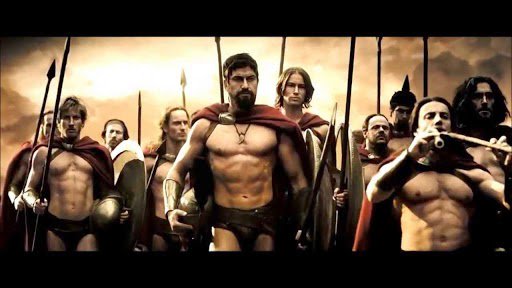
300 (USA: Zack Snyder, 2006)


300 (USA: Zack Snyder, 2006: 117 mins)

Ayers, Drew R. "Vernacular Posthumanism: Visual Culture and Material Imagination." Department of Communication Dissertation,  Georgia State University, 2012.

Borza, Eugene N. "Spartans Overwhelmed at Thermopylae, Again." Archaeology (March 22, 2007)

Carlin, Dan. "King of Kings, Pt. 1." Hardcore History #56 (2016) ["For more than 2,000 years the Greek and Persian Wars have been viewed through the lens of “The West”. It could hardly be otherwise given the near-monopoly Greek sources have on some of the historical narrative. The gateway to much of Achaemenid Persian history runs through Greek writers. When in 498bce the young and feisty democracy in Athens decides to send a small fleet to aid their fellow Greeks in Asia Minor to rebel against the Achaemenid Persians they incurred the wrath of the greatest empire the world had yet known. Herodotus says the Persian king tasked an attendant to prompt him thrice daily to “remember the Athenians” lest he forget to take revenge on them. From this moment on Greek and Persian destinies seem to become unbreakably intertwined. When Persia’s armies conduct amphibious landings in Greece in the 5thCentury bce they initiate what was at that time almost certainly the largest, most sophisticated military conflict in European history. Both sides will become perhaps the first adversaries to face off in what has often been portrayed as an ongoing, millenia-long competition between “East” and “West”. Both sides will also help sow the seeds for the other’s eventual historical eclipse."]

---. "King of Kings II." Hardcore History #57 (March 2016)

---. "King of Kings III." Hardcore History #58 (August 7, 2016)

Ebert, Roger. "300." Chicago Sun-Times (August 4, 2008)

Eggert, Brian. "300." Deep Focus Review (March 9, 2007)

Hassler-Forest, Dan. "The 300 Controversy: A Case Study in the Politics of Adaptation." Film & History (ND)

Ito, Robert. "The Gore of Greece, Torn From a Comic." The New York Times (November 26, 2006)

Moody, Rick. "Frank Miller and the rise of cryptofascist Hollywood." The Guardian (November 24, 2011)

Stevens, Dana. "The Movie Only a Spartan Could Love: The Battle Epic 300." Slate (March 8, 2007)

White, Michael. "300 is a Dangerous Piece of Fantasy." The Guardian (March 27, 2007)


Dialogic Cinephilia - November 29, 2017

Benton, Michael Dean. "Notes on Anti-Oedipus: Capitalism and Schizophrenia." Dialogic Cinephilia (November 28, 2017)

Deighan, Sam and Mike White. "The Cremator (1968)." The Projection Booth #341 (September 19, 2017) ["Czechtember continues with a look at Juraj Herz's The Cremator (AKA Spalovac mrtvol). Released in 1968, the year of the Prague Spring, the film stars Rudolf Hrusínský as Karl (or Roman) Kopfrkingl, a man dedicated to the idea of liberating the soul from the body through the practice of cremation. Samm Deighan joins Mike to discuss collaborators and the madness that gripped the world in the 1930s and '40s."]

Drain, Heather and Kat Ellinger. "Scores of Lickerish – Radley Metzger and the Art of Pornography, Pt. 1." Hell's Belles #1 (September 3, 2017) ["Radley Metzger was unrivaled when it came to mixing erotica and porn with artistic flourish. Working in Europe during his early days he borrowed from Italian and Swedish cinema to create some of the most beautiful erotic film ever made. In this episode Heather and Kat take a look at Metzger’s early films with a focus on Camille 2000 (1969) and The Lickerish Quartet (1970) as well as unraveling some of the director’s key themes throughout his work in order to offer up a wide ranging appreciation of one of America’s most daring and artful independent filmmakers of all time."]

---. "Scores of Lickerish – Radley Metzger and the Art of Pornography, Pt. 2." Hell's Belles #2 (October 22, 2017) ["In this episode Heather and Kat take a look at Metzger’s later films with a focus on The Image(1975), The Opening of Misty Beethoven (1976) and Barbara Broadcast (1977) as well as unraveling some of the director’s key themes throughout his work in order to offer up a wide ranging appreciation of one of America’s most daring and artful independent filmmakers of all time."]

Hickey, Philip. "Rebranding Psychiatry." Mad in America (November 28, 2017)

Marcetic, Branko. "How Washington Hacked Mongolia's Democracy." Jacobin (November 29, 2017)


Nguyen, Hanh. "Godless: Mary Agnes’ Romance Wasn’t as Uncommon as You Might Think." IndieWire (November 28, 2017)

Psychology/Psychiatry Dialogic Cinephilia (Ongoing Archive)

Ronickher, Alexis. "As Accusations Stack Up, A Look at the Onerous Process of Reporting Sexual Abuse on Capitol Hill." Democracy Now (November 28, 2017) ["What happens to a member of Congress when someone dares to come forward to report wrongdoing? As Senator Al Franken returned to Congress in the face of allegations from four women that he had groped or inappropriately touched them, and House Minority Leader Nancy Pelosi said she spoke to and believed one of the women who has accused Michigan Congressman John Conyers of sexual harassment, we speak with Alexis Ronickher, an attorney who has represented multiple congressional staffers pursuing harassment claims through Congress’s Office of Compliance."]


Tuesday, November 28, 2017

Michael Dean Benton: Notes on Anti-Oedipus: Capitalism and Schizophrenia

(Notes on the book and references to other commentators)

Anti-Oedipus was lobbed into the fray like an intellectual cluster bomb -- it had multiple targets, from the primacy of the signifier in linguistics to the dependency on lack in psychoanalysis, but its primary objective was (as Michel Foucault astutely points out in his highly influential preface to the English translation) to caution us against the fascist inside, the desire to seize power for oneself. The principle thesis of Anti-Oedipus, around which its many conceptual inventions turn, is that revolution is not primarily or even necessarily a matter of taking power. Insofar as taking power means preserving all the old institutions and ideas in which power is invested it could even be said that revolutions of this type are actually counter-revolutionary in purpose and intent because they change nothing essential. By the same token, Deleuze and Guattari were concerned about the allure of power, its apparent ability to drive us to desire to be placed under its yoke. The most important political question, as far as Deleuze and Guattari are concerned, is how it is possible for desire to act against its interest. (Buchanan, Ian. Deleuze and Guattari's Anti-Oedipus. NY: Continuum, 2008: 21.)


Wikipedia summary of Anti-Oedipus

Background:

An introduction to the importance of May 1968 events in Paris and the rest of the world throughout that explosive year(as well as the aftermath) is essential to an understanding of this book and the development of late-20th Century French theory.

Guattari’s background as a radical psychiatrist is also very important.

Deleuze on their working relationship:

We are only two, but what was important for us was less our working together than this strange fact of working between the two of us. We stopped being “author.” And these “between the twos” referred back to other people, who were different on one side from on the other. ... In these conditions, as soon as there is this type of multiplicity, there is politics, micro-politics. (Deleuze and Parnet, 17)


Form/Style of the Book:

In D & G’s writings before and after Anti-Oedipus they develop an understanding of how theoretical perspectives can actually construct/create subjectivity. This is the critique of psychoanalysis in A-O.

Creating a theoretical model of subjectivity implies an ethical and aesthetic choice on the part of the theorist, in fact Guattari emphasizes this when he subtitles his later book Chaosmosis, “An Ethico-Aesthetic Paradigm”. Keeping this in mind how is the form/style of this book an attempt to create or construct a model of subjectivity? Is it successful in its attempt? Is Michel Foucault correct in calling this a ‘book of ethics’?

Mark Seem in his introduction following Henry Miller states that “No pain, no trouble—this is the neurotic’s dream of a tranquilized and conflict-free existence” and in reference to A-O that “What it attempts to cure us of is the cure itself” (xvi-xvii). Is the construction of this book centered around the authors’ resistance of the easy cure or strict (dogmatic) program? How are they attacking the “neurotic’s dream” ... keeping in mind that the psychoanalyst is the super-neurotic?

Claire Colbrook states that:

Rather than using reason and reasoned arguments, the book sought to explain and historicise the emergence of an essentially repressive image of reason. Rather than argument and proposition it worked by questions and interrogation: why should we accept conventions, norms, and values? What stops us from creating new values, new desires, or new images of what it is to be and think? This book was not a move within an already established debate; it shifted the entire criteria of the debate. Against justification and legitimation, it put forward the power of creation and transformation. It did not adopt the single voice of universal reason but, like a novel, ‘played’ with the voices of those traditionally deemed to be at the margins of reason ... (5)


Anti-Psychoanalytic Institution?:

It is often thought that Oedipus is an easy subject to deal with, something perfectly obvious, a “given” that is there from the very beginning. But that is not so at all: Oedipus presupposes a fantastic repression of desiring-machines. (A-O, 3)


One of the main questions raised in this quote and the accompanying footnote is: How did Freud appropriate the author(ity) of Greek tragedy to legitimize his psychoanalytic concepts? How does this relate to the second chapter's critique of the institution of psychoanalysis as a new secular religion set up by the followers of Freud and institutionalized by the military-industrial complex?

It is as if Freud had drawn back from this world of wild production and explosive desire, wanting at all costs to restore a little order there, an order made classical owing to the ancient Greek theater. ... It is only little by little that he makes the familial romance, on the contrary, into a mere dependence on Oedipus, and that he neuroticizes everything in the unconscious at the same time as he oedipalizes, and closes the familial triangle over the entire unconscious. ... The unconscious ceases to be what it is—a factory, a workshop—to become a theater, a scene and its staging. And not even an avant-garde theater, such as existed in Freud’s day ..., but the classical theater, the classical order of representation. The psychoanalyst becomes a director for a private theater, rather than the engineer or mechanic who sets up units of production, and grapples with collective agents of production and antiproduction. (54-55)


Has psychoanalysis shut down the (expanding on D & G) continuously evolving production of an unconscious in order to provide an all-encompassing, static analytic backdrop? What about their referencing of mechanics/engineers who facilitate the flows of production and recognize the collective processes?

For we must not delude ourselves: Freud doesn’t like schizophrenics. He doesn’t like their resistance to being oedipalized, and tends to treat them more or less as animals. They mistake words for things, he says. They are apathetic, narcissisitic, cut off from reality, incapable of achieving transference; they resemble philosophers—‘an undesirable resemblance.’ (A-O, 23)


This position of D & G seems unfair until we read the notes on the bottom of pages 56 and 59. How does the analyst construct a position free from doubt/criticism (leaving aside that they are supposed to submit to even super-super neurotics for analysis) in order to construct the patient’s world? (is this an unfair view of the analyst?—what does the two notes supply us as evidence of the analyst’s position—or how about the writings of Lacan)

It is not a question of denying the vital importance of parents or the love attachment of children to their mothers and fathers. It is a question of knowing what the place and the function of parents are within desiring-production, rather than doing the opposite and forcing the entire interplay of desiring-machines to fit within the restricted code of Oedipus. (47)


Is it possible that, by taking the path that it has, psychoanalysis is reviving an age-old tendency to humble us, to demean us, and to make us feel guilty? ... [is it] completing the task begun by nineteenth-century psychology, namely, to develop a moralized, familial discourse of mental pathology ... keeping European humanity harnessed to the yoke of daddy-mommy and making no effort to do away with this problem once and for all.... Hence, instead of participating in an undertaking that will bring about genuine liberation, psychoanalysis is taking part in the work of bourgeois repression at its most far-reaching level. (50)


D & G set out to develop schizoanalysis as their answer to this problem.

Schizoanalysis:

First important distinction is to remember that they are proposing an active schizophrenia that differs from the incapacitating medical designation of schizophrenia. D & G’s schizoanalysis grows out of their resistance to institutionalized psychoanalysis that has infiltrated all parts of society with a totalizing theory that masks humanity’s true relationship to the world:

From the moment we are measured in terms of Oedipus—the cards are stacked against us, and the only real relationship, that of production, has been done away with. (A-O, 24)


We cannot say that psychoanalysis is very innovative in this respect: it continues to ask its questions and develop its interpretations from the depths of the Oedipal triangle as its basic perspective, even though today it is acutely aware that this frame of reference is not at all adequate to explain so-called psychotic phenomena. (14)


A schizophrenic out for a walk is a better model than a neurotic laying on the analyst’s couch. A breath of fresh air, a relationship with the outside world (A-O, 2)


We no longer believe in the dull gray outlines of a dreary, colorless dialectic of evolution, aimed at forming a harmonious whole out of heterogeneous bits by rounding off their rough edges. We believe only in totalities that are peripheral. And if we discover such a totality alongside various separate parts, it is a whole of these particular parts but does not totalize them; it is a unity of all of these particular parts but does not unify them; rather, it is added to them as a new part fabricated separately. (42)


To withdraw a part from the whole, to detach, to ‘have something left over,’ is to produce, and to carry out real operations of desire in the world ... The whole not only coexists with all the parts; it is contiguous to them, it exists as a product that is produced apart from them and yet at the same time is related to them. (41, 43-44)


An important part of schizoanalysis is the development of a “schizoanalytic cartography” (A-O, 273-382). Guattari in another work states:

From my own perspective, which is guided by a shift of human and social sciences from “scientistic” paradigms to ethico-aesthetic ones, the question is no longer one of knowing if the Freudian unconscious or the Lacanian unconscious offers scientific solutions to the problem of the psyche. The models will only be considered as one among others for the production of subjectivity, inseparable from the technical and institutional mechanisms that support them, and from their impact on psychiatry, on university teaching, the mass media. ... In a more general way, one will have to admit that each individual, each social group, conveys its own system of modelling unconscious subjectivity, that is, a certain cartography made up of reference points that are cognitive, but also mythic, ritualistic, and symptomatological, and on the basis of which it positions itself in relation to its affects, its anxieties, and attempts to manage its various inhibitions and drives. Moreover, today, our question is not only of a speculative order, but has practical implications: do the models of the unconscious that are offered us on the “market” of psychoanalysis meet current conditions for the production of subjectivity? Is it necessary to transform them, or to invent new ones? What processes are set in motion in the awareness of an inhabitual shock? How do modifications to a mode of thinking, to an aptitude for the apprehension of a changing external world, take effect? How do representations of the external world change as it changes? The Freudian unconscious is inseparable from a society that is attached to its past, to its phallocratic traditions, and its subjective variants. Contemporary upheavals undoubtably call for a modelization turned more toward the future and to the emergence of new social and aesthetic practices in all areas. On the one hand, the devaluation of the meaning of life provokes the fragmentation of self-image: representations of self become confused and contradictory while, on the other hand, the conservative forces of resistance oppose themselves to all change, which is experienced by a secure, ossified, and dogmatic consciousness as an attempt at destabilization. (Guattari, “Subjectivities”: 197)


Deleuze adds:

... the diagram is no longer an auditory or visual archive but a map, a cartography that is coextensive with the whole social field. (Deleuze, Foucault: 34)


After setting up the problem as they see it in A-O they will later attempt in A Thousand Plateaus to propose a mutable method for approaching this problem. Of course this will not be a solution that must be seized and made one’s own in order for it to have any effect:

The rhizome is altogether different, a map and not a tracing. Make a map, not a tracing. The orchid does not reproduce the tracing of the wasp; it forms a map with the wasp, in a rhizome. What distinguishes the map from the tracing is that it is entirely oriented toward an experimentation in contact with the real. The map does not reproduce an unconscious closed in upon itself; it constructs the unconscious. It fosters connections between the field, the removal of blockages on bodies without organs, the maximum opening of bodies without organs onto a plane of consistency. It is itself a part of the rhizome. The map is open and connectable in all of its dimensions; it is detachable, reversible, susceptible to constant modification. It can be torn, reversed, adapted to any kind of mounting, reworked by an individual, group, or social formation. It can be drawn on a wall, conceived of as a work of art, constructed as a political action or as a mediation. (A Thousand Plateaus, 12)


On Capitalism:

Capitalism is schizophrenic because it is interested in profit and it must subvert/deterritorialize all territorial groupings such as familial, religious, or other social bonds. At the same time it relies on the continuous appearance/mythification of social groupings in order to continue functioning smoothly and to re-enforce social ordering needs. Thus, capitalism attempts to re-constitute the need for traditional/nostalgic, or, even, newer forms of social groupings or religious/state institutions. This deterritorialization/reterritorialization and decoding/recoding is happening at the same time—thus the schizophrenic nature of capitalism.

Does this schizophrenia of...

1) mindless consumption, selfish individualism, may the best man win, the cream rises to the top, the romantic creative individual, sacrifice/gorge ...

2) religious revivalism, family values (valuing no one else's family), community values (at the expense of other communities), moral majority, neighborhood watch (and snitch), etc...

...cause some of us to break under the strain of an absurd society?

Desire

... desire is revolutionary in its essence ... and no society can tolerate a position of real desire without its structures of exploitation, servitude, and hierarchy being compromised. (A-O 116)


Socius (Historical periods of social development):

Primitive territorial machine:
Everything is coded and ritualized. Territory is clearly marked out and understood. Everything is social.

Barbaric territorial machine (despot):
The social group is somewhat deterritorialized by the despot who continues to maintain order through a re-inscription of a highly coded production centered around the ruler (what he says goes). Part of the coding (ordering) process is carried out through ritualized dramas of bodily punishment that (re)territorialize (re/produce) the despot’s authority (for a good description of this read the first section of Michel Foucault’s Discipline and Punish. NY: Pantheon Books, 1977.)

Civilized capitalist machine (disciplinary society):
Radically deterritorializes and reterritorializes social life. This radical deterritorialization is played out in conjunction with a continuous reterritorialization (re-coding) of traditional/ancient/nostalgic forms of authority. The nation (state), the family (father), God (religion or ideology), education (schools), media (societal super-ego?), etc ... re-appear in modified forms to shore up a shaky social grid and continue the smooth process of production/consumption. (A-O, 33-35) This society creates order through disciplinary institutions that house both the young initiates in order to train them to operate according to custom and the failed individuals that opt to pursue non-legitimized occupations/identities (for the moment let me use this designation—I’m fully aware that there are those who present a serious danger to others and thus must be dealt with, but the disciplinary society represents and treats them as morally weak individuals rather than as products of this society). The development and celebration of the myth of the private individual comes into play in this territorial situation.

Although some excitable critics (both from the left and right—e.g Baudrillard/Fukuyama) see this stage as the ‘end of history’, Deleuze, expanding on Foucault, sees us moving into a new socius stage (plateau?):

It is true that we are entering a society that can be called a society of control. A thinker such as Michel Foucault has analyzed two types of societies that are rather close to us. He calls the former sovereign societies and the latter disciplinary societies. He locates the typical passage of a sovereign society to a disciplinary society with Napolean. Disciplinary society is defined—by the accumulation of structures of confinement: prisons, schools, workshops, hospitals. Disciplinary societies require this. This analysis engendered ambiguities in certain of Foucault’s readers because it was believed that this was his last thought. This was certainly not the case. Foucault never believed and indeed said very precisely that disciplinary societies were not eternal. Moreover, he clearly thought that we were entering a new type of society. To be sure, there are all kinds of things left over from disciplinary societies, and this for years on end, but we know already that we are in societies of another sort that should be called, to use the term put forth by William Burroughs—whom Foucault admired greatly—societies of control. We are entering into societies of control that are defined very differently from disciplinary societies. Those who look after our interests do not need or will no longer need structures of confinement. These structures—prisons, schools, hospitals—are already sites of permanent discussion. Wouldn’t it be better to spread out the treatment? Yes, this is unquestionably the future. The workshops, the factories—they are falling apart everywhere. Wouldn’t systems of subcontracting and work at home be better? Aren’t there means of punishing people other than prison? Even the school. The themes that are surfacing, which will develop in the next forty or fifty years and which indicates that the most shocking thing would be to undertake school and a profession at once—these themes must be watched closely. It will be interesting to know what the identity of the school and the profession will be in the course of permanent training, which is our future and which will no longer necessarily imply the regrouping of school children in a structure of confinement. A control is not discipline. In making highways , for example, you don’t enclose people but instead multiply the means of control. I am not saying that this is the highway’s exclusive purpose, but that people can drive infinitely and “freely” without being at all confined yet while still being perfectly controlled. This is our future. (Deleuze, “Having An Idea of Cinema”: 17-18)


For more on this also check out Deleuze’s essay in October #59 (1992): 3-8 and excerpts of D & G’s writings in Rethinking Architecture: A Reader in Cultural Theory. ed. Neil Leach (NY: Routledge, 1997: 309-18.)


Schizo-Politics:

D & G resist a molar politics that frames its operations in a “already” determined future, thus they keep to the idea of a molecular politics that is open to change:

Schizoanalysis, as such, has no political program to propose. If it did have one it would be grotesque and disquieting at the same time. It does not take itself for a party, and does not claim to speak for the masses. No political program will be elaborated within the framework of schizoanalysis. (380)


D & G see a central paradox in our fascisms:

As Reich remarks, the astonishing thing is not that some people steal or that others occasionally go out on strike, but rather that all those who are starving do not steal as a regular practice, and all those who are exploited are not continually out on strike: after centuries of exploitation, why do people still tolerate being humiliated and enslaved, to such a point, indeed, that they actually want humiliation and slavery not only for others but for themselves? (A-O, 29)


This makes all authoritarian and dogmatic movements suspect in that they dictate and predict:

... no, the masses were not innocent dupes; at a certain point, under a certain set of conditions, they wanted fascism, and it is this perversion of the desire of the masses that needs to be accounted for.” (A-O, 29)


Traditionally many writers have posited that subjects of bloody states are ignorant of the true processes behind-the-scenes that produce orderly societies ... D & G are contradicting this belief ... why do they see fascism as answering a perverted desire of the masses? What causes this perverted desire? Can we see any signs of fascism in the contemporary American culture/societies? Can we recognize the fascist impulse in totalizing revolutionary theories? Is this another problematic of the “totalizing” impulse as manifested in liberatory/resistive movements? Is this a legitimate complaint from marginalized groups?

D & G are calling for a resistance that is molecular, not molar (machinic, not mechanistic). Universal mass movements are not the goal, but they are not denying their potential, rather that mass movements would be forged through alliances/bridges, that are temporary, mutable, and situational.

Machines:

Pgs. 36-41 introduces the “three breaks” or interruptions of machines. When thinking of the bodies in these operations we must learn to alter our emphasis on the individual ‘body’ and recognize social, economic, political, juridical, etc ... bodies in these descriptions.

Claire Colebrook on “machines” in A-O and Deleuze’s theory in general:

In Anti-Oedipus they insist that the machine is not a metaphor and that life is literally a machine. This is crucial to Deleuze’s ethics. An organism is a bounded whole with an identity and end. A mechanism is a closed machine with a specific function. A machine, however, is nothing more than its connections; it is not made by anything, is not for anything and has no closed identity. So they are using ‘machine’ here in a specific and unconventional sense. Think of a bicycle, which obviously has no ‘end’ or intention. It only works when it is connected with another ‘machine’ such as the human body; and the production of these two machines can only be achieved through connection. The human body becomes a cyclist in connecting with the machine; the cycle becomes a vehicle. But we could imagine different connections producing different machines. The cycle becomes an art object when placed in a gallery; the human body becomes an ‘artist’ when connected with a paintbrush. The images we have of closed machines, such as the self-contained organism of the human body, or the efficiently autonomous functioning of the clock mechanism, are effects and illusions of the machine. There is no aspect of life that is not machinic; all life only works and is insofar as it connects with some other machine.

We have already seen the importance Deleuze gives to the camera; it is important as a machine because it shows how human thought and life can become and transform through what is inhuman. By insisting that the machine is not a metaphor Deleuze and Guattari move away from a representational model of language. If the concept of machine were a metaphor, then we could say that we have life as it is, and then the figure of machine to imagine, represent of picture life. But for Deleuze and Guattari there is no present life outside its connections. We only have representations, images or thoughts because there have been ‘machinic’ connections: the eye connects with light, the brain connects with a concept, the mouth connects with a language. Life is not about one privileged point—the self-contained mind of ‘man’—representing some inert outside world. Life is a proliferation of machinic connnections, with the mind or brain being one (sophisticated) machine among others.

Neither philosophy, nor art, nor cinema represent the world, they are events through which the movement of life becomes. What makes philosophy and art active is their capacity to become not just mechanistically, being caused by outside events, but machinically. A mechanism is a self-enclosed movement that merely ticks over, never transforming or producing itself. A machinic becoming makes a connection with what is not itself in order to transform and maximize itself. (56-57)


Schizo-Environmentalism:

D & G denounce the human/nature division and insist that humans cannot be thought separate from nature. Or as they later paraphrase Karl Marx “he who denies God does only a ‘secondary thing,’ for he denies God in order to posit the existence of man, to put man in God’s place” (A-O, 58). Guattari later re-emphasizes the importance of this attempt to recognize the falsity of the division of human/nature:

Our survival on this planet is not only threatened by environmental damage but by a degeneration in the fabric of social solidarity and in the modes of psychical life, which must literally be re-invented. The refoundation of politics will have to pass through the aesthetic and analytical dimensions implied in the three ecologies—the environment, the socius and the psyche. We cannot conceive of solutions to the poisoning of the atmosphere and to global warming due to the greenhouse effect, or to the problem of population control, without a mutation of mentality, without promoting a new art of living in society. (Chaosmosis, 20)


Buchanan, Ian. Deleuze and Guattari's Anti-Oedipus. NY: Continuum, 2008.

Colebrook, Claire. Gilles Deleuze. NY: Routledge, 2002.

Deleuze, Gilles. Foucault. trans. Sean Hand. Minneapolis: U of Minnesota P, 1988.

---. “Having An Idea In Cinema.” trans. Eleanor Kaufman. Deleuze and Guattari: New Mappings in Politics, Philosophy and Culture. eds. E. Kaufman and K. J. Heller. Minneapolis: U of Minnesota P, 1998: 14-22.

Delueze, Gilles and Felix Guattari. Anti-Oedipus. trans. Robert Hurley, et al. Minneapolis: U of Minnesota P, 1983.

---. A Thousand Plateaus. trans. Brian Massumi. Minneapolis: U of Minnesota P, 1987.

Deleuze, Gilles and Claire Parnet. Dialogues. NY: Columbia U P, 1987.

Fanon, Frantz. Black Skin, White Masks. NY: Grove P, 1967.

Guattari, Felix. Chaosmosis. Bloomington, IN: Indiana U P, 1995.

Dialogic Cinephilia - November 28, 2017

Aisenberg, Joseph. "I am Blade Runner 2049, Blade Runner 2049 is I." Bright Lights Film Journal (November 3, 2017)


"All hail Kubrick’s ‘Barry Lyndon,’ a masterclass in bringing a unique filmmaker’s vision to life." Cinephilia and Beyond (ND)

Ankenbauer, Sam. "On Sacred Deers and Ghost Stories: Talking with Production Designer Jade Healy." Bright Lights Film Journal (November 25, 2017)

Fausto-Sterling, Anne. Sexing the Body: Gender Politics and the Construction of Sexuality. Basic Books, 2000.

Fine, Cordelia. Delusions of Gender: The Real Science Behind Sex Differences. Icon Books, 2010.

News headlines for November 28th


"The immortal ‘Casablanca’: Why the Old Hollywood’s Everlasting Masterpiece Is Still Beloved." Cinephilia & Beyond (ND)
"Project Veritas Tried to Sell Us Bogus Roy Moore Story." Washington Post (November 27, 2017)

Small, Courtney. "25 Years Later Malcolm X Still Resonates." Cinema Axis (November 18, 2017)

Monday, November 27, 2017

Dialogic Cinephilia - November 27, 2014

Abel, Marco. “'Das ist vorbei': Untimely Encounters with Neoliberalism in Christian Petzold’s dffb Student Films." Senses of Cinema #84 (September 2017)


Allen, Nick. "Spike Lee Triumphantly Updates She's Gotta Have It for Netflix." Demanders (November 22, 2017)

"The Body." Philosophical Films (ND)

D., Margo and Margo P. "The Princess Bride." Book vs Movie (November 10, 2017)

Docherty, Neil, et al. "Supplements and Safety." Frontline 34.3   (January 19, 2016) ["Frontline, The New York Times and the Canadian Broadcasting Corporation examine the hidden dangers of vitamins and supplements, a multibillion-dollar industry with limited FDA oversight."]


Ellinger, Kat. "Case for a Rookie Hangman (1970)." The Projection Booth #340 (September 12, 2017) ["Czechtember continues with a look at Pavel Jurácek's Case for a Rookie Hangman (AKA Prípad pro zacínajícího kata) from 1970. Very loosely based on the third part of Jonathan Swift's Gulliver's Travels, the film tells the tale of Lemuel Gulliver (Lubomír Kostelka) in the land of Balnibarbi, a surrealistic landscape where Lemuel has a hard time finding his footing, literally. Kat Ellinger and Kevin Heffernan join Mike to discuss the malleability of Swift's satire and The Key to Determining Dwarfs, or The Last Travel of Lemuel Gulliver."]

“Be careful, you are not in Wonderland. I’ve heard the strange madness long growing in your soul. But you are fortunate in your ignorance, in your isolation. You who have suffered, find where love hides. Give, share, lose—lest we die, unbloomed.” – From the film Kill Your Darlings (USA: John Krokidas, 2013)


Mertens, Jacob. "John Krokidas' Kill Your Darlings: An Origin Story of the Beats." Bright Lights Film Journal (May 22, 2014)

McKibben, Sophie and Anjali Tsui. "Child Marriage in America." The Frontline Dispatch #1 (September 14, 2017) ["In the summer after 9th grade, 14-year-old Heather discovered she was pregnant. Her boyfriend Aaron was 24. At the time, marriage seemed like it could be a solution to their problems — and maybe a way to keep Aaron out of jail. ... reporter Anjali Tsui, an Abrams Journalism Fellow through the Frontline/Columbia Journalism School fellowship program, and producer Sophie McKibben go inside a battle playing out over child marriage in America."]

Miller, Todd. "The Border Industrial Complex." Against the Grain (October 4, 2017) ["In the wake of the devastation of Hurricanes Harvey, Irma, and Maria, and while wildfires continue to rage across the West, it would seem like the perils of global warming are self-evident. And in fact, there’s one part of the U.S. government that, unlike President Trump, sees climate change as an undeniable danger: the military and Homeland Security. But not surprisingly, as journalist Todd Miller illustrates, their solution to the dislocations of climate change is a militarized one, imperiling all of us."]


"Farmer, educator, and community organizer, Timothy Kercheville, talks with Chuck Clenney about his recent trip to Kentucky State University's Small, Limited Resource/Minority Farmers Conference, his work teaching permaculture concepts and developing gardens with kids at William H. Natcher Elementary, his work on Project Breaking Ground: a sustainable garden on the lawn at the Barren County Detention Center, and I visit his most recent cooperative, regenerative, agricultural project developing a commercial garden with refugee farmers on an unused lawn beside the International Center of Kentucky."


Alexander (Germany/USA/Netherlands/France/UK/Italy: Oliver Stone, 2004)


Alexander (Germany/USA/Netherlands/France/UK/Italy: Oliver Stone, 2004: 175 mins)

Berti, Irene and Marta García Morcillo, eds. Hellas on Screen: Cinematic Receptions of Ancient History, Literature and Myth. Franz Steiner Verlag Stuttgart, 2008.

Borza, Eugene N. "Movie Commentary: Alexander." Archaeological Institute of America (December 2004)

Bradshaw, Peter. "Alexander." The Guardian (December 31, 2004)

Buckler, Dana and Jim Hemphill. "Icons: Oliver Stone." How is This Movie? (November 7, 2017)

Carlin, Dan. "King of Kings, Pt. 1." Hardcore History #56 (2016) ["For more than 2,000 years the Greek and Persian Wars have been viewed through the lens of “The West”. It could hardly be otherwise given the near-monopoly Greek sources have on some of the historical narrative. The gateway to much of Achaemenid Persian history runs through Greek writers. When in 498bce the young and feisty democracy in Athens decides to send a small fleet to aid their fellow Greeks in Asia Minor to rebel against the Achaemenid Persians they incurred the wrath of the greatest empire the world had yet known. Herodotus says the Persian king tasked an attendant to prompt him thrice daily to “remember the Athenians” lest he forget to take revenge on them. From this moment on Greek and Persian destinies seem to become unbreakably intertwined. When Persia’s armies conduct amphibious landings in Greece in the 5thCentury bce they initiate what was at that time almost certainly the largest, most sophisticated military conflict in European history. Both sides will become perhaps the first adversaries to face off in what has often been portrayed as an ongoing, millenia-long competition between “East” and “West”. Both sides will also help sow the seeds for the other’s eventual historical eclipse."]

---. "King of Kings II." Hardcore History #57 (March 2016)

---. "King of Kings III." Hardcore History #58 (August 7, 2016)

Cartledge, Paul and Fiona Rose Garland, eds. Responses to Oliver Stone's Alexander: Film, History, and Cultural Studies. The University of Wisconsin Press, 2010. [This is the contents page - you would have to interlibrary loan or purchase the book.]

Lee, Kevin B. and Matt Zoller Steitz. "Arsenic and Apple Pie: Patriotism and Propaganda in Born on the Fourth of July [Oliver Stone, Part 1]." Moving Image Source (October 14, 2008)

---. "Unreliable Narratives: JFK and the Power of Counter-Myth. [Oliver Stone, Part 2]." Moving Image Source (October 15, 2008)

---. "Fear and Self-Loathing: Nixon and the Unmaking of a President [Oliver Stone, Part 3]." Moving Image Source (October 16, 2008)

---. "Empire of the Son: War and civilization in Alexander, and an epilogue on W [Oliver Stone, Part 4]." Moving Image Source (October 17, 2008)

"Macedonian Criticism of Oliver Stone's Film Alexander." History of Macedonia (Letter Sent to Movie Critics - November 2004)

Sobzynski, Peter. "A Reappraisal of Oliver Stone's Alexander: The Ultimate Cut." Demanders (June 24, 2014)


051. Alexander (dir. Oliver Stone) Video Essay from Kevin B. Lee on Vimeo.


Sunday, November 26, 2017

Dialogic Cinephilia - November 26, 2017


Bradley, S.A., et al. "Friday the 13th." Wrong Reel #326 (October 2017)

Bosner, Richard J. "Producer on Fruitvale Station, Other People, and Take the 10." Following Films (March 10, 2017)

Briggs, Laura. "Struggling Households." Against the Grain (October 2017) ["Reproductive politics -- that is, the politics of keeping households fed, sheltered, educated, and cared for, as well as creating the next generation -- are central to contemporary capitalism. And reproductive politics are fundamentally about class, race, and sexuality, as Laura Briggs argues. She discusses why we should recognize the household as a key site of struggle for both left and right."]

Brown, Monica. "First indigenous map of its kind; U.S. map displays 'Our own names and locations.'" Tulalip News (May 22, 2013)

Bugbee, Teo, et al. "The Cinema of Experience." Film Comment Podcast (October 10, 2017) ["In this special live episode of the podcast, moderated by Film Comment Editor-in-Chief Nicolas Rapold, panelists Teo Bugbee (The New York Times contributor), writer-programmer Ashley Clark (BAMcinématek), and writer-filmmaker Farihah Zaman (Field of Vision) discuss how cinematic technique is used to reflect nonwhite perspectives and stories of immigration, and what is different about the latest generation of storytelling."]


Coakley, Jamie Sims. "Cadillac Tramps: Life on the Edge." Film School Radio (October 5, 2017) ["The 1990’s were the “Golden Age” of the Orange County California music scene. Bands like The Offspring, No Doubt, Sugar Ray and Social Distortion where blowing up the mainstream and selling millions of records around the world. Meanwhile, the undisputed kings of the O.C. scene, The Cadillac Tramps, were falling apart. Infighting, addiction, frustration and dysfunction would tear the band apart at the peak of their success, but their bond would prove too strong to remain broken for long. THE CADILLAC TRAMPS: LIFE ON THE EDGE is a humble, honest and entertaining look at five young men who found each other in sobriety, created a lasting musical legacy that influenced indie rock’s biggest bands, and overcame the past to support lead singer Michael “Gabby” Gaborno as he fights for his life from the ravages of Hep-C. First time filmmaker, Jamie Sims Coakley,expertly mixes a colorful combination of archival footage, insightful artist interviews and intimate vérité footage together into an arresting, heartwarming and cautionary tale of brotherhood, reflection and the power of music to heal and unite us."]


Collision, David J. "Corporate Propaganda: Its Implications for Accounting and Accountability." (Department of Accountancy and Business Finance University of Dundee, Scotland, U.K.: ND)

D., Margo and Margo P. "Mary Shelley's Frankenstein." Book vs Movie (October 15, 2017)  ["The Margos take on the wildest adaptation of the show’s history with the sublime Frankenstein compared to the frankly ridiculous Kenneth Branagh 1994 film. The Margos get very gothic and silly sometimes trying to wrap their heads around Mary Shelley’s venerated classic novel with Henry V director Kenneth Branagh’s wildly acted and directed film. How crazy is this adaptation? How about a dance sequence between a zombie Helena Bonham Carter and Robert De Niro as “the monster?” This film is completely cray-cray but the backstory of Mary Wollstonecraft Shelley is one of the greatest tales of 19th Century literature and we definitely dive into her fascinating life story. Plus, all of the machinations that led to the publishing of her book in 1818 and the revisions in the 1831 version."]

Dederer, Claire. "What Do We Do With the Art of Monstrous Men?" Paris Review (November 20, 2017)

Duncombe, Stephen. "Cultural Hegemony." Beautiful Trouble (ND)

Eyes Wide Shut (UK/USA: Stanley Kubrick, 1999) Dialogic Cinephilia (Ongoing Archive)

Garza, Alicia. "A Herstory of the #BlackLivesMatter Movement." The Feminist Wire (October 7, 2014)

Gilmore, Jim, et al. "Netanyahu at War." Frontline (January 6, 2017) ["An inside look at Israeli Prime Minister Benjamin Netanyahu’s political rise and his relationship with the U.S."]

Grenoble, Ryan. "FCC Faces Scrutiny For Refusing To Turn Over Evidence On Net Neutrality Comments." The Huffington Post (November 22, 2017)

Hoock, Holger. "Scars of Independence." Radio West (August 9, 2017) ["we’re taking a different look at the American Revolutionary War. We think of it as brave patriots fighting for a noble cause, which is true, but in his new book historian Holger Hoock is trying to remind us just how bloody it was. The British brutalized American soldiers; we tortured loyalists. In fact, this cruelty shaped the outcome of the war. Hoock’s book is called Scars of Independence: America’s Violent Birth and he's joining us to talk about it."]

Human Resources: Social Engineering in the 20th Century (USA: Scott Noble, 2010: 119 mins) ["Human Resources — Social Engineering in the 20th Century is about the rise of mechanistic philosophy and the exploitation of human beings under modern hierarchical systems. The film captures how humans are regarded as a resource by corporations—something to be exploited for pecuniary gain—by following the history of psychological experiments in behaviour modification, conditioning and mind control; applying the outcomes to modern day establishment experiments such as institutionalised education, military training, and social engineering by way of things like television…"]

Kempenaar, Adam and Josh Larsen. "Lady Bird / Justice League / Top 5 Female Directed Debuts." Filmspotting #657 (November 17, 2017)

Martinez, Chris. "Mudbound is an esteemed proposition of bloodshed and inequality." InSession Film (November 16, 2017)

Nelson, Geoff. "The Grotesque Aesthetic Morality of The Florida Project." The Los Angeles Review of Books (November 15, 2017)

Nightingale, Andrea. "Is Henry David Thoreau a Philosopher?" Entitled Opinions (October 18, 2017)

Rosen, Marty. " ‘Skeleton Crew,’ unflinching reality with flashes of hope, inspiration." LEO Weekly (November 22, 2017)

Rushkoff, Douglas. "Introduction: They Say." Coercion: Why We Listen To What 'They' Say. Penguin Putnam, 1999 (Excerpt)

Schippers, Mimi. "Thank you, Angela Robinson: A Review Of Professor Marston and The Wonder Women." Marx in Drag (October 15, 2017)

Slavery By Another Name (USA:Samuel D. Pollard, 2012: 90 mins) ["A documentary that recounts the many ways in which American slavery persisted as a practice many decades after its supposed abolition."]

Tremblay, Jean-Thomas. "Stories of New Narrative." The Los Angeles Review of Books (September 16, 2017)

Walsh, Kit. "Trump's FCC Goes to War on Net Neutrality" The Real News (November 23, 2017) ["A new plan unveiled by Federal Communications Commission chair Ajit Pai would repeal hard-fought net neutrality rules that uphold equal internet access. Can Pai's effort be stopped?"]

Whitman, James. "How the Nazis Used Jim Crow Laws as the Model for Their Race Laws." Moyers and Co. (October 13, 2017) ["Bill Moyers in conversation with author James Whitman about his new book Hitler’s American Model: The United States and the Making of Nazi Race Law."]

Williams, Kristian. Our Enemies in Blue: Police and Power in America. South End Press, 2007.


SUPERCUT: Directors Love Mirrors from The Auteur Journal on Vimeo.


Charles Burnett Tribute | 2017 Governors Awards for the Academy of Motion Picture Arts & Sciences from Shola Lynch on Vimeo.


Tuesday, November 21, 2017

Dialogic Cinephilia - November 21, 2017

No offense to The Handmaid's Tale or its fans, but after two episodes of the adaptation of Atwood's 'Alias Grace' I'm thinking this is actually the novel/series that people should be watching and discussing. Curious where it will go from here.....


Hochhäusler, Christoph. "The Protestant Method." Senses of Cinema #84 (September 2017) [on German director Christian Petzold]

Law  Dialogic Cinephilia (Ongoing Archive)

Lim, Dennis and Violet Lucca. "Twin Peaks: The Return."  The Film Comment Podcast (September 20, 2017)    ["Twin Peaks: The Return, a work that is both a heartfelt refraction of David Lynch’s 50 years of creative output and a medium-reshaping beast unto itself. But rather than presume that 45 minutes is enough time to hone in on any single airtight interpretation (or that it would be any fun to do so), the goal is to strike an analytical balance, seeking useful context while allowing the dream to remain a dream."]

Lukes, Stephen. Power: A Radical View. Palgrave-Macmillan, 2005.

Metzmeier, Kurt X. "A #metro #metoo Story — Social Media and the Law." Leo Weekly (November 20, 2017)

Song, Lisa. "Sudden Shift at a Public Health Journal Leaves Scientists Feeling Censored." Pro Publica (November 20, 2017)  ["Claiming overreach by a new publisher, the journal’s editorial board asks for disciplinary action from the National Library of Medicine."]

Thompson, Heather Ann. "Attica: It's Worse Than We Thought." The New York Times (November 19, 2017)


The Crimson Permanent Assurance (Monty Python's) from EpicFilmsGlobal on Vimeo.


Monday, November 20, 2017

Dialogic Cinephilia - November 20, 2017

"A may exercise power over B by getting him to do what he does not want to do, but he also exercises power over him by influencing, shaping or determining his very wants. Indeed, is it not the supreme exercise of power to get another or others to have the desires you want them to have – that is, secure their compliance by controlling their thoughts and desires." - Stephen Lukes, Power: A Radical View, London: The Macmillian Press Ltd., 1974: 24

Bailey, John. "Il Conformista: The Film That Changed My Life." American Cinematographer (November 20, 2017)

"Blade Runner." Philosophical Films (ND)

Cribbs, John, et al. "The Sleeper Must Awaken." Wrong Reel #325 (October 2017) [On David Lynch's 1984 film Dune]

Dennis, Zach, et al. "Freaks." Cinematary #164 (October 6, 2017)

---. "Suspiria." Cinematary #163 (September 29, 2017)

Flores, Steven. "The Auteurs: Terry Gilliam." Cinema Axis (November 8, 2014)

Jolna, Karon and Aviva Dove-Viebahn, eds. Gender, Race and Class: From the Pages of Ms. Magazine, 1972 - Present.  (ND)

Kuersten, Erich. "CinemArchetype #3 - The Animus (the Daemon Lover)." Acidemic (February 1, 2012)

"Storm Boy - 1977 - Henri Safran." The Last New Wave (ND)

"Tron Legacy and Connection in a Digital World." Pop Culture Case Study #274 (October 5, 2017)


Sunday, November 19, 2017

Dialogic Cinephilia - November 19, 2017

" I would say that life understood is life lived. But, the paradoxes bug me, and I can learn to love and make love to the paradoxes that bug me, and on really romantic evenings of self, I go salsa dancing with my confusion." - Timothy "Speed" Levitch in Richard Linklater's 2002 film Waking Life

Amos, Steve, James Hancock, and Skye Wingfield. "25 Years of Quentin Tarantino." Wrong Reel #320 (September 2017)

Barber, William. "On Creating a Fusion Movement to Defeat Trump and Move Forward Together." Building Bridges (November 1, 2017) ["Dr. William Barber is the founder and president of Repairers of the Breach, an organization that seeks to build a progressive agenda rooted in a moral framework to counter the ultra-conservative constructs that try to dominate the public square. Rev. Barber one of the most influential, progressive religious figures in the country. Tens of thousands of men and women rose up in Chicago and cities from coast to coast to demanding that everyone in America have the right to organize and join a union and the Rev. William Barber said “I’m proud to stand with them, because their fight is central to the battle against poverty, racism, and inequality”. Earlier this year Rev. Barber announced an effort by faith and moral leaders to carry forward Dr. Martin Luther King Jr.’s dream of a Poor People’s Campaign, working across twenty-five states to alleviate the triad forces of poverty, militarism, and racism that Dr. King knew were poisoning our country then and still threaten us today."]

Bradley, S.A and Derrick Carey. "All The Sins of the World: Extreme Horror." Hellbent for Horror #53 (September 14, 2017)
["Extreme Horror Films: they are the "Elephant in the Room" for horror fans. These films push the limits of the viewer to such the extent that they even divide the horror community on whether they go too far. A large majority of these films have little, or no, socially redeeming value. And yet... There are a few extreme films that use the violence, and obscenity, and nihilism to create something that defies expectations and becomes something horrible/beautiful. For those who dare to watch. ...  Movies Discussed: Cannibal Holocaust (1980) Irreversible (2002) Scrapbook (2000) Martyrs (2008) Found (2012)"]

Collender, Stan. "GOP Tax Bill Is The End Of All Economic Sanity In Washington." Forbes (November 19, 2017)

Cribbs, John, et al. "Jean-Pierre Melville, Master of French Noir." Wrong Reel #318 (September 2017)

D., Margo and Margo P. "The Graduate." Book vs Movie (September 16, 2017) ["The Book Vs. Movie podcast goes straight to the 60s (but man, it really feels like the 50s sometimes, no?) Turns out the 1967 classic film starring Dustin Hoffman and directed by Mike Nichols was adapted by an obscure novel by a very peculiar man, Charles Webb."]

ENG 281/282: Thinking About Films and Filmmaking Dialogic Cinephilia (Ongoing Archive)

Federici, Sylvia. Caliban and the Witch: Women, The Body and Primitive Accumulation. 2nd Revised Edition. Autonomedia, 2014.

Fox, Neil and Dario Linares. "Blade Runner 2049." The Cinematologists (October 18, 2017) ["With the original Blade Runner being a formative film for both Dario and Neil, they take the time to discuss the 2017 sequel directed by Denis Villeneuve: Blade Runner 2049. A lot has been said and written about this new incarnation, directly about the aesthetics, philosophical themes and narrative, but also regarding the wider ideological readings related to gender, race and class. We hope you enjoy our contribution to the discourse around a film which, if nothing else, reminds us of cinema's ability to provoke thought and exercise passion."]

---. "Social Realism?" The Cinematologists (September 21, 2017) ["The discussion covers Leigh's Life Is Sweet (1990) and Loach's Riff-Raff(1991), Raining Stones (1993) and Ladybird Ladybird (1994) - and the recent I, Daniel Blake (2016), which is not in the Loach set - asd well as getting into a more general chat about the spectre of social realism in British film history."]

"Frederick Wiseman." The Close-Up #149 (September 20, 2017) ["First, Wiseman shares his thoughts on his work, the issues and implications of his films, and his process in a special master class from 2006. After that, the director discusses his 2013 film, At Berkeley, in one of our HBO Directors Dialogues from the 51st New York Film Festival."]

Heil, Emily and Maura Judkis. "Rape in the storage room. Groping at the bar. Why is the restaurant industry so terrible for women?" The Washington Post (November 17, 2017)

Herstik, Gabriela, Sophie Saint Thomas and Katie West. "Witchcraft, Ritual and Power." Breaking the Glass Slipper 2.22 (October 26, 2017)

Ire, Polite. "Gender Inequality and Gender Differences." Libcom (March 13, 2012)

Johnson, Adam, Nima Shirazi and Josmar Trujillo. "The Rise of Superpredator 2.0." Citations Needed (July 21, 2017)  ["... about the media narrative surrounding the rise of so-called “gang raids” that have exploded over the past three years. These high-stakes, headline-grabbing spectacles target, almost exclusively, black and brown people and are carried out by hundreds of local, state, and federal officials with little scrutiny from the media."]

Johnson, Adam, et al. "The North Korea Memory Hole." Citations Needed (July 19, 2017)

McKim, Kristi. "Great Directors: Sally Potter." Senses of Cinema #40 (July 2006)

Nash, Ken and Mimi Rosenberg. "Striking Spectrum Cable Workers' Demonstrate for a Fair Contract & Against Union Busting." Building Bridges (October 15, 2017)   ["Some 1,800 members of Electrical Workers (IBEW) Local 3 have been on strike at Spectrum/Time Warner Cable in New York and New Jersey since March 28, more than six months ago. Since then, only a fraction of the workforce has crossed picket lines, but the company is trying hard to keep up normal operations by using scabs and subcontractors to break the strike and the workers' union... Spectrum is part of Charter Communications, the second largest cable provider in the U.S. and a telecommunications giant, providing services to roughly 25 million customers in 41 states, two and a half million of which reside in New York. The CEO, Tom Rutledge, who made $98.5 million last year met with Donald Trump in the White House earlier this year, and the company is touted by Trump as a job creator investing in its U.S. workforce. "]

Pinkus, Karen. "Star Trek: Discovery and the Dream of Future Fuels." Los Angeles Review of Books (November 18, 2017)

"Rosemary's Baby and People Pleasers." Pop Culture Case Study #269 (September 14, 2017)

Rosenberg, Alyssa. "‘Blade Runner 2049’ is about learning that you’re not the main character in your own story." The Washington Post (October 17, 2017)

Rousseau, Erin. "The House Just Voted to Bankrupt Graduate Students." The New York Times (November 16, 2017)

Science/Technology Dialogic Cinephilia (Ongoing Archive)

Subissati, Andrea and Alexandra West. "Boxed In: Cube (1997)." Faculty of Horror #53 (September 24, 2017) ["Andrea and Alex tackle the mysterious and ever changing narrative landscape of Vincenzo Natali’s Canadian cult film, Cube (1997). From workers rights to torture porn to prime numbers, they try to solve it all before they succumb to the film’s traps and trappings."]

Varda, Agnes and JR. "Faces Places." The Close-Up (October 5, 2017)