Adalat, Haroon. "Julie Dash's Daughters of the Dust Trailer: And let Beyoncé help you remember the ground it broke." Keyframe (September 4, 2016)
Barker, Tim and Heather Ann Thompson. "Prison Uprisings, From Attica to Today." Dissent (October 7, 2016)
Berret, Trevor, David Blakeslee and Pablo Knote. "The Warped World of Koreyoshi Kuragara, Pt. 2." The Eclipse Viewer #45 (July 14, 2016) ["Over the course of his varied career, Koreyoshi Kurahara made meticulous noirs, jazzy juvenile-delinquency pictures, and even nature films. His free-form approach to moviemaking was perfectly suited to the radical spirit of the 1960s, when he was one of the biggest hit makers working at the razzle-dazzle, youth-oriented Nikkatsu studios. The five films collected here hail from that era of the Japanese New Wave, and encompass breathless teen escapades, cruel crime stories, a Yukio Mishima adaptation, and even a Hollywood-inspired romantic comedy."]
Chambers, Sarah, et al. "Chicago Teachers Strike Back." Belabored #113 (September 30, 2016)
Hentoff, Nat. "The Crackin', Shakin', Beakin' Sounds." The New Yorker (October 24, 1964) [Republished by The New Yorker in honor of Bob Dylan winning the 2016 Nobel Prize in Literature.]
Kempenaar, Adam and Josh Larsen. "Top 5 Films of 2016 (So Far)." Filmspotting #594 (July 15, 2016)
Nord, Liz. "Jim Jarmusch's List of 5 Must-See Movies: 'I Don't Believe in Originality.'" No Film School (October 11, 2016)
Phillips, Jordan. "The Horrors of Sensory (Dis)Ability – Disabled Power in Hush and Don’t Breathe." The Big Picture (October 7, 2016)
Sharrett, Christopher. "Son of Saul: Versions of the Irrational." Film International (July 9, 2016)
"They Came From Within the High Rise." The Feminine Critique (September 20, 2016)
Thursday, October 13, 2016

Monday, October 10, 2016
Resources for October 10, 2016
Bastién, Angelica Jade. "Genre Is a Woman and She Has Fangs – On A Girl Walks Home Alone at Night." Vague Visages (June 10, 2016)
"Blue Valentine and Falling Out of Love." Pop Culture Case Study (September 1, 2016)
Coffin, Lesley. "Despite Its Flaws, Ever After Holds Up As A Magical Cinderella Story." The Mary Sue (March 16, 2015)
Dahan, Yaron. "Lost in the Jungle: Aguirre, the Wrath of God and Embrace of the Serpent." Notebook (June 20, 2016)
Denby, David. "Ida: A Film Masterpiece." The New Yorker (May 27, 2014)
Hudson, David. "Denis Villeneuve's Arrival: 'A grownup sci-fi drama that sustains fear and tension while striking affecting chords on love and loss.'" Keyframe (September 1, 2016)
---. "Tom Ford’s Nocturnal Animals: An 'outrageously gripping and absorbing meta mystery-thriller.'" Keyframe (September 2, 2016)
Kiefer, Jonathan. "Ways of Bergering: Tilda Swinton is pals with a great thinker about art and life, and you should be too." Keyframe (September 1, 2016)
López, Cristina Álvarez. Back to School at The Academy of Muses: Get ready for a pop quiz on the geometries of desire." Keyframe (September 2, 2016)
"Blue Valentine and Falling Out of Love." Pop Culture Case Study (September 1, 2016)
Coffin, Lesley. "Despite Its Flaws, Ever After Holds Up As A Magical Cinderella Story." The Mary Sue (March 16, 2015)
Denby, David. "Ida: A Film Masterpiece." The New Yorker (May 27, 2014)
Hudson, David. "Denis Villeneuve's Arrival: 'A grownup sci-fi drama that sustains fear and tension while striking affecting chords on love and loss.'" Keyframe (September 1, 2016)
---. "Tom Ford’s Nocturnal Animals: An 'outrageously gripping and absorbing meta mystery-thriller.'" Keyframe (September 2, 2016)
Kiefer, Jonathan. "Ways of Bergering: Tilda Swinton is pals with a great thinker about art and life, and you should be too." Keyframe (September 1, 2016)
López, Cristina Álvarez. Back to School at The Academy of Muses: Get ready for a pop quiz on the geometries of desire." Keyframe (September 2, 2016)
Spong, John Shelby. "Biblical Literalism." Radio West (September 2, 2016) ["Retired Episcopal Bishop John Shelby Spong presents a provocative idea in his latest book. Reading the Bible literally, he says, is heresy. He bases his argument on a close reading of the Gospel of Matthew, which he argues was written by Jews for Jews. Spong says the gospel was not written as a literal account of Christ’s life, but rather as an interpretative portrait of God’s love. Spong joins us Friday to talk about biblical literalism and his uniquely progressive approach to Christianity. John Shelby Spong is the retired Episcopal Bishop of Newark. He has lectured at more than 500 universities, colleges, and theological seminaries around the world. He is the author 25 books, including his newest, Biblical Literalism: A Gentile Heresy.]
Thursday, October 6, 2016
Resources for October 6, 2016
Cyril, Malkia and Kevin Gannon. "Advocates: The U.S. Still Profits from Slavery Because the 13th Amendment Perpetuates Prison Labor." Democracy Now (October 3, 2016) ["As Ava DuVernay’s new documentary "13th" opens at the New York Film Festival, we speak to two people featured in the film: Malkia Cyril of the Center for Media Justice and Kevin Gannon of Grand View University."]
DuVernay, Ava. "From Slavery to Mass Incarceration, Ava DuVernay's Film 13th Examines Racist U.S. Justice System." Democracy Now (October 3, 2016) ["Ava DuVernay’s new documentary chronicles how our justice system has been driven by racism from the days of slavery to today’s era of mass incarceration. The film, "13th," is named for the constitutional amendment that abolished slavery with the exception of punishment for crime. The United States accounts for 5 percent of the world’s population, but 25 percent of its prisoners. In 2014, more than 2 million people were incarcerated in the United States—of those, 40 percent were African-American men. According to the Sentencing Project, African-American males born today have a one-in-three chance of going to prison in their lifetimes if incarceration trends continue. We speak to Ava DuVernay. Her previous work includes the hit 2014 film "Selma." With "Selma," DuVernay became the first African-American female director to have a film nominated for Best Picture at the Academy Awards."]
Einenkel, Walter. "Kentucky Republican running for office posts pictures of Obamas as chimpanzees—says he ain't racist." Daily Kos (October 5, 2016)
Hancock, James and Martin Kessler. "The Cinematic Ecstasy of Andrzej Zulawski." Wrong Reel #174 (August 28, 2016)
Hudson, David. "Kelly Reichardt’s Certain Women: “It could be Reichardt’s loveliest, most effortlessly absorbing movie to date.”" Keyframe (October 3, 2016)
Nord, Liz. "Ava DuVernay on 13th: How Netflix Jumpstarted the Timeliest Doc of the Year." No Film School (October 3, 2016)
"Prometheus and Faith." Pop Culture Case Study (July 13, 2016)
Rodriguez, Miguel, Rob St. Mary and Mike White. "House." The Projection Booth #279 (July 12, 2016) ["Nobuhiko Obayashi's House (1977) is a surrealistic ghost tale from Japan that explores the dangers of domesticity and loss."]
Singer, Leah. "Why Aliens Is the Mother of Action Movies: And how a modern heroine was born." Keyframe (August 30, 2016)
Taylor, Ella. "What Should Movies Do with the Holocaust? On Denial, Miss Peregrine, and the triumph of Pan's Labyrinth." Keyframe (September 30, 2016)
DuVernay, Ava. "From Slavery to Mass Incarceration, Ava DuVernay's Film 13th Examines Racist U.S. Justice System." Democracy Now (October 3, 2016) ["Ava DuVernay’s new documentary chronicles how our justice system has been driven by racism from the days of slavery to today’s era of mass incarceration. The film, "13th," is named for the constitutional amendment that abolished slavery with the exception of punishment for crime. The United States accounts for 5 percent of the world’s population, but 25 percent of its prisoners. In 2014, more than 2 million people were incarcerated in the United States—of those, 40 percent were African-American men. According to the Sentencing Project, African-American males born today have a one-in-three chance of going to prison in their lifetimes if incarceration trends continue. We speak to Ava DuVernay. Her previous work includes the hit 2014 film "Selma." With "Selma," DuVernay became the first African-American female director to have a film nominated for Best Picture at the Academy Awards."]
Einenkel, Walter. "Kentucky Republican running for office posts pictures of Obamas as chimpanzees—says he ain't racist." Daily Kos (October 5, 2016)
Hancock, James and Martin Kessler. "The Cinematic Ecstasy of Andrzej Zulawski." Wrong Reel #174 (August 28, 2016)
Hudson, David. "Kelly Reichardt’s Certain Women: “It could be Reichardt’s loveliest, most effortlessly absorbing movie to date.”" Keyframe (October 3, 2016)
Nord, Liz. "Ava DuVernay on 13th: How Netflix Jumpstarted the Timeliest Doc of the Year." No Film School (October 3, 2016)
"Prometheus and Faith." Pop Culture Case Study (July 13, 2016)
Singer, Leah. "Why Aliens Is the Mother of Action Movies: And how a modern heroine was born." Keyframe (August 30, 2016)
Taylor, Ella. "What Should Movies Do with the Holocaust? On Denial, Miss Peregrine, and the triumph of Pan's Labyrinth." Keyframe (September 30, 2016)
Tuesday, October 4, 2016
The Rules of the Game (France: Jean Renoir, 1939)

The Rules of the Game (France: Jean Renoir, 1939: 110 mins)
Barry, Nick and James Hancock. "Everybody Has Their Reasons." The Wrong Reel #130 (April 2016)
Bowen, Chuck. "The Rules of the Game." Slant (November 15, 2011)
Brody, Richard. "DVD of the Week: The Rules of the Game." The New Yorker (August 8, 2012)
Ebert, Roger. "Great Movie: The Rules of the Game." Chicago Sun-Times (February 29, 2004)
Eggert, Brian. "The Definitives: The Rules of the Game (1939)." Deep Focus Review (November 21, 2011)
Goldhammer, Arthur. "On The Rules of the Game." Center for European Studies, Harvard University (ND)
Leahy, James. "Great Directors: Jean Renoir." Senses of Cinema #25 (March 2003)
Lesage, Julia. "S/Z and Rules of the Game." Jump Cut #55 (Fall 2013)
LoBrutto, Vincent. "Mise-en-scene: The Rules of the Game." Becoming Film Literate: The Art and Craft of Motion Pictures. Westport, CT: Praeger, 2005: 261-266. [BCTC Library: PN1994 L595 2005]
McCalmont, Jonathan. "The Rules of the Game (1939): A Theatre of Nightmares." Ruthless Culture (October 17, 2011)
Rist, Peter. "La Règle du jeu (The Rules of the Game): The Rules of Criterion." Offscreen 8.6 (June 2004)
The Rules of the Game Critics Round Up (Ongoing Archive)
"The Rules of the Game -- Jean Renoir (1939)." The Film Sufi (February 19, 2010)
"The Rules of the Game: Tributes." Current (November 16, 2011)
Sesonoke, Alexander. "The Rules of the Game: Everyone Has Their Reasons." Current (November 15, 2011)
"Setting The Rules of the Game." Current (November 18, 2011)
"Sight & Sound Poll 2012: The Rules of the Game." Current (October 8, 2012)
DÉCORUMS - For V.F. Perkins from Catherine Grant on Vimeo.
Monday, October 3, 2016
"Mastery of Dolls" by Whitney Williams (ENG 102: Fall 2016)

Two movies: Dead Silence (2007) and The Boy (2016). Both of these horror films
exhibit a distressing performance of dolls. But why a doll in a horror movie?
Why are they a perturbing sight? When did their aurora of innocence convert to
one of dismay? To strike fear using a mere motionless prop, such as a doll, in
a film may be dismissed as unpretentious, but when actually pondered, is
perceived as a daunting task. The whole experience of petrifying an audience successfully
is a process. Sly directors manipulate the viewer by a slow, torturous release of
a doll’s actions and motives, thus causing one to be left to their own imagination…enough
to launch one into the realm of fear (Goodman). Each movie struck fear from a
different angle. Dead Silence slipped
into a sensation of mystery shadowed by ghastly consequences, whereas The Boy assembled anticipation from an
expectancy derived from the very commencement of the film. But how were these
masterpieces carried out in such a magnificent form? We shall see…
Dolls
are a trademark in history: a typical young female child’s play mate. Dated
over 4,000 years old, the first dolls ever discovered were not exactly realistic,
fashioned from rock, cloth, or straw. But around the 18-19th
century, they became a staple in the household and a socially acceptable toy
for young girls. Demonstrating an air of domesticity, accessories were
fabricated to demonstrate suitable attire and lifestyles of a woman. At this
point, their facial features had sprung to life, and so did the current complex
emotions. How would one identify their emotions toward a doll? In 1877, The New
York Times was the first to marque this sensation as “creeped out”. Naturally
some might seek out the solution to this dilemma as diagnosing one with
Pediophobia (the fear of dolls), but genuinely reflect on that for a second. A
phobia is a pure utter surge of fear at the sight, or even the mention of
whatever the subject of the phobia may be. Now if alarmed by the dolls in a
film, does that mean you have Pediophobia? Surely not. Although some do indeed
obtain this phobia, the rest of the world only struck with fear from a horror
movie is not quite as extreme. As explained by Psychologist McAndrew in
McRobbie’s “The History of Creepy Dolls”, the “creeped out” sensation pertains
to our lack of judgement completion. Dolls register as a form of mimicry to
individuals because of their palpable resemblance to us through our sense of
facial recognition, though we are aware they are not actually human. Thus, this
creates a jumble between mind and instinct. General social cues are held as an
expectation to humans. If someone were standing too close, or perceived gawking
repetitively, you would achieve a sense of wariness. In a way, we naturally
hold dolls to the same expectation. Though they appear human, their glassy,
unblinking eyes feel as if they pierce your soul, along with unease from their
unremitting smile. Failing to meet social standards, we become unaware of their
intentions (McRobbie). Are they dangerous? What are they staring at? Why must they smile
at me? Dolls no longer embrace the same reputation, and perhaps never will.
Directors have mastered probing deeper
into the mystery and mastery of creating film with dolls, and how they grasp
onto our vulnerability in order to toy with it to (odd enough) our satisfaction.
Why dolls in a movie? The first horror film to represent a doll without its
innocent form was released in the 1950’s. The film industry had just initiated
a chain, a new subgenre of the horror realm. With the widespread stress of
jobs, marriage, and family life only building, these movies provided child-like
characters which were out of control. In turn, parents’ stress levels only
built with the images of insane childlike characters now roaming in their
imagination-only to remind them of their own (Nastasi). But since then, the
doll fragment of the horror movie genre has evolved immensely. The already
declared “creepy” lifeless doll is currently paired with several techniques put
into seven steps (Riggio).
#1:
Fear of Death. People often gain a sense of hopelessness from the scenes where
a victim is slain (Riggio). Usually a victim provided in a way to where the
audience gains an attachment, and subsequently, is dismayed by their demise
(Calvo). Although these scenes can be horrific, some people build a tolerance
to it, and they need much more to be frightened, which leads to the next point
(Riggio).
#2:
The Dark. Since we were children, there has always been a fear of the dark, a
fear of the unknown. When unable to use our dominant sense, sight, we become
vulnerable, incapable to keenly detect danger. Therefore, films will portray
scenes either completely black, or nearly so in order to tease the viewer
(Riggio).
#3:
Crawly Things. This point demonstrates any scorpion, snake, or cockroach that
made your skin crawl. Insects protruding from the eyes or mouths of dolls are
seen time and time again for the effect of disgust and repulsion…and it surely
does so (Riggio).
#4:
Scary Places. Now this step certainly secedes the horror genre from any other.
The venue for a set will incorporate step #2, a dark interior, and other
rudiments causing discomfort, such as a dilapidating structure, an old creaking
house, abandoned cottages, or sites that enclose a dark past (Riggio).
#5:
Dismemberment. Most times, we are never granted the actual movements of the
doll to view. Therefore, after a death like point #1 or dismemberment, it is
often left to our imagination of how the feat took place…adding to the
“creepiness” of the still doll’s presence (Riggio).
#6:
Suspense. Probably the most common effect used, yet also the most effective
(Riggio). Suspense can be captured among several forms such as perspective
called “The Dark Voyeur.” This framing device presents a view that appears to
be “the lurking villain” (in this case the doll). Viewed through bushes, from
behind curtains, and within dark closets, this technique indicates man’s
vulnerability, then grasps onto the false sense of security the viewer once had
in the victim only to slashes it to slivers. They do not even notice! The doll
is behind you! Look out! If anyone could survive the attack, it would have been
the victim…but now they are lost. Now it has given the viewer a sense of
hopelessness…once again (Calvo)!
#7:
Audio. Horror films dramatize any sound such as a creaky door, when in reality
they might not have even heard the door at all. It even dramatizes the silence.
A dead, still, silence slices the atmosphere until hearts start to race. Then
slow music eventually creeps its way into the scene. Soft at first. Then
louder. And louder! Everyone knows by
this point that something is about to unfold! And BOOM! Shaken out of your
seat, it was the most horrific event you have seen in your life! Why? Because
they built the suspense with music deliberately building the tempo and volume
(Riggio). Each distinct idea reinforces the next. Psychologically, we are
impacted to a level of pure mastery. From this, it is no marvel that film
makers may seize inanimate objects only to create a masterpiece that will momentarily
annihilate our minds.
Dead
Silence. The title itself, directed by James Wan, describes the nature of
the villainous ventriloquist doll. Until the doll arrived into the lives of an
innocent couple. The initial setting in the apartment exhibited itself as
neutral, but when an unexpected package arrived concealing a doll, the camera
leads you to a musty hallway. The neutral apartment is now led to appeal the
same. This one scene shifts the atmosphere. Upon the unfastening of the
package, the doll’s eyes, lifelike and thickly lined with black, stare
penetratingly and purposefully-initiating a tone of dread and pessimism. Not
much time elapses before people become anxious about the doll. The doll’s mouth
opened on its own before their eyes, which led to the female partner insisting
that it could surely not be alive to her husband. During the event of an attack,
the doll, which is merely one out of 101, extracts sound out of the atmosphere.
This dramatizes the atmosphere of the room-propelling it to a complete
stillness-building the anticipation. Throughout the movie, this occurrence
remains a staple in predicting the doll’s next attack. Whenever the eyes moved
to creep on its prey, or its head rotates, the creek of the wood is exaggerated
and effectively heard by the audience. Captivated by the rancorous spirit of the
Mary Shaw, the dolls frighten innocent victims, threatened them not to scream
or else they lose their tongues…and their life. Most people scream, especially
women, therefore, a surge of hopelessness arises. Who could resist muttering a
peep while a possessed doll launches their, moments before, lifeless body
toward them. Nobody. Until this point, the only fatalities had been adults. But
further on, a child, whom had once offended Mary Shaw and gone missing, was
exposed assembled into a fleshy doll himself, which she also possessed. Already
on edge, a viewer could not help but marvel and cringe. Dead Silence incorporated several tactics to disturb the mind of
innocent viewers, and perhaps tainted them with a trace of regret from witnessing
the flick.
The
delusional atmosphere of The Boy, directed
by William Bell, causes ones to
question themselves. Though first accused of as a pure demonstration of peer
pressure and insanity, this masterpiece proves otherwise. The film resided in
an ancient, dim-lit mansion. How erratic. From the opening, the original
caretakers or “parents” raise an air of uncertainty from their questionable
persona as they leave their “son” in the hands of a new caretaker while they
wish to depart for a “vacation”. Fear of the unknown is relinquished through
the expectations the parents present-the expectation that the “boy” is indeed
alive and emotional, punishing those who do not abide by a list of requests.
This doll’s abrupt movements and unexplainable disappearances contribute to the
sense of no control to the victim as well as viewer. The appearance of the doll
is quaint, frail, and peculiar. The white faced porcelain boy is dressed in a
suit, and positioned in a proper posture, such as a high class citizen of
another era. This doll led to more of a mystery then in Dead Silence. His passive aggressive nature provided an in depth
sensation of unpredictability. Because the new caretaker did not believe the
doll was alive, she did not complete tasks and left the doll to its own. If not
pleased with a task, or if left incomplete, the doll would alter his position
to be closer to his caretaker. Tears would fall from his face. Frazzled, the
caretaker realizes this monstrosity’s ability and completes the list flawlessly
until one day receiving a letter from the original caretakers that they would
never return, due to suicide. Left alone at the mercy of a doll, this young
caretaker lived in utter despair. The doll, though silent and not nearly as
violent as regular horror films, is alarming from the mere air of dominance
over the life of a human. The fact that this human could not control her own
life, or live out her own desires, from the ambiguous fate she would witness.
Horrific images fill our minds. We
are left psychologically played and pleased from the revulsion we experienced
just instants earlier. Though we are automatically anxious from dolls, aptitude
is required to transmute our perception to the next level: horror. The Boy and Dead Silence are perfect demonstrations of this work. Dead Silence depicts a violent angle,
with specimens of death and consequences of innocent patrons, whereas The Boy casts an ambiguous eagerness
from mystery and passive aggressive deeds. Now cognizant of the explanations
behind this fear, will it affect the level of apprehension during horror films
with a doll base? I trust it will not.
Works Cited
Calvo,
A.D. “So You Want to Make a Horror Film? On Jump Scares and Other Basics of
Fright” FILMMAKER (October 28, 2013):
http://filmmakermagazine.com/76622-so-you-want-to-make-a-horror-film-on-jump-scares-and-other-basics-of-fright/#.V-LUo_ArLFg
Dead
Silence. (USA. James Wan.) 2007.
Goodman,
Jessica. “ ‘Annabelle’ Director Explains How To Make A Terrifying Horror Movie
In 5 Steps.” The Huffington Post.
(October 3, 2014): www.huffingtonpost.com/2014/10/03/annabelle-director_n_5924376.html
McRobbie,
Linda. “The History of Creepy Dolls.” Smithsonian.com. (July 15, 2015): www.smithsonian.com/history/history-creepy-dolls-180955916/?no-ist
Nastasi,
Alison. “Why are there so many creepy kids, dolls, and clowns in horror
movies?” Hopes and Fears: www.hopesandfears.com/hopes/culture/film/216773-creepy-children-girls-dolls-clowns-horror-movies
Ph.
D. Riggio, Ronald. “The Top Ten Things That Make Horror Movies Scary.” Psychology Today (October 21, 2014): www.psychologytoday.com/blog/cutting-edge-leadership/201410/the-top-ten-things-that-make-horror-movies-scary
The
Boy. (USA/Canada. William Brent Bell.) 2016.

"The Art of Manipulation" by Ben Russell (ENG 102: Fall 2016)
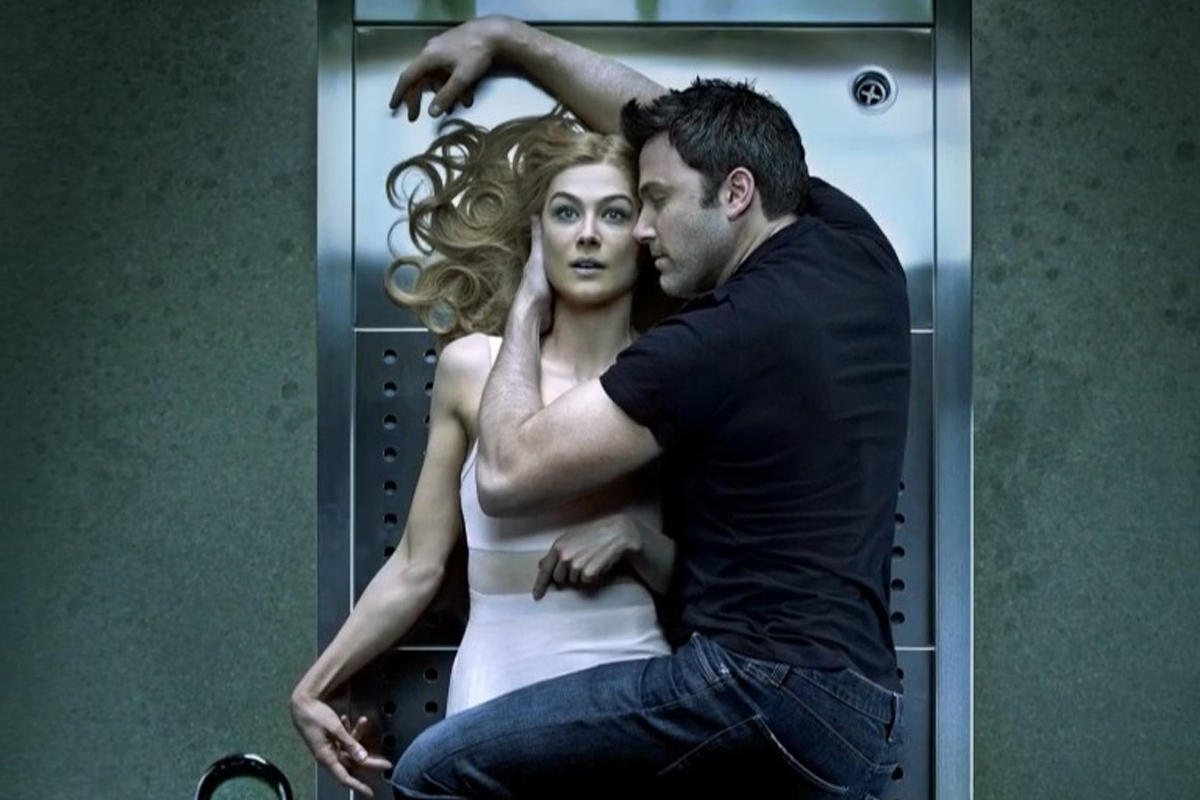
Films are often perceived as a simple means of
entertainment, and they usually succeed in doing this. However, it’s easy to
literally look over these small details that can tell us more about what is
being shown on screen, and potentially what’s hiding behind it. Hollywood has a
large pool of talented directors who pride themselves on such subtly. One of
these directors is David Fincher, known for his precision in filmmaking. His
most recent film, Gone Girl stands
out based on his philosophy of film making. To briefly summarize the plot of Gone Girl, this is a film that explores
the events surrounding a man named Nick Dunne and the disappearance of his
wife, Amy. As the film progresses, the media’s perception of Nick changes based
upon several plot developments in the film. This causes the media frenzy to
increase surrounding their relationship, and ultimately Nick’s public persona.
It is therefore clear that David Fincher’s Gone
Girl is an exploration of how the media is able to manipulate what is true,
and its abilities of persuasion towards the public.
In
the first twenty-five minutes of the film when Nick along with his mother and
father in law make their first public appearance before the media, it’s
important to focus on the tone of Nick’s voice when he speaks. His tone is
lethargic, and almost sounds like he is uncaring about the current
disappearance of his wife. After Nick makes his speech, we get a shot of
detective Jim Gilpin’s face, which appears to be a foreshadowing of his
attitude and opinion of Nick. Compare this to how Amy’s parents sound. Her
father actually sounds somewhat similar to Nick, but his dialogue describing
her as “she really is Amazing Amy” (which refers to her children’s book series)
is a clear indication of how concerned he is, and is perhaps tired rather than
uncaring. His short speech also implies that Amy is well known, when he says
that “millions” of readers grew up with her books. The mother’s speech is perhaps
the most professional, where she gives the location of the volunteer
headquarters. It’s also interesting to note that while Amy parents are
speaking, Nick looks tired, and uninterested, and often glances over towards
his sister. Nick is also considerably far away from Amy’s parents, a clear
visual indication that Nick is not personally close to Amy’s parents. After
Amy’s mother has concluded her speech, Nick makes a fatal mistake, but it isn’t
directly his fault upon further analysis. Nick poses with one of the two large
missing posters with Amy’s smiling face while reporters take pictures, and his
current expression doesn’t necessarily imply any sort of smirk or smug
attitude. If you listen closely you can hear someone say “smile”, Nick does
smile, and the cameras keep rolling. This scene, while short is very important
because it’s the first time the media gets a good look at Nick Dunne, and his
impressions on them are not going to be in his favor. This is where we need to
look at some basic psychology. Vanessa Van Petten’s article titled “5 Ways To
Make a Killer First Impression” starts off with the following:
Most people will judge you within the first second of meeting you and their opinion will most likely never change. Making a good first impression is incredibly important, because you only get one shot at it (Petten, 2011).
Scanning along the article, you’ll find that the third tip
is to be mindful of your body language. She explains that posture and the angle
of your body can go a long way to make a better impression. When Nick smiled,
he only did this because someone from the crowd told him to. After he finishes
posing with the photo, Amy’s parents are not smiling in any capacity, and their
facial expressions show concern. Throughout the film Nick’s picture with the
poster will be used to damage his public persona. A popular saying, “A picture
is worth a thousand words” absolutely applies to this photo of Nick’s seemingly
smug smile. On a final note about this scene, there is an interesting
reason why Ben Affleck was cast to play the lead. Fincher picked him because Affleck
is someone in the media who is constantly being covered, as well as a certain annoyance
with it. Fincher also picked Affleck for his smile, which proves to be
effective throughout the film, especially in this scene (Kashdan, 2015).
Nick’s
actions continue to build suspicion with the police. He drives over to his
dad’s house (although he is currently in assisted living, therefore he is not
there to visit his dad) and triggers an alarm when entering the home. While
trying to disarm the alarm, he finds the third envelope of clues in his dad’s
house, but doesn’t present this evidence to the police when they meet him. When
he is confronted by detective Rhnoda and her partner, Jim. Nick then asks if
they’re following him, since they were so quick to respond to the house
intruder alarm. At this point both the media and police are not necessarily in
a good relationship with Nick. Two days into Amy’s disappearance, the film
takes viewers to the volunteer headquarters. Again, focusing on body language,
Nick walks around greeting volunteers, and makes yet again another fatal
mistake, and this time it’s is all on him. While Nick is walking around, Amy’s
parents are keeping an eye on him. He walks past a group of women, where one in
particular looks at him, and he gives a small smile. After she looks away, Nick
looks to the right, and we see Amy’s parents, who witnessed the whole exchange.
Que Nick’s sister, who says “you look like hammered shit”. Notice also how when
Nick walks around, it appears almost as if everyone is circling around him,
much like an arena. While talking to detective Rhonda, he excuses himself to
help someone who appears to be homeless, by giving him a bag full of food. Her
partner, Jim doesn’t buy his act of kindness, saying “Oh, look. He’s being a
good guy, so everybody can see him being a good guy”. After Rhonda replies, he
then says “What’s to like?”. After Nick helps the homeless man, he sees Amy’s
stalker, and tries to talk to him. Instead, Nick yet again has a fatal
encounter that will, again, go against his public persona. The woman Nick was
looking at earlier greets herself as Shona Kelly, and wants to cook for Nick.
Shona then rubs his left arm, and takes a picture, or “selfie” with him. When
Nick sees the picture, he asks Shona to delete the photo. She dismisses the
request at first, but again Nick asks twice and tries to reach for her phone.
Shona gets annoyed and walks away, saying she will “share it with whoever I
please”. Nick clearly knows that if this photo gets around, he will seem
dishonest.
Finally,
the viewer gets their first news segment with Ellen Abbott’s news show, where
we hear her say “…pie eating grin, from a guy whose wife is missing”. This scene
takes place at Margo’s home (Nick’s sister). He sees the news segments but ignores
it. This is the audience’s first true glimpse of how the media is projecting
Nick’s persona, and thus the start of the media frenzy. Skipping ahead we see
Nick is having an affair with a college student, and when his sister finds out,
she forces Nick to watch the news, saying “they’re all over your shit”. We then
see that “selfie” picture from the volunteer center that Nick did indeed try to
get deleted, knowing it could potentially come back on him, which it did.
Later, we see detective Jim Gilpin is watching Ellen’s news segment, and says
“I can’t believe we haven’t arrested this guy”. At this point in the film, news
stories have been running and the public is judging Nick based on his first
impressions. Ellen Abbott’s news segment carries with it her own personal bias against
Nick which is well known towards the viewers. There is absolutely nothing wrong
about having a news segment whose anchor (often the primary appeal towards the
show) gives their opinion. However, their audience will then take that
information and potentially form their own opinions, which typically aligns
with the anchor’s because it is what’s been presented towards them. This is
obvious with Amy’s self-titled best friend, Noelle Hawthorne who is the target
audience of Ellen’s show (who also makes a guest appearance on the show later
on in the film), and is convinced that Nick is responsible for the
disappearance of Amy. The character Ellen
Abbott is also a parody of Nancy Grace both physically and mentally.
To
briefly summarize Nancy Grace, her website describes her as “An outspoken,
tireless advocate for victims' rights and one of television's most respected
legal analysts” (Grace, 2012). However, Nancy also has a reputation for her
aggressive interviewing that some would call a live interrogation. David Carr
describes Nancy Grace’s show as “presumption of innocence has found a willful
enemy in the former prosecutor turned broadcast judge-and-jury”. Carr
goes on to list her series of misfires on the show, including an incident where
she interviewed Melinda Duckett about her missing 2-year-old (Carr, 2011). During
the interview, Nancy forcefully pressed her questions towards Ms. Duckett,
implying that due to the mother’s lack of information she seemed suspicious.
The next day after the interview was taped, Ms. Duckett committed suicide, and
Nancy’s producers still ran the interview. Nancy ended up settling with
Duckett’s family and paid $200,000 (Lohr, 2012). It would therefore seem that
Nancy’s habits as a reporter seem to include looking at facts and bending them
to fit her conclusions, much like Ellen Abbott in Gone Girl. This can therefore be considerably manipulative, rather
than someone simply projecting her opinions and can thus lead to rash
consequences. In the case of Nick Dunne, not only has he made a poor first
impression, but his persona on national television has also been heavily damaged
due to characters in the media, such as Ellen Abbott, resulting in the manipulation
of what is true, and what is stretched.
Even
the film’s own marketing is manipulative in relation towards its plot. Gone Girl’s marketing was very secretive
in respect towards the plot, which many film critics actually appreciate. Its
trailers show scenes from the film that imply that Nick himself is guilty,
which is a clever tactic to hook audiences that the film is simply a story of
what exactly Amy’s husband did, when in fact it’s the polar opposite. How
humorous is it then that a film about a variety of subjects, be it
relationships, or in this case, media bias, uses that bias to sell itself
towards potential film goers. Clearly the results were successful, as the film
has a box office of $369.3 million, being Fincher’s most successful film (McClintock).
The lesson from this is that if you present something a certain way that peeks
the public’s interest, people will follow. The film’s trailers almost act as
clues rather than a run-down of the film. Even if you were to re-watch the
trailer for Gone Girl, it still hides
a major turning point of the film.
Towards
the one-hour mark of the film, a big plot twist in Gone Girl is delivered, which is that Amy is not only alive and
well, but she herself laid the foundation to destroy Nick’s life. This is given
to us in a scene many called the “Cool Girl Monologue”. This scene shows us how
Amy did it, from faking her pregnancy by befriending a “local idiot” to
eventually fake her own pregnancy on her medical record, and even going as far
as bleeding herself to leave blood residue on the kitchen floor for the cops to
find. Essentially, Amy has laid out several booby traps for Nick, the police,
and ultimately the media to follow. Nick eventually realizes this, turning to
his sister and the lawyer featured on Ellen Abbott’s news show, Tanner Bolt to
combat Amy’s plan and ultimately prove his innocence. The vessel that is
carrying Amy’s manipulative narrative is the media, which will therefore
ultimately build the basis of bias against Nick. Looking into Amy as a person,
clearly there is some sort of personality disorder based on her actions.
“However, it is a common view among therapists that
patients with BPD often use manipulation
in order to achieve their own goals. This is confirmed by the study of Gallop & Lancee, which
demonstrated that as many as 90% of nurses stated that they associated BPD patients with manipulation. Other
research has also confirmed the conviction
of specialists that there is a strong link between the BPD personality and manipulation” (Mandal, Kocur).
They further continue that people who suffer from BPD
disorders also have an unclear image of who they are. Revisiting the “Cool Girl
Monologue”, Amy says that when she first met Nick, she knew he wanted the “cool
girl” who she basically describes a person she has no desire to be, but becomes
that person to please others, in this case Nick. In a scene where Nick visits
one of Amy’s former partners, Tommy O’Hara was a victim of Amy’s persona. Tommy
had a relationship with Amy which ended with her accusing Tommy of first degree
felony rape. The movie’s stance on Tommy’s innocence is made when Nick asks
“Did you do it?” followed by Tommy’s instant response “Did you?”. When Nick
asks for Tommy’s story, he says they met at a party and “instantly click”,
describing her as a perfect match. Amy eventually attempts to mold Tommy to be
her ideal partner. Tommy realized this, saying it was “too much”. Amy bought
him ties frequently, and says they had arguments over the subject. Tommy then
attempts to leave this relationship, distancing himself from Amy. Then one
night, Tommy says she came over with liquor and a record from one of his
favorite bands, where Amy soon initiated sexual activity. To be precise, Amy
wanted rough intercourse. The next day Tommy sees that there’s two officers in
his home, and Amy has “wounds that are consistent with rape”, where it appeared
that Tommy tied Amy up the bed. Amy’s message to Tommy becomes clear when the
police discover that the ropes used to tie Amy up were the ties Amy bought for
him, which he wouldn’t wear. In these three examples, the situation comes out
to be either Amy is attempting to mold herself to fit someone’s expectations or
the opposite. When you combine this trait with Amy’s intelligence you have a
dangerous person. Lauren Duca had a sit down with psychiatrist Dr. Paul Puri
who also agrees that Amy has some sort of personality disorder, saying “It seems like Amy has definite aspects of that in terms
of her conscience” (Duca, 2014). Dr. Paul Puri also looks at how Amy throughout
the movie is willing to harm herself to build a false narrative. Another
example proving Amy’s extreme methods exists in the film. Desi Collins is
another former romantic partner of Amy. She accidently meets Desi while
on the run. Seeing this as an opportunity, she accepts him literally with open
arms, and Desi keeps her as a guest in his getaway lodge. One night, Amy sees
Nick’s interview at Desi’s lodge and is won over by him. To get herself back
home, she subdues Desi into sex. She then slices his throat, which yet again
lays down the foundation that would place herself as a victim in the eyes of
the media. This also solves the problem of Amy where she technically wasn’t
pregnant until now. She returns home covered in Desi’s blood, fainting as Nick
holds her.
Now that the public knows Amy is
alive, and that Nick is not responsible in any way for her disappearance, the
media again follows what Amy wants them to see: a happy reunion. While the
media eventually stops harassing Nick, this was only because Amy allowed Nick
to be free of the media frenzy. This ultimately shows how easy it is to use the
media as a tool to destroy someone’s life. Amy clearly had a well thought out
plan to have Nick put in for what would have been her faked murder. Even when
Amy’s plans backfire, she manages to adapt and continue to manipulate the
media. While it is true that Amy purposefully laid out this false narrative for
the media to follow, Gone Girl is
nevertheless an example of what can happen when the media conveys
misinformation.
Works Cited
"About - Nancy." Nancy
Grace. (2012)
http://www.nancygrace.com/about.html
Carr, David. "TV Justice
Thrives on Fear." The New York Times
(May 22, 2011):
http://www.nytimes.com/2011/05/23/business/media/23carr.html
Duca, Lauren. "A Psychiatrist
Weighs In On Amy & Nick In 'Gone Girl'" The Huffington Post (Oct.
3 2014)
http://www.huffingtonpost.com/2014/10/03/amy-gone-girl- psychiatrist_n_5922842.html
Kashdan, Jason. "Ben Affleck on
"Gone Girl" Wife Jennifer Garner and Career." CBS Interactive
(Jan. 01 2015)
http://www.cbsnews.com/news/ben-affleck-on-gone-girl-wife-jennifer-garner-and-career/
Lohr, David. "Toni Medrano,
Dubbed 'Vodka Mom' By Nancy Grace, Committed Suicide, Police Say." The
Huffington Post (July 11 2012) http://www.huffingtonpost.com/2012/07/11/toni-medrano-vodka-mom_n_1665792.html
Mandal, Eugenia, and
Dagna Kocur. "Psychological Masculinity, Femininity and Tactics of Manipulation in Patients with
Borderline Personality Disorder." Archives
of Psychiatry & Psychotherapy 15.1
(2013): 45-53
http://blc-lrc.bluegrass.kctcs.edu:2233/ehost/pdfviewer/pdfviewer?sid=37ad3997-28a3- 4f21-b0b6-991ecdb64866%40sessionmgr4008&vid=1&hid=4213
McClintock, Pamela. "Box Office
Milestone: 'Gone Girl' Sets U.S. Record for David Fincher." The Hollywood Reporter, 1 Nov. 2014. Web. 20
Sept. 2016. http://www.hollywoodreporter.com/news/box-office-milestone-gone-girl-745580
Petten, Vanessa Van. "5 Ways To
Make a Killer First Impression." Forbes Magazine, n.d. Web. 20 Sept. 2016.
http://www.forbes.com/sites/yec/2011/11/02/5-ways-to-make-a-killer-first- impression/#55104eac10ce
Resources for October 3, 2016
Andrews, Mallory. "She's Lost Control, Again: Todd Haynes' Safe." Cleo 1.2 (July 25, 2013)
Bowen, Chuck. Fear Country: Night of the Living Dead speaks to a society that can’t process Black Lives Matter." Keyframe (October 1, 2016)
Dickey, Colin. "Oliver and Sarah: The Story of the Winchesters." The Los Angeles Review of Books (September 28, 2015)
Hassania, Tina. "Female Homelessness in Agnès Varda’s Vagabond and Kelly Reichardt’s Wendy and Lucy." Cleo 1.2 (July 25, 2013)
Jensen, Lindsay. "The Analog Mother: Joseph Kosinski’s Oblivion." Cleo 1.2 (July 25, 2013)
Koski, Genevieve, et al. "The Neon Demon/Suspiria, Pt. 1." The Next Picture Show #35 (July 12, 2016) ["Nicholas Winding Refn’s new THE NEON DEMON inspired us to look back at another tale of female rivalry that plays out in lurid colors and more than a little violence: Dario Argento’s classic 1977 horror movie SUSPIRIA. In this half, we explore the specific, lurid style in which Argento works, and consider how it functions as both cinema and horror. "]
---. "The Neon Demon/Suspiria, Pt. 2." The Next Picture Show #36 (July 14, 2016) ["We move our conversation of Dario Argento's 1977 film SUSPIRIA to Nicholas Winding Refn’s THE NEON DEMON, which works as a contemporary companion piece. In this half, we talk over the two films' respective uses of color, violence, and female competition."]
McGoff, Jessica. "Andrea Arnold’s Women in Landscapes: What does loneliness look like?" Keyframe (September 27, 2016)
"Nature's Notebook - The Life of a Dragonfly." Bernheim (September 27, 2016)
Puschak, Evan. "Children of Men: Don't Ignore the Background." (Posted on Youtube: September 9, 2015) [MB: This was a powerful film that looked to the future to examine the global politics of 2006 when it was released (highlighted even more by the collection of philosophers/theorists that provided commentaries on the imagery/narrative in the original DVD edition), and, as Evan Puschak demonstrates in this video essay, its relevance has only increased over the next decade. This analysis includes references to our current social/political issues to demonstrate its continuing relevance. Don't ignore the background (context) - could be applicable in our own attempts to understand the issues of the world.]
Bowen, Chuck. Fear Country: Night of the Living Dead speaks to a society that can’t process Black Lives Matter." Keyframe (October 1, 2016)
Hassania, Tina. "Female Homelessness in Agnès Varda’s Vagabond and Kelly Reichardt’s Wendy and Lucy." Cleo 1.2 (July 25, 2013)
Jensen, Lindsay. "The Analog Mother: Joseph Kosinski’s Oblivion." Cleo 1.2 (July 25, 2013)
Koski, Genevieve, et al. "The Neon Demon/Suspiria, Pt. 1." The Next Picture Show #35 (July 12, 2016) ["Nicholas Winding Refn’s new THE NEON DEMON inspired us to look back at another tale of female rivalry that plays out in lurid colors and more than a little violence: Dario Argento’s classic 1977 horror movie SUSPIRIA. In this half, we explore the specific, lurid style in which Argento works, and consider how it functions as both cinema and horror. "]
---. "The Neon Demon/Suspiria, Pt. 2." The Next Picture Show #36 (July 14, 2016) ["We move our conversation of Dario Argento's 1977 film SUSPIRIA to Nicholas Winding Refn’s THE NEON DEMON, which works as a contemporary companion piece. In this half, we talk over the two films' respective uses of color, violence, and female competition."]
"Nature's Notebook - The Life of a Dragonfly." Bernheim (September 27, 2016)
Puschak, Evan. "Children of Men: Don't Ignore the Background." (Posted on Youtube: September 9, 2015) [MB: This was a powerful film that looked to the future to examine the global politics of 2006 when it was released (highlighted even more by the collection of philosophers/theorists that provided commentaries on the imagery/narrative in the original DVD edition), and, as Evan Puschak demonstrates in this video essay, its relevance has only increased over the next decade. This analysis includes references to our current social/political issues to demonstrate its continuing relevance. Don't ignore the background (context) - could be applicable in our own attempts to understand the issues of the world.]
Wednesday, September 28, 2016
Resources for September 28, 2016
Grossman, Pam. "The Witching Hour." (Posted on Vimeo: 2014)
Verongos, Helen T. "Beyond the Politics in Abortion: Stories Women Tell." The New York Times (August 11, 2016)
Nicholas, James Michael. "New Film Takes A Hard Look At Masculinity And Homophobia In America." Huffington Post (September 22, 2016)
Buckler, Dana. "The Dark Knight Trilogy Part 2: Chaos." H.I.T.M. (July 10, 2016)
Hassania, Tina, et al. "Life and Something More: Abbas Kiarostami Remembered." The Cinephiliacs (July 10, 2016) ["Abbas Kiarostami, born in 1940 in Tehran, turned to filmmaking in 1970 when he helped set up the Institute for Intellectual Development of Children and Young Adults. He had made a half dozen shorts and one feature, The Report in 1977, before the Iranian Revolution changed the public face of his country. While many filmmakers moved away in search of more creative freedom, Kiarostami continued to direct. Around the early 1990s, his films suddenly found an international foothold at festivals via the Koker trilogy and his most famous work, Close-Up. In 1997, he won a Palm D’Or for Taste of Cherry, helping paint the way for Iranian filmmakers to find an audience abroad. His filmmaking only became more cryptic and complex, especially with his early adoption of digital cinema with Ten and the self-reflexive documentary, Ten on Ten. His final films,Certified Copy and Like Someone In Love, were his only made outside his native Iran. Kiarostami passed away on July 4, 2016. In this special episode of the podcast, Amir Soltani, Tina Hassania, and Carson Lund join the podcast to celebrate the life and work of one of the legendary filmmakers to emerge on the world cinema stage."]
Buckler, Dana. "The Dark Knight Trilogy Part 3 : Pain." How Is This Movie (July 11, 2016)
Hanlon, Aaron R. "Are Ph.D Students Irrational?" The Los Angeles Review of Books (August 24, 2016)
Adler, Renata, et al. "David Foster Wallace, FTW: Life in the Internet Age." Open Source (August 25, 2016)
Verongos, Helen T. "Beyond the Politics in Abortion: Stories Women Tell." The New York Times (August 11, 2016)
Nicholas, James Michael. "New Film Takes A Hard Look At Masculinity And Homophobia In America." Huffington Post (September 22, 2016)
Buckler, Dana. "The Dark Knight Trilogy Part 2: Chaos." H.I.T.M. (July 10, 2016)
Hassania, Tina, et al. "Life and Something More: Abbas Kiarostami Remembered." The Cinephiliacs (July 10, 2016) ["Abbas Kiarostami, born in 1940 in Tehran, turned to filmmaking in 1970 when he helped set up the Institute for Intellectual Development of Children and Young Adults. He had made a half dozen shorts and one feature, The Report in 1977, before the Iranian Revolution changed the public face of his country. While many filmmakers moved away in search of more creative freedom, Kiarostami continued to direct. Around the early 1990s, his films suddenly found an international foothold at festivals via the Koker trilogy and his most famous work, Close-Up. In 1997, he won a Palm D’Or for Taste of Cherry, helping paint the way for Iranian filmmakers to find an audience abroad. His filmmaking only became more cryptic and complex, especially with his early adoption of digital cinema with Ten and the self-reflexive documentary, Ten on Ten. His final films,Certified Copy and Like Someone In Love, were his only made outside his native Iran. Kiarostami passed away on July 4, 2016. In this special episode of the podcast, Amir Soltani, Tina Hassania, and Carson Lund join the podcast to celebrate the life and work of one of the legendary filmmakers to emerge on the world cinema stage."]
Buckler, Dana. "The Dark Knight Trilogy Part 3 : Pain." How Is This Movie (July 11, 2016)
Hanlon, Aaron R. "Are Ph.D Students Irrational?" The Los Angeles Review of Books (August 24, 2016)
Adler, Renata, et al. "David Foster Wallace, FTW: Life in the Internet Age." Open Source (August 25, 2016)
Monday, September 26, 2016
Resources for September 26, 2016
Sokolowski, Joanna and Kate Trumbull-LaValle. "Ovarian Psychos." Film School (July 8, 2016) ["Riding at night through streets deemed dangerous in Eastside Los Angeles, the Ovarian Psycos use their bicycles to confront the violence in their lives. At the helm of the crew is founder Xela de la X, a single mother and poet M.C. dedicated to recruiting an unapologetic, misfit crew of women of color. The film intimately chronicles Xela as she struggles to strike a balance between her activism and nine year old daughter Yoli; street artist Andi who is estranged from her family and journeys to become a leader within the crew; and bright eyed recruit Evie, who despite poverty, and the concerns of her protective Salvadoran mother, discovers a newfound confidence. Co-directors Joanna Sokolowski & Kate Trumbull-LaValle stop by to talk about the boldness of Ovas’ politics, their brazen approach to feminism, and unapologetic aesthetic: a hybrid mix of Chicana, Riot Grrrl, Zapatista and militant-punk cultural markers and the individual personalities that make Ovarian Psycos such a compelling watch."]
Hurne, Mark, Doug McCambridge and Aaron West. "The Player." Criterion Close-Up #43 (July 8, 2016) ["A Hollywood studio executive with a shaky moral compass (Tim Robbins) finds himself caught up in a criminal situation that would be right at home in one of his movie projects, in this biting industry satire from Robert Altman. Mixing elements of film noir with sly insider comedy, The Player, based on a novel by Michael Tolkin, functions as both a nifty stylish murder story and a commentary on its own making, and it is stocked with a heroic supporting cast (Peter Gallagher, Whoopi Goldberg, Greta Scacchi, Dean Stockwell, Fred Ward) and a lineup of star cameos that make for an astonishing Hollywood who’s who. This complexly woven grand entertainment (which kicks off with one of American cinema’s most audacious and acclaimed opening shots) was the film that marked Altman’s triumphant commercial comeback in the early 1990s."]
Ayres, Jackson. "The X-Men and the Legacy of AIDS." The Los Angeles Review of Books (September 21, 2016)
Jenkins, Jamie, Mark Mcgee and Mike White. "Invasion of the Body Snatchers." The Projection Booth #130 (September 3, 2013) ["From the deep reaches of space the pods arrive, ready to take over the human race, erasing our humanity and turning us into walking vegetables. We're looking at the four versions of Invasion of the Body Snatchers (and a few other films)."]
Refn, Nicholas Winding. "The Neon Demon." The Cinema Show (July 8, 2016)
Eves, Dave and James Hancock. "The Cinema of Jacques Tati." The Wrong Reel #159 (July 9, 2016)
Isenberg, Nancy. "'White Trash' and Class in America." On the Media (June 22, 2016) ["As the media have watched the ascent of Donald Trump with disbelief-going-on-horror, pundits have returned frequently to the question of who exactly his supporters are. Terms like "angry" and "white working class" are mentioned frequently, but the National Review several months ago put it the most pointedly and viciously. In an article lambasting Trump supporters, Kevin Williamson characterized them as lazy drug addicts, compared them to animals, and even suggested that they deserved to die. Though he did not say it directly, the implication was clear: these people were white trash. We took that opportunity to take a deeper look at the idea of "white trash," with the help of writer and professor Nancy Isenberg, author of the forthcoming book, White Trash: The 400-Year Untold History of Class in America. Isenberg described to Brooke how the notion of "white trash" has been around for a long time, belying the idea that America is a "classless" society. White Trash comes out this week, and we're re-running our conversation in honor of it."]
Raup, Jordan. "Ava DuVernay Takes on America’s Prison System in First Trailer For The 13th." The Film Stage (September 26, 2016) ["While Selma took a look at a very specific, vital part of American history, director Ava DuVernay is exploring its political and systemic reverberations over the span of many decades with her next film. The 13th chronicles the history of racial inequality in the United States, particularly how it relates to the prison system, and ahead of a NYFF opening and Netflix premiere, the first powerful trailer has arrived."]
Hurne, Mark, Doug McCambridge and Aaron West. "The Player." Criterion Close-Up #43 (July 8, 2016) ["A Hollywood studio executive with a shaky moral compass (Tim Robbins) finds himself caught up in a criminal situation that would be right at home in one of his movie projects, in this biting industry satire from Robert Altman. Mixing elements of film noir with sly insider comedy, The Player, based on a novel by Michael Tolkin, functions as both a nifty stylish murder story and a commentary on its own making, and it is stocked with a heroic supporting cast (Peter Gallagher, Whoopi Goldberg, Greta Scacchi, Dean Stockwell, Fred Ward) and a lineup of star cameos that make for an astonishing Hollywood who’s who. This complexly woven grand entertainment (which kicks off with one of American cinema’s most audacious and acclaimed opening shots) was the film that marked Altman’s triumphant commercial comeback in the early 1990s."]
Ayres, Jackson. "The X-Men and the Legacy of AIDS." The Los Angeles Review of Books (September 21, 2016)
Jenkins, Jamie, Mark Mcgee and Mike White. "Invasion of the Body Snatchers." The Projection Booth #130 (September 3, 2013) ["From the deep reaches of space the pods arrive, ready to take over the human race, erasing our humanity and turning us into walking vegetables. We're looking at the four versions of Invasion of the Body Snatchers (and a few other films)."]
Refn, Nicholas Winding. "The Neon Demon." The Cinema Show (July 8, 2016)
Eves, Dave and James Hancock. "The Cinema of Jacques Tati." The Wrong Reel #159 (July 9, 2016)
Isenberg, Nancy. "'White Trash' and Class in America." On the Media (June 22, 2016) ["As the media have watched the ascent of Donald Trump with disbelief-going-on-horror, pundits have returned frequently to the question of who exactly his supporters are. Terms like "angry" and "white working class" are mentioned frequently, but the National Review several months ago put it the most pointedly and viciously. In an article lambasting Trump supporters, Kevin Williamson characterized them as lazy drug addicts, compared them to animals, and even suggested that they deserved to die. Though he did not say it directly, the implication was clear: these people were white trash. We took that opportunity to take a deeper look at the idea of "white trash," with the help of writer and professor Nancy Isenberg, author of the forthcoming book, White Trash: The 400-Year Untold History of Class in America. Isenberg described to Brooke how the notion of "white trash" has been around for a long time, belying the idea that America is a "classless" society. White Trash comes out this week, and we're re-running our conversation in honor of it."]
Raup, Jordan. "Ava DuVernay Takes on America’s Prison System in First Trailer For The 13th." The Film Stage (September 26, 2016) ["While Selma took a look at a very specific, vital part of American history, director Ava DuVernay is exploring its political and systemic reverberations over the span of many decades with her next film. The 13th chronicles the history of racial inequality in the United States, particularly how it relates to the prison system, and ahead of a NYFF opening and Netflix premiere, the first powerful trailer has arrived."]
Monday, September 19, 2016
Anomalisa (USA: Duke Johnson and Charlie Kaufman, 2015)

Anomalisa (USA: Duke Johnson and Charlie Kaufman, 2015: 90 mins)
Bradshaw, Peter. "Anomalisa review: A masterpiece about the human condition – with puppets." The Guardian (March 10, 2016)
Collin, Robbie. "Anomalisa is Upsettingly Brilliant." The Telegraph (March 9, 2016)
Graham, Bill. "‘Anomalisa’ Producer Rosa Tran on Bringing Charlie Kaufman’s Animation to Life." The Film Stage (February 8, 2016)
Scherffig, Claire Miranda. "Creepy Eyes in the Uncanny Valley." Keyframe (July 28, 2016)
Seitz, Matt Zoller. "Anomalisa." Roger Ebert (December 29, 2015)
Shoard, Catherine. "Anomalisa: The ending, the eggs and the sex toy – discuss the movie with spoilers." The Guardian (March 15, 2016)
Sims, David. "Anomalisa: An Agonizing Love Story, With Puppets." The Atlantic (January 8, 2016)
Singer, Leah. "Video: Eternal Sunsets of Charlie Kaufman’s Mind." Keyframe (March 10, 2016)
Thomas, Leon. "Anomalisa - Renegade Cut." (Posted on Youtube: June 21, 2016)
Tran, Rosa. "Anomalisa." DP/30 (Posted on Youtube: December 30, 2015)
Framing the Picture: Favorite Films of 2015 from Matt Marlin on Vimeo.
Resources for September 19, 2016
Yazdani, Masoud, ed. Why Does Film Matter? Intellect, 2011.
Cimino, Michael, Scott Foundas and Kris Kristofferson. "Michael Cimino's Heaven's Gate." The Close-Up (July 13, 2016) ["The director broke through with his 1978 best picture Oscar winner, The Deer Hunter, which embodied the style and ethos of the New Hollywood movement that produced epics like The Godfather and Chinatown before it. Cimino’s follow up was Heaven’s Gate, an ambitious take on the western starring Kris Kristofferson as a federal marshal investigating a government-sanctioned plot to steal land from European settlers in Wyoming. Heaven’s Gate is widely known to be one of the biggest box-office flops in history, effectively ending the New Hollywood era and causing United Artists to go under. But the film has been reappraised in recent years, and many believe it to be a misunderstood classic. After a sold-out screening of the film’s Director’s Cut at the 50th New York Film Festival back in 2012, an emotional Cimino took the stage saying, “It’s difficult to be rational in this moment . . . it’s taken 33 years to get here.”]
Fox, Neil, Dario Linares and Kingsley Marshall. "12 Angry Men." The Cinematologists #10 (September 26, 2015)
Lane, Penny. "Nuts!" Film School (July 8, 2016) ["Inventive and wildly fun, NUTS! recounts the unbelievable true story of John Romulus Brinkley, a Kansas doctor who in 1917 discovered that he could cure impotence by transplanting goat testicles into men. From there, the story only gets more bizarre. Mixing hand-drawn animated reenactments, interviews, archival footage, and a very unreliable narrator,NUTS! traces Brinkley’s rise from poverty and obscurity to the heights of celebrity, wealth, and influence. Along the way, he transplants thousands of goat testicles, amasses an enormous fortune, is (sort of) elected Governor of Kansas, invents junk mail and the infomercial, builds the world’s most powerful radio station, and generally annoys the heck out of the establishment. Filmmaker Penny Lane has skillfully borrowed a page from her subject – charming viewers into believing the unbelievable, building their trust and excitement, until the final chapter bares the painful truth and reveals the doctor for what he truly was. NUTS! reminds us that our love of (and need for) compelling narratives is exactly what makes us so endlessly susceptible to being conned. Director Penny Lanestops by for a conversation on Brinkley, our collective need to believe in something and any contemporary parallels to be drawn from this bizarre story."]
Char, Jessie and Arik Devens. "Singin' In the Rain." Cinema Gadfly #6 (ND)
Anthony, West, David Blakeslee and Robert Nishimura. "The First Films of Samuel Fuller." The Eclipse Viewer #4 (October 24, 2012)
Kovalik, Dan. "America in Vietnam: The Enduring Myth of the Noble Cause." Counterpunch (September 14, 2016)
Pinter, Harold. "Art, Truth and Politics." Nobel Prize in Literature 2005 (Acceptance Speech)
Meyers, Mark. "How He Fell in Love." Film School (July 8, 2016) ["Travis (Matt McGorry), a young struggling musician, crosses paths with Ellen (Amy Hargreaves), an older married yoga teacher who is trying to adopt a child with her husband. Travis and Ellen begin an affair that slowly deepens into something more intimate and profound. As their encounters continue, Ellen is confronted with her failing marriage while Travis must face the consequences of his actions. Written and directed by Marc Meyers (HARVEST) and stars Matt McGorry (Orange is the New Black), Amy Hargreaves (Homeland, BLUE RUIN), Britne Oldford (American Horror Story) and veteran film and theatre actor Mark Blum (Mozart in the Jungle). Director Marc Meyersjoins us for a conversation on managing the responsibilities of writing, producing and directing his own unforgettably intimate film."]
Cimino, Michael, Scott Foundas and Kris Kristofferson. "Michael Cimino's Heaven's Gate." The Close-Up (July 13, 2016) ["The director broke through with his 1978 best picture Oscar winner, The Deer Hunter, which embodied the style and ethos of the New Hollywood movement that produced epics like The Godfather and Chinatown before it. Cimino’s follow up was Heaven’s Gate, an ambitious take on the western starring Kris Kristofferson as a federal marshal investigating a government-sanctioned plot to steal land from European settlers in Wyoming. Heaven’s Gate is widely known to be one of the biggest box-office flops in history, effectively ending the New Hollywood era and causing United Artists to go under. But the film has been reappraised in recent years, and many believe it to be a misunderstood classic. After a sold-out screening of the film’s Director’s Cut at the 50th New York Film Festival back in 2012, an emotional Cimino took the stage saying, “It’s difficult to be rational in this moment . . . it’s taken 33 years to get here.”]
Fox, Neil, Dario Linares and Kingsley Marshall. "12 Angry Men." The Cinematologists #10 (September 26, 2015)
Lane, Penny. "Nuts!" Film School (July 8, 2016) ["Inventive and wildly fun, NUTS! recounts the unbelievable true story of John Romulus Brinkley, a Kansas doctor who in 1917 discovered that he could cure impotence by transplanting goat testicles into men. From there, the story only gets more bizarre. Mixing hand-drawn animated reenactments, interviews, archival footage, and a very unreliable narrator,NUTS! traces Brinkley’s rise from poverty and obscurity to the heights of celebrity, wealth, and influence. Along the way, he transplants thousands of goat testicles, amasses an enormous fortune, is (sort of) elected Governor of Kansas, invents junk mail and the infomercial, builds the world’s most powerful radio station, and generally annoys the heck out of the establishment. Filmmaker Penny Lane has skillfully borrowed a page from her subject – charming viewers into believing the unbelievable, building their trust and excitement, until the final chapter bares the painful truth and reveals the doctor for what he truly was. NUTS! reminds us that our love of (and need for) compelling narratives is exactly what makes us so endlessly susceptible to being conned. Director Penny Lanestops by for a conversation on Brinkley, our collective need to believe in something and any contemporary parallels to be drawn from this bizarre story."]
Char, Jessie and Arik Devens. "Singin' In the Rain." Cinema Gadfly #6 (ND)
Anthony, West, David Blakeslee and Robert Nishimura. "The First Films of Samuel Fuller." The Eclipse Viewer #4 (October 24, 2012)
Kovalik, Dan. "America in Vietnam: The Enduring Myth of the Noble Cause." Counterpunch (September 14, 2016)
Pinter, Harold. "Art, Truth and Politics." Nobel Prize in Literature 2005 (Acceptance Speech)
Meyers, Mark. "How He Fell in Love." Film School (July 8, 2016) ["Travis (Matt McGorry), a young struggling musician, crosses paths with Ellen (Amy Hargreaves), an older married yoga teacher who is trying to adopt a child with her husband. Travis and Ellen begin an affair that slowly deepens into something more intimate and profound. As their encounters continue, Ellen is confronted with her failing marriage while Travis must face the consequences of his actions. Written and directed by Marc Meyers (HARVEST) and stars Matt McGorry (Orange is the New Black), Amy Hargreaves (Homeland, BLUE RUIN), Britne Oldford (American Horror Story) and veteran film and theatre actor Mark Blum (Mozart in the Jungle). Director Marc Meyersjoins us for a conversation on managing the responsibilities of writing, producing and directing his own unforgettably intimate film."]
Saturday, September 17, 2016
Resources for September 17, 2016
McCauley, Lauren. "Elizabeth Warren Demands Investigation Into President Obama’s Failure to Jail the Banksters." TruthDig (September 15, 2016)
Sragow, Michael. "Deep Focus: Snowden." Film Comment (September 15, 2016)
Cohen, Jeffrey Jerome. "Monster Culture (Seven Theses)." Monster Theory: Reading Culture. University of Minnesota Press, 1996: 3 - 25.
Lee, Kevin B. "Oliver Stone on How to Make History: Why authenticity is an unexpected through-line in this divisive director’s career." Keyframe (September 15, 2016)
Char, Jessie and Arik Devens. "Love Parade." Cinema Gadfly #5 (ND)
Peña, Richard. "Memories of Underdevelopment." The Cinephiliacs #32 (February 3, 2014) ["Without the help of Richard Peña, Peter would probably have never become interested in directors like István Szabó, Kim Ki-Young, or Souleymane Cisse, among countless others. As a professor at Columbia and the former programmer of the Film Society of Lincoln Center and the New York Film Festival, Richard used his years to expand the conversation of film history: as NYFF brought in directors from the cinemas of Iran, China, and Brazil, his yearly programming and classes expanded to search out those histories as well. Now a year out from his time at Lincoln Center, Richard sits down to recount his first curiosities toward cinema, his programming philosophies, and to lament the director he can never convince his students to love as much as he does. Finally, the two discuss Memories of Underdevelopment, a landmark film in Cuban film history, which provides a complex portrait of identity."]
Zinn, Howard. A People's History of the United States, 1492 - Present. Harper Perennial, 2005.
Hames, Peter, et al. "Valerie and Her Week of Wonders." The Production Booth #276 (June 21, 2016)
Ellwand, Calina. "Motor City’s Gendered Shift: Heidi Ewing and Rachel Grady’s Detropia." cléo 1.3 (November 28, 2013)
Žižek, Slavoj. "Zero Dark Thirty: Hollywood's gift to American power." The Guardian (January 25, 2013)
Sragow, Michael. "Deep Focus: Snowden." Film Comment (September 15, 2016)
Cohen, Jeffrey Jerome. "Monster Culture (Seven Theses)." Monster Theory: Reading Culture. University of Minnesota Press, 1996: 3 - 25.
Lee, Kevin B. "Oliver Stone on How to Make History: Why authenticity is an unexpected through-line in this divisive director’s career." Keyframe (September 15, 2016)
Char, Jessie and Arik Devens. "Love Parade." Cinema Gadfly #5 (ND)
Peña, Richard. "Memories of Underdevelopment." The Cinephiliacs #32 (February 3, 2014) ["Without the help of Richard Peña, Peter would probably have never become interested in directors like István Szabó, Kim Ki-Young, or Souleymane Cisse, among countless others. As a professor at Columbia and the former programmer of the Film Society of Lincoln Center and the New York Film Festival, Richard used his years to expand the conversation of film history: as NYFF brought in directors from the cinemas of Iran, China, and Brazil, his yearly programming and classes expanded to search out those histories as well. Now a year out from his time at Lincoln Center, Richard sits down to recount his first curiosities toward cinema, his programming philosophies, and to lament the director he can never convince his students to love as much as he does. Finally, the two discuss Memories of Underdevelopment, a landmark film in Cuban film history, which provides a complex portrait of identity."]
Zinn, Howard. A People's History of the United States, 1492 - Present. Harper Perennial, 2005.
Hames, Peter, et al. "Valerie and Her Week of Wonders." The Production Booth #276 (June 21, 2016)
Ellwand, Calina. "Motor City’s Gendered Shift: Heidi Ewing and Rachel Grady’s Detropia." cléo 1.3 (November 28, 2013)
Žižek, Slavoj. "Zero Dark Thirty: Hollywood's gift to American power." The Guardian (January 25, 2013)
Thursday, September 15, 2016
Resources for September 15, 2016
Hoberman, J. "Behold the Man: Steven Soderbergh's Epic Film Biography of Che." VQR (Winter 2009)
"Neighbors and the Transition to Parenthood." Pop Culture Case Study #153 (July 7, 2016)
Greene, Robert. The 48 Laws of Power. Profile Books, 2002.
Gordon-Levitt, Joseph and Oliver Stone. "On Making New Film Snowden, Humanizing World's Most Wanted Man." Democracy Now (September 14, 2016) ["As the much-anticipated movie Snowden, about one of the most wanted men in the world, hits theaters, we spend the hour with its director, Academy Award-winning filmmaker Oliver Stone, and the actor who played Snowden, Joseph Gordon-Levitt, and feature clips from the film that tells the story of how NSA whistleblower Edward Snowden exposed massive surveillance programs by U.S. and British intelligence agencies. "Our goal was to humanize the man, to bring you … the feeling of his life," Stone says of Snowden, who he notes was originally politically conservative and tried to enlist in the military to serve in Iraq but joined the CIA instead."]
James, Clive. "Thrones of Blood: Binge-Watching the Most Addictive Show on Television." The New Yorker (April 18, 2016)
Toobin, Jeffrey. "Colin Kaepernick and a Landmark Supreme Court Case." The New Yorker (September 15, 2016)
Krauss, Lawrence M. "The House Science Committee's Anti-Science Rampage." The New Yorker (September 14, 2016)
Carhill, C. Robert and Brian Salisbury. "How 1986's Vamp Reminds Us of Martin Scorsese." Junkfood Cinema (July 7, 2016)
Bellamy, Brent. "We Still Need the Women’s Army: Form and Politics in Lizzie Borden’s Born in Flames." cléo 1.3 (November 28, 2013)
Smith, Justine. "Of Love and Other Demons: Cat People (Paul Schrader, 1982)." Vague Visages (September 15, 2016)
Tuesday, September 13, 2016
Resources for September 13, 2016
Davis, Wade. "The Wayfinders: Why Ancient Knowledge Matters in the Modern World." (Posted on Vimeo: 2012)
Ince, Kate, et al. "Eyes Without a Face." The Projection Booth #278 (July 5, 2016) ["Georges Franju's Eyes Without a Face (1960) is an atmospheric "anguish story" about a young woman who's lost her face and the overbearing father who works to give her a new one. Special Guest Kate Ince, author of the French Film Directors book Georges Franju, relates Franju's career and themes."]
Desaulniers, Jake and Arik Devens. "Inception." Cinema Gadfly #4 (ND)
McCalmount, Jonathan. "The Valley of the Bees (1968) - The Cross or the Cock." Ruthless Culture (April 21, 2011)
Roan, Brian. "Interview – Director David Farrier Talks Tickled." The Film Stage (July 6, 2016)
Latella, Stephanie. "Lessons in Loss: Gender and Grief in Philippe Falardeau’s Monsieur Lazhar." cléo 1.3 (November 28, 2013)
Williams, Roger Ross. "Life, Animated." The Treatment (July 6, 2016) ["Roger Ross Williams has made a career of giving a voice to the voiceless. In his documentary Life, Animated, an adaptation of Ron Suskind’s book of the same name, he highlights Owen, an autistic child who identifies with and ultimately finds his own voice through animated Disney movies. Today, Roger discusses his long time struggle for representing the underdogs as well as what he learned, not only about raising a child with autism, but about the world of Disney."]
Gaiman, Neil. "How Stories Last." The Long Now Foundation (June 9, 2015)
Chomsky, Noam. Understanding Power: The Indispensable Noam Chomsky. The New Press, 2002.
Ince, Kate, et al. "Eyes Without a Face." The Projection Booth #278 (July 5, 2016) ["Georges Franju's Eyes Without a Face (1960) is an atmospheric "anguish story" about a young woman who's lost her face and the overbearing father who works to give her a new one. Special Guest Kate Ince, author of the French Film Directors book Georges Franju, relates Franju's career and themes."]
Desaulniers, Jake and Arik Devens. "Inception." Cinema Gadfly #4 (ND)
McCalmount, Jonathan. "The Valley of the Bees (1968) - The Cross or the Cock." Ruthless Culture (April 21, 2011)
Roan, Brian. "Interview – Director David Farrier Talks Tickled." The Film Stage (July 6, 2016)
Latella, Stephanie. "Lessons in Loss: Gender and Grief in Philippe Falardeau’s Monsieur Lazhar." cléo 1.3 (November 28, 2013)
Williams, Roger Ross. "Life, Animated." The Treatment (July 6, 2016) ["Roger Ross Williams has made a career of giving a voice to the voiceless. In his documentary Life, Animated, an adaptation of Ron Suskind’s book of the same name, he highlights Owen, an autistic child who identifies with and ultimately finds his own voice through animated Disney movies. Today, Roger discusses his long time struggle for representing the underdogs as well as what he learned, not only about raising a child with autism, but about the world of Disney."]
Gaiman, Neil. "How Stories Last." The Long Now Foundation (June 9, 2015)
Chomsky, Noam. Understanding Power: The Indispensable Noam Chomsky. The New Press, 2002.
Subscribe to:
Posts (Atom)