Saturday, July 20, 2019

Dialogic Cinephilia - July 20, 2019

A.C. Thompson: Investigative Journalist/Documentary Filmmaker/Media Studies Dialogic Cinephilia (Ongoing Archive)


Balsom, Erika. "The Critic Lady." Film Quarterly (June 10, 2019)  ["Such positions upset a certain kind of critic, and not only because a growing concern for inclusivity might take column inches away from him. More fundamentally, the contemporary vitality of minoritarian criticism reframes his values as rather less than the only ones, the right ones, no longer to be taken for granted as valid. Every film is political, especially those that purport not to be. The same is true of film criticism. The castigation of 'identity politics' is an identity politics. The claim to appreciate a film exclusively on pure merit has always been spurious, for it disavows how thoroughly the very notions of achievement and relevance are shaped by power, generally to the detriment of those who have historically been excluded from the practices and institutions that build canons and criteria."]


Grieco, Mark. "A River Below." Film School Radio (November 3, 2017) ["A documentary as dramatic, ambiguous, and multilayered as any fiction film, A RIVER BELOW examines the efforts of two conservationists in the Amazon to bring about change by using the national media, only to discover the consequences of their actions come with a high price. A RIVER BELOW provides an eye-opening look at what happens when passion and opinion trump reason and morality. The crux of the story questions the truth in images, its manipulation to get the public’s attention and, ultimately, who pays the price for someone else’s passion for radical change."]

Jamail, Dahr, with William Rivers Pitt. "The End of Ice." Lannan Podcasts (March 13, 2019) ["Dahr Jamail is an award-winning author and journalist. In 2003 he was one of very few unembedded journalists in the early stages of the Iraq War. He has written for Le Monde Diplomatique, the Guardian, the Nation, the Huffington Post, the Sunday Herald in Scotland, and Foreign Policy in Focus, and has contributed to Democracy Now!, Al Jazeera, Al Jazeera English, the BBC, NPR, and numerous other radio and television stations around the globe. In 2008 he was awarded the Martha Gellhorn Award for Investigative Journalism, and in 2018 the Part Center for Independent Media at Ithaca College awarded him an Izzy for his “path-breaking and in-depth reporting,” work that exposed “environmental hazards and militarism.” He is the author of Beyond the Green Zone: Dispatches from an Unembedded Journalist in Occupied Iraq (2007), The Will to Resist: Soldiers Who Refuse to Fight in Iraq and Afghanistan (2009), and The Mass Destruction of Iraq: The Disintegration of a Nation: Why It Is Happening, and Who Is Responsible (2014). Jamail is now a senior investigative journalist for Truthout.org. There he reports on climate disruption in the Anthropocene, digesting the most cutting-edge scientific evidence for a socially conscious and activist lay audience. His new book The End of Ice (The New Press, 2018) looks at the effects of climate disruption as he witnessed them firsthand as a young mountain guide on Denali. He writes, 'On the one hand, the experience of being on ice that is thousands of years old and often hundreds if not thousands of feet thick is humbling. The accompanying awe of this reality, coupled with the sheer beauty of these landscapes carved by and now covered with glaciers is not to be missed… [but] witnessing these dramatic impacts from anthropogenic climate disruption (ACD) first-hand always feels like a gut punch to me. My climbing partners and I shook our heads at the spectacle, then carried on to the edge of the glacier in order to unrope and ascend the moraine.'"]

Levin, Sam. "Los Angeles Police Spied on Anti-Trump Protesters." The Guardian (July 19, 2019) ["Case is one of several across the US of police targeting anti-Trump and anti-fascist groups with monitoring and criminal trials."]

Considered by Whitehead to be his most important film, The Fall is an extraordinary piece of filmmaking, an extremely personal statement on violence, revolution and the turbulence within late sixties America. Filmed entirely in and around New York between October 1967 and June 1968, it features Robert Kennedy, The Bread and Puppet Theater, Paul Auster (fresh-faced as a Columbia student), Tom Hayden, Mark Rudd, Stokely Carmichael, H. Rap Brown, Arthur Miller, Robert Lowell, Robert Rauschenberg and The Deconstructivists. Richard Roud, co-director of the New York Film Festival wrote of the film, “…an attempt to come to grips with today, both in terms of its content as well as of its form.”

THE FALL (Peter Whitehead, 1969) from Spectacle Theater on Vimeo.


Tonite Let's All Make Love In London from Mark Fisher on Vimeo.


Sweeting, Adam. "Peter Whitehead Obituary." The Guardian (June 13, 2019) ["One of Britain’s most provocative film-makers whose work documented the counterculture of the 1960s."]

"If I have a boy, I'll teach him how to love. If I have a girl, I'll tell her the world is hers." - Valérie in Denis Villeneuve's 2009 film (trigger warning for this trailer, survivors of violence)



Wednesday, July 17, 2019

Dialogic Cinephilia - July 17, 2019

Benton, Michael Dean. Around the World in 15 Films (2) Letterboxd (Future Film Course Plan)

Dowd, A.A. "Hereditary is the most traumatically terrifying horror movie in ages." A.V. Club (January 23, 2018)


Fraga, Victor. "Elisa and Marcela (Elisa y Marcela)." Dirty Movies (February 13, 2019)


Griffiths, Kate Doyle. "Seen and Heard in When They See Us." Commune #3 (summer 2019)


Morrison, Benedict. "Inarticulate Lives: A Reading of the Opening of Terence Davies The Long Day Closes." Movie #8 (2019)


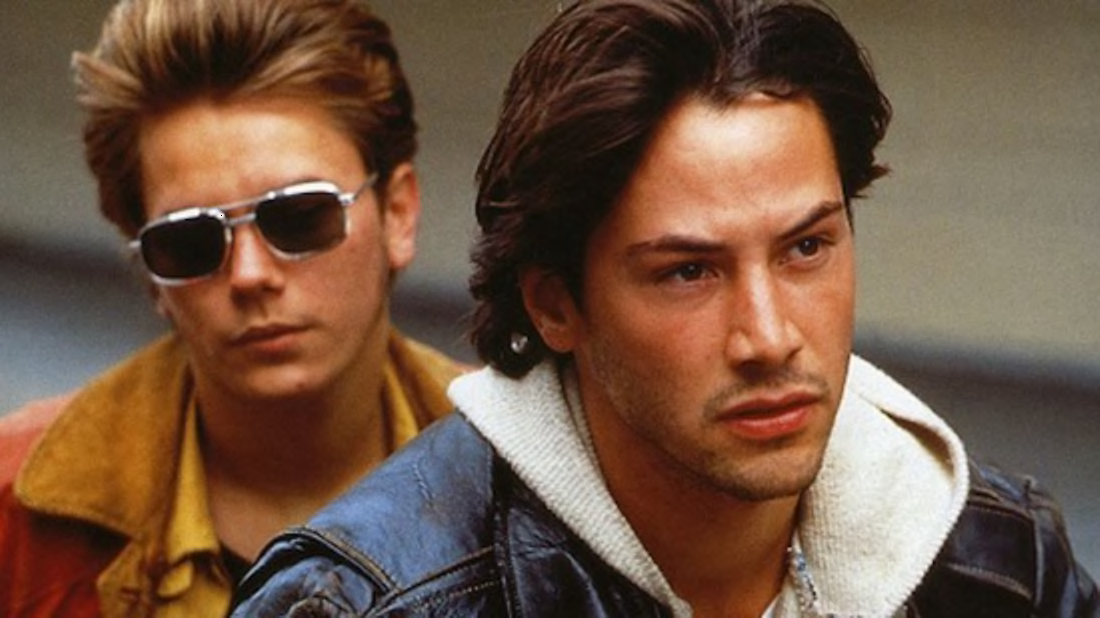
My Own Private Idaho (USA: Gus van Sant, 1991) Dialogic Cinephilia (Ongoing Archive)


Nemes, László. "Sunset." Film Comment Podcast (March 13, 2019) ["Academy Award-winning director László Nemes sat down with FC Editor-in-Chief Nicolas Rapold on Saturday, February 9 to discuss Nemes’s Sunset, which opened Film Comment Selects earlier that week. The film evokes a vision of a world order on the verge of violent collapse, telling the story of an orphaned young woman, Irisz, searching for her mysterious brother in the nightmarish labyrinth of pre-World War I Budapest."]


Schrader, Paul. "First Reformed." Film Comment Podcast (June 21, 2018) ["“Although religious symbols and themes have often found their way into Schrader’s film work, First Reformed marks the first time he has applied elements of transcendental style—as extolled in his seminal book Transcendental Style in Film—to his own filmmaking. Early in his career, Schrader was occupied with exploring the pathological lure of sex and violence in narrative cinema,” Aliza Ma wrote in her review of Paul Schrader’s First Reformed for our May/June issue. As part of our Film Comment Free Talks series, Schrader joined Editor-in-Chief Nicolas Rapold for a conversation about the twists and turns and leaps in the writer-director’s career—from starting out as a critic and UCLA film student in the ’60s, to writing screenplays for Taxi Driver and Last Temptation of Christ, to directing films from Blue Collar through First Reformed."]

Michael Benton -- Originally saw this when it was released in the theaters & the psychosexual worms/caves, mixed with eroticism/violence, was a bit too much for my young mind to handle. First 1/3 is corny fun, 2nd 1/3 picks up steam (provides good background/cool imagery), the last slips into bonkers surrealism. The worm, is one of the all time worst realizations of a monster, but who cares when you have Amanda Donohoe doing a marvelous job of vamping it up as the priestess/villain. The scenes of fishnet stockinged, stewardesses slithering in Lord James D'Ampton's feverish dream and Lady Sylvia Marsh's seduction of an unfortunate hitchhiker are bawdy fun. Ken Russell directed (and if you know him, you know what that means) and early acting roles by Peter Capaldi and Hugh Grant. Based on a Bram Stoker (Dracula) novel. On MUBI for a day or two more....


Sunday, July 14, 2019

Slurring Bee #25

Also need 15 absurd/quirky warm up questions

1st Round: warm-up question followed by a word
2nd Round: 3 words in succession for each contestant
3rd Round: Round-robin until we have a winner (keep track of last three - the order they come in)
3 mispelled words and a contestant is out

Pronouncer Information 1. Read carefully the Judges, Recorders, Spellers and Audiences information that is included in the Scripps pronouncers’ guide. 2. Familiarize yourself with all words on the confidential word list. Pronunciation is important. A meeting with the judges to insure pronunciation of words and procedures will be scheduled prior to the Bee beginning. 3. Speak clearly for contestants, judges and audience alike. Grant all requests to repeat a word until the judges agree that the word has been made reasonably clear to the speller. You may request the speller to speak more clearly or louder. 4. “Pace” yourself. You need time to focus attention on the pronunciation of the new word and the judges need a few moments between each contestant to do their tasks.

Speller’s Information 1. Each speller needs to focus on the Pronouncer, to aid his or her hearing and understanding of the context of the word. A speller may ask for the word to be repeated, for its use in a sentence, for a definition, for the part of speech, and for the language of origin. 2. Each speller should pronounce the word before and after spelling it. If the speller fails to pronounce the word after spelling it, the judge may ask if they are finished. If they say yes, the judge will remind the speller to remember to repeat the word the next time. (No speller will be eliminated for failing to pronounce a word.) 3. When a speller is at the podium spelling, the next speller should be standing at a marked location ready to proceed to the podium.

533) ineffable

534) indoctrination

535) philophile

536) parturition

537) lucid

538) phosphorescence

539) patience

540) amalgam

541) coalescence

542) foist

543)

Slurring Bee 12: #368

My Own Private Idaho (USA: Gus van Sant, 1991)


My Own Private Idaho (USA: Gus van Sant, 1991: 104 mins)

Atkinson, Michael. "Going Places: On the restless career of Gus Van Sant." Moving Image Source (September 17, 2011)

Boslaugh, Sarah. "My Own Private Idaho is Anything but a Conventional Narrative." Pop Matters (November 18, 2015)

Collins, K. Austin. "My Own Private Idaho Is a Queer Masterpiece." The Ringer (September 29, 2016)

Ebert, Roger. "My Own Private Idaho." Roger Ebert (October 18, 1991)

Koski, Genevieve, et al. "My Own Private Idaho / American Honey (Pt. 1)." The Next Picture Show #49 (November 1, 2016)  ["This week, we’ve all come to look for America, and we’re looking for it in a pair of road movies about underprivileged outsiders and the dreams that keep them hustling from place to place. Inspired by Andrea Arnold's sprawling new AMERICAN HONEY, we look back at Gus Van Sant's 1991 indie-punk-surrealist-fantasy-coming-of-age mishmash MY OWN PRIVATE IDAHO. In this half, we attempt to wrangle IDAHO's many moving parts, admire and mourn its central performances, and share some crazy (or not so crazy??) fan theories."]

---. "My Own Private Idaho / American Honey (Pt. 2)." The Next Picture Show #50 (November 3, 2016) ["We return to the road in our two-part exploration of America and self, jumping to the current day with Andrea Arnold's sprawling, music-packed AMERICAN HONEY, a film with some of the same concerns as MY OWN PRIVATE IDAHO, but a much different stylistic approach. In this half, we talk over how the two films handle matters of poverty, style, infatuation, and "the other America."]

McNeil, Jeremiah, et al. "The Unedited Commentary Track: My Own Private Idaho (Gus Van Sant; 1991)." Illusion Travels by Streetcar #94 (March 6, 2016)

Taubin, Amy. "My Private Idaho: Private Places." The Current (October 7, 2015)

Tobias, Scott. "My Own Private Idaho is a personal statement and a River Phoenix memorial." A.V. Club (March 21, 2013)


Queer American Dreams in My Own Private Idaho from Rhetoric and Media Studies on Vimeo.


GUS VAN SANT'S LOST BOYS - MY OWN PRIVATE IDAHO from Leigh Singer on Vimeo.


Saturday, July 13, 2019

Dialogic Cinephilia - July 14, 2019


4 Months, 3 Weeks, and 2 Days (Romania: Cristian Mungiu, 2007) Dialogic Cinephilia (Ongoing Archive)

Bjelić, Dušan. "4 Months, 3 Weeks and 2 Days at the moment of neoliberal catastrophe." Jump Cut #58 (Spring 2018)

Castillo, Monica. "The Real Terror in Midsommar is a Bad Romance." Cherry Picks (July 5, 2019)


Chester, John and Molly Chester. "The Biggest Little Farm." Radio West (May 23, 2019) ["It's the vision of filmmaker John Chester and his wife Molly, who wanted to create a place where they could raise crops and animals following the way a natural ecosystem works. They found what seemed at first like Eden -- 200 acres of land in the foothills of Ventura, California. They join us to talk about the daunting work and what they learned from the wisdom of nature. Their film is called The Biggest Little Farm."]

Glick, Joshua. "Teaching The Crowd." Cine-Files #13 (Fall 2017)

Heller-Nicholas, Alexandra and John Edmond. "Introduction: The Analogues of Peter Strickland." Senses of Cinema #91 (July 2019)


Thursday, July 11, 2019

Dialogic Cinephilia - July 11, 2019

Michael Benton -- I abhor what we, as a country, are doing right now along our borders. I'm curious, I haven't heard one particular point brought up about these migrant prisons. This is what happens when you privatize basic human services (healthcare, education, basic necessities like water/heat, and, yes, prisons, etc...), the human equation (or any type of being) is lost in a system whose main priority (and this is the main priority of a corporation) is to milk as much profit as possible with no concern what is done to those working for them, those being serviced by them and the communities/environments in which the corporate entity is located.

There is also a basic political reality that should be remembered by even those who turn a blind eye to this issue or actively support these private migrant prisons. What you allow your government to do to the least of us (as in the ability to resist/challenge), will one day be done to you and yours (including you MAGA supporters). We see the weapons of 'wars on terror' on our streets being used against our citizens, we will see the expansion of this prison system based upon Guantanamo and migrant prisons if we stay quiet. Prisons in which people are not given the basic necessities and are dehumanized. Prisons where our duly elected representatives are not allowed access and are openly threatened when they investigate the conditions. Prisons in which the human factor is erased.

One last thing, I'll keep this simple, for the Christians that support Trump - what would your savior Jesus do in response to these migrant prisons. Where would he stand?


Barragán, Nanette. "'Unconscious and Unacceptable': : Rep. Barragán Decries Detention of Migrant Children in Prison Cells." Democracy Now (July 11, 2019) ["Yazmin Juárez, the Guatemalan mother whose child died after being held in an ICE detention center from a lung infection, testified before members of a congressional panel Wednesday. She shared the story of her daughter, 19-month-old Mariee, who died last year shortly after being released from the South Texas Family Detention Center in Dilley, Texas. Juárez filed a $60 million lawsuit against the Department of Homeland Security, Immigration and Customs Enforcement, Customs and Border Patrol and the Department of Health and Human Services. The House subcommittee convened to examine the treatment of refugees in U.S. detention, just over a week after lawmakers flocked to the U.S.-Mexico border to observe the horrible treatment of refugee children and families in immigration jails amid reports of continued unsafe and unsanitary conditions for asylum seekers. Meanwhile, NBC reports that migrant children jailed in Yuma, Arizona, have been subjected to mistreatment and sexual violence. We speak with Democratic Rep. Nanette Barragán from California, who recently visited detention centers in Texas. She’s the second vice-chair of the Congressional Hispanic Caucus and serves on the House Committee on Homeland Security."]


Wednesday, July 10, 2019

Dialogic Cinephilia - July 10, 2019


Bollington, Lucy. "Martel's Aquatic Poetics." The Cine-files #14 (Spring 2019)

Dash, Anil, et al. "Tech's Moral Void." Ideas (March 14, 2019) ["Lawyers and doctors have a code of ethics. Teachers have them. Even journalists have them. So why not the tech sector, the people who create and design our very modes of communication? Coders and designers make products that allow to us communicate with each other, across cities and nations and borders. How we speak and how many we reach determines what we buy and sell, affects our health and economy, and — as we've come to realize — influences our democracy. Contributor Tina Pittaway explores whether the time has come for tech to reckon with its moral void."]

Deveraux, Ryan. "Border Patrol Agents Tried to Delete Racist and Obscene Facebook Posts. We Archived Them." The Intercept (July 5, 2019)

Ellinger, Kat and Samm Deighan. "Dirty Girls: The Films of John Hayes." Daughters of Darkness #29 (March 24, 2019) ["Kat and Samm return to explore the overlooked work of director John Hayes, in typically outrageous fashion. While many know Hayes’ horror efforts Dream No Evil(1971) and Grave of the Vampire (1972), his extensive work in exploitation, sexploitation, and pornographic film still remains widely unknown to all but a very few cult aficionados. This episode focuses on three different films from three different genres, Help Female Wanted (1968), Mama’s Dirty Girls (1974), and Baby Rosemary(1976), as Kat and Samm attempt to unravel the director’s career."]

Estes, Nick. "Our History of the Future." Dig (June 29, 2019) ["Standing Rock Versus the Dakota Access Pipeline, and the Long Tradition of Indigenous Resistance." Michael Benton -- This is one of the best discussions I have heard about indigenous cultures, settler colonialism, racism/apartheid in America and intergenerational indigenous resistance movements. I cannot laud this enough - totally revolutionized and extended my thinking/understanding of contemporary movements like Standing Rock and their place in the long history of intergenerational indigenous struggles against genocidal policies. I highly recommend this episode and check out The Dig podcast (they also just did an impressive 5 part episode on contemporary European politics)]


Fraga, Victor. "Out Stealing Horses (Ut Og Stjæle Hester)." Dirty Movies (February 9, 2019)

Frank, Casey. "How Investigative Reporting & Survivor Testimony Toppled Billionaire Serial Abuser Jeffrey Epstein." Democracy Now (July 9, 2019) [ Michael Benton -- I complain a lot about the failures of corporate media. I would like to step back and give a nod of appreciation to the Miami Herald for their impressive and difficult investigative reporting - good episode looking into their work on this issue when powerful people just wanted it to go away. This is what we want to see from the fourth estate, watchdog journalism that isn't afraid to defend the powerless. --  "Billionaire hedge fund manager Jeffrey Epstein was charged in a Manhattan federal court Monday with sex trafficking and conspiracy. He is accused of sexually assaulting and trafficking dozens of underage girls between 2002 and 2005 at his homes in Manhattan and Palm Beach, Florida. Epstein, who has counted Presidents Donald Trump and Bill Clinton among his friends, pleaded not guilty and is being held in jail until his bond hearing next week. Several accusers were present in federal court in Manhattan on Monday. In November 2018, the Miami Herald published a series of articles by investigative reporter Julie Brown exposing Epstein’s crimes and the high-powered people, such as President Trump’s Labor Secretary Alexander Acosta, who protected him. Epstein’s arrest after more than a decade of accusations is in part being hailed as a feat of local investigative journalism. We speak with Casey Frank, the senior editor for investigations at the Miami Herald."]

Thompson, A.C. "Border Agents Caught Posting Racist, Sexist Messages About Migrants & AOC in Secret Facebook Group." Democracy Now (July 3, 2019) ["Customs and Border Protection has opened an investigation into the posting of racist and xenophobic messages by current and former Border Patrol agents on a private Facebook group. More than 9,500 people are part of the group, which was exposed by ProPublica on Monday. The Facebook group is filled with racist, homophobic, anti-immigrant and misogynistic content about migrants and asylum seekers, as well as public officials like Congressmember Alexandria Ocasio-Cortez, who is depicted in a photoshopped image being sexually assaulted by President Trump. In another thread, members of the group made fun of a video of a man trying to carry a child through a rapid river in a plastic bag. Someone commented, “At least it’s already in a trash bag.” We speak with ProPublica reporter A.C. Thompson, who broke the story."]


Friday, July 5, 2019

Dialogic Cinephilia - July 5, 2019

Benton, Michael Dean. Around the World in 15 Films (1) Dialogic Cinephilia (Future film course plan)

Bremmer, Ian. "On the Failure of Globalism." Democracy Works (March 14, 2019) ["This episode is a discussion with Ian Bremmer, author of Us vs. Them: The Failure of Globalism. Ian is a political scientist and president of the Eurasia Group, a political risk advisory and consulting firm. In this episode, Ian talks with Future Hindsight host Mila Atmos about populism, authoritarianism, and some of the other trends we’ve heard about over the past few weeks. Think of it as a 30,000-foot view of what we’ve covered in individual countries like Hungary and Brazil."]


Sweet Crude Trailer from Sandy Cioffi on Vimeo.

Cioffi, Sandy and Riki Ott. "Sandy Cioffi on Nigerian Oil, Riki Ott Looking Back at Exxon Valdez Spill." Counterspin (June 14, 2019) ["The BP oil spill in the Gulf of Mexico happened from the spring through the fall of 2010. The blowout of the Deepwater Horizon rig killed 11 people, and countless animals, on its way to becoming the worst marine oil spill in history. It seemed to take that protracted disaster on the US coast to generate a New York Times front-page story on June 16, 2010, about oil industry ravages in Nigeria’s delta region, which, the article noted, “has endured the equivalent of the Exxon Valdez spill every year for 50 years, by some estimates.” CounterSpin had a powerful conversation that week with filmmaker and video artist Sandy Cioffi, whose film, Sweet Crude, looks at the oil industry in Nigeria, and the way it is covered in the US. ... Oil spills are often discussed in media in terms of the Exxon Valdez. But if the use of the Valdez as a touchstone might give the impression that “lessons were learned” from that 1989 disaster…. Well, that mainly applies to the lesson that not disaster, but activism—dogged, ongoing, out-of-the-spotlight, misunderstood and maligned activism—is what changes things. That’s part of what we learned when we spoke with activist and marine biologist Riki Ott in 2009—then the 20-year anniversary of that “oil spill to end all oil spills”—now many spills ago."]

Cole, David. "Political Activism and Constitutional Law." Conversations with History (February 22, 2018) ["Conversations host Harry Kreisler welcomes David Cole, National Legal Director of the American Civil Liberties Union (ACLU) for a discussion of two of his ten books-- his first book, No Equal Justice and his most recent book Engines of Liberty. The conversation begins with his reflections on his formative years and the skill set and temperament appropriate for a constitutional lawyer. It then turns to the work of the ACLU and his role as national legal director. On the issue of criminal justice, Cole emphasizes how the structure of the criminal justice system reinforces inequality and sacrifices justice. On the issue of the evolution of the meaning of the Bill of Rights, Cole analyzes the role of political activism in shaping constitutional law with specific reference to the establishment of gun rights and gay marriage rights. The conversation concludes with a discussion of the implications of the changing political landscape-- with its emphasis on libertarian ideology, nationalism, and the importance of social media-- for affecting constitutional law. "]


Cook, Adam. "Parasite (Bong Joon Ho, South Korea)." Cinema Scope #79 (2019)


Grisebach, Valeska and Syuleyman Alilov Letifov. "Western." The Close-Up (February 15, 2018)

Lenz, Lyz. "Tucker Was Tucker All Along." On the Media (March 13, 2019) ["To suggest that Tucker Carlson has a tendency to hint at deeply discriminatory tropes would be cliché — but also dead-on. Just this week, thanks to newly unearthed audio released by Media Matters, the Fox News darling ditches his signature dog whistle in exchange for unmistakable and unapologetic hate speech. Who is Tucker Carlson, really? In this week's pod extra, Bob delves into the origins of the now-notorious commentator with Lyz Lenz, a writer for Columbia Journalism Review who profiled Carlson in September."]

Michael Benton - Holiday was promoted as a tour-de-force exploration of feminine oppression, when, in actuality its scope is much more enveloping, it is a brutal, though at times pretty (not people, scenery), naturalistic examination of a hyper-capitalist mindset (think of the Italian film Gomorrah) and its necessary by-product dehumanization and humiliation of all involved, especially in relation to whatever fuck is on a rung above you. (On MUBI for about four more days)


Michael Benton -- Excellent episode analyzing the toxic effect of one of the worst organizations in America and the need to fight for stricter gun control laws.


Thursday, July 4, 2019

4th of July Reflection (2019)


I was asked what I perceive as major problems in our society and I would like to share my response:

I believe there are some key problems:

1) A poor education system that fails to teach people how to think critically and doesn't encourage people to think for themselves or creatively -- testing is the worst mode of assessing knowledge and teaching lessons. This is not the fault of individual "teachers," instead it is a broader problem of an educational "system" (public and charter) set up to fail the general population that can't afford an elite education.

2) Our media system is dominated by massive corporations that do not care about informing citizens or supporting creativity. 85% of the world's media is owned by five corporations. These corporations spread disinformation and censor vital information we need to know in order to even begin to address basic issues vital to our communities/society/nation/world. Think about how terrible most films, music, etc are...... apply the same process to the information you get from these corporations.

3) Teaching yourself to think critically and learning how to access a more complete understanding of world politics and social issues is difficult without help. It took me ten years before I was able to make sense of any issue and I made it my job as a professor. Think how hard that is for people who have to work other jobs, have families, etc...... It doesn't have to be this hard, it could be much easier.... I know because I teach students all the time how to access information about the world. Why are these basic skills not taught from the earliest age.

4) Our government is dominated by corporate money and generally corrupt. Although there are good people working in the government and we need to support their efforts. Always remember it is not a matter of replacing individuals, it is the system that needs to be changed. We currently have the worst President in my lifetime, but this problem will not change if we just replace him with the least bad person.

5) Our society is more and more set up to keep people atomized (seperated from others) rather than encouraging collaboration/empathy with others (where the people find their power).

Never trust anyone that accuses other people of being biased -- this is sure sign of a manipulative communicator because anyone with basic knowledge of communication and history knows that it is impossible to communicate anything without bias (bias is simply having a perspective). Reject manipulative/simplistic TINA - There is no alternative - statements/beliefs.

I'm biased--I have a perspective. I am always willing to explain it because that is the most honest way of communicating. Also be suspicious of those that will not fully explain their statements and those that preach hate for groups of peoples.

This 4th of July imagine what we can do to build a better society/world,

Michael Dean Benton

PS: Probably one of the biggest dangers in our society right now is the broad-based/blanket dismissal of groups/classifications of peoples ... try to recognize the individuals that are making a positive difference and make clear when criticizing serious social/political issues that you are talking about the problems of systems. For instance, my critique of education or law enforcement or government or etc.... is about the systemic structure and I do not say all teachers/administrators or police/judges/lawyers or politicians/bureaucrats/democrats/republicans/independents are bad/corrupt/incompetent. That would be lazy thinking on my part and it alienates potential allies in fixing the problems of those systems. Even worse, when we fail to see individuals and classify groups of people as bad, it is a first step in failing to recognizing/respecting the humanity (or whatever) of those individuals and can lead to an acceptance of the worst actions (say... murder or incarceration) as acceptable.

Wednesday, July 3, 2019

Dialogic Cinephilia - July 3, 2018


Anderson, Jake. "Midsommar." Letterboxd (July 3, 2019)

Bazelon, Lara. "Kamala Harris Says She Was a Progressive Prosecutor. Her Record Tells Another Story." Democracy Now (July 2, 2019) ["As Senator Kamala Harris rises in the early presidential polls, she is facing increasing scrutiny over her record as a prosecutor in California. In 2004, Harris became district attorney of San Francisco. She held the post until 2011, when she became the attorney general of California. We speak with Lara Bazelon, a professor at the University of San Francisco School of Law. In January, she wrote a piece in The New York Times titled “Kamala Harris Was Not a 'Progressive Prosecutor.'” In it, Bazelon writes, “Time after time, when progressives urged her to embrace criminal justice reforms as a district attorney and then the state’s attorney general, Ms. Harris opposed them or stayed silent. Most troubling, Ms. Harris fought tooth and nail to uphold wrongful convictions that had been secured through official misconduct that included evidence tampering, false testimony and the suppression of crucial information by prosecutors.”"]

Christina, Greta. "Wealthy, Handsome, Strong, Packing Endless Hard-Ons: The Impossible Ideals Men Are Expected to Meet." AlterNet (June 20, 2011: Reposted on Role Reboot )


Fraga, Victor. "By the Grace of God (Grâce à Dieu)." Dirty Movies (February 8, 2019)


Kilkenny, Katie. "Claire Denis on How Stephen Hawking Inspired High Life." The Hollywood Reporter (April 16, 2019)

Koresky, Michael. "Interview: Ari Aster." Film Comment (May 1, 2018)

Reich, Robert, et al. "Fighting for a Green New Deal." Best of the Left #1242 (January 18, 2019) ["Today we take a look at the groundwork for a Green New Deal as it's being laid and the fight that is heating up around the policies, not just between political parties but between the separate wings (and generations) of the Democratic Party."]

Sports Dialogic Cinephilia (Ongoing Archive)

Walters, James. "Moments Apart." Movie #8 (2019)


Tuesday, July 2, 2019

Sports (Ongoing Archive)

Abumrad, Jad, et al. "Twitch and Shout."On the Media (February 22, 2019) ["Twitch.tv is a video streaming platform where millions of people broadcast their lives and video game action in real-time. It's like unedited, real, reality TV. This week, On the Media digs into why so many people want to share so much on Twitch, and what it tells us about the future of entertainment. First, a look at a couple of the biggest streamers of the platform, Ninja and Dr. Disrespect, who command devoted audiences and giant paychecks. Then, Bob dives into the inaugural season of the Overwatch League, the most expensive and highly produced pro gaming venture to date. Finally, Brooke speaks with Radiolab's Jad Abumrad about the life of a homeless streamer who's life was saved by Twitch."]

Berkow, Ira. "Stealing Home: A Tribute to Jackie Robinson." Ideas (April 15, 2019) ["The National Baseball Hall of Fame quotes trailblazer Jackie Robinson: "a life is not important except in the impact it has on other lives." Robinson's life had a huge impact, especially when he broke down the colour barrier in Major League Baseball and American society. His rookie season still stands as one of the most politically profound events in the history of organized sport."]

Brennan, Jason, Braden Te Hiwi and Justin Louis. "This Game We Love On Stolen Land." Changing on the Fly #1 (October 3, 2018) ["On this episode, we lace up the skates and hit the ice to talk about colonialism in hockey, and the Indigenous hockey experience. What does it mean to call hockey “Canada’s game” while Canada is a country built on stolen Native land? We’re gonna take a deep dive into hockey’s role in Canada’s residential schools, the presence of Native mascots in sports, and the changing role of Indigenous hockey players in the NHL today."]

Carpentier, Megan. "Steubenville and the misplaced sympathy for Jane Doe's rapists: Rape is unique in US society as a crime where the blighted future of the perpetrators counts for more than the victim's." Comment is Free (March 18, 2013)

Chomsky, Noam. "On the Basic Role of (Non-Participatory) Sports." Dialogic (Excerpts of Chomsky quote published in Robert F. Barsky's The Chomsky Effect: November 5, 2009)

Demby, Gene and Maria Paz Guttierez. "Why Shouldn't We Pay Student Athletes." Code Switching (March 23, 2018)

Christina, Greta. "Wealthy, Handsome, Strong, Packing Endless Hard-Ons: The Impossible Ideals Men Are Expected to Meet." AlterNet (June 20, 2011: Reposted on Role Reboot )

Devine, John William, Vanessa Heggie and David Papineau. "Doping." The Forum for Philosophy (February 18, 2019) ["World-class athletes push themselves beyond normal limits and transform their bodies through training and diet. But in the wake of various scandals across the world of sport, we know pharmaceuticals can also play a role. Doping is considered a form of cheating, but should it be? And with the arrival of ‘smart drugs’, this is no longer only a worry for sports. Can we ensure a level playing field, in sports and beyond, or will the advances in drug development always outpace regulation? We explore the philosophy behind all things doping, competing, and cheating."]

Drake, Hannah. "Louisville Airport renamed After Muhammad Ali, and Some People Are Big Mad." LEO Weekly (January 23, 2019)

The Edge of Sports (Website for sports reporter and historian Dave Zirin's weekly columns and podcasts)

Elias, Robert. "National Pastimes: Mindless Militarism in American Sports." No Citations Needed #59 (December 5, 2018) ["F-22 flyovers, 160-foot flags draped across the playing field, full color guards, camouflage uniforms, The Star-Spangled Banner, God Bless America, Support The Troops Nights, special perks for vets. What is the origin of the runaway military worship so ingrained in our sports? How did our professional baseball and football leagues become so infused to our military state and what can fans of these sports do to deconstruct and pushback against the forces of jingoism and military fetishizing?"]

Engle, John. "August and Everything After: A Half-Century of Surfing in Cinema." Bright Lights Film Journal #80 (May 2013)

Gladwell, Malcolm. "The Big Man Can't Shoot." Revisionist History 1.3 (ND) ["“The Big Man Can’t Shoot” is a meditation on the puzzle of why smart people do dumb things—why excellence is such a difficult and elusive goal, even for the best-intentioned."]

Gwynne, Kristen, Monica Johnson Hostler, and X. "Hacker Group Anonymous Leaks Chilling Video in Case of Alleged Steubenville Rape, Cover-Up." Democracy Now (January 7, 2013)

Johnson, Ian. "The New Olympic Arms Race." The New York Review of Books Blog (August 8, 2012)

Khan, Abe. "Is Colin Kaepernick a Good Democrat?" Democracy Works (March 14, 2018) ["No matter how much of a sports fan you are, you probably remember seeing Colin Kaepernick kneeling during National Anthem. President Trump took the debate to a whole new level when he said that anyone who does not respect the National Anthem and the flag should be fired. Kaepernick and those who followed him are the most recent example of athletes using their sports as a means to protest, but history is filled with others who have come before them."]

Lutz, Catherine. "Troop Veneration and American Empire." The Dig (January 3, 2018) ["The protest movement against the onset of the Iraq War was countered by a call to “support our troops” from militarists on the Right. But venerating American soldiers is not about supporting actual American soldiers; it's a rhetorical device to preclude questioning or criticism of the wars they are sent to fight. In a face-to-face interview at Brown University’s Watson Institute, anthropologist Catherine Lutz discusses John Kelly’s recent diatribe, Khizr Khan, Trump’s attack on protesting NFL players, and the roots of it all in the Nixon administration’s response to GI rebellion against the Vietnam War. "]


Ribakoff, Sam. "Whose Utopia Gets to Be Built?: An Interview with Eric Nusbaum." Los Angeles Review of Books (February 6, 2020) ["The Story of Chavez Ravine, the hilltop neighborhood that was destroyed first with a promise of public housing projects, and then sold to build Dodger Stadium, is a well-known local civic shame. In his first book, Stealing Home: Los Angeles, the Dodgers, and the Lives Caught in Between, Eric Nusbaum fills in the details of the story by closely tracing the stories of the characters involved; from the Aréchiga family, the last family to be evicted from their homes in Chavez Ravine, who only wanted to live in peace in their slice of utopia, to Frank Wilkinson, a Westside L.A. rich kid turned fervent public housing activist and politician who fought to build a public housing utopia in place of the communities of Chavez Ravine, to Walter O’Malley, the visionary New York owner of the Brooklyn Dodgers, who dreamed of building the perfect stadium of the future for his beloved game of baseball. Throughout the book, Nusbaum contextualizes the characters’ stories by illuminating the historical forces that put the tragedy into motion; from rising racist backlash against immigrants, to the Red Scare’s fight against leftists, to Los Angeles’s civic hysteria for the prestige of big sports games, and, of course, the history of baseball and how the Brooklyn Dodgers came to be the Los Angeles Dodgers. This chain of events still reverberates through the families involved."]

Smith, Tommie. "From Sharecropper to Olympic Protester." Democracy Works #7 (April 24, 2018) ["As you’ll hear, Tommie didn’t grow up in a political family and didn’t see himself as an activist when he enrolled at San Jose State University. That changed when he met Dr. Harry Edwards and became involved with Olympic Project for Human Rights, where he found his voice and used it to speak out against racial segregation in sports and elsewhere.Tommie Smith is a true living legend. He won a gold medal in the men’s 200 meter event at the 1968 Olympics, setting a world record in the process. When he took the medal stand in Mexico City that day, he made history again by raising a black-gloved fist during the National Anthem. When Tommie and teammate John Carlos raised their fists on the podium in Mexico City, many interpreted the gesture as a symbol of the Black Power movement. However, as Tommie says, the action was not necessarily about one cause or movement. Rather, it was a symbol of a broader struggle for power and equality."]
Walker, Shaun. "Russia to monitor 'all communications' at Winter Olympics in Sochi." The Guardian (October 6, 2013)

West, Betsy. "Makers: Women Who Make America": New Film Chronicles Past 50 Years of Feminist Movement." Democracy Now (February 26, 2013)

Zirin, Dave. "Brazil’s World Cup Will Kick the Environment in the Teeth." The Nation (April 22, 2014)

---. "Jason Collins: The Substance of Change." The Nation (April 30, 2013)

---. "LeBron James and the Quote Heard Round the World." The Nation (July 13, 2011)

---. Not Just a Game: Power, Politics and American Sports. Media Education Foundation (2010: available online 62 mins)

---. "The UConn Huskies Win ‘NCAA Hunger Games Bingo’." The Nation (April 8, 2014)

Dialogic Cinephilia - July 2, 2019

Brennan, Jason, Braden Te Hiwi and Justin Louis. "This Game We Love On Stolen Land." Changing on the Fly #1 (October 3, 2018) ["On this episode, we lace up the skates and hit the ice to talk about colonialism in hockey, and the Indigenous hockey experience. What does it mean to call hockey “Canada’s game” while Canada is a country built on stolen Native land? We’re gonna take a deep dive into hockey’s role in Canada’s residential schools, the presence of Native mascots in sports, and the changing role of Indigenous hockey players in the NHL today."]


Caldwell, Serenity and Arik Devens. "Alphaville." Cinema Gadfly 1.11 (ND)

Chomsky, Noam, et al. "Israeli right-wing politics has lead to some strange, fascist bedfellows." Best of the Left #1254 (March 5, 2019) ["Today we take a look at how the illiberalism of the Israeli government has alienated the vast majority of democratic nations and individuals who support human rights, leaving the country with some of the most far-right, fascist, white-supremacist, anti-Semitic people in the world as their only remaining allies."]

Cohen, Adam. "Clarence Thomas Said What?" Amicus (June 8, 2019) ["When Justice Clarence Thomas wrote a 20-page concurrence to the Indiana abortion law case last week, Adam Cohen’s phone started blowing up. In making an argument linking abortion rights to eugenics, Thomas repeatedly cited Cohen’s book, Imbeciles: The Supreme Court, American Eugenics, and the Sterilization of Carrie Buck. Cohen joins Dahlia Lithwick to explore the history of eugenics in the U.S. and to examine Thomas’ motives and logic for bringing the argument into the abortion debate."]


Devins, Arik and Maja Henderson. "Inside Out." Cinema Gadfly #10 (ND)

Dunbar-Ortiz, Roxanne, et al. "Taking the first steps of American imperialism (Native Peoples Series Part 3)." Best of the Left #1252 (February 26, 2019) ["Today we take a look at the process of systematic, government-sponsored genocide against the native peoples of North America that kicked off the wealth-accumulating, territory-expanding American empire we know and love today."]

Edwards, David. "The Shaving Kit - Manufacturing The Julian Assange Witch-Hunt." Media Lens (June 20, 2019)

Greenhouse, Linda and Reva B. Siegel, eds. Before Roe vs. Wade: Voices that Shaped the Abortion Debate Before the Supreme Court's Ruling. Yale Law School/Creative Commons, 2012.

Hastie, Amelie. "The Vulnerable Spectator–An Act of Will, a Testimony of Love: Alfonso Cuarón’s Roma." Film Quarterly 72.4 (Summer 2019)

Marcantonio, Carla. "Roma: Silence, Language, and the Ambiguous Power of Affect." Film Quarterly 72.4 (Summer 2019)

Rich, Nathaniel. "Losing Earth: The Decade We Almost Stopped Climate Change." The New York Times Magazine (August 1, 2018) ["This narrative by Nathaniel Rich is a work of history, addressing the 10-year period from 1979 to 1989: the decisive decade when humankind first came to a broad understanding of the causes and dangers of climate change. Complementing the text is a series of aerial photographs and videos, all shot over the past year by George Steinmetz. With support from the Pulitzer Center, this two-part article is based on 18 months of reporting and well over a hundred interviews. It tracks the efforts of a small group of American scientists, activists and politicians to raise the alarm and stave off catastrophe. It will come as a revelation to many readers — an agonizing revelation — to understand how thoroughly they grasped the problem and how close they came to solving it."]


Friday, June 28, 2019

Cultural Capital (Key Concept)

Bourdieu, Pierre. "Forms of Capital." Handbook of Theory of Research for the Sociology of Education ed. J.F. RIchardson. Greenwood Press, 1986: 241-258.

Cole, Nicki Lisa. "What Is Cultural Capital? Do I Have It?" ThoughtCo. (April 8, 2018)

"Cultural Capital: Pierre Bourdieu." Social Theory Re-wired (2016)

Dean, Paul. "The Wire: Cultural Capital of the Streets." Sociological Cinema (July 16, 2015)


Dialogic Cinephilia - June 28, 2019

Camenzind, Franz, et al. "Guardians vs. Gardeners: Relocating wolves to help balance ecology." Ideas (March 12, 2019) ["How much should humans try to "fix" nature? That question gets at the heart of our relationship with the entire natural world. Contributor Brad Badelt travels to isolated Isle Royale National Park in Lake Superior, where a controversial decision has been made to relocate wolves from the mainland to help sustain the island's dwindling pack. The world's leading wolf researchers and environmental thinkers debate that decision — and what our idea of wilderness means."]

"Candidate Spotlight: Warren and Harris." Best of the Left #1251 (February 22, 2019)

Fenwick, James, I.Q. Hunter and Elisa Pezzota. "Stanley Kubrick: A Retrospective. Introduction." Cinergie (December 4, 2017)


Hoberman, J. "Paradise Regained." The Current (September 4, 2007)

Long, Clara. "Trump Admin Moves 100 Migrant Kids Back to 'Child Jail' Despite Concern over Inhumane Conditions." Democracy Now (June 26, 2019) ["The Department of Homeland Security has moved 100 migrant children back to a Border Patrol facility in Clint, Texas, where infants and toddlers have been locked up without adequate food, water, sanitation or medical care, with older children having to care for the younger ones. Around 300 kids were removed from the facility Monday following widespread outrage over the reports, but Customs and Border Protection said some of the children are being sent back, claiming that the facility is no longer overcrowded. Lawyers who recently visited the facility described a scene of chaos and sickness, with children unable to shower or change into clean clothes for weeks on end. We speak with Clara Long, senior researcher at Human Rights Watch. She was part of the monitoring team that visited Border Patrol facilities last week, including Clint."]


Mora, Sergio de la. "Roma: Repatriation vs. Exploitation." Film Quarterly 72.4 (Summer 2019)


Stiepleman, Daniel. "The Incrementalist RBG." Amicus (December 22, 2018) ["A conversation with screenwriter Daniel Stiepleman on the biopic On the Basis of Sex, about his aunt, Ruth Bader Ginsburg."]


Vacche, Angela Dalle. "American Neorealism? Sean Baker’s The Florida Project." Cinergie #13 (2018)

William J. Barber II: Protestant Minister/Political Science/Public Policy Dialogic Cinephilia (Ongoing Archive)


Wednesday, June 26, 2019

William J. Barber II: Protestant Minister/Poor People's Campaign/Political Science/Public Policy

Barber, William J, II. "America's Moral Malady." The Atlantic (February 2018)
["The nation’s problem isn’t that we don’t have enough money. It’s that we don’t have the moral capacity to face what ails society."]

---. "A Moral Challenge to Economists."Institute for Economic Thinking (January 1, 2017)

---. "'Every Crucifixion Needs a Witness.'" Boston Review (May 28, 2019) ["William J. Barber II on the the successes of civil disobedience, the failures of electoral campaigns, and why the South holds the key to transformation in this country. "]

---. "Forward Together, Not One Step Back.'" Berkeley Talks (April 4, 2019)

---. "Grassroots Leader Rev. Dr. William Barber on the Fight for Voting, Civil Rights in North Carolina." Democracy Now (December 4, 2012)

---. "Mississippi Senator Cindy Hyde-Smith Jokes About Hangings, But Her Policies Will Strangle the Poor." Democracy Now (November 26, 2018) ["Mississippi voters will head to the polls Tuesday in the state’s hotly contested runoff senate election, as incumbent Republican Senator Cindy Hyde-Smith faces off against Democrat Mike Espy. In a state that Donald Trump won by 20 percentage points two years ago, Espy is attempting to become Mississippi’s first African-American senator since Reconstruction. His opponent, incumbent Sen. Hyde-Smith, attended and graduated from an all-white segregationist high school and recently posed for photos with a Confederate Army cap and other Confederate artifacts. Earlier this month, a viral video showed Hyde-Smith praising a campaign supporter, saying, “If he invited me to a public hanging, I’d be on the front row.” Mississippi was once considered the lynching capital of the United States. We speak with Rev. Dr. William Barber, co-chair of the Poor People’s Campaign and president and senior lecturer of Repairers of the Breach. He recently traveled to Mississippi to get out the vote."]

---. "On Creating a Fusion Movement to Defeat Trump and Move Forward Together." Building Bridges (November 1, 2017) ["Dr. William Barber is the founder and president of Repairers of the Breach, an organization that seeks to build a progressive agenda rooted in a moral framework to counter the ultra-conservative constructs that try to dominate the public square. Rev. Barber one of the most influential, progressive religious figures in the country. Tens of thousands of men and women rose up in Chicago and cities from coast to coast to demanding that everyone in America have the right to organize and join a union and the Rev. William Barber said “I’m proud to stand with them, because their fight is central to the battle against poverty, racism, and inequality”. Earlier this year Rev. Barber announced an effort by faith and moral leaders to carry forward Dr. Martin Luther King Jr.’s dream of a Poor People’s Campaign, working across twenty-five states to alleviate the triad forces of poverty, militarism, and racism that Dr. King knew were poisoning our country then and still threaten us today."]

---. "Racist Gerrymandering Created a GOP Stronghold in the South. We Must Fight Back." Democracy Now (June 10, 2019) ["Longtime civil rights leader Rev. Dr. William Barber joins us to respond to his conviction Thursday for trespassing during a 2017 protest against gerrymandering and attacks on healthcare at the North Carolina Legislature. Barber had refused to leave the General Assembly as ordered, after he organized a sit-in at the legislative building when Republican leaders refused to meet with him about concerns with voter ID requirements and redistricting plans that would weaken the power of the black vote. “We must start connecting systemic racism, most seen through systemic voter suppression and gerrymandering, poverty, the lack of healthcare, environmental devastation and the war economy,” says Barber, the former president of the North Carolina NAACP and a leader of the national Poor People’s Campaign: A National Call for Moral Revival. This Wednesday he will join faith leaders and religious groups in Washington, D.C., for a march to the White House to protest the Trump administration’s attacks on the nation’s most vulnerable communities, and next week he hosts the three-day Poor People’s Campaign Moral Action Congress in Washington, D.C., that will draw hundreds of people from across the country for a presidential forum, where both Republican and Democratic candidates will speak."]

---. "Tear Gassing Central American Migrants is Inhumane, Unconstitutional, Immoral." Democracy Now (November 26, 2018) ["U.S. border patrol officers fired tear gas into a crowd of desperate Central American asylum-seekers Sunday in Tijuana, Mexico as some tried to push their way through the heavily militarized border with the United States. Mothers and small children were left gagging and screaming as the tear gas spread. The migrants are from Honduras, Guatemala and El Salvador, and are fleeing widespread violence, poverty and mass unemployment. We speak with Rev. Dr. William Barber, co-chair of the Poor People’s Campaign and president and senior lecturer of Repairers of the Breach."]

---. "The Ugly History Behind 'Religious Freedom' Laws." The Progressive Pulse (April 8, 2015)

Barber, William, II, et al. "Amazing Aretha." Open Source (May 2, 2019) ["Aretha Franklin made you believe you were hearing both heaven and earth. Her voice was not of this world: it was “a gift of God,” people have said. She was the reason women want to sing, said Mary J. Blige, who covered Aretha hits. James Baldwin said the way Aretha sings is “the way I want to write.” Our guest Ed Pavlić calls her voice a Hubble telescope, taking us back to the origin of time and truth."]

Cobb, Jelani. "William Barber Takes on Poverty and Race in the Age of Trump." The New Yorker (May 7, 2018)

Curtis, Mary C. "'There Is Not Some Separation Between Jesus and Justice.' How Rev. William J. Barber II Uses His Faith to Fight for the Poor." Time (February 21, 2020)

Laughland, Oliver. "Inspired by Martin Luther King Jr, a new civil rights leader takes center stage." The Guardian (October 25, 2017)


Tuesday, June 25, 2019

Dialogic Cinephilia - June 2019


Benton, Michael Dean. Director: Pedro Almodovar/Mad Max: Fury Road/Themes: Environment Documentaries/Cannes 2019/Themes: 21st Century Horror/Themes: Mysterious Los Angeles Dialogic Cinephilia (Future film course plan)


Chen, Yun-Hua. "Phantoms from the Past: Gan Bi’s Long Day’s Journey into Night (2018)." Film International (June 19, 2019)

Devlin, Kate. "Love, Sex and Robots." Hidden Brain (March 11, 2019) ["This week on Hidden Brain, we reflect on the narrowing gap between humans and machines. What are the possibilities for deep, intimate relationships with artificial lovers? And does it help if those lovers are beautifully designed to look like human beings and have the faint glow of empathy and intelligence?"]

Hamrah, A.S. "There Will Be Fake Blood: The Chaotic Scenes Behind the Making of a Cult Classic." Bookforum (February/March 2019)

It Follows (USA: David Robert Mitchell, 2014) Dialogic Cinephilia (Ongoing Archive)

Kuersten, Erich. "Best of 2017: The Phoenix Scorches the Snake (Year of the Woman)." Acidemic (December 27, 2017)

"Podcasts/Videocasts." Dialogic Cinephilia (Ongoing Archive)

Sorrento, Matthew. "Violent Urban Transformation: Ali Vatansever on Saf." Film International (May 7, 2019)


Sunday, June 23, 2019

Dialogic Cinephilia - June 23, 2019

Aldred, Jonathan. ""Socialism for the Rich: The Evils of Bad Economics." Audio Long Read (June 14, 2019) ["The economic arguments adopted by Britain and the US in the 1980s led to vastly increased inequality – and gave the false impression that this outcome was not only inevitable, but good."]

Banai, Huss, et al. "John Bolton's War." Open Source (May 16, 2019) ["We’ve seen a lot of this movie before, have we not? The crackling threats to punish unproven charges: it was weapons of mass destruction the last time; now it’s some unverified damage to tanker traffic, maybe. Again, the case is being made for a war of choice, by a pick-up “coalition of the willing”—this time, it would be an alliance of Sunni Arabs with the US and Israel, against Iran. Out front beating the war drum is the man with the mustache, John Bolton, who’s always loved “regime change” for Iran, who still defends the Iraq War, and who now runs the national security desk for President Trump, dropping phrases like “unrelenting force” against Iran if Iran should threaten or damage us. Part of what’s familiar in the picture is that Congress is largely out of the loop and the sovereign people are not in on the argument. A lot of what you can hear on the news is circus stuff, like the President’s lawyer, the sometime Mayor of America, Rudolph Giuliani, chanting, “Regime change!”"]

Greenhouse, Linda. "The Impeachment Question." The New York Review of Books (June 27, 2019)

Luca, Raymond de. "Singing in the Rubble: A Musical Map of the Cold War in Paweł Pawlikowski’s Cold War." Bright Lights Film Journal (June 3, 2019)

"Pedro Almodóvar Golden Lion for Lifetime Achievement." La Biennale di Venezia (June 14, 2019)

Soldani, Maria Teresa. "Within the Ruins of New York City: No Wave as a Paradigm of American Independent Cinema." Cinergie (July 12, 2018)


Springer, Claudia. "Shadow Films: Picturing the Environmental Crisis." Jump Cut #58 (Spring 2018) ["For the powerful forces invested in preserving the status quo, even limited environmental protections that threaten traditional modes of corporate profit-making provoke fierce opposition. Corporate stakeholders wield political power through lobbying and donations, and, increasingly, they hold government positions. A 2016 study by the Center for American Progress Action Fund found that 34% of American Congress members denied climate change and had been paid over $73 million in contributions by oil, gas, and coal companies. Oklahoma Senator James Inhofe, who famously claimed that climate change is "the greatest hoax ever perpetrated on the American people," has reportedly accepted more than $2 million from the fossil fuel industry (Herzog). The fallout from political inaction means that people have lost their lives in the U.S., China, Nigeria, Ecuador, and Peru, among other countries, because of the oil, gas, and mining industries' toxic practices and attacks on opponents. The propaganda battles fought with images inflame a war with catastrophic consequences."]

Weisbord, Noah. "Introduction."  The Crime of Aggression: The Quest for Justice in an Age of Drones, Cyberattacks, Insurgents, and Autocrats. Princeton University Press, 2019: 1-7.


Wednesday, June 19, 2019

Dialogic Cinephilia - June 19, 2019

Benton, Michael. Theme: Crime in the Age of Austerity/Theme: Genre & Philosophy/Theme: Work/Theme: Realism. Letterboxd (Future Film Course Plan)

Claverie, Ezra. "From off-brand to franchise: Watchmen as advertisement." Jump Cut #58 (Spring 2018)

Greenberg, Jonathan. "Trump's Financial House of Cards." On the Media (May 10, 2019) ["As we all learned this week, President Trump "lost more money than nearly other individual American taxpayer” between 1985 and 1994. It was during that decade of losses that Trump published The Art of the Deal and became a fixture on the Forbes 400 list of wealthiest Americans. But if his business failures and his debts were so immense, how did he get on the list to begin with? Jonathan Greenberg, now an investigative journalist, was then the Forbesreporter whose unenviable task it was to evaluate Trump’s fabulous claims. Bob spoke with him this week about the origin myth upon which a 37-year-long con was built."]

Kloppenberg, James. "Things Fall Apart: The Origins and Future of American Democracy." Ideas (May 10, 2019) ["Does America’s early experiment with self-rule offer lessons for the U.S. today?"]

Kuersten, Erich. "Best of 2018 (Movies and TV)." Acidemic (December 20, 2018)

Rowley, Rick. "16 Shots: Chicago Police Killing of Laquan McDonald Exposed a System Built on Lies." Democracy Now (June 17, 2019) ["The documentary “16 Shots” examines the 2014 murder of African-American teenager Laquan McDonald in Chicago and the attempt by the city’s police department to cover up the events. McDonald, who was 17, was shot 16 times by former police officer Jason Van Dyke. Van Dyke was found guilty in 2018 of second-degree murder and sentenced to six years and nine months in prison for McDonald’s murder. He was also found guilty on 16 counts of aggravated battery—one count for each of the 16 bullets he fired at McDonald."]


Winkler, Irwin. "On Raging Bull." The Metrograph (May 29, 2019) ["They Shoot Horses, Don’t They?, the Rocky franchise, Raging Bull, Goodfellas, De-Lovely, The Wolf of Wall Street: The producing credits of Irwin Winkler are not short on era-defining, money-making classics. In another time, Winkler may have been a household name on the level of a Goldwyn or a Zanuck, but until now, Winkler was content to let his work speak for itself. With the release of his memoir, A Life In Movies, the 88-year-old producer is finally unleashing fifty years of stories behind Hollywood’s defining movies. Ahead of his weekend of screenings at Metrograph, we are pleased to present an exclusive excerpt from Winkler’s memoir. Have you ever seen Raging Bull and wondered how in the world that movie ever got made? Well, now we know."]