Axmaker, Sean. "Nosferatu: A Tale of Two Versions." Keyframe (April 29, 2014)
Burgess, Tony, et al. "Pontypool." The Projection Booth #294 (October 25, 2016) ["In a rather different take on the typical zombie story,Bruce McDonald's Pontypool (2008) has the English language as the infectious agent which drives people mad. Written by Tony Burgess (and based on his novel, Pontypool Changes Everything), the film starsStephen McHattie as Grant Mazzy, a shock jock from the big city now working in backwater Ontario with his audio engineer Laurel-Ann (Georgina Reilly) and producer Syndey Briar (Lisa Houle)."]
Cassidy, Brendan, J.D. Duran and Richard Newby. "Arrival, Top 3 "Thinking" Sci-Fi Movies, The Deathly Hallows Part 2 ." InSession Film (November 15, 2016)
Hart, David and Miranda Sajdak. "Mission Impossible Rogue Nation and Power Struggles in Relationships." Pop Culture Case Study (July 28, 2016)
Hudson, David. "What Do We Do Now?: Culture in the Trump Years." Keyframe (November 15, 2016)
Jenkins, Tricia. "Netflix’s geek-chic: How one company leveraged its big data to change the entertainment industry." Jump Cut #57 (Fall 2016)
Mead, Rebecca. "The Cinematic Traumas of Kenneth Lonergan: After a bitter fight with Hollywood producers, the filmmaker returns with the shattering Manchester by the Sea." The New Yorker (November 7, 2016)
Strether, Lambert. "Three Myths About Clinton's Defeat in 2016 Debunked." Naked Capitalism (November 14, 2016)
Subisatti, Andrea and Alexandra West. "Revamp: Fright Night (1985) and The Lost Boys (1987)." The Faculty of Horror #40 (July 27, 2016) ["In the 1980s, vampires left their castles and European hideaways for American suburbs and small towns. In this episode, Andrea and Alex examine what happens when the monster you fear is part of your community and discuss what is to be done when they want to borrow more than just sugar…."]
Zaman, Farihah and Nicolas Rapold. "Song of Myself." Film Comment (September/October 2016) ["Barry Jenkins confirms his talent with a heartwrenching and gorgeous portrait of a man grappling with his sexuality in a rough corner of Miami"]
Thursday, November 17, 2016

Wednesday, November 16, 2016
Resources for November 16, 2016
Cassidy, Brendan, J.D Duran and Vince Leo. "The Handmaiden, Hacksaw Ridge." InSession Film (November 12, 2016)
Davis, Mike. "Not a Revolution - Yet." Verso (November 15, 2016)
Feig, Paul. "Ghostbusters." The Treatment (July 27, 2016) ["Behind such works as Bridesmaids and Freaks and Geeks, director Paul Feig fittingly states "funny is funny." Influenced by slapstick greats like The Three Stooges and Charlie Chaplin, Feig stayed the comedy course in his Ghostbusters reboot -- maintaining the reverence of the 1984 scare-comedy classic but crafting a new experience in the Ghostbusters universe, this time with a female cast. After growing tired of women’s movies demoralizing women, Paul Feig was committed to properly representing women in media through dynamic roles. Today he joins Elvis Mitchell to share his shock over the misogynistic and racist responses the film has received as well as why his characters are often rooted as much in the past as they are in the present."]
Forencich, Frank. "A New Warrior Activist." The Exuberant Animal (November 14, 2016)
Gasteier, Matt, Mark Hurne and Aaron West. "In a Lonely Place (1950) and Humphrey Bogart Films." Criterion Close-Up (July 24, 2016)
Jones, Sharon and Barbara Kopple. "Talk Miss Sharon Jones." The Close-Up (July 28, 2016)
Koski, Genevieve and Tasha Robinson. "Elections, Entertainment and Empathy." The Next Picture Show (November 15, 2015)
Leuven, Jop. "Frances Ha and the Framing of Friendship." Framed (November 9, 2016)
Shockley, Jenn. "15 Famous Movies Filmed in Kentucky." Kentucky for Kentucky (November 15, 2016)
"Telling a Life." To the Best of Our Knowledge (October 23, 2016) ["How do you tell the story of your life? Do you focus on meaning, accomplishment and hope - or on failure and loss? Psychologists say telling a good life story can make you happier. But do we also create an inauthentic version of ourselves if we turn everything into a narrative? We explore the idea of life stories, and hear why poet and singer Patti Smith chose to "write about nothing" when writing about her own life."]
Davis, Mike. "Not a Revolution - Yet." Verso (November 15, 2016)
Feig, Paul. "Ghostbusters." The Treatment (July 27, 2016) ["Behind such works as Bridesmaids and Freaks and Geeks, director Paul Feig fittingly states "funny is funny." Influenced by slapstick greats like The Three Stooges and Charlie Chaplin, Feig stayed the comedy course in his Ghostbusters reboot -- maintaining the reverence of the 1984 scare-comedy classic but crafting a new experience in the Ghostbusters universe, this time with a female cast. After growing tired of women’s movies demoralizing women, Paul Feig was committed to properly representing women in media through dynamic roles. Today he joins Elvis Mitchell to share his shock over the misogynistic and racist responses the film has received as well as why his characters are often rooted as much in the past as they are in the present."]
Forencich, Frank. "A New Warrior Activist." The Exuberant Animal (November 14, 2016)
Gasteier, Matt, Mark Hurne and Aaron West. "In a Lonely Place (1950) and Humphrey Bogart Films." Criterion Close-Up (July 24, 2016)
Jones, Sharon and Barbara Kopple. "Talk Miss Sharon Jones." The Close-Up (July 28, 2016)
Koski, Genevieve and Tasha Robinson. "Elections, Entertainment and Empathy." The Next Picture Show (November 15, 2015)
Shockley, Jenn. "15 Famous Movies Filmed in Kentucky." Kentucky for Kentucky (November 15, 2016)
"Telling a Life." To the Best of Our Knowledge (October 23, 2016) ["How do you tell the story of your life? Do you focus on meaning, accomplishment and hope - or on failure and loss? Psychologists say telling a good life story can make you happier. But do we also create an inauthentic version of ourselves if we turn everything into a narrative? We explore the idea of life stories, and hear why poet and singer Patti Smith chose to "write about nothing" when writing about her own life."]
Tuesday, November 15, 2016
An Appreciation of the Worldwide Community of Cinephiles
It has been a very tough year! Beyond family/friends, I feel very fortunate to be a part of/involved with a far flung community of cinephiles that are some of the most progressive people I know. What is it about immersion in the worldwide cinematic culture that cultivates such empathetic, openminded and friendly people? Sure we have our cultural conflicts and differences of opinion, but overwhelmingly we seek dialogue and enjoy learning different ways of seeing/perceiving. This recent short podcast episode from The Next Picture Show really reflected and spoke to my dawning awareness of how fortunate I am to work/live in this great cultural conversation. Thanks to all of you - those I know and those I have not met, those that make podcasts, those that write even when there is no guaranteed monetary rewards, those involved with the incredible outpouring of video essays, the many curators who labor out of love to bring us unique films, the independent companies that rescue unique films, and those that encourage our conversations in other ways. You are a great salve for my soul in these times.
Solidarity,
Michael Benton
Solidarity,
Michael Benton
Monday, November 14, 2016
Hailey Townsend: Walt's Will to Power (ENG 102)

Hailey Townsend
Professor Michael Benton
Final Draft
Walt’s
Will to Power
A basic definition of power is that its “defined in terms of a relation between people, and is expressed in simple symbolic
notation” (Dahl). In Breaking Bad,
the main character Walter White starts his journey by being looked at as a
lesser person compared to everyone else in society. He is shown as someone who
is walked over, and disrespected. This is symbolized by the various actions
that other characters take when interacting with him. Walter changes the amount
of power he has as he grows to being someone who is respected by his peers and
gains the ability to project himself over other people through his growing
confidence and differing outlooks on life. The beginning blueprints of Walter’s
journey to gain power through the whole Breaking
Bad series can be established in the first pilot episode.
When
I first started Breaking Bad, I was interested in anything and
everything that was happening! The first episode of the series starts with a
foreshadow of the main character Walter White driving an RV with a passed out
Jesse Pinkman in the front seat and two assumingly dead people in the back
covered and swimming in a nasty liquid. After crashing the RV due to a foggy
mask, Walter picks up a video camera he had on the dashboard and starts crying
as he records a message his wife, son, and unborn daughter. He explains that he
loves them and that he is sorry for his actions, but he did what he did for the
benefit of the family. I was confused at this point because nothing was making
sense! How and why did he end up in this position? Why was this seemingly
normal man breaking laws and leaving apology letters to his family? Based on
the bodies in his trunk and the fact that he was in the middle of the desert in
nothing but a button up and his underwear, I knew he had gotten in some
trouble. He was either being a complete idiot, or someone who was courageous
enough to really fight for what he wanted. I had to find out, so I kept
watching.
After
the foreshadowing scene, the show comes back to “current” times where Walter is
pretty much the exact opposite from how he was in the foreshadowing scene: he
was being disrespected by everyone in the chemistry class he was teaching, he
was treated like scum at his side job at a car wash, and even at home he
couldn’t be who he was due to an overbearing wife and a son that seems to walk
all over him. Lost was his risky behavior and seemingly scandalous actions.
This was a man who had lost the will to try. One thing that I saw trending in his
life was a lack of power. In relation to other people, Walter was nothing. He
was at the bottom of every social pyramid you could come up with; even his
students had more power over his life than he did. If we relate this back to
Dahl’s definition of power, we can see this symbolized many times within the
first 30 minutes if the episode. An example would be when Walter was teaching a
chemistry class on bonds. He was lecturing when a couple in the back started
talking loudly and canoodling. Walter asked the guy to move and he did so, but
as he moved his chair he dragged it across the floor very loudly; disrupting
class and being very disrespectful to Mr. White. It is evident at this point
that Walter has absolutely no will to power. Will to power is defined by the
philosopher Fredrick Nietzsche as “imposing your will over another living
being,” (Wright: 81). In my opinion he lacs this ability because he doesn’t see
a point in changing his boring life. However, this changes when Walt receives
he news that he has a terminal lung cancer.
After Walt finds out he has cancer, a little switch
clicks in his brain that changes how he looks at life. I think he figured that
since he was going to die anyway, he might as well make the most of it. Another
thing that I think triggered his behavior was stress over his family’s
finances. Cancer treatment is expensive and he was the only one working. He
consciously makes this decision when he starts treating others like they have
been treating him and asserts his will all over the place. He starts showing
signs of another one of Friedrich Nietzsche theories, “The Overman”. “The
philosopher Friedrich Nietzsche foretold the coming of a super being, the
Overman, who will live according to his own rules, not the rules of the common
heard,” (Glass: 91) Walter conforms to this idea because he starts doing
whatever he wants and can to “show people who’s boss” and to prove that there
is more to him than a pathetic school teacher.
Walt
first asserts his will to power when he quits his job at the car wash. His boss
asked him to stay late and scrub the cars, and he finally stood up for himself
and said no, grabbed his crotch, and walked away telling him to, “Wipe this
down!” This really surprised me because I honestly didn’t think Walt had it in
him! But I could tell that he was releasing a whole lot of built up anger, not
only towards his boss but to everyone that has stepped on him through the
years. A part of me was really proud of him, but it scared me because I knew
what the show was about so I had a feeling that it wouldn’t end well.
The day Walt quits the car wash he comes home to a
surprise party thrown by his wife. His friends are there along with his son,
brother-in-law (Hank), sister-in-law (Marie) and a few co-workers from school.
They’re all sitting around the T.V. talking about stuff when a news story comes
on about a meth lab bust, and it caught Walter’s attention. The story showed
stacks upon stacks of cash. Walter asked Hank, who happens to be a DEA agent,
about how much money was found, and if he could go with on a ride along drug
bust. He was very interested in what the meth industry had to offer, and taking
into account his extraordinary chemistry skills, that is when I saw Walter make
the decision that he was going to cook meth to pay for his treatment and family
after he died. I felt like making meth wasn’t the best way to make money for
your family, but author Sara Waller makes a good point when she says, “what
kind of father would let his children live in poverty when he has the knowhow
to provide for them? What kind of husband would leave his wife with the bills
she can’t pay when he’s able to pay them?” When taking his situation into
account, yes it’s immoral because meth kills people, but chemistry is what
Walter is good at, and deciding he wanted to cook was his first major step to
becoming an “Overman.”
In
order for him to choose his own destiny, he needed to take charge and make his
own rules to get what he wanted. So that’s what he did. He enlisted the help of
a former student Jesse Pinkman to help him get into the business and start
making money. Jesse already cooked meth on the side, and was known in the area
at being fairly talented at what he did. This was a big step for him in his
will to power because in order to get Jesse to help him, he had to threaten
turning him into the police. This was another big change from the person Walter
was before; he would have never done anything illegal, let alone threaten
someone to get what he wants! But he had a mission, and he was willing to do
anything to get what he wanted.
Jesse
ends up getting Walt into some minor trouble with his bosses, Krazy-8 and
Emilio. The meth Walt made was “a piece of art” according to Jesse, and was
some of the purist on the street. When Jesse tried to sell his product to
Krazy-8 and Emilio, they got super suspicious of him because they knew he could
never make anything of that quality. They demand to meet the cook who prepared
the meth. Walter was cooking in the RV when they all three drove up in a car.
Emilio and Krazy-8 tied Jesse up with duct tape and held Walt at gun point
while forcing him to show them his cook. This is when Walter take another big
leap in his will to power. Emilio and Krazy-8 are his competition and Walter
knows they can’t know his recipe if he is going to stay in business. He knows
that if the chemicals are mixed wrong, they will create a poison gas that will
kill anyone who breathes it in. So in order to protect his highly valued cook,
he takes a deep breath while mixing the ingredients, and intentionally throws
the wrong chemical in the batch creating the poison gas. He traps the two in
the RV as they suffocate to death. Walter is obviously in distress about the
whole thing. He knows he did something morally wrong that he cannot take back,
but he knows that he needs to protect his family so he scoops up Jesse, puts a mask
on himself and Jesse and drives in RV away from the cook site, This is when he
crashed and when we come back to the first scene of the pilot episode.
Walt’s
video was a heart-filled message to his family. He says he loves them, but
never once seems to regret what he’s done. He did what he did to provide for
his family, but I think he got some enjoyment out of it. There’s at least a
handful of people now that know not to mess with Walter White. After recording
his message, Walt does the most courageous thing yet: he stands in the middle
of the road in his underwear, and as he hears sirens (presumably cops) coming
towards him. He holds up the gun Krazy-8 had tried to kill him with and points
it at the sirens. As they get closer he is prepared to defend himself: he now
knows he can, and has the confidence to do so.
For
Walter throughout this episode and the entire series, his main goal is to make
money. Money is his motivator for almost all of his actions, and how he gets
his confidence to gain power. We see him come full swing in his journey. This
not only makes for an amazing T.V show, but it makes us ponder what it really
means to have power over others.

Works
Cited
·
Dahl, Robert, “The Concept of Power,” The
University of North Carolina at Chapel Hill, 1957, accessed in 2016, https://www.unc.edu/~fbaum/teaching/articles/Dahl_Power_1957.pdf
·
Glass, Stephen, “Better than Human,”, Breaking Bad and Philosophy, Carus
Publishing Company, 2013, Pages 91-100
·
Waller, Sara, “I Appreciate the Stategy,” Breaking Bad and Philosophy, Carus
Publishing Company, 2013, Pages 125-135
·
Wright, Megan, “Walter Whites Will to
Power,”, Breaking Bad and Philosophy,
Carus Publishing Company, 2013 Pages 81-89
Resources for November 14, 2016
Atad, Corey. "Talking with Moonlight's Trevante Rhodes: For this young actor, reflecting on a breakthrough role, it's all about the empathy." Keyframe (October 20, 2016)
"Close Encounters of the Third Kind and the Search for Meaning." Pop Culture Case Study (November 9, 2016)
Cohen, Richard. "A White Nationalist & Anti-Semite in the Oval Office: Trump Taps Breitbart's Bannon as Top Aide." Democracy Now (November 14, 2016) ["
Colman, Dan. "High School Teacher & Holocaust Expert Suspended for Drawing Parallels Between Trump & Hitler’s Rhetoric." Open Culture (November 13, 2016)
Fox, Neil and Dario Linares. "Knowing Sounds: Podcasting as Academic Practice." The Cinematologists #32 (November 10, 2016) ["Knowing Sounds is an experimental podcast exploring the possibilities and outcomes of using the podcast medium as a creative practice underpinned by conceptual thought to produce and disseminate academic research. The podcast, which more specifically can be defined as an audio essay, is split into three sections. The first is an experimental collage of music, dialogue and sound effects from a selection of films which are interwoven with excerpts from audience members who attended The Cinematologists live screenings. It is designed to open up questions as to the potential for a sonic landscape to tap into the ‘cinematic imagination’ without the use of images. We thus play with aural engagement creating a space for the listener to actively negotiate the binary between the abstract emotions and intended rational meaning inferred through listening. The second section is a spoken analysis of the potential of podcasting as an academic form exploring how the mechanics sound production and dissemination in the digital age can challenge the powerful logocentric link between knowledge and writing. We also interrogate the structural formation that, paradoxically, has given rise to the ubiquity of podcasts in mainstream culture but has undermined its potential development. Furthermore, interweaving illustrative references, we analyse specific film podcasts and how they utilise a developing grammar of sonic writing to expand cultural discourse. The final section brings together other contributors to the journal of disrupted media practice who comment on their alternative methods of production and exhibition aimed at unsettling assumptions about the relationship between practice and theory."]
Hudson, David. "John Madden's Miss Sloane." Keyframe (November 12, 2016)
Johnson, Katherine. "Beauty in a Feeling: Meek’s Cutoff and Kelly Reichardt." A Place for Film (November 14, 2016)
Larabi, Omar. "High Rise: Facades Separating Us From the Soil." De Filmkrant (Posted on Vimeo: June 2016) ["Anyone familiar with the works of writer J.G. Ballard knows that he uses the luxury high-rise as a metaphor for society, with the filthy rich on top, looking down on those dwelling on the lowest floors. This video essay by Omar Larabi look at Ben Wheatley's High-Rise through this prism."]
Stock, Kathleen. "On Fiction and the Emotions." Philosophy Bites (November 12, 2016)
Verhoeven, Paul. "Elle." The Close-Up #109 (November 9, 2016)
"Close Encounters of the Third Kind and the Search for Meaning." Pop Culture Case Study (November 9, 2016)
Cohen, Richard. "A White Nationalist & Anti-Semite in the Oval Office: Trump Taps Breitbart's Bannon as Top Aide." Democracy Now (November 14, 2016) ["
Colman, Dan. "High School Teacher & Holocaust Expert Suspended for Drawing Parallels Between Trump & Hitler’s Rhetoric." Open Culture (November 13, 2016)
Fox, Neil and Dario Linares. "Knowing Sounds: Podcasting as Academic Practice." The Cinematologists #32 (November 10, 2016) ["Knowing Sounds is an experimental podcast exploring the possibilities and outcomes of using the podcast medium as a creative practice underpinned by conceptual thought to produce and disseminate academic research. The podcast, which more specifically can be defined as an audio essay, is split into three sections. The first is an experimental collage of music, dialogue and sound effects from a selection of films which are interwoven with excerpts from audience members who attended The Cinematologists live screenings. It is designed to open up questions as to the potential for a sonic landscape to tap into the ‘cinematic imagination’ without the use of images. We thus play with aural engagement creating a space for the listener to actively negotiate the binary between the abstract emotions and intended rational meaning inferred through listening. The second section is a spoken analysis of the potential of podcasting as an academic form exploring how the mechanics sound production and dissemination in the digital age can challenge the powerful logocentric link between knowledge and writing. We also interrogate the structural formation that, paradoxically, has given rise to the ubiquity of podcasts in mainstream culture but has undermined its potential development. Furthermore, interweaving illustrative references, we analyse specific film podcasts and how they utilise a developing grammar of sonic writing to expand cultural discourse. The final section brings together other contributors to the journal of disrupted media practice who comment on their alternative methods of production and exhibition aimed at unsettling assumptions about the relationship between practice and theory."]
Hudson, David. "John Madden's Miss Sloane." Keyframe (November 12, 2016)
Johnson, Katherine. "Beauty in a Feeling: Meek’s Cutoff and Kelly Reichardt." A Place for Film (November 14, 2016)
Larabi, Omar. "High Rise: Facades Separating Us From the Soil." De Filmkrant (Posted on Vimeo: June 2016) ["Anyone familiar with the works of writer J.G. Ballard knows that he uses the luxury high-rise as a metaphor for society, with the filthy rich on top, looking down on those dwelling on the lowest floors. This video essay by Omar Larabi look at Ben Wheatley's High-Rise through this prism."]
Stock, Kathleen. "On Fiction and the Emotions." Philosophy Bites (November 12, 2016)
Verhoeven, Paul. "Elle." The Close-Up #109 (November 9, 2016)
Thursday, November 10, 2016
Resources for November 9, 2016
"An Animated Version of Ridley Scott’s Blade Runner Made of 12,597 Watercolor Paintings." Open Culture (November 10, 2016)
Farrell, Colin. "The Lobster." The Treatment (November 9, 2016) ["Actor Colin Farrell's childhood in Ireland is reflected in the roles he plays, many both physical and melancholic. From super-heroes to high-ranking government officials, he feeds off of characters with enough emotional depth to dissect and play with. In his new film The Lobster, his character's stillness expresses the recognition of pain and circumstance in the bizarre world he lives in. Today he joins Elvis to discuss the ways in which life itself can be purgatory and shares his thoughts on the Total Recall re-boot."]
Ferdinand, Marilyn. "Moonlight (2016)." Ferdy on Films (November 9, 2016)
Frezza, L.J. "Paul Verhoeven’s Mass Media: Making prescient cultural critique available to action-movie audiences." Keyframe (November 9, 2016)
Hancock, James and Bradley J. Kornish. "Fear of the Unknown." Wrong Reel #198 (November 7, 2016) ["Author Bradley J. Kornish (co-host of the Four Brains One Movie podcast) joins us to discuss the career of H.P. Lovecraft and the incredible documentary ‘Lovecraft: Fear of the Unknown’ (2008)."]
Kessler, Martin, et al. "La Jetee & The Films of Ken Russell." Flixwise (July 26, 2016)
Miller, Edward H. "The Southern Strategy, Racism, and the Republican Party." Against the Grain (November 7, 2016) ["The overtly racist politics of Donald Trump has been called unprecedented — a break from the Republican Party’s past rules of engagement. But a look backward, particularly at the GOP’s Southern Strategy to woo white voters based on segregationist or racist appeals, indicates how inaccurate that assumption is. Edward H. Miller discusses the origins of the Southern Strategy in segregated Dallas, and how the ideas of Texas ultraconservatives became the national politics of the Republican Party."]
Otis, Ginger Adams, et al. "More FDNY Lawsuits; Anti-SLAPP Legislation; How the CIA Killed Che: The Murder of A Revolutionary." Law and Disorder Radio (November 7, 2016) ["More FDNY Lawsuits: Two years ago the New York Fire Department settled a racial discrimination suit brought by the Center for Constitutional Rights and the United States Department of Justice on behalf of the Vulcans, black fire fighters organization. The court awarded $100 million in back pay and benefits to fire fighters who had been discriminated against and to applicants who’s efforts to join the department had been stymied by what the court ruled was institutional bias. Two weeks ago a second lawsuit was filed by Brooklyn attorney Greg Smith on behalf of 10 African American civilians who work in the non-uniform part of the New York Fire Department. The suit alleges pay discrimination, retaliation for complaints, and harassment of black people working at the fire department. Guest – Ginger Adams Otis has been writing about New York City and local politics for more than a decade. She is a staff writer at the NY Daily News. Otis started covering City Hall and the Fire Department when she worked for The Chief-Leader, from there she moved to staff position at the NY Post. She’s also been a radio and print freelancer for WNYC, the Associated Press, BBC, National Public Radio, The Village Voice and national magazines such as The Nation and Ms. She lives in Harlem, NY.Ginger Otis. She’s the author of the book Firefight The Century-Long Battle to Integrate New York’s Bravest. Ms. Otis works as a staff writer for the NY Daily News. Anti-SLAPP Legislation: If you have ever left a less than favorable comment on a website such as Yelp or TripAdvisor you should know that some businesses or doctors are suing consumers for their negative reviews. Patients writing about botched surgical procedures or doctors’ billing practices have been sued in small claims court saying the bad reviews cost their practices thousands of dollars. Two pending federal laws are designed to protect consumers from legal retaliation when they express opinions online. The Consumer Review Fairness Act, dubbed the “Right to Yelp Act,” would bar companies from including gag clauses in agreements they ask consumers to sign. And the Speak Free Act would create a legal weapon for defendants in lawsuits over their publicly expressed thoughts. Such cases are called SLAPP (strategic lawsuits against public participation). Someone brought into court over their words can invoke the bill’s anti-SLAPP motion to get the case dismissed quickly and force the plaintiff to pay attorney’s fees. Yelp is among some 40 companies and nonprofits backing the bills, which also have bipartisan support in Congress, where they are expected to move forward this fall. Some, however, find the bills unconstitutional as they might impose barriers to civil rights and public interest litigation. Guest – Evan Mascagni, policy director at the Public Participation Project. The Project assists individuals and organizations working to pass anti-SLAPP legislation in the states while educating the public regarding SLAPPs and their consequences. How the CIA Killed Che: The Murder of A Revolutionary: The Cuban revolution of 1959 was a historical turning point. It ended American corporate and political control of the island’s economy and government and it demonstrated to other Latin American and Caribbean peoples that they could do the same. The American response was quick and deadly. They overthrew any governments that did not oppose the Cuban revolution. This included Brazil, Argentina, the Dominican Republic, Bolivia and most spectacularly, in 1971, in an effort involving US Secretary of State Henry Kissinger, the democratically elected socialist government of Chile. Che Guevara failed in his attempt to defend the revolution in Cuba by extending it. He started in Bolivia with a band of international revolutionary guerrilla fighters and was quickly discovered, surrounded, and assassinated by Bolivian soldiers trained and organized by the CIA in an operation that was directed right out of the White House. The economic blockade of Cuba by the United States is still in effect. Left leaning governments in Argentina, Brazil, and Honduras have been replaced by neoliberal capitalists under the favored hand of the American government. Guest – Professor Greg Grandin wrote the introduction to the recently published book by our own Michael Ratner and Michael Steven Smith called “How the CIA Killed Che. Grandin is the author of a number of prize-winning books, including most recently “The Empire of Necessity: Slavery, Freedom, and Deception in the New World,” which won the Bancroft Prize in American History and was shortlisted for the Samuel Johnson Prize in the UK. NPR’s Maureen Corrigan on Fresh Air named The Empire of Necessity as the best book of 2014, both non-fiction and fiction. “Fordlandia: The Rise and Fall of Henry Ford’s Forgotten Jungle City” was a finalist for the Pulitzer Prize in History, as well as for the National Book Award and the National Book Critics Circle Award and was picked by the New York Times, New Yorker, Boston Globe, Chicago Tribune and NPR for their “best of” lists, and Amazon.com named it the best history book of 2009."]
Schoenbrun, Dan. "All Movies are Political Movies. We Need to Do Better." Filmmaker (November 9, 2016)
Farrell, Colin. "The Lobster." The Treatment (November 9, 2016) ["Actor Colin Farrell's childhood in Ireland is reflected in the roles he plays, many both physical and melancholic. From super-heroes to high-ranking government officials, he feeds off of characters with enough emotional depth to dissect and play with. In his new film The Lobster, his character's stillness expresses the recognition of pain and circumstance in the bizarre world he lives in. Today he joins Elvis to discuss the ways in which life itself can be purgatory and shares his thoughts on the Total Recall re-boot."]
Ferdinand, Marilyn. "Moonlight (2016)." Ferdy on Films (November 9, 2016)
Frezza, L.J. "Paul Verhoeven’s Mass Media: Making prescient cultural critique available to action-movie audiences." Keyframe (November 9, 2016)
Hancock, James and Bradley J. Kornish. "Fear of the Unknown." Wrong Reel #198 (November 7, 2016) ["Author Bradley J. Kornish (co-host of the Four Brains One Movie podcast) joins us to discuss the career of H.P. Lovecraft and the incredible documentary ‘Lovecraft: Fear of the Unknown’ (2008)."]
Kessler, Martin, et al. "La Jetee & The Films of Ken Russell." Flixwise (July 26, 2016)
Miller, Edward H. "The Southern Strategy, Racism, and the Republican Party." Against the Grain (November 7, 2016) ["The overtly racist politics of Donald Trump has been called unprecedented — a break from the Republican Party’s past rules of engagement. But a look backward, particularly at the GOP’s Southern Strategy to woo white voters based on segregationist or racist appeals, indicates how inaccurate that assumption is. Edward H. Miller discusses the origins of the Southern Strategy in segregated Dallas, and how the ideas of Texas ultraconservatives became the national politics of the Republican Party."]
Otis, Ginger Adams, et al. "More FDNY Lawsuits; Anti-SLAPP Legislation; How the CIA Killed Che: The Murder of A Revolutionary." Law and Disorder Radio (November 7, 2016) ["More FDNY Lawsuits: Two years ago the New York Fire Department settled a racial discrimination suit brought by the Center for Constitutional Rights and the United States Department of Justice on behalf of the Vulcans, black fire fighters organization. The court awarded $100 million in back pay and benefits to fire fighters who had been discriminated against and to applicants who’s efforts to join the department had been stymied by what the court ruled was institutional bias. Two weeks ago a second lawsuit was filed by Brooklyn attorney Greg Smith on behalf of 10 African American civilians who work in the non-uniform part of the New York Fire Department. The suit alleges pay discrimination, retaliation for complaints, and harassment of black people working at the fire department. Guest – Ginger Adams Otis has been writing about New York City and local politics for more than a decade. She is a staff writer at the NY Daily News. Otis started covering City Hall and the Fire Department when she worked for The Chief-Leader, from there she moved to staff position at the NY Post. She’s also been a radio and print freelancer for WNYC, the Associated Press, BBC, National Public Radio, The Village Voice and national magazines such as The Nation and Ms. She lives in Harlem, NY.Ginger Otis. She’s the author of the book Firefight The Century-Long Battle to Integrate New York’s Bravest. Ms. Otis works as a staff writer for the NY Daily News. Anti-SLAPP Legislation: If you have ever left a less than favorable comment on a website such as Yelp or TripAdvisor you should know that some businesses or doctors are suing consumers for their negative reviews. Patients writing about botched surgical procedures or doctors’ billing practices have been sued in small claims court saying the bad reviews cost their practices thousands of dollars. Two pending federal laws are designed to protect consumers from legal retaliation when they express opinions online. The Consumer Review Fairness Act, dubbed the “Right to Yelp Act,” would bar companies from including gag clauses in agreements they ask consumers to sign. And the Speak Free Act would create a legal weapon for defendants in lawsuits over their publicly expressed thoughts. Such cases are called SLAPP (strategic lawsuits against public participation). Someone brought into court over their words can invoke the bill’s anti-SLAPP motion to get the case dismissed quickly and force the plaintiff to pay attorney’s fees. Yelp is among some 40 companies and nonprofits backing the bills, which also have bipartisan support in Congress, where they are expected to move forward this fall. Some, however, find the bills unconstitutional as they might impose barriers to civil rights and public interest litigation. Guest – Evan Mascagni, policy director at the Public Participation Project. The Project assists individuals and organizations working to pass anti-SLAPP legislation in the states while educating the public regarding SLAPPs and their consequences. How the CIA Killed Che: The Murder of A Revolutionary: The Cuban revolution of 1959 was a historical turning point. It ended American corporate and political control of the island’s economy and government and it demonstrated to other Latin American and Caribbean peoples that they could do the same. The American response was quick and deadly. They overthrew any governments that did not oppose the Cuban revolution. This included Brazil, Argentina, the Dominican Republic, Bolivia and most spectacularly, in 1971, in an effort involving US Secretary of State Henry Kissinger, the democratically elected socialist government of Chile. Che Guevara failed in his attempt to defend the revolution in Cuba by extending it. He started in Bolivia with a band of international revolutionary guerrilla fighters and was quickly discovered, surrounded, and assassinated by Bolivian soldiers trained and organized by the CIA in an operation that was directed right out of the White House. The economic blockade of Cuba by the United States is still in effect. Left leaning governments in Argentina, Brazil, and Honduras have been replaced by neoliberal capitalists under the favored hand of the American government. Guest – Professor Greg Grandin wrote the introduction to the recently published book by our own Michael Ratner and Michael Steven Smith called “How the CIA Killed Che. Grandin is the author of a number of prize-winning books, including most recently “The Empire of Necessity: Slavery, Freedom, and Deception in the New World,” which won the Bancroft Prize in American History and was shortlisted for the Samuel Johnson Prize in the UK. NPR’s Maureen Corrigan on Fresh Air named The Empire of Necessity as the best book of 2014, both non-fiction and fiction. “Fordlandia: The Rise and Fall of Henry Ford’s Forgotten Jungle City” was a finalist for the Pulitzer Prize in History, as well as for the National Book Award and the National Book Critics Circle Award and was picked by the New York Times, New Yorker, Boston Globe, Chicago Tribune and NPR for their “best of” lists, and Amazon.com named it the best history book of 2009."]
Schoenbrun, Dan. "All Movies are Political Movies. We Need to Do Better." Filmmaker (November 9, 2016)
Performance (UK: Donald Cammell and Nicholas Roeg, 1970)

Performance (UK: Donald Cammell and Nicholas Roeg, 1970: 105 mins)
Adlerberg, Scott. "Gangster Cinema, British Style: Performance (1970) with Mick Jagger and James Fox." Criminal Element (July 26, 2013)
Bailey, Jason. "The Trippiest Movies Ever Made." (Posted on Vimeo: 2012)
Chang, Chris. "Cinema Sex Magick: The Films of Donald Cammell." Film Comment (July/August 1996)
Hill, Lee. "Great Directors: Nicolas Roeg." Senses of Cinema #20 (May 2002)
Holden, Michael. "Cast Into Darkness." The Guardian (May 1, 2004)
The Influence and Controversy of Performance (DVD documentary on the 2007 Warner Brothers edition)
Kuersten, Erich. "CinemArchetype #4: The Hanged Man." Acidemic (February 12, 2012)
McDonagh, Martin, et al. "Performance (1970)." The Projection Booth 603 (December 21, 2022) ["We’re looking at Nic Roeg and Donald Cammell's Performance (1970), the story of a gangster (James Fox) who kills an old friend and goes into hiding at the chateau of a rock star (Mick Jagger). Ben Slater and Maitland McDonagh join Mike to discuss the film and its themes of duality while Professor Sam Umland talks about Donald Cammell and Keiron Pim shines a light on the film's consultant, David Litvinoff."]
Perez, Rodrigo. "Don't Look Back: Jagger and Nitzche's Performance." Playlist (May 4, 2007)
Smalley, G. "Performance (1970)." 366 Weird Movies (November 10, 2010)
Whitelaw, Joshua. "Everything is Permitted: A Study of Nicolas Roeg." (Posted on Vimeo: 2013)
Monday, November 7, 2016
Chevalier (Greece: Athina Rachel Tsangari, 2015)
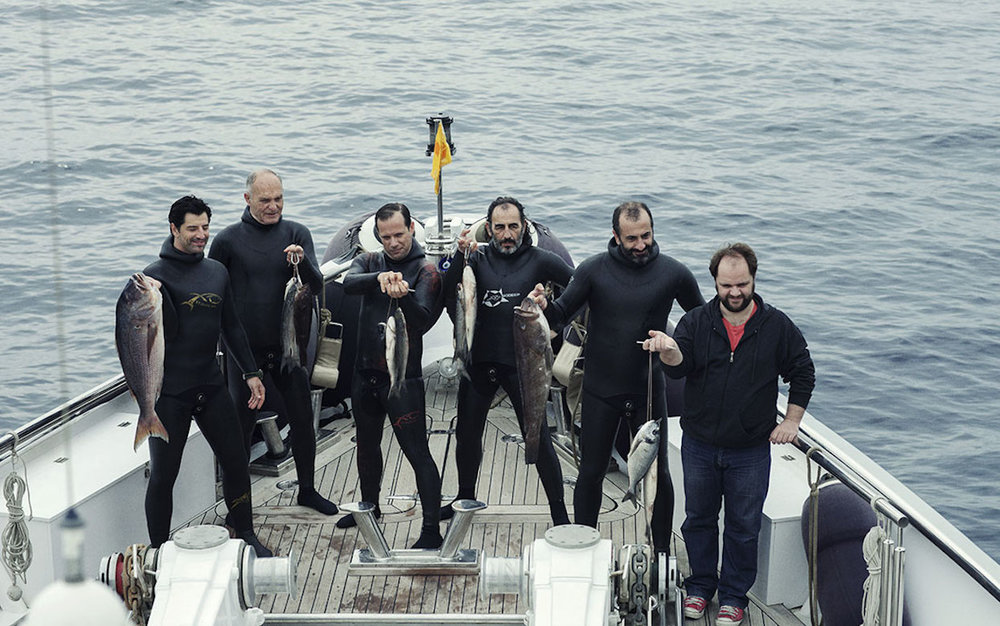
Chevalier (Greece: Athina Rachel Tsangari, 2015: 99 mins)
Chevalier Critics Round Up (Ongoing Archive)
Elphick, Jeremy. "Chevalier." 4:3 (June 28, 2016)
Hudson, David. "Locarno 2015 | Athina Rachel Tsangari’s CHEVALIER." Keyframe (August 13, 2015)
Knight, Dana. "NYFF 2015: Filmmaker in Residence Athina Rachel Tsangari." The Independent (October 2, 2015)
La France, Samuel. "Chevalier (Athina Rachel Tsangari, Greece)." CinemaScope #65 (Winter 2015)
Reardon, Kiva. "Housekeeping and Other Feudalisms: An Interview with Athina Rachel Tsangari." cléo 1.2 (July 25, 2013)
Tsangari, Athina Rachel. "Chevalier." The Close-Up (May 25, 2016)
---. "“Stupidity is the Only Big Risk”: Chevalier Writer/Director Athina Rachel Tsangari on Power, Greece and Filmmaking without Rules." Filmmaker (May 27, 2016)
Resources for November 7, 2016
Blakeslee, David, et al. "Ingmar Bergman's Summer with Monica." CriterionCast #174 (July 25, 2016) ["Inspired by the earthy eroticism of Harriet Andersson, in the first of her many roles for him, Ingmar Bergman had a major international breakthrough with this sensual and ultimately ravaging tale of young love. A girl (Andersson) and boy (Lars Ekborg) from working-class families in Stockholm run away from home to spend a secluded, romantic summer at the beach, far from parents and responsibilities. Inevitably, it is not long before the pair are forced to return to reality. The version initially released in the U.S. was reedited by its distributor into something more salacious, but the originalSummer with Monika (Sommaren med Monika), presented here, is a work of stunning maturity and one of Bergman’s most important films."]
Costa, Cassie Da, et al. "Mondo, Mondo." Film Comment (July 26, 2016) ["This month, at Anthology Film Archives, FILM COMMENT contributor Nick Pinkerton has programmed a variety of shockumentary-style works ranging from the notorious Mondo Cane(an Academy Award nominee, for Original Song) to Thierry Zéno’s Des Morts. Many of these films aim to shock and titillate, sometimes purporting to document actual deaths, but they become politically and culturally revealing texts. None of this problematic entertainment holds a candle, however, to the real-life horror that has become a fixture of 21st-century visual culture: recordings showing police brutality—grim evidence of actual violence that is used in calls for justice. In a wide-ranging discussion that moves from the cinema of taboo to the complexities of recordings of police violence, FC Digital Editor Violet Lucca spoke with Pinkerton, critic and programmer Ashley Clark, and New Yorker video producer (and former FC intern) Cassie da Costa."]
Gores, Jared, Michael Neelsen and Joe Pudas. "Favorite Political Films." Reel Fanatics #439 (November 6, 2016)
Koski, Genevieve, et al. "Ghostbusters (2016) / Ghostbusters (1984), Pt. 1" The Next Picture Show #37 (July 26, 2016) ["The strange controversy over Paul Feig's gender-reversed GHOSTBUSTERS has us looking back at the original 1984 GHOSTBUSTERS to see what about it has inspired such strong feeling. In this half of the conversation, we focus on the then-and-now of Ivan Reitman's original, while trying (unsuccessfully) to dodge the dreaded "N" word: "nostalgia.""]
---. "Ghostbusters (2016) / Ghostbusters (1984), Part 2." The Next Picture Show #38 (July 28, 2016) ["Our GHOSTBUSTERS discussion turns its attention to Paul Feig's new remake, which was made with obvious affection for (and cameos from) the 1984 version, and replicates certain character types and plot points. But it also breaks from it in significant ways we'll discuss, as well as thoughts on the effects, the villains, New York City, blockbuster culture, and more."]
Maclay, Willow. "Don't Go Breaking My Heart (Johnnie To, 2011)." The Vulgar Cinema (April 9, 2014)
McCalmont, Jonathan. "Nothing Beside Remains: A History of the New Weird." The Big Echo #2 (Autumn 2016)
Palmer, Landon. "Ida: Almost Too Stunning For Its Own Good." Film School Rejects (May 2, 2014)
Riccobono, Jack Pettibone. "The Seventh Fire." Film School (July 23, 2016) ["From executive producers Terrence Malick, Natalie Portman, and Chris Eyre comes this haunting and unflinching debut feature, THE SEVENTH FIRE, directed by Jack Pettibone Riccobono. When gang leader Rob Brown is sentenced to prison for a fifth time, he must confront his role in bringing violent drug culture into his beloved American Indian community in northern Minnesota. As Rob reckons with his past, his seventeen-year-old protégé, Kevin,dreams of the future: becoming the most powerful and feared Native gangster on the reservation."]
Schamus, James. "The Tall T." The Cinephiliacs #82 (July 25, 2016) ["How does one reconcile the ideas of artistry in cinema, the kind of magic of cinephilia that we see each time we look up at the screen, with the business practices that often painted as limiting it? James Schamus has somehow made a career of toeing this (likely constructed) dichotomy, helping produce some of the early independent films of the 1990s before becoming the co-founder of Focus Features, which made films like The Pianist,Atonement, Brokeback Mountain, and Moonrise Kingdom, as well as a collaborator of Ang Lee, writing the screenplays for The Ice Storm, Ride With The Devil, and Crouching Tiger, Hidden Dragon. James discusses this work between the politics of making art for specialty audiences, as well as his interest in the very nature of art through his work as a theorist and professor at Columbia University. They then turn to his directorial debut, an adaptation of Philip Roth's Indignation, and what it means to modulate performance.Finally, the two discuss Budd Boetticher's 1957 hostage western The Tall T, and what a specialty art house producer can learn from watching Randolph Scott contemplate existence in this low budget western."]
Talbird, John Duncan. "The Sound of Cool: Jim Jarmusch's Gimme Danger." Film International (November 3, 2016)
Costa, Cassie Da, et al. "Mondo, Mondo." Film Comment (July 26, 2016) ["This month, at Anthology Film Archives, FILM COMMENT contributor Nick Pinkerton has programmed a variety of shockumentary-style works ranging from the notorious Mondo Cane(an Academy Award nominee, for Original Song) to Thierry Zéno’s Des Morts. Many of these films aim to shock and titillate, sometimes purporting to document actual deaths, but they become politically and culturally revealing texts. None of this problematic entertainment holds a candle, however, to the real-life horror that has become a fixture of 21st-century visual culture: recordings showing police brutality—grim evidence of actual violence that is used in calls for justice. In a wide-ranging discussion that moves from the cinema of taboo to the complexities of recordings of police violence, FC Digital Editor Violet Lucca spoke with Pinkerton, critic and programmer Ashley Clark, and New Yorker video producer (and former FC intern) Cassie da Costa."]
Gores, Jared, Michael Neelsen and Joe Pudas. "Favorite Political Films." Reel Fanatics #439 (November 6, 2016)
Koski, Genevieve, et al. "Ghostbusters (2016) / Ghostbusters (1984), Pt. 1" The Next Picture Show #37 (July 26, 2016) ["The strange controversy over Paul Feig's gender-reversed GHOSTBUSTERS has us looking back at the original 1984 GHOSTBUSTERS to see what about it has inspired such strong feeling. In this half of the conversation, we focus on the then-and-now of Ivan Reitman's original, while trying (unsuccessfully) to dodge the dreaded "N" word: "nostalgia.""]
---. "Ghostbusters (2016) / Ghostbusters (1984), Part 2." The Next Picture Show #38 (July 28, 2016) ["Our GHOSTBUSTERS discussion turns its attention to Paul Feig's new remake, which was made with obvious affection for (and cameos from) the 1984 version, and replicates certain character types and plot points. But it also breaks from it in significant ways we'll discuss, as well as thoughts on the effects, the villains, New York City, blockbuster culture, and more."]
McCalmont, Jonathan. "Nothing Beside Remains: A History of the New Weird." The Big Echo #2 (Autumn 2016)
Palmer, Landon. "Ida: Almost Too Stunning For Its Own Good." Film School Rejects (May 2, 2014)
Riccobono, Jack Pettibone. "The Seventh Fire." Film School (July 23, 2016) ["From executive producers Terrence Malick, Natalie Portman, and Chris Eyre comes this haunting and unflinching debut feature, THE SEVENTH FIRE, directed by Jack Pettibone Riccobono. When gang leader Rob Brown is sentenced to prison for a fifth time, he must confront his role in bringing violent drug culture into his beloved American Indian community in northern Minnesota. As Rob reckons with his past, his seventeen-year-old protégé, Kevin,dreams of the future: becoming the most powerful and feared Native gangster on the reservation."]
Schamus, James. "The Tall T." The Cinephiliacs #82 (July 25, 2016) ["How does one reconcile the ideas of artistry in cinema, the kind of magic of cinephilia that we see each time we look up at the screen, with the business practices that often painted as limiting it? James Schamus has somehow made a career of toeing this (likely constructed) dichotomy, helping produce some of the early independent films of the 1990s before becoming the co-founder of Focus Features, which made films like The Pianist,Atonement, Brokeback Mountain, and Moonrise Kingdom, as well as a collaborator of Ang Lee, writing the screenplays for The Ice Storm, Ride With The Devil, and Crouching Tiger, Hidden Dragon. James discusses this work between the politics of making art for specialty audiences, as well as his interest in the very nature of art through his work as a theorist and professor at Columbia University. They then turn to his directorial debut, an adaptation of Philip Roth's Indignation, and what it means to modulate performance.Finally, the two discuss Budd Boetticher's 1957 hostage western The Tall T, and what a specialty art house producer can learn from watching Randolph Scott contemplate existence in this low budget western."]
Talbird, John Duncan. "The Sound of Cool: Jim Jarmusch's Gimme Danger." Film International (November 3, 2016)
Sunday, November 6, 2016
Moonshine Clans of the Alphane Mountains by Michael Dean Benton
I've been searching for rare insights that circulate amongst a chosen few. Good news though, I'm using my time wisely here in Lexington, KY searching among the Moonshine Clans of the Alphane Mountains for the secret recipe that will allow me to unlock the paradox of a program centered around the mythical belief that one can know their individual selves. So far only manic giggling whenever I mention my desire for answers ... the whispering behind my back almost broke my determination but I hung in there until an elder Magi of the Clans began to take pity on this Lost Boy from the Western Lands. She claimed to have originally come from the City of the Red Night where they teach their young that one cannot seek "the" answer, instead they must explore the "multiplicity" of questions, for it is in the masking of "possible" questions that power rests upon and the prying free of these nuggets from the earth's moist grasp is the quest of the Moonshine Clans of the Alphane Mountains.
The ancient Moonshine Magi cackled, swigged from her jug, and said "this is where the neophytes can get in trouble." In the act of chasing these shy questions the hunter notices that the landscape often shifts and reshapes each time a question is revealed. It seems that the Clans learned long ago that when one unearths a question revealing its essence the disturbance of the surrounding landscape generally causes an accompanying reveiling of surrounding questions. In fact, she warned that often eager groups of diggers, banded together for strength and safety, often bury smaller groups/individuals digging nearby. This is why a true Digger of the Clans of the Alphane Mountains always stops and retraces their steps reflecting on the pathway they are traveling and seeking to understand what disturbances their digging causes. The Magi seemed to derive much amusement from my comment that the illusions that cover the Western Lands have long forbidden self-reflective contemplation in order to freeze traditional concepts and to fuel the travel back to the future-past.
I asked the Magi how do the Diggers of the Clan of the Alphane Mountains retain their reflective ability while eagerly unearthing large concepts and revealing troublesome questions. "How do they dream the impossible and imagine the unaskable?" The Magi leaned back and swigged from her jug and chuckled at my Western ignorance. She stared at me like an adder stares down a mouse and dared me to think upon it.
After a long uncomfortable two days I unkinked my frozen limbs. The emptying of my mind allowed me to recognize that the best way to build a hearty, enrichening intellectual-spiritual bouillabaise, is to blend it with (an)other body(ies) of knowledge. The clans, following the wisdom of the Dispossessed, require all learners to travel to other realms (physical, spiritual, and mental) in order to experience different realities and to act as multi-conduit translators (within and without their clan)
Its obvious that the Magi is still toying with me. Perhaps I still must quest for these answers on my own, perhaps I still must travel, perhaps I should look into the interstices of our collective understanding for missing clues?
I screamed, "Please help me! What is a traveler to do when there is no map to guide me" ... the Magi just cackles!!! "Foolish Lost Boy of the Western Lands, when will you learn that the quest is the journey and that as soon as you pin down an answer, it only means that you have reveiled other healthy questions--questions that must then be once again revealed."
Shaking and confused, I picked up a large jug of Alphane moonshine and stumbled into the forest to look for questions.........
Resources for November 6, 2016
Cassidy, Brendan and J.D. Duran. "Born to Be Blue, Infiltrator." InSession Film (July 22, 2016) ["Ethan Hawke’s latest indie film and the second great jazz movie to come out in 2016, Born to Be Blue. We also review The Infiltrator, starring the great Bryan Cranston."]
Cheney, Matthew. "Dead Men and Ghosts, Limited." (Posted on Vimeo: 2014)
Ferrara, Greg. "Scanners: Cronenberg, Existence, and Body Horror." Streamline (November 6, 2016)
Heath, Roderick. "The Thing (1982)." Ferdy on Films (May 2014)
Howard, Kate. "Kentucky 3rd In Nation In Barring Felons From The Voting Booth." Kentucky Center for Investigative Reporting (November 4, 2016)
Hughes, William. "CMAs erase Beyoncé and Dixie Chicks from its social media accounts." A.V. Club (November 4, 2016)
Johnson, Grace Sanders. "Why Haiti Needs New Narratives: An Interview With Gina Athena Ulysse." AAIHS (November 6, 2016) ["On October 4, 2016, Hurricane Matthew roared through Haiti’s southwest peninsula taking with it homes, centuries-old structures, and over 800 lives. In the storm’s wake, media outlets observed the undeniable damage of this specific natural event by projecting recycled, dehumanizing, and ahistorical narratives of Haiti to the world. InWhy Haiti Needs New Narratives: A Post-Quake Chronicle, Haitian-born feminist anthropologist Gina Athena Ulysse writes: “if there is one thing we know for certain, it is that without destruction, sensationalism, and violence, there is no Haiti story.” Ulysse’s trilingual collection of essays is a balm to wounds that are reopened each time the black republic is (mis)represented. The book is a timely reminder of the need to critically interrogate the historical implications of this current moment."]
McDonald, Kevin P. "The Netflix Effect, Technology and Entertainment in the 21st Century." Film School (July 22, 2016) ["Netflix is the definitive media company of the 21st century. It was among the first to parlay new Internet technologies into a successful business model, and in the process it changed how consumers access film and television. It is now one of the leading providers of digitally delivered media content and is continually expanding access across a host of platforms and mobile devices. Despite its transformative role, however, Netflix has drawn very little critical attention-far less than competitors such as YouTube, Apple, Amazon, Comcast, and HBO. The Netflix Effect, Technology and Entertainment in the 21st Century addresses this gap, as the essays are designed to critically explore the breadth and diversity of Netflix’s effect from a variety of different scholarly perspectives, a necessary approach considering the hybrid nature of Netflix; its inextricable links to new models of media production and distribution, to new modes of viewer engagement and consumer behavior, its relationship to existing media conglomerates and consumer electronics, to its capabilities as a web-based service provider and data network, and to its reliance on a broader technological infrastructure. Marking the first scholarly work to address its significance. Co-author and editor Kevin P. McDonald talks about how The Netflix Effect provides a critical framework for understanding the company’s specific strategies as well as its broader social, economic, and cultural impact."]
"The fundamental problem of human existence is rooted in an inherent inability to communicate. That's not to say that people are unable to talk to one another. In fact, people say a great deal to one another throughout any given day, much of it meaningless and instantly forgotten. It's only when the meaning of our words - the desperation of being understood by another - is made the locus of our communication, that the problems inherent to communication become impossible to ignore: wars are waged between governing bodies over conflicting intentions (we know what's best for everyone, trust us); murders occur over simple misunderstandings, wounded pride, and bruised egos (you don't know me, how dare you); a once safe, nurturing relationship is torn apart by the need of lovers to be both heard and understood (this is who I am, this is how I feel). This is the dilemma of being human: believing that something needs to be communicated - a feeling, a thought, an urgent message - not being able to communicate it; or, having made an attempt at communication and ultimately failing, causing irreparable harm (11)." -- Peak, David. The Spectacle of the Void. Schism, 2014.
Steward, Tom. "The Grand Budapest Hotel." Alternate Takes (April 30, 2014)
Cheney, Matthew. "Dead Men and Ghosts, Limited." (Posted on Vimeo: 2014)
Ferrara, Greg. "Scanners: Cronenberg, Existence, and Body Horror." Streamline (November 6, 2016)
Heath, Roderick. "The Thing (1982)." Ferdy on Films (May 2014)
Howard, Kate. "Kentucky 3rd In Nation In Barring Felons From The Voting Booth." Kentucky Center for Investigative Reporting (November 4, 2016)
Hughes, William. "CMAs erase Beyoncé and Dixie Chicks from its social media accounts." A.V. Club (November 4, 2016)
Johnson, Grace Sanders. "Why Haiti Needs New Narratives: An Interview With Gina Athena Ulysse." AAIHS (November 6, 2016) ["On October 4, 2016, Hurricane Matthew roared through Haiti’s southwest peninsula taking with it homes, centuries-old structures, and over 800 lives. In the storm’s wake, media outlets observed the undeniable damage of this specific natural event by projecting recycled, dehumanizing, and ahistorical narratives of Haiti to the world. InWhy Haiti Needs New Narratives: A Post-Quake Chronicle, Haitian-born feminist anthropologist Gina Athena Ulysse writes: “if there is one thing we know for certain, it is that without destruction, sensationalism, and violence, there is no Haiti story.” Ulysse’s trilingual collection of essays is a balm to wounds that are reopened each time the black republic is (mis)represented. The book is a timely reminder of the need to critically interrogate the historical implications of this current moment."]
"The fundamental problem of human existence is rooted in an inherent inability to communicate. That's not to say that people are unable to talk to one another. In fact, people say a great deal to one another throughout any given day, much of it meaningless and instantly forgotten. It's only when the meaning of our words - the desperation of being understood by another - is made the locus of our communication, that the problems inherent to communication become impossible to ignore: wars are waged between governing bodies over conflicting intentions (we know what's best for everyone, trust us); murders occur over simple misunderstandings, wounded pride, and bruised egos (you don't know me, how dare you); a once safe, nurturing relationship is torn apart by the need of lovers to be both heard and understood (this is who I am, this is how I feel). This is the dilemma of being human: believing that something needs to be communicated - a feeling, a thought, an urgent message - not being able to communicate it; or, having made an attempt at communication and ultimately failing, causing irreparable harm (11)." -- Peak, David. The Spectacle of the Void. Schism, 2014.
Steward, Tom. "The Grand Budapest Hotel." Alternate Takes (April 30, 2014)
Saturday, November 5, 2016
Dead Man (USA/Germany/Japan: Jim Jarmusch, 1995)

Dead Man (USA/Germany/Japan: Jim Jarmusch, 1995: 121 mins)
Berg, Briana. "Unveiling the Spiritual Nature of Dead Man." Cinescapade (2001)
Braga, Guillermo. "Strangers of Jim Jarmusch." (Posted on Vimeo: March 2016)
Campbell, Zach. "Dead Man." Slant (May 25, 2004)
Cheney, Matthew. "Dead Men and Ghosts, Limited." (Posted on Vimeo: 2014)
Clark, James. "Jim Jarmusch's Dead Man: "I don't know anything about poetry." Wonders in the Dark (October 5, 2016)
Curley, Melissa Anne-Marie. "Dead Men Don’t Lie: Sacred Texts in Jim Jarmusch’s Dead Man and Ghost Dog: Way of the Samurai." Journal Of Religion & Film 12.2 (October 2008)
Dead Man Critics Round Up (Ongoing Archive)
Ebert, Roger. "Dead Man." Chicago Sun-Times (June 28, 1996)
Jarmusch, Jim, Ariane Labed and Yorgos Lanthimos. "The Lobster; Dead Man." The Close-Up (May 11, 2016)
LaFrance, J.D. "Great Directors: Jim Jarmusch." Senses of Cinema #28 (October 2003)
McMahon, Jennifer L. "I’m Not Nobody: Dead Man, Double Negatives, and Transcending Stereotypes of Native Americans." Southeastern Oklahoma State University Native American Symposium (March 2013)
O'Connell, Max. "Criticwire Classic of the Week: Jim Jarmusch's Dead Man." IndieWire (January 21, 2015)
Palmer, Landon. "Movies We Love: Dead Man." Film School Rejects (June 16, 2010)
Rosenbaum, Jonathan. "Acid Western." Chicago Reader (June 27, 1996)
Rosenbaum, Jonathan. "Acid Western." Chicago Reader (June 27, 1996)
---. "Dead Man in 2010: A Czech Preface." (February 5, 2011)
Smith, Terri C. "Dead Man: The Ultimate Viewing of William Blake." (December 20, 2007)
Friday, November 4, 2016
Resources for November 4, 2016
Collier, Stuart, et al. "The First Pasolini Episode (1961 - 1966)." Illusion Travels by Streetcar #126 (October 26, 2016)
Freeman, Sara. "The Creatures: Lynchian Women and Mulholland Drive." Keyframe (October 30, 2016)
Harris, Brandon. "Adam Curtis' Essential Counterhistories." The New Yorker (November 3, 2016)
Ingraham, Christopher. "#StopThePot: Trump trolls launch a new misinformation campaign targeting marijuana supporters." Washington Post (November 4, 2016)
Koski, Genevieve, et al. "My Own Private Idaho / American Honey (Pt. 1)." The Next Picture Show #49 (November 1, 2016) ["This week, we’ve all come to look for America, and we’re looking for it in a pair of road movies about underprivileged outsiders and the dreams that keep them hustling from place to place. Inspired by Andrea Arnold's sprawling new AMERICAN HONEY, we look back at Gus Van Sant's 1991 indie-punk-surrealist-fantasy-coming-of-age mishmash MY OWN PRIVATE IDAHO. In this half, we attempt to wrangle IDAHO's many moving parts, admire and mourn its central performances, and share some crazy (or not so crazy??) fan theories."]
---. "My Own Private Idaho / American Honey (Pt. 2)." The Next Picture Show #50 (November 3, 2016) ["We return to the road in our two-part exploration of America and self, jumping to the current day with Andrea Arnold's sprawling, music-packed AMERICAN HONEY, a film with some of the same concerns as MY OWN PRIVATE IDAHO, but a much different stylistic approach. In this half, we talk over how the two films handle matters of poverty, style, infatuation, and "the other America."]
Oleson, J.C. "Is Tyler Durden Insane?" North Dakota Law Review 83.2 (2007): 579-650.
"One Junky Summer: Band of the Hand." Junk Food Cinema (July 21, 2016)
Romney, Jonathan. "Film of the Week: Doctor Strange." Film Comment (November 3, 2016)
Swinney, Jacob T. "Six Uses of the Bird’s-eye Shot: What do we see differently when watching from above?" Keyframe (November 2, 2016)
Freeman, Sara. "The Creatures: Lynchian Women and Mulholland Drive." Keyframe (October 30, 2016)
Harris, Brandon. "Adam Curtis' Essential Counterhistories." The New Yorker (November 3, 2016)
Ingraham, Christopher. "#StopThePot: Trump trolls launch a new misinformation campaign targeting marijuana supporters." Washington Post (November 4, 2016)
Koski, Genevieve, et al. "My Own Private Idaho / American Honey (Pt. 1)." The Next Picture Show #49 (November 1, 2016) ["This week, we’ve all come to look for America, and we’re looking for it in a pair of road movies about underprivileged outsiders and the dreams that keep them hustling from place to place. Inspired by Andrea Arnold's sprawling new AMERICAN HONEY, we look back at Gus Van Sant's 1991 indie-punk-surrealist-fantasy-coming-of-age mishmash MY OWN PRIVATE IDAHO. In this half, we attempt to wrangle IDAHO's many moving parts, admire and mourn its central performances, and share some crazy (or not so crazy??) fan theories."]
---. "My Own Private Idaho / American Honey (Pt. 2)." The Next Picture Show #50 (November 3, 2016) ["We return to the road in our two-part exploration of America and self, jumping to the current day with Andrea Arnold's sprawling, music-packed AMERICAN HONEY, a film with some of the same concerns as MY OWN PRIVATE IDAHO, but a much different stylistic approach. In this half, we talk over how the two films handle matters of poverty, style, infatuation, and "the other America."]
Oleson, J.C. "Is Tyler Durden Insane?" North Dakota Law Review 83.2 (2007): 579-650.
"One Junky Summer: Band of the Hand." Junk Food Cinema (July 21, 2016)
Romney, Jonathan. "Film of the Week: Doctor Strange." Film Comment (November 3, 2016)
Swinney, Jacob T. "Six Uses of the Bird’s-eye Shot: What do we see differently when watching from above?" Keyframe (November 2, 2016)
Thursday, November 3, 2016
Straw Poll of ENG 102 Students
(Lexington, Kentucky)
Trump 29
Clinton 12
Johnson 3
Stein 3
Sanders (Write in 2)
Not Voting 10
Trump 29
Clinton 12
Johnson 3
Stein 3
Sanders (Write in 2)
Not Voting 10
Wednesday, November 2, 2016
Resources for November 2, 2016
Assayas, Olivier, Alison Maclean and Kleber Medoncha Filho. "NYFF Live Filmmaker Chat." Film Comment (November 1, 2016) ["This Film Comment panel brought together three NYFF filmmakers—Olivier Assayas (Personal Shopper), Alison Maclean (The Rehearsal), and Kleber Mendonça Filho (Aquarius)—to discuss their practical approaches to the craft of filmmaking, as well as their grander philosophies about the art form. The conversation, moderated by Film Comment Editor Nicolas Rapold, covers a swath of topics, from on-set collaboration to transnational cinema."]
Canning, Charlotte, et al. "American Fascism: It Can't Happen Here?" Ideas (October 28, 2016)
Davis, Erik, et al. "H.P. Lovecraft." To The Best of Our Knowledge (October 27, 2016) ["H.P. Lovecraft's weird tales of cosmic horror loom large 125 years after his birth. His literary tentatcles have oozed their way into movies, books, games and graphic novels. We explore Lovecraft's life, work and legacy. Was he a literary master or a monster?"]
Ha, Anthony, et al. "Black Mirror’s Biggest Twist? An Actual Happy Ending." Geek's Guide to the Galaxy (October 29, 2016)
Jónsdóttir, Birgitta. "Meet Birgitta Jónsdóttir: The Ex-WikiLeaks Volunteer Who Has Helped the Pirate Party Reshape Iceland." Democracy Now (November 1, 2016) ["In Iceland, the anarchist Pirate Party made big gains in Sunday’s national elections, raising the prospect it will form a coalition government with other left-wing parties. The Pirates won 10 seats in Iceland’s 63-member Parliament, up from three in the last election. The Pirate Party hopes to pass the world’s first crowdsourced constitution. Its core platform calls for direct democracy, freedom of expression, civil rights, net neutrality and transparency. The Pirates saw their popularity surge in April, after Iceland’s prime minister resigned following revelations he and his wife used an offshore company to conceal millions of dollars’ worth of investments. Women also won big in this weekend’s elections, taking 30 seats in Iceland’s Parliament—more than any single party. With female candidates winning nearly half of the seats, Iceland now reportedly has the "most equal Parliament in the world." For more, we speak with Birgitta Jónsdóttir, member of the Icelandic Parliament and co-founder of the country’s Pirate Party. She is also a poet, activist, web developer and a former WikiLeaks activist. And she is the chairperson of the International Modern Media Institution."]
Kempenaar, Adam and Josh Larsen. "Top 5 Childhood Movie Scares with Ti West / A Nightmare on Elm Street (1984)." Filmspotting #609 (October 27, 2016)
Levin, Marc. "Voices from NYC's Most Notorious Jail: Former Prisoners Speak Out About Abuse at Rikers Island." Democracy Now (November 2, 2016) ["A new PBS documentary, "Rikers," brings you face to face with men and women who have survived incarceration at New York City’s largest and most notorious jail. Their stories are told directly to the camera without any additional narration. A dozen former inmates vividly describe the cruel arc of the Rikers experience—from the trauma of entering the island to the extortion and control exercised by other inmates, to the harrowing interactions with corrections officers. They also detail the beatings and stabbings, the torture of solitary confinement and the psychological difficulties of re-entering the outside world. For more, we’re joined by award-winning independent filmmaker Marc Levin, director of the new documentary, "Rikers."]
Prose, Francine. "When Librarians are Silenced." The New York Review of Books (October 14, 2016)
Reilly, Phoebe. "From Babadook to Raw: The Rise of the Modern Female Horror Filmmaker." Rolling Stone (October 27, 2016)
Small, Deborah. "9 States to Vote on Marijuana Initiatives: Will They Stop Jailing Young People of Color over Weed?" Democracy Now (November 2, 2016) ["On November 8, 35 states and the District of Columbia will confront 156 ballot initiatives on issues ranging from universal healthcare to gun sale restrictions and death penalty reforms. One of the most contentious ballot initiatives concerns marijuana legalization. After next week’s election, marijuana could be legal for medical or recreational use in 29 states. Currently about 5 percent of Americans live in states where they can legally smoke cannabis, but after November that figure could rise to 25 percent. California is the biggest of the nine states casting a ballot on the measure. While other states are voting on medicinal use, Arizona, Maine, Massachusetts and Nevada are with California in voting on legalizing the recreational use of marijuana. The "yes" vote is currently leading in all five states and is widely supported by young voters from both major parties. California legalized the medical use of marijuana 20 years ago. Polls in California show strong support for Proposition 64, the Adult Use of Marijuana Act. We speak with Deborah Small, founder of Break the Chains: Communities of Color and the War on Drugs. Her recent piece for The Root is headlined "How We Can Reap Reparations from Marijuana Reform." She’s a longtime advocate for drug decriminalization."]
Canning, Charlotte, et al. "American Fascism: It Can't Happen Here?" Ideas (October 28, 2016)
Davis, Erik, et al. "H.P. Lovecraft." To The Best of Our Knowledge (October 27, 2016) ["H.P. Lovecraft's weird tales of cosmic horror loom large 125 years after his birth. His literary tentatcles have oozed their way into movies, books, games and graphic novels. We explore Lovecraft's life, work and legacy. Was he a literary master or a monster?"]
Ha, Anthony, et al. "Black Mirror’s Biggest Twist? An Actual Happy Ending." Geek's Guide to the Galaxy (October 29, 2016)
Jónsdóttir, Birgitta. "Meet Birgitta Jónsdóttir: The Ex-WikiLeaks Volunteer Who Has Helped the Pirate Party Reshape Iceland." Democracy Now (November 1, 2016) ["In Iceland, the anarchist Pirate Party made big gains in Sunday’s national elections, raising the prospect it will form a coalition government with other left-wing parties. The Pirates won 10 seats in Iceland’s 63-member Parliament, up from three in the last election. The Pirate Party hopes to pass the world’s first crowdsourced constitution. Its core platform calls for direct democracy, freedom of expression, civil rights, net neutrality and transparency. The Pirates saw their popularity surge in April, after Iceland’s prime minister resigned following revelations he and his wife used an offshore company to conceal millions of dollars’ worth of investments. Women also won big in this weekend’s elections, taking 30 seats in Iceland’s Parliament—more than any single party. With female candidates winning nearly half of the seats, Iceland now reportedly has the "most equal Parliament in the world." For more, we speak with Birgitta Jónsdóttir, member of the Icelandic Parliament and co-founder of the country’s Pirate Party. She is also a poet, activist, web developer and a former WikiLeaks activist. And she is the chairperson of the International Modern Media Institution."]
Kempenaar, Adam and Josh Larsen. "Top 5 Childhood Movie Scares with Ti West / A Nightmare on Elm Street (1984)." Filmspotting #609 (October 27, 2016)
Levin, Marc. "Voices from NYC's Most Notorious Jail: Former Prisoners Speak Out About Abuse at Rikers Island." Democracy Now (November 2, 2016) ["A new PBS documentary, "Rikers," brings you face to face with men and women who have survived incarceration at New York City’s largest and most notorious jail. Their stories are told directly to the camera without any additional narration. A dozen former inmates vividly describe the cruel arc of the Rikers experience—from the trauma of entering the island to the extortion and control exercised by other inmates, to the harrowing interactions with corrections officers. They also detail the beatings and stabbings, the torture of solitary confinement and the psychological difficulties of re-entering the outside world. For more, we’re joined by award-winning independent filmmaker Marc Levin, director of the new documentary, "Rikers."]
Prose, Francine. "When Librarians are Silenced." The New York Review of Books (October 14, 2016)
Reilly, Phoebe. "From Babadook to Raw: The Rise of the Modern Female Horror Filmmaker." Rolling Stone (October 27, 2016)
Small, Deborah. "9 States to Vote on Marijuana Initiatives: Will They Stop Jailing Young People of Color over Weed?" Democracy Now (November 2, 2016) ["On November 8, 35 states and the District of Columbia will confront 156 ballot initiatives on issues ranging from universal healthcare to gun sale restrictions and death penalty reforms. One of the most contentious ballot initiatives concerns marijuana legalization. After next week’s election, marijuana could be legal for medical or recreational use in 29 states. Currently about 5 percent of Americans live in states where they can legally smoke cannabis, but after November that figure could rise to 25 percent. California is the biggest of the nine states casting a ballot on the measure. While other states are voting on medicinal use, Arizona, Maine, Massachusetts and Nevada are with California in voting on legalizing the recreational use of marijuana. The "yes" vote is currently leading in all five states and is widely supported by young voters from both major parties. California legalized the medical use of marijuana 20 years ago. Polls in California show strong support for Proposition 64, the Adult Use of Marijuana Act. We speak with Deborah Small, founder of Break the Chains: Communities of Color and the War on Drugs. Her recent piece for The Root is headlined "How We Can Reap Reparations from Marijuana Reform." She’s a longtime advocate for drug decriminalization."]
Friday, October 28, 2016
Resources for October 28, 2016
Aaron, Craig and Adam Schwartz. "Electronic Frontier Foundation: Police Depts. Paid AT&T Millions to Scrutinize Our Texts & Chats." Democracy Now (October 28, 2016) ["New details are emerging about how AT&T has been spying on Americans for profit with a secret plan called Project Hemisphere. The Daily Beast reports AT&T is keeping private call records and selling the information to authorities investigating everything from the war on drugs to Medicaid fraud. AT&T reportedly has been retaining every call, text message, Skype chat or other communication that has passed through its infrastructure. Some of the records date back to 1987. Sheriff’s and police departments each pay upward of $1 million a year for access to the call records. No warrants are needed, and AT&T requires governmental agencies to keep secret the source of the information. We speak with Adam Schwartz, a senior lawyer at the Electronic Frontier Foundation. His latest article is "AT&T requires police to hide Hemisphere phone "]
"Aliens and Commercialism." Pop Culture Case Study #157 (July 21, 2016)
Balot, Ryan. "Tocqueville's America Revisited, Part 1." Ideas (October 14, 2016) ["Nearly 200 years ago, a young French aristocrat traveled across the Atlantic to get a first-hand immersion in American democracy. Alexis de Tocqueville spent nine months touring the United States, talking to hundreds of people, trying to understand the country's strengths and weaknesses. Some have called his writing prophetic, capturing the essence of the American experiment with democracy -- both back when he was visiting the U.S. in the 1830s and today."]
Bauer, Shane. "Shane Bauer Infiltrates Armed Militia "Hunting Mexicans" & Collaborating with U.S. Border Patrol." Democracy Now (October 27, 2016)
Carlin, Dan. "Or Else." Common Sense #310 (October 13, 2016)
DuVernay, Ava, et al. "Ava DuVernay / Jamal Joseph." The Close-Up #93 (July 20, 2016) ["The Opening Night selection will be the new film from SELMA director Ava DuVernay, THE 13TH, which explores the American prison industry and the horrors of mass criminalization. Eugene Hernandez caught up with DuVernay in Los Angeles over the weekend to discuss the project. In part two of this week's episode, we're sharing an inspirational panel from last month's Human Rights Watch Film Festival. Following a screening of CHAPTER & VERSE, a film about a reformed gang leader who struggles to re-enter society after eight years in prison, director Jamal Joseph joined lead actor Daniel Beatty and producers Cheryl Hill and Jonathan Singer to talk about racism, gang violence, gentrification, and what it means to forge your own destiny in an outwardly harsh society."]
Houska, Tara. "'A Shameful Moment for This Country': Report Back on Militarized Police Raid of DAPL Resistance Camp." Democracy Now (October 28, 2016) ["We go to Standing Rock, North Dakota, for an update on how hundreds of police with military equipment raided a resistance camp Thursday that was established by Native American water protectors in the path of the proposed $3.8 billion Dakota Access pipeline. More than 100 officers in riot gear with automatic rifles lined up across a highway, flanked by multiple MRAPs, anLRAD sound cannon, Humvees driven by National Guardsmen, an armored police truck and a bulldozer. Water protectors say police deployed tear gas, mace, pepper spray and flash-bang grenades and bean bag rounds against the Native Americans and shot rubber bullets at their horses. "We learned a lot about the relationship of North Dakota to Native people," says Tara Houska, national campaigns director for Honor the Earth. "I was standing next to a group of teenagers that were maced in the face. … I was shot in the face by a bean bag round.""]
Kozak, Oktay Ege, Erik McClanahan and Ryan Oliver. "Lost in Charlie Kaufman’s Eternal Sunshine Of The Spotless Mind & Adaptation." Over/Under Movies (June 20, 2016)
Prewitt, Zach. "The Best Horror Cinema of the 21st Cinema." (Posted on Vimeo: October 2016)
Robinson, Matty, et al. "Abbas Kiarostami: The Filmspotting Reviews." Filmspotting (July 20, 2016)
Taibbi, Matt. "The Divide: American Injustice in the Age of the Wealth Gap." Truthout (May 4, 2014)
"Aliens and Commercialism." Pop Culture Case Study #157 (July 21, 2016)
Balot, Ryan. "Tocqueville's America Revisited, Part 1." Ideas (October 14, 2016) ["Nearly 200 years ago, a young French aristocrat traveled across the Atlantic to get a first-hand immersion in American democracy. Alexis de Tocqueville spent nine months touring the United States, talking to hundreds of people, trying to understand the country's strengths and weaknesses. Some have called his writing prophetic, capturing the essence of the American experiment with democracy -- both back when he was visiting the U.S. in the 1830s and today."]
Bauer, Shane. "Shane Bauer Infiltrates Armed Militia "Hunting Mexicans" & Collaborating with U.S. Border Patrol." Democracy Now (October 27, 2016)
Carlin, Dan. "Or Else." Common Sense #310 (October 13, 2016)
DuVernay, Ava, et al. "Ava DuVernay / Jamal Joseph." The Close-Up #93 (July 20, 2016) ["The Opening Night selection will be the new film from SELMA director Ava DuVernay, THE 13TH, which explores the American prison industry and the horrors of mass criminalization. Eugene Hernandez caught up with DuVernay in Los Angeles over the weekend to discuss the project. In part two of this week's episode, we're sharing an inspirational panel from last month's Human Rights Watch Film Festival. Following a screening of CHAPTER & VERSE, a film about a reformed gang leader who struggles to re-enter society after eight years in prison, director Jamal Joseph joined lead actor Daniel Beatty and producers Cheryl Hill and Jonathan Singer to talk about racism, gang violence, gentrification, and what it means to forge your own destiny in an outwardly harsh society."]
Houska, Tara. "'A Shameful Moment for This Country': Report Back on Militarized Police Raid of DAPL Resistance Camp." Democracy Now (October 28, 2016) ["We go to Standing Rock, North Dakota, for an update on how hundreds of police with military equipment raided a resistance camp Thursday that was established by Native American water protectors in the path of the proposed $3.8 billion Dakota Access pipeline. More than 100 officers in riot gear with automatic rifles lined up across a highway, flanked by multiple MRAPs, anLRAD sound cannon, Humvees driven by National Guardsmen, an armored police truck and a bulldozer. Water protectors say police deployed tear gas, mace, pepper spray and flash-bang grenades and bean bag rounds against the Native Americans and shot rubber bullets at their horses. "We learned a lot about the relationship of North Dakota to Native people," says Tara Houska, national campaigns director for Honor the Earth. "I was standing next to a group of teenagers that were maced in the face. … I was shot in the face by a bean bag round.""]
Kozak, Oktay Ege, Erik McClanahan and Ryan Oliver. "Lost in Charlie Kaufman’s Eternal Sunshine Of The Spotless Mind & Adaptation." Over/Under Movies (June 20, 2016)
Prewitt, Zach. "The Best Horror Cinema of the 21st Cinema." (Posted on Vimeo: October 2016)
Robinson, Matty, et al. "Abbas Kiarostami: The Filmspotting Reviews." Filmspotting (July 20, 2016)
Taibbi, Matt. "The Divide: American Injustice in the Age of the Wealth Gap." Truthout (May 4, 2014)
Thursday, October 27, 2016
The Life and Death of Colonel Blimp (UK: Michael Powell and Emeric Pressburger, 1943)

The Life and Death of Colonel Blimp (UK: Michael Powell and Emeric Pressburger, 1943: 163 mins)
Chapman, James. "The Life and Death of Colonel Blimp Reconsidered." The Powell & Pressburger Pages (Originally published in The Historical Journal of Film, Radio and Television 15.1 March 1995: 19-55)
Christie, Ian. "Seventy Years Ago... The Return of The Life and Death of Colonel Blimp." Senses of Cinema #68 (September 2013)
Danks, Adrian. "Great Directors: Michael Powell & Emeric Pressburger." Senses of Cinema (May 2002)
Ebert, Roger. "Great Movie: The Life and Death of Colonel Blimp." Chicago Sun-Times (October 27, 2002)
Haskell, Molly. "The Life and Death of Colonel Blimp." Current (March 20, 2013)
Haver, Ronald. "The Life and Death of Colonel Blimp." Current (October 21, 2002)
The Life and Death of Colonel Blimp Critics Round Up (Ongoing Archive)
Marsh, Calum. "Can Humor Be Weaponized? We speak of satire as ‘venomous’ and ‘acerbic,’ but it isn’t the damage it deals that makes it significant." Keyframe (April 10, 2016)
"On the Set of The Life and Death of Colonel Blimp." Current (March 20, 2013)
Scorsese, Martin. "On Restoring The Life and Death of Colonel Blimp." Current (March 18, 2013)
Smith, Imogen Sara. "The Music of Words: Storytelling in Two Powell & Pressburger Films." Bright Lights Film Journal #79 (February 2013)
Tracy, Andrew. "Up and Away: On The Life and Death of Colonel Blimp." Reverse Shot (July 15, 2006)
The Life and Death of Colonel Blimp (trailer) from Cinefamily on Vimeo.
Wednesday, October 26, 2016
Pirates of the Caribbean: The Curse of the Black Pearl (USA: Gore Verbinski, 2003)

Pirates of the Caribbean: The Curse of the Black Pearl (USA: Gore Verbinski, 2003: 143 mins)
High, Michael D. "Pirates without Piracy: Criminality, Rebellion, and Anarcho-Libertarianism in the Pirate Film." Jump Cut #56 (Winter 2014/2015)
Kuersten, Erich. "Quilty Makes This World: 12 Tricksters (CinemArchetype #1)." Acidemic (January 23, 2012)
Rabin, Nathan. "Nathan Rabin vs. The IMDb Top 250: Pirates Of The Caribbean: The Curse Of The Black Pearl." The Dissolve (September 17, 2014)
Resources for October 26, 2016
Bailey, Thomas William Bey. "Foundations for a High-Rise: Or, cinematic on-ramps to the mind of J.G. Ballard." Keyframe (April 18, 2016)
Calautti, Katie. "Why Is the True Story of David O. Russell’s Joy Such a Mystery?" Vanity Fair (December 17, 2015)
Ehrenstein, David. "Complicity and Christine: Yes, snuff films exist—right in our news feeds." Keyframe (October 12, 2016)
Gunzburg, David. "Realistic, Like In a Movie: On Facts, Procedurals, and Memories of Murder." Photogenie (October 1, 2013)
Hudson, David. "Bob Dylan Wins the Nobel Prize." Keyframe (October 13, 2016)
Lear, Norman. "Just Another Version of You: The Life, Art and Activism of Legendary TV Producer Norman Lear." Democracy Now (October 25, 2016) ["Ninety-four-year-old legendary TV producer and longtime political activist Norman Lear has led a remarkable life. He helped revolutionize sitcom television with a string of hit shows including "All in the Family," "Sanford and Son," "The Jeffersons," "Good Times" and "Maude." In 1999, President Clinton awarded him the National Medal of Arts, saying, "Norman Lear has held up a mirror to American society and changed the way we look at it." Norman Lear is also a longtime activist, earning him a place on Richard Nixon’s enemies list and the scorn of the Christian right. His life, art and social activism is the subject of the new "American Masters" documentary, "Norman Lear: Just Another Version of You," which premieres tonight on PBS. We spoke with Norman Lear in studio last week."]
"Platform." The Movement for Black Lives (ND)
Rickford, Russell. "Managed Democracy And The Illusion Of Politics." AAIHS (October 23, 2016)
"Teaching The New Jim Crow." Teaching Tolerance (ND)
Young, Alden, "Braveheart for Black People: A Review of Birth of a Nation." AAIHS (October 25, 2016)
Calautti, Katie. "Why Is the True Story of David O. Russell’s Joy Such a Mystery?" Vanity Fair (December 17, 2015)
Ehrenstein, David. "Complicity and Christine: Yes, snuff films exist—right in our news feeds." Keyframe (October 12, 2016)
Gunzburg, David. "Realistic, Like In a Movie: On Facts, Procedurals, and Memories of Murder." Photogenie (October 1, 2013)
Hudson, David. "Bob Dylan Wins the Nobel Prize." Keyframe (October 13, 2016)
Lear, Norman. "Just Another Version of You: The Life, Art and Activism of Legendary TV Producer Norman Lear." Democracy Now (October 25, 2016) ["Ninety-four-year-old legendary TV producer and longtime political activist Norman Lear has led a remarkable life. He helped revolutionize sitcom television with a string of hit shows including "All in the Family," "Sanford and Son," "The Jeffersons," "Good Times" and "Maude." In 1999, President Clinton awarded him the National Medal of Arts, saying, "Norman Lear has held up a mirror to American society and changed the way we look at it." Norman Lear is also a longtime activist, earning him a place on Richard Nixon’s enemies list and the scorn of the Christian right. His life, art and social activism is the subject of the new "American Masters" documentary, "Norman Lear: Just Another Version of You," which premieres tonight on PBS. We spoke with Norman Lear in studio last week."]
"Platform." The Movement for Black Lives (ND)
Rickford, Russell. "Managed Democracy And The Illusion Of Politics." AAIHS (October 23, 2016)
"Teaching The New Jim Crow." Teaching Tolerance (ND)
Young, Alden, "Braveheart for Black People: A Review of Birth of a Nation." AAIHS (October 25, 2016)
Tuesday, October 25, 2016
Resources for October 25, 2016
Arnade, Chris, Jim O'Grady and Kai Wright. "Race, Class, and the United States of Anxiety." On the Media (October 19, 2016)
Blyth, Mark, David Kaiser and Vanessa Williamson. "The French Sensation: Income Inequality in the United States, 1910 - 2010." Open Source (May 1, 2014) ["The hottest book everybody is talking about, that no one has read and no can get their hands on, is a giant, data-packed tome on income inequality covering three hundred years of history by the French economist Thomas Piketty. Is there a reason he’s getting the rock star treatment? Is it the symptoms that resonate (our drift into oligarchy), or is it the cure (a progressive tax on wealth)?"]
Everything Change: An Anthology of Climate Fiction Imagination and Climate Futures Initiative ["Everything Change features twelve stories from our 2016 Climate Fiction Short Story Contest along with along with a foreword by science fiction legend and contest judge Kim Stanley Robinson and an interview with renowned climate fiction author Paolo Bacigalupi." - free to download in PDF format]
Guerard, Emma, et al. "Babe: That'll Do Comrade, That'll Do." Flixwise #24 (July 19, 2016)
"The Harder They Come." See Hear #30 (July 19, 2016) ["Perry Henzel’s 1972 film, “The Harder They Come” starring reggae superstar, Jimmy Cliff. This film is important in so many respects – it brought Jimmy Cliff to a worldwide audience, it had a brilliant soundtrack, and it was the first Jamaican feature film. Henzel declared he made it for Jamaica, but many people outside Jamaica have embraced it as it encompasses the well used movie theme of fighting back against a corrupt society in all its facets – employers, the recording industry, religion, and the law. Jimmy Cliff plays Ivan, a young naïve country man coming to Kingston hoping to make it in the music industry, but has his dreams crushed at every turn – until he decides to take matters into his own hands, for better or worse. Make no mistake - he is an anti-hero with many failings of his own. Tim, Bernie and Maurice discuss these themes as well the influence it has left on so many other films, music as politics, where the movie fits into the mood of film movement of the day, and whether you can really hold off an entire army with one six-shooter. Tim even suggests a unique ratings system for this movie."]
Harlan, Susan. "A Poem About Your University's Brand New Institute." McSweeney's (August 10, 2016)
Hurne, Mark, Cott Nye and Aaron West. "A Brighter Summer Day." Close-Up #44 (July 19, 2016) ["Among the most praised and sought-after titles in all contemporary film, this singular masterpiece of Taiwanese cinema, directed by Edward Yang, finally comes to home video in the United States. Set in the early sixties in Taiwan, A Brighter Summer Day is based on the true story of a crime that rocked the nation. A film of both sprawling scope and tender intimacy, this novelistic, patiently observed epic centers on the gradual, inexorable fall of a young teenager (Chen Chang, in his first role) from innocence to juvenile delinquency, and is set against a simmering backdrop of restless youth, rock and roll, and political turmoil."]
Mattson, Stephen. "Social Justice is a Christian Tradition - Not a Liberal Agenda." Sojourners (August 11, 2015)
Pasternack, Jesse. "Sex, Music, and Death: Why The Hunger is the Definitive David Bowie Film." A Place for Film (October 24, 2016)
Sams, Josh. "The Street Fighter Films: How to And How Not to Adapt a Video Game." Dialogic Cinephilia (October 24, 2016)
Blyth, Mark, David Kaiser and Vanessa Williamson. "The French Sensation: Income Inequality in the United States, 1910 - 2010." Open Source (May 1, 2014) ["The hottest book everybody is talking about, that no one has read and no can get their hands on, is a giant, data-packed tome on income inequality covering three hundred years of history by the French economist Thomas Piketty. Is there a reason he’s getting the rock star treatment? Is it the symptoms that resonate (our drift into oligarchy), or is it the cure (a progressive tax on wealth)?"]
Everything Change: An Anthology of Climate Fiction Imagination and Climate Futures Initiative ["Everything Change features twelve stories from our 2016 Climate Fiction Short Story Contest along with along with a foreword by science fiction legend and contest judge Kim Stanley Robinson and an interview with renowned climate fiction author Paolo Bacigalupi." - free to download in PDF format]
Guerard, Emma, et al. "Babe: That'll Do Comrade, That'll Do." Flixwise #24 (July 19, 2016)
"The Harder They Come." See Hear #30 (July 19, 2016) ["Perry Henzel’s 1972 film, “The Harder They Come” starring reggae superstar, Jimmy Cliff. This film is important in so many respects – it brought Jimmy Cliff to a worldwide audience, it had a brilliant soundtrack, and it was the first Jamaican feature film. Henzel declared he made it for Jamaica, but many people outside Jamaica have embraced it as it encompasses the well used movie theme of fighting back against a corrupt society in all its facets – employers, the recording industry, religion, and the law. Jimmy Cliff plays Ivan, a young naïve country man coming to Kingston hoping to make it in the music industry, but has his dreams crushed at every turn – until he decides to take matters into his own hands, for better or worse. Make no mistake - he is an anti-hero with many failings of his own. Tim, Bernie and Maurice discuss these themes as well the influence it has left on so many other films, music as politics, where the movie fits into the mood of film movement of the day, and whether you can really hold off an entire army with one six-shooter. Tim even suggests a unique ratings system for this movie."]
Harlan, Susan. "A Poem About Your University's Brand New Institute." McSweeney's (August 10, 2016)
Hurne, Mark, Cott Nye and Aaron West. "A Brighter Summer Day." Close-Up #44 (July 19, 2016) ["Among the most praised and sought-after titles in all contemporary film, this singular masterpiece of Taiwanese cinema, directed by Edward Yang, finally comes to home video in the United States. Set in the early sixties in Taiwan, A Brighter Summer Day is based on the true story of a crime that rocked the nation. A film of both sprawling scope and tender intimacy, this novelistic, patiently observed epic centers on the gradual, inexorable fall of a young teenager (Chen Chang, in his first role) from innocence to juvenile delinquency, and is set against a simmering backdrop of restless youth, rock and roll, and political turmoil."]
Mattson, Stephen. "Social Justice is a Christian Tradition - Not a Liberal Agenda." Sojourners (August 11, 2015)
Pasternack, Jesse. "Sex, Music, and Death: Why The Hunger is the Definitive David Bowie Film." A Place for Film (October 24, 2016)
Sams, Josh. "The Street Fighter Films: How to And How Not to Adapt a Video Game." Dialogic Cinephilia (October 24, 2016)
Subscribe to:
Posts (Atom)