Wednesday, February 5, 2025

ENG 102 2025: Resources Archive #7

“Is it possible to change people and the world we live in? You tell me. Can we change ourselves? That’s why Aristophanes wrote {Lysistrata}. To get things moving, to make people care… to stop us sitting around, believing we can do nothing… We have to talk! Stop being so embarrassed and critical. People have to be able to talk. Don’t you understand that it’s we who make the world what it is?” – Flickorna (The Girls, 1968)

---------------------------------------------------------

Dorian, M.J. "The Origin of Art." Creative Codex #1 (August 18, 2018) ["Travel back 40,000 years to the first known art made by human hands. How did creativity begin? Why does 'art' exist?"]

Duff, Brian, et al. "Forest / Tree." Future Ecologies 6.1 (October 30, 2024) ["Season 6 kicks off in the deep dark woods: the simplified, post-industrial forests of the world — the only forests that many of us have ever known. Join us as we meet foresters in British Columbia, Vermont, and Scotland, all working to embrace the messy art of ecological forestry. Because if we want our forests to be old growth-ier, we might not be able to just wait and leave them alone. It might mean challenging some assumptions and getting out of our comfort zone, but that's what it'll take to see the forest for the trees."]

Gore, Gareth. "Gareth Gore Investigates: Opus Dei, Dark Money, and Global Deception." The Michael Shermer Show (December 3, 2024) ["Banco Popular, once a top global bank, collapsed unexpectedly in 2017. Investigative journalist Gareth Gore initially expected to find another case of capitalist greed, but instead uncovered a web of deception orchestrated by men linked to Opus Dei. Gore’s investigation revealed decades of hidden corruption, with Opus Dei using its control over the bank to amass wealth and spread its influence. Using access to insider accounts and bank records, Gore exposed how Opus Dei recruited vulnerable individuals—often children—into lives of servitude. His findings also unveiled Opus Dei’s financial ties to far-right movements, including its role in overturning Roe v. Wade, raising important questions about the forces shaping modern society. Shermer and Gore discuss Opus Dei’s role in the collapse of Banco Popular, its influence in politics, and the group’s history. They explore Opus Dei’s abusive practices, financial power, and efforts to spread its agenda, including through human trafficking and infiltration of institutions. Gore also explains its ties to the erosion of democracy and its influence on U.S. policies, from reproductive rights to LGBTQ+ issues."]

Heller-Nicholas, Alexandra. "The Substance is a Documentary." Film International (September 3, 2024) ["As far as emotional fidelity is concerned, The Substance is a documentary. No other film I have ever seen so perfectly captures my subjective experience of the culturally enforced dissociation that happens en masse when, as a woman, your body starts to age."]

Katz, Jonathan. "What the U.S. Did to Haiti." Current Affairs #354 (November 4, 2024) ["Donald Trump and J.D. Vance have recently been pushing vicious racist fake news about Haitian immigrants in Springfield, Ohio, claiming they are stealing and eating people's pets and destroying the town. But why are there Haitian immigrants in Springfield, Ohio in the first place? What role has U.S. foreign policy played in driving Haitians from Haiti? Today, we are joined by Jonathan Katz, one of the leading journalists writing about U.S. imperialism and a specialist in Haiti. Katz tells us about the history of U.S. relations with Haiti, common misconceptions about the country, and the deeper meaning of the Springfield pet-eating scare, and how it fits with longstanding racialized narratives about threatening Haitians. The former Port-au-Prince bureau chief for the Associated Press, Katz is the author of the books The Big Truck That Went By: How the World Came to Save Haiti and Left Behind a Disaster and Gangsters of Capitalism: Smedley Butler, the Marines, and the Making and Breaking of America’s Empire. His newsletter can be found here. It is not a matter of whether the United States should get involved in Haiti following the first presidential assassination there in more than a century. The United States is already deeply involved. The questions are how that involvement helped, at a minimum, to set the stage for the crisis now enveloping a nation of 11.5 million people and what to do with that reality from here on out...Ever since Haiti won its independence from France in a slave revolution that culminated in 1804, the mere idea of a republic run by self-liberated Black people has sent shivers through the white world. -Jonathan Katz, "U.S. Intervention in Haiti Would Be a Disaster—Again," Foreign Policy (2021)."]

Khalil, Osamah. "Why America Perceives a 'World of Enemies.'" Current Affairs #356 (November 8, 2024) ["Osamah Khalil of Syracuse University is the author of A World of Enemies: America’s Wars at Home and Abroad from Kennedy to Biden, a vital history of the wars of the last 50 years. Prof. Khalil shows how, from the Vietnam war to the present day, American leaders (and American pop culture) conjured a "world of enemies" in which force was preferable to diplomacy. A cast of rotating villains (from Ho Chi Minh to Saddam Hussein to Hamas) are treated as existential threats to freedom and democracy, and because they are monstrous they cannot be negotiated with and can only be destroyed. Prof. Khalil joins today to discuss his work, which argues that our militaristic attitude toward the rest of the world has also come to characterize domestic political discourse. "American militarism has not been limited to foreign battlefields. Politicians and policymakers have insisted that Americans are engaged in an existential struggle against foes seen and unseen, foreign and domestic. Thus, militarism has seeped into everyday American life as the United States has not settled for defeat or victory but for war as a permanent state." - Osamah F. Khalil"]

Kitty, Alexandra. "Objectivity in Journalism: Should We Be Skeptical?" Skeptic (November 7, 2013) ["The problem with assuming that emotional detachment somehow leads an observer to find the Truth, is that not all truths are built to last for eternity. Clifford Christians, a research professor of communications at the University of Illinois at Urbana, notes “there isn’t an objective world that’s static, that exists outside of us” (Christians, 1997). Walter Harrington, a professor of journalism at the University of Illinois at Urbana, book author and long-time staff writer for the Washington Post magazine, adds, “We have a physical world that exists out there. We have a number of what the Dow is and to report the Dow constantly and uncritically is to not stop and explain to people how the Dow is constructed, how it has been changed over the years, how its alteration shapes its outcome and how the Dow parses with other measures. When we accept something as a piece of objective fact, usually it’s time to start saying ‘Well, wait a minute, it’s time to start looking at that.’ Because once anything is accepted as being a fact that we no longer question, doubt or evaluate, I think that you’re going into dangerous territory” (Harrington, 1997)."]

Llewellyn-Jones, Lloyd.  "Tower of Babel." The Ancients (November 23, 2024) ["The Tower of Babel story is iconic. Featured in the Book of Genesis, it explains how different languages came to be across the world. But what are its origins? Join Tristan Hughes and Prof. Lloyd Llewellyn-Jones in this special episode of The Ancients - recorded live at the London Podcast Festival - as they delve into the biblical roots of the myth and uncover the real archeological remains that inspired the fable. They explore how ancient ziggurats influenced depictions of the tower, discuss the intersection between history and faith and discover how age-old texts and modern archaeology combine to unravel the mysteries behind the story of the Tower of Babel."]

Maclay, Willow Catelyn. "Cracked Actor: Cary Grant." Metrograph (ND) ["Unraveling the coded queerness that animates the exuberant actor’s performances."]

Marx, Paris. "Data Vampires: Fighting for Control." Tech Won't Save Us (October 28, 2024) ["Tech billionaires are embracing extreme right-wing politics. It’s not just to enhance their power, but to try to realize a harmful vision for humanity’s future that could see humans merging with machines and possibly even living in computer simulations. Will we allow them to put our collective resources behind their science fiction dreams, or fight for a better future and a different kind of technology to go along with it?"]

Winter, Tim. "The History of Revolutionary Ideas: Islam." Past Present Future #153 (January 24, 2024) ["Today’s episode in our history of revolutionary ideas explores the world-altering impact of Islam from the seventh century onwards. David talks to the leading Islamic scholar Tim Winter (Abdal Hakim Murad) about what changed – and what didn’t – with the appearance of Islamic law, Islamic culture and Islamic ideas of community. Was Islam really egalitarian? How could a universalist religion encompass so much variety? Why did it spread so fast? And what caused it to split so soon?"]

Tuesday, February 4, 2025

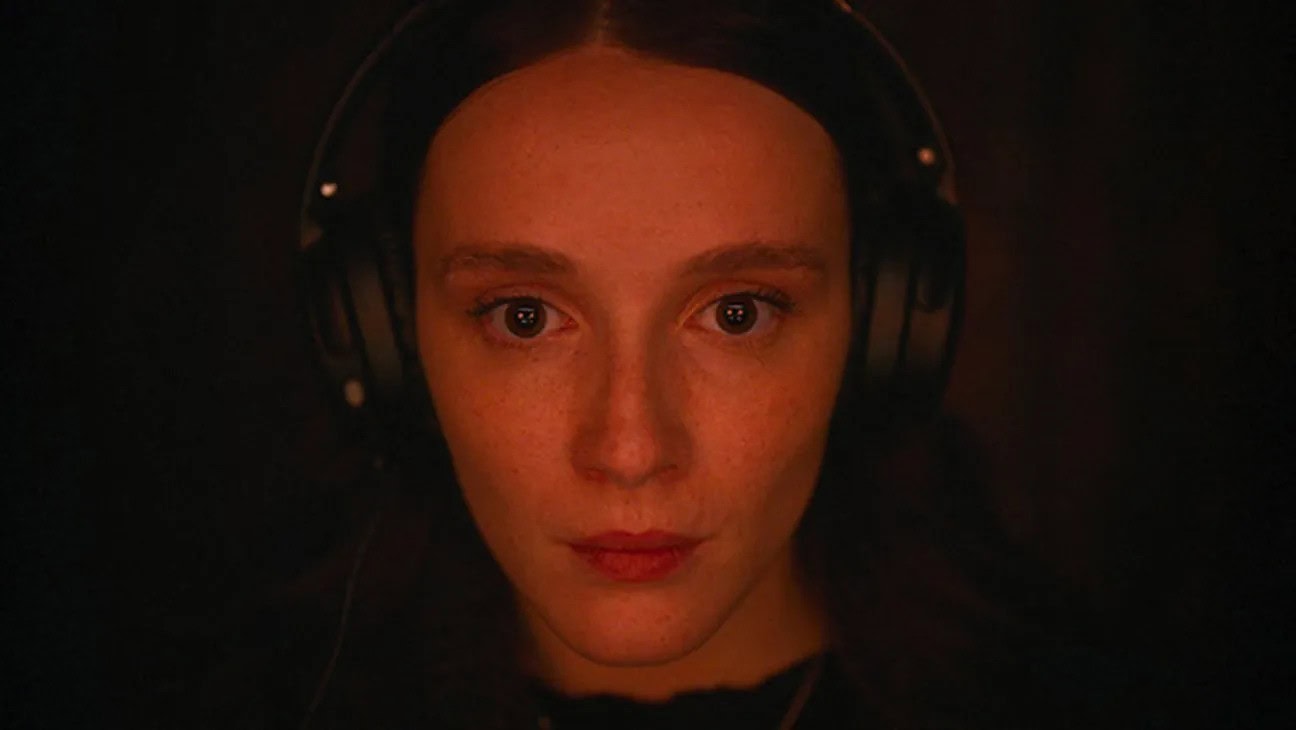
Red Rooms (Canada: Pascal Plante, 2024)


 Red Rooms (Canada: Pascal Plante, 2024: 118 mins)

Keogan, Natalie. "“There Is a Bombardment of Violent Images in Our Lives”: Director Pascal Plante on His High-Tech Serial Killer Drama Red Rooms." Filmmaker (October 9, 2024)

Lazer, Kit. "Red Rooms." Letterboxd (September 30, 2024) ["An indictment of the voyeurism and loneliness of our chronically online existence. Our empathy as a species is inversely proportional to our internet speed. We wake up, log on to millions of people around the world, likely succumb to misanthropy or self-loathing, log out. "]


Rubsam, Robert. "The Empire of Ugliness." Liberties (December 2024) ["So what are we doing here, really? One cannot imbibe such diverse, daily horrors and not be made coarser. It has been argued that this presentation dulls us to violent images by making them seem less real, but I think we are experiencing something more akin to a levelling, in which images of violence are made to seem just as banal as all the other images or thoughts we see online, both disarming the violence and infecting the mundane with a violent energy, a tincturing which degrades both at the same time.
...
We can see these forces everywhere, in the fossil fuel CEOs who consciously destroy our planet, the tech VC billionaires who commit their fortunes to end democracy, the president-elect who promises to make public life hell for all manner of minorities. These are vicious, vindictive people, obsessed with their IQs, who preen over their supposed genetic superiority, yet must purchase a prominence they cannot earn. Leys found them not only in the realm of aesthetics, but even more in ethics: “The need to bring down to our own wretched level, to deface, to deride and debunk any splendour that is towering above us is probably the saddest urge of human nature.” They can destroy whatever is good and beautiful in society, can attack it in others, can push their technologies to the edge, yet they are totally incapable of producing anything but ugliness themselves. It should disturb us that so many identify with and celebrate them. Their empire is everywhere, and we are all stakeholders."]

---. "On Red Rooms and Our Depravity." Required Reading from Liberties (February 3, 2024) 

Shaffer, Marshall. "Pascal Plante on Subverting True Crime Tropes with Red Rooms." Slant (October 4, 2024) ["Plante discusses whether online culture encourages people to hide themselves in society."]

Snow, Philippa. "A Gallery of Severed Hands and Whatnot." Notebook (January 21, 2025) ["Reflections on the adolescent drive to seek out graphic imagery, from early-’00s shock sites to the films of the New French Extremity."]

Spilde, Coleman. "Red Rooms Want to Make You Sick." Top Shelf Low Brow (September 12, 2024)

Thomas, Ande. "Pascal Plante's Red Rooms Challenges Our Fascination with True Crime." What Sleeps Beneath (September 2, 2024)


ENG 102 2025: Resources Archive #6

"Perhaps we think and dream so intimately next to the lake because it reflects us best as the most 'bodylike' of the bodies of water. Different from an ocean or great river, the scale of a lake can be encompassed by the human imagination, and lakes, like us, live and die. A lake begins dying as soon as it is formed, taking in sediment from contributing rivers or streams, filling with accumulating debris and ever so slowly, as the stretches of geological time progress, turning to marsh, bog and finally land. At the same time the lake is continually taking in water and letting it go, flowing in an apparent stillness and constancy, demonstrating the give and take necessary to support life. Sustaining mother who provides water, food and favorable climate to those who inhabit her shores, the lake requires in turn a subtle balance of power between human nature and spirit to insure the natural life of her precious waters (44)." - The Book of Symbols: Reflections on Archetypal Images (Taschen, 2010)  

    "That joy: maybe this is how everyone should feel about ideas and the ways that they open up or close off possibilities, the way that - well to quote the sentence from which the tile of this book comes, 'The ultimate hidden truth of the world is that it is something that we make, and could just as easily make differently.'  If you truly believe that, if you perceive a world that is constructed according to certain assumptions and values, then you see that it can be changed, not least by changing those assumptions and values.
    You recognize that ideas matter and that we have some role in choosing which ones generate the realities of our lives, and you recognize that what scholars and thinkers do is tremendously important. While too many anti-intellectuals are dismissive of ideas altogether, even too many of those whose job is to deal in ideas are dismissive of their power to change the world. Because if they can, we who work with ideas are saddled with responsibility for changing that world or equipping others to do so and helping them dismantle ideas that imprison and degrade. We have to recognize that ideas are tools that we wield, and with them, some power (ix). - Solnit, Rebecca. "Forward: With Ferocious Joy." 

"There are many mysteries of the academy which would be appropriate objects of ethnographic analysis. One question that never ceases to intrigue me is tenure. How could a system ostensibly designed to give scholars the security to be able to say dangerous things have been transformed into a system so harrowing and psychologically destructive that, by the the time scholars find themselves in a secure position, 99 percent of them have forgotten what it would even mean to have a dangerous idea? (10)" - David Graeber (2017)

"If I spoke about it – if I did – what would I tell you? I wonder. Would I tell you about the time … Or would I tell you about the place … Would I tell you about her? The princess without voice. Or perhaps I would just warn you, about the truth of these facts. And the tale of love and loss. And the monster, who tried to destroy it all." - Giles, The Shape of Water (2017)


------------------------------------------------------------------


Anderson, Ellie and David Peña-Guzmán. "Comfort." Overthink #118 (December 3, 2024) ["... Ellie and David discuss all things comfortable…and uncomfortable. They talk through the conflation of comfort and luxury, modern architecture’s prioritization of comfort, and whether our need for comfort is the reason for our burning planet. With everything from Maslow’s hierarchy of needs to “the comfort-industrial complex,” this episode will have you questioning what it takes for us to lead a full and happy life. Plus, in the bonus they get into the meaning of the phrase ‘too close for comfort’, alcohol as a destructive form of comfort, and the importance of attachment theory."]

Barker, Dan. "The Current State of Atheism and Separation of Church and State." The Michael Shermer Show (November 30, 2024) ["In this thought-provoking conversation, Dan Barker, a former evangelical preacher turned prominent atheist and co-president of the Freedom from Religion Foundation, explains the current state of separation of Church and State, the influence of Catholicism on the Supreme Court, and the ongoing debates surrounding public education and religious symbols. Barker also discusses the legal challenges tackled by his organization, and introduces “Contraduction,” a new philosophical concept that reexamines how beliefs and arguments can reverse in order and meaning. Plus, the moral implications of belief systems and the fine-tuning argument for the existence of God, the nature of nothingness, and free will. Dan Barker is co-president of the Freedom From Religion Foundation, co-host of Freethought Radio, and co-founder of The Clergy Project. He worked 19 years as an evangelical minister and is a member of the Lenape (Delaware) tribe of American Indians. His new book is Contraduction."]

Chaw, Walter. "Terrifier 3 (2024)." Film Freak Central (October 14, 2024) ["Damien Leone’s Terrifier films are empathy tests for a culture, for a creature, that has amused itself to death. No longer able to discern the line between reality and the media we consume, we are presented with these Voight-Kampff tests designed to replicate the social conditions of our steady dehumanization. You see, I’m sick. I’m afraid it’s mortal but I don’t know–I mean, every second is a second I will never see again, so isn’t everything mortal? I have, for over a year now, watched Israel gleefully, defiantly wage genocide on the Palestinian people and consumed images of the human body in various states of dismemberment, violation, and humiliation that before this I had only glimpsed with horror in grainy photographs smuggled out of Nanking during WWII–that I had only imagined while reading war stories written by men destroyed largely by just the act of bearing witness. This is the shape of my astonishing privilege. If I didn’t want to see it, I didn’t have to. Something changed."]

Cooper, Paul. "The Mongols: The Terror of the Steppes, Part 1." Fall of Civilizations (Decemeber 4, 2024) ["In the far east of the Eurasian steppe, the sound of hoofbeats is growing... In this episode we travel along the vast grassland corridor of the steppe, to hear one of the most remarkable and unlikely stories from medieval history – the story of the Mongol Empire. Find out how this group of nomadic horse riders united the peoples of the Mongolian steppe, and forged them into a truly unique kind of state. Discover how they conquered much of the lands of Eurasia, and brought the distant cultures of China, Persia, the Middle East and Europe into contact. And hear the story of how the world’s largest land empire finally came apart, and left the world as we know it in its wake."]

Ware, Jessica. "Odonatology (DRAGONFLIES)." Ologies (November 6, 2024) ["They’re acrobatic fliers with long bodies and veined wings and their babies breathe through their butts: dragonflies. Let’s get into the difference between a damselfly and dragonfly, how fast they dart around, how big they were in the age of the dinosaurs, sci-fi aviation inspiration, mating choreography, attracting them to your yard (maybe to eat them) and lots more with scholar, American Museum of Natural History curator, and dragonfly expert: Dr. Jessica Ware."]

 West, Stephen. "Nietzsche Returns with a Hammer." Philosophize This! #211 (September 22, 2024) ["Today we talk about Nietzsche's views on the decay of western society. We talk about his problems with Socrates. The genealogy of Egalitarianism that has led to our modern societies, and how to contextualize his concept of the Ubermensch within modern culture."]

Wheeler, Tom. Techlash: Who Makes the Rules in the Digital Gilded Age? Rowman & Littlefield, 2023. ["Hailed by Ken Burns as one of the foremost “explainers” of technology and its effect throughout history, Tom Wheeler now turns his gaze to the public impact of entrepreneurial innovation. In Techlash, he connects the experiences of the late 19th century’s industrial Gilded Age with its echoes in the 21st century digital Gilded Age. In both cases, technology innovation and the great wealth that it created ran up against the public interest and the rights of others. As with the industrial revolution and the Gilded Age that it created, new digital technology has changed commerce and culture, creating great wealth in the process, all while being essentially unsupervised. Warning that today is not the “Fourth Industrial Revolution” some envision, Wheeler calls for a new era of public interest oversight that leaves behind industrial era regulatory ideas to embrace a new process of agile, supervised and enforced code setting that protects consumers and competition while encouraging continued innovation. Wheeler combines insights from his experience at the highest echelons of business and government to create a compelling portrait of the need to balance entrepreneurial innovation with the public good."]

Williams, Adrienne, Milagros Miceli, and Timnit Gebru. "The Exploited Labor Behind Artificial Intelligence." NOEMA (October 13, 2024) ["Tech companies that have branded themselves “AI first” depend on heavily surveilled gig workers like data labelers, delivery drivers and content moderators. Startups are even hiring people to impersonate AI systems like chatbots, due to the pressure by venture capitalists to incorporate so-called AI into their products. In fact, London-based venture capital firm MMC Ventures surveyed 2,830 AI startups in the EU and found that 40% of them didn’t use AI in a meaningful way. Far from the sophisticated, sentient machines portrayed in media and pop culture, so-called AI systems are fueled by millions of underpaid workers around the world, performing repetitive tasks under precarious labor conditions. And unlike the “AI researchers” paid six-figure salaries in Silicon Valley corporations, these exploited workers are often recruited out of impoverished populations and paid as little as $1.46/hour after tax. Yet despite this, labor exploitation is not central to the discourse surrounding the ethical development and deployment of AI systems. In this article, we give examples of the labor exploitation driving so-called AI systems and argue that supporting transnational worker organizing efforts should be a priority in discussions pertaining to AI ethics."]

Wolf, Kathleen. "The Impact of urban trees on human health and wellbeing." Tree Lady Talks 5.23 (November 29, 20240 [" Dr. Kathleen Wolf, a research social scientist, discusses the profound impact of urban trees on human health and well-being. She shares her journey from biologist to researcher, emphasizing the importance of nature in urban settings. The conversation explores various themes, including the health benefits of living near trees, the significance of tree canopy for neonatal care, and the role of nature in child development. Dr. Wolf highlights the correlation between tree cover and improved mental health, social connections, and even lower crime rates, while expressing frustration over the lack of action taken by authorities despite the compelling research. In this conversation, Kathy shares her extensive experience in research translation and the importance of integrating nature into urban environments. She discusses the optimism surrounding the uptake of research in policy and community practices, emphasizing the role of forest bathing and experiential learning in reconnecting individuals with nature. The conversation also highlights the significant benefits of green spaces in educational settings and the economic advantages of urban tree canopies, ultimately calling for a more profound integration of nature in our daily lives and policies. This conversation explores the multifaceted benefits of urban forests and nature in various settings, particularly focusing on their impact on community health, urban planning, and the integration of nature into healthcare. The discussion highlights personal anecdotes, research findings, and the importance of young scientists in advancing this field. It also touches on innovative approaches like virtual reality to enhance nature experiences for those unable to access the outdoors."]

Yin, Leon. "The Digital Divide." On the Media (October 27, 2022) ["An investigation by nonprofit newsroom The Markup found that four internet providers disproportionately offered lower-income and least-White neighborhoods slow internet service for the same price as speedy connections they offered in other areas. According to Leon Yin, Investigative Data Journalist at The Markup, homes in historically redlined areas were offered internet speeds so slow, the FCC doesn’t consider it to be broadband. This week, guest host Micah Loewinger asks Yin how he trawled through more than 800,000 internet service offers with his team to arrive at his findings, and what's at stake."]


Wednesday, January 29, 2025

Richard Roar: Religion/Spirituality/Christian Mysticism

Center for Action and Contemplation ["Franciscan Richard Rohr founded the Center for Action and Contemplation (CAC) in 1987 because he saw a deep need for the integration of both action and contemplation—the two are inseparable. As Father Richard likes to say, the most important word in our Center’s name is neither Action nor Contemplation, but the word and."]

Rohr, Richard. "Christianity and Unknowing." Sounds of Sand #28 (March 30, 2023) ["Richard Rohr, as a Catholic priest and Franciscan Friar, offers a concise history of how Western Christianity once had, soon lost, tried to retrieve, and now is roundly rediscovering its own traditional understanding of unitive consciousness (which was our word for non-dual thinking). The Christian contemplative mind was usually a subtext, and yet it was always clearly there too, and much closer to the surface, but only for those exposed to the mystical base that was revealed in the Gospel of John, the Desert Fathers and Mothers, the Celtic and monastic traditions, and what was generally referred to as the apophatic or wisdom stream of Christianity. These were our many saints and mystics. This possibility was brought to the fore by Thomas Merton in the middle of the last century, and is now flowing in many positive directions. It is now our task to rediscover the pre-Enlightenment Christianity that reveled in "the cloud of unknowing", what some called "learned ignorance", and the very notion of Mystery itself. Only when we got into competition with rationalism and secularism, did we adopt this rather recent mania for certitude and a very limited kind of scientific knowing. Almost the entire history of Protestantism emerged in this period, and thus the contemplative mind is an utterly new revelation for them, and frankly for all of us, as we again learn to be comfortable living on the edge of both the knowable and the unknown. Fr. Richard Rohr is a globally recognized ecumenical teacher bearing witness to the universal awakening within Christian mysticism and the Perennial Tradition. He is a Franciscan priest of the New Mexico Province and founder of the Center for Action and Contemplation (CAC) in Albuquerque, New Mexico. Fr. Richard’s teaching is grounded in the Franciscan alternative orthodoxy—practices of contemplation and self-emptying, expressing itself in radical compassion, particularly for the socially marginalized. Fr. Richard is the author of numerous books, including Everything Belongs, Adam’s Return, The Naked Now, Breathing Under Water, Falling Upward, Immortal Diamond, and Eager to Love: The Alternative Way of Francis of Assisi."]

---. Eager to Love: The Alternative Way of Francis of Assisi. Franciscan Media, 2020. ["Francis of Assisi is one of the most beloved of all saints. Both traditional and entirely revolutionary, he was a paradox. He was at once down to earth and reaching toward heaven, grounded in the rich history of the Church while moving toward a new understanding of the world beyond. Globally recognized as an ecumenical teacher, Richard Rohr started out—and remains—a Franciscan friar. The loving, inclusive life and preaching of Francis of Assisi make him a recognizable and beloved saint across many faith traditions. He was, as Rohr notes, “a master of ‘making room for it’ and letting go of that which was tired or empty.” Francis found an “alternative way” to follow Jesus, one that disregarded power and privilege and held fast to the narrow path of the Gospel. Rohr helps us look beyond the birdbath image of the saint to remind us of the long tradition founded on his revolutionary, radical, and life-changing embrace of the teachings of Jesus. Rohr draws on Scripture, insights from psychology, and literary and artistic references, to weave together an understanding of the tradition as first practiced by St. Francis. Rohr shows how his own innovative theology is firmly grounded in the life and teaching of this great saint and provides a perspective on how his alternative path to the divine can deepen and enrich our spiritual lives."]

---. "Growing Up Men." On Being (June 13, 2019) ["Men of all ages say Richard Rohr has given them a new way into spiritual depth and religious thought through his writing and retreats. This conversation with the Franciscan spiritual teacher delves into the expansive scope of his ideas: from male formation and what he calls “father hunger” to why contemplation is as magnetic to people now, including millennials, as it’s ever been. Richard Rohr is a Franciscan writer, teacher, and the founder of the Center for Action and Contemplation in Albuquerque, New Mexico. His many books include Falling Upward, Divine Dance, and most recently, The Universal Christ: How a Forgotten Reality Can Change Everything We See, Hope For, and Believe."]

---. The Tears of Things: Prophetic Wisdom for an Age of Outrage. Harmony, 2025. ["In his first major work since The Universal Christ, one of our most prominent spiritual voices offers a wholehearted and hope-filled model for the world today, grounded in the timeless wisdom of the Hebrew prophets.
How do we live compassionately in a time of violence and despair? What can we do with our private disappointments and the anger we feel in such an unjust world? In his most personal book yet, Richard Rohr turns to the writings of the Jewish prophets, revealing how some of the lesser-read books of the Bible offer us a crucial path forward today. The prophets’ writings reflect the full spectrum of human maturity. In almost every case, their initial rage and their accusatory words evolve into a profound pathos and lamentation about our shared human condition and the world’s suffering. Through astute critiques of culture and institutions, and their journey from anger to sadness, and ultimately compassion, the prophets exemplify what Rohr calls “sacred criticism”—a distinct approach to confronting evil and injustice that acknowledges the wholeness of history, the interconnectedness of every living being, and the reality of a divine and universal love. In this, they set the stage for Jesus, who follows this identical pattern. Drawing on a century of biblical scholarship and written in the warm, pastoral voice that has endeared Rohr to millions, The Tears of Things breathes new life into ancient wisdom. It paves a path of enlightenment for anyone seeking a compassionate way of living in a hurting world."]

---. The Universal Christ: How a Forgotten Reality Can Change Everything We See, Hope For, and Believe. Harmony, 2019. ["In his decades as a globally recognized teacher, Richard Rohr has helped millions realize what is at stake in matters of faith and spirituality. Yet Rohr has never written on the most perennially talked about topic in Christianity: Jesus. Most know who Jesus was, but who was Christ? Is the word simply Jesus’s last name? Too often, Rohr writes, our understandings have been limited by culture, religious debate, and the human tendency to put ourselves at the center.
Drawing on scripture, history, and spiritual practice, Rohr articulates a transformative view of Jesus Christ as a portrait of God’s constant, unfolding work in the world. “God loves things by becoming them,” he writes, and Jesus’s life was meant to declare that humanity has never been separate from God—except by its own negative choice. When we recover this fundamental truth, faith becomes less about proving Jesus was God, and more about learning to recognize the Creator’s presence all around us, and in everyone we meet. Thought-provoking, practical, and full of deep hope and vision, The Universal Christ is a landmark book from one of our most beloved spiritual writers, and an invitation to contemplate how God liberates and loves all that is."]

---. "Unworthiness is the Ticket." Center for Action and Contemplation (January 22, 2025) ["Entering the spiritual search for truth and for ourselves through the so-called negative, dealing squarely with what is—in ourselves, in others, or in the world around us—takes all elitism (its most common temptation) out of spirituality. It makes arrogant religion largely impossible and reveals any violent or self-aggrandizing religion as an oxymoron (although sadly that has not been widely recognized). In this upside-down frame, the quickest ticket to heaven, enlightenment, or salvation is unworthiness itself, or at least a willingness to face our own smallness and incapacity. Our conscious need for mercy is our only real boarding pass. The ego doesn’t like that very much, but the soul fully understands. In different ways, we humans falsely divide the world into the pure and impure, the totally good and the totally bad, the perfect and imperfect. It begins with dualistic thinking and then never manages to get beyond it. Such a total split or clean division is never true in actual experience. We all know that reality is a lot more mixed and “disordered” than that; so, in order to continue to see things in such a false and binary way, we really have to close down. That is the hallmark of immature religion. It demands denial, splitting, and mental pretense. It moves from the first false assumption of purity or perfection toward an entire ethical code, a priesthood of some sort, and various rituals and taboos that keep us on the side of the seeming pure, positive, or perfect—as if that were even possible.  I mean this next point kindly: Organized religion is almost structurally certain to create hypocrites (the word literally means “actors”), those who try to appear to be pure and good, or at least better than others. Jesus uses the word at least ten times in Matthew’s Gospel alone! We are unconsciously trained to want to look good, to seek moral high ground, and to point out the “speck” in other people’s eyes while ignoring the “log” in our own (Matthew 7:3–5). None of us lives up to all our spoken ideals, but we have to pretend we do in order to feel good about ourselves and to get others of our chosen group to respect us. Honest self-knowledge, shadow work, therapy, and tools like the Enneagram are sometimes dismissed with hostility by many fervent believers, perhaps because they are afraid of or hiding something. They disdain this work as “mere psychology.” If so, then the desert fathers and mothers, the writers of the Philokalia, Thomas Aquinas, and Teresa of Ávila were already into “mere psychology,” as was Jesus. Without a very clear struggle with our shadow self and some form of humble and honest confession of our imperfections, none of us can or will face our own hypocrisy."]


Tuesday, January 28, 2025

Harlan Ellison: The Deathbird

 Topics for Discussion (Give 5 points per right answer)

1. Melville's Moby-Dick begins, "Call Me Ishmael." We say it is told in the first person. In what person is Genesis told? From whose viewpoint?

2. Who is the "good guy" in this story? Who is the "bad guy?" Can you make a strong case for the reversal of roles?

3. Traditionally, the apple is considered to be the fruit the serpent offered to Eve. But apples are not endemic to the Near East. Select on of the following, more logical substitutes, and discuss how myths came into being and are corrupted over a long periods of time: olive, fig, date, pomegranate.

4. Why is the word Lord always in capitals and the name God always capitalized? Shouldn't the serpent's name be capitalized as well? If no, why?

5. If God created everything (see Genesis, Chap. 1), why did he create problems for himself by creating a serpent who would lead his creations astray? Why did God create a tree he did not want Adam and Eve to know about, and then go out of his way to warn them against it?

6. Compare and contrast Michelangelo's Sistine Chapel ceiling panel of the Expulsion from Paradise to Bosch's Garden of Earthly Delights.

7. Was Adam being a gentleman when he placed blame on Eve? Who was Quisling? Discuss "narking" as a character flaw.

8. God grew angry when he found out he had been defied. If God is omnipotent and omniscient, didn't he know? Why couldn't he find Adam and Eve when they hid?

9. If God had not wanted Adam and Eve to taste the fruit of the forbidden tree, why didn't he warn the serpent? Could God have prevented the serpent from tempting Adam and Eve? If yes, why didn't he? If no, discuss the possibility the serpent was as powerful as God.

10. Using example from two different media journals, demonstrate the concept of "slanted new." (42-43) "The Deathbird" (in the 2024 collection Harlan's Ellison' Greatest Hits)

Promising Young Woman (UK/USA: Emerald Fennell, 2020)


 Promising Young Woman (UK/USA: Emerald Fennell, 2020: 113 mins) 


Benson-Allott, Caetlin. "‘Promising Young Woman’ confuses viewers. That’s what makes it brilliant." The Washington Post (April 24, 2021)

Bogutskaya, Anna, et al. "Promising Young Podcast #1 - A Woman's Worst Nightmare." The Final Girls (April 16, 2021) ["A mini-pod dedicated to Emerald Fennell's blistering revenge fairytale, Promising Young Woman. The first episode is a (mostly) spoiler-free in-depth review."]

---. "Promising Young Podcast #2 - But I'm A Nice Guy ." The Final Girls (April 24, 2021) [" In this episode we discuss the nice guy trope and the way the film depicts it."]

---. "Promising Young Podcast #3 - Hell Hath No Fury Like a Critic Scorned." The Final Girls (May 3, 2021) [" In this episode we discuss the divisive reaction, accolades and critiques the film has received."]

---. "Promising Young Podcast #4 - Girls Just Want to Not Get Assaulted." The Final Girls (May 17, 2021) ["In this episode we discuss the real big bad of the film: rape culture."]

Briones, Marjorie A. "Emerald Fennell's Promising Young Woman (2020): A Psychoanalytic Review of Masculinity and Rape Culture ."  Access*: Interdisciplinary Journal of Student Research and Scholarship 6.1 (2022)

Green, Fiona. "Examining Ourselves: The Painful Truths in Emerald Fennell’s Promising Young Woman." Berkeley Fiction Review (March 28, 2022)

Harris, Aisha. "The Agony And Subversion Of The Promising Young Woman Ending." Pop Culture Happy Hour (January 21, 2021)

McAndrews, Mary Beth. "On the Disempowerment of Promising Young Woman." Roger Ebert (January 13, 2021)


Tuesday, January 21, 2025

Portrait of a Lady on Fire (France: Céline Sciamma, 2019)


Portrait of a Lady on Fire (France: Céline Sciamma, 2019: 119 mins)

Passion brews quietly between an artist and her subject, until together they create a space in which it can briefly flourish, in this sumptuous eighteenth-century romance from Céline Sciamma, one of contemporary French cinema’s most acclaimed auteurs. Summoned to an isolated seaside estate on a secret assignment, Marianne (Noémie Merlant) must find a way to paint a wedding portrait of Héloïse (Adèle Haenel), who is resisting chattel marriage, by furtively observing her. What unfolds in exquisite tension is an exchange of sustained gazes in which the two women come to know each other’s gestures, expressions, and bodies with rapturous intimacy, ultimately forging a subversive creative collaboration as well as a delirious romance. Charged with a yearning that almost transcends time and space, Portrait of a Lady on Fire mines the emotional and artistic possibilities that emerge when women can freely live together and see one another in a world without men. - Criterion


Balsom, Erika. "In Search of the Female Gaze." Cinema Scope #83 (Summer 2020) [" Why not give up on searching for the female gaze and persist instead in the call for another gaze, to borrow the name of the London-based feminist film journal? And yet another and another? It would leave open an intersectional space of invention and difference; it would remain sensitive to historical specificity; and it would welcome a plurality unconstrained by a binary opposition to maleness—something hardly possible in a rule-based approach that designates particular qualities as inherently feminine and others not."]

Batuman, Elif. "Céline Sciamma's Quest for a New, Feminist Grammar of Cinema." The New Yorker (January 31, 2022)

Bittencourt, Ella. "Portrait of a Lady on Fire: Daring to See." The Current (June 23, 2020) ["Around the besotted lovers, the film envisions a social contract defined by a strong sense of community among women, no matter their age or class. It takes place in the late eighteenth century, but it also speaks to our own time, as many women continue to call for intersectional solidarity in their fight for equality. It is no accident that here the engine of this revolution is art. Sciamma, who grew up outside Paris and would bike into a neighboring town to go to the movies, creates a provincial world in which art—both as a technique governed by solemn tradition and a practical tool for remaking one’s world—is a part of daily life, and in which the artist’s gaze is reciprocal, not one-sided. Similarly, the film presents the act of falling in love not through the (quintessentially male, one might say) lens of conquest and possession but through one of equality between the two lovers, creating a reality in which each can truly see the other."]

Complex, Valerie. "Stanning the Ancients." Letterboxd (June 20, 2020) ["Valerie Complex probes the intersection of Greco-Roman mythology and queer experience in Portrait of a Lady on Fire, The Neon Demon, Jumbo and Midsommar."]

Corry, Dominic. "The Céline Sciamma Q & A." Letterboxd (February 11, 2020)

Haenel, Adèle, et al. "Portrait of a Lady on Fire." Film Comment Podcast (October 1, 2019) ["Eugene Hernandez, FLC’s Deputy Director and Co-Publisher of Film Comment, is joined by Film Comment Editor-in-Chief Nicolas Rapold to discuss Portrait of a Lady on Fire, which the magazine is presenting at the festival. ... Then we go to last night’s Q&A for Portrait of a Lady on Fire, featuring writer-director Céline Sciamma and stars Adèle Haenel and Noémie Merlant. Moderated by Amy Taubin, they discuss a David Lynch-esque approach to sound design, the similarities between directing and painting, how art consoles the soul, the costume design, and (spoilers!) the film’s final scene."]

Henry, Alex and Carla Smith, eds. Portraits of Resistance: The Cinema of Céline Sciamma. Seventh Row (ND) [Excerpt from the book] 

Javvadi, Praveena. "Establishing Perspective in Portrait of a Lady on Fire." The Best Pictures Project (April 5, 2021)

Jeitler, Morgan. "Cinematic Memory in ‘Portrait of a Lady on Fire’ and ‘Pain and Glory.'" The Best Picture Project (April 5, 2021)


Salmon, Caspar. "The Action Cinema of Céline Sciamma." The Notebook (February 18, 2022)

Stecher, Rachel and Carl Sweeney. "Portrait of a Lady on Fire (2019) and Céline Sciamma." CineHistorians (December 5, 2025) ["On S2E7 of The CineHistorians Podcast, we discuss Portrait of a Lady on Fire (2019), directed by Céline Sciamma and starring Noémie Merlant and Adèle Haenel. This is the seventh installment in an eight episode season about the 2022 Sight & Sound Top 100 Greatest Films of All Time list."]

Sun, Vanessa X. "Portrait of a Lady on Fire and Céline Sciamma’s Mastery of Color and Light." The Best Pictures Project (April 6, 2021)


Saturday, January 18, 2025

ENG 102 2025: Resources Archive #5

"Following the views of Paul Ricoeur and David Carr, I argue that our life is best understood as the product of our own narration: we account for the meaning of our lives in the terms of a story about what we have done and who we plan to be, selectively emphasizing and interpreting life's events into a unified whole, like the plot of a novel. If this view is correct, and I believe there is good reason to think it is, then the creation of a meaningful life and the imposition of meaning on the world around us is a creative process that is not dissimilar to the creation of a film. Films are realistic, I contend, not because they reflect the world the way it really is, but because they reflect the world the way we experience it - as a process of choosing among narratives we inherit from our cultural traditions and finding, or creating, our own reading of events. In short, films are realistic portrayals of how we encounter life in the one aspect that is crucial for this book: the way in which we establish meaning (5)." -- Pamerleau, William C. Existentialist Cinema. NY: Palgrave Macmillan, 2009.

"Through gathering, we ignite our spaces with spirit, we circle the bonfire, bow down at the forest altar, give praise at the temple to our chosen divinities. Through pilgrimage, we carve indelible pathways, making our meditative way across continents, generations of footsteps treading, again and again, upon sacred grounds. And through our creative offerings we envision new worlds, wildly imaginative odes to what we deem as holy; golden temples hewn of rock, enormous spirals sculpted from sand and soil, silent sanctuaries hidden among wooded groves. We paint the ancient cave walls, carve petroglyphs to mark the way, place roses in veneration at the candlelit altar (8)." - Hundley, Jessica. "A Sacred Site." Sacred Sites. Taschen, 2024.


-----------------------------------------------------------------------------


Black, Julia. "The “Dark Elf” Leading Tech’s Extreme Right." Tech Won't Save Us (October 17, 2024) ["Paris Marx is joined by Julia Black to discuss who Curtis Yarvin is and how his anti-democratic, far-right writings have influenced the politics of Silicon Valley and the wider American extreme right.
Julia Black is a features reporter on The Information’s Weekend Team."]

Dorian, M.J. "Nikola Tesla & the Paradox of Genius." Creative Codex #5 (May 9, 2019) ["Nikola Tesla's unique genius is the stuff of fantasy; he electrified the world, feuded with Thomas Edison, invented a death ray, and caused an earthquake in Manhattan. In this episode we try to untangle the paradox of Nikola Tesla's life: how can a man of unrivaled genius change the world but die a hermit with no money to his name?"]

Fontainelle, Earl. "We’re Together In Dreams: Dreaming and Western Esotericism." The Secret History of Western Esotericism #7 (October 4, 2017) ["In approaching the western esoteric traditions, we are confronted by visions, magic, esoteric interpretations, and fantastical otherworldly journeys. Luckily, everyone on earth has experience with all of these strange phenomena, because everyone dreams. In this episode we formulate some preliminary musings on the importance of dreams for western esotericism, and discuss some of the theories about dreams and their significance that we find in the earliest texts of the western tradition. Ranging from lying gods in the Homeric corpus to dæmonic hypnagogic possession in the late antique Platonist writer Iamblichus, this episode sets the stage for things to come."]

"How Monsters are Made." Hidden Brain (December 2, 2024) ["What makes ordinary people do evil things? It was a question that long fascinated the psychologist Philip Zimbardo, who died in October. Zimbardo was best known for the controversial Stanford prison experiment, in which he created a simulated prison in the basement of a university building and recruited volunteers to act as prisoners and guards. This week, we explore how Zimbardo came to create one of psychology’s most notorious experiments – and inadvertently became the poster child for the human weaknesses he was trying to study. "]

Hypernormalisation (BBC: Adam Curtis, 2016: 166 mins)  ["HyperNormalisation wades through the culmination of forces that have driven this culture into mass uncertainty, confusion, spectacle and simulation. Where events keep happening that seem crazy, inexplicable and out of control—from Donald Trump to Brexit, to the War in Syria, mass immigration, extreme disparity in wealth, and increasing bomb attacks in the West—this film shows a basis to not only why these chaotic events are happening, but also why we, as well as those in power, may not understand them. We have retreated into a simplified, and often completely fake version of the world. And because it is reflected all around us, ubiquitous, we accept it as normal. This epic narrative of how we got here spans over 40 years, with an extraordinary cast of characters—the Assad dynasty, Donald Trump, Henry Kissinger, Patti Smith, early performance artists in New York, President Putin, Japanese gangsters, suicide bombers, Colonel Gaddafi and the Internet. HyperNormalisation weaves these historical narratives back together to show how today’s fake and hollow world was created and is sustained. This shows that a new kind of resistance must be imagined and actioned, as well as an unprecedented reawakening in a time where it matters like never before."]

Llewellyn-Jones, Lloyd. "The Cleopatras: A Dialogue." Converging Dialogues (October 17, 2024) ["Xavier Bonilla has a dialogue with Lloyd Llewellyn-Jones about the history of the various Cleopatra queens. They discuss the 7 major Cleopatras, gender roles and norms in Egypt, and the context of the Antigonids, Ptolemies, and Seleucids. They talk about Cleopatra I, incestuous marriages, Potbelly and Cleopatra II and III. They discuss the ethnicity of Cleopatra VII, her various romantic relationships, her suicide, legacy of the Cleopatras, and many more topics. Lloyd Llewellyn-Jones is Chair and Professor of Ancient History at Cardiff University. He has his PhD in Ancient History from Cardiff University and has taught previously at the University of Edinburgh. His main interests are in Greek socio-cultural history, women’s history, and ancient Persia. He is the author of many books including the most recent book, The Cleopatras: The Forgotten Queens of Egypt."]

Marx, Paris. "Data Vampires: Sacrificing for AI." Tech Won't Save Us (October 21, 2024) ["Sam Altman is clear: he’s ready to sacrifice anything for his AI fantasies. But are we? We dig into why generative AI has such extreme energy demands and how major tech companies are trying to rewrite climate accounting rules to cover how much their emissions are rising. AI isn’t just churning out visual slop; it’s also being used to transform how our society works and further reduce people’s power over their lives. It’s a disaster any way you look at it. This is episode 3 of Data Vampires, a special four-part series from Tech Won’t Save Us."]

Niose, David. "Anti-intellectualism is Killing America: Social dysfunction can be traced to the abandonment of reason." Psychology Today (June 20, 2015) ["Ignorance, or an aversion to reason, has allowed things like gun violence and racism to define American culture. Anti-intellectual societies fall prey to tribalism and simplistic explanations, are emotionally immature, and often seek violent solutions. Corporate interests encourage anti-intellectualism, conditioning Americans into conformity and passive acceptance of institutional dominance."]

Ravanna, MV. "Nuclear Won’t Meet Tech’s Energy Demands." Tech Won't Save Us #252 (November 28, 2024) ["Paris Marx is joined by MV Ramana to discuss the tech industry’s push to have nuclear energy power its data centers and why the reality of nuclear power isn’t as great as its promoters often make it seem. MV Ramana is a Professor and Simons Chair in Disarmament, Global and Human Security at the School of Public Policy and Global Affairs at the University of British Columbia. He is the author of Nuclear Is Not the Solution: The Folly of Atomic Power in the Age of Climate Change."]

Sheidlower, Jesse. "A Brief History of the Most Famous Swear Word in the World." Literary Hub (November 5, 2024) ["In all of English there are few words rich enough in their history and variety of use to warrant a dedicated dictionary that runs to hundreds of pages and multiple editions. That fuck is at the same time one of the most notorious, popular, and emotive words in the language makes it all the more fascinating—and deserving of the attention given to it in this volume."]

Wednesday, January 15, 2025

ENG 102 2025: Resources Archive #4

 Estes, Jim. "Kelp Worlds: Trophic Cascadia (Part 1)." Future Ecologies 2.7 (February 13, 2020) ["How did nuclear testing accidentally reshape our understanding of food webs and marine ecology? Why did sea otters bounce back from near-extinction on some parts of the Pacific coast, but are still absent in others? We speak with Dr. Jim Estes (a godfather of the field) about a series of serendipitous events that led to the re-writing of textbook ecology."]

Fontainelle, Earl. "So What is Western Esotericism, Anyway?" The Secret History of Western Esotericism (September 5, 2017) ["This episode introduces the SHWEP project, designed to be a tool for anyone wishing to explore the often misunderstood or overlooked byways of western culture; the aim is to be accessible to anyone with an interest in the history of ideas, while maintaining a standard of evidence-based, reliable, and balanced scholarship which will make the podcast useful to high-level academic specialists as well. The SHWEP is a long-form historical investigation, starting from as far back in history as we can go and attempting to trace the genealogies of important streams of esotericism all the way from the beginning to the present day. By engaging in dialogue with leading experts and specialists in every branch of the amazing field of western esoteric studies, SHWEP aims to provide the most complete, detailed, and up-to-date resource for studying these currents available anywhere outside of formal academe."]

Franks, Mary Ann. "We the People: Free Speech." Throughline (July 25, 2024) ["The First Amendment. Book bans, disinformation, the wild world of the internet. Free speech debates are all around us. What were the Founding Fathers thinking when they created the First Amendment, and how have the words they wrote in the 18th century been stretched and shaped to fit a world they never could have imagined? It's a story that travels through world wars and culture wars. Through the highest courts and the Ku Klux Klan. Today on Throughline's We the People: What exactly is free speech, and how has the answer to that question changed in the history of the U.S.?"]

Fredericksen, Paula. "Ancient Christianities." Converging Dialogues #387 (November 25, 2024) ["In this episode, Xavier Bonilla has a dialogue with Paula Fredriksen about the various Christianities in the early 1st and 2nd centuries. They discuss how there are many Christianities, contradictions within the New Testament, integration of Jews and pagans in the Mediterranean in the 1st century, and Jewish diaspora. They also talk about the crucifixion of Jesus, the idea of Israel, and persecution of early Christians. They discuss early eschatology, early church fathers, Constantine, Asceticism, and many more topics. Paula Fredriksen is fellow of the American Academy of Arts and Sciences, Aurelio Professor of Scripture emerita at Boston University and Distinguished Visiting Professor emerita in the Department of Comparative Religions at the Hebrew University of Jerusalem. She has degrees from Wellesley College, Oxford University and Princeton University and is published widely on the social and intellectual history of ancient Christianity and on pagan-Jewish-Christian relations in the Roman Empire. She is the author of numerous books, including the most recent, Ancient Christianities: The First Five Hundred Years."]

Gordon, Lewis. "Black Consciousness." Overthink (November 19, 2024) ["Do you need black skin to be Black? How might concepts such as white privilege be limiting our understanding of how racism works? In Episode 117 of Overthink, Ellie and David chat with philosopher Lewis Gordon about his book, Fear of Black Consciousness. They talk through the history of anti-Black racism, the existential concept of bad faith, why Rachel Dolezal might have Black consciousness, and Frantz Fanon’s experience of being called a racial slur by a white child on a train. From the American Blues to the Caribbean movement of Negritude, this episode is full of insight into Black liberation and White centeredness. In the bonus, Ellie and David go into greater detail about how Black liberation is connected to love."]

Mander, Jerry. "Privatization of Consciousness." Monthly Review (October 2012) ["A. J. Liebling famously said, “Freedom of the press is guaranteed, but only if you own one.” Freedom of speech is also guaranteed. But only if you have a few million dollars for an effective media strategy. Soapbox oratory doesn’t sway the public anymore. But the powers of advertising go well beyond the amount of money spent. The true power is in the nature of moving-image media, projected for hours every day into human brains. It’s a form of intrusion we have never before in history had to face. Even now in the Internet age, the powers of television and advertising are undiminished and insufficiently examined or discussed."]

Mastroianni, Adam. "The Illusion of Moral Decline." Big Brains (November 21, 2024) ["Adam Mastroianni wondered if people are really becoming less moral in today's world, so he set out to find an answer, and published his findings in the journal Nature, “The Illusion of Moral Decline.” While the title may be a giveaway for his findings, he asks: If people are becoming less moral, why do we all feel the same way—and what can we do to shake this “illusion?”]

Rushkoff, Douglas. "Survival of the Richest: Escape Fantasies of the Tech Billionaires." Author Events (August 26, 2022) ["Acclaimed for their intersectional explorations of cyberculture, religion, currency, and politics, Douglas Rushkoff’s 20 bestselling books include Throwing Rocks at the Google Bus, Program or Be Programmed, Present Shock, and Media Virus. He also is the host of the Team Human podcast, writes a column for Medium, and created the PBS Frontline documentaries Generation Like, The Persuaders, and Merchants of Cool. A professor of media theory and digital economics at City University of New York, Queens College, he was selected as one of the world’s 10 most influential intellectuals by MIT, was the first winner of the Neil Postman Award for Career Achievement in Public Intellectual Activity, is a recipient of the Marshall McLuhan Award, and has received many other accolades. In Survival of the Richest, Rushkoff reveals the flawed mindset that has led out-of-touch tech titans to prepare for a societal catastrophe they could simply avert through practical measures."]

Suton, Koraljka. "Villeneuve’s Arrival: A Deep Exploration of the Importance of Language, the Nature of Time and the Dichotomy of Human Existence." Cinephilia and Beyond (November 18, 2024) ["Being a linguist, Louise knows very well that language is the foundation of civilization. It is “the glue that holds a people together,” as she states in her book, making it possible for us to communicate effectively and find common ground. Language helps us bring forth our internal landscapes in ways that are extremely basic and deeply profound. Much like music, it enables us to convey and share with one another the intricacies that make up the human experience, which, in turn, gives us a chance to feel seen and understood. This striving for true understanding is not just inherent in Louise’s vocation as a linguist but is also one of her core qualities as a person. Unlike the majority of the world and its leaders, she is not the least bit interested in playing zero-sum games but rather seeks to utilize our ability for meaningful interpersonal connection so as to arrive at a win-win. Even though the aliens in Arrival are as unhuman-like as it gets, both in terms of language and appearance, Louise’s primary objective is, and remains throughout the film, to truly understand them. And, in doing so, bridge the gap between the ‘self’ and ‘other’. How does she do it? By connecting with them—being to being. This delicate unfolding is touching and awe-inspiring to behold."]

Wells, Sam. "Being With." Everything Happens (November 19, 2024) ["How do you stay close to someone whose pain you can’t fix, whose questions you can’t answer? In this episode, Kate sits down with her dear friend, the Rev. Dr. Sam Wells, a longtime advocate of “being with,” a theology that goes beyond advice and into the sacred space of simply staying. Sam–vicar at London’s St.-Martin-in-the-Fields, an astonishingly wise thinker, and one of Kate’s favorite people on Earth–invites us into a deeper courage: to show up without trying to tidy things up. In this beautifully honest conversation, Kate and Sam talk about: 1) Why love can be so hard. 2) What it means to let go of the need to “help.” 3) The surprising beauty of just… showing up. For everyone exhausted by easy answers, this episode is a hand to hold in the dark."]

West, Stephen. "Why the future is being slowly cancelled. - Postmodernism (Mark Fisher, Capitalist Realism)." Philosophize This! #203 (June 16, 2024) ["Today we continue developing our understanding of the ideas that have led to what Mark Fisher calls Capitalist Realism. We talk about tolerant relativism, postmodern artwork, the slow cancellation of the future, Hauntology and Acid Communism."]

ENG 282 Responses: Spring 2025

 Exemplary Responses:

Bryan Sugura: Whispers Beyond the Veil: Exploring the sound of supernatural in Talk To Me

Noah Sherman: Mickey 17: An Ode to the Underpaid and Undermined Workforce

Bryan Sugura: Visions of Queer identity: Animated Narratives in The People’s Joker

Bryan Sugura: The Banshees of Inisherin

Noah Sherman: Decision to Leave: Is Love Lost in Language?

Noah Sherman: The Banshees of Inisherin: The Elemental Force of Depression

Noah Sherman: The Worst Person in the World: How to Hold a Mirror to Modern Lovers

Bradley Pearl: "Are You Truly Free? An Examination of the Concept of Freedom in 'Judas and the Black Messiah"

Alaina Bowman: The Worst Person in the World: When Does Life Begin

Noah Sherman: Undine: An Expansion on the Turmoil of Modern Love Through Thematic Symbolism and Resonance

Khaya Barnes: Portrait of a Lady on Fire: The Invisible Anatomy of Love

Bryan Sugura: Undine: A Love Fated in Water and Echoed in Sound

Alaina Bowman: Promising Young Woman: "Does That Make You Feel Like a Man?"

Sebastian Roll: Portrait of a Lady on Fire: Diegetic and Non-Diegetic Sound

Noah Sherman: The Importance of Diegetic Sound in Portrait of a Lady on Fire

Bryan Sugura: "Portrait of a Lady on Fire: Natural Light, Natural Love."


Alaina Bowman 10 (Parasite; Portrait of a Lady on Fire; Promising Young Woman; Red Rooms; Judas and The Black Messiah; The Worst Person in the World; Talk to Her; The People's Joker; The Banshee of Inisherin; Starship Troopers) - A

Bradley Pearl 10 (Parasite; Portrait of a Lady on Fire; Promising Young Woman; Red Rooms; Judas and the Black Messiah; The Worst Person in the World; The Banshees of Inisherin; Decision to Leave; The People's Joker; Talk to Her) - A

Bryan Delgado Sugura 9 (Parasite; Portrait of a Lady on Fire; Promising Young Woman; Undine; The Worst Person in the World; The Banshees of Inisherin; The People's Joker; Film Matters publication; Talk to Me) - A

Jamil Oliver 10 (Parasite; Portrait of a Lady on Fire; Promising Young Woman; Red Rooms; Judas and the Black Messiah; The Worst Person in the World; Talk to Me; Starship Troopers; Perfect Days; Poor Things) - A

S

Khaya Barnes 2 (Portrait of a Lady on Fire; Film Matters publication) - on April 9/Black Bag

Kyrie Jordan 5 (Parasite; Portrait of a Lady on Fire; Promising Young Woman; Judas and the Black Messiah; The Worst Person in the World)

Noah Sherman 10 (Parasite; Portrait of a Lady On Fire; Red Rooms; Undine; Judas and the Black Messiah; The Worst Person in the World; The Banshees of Inisherin; Decision to Leave; Film Matters publication; Mickey 17) - A

Sebastian Roll 10 (Portrait of a Lady on Fire; Promising Young Woman; Red Rooms; Undine; Judas and the Black Messiah; The Worst Person in the World; Decision to Leave; The People's Joker; Starship Troopers; Perfect Days) - A


Domination and the Arts of Resistance - Music Mix #38

 Justice; Beach House; TV on the Radio; Devo; St. Vincent; Slow Dive; Car Seat Headrest; Montell Fish; Black Country, New Road; Yo Lo Tengo; The Black Angels; Perfume Genius; Nation of Language; Tennis; boa; Peter McPoland; Jay Som; TV Girl; George Clanton; Songs Ohia; Jason Molina; PJ Harvey; Beck; Shakey Graves; Gianni Fiorellini; New Radicals; Blur; King Gizzard and the Lizard Wizard; Blue Oyster Cult; Led Zeppelin; Barefoot Hockey Goalie; SAULT; Kassie Krut; Interpol; Poppy Jean Crawford; Angel Olsen; Tahaki Miyaki; Camp Saint Helene; Soup Dragons; Junior Reid; Mannequin Pussy; Dead Rock West; X; Michael Franti and Spearhead; Paris; Dead Prez; Public Enemy; Capleton; Kam; Flipsyde; Zachary Kibbee; James Blake; Lil Yachty; MJ Lenderman; Cameron Winter; English Teacher; Origami Angel


Domination and the Arts of Resistance - Music Mix #38

Parasite (South Korea: Bong Joon-ho, 2019)


A zeitgeist-defining sensation that distilled a global reckoning over class inequality into a tour de force of pop-cinema subversion, Bong Joon Ho’s genre-scrambling black-comic thriller confirms his status as one of the world’s foremost filmmakers. Two families in Seoul—one barely scraping by in a dank semibasement in a low-lying neighborhood, the other living in luxury in a modern architectural marvel overlooking the city—become entwined in a dangerous relationship that will lay bare the dark contradictions of capitalism with shocking ferocity. A bravura showcase for its director’s meticulously constructed set pieces, bolstered by a brilliant ensemble cast and stunning production design, Parasite cemented the New Korean Cinema as an undeniable international force when it swept almost every major prize from Cannes to the Academy Awards, where it made history as the first non-English-language film to win best picture. -- Criterion


Song Kang-ho is one of the world’s greatest actors, as well as the muse of one of its greatest filmmakers: Bong Joon-ho. Song easily could have (and perhaps should have) also made our list for his performance in Bong’s masterful Memories of Murder. But the South Korean actor gained international fame for his role in the Oscar-winning Parasite, the first non–English language film to ever win Best Picture. And while it may not be as flashy as his turn as detective Park Doo-man in Memories of Murder, Song’s subtle performance as Kim Ki-taek in Parasite is just as impactful and may be an even more impressive feat of acting.

In Kim Ki-taek, Song transforms himself into a man who is hilariously—and even dangerously—frugal. He’ll go to absurd lengths to save money or make some quick cash, always searching for a new scheme to help lift his desperate family out of poverty. Parasite begins as a more lighthearted satire that centers on class inequality before descending into a full-blown thriller. It’s a wild and unexpected shift, one that is anchored by Song’s performance.

“This film starts with a story of average neighbors and builds to something extreme,” Bong told The Atlantic in 2019. “To cover that wide range, I thought Song Kang-ho would be the best to handle it. Especially in the climax; his character doesn’t have any lines—it’s the subtle changes in his muscles, the subtle tremors, that have to convince the audience of the entire film. Song has that strength as an actor.”

Song exhibits a full spectrum of emotions through simple, measured movements and changes in facial expressions, whether he’s silently reacting to the shame of hearing his employers discuss his distinct stench or he’s watching his basement home flood around him in hopeless, painful defeat. Parasite is an extraordinary film that The New York Times recently named the best movie of the 21st century, and Song is crucial to its groundbreaking success. —Chin


Parasite (South Korea: Bong Joon-ho, 2019: 132 mins)

Bradley, S.A. "Again, Volatile Substance: Caligari Goes to the Oscars." Hellbent for Horror #93 (April 26, 2020) [Bradley makes a case for three Best Picture nominees as horror films: Joker (Todd Phillips), 1917 (Sam Mendes), and Parasite (Bong Joon-Ho).]

Calman, Susan and Mike Muncer. " HOME INVASION Pt 35: Us (2019) & Parasite (2019)." The Evolution of Horror (2023)

Cook, Adam. "Parasite (Bong Joon Ho, South Korea)." Cinema Scope #79 (2019)
Hudson, David. "Bong Joon-ho's Parasite." The Current (May 23, 2019)

---. "Weighing Parasite's Wins." The Current (February 11, 2020)

Juhyundred. "Reading Colonialism in Parasite." Tropics of Meta (February 17, 2020)

Kang, Inkoo. "Parasite: Notes from the Underground." Current (October 30, 2020)

 Koresky, Michael, Nicholas Rapold and Amy Taubin. "Bong Joon-Ho's Parasite." Film Comment Podcast (October 26, 2019) ["At Film Comment, we love it when we get behind a movie and then see other movie-goers share the love. Parasite, the funny and fierce thriller from Bong Joon Ho, was on the cover of our September-October issue, but wasn’t released in theaters until mid-October. But what a release! Audiences are packing the theaters. To talk about the movie’s appeal and Bong’s masterful filmmaking, FC Editor-in-Chief Nicolas Rapold sat down with contributing editor Amy Taubin, who wrote out September-October feature on Parasite, and FC columnist and critic Michael Koresky."]

 Kunkle, Sheila. "Parasite and the Parallax of Social Relations Under Capitalism." Crisis Critique 7.2 (2020) ["This paper offers a psychoanalytic film analysis of director Bong Joon-ho’s 2019 film Parasite, which engages Slavoj Žižek’s concept of a “political parallax.” The analysis reveals how social (class) relations under Capitalism are anamorphically distorted and structured by way of an unsymbolizable gap. Ultimately, achieving a parallax view allows us to see that it’s not capitalism that breeds parasites; rather parasitism is already there, inherently built into capitalism in the form of an internal excess. Thus, capitalism itself becomes the parasitic system that perpetuates both the fantasy of freedom and the fetishization of class difference, which, paradoxically obfuscates class struggle itself."]

Lin, Ed. "This Side of Parasite: New Korean Cinema 1998–2009." The Current (November 2, 2020)

Liu, Rebecca. "A Hellish Commons: Bong Joon-Ho's Parasite." Another Gaze (February 13, 2020)

Park, Ed. "Memories of Murder: In the Killing Jar." Current (April 20, 2021)

Yoonsoo, Kristen. "The Parasite Eight-Minute Meal." Filmmaker (December 10, 2019)