Friday, May 22, 2020
Dialogic Cinephilia - May 22, 2020
Bamber, Martin. "Kiss Me, Stupid (Billy Wilder, 1964)." Senses of Cinema #94 (Spring 2020)
---. "The Servant (Joseph Losey, 1963)." Senses of Cinema #94 (Spring 2020)
Benton, Michael. "Recommended Films of 2017." Letterboxd (Ongoing Archive)
Bregman, Rutger. "Rutger Bregman's Utopias, and Mine." The Ezra Klein Show (July 22, 2019) ["Universal basic income. A 15-hour work week. Open borders. These ideas may strike you as crazy, fantastical, maybe even utopian... but that’s exactly the point. My guest today is Dutch historian Rutger Bregman, whose book Utopia for Realists is not only about utopian visions but about the importance of utopian thinking. Imagining utopia, he writes, “isn’t an attempt to predict the future. It’s an attempt to unlock the future. To fling open the windows of our minds.” He’s right. And so this isn’t just a conversation about his utopia, or mine. It’s a conversation about how to think like a utopian, and why doing so matter most when the days feel particularly dystopic."]
Dallas, Paul, James N. Kienitz Wilkins, and Robin Schavoir. "The Plagiarists." Film at Lincoln Center Podcast #235 (July 10, 2019)
Kane, Myles, Josh Koury and Gay Talese. "Voyeur." Film at Lincoln Center Podcast #164 (January 11, 2018) ["Directors Myles Kane and Josh Koury join writer Gay Talese to discuss the documentary Voyeur, which is now on Netflix. The film is about Talese’s controversial journey to publish a book on the subject of Gerald Foos, who purchased a motel in Colorado in the 1960s and furnished the rooms with louvered vents that allowed him to spy on his guests."]
O'Brien, Gabrielle. "A cinema of resistance: My Brilliant Career (Gillian Armstrong, 1979)." Senses of Cinema #94 (Spring 2020)
Sturgeon, Jonathon. "Care Package." The Baffler #51 (April 2020) ["Our fear now in social isolation, the alienation and frustration that comes from being unable to touch someone or care for them, is an accelerated version of the selfsame alienation so often written about in modern life."]

Tuesday, May 19, 2020
LGBTQ+/Queer Theory (Ongoing Online Archive)
An early and influential statement of identity politics (as this tendency quickly became known) was 'A Black Feminist Statement,' published in 1977 and written by the Combahee River Collective: 'We believe that the most profound and potentially the most radical politics come directly out of our own identity, as opposed to working to end somebody else's oppression... We reject pedestals, queenhood, and walking ten paces behind. To be recognized as human, levelly human, is enough.' They proposed an integrated perspective on sex, race, and class, and criticized both lesbian separatism and 'any type of biological determinism.' This is important to remember, because identity politics became increasingly identified-- often unfairly, and by both members of the right and left-- as the very ideology of separatism and immutable difference. Identity politics, if we listen to the original voices, was a general call to become 'levelly human,' but to do so as particular persons with particular histories. - Tucker, Scott. The Queer Question: Essays on Desire and Democracy. South End Press, 1997: 72.
----------------------------------------------------------------------------------------
"100 years ago, a forgotten Soviet revolution in LGBTQ rights: Review of Dan Healey’s book, Homosexual Desire in Revolutionary Russia." Monthly Review (October 30, 2017)
Banaji, Mahzarin and Michael Rosenfled. "Radically Normal: How Gay Rights Activists Changed The Minds Of Their Opponents." Hidden Brain (April 8, 2019)
Benton, Michael. "Getting Off on John Cameron Mitchell's Shortbus." North of Center (March 30, 2011)
Berg, Kirsten and Moiz Syed. "Under Trump, LGBTQ Progress Is Being Reversed in Plain Sight." Pro Publica (November 22, 2019) ["Donald Trump promised he would fight for LGBTQ people. Instead, his administration has systematically undone recent gains in their rights and protections. Here are 31 examples."]
Berlant, Lauren and Michael Warner. "What Does Queer Theory Teach Us About X?" PMLA #110 (1995): 343 - 349.
Blue is the Warmest Color (France/Belgium/Spain: Abdellatif Kechiche, 2013) Dialogic Cinephilia (Ongoing Online Archive)
Brokeback Mountain (Canada/USA: Ang Lee, 2005) Dialogic Archive (Ongoing Online Archive)
Brown, Jericho. "Marlon Riggs, Ancestor." The Current (October 26, 2020)
Callis, April S. "Playing with Butler and Foucault: Bisexuality and Queer Theory." The Journal of Bisexuality 9.3/4 (2009): 213-233.
Carol (UK/USA: Todd Haynes, 2015) Dialogic Archive (Ongoing Online Archive)
Castro, Joy. "'A Place Without Parents': Queer and Maternal Desire in the Films of Christian Petzold." Senses of Cinema #84 (September 2017)
"Chelsea Manning: Soldier/Whistleblower/Political Prisoner/Activist." Dialogic Cinephilia (Ongoing Online Archive)
Chemerinsky, Erwin and Nancy Northrup. "Get Ready for the Most Significant Supreme Court Term in a Decade: The justices are tackling abortion, guns, DACA, and LGBTQ rights." Amicus (October 5, 2019)
Clarke, Kristen. "Dark Money & Barrett Nomination: The Link Between Big Polluters & the War on ACA, Roe & LGBT Rights." Democracy Now (October 16, 2020) ["During confirmation hearings this week for Supreme Court nominee Amy Coney Barrett, Democratic Senator Sheldon Whitehouse of Rhode Island opted not to ask the judge any questions. Instead, he gave a 30-minute presentation on how right-wing groups, including the Federalist Society and Judicial Crisis Network, use dark money to shape the nation’s judiciary. We air excerpts from his presentation and get reaction from Kristen Clarke, president and executive director of the Lawyers’ Committee for Civil Rights Under Law."]
Cloud Atlas (Germany/USA/Hong Kong/Singapore: Tom Tykwer, Andy Wachowski and Lana Wachowski, 2012) Dialogic Cinephilia (Online Ongoing Archive)
Collins, K. Austin, Michael Koresky and Farihah Zaman. "Queer Criticism." Film Comment Podcast (May 29, 2018) ["In his essay “Responsibilities of a Gay Film Critic”—first published in the January/February 1978 issue of Film Comment—Robin Wood wrote: “Critics are not, of course, supposed to talk personally. It is regarded as an embarrassment, as bad taste, and besides it is an affront to the famous ideal of ‘objectivity.’ . . . Yet I believe there will always be a close connection between critical theory, critical practice, and personal life; and it seems important that the critic should be aware of the personal bias that must inevitably affect his choice of theoretical position, and prepared to foreground it in his work.” Michael Koresky, Director of Editorial and Creative Strategy at the Film Society of Lincoln Center, invoked this landmark essay during a talk at the RiverRun International Film Festival in Winston-Salem, North Carolina, where he was joined by K. Austin Collins, critic at Vanity Fair, and filmmaker and critic Farihah Zaman. Addressing representation in recent films like Love, Simon and Call Me by Your Name, the process of identification, and the absence of sexuality in the Marvel universe, their conversation is an earnest and thoughtful consideration of movie-viewing while queer."]
Collins, Austin, et al. "LGBTQ Representation." Film Comment Podcast (February 20, 2016) ["On the other side of the visibility hurdle, questions about queer representation in film persist. Is visibility enough? How much is an appropriate amount? Do all queer films need to support the cause? Where is the gay hotel in The Lobster? In this episode of The Film Comment Podcast, we discuss the reductive mainstream treatment of queer characters in Hollywood fare, how television affords more exploration of gay characters, the aesthetics of queer sex scenes, and the failure of such films to either address queerness directly or imagine queer characters on the sidelines. To elaborate upon ideas from Mark Harris’s piece in the November/December issue on the paucity of LGBT visibility in Hollywood films, FC Digital Editor Violet Lucca was joined by Harris, K. Austin Collins of The Ringer, Farihah Zaman, filmmaker, critic and Production Manager for Field of Vision, and Michael Koresky, Director of Editorial and Creative Strategy at the Film Society of Lincoln Center."]
ContraPoints. "J.K. Rowling." (Posted on Youtube: January 26, 2021)
Dalpe, Victoria, et al. "State of the Weird 2019, A Roundtable Discussion." The Outer Dark (October 24, 2019) ["Victoria Dalpe, Gwendolyn Kiste, John Langan and Teri.Zin (Zin E Rocklyn) join host/moderator Scott Nicolay for the most epic episode of The Outer Dark since The State of the Weird 2018. The roundtable conversation kicks off with reactions to pronouncements that the Weird Renaissance/boom is over at a time when so many talented writers from disenfranchised groups (women, PoC, LBGTQ+, disabled) are expanding and transforming Weird fiction with game-changing work. The authors discuss how more perspectives lift all writers and increase readership, the importance of having editors of color and other marginalized groups, changing the definition of agency especially in relation to mentally ill characters, the need to retool storytelling in ways that reflect diverse experiences and not just the same old archetypes, why Weird fiction is a fertile space for exploring different narrative and genre expectations, steps writers and readers can take to support new voices, recognition of Michael Kelly for the now retired award-winning Year’s Best Weird Fiction series (Undertow Publishing), Nightscape Press as an example of a risk-taking press, ‘Trojan Horsing’ diverse authors into anthologies along with the same big names, a Small Press Challenge for listeners, questions from the audience, and the future of Weird fiction."]
Dixon, Wheeler Winston. "An Artist Always Paints His Own Portrait": : Jean Cocteau’s Testament of Orpheus (1960)." Senses of Cinema #95 (July 2020)
Earp, Brian. "Choosing one’s own (sexual) identity: Shifting the terms of the ‘gay rights’ debate." Practical Ethics (January 26, 2012)Ezie, Chinyere and Dean Spade. "Brick by Brick - 50 Years after Stonewall." Activist Files #15 (June 20, 2019) ["Staff Attorney Chinyere Ezie and Dean Spade, author, activist, and law professor at Seattle University School of Law, discuss the state of the queer and trans rights movement in the U.S. today, 50 years after the Stonewall uprising. Chinyere and Dean reflect on the formal progress that queer and trans communities have seen in the past half century, as well as the many more struggles that their marginalized members are still fighting today. They explain the phenomenon of pinkwashing and show how the mantle of “gay rights” has been co-opted by right-wing actors, while highlighting the need for an alternative vision of queer and trans liberation that resists a monolithic narrative of integration into conservative institutions, including marriage and the military, and relies on a message of “sameness,” while erasing ongoing struggles for immigrants' rights, police accountability, prison abolition, and other issues that impact and are led by queer and trans people. Chinyere and Dean also address the ongoing epidemic of violence against trans women of color and articulate their hopes for the future of this work, including continuing to challenge laws that create what Chinyere calls a “discrimination-to-incarceration pipeline,” providing mutual aid, and thinking creatively about how queer communities will be impacted by – and have to collectively organize around – future threats, such as climate change. For more on Dean Spade’s work, check out the Queer Trans War Ban Toolkit."]
Fallana, Dia, et al. "Growin’ Up, Comin’ Out, Speakin’ Proud." Making Contact (June 10, 2009)
Fawaz, Ramzi. "The New Mutants." This Is Not a Pipe (February 22, 2018) ["Ramzi Fawaz discusses his book The New Mutants: Superheroes and the Radical Imagination of American Comics with Chris Richardson. Fawaz is assistant professor of English at the University of Wisconsin, Madison. The New Mutants won the Center for Lesbian and Gay Studies Fellowship Award for best first book manuscript in LGBT Studies and the 2017 ASAP Book Prize of the Association for the Study of the Arts of the Present. His work has been published in numerous journals including American Literature, GLQ, Feminist Studies, Callaloo, and Feminist Review. He is currently co-editing a special issue of American Literature with Darieck Scott titled "Queer About Comics," and co-editing Keywords in Comics Studies with Deborah Whaley and Shelley Streeby for NYU Press. His new book Queer Forms, explores the relationship between feminist and queer politics and formal innovation in the art and culture of movements for women’s and gay liberation. Queer Forms will be published by NYU Press."]
Flores, Steven. "The Auteurs: Pedro Almodovar (Part 1)." Cinema Axis (September 29, 2014)
---. "The Auteurs: Pedro Almodovar (Part 2)." Cinema Axis (October 6, 2014)
Francis, Marc. "Splitting the difference: On the queer-feminist divide in Scarlett Johansson’s recent body politics." Jump Cut #57 (Fall 2016)
Gardner, Caden Mark. "Bridging the Gaps in Trans History: A Conversation with K. J. Rawson." Current (January 27, 2021) ["Since launching in 2016, the Digital Transgender Archive has functioned as an international collaboration among more than sixty colleges, universities, nonprofit organizations, public libraries, and private collections. Gathering a wide range of trans-related materials, including photos, magazines, newspaper clippings, and newsletters, the website opens up new possibilities for those who research trans history and those who seek to educate on the topic. The wealth of archival materials it contains shows the root of evolving identities, language, and perceptions tied to current concepts of being transgender. The DTA shows trans history and culture as it was, the small but vibrant pockets of brave people who defied social norms. Often these narratives have been intentionally hidden from mainstream society or ignored by the public at large, but access to this archive opens a door to seeing how communities and individuals reacted to the world around them."]
---. "Disclosure and Pursuing the Trans Film Image." Reverse Shot (June 19, 2020)
Gardener, Caden Mark, et al. "Trans Cinema Roundtable." The Film Comment Podcast (April 20, 2021) ["“A film that centers on a transgender person or storyline enters the culture like any other movie. The difference lies in the discourse around it.” So writes Caden Mark Gardner in a recent essay in the Criterion Collection’s online publication, the Current. “Trans people in movies are written and talked about as if they were abstract concepts, anomalies. For years, it’s been clear that very little attention is being paid (by filmmakers, critics, or marketers) to the ways in which a trans audience might see and react to these attempts at putting their lives in front of the camera, and the cisgender majority continues to control the conversation.” On this week’s episode, Film Comment editors Devika Girish and Clinton Krute brought together a roundtable of writers and artists who are reframing this conversation: critics Caden and Willow Maclay, and filmmakers Isabel Sandoval and Jessica Dunn Rovinelli. We asked the panel to respond to a number of excellent questions submitted by the Film Comment community, including: How does one define trans cinema? Are visibility and representation important, or should questions of labor be foregrounded? And which classic movies do our panelists consider to be “covertly” trans? The rich and wide-ranging conversation touched upon a number of movies—see below for links!"]
Gedro, Julie and Robert C. Mizzi. "Feminist Theory and Queer Theory: Implications for HRD Research and Practice." Advances in Developing Human Resources 16.4 (2014): 445 - 456.
"Gender Studies and Queer Theory (1970s to the Present)." Purdue Online Writing Lab (ND)
Grossman, Andrew. "The Perverse Privilege of Degradation: American Politics in the Age of Assimilation." Bright Lights Film Journal #74 (November 2011)
Hall, Donald, et al, eds. The Routledge Queer Studies Reader. Routledge, 2013.
Hanhardt, Christina. "On Gay Neighborhoods and Violence." Who Makes Cents? (January 7, 2015) ["Christina Hanhardt discusses her book Safe Space: Gay Neighborhood History and the Politics of Violence. Today we’ll focus on how the history of quality of life policing connects to the history of gay neighborhood politics. By looking at the gay neighborhoods in San Francisco and New York City, Christina Hanhardt will also shed light on what focusing on real estate, housing, violence, and the politics of place have to do with the history of capitalism."]
Jordan, Waylon. "Horror Pride." Hellbent for Horror #86 (June 28, 2019) ["Horror is an emotion first and a setting later. It’s the only genre that is directly named after an emotion, and that gives horror a universal appeal. It also makes each person’s experience and interpretation personal. We close out June, Pride Month, with a celebration of the contributions the LGBTQ community has brought to the horror genre since the creation of the Gothic novel. My guest is Waylon Jordan, the Associate Editor for iHorror.com, one of the largest online horror resources in the world. Waylon writes Horror Pride Month, a series of articles that chronicle the history and the present of queer horror and he graciously comes onto the show to expand on the discussion."]
"Judith Butler: Philosophy/Gender & Queer Theory/Ethics." Dialogic Cinephilia (Ongoing Online Archive)
Keene, John. "Reimagining History." On the Media (October 10, 2018) ["Last week, the MacArthur Foundation awarded genius grants to 25 creatives in art, literature, science and music. John Keene, a writer of poetry, fiction and cultural criticism, was one of them. He was recognized for his innovative use of language and form, and the way his work “exposes the social structures that confine, enslave, or destroy” people of color and queer people. Keene spoke to Brooke back in 2015 about his story collection, Counternarratives, which centers the voices of the marginalized in both imagined and reimagined historical moments."]
Keating, Shannon. "Highbrow No Homo: The Art of Queer Representation in Clouds of Sils Maria." Bitch Media (August 6, 2014)
Kimmell, Michael. "Toward a Pedagogy of the Oppressor." Tikkun (November/December 2002)
"Gender Studies and Queer Theory (1970s to the Present)." Purdue Online Writing Lab (ND)
Greven, David. "Unlovely Spectacle: D.A. Miller on Call Me By Your Name." Film International (March 13, 2018)
Griffiths, David. "Queer Theory for Lichens." Undercurrents #19 (2015) ["The symbiotic view of life suggests that we are not individuals, and that we have never been individuals. While the traditional view of organisms (including humans) is that they are self-contained, discrete, and autonomous individuals, scientific research is increasingly suggesting that this is misleading; the view of organisms as individuals is perhaps no longer viable. This is illustrated in the symbiotic bacterial ancestry of the mitochondria in “human” cells, as well as in the contemporary symbiotic relationships that are at work in the human gut microbiota. Eating, digesting and living are impossible without our symbiotic relationships. The brief natural cultural history of lichens that I have offered illustrates these points and demonstrates that if life and nature are to be found anywhere, it is not autonomous individuals but the constitutive comminglings, involvements, and interconnected relationships that make up the ecological mesh."]
Hall, Donald, et al, eds. The Routledge Queer Studies Reader. Routledge, 2013.
Hanhardt, Christina. "On Gay Neighborhoods and Violence." Who Makes Cents? (January 7, 2015) ["Christina Hanhardt discusses her book Safe Space: Gay Neighborhood History and the Politics of Violence. Today we’ll focus on how the history of quality of life policing connects to the history of gay neighborhood politics. By looking at the gay neighborhoods in San Francisco and New York City, Christina Hanhardt will also shed light on what focusing on real estate, housing, violence, and the politics of place have to do with the history of capitalism."]
Harris, Mark. "Still Looking: Is the representation of gays in today’s American cinema stuck in gear?" Film Comment (November/December 2016)
Healander, Carly. "Shakesqueers Genderfuck: A Look at Shakespeare Through the Queer Eye." Dialogic Cinephilia (October 28, 2019)
Heartbeats (Canada: Xavier Dolan, 2010) Dialogic Archive (Ongoing Online Archive)
Holmlund, Chris. "Transgender documentary subjects shaping 'hirstory.'" Jump Cut #59 (Fall 2019)
Ide, Enku. "On the Marriage Equality Act." Dialogic (March 26, 2013)
The Imitation Game (UK/USA: Morten Tyldum, 2014) Dialogic Archive (Ongoing Online Archive)
Jaising, Shakti. "Soldiering for Rights." Jump Cut #59 (Fall 2019)
Johnson, Alex. "How to Queer Ecology: One Goose at a Time -- A lesson plan." Orion (March/April 2011)
Jolie, Rachel Anne. "Marxist Feminism: The Struggle Against Capitalist Patriarchal Hegemony." Revolutionary Left Radio (August 28, 2017) ["Topics include: A brief summary of the history of feminism, the differences between Marxist Feminism and Liberal Feminism, Sex Work, Trans rights, connections between the LGBTQ struggle and the labor struggle, the importance of intersectional Solidarity, and much more!"]
Jordan, Peter E.R. "Repressing the Male Gaze? Sidney J. Furie’s The Leather Boys and the Growing Pains of Post-War British Masculinity." Film Criticism 43.1 (March 2019) ["A re-appraisal of The Leather Boys (Sidney J. Furie, 1963) drawing on the theoretical work of Antony Easthope, Laura Mulvey and others. The article contextualizes the film’s narrative in the historical reality of 1960s Britain and discusses its impact prior to and on the eventual decriminalization of homosexuality. The film is, in many ways, an accurate articulation of a crisis of masculinity driven by a range of social changes, with the result that white heterosexual male identity was challenged and examined as never before. Furie’s pragmatic, apparently unsophisticated, no-frills direction belies the intelligence, sensitivity and integrity with which the director dissects a complex issue and infuses the narrative with a compelling and disarmingly simple humanity."]
Jordan, Waylon. "Horror Pride." Hellbent for Horror #86 (June 28, 2019) ["Horror is an emotion first and a setting later. It’s the only genre that is directly named after an emotion, and that gives horror a universal appeal. It also makes each person’s experience and interpretation personal. We close out June, Pride Month, with a celebration of the contributions the LGBTQ community has brought to the horror genre since the creation of the Gothic novel. My guest is Waylon Jordan, the Associate Editor for iHorror.com, one of the largest online horror resources in the world. Waylon writes Horror Pride Month, a series of articles that chronicle the history and the present of queer horror and he graciously comes onto the show to expand on the discussion."]
"Judith Butler: Philosophy/Gender & Queer Theory/Ethics." Dialogic Cinephilia (Ongoing Online Archive)
Keene, John. "Reimagining History." On the Media (October 10, 2018) ["Last week, the MacArthur Foundation awarded genius grants to 25 creatives in art, literature, science and music. John Keene, a writer of poetry, fiction and cultural criticism, was one of them. He was recognized for his innovative use of language and form, and the way his work “exposes the social structures that confine, enslave, or destroy” people of color and queer people. Keene spoke to Brooke back in 2015 about his story collection, Counternarratives, which centers the voices of the marginalized in both imagined and reimagined historical moments."]
Keating, Shannon. "Highbrow No Homo: The Art of Queer Representation in Clouds of Sils Maria." Bitch Media (August 6, 2014)
Kimmell, Michael. "Toward a Pedagogy of the Oppressor." Tikkun (November/December 2002)
Knafo, Danielle. "The New Sexual Landscape and Contemporary Psychoanalysis (Confer Books, 2020)." New Books in Psychoanalysis (August 17, 2020) ["The sexual landscape has changed dramatically in the past few decades, with the meaning of gender and sexuality now being parsed within the realms of gender fluidity, nonheteronormative sexuality, BDSM, and polyamory. The sea change in sexual attitudes has also made room for the mainstreaming of internet pornography and the use of virtual reality for sexual pleasure – and the tech gurus have not even scratched the surface when it comes to mining the possibilities of alternative realities. In The New Sexual Landscape and Contemporary Psychoanalysis (Confer Books, 2020), Danielle Knafo and Rocco Lo Bosco survey modern sex culture and suggests ways psychoanalysis can update its theories and practice to meet the novel needs of today’s generations; at the same time, paying special attention to technology, which is augmenting and expanding sexual and gender possibilities. The authors consider how sexuality and bonding in this brave new world are best suited to meet our psychoanalytic needs."]
---. "Queer Now and Then: Flaming Creatures (1964)." Film Comment (April 22, 2020)
---. "Queer Now and Then: O Fantasma (João Pedro Rodrigues, 2000)." Film Comment (February 26, 2020)
---. "Queer & Now & Then: Vapors (Andy Milligan, 1965)." Film Comment (April 8, 2020)
Marcus, Sharon. "Queer Theory for Everyone." Signs 31.1 (Autumn 2005): 191 - 218.
Marsh, Steven. "Great Directors: Pedro Almodovar." Senses of Cinema #40 (July 2006)
The Matrix/The Matrix Reloaded/The Matrix Revolutions (Australia/USA: Andy Wachowski and Lana Wachowski, 1999/2003/2003b) Dialogic Cinephilia (Online Ongoing Archive)
McCleerey, Mark. "Bohemian Normativity: Bohemian Rhapsody and the New Heteronormal." Film Criticism 44.3 (2019)
McIntosh, Erik. "Viewer Beware: We Need More LGBTQ TV Role Models For Kids." The Los Angeles Review of Books (November 30, 2017)
"Michel Foucault: Philosophy/History of Ideas/Social Theorist/Discourse." Dialogic Cinephilia (Ongoing Online Archive)
Moonlight (USA: Barry Jenkins, 2016) Dialogic Cinephilia (Ongoing Online Archive)
My Own Private Idaho (USA: Gus van Sant, 1991) Dialogic Cinephilia (Ongoing Online Archive)
Nordgren, Andie. "The Short Instructional Manifesto for Relationship Anarchy." Anarchist Library (July 14, 2012)
Pariah (USA: Dee Rees, 2011) Dialogic Cinephilia (Ongoing Online Archive)
"People Who Are Destroying America: Johnny Cummings." The Colbert Report (August 2013) ["Openly gay Mayor Johnny Cummings helps Vicco, KY, become the smallest U.S. town to pass an LGBT fairness ordinance."]
Popova, Maria. "How Relationships Refine Our Truths: Adrienne Rich on the Dignity of Love." Brain Pickings (July 2, 2013)
Queer Now & Then (Michael Koresky's column at Film Comment)
"Queer Theory: Background." University of Illinois Library (March 10, 2020)
Savage, Dan. "What is the most important issue related to sex and sexuality today?" (Presentation at Jacksonville University: Posted on YouTube on March 21, 2013)
Savage Love [Seattle: Weblog of sexual/relationship ethics columnist Dan Savage -- there is also a weekly podcast.]
Scarleteen ["Scarleteen is an independent, grassroots sexuality education and support organization and website. Founded in 1998, Scarleteen.com is visited by around three-quarters of a million diverse people each month worldwide, most between the ages of 15 and 25. It is the highest-ranked website for sex education and sexuality advice online and has held that rank through most of its tenure." For an extensive/detailed explanation of the website's purpose"]
Sense 8 (Netflix: J. Michael Straczynski, Lana Wachowski and Lilly Wachowski, 2015 - ) Dialogic Archive (Ongoing Online Archive)
Shortbus (USA: John Cameron Mitchell, 2006: 101 mins) Dialogic Cinephilia (Ongoing Online Archive)
The Skin I Live In (Spain: Pedro Almodovar, 2011) Dialogic Cinephilia (Ongoing Online Archive)
Spargo, Tasmin. Foucault and Queer Theory. Totem Books, 1999.
Strang, Pekka. "Tom of Finland." Film School (October 15, 2017) ["This stirring biopic follows the life of the artist Touko Laaksonen (Pekka Strang), known to the world as Tom of Finland, whose proudly erotic drawings shaped the fantasies of a generation of gay men, influencing art and fashion before crossing over into the wider cultural consciousness. But who was the man behind the leather? After serving in the army in WWII, Touko returned to repressive Finnish society of the 1950s, haunted by traumatic experiences. Moving in with his affectionate but unenlightened sister Kaija (Jessica Grabowsky), he fell in love with her lodger, handsome dancer Veli (Lauri Tiklanen), who Kaija also fancied. Unable to express his feelings openly, Touko poured them into his drawings, creating his vision of the hypermasculine leatherman. Soon his art was famous under his secret pseudonym, but getting it published was a struggle that took Touko to California, where he and his art were finally embraced amid the sexual revolution of the 1970s.Tom’s story is one of love, courage and perseverance, mirroring the gay liberation movement for which his leather-clad studs served as a defiant emblem. Finland’s Official Selection for Best Foreign Language Film consideration at the 90th Academy Awards. Actor Pekka Strang joins us for a conversation on his nuanced and winning portrayal of an iconic artist and unexpected champion of equal rights for the LGBTQ community."]
Stranger By the Lake (France: Alain Guiraudie, 2013) Dialogic Cinephilia (Ongoing Online Archive)
Takei, George. "George Takei on Arizona’s Anti-Gay Bill, Life in a Japanese Internment Camp & Star Trek’s Mr. Sulu." Democracy Now (February 27, 2014)
Tangerine (USA: Scott Baker, 2015) Dialogic Cinephilia (Ongoing Online Archive)
Velvet Goldmine (UK/USA: Todd Haynes, 1998) Dialogic Cinephilia (Ongoing Online Archive)
Wark, Mackenzie. "Charles Fourier's Queer Theory." Verso (February 26, 2015)
[""Violence, for Fourier, is a failure of design, of both built space and social relations."]
Williams, Lauren. "This Black, Gay, Badass Pacifist Mastermind of the March on Washington Is Finally Getting His Due." Mother Jones (August 27, 2013)
Wolfson, Andrew. "Beshear lawyers say gay marriage threatens Kentucky birth rates." Louisville Courier-Journal (May 9, 2014)
Koski, Genevieve, et al. "Call Me By Your Name / The Talented Mr. Ripley (1999), Part 1." The Next Picture Show #108 (December 26, 2017) ["The new CALL ME BY YOUR NAME’s gorgeous invocation of Italian summers and repressed desire brought to mind an earlier film that does the same, though to much darker ends: Anthony Minghella’s 1999 film THE TALENTED MR. RIPLEY, starring top-of-their-games Matt Damon, Jude Law, Philip Seymour Hoffman, and Gwyneth Paltrow. In this half of the discussion, we dig into what all three of those actors bring to their respective roles, as well as the additions Minghella brings to his adaptation of Patricia Highsmith’s novel — including a pivotal character created for the film — and how he manages the film’s tricky tone. "]
---. "Call Me By Your Name / The Talented Mr. Ripley (1999), Part 2." The Next Picture Show #109 (December 28, 2017) ["We return to the consideration of pleasure and heartbreak under the Italian sun via Luca Guadagnino’s sensual new romance CALL ME BY YOUR NAME, a film with a very different narrative than THE TALENTED MR. RIPLEY that nonetheless shares some of its major characteristics. After sharing our reactions to CMBYN, we dive into a discussion of what the two films share, and don’t, in their portrayals of life in (and a little bit out of) the closet, their approach to the Italian/American cultural divide, and their use of music as an emotional and thematic underpinning."]
Longo, Regina. "A Conversation with Rosalind Galt and Karl Schoonover on Queer Cinema in the World." Film Quarterly 70.2 (Winter 2016)Marcus, Sharon. "Queer Theory for Everyone." Signs 31.1 (Autumn 2005): 191 - 218.
Marsh, Steven. "Great Directors: Pedro Almodovar." Senses of Cinema #40 (July 2006)
The Matrix/The Matrix Reloaded/The Matrix Revolutions (Australia/USA: Andy Wachowski and Lana Wachowski, 1999/2003/2003b) Dialogic Cinephilia (Online Ongoing Archive)
McCleerey, Mark. "Bohemian Normativity: Bohemian Rhapsody and the New Heteronormal." Film Criticism 44.3 (2019)
McIntosh, Erik. "Viewer Beware: We Need More LGBTQ TV Role Models For Kids." The Los Angeles Review of Books (November 30, 2017)
Meek, Michelle. "Sex Sells—But Why? and How? Author Maria San Filippo on Sexual Provocation in Film and TV." Ms. (April 6, 2021) ["How has sexual provocation been used by female filmmakers as a feminist act? Is it possible to separate art from artists? How have sex scenes changed over the years?" In her latest book Provocauteurs and Provocations: Screening Sex in 21st Century Media, San Filippo examines the history of sexual provocation in the media. Yes, sex sells—but why and how? In particular, she examines how female and queer filmmakers coopt sexual provocation for their own radical and sometimes even radically ordinary purposes."]
"Michel Foucault: Philosophy/History of Ideas/Social Theorist/Discourse." Dialogic Cinephilia (Ongoing Online Archive)
Moonlight (USA: Barry Jenkins, 2016) Dialogic Cinephilia (Ongoing Online Archive)
My Own Private Idaho (USA: Gus van Sant, 1991) Dialogic Cinephilia (Ongoing Online Archive)
Nordgren, Andie. "The Short Instructional Manifesto for Relationship Anarchy." Anarchist Library (July 14, 2012)
Pariah (USA: Dee Rees, 2011) Dialogic Cinephilia (Ongoing Online Archive)
"People Who Are Destroying America: Johnny Cummings." The Colbert Report (August 2013) ["Openly gay Mayor Johnny Cummings helps Vicco, KY, become the smallest U.S. town to pass an LGBT fairness ordinance."]
Popova, Maria. "How Relationships Refine Our Truths: Adrienne Rich on the Dignity of Love." Brain Pickings (July 2, 2013)
Queer Now & Then (Michael Koresky's column at Film Comment)
"Queer Theory: Background." University of Illinois Library (March 10, 2020)
Rajkotwala, Mustafa. "Redefining Notions of Queerness in an Orwellian State." Film Matters (April 12, 2021)
Rich, B. Ruby, et al. "B. Ruby Rich (also with Club Des Femmes and Yance Ford)." The Cinematologists #49b (June 28, 2017) ["This episode of the podcast - produced in association with Club des Femmes and The Barbican - focuses on the recent retrospective and celebration of the American Film Critic, Scholar and Curator B. Ruby Rich (@brrich1) entitled Bring Ruby Rich. The centrepiece of the podcast is a wide ranging interview with Ruby herself covering, among many things, her initial entry into film criticism, her promotion of the cinema as a social space, the legacy of her concept of New Queer Cinema, and the possibility of a political cinema in the digital age. We also interview Sophie Mayer (@tr0ublemayer) and Selina Robertson (@Clubdesfemmes), from Club Des Femmes who organised the event. And there is an in-depth Q&A hosted by Ruby and featuring Yance Ford (@yford) who discusses his first feature, to be released on Netflix in September, entitled Strong Island."]
Richards, Stuart. "And Then We Danced: Queer Sounds and Movements." Senses of Cinema #94 (April 2020)
Salah, Jaylan. "Xavier Dolan and Revolutionizing Sexuality on the Big Screen: A Feminist Critical Analysis of Xavier Dolan’s Cinema." Synchronized Chaos (February 1, 2016)
Sanyal, Mithu. "Rape: From Lucretia to #MeToo (Verso, 2019)." New Books in Psychology (December 11, 2020) ["My guest today, author Mithu Sanyal, describes the topic of rape as a ‘cultural sore spot,’ one that requires yet eludes wide conversation. Her latest book, Rape: From Lucretia to #MeToo (Verso, 2019), bravely starts this conversation. It covers the history of rape as well as of our divergent and misguided conceptions for it, and it addresses the topic’s intersection with matters of gender stereotypes and racism. We unpack these topics in our interview, along with the psychological phenomena undergirding conflicts over consent and body sovereignty. This episode will be of interest for anyone interested in the problems of sexual violence and gender bias. Mithu Sanyal is an award-winning broadcaster, academic, and author based in Dusseldorf. Her prior book, Vulva, has been translated into five languages."]
Savage, Dan. "What is the most important issue related to sex and sexuality today?" (Presentation at Jacksonville University: Posted on YouTube on March 21, 2013)
Savage Love [Seattle: Weblog of sexual/relationship ethics columnist Dan Savage -- there is also a weekly podcast.]
Scarleteen ["Scarleteen is an independent, grassroots sexuality education and support organization and website. Founded in 1998, Scarleteen.com is visited by around three-quarters of a million diverse people each month worldwide, most between the ages of 15 and 25. It is the highest-ranked website for sex education and sexuality advice online and has held that rank through most of its tenure." For an extensive/detailed explanation of the website's purpose"]
Sense 8 (Netflix: J. Michael Straczynski, Lana Wachowski and Lilly Wachowski, 2015 - ) Dialogic Archive (Ongoing Online Archive)
Shortbus (USA: John Cameron Mitchell, 2006: 101 mins) Dialogic Cinephilia (Ongoing Online Archive)
The Skin I Live In (Spain: Pedro Almodovar, 2011) Dialogic Cinephilia (Ongoing Online Archive)
Spargo, Tasmin. Foucault and Queer Theory. Totem Books, 1999.
Strang, Pekka. "Tom of Finland." Film School (October 15, 2017) ["This stirring biopic follows the life of the artist Touko Laaksonen (Pekka Strang), known to the world as Tom of Finland, whose proudly erotic drawings shaped the fantasies of a generation of gay men, influencing art and fashion before crossing over into the wider cultural consciousness. But who was the man behind the leather? After serving in the army in WWII, Touko returned to repressive Finnish society of the 1950s, haunted by traumatic experiences. Moving in with his affectionate but unenlightened sister Kaija (Jessica Grabowsky), he fell in love with her lodger, handsome dancer Veli (Lauri Tiklanen), who Kaija also fancied. Unable to express his feelings openly, Touko poured them into his drawings, creating his vision of the hypermasculine leatherman. Soon his art was famous under his secret pseudonym, but getting it published was a struggle that took Touko to California, where he and his art were finally embraced amid the sexual revolution of the 1970s.Tom’s story is one of love, courage and perseverance, mirroring the gay liberation movement for which his leather-clad studs served as a defiant emblem. Finland’s Official Selection for Best Foreign Language Film consideration at the 90th Academy Awards. Actor Pekka Strang joins us for a conversation on his nuanced and winning portrayal of an iconic artist and unexpected champion of equal rights for the LGBTQ community."]
Stranger By the Lake (France: Alain Guiraudie, 2013) Dialogic Cinephilia (Ongoing Online Archive)
The Take. "The Gay Best Friend - How It Became a Stereotype." (Posted on Youtube: Aptil 1, 2021) ["In the history of mainstream cinema, LGBT characters have mostly existed in the margins. They've been the supporting characters, rarely the lead, and for a long time they weren’t even allowed to exist openly. Nothing exemplifies this marginalization better than the trope of the Gay Best Friend. As increasingly nuanced queer characters have emerged, the Gay Best Friend looks more and more like the product of a different era. Here’s our Take on the history of the Gay Best Friend, and why we need to expect more for this character in the 21st century."]
Takei, George. "George Takei on Arizona’s Anti-Gay Bill, Life in a Japanese Internment Camp & Star Trek’s Mr. Sulu." Democracy Now (February 27, 2014)
Tangerine (USA: Scott Baker, 2015) Dialogic Cinephilia (Ongoing Online Archive)
Velvet Goldmine (UK/USA: Todd Haynes, 1998) Dialogic Cinephilia (Ongoing Online Archive)
Wark, Mackenzie. "Charles Fourier's Queer Theory." Verso (February 26, 2015)
[""Violence, for Fourier, is a failure of design, of both built space and social relations."]
Williams, Lauren. "This Black, Gay, Badass Pacifist Mastermind of the March on Washington Is Finally Getting His Due." Mother Jones (August 27, 2013)
Zirin, Dave. "Jason Collins: The Substance of Change." The Nation (April 30, 2013)
--------------------------------------------------------------
The Pursuit is a reflection on the fight for LGBT rights, more than 50 years since protesters gathered in front of Independence Hall and called for an end to discrimination against homosexuals. Contrasting stories from LGBT experiences past and present, a complex and vibrant picture emerges that demonstrates both how far the community has come and how far there is left to go.
One of the most daring works to emerge from the New Queer Cinema movement of the early 1990s, Swoon offers a radical, revisionist perspective on the infamous Leopold and Loeb murder case. Channeling the spirits of Dreyer, Bresson, and Jean Genet, director Tom Kalin challenges viewers to identify with two of the most notorious killers of the 20th century, their crime—the Nietzsche-influenced thrill killing of a schoolboy in 1920s Chicago— and punishment recounted in ghostly black and white by Kuras. Throughout, Kalin cannily deconstructs the ways in which Leopold and Loeb’s homosexuality has been historically sensationalized and demonized—a provocative analogy for queer persecution in the AIDS era. - The Female Gaze (2018)
Monday, May 18, 2020
Dialogic Cinephilia - May 18, 2020
For Kant in particular, the human limits on abstract reason should be on of the chief subjects of philosophers, ethicists, and students of the natural world. We may live in a law-governed universe, Kant believed. All of creation may fit a divine plan of order and perfection. It's deepest secrets, however, are always obscured by the frailty of our own minds. Our ideas of reality come to us through our senses, which should be treated as unreliable informants. Yet rather than being skeptical about everything we claim to perceive, the surest rout to true knowledge was to turn our attention toward our perceptions themselves.
After all, while there are plenty of ways we might have wrong ideas about something we claim to see--a mirage, for example, or someone on the street who we mistake for an old friend--we can't be wrong about our own sense of reality. We are all, by definition, experts in our own experience. The job of philosophers should be to study the space between the sense-perceptions that bombard us and the mental pictures we fashion of things as we believe them to be. The way to understand something about the world was to steer a course between the belief in the universal power of reason and an unbending skepticism about our ability to know anything at all. One of Kant's students, Johann Gotffried von Herder, even suggested that entire peoples could have their own unique frameworks for sense-making--a "genius" that was peculiar to the specific Kultur that gave rise to it. Human civilization was a jigsaw puzzle of these distinct ways of being, each adding its own piece, some more rough-edged than others, to the grand picture of human achievement (18-19).

--------------------------------------------------------------
Appiah, Kwame Anthony. "The Defender of Differences." The New York Review of Books (May 28, 2020)
Carr, Jeremy. "Salò, or the 120 Days of Sodom as Pasolini’s Film on Film." Senses of Cinema #94 (April 2020)
Duhigg, Charles. "A Tale of Two Cities." On the Media (May 15, 2020) ["Opacity, we know, is antithetical to public health in a pandemic. But there are more ways to undermine public trust and cooperation than suppressing bad news. Because when news is bad — or simply uncertain — human behavior can go in all the wrong directions. Fortunately, public health authorities have been through this before. From polio in the 1950s through H1N1 in 2009 and Ebola from 2014 to 2016, their experience has coalesced into a compendium of best practices for informing the public: a literal playbook published by the CDC’s Epidemic Intelligence Service. It’s dedicated to the dos — and the please, please, please don’ts — of pandemic communications. In a recent New Yorker article, Charles Duhigg, host of the podcast How To! With Charles Duhigg, wrote the tale of two cities, Seattle and New York, struck back to back with coronavirus outbreaks. One city’s leaders followed the CDC guidelines to the letter. The other’s... did not. Duhigg and Bob discuss the cities' experiences, and the lessons they offer as the virus continues to spread."]
McCausland, Phil. "Mixed Messages in the Heartland." On the Media (May 15, 2020) ["During Monday's White House press briefing, President Trump asserted that, "All throughout the country, the numbers are coming down rapidly." However, the White House's own data, collected by the Coronavirus Task Force's Data and Analytics Unit, paints a drastically different picture. According to an unreleased May 7 report obtained by NBC News, infections and deaths are skyrocketing around the United States, particularly in areas of the American heartland. But the keyword here is "unreleased" — the task force has been keeping its data close to the vest, releasing it in dribs and drabs. Consequently, it's up to often under-resourced state and municipal leaders to draw their own conclusions. Phil McCausland, an NBC News reporter covering rural issues, was one of the journalists who broke the hidden-data story. He tells Bob that, absent federal data and directives, civilians in rural communities are left largely in the dark about the severity of their circumstances."]
Murillo, Manu Yáñez. "The Devil's Playground." Film Comment (January/February 2020) ["In Serra’s explicitly imagined Liberté, an 18th-century cruising ground hosts fickle and fearsome games of desire"]
Pinsker, Joe and Kelly Weill. "What to Say When a Loved One Spreads Disinfo." On the Media (May 15, 2020) ["Last month, law enforcement across Western Europe reported a slew of arson attacks on 5G towers. The vandalization spree is likely tied to a bizarre conspiracy theory that claims the enormous uptick in deaths has been caused by nascent 5G technology, not the Covid-19 virus. Meanwhile, Americans have been exposed to a flurry of pandemic disinformation. According to a recent Pew study, nearly one third of Americans believe an unsubstantiated theory that the virus was concocted in a lab, a claim repeated by President Trump himself. Earlier this month, a highly-produced anti-vax video called "Plandemic" found an unusually high degree of traction on the internet. According to Daily Beast reporter Kelly Weill, this video and other forms of Covid-19 disinformation may be leading some Americans to other dangerous conspiracy theories like QAnon. She and Bob discuss what makes such outlandish fake media so effective. Then, Bob speaks with Atlantic staff writer Joe Pinsker, who crafted a set of guidelines for cautiously confronting friends and family who may be in the early stages of a conspiracy theory kick."]
Richards, Stuart. "And Then We Danced: Queer Sounds and Movements." Senses of Cinema #94 (April 2020)
Salò, or the 120 Days of Sodom (Italy/France: Pier Paolo Pasolini, 1975)

Salò, or the 120 Days of Sodom (Italy/France: Pier Paolo Pasolini, 1975: 116 mins)
Barker, Jennifer Lynne. The Aesthetics of Antifascist Film: Radical Projection. Routledge, 2013. [Get through interlibrary loan]
Carr, Jeremy. "Salò, or the 120 Days of Sodom as Pasolini’s Film on Film." Senses of Cinema #94 (April 2020)
Iannone, Pasquale. "Five Ways to Know a Pasolini Film." BFI (November 3, 2015)
Moliterno, Gino. "Great Directors: Pier Paolo Pasolini." Senses of Cinema #94 (Spring 2020)
Mousoulis, Bill. "In the Extreme: Pasolini’s Salò." Senses of Cinema #94 (Spring 2020)
Newman, Nick. "On the Anniversary of His Death, Watch Documentaries About and By Pier Paolo Pasolini." The Film Stage (November 2, 2015)
Rich, Nathaniel. "The Passion of Pasolini." The New York Review of Books (September 27, 2007)
Rivas, T.J. "Cinematic Responses to Fascism." Film History and Aesthetics Wiki (A Project of Film 110: Introduction to Film History and Aesthetics at Westminster College)
Sunday, May 17, 2020
Dialogic Cinephilia - May 17, 2020
Baldwin, Alec and Julie Brown. "The Epstein Story Did Not Just Happen Overnight." On the Media (July 10, 2019) ["Julie Brown of the Miami Herald conceived, reported, and wrote one of the most explosive criminal justice stories in recent memory. She revealed the shutting down of an FBI investigation that may have been on the verge of discovering the full extent of a child-sex-trafficking operation run by politically-connected billionaire Jeffrey Epstein. The prosecutor allegedly behind that decision, Alex Acosta, is now President Trump's Secretary of Labor. Acosta offered Epstein a plea deal in which Epstein pleaded guilty to recruiting underage girls for sex and spent about a year in the local lockup, with work release. The deal also proactively protected from prosecution any potential co-conspirators. Brown pored over internal emails to see exactly how Acosta and other powerful law-enforcement officials made these decisions."]
Bazelon, Emily and Jena Griswold. "'Can Democracy Survive the Pandemic': : Election Hangs in the Balance as Trump Attacks Mail-In Voting." Democracy Now (May 15, 2020) ["The coronavirus pandemic poses unprecedented challenges to the November presidential election, as President Trump and the GOP capitalize on the moment to attack voting rights. We speak with Emily Bazelon, staff writer at The New York Times Magazine, whose new cover story examines the bureaucratic and political challenges of mobilizing widespread vote-by-mail by November. We also speak with Jena Griswold, secretary of state of Colorado, which already has universal vote-by-mail and the second-highest voter turnout in the country."]
Dixon, Wheeler Winston. "The 21st Century Plague: Cinema in the Age of COVID-19." Senses of Cinema #94 (April 2020)
Booth, Max, III. "Fun in the Funhole: Exploring Kathe Koje's Cipher." LitReactor (February 19, 2018)
Hudák, Tomáš. "Slowly Diving from Reality Into Fantasy: A Conversation with João Pedro Rodrigues." Senses of Cinema #94 (Spring 2020)
Koski, Genevieve, et al. "Print the Legend, Part 1 - Velvet Goldmine." The Next Picture Show #184 (July 9, 2019) ["Martin Scorsese’s new ROLLING THUNDER REVUE takes a documentary-esque approach to Bob Dylan’s titular 1970s tour-slash-roadshow, blending fact and fiction in a manner reminiscent of Todd Haynes’ 1998 cult favorite VELVET GOLDMINE, which creates a similar sort of parallel fiction around an extraordinary moment in music history. In this half of our pairing looking at “print the legend” musical histories, we focus on VELVET GOLDMINE and its dense, post-modern approach to crafting an ersatz Bowie biopic, debating the advantages and disadvantage of doing a fictionalized history of a real movement, and whether it matters that Bowie himself did not approve."]
---. "Print the Legend, Part 2 - Rolling Thunder Revue: A Bob Dylan Story." The Next Picture Show #185 (July 16, 2019) ["Our look at musical films that willfully straddle the line between fact and fiction brings in Martin Scorsese’s newest effort for Netflix, ROLLING THUNDER REVUE: A BOB DYLAN STORY, to see how it applies that MO to a documentary format, where Todd Haynes’ VELVET GOLDMINE applied it to a narrative one. After debating to what extent ROLLING THUNDER REVUE tells us anything about its slippery subject, we bring these two films together to see how they each play with ideas about alter-egos and disposable identities, what they have to say about art and commerce, and how each reflect their 1970s setting."]
Phillips, Whitney. "The Toxins We Carry." Columbia Journalism Review (Fall 2019) ["Disinformation is polluting our media environment. Facts won’t save us."]
"The Sexiest Erotic Novels of All Time." Esquire (March 29, 2017)
Wagner, Brigitta. "Women’s Cinematic Heights in Times of Covid: An Interview with Eliza Hittman." Senses of Cinema #94 (April 2020)
Friday, May 15, 2020
Velvet Goldmine (UK/USA: Todd Haynes, 1998)

The birth of Oscar Wilde; the staged death of a flamboyant rock star modeled closely after David Bowie; the delirious inebriation of London at the height of the glam era: Haynes’s discourse on celebrity culture is as sprawling and multi-tracked as his previous film, Safe, had been clinically restrained. Much of Velvet Goldmine, the story of a journalist who tries to reconstruct the sordid life story of the failed glam rock star he’d idolized as a young man, was shot in London, and the move gave Haynes a chance to abandon the cloister-like suburbs of his earlier films for a much more colorful, Dionysian milieu. Haynes and Alberti crafted one of the most visually thrilling music movies of the 1990s. - "The Female Gaze." (2018)
Velvet Goldmine (UK/USA: Todd Haynes, 1998: 124 mins)
Asher-Perrin, Emily. "Loving — Then Hating — the Alien: Velvet Goldmine." Tor (January 10, 2012)
Bolin, Garrett. "Queer Becomings: A Visual Essay on Todd Haynes’s Velvet Goldmine." (Posted on Vimeo: 2015)
Dhand, Neil. "Velvet Goldmine – A mishmash of Citizen Kane, Ziggy Stardust, Oscar Wilde and The Wall." PopOptiq (April 13, 2011)
Koski, Genevieve, et al. "Print the Legend, Part 1 - Velvet Goldmine." The Next Picture Show #184 (July 9, 2019) ["Martin Scorsese’s new ROLLING THUNDER REVUE takes a documentary-esque approach to Bob Dylan’s titular 1970s tour-slash-roadshow, blending fact and fiction in a manner reminiscent of Todd Haynes’ 1998 cult favorite VELVET GOLDMINE, which creates a similar sort of parallel fiction around an extraordinary moment in music history. In this half of our pairing looking at “print the legend” musical histories, we focus on VELVET GOLDMINE and its dense, post-modern approach to crafting an ersatz Bowie biopic, debating the advantages and disadvantage of doing a fictionalized history of a real movement, and whether it matters that Bowie himself did not approve."]
---. "Print the Legend, Part 2 - Rolling Thunder Revue: A Bob Dylan Story." The Next Picture Show #185 (July 16, 2019) ["Our look at musical films that willfully straddle the line between fact and fiction brings in Martin Scorsese’s newest effort for Netflix, ROLLING THUNDER REVUE: A BOB DYLAN STORY, to see how it applies that MO to a documentary format, where Todd Haynes’ VELVET GOLDMINE applied it to a narrative one. After debating to what extent ROLLING THUNDER REVUE tells us anything about its slippery subject, we bring these two films together to see how they each play with ideas about alter-egos and disposable identities, what they have to say about art and commerce, and how each reflect their 1970s setting."]
Leyda, Julia. ""Something That Is Dangerous and Arousing and Transgressive": An Interview with Todd Haynes." Bright Lights Film Journal #78 (November 2012)
Lusty-Cavallari, Saro. "You Have to See… Velvet Goldmine (dir. Todd Haynes, 1998)." 4:3 (January 15, 2015)
Rosebrugh, Gregory. "On Reading Velvet Goldmine as a Reaction To AIDS Activism Burnout -- And How Todd Haynes Himself Doesn't Quite Agree." IndieWire (January 31, 2014)
Siede, Caroline. "Velvet Goldmine captures the spirit, if not the biography, of David Bowie." A.V. Club (January 18, 2016)
Swinney, Jacob T. "12 Essential Women Cinematographers." Filmmaker (August 10, 2016)
Uhlich, Keith. "Great Directors: Todd Haynes." Senses of Cinema (July 2002)
West, K. "Velvet Goldmine: The Movie." The Ziggy Stardust Companion (October 13, 2002)
Press Play VIDEO ESSAY: Isolated Female Figures: The Films of Todd Haynes from Nelson Carvajal on Vimeo.
Dialogic Cinephilia - March 16, 2020
Barkan, Ross. "The Gray Zone Lady." The Baffler #50 (Match 2020) [The New York Times, "particularly in its approach to national political stories, has clung to a horse race model of coverage that should have been discredited decades ago. The model, long derided but shockingly durable, operates from a rather simple premise: How do we figure out who’s going to win? It is rarely curious about anything else, and it can be applied to political campaigns and governing policy alike. Horse race coverage treats politics as a glorified sporting event, each side reduced to a combatant of equal moral stature, and tries desperately to divine the future, with all the arrogance of science and none of its corresponding rigor. It regards political reportage as theater criticism, diminishing pivotal and thorny questions about policy. The other question horse race coverage may ask: How does this play? Instead of asking whether a certain candidate will support more drone strikes in the Middle East or will pursue a health care policy that makes coverage cheaper and more humane, the horse race paradigm is most concerned about tactics. Will an embrace of x lead to victory or defeat? What is the underlying strategy? Political coverage becomes inseparable from gossip. Such an approach relishes artificial events constructed specifically to make news, like the press conference, the diner visit, or the rally with surrogates, campaign operatives tasked with massaging the truth, repeatedly, for the benefit of the press, who must decide whether to be “spun” or not."]
Emmerzael, Hugo. "Reaching Into History: Radu Jude on Uppercase Print and The Exit of the Trains." Senses of Cinema #94 (April 2020)
Gidney, Craig Laurance. "Weird Beauty: The Weird Fiction of Tanith Lee." Weird Fiction Review (September 19, 2017)
Jordan, Waylon. "Horror Pride." Hellbent for Horror #86 (June 28, 2019) ["Horror is an emotion first and a setting later. It’s the only genre that is directly named after an emotion, and that gives horror a universal appeal. It also makes each person’s experience and interpretation personal. We close out June, Pride Month, with a celebration of the contributions the LGBTQ community has brought to the horror genre since the creation of the Gothic novel. My guest is Waylon Jordan, the Associate Editor for iHorror.com, one of the largest online horror resources in the world. Waylon writes Horror Pride Month, a series of articles that chronicle the history and the present of queer horror and he graciously comes onto the show to expand on the discussion."]
Maude, Kit, Rob Prouse and Sam Pulham. "The Naked Woman by Armonía Somers." Sherds Podcast #27 (February 8, 2020) ["The Naked Woman by Armonía Somers was originally published in Spanish in 1950. The translation was made by Kit Maude and the book is published by The Feminist Press. On her thirtieth birthday, the main character, Rebeca Linke undergoes a violent physical and mental transformation. She leaves her home in only an overcoat and wanders through the local forests and fields. When she is spotted in broad daylight, divested of her clothes, the event sends tremors through the rural village, penetrating the hearts, bodies and minds of its inhabitants. Some view her as the return of Eve, some as a malignant curse. In either case, the village must confront this happening, and undergo its own transformation. Over the course of the episode, we discuss the author’s violent expression of feminine autonomy, consider it in the context of the gothic, and examine the response of a staid patriarchal society to the concept of feminine desire. The readings in this episode are by Gaja Hajdarowicz."]
Page, Lewis. "An Inconvenient Animal: Rodents of Unusual Size." BLARB (January 9, 2019)
West, Stephen. "Carl Schmitt on Liberalism, Part 1." Philosophize This! (July 1, 2019) ["When John Dewey and Antonio Gramsci show up with their lunchbox the first day at the new job…this is the first order of business that people like them are going to have to deal with. Now, it’s right here that we can understand why the two of them went in the respective directions they did…because like we talked about the beginning of the 20th century can be broadly understood in terms of three major branches of political discussion, three primary conversations…that are going on…we’ve already talked about two of them and understanding all three of them is absolutely crucial because the contents OF these conversations is going to go on to dictate the direction of almost all subsequent political philosophy all the way up to the present day…when a philosopher sets out to contribute something to the political discussion of the 20th century they are almost without exception doing so in consideration to one of these three major critiques of the way we’ve done things in the past. Once again, what we’ve done in the past is Liberal Capitalist Democracy…the three major critiques are going to be John Dewey and his critique of traditional Democracy…Antonio Gramsci and his critique of Capitalism…and the guy we’re going to be talking about today…the philosopher Carl Schmitt and his critique of Liberalism."]
---. "Carl Schmitt on Liberalism, Part 2." Philosophize This! (July 1, 2019) ["So maybe the best place to begin our discussion today is just to say that the fact that the sovereign still exists at some level in our Liberal societies shouldn’t come as an enormous surprise to people. I mean, after all what exactly are systems of norms like the constitution trying to normalize? Carl Schmitt would ask if the constitution is a regulatory document…what exactly is it regulating? He would say that what it is regulating is the more fundamental, underlying political process that has been going on since the dawn of civilization. Liberalism’s been tacked on after the fact…makes us feel good…helps us FEEL like the world is a lot more peaceful and tolerant than its ever been…but once again, the reality of the world to Carl Schmitt, the reason we haven’t seen a respite from dictatorships, bloodshed and political instability is because we are still engaged in the exact same political process we’ve always been engaged in…one ROOTED in intolerance…to Carl Schmitt the foundation of the political lies in a distinction between friend and enemy."]
Wednesday, May 13, 2020
Dialogic Cinephilia - May 13, 2020
Bregman, Rutger. "Utopia for Realists." Panpsycast #56 (March 10, 2019) ["Rutger Bregman is a historian and author, best known for his bestselling book, Utopia for Realists: and how we can get there. Arguing for new utopian ideas such as a fifteen-hour work week and universal basic income, Utopia for Realists has been translated into over 30 different languages, making headlines and sparking movements across the world. ... At best, Bregman provides us with a desirable and achievable vision of human progress; a world with no borders, 15-hour work weeks and a universal basic income for everybody. At worst, Bregman wakes us up from our dogmatic slumber, encouraging us to ask important questions about 21st-century life. In his own words: “Why have we been working harder and harder since the 1980s despite being richer than ever? Why are millions of people still living in poverty when we are more than rich enough to put an end to it once and for all? And why is more than 60% of your income dependent on the country where you just so happen to have been born?”"]
Coleman, Gerald L., et al. "State of Black Science Fiction Panel at Subsume Summit." The Outer Dark #60 (November 14, 2019)
Goi, Leonardo. "Learning to Breathe: A Conversation with Joanna Hogg." Senses of Cinema #94 (April 2020)
Klein, Ezra. "How We Walked Into This and How We Can Walk Out." On Being (February 6, 2020) ["Journalist Ezra Klein has been widely interviewed about his new book, Why We’re Polarized. In this conversation, he’s frank and reflective about what’s at stake in human terms in this political moment. And he describes how we all — Democrat and Republican, journalist and citizen alike — walked into this as a way to trace our steps out of it."]
Koresky, Michael. "Queer Now and Then: Flaming Creatures (1964)." Film Comment (April 22, 2020)
Moreno-Garcia, Silvia, et al. "It Is a Tiger that Destroys Me: Latin American Literature as Weird Fiction Panel at NecronomiCon 2019." The Outer Dark #59 (November 7, 2019)
Okiche, Wilfred. "“Resistance is part of the process”: A Conversation with Lemohang Jeremiah Mosese." Senses of Cinema #94 (April 2020)
"The Scarlet E: Unmasking America's Eviction Crisis." On the Media (June 6, 2019) ["We have an eviction epidemic in this country. We’ve had one for a long time. And in this new four-part series from On the Media, host Brooke Gladstone will seek out the why and the wherefore — in search, ultimately, of a cure. Evictions are filed over 3.7 million times a year in America — or at a rate of one every seven seconds. The eviction epidemic has bedeviled more lives than the opioid crisis and still its causes — and consequences — remain largely ignored or misunderstood. With the help of Matt Desmond and the Eviction Lab, which has compiled the largest-ever database of eviction records, our series charts a course through a thicket of contradictions and assumptions to reveal the heart of the crisis."]
Friday, May 8, 2020
Dialogic Cinephilia - May 8, 2020
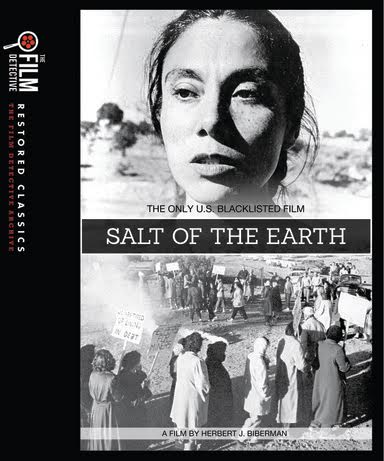
Easily one of the most radical American films. Deals with class/worker inequality, big business using race to exploit & divide, gender inequality, police brutality, police being used to unfairly evict poor people, all in a quick and powerful 92 minutes run time. Esperanza is easily on my list of one of my favorite women protagonists in a film and her along with her sister comrades should be on any list of badass women! Watching the changing dynamics of her relationship with her husband Ramon was fascinating. No wonder it wasn't shown in America till the mid 60s. This film is radical for right now - a great watch for thinking how post-pandemic we don't return to the previous "normal." A true cinematic expression of the power of solidarity across artificial divisions right up to the last scene!
Watched on MUBI
---------------------------------------------------------------------------
Bell, W. Kamau. "What an Oklahoma rancher wants you to know about America's broken food supply system." CNN (April 24, 2020)
Bulkin, Nadia, et al. "The Outer Dark Symposium 2019, Part 5: Ecstatic Weird Panel." The Outer Dark (October 10, 2019) ["In this podcast The Outer Dark presents the fifth installment of The Outer Dark Symposium on the Greater Weird 2019 including the panel ‘The Ecstatic Weird: The Weird as a Source of Transcendence and Awe’, moderated by Gordon B White and featuring Nadia Bulkin, Selena Chambers, Kurt Fawver, Orrin Grey, and Liv Rainey-Smith, as well as readings by Jeff Strand, Kurt Fawver, and Zin E Rocklyn. Also Gordon B White presents Reviews from The Weird including Spirits Unwrapped (Lethe Press), edited by Daniel Braum, and Luminous Body (Dim Shores), by Brooke Warra. The readings and panel were recorded live on Saturday March 23, 2019 at Silver Scream FX Lab in Atlanta, GA. Reviews from The Weird was recorded on Oct. 3, 2019."]
Cho, Joshua. "Corporate Looting as ‘Rescue Plan,’ Robber Barons as ‘Saviors.'" FAIR (May 1, 2020)
Dalpe, Victoria, et al. "State of the Weird 2019, A Roundtable Discussion." The Outer Dark (October 24, 2019) ["Victoria Dalpe, Gwendolyn Kiste, John Langan and Teri.Zin (Zin E Rocklyn) join host/moderator Scott Nicolay for the most epic episode of The Outer Dark since The State of the Weird 2018. The roundtable conversation kicks off with reactions to pronouncements that the Weird Renaissance/boom is over at a time when so many talented writers from disenfranchised groups (women, PoC, LBGTQ+, disabled) are expanding and transforming Weird fiction with game-changing work. The authors discuss how more perspectives lift all writers and increase readership, the importance of having editors of color and other marginalized groups, changing the definition of agency especially in relation to mentally ill characters, the need to retool storytelling in ways that reflect diverse experiences and not just the same old archetypes, why Weird fiction is a fertile space for exploring different narrative and genre expectations, steps writers and readers can take to support new voices, recognition of Michael Kelly for the now retired award-winning Year’s Best Weird Fiction series (Undertow Publishing), Nightscape Press as an example of a risk-taking press, ‘Trojan Horsing’ diverse authors into anthologies along with the same big names, a Small Press Challenge for listeners, questions from the audience, and the future of Weird fiction."]
Freeman, Chas and Jeffrey Sachs. "COVID's Cold War." Open Source (May 7, 2020) ["The coronavirus may have arrived just in time to punctuate a 50 year turn in the grand tide of events. It could mark, that is, a fresh fixation in American minds on an external enemy. It could become the opening round even of a new Cold War, with China this time. But at what price? The hybrid giant “Chi-Merica” was the name of a partnership as well as a rivalry that grew out of Richard Nixon’s first visit to China in 1972. It was the combination that made China the workshop of the world, for better and worse. In the last decade Chi-Merica has driven a huge portion of global growth. But it’s at risk suddenly in the poisoned fallout of a pandemic. Between the pandemic still spreading, and the presidential campaign taking shape, this is tryout time in the blame game. President Trump’s contentious diplomat, Mike Pompeo, has walked back his accusation that the killer virus came out of a Chinese lab at Wuhan. Probably because US intelligence wouldn’t back him up, the Secretary of State now says there’s evidence on the point, but no certainty. Senator Tom Cotton of Arkansas is still the point man among “Blame China” Republicans. This week, he said the Chinese Communist Party is responsible for every death, every job lost, every retirement nest egg cracked by COVID-19, and he said that Xi Jinping and his comrades must be made to pay the price. Between Donald Trump and Democrat Joe Biden, meantime, the campaign videos for both sides argue the same point: that the Other Guy was chummier with China and said sweeter things about the Chinese leadership in happier times."]
Hittman, Eliza and Alexis McGill Johnson. "Never Rarely Sometimes Always: New Film Follows Teenager’s Perilous Journey to Access Abortion." Democracy Now (April 27, 2020) ["As multiple states have moved to further restrict access to abortions during the pandemic, a powerful new dramatic film follows a 17-year-old girl as she travels from her small town in Pennsylvania to New York City to get an abortion without having to notify her parents. “Never Rarely Sometimes Always” director and writer Eliza Hittman joins us to discuss the making of the film, which is being distributed online while cinemas remain closed in most states due to the pandemic."]
Kay, Jeremy. "Major film festivals partner with YouTube on free online event." Screen Daily (April 27, 2020) ["A coalition of A-list international film festivals including Cannes, Venice, London, Toronto, Berlin, Sundance and Tokyo has partnered with YouTube on a free online spring festival produced and organised by Tribeca Enterprises to raise funds for Covid-19 relief."]
Koresky, Michael. "Queer & Now & Then: Vapors (Andy Milligan, 1965)." Film Comment (April 8, 2020)
"Weird Fiction." Horror Pod Class #2 (January 31, 2018) [Michael Benton -- What is very interesting to me is the idea that the "new weird" genre is speaking to a 21st Century dis-ease with the impossibility of truly knowing reality. Propaganda, disinformation & official lies instantaneously and repeatedly disseminated through ubiquitous screen technologies, radically transforming science/technology/theories that even leave those that devote their lives to a particular discipline overwhelmed, and a general distrust from the general population in their traditional experts/leaders. This is played out vividly in Vandermeer's trilogy and Garland's film as the main characters struggling to understand/survive the transmutating Area X/The Shimmer are scientists/soldiers. ]
Watched on MUBI
---------------------------------------------------------------------------
Bell, W. Kamau. "What an Oklahoma rancher wants you to know about America's broken food supply system." CNN (April 24, 2020)
Bulkin, Nadia, et al. "The Outer Dark Symposium 2019, Part 5: Ecstatic Weird Panel." The Outer Dark (October 10, 2019) ["In this podcast The Outer Dark presents the fifth installment of The Outer Dark Symposium on the Greater Weird 2019 including the panel ‘The Ecstatic Weird: The Weird as a Source of Transcendence and Awe’, moderated by Gordon B White and featuring Nadia Bulkin, Selena Chambers, Kurt Fawver, Orrin Grey, and Liv Rainey-Smith, as well as readings by Jeff Strand, Kurt Fawver, and Zin E Rocklyn. Also Gordon B White presents Reviews from The Weird including Spirits Unwrapped (Lethe Press), edited by Daniel Braum, and Luminous Body (Dim Shores), by Brooke Warra. The readings and panel were recorded live on Saturday March 23, 2019 at Silver Scream FX Lab in Atlanta, GA. Reviews from The Weird was recorded on Oct. 3, 2019."]
Cho, Joshua. "Corporate Looting as ‘Rescue Plan,’ Robber Barons as ‘Saviors.'" FAIR (May 1, 2020)
Dalpe, Victoria, et al. "State of the Weird 2019, A Roundtable Discussion." The Outer Dark (October 24, 2019) ["Victoria Dalpe, Gwendolyn Kiste, John Langan and Teri.Zin (Zin E Rocklyn) join host/moderator Scott Nicolay for the most epic episode of The Outer Dark since The State of the Weird 2018. The roundtable conversation kicks off with reactions to pronouncements that the Weird Renaissance/boom is over at a time when so many talented writers from disenfranchised groups (women, PoC, LBGTQ+, disabled) are expanding and transforming Weird fiction with game-changing work. The authors discuss how more perspectives lift all writers and increase readership, the importance of having editors of color and other marginalized groups, changing the definition of agency especially in relation to mentally ill characters, the need to retool storytelling in ways that reflect diverse experiences and not just the same old archetypes, why Weird fiction is a fertile space for exploring different narrative and genre expectations, steps writers and readers can take to support new voices, recognition of Michael Kelly for the now retired award-winning Year’s Best Weird Fiction series (Undertow Publishing), Nightscape Press as an example of a risk-taking press, ‘Trojan Horsing’ diverse authors into anthologies along with the same big names, a Small Press Challenge for listeners, questions from the audience, and the future of Weird fiction."]
Freeman, Chas and Jeffrey Sachs. "COVID's Cold War." Open Source (May 7, 2020) ["The coronavirus may have arrived just in time to punctuate a 50 year turn in the grand tide of events. It could mark, that is, a fresh fixation in American minds on an external enemy. It could become the opening round even of a new Cold War, with China this time. But at what price? The hybrid giant “Chi-Merica” was the name of a partnership as well as a rivalry that grew out of Richard Nixon’s first visit to China in 1972. It was the combination that made China the workshop of the world, for better and worse. In the last decade Chi-Merica has driven a huge portion of global growth. But it’s at risk suddenly in the poisoned fallout of a pandemic. Between the pandemic still spreading, and the presidential campaign taking shape, this is tryout time in the blame game. President Trump’s contentious diplomat, Mike Pompeo, has walked back his accusation that the killer virus came out of a Chinese lab at Wuhan. Probably because US intelligence wouldn’t back him up, the Secretary of State now says there’s evidence on the point, but no certainty. Senator Tom Cotton of Arkansas is still the point man among “Blame China” Republicans. This week, he said the Chinese Communist Party is responsible for every death, every job lost, every retirement nest egg cracked by COVID-19, and he said that Xi Jinping and his comrades must be made to pay the price. Between Donald Trump and Democrat Joe Biden, meantime, the campaign videos for both sides argue the same point: that the Other Guy was chummier with China and said sweeter things about the Chinese leadership in happier times."]
Hittman, Eliza and Alexis McGill Johnson. "Never Rarely Sometimes Always: New Film Follows Teenager’s Perilous Journey to Access Abortion." Democracy Now (April 27, 2020) ["As multiple states have moved to further restrict access to abortions during the pandemic, a powerful new dramatic film follows a 17-year-old girl as she travels from her small town in Pennsylvania to New York City to get an abortion without having to notify her parents. “Never Rarely Sometimes Always” director and writer Eliza Hittman joins us to discuss the making of the film, which is being distributed online while cinemas remain closed in most states due to the pandemic."]
Kay, Jeremy. "Major film festivals partner with YouTube on free online event." Screen Daily (April 27, 2020) ["A coalition of A-list international film festivals including Cannes, Venice, London, Toronto, Berlin, Sundance and Tokyo has partnered with YouTube on a free online spring festival produced and organised by Tribeca Enterprises to raise funds for Covid-19 relief."]
Koresky, Michael. "Queer & Now & Then: Vapors (Andy Milligan, 1965)." Film Comment (April 8, 2020)
"Weird Fiction." Horror Pod Class #2 (January 31, 2018) [Michael Benton -- What is very interesting to me is the idea that the "new weird" genre is speaking to a 21st Century dis-ease with the impossibility of truly knowing reality. Propaganda, disinformation & official lies instantaneously and repeatedly disseminated through ubiquitous screen technologies, radically transforming science/technology/theories that even leave those that devote their lives to a particular discipline overwhelmed, and a general distrust from the general population in their traditional experts/leaders. This is played out vividly in Vandermeer's trilogy and Garland's film as the main characters struggling to understand/survive the transmutating Area X/The Shimmer are scientists/soldiers. ]
Thursday, May 7, 2020
Michael Benton: Public Education in America
If you want good public education you need to pay for it.
We need to end the corporate textbook system that caters to reactionary Texas state board of education officials (California has more buying power, but they allow their individual districts to choose their books for high school courses), that engages in the ridiculous notion that there is only one answer or one way of thinking about history, and panders to the lowest common denominator avoiding anything potentially offensive to the dominant culture.
Just as destructive is the way that corporate interests pay school districts to allow them to design and "gift" textbooks that are then taught framing subjects so they don't contradict corporate agendas.
We need to quit teaching to the test. Teaching young people and adults to take tests makes for terrible critical thinkers (which is learned from asking/framing questions, from long open ended discussions and engaging in 'what if' scenarios).
Education at this point can't compete with the propaganda being disseminated from all corners 24/7 (it takes a lot of work and you need parents to back the fuck off when you challenge cultural myths).
Adults also need to educate themselves. Education is a lifelong process. Some of the most ignorant people I know are the most educated in this messed up system we have now and have never bothered to question what they learned. Also, a major problem is that many Americans are overworked and that they are actually punished in multiple ways for critical thinking (anti-intellectualism, its a thing - even in academia).
All public education through college/university should be considered a civil right and college/university should be free for anyone that can demonstrate their willingness/responsibility to complete courses. You want to go to a private school, have your kids go to a church school, feel special at a private university - that is on you.
Subscribe to:
Posts (Atom)