Friday, May 6, 2022

Student Topics for ENG 102 Argument Essays: Spring 2022


Problem of Islamophobia 
Reduce Gun Laws 
Pro-immigration, reform current laws 
Negative aspects of social media 
Healthcare-Problem of Increasing Rates of Obesity in America 
Argument for good nutritional practices 
Issue of Head Injuries in the NFL 
South Park has used satire and story to effectively make us reflect on our own negative habits, emotions, and behaviors without becoming a biased political mouthpiece for any one party. 
Critique of Sea World
Defense of Assisted-Suicide 
Problem of Obesity in America 
Addressing the Problem of Racism in America
Negative effects of Social Media 
James Loewen's Critique of How History is Taught in Schools 
Keystone Pipeline 
Addressing the Myths about GMOs 
Why College is Important 
Solitary confinement should not be used as a form of punishment. 
The Problems Associated with Social Media 
Supporting Foster Youth in Transition to Independence 
Is Addiction a Disease? 
Against the Death Penalty 
Addiction to Social Media 
Ending Mass Incarceration in America 
I will show through scientific research that when someone chooses a faith-based approach they are less likely to relapse or fall back into the same addictive behaviors. 
In support of the right to end one's life when terminally ill 
Dr Who provides us with examples of how to be better persons and of a possibly better world.

 On Simon Bolivar's Historical Importance 

We should respect the military
Was Egyptian leader Gamal Abdel Nasser a democratic leader
Dangers of a Surveillance Society 
Lack of mental health resources in America has been a severe problem for those who are suffering with mental conditions 
Community Gardens are the Solution for Our Rising Food Costs 
Importance of Technology Integration in K-12 Education 
Why Sports Betting should be legal 
Free to Play video games encourage companies to use manipulative and anti-consumer practices. 
Universal Healthcare 
Legalization of Marijuana 
Abuse of Performance Enhancing Drugs 
America's Pornography Problem 
Problem of Fast/Processed Foods 
Unethical Practice of Lootboxes in Video Games (targeted toward minors) 
Universal Healthcare 
Decriminalization of Prostitution 
Big Pharma's role in the opioid crisis 
Social Media 
Federal Legalization of Marijuana
Prison Reform 
Why Humans Need Art? 
Federal Legalization and Decriminalization of Cannabis in the United States 
A Comprehensive Understanding of Addiction 
Haunting or Hoax? Investigating the Paranormal
Healthcare in America 
Importance of Sleep for Cognitive Excellence 
Effectiveness of Economic Sanctions on Russia 
Mental Health Issues 
Fake News/Media Literacy 
Stigma, prejudice, and discrimination creates a hostile and stressful social environment that causes mental health problems throughout the homosexual community 
Problems of Mission/Missionary Programs
Treating Childhood Trauma 
Support of Abortion Rights 
In support of universal healthcare 
Critique of Standardized Testing
Cigarettes should be illegal 
Working to help children of divorce 
Paid Family Leave for both Parents 
Humane and consensual euthanasia should be available to those who are dying and are living in immense amounts of pain 
In contrast to what we’re made to believe, a diet based solely on protein and fats is the true optimal way of eating for cognitive and physiological function
Is Vladimir Putin committing war crimes with his attack on Ukraine?
Amazon's role in the American economy and how such a large corporation could lend a helping or hurting hand to our society. 
There is a rising mental health crisis in men, due to social stigmas, targeted marketing, and lack of support. 
Problems associated with a two-party political system in a democracy. 
Marijuana Legalization 
Critique of Andrew Jackson's policies as President 
Climate Change 
The “Dark Ages” was not an age of ignorance and savagery, on the contrary, it was an age of harmony and beauty, that one can witness today.
Problem of Steroid Abuse
Critique of Florida's "Don't Say Gay" Bill 
Social Media Addiction
The Importance of Sleep to Human Health 
The Corruption of Big Pharma 
Marijuana Legalization 
MMA (Mixed Martial Arts) could be a lot safer and there are a lot of different things that can be done to make the sport better in many ways 
Reform of Foster Care 
Problem of Bullying 
Marijuana Legalization 
Negative Representation of women in the Media 
Apologia for Christianity

John Stuart Mill’s principles about liberty of thought and discussion are still valid, the free interchange of ideas is the best way to learn and find out the truth.  

Importance of Sleep to Good Health 
Concerns About Screen Culture 
Raise Awareness of Scientific Understanding of ADHD 
The Black Panther Party - defense of 
Analysis of Ways to Address Supply Chain Problems 
In Defense of Our National Parks 
Abstain from Social Media 
Stronger Regulation of Big Tech 
Negative aspects of the modeling industry 
Arguing Casey Anthony was guilty of murdering her child 
Required paid leave for new parents 
In Support of Vaccines for Children 
Negative Impact of Social Media in Our Society 
The Importance of Aftercare Planning & Treatment for Addicts 
Problems of Social Media 
We are assigning too much homework for elementary students 
The Case for Universal Income 
Abortion Rights 
Cognitive Development as a Key for Personal Success 

Why Christopher Nolan is a great director. 
The benefits and shortcomings of how digital fighting games (DFG) uniquely satisfy our competitive nature. 
Vietnam War
Climate Change 
Misogyny in the Bible 
Theodore Allen's Invention of the White Race

Clearing up confusion in regards to gene editing 
The effect of automation on labor and the need for a stronger social safety net 
Royalist history of the French Revolution 
Religion and Politics 
Along with common core learning, the introduction of visual, auditory, and three-dimensional arts in elementary education is beneficial to the growth of individuality and self-regulation throughout a person’s lifetime. 
Knowing how our personal information is being used and how to safeguard ourselves in this technological age is a must if we are to gain control over our own privacy. 
The Importance of the Nation of Islam in African-American culture 
Child Abuse 
Adverse effects of digital technologies 
Regulation of Big Tech Data Collection
Regulation of Social Media Among Young Adults
The importance of soccer to Spanish identity
Addressing misinformation about Epilepsy
Need to address alcoholism in America
Causes in the rise of debilitating anxiety in young adults
Christians should be involved in politics, but need to stay true to their core values
Cell Phones are harmful when they are used irresponsibly and carelessly.



Monday, April 18, 2022

Girlhood (France: Céline Sciamma, 2014)


Girlhood (France: Céline Sciamma, 2014: 113 mins)

Batuman, Elif. "Céline Sciamma's Quest for a New, Feminist Grammar of Cinema." The New Yorker (January 31, 2022)

Brown, William. "Girlhood is remarkable – a film brimming with messages of empowerment." The Conversation (May 7, 2015)

Galibert-Laîné, Chloé. "Why Framing Matters in Movies." (Posted on Vimeo: 2017)

Harris, Sue. "Film of the Week: Girlhood." Sight and Sound (December 14, 2015)

Salmon, Caspar. "The Action Cinema of Céline Sciamma." The Notebook (February 18, 2022)

Kohn, Eric. "Céline Sciamma's Girlhood Is One of the Best Coming of Age Movies In Years." Indiewire (May 15, 2014)

Scott, A.O. "Exploring the Limits in a Man’s World: In Girlhood, a French Adolescent Comes Out of Her Shell." The New York Times (January 3, 2015)

Wilson, Emma. "Scenes of Hurt and Rapture: Céline Sciamma's Girlhood." Film Quarterly 70.3 (Spring 2017): 10-22.


Thursday, April 14, 2022

Tomboy (France: Céline Sciamma, 2011)


 Tomboy (France: Céline Sciamma, 2011: 84 mins)


"A sensitive, heartrending portrait of what it feels like to grow up different, Sciamma’s beautifully observed coming-of-age tale aches tenderly with the tangled confusion of childhood. When 10-year-old Laure’s family moves to a new neighborhood during the summer, the gender-nonconforming preteen (played by the impressively naturalistic Zoé Héran) takes the opportunity to present as Mickäel to the neighborhood kids—testing the waters of a new identity that neither friends nor family quite understand. Sciamma’s warmly empathetic tone is perfectly complemented by the soft-lit impressionism of Fournier’s glowing cinematography." - "The Female Gaze" (2018)

Batuman, Elif. "Céline Sciamma's Quest for a New, Feminist Grammar of Cinema." The New Yorker (January 31, 2022)

Chang, Chris. "Short Takes: Tomboy." Film Comment (November-December 2011)

Ebert, Roger. "This may form her adulthood, or just be forgotten." Chicago Sun-Times (January 25, 2012)


Holt, Julian. "Transmasculine Identities And The Paradox Of Language: Tomboy, A Reflection." Radical Art Review (July 18, 2021)

Klinghoffer, Ariel. "The radical queer politics and bittersweet legacy of Tomboy." Little White Lies (April 18, 2021)

Salmon, Caspar. "The Action Cinema of Céline Sciamma." The Notebook (February 18, 2022)

Temple, Melissa Bow. "It's Okay to Be Neither." Together for Jackson County Kids (December 16, 2011)


Tuesday, April 12, 2022

Dune (USA/Canada: Denis Villeneuve, 2021/2024)


 Dune (Part 1 - USA/Canada: Denis Villeneuve, 2021/2024: 155 & 166 mins)

Ahuja, Nitin K. "Medicine." Los Angeles Review of Books (March 27, 2022)

Armstrong, Vanessa. "For Dune, Composer Hans Zimmer Created Beats That Were 'Humanly Impossible to Play.'" Tor (March 2, 2022)

Baheyeldin, Khalid, et al. "The Book of Dune." Imaginary Worlds (July 12, 2017) ["Frank Herbert’s 1965 novel Dune and its sequels tackled a lot of big themes. The books are about ecology. They’re about journeys of self-realization through mind-altering substances. But religion is at the core of the series, since the main character Paul Atreides transforms from a teenage aristocrat into a messianic revolutionary leader of a nomadic desert tribe. And the real world religion that Frank Herbert borrows from the most is Islam. Khalid Baheyeldin, Salman Sayyid, and Sami Shah discuss why the book resonated deeply with them, despite the fact that Frank Herbert wasn’t Muslim. And Liel Liebowitz explains why the novel even spoke to him as an Israeli."]

Breen, Benjamin. "Pharmacology." The Los Angeles Review of Books (March 27, 2022)

Dick, Stephanie. "Computers." The Los Angeles Review of Books (March 27, 2022)

Dietrich, Christopher. "Harvesting." The Los Angeles Review of Books (March 27, 2022)

Dolan, Thomas Simsarian. "Decolonizing Dune: Reimagining MENA and the Muslim World." Tropics of Meta (December 21, 2021)

Durrani, Haris A. "Sietchposting: A Short Guide to Recent Work on Dune." Los Angeles Review of Books (March 27, 2022)

Hadadi, Roxana. "Dune Has a Desert Problem." Vulture (October 29, 2021)

Holben, Jay. "Expanding the View for Dune: Part Two." American Society of Cinematographers (November 1, 2024)

Hudson, David. "Denis Villeneuve's Dune." The Daily (September 16, 2021)

---. "Dune: Beware of Heroes." The Daily (November 2, 2021)

Like Stories of Old. "Into the Dark Depths of Humanity – Understanding Denis Villeneuve." (Posted on Youtube: October 31, 2021) ["A deep dive analysis of the filmmaking philosophy of Denis Villeneuve, and of the themes and meanings found in his work."]

Moore, Taylor M. "Ethnography." Los Angeles Review of Books (March 27, 2022)

Nuriddin, Ayah. "Eugenics." Los Angeles Review of Books (Marhc 27, 2022)

Shakry, Omnia El. "Language." Los Angeles Review of Books (March 27, 2022)


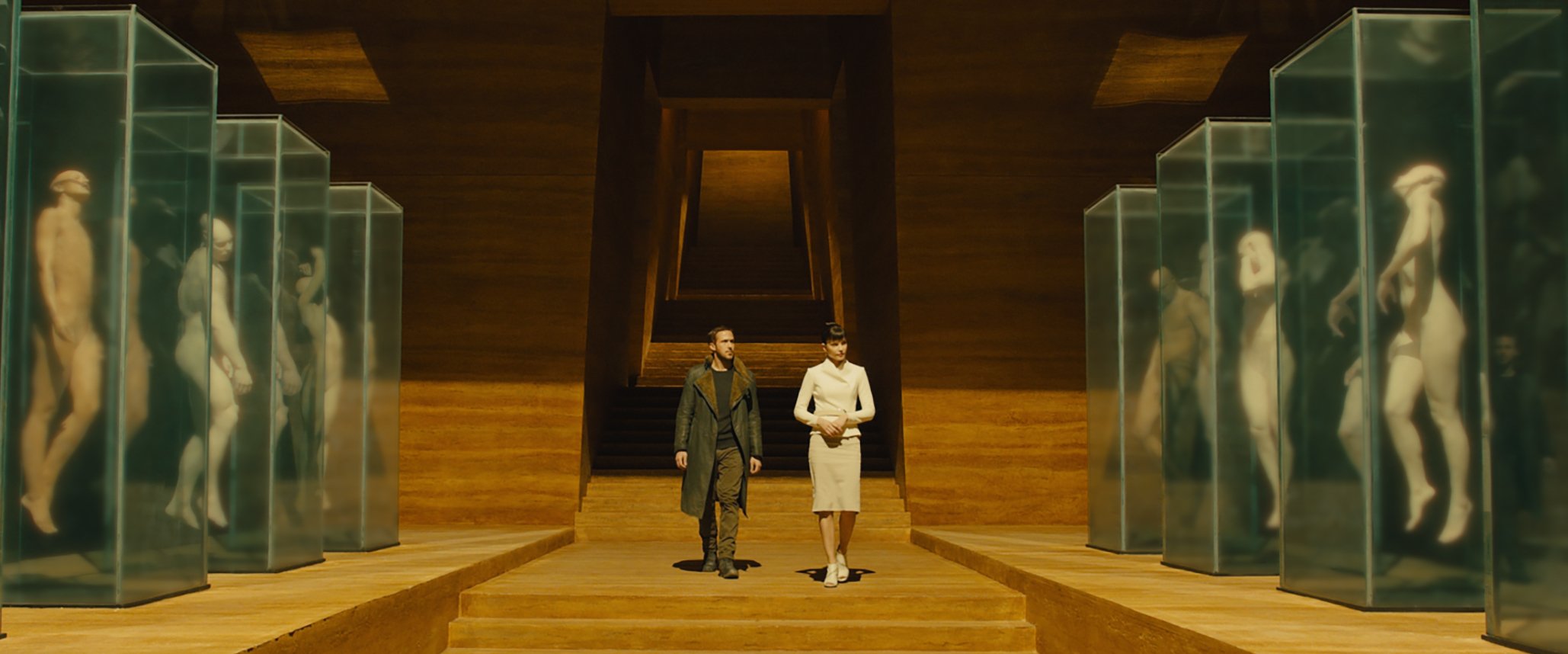
Blade Runner 2049 (UK/USA/Canada: Denis Villeneuve, 2017)


Blade Runner 2049 (UK/USA/Canada: Denis Villeneuve, 2017: 163 mins) 

Aisenberg, Joseph. "I am Blade Runner 2049Blade Runner 2049 is I." Bright Lights Film Journal (November 3, 2017)

Alpert, Robert. "A.I. at the Movies and the Second Coming." Senses of Cinema #88 (October 2018)

Booker, M. Keith. "Blade Runner 2049 (2017, Dir. Denis Villeneuve)." Comments on Culture (ND)

Desowitz, Bill. "Why Roger Deakins Should Win the Oscar for Bringing Realism to Blade Runner 2049." IndieWire (October 5, 2017)

"Dive Deeper into Blade Runner 2049 with Roger Deakins, ASC, BSC." American Cinematographer (March 5, 2018)

Engley, Ryan and Todd McGowan. "Blade Runner 2049." Why Theory (October 23, 2017) ["In this episode, Todd and Ryan discuss Denis Villeneuve's Blade Runner 2049. The conversation centers around how the film depicts ideology and what we mean when we say "ideology"; how the film conceives of desire ensuring subjectivity; and how the relationship between police and capital in the film exposes a link to how the two function in everyday life."]

Fox, Neil and Dario Linares. "Blade Runner 2049." The Cinematologists (October 18, 2017) ["With the original Blade Runner being a formative film for both Dario and Neil, they take the time to discuss the 2017 sequel directed by Denis Villeneuve: Blade Runner 2049. A lot has been said and written about this new incarnation, directly about the aesthetics, philosophical themes and narrative, but also regarding the wider ideological readings related to gender, race and class. We hope you enjoy our contribution to the discourse around a film which, if nothing else, reminds us of cinema's ability to provoke thought and exercise passion."]

Gerwig, Greta, et al. "63 Minute Directors Roundtable Talk." The Hollywood Reporter (Posted on Playlist: January 22, 2018) ["Angelina Jolie (“First They Killed My Father”), Patty Jenkins (“Wonder Woman”), Greta Gerwig (“Lady Bird”), Joe Wright (“Darkest Hour”), Guillermo del Toro (“The Shape of Water”), and Denis Villeneuve (“Blade Runner 2049”)."]

Jagernauth, Kevin. "Blade Runner 2049 Editor Talks Deleted Scenes You’ll Probably Never See." The Playlist (October 30, 2017)

"Jared Leto Stars in a New Prequel to Blade Runner 2049: Watch It Free Online." Open Culture (August 31, 2017)

Koski, Genvieve, et al. "Blade Runner 2049 (2017) / Blade Runner (1982), Part 1." The Next Picture Show #98 (October 17, 2017)

---. "Blade Runner 2049 (2017) / Blade Runner (1982), Part 2." The Next Picture Show #99 (October 19, 2017)

Laczkowski, Jim, et al. "Denis Villeneuve." The Director's Club #140 (December 17, 2017) ["Now Playing Network Master of Ceremonies (and Director's Club founder) Jim Laczkowski joins us for this episode which has us looking at the films of French Canadian filmmaker Denis Villeneuve! With Jim's help, we look at how Villeneuve brings his unique combination of thoughtfulness, pathos, family focus, and strangeness to dramas, genre thrillers, and films across the sci-fi spectrum. Includes lots of spiders and one talking fish."]

Landsberg, Alison. "What's So Bad About Being a Replicant?" On the Media (October 6, 2017)

Like Stories of Old. "In Search of the Distinctively Human: The Philosophy of Blade Runner 2049." (Posted on Youtube: Jan 29, 2018) [Uses Ernest Becker's The Birth and Death of Meaning and Viktor Frankl's Man's Search for Meaning.]

---. "The Problem of Other Minds – How Cinema Explores Consciousness." (Posted on Youtube: May 31, 2018) ["How have films engaged the problem of other minds? In this video essay, I discuss cinematic explorations into consciousness in the context of the cognitive revolution that has challenged many of the basic assumptions about what was for a long time believed to be a uniquely human trait." Uses Frans de Waal's book Are We Smart Enough to Know How Smart Animals Are?: "Hailed as a classic, Are We Smart Enough to Know How Smart Animals Are? explores the oddities and complexities of animal cognition--in crows, dolphins, parrots, sheep, wasps, bats, chimpanzees, and bonobos--to reveal how smart animals really are, and how we've underestimated their abilities for too long. Did you know that octopuses use coconut shells as tools, that elephants classify humans by gender and language, and that there is a young male chimpanzee at Kyoto University whose flash memory puts that of humans to shame? Fascinating, entertaining, and deeply informed, de Waal's landmark work will convince you to rethink everything you thought you knew about animal--and human--intelligence."]

Fox, Neil and Dario Linares. "Blade Runner 2049." The Cinematologists (October 18, 2017) ["With the original Blade Runner being a formative film for both Dario and Neil, they take the time to discuss the 2017 sequel directed by Denis Villeneuve: Blade Runner 2049. A lot has been said and written about this new incarnation, directly about the aesthetics, philosophical themes and narrative, but also regarding the wider ideological readings related to gender, race and class. We hope you enjoy our contribution to the discourse around a film which, if nothing else, reminds us of cinema's ability to provoke thought and exercise passion."]

Maher, Michael. "How Roger Deakins Shot and Lit Blade Runner 2049." The Beat (October 16, 2017)

Rosenberg, Alyssa. "‘Blade Runner 2049’ is about learning that you’re not the main character in your own story." The Washington Post (October 17, 2017)

Skiveren, Nicolai. "Cinematic Waesthetic: Wasted Worlds, Wasted Lives and Becoming-Waste in Contemporary Science Fiction Film." Revenant #10 (March 2024) ["This article explores the aesthetic, affective, and epistemological connections that bind together science fiction (SF) as a genre of cognitive estrangement, and the varied forms of waste that have come to permeate the genre’s filmic depictions of the future. Whether it be in the shadowy alleyways of Blade Runner 2049 (2017), the shantytowns of District 9 (2009), or the ravaged environments of Idiocracy (2006), waste is always there, lurking in the background, enveloping its human and nonhuman subjects with its elusive yet distinct atmosphere. And yet, it remains unclear what purpose(s), if any, waste might serve within these film-worlds. Because despite the seemingly central place that waste occupies in our cultural imaginaries of the future, no one has yet presented a systematic reflection on its affective, symbolic, and narrative significance. This article therefore brings together writings on ecological SF (Caravan 2014) and critical waste studies (Bauman 2004; Hawkins 2005; Viney 2014) to scrutinize the waste found across the above SF films. The article proposes that waste in contemporary SF film can be seen to operate mainly within three overlapping modes: ‘Wasted worlds,’ ‘Wasted lives,’ and ‘Becoming-waste.’ Drawing especially on Adrian Ivakhiv’s tripartite model for an eco-philosophy of the cinema, this article calls attention to the often subtle ways in which waste participates in (i) cinematic world-building, (ii) representations of otherness, and (iii) depictions of radical forms of change. Taken together, these three modes represent a suggestive image of how waste forms part of contemporary SF film."]

StudioBinder. "Denis Villeneuve & His Cinema of Ambiguity — Directing Styles Explained." (Posted on Youtube: April 6, 2020) ["Denis Villeneuve movies are made to confuse you. At every opportunity — in the story, in the cinematography, editing, and music, Villeneuve wants to keep you guessing. Watching Denis Villeneuve movies is to be placed in an environment of uncertainty. And that’s what makes them so interesting. In films like Enemy, Prisoners, Polytechnique, Blade Runner 2049, and Arrival, Villeneuve consistently creates awe and wonder with images and sounds we’ve never seen before. In Enemy, Adam (Jake Gyllenhaal) must confront the possibility that he is more than a single person. In Sicario, Kate (Emily Blunt) is pushed into the world of drug cartels by a tight-lipped company man (Josh Brolin) and a near-silent assassin (Benicio Del Toro). In Prisoners, Keller (Hugh Jackman) ventures into murky moral territory to find his kidnapped daughter. In Arrival, Louise (Amy Adams) and Ian (Jeremy Renner) are tasked with bridging the communication gap between beings from another dimension. In all these movies, the characters find themselves in new worlds without answers. In this video, we’ve cracked the code on Villeneuve’s love of ambiguity and we explain how his directing style works across 7 areas of focus including sound, color, production design, and more. Villeneuve creates movies that can be enigmatic but there’s no denying that he is a film artist in complete control of his medium. If you’re studying directing, cinematography, editing, or pursuing ANY career in filmmaking, there are a ton of lessons to be learned from Denis Villeneuve. This is the ultimate breakdown of Denis Villeneuve’s directing style."]

Werff, Tom Van Der. "The best thing about Blade Runner 2049 is what it isn’t." Vox (October 9, 2017)


Monday, April 11, 2022

Sicario (USA: Denis Villeneuve, 2015)


 Sicario (USA: Denis Villeneuve, 2015: 121 mins)

Deakins, Roger. "Sicario." DP30 (November 14, 2015)

Foley, Darren. "Sicario: Film Analysis." Must See Films (Posted on Youtube: March 28, 2016)

Laczkowski, Jim, et al. "Denis Villeneuve." The Director's Club #140 (December 17, 2017) ["Now Playing Network Master of Ceremonies (and Director's Club founder) Jim Laczkowski joins us for this episode which has us looking at the films of French Canadian filmmaker Denis Villeneuve! With Jim's help, we look at how Villeneuve brings his unique combination of thoughtfulness, pathos, family focus, and strangeness to dramas, genre thrillers, and films across the sci-fi spectrum. Includes lots of spiders and one talking fish."]

Lane, Anthony. "Dark Places: Sicario." The New Yorker (September 21, 2015)

McGrath, Callum. "Looking to the other side: Dismantlement and reimposition of borders in Sicario and The Three Burials of Melquiades Estrada." Senses of Cinema #108 (January 2024) ["Two films that engage in ideas of the permeability of the US-Mexico border are Sicario (Denis Villeneuve, 2015) and The Three Burials of Melquiades Estrada (Tommy Lee Jones, 2005). This article will explore how these films either reimpose or dismantle the border. To construct these arguments, an analysis of cinematic techniques will be undertaken for each film, with a focus on mise-en-scène. It will be argued that the negative depiction of Mexico in Sicario reimposes border ideology. Subsequently, the article will assert that The Three Burials of Melquiades Estrada instead dismantles the border division. In both texts, however, there are challenges and nuances to these arguments, as will be explored. These include border permeability in instances that are beneficial to the hegemony of the US in Sicario, and some aspects of Mexico’s romanticised portrayal that reinforce a divide in The Three Burials of Melquiades Estrada."]

Orr, Christopher. "The Almost Greatness of Sicario." The Atlantic (September 25, 2015)

Scott, A.O. "Sicario Digs Into the Depths of Drug Cartel Violence." The New York Times (September 17, 2015)

StudioBinder. "Denis Villeneuve & His Cinema of Ambiguity — Directing Styles Explained." (Posted on Youtube: April 6, 2020) ["Denis Villeneuve movies are made to confuse you. At every opportunity — in the story, in the cinematography, editing, and music, Villeneuve wants to keep you guessing. Watching Denis Villeneuve movies is to be placed in an environment of uncertainty. And that’s what makes them so interesting. In films like Enemy, Prisoners, Polytechnique, Blade Runner 2049, and Arrival, Villeneuve consistently creates awe and wonder with images and sounds we’ve never seen before. In Enemy, Adam (Jake Gyllenhaal) must confront the possibility that he is more than a single person. In Sicario, Kate (Emily Blunt) is pushed into the world of drug cartels by a tight-lipped company man (Josh Brolin) and a near-silent assassin (Benicio Del Toro). In Prisoners, Keller (Hugh Jackman) ventures into murky moral territory to find his kidnapped daughter. In Arrival, Louise (Amy Adams) and Ian (Jeremy Renner) are tasked with bridging the communication gap between beings from another dimension. In all these movies, the characters find themselves in new worlds without answers. In this video, we’ve cracked the code on Villeneuve’s love of ambiguity and we explain how his directing style works across 7 areas of focus including sound, color, production design, and more. Villeneuve creates movies that can be enigmatic but there’s no denying that he is a film artist in complete control of his medium. If you’re studying directing, cinematography, editing, or pursuing ANY career in filmmaking, there are a ton of lessons to be learned from Denis Villeneuve. This is the ultimate breakdown of Denis Villeneuve’s directing style."]

Tallerico, Brian. "Sicario." Roger Ebert (September 15, 2015)


Prisoners (USA: Denis Villeneuve, 2013)

 Prisoners (USA: Denis Villeneuve, 2013: 153 mins)


Foley, Darren. "Prisoners: 'Pray for the Best, Prepare for the Worst.'" Must See Films (Posted on Vimeo: 2014)

Laczkowski, Jim, et al. "Denis Villeneuve."  The Director's Club #140 (December 17, 2017) ["Now Playing Network Master of Ceremonies (and Director's Club founder) Jim Laczkowski joins us for this episode which has us looking at the films of French Canadian filmmaker Denis Villeneuve! With Jim's help, we look at how Villeneuve brings his unique combination of thoughtfulness, pathos, family focus, and strangeness to dramas, genre thrillers, and films across the sci-fi spectrum. Includes lots of spiders and one talking fish."]

StudioBinder. "Denis Villeneuve & His Cinema of Ambiguity — Directing Styles Explained." (Posted on Youtube: April 6, 2020) ["Denis Villeneuve movies are made to confuse you. At every opportunity — in the story, in the cinematography, editing, and music, Villeneuve wants to keep you guessing. Watching Denis Villeneuve movies is to be placed in an environment of uncertainty. And that’s what makes them so interesting. In films like Enemy, Prisoners, Polytechnique, Blade Runner 2049, and Arrival, Villeneuve consistently creates awe and wonder with images and sounds we’ve never seen before. In Enemy, Adam (Jake Gyllenhaal) must confront the possibility that he is more than a single person. In Sicario, Kate (Emily Blunt) is pushed into the world of drug cartels by a tight-lipped company man (Josh Brolin) and a near-silent assassin (Benicio Del Toro). In Prisoners, Keller (Hugh Jackman) ventures into murky moral territory to find his kidnapped daughter. In Arrival, Louise (Amy Adams) and Ian (Jeremy Renner) are tasked with bridging the communication gap between beings from another dimension. In all these movies, the characters find themselves in new worlds without answers. In this video, we’ve cracked the code on Villeneuve’s love of ambiguity and we explain how his directing style works across 7 areas of focus including sound, color, production design, and more. Villeneuve creates movies that can be enigmatic but there’s no denying that he is a film artist in complete control of his medium. If you’re studying directing, cinematography, editing, or pursuing ANY career in filmmaking, there are a ton of lessons to be learned from Denis Villeneuve. This is the ultimate breakdown of Denis Villeneuve’s directing style."]


Incendies (Canada/France: Denis Villeneuve, 2010)


Incendies (Canada/France: Denis Villeneuve, 2010: 130 mins)

Druta, Gianini. "Misfit and Corporeality in Incendies (Denis Villeneuve, 2010)." Metacritic Journal for Comparative Studies and Theory #1.1 (2015): 122 -137.

Green, Mary Jean. " Denis Villeneuve's Incendies: From Word to Image." Québec Studies #54 (September 2012): 103 - 110. 

Gulgoz, Selun. "The Politics of Art: Middle Eastern Women in Fiction and Film." The Millions (January 5, 2012)

Laczkowski, Jim, et al. "Denis Villeneuve." The Director's Club #140 (December 17, 2017) ["Now Playing Network Master of Ceremonies (and Director's Club founder) Jim Laczkowski joins us for this episode which has us looking at the films of French Canadian filmmaker Denis Villeneuve! With Jim's help, we look at how Villeneuve brings his unique combination of thoughtfulness, pathos, family focus, and strangeness to dramas, genre thrillers, and films across the sci-fi spectrum. Includes lots of spiders and one talking fish."]

Meerzon, Yana. "Staging Memory in Wajdi Mouawad's Incendies: Archaeological Site or Poetic Venue?" Theatre Research in Canada 34.1 (2013): 12 - 36.

Pike, David L. "Burning the Candle at Both Ends: Denis Villeneuve's Incendies (2010)." Bright Lights Film Journal #74 (November 2011)

Rabin, Nathan. "Nathan Rabin vs. The IMDb Top 250: Incendies." The Dissolve (October 22, 2014)

Said, Edward W. "Invention, Memory, and Place." Cultural Studies: From Theory to Action. Malden, MA: Blackwell, 2005: 256-269. [In BCTC Library and professor has a copy]

StudioBinder. "Denis Villeneuve & His Cinema of Ambiguity — Directing Styles Explained." (Posted on Youtube: April 6, 2020) ["Denis Villeneuve movies are made to confuse you. At every opportunity — in the story, in the cinematography, editing, and music, Villeneuve wants to keep you guessing. Watching Denis Villeneuve movies is to be placed in an environment of uncertainty. And that’s what makes them so interesting. In films like Enemy, Prisoners, Polytechnique, Blade Runner 2049, and Arrival, Villeneuve consistently creates awe and wonder with images and sounds we’ve never seen before. In Enemy, Adam (Jake Gyllenhaal) must confront the possibility that he is more than a single person. In Sicario, Kate (Emily Blunt) is pushed into the world of drug cartels by a tight-lipped company man (Josh Brolin) and a near-silent assassin (Benicio Del Toro). In Prisoners, Keller (Hugh Jackman) ventures into murky moral territory to find his kidnapped daughter. In Arrival, Louise (Amy Adams) and Ian (Jeremy Renner) are tasked with bridging the communication gap between beings from another dimension. In all these movies, the characters find themselves in new worlds without answers. In this video, we’ve cracked the code on Villeneuve’s love of ambiguity and we explain how his directing style works across 7 areas of focus including sound, color, production design, and more. Villeneuve creates movies that can be enigmatic but there’s no denying that he is a film artist in complete control of his medium. If you’re studying directing, cinematography, editing, or pursuing ANY career in filmmaking, there are a ton of lessons to be learned from Denis Villeneuve. This is the ultimate breakdown of Denis Villeneuve’s directing style."]


Friday, April 8, 2022

Polytechnique (Canada: Denis Villeneuve, 2009)


Professor in Polytechnique: “The universal law of entropy also tells us that any isolated system left on its own, is inevitably destined to irreversible degradation, to the point of self-destruction.”


Polytechnique (Canada: Denis Villeneuve, 2009: 77 mins)

Bailey, Patricia. "Reliving the tragedy: Director Denis Villeneuve discusses his film about the Montreal Massacre." CBC News (February 4, 2009)

Gonzalez, Ed. Polytechnique Slant (June 26, 2011)

Jacobs, Derek. "Denis Villeneuve Week – Day 2: “Polytechnique” (Canada, 2009)." Plot and Theme (September 29, 2015)

Laczkowski, Jim, et al. "Denis Villeneuve." The Director's Club #140 (December 17, 2017) ["Now Playing Network Master of Ceremonies (and Director's Club founder) Jim Laczkowski joins us for this episode which has us looking at the films of French Canadian filmmaker Denis Villeneuve! With Jim's help, we look at how Villeneuve brings his unique combination of thoughtfulness, pathos, family focus, and strangeness to dramas, genre thrillers, and films across the sci-fi spectrum. Includes lots of spiders and one talking fish."]

Lee, Kevin B. "The Tragic Timing of Denis Villeneuve." (Posted on Vimeo: 2016) ["How cinema is given meaning and feeling through the sculpting of time."]

Scott, A.O.  "A Fictional Killer of Women Who Is All Too Familiar." The New York Times (June 28, 2011)

StudioBinder. "Denis Villeneuve & His Cinema of Ambiguity — Directing Styles Explained." (Posted on Youtube: April 6, 2020) ["Denis Villeneuve movies are made to confuse you. At every opportunity — in the story, in the cinematography, editing, and music, Villeneuve wants to keep you guessing. Watching Denis Villeneuve movies is to be placed in an environment of uncertainty. And that’s what makes them so interesting. In films like Enemy, Prisoners, Polytechnique, Blade Runner 2049, and Arrival, Villeneuve consistently creates awe and wonder with images and sounds we’ve never seen before. In Enemy, Adam (Jake Gyllenhaal) must confront the possibility that he is more than a single person. In Sicario, Kate (Emily Blunt) is pushed into the world of drug cartels by a tight-lipped company man (Josh Brolin) and a near-silent assassin (Benicio Del Toro). In Prisoners, Keller (Hugh Jackman) ventures into murky moral territory to find his kidnapped daughter. In Arrival, Louise (Amy Adams) and Ian (Jeremy Renner) are tasked with bridging the communication gap between beings from another dimension. In all these movies, the characters find themselves in new worlds without answers. In this video, we’ve cracked the code on Villeneuve’s love of ambiguity and we explain how his directing style works across 7 areas of focus including sound, color, production design, and more. Villeneuve creates movies that can be enigmatic but there’s no denying that he is a film artist in complete control of his medium. If you’re studying directing, cinematography, editing, or pursuing ANY career in filmmaking, there are a ton of lessons to be learned from Denis Villeneuve. This is the ultimate breakdown of Denis Villeneuve’s directing style."]

Villeneuve, Denis. "It’s hardly hyperbole at this point to crown Denis Villeneuve as one of the most astonishing and consistently energizing talents to come out of this country." Toronto Film Critics Association (January 19, 2015)


Tuesday, April 5, 2022

Joachim Trier (Ongoing Filmmaker Archive)


“People talk about the death of cinema, and they talk about the death of the novel. The novel has reinvented itself and changed form and been experimental and, therefore, has survived. I think movies should be inspired by that — the spirit of the possibility of the dramaturgy not being one thing. The dramaturgy or the structure of your telling is up for grabs, and it’s personal.” – Joachim Trier, Seventh Row Louder than Bombs Interview Part 1

“How to show thinking in cinema, it’s something I’m really interested in. I get so pissed when people say, “Oh, thinking, that’s for the novel. Cinema is about the exterior”. I disagree. Film can be incredibly subjective.” – Joachim Trier, Louder Than Bombs Interview Part 2


"About Joachim Trier." The Seventh Row (Ongoing Archive)


Reprise (2006)

Oslo, August 31st (2011) 

Louder Than Bombs (2015)

Thelma (2017)

The Worst Person in the World (2021)

Louder Than Bombs (Norway/France/Denmark/USA: Joachim Trier, 2015)

 Louder Than Bombs (Norway/France/Denmark/USA: Joachim Trier, 2015: 109 mins)


Ihre, Jakob.  "Louder Than Bombs." American Cinematographer Podcasts #71 (May 27, 2016) ["Director of photography Jakob Ihre sits down with filmmaker Jim Hemphill to discuss his work on the acclaimed independent film Louder Than Bombs. Ihre discusses the role of the cinematographer in facilitating great performances, his ongoing collaboration with director Joachim Trier, being influenced by films including Ordinary People and The Breakfast Club, and how he finds visual corollaries for emotional states."]

Weston, Hillary. "The Art Form of Memory: A Conversation with Joachim Trier." Current (April 8, 2016)

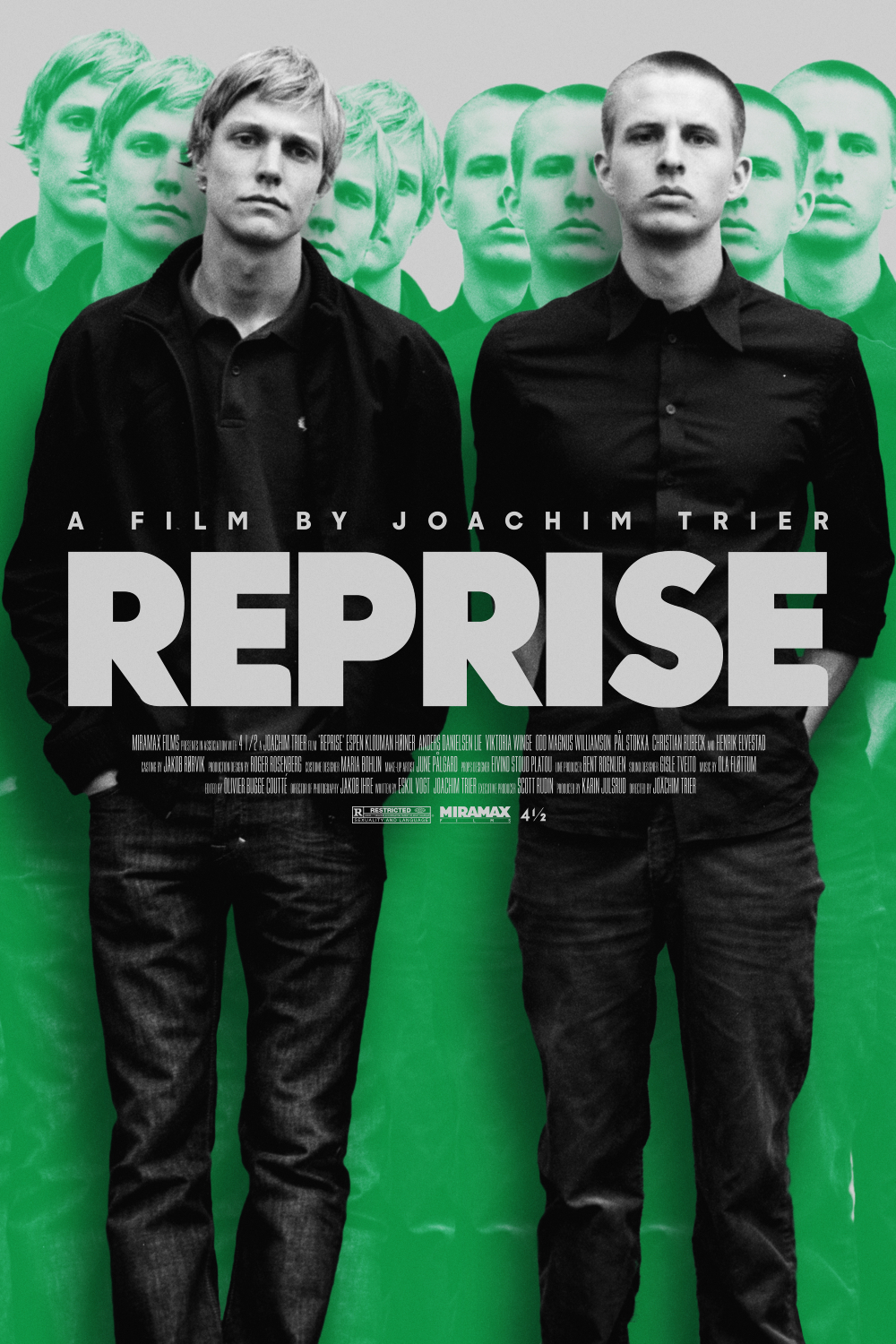
Reprise (Norway: Joachim Trier, 2006)


 Reprise (Norway: Joachim Trier, 2006: 105 mins)

Dargis, Manohla. "Two Friends, Two Novels, One Mailbox: Lives at the Speed of Ambition." The New York Times (May 16, 2008)

"Joachim Trier." Seventh Row (Archive)

Pham, Annika. "Reprise." Cineuropa (July 16, 2007)

Tinkham, Chris. "Joachim Trier: Cowriter and Director of Reprise." Under the Radar (May 2, 2008)

Weston, Hillary. "The Art Form of Memory: A Conversation with Joachim Trier." Current (April 8, 2016)


Monday, March 28, 2022

Okja (South Korea/USA: Bong Joon-Ho, 2017)


Snowpiercer (South Korea/USA/France/Czech Republic: Bong Joon-Ho, 2013)


Snowpiercer (South Korea/USA/France/Czech Republic: Bong Joon-Ho, 2013: 126 mins)

Blunk, Marc Jason. "Derailing Snowpiercer: Descending Into the Boxcars of a Man-Made Hell (ENG 102)." Dialogic Cinephilia (March 1, 2017)

Carvajal, Nelson. "Bong Joon-Ho: Living Images, Moving Frames." Balder & Dash (July 1, 2014)

Cheney, Matthew. "Total Cinema: Snowpiercer." (Posted on Vimeo: 2014)

Hoberman, J. "Revolt on the Polar Express." New York Review of Books (July 1, 2014)

Kohn, Eric. "Is the 'Transformers' Audience Smart Enough for 'Snowpiercer'?" IndieWire (June 25, 2014)

Puschak, Evan "Snowpiercer: The Artist as Historian." (Posted on Youtube: August 4, 2014)

Sie, Trish and April Wolfe. "Snowpiercer." Switchblade Sisters #9 (January 4, 2018) ["April talks to Pitch Perfect 3 director Trish Sie about Bong Joon-ho's frozen feature, Snowpiercer. They discuss the amazing performance of Tilda Swinton as the authoritative Mason, the commanding directorial style of Bong Joon-ho, and the train car on the Snowpiercer they'd most like to spend time in. Trish also talks about getting her start directing the famous OK GO "treadmill video" for the song 'Here It Goes Again' and what it's like taking over an existing franchise with Pitch Perfect 3. She also shares some fascinating tidbits about the eating habits of polar bears."]


Sunday, March 20, 2022

Ava DuVernay (Ongoing Archive)


This Is the Life (2008)

I Will Follow (2010)

Middle of Nowhere (2012)

Selma (2014)

13th (2016)

A Wrinkle in Time (2018)

When They See Us (2019)

Colin in Black and White (2021)

Wednesday, March 16, 2022

13th (USA: Ava Duvernay, 2016)

13th (USA: Ava Duvernay, 2016: 100 mins)

Berger, Dan. "Mass Incarceration And Its Mystification: A Review Of The 13th." AAIHS (October 22, 2016)

Blackmon, Douglas A., et al. "Mass Incarceration." Throughline (August 15, 2019) ["The United States imprisons more people than any other country in the world, and a disproportionate number of those prisoners are Black. What are the origins of the U.S. criminal justice system and how did racism shape it? From the creation of the first penitentiaries in the 1800s, to the "tough-on-crime" prosecutors of the 1990s, how America created a culture of mass incarceration."]

Cyril, Malkia and Kevin Gannon. "Advocates: The U.S. Still Profits from Slavery Because the 13th Amendment Perpetuates Prison Labor." Democracy Now (October 3, 2016) ["As Ava DuVernay’s new documentary "13th" opens at the New York Film Festival, we speak to two people featured in the film: Malkia Cyril of the Center for Media Justice and Kevin Gannon of Grand View University."]

DuVernay, Ava. "From Slavery to Mass Incarceration, Ava DuVernay's Film 13th Examines Racist U.S. Justice System." Democracy Now (October 3, 2016) ["Ava DuVernay’s new documentary chronicles how our justice system has been driven by racism from the days of slavery to today’s era of mass incarceration. The film, "13th," is named for the constitutional amendment that abolished slavery with the exception of punishment for crime. The United States accounts for 5 percent of the world’s population, but 25 percent of its prisoners. In 2014, more than 2 million people were incarcerated in the United States—of those, 40 percent were African-American men. According to the Sentencing Project, African-American males born today have a one-in-three chance of going to prison in their lifetimes if incarceration trends continue. We speak to Ava DuVernay. Her previous work includes the hit 2014 film "Selma." With "Selma," DuVernay became the first African-American female director to have a film nominated for Best Picture at the Academy Awards."]

DuVernay, Ava, et al. "Ava DuVernay / Jamal Joseph." The Close-Up #93 (July 20, 2016)  ["The Opening Night selection will be the new film from SELMA director Ava DuVernay, THE 13TH, which explores the American prison industry and the horrors of mass criminalization. Eugene Hernandez caught up with DuVernay in Los Angeles over the weekend to discuss the project. In part two of this week's episode, we're sharing an inspirational panel from last month's Human Rights Watch Film Festival. Following a screening of CHAPTER & VERSE, a film about a reformed gang leader who struggles to re-enter society after eight years in prison, director Jamal Joseph joined lead actor Daniel Beatty and producers Cheryl Hill and Jonathan Singer to talk about racism, gang violence, gentrification, and what it means to forge your own destiny in an outwardly harsh society."]

Gino, Francesca. "You 2.0: Rebel with a Cause." Hidden Brain (August 9, 2019) ["This week, we'll follow Gino on her mission to understand the minds of successful rule breakers. What are their secrets? And how can we discover our own rebel talent? "I think we really need to shift our thinking," says Gino. "Rebels are people who break rules that should be broken. They break rules that hold them and others back, and their way of rule breaking is constructive rather than destructive. It creates positive change.""]

Kemaholo, Rachel. "A Justice System of Injustice: Causes of Wrongful Convictions in the United States." Dialogic Cinephilia (October 27, 2020)

Kleinhans, Chuck and Julia Lesage. "The Last Word - #BlackLivesMatter." Jump Cut #57 (Fall 2016)

Nord, Liz. "Ava DuVernay on 13th: How Netflix Jumpstarted the Timeliest Doc of the Year." No Film School (October 3, 2016)

Rose, Steve. "'We can't wait for Hollywood to change' - the directors reframing black history." The Guardian (April 1, 2017) ["From Raoul Peck’s I Am Not Your Negro to Ava DuVernay’s 13th, the factual film-makers tackling race in the era of Black Lives Matter."]

Wallis, Victor. "13th and the Culture of Surplus Punishment." Jump Cut #58 (Spring 2018)


Monday, March 7, 2022

David Fincher (Ongoing Archive)

Studiobinder. "Why is David Fincher a Genius? - Directing Styles Explained." (Posted on Youtube: July 8, 2019)


Alien³ (1992) [Keep in mind that this is the third film in a series, Ridley Scott's 1979 Alien and James Cameron's 1986 Aliens. It is not necessary to have watched both of those films, but there would be major plotholes in this film if you haven't.]

Se7en (1995)

The Game (1997)

Fight Club (1999)

Panic Room (2002)

Zodiac (2007)

The Curious Case of Benjamin Button (2008) 

The Social Network (2010)

The Girl with the Dragon Tattoo (2011)

Gone Girl (2014)

Mank (2020)

Thursday, March 3, 2022

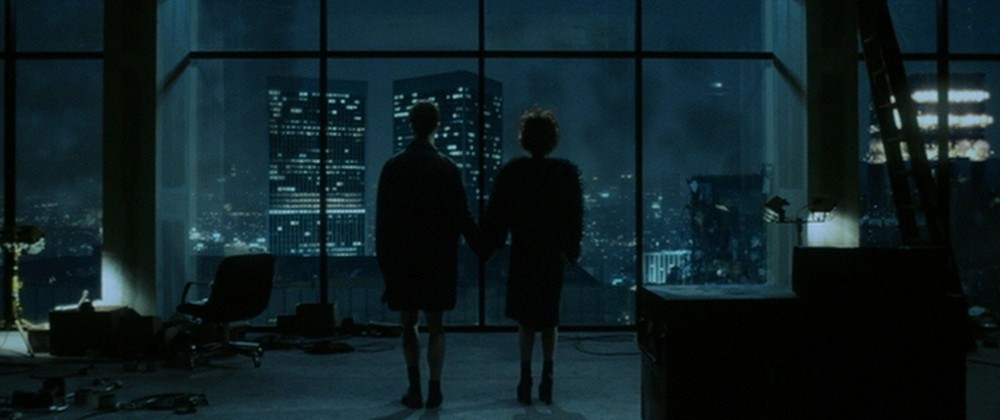
Fight Club (USA: David Fincher, 1999)


“Our great war is a spiritual war; our great depression is our lives!”

Fight Club (USA: David Fincher, 1999: 139 mins)

Adkins, Ashleigh. "Fight Club: The Case of Psychological Misdirection and Bloodied Knuckles." Letterboxd (October 17, 2019)

Baker, Peter. "The Men Who Still Like Fight Club." The New Yorker (November 4, 2019)

Church, David. "“Propane is for pussies”: Bellflower’s bromance of retro technology and hip masculinity." Jump Cut #55 (Fall 2013)

---. "Remaining Men Together: Fight Club and the (Un)pleasures of Unreliable Narration." Offscreen 10.5 (Mat 2006)

Eig, Jonathan. "A beautiful mind(fuck): Hollywood structures of identity." Jump Cut #46 (2003)

“Entertainment Media Analysis Report: Fight Club.” ChildCare Action Project: Christian Analysis of American Culture (2000)

Erickson, Steve. "Fight Club." [Personal Website: 1999]

"Fight Club (1999)." Hammer & Camera (September 19, 2019)

Kuersten, Erich. "CinemArchetype #7: The Shadow." Acidemic (March 8, 2012)

Frazer, Bryant. "Fight Club." Deep Focus (October 1999)

Graeber, David. Debt: The First 5,000 Years. Brooklyn, NY: Melville House Publishing, 2011. [Was reading the 1st chapter of this book at the same time as I was preparing for the Fall 2012 Ethics/Film screening of Fight Club -- it changed the way I conceived of the meaning of the dramatic ending of the film: "By the same token, for the last five thousand years, with remarkable regularity, popular insurrections have begun the same way: with the ritual destruction of the debt records--tablets, papyri, ledgers, whatever form they might have taken in any particular time and place. (8)"]

---. "On the phenomenon of bullshit jobs." libcom (August 20, 2013) [In regards to Tyler Durden's complaint of these types of jobs]

Chow, Galvin P. "I Am Jack's Younger Self: The Secret Connections between "Fight Club" and "Calvin and Hobbes" REVEALED! Blogsizer (no date)

Koski, Genvieve, et al. "Man Up, Pt. 1 - Fight Club." The Next Picture Show #186 (July 31, 2019) ["We’re looking at two films featuring underground fight clubs, secret identities, and male protagonists trying to reclaim their self-worth through violence, beginning with David Fincher’s Fight Club, which traffics in many of the same themes as Riley Stearns’ new The Art of Self Defense, albeit with decidedly more stylistic flourish. In this half of our toxic masculinity double feature, we dig into what made Fight Club so divisive in 1999, and what makes it seem so prescient today."]

---. "Man Up, Pt. 2 - The Art of Self-Defense." The Next Picture Show #187 (August 6, 2019) ["Riley Stearns’ new dark comedy The Art of Self Defense centers on an underground scene of fighters who engage in their own version of the transgressive tactics Tyler Durden plays with in 1999’s Fight Club, but both films are ultimately about the catharsis of violence. After digging into how The Art of Self-Defense spins the “fight club” premise to its own ends, we pit these two films against each other to see which reigns supreme!…Or, to determine what each movie has to say about their shared interests in misogyny, toxic masculinity, and the dehumanization of life in corporate America."]

Like Stories of Old. "Fight Club - How (Not) to Become a Space Monkey." (Posted on Youtube: November 16, 2019) ["Video essay on Fight Club; examining how charismatic leaders like Tyler Durden turn men into Space Monkeys."]

---. "The Myth of Heroic Masculine Purpose." (Posted on Youtube: February 28, 2022) ["A critical analysis of the myth of heroic masculine purpose, and its effect on men’s perception of manhood, and on their connection to others and to the world."]

Lizardo, Omar. "Fight Club, or the Cultural Contradictions of Late Capitalism." Journal for Cultural Research 11.3 (July 2007)

Mann, Doug. "Hunting Elk in the Ruins: Chuck Palahniuk’s Fight Club as Neo-Situationist Satire of Consumer Capitalism." (ND: Posted on his academic page for Western University - Canada)

O'Connell, Max. "Men's Rights Activists, GamerGate, and Why Fight Club is Still Worth Debating 15 Years Later." IndieWire (October 15, 2014)

Palahniuk, Chuck (Interviewed by Joe Rogan). "Why Men Like Fight Club." Jer Films (Posted on Youtube: April 27, 2020)

Probst, Christopher. "Anarchy in the USA." American Cinematographer (November 1999)

Rothe-Kushel, Jethro. "Fight Club: A Ritual Cure For The Spiritual Ailment Of American Masculinity." The Film Journal #8 (2002) [The journal is offline, now hosted on a North Dakota State University page] 

Rushkoff, Douglas. "They Say." Coercion: Why We Listen to What 'They' Say'. (NY: Metropolitan Books, 1999: 1-26) [A question that is raised, for me, is why we so easily accept what "they say?" Here is media theorist Douglas Rushkoff's brilliant critical and self-reflective exploration of this question.]

Sevilla, Susanna. "Things Are Not What They Seem." (Posted on Vimeo: February 2015) ["A video essay on title sequences from Hitchcock and Fincher films. An exploration of motion graphic design from analog to digital."]

Szhou, Tony. "David Fincher - And the Other Way is Wrong." Every Frame a Painting (October 1, 2014)

Vacker, Barry. "Slugging Nothing: Fighting the Future in Fight Club." To the Best of Our Knowledge (November 10, 2013)

Zavodny, John. “I Am Jack’s Wasted Life: Fight Club and Personal Identity.” Movies and the Meaning of Life: Philosophers Take on Hollywood. eds. Kimberly A. Blessing and Paul J. Tudico. Chicago: Open Court, 2005: 47-60. [Professor has copy]


The Directors Series- David Fincher [2.5] from Raccord on Vimeo.


"The most strongly enforced of all known taboos is the taboo against knowing who or what you really are behind the mask of your apparently separate, independent, and isolated egos." -- Alan WattsThe Book on the Taboo Against Knowing Who You Are (1966)

Wednesday, March 2, 2022

Se7en (USA: David Fincher, 1995)


Se7en (USA: David Fincher, 1995: 127 mins)


Adam, Braden. "Se7en - An Analysis of Generational Gaps." (April 27, 2007)

Aradillas, Aaron and Matt Zoller Seitz. "Grand Openings, Pt 2 Analyzing David Fincher's credit sequences: Se7en."  Moving Image Source (September 27, 2010)

Beyl, Cameron. "The Directors Series: David Fincher, Pts 1-5." (Posted on Film Stage: September 22, 2015)

David Fincher They Shoot Pictures Don't They (Archive)

Ebert, Roger. "Se7en."  Chicago Sun-Times (July 18, 2011)

Eig, Jonathan. "A beautiful mind(fuck): Hollywood structures of identity." Jump Cut #46 (2003)

Hodges, Brendan. "Se7en Movie Review and Analysis." The Metaplex (September 25, 2014)

Lindsay, Sean. "Great Directors: David Fincher." Senses of Cinema (July 2003)

LoBrutto, Vincent. "Defining Theme, Metaphor, and Character Through Color, Texture, and Environmental Design: Se7en." Becoming Film Literate: The Art and Craft of Motion Pictures. Westport, CT: Praeger, 2005: 280-285. [BCTC Library: PN1994 L595 2005]

Murray, Terri. "Se7en." Philosophy Now #78 (2010)

Radatz, Ben. "Se7en (1995)." Art of the Title (July 10, 2012)

Sevilla, Susanna. "Things Are Not What They Seem." (Posted on Vimeo: February 2015) ["A video essay on title sequences from Hitchcock and Fincher films. An exploration of motion graphic design from analog to digital."]

Swinney, Jacob T. "David Fincher's Extreme Close Ups." (Posted on Vimeo: January 2016)


"things are not what they seem," A Video Essay by Susana Aho from MGFX UConnDMD on Vimeo.


Alien 3 (USA: David Fincher, 1992)


Alien 3 (USA: David Fincher, 1992: 114 mins)


Beyl, Cameron. "The Directors Series: David Fincher, Pts 1-5." (Posted on Film Stage: September 22, 2015)

Cassidy, Brendan, et al. "AlienAliensAlien 3." InSession Film #221 (May 15, 2017)

Studiobinder. "Why is David Fincher a Genius? - Directing Styles Explained." (Posted on Youtube: July 8, 2019)

Subissati, Andrea and Alexandra West. "Alienation, Part 2: Alien 3 (1992) and Alien: Resurrection (1997)." Faculty of Horror (June 21, 2016)

Szhou, Tony. "David Fincher - And the Other Way is Wrong." Every Frame a Painting (October 1, 2014)

Tafoya, Scout. "The Post-Punk Cinema Manifesto: Side A." and "The Post-Punk Cinema Manifesto: Side B." Vimeo (2017)


The Unloved - Alien³ from Scout Tafoya on Vimeo.