We live in the best of times in which we are able to learn about the world and its incredible diversity of cultures/beings/places/perspectives in a way never historically possible. We live in the worst of times when we are able to isolate ourselves completely from anything different from our own narrow view/conception of the world/reality. The choice is yours!
Bursztynski, Maurice and Hank Hellman. "Good Vibrations."See Hear #6 (June 22, 2014) ["Hank joined me to discuss the Northern Irish film from 2012 Good Vibrations. This covers the true story of Terri Hooley through the Seventies. In the midst of The Troubles in Belfast, Terri attempts to stop the violence between the local youth by opening a record store called Good Vibrations and by promoting local punk bands. THAT’S why we don’t have more peace in the world – too many record stores closing down!!! If this was presented as a work of fiction, you’d never believe someone would attempt it."]
Longworth, Karina. "Bela and Boris Episode 2: Bela and the Vampires."You Must Remember This (October 23, 2017) ["With Dracula (1931), Bela Lugosi instantly became the first horror star of sound cinema. It’s not easy being a trailblazer, and Bela would have difficulty capitalizing on his newfound stardom. In this episode we’ll discuss how Dracula made him, and trapped him, and trace the subsequent vampire roles that became his bread and butter."]
Alperovitz, Gal. "'Mr. Boston': Meet the Man Who Secretly Helped Daniel Ellsberg Leak Pentagon Papers to the Press."Democracy Now (February 2, 2018) ["Historian Gar Alperovitz has revealed for the first time the key role he and a handful of other activists played in helping whistleblower Daniel Ellsberg leak to journalists the Pentagon Papers—a 7,000-page classified history outlining the true extent of U.S. involvement in Vietnam. Daniel Ellsberg told The New Yorker the secret role this group played was so crucial in releasing the Pentagon Papers that he gave them a code name: “The Lavender Hill Mob.” Alperovitz went by the alias “Mr. Boston.” Ellsberg told The New Yorker, “Gar took care of all the cloak-and-dagger stuff.” We speak to historian and political economist Gar Alperovitz about why he is going public now."]
Longworth, Katrina. "Bela and Boris (Part 1): Where the Monsters Came From."You Must Remember This (October 16, 2017) ["Bela Lugosi and Boris Karloff were two middle-aged, foreign, struggling actors who became huge stars thanks to Dracula and Frankenstein, the first two of a trend of monster movie hits released by Universal Studios during the 1930s. This season, we’ll discuss their parallel but very different lives and careers. Today, we’ll start by exploring where each man came from, what they were doing before they got to Universal, and why Universal began making monster movies in the first place."]
"Phantom of the Paradise."See Hear #5 (May 26, 2014) ["Brian De Palma’s 1974 rock musical that some believe is the REAL midnight movie experience over its more famous rival the Rocky Horror Picture Show. We discuss the film, the songs written by its star (Paul Williams), its influence on Seinfeld (!!!) and a ton of other tangents."]
Hari, Johann. "How the 'Junk Values' of Neoliberalism Drive Depression and Anxiety in the U.S."Democracy Now (February 1, 2018) ["The United States is one of the most depressed countries in the world. Could it be because of the country’s adoption of neoliberal economic policies? We speak to Johann Hari, author of a controversial new book, “Lost Connections: Uncovering the Real Causes of Depression—and the Unexpected Solutions.” He writes, 'Junk food has taken over our diets, and it is making millions of people physically sick. A growing body of scientific evidence suggests that something similar is happening with our minds—that they have become dominated by junk values, and this is making us mentally sick, triggering soaring rates of depression and anxiety.'"]
Alston, Philp. "Extreme Poverty in America: Read the U.N. Special Monitor Report.The Guardian (December 15, 2017) ["Philp Alston, the UN’s special rapporteur on extreme poverty and human rights, has spent 10 days touring America. This is the introduction to his report."]
Bailey, Buckey, Rob Bilot and Joe Kiger. "DuPont vs. the World: Chemical Giant Covered Up Health Risks of Teflon Contamination Across Globe."Democracy Now (January 23, 2018) ["“The Devil We Know,” that looks at how former DuPont employees, residents and lawyers took on the chemical giant to expose the danger of the chemical C8, found in Teflon and countless household products—from stain- and water-resistant apparel to microwave popcorn bags to dental floss. The chemical has now been linked to six diseases, including testicular and kidney cancers. We speak with Bucky Bailey, whose mother worked in the Teflon division of a DuPont plant in West Virginia while she was pregnant with him, and who was born with only one nostril and a deformed eye and has undergone more than 30 surgeries to fix the birth defects; Joe Kiger, lead plaintiff in a class action lawsuit against DuPont, and a school teacher in Parkersburg, West Virginia, who suffered from liver disease; and Rob Bilott, the attorney that brought DuPont to court."]
Cooper, Carol. "In Celebration of Ursula LeGuin's Fantastic Legacy."The Village Voice (January 30, 2018) ["The late author was obsessed with the nuances of language, and how words can shape the beliefs and behavior of entire civilizations"]
In an increasingly globally linked world that still suffers from spiraling incidences of mass violence, destruction, hate, and detachment, what is the role of the inspired individual who seeks progressive change?
What is the intrinsic value of the "free" person? Where do we seek and gain "authenticity" and/or "autonomy?" How do we go about creating a personal and political ethics?
Is the social push toward conformity and acceptance (of things as they are) inescapable?
So we are flesh and blood individuals (biological/animal), but we also have a higher level of consciousness. Is this a curse or a blessing? Why?
How do we cultivate a citizenry that is willing to recognize and take responsibility for their individual/collective actions? Is this the right goal, to take responsibility, and cultivate response-ability in others, or should we just flee into the safety and comfort of the faceless crowd?
Following the advice of Nietzsche, how would you "become what you are?"
---------------------------------------------------------------------
Ask any linguist and they’ll tell you the profound impact language has on influencing our culture. The words we speak express our thoughts, and science has shown that the structures within our language shape how we construct and understand our reality. - Hishaam Siddiqi, "How to Talk About ISIS Without Islamophobia." (July 18, 2016)
"I therefore decided that both the written report and film I produced would be addressed to no particular audience. Like the cry, "Fire!" I hoped they would receive the widest possible circulation and not just be heard by arsonists. This meant shunning "scholarly" publications, which have long since become a means of information control; it also meant avoiding conventional formats, another means of neutralizing information. Hence the format of this book". -- From "Misanthropology" in Carpenter, Edmund. Oh, What a Blow That Phantom Gave Me. Holt Rinehart and Winston, 1972.
Sumanthiran, Shiloh and Serena Sung-Clarke. "Rohingya Refugee Crisis (Part 1)."War News Radio (October 28, 2017) ["In August, clashes between the Burmese government and the ethnic minority Rohingya intensified, leaving casualties and many Rohingya people vulnerable to violence. Since then, over 500,000 Rohingya have fled their home in Myanmar’s Rakhine State. The media and foreign workers have been barred from entering Rakhine, but stories of ethnic cleansing and plunder have emerged. Who, exactly, are the Rohingya and how did this happen? To understand the current crisis, we have to go back in time…"]
One problem with the word “shaman,” which traces its origins to the Siberian steppe, is that it is popularly employed by people more interested in fantasizing about some alternate reality than squaring their shoulders to bear the mundane burdens of this one. However, in cultures where such an office exists, the job of the shaman is primarily to foster the interrelation of two groups or positions that have hardened into such stubborn opposition that the survival of the society is at risk. For life to go on, the two camps must overcome their polemic, and the shaman acts by throwing himself into the fray—mentally, bodily, and emotionally, sometimes at personal risk. The result of his labors typically constitutes a paradigm shift rather than a compromise: the rules, though not necessarily undone, are re-contextualized and the system changes, including the position of the shaman himself.
--Matt Kirby, "I Heart Huckabees Premodern Help for Postmodern Times." (2004)
Authors and artists, like doctors and clinicians, can themselves be seen as profound symptomoligists, ... 'physicians of culture' for whom phenomena are signs or symptoms that reflect a certain state of forces. -- Daniel W. Smith, "'A Life of Pure Immanence'" (1998)
Allred, Gloria. "Women’s Rights Attorney Gloria Allred on Suing Donald Trump over Sexual Assault: 'Truth Matters.'"Democracy Now (January 26, 2018) ["We are broadcasting from the Sundance Film Festival in Park City, Utah, which has been surging with energy from the #MeToo and #TimesUp movement. It was at Sundance two decades ago that movie mogul Harvey Weinstein allegedly assaulted actress Rose McGowan. McGowan told The New York Times in October that Weinstein offered her $1 million in a hush money payment if she signed a nondisclosure agreement to not come forward with her charges that he raped her in a hotel room during the 1997 festival. We speak with longtime women’s rights attorney Gloria Allred, who represents one of the women who have accused President Trump of sexual assault, and feature an excerpt from a new documentary on her life and path-breaking legal career, called “Seeing Allred.”"]
Branch, Taylor, Trey Ellis and Peter Kunhardt. "MLK’s Radical Final Years: Civil Rights Leader Was Isolated After Taking On Capitalism & Vietnam War."Democracy Now (January 25, 2018) ["Fifty years ago this April, Rev. Martin Luther King was assassinated in Memphis, Tennessee. He was just 39 years old. Today we look back at the last three years of King’s life, beginning after President Lyndon Johnson signed the Voting Rights Act of 1965. Despite passage of the monumental legislation, King set his eyes on new battles by launching a Poor People’s Campaign and campaigning to stop the Vietnam War. King’s decision to publicly oppose the war isolated him from many of his closest supporters. We feature clips from a new HBO documentary about King’s last years, titled “King in the Wilderness,” and speak with Pulitzer Prize-winning historian Taylor Branch, who wrote the “America in the King Years” trilogy and is featured in the film, as well as the film’s director Peter Kunhardt and writer Trey Ellis."]
Gerwig, Greta, et al. "63 Minute Directors Roundtable Talk."The Hollywood Reporter (Posted on Playlist: January 22, 2018) ["Angelina Jolie (“First They Killed My Father”), Patty Jenkins (“Wonder Woman”), Greta Gerwig (“Lady Bird”), Joe Wright (“Darkest Hour”), Guillermo del Toro (“The Shape of Water”), and Denis Villeneuve (“Blade Runner 2049”)."]
RIP - Ursula LeGuinn accepting the National Book Foundation’s Medal for Distinguished Contribution to American Letters in 2014: I think hard times are coming, when we will be wanting the voices of writers who can see alternatives to how we live now, and can see through our fear-stricken society and its obsessive technologies to other ways of being, and even imagine some real grounds for hope. We will need writers who can remember freedom: poets, visionaries—the realists of a larger reality. … We live in capitalism. Its power seems inescapable. So did the divine right of kings. Any human power can be resisted and changed by human beings. Resistance and change often begin in art, and very often in our art, the art of words.
Cohen, Julie and Betsy West. "RBG: New Documentary Celebrates Life of Groundbreaking Supreme Court Justice Ruth Bader Ginsburg."Democracy Now (January 22, 2018) ["One of the most talked-about documentaries at this year’s Sundance Film Festival looks at the groundbreaking life of the nearly 85-year-old Supreme Court Justice Ruth Bader Ginsburg. 2018 marks her 25th year on the court, and she has no plans to retire. Ginsburg first gained fame in the 1970s when she co-founded the Women’s Rights Project at the American Civil Liberties Union, where she argued six gender discrimination cases before the Supreme Court. In recent years, Ginsburg’s public profile has soared as the court has swerved to the right. Ginsburg often now finds herself on the dissenting side of opinions. We feature excerpts from the new film and speak with its directors, Julie Cohen and Betsy West."]
Hinojosa, Maria. "From the Front Lines."The UO Channel (October 9, 2018)
["The first Latina reporter to be hired by NPR, Hinojosa helped to launch Latino USA, one of the earliest public radio programs devoted to the Latino community. She has anchored the show for its entire 22-year run, and since 2000 has also been the program’s executive producer. In 2010 she became the founder, president, and CEO of Futuro Media Group, an independent nonprofit organization producing multimedia journalism that explores and gives a critical voice to the diversity of the American experience. She is also the anchor and Executive Producer of the PBS show America By the Numbers with Maria Hinojosa, through which she has informed millions about the changing cultural and political landscape in America and abroad. In her nearly 30 years as a journalist, Hinojosa has worked for CNN, PBS, CBS, WNBC, and WGBH. Her previous projects include PBS’ Need to Know series, and the WGBH/La Plaza program Maria Hinojosa: One-on-One, a talk show featuring interviews with diverse guests including actors, writers, activists, and politicians. She served for five years as a Senior Correspondent for NOW on PBS. Additionally, Hinojosa was the first Latina to anchor a FRONTLINE report: aired in October 2011, “Lost in Detention” explored abuse at immigrant detention facilities, garnering attention from Capitol Hill to both the mainstream and Spanish-language media. Throughout her career, Hinojosa has been drawn to the mission behind public media and its power to give voice to the diversity of opinions that represent the complexity of our country. Her goal as a journalist is to share America’s untold stories and to highlight today’s critical issues in a responsible and respectful manner. Hinojosa has won numerous awards for her work, including four Emmys; the 2012 John Chancellor Award for Excellence in Journalism; the Robert F. Kennedy Award for Reporting on the Disadvantaged; and the Edward R. Murrow Award from the Overseas Press Club for best documentary for her groundbreaking “Child Brides: Stolen Lives.” In addition to broadcast work, Hinojosa has been a syndicated columnist and is the author of two books."]
Robinson, Angela. "Professor Marston and the Wonder Women."The Treatment (November 1, 2017) ["Director Angela Robinson retells the true story of William Marston and his feminine inspiration in Professor Marston and the Wonder Women."]
Simon, David. "The Deuce."The Treatment (November 8, 2017) ["Creator David Simon talks bringing personal police reporting experience to HBO's The Deuce."]
COINTELPRO 101 (USA: Andres Alegria, et al, 2010: 56 mins) ["A secret illegal project from the 1950s, 60s and 70s called COINTELPRO, represents the state’s strategy to prevent resistance movements and communities from achieving their ends of racial justice, social equality and human rights. The program was mandated by the United States’ FBI, formally inscribing a conspiracy to destroy social movements, as well as mount institutionalised attacks against allies of such movements and other key organisations. Some of the goals were to disrupt, divide, and destroy movements, as well as instilling paranoia, manipulation by surveillance, imprisonment, and even outright murder of key figures of movements and other people. Many of the government’s crimes are still unknown. Through interviews with activists who experienced these abuses first-hand, COINTELPRO 101 opens the door to understanding this history, with the intended audience being the generations that did not experience the social justice movements of the 60s and 70s; where illegal surveillance, disruption, and outright murder committed by the government was rampant and rapacious. This film stands to provide an educational introduction to a period of intense repression, to draw many relevant and important lessons for the present and the future of social justice."]
Hinojosa, Maria. "The Importance of Journalism for a Functioning Democracy."UO Today #685 (October 9, 2017) ["Journalist Maria Hinojosa, host of NPR’s Latino USA, and president and CEO of Futuro Media Group. Hinojosa discusses her career and the importance of journalism for a functioning democracy. She also talks about the Deferred Action for Childhood Arrivals (DACA) program, and the federal response to the hurricane disaster in Puerto Rico."]
Phillip Wohlstetter on Zero Dark Thirty: "How does a film think? Recall the famous experiment of Lev Kuleshov. Start with the shot of an actor’s face. Vary the shots adjacent to it: a coffin, a plate of soup, a seductive woman lying on a divan. The actor’s expression will be read, alternately, as sadness, hunger, or lust. For the audience, juxtaposition creates meaning. A film is an arrangement of moments, shorter or longer, but every narrative moment is brought into relief by a significant before-moment and a significant after-moment that frames it. Let’s look at the first torture sequence in Zero Dark Thirty to see how this meaning-effect works. Significant before-moment: the powerful opening sequence, dark screen, the terrified voice of a woman trapped in the World Trade Center on 9/11, realizing there’s no help coming, she’s going to die. Central narrative moment: a detainee is water-boarded in the next scene, forced to crawl in a dog collar, hung up naked by the arms, etc. After-moment: the face of Maya, wincing as she watches the torture. I’m cheating on this last. Obviously it’s a reaction shot within a scene, but in terms of meaning, it provides a bookend to the torture moment just as surely as the 9/11 sequence bookends it from the other side. To see the truth of this, imagine an opening with the before and after moments removed. We would be watching a brutal torture scene with no comment whatsoever—that is to say, we’d be in a neo-realist film that lets us observe and come to our own conclusions, that avoids (ideally) telling us what to feel. Instead, the torture moment is framed as a reaction to 9/11, an over-reaction maybe but understandable in context and perhaps in the end—we have to entertain this possibility—excusable. Now let’s look at the work of Maya’s reaction shot (remembering that it’s precisely the reaction shot, a way to locate the audience member in the movie by offering him/her a surrogate who reacts to events the way we would given the chance—it’s precisely this key device of classic Hollywood Film that Neo-Realism rejected because it lulled us so easily into unthinking). Maya winces. We would too, humanists and democrats that we are. But she stays in the room, gritting her teeth, going against her nature. Sometimes, the film whispers, you have to make hard choices, to take hard measures—a celluloid lesson in ‘dirty hands’ moral philosophy."
Wypijewski, JoAnn. "Zero Dark Thirty, Snuff Film."The Nation (January 30, 2013) ["The film’s torture scenes do not excuse or glorify torture; they do something worse: draw the audience into accommodating it."]
The economic system separates those on the left in all sorts of ways while providing unending wars and justifying those wars in the endless War on Terror. The latter is a great money maker and a means of mobilizing and silencing the general population. If the single issue of the military-industrial complex is such a successful part of the economic system, then why can’t even one war be won and why do new wars follow on the heels of the old wars that have not been won in the first place? We’re not only fighting Orwell’s (1984) Eurasia, but also Eastasia at the same time. Try to imagine a world in which the Second World War was still going on today? These wars are waged on multiple fronts while the domestic scene is left to rot on the vine, except for a minority of people, who either control the state, or benefit from the state in ways that keep them silent in the face of the gifts that the state has to distribute or throw at them. - Howard Lisnoff, "The Atomized and Siloed US Left." (January 17, 2018)
Check out this cool tool for exploring writers you discover and want to know more about. It is WorldCat Identities. So say you hear someone talking about historian Howard Zinn's 'people's histories' and you want to investigate more about him and his work - you enter Howard Zinn and voila. I'm thinking this tool might be fun to use in my classes (especially the upcoming Peace & Conflict Studies course) and great for my own interests/research. Should also be interesting for the film studies courses - check out the thematic mapping near the bottom of the entry for Stanley Kubrick
Glossary of Terms for The United States of Amnesia (USA)
A work in progress--for me, my students, and anyone else that is interested in refining/extending our communicative tools. The need for this is obvious, we are forgetting who we are, how we learn, our history, our (inter)related nature, the construction of truths, the myth of objectivity and the effects of our words/images/actions. I'm searching for handholds to help me rise out of the depths of ignorance. Some may see this as a pointless exercise, or ridiculous in its scope (can we truly wake this slumbering democracy through words/ideas?), but comrades of the impossible/unimaginable may understand why we should ask why, or seek out what is what. Feel free to leave suggestions... as usual I will share what I find and compile an archive so that someone may remember them......
I was listening to the See Hear podcast while working out and a member of the podcast raved about a band called Master Musicians of Bukkake - with a name like that I remembered them and sought out their music when I got home later that night. Consider my mind blown - Far West
Standing on the shore of Quiddity I cast my consciousness to catch quicksilver dreams that will supply me with glimpses of other realities.
Understanding that there are other realities, other possibilities, other journeys, other methods, is the path of wisdom. Learning how to engage with them is the essence of Art in all its manifestations.
The possibility for true peace is only ever realized when differences learn to co-exist. No need to assimilate, conform or convert. Crusades are for the insecure; instead we will create an environment in which people will be encouraged to continuously become what they would be.
Zinn, Howard (Historian/Playwright/Political Science) ["Howard Zinn was a historian, author, professor, playwright, and activist. His life’s work focused on a wide range of issues including race, class, war, and history, and touched the lives of countless people." source)
"A Prairie Home Companion."See Hear #3 (March 17, 2014) ["This time around we discuss Robert Altman’s final film, A Prairie Home Companion. Plenty of music is performed here, but the focus of this film is more on death. Having said that, this film is a million miles from being morbid, and is a wonderful celebration of life. "]
Bandele, Asha and Patrisse Khan-Cullors. "'When They Call You a Terrorist': The Life of Black Lives Matter Co-Founder Patrisse Khan-Cullors."Democracy Now (January 16, 2018) ["We turn now to a powerful new book, released today, that tells the story of one woman as she fights back against the impacts of social and racial injustice in America on her family. That woman is Patrisse Khan-Cullors, co-founder of Black Lives Matter. The book, titled “When They Call You a Terrorist: A Black Lives Matter Memoir,” is both an account of survival, strength and resilience, and a call to action to change the culture that declares innocent black life expendable. Patrisse’s story follows her childhood in Los Angeles in the late 1990s and early 2000s, as her mother worked three jobs, struggling to earn a living wage. And it puts a human face on the way mass incarceration and the war on drugs hurt young black men, including her relatives and friends. Patrisse’s father was a victim of the drug war. He died at the age of 50. Her brother spent years in prison for nonviolent crimes stemming from his battles against mental illness. He was once even charged with terrorism after being involved in a car accident. The police would target Patrisse, too—raiding her house without just cause. In 2013, after George Zimmerman was acquitted for the killing of 17-year-old Trayvon Martin, Patrisse co-founded Black Lives Matter along with Alicia Garza and Opal Tometi. The movement began online but soon spread across the country. "]
Dimensions of Political Ecology (DOPE) 2018 Conference (University of Kentucky: February 22-24, 2018) ["The Political Ecology Working Group (PEWG) is an interdisciplinary group of graduate students at the University of Kentucky, who organize and host the annual Dimensions of Political Ecology (DOPE) Conference. Since its inception in 2010, this student-organized conference has become one of the largest, most highly-regarded international forums for critical discussions at the intersection of ecology, political economy, and science studies. DOPE 2017 welcomed more than 300 scholars, environmental professionals, and activists from over 100 institutions to Lexington. The DOPE Conference has offered a platform for both established and emerging scholars, featuring invited speakers such as Paul Robbins, Sandra Harding, Rebecca Lave, Erik Swyngedouw, Vandana Shiva, Julie Guthman, Laura Pulido, and Kim TallBear."]
Herron, Christopher. "Labour in Real Time: Ben Russell Interview (Good Luck)."The Seventh Art (November 10, 2017) ["Ben Russell is an experimental filmmaker whose latest film, Good Luck (2017), explores the spaces and labour of a copper mine in Bor, Serbia and a smaller gold mine in Suriname. The Super 16mm shot film had its North American premiere at the 2017 Toronto International Film Festival, where we talked to Ben about the making of the film."]
King, Jr., Martin Luther. "Newly Discovered 1964 MLK Speech on Civil Rights, Segregation & Apartheid South Africa."Democracy Now (January 15, 2018) ["In a Democracy Now! and Pacifica Radio Archives exclusive, we air a newly discovered recording of Dr. Martin Luther King Jr. On December 7, 1964, days before he received the Nobel Peace Prize in Oslo, King gave a major address in London on segregation, the fight for civil rights and his support for Nelson Mandela and the anti-apartheid struggle in South Africa. The speech was recorded by Saul Bernstein, who was working as the European correspondent for Pacifica Radio. Bernstein’s recording was recently discovered by Brian DeShazor, director of the Pacifica Radio Archives."]
Stickwell, Bernard, et al. "Ladies and Gentleman, The Fabulous Stains."See Hear #2 (February 17, 2014) ["... the 1982 film Ladies and Gentlemen, The Fabulous Stains directed by Lou Adler. The film is prophetic in seeing a less-than-talented band gain a loyal following using the help of the media. No publicity is bad publicity. Moral compasses from nearly every character in the film are pointing south."]
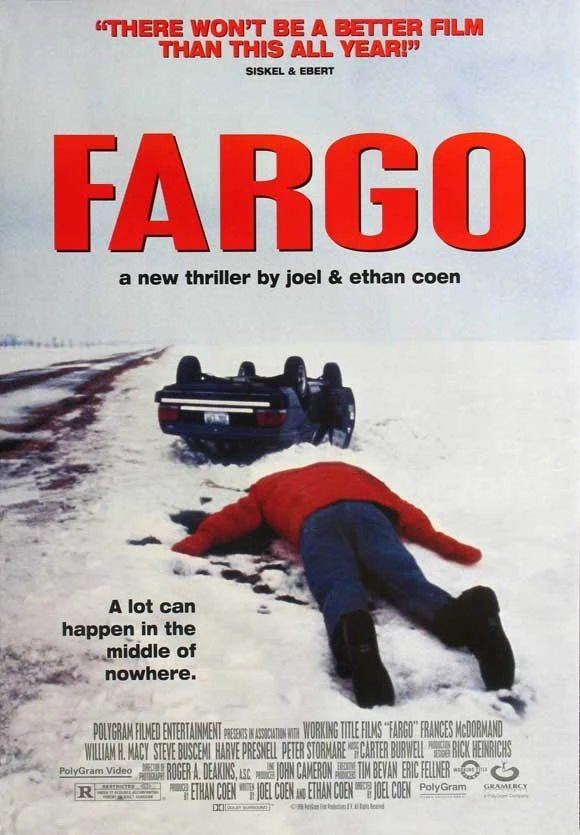
Collins, K. Austin, et al. "Ballad of the Coen Brothers."The Film Comment Podcast (September 26, 2018) ["“In their films—especially Barton Fink, The Man Who Wasn’t There, No Country for Old Men, A Serious Man, and Inside Llewyn Davis—there’s always the sense that the deck is stacked against us and that we’re the authors of our own misery, a doubly discomfiting, Camusian view that perfectly matches their aesthetic approach, an overwhelming omniscience that results in a kind of bravura melancholy,” Michael Koresky writes in his feature about Joel and Ethan Coen’s The Ballad of Buster Scruggs in our September/October issue. This week, Koresky, FSLC Editorial and Creative Director, moderates a special Film Comment Podcast featuring three more Coeniacs in conversation about the brothers’ dazzling 30-year-plus body of work, from greatest hits to lesser-known ballads: K. Austin Collins, film critic at Vanity Fair; Aliza Ma, head of programming at Metrograph; and Adam Nayman, Toronto-based critic and author of the new book The Coen Brothers: This Book Really Ties the Films Together (Abrams)."]
No matter how commodified and domesticated the fantastic in its various forms might be, we need fantasy to think the world, and to change it. — China Miéville, "Thinking Weirdly with China Miéville." (January 13, 2018)
Bursztynski, Maurice, Wendi Freeman and Tim Merrill. "Hated:GG Allin and The Murder Junkies."See Hear #1 (January 14, 2014) ["No gentle start for the team as they discuss the Todd Phillips documentary about notorious punk rock singer GG Allin. The film is not for the faint of heart (and our language may reflect the content discussed), but it is a fascinating look at a man who truly knew no boundaries in they way he lived his life. He is held in equal contempt and admiration by the public and ex-band members."]
Gordon, Emily and April Wolfe. "Bone Tomahawk."Switchblade Sisters #1 (November 9, 2017) ["On the debut episode of Switchblade Sisters, April talks with the writer and producer of The Big Sick, Emily Gordon. Things get gruesome quickly as the two of them discuss the 2015 horror-western, Bone Tomahawk. April and Emily examine what makes the movie so good; the insane violence, the heartbreaking monologues, the beautiful cinematography. Plus, Emily talks about the making of The Big Sick and how she uses her psychology background in her writing."]
1st Round: warm-up question followed by a word
2nd Round: 3 words in succession for each contestant
3rd Round: Round-robin until we have a winner (keep track of last three - the order they come in)
3 mispelled words and a contestant is out
Pronouncer Information 1. Read carefully the Judges, Recorders, Spellers and Audiences information that is included in the Scripps pronouncers’ guide. 2. Familiarize yourself with all words on the confidential word list. Pronunciation is important. A meeting with the judges to insure pronunciation of words and procedures will be scheduled prior to the Bee beginning. 3. Speak clearly for contestants, judges and audience alike. Grant all requests to repeat a word until the judges agree that the word has been made reasonably clear to the speller. You may request the speller to speak more clearly or louder. 4. “Pace” yourself. You need time to focus attention on the pronunciation of the new word and the judges need a few moments between each contestant to do their tasks.
Speller’s Information 1. Each speller needs to focus on the Pronouncer, to aid his or her hearing and understanding of the context of the word. A speller may ask for the word to be repeated, for its use in a sentence, for a definition, for the part of speech, and for the language of origin. 2. Each speller should pronounce the word before and after spelling it. If the speller fails to pronounce the word after spelling it, the judge may ask if they are finished. If they say yes, the judge will remind the speller to remember to repeat the word the next time. (No speller will be eliminated for failing to pronounce a word.) 3. When a speller is at the podium spelling, the next speller should be standing at a marked location ready to proceed to the podium.
Joshua York 15 (Dr. Strangelove; Full Metal Jacket; All That Jazz; Videodrome; Suburbicon; The Big Lebowski; Pan's Labyrinth; Brick; Se7en; Fight Club; Call Me By Your Name; A Quiet Place: Professor Marston and the Wonder Women)
Garrett Benningfield 15 (The Battle of Algiers; The Shape of Water; Three Billboards....; All That Jazz; The Big Lebowski; The Conformist; Videodrome; Shutter Island; Pan's Labyrinth; The Revenant; Professor Marston and the Wonder Women; Raw: Let the Right One In)
Harrison Hart 15 (Princess Cyd; Vic and Flo Saw a Bear; Girlfriends; Oscar Challenge Entry; The Florida Project; Rosenstrasse; A Quiet Place; Something in the Air; Under the Skin; The Host; Isle of Dogs; I Am Not Your Negro; Grave of the Fireflies; Blockers)
Fairley Neal 10 (Dr. Strangelove; Vic and Flo Saw a Bear; The Battle of Algiers; A Fantastic Woman; Se7en; Rosenstrasse; Avengers) sifting Ruel Wodajo 10 (The Battle of Algiers; The Beaches of Agnes; Vic and Flo Saw a Bear; Girlfriends; Rosenstrasse; The Death of Stalin; Phantom Thread; A Quiet Place; Isle of Dogs; Blockers)
Alex Huellemeier 11 (The Battle of Algiers; Vic and Flo Saw a Bear; Videodrome; Something in the Air; Phantom Thread; Ready Player One; A Quiet Place; Isle of Dogs; Blockers; I Am Not Your Negro; Avengers: Infinity War)
Alysa Schooler 8 (The Battle of Algiers; Amelie; A Quiet Place; Se7en; Let the Right One In; Let Me In; Avengers)
Brandon Marshall 15 (The Big Lebowski; Amelie; A Quiet Place; Something in the Air; 13 Assassins; Brick; Let Me In; Let the Right One In; Blockers; Avengers)
Yonathan Kebede 10 (The Beaches of Agnes; Princess Cyd; Vic and Flo Saw a Bear; Girlfriends; Rosenstrasse; The Death of Stalin; A Quiet Place; Phantom Thread; Isle of Dogs)
Corey Baker 11 (Dr Strangelove; The Battle of Algiers; Vic and Flo Saw a Bear; Videodrome; The Florida Project; Pan's Labyrinth; Ready Player One; A Quiet Place; Se7en; Shortbus; Avengers)
Pat Tillson 10 (Dr Strangelove; The Battle of Algiers; All That Jazz; The Conformist; Videodrome; The Big Lebowski; Amelie; Pan's Labyrinth; Se7en; Black Panther ) Kayla Swartz 7 (Princess Cyd; Vic and Flo Saw a Bear; A Fantastic Woman; Rosenstrasse; Isle of Dogs; Blockers; Avengers)
Connor O'Nan 15 (The Battle of Algiers; Princess Cyd; Vic and Flo Saw Bear; Girlfriends; The Florida Project; Rosenstrasse; Phantom Thread; Ready Player One; A Quiet Place; Isle of Dogs; Blockers; Avengers)
Jacob Anderson 13 (All That Jazz; Videodrome; Donnie Darko; Mysterious Skin; Pan's Labyrinth; Nocturnal Animals; Brick; Blade Runner 2049; Full Metal Alchemist; It Comes at Night; Funny Games; A Quiet Place; Texas Chainsaw Massacre)
Burke, Tarana, et al. "Time’s Up: Meet Five of the Women Who Staged Protest at Golden Globes Against Gender Violence."Democracy Now (January 12, 2018) ["Across the United States, women are declaring “Time’s Up!” That’s the rallying cry that’s bringing together women—from Hollywood actresses to housekeepers—to demand gender and racial justice and a world free of sexual harassment and assault. The movement launched on Sunday night at the Golden Globe Awards, where the red carpet went dark, with many dressed in black to show their solidarity with the movement. And it wasn’t just actors and actresses. A number Hollywood stars brought social justice activists with them to the Golden Globes this year. Meryl Streep attended the ceremony with Ai-jen Poo, director of the National Domestic Workers Alliance. Shailene Woodley was accompanied by Suquamish Tribe member Calina Lawrence. Emma Stone brought tennis champ and LGBT advocate Billie Jean King. Susan Sarandon brought media justice activist Rosa Clemente. Amy Poehler’s guest was Saru Jayaraman, president of Restaurant Opportunities Center. Emma Watson brought Marai Larasi, executive director of the British anti-violence organization Imkaan. Laura Dern attended with Mónica Ramírez, president of the National Farmworker Women’s Alliance. And Michelle Williams walked the red carpet with #MeToo movement founder Tarana Burke."]
Danticat, Edwidge. "'Completely Racist': Edwidge Danticat on Trump’s 'Shithole Countries' Remark Targeting Africa, Haiti."Democracy Now (January 12, 2018) ["International condemnation of Donald Trump is growing after reports the president used an expletive during a meeting about immigrants from Africa, Haiti and El Salvador. While meeting with lawmakers, Trump reportedly said, “Why do we want all these people from Africa here? They’re shithole countries … We should have more people from Norway.” Trump also reportedly said, “Why do we need more Haitians? Take them out.” Earlier this morning, Trump wrote on Twitter, “The language used by me at the DACA meeting was tough, but this was not the language used. What was really tough was the outlandish proposal made–a big setback for DACA!” Trump’s remarks come weeks after The New York Times reported Trump had also disparaged Haitians and Nigerians during a closed-door meeting in June. Trump said Nigerians would never “go back to their huts” if they came to visit the U.S. As for Haitians, Trump said they “all have AIDS.” Trump’s latest remarks come just after his administration announced it is ending temporary protected status for up to 250,000 Salvadorans who have been living in the U.S. since at least 2001. Last year, the Trump administration announced it is also ending temporary protected status for tens of thousands of Haitian, Nicaraguan and Sudanese immigrants living in the United States. Trump’s remarks from Thursday have been condemned across the globe. We speak to Haitian-American novelist Edwidge Danticat as Haitians mark the eighth anniversary of the devastating 2010 earthquake."]
Mezrich, Ben. "Woolly."Radio West (December 8, 2017) ["Believe it or not, scientists are actually trying to bring the woolly mammoth back from extinction. It's not going to be easy, but if they get it right, and if they manage all the legal and ethical hurdles, the results could actually help save the world. What if you could take the DNA of an ancient creature and bring it back to life? It sounds like the plot of Jurassic Park, but you can’t actually rebuild a dinosaur. You could to it with a woolly mammoth though. The writer Ben Mezrich has a new book about the scientists and researchers who are working to insert DNA from a mammoth hair sample into an elephant embryo. Wednesday, he joins Doug to tell the story, and to explain how the results could actually help save the world."]
Misra, Tanvi. "The Local Fight to End Sexual Assault in Low-Wage Jobs."City Lab (January 2, 2018) ["Hospitality and domestic workers suffer staggering rates of sexual harassment and assault. But they are among women still largely omitted from the #MeToo movement—and many federal protections."]