Friday, September 15, 2023

Boogie Nights (USA: Paul Thomas Anderson, 1997)


 Boogie Nights (USA: Paul Thomas Anderson, 1997: 155 mins)


Bernstein, Arielle and Nelson Carvajal. "The Inherent Vice in Paul Thomas Anderson's Films: A Video Essay." Press Play (January 2, 2015)

"Boogie Nights: Paul Thomas Anderson’s Priceless 155-Minute Film School." Cinephilia & Beyond (ND)

Buckler, Dana. "Boogie Nights Act 1: The History." How Is This Movie? (January 27, 2015)

Buckler, Dana and Jim Hemphill. "Boogie Nights Act 3: The Legacy." How Is This Movie (February 6, 2015)

D'Angelo, Mike. "Scenic Routes: Boogie Nights." A.V. Club (July 13, 2009)

Flight, Thomas. "The Evolution of Paul Thomas Anderson." (Posted on Youtube: December 21, 2021)

French, Alex and Howie Kahn. "Livin' Thing: An Oral History of Boogie Nights." Grantland (ND)

Goss, Brian Michael. "“Things Like This Don’t Just Happen”: Ideology and Paul Thomas Anderson’s Hard EightBoogie Nights, and Magnolia." Journal of Communication Inquiry 26:2 (April 2002): 171-192.

Jack's Movie Reviews. "Paul Thomas Anderson - Finding a Purpose In Life." (Posted on Youtube: March 11, 2017)

Lee, Kevin B. "The Career of Paul Thomas Anderson in Five Shots." (Posted on Vimeo: 2013)

Nayman, Adam. Paul Thomas Anderson: Masterworks. Abrams, 2020.

Ratzlaff, Jeremy. "Paul Thomas Anderson: A Chronological Timeline." (Posted on Vimeo: November 2015)


Swinney, Jacob T. "A Video Essay on Paul Thomas Anderson's Provocative Use of the Long Shot." Press Play (January 30, 2015)

Warren, Ethan. "The Cinema of Paul Thomas Anderson: American Apocrypha (Columbia University Press, 2023) New Books in Film (March 29, 2023) ["Paul Thomas Anderson’s evolution from a brash, self-anointed “Indiewood” auteur to one of his generation’s most distinctive voices has been one of the most remarkable career trajectories in recent film history. From early efforts to emulate his cinematic heroes to his increasingly singular late films, Anderson has created a body of work that balances the familiar and the strange, history and myth: viewers feel perpetually off balance, unsure of whether to expect a pitch-black joke or a moment of piercing emotional resonance. The Cinema of Paul Thomas Anderson: American Apocrypha (Columbia UP, 2023) provides the most complete account of Anderson’s career to date, encompassing his varied side projects and unproduced material; his personal and professional relationships with directors such as Jonathan Demme, Robert Altman, and Robert Downey Sr.; and his work as a director of music videos for Fiona Apple, Joanna Newsom, and Haim. Ethan Warren explores Anderson’s recurring thematic preoccupations―the fraught dynamics of gender and religious faith, biological and found families, and his native San Fernando Valley―as well as his screenwriting methods and his relationship to his influences. Warren argues that Anderson’s films conjure up an alternate American history that exaggerates and elides verifiable facts in search of a heightened truth marked by a deeper level of emotional hyperrealism. This book is at once an unconventional primer on Anderson’s films and a provocative reframing of what makes his work so essential."]

Winter, Max. "A Montage of the Sensuous Close-Ups in Paul Thomas Anderson's Boogie Nights." Press Play (February 20, 2015)


Tuesday, September 12, 2023

Jordan Peele (Ongoing Filmmaker Archive)

Palis, Elena M. "The Brand of Peele."  Film Quarterly (December 12, 2023) ["Jordan Peele’s third feature film, Nope (2022), reenergized the already substantive circulation of “Peele” as auteur-star signifier. In their generic, political, and aesthetic coherence, Peele’s directorial features satisfy the classical auteur theorization of a knowable author and “authority.” Yet central to Peele’s signature films are resolute unpredictability, character shape-shifting, and narrative misdirection, epitomized by body snatchers in Get Out (2017), tethered doppelgängers in Us (2019), and aliens camouflaged by clouds in Nope. As an ironic manipulation of auteur knowability, Peele’s motif of deceptive, equivocal ontology requires a more complex understanding of Peele’s authorship, one that also takes into account Peele’s extrafilmic roles as producer, showrunner, and star persona."]


Get Out (USA: Jordan Peele, 2017)

MB - This is the debut film from Jordan Peele who was primarily known for his hilarious comedy series with Keegan-Michael Key: Key and Peele (seriously - check it out if you haven't seen it. It could be a palette cleanser in between your films or will get a chuckle out of you in those moments when you need one). Who knew that this talented comedian had such a strong interest and talent in making horror films. Get out combines the social/political thriller, horror, and comedy to make a film that literally revolutionized contemporary horror. The film is also a commentary/critique of an earlier Oscar winning prestige drama Guess Who's Coming to Dinner (1967) and a homage to the horror classic Stepford Wives (1975). For me this is one of the most important contemporary films and I can't wait to see what Peele will do next.
"Writer-director Jordan Peele announced himself as a gifted horror filmmaker straight out of the gate with his first feature, a hilarious satire of white liberalism in contemporary America that sits comfortably as a modern genre classic. The simple set up of young Black man Chris Washington (played memorably by Daniel Kaluuya) visiting his white girlfriend’s family is exquisitely handled to reveal deep-rooted racism. With Twilight Zone vibes, Peele crafts an ambience of paranoia and discomfort as Chris sinks deeper into a place where he feels like he is losing his mind, when in fact it is everyone around him who wants to steal it. A cutting social commentary on appropriation and ownership." – Katherine McLaughlin
Resources for after you watch the film: Archive of resources for Get Out
I have a chapter from the book Post-Horror on The Invitation, Get Out, and Midsommar - if you would like a copy of the chapter sent to you, let me know.

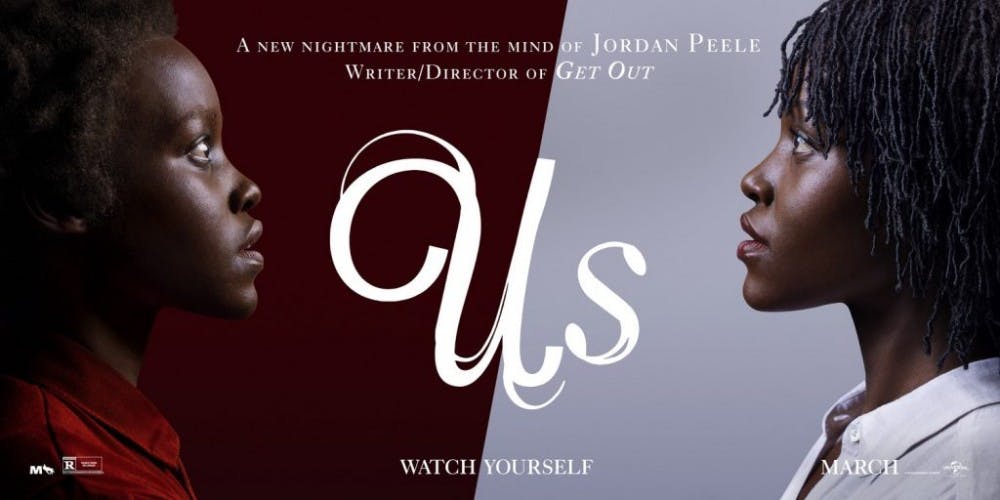
Us (USA: Jordan Peele, 2019)
MB: Peele's sophomore effort was greeted with great anticipation and he did not disappoint. Aided by a great cast, especially Lupita Nyong’o, this film is a brilliant addition to Peele's growing oeuvre.  On my second re-watch I was reminded that this film is incredibly complex and I had missed so much on the first watch. Visually intense, laced with humor, and another film that reflects our socio-political situation in America.
"Films often ask performers to play multiple roles as something of a gimmick. It’s been done for comedic effect in something like “The Nutty Professor” or for philosophical examination in something like “The Double” or “Enemy.” No one has ever asked as much of a double performer as Jordan Peele asked of Lupita Nyong’o in “Us,” and the Oscar winner delivered one of the best performances of 2019 in return. As Adelaide’s worst fear comes to life and she witnesses the shadow version of her family sitting across the living room from her, the actress doesn’t just play good and evil – she goes much deeper than that. She sells both the depth behind the fear of who we presume is the “normal” Adelaide and the wounded monster who has been tied to her. For some reason, great acting has often become synonymous with either a great impersonation or a great couple of scenes. What’s most often ignored when we discuss acting is physicality. Watch what Nyong’o does with her body to both distinguish and tie the two versions of herself in “Us.” They are distinct and yet also mirrors of each other in so many ways. It’s the kind of performance one can break down scene by scene and appreciate with greater depth and nuance with each viewing. It’s not just a great 2019 performance, it’s an all-timer." - (Brian Tallerico: December 23, 2019)
Resources for after you watch the film: Archive of resources for US

Nope (US: Jordan Peele, 2022)
MB: Peele's 3rd film carries on working in the social thriller genre that he originally carved out as his own with Get Out, but we move into a more science fictional world. Once again it has much to say about our current socio-political scene, with incisive looks at our media/entertainment environment, the effects of generational trauma, and the human obsessional need to know what is out there or right here where we are.
"A man and his sister discover something sinister in the skies above their California horse ranch, while the owner of a nearby theme park tries to profit from the mysterious, otherworldly phenomenon." - Rotten Tomatoes
Resources for after you watch the film: Archive of Resources for Nope


Us (USA: Jordan Peele, 2019)


Films often ask performers to play multiple roles as something of a gimmick. It’s been done for comedic effect in something like “The Nutty Professor” or for philosophical examination in something like “The Double” or “Enemy.” No one has ever asked as much of a double performer as Jordan Peele asked of Lupita Nyong’o in “Us,” and the Oscar winner delivered one of the best performances of 2019 in return. As Adelaide’s worst fear comes to life and she witnesses the shadow version of her family sitting across the living room from her, the actress doesn’t just play good and evil – she goes much deeper than that. She sells both the depth behind the fear of who we presume is the “normal” Adelaide and the wounded monster who has been tied to her. For some reason, great acting has often become synonymous with either a great impersonation or a great couple of scenes. What’s most often ignored when we discuss acting is physicality. Watch what Nyong’o does with her body to both distinguish and tie the two versions of herself in “Us.” They are distinct and yet also mirrors of each other in so many ways. It’s the kind of performance one can break down scene by scene and appreciate with greater depth and nuance with each viewing. It’s not just a great 2019 performance, it’s an all-timer. (Brian Tallerico: December 23, 2019)
One of the central themes in Us is that we can do a good job collectively ignoring the ramifications of privilege. I think it’s the idea that what we feel like we deserve comes at the expense of someone else’s freedom or joy… The biggest disservice we can do as a faction with a collective privilege, like the United States, is to presume that we deserve it and that it isn’t luck that has us born where we’re born. For us to have our privilege someone suffers. - Jordan Peele on his film 'Us'

Us (USA: Jordan Peele, 2019: 116 mins)

Archer, Ina Diane. "Us." Film Comment (March 26, 2019)

Booker, M. Keith and Isra Daraiseh. "Lost in the Funhouse: Allegorical Horror and Cognitive Mapping in Jordan Peele’s Us." Comments on Culture (ND)

Brody, Richard. "Jordan Peele's Us is a Colossal Cinematic Achievement." The New Yorker (March 23, 2019)

Calman, Susan and Mike Muncer. " HOME INVASION Pt 35: Us (2019) & Parasite (2019)." The Evolution of Horror (2023)

Castillo, Monica. "Us." Roger Ebert (March 20, 2019)

Due, Tannarive. "Us." Switchblade Sisters #165 (December 31, 2020) ["Tananarive Due, the producer of the groundbreaking doc ‘Horror Noire: A History of Black Horror,’ joins April Wolfe to discuss Jordan Peele’s ‘Us.’"]

Enzo and Eve. "Wakanda Deferred." Hammer & Camera #16 (July 12, 2019) ["Enzo and Eve of the Marxist "propaganda circle" Unity & Struggle to discuss their article, "Black on Both Sides: Grappling with BLM in Movies", and to review the past year of Black cinema. Among the films discussed are Black Panther, Blackkklansman, Sorry to Bother You, Blindspotting, and Us."]

Harrison, Sheri-Marie. "Us and Them." Commune (June 6, 2019) [On Jordan Peele's 2019 horror film Us.]

LeGuin, Ursula. "The Ones Who Walk Away From Omelas." (Short Story: 1973) [Similar themes]

Lyonhart, Jonathan D. "Peele’s Black, Extraterrestrial, Critique of Religion." Journal of Religion & Film (October 2023) ["While Jordan Peele’s films have always held their mysteries close to the chest, they eventually granted their viewers some climactic clarity. Get Out (2017) used an 1980s style orientation video to clear up its neuroscientific twist, while Us (2019) had Lupita Nyongo’s underworld twin narratively spell out the details of the plot. Yet Nope (2022) refuses to show its hand even after the game is over, never illuminating the connection between its opening scene and the broader film, nor a myriad of other questions. As such, critics complained that it stitched together two seemingly incongruent plots without explanation; one where a chimp attacks the crew of a successful Hollywood show, the other where an alien organism haunts a small ranch in the middle of nowhere. In this paper, I will argue that a theological interpretation of Nope helps explain some of these mysteries at its center, while revealing Peele’s underlying religious critique and its place within his broader oeuvre."]

McDonald, Soraya Nadia. "Jordan Peele’s Us has a message for those who can hear above the screams."  Andscape (March 22, 2019)

McMillan, Candice. "How Trump and #metoo Have Scared Us Into the New Decade." Chaz's Journal (March 10, 2020)


Palis, Elena M. "The Brand of Peele."  Film Quarterly (December 12, 2023) ["Jordan Peele’s third feature film, Nope (2022), reenergized the already substantive circulation of “Peele” as auteur-star signifier. In their generic, political, and aesthetic coherence, Peele’s directorial features satisfy the classical auteur theorization of a knowable author and “authority.” Yet central to Peele’s signature films are resolute unpredictability, character shape-shifting, and narrative misdirection, epitomized by body snatchers in Get Out (2017), tethered doppelgängers in Us (2019), and aliens camouflaged by clouds in Nope. As an ironic manipulation of auteur knowability, Peele’s motif of deceptive, equivocal ontology requires a more complex understanding of Peele’s authorship, one that also takes into account Peele’s extrafilmic roles as producer, showrunner, and star persona."]

Robinson, Tasha. "Jordan Peele’s Us turns a political statement into unnerving horror." The Verge (March 22, 2019)

Yamato, Jen. "The ending of Us: Jordan Peele on who the real villains are." Los Angeles Times (March 22, 2019)


ENG 281 - Week 5: Contemporary Folk Horror (16 Week)


Pan's Labyrinth (Spain/Mexico: Guillermo Del Toro, 2006)

MB - This is one of my all-time favorite films and is not only Del Toro's masterpiece, but truly one of the great films of the 21st Century. It is a powerful statement on the power of stories, it is one of the most visually imaginative films I have seen, it explores how the unconscious reflects/interacts with the conscious (and vice versa), it is a powerful anti-fascist statement, and it treats with respect the autonomy and voice of a young girl making her way in a dangerous time.
"An Academy Award–winning dark fable set five years after the end of the Spanish Civil War, Pan’s Labyrinth encapsulates the rich visual style and genre-defying craft of Guillermo del Toro. Eleven-year-old Ofelia (Ivana Baquero, in a mature and tender performance) comes face to face with the horrors of fascism when she and her pregnant mother are uprooted to the countryside, where her new stepfather (Sergi López), a sadistic captain in General Francisco Franco’s army, hunts down Republican guerrillas refusing to give up the fight. The violent reality in which Ofelia lives merges seamlessly with her fantastical interior world when she meets a faun in a decaying labyrinth and is set on a strange, mythic journey that is at once terrifying and beautiful. In his revisiting of this bloody period in Spanish history, del Toro creates a vivid depiction of the monstrosities of war infiltrating a child’s imagination and threatening the innocence of youth." - Criterion page for the DVD release
Here are the resources for after you watch the film:
Archive of Resources for Pan's Labyrinth

Kill List (UK: Ben Wheatley, 2011)
MB - a slow burn hit man thriller, combining multiple genres (suspense, horror, drama), that literally combusts by the end. It divided audiences and critics, some celebrating it as a great entry into the folk horror canon, others feeling it failed. I was blown away by it, and of our contemporary entries this one hews closest to the traditional folk horrors of our classic films. 
"For those that didn’t catch his micro-budgeted debut Down Terrace (2009) on its limited release, Ben Wheatley seemed to come out of nowhere. The British filmmaker has built his reputation on subverting genre expectations, but nothing that followed this second feature can touch the brilliant control of its handbrake turns. It begins in the kitchen sink territory of Down Terrace – albeit with a markedly vicious edge – before settling into into its (unsettling) hitman double act. Even as violence erupts abruptly in this middle passage, there’s a sense of a deeper, barely suppressed darkness at play. Wheatley keeps us unmoored throughout, but in the nightmarish intensity of Kill List’s final act, he pulls the floor out from underneath us entirely." – Matthew Thrift
Resource for after you watch the film: Caitlyn Downs in Ghouls Magazine breaks down Kill List

The Invitation (USA: Karyn Kusama, 2015)
MB - Karyn Kusama gained fame as the director of the wild, cult classic Jennifer's Body (2009). This film is a psychological horror that brings the themes of the folk horror film to the metropolitan Los Angeles and intertwines it with the new age mysticism that was popular there.  It is a tight, tense, psychological horror film, that really affected me when I first screened it for the Bluegrass Film Society and on repeat viewings. 
"Six years after directing the feminist cult classic Jennifer’s Body (2009), Karyn Kusama re-established herself in the genre space with a chamber piece horror of paranoia. Still reeling from the shared loss of their young son, Will (Logan Marshall-Green) arrives at a dinner party hosted by his ex-wife Eden (Tammy Blanchard), who also welcomes a mismatched and eerie set of dinner guests. Set in a slick, austere house in the Hollywood hills, the film pulsates with anxiety throughout before detonating in an explosive finale." – Anna Bogutskaya
Resource for after you watch the film: Reilly, Phoebe. "From Babadook to Raw: The Rise of the Modern Female Horror Filmmaker." Rolling Stone (October 27, 2016)
I have a chapter from the book Post-Horror on The Invitation, Get Out, and Midsommar - if you would like a copy of the chapter sent to you, let me know.

Get Out (USA: Jordan Peele, 2017)
MB - This is the debut film from Jordan Peele who was primarily known for his hilarious comedy series with Keegan-Michael Key: Key and Peele (seriously - check it out if you haven't seen it. It could be a palette cleanser in between your films). Who knew that this talented comedian had such a strong interest and talent in making horror films (all three will be options this semester). Get out combines the social/political thriller, horror, and comedy to make a film that literally revolutionized contemporary horror. The film is also a commentary/critique of an earlier Oscar winning prestige drama Guess Who's Coming to Dinner (1967) and a homage to the horror classic Stepford Wives (1975). For me this is one of the most important contemporary horror films and I can't wait to see what Peele will do next.
"Writer-director Jordan Peele announced himself as a gifted horror filmmaker straight out of the gate with his first feature, a hilarious satire of white liberalism in contemporary America that sits comfortably as a modern genre classic. The simple set up of young Black man Chris Washington (played memorably by Daniel Kaluuya) visiting his white girlfriend’s family is exquisitely handled to reveal deep-rooted racism. With Twilight Zone vibes, Peele crafts an ambience of paranoia and discomfort as Chris sinks deeper into a place where he feels like he is losing his mind, when in fact it is everyone around him who wants to steal it. A cutting social commentary on appropriation and ownership." – Katherine McLaughlin
Resources for after you watch the film: Archive of resources for Get Out
I have a chapter from the book Post-Horror on The Invitation, Get Out, and Midsommar - if you would like a copy of the chapter sent to you, let me know.


Midsommar  (USA: Ari Aster, 2019)
MB - I did not see Midsommar until the dark days of COVID isolation. Feeling alone (my family is on the West Coast and I was very worried about my parents during COVID isolation), needing something to distract me, I got this film to watch. I was transfixed throughout. It also strangely made me feel much better after watching it. A major interest in the film was all of the bright colors and constant sunshine (it takes place in Sweden during the constant sunlight season). This is very unusual for this type of film and results in a completely different effect. It also provoked my eternal interest in different cultures and how they organize/perceive reality differently (rituals, rules, taboos, beliefs, etc...). Being alone at the time I was also very interested in the relational psychodynamics of the two main characters and the all too human desire to find one's family when your blood relations are no longer there for you (brilliantly portrayed). This was a star-making turn for Florence Pugh as the protagonist, her previous film Lady Macbeth was very impressive for critics (not as widely seen), but this is the one that brought her mainstream notice. I would recommend reading nothing about this film before watching it. One could not convincingly talk about this film without making Midsommar a central part of the discussion.
Official film description: "Young couple Dani and Christian travel with friends to experience a rare midsummer festival in a remote Swedish village. But what begins as a carefree holiday takes a sinister turn when the villagers force their guests to partake in their deadly rituals."
Archive of resources for after you have watched the film
I have a chapter from the book 
Post-Horror on The Invitation, Get Out, and Midsommar - if you would like a copy of the chapter sent to you, let me know.

Midsommar (USA: Ari Aster, 2019)


Midsommar (USA: Ari Aster, 2019: 140 mins)

 Albin, Eugene "Joey" and Julia A. Ward. "Midsommar’s Nordic Nationalism and Neo-Confederate Nostalgia." Film Quarterly (October 30, 2020) ["Jordan Peele has described Midsommar as portraying 'some of the most atrociously disturbing imagery I’ve ever seen on film, and yet I experienced it with this open-mouthed, wild-eyed gape. I think that part of how we get there is never reducing the villains to any kind of snarling monsters with an evil agenda.'  Aster shows that the horror of modern capitalism lies precisely in its allure. Attempts to create a sense of belonging, whether by reviving apocryphal traditions or rallying to make a nation 'great again,' will always result in horror if the price of that belonging is the exploitation of others."]  

Anderson, Jake. "Midsommar." Letterboxd (July 3, 2019)

Aster, Ari. "Midsommar: Anatomy of a Scene." The New York Times (July 5, 2019)

Aster, Ari and Michael Koresky. "On Midsommar." The Film Comment Podcast (July 10, 2019) ["Filmmaker Ari Aster ... joined us last summer for a talk at Film at Lincoln Center to discuss his previous feature, the unforgettable Hereditary, and we were delighted to welcome him back for another Film Comment chat on Tuesday, July 10. In front of a packed house, Aster sat down with author and Film Comment mainstay Michael Koresky for a discussion about his Swedish countryside-set horror film, working with star Florence Pugh, and favorite movies such as 45 Years."]

Bradley, S.A. "The Old Gods of Springtime Horror." Hellbent for Horror (April 10, 2018) ["Things might look bright and warm during Springtime, but there's something sinister underneath the surface. The pastel colors of the flowers camouflage the blood and death in the soil that helped them grow. When the difference between life and death depended on a bountiful harvest, people made human sacrifices to appease the Old Gods of the earth. In this episode I talk about horror movies devoted to the Old Gods of Springtime, man's uneasy connection to the earth, and how groups of people can be scarier than the Old Gods themselves."]

Brody, Richard. "Midsommar: Ari Aster’s Backward Horror Story of an American Couple in Sweden." The New Yorker (July 8, 2019)

Brown, Pat. "Ari Aster’s Midsommar Masterfully Feasts on Extremes of Feeling." Slant (June 26, 2019)

Castillo, Monica. "The Real Terror in Midsommar is a Bad Romance." Cherry Picks (July 5, 2019)

Complex, Valerie. "Stanning the Ancients." Letterboxd (June 20, 2020) ["Valerie Complex probes the intersection of Greco-Roman mythology and queer experience in Portrait of a Lady on Fire, The Neon Demon, Jumbo and Midsommar."]

Eggert, Brian. "Midsommar." Deep Focus Review (July 3, 2019)

Frames of Empathy. "Midsommar: Finding Your Family." (Posted on Youtube: November 27, 2019)

Jones, Matthew. "Midsommar." Philosophy in Film (October 5, 2019)

Laffly, Thomas. "Midsommar." Roger Ebert (July 1, 2019)

McMillan, Candice. "How Trump and #metoo Have Scared Us Into the New Decade." Chaz's Journal (March 10, 2020)

Tafoya, Scout. "Passion of the Zeitgeist: Judging the Relative Elevation of Midsommar." Los Angeles Review of Books (August 9, 2019)

Totaro, Donato. "Female Empowerment in the “Small World” films of Midsommar (2019, Ari Aster) and The Other Lamb (2019, Malgorzata Szumowska)." Off Screen 23.12 (December 2019)

Villela, Fiona. "Film in the Age of COVID." Senses of Cinema #95 (July 2020) [On Ingmar Bergman's 1960 Virgin Spring and Ari Aster's 2019 Midsommar)


Tuesday, September 5, 2023

ENG 281 - Week 4: Classic Folk Horror (16 Week)

Background on the Folk Horror Genre:

(This one has spoilers for some of this week's films - so you might want to wait until after you have watched your film)


This week's film options:

The Blood on Satan's Claw (UK: Piers Haggard, 1971)
MB: Considered one of the pivotal early Folk Horror films, it draws on a British interest in and fear of its pre-Christian pagan roots.
Film description: "The accidental unearthing of Satan’s earthly remains causes the children of a 17th-century English village to slowly convert into a coven of devil worshipers."

Resources for after you watch the film:

Bradley, S.A. "Addendum of Doom: The Folk Horror Edition." Hellbent for Horror #2.5 (March 23, 2016) [Discussion of the films The Blood on Satan's Claw (1971), Wake Wood (2009), and Kill List (2011).]

Handorf, Jen and Mike Muncer. "Folk Pt. 2: Witchfinder's General (1968) and The Blood on Satan's Claw (1971)." The Evolution of Horror (2021)

Kuersten, Erich. "CinemArchetype #5: The Human Sacrifice." Acidemic (February 28, 2012)


Wake In Fright (Australia: Ted Kotcheff, 1971)
MB: A legendary Ozploitation (independent genre films from Australia of the 1970s/1980s) that was difficult to get a hold of until a new print was released in the 21st Century. Unrelenting in its folk horror themes and deserving of its cult film status.
Film description: "
Wake in Fright is the story of John Grant, a bonded teacher who arrives in the rough outback mining town of Bundanyabba planning to stay overnight before catching the plane to Sydney, but as one night stretches into several he plunges headlong into his own destruction."

Resources for after you watch the film:

Buckley, Anthoney, et al. "Wake in Fright." The Projection Booth #271 (May 17, 2016) ["Based on the novel by Kenneth Cook, Ted Kotcheff's Wake in Fright stars Gary Bond as a teacher in the Outback who loses all his money and goes on a wild, bloody holiday."]

 
Deliverance (USA: John Boorman, 1972)
MB: A controversial film that popularized problematic Southern "backwoods" stereotypes (hicksploitation) in its intense and engaging tale of city men testing their mettle (manliness) by canoeing down a dangerous river. 
Film description: "
Intent on seeing the Cahulawassee River before it’s turned into one huge lake, outdoor fanatic Lewis Medlock takes his friends on a river-rafting trip they’ll never forget into the dangerous American back-country."
Resources for after you watch the film:

MB - this is a great look at the film and its enduring legacy: Machado, Isabel. "Revisiting Deliverance: The Sunbelt South, The 1970s Masculinity Crisis, and the Emergence of the Redneck Nightmare Genre." Study the South (June 19, 2017) 

Elena Lazic and Mike Muncer discuss Straw Dogs (1971) and Deliverance on The Evolution of Horror Part 7 of Folk Horror


Texas Chainsaw Massacre (USA: Tobe Hooper, 1974)
MB: This is one of those films that is a must see for those interested in the horror genre. For me, it is one of the best classic horror films, and it does it in a way that most contemporary horror films have forgotten (to their detriment - our imagination is better than anything you can put on the screen). It is also a great film for anyone interested in actually making films - low budget, but still artful in its way. The ending of this film - stunning! There are two remakes and a couple sequels, make sure you watch the 1974 original by Tobe Hooper (FYI - he also directed our earlier film 
 Poltergeist in the Classic Ghost films section).
"Tobe Hooper’s influential feature is three distinct films: the shocker promised by the title; the near bloodless (and mostly chainsaw-free) restraint of the actual film; and the gorefest that we imagine we have seen. As young travellers encounter a family of retrenched, cannibalistic slaughtermen, unexpected domestic comedy offsets the grisly horror. But from the outset a pervasive atmosphere of dirty, doom-laden wrongness gets right under the skin, and once Sally Hardesty (Marilyn Burns) starts screaming (and does not stop), viewers are treated to one of the most sustained and harrowing nightmares of unhinged madness ever caught on film. – Anton Bitel"

Resources for after you have watched the film:

Archive of resources for Texas Chainsaw Massacre


The Wicker Man (UK: Robin Hardy, 1973)
MB: Another influential Folk Horror film that reflects and plays off the UK's pre-Christian pagan heritage. Make sure it is the 1973 film, not the 2005 remake.
"Police sergeant Neil Howie is called to an island village in search of a missing girl whom the locals claim never existed. Stranger still, however, are the rituals that take place there."

Resources for after you watch the film:

Bradley, S.A. "The Old Gods of Springtime Horror." Hellbent for Horror (April 10, 2018) ["Things might look bright and warm during Springtime, but there's something sinister underneath the surface. The pastel colors of the flowers camouflage the blood and death in the soil that helped them grow. When the difference between life and death depended on a bountiful harvest, people made human sacrifices to appease the Old Gods of the earth. In this episode I talk about horror movies devoted to the Old Gods of Springtime, man's uneasy connection to the earth, and how groups of people can be scarier than the Old Gods themselves."]

Kuersten, Erich. "CinemArchetype #5: The Human Sacrifice." Acidemic (February 28, 2012)


Monday, September 4, 2023

The Texas Chain Saw Massacre (USA: Tobe Hooper, 1974)


The Texas Chain Saw Massacre (USA: Tobe Hooper, 1974: 83 mins)
Tobe Hooper’s influential feature is three distinct films: the shocker promised by the title; the near bloodless (and mostly chainsaw-free) restraint of the actual film; and the gorefest that we imagine we have seen. As young travellers encounter a family of retrenched, cannibalistic slaughtermen, unexpected domestic comedy offsets the grisly horror. But from the outset a pervasive atmosphere of dirty, doom-laden wrongness gets right under the skin, and once Sally Hardesty (Marilyn Burns) starts screaming (and does not stop), viewers are treated to one of the most sustained and harrowing nightmares of unhinged madness ever caught on film. – Anton Bitel
Acolytes of Horror. "Texas Chainsaw Massacre: Soundscape of Sally's Screams." (Posted on Youtube: November 2, 2019)

Barbé-Brown, Isabel. "Bloody Perfect: Ride, Sally, Ride." Bloody Women (January 6, 2021)

Barbé-Brown, Isabel and Anna Bogutskaya. "The Texas Chainsaw Massacre (1974)." The Final Girls 4.1 (September 10, 2021)  ["Joining us this week is writer/actor Isaura Barbé-Brown. We dive deep into Isaura's love of this film, where it stands culturally, how it influenced horror films, and show a little sympathy for overwhelmed Leatherface."]

Bradley, S.A. "Mr. Bad Example: The Legend of Tobe Hooper." Hell Bent for Horror #52 (September 5, 2017)

Cribbs, John, et al. "Geeking Out About Tobe Hooper." Wrong Reel #247 (March 2017)

Koski, Genevieve, et al. "Tex-Mess, Pt. 1 — The Texas Chainsaw Massacre (1974)." The Next Picture Show (March 29, 2022) ["Ti West’s new horror film X is very openly inspired by THE TEXAS CHAINSAW MASSACRE, carrying through the spirit of Tobe Hooper’s 1974 shocker more capably than most of the subsequent films in what would become a nine-film franchise (in particular this year’s dreadful remake). Before getting into how it does that next week, this week we’re revisiting Hooper’s film with the help of film critic and series expert Katie Rife, to consider what made this film hit the way it did at the time, why it so often gets lumped in with the slasher genre it preceded, and whether it's a film that gets more brutal — or, perhaps, more comforting — with time."]

---. "Tex-Mess, Pt. 2 — X (2022)." The Next Picture Show (April 5, 2022) ["Ti West’s new X is very much inspired by Tobe Hooper’s 1974 shocker THE TEXAS CHAINSAW MASSACRE (and to an extent, Hooper’s lesser-known EATEN ALIVE), following another bunch of ill-fated van passengers, this one a group filming a low-budget porno, who wind up on the wrong side of the owners of a remote Texas farmhouse. The film’s late-’70s setting invites all sorts of analysis and interpretation about sex, death, and their intersection with cultural and religious conservatism at the dawn of the 1980s, which we dig into, once again with the help of film writer and horror aficionado Katie Rife, before turning our focus to some of the specific echoes between X and TEXAS CHAINSAW MASSACRE."]

Long, Ericca and Cole Roulain. "The Texas Chain Saw Massacre." The Magic Lantern #6 (October 12, 2015) ["The Texas Chain Saw Massacre (1974) ripped into my life on Thanksgiving 1984 and I have, gratefully, never fully recovered. It was spawned from the belly of a country that was sick and sad during my earliest formative years. As a nation, we were burdened with post-Watergate paranoia, the exhaustion of the waning days of the Vietnam War and the insecurity of the energy crisis. Cobbled together from all that bad news came this truly American nightmare that was equal parts disillusionment and dismemberment. It defines true horror for me and has yet to be surpassed, in my estimation. I doubt it will ever yield the claim it has staked on my imagination. The saw is family. What you’ll find in this episode: family dinners, crematorium reminiscences, how much I hate Franklin, asking pigs for gasoline and Ericca’s repulsive protein shakes."]

"Marxist Film Analysis: The Texas Chain Saw Massacre." Revolutionary Left Radio (October 30, 2017)

Merritt, Naomi. "Cannibalistic Capitalism and other American Delicacies: A Bataillean Taste of The Texas Chain Saw Massacre." Film-Philosophy 14.1 (2010)

Saperstein, Pat. "Tobe Hooper, Texas Chain Saw Massacre and Poltergeist Director, Dies at 74." Variety (August 27, 2017)

Sharrett, Christopher. "Tobe Hooper and the American Twilight." Film International (August 7, 2021)

Williams, Evan Calder. "Sunset with Chainsaw: A New Way of Reading Horror Film Politically." Film Quarterly 64.4 (Summer 2011): 28-33. [I have a copy for students]


Thursday, August 31, 2023

ENG 102: Fall 2023 Resources #9

 Bakan, Joel and Raj Patel. "The WEF is Actually Bad, but Not Like That." Darts and Letters (July 24, 2023) ["The WEF is yet another example of the scrambled ideologues of our moment. Conservatives condemn the WEF, and news organizations like Rebel cover it doggedly; at the same time, left-leaning NGOs speak there, and progressive news organizations say little. What’s going on? On this episode, we examine the shifting political discourse surrounding our global financial elites. How can the left operate in this ideologically confusing moment? First, we take it back to the heyday of the 90s global justice movement. Activist, author, and academic Raj Patel revisits the Battle in Seattle. Then too, there were some reactionary forces pushing an anti-globalization line against the WTO. However, the real politics there were different: it was built on global justice and global solidarity. Could we bring back the spirit of the 90s? Then, we go to Davos and look for left-leaning protesters organizing against the WEF. Each year, there is a planned “protest hike,” quite far from the actual WEF site, because Swiss authorities push demonstrates away. Yet, the WEF also invites individual activists in. Producer Marc Apollonio speaks with three Swiss organizers — from Strike WEF, the Young Socialists of Switzerland, and from Greenpeace — to learn about how they are pushed and pulled by the WEF. Finally, academic and documentarian Joel Bakan is well-known for his hit documentary The Corporation, which was released in 2003–not long after the Battle in Seattle. Today, he tells us the politics are completely different: corporate leaders, including those at WEF, tell us they’re actually the good guys. His new follow-up film The New Corporation: The Unfortunately Necessary Sequel says that this new warm-and-fuzzy branding makes the corporation even more dangerous."]

Bates, Douglas C. "The Ancient Greek Version of Buddhism." The Imperfect Buddha (April 17, 2023) ["“It is not events that disturb us, but what we believe about them.” Is this true? Well, apparently Pyrrho, a rather obscure Greek philosopher claimed it to be the case and he may have been influenced by Buddhism in his creation of what today is called “Pyrrhonism”. Pyrrho agreed with the Buddha that delusion was the cause of suffering, but instead of using meditation to end delusion, Pyrrho applied Greek philosophical rationalism. Pyrrho’s Way: The Ancient Greek Version of Buddhism (Sumeru Press, 2020) lays out the Pyrrhonist path for modern readers on how to apply Pyrrhonist practice to everyday life. Its author is Douglas C. Bates, founder of the Modern Pyrrhonism Movement. He has been a Zen practitioner for over 25 years, was a founding member of Boundless Way Zen, and is a student of Zeno Myoun, Roshi."]

Bordwell, David. "Asteroid City: Adrift in the Cosmos." Observations on Film Art (May 23, 2023) ["Anderson’s geometric framing and staging demand a stream of small details. Moment by moment we have to take in gorgeous Populuxe furnishings, rapid dialogue, enigmatic signage, non sequiturs, abbreviated gestures and glances, and flickers of facial expression. For a few seconds a cigarette lighter is casually refilled with a squirt of gasoline (a good example of Brecht’s gestus, the piece of performance that crystallizes a social attitude: we’ll have oil forever). Soon enough a gizmo pulled from Augie’s decrepit engine thrashes on its own: Is this the alien? Just the range of cultural references dazzles. Anderson’s love of theatre emerges in recollections of plays from Lost in the Stars to Bus Stop, by way of Wilder and Williams. And are all the variants on a nonexistent play text his contribution to multiverse storytelling?"]

Brown, Shane and Marc Jancovich. "'The Finest Examples of Motion Picture Art': Prestige, Stardom and Gender in the Critical Reception of Silent and Early Sound Horror." Monstrum 6.1 (June 2023) ["Although research on horror often presents the genre as a disreputable one, the following essay demonstrates that a very different picture is suggested if one examines the critical reception of horror films released during silent and early sound eras. Certainly, during the 1910s, the US film industry made a bid for respectability, so that it could appeal to affluent, middle class audiences; and those aspects of horror that were understood as lower class, melodramatic entertainment were a problem for this bid. However, by no means were all horror materials seen as a problem and, by the 1920s, the genre was primarily understood as “artistic” and one that demonstrated the potential of the new medium of cinema. Consequently, as we will demonstrate, the horror film not only attracted top directors and stars but was also associated with female audiences, audiences that were crucial to Hollywood’s bid for cultural respectability."]

Crimes of the Future (Canada/France/Greece: David Cronenberg, 2022Dialogic Cinephilia (Ongoing Archive of Online Resources) ["As the human species adapts to a synthetic environment, the body undergoes new transformations and mutations. Accompanied by his partner, celebrity performance artist Saul Tenser showcases the metamorphosis of his organs. Meanwhile, a mysterious group tries to use Saul's notoriety to shed light on the next phase of human evolution."]

DePillis, Lydia. "Understanding Greedflation." On the Media (July 14, 2023) ["In late 2021, Isabella Weber, an economist at University of Massachusetts, Amherst published a paper with a new idea. The theory, what she called "seller's inflation," sought to address the confounding fact that the economy was seeing rising high prices and skyrocketing corporate profits. The idea quickly moved from the halls of academia to the political arena. And quicker still, it was dismissed—at one point called a "conspiracy theory." But now, in 2023, "greedflation" is popping up across headlines. This week, OTM correspondent Micah Loewinger sits down with Lydia DePillis, a reporter on the business desk at The New York Times, to talk about her 2022 article dissecting the arguments for and against the impact of"greedflation" on the economy, and everything that's happened since."]

Dorian, MJ. "Carl Jung & Alchemy • Part I: Dreams, Art, & Synchronicity." Creative Codex #39 (June 9, 2023) ["What is alchemy? Where does it come from? When did it begin? What does Jung find in alchemy? What does it represent to him that is so important, so profound, that it causes him to abandon his inspired work of the Red Book? It’s time to find out."]

Fairie, Paul and Micah Loewinger. "Why Do We Argue About the Same Things Over and Over Again?" On the Media (June 9, 2023) ["OTM correspondent Micah Loewinger takes a look at some of the big media narratives that continue to animate online debates and panicked press coverage. He speaks with political scientist Paul Fairie, who has devoted his Twitter account to investigating refrains like "nobody wants to work anymore" and "people are losing their sense of humor" to show that seemingly modern moral panics have been repeated in the American press every decade for over a century. With the help of voice actors (see below), listen as Paul and Micah dive deep into the newspaper archives to demonstrate how little has changed in our political discourse."]

Gray, Martin. "Sacred Places." Sounds of Sand #44 (July 20, 2023) ["Martin Gray is a seasoned explorer, photographer and travel writer renowned for his profound insights into pilgrimage to sacred sites around the world. He created the World Pilgrimage Guide website in 1996, which has received more than 100 million visitors and shares lists of places, writings and photos of sacred sites in over 160 countries around the planet. In 2004 National Geographic published “The Geography of Religion” of his photos. In 2007 Sterling published Sacred Earth, a collection of 200 of photographs."]

Leland, Andrew. "The Country of the Blind." Open Source (July 27, 2023) ["In The Country of the Blind, where the writer Andrew Leland is guiding our tour, they do things differently. They have their own identity riddles, their network of heroes and not-so-heroes. They have their own senses of beauty and of sexual interest. They have their own sore spots when sighted people speak of their disability. They have their own Facebook pages and their own panic attacks—their own wacky humor, as well. They have their own Hall of Fame, back to Homer, among the ancients. They have a sense of their modern selves as strivers, even adventurers, more than victims. They argue fine points among themselves, like whether Lady Justice in front of the courthouse is, or ought to be, blind, and whether a male gaze persists among men who cannot see."]

Tuesday, August 29, 2023

ENG 281: Week 3 - Contemporary Ghost Films (16 Week)

The Devils Backbone (Spain/Mexico: Guillermo del Toro, 2001)
Guillermo del Toro is considered one of the great contemporary filmmakers making dark fantasy/horror films (his film Pan's Labyrinth, which will be an option later, is one of my favorite films of the 21st Century) "One of the most personal films by Guillermo del Toro, The Devil’s Backbone is also among his most frightening and emotionally layered. Set during the final week of the Spanish Civil War, it tells the tale of a twelve-year-old boy who, after his freedom-fighting father is killed, is sent to a haunted rural orphanage full of terrible secrets. Del Toro expertly combines gothic ghost story, murder mystery, and historical melodrama in a stylish mélange that, like his later Pan’s Labyrinth, reminds us the scariest monsters are often the human ones." - Criterion Collection

The Others (Spain/USA/France: Alejandro Amenábar, 2001)
If I remember correctly, this film was championed by Guillermo del Toro, and has since been considered to be one of great ghost films of the 21st Century. If you choose this film, do not read anything about it, it will be a better viewing if you let the mystery unfold naturally.
"Grace is a religious woman who lives in an old house kept dark because her two children, Anne and Nicholas, have a rare sensitivity to light. When the family begins to suspect the house is haunted, Grace fights to protect her children at any cost in the face of strange events and disturbing visions."

The Ring (USA/Japan: Gore Verbinski, 2002) 
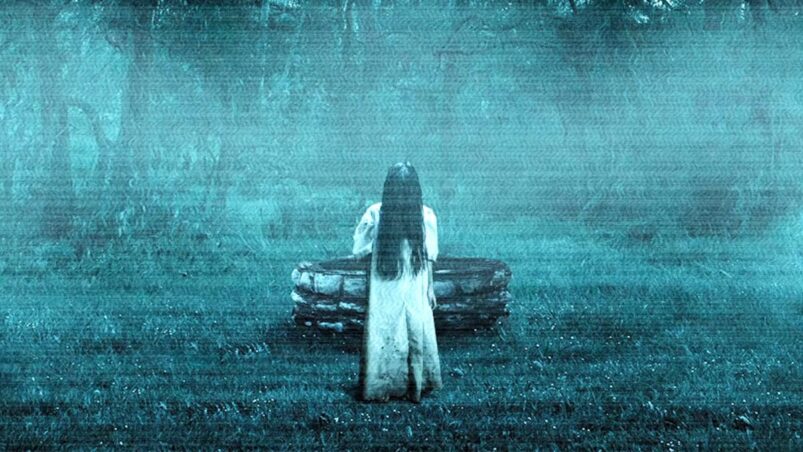
[This is a rare example of a good American remake of a foreign horror film. The original is Ringu (Japan: Hideo Nakata, 1998) and it set off a flood of Japanese ghost films that took the world by storm for a time. The Ring is a very timely film that explores our relationship with technology and provides some truly creepy feelings and jump scares.]
"It sounded like just another urban legend: A videotape filled with nightmarish images, leading to a phone call foretelling the viewer’s death in exactly seven days. As a newspaper reporter, Rachel Keller was naturally skeptical of the story, until four teenagers all met with mysterious deaths exactly one week after watching just such a tape. Allowing her investigative curiosity to get the better of her, Rachel tracks down the video… and watches it. Now she has just seven days to unravel the mystery of the Ring. "


Tigers are Not Afraid (Mexico: Issa López, 2017)
[Issa López's film explores some of the contemporary socio-political issues/problems in Mexico and expands/examines it through a magical/mystical lense. How do traumatic events haunt a society?  You might want to check out this video essay on Magical Realism for thinking about this film AFTER you have watched it.]
"A haunting horror fairytale set against the backdrop of Mexico’s devastating drug wars, Tigers are Not Afraid follows a group of orphaned children armed with three magical wishes, running from the ghosts that haunt them and the cartel that murdered their parents. Filmmaker Issa López creates a world that recalls the early films of Guillermo del Toro, imbued with her own gritty urban spin on magical realism to conjure a wholly unique experience that audiences will not soon forget."


Candyman (USA: Nia DaCosta, 2021)
[A remake of Bernard Rose's classic and influential 1992 Candyman, Nia DaCosta integrates contemporary concerns of gentrification and the Black Lives Matter movement to bring this powerful tale to a new audience] "Anthony and his partner move into a loft in the now gentrified Cabrini. After a chance encounter with an old-timer exposes Anthony to the true story behind Candyman, he unknowingly opens a door to a complex past that unravels his own sanity and unleashes a terrifying wave of violence."
If you watch this film, you should check out this article (which serves as an introduction to many of the films we will be watching throughout the semester) How Black Horror Storytellers are Using Horror to Battle Hate 


Talk to Me (Australia: Michael Philippou and Danny Philippou, 2022)
[This film may still be in the theaters near you. It is not only my favorite horror film of the year, but currently it is my favorite movie of the year. This is the debut film from these brothers, but they brought a lot of experience producing short videos for their very popular Youtube channel. I believe they artfully capture the energy and perspectives of the current generation, the concerns about viral technologies and their effect upon our psyches, and some good old horror genre tropes. I walked out the theater very excited by what I had seen.]
"When a group of friends discover how to conjure spirits using an embalmed hand, they become hooked on the new thrill, until one of them goes too far and unleashes terrifying supernatural forces."  Here is an interview with the directors, for after you watch the film "Terrifying Twos: Danny and Michael Philippou on Racka energy and Talk To Me."


The Ring (USA/Japan: Gore Verbinski, 2002)


 The Ring (USA/Japan: Gore Verbinski, 2002: 115 mins)


Jarvis, Brian. "Anamorphic allegory in The Ring, or, seven ways of looking at a horror video." Irish Journal of Gothic and Horror Studies #3 (November 2007)

Ozawa, Eimi. "Remaking Corporeality and Spatiality: U.S. Adaptations of Japanese Horror Films." 49th Parallel (Autumn 2006)

Prewitt, Zach. "The Best Horror Cinema of the 21st Cinema." (Posted on Vimeo: October 2016)

Wada-Marciano, Mitsuyo. "J-horror: New Media’s Impact on Contemporary Japanese Horror Cinema." Horror to the Extreme: Changing Boundaries in Asian Cinema. ed. Jinhee Choi & Mitsuyo Wada-Marciano. Hong Kong University, 2009: 15-37.

Xu, Gang Gary. "Remaking East Asia, Outsourcing Hollywood." Senses of Cinema (November 2004)

ENG 102: Fall 2023 Resources #8

Adichie, Chimamanda Ngozi. "Freedom of Speech." The Reith Lectures (November 13, 2022) ["Best-selling Nigerian author Chimamanda Ngozi Adichie gives the first of four 2022 Reith Lectures, discussing freedom of speech. She argues that it feels like freedom of speech is under attack. Cancel culture, arguments about “wokeness" and the assault on Salman Rushdie have produced a febrile atmosphere. Meanwhile autocrats and populists have undermined the very notion of an accepted fact-based truth which lives above politics. So how do we calibrate freedom in this context? If we have the freedom to offend, where do we draw the line?"]

Anderson, Ellie and David Pena-Guzman. "Boredom." Overthink (May 23, 2023) ["One must imagine Sisyphus…bored. Take a break from boredom and listen to episode 78 of Overthink as David and Ellie guide you through the fabulously idle realm of this “bestial, indefinable affliction.” They discuss the peaceful highs and painful lows of their middle school summer slumps, the endless days of pandemic panic, and the sluggish mornings of monks during the Medieval period. What can boredom teach us about existence? Is Kierkegaard right that the masses are boring while the nobles bore themselves? Can 9-year-olds be existentially bored? Maybe all we need to overcome boredom is a little bit of fun, perhaps a holiday. Or is it?"]

Booker, M. Keith. "The Imagination of Deterioration: Human Exceptionalism, Climate Change, and the Weird Eco-Horror of David Cronenberg’s Crimes of the Future." Monstrum 6.1 (June 2023) ["To an extent, David Cronenberg’s Crimes of the Future (2022) represents a rousing return to the body horror with which its director exploded onto the independent-film scene in the 1970s and 1980s. In this case, though, the film updates Cronenberg’s earlier concerns via an especially strong focus on the impact of environmental deterioration on human beings and human society, placing the film in the realm of eco-horror as well. The action of the film occurs in a decaying near-future world in which climate change and other worsening conditions have led not only to a general decline in the quality of life (both material and emotional) but also to strange (and sometimes macabre) mutations in the human body itself. The strangeness of these climate-related mutations places Crimes of the Future in the realm of ecological horror, and especially of the recent turn toward the “weird” in eco-horror. Nature seems to have been almost obliterated in this future world, but these weird mutations, beyond the control of any of the human forces in the film, challenge the notion that humans stand apart from a nature that they can easily understand, dominate, and control. These mutations also contribute to a growing sense in the future world of the film that things are getting out of hand and that there is no identifiable fix for the general deterioration of conditions, a sense that resonates with widespread attitudes in the world of the early 2020s."]

Rohr, Richard. "Christianity and Unknowing." Sounds of Sand #28 (March 30, 2023) ["Richard Rohr, as a Catholic priest and Franciscan Friar, offers a concise history of how Western Christianity once had, soon lost, tried to retrieve, and now is roundly rediscovering its own traditional understanding of unitive consciousness (which was our word for non-dual thinking). The Christian contemplative mind was usually a subtext, and yet it was always clearly there too, and much closer to the surface, but only for those exposed to the mystical base that was revealed in the Gospel of John, the Desert Fathers and Mothers, the Celtic and monastic traditions, and what was generally referred to as the apophatic or wisdom stream of Christianity. These were our many saints and mystics. This possibility was brought to the fore by Thomas Merton in the middle of the last century, and is now flowing in many positive directions. It is now our task to rediscover the pre-Enlightenment Christianity that reveled in "the cloud of unknowing", what some called "learned ignorance", and the very notion of Mystery itself. Only when we got into competition with rationalism and secularism, did we adopt this rather recent mania for certitude and a very limited kind of scientific knowing. Almost the entire history of Protestantism emerged in this period, and thus the contemplative mind is an utterly new revelation for them, and frankly for all of us, as we again learn to be comfortable living on the edge of both the knowable and the unknown. Fr. Richard Rohr is a globally recognized ecumenical teacher bearing witness to the universal awakening within Christian mysticism and the Perennial Tradition. He is a Franciscan priest of the New Mexico Province and founder of the Center for Action and Contemplation (CAC) in Albuquerque, New Mexico. Fr. Richard’s teaching is grounded in the Franciscan alternative orthodoxy—practices of contemplation and self-emptying, expressing itself in radical compassion, particularly for the socially marginalized. Fr. Richard is the author of numerous books, including Everything Belongs, Adam’s Return, The Naked Now, Breathing Under Water, Falling Upward, Immortal Diamond, and Eager to Love: The Alternative Way of Francis of Assisi."]

 Sulzberger, A.G. "At an Embattled Moment, the New York Times’ Publisher Makes a Stand." The New Yorker Radio Hour (June 9, 2023) ["Over the past several years, as more democratic institutions and norms have come under attack, many journalists have raised the question of whether it is ethical to adhere to journalism’s traditional principles of non-bias, objectivity, and political neutrality. In May, A. G. Sulzberger, the publisher of the New York Times, staked out his position in the traditionalist camp in an essay for the Columbia Journalism Review. “The traditionalists in the ranks have long believed that their long-standing view speaks for itself. I became increasingly convinced that the argument doesn’t make itself,” he tells David Remnick. Sulzberger shies away from the term objectivity, instead describing the “posture of independence” as one that prizes “an open mind, a skeptical mind,” and a clear-eyed pursuit of truth––even if it leads to uncomfortable conclusions. Sulzberger, whose family has owned the paper since 1896, says he wants to push back on a culture of “certitude” in journalism. “In this hyper-politicized, hyper-polarized moment, is society benefiting from every single player getting deeper and deeper, and louder and louder, about declaring their personal allegiances and loyalties and preferences?” he asks."]

West, Stephen. "Belief." Philosophize This! #41 (November 3, 2014) ["On this episode of the podcast, we discuss the many facets of belief. We start out by discussing two major complications that belief brings to the table. First, absolute certainty is impossible--even certainty about the fact that "certainty is impossible”. Second, we can convince ourselves to believe in literally anything we want (such as the belief that demonic possession is achieved through rustling curtains and slamming doors). Next, we talk about justified, true belief and the multitude of ways our beliefs can be proven wrong. Finally, we learn how to put our beliefs under a microscope and why it’s absolutely necessary to do so in order to achieve true knowledge."]

---. "Optimism." Philosophize This! #42 (November 11, 2014) ["On this episode, we explore the benefits and drawbacks of optimism. First, we examine the various motivations for pessimism, and hear what Winston Churchill, Ralph Waldo Emerson, and Marcus Aurelius have to say about optimism. Next, we think about the vastly different implications of optimism in our personal lives and optimism on a societal level. Finally, we find out why Voltaire thought it was preposterous to think that we’re living in the best of all possible worlds and why he said, "Optimism is the madness of insisting all is well when we are miserable." ]

---. "Superstition." Philosophize This! #40 (October 16, 2014) ["On this episode of the podcast, we explore superstition in its various forms and examine the ways Berkeley and Voltaire tried to eliminate it in their work. First, we think about the superstitions we subscribe to in our everyday lives, whether it’s “an apple a day keeps the doctor away” or “the key to happiness is buying lots and lots of stuff.” Next, we learn why Berkeley wanted to throw out the notion that true reality lies behind the veil of perception and find out his answer to that cliché question about a tree falling in the forest. Finally, we begin our discussion of Voltaire and find out why he called Christianity "the most ridiculous, the most absurd and the most bloody religion which has ever infected this world."]

Wray, Ben. "The Battle to Control Microchip Supplies Will Define the Twenty-First Century." Jacobin (February 26, 2023) ["Semiconductors are as important for global capitalism today as access to energy resources. Only a handful of countries can produce the most advanced microchips, and control over their supply is becoming a key battleground in the US-China trade war. Review of Chip War: The Fight for the World’s Most Critical Technology by Chris Miller (Scribner: New York, 2022)."]

Zadeh, Joe. "Rise of the Plant Destroyer." NOEMA (July 6, 2022) ["Pandemics aren’t just for humans — they can sweep through the plant world too. As the planet warms, devastating diseases are being carried to new lands by the infrastructure of global capitalism, wreaking havoc on undefended crops and ecosystems."]

---. "The Secret History and Strange Future of Charisma."  NOEMA (May 24, 2023) ["At times of crisis, confusion and complexity, [Max] Weber thought, our faith in traditional and rational institutions collapses and we look for salvation and redemption in the irrational allure of certain individuals. These individuals break from the ordinary and challenge existing norms and values. Followers of charismatic figures come to view them as “extraordinary,” “superhuman” or even “supernatural” and thrust them to positions of power on a passionate wave of emotion. In Weber’s mind, this kind of charismatic power wasn’t just evidenced by accounts of history — of religions and societies formed around prophets, saints, shamans, war heroes, revolutionaries and radicals. It was also echoed in the very stories we tell ourselves — in the tales of mythical heroes like Achilles and Cú Chulainn. "]


Monday, August 28, 2023

The Devil's Backbone (Spain/Mexico: Guillermo del Toro, 2001)


One of the most personal films by Guillermo del Toro, The Devil’s Backbone is also among his most frightening and emotionally layered. Set during the final week of the Spanish Civil War, it tells the tale of a twelve-year-old boy who, after his freedom-fighting father is killed, is sent to a haunted rural orphanage full of terrible secrets. Del Toro expertly combines gothic ghost story, murder mystery, and historical melodrama in a stylish mélange that, like his later Pan’s Labyrinth, reminds us the scariest monsters are often the human ones. - Criterion Collection


The Devil's Backbone (Spain/Mexico: Guillermo del Toro, 2001: 106 mins)

"Adventures in Moviegoing with Guillermo del Toro." The Current (May 25, 2017)

Barry, Angie. "Vivisect the Director: Guillermo del Toro and The Devil’s Backbone (2001)." The Criminal Element (April 7, 2014)

Cathcart, Abigail M. "An Outsider Amongst Outsiders: Psychosocial Impact of The Devil’s BackboneThe Orphanage, and Mama." (A Thesis Submitted to the Honors College of The University of Southern Mississippi in Partial Fulfillment of the Requirement for the Degree of Bachelor of Fine Arts in the Department of Theatre: 2015)

"Cleansing of the Soul for a Clean Slate: Guillermo del Toro’s The Devil's Backbone." Cinephilia & Beyond (ND)

del Toro, Guillermo and Cornelia Funke. "Guillermo del Toro's Influences." The Current (October 19, 2016)

Ebert, Roger. "The Devil's Backbone." Chicago Sun-Times (December 21, 2001)

Goldberg, Matt. "The Films of Guillermo del Toro: The Devil’s Backbone." The Collider (October 9, 2015)

"Guillermo del Toro's Ghostly Encounter." The Current (July 29, 2013)

Heumann, Joseph K. and Robin L. Murray. "Through an Eco-Lens of Childhood: Roberto Rossellini's Germany Year Zero and Guillermo Del Toro's The Devil's Backbone." Monstrous Nature : Environment and Horror on the Big Screen. University of Nebraska, 2016: 57-80.

Ibarra, Enrique Ajuria. "Permanent hauntings: spectral fantasies and national trauma in Guillermo del Toro's El espinazo del diablo [The Devil's Backbone]." Journal of Romance Studies 12.1 (Spring 2012)

Kermode, Mark. "The Devil's Backbone: The Past is Never Dead." The Current (July 30, 2013)

Lázaro-Reboll, Antonio. "The Transnational Reception of The Devil's Backbone (Guillermo del Toro 2001)." Hispanic Research Journal 8.1 (February 2007): 39–51.


Smith, Michael Glover. "Giving The Devil’s Backbone Its Due." White City Cinema (October 15, 2010)