We live in the best of times in which we are able to learn about the world and its incredible diversity of cultures/beings/places/perspectives in a way never historically possible. We live in the worst of times when we are able to isolate ourselves completely from anything different from our own narrow view/conception of the world/reality. The choice is yours!
White Duck Taco (Downtown: also the art walk next to it) Friday Lunch (OK, but it has clearly become a lame corporate chain (3 states now) - Thai Peanut Taco was ok, Korean Bugogi taco was excellent, chips were stale and queso was strange, watermelon/mint had no mint flavor and was a tiny portion.
In thinking about the dangers of our current "loneliness" epidemic in America, we must consider that loneliness is not actually a state of being alone (hiking in a forest, reading a book, working on a project), it is instead a continuous state/sense of detachment or isolation in the midst of others or a community. This is important to consider when reflecting on violent terror enacted by the mass shooter in Buffalo this past week (and countless others from various ideological perspectives), but also in regards to the blind allegiance to our party lines or identity allegiances in which all that matters is that "our" team wins, even if it destroys our lives/community/country/world. Arendt uses the word "totalitarianism," but I find, for this moment, that "authoritarianism" is a more useful word. In the desperation of their loneliness people cede the ability to think (and act) to a governing force and silence the important ongoing dialogue within themselves, driving out any considerations of contradictions or recognition of the plurality of the world. This is a high price to pay for the false promise of peace of mind.
I’ve always been aware of being an inconsistent personality. Of having a lot of contradictory voices knocking around my head. As a kid, I was ashamed of it. Other people seemed to feel strongly about themselves, to know exactly who they were. I was never like that. I could never shake the suspicion that everything about me was the consequence of a series of improbable accidents—not least of which was the 400 trillion–to-one accident of my birth. As I saw it, even my strongest feelings and convictions might easily be otherwise, had I been the child of the next family down the hall, or the child of another century, another country, another God. My mind wandered.
...
Or maybe it's better to say: I've never believed myself to have a voice entirely separate from the many voices I hear, read, and internalize every day. - Zadie Smith. "Fascinated to Presume: In Defense of Fiction." The New York Review of Books (October 24, 2019): 4.
I am not a Federalist, because I never submitted the whole system of my opinions to the creed of any party of men whatever in religion, in philosophy, in politics, or in any thing else where I was capable of thinking for myself. Such an addiction is the last degradation of a free and moral agent. If I could not go to heaven but with a party, I would not go there at all. Therefore I protest to you I am not of the party of federalists. But I am much farther from that of the Antifederalists. I approved from the first moment, of the great mass of what is in the new constitution, the consolidation of the government, the organisation into Executive, legislative and judiciary, the subdivision of the legislative, the happy compromise of interests between the great and little states by the different manner of voting in the different houses, the voting by persons instead of states, the qualified negative on laws given to the Executive which however I should have liked better if associated with the judiciary also as in New York, and the power of taxation. I thought at first that the latter might have been limited. A little reflection soon convinced me it ought not to be. What I disapproved from the first moment also was the want of a bill of rights to guard liberty against the legislative as well as executive branches of the government, that is to say to secure freedom in religion, freedom of the press, freedom from monopolies, freedom from unlawful imprisonment, freedom from a permanent military, and a trial by jury in all cases determinable by the laws of the land. I disapproved also the perpetual reeligibility of the President. To these points of disapprobation I adhere. - Thomas Jefferson, “From Thomas Jefferson to Francis Hopkinson, 13 March 1789,” Founders Online, National Archives
There's this other thing, which Draenos brought up ... "groundless thinking." I have a metaphor which is not quite that cruel, and which I have never published but kept for myself. I call it thinking without a banister--in German, Denken ohne Geländer. That is, as you go up and down the stairs you can always hang on to the banister so that you don't fall down, but we have lost the banister. That is the way I tell it to myself. And this is indeed what I try to do. - Arendt, Hannah. Thinking Without a Banister: Essays in Understanding 1953 - 1975. ed. Jerome Kohn. Schocken Books, 2018: v.
Is it odd to see a book within a book? It shouldn't be. Books like each other. We understand each other. You could even say we are all related, enjoying a kinship that stretches like a rhizomatic network beneath human consciousness and knits the world of thought together. Think of us as a mycelium, a vast subconscious fungal mat beneath a forest floor, and each book a fruiting body. Like mushrooms, we are a collectivity. Our pronouns are we, our, us.
Because we're all connected, we communicate all the time - agreeing, disagreeing, gossiping about other books, name-dropping, and quoting each other - and we have our preferences and prejudices, too. Of course, we do! Biases abound on library shelves. The scholarly tomes disparage the more commercial books. Literary novels look down on romance and pulp fiction, and there's almost a universal disregard for certain genres, like self-help.
EVERY SECOND OF EVERY DAY YOU’RE FACED WITH A DECISION THAT CAN CHANGE YOUR LIFE. Lola receives a phone call from her boyfriend Manni. He lost 100,000 DM in a subway train that belongs to a very bad guy. She has 20 minutes to raise this amount and meet Manni. Otherwise, he will rob a store to get the money. Three different alternatives may happen depending on some minor event along Lola’s run.
Brockmann, Stephen. "Lola rennt (1998) or Cool Germania." A Critical History of German Film Rochester, NY: Camden House, 2010: 456-467. [Professor has copy of the book]
Koski, Genevieve, et al. "No Time to Dye, Pt. 1 — Run Lola Run."The Next Picture Show #318 (March 1, 2022) ["Steven Soderbergh’s new straight-to-streaming movie KIMI wears its many influences on its sleeve, but we saw our inspiration for this week’s pairing in its protagonist’s colorful dyed hair, reminiscent of one of the many eye-popping elements of Tom Tykwer’s 1998 international breakout RUN LOLA RUN. But what really links the two films is the breakneck pace they share as they chase after women trying to achieve an urgent goal on a short deadline. This week we home in on RUN LOLA RUN to parse its interplay of style and substance, and debate how and to what extent this fleet film stumbles over its weighty themes of time, choice, and fate."]
---. "No Time to Dye, Pt. 2 — Kimi."The Next Picture Show #319 (March 8, 2022) ["Steven Soderbergh’s new thriller KIMI is as brisk, stylish, and sure-footed in its approach as Tom Tykwer’s 1998 arthouse hit RUN LOLA RUN, but with a much different set of cinematic goals and references in play. Does KIMI’s spare, simple, stylish approach alchemize into what one of our panelists calls “pure entertainment” that’s “easy as breathing,” or does it leave too many unfilled spaces and narrative holes to trip over? We hash it out before bringing LOLA in to compare the two films’ commitment to brevity and adrenalized filmmaking, how that commitment plays out via their respective soundtracks, and the ways in which each tackles conflict and codependency in relationships."]
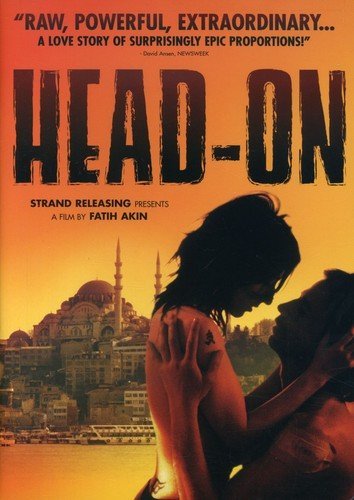
The volatile German-Turkish drama Head-On (Gegen die Wand, 2003/2004), the fourth feature by the Hamburg born writer-director Fatih Akin, snapped up the Golden Bear at the 2004 Berlin Film Festival and riveted audiences the world over with its tempestuous portrait of lovers torn apart by cultural differences, hard living and psychological illness both real and imagined. Cahit (Birol Unel), a rough hewn German prone to bouts of drinking, fighting, and womanizing, meets Sibel (Sibel Kikelli), a delicate Turkish refugee. In a Hamburg psychiatric ward after suicide attempts. His is real, hers is faked, to escape a marriage arranged by her devout Muslim family. Sibel begs Cahit to marry her to win back her family's esteem; Cahit agrees, believing the sham marriage will repair his wrecked life. The couple share an apartment and little else - he's a slob with a temper; she's a demure neat freak with a heart of gold. When they find themselves falling in love, it's with the brute force of a sucker punch to the gut. Akin employs dark comedy and tragedy to marvelous effect in Head-On, showing the messiness of romantic love in all its ragged, terrible glory. -- Bailey, Andrew. Cinema Now. Taschen, 2007: 26.
Head-On(Germany/Turkey: Fatih Akin, 2004: 121 mins)
Brockmann, Stephen. "Gegen die Wand (2004) or Germany Goes Multicultural." A Critical History of German Film Rochester, NY: Camden House, 2010: 478-487. [Professor has copy of the book]
Problem of Islamophobia Reduce Gun Laws Pro-immigration, reform current laws Negative aspects of social media Healthcare-Problem of Increasing Rates of Obesity in America Argument for good nutritional practices Issue of Head Injuries in the NFL South Park has used satire and story to effectively make us reflect on our own negative habits, emotions, and behaviors without becoming a biased political mouthpiece for any one party. Critique of Sea World Defense of Assisted-Suicide Problem of Obesity in America Addressing the Problem of Racism in America Negative effects of Social Media James Loewen's Critique of How History is Taught in Schools Keystone Pipeline Addressing the Myths about GMOs Why College is Important Solitary confinement should not be used as a form of punishment. The Problems Associated with Social Media Supporting Foster Youth in Transition to Independence Is Addiction a Disease? Against the Death Penalty Addiction to Social Media Ending Mass Incarceration in America I will show through scientific research that when someone chooses a faith-based approach they are less likely to relapse or fall back into the same addictive behaviors. In support of the right to end one's life when terminally ill Dr Who provides us with examples of how to be better persons and of a possibly better world.
On Simon Bolivar's Historical Importance
We should respect the military Was Egyptian leader Gamal Abdel Nasser a democratic leader Dangers of a Surveillance Society Lack of mental health resources in America has been a severe problem for those who are suffering with mental conditions Community Gardens are the Solution for Our Rising Food Costs Importance of Technology Integration in K-12 Education Why Sports Betting should be legal Free to Play video games encourage companies to use manipulative and anti-consumer practices. Universal Healthcare Legalization of Marijuana Abuse of Performance Enhancing Drugs America's Pornography Problem Problem of Fast/Processed Foods Unethical Practice of Lootboxes in Video Games (targeted toward minors) Universal Healthcare Decriminalization of Prostitution Big Pharma's role in the opioid crisis Social Media Federal Legalization of Marijuana
Prison Reform Why Humans Need Art? Federal Legalization and Decriminalization of Cannabis in the United States A Comprehensive Understanding of Addiction Haunting or Hoax? Investigating the Paranormal Healthcare in America
Importance of Sleep for Cognitive Excellence Effectiveness of Economic Sanctions on Russia Mental Health Issues Fake News/Media Literacy Stigma, prejudice, and discrimination creates a hostile and stressful social environment that causes mental health problems throughout the homosexual community Problems of Mission/Missionary Programs Treating Childhood Trauma Support of Abortion Rights In support of universal healthcare Critique of Standardized Testing Cigarettes should be illegal Working to help children of divorce Paid Family Leave for both Parents Humane and consensual euthanasia should be available to those who are dying and are living in immense amounts of pain In contrast to what we’re made to believe, a diet based solely on protein and fats is the true optimal way of eating for cognitive and physiological function Is Vladimir Putin committing war crimes with his attack on Ukraine? Amazon's role in the American economy and how such a large corporation could lend a helping or hurting hand to our society. There is a rising mental health crisis in men, due to social stigmas, targeted marketing, and lack of support. Problems associated with a two-party political system in a democracy. Marijuana Legalization Critique of Andrew Jackson's policies as President Climate Change The “Dark Ages” was not an age of ignorance and savagery, on the contrary, it was an age of harmony and beauty, that one can witness today. Problem of Steroid Abuse Critique of Florida's "Don't Say Gay" Bill Social Media Addiction The Importance of Sleep to Human Health The Corruption of Big Pharma Marijuana Legalization MMA (Mixed Martial Arts) could be a lot safer and there are a lot of different things that can be done to make the sport better in many ways Reform of Foster Care Problem of Bullying Marijuana Legalization Negative Representation of women in the Media Apologia for Christianity
John Stuart Mill’s principles about liberty of thought and discussion are still valid, the free interchange of ideas is the best way to learn and find out the truth.
Importance of Sleep to Good Health Concerns About Screen Culture Raise Awareness of Scientific Understanding of ADHD The Black Panther Party - defense of Analysis of Ways to Address Supply Chain Problems In Defense of Our National Parks Abstain from Social Media Stronger Regulation of Big Tech Negative aspects of the modeling industry Arguing Casey Anthony was guilty of murdering her child Required paid leave for new parents In Support of Vaccines for Children Negative Impact of Social Media in Our Society The Importance of Aftercare Planning & Treatment for Addicts Problems of Social Media We are assigning too much homework for elementary students The Case for Universal Income Abortion Rights Cognitive Development as a Key for Personal Success
Why Christopher Nolan is a great director. The benefits and shortcomings of how digital fighting games (DFG) uniquely satisfy our competitive nature. Vietnam War Climate Change Misogyny in the Bible Theodore Allen's Invention of the White Race
Clearing up confusion in regards to gene editing The effect of automation on labor and the need for a stronger social safety net Royalist history of the French Revolution Religion and Politics Along with common core learning, the introduction of visual, auditory, and three-dimensional arts in elementary education is beneficial to the growth of individuality and self-regulation throughout a person’s lifetime. Knowing how our personal information is being used and how to safeguard ourselves in this technological age is a must if we are to gain control over our own privacy. The Importance of the Nation of Islam in African-American culture Child Abuse Adverse effects of digital technologies Regulation of Big Tech Data Collection Regulation of Social Media Among Young Adults The importance of soccer to Spanish identity Addressing misinformation about Epilepsy Need to address alcoholism in America Causes in the rise of debilitating anxiety in young adults Christians should be involved in politics, but need to stay true to their core values Cell Phones are harmful when they are used irresponsibly and carelessly.
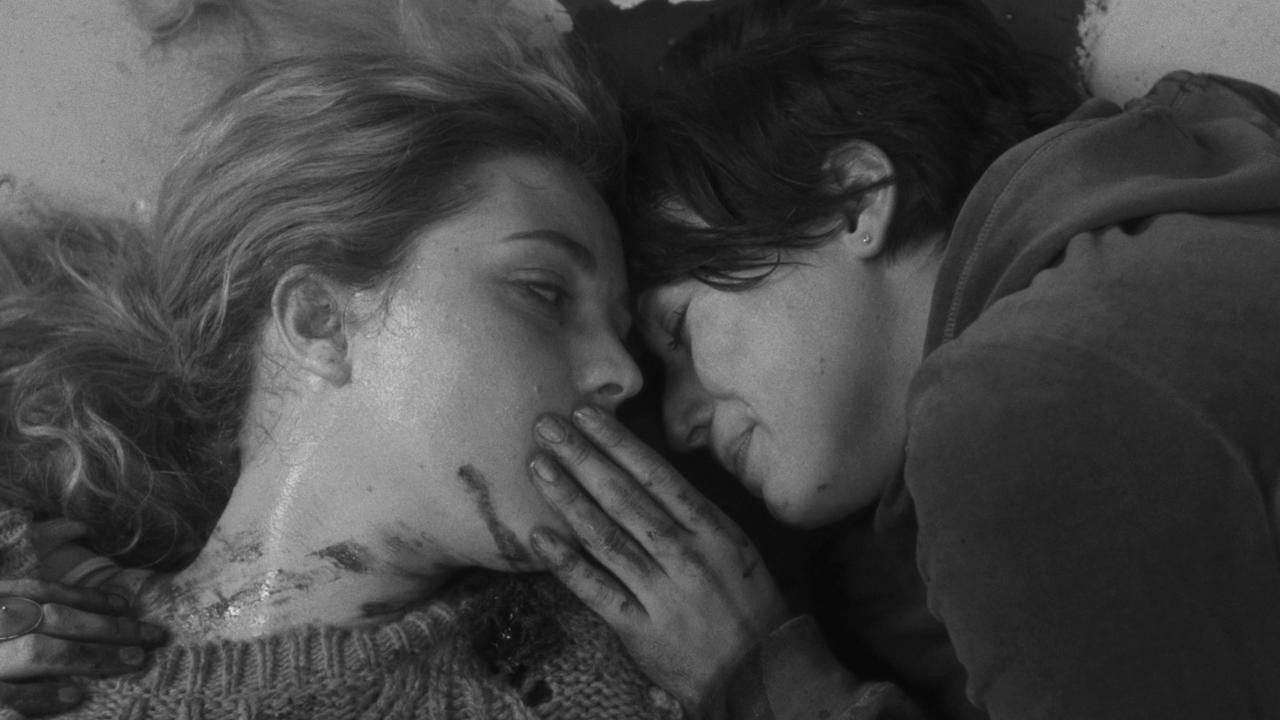
"A sensitive, heartrending portrait of what it feels like to grow up different, Sciamma’s beautifully observed coming-of-age tale aches tenderly with the tangled confusion of childhood. When 10-year-old Laure’s family moves to a new neighborhood during the summer, the gender-nonconforming preteen (played by the impressively naturalistic Zoé Héran) takes the opportunity to present as Mickäel to the neighborhood kids—testing the waters of a new identity that neither friends nor family quite understand. Sciamma’s warmly empathetic tone is perfectly complemented by the soft-lit impressionism of Fournier’s glowing cinematography." - "The Female Gaze" (2018)
Baheyeldin, Khalid, et al. "The Book of Dune."Imaginary Worlds (July 12, 2017) ["Frank Herbert’s 1965 novel Dune and its sequels tackled a lot of big themes. The books are about ecology. They’re about journeys of self-realization through mind-altering substances. But religion is at the core of the series, since the main character Paul Atreides transforms from a teenage aristocrat into a messianic revolutionary leader of a nomadic desert tribe. And the real world religion that Frank Herbert borrows from the most is Islam. Khalid Baheyeldin, Salman Sayyid, and Sami Shah discuss why the book resonated deeply with them, despite the fact that Frank Herbert wasn’t Muslim. And Liel Liebowitz explains why the novel even spoke to him as an Israeli."]
Breen, Benjamin. "Pharmacology."The Los Angeles Review of Books (March 27, 2022)
Dick, Stephanie. "Computers."The Los Angeles Review of Books (March 27, 2022)
Dietrich, Christopher. "Harvesting."The Los Angeles Review of Books (March 27, 2022)
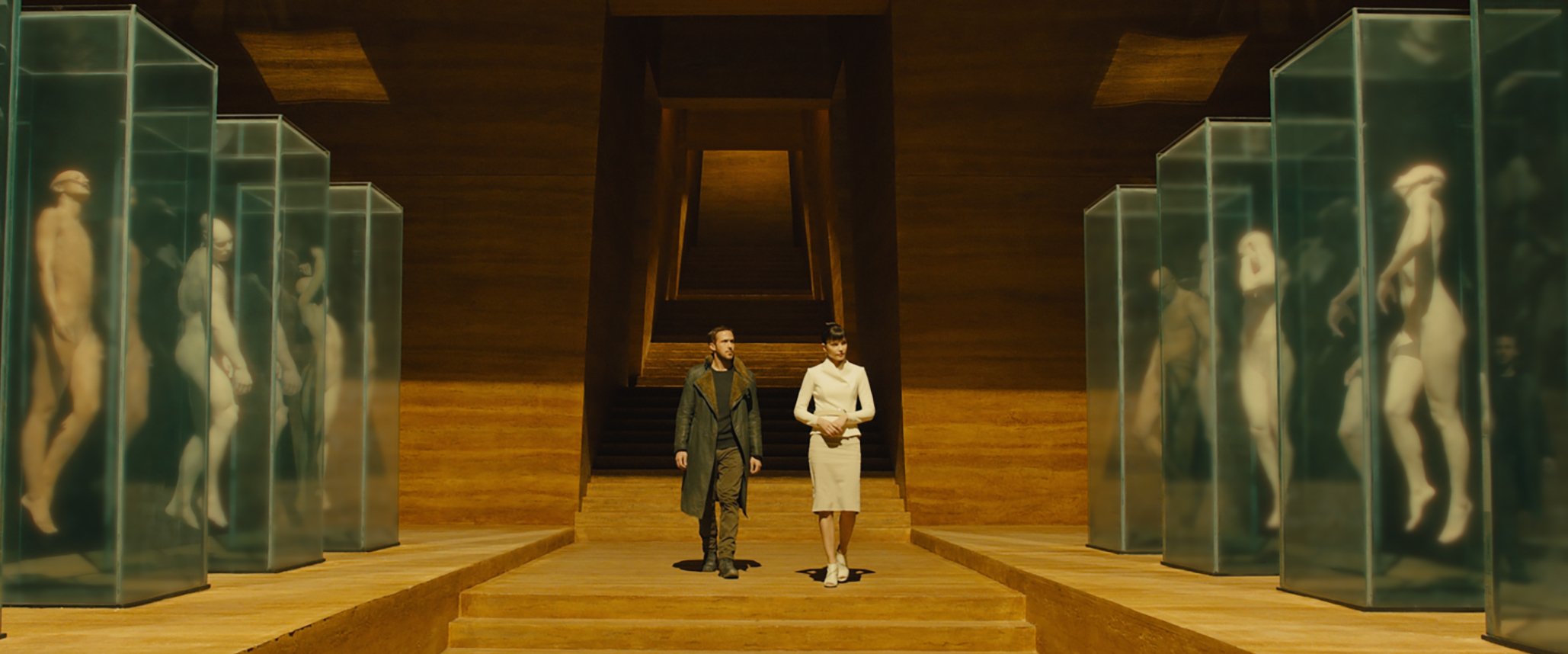
Engley, Ryan and Todd McGowan. "Blade Runner 2049."Why Theory (October 23, 2017) ["In this episode, Todd and Ryan discuss Denis Villeneuve's Blade Runner 2049. The conversation centers around how the film depicts ideology and what we mean when we say "ideology"; how the film conceives of desire ensuring subjectivity; and how the relationship between police and capital in the film exposes a link to how the two function in everyday life."]
Fox, Neil and Dario Linares. "Blade Runner 2049."The Cinematologists (October 18, 2017) ["With the original Blade Runner being a formative film for both Dario and Neil, they take the time to discuss the 2017 sequel directed by Denis Villeneuve: Blade Runner 2049. A lot has been said and written about this new incarnation, directly about the aesthetics, philosophical themes and narrative, but also regarding the wider ideological readings related to gender, race and class. We hope you enjoy our contribution to the discourse around a film which, if nothing else, reminds us of cinema's ability to provoke thought and exercise passion."]
Gerwig, Greta, et al. "63 Minute Directors Roundtable Talk."The Hollywood Reporter (Posted on Playlist: January 22, 2018) ["Angelina Jolie (“First They Killed My Father”), Patty Jenkins (“Wonder Woman”), Greta Gerwig (“Lady Bird”), Joe Wright (“Darkest Hour”), Guillermo del Toro (“The Shape of Water”), and Denis Villeneuve (“Blade Runner 2049”)."]
Laczkowski, Jim, et al. "Denis Villeneuve."The Director's Club #140 (December 17, 2017) ["Now Playing Network Master of Ceremonies (and Director's Club founder) Jim Laczkowski joins us for this episode which has us looking at the films of French Canadian filmmaker Denis Villeneuve! With Jim's help, we look at how Villeneuve brings his unique combination of thoughtfulness, pathos, family focus, and strangeness to dramas, genre thrillers, and films across the sci-fi spectrum. Includes lots of spiders and one talking fish."]
---. "The Problem of Other Minds – How Cinema Explores Consciousness." (Posted on Youtube: May 31, 2018) ["How have films engaged the problem of other minds? In this video essay, I discuss cinematic explorations into consciousness in the context of the cognitive revolution that has challenged many of the basic assumptions about what was for a long time believed to be a uniquely human trait." Uses Frans de Waal's book Are We Smart Enough to Know How Smart Animals Are?: "Hailed as a classic, Are We Smart Enough to Know How Smart Animals Are? explores the oddities and complexities of animal cognition--in crows, dolphins, parrots, sheep, wasps, bats, chimpanzees, and bonobos--to reveal how smart animals really are, and how we've underestimated their abilities for too long. Did you know that octopuses use coconut shells as tools, that elephants classify humans by gender and language, and that there is a young male chimpanzee at Kyoto University whose flash memory puts that of humans to shame? Fascinating, entertaining, and deeply informed, de Waal's landmark work will convince you to rethink everything you thought you knew about animal--and human--intelligence."]
Fox, Neil and Dario Linares. "Blade Runner 2049."The Cinematologists (October 18, 2017) ["With the original Blade Runner being a formative film for both Dario and Neil, they take the time to discuss the 2017 sequel directed by Denis Villeneuve: Blade Runner 2049. A lot has been said and written about this new incarnation, directly about the aesthetics, philosophical themes and narrative, but also regarding the wider ideological readings related to gender, race and class. We hope you enjoy our contribution to the discourse around a film which, if nothing else, reminds us of cinema's ability to provoke thought and exercise passion."]
Skiveren, Nicolai. "Cinematic Waesthetic: Wasted Worlds, Wasted Lives and Becoming-Waste in Contemporary Science Fiction Film."Revenant #10 (March 2024) ["This article explores the aesthetic, affective, and epistemological connections that bind together science fiction (SF) as a genre of cognitive estrangement, and the varied forms of waste that have come to permeate the genre’s filmic depictions of the future. Whether it be in the shadowy alleyways of Blade Runner 2049 (2017), the shantytowns of District 9 (2009), or the ravaged environments of Idiocracy (2006), waste is always there, lurking in the background, enveloping its human and nonhuman subjects with its elusive yet distinct atmosphere. And yet, it remains unclear what purpose(s), if any, waste might serve within these film-worlds. Because despite the seemingly central place that waste occupies in our cultural imaginaries of the future, no one has yet presented a systematic reflection on its affective, symbolic, and narrative significance. This article therefore brings together writings on ecological SF (Caravan 2014) and critical waste studies (Bauman 2004; Hawkins 2005; Viney 2014) to scrutinize the waste found across the above SF films. The article proposes that waste in contemporary SF film can be seen to operate mainly within three overlapping modes: ‘Wasted worlds,’ ‘Wasted lives,’ and ‘Becoming-waste.’ Drawing especially on Adrian Ivakhiv’s tripartite model for an eco-philosophy of the cinema, this article calls attention to the often subtle ways in which waste participates in (i) cinematic world-building, (ii) representations of otherness, and (iii) depictions of radical forms of change. Taken together, these three modes represent a suggestive image of how waste forms part of contemporary SF film."]
StudioBinder. "Denis Villeneuve & His Cinema of Ambiguity — Directing Styles Explained." (Posted on Youtube: April 6, 2020) ["Denis Villeneuve movies are made to confuse you. At every opportunity — in the story, in the cinematography, editing, and music, Villeneuve wants to keep you guessing. Watching Denis Villeneuve movies is to be placed in an environment of uncertainty. And that’s what makes them so interesting. In films like Enemy, Prisoners, Polytechnique, Blade Runner 2049, and Arrival, Villeneuve consistently creates awe and wonder with images and sounds we’ve never seen before. In Enemy, Adam (Jake Gyllenhaal) must confront the possibility that he is more than a single person. In Sicario, Kate (Emily Blunt) is pushed into the world of drug cartels by a tight-lipped company man (Josh Brolin) and a near-silent assassin (Benicio Del Toro). In Prisoners, Keller (Hugh Jackman) ventures into murky moral territory to find his kidnapped daughter. In Arrival, Louise (Amy Adams) and Ian (Jeremy Renner) are tasked with bridging the communication gap between beings from another dimension. In all these movies, the characters find themselves in new worlds without answers. In this video, we’ve cracked the code on Villeneuve’s love of ambiguity and we explain how his directing style works across 7 areas of focus including sound, color, production design, and more. Villeneuve creates movies that can be enigmatic but there’s no denying that he is a film artist in complete control of his medium. If you’re studying directing, cinematography, editing, or pursuing ANY career in filmmaking, there are a ton of lessons to be learned from Denis Villeneuve. This is the ultimate breakdown of Denis Villeneuve’s directing style."]
Deakins, Roger."Sicario."DP30 (November 14, 2015) Foley, Darren. "Sicario: Film Analysis."Must See Films (Posted on Youtube: March 28, 2016) Laczkowski, Jim, et al. "Denis Villeneuve."The Director's Club #140 (December 17, 2017) ["Now Playing Network Master of Ceremonies (and Director's Club founder) Jim Laczkowski joins us for this episode which has us looking at the films of French Canadian filmmaker Denis Villeneuve! With Jim's help, we look at how Villeneuve brings his unique combination of thoughtfulness, pathos, family focus, and strangeness to dramas, genre thrillers, and films across the sci-fi spectrum. Includes lots of spiders and one talking fish."]
McGrath, Callum. "Looking to the other side: Dismantlement and reimposition of borders in Sicario and The Three Burials of Melquiades Estrada."Senses of Cinema #108 (January 2024) ["Two films that engage in ideas of the permeability of the US-Mexico border are Sicario (Denis Villeneuve, 2015) and The Three Burials of Melquiades Estrada (Tommy Lee Jones, 2005). This article will explore how these films either reimpose or dismantle the border. To construct these arguments, an analysis of cinematic techniques will be undertaken for each film, with a focus on mise-en-scène. It will be argued that the negative depiction of Mexico in Sicario reimposes border ideology. Subsequently, the article will assert that The Three Burials of Melquiades Estrada instead dismantles the border division. In both texts, however, there are challenges and nuances to these arguments, as will be explored. These include border permeability in instances that are beneficial to the hegemony of the US in Sicario, and some aspects of Mexico’s romanticised portrayal that reinforce a divide in The Three Burials of Melquiades Estrada."] Orr, Christopher. "The Almost Greatness of Sicario."The Atlantic (September 25, 2015) Scott, A.O. "Sicario Digs Into the Depths of Drug Cartel Violence."The New York Times (September 17, 2015)
StudioBinder. "Denis Villeneuve & His Cinema of Ambiguity — Directing Styles Explained." (Posted on Youtube: April 6, 2020) ["Denis Villeneuve movies are made to confuse you. At every opportunity — in the story, in the cinematography, editing, and music, Villeneuve wants to keep you guessing. Watching Denis Villeneuve movies is to be placed in an environment of uncertainty. And that’s what makes them so interesting. In films like Enemy, Prisoners, Polytechnique, Blade Runner 2049, and Arrival, Villeneuve consistently creates awe and wonder with images and sounds we’ve never seen before. In Enemy, Adam (Jake Gyllenhaal) must confront the possibility that he is more than a single person. In Sicario, Kate (Emily Blunt) is pushed into the world of drug cartels by a tight-lipped company man (Josh Brolin) and a near-silent assassin (Benicio Del Toro). In Prisoners, Keller (Hugh Jackman) ventures into murky moral territory to find his kidnapped daughter. In Arrival, Louise (Amy Adams) and Ian (Jeremy Renner) are tasked with bridging the communication gap between beings from another dimension. In all these movies, the characters find themselves in new worlds without answers. In this video, we’ve cracked the code on Villeneuve’s love of ambiguity and we explain how his directing style works across 7 areas of focus including sound, color, production design, and more. Villeneuve creates movies that can be enigmatic but there’s no denying that he is a film artist in complete control of his medium. If you’re studying directing, cinematography, editing, or pursuing ANY career in filmmaking, there are a ton of lessons to be learned from Denis Villeneuve. This is the ultimate breakdown of Denis Villeneuve’s directing style."]
Laczkowski, Jim, et al. "Denis Villeneuve."The Director's Club #140 (December 17, 2017) ["Now Playing Network Master of Ceremonies (and Director's Club founder) Jim Laczkowski joins us for this episode which has us looking at the films of French Canadian filmmaker Denis Villeneuve! With Jim's help, we look at how Villeneuve brings his unique combination of thoughtfulness, pathos, family focus, and strangeness to dramas, genre thrillers, and films across the sci-fi spectrum. Includes lots of spiders and one talking fish."]
Said, Edward W. "Invention, Memory, and Place." Cultural Studies: From Theory to Action. Malden, MA: Blackwell, 2005: 256-269. [In BCTC Library and professor has a copy]
StudioBinder. "Denis Villeneuve & His Cinema of Ambiguity — Directing Styles Explained." (Posted on Youtube: April 6, 2020) ["Denis Villeneuve movies are made to confuse you. At every opportunity — in the story, in the cinematography, editing, and music, Villeneuve wants to keep you guessing. Watching Denis Villeneuve movies is to be placed in an environment of uncertainty. And that’s what makes them so interesting. In films like Enemy, Prisoners, Polytechnique, Blade Runner 2049, and Arrival, Villeneuve consistently creates awe and wonder with images and sounds we’ve never seen before. In Enemy, Adam (Jake Gyllenhaal) must confront the possibility that he is more than a single person. In Sicario, Kate (Emily Blunt) is pushed into the world of drug cartels by a tight-lipped company man (Josh Brolin) and a near-silent assassin (Benicio Del Toro). In Prisoners, Keller (Hugh Jackman) ventures into murky moral territory to find his kidnapped daughter. In Arrival, Louise (Amy Adams) and Ian (Jeremy Renner) are tasked with bridging the communication gap between beings from another dimension. In all these movies, the characters find themselves in new worlds without answers. In this video, we’ve cracked the code on Villeneuve’s love of ambiguity and we explain how his directing style works across 7 areas of focus including sound, color, production design, and more. Villeneuve creates movies that can be enigmatic but there’s no denying that he is a film artist in complete control of his medium. If you’re studying directing, cinematography, editing, or pursuing ANY career in filmmaking, there are a ton of lessons to be learned from Denis Villeneuve. This is the ultimate breakdown of Denis Villeneuve’s directing style."]
Professor in Polytechnique: “The universal law of entropy also tells us that any isolated system left on its own, is inevitably destined to irreversible degradation, to the point of self-destruction.”
Laczkowski, Jim, et al. "Denis Villeneuve."The Director's Club #140 (December 17, 2017) ["Now Playing Network Master of Ceremonies (and Director's Club founder) Jim Laczkowski joins us for this episode which has us looking at the films of French Canadian filmmaker Denis Villeneuve! With Jim's help, we look at how Villeneuve brings his unique combination of thoughtfulness, pathos, family focus, and strangeness to dramas, genre thrillers, and films across the sci-fi spectrum. Includes lots of spiders and one talking fish."]
StudioBinder. "Denis Villeneuve & His Cinema of Ambiguity — Directing Styles Explained." (Posted on Youtube: April 6, 2020) ["Denis Villeneuve movies are made to confuse you. At every opportunity — in the story, in the cinematography, editing, and music, Villeneuve wants to keep you guessing. Watching Denis Villeneuve movies is to be placed in an environment of uncertainty. And that’s what makes them so interesting. In films like Enemy, Prisoners, Polytechnique, Blade Runner 2049, and Arrival, Villeneuve consistently creates awe and wonder with images and sounds we’ve never seen before. In Enemy, Adam (Jake Gyllenhaal) must confront the possibility that he is more than a single person. In Sicario, Kate (Emily Blunt) is pushed into the world of drug cartels by a tight-lipped company man (Josh Brolin) and a near-silent assassin (Benicio Del Toro). In Prisoners, Keller (Hugh Jackman) ventures into murky moral territory to find his kidnapped daughter. In Arrival, Louise (Amy Adams) and Ian (Jeremy Renner) are tasked with bridging the communication gap between beings from another dimension. In all these movies, the characters find themselves in new worlds without answers. In this video, we’ve cracked the code on Villeneuve’s love of ambiguity and we explain how his directing style works across 7 areas of focus including sound, color, production design, and more. Villeneuve creates movies that can be enigmatic but there’s no denying that he is a film artist in complete control of his medium. If you’re studying directing, cinematography, editing, or pursuing ANY career in filmmaking, there are a ton of lessons to be learned from Denis Villeneuve. This is the ultimate breakdown of Denis Villeneuve’s directing style."]
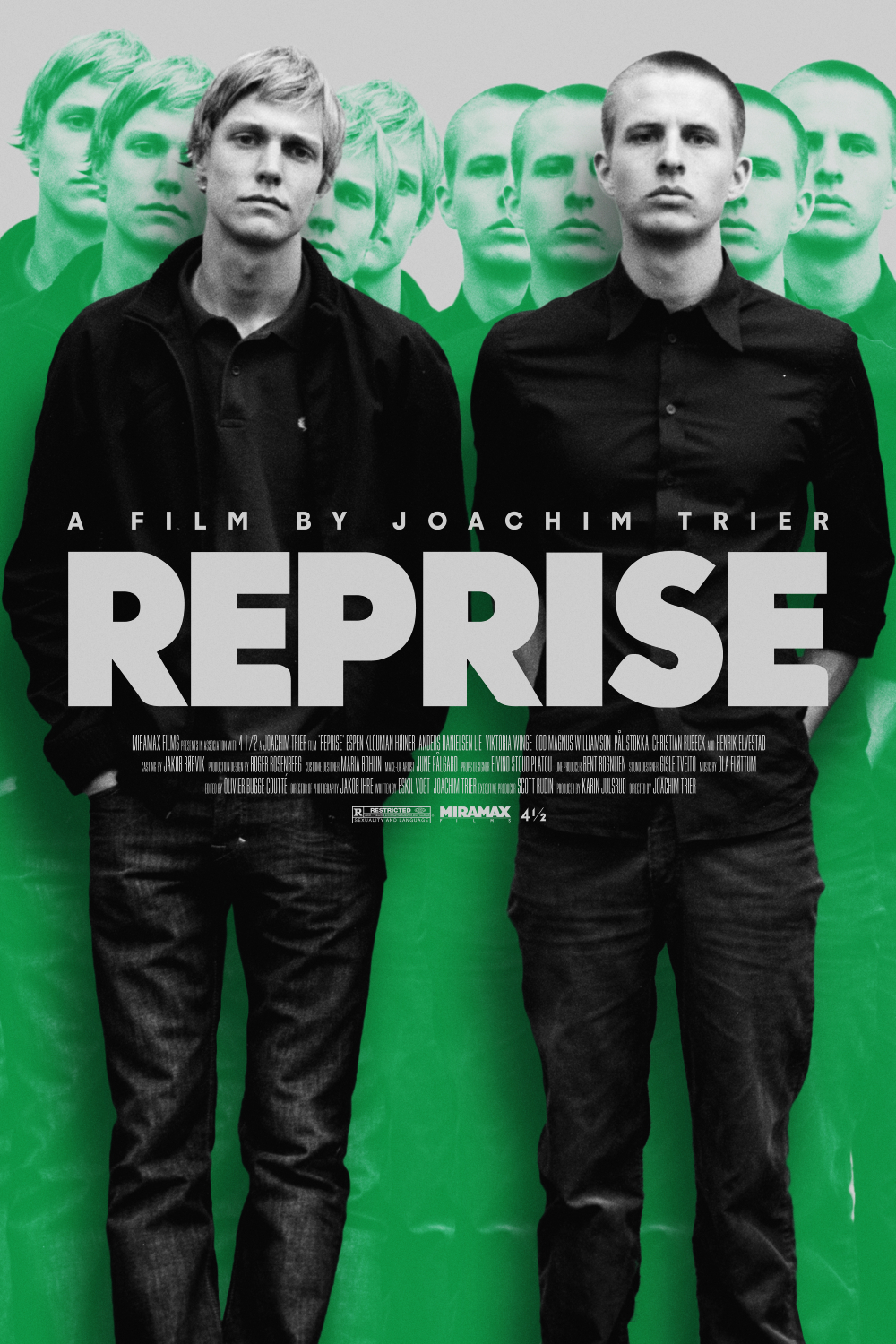
“People talk about the death of cinema, and they talk about the death of the novel. The novel has reinvented itself and changed form and been experimental and, therefore, has survived. I think movies should be inspired by that — the spirit of the possibility of the dramaturgy not being one thing. The dramaturgy or the structure of your telling is up for grabs, and it’s personal.” – Joachim Trier, Seventh Row Louder than Bombs Interview Part 1
“How to show thinking in cinema, it’s something I’m really interested in. I get so pissed when people say, “Oh, thinking, that’s for the novel. Cinema is about the exterior”. I disagree. Film can be incredibly subjective.” – Joachim Trier, Louder Than Bombs Interview Part 2
Louder Than Bombs (Norway/France/Denmark/USA: Joachim Trier, 2015: 109 mins)
Ihre, Jakob. "Louder Than Bombs."American Cinematographer Podcasts #71 (May 27, 2016) ["Director of photography Jakob Ihre sits down with filmmaker Jim Hemphill to discuss his work on the acclaimed independent film Louder Than Bombs. Ihre discusses the role of the cinematographer in facilitating great performances, his ongoing collaboration with director Joachim Trier, being influenced by films including Ordinary People and The Breakfast Club, and how he finds visual corollaries for emotional states."]
Sie, Trish and April Wolfe. "Snowpiercer."Switchblade Sisters #9 (January 4, 2018) ["April talks to Pitch Perfect 3 director Trish Sie about Bong Joon-ho's frozen feature, Snowpiercer. They discuss the amazing performance of Tilda Swinton as the authoritative Mason, the commanding directorial style of Bong Joon-ho, and the train car on the Snowpiercer they'd most like to spend time in. Trish also talks about getting her start directing the famous OK GO "treadmill video" for the song 'Here It Goes Again' and what it's like taking over an existing franchise with Pitch Perfect 3. She also shares some fascinating tidbits about the eating habits of polar bears."]
Blackmon, Douglas A., et al. "Mass Incarceration."Throughline (August 15, 2019) ["The United States imprisons more people than any other country in the world, and a disproportionate number of those prisoners are Black. What are the origins of the U.S. criminal justice system and how did racism shape it? From the creation of the first penitentiaries in the 1800s, to the "tough-on-crime" prosecutors of the 1990s, how America created a culture of mass incarceration."]
DuVernay, Ava. "From Slavery to Mass Incarceration, Ava DuVernay's Film 13th Examines Racist U.S. Justice System."Democracy Now (October 3, 2016) ["Ava DuVernay’s new documentary chronicles how our justice system has been driven by racism from the days of slavery to today’s era of mass incarceration. The film, "13th," is named for the constitutional amendment that abolished slavery with the exception of punishment for crime. The United States accounts for 5 percent of the world’s population, but 25 percent of its prisoners. In 2014, more than 2 million people were incarcerated in the United States—of those, 40 percent were African-American men. According to the Sentencing Project, African-American males born today have a one-in-three chance of going to prison in their lifetimes if incarceration trends continue. We speak to Ava DuVernay. Her previous work includes the hit 2014 film "Selma." With "Selma," DuVernay became the first African-American female director to have a film nominated for Best Picture at the Academy Awards."]
DuVernay, Ava, et al. "Ava DuVernay / Jamal Joseph."The Close-Up #93 (July 20, 2016) ["The Opening Night selection will be the new film from SELMA director Ava DuVernay, THE 13TH, which explores the American prison industry and the horrors of mass criminalization. Eugene Hernandez caught up with DuVernay in Los Angeles over the weekend to discuss the project. In part two of this week's episode, we're sharing an inspirational panel from last month's Human Rights Watch Film Festival. Following a screening of CHAPTER & VERSE, a film about a reformed gang leader who struggles to re-enter society after eight years in prison, director Jamal Joseph joined lead actor Daniel Beatty and producers Cheryl Hill and Jonathan Singer to talk about racism, gang violence, gentrification, and what it means to forge your own destiny in an outwardly harsh society."]
Gino, Francesca. "You 2.0: Rebel with a Cause."Hidden Brain (August 9, 2019) ["This week, we'll follow Gino on her mission to understand the minds of successful rule breakers. What are their secrets? And how can we discover our own rebel talent? "I think we really need to shift our thinking," says Gino. "Rebels are people who break rules that should be broken. They break rules that hold them and others back, and their way of rule breaking is constructive rather than destructive. It creates positive change.""]
Alien³ (1992) [Keep in mind that this is the third film in a series, Ridley Scott's 1979 Alien and James Cameron's 1986 Aliens. It is not necessary to have watched both of those films, but there would be major plotholes in this film if you haven't.]
LoBrutto, Vincent. "Defining Theme, Metaphor, and Character Through Color, Texture, and Environmental Design: Se7en." Becoming Film Literate: The Art and Craft of Motion Pictures. Westport, CT: Praeger, 2005: 280-285. [BCTC Library: PN1994 L595 2005]
Radatz, Ben. "Se7en (1995)."Art of the Title (July 10, 2012)
Sevilla, Susanna. "Things Are Not What They Seem." (Posted on Vimeo: February 2015) ["A video essay on title sequences from Hitchcock and Fincher films. An exploration of motion graphic design from analog to digital."]