Showing posts with label Advertising. Show all posts
Showing posts with label Advertising. Show all posts
Thursday, April 4, 2013

Tuesday, March 19, 2013
Robert W. McChesney and John Nichols - The Bull Market: Political Advertising
The Bull Market: Political Advertising
by Robert W. McChesney and John Nichols
Monthly Review
...
For Americans born after 1950, and for those born before 1950 but with faltering memories, the televised commercial deluge that now defines American political campaigns likely seems the natural order of things, for better or for worse.2 But American campaigns were significantly different in the 175 years before political advertising, specifically television political advertising, became the order of the day. When one reads Theodore White’s epic The Making of the President series, especially for 1960 and 1964, the emerging role of television is a recurring theme—but TV political advertising is barely present in the early 1960s volumes. By White’s account, Nixon paid virtually no attention to his Madison Avenue advisors throughout his unsuccessful 1960 presidential campaign.3 Joe Klein recounts how his research shows that in the 1950s and ‘60s candidates routinely hired advertising experts and pollsters, “But these were peripheral advisers; they didn’t run the campaigns.”4
This quickly changed. In 1969 Joe McGinniss published his groundbreaking The Selling of the President, to chronicle what he termed “a striking new phenomenon—the marketing of political candidates as if they were consumer products.” The book, which involved McGinniss spending time with Nixon’s television advertising advisors including Roger Ailes during the 1968 presidential campaign, seemed shocking and a sharp departure from the political-driven campaign narratives provided by the likes of White. McGinniss documented how Nixon came to rely upon TV political commercials, based on Madison Avenue marketing principles, as the foundation of his campaign. In the book Ailes presciently concludes immediately after the November victory, “This is the beginning of a whole new concept. This is it. This is the way they’ll be elected forevermore.”5 It is ironic that today, when one reads the book, it seems downright quaint, even homespun, in comparison to subsequent elections. The liberal McGinniss is able to wander through the corridors of power in Nixon’s campaign like a serendipitous hippie roaming around at Woodstock. The narrative reminds one of the Dr. Evil character in the Austin Powers film who returns to life in 1997 after being frozen for thirty years, and then threatens to blow up the world unless he is given his ransom demand of…one million dollars.
Consider also The Candidate, a 1972 film about a young idealistic California candidate for a U.S. Senate seat, starring Robert Redford. The film, with a screenplay by a former Eugene McCarthy speechwriter, dealt with the phoniness and superficiality that marketing and television had brought to political campaigns. It was provocative and controversial and contributed to subsequent debates about the role of money in politics. TV political advertising plays an important role in the piece and is cast in a negative light. But what is ironic is that the TV ads Redford’s character airs in the fictional campaign are closer to Lincoln’s Gettysburg address in tone and substantive content than they are to the asininity that typifies political ads of more recent vintage. Ads of that caliber today would have political scientists and pundits shouting from the mountaintops that we were free at last. But in 1972 such ads were considered highly suspect and part of the problem.
As it was, by 1972 the total amount spent for all races on television political advertising, and that so alarmed McGinniss, Redford, and the nation—from President and House and Senate to governorships, mayors, state legislatures, referenda, initiatives and city council, the works!—had increased almost fourfold from 1960 to reach $37 million.6 That would amount to approximately $200 million in 2012 dollars; so, factoring for inflation, the 1972 election spent less than 3 percent of what will be spent on TV political ads in the 2012 election cycle.
For a concrete example, in 1972, a little-known Colorado Democrat, Floyd Haskell, spent $81,000 (roughly $440,000 in 2010 dollars) on television advertising for a campaign that unseated incumbent Republican U.S. Senator Gordon Allott. The figure was dramatic enough to merit note in a New York Times article on Haskell’s upset win. Fast-forward to the 2010 Senate race, when incumbent Colorado Democrat Michael Bennet defeated Republican Ken Buck. The total spent on that campaign in 2010 (the bulk of which went to television ads) topped $40 million, more than $30 million of which was spent by Super PAC-type groups answering only to their donors. In the last month of the election, negative ads ran nearly every minute of every day. The difference in spending, factoring in inflation, approached one hundred-to-one. The 2010 Colorado Senate race is generally held up by insiders as the bellwether for 2012 and beyond. As Tim Egan puts it, “This is your democracy on meth—the post–Citizens United world.”
The total number of TV political ads for House, Senate, and Gubernatorial candidates in 2010 was 2,870,000. This was a 250 percent increase in the number of TV ads as there were for the same category of races in 2002. In terms of spending, and compared strictly to 2008, just two years earlier, House race TV ads cost 54 percent more in 2010 and the cost of Senate race TV ads was up 71 percent.7 By the end of 2011 it was already clear that 2012 would have a quantum leap in campaign spending from 2008, the greatest increase in American history, and much of this would go to TV political ads. “In 2010, it was just training wheels, and those training wheels will come off in 2012,” says Kenneth Goldstein, president of Kantar Media’s Campaign Media Analysis Group. “There will be more bigger groups spending, and not just on one side but on both sides.”8
This is not a commercial market where a speculative boom leads to an eventual bust. This is a political market and it is going in one direction, quickly. The federal and state budgets are enormous multi-trillion-dollar troughs and there is no sign that corporate interests are anywhere near their upward limit of what they will pay to have access to them and control the laws, policies, subsidies, and regulations that affect their profitability. Indeed, it is possible that 2012 may one day appear to be a democratic panacea compared to what lies ahead, much like 1968 or 1972 looks to us today.
Any way you slice it, to mix metaphors, we are not in Kansas anymore.
...
To Read the Entire Essay

by Robert W. McChesney and John Nichols
Monthly Review
...
For Americans born after 1950, and for those born before 1950 but with faltering memories, the televised commercial deluge that now defines American political campaigns likely seems the natural order of things, for better or for worse.2 But American campaigns were significantly different in the 175 years before political advertising, specifically television political advertising, became the order of the day. When one reads Theodore White’s epic The Making of the President series, especially for 1960 and 1964, the emerging role of television is a recurring theme—but TV political advertising is barely present in the early 1960s volumes. By White’s account, Nixon paid virtually no attention to his Madison Avenue advisors throughout his unsuccessful 1960 presidential campaign.3 Joe Klein recounts how his research shows that in the 1950s and ‘60s candidates routinely hired advertising experts and pollsters, “But these were peripheral advisers; they didn’t run the campaigns.”4
This quickly changed. In 1969 Joe McGinniss published his groundbreaking The Selling of the President, to chronicle what he termed “a striking new phenomenon—the marketing of political candidates as if they were consumer products.” The book, which involved McGinniss spending time with Nixon’s television advertising advisors including Roger Ailes during the 1968 presidential campaign, seemed shocking and a sharp departure from the political-driven campaign narratives provided by the likes of White. McGinniss documented how Nixon came to rely upon TV political commercials, based on Madison Avenue marketing principles, as the foundation of his campaign. In the book Ailes presciently concludes immediately after the November victory, “This is the beginning of a whole new concept. This is it. This is the way they’ll be elected forevermore.”5 It is ironic that today, when one reads the book, it seems downright quaint, even homespun, in comparison to subsequent elections. The liberal McGinniss is able to wander through the corridors of power in Nixon’s campaign like a serendipitous hippie roaming around at Woodstock. The narrative reminds one of the Dr. Evil character in the Austin Powers film who returns to life in 1997 after being frozen for thirty years, and then threatens to blow up the world unless he is given his ransom demand of…one million dollars.
Consider also The Candidate, a 1972 film about a young idealistic California candidate for a U.S. Senate seat, starring Robert Redford. The film, with a screenplay by a former Eugene McCarthy speechwriter, dealt with the phoniness and superficiality that marketing and television had brought to political campaigns. It was provocative and controversial and contributed to subsequent debates about the role of money in politics. TV political advertising plays an important role in the piece and is cast in a negative light. But what is ironic is that the TV ads Redford’s character airs in the fictional campaign are closer to Lincoln’s Gettysburg address in tone and substantive content than they are to the asininity that typifies political ads of more recent vintage. Ads of that caliber today would have political scientists and pundits shouting from the mountaintops that we were free at last. But in 1972 such ads were considered highly suspect and part of the problem.
As it was, by 1972 the total amount spent for all races on television political advertising, and that so alarmed McGinniss, Redford, and the nation—from President and House and Senate to governorships, mayors, state legislatures, referenda, initiatives and city council, the works!—had increased almost fourfold from 1960 to reach $37 million.6 That would amount to approximately $200 million in 2012 dollars; so, factoring for inflation, the 1972 election spent less than 3 percent of what will be spent on TV political ads in the 2012 election cycle.
For a concrete example, in 1972, a little-known Colorado Democrat, Floyd Haskell, spent $81,000 (roughly $440,000 in 2010 dollars) on television advertising for a campaign that unseated incumbent Republican U.S. Senator Gordon Allott. The figure was dramatic enough to merit note in a New York Times article on Haskell’s upset win. Fast-forward to the 2010 Senate race, when incumbent Colorado Democrat Michael Bennet defeated Republican Ken Buck. The total spent on that campaign in 2010 (the bulk of which went to television ads) topped $40 million, more than $30 million of which was spent by Super PAC-type groups answering only to their donors. In the last month of the election, negative ads ran nearly every minute of every day. The difference in spending, factoring in inflation, approached one hundred-to-one. The 2010 Colorado Senate race is generally held up by insiders as the bellwether for 2012 and beyond. As Tim Egan puts it, “This is your democracy on meth—the post–Citizens United world.”
The total number of TV political ads for House, Senate, and Gubernatorial candidates in 2010 was 2,870,000. This was a 250 percent increase in the number of TV ads as there were for the same category of races in 2002. In terms of spending, and compared strictly to 2008, just two years earlier, House race TV ads cost 54 percent more in 2010 and the cost of Senate race TV ads was up 71 percent.7 By the end of 2011 it was already clear that 2012 would have a quantum leap in campaign spending from 2008, the greatest increase in American history, and much of this would go to TV political ads. “In 2010, it was just training wheels, and those training wheels will come off in 2012,” says Kenneth Goldstein, president of Kantar Media’s Campaign Media Analysis Group. “There will be more bigger groups spending, and not just on one side but on both sides.”8
This is not a commercial market where a speculative boom leads to an eventual bust. This is a political market and it is going in one direction, quickly. The federal and state budgets are enormous multi-trillion-dollar troughs and there is no sign that corporate interests are anywhere near their upward limit of what they will pay to have access to them and control the laws, policies, subsidies, and regulations that affect their profitability. Indeed, it is possible that 2012 may one day appear to be a democratic panacea compared to what lies ahead, much like 1968 or 1972 looks to us today.
Any way you slice it, to mix metaphors, we are not in Kansas anymore.
...
To Read the Entire Essay
Friday, July 20, 2012
Michael Koresky: Consider the Source -- On The Passion of the Christ
Consider the Source: On The Passion of the Christ
by Michael Koresky
Reverse Shot
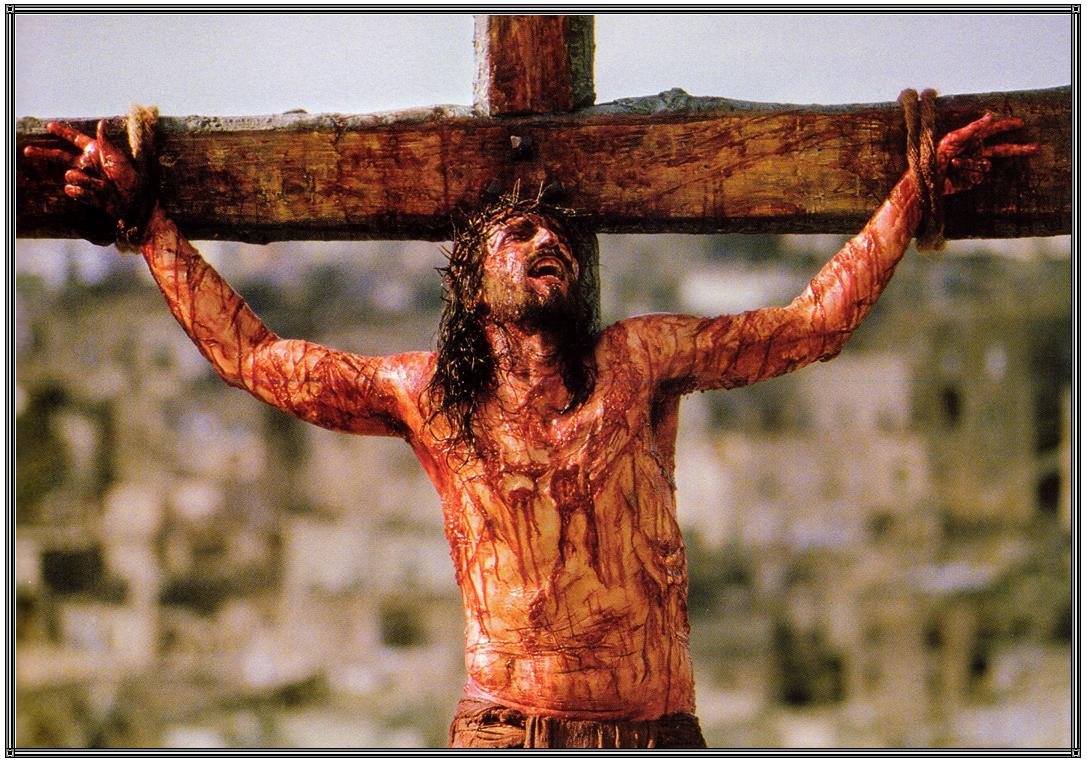
I opened my wallet for Jesus. And then, after paying the ten dollars and twenty-five cents, sitting through the ear-splitting, retina-scalding Regal Cinemas’ 2wenty (“Remember to arrive at the theater early!”), ads for Eclipse breath-freshener and Coca-Cola, bulbous oversized M&M men and a TNT “We Know Drama” sensory overload, I was ready to be saved. Lifted out of my seat, perhaps, and brought back down into my chair just in time for the beginning of lent.
Alas, in the end, it was a movie. A mere movie. Mel Gibson’s brilliantly cynical marketing strategy, buoyed by the ADL’s advance work, lured even us non-believers (sinners) into the theater; certainly we didn’t expect to emerge as right-wing Christian fundamentalist converts, but we had every right to think we would be witnessing an honest representation of human and artistic faith, a spiritual roadmap to the psyche of a filmmaker and actor who felt driven, even instructed by God, as he has claimed, to create a cinematic likeness of the divine. It’s not essential that a moviegoer agrees with the political or religious implications of the images emblazoned on the screen, but that the images translate as a response from the filmmaker’s soul, that we believe we are witnessing the gospels as Mel himself sees them. The sheer divine force offered by Pasolini, Scorsese, by Bresson and Burnett and Spielberg, by Alexanders Payne and Sokurov, manifest in images that relinquish themselves to whatever artistic means necessary, not in shameless grandiosity that wishes to pummel the viewer into submission, into terrified acceptance. Gibson may find disingenuous the earthy benevolence of Pasolini’s Christ and the psychological torment of Scorsese’s, the lyrical allegory of Bresson’s Balthazar and Spielberg’s E.T., the spiritual personification of Payne’s Warren Schmidt or Sokurov’s cancer-ravaged saint-mother; he wants a more direct address, to make you feel every thrust of the rusty nail as it’s hammered into Jesus’s palms, to clutch your own shoulders as Jesus’s arm is ripped out of its socket, to cover your eyes in gratitude when the crucified thief’s eye is plucked out by a vengeful crow, to reverently ooh, aah, and shriek when Jesus is scourged, his back torn and ripped open into a hundred fleshy strips. Apparently to Gibson, there is no metaphor in religion; faith manifests itself as a spiritual dead-end, a believe-it-or-be-damned expression of finality. Of course Gibson, progeny of his fundamentalist missionary father’s terrifyingly stubborn outmoded beliefs, ended up a Hollywood actor—that particular “dream factory” churns out endless expressions of American complacency every year, cheerless damning spectacles of moral righteousness and unambigious carnal pleasures. Of course Mel Gibson, though a self-avowed man of endless spiritual vitality, can only depict the divine through the employment of hundreds of buckets of stage-blood. With its ludicrous, Hollywood-fortified conviction (not the same thing as faith, incidentally), Passion may be the world’s first completely banal Jesus Christ film. And though it’s remarkably, hopelessly literal, it was certainly waiting to happen. It had to happen.
If 2000’s Gladiator ushered in the new Bush regime, then perhaps Gibson’s blockbuster is the new 21st-century’s first true coercively conservative “classic.” Rarely has a film with a fundamentalist core been so blatantly conceived, so forthright in its admissions. Every decade of American film, though never preoccupied with anything grander than itself, nonetheless ends up a product of its own political backdrop. First Blood and its subsequent sequels became emblematic of the Reagan era, literally winning Vietnam back from the liberals, reasserting the swaggering machismo of the American hero that Seventies Hollywood attempted to all but decimate. And just as Stallone enacted Reagan’s cloudy-headed right-wing version of recent history, Gibson’s Christ—“compassionate” Conservative, deliverer of that old-tyme religion—emerges from the tomb at just the moment of the Bush administration’s attack on civil liberties, and the attack on the Civil Rights of American gays launched by Dubya himself with full-on, unabashed old-testament condemnation. Those who speak out against Gibson’s film are automatically stigmatized as leftist rabble-rousers and hapless atheists; to deny its physical impact or so-called technical grandeur is to supposedly denounce Gibson’s personal belief system. What’s more essential is to realize that when Gibson’s savvy propaganda piece, meant to inflict a tough-love Jesus on the nation’s wayward souls, floods into 4,000 screens, another dam between Church and State begins to crumble. The youngsters of the Clintonian Nineties, finding solace in the emergence of a truly multicultural pop mainstream, need to be reclaimed by the right, shorn of their piercings and tattoos, and brought back to Sunday school; who better to do that than Jesus himself, this time, like Rambo, stripped to the waist, chained and whipped, flesh torn and limbs broken, but never down for the count?
To Read the Rest of the Essay More: Jeff Reichert: Jesus Christ Superman
by Michael Koresky
Reverse Shot
I opened my wallet for Jesus. And then, after paying the ten dollars and twenty-five cents, sitting through the ear-splitting, retina-scalding Regal Cinemas’ 2wenty (“Remember to arrive at the theater early!”), ads for Eclipse breath-freshener and Coca-Cola, bulbous oversized M&M men and a TNT “We Know Drama” sensory overload, I was ready to be saved. Lifted out of my seat, perhaps, and brought back down into my chair just in time for the beginning of lent.
Alas, in the end, it was a movie. A mere movie. Mel Gibson’s brilliantly cynical marketing strategy, buoyed by the ADL’s advance work, lured even us non-believers (sinners) into the theater; certainly we didn’t expect to emerge as right-wing Christian fundamentalist converts, but we had every right to think we would be witnessing an honest representation of human and artistic faith, a spiritual roadmap to the psyche of a filmmaker and actor who felt driven, even instructed by God, as he has claimed, to create a cinematic likeness of the divine. It’s not essential that a moviegoer agrees with the political or religious implications of the images emblazoned on the screen, but that the images translate as a response from the filmmaker’s soul, that we believe we are witnessing the gospels as Mel himself sees them. The sheer divine force offered by Pasolini, Scorsese, by Bresson and Burnett and Spielberg, by Alexanders Payne and Sokurov, manifest in images that relinquish themselves to whatever artistic means necessary, not in shameless grandiosity that wishes to pummel the viewer into submission, into terrified acceptance. Gibson may find disingenuous the earthy benevolence of Pasolini’s Christ and the psychological torment of Scorsese’s, the lyrical allegory of Bresson’s Balthazar and Spielberg’s E.T., the spiritual personification of Payne’s Warren Schmidt or Sokurov’s cancer-ravaged saint-mother; he wants a more direct address, to make you feel every thrust of the rusty nail as it’s hammered into Jesus’s palms, to clutch your own shoulders as Jesus’s arm is ripped out of its socket, to cover your eyes in gratitude when the crucified thief’s eye is plucked out by a vengeful crow, to reverently ooh, aah, and shriek when Jesus is scourged, his back torn and ripped open into a hundred fleshy strips. Apparently to Gibson, there is no metaphor in religion; faith manifests itself as a spiritual dead-end, a believe-it-or-be-damned expression of finality. Of course Gibson, progeny of his fundamentalist missionary father’s terrifyingly stubborn outmoded beliefs, ended up a Hollywood actor—that particular “dream factory” churns out endless expressions of American complacency every year, cheerless damning spectacles of moral righteousness and unambigious carnal pleasures. Of course Mel Gibson, though a self-avowed man of endless spiritual vitality, can only depict the divine through the employment of hundreds of buckets of stage-blood. With its ludicrous, Hollywood-fortified conviction (not the same thing as faith, incidentally), Passion may be the world’s first completely banal Jesus Christ film. And though it’s remarkably, hopelessly literal, it was certainly waiting to happen. It had to happen.
If 2000’s Gladiator ushered in the new Bush regime, then perhaps Gibson’s blockbuster is the new 21st-century’s first true coercively conservative “classic.” Rarely has a film with a fundamentalist core been so blatantly conceived, so forthright in its admissions. Every decade of American film, though never preoccupied with anything grander than itself, nonetheless ends up a product of its own political backdrop. First Blood and its subsequent sequels became emblematic of the Reagan era, literally winning Vietnam back from the liberals, reasserting the swaggering machismo of the American hero that Seventies Hollywood attempted to all but decimate. And just as Stallone enacted Reagan’s cloudy-headed right-wing version of recent history, Gibson’s Christ—“compassionate” Conservative, deliverer of that old-tyme religion—emerges from the tomb at just the moment of the Bush administration’s attack on civil liberties, and the attack on the Civil Rights of American gays launched by Dubya himself with full-on, unabashed old-testament condemnation. Those who speak out against Gibson’s film are automatically stigmatized as leftist rabble-rousers and hapless atheists; to deny its physical impact or so-called technical grandeur is to supposedly denounce Gibson’s personal belief system. What’s more essential is to realize that when Gibson’s savvy propaganda piece, meant to inflict a tough-love Jesus on the nation’s wayward souls, floods into 4,000 screens, another dam between Church and State begins to crumble. The youngsters of the Clintonian Nineties, finding solace in the emergence of a truly multicultural pop mainstream, need to be reclaimed by the right, shorn of their piercings and tattoos, and brought back to Sunday school; who better to do that than Jesus himself, this time, like Rambo, stripped to the waist, chained and whipped, flesh torn and limbs broken, but never down for the count?
To Read the Rest of the Essay More: Jeff Reichert: Jesus Christ Superman
Subscribe to:
Posts (Atom)