I just found the documentary "The American Nightmare" for a student writing about horror films -- highly recommended look at the epic changes in the genre in the early 70s.
Showing posts with label Violence. Show all posts
Showing posts with label Violence. Show all posts
Wednesday, October 30, 2013

Thursday, October 24, 2013
Cemetery Man (Italy/France/Germany: Michele Soavi, 1994)

Cemetery Man (Italy/France/Germany: Michele Soavi, 1994: 105 mins)
The excellently named Francesco Dellamorte (Rupert Everett, never better) is the moody caretaker of a small-town Italian cemetery where the dead just keep coming back to life, much to his annoyance. His everyday tedium of reading phone books and killing zombies is broken when he falls madly in love with a nameless beautiful widow. Unfortunately, she too perishes and returns as a zombie. A strange and entertaining erotic-horror-comedy, Cemetery Man (titled Dellamorte Dellamore in Italian) is required viewing for anyone of the sadboi persuasion. – Anna BogutskayaDumas, Andre. "Cemetery Man: By Keeping Things the Same, We Can Change More Effectively." Horror Digest (March 30, 2011)
Kuersten, Erich. "The Shrouds of Soavi: Cemetery Man, The Devil's Daughter." Acidemic (September 8, 2016)
Seda, Alex. "Dellamorte Dellamore (a.k.a. Cemetery Man) Review." Midnight Showing (July 10, 2009)
"TGIF #5: CEMETERY MAN (aka DELLAMORTE DELLAMORE)" Adamantium Bullet (July 24, 2009)
Tuesday, October 22, 2013
Benny's Video (Austria: Michael Haneke, 1992)

Benny's Video (Austria: Michael Haneke, 1992: 105 mins)
Dawson, Mike. "Contemporary Obscurity: The Glaciation Trilogy." Left Field Cinema (February 23, 2009)
Frey, Mattias. "Great Directors: Michael Haneke." Senses of Cinema #57 (2010)
---. "Supermodernity, Capital, and Narcissus: The French Connection to Michael Haneke's Benny's Video." Cinetext (September 27, 2002)
Thursday, September 26, 2013
Sean Smithson: We Are What We Are, Tastefully Macabre
WE ARE WHAT WE ARE, Tastefully Macabre
by Sean Smithson
Twitch

Let's get this out of the way right off the bat: We Are What We Are is not a remake. Differing greatly from the original Jorge Michel Grau Spanish-language version, the creative team of Jim Mickle (writer/director) and Nick Damici (writer/co-star) have taken the original concept of ritual cannibalism and inverted it, switching almost every trope in the initial version, and spinning it into something completely their own.
In this Americanized take, Iris and Rose Parker (Ambyr Childers and Julia Garner) are two young girls living in a rural community who have recently lost their mother, and are now left to tend to the needs of their little brother Rory, and ailing father Frank (Jack Gore and Bill Sage). Stand-offish and a mystery to the local citizens, the Parkers have kept to themselves, labelled strange, eccentric, and a bit fanatical by their neighbors and fellow townsfolk. As an on-going storm rages, causing flooding and immobility, slowly the long standing mystery of a number of disappearances in the area begins to unravel.
A local coroner, Doc Barrow (played by scene stealer extraordinaire Michael Parks), whose daughter had gone missing the season before, slowly begins to suspect the anti-social Parker family of being involved, and tells the local sheriff (Nick Damici) of his feelings. Young Deputy Anders (Wyatt Russell, son of Kurt) meanwhile has an infatuation with the beautiful Iris, who obviously wants to return his affections but keeps her suitor at a distance because of her duty to her family. When a human finger bone is discovered, evidence starts pointing to foul play in the small community, and the tourniquet on the Parkers slowly tightens, as dark secrets (and worse) are threatened to be revealed. Plot elements are deftly juggled by Mickle, as the storm worsens, the clues amass, and tensions mount.
The raging storm brings flood waters that threaten to literally dig up long-buried secrets. Caught in the spiral is caring neighbor Marge (Kelly McGillis) a bit of an old maid who has taken to watching over the girls and their little brother, and helping them through the trial of losing their mother. Let me say here, it's so great to see McGillis become a Mickle cast regular, this being her second film with him, and proves that real screen talent elevates material (which the genre sorely needs right now).
This is a horror movie, so it goes without saying, things don't end well for many of the characters in We Are What We Are. Thankfully, director Mickle never goes for the cheap shot or easy gore, instead methodically building a tale of a family in pain and turmoil, who happen to have some very strange practices and ideas of what worship is.
The most overt change is the family structure being shifted from young teenaged boys, a little sister, and a mother trying to keep things together (as in the original) to a literal "flip," where now we have a widowed father, his two young daughters on the verge of womanhood, and their little brother. It seems a bit literal on paper, but in the context of Mickle's vision it's actually a revelation. Changing the setting from a city to a small almost Norman Rockwell-esque Any Town, America strengthens the backstory and brings it all "home," so to speak.
To Read the Rest of the Review
by Sean Smithson
Twitch
Let's get this out of the way right off the bat: We Are What We Are is not a remake. Differing greatly from the original Jorge Michel Grau Spanish-language version, the creative team of Jim Mickle (writer/director) and Nick Damici (writer/co-star) have taken the original concept of ritual cannibalism and inverted it, switching almost every trope in the initial version, and spinning it into something completely their own.
In this Americanized take, Iris and Rose Parker (Ambyr Childers and Julia Garner) are two young girls living in a rural community who have recently lost their mother, and are now left to tend to the needs of their little brother Rory, and ailing father Frank (Jack Gore and Bill Sage). Stand-offish and a mystery to the local citizens, the Parkers have kept to themselves, labelled strange, eccentric, and a bit fanatical by their neighbors and fellow townsfolk. As an on-going storm rages, causing flooding and immobility, slowly the long standing mystery of a number of disappearances in the area begins to unravel.
A local coroner, Doc Barrow (played by scene stealer extraordinaire Michael Parks), whose daughter had gone missing the season before, slowly begins to suspect the anti-social Parker family of being involved, and tells the local sheriff (Nick Damici) of his feelings. Young Deputy Anders (Wyatt Russell, son of Kurt) meanwhile has an infatuation with the beautiful Iris, who obviously wants to return his affections but keeps her suitor at a distance because of her duty to her family. When a human finger bone is discovered, evidence starts pointing to foul play in the small community, and the tourniquet on the Parkers slowly tightens, as dark secrets (and worse) are threatened to be revealed. Plot elements are deftly juggled by Mickle, as the storm worsens, the clues amass, and tensions mount.
The raging storm brings flood waters that threaten to literally dig up long-buried secrets. Caught in the spiral is caring neighbor Marge (Kelly McGillis) a bit of an old maid who has taken to watching over the girls and their little brother, and helping them through the trial of losing their mother. Let me say here, it's so great to see McGillis become a Mickle cast regular, this being her second film with him, and proves that real screen talent elevates material (which the genre sorely needs right now).
This is a horror movie, so it goes without saying, things don't end well for many of the characters in We Are What We Are. Thankfully, director Mickle never goes for the cheap shot or easy gore, instead methodically building a tale of a family in pain and turmoil, who happen to have some very strange practices and ideas of what worship is.
The most overt change is the family structure being shifted from young teenaged boys, a little sister, and a mother trying to keep things together (as in the original) to a literal "flip," where now we have a widowed father, his two young daughters on the verge of womanhood, and their little brother. It seems a bit literal on paper, but in the context of Mickle's vision it's actually a revelation. Changing the setting from a city to a small almost Norman Rockwell-esque Any Town, America strengthens the backstory and brings it all "home," so to speak.
To Read the Rest of the Review
Sunday, September 8, 2013
Carl Freedman -- The Supplement of Coppola: Primitive Accumulation and the Godfather Trilogy
The Supplement of Coppola: Primitive Accumulation and the Godfather Trilogy
by Carl Freedman
Originally published in Film International #49 (2011): 8-41.
...
The first words uttered in The Godfather are, “I believe in America.” It is an audacious opening scene in several respects. The initial line is spoken over a completely dark screen. Then the light comes up to reveal, in extreme close-up, the speaker: a homely, nondescript middle-aged man who (as we will soon learn) is the undertaker Bonasera (Salvatore Corsitto). As the camera gradually zooms out from close-up to middle distance, Bonasera continues to talk, though it remains unclear for a brief while to whom he is speaking. He tells the story of his beautiful daughter, who had acquired a boyfriend, one not, as Bonasera is careful to make clear, of Italian background. While out on a drive with the boyfriend and another male friend, she found that she was expected to provide sexual favors to both boys; and, when she refused, they beat her viciously, disfiguring her for life (“Now she will never be beautiful again,” sobs Bonasera). Her father, “like a good American,” duly reported the crime to the police, and the boys were arrested, indicted, tried, and convicted—but given a suspended sentence. “Suspended the sentence!” says the undertaker in incredulity and disgust that the judge could have punished such a vile crime so lightly. Now he has come to the local crime boss, Don Vito Corleone, for justice. After some preliminary conversation between Bonasera and Corleone during which the camera remains behind the Don’s right shoulder, the angle of the shot reverses, and reveals, in a sumptuously lit medium close-up, Marlon Brando in his greatest role. Don Corleone chides and humiliates Bonasera for never having sought his friendship before; but he does finally agree to see to it that the two boys will be made to suffer (though not killed, as he judges that too harsh a punishment, since the undertaker’s daughter is still alive). Throughout most of the scene, Brando has been gently caressing a small cat that is squirming and playing in his lap.
Given the centrality of Bonasera and his story to this opening scene, the first-time viewer might well suppose, at this point, that the undertaker is to be one of the principal characters of The Godfather and that the story of his daughter and her attackers is to become one of the film’s main narrative strands. Such is not the case. In the nearly three hours (actually 175 minutes) of the film, Bonasera makes only one more, quite brief appearance, and the daughter and the attackers are never heard of again. It is, nonetheless, a sound cinematic strategy that leads Coppola to begin The Godfather as he does: for it is part and parcel of the film’s epic sweep that some of its major concerns can be introduced with a scene that is, at most, tangential to the main action. Precisely because the scene is of little intrinsic narrative significance, it helps to highlight how omnipresent and thematically important are the motifs that it introduces.
The most foregrounded of these motifs, the one announced in the first line of dialogue, is the theme of America and, more narrowly, the ambiguities of the American immigrant’s lifeworld. In his second line, Bonasera (whose first name is never mentioned in the film but is significantly given as Amerigo in Mario Puzo’s 1969 novel, The Godfather, on which the film is based) adds, “America has made my fortune.” The bourgeois commercial society of the United States has enabled him to become an evidently prosperous small businessman (he is wearing a well-tailored suit), whereas he would, perhaps, have been doing well to avoid starvation back in Italy. His belief in America has led him to raise his daughter “in the American fashion,” allowing her more freedom than would have been considered appropriate in the old country, and trusting, at first, to the institutionalized American system of law and justice. When this system fails him, he must turn to a much older and more personal kind of authority, one that derives from the almost pre-capitalist regime of rural Sicily that will be explored in detail in The Godfather, Part II (1974; hereafter referred to as The Godfather II). When Don Corleone chastises the undertaker, he does so not only for Bonasera’s prior aloofness to him personally but also for the naïve overinvestment in his adopted land that has led Bonasera to trust the American police and the American courts in the first place. “You found paradise in America,” says the Don sarcastically.
Yet there is a certain unconscious irony in Don Corleone’s sarcasm. It is, after all, he himself who has more triumphantly “found paradise in America” (after rising from beginnings that one would guess, in this film, to be unpromising and that are clearly shown, in The Godfather II, to be, indeed, about as unpromising as can easily be imagined). Amerigo Bonasera is a relatively affluent petty-bourgeois, but Vito Corleone is a member of the real ruling class: a man of immense wealth and power, who famously keeps judges and politicians in his pocket, and who, as we will soon see, is capable of winning a battle of will against one of the richest, most influential, and most determined studio bosses in Hollywood. Nonetheless, as an Italian immigrant, Don Corleone remains, like Bonasera, only ambiguously American. One suspects that the non-Italian boyfriend of Bonasera’s daughter has walked free at least in part because of a more unequivocally American identity (and in Puzo’s novel the judge, indeed, explicitly says that he is extending lenience partly because of the defendants’ “fine families,”5 a phrase that in context almost certainly denotes a WASP background). Likewise, though Vito can afford to put on a spectacular wedding celebration for his daughter on the grounds of his luxurious mansion—several outdoor scenes of the wedding immediately follow the indoor scene with Bonasera in the Don’s study—he must submit to the presence of FBI agents who mar the festivities by snooping around and writing down the license-plate numbers of the guests’ cars. True enough, the FBI’s interest is due to Don Corleone’s being a crime boss rather than an Italian immigrant as such. But, of course, it was his ethnicity and impoverished immigrant status that led him, indeed nearly compelled him, to exercise his skills of leadership and entrepreneurialism in the Mafia rather than, say, in such (then) WASP near-monopolies and “legitimate” enterprises as Wall Street or the CIA.
This ambiguity in the identity of the Italian Catholic immigrant—nominally American and yet not American in the strongest, most unqualified sense—interlocks with an even more important ambiguity concerning the nature of crime itself. What, really, is crime? Or, to put the question another way, what is the relation between the law and the justice that the law is meant to serve? Once again, the opening scene with the Don and Bonasera is exemplary. The judge who allows the attackers of Bonasera’s daughter to go free is almost certainly acting within the letter of the law; but the viewer must agree that the suspended sentence is far from just. Even more ironically, in order to seek the justice that the law has denied, the undertaker must go to a crime boss. Though Don Corleone’s power derives from illegal enterprises, his response to Bonasera—as he decides on corporal but not capital punishment for the two attackers—arguably displays not only a certain moral order but also quasi-judicial sobriety, restraint, and moderation.
The ambiguity that thus complicates any conventional axiological dichotomy between lawfulness and crime is intensified further after Don Corleone dismisses Bonasera and summons another supplicant into his study (there is quite a parade of them, all taking advantage of the Sicilian custom that prohibits one from refusing any favor on the day that one’s daughter is married). This is another successful petty-bourgeois, the baker Nazorine (Vito Scotti), who, like Bonasera, also has a daughter. The US immigration authorities are planning to deport his assistant Enzo (Gabriele Torrei), whom Nazorine wishes to stay in America so that he can marry Nazorine’s daughter and, presumably, eventually take over the family business. The Don promises to take care of things, and, after the baker and Enzo exit, tells Tom Hagen (Robert Duvall), his consigliere and adoptive son, to turn the matter over to “a Jew congressman in another district,” evidently one of the numerous office-holders who do the Don’s bidding. This is the first of many references to the Godfather’s political connections; and it presents us with the irony of a professional lawbreaker who not only gives orders to a professional lawmaker but who at least sometimes, as in the case of Enzo, does so in order to accomplish the right and just, if perhaps not strictly legal, thing. In addition, the overt reference to the unnamed congressman’s Jewishness obliquely announces that the theme of ethnicity is not restricted exclusively to Italian immigrants. The Las Vegas casino owner Moe Greene (Alex Rocco) constitutes a minor Jewish presence in the film; and, in The Godfather II, Hyman Roth (Lee Strasberg)—a powerful Mafia financier based on Meyer Lansky, as Greene is based on Bugsy Siegel—constitutes a major one. Moreover, Tom Hagen’s Irish background is given some importance as well (though less than in Puzo’s novel). The comparative marginalization, in WASP-dominated America, of more recent arrivals of non-WASP ethnicity, is of course unjust according to the universalistic Jeffersonian principles on which the US is officially founded; and so the resulting uncertainty as to whether Italian and Jewish—and even Irish—immigrants are “truly” American is integral to the larger indeterminacy that renders hopelessly fuzzy the officially clear-cut categories of law, justice, and criminality.
It is, then, here, in the opening scenes of The Godfather in Vito’s study, that primitive accumulation makes its first and most deeply allegorical appearance. For primitive accumulation is, after all, the necessary basis of any deconstruction of the binary opposition between legality and criminality as understood in bourgeois society. Capitalist legality attempts to draw an absolutely clear iron line between itself and the criminality to which it opposes itself, so that the legitimacy of private property and the right of contract can be grounded as securely as possible. But the attempt never quite succeeds—the line is always, in fact, a permeable membrane—because capitalist legality is itself based (in its origins but also, as we have seen, to some degree as an ongoing enterprise) on massive crime, on the unilateral abrogation of property and contractual rights as well as on brute physical force. Such is the intrinsic instability—the potential moral, conceptual, and physical anarchy—that afflicts the fundamental presuppositions of capitalist society. And Don Corleone enacts this instability, this tissue of ambiguities, in the calm and shadowy luxury of his study, whose furnishings—the large wooden desk, the Persian carpet, the leather-lined chairs—all bespeak affluent bourgeois solidity even though, or rather precisely because, they are all the fruits of crime.
To Read the Entire Essay
by Carl Freedman
Originally published in Film International #49 (2011): 8-41.
...
The first words uttered in The Godfather are, “I believe in America.” It is an audacious opening scene in several respects. The initial line is spoken over a completely dark screen. Then the light comes up to reveal, in extreme close-up, the speaker: a homely, nondescript middle-aged man who (as we will soon learn) is the undertaker Bonasera (Salvatore Corsitto). As the camera gradually zooms out from close-up to middle distance, Bonasera continues to talk, though it remains unclear for a brief while to whom he is speaking. He tells the story of his beautiful daughter, who had acquired a boyfriend, one not, as Bonasera is careful to make clear, of Italian background. While out on a drive with the boyfriend and another male friend, she found that she was expected to provide sexual favors to both boys; and, when she refused, they beat her viciously, disfiguring her for life (“Now she will never be beautiful again,” sobs Bonasera). Her father, “like a good American,” duly reported the crime to the police, and the boys were arrested, indicted, tried, and convicted—but given a suspended sentence. “Suspended the sentence!” says the undertaker in incredulity and disgust that the judge could have punished such a vile crime so lightly. Now he has come to the local crime boss, Don Vito Corleone, for justice. After some preliminary conversation between Bonasera and Corleone during which the camera remains behind the Don’s right shoulder, the angle of the shot reverses, and reveals, in a sumptuously lit medium close-up, Marlon Brando in his greatest role. Don Corleone chides and humiliates Bonasera for never having sought his friendship before; but he does finally agree to see to it that the two boys will be made to suffer (though not killed, as he judges that too harsh a punishment, since the undertaker’s daughter is still alive). Throughout most of the scene, Brando has been gently caressing a small cat that is squirming and playing in his lap.
Given the centrality of Bonasera and his story to this opening scene, the first-time viewer might well suppose, at this point, that the undertaker is to be one of the principal characters of The Godfather and that the story of his daughter and her attackers is to become one of the film’s main narrative strands. Such is not the case. In the nearly three hours (actually 175 minutes) of the film, Bonasera makes only one more, quite brief appearance, and the daughter and the attackers are never heard of again. It is, nonetheless, a sound cinematic strategy that leads Coppola to begin The Godfather as he does: for it is part and parcel of the film’s epic sweep that some of its major concerns can be introduced with a scene that is, at most, tangential to the main action. Precisely because the scene is of little intrinsic narrative significance, it helps to highlight how omnipresent and thematically important are the motifs that it introduces.
The most foregrounded of these motifs, the one announced in the first line of dialogue, is the theme of America and, more narrowly, the ambiguities of the American immigrant’s lifeworld. In his second line, Bonasera (whose first name is never mentioned in the film but is significantly given as Amerigo in Mario Puzo’s 1969 novel, The Godfather, on which the film is based) adds, “America has made my fortune.” The bourgeois commercial society of the United States has enabled him to become an evidently prosperous small businessman (he is wearing a well-tailored suit), whereas he would, perhaps, have been doing well to avoid starvation back in Italy. His belief in America has led him to raise his daughter “in the American fashion,” allowing her more freedom than would have been considered appropriate in the old country, and trusting, at first, to the institutionalized American system of law and justice. When this system fails him, he must turn to a much older and more personal kind of authority, one that derives from the almost pre-capitalist regime of rural Sicily that will be explored in detail in The Godfather, Part II (1974; hereafter referred to as The Godfather II). When Don Corleone chastises the undertaker, he does so not only for Bonasera’s prior aloofness to him personally but also for the naïve overinvestment in his adopted land that has led Bonasera to trust the American police and the American courts in the first place. “You found paradise in America,” says the Don sarcastically.
Yet there is a certain unconscious irony in Don Corleone’s sarcasm. It is, after all, he himself who has more triumphantly “found paradise in America” (after rising from beginnings that one would guess, in this film, to be unpromising and that are clearly shown, in The Godfather II, to be, indeed, about as unpromising as can easily be imagined). Amerigo Bonasera is a relatively affluent petty-bourgeois, but Vito Corleone is a member of the real ruling class: a man of immense wealth and power, who famously keeps judges and politicians in his pocket, and who, as we will soon see, is capable of winning a battle of will against one of the richest, most influential, and most determined studio bosses in Hollywood. Nonetheless, as an Italian immigrant, Don Corleone remains, like Bonasera, only ambiguously American. One suspects that the non-Italian boyfriend of Bonasera’s daughter has walked free at least in part because of a more unequivocally American identity (and in Puzo’s novel the judge, indeed, explicitly says that he is extending lenience partly because of the defendants’ “fine families,”5 a phrase that in context almost certainly denotes a WASP background). Likewise, though Vito can afford to put on a spectacular wedding celebration for his daughter on the grounds of his luxurious mansion—several outdoor scenes of the wedding immediately follow the indoor scene with Bonasera in the Don’s study—he must submit to the presence of FBI agents who mar the festivities by snooping around and writing down the license-plate numbers of the guests’ cars. True enough, the FBI’s interest is due to Don Corleone’s being a crime boss rather than an Italian immigrant as such. But, of course, it was his ethnicity and impoverished immigrant status that led him, indeed nearly compelled him, to exercise his skills of leadership and entrepreneurialism in the Mafia rather than, say, in such (then) WASP near-monopolies and “legitimate” enterprises as Wall Street or the CIA.
This ambiguity in the identity of the Italian Catholic immigrant—nominally American and yet not American in the strongest, most unqualified sense—interlocks with an even more important ambiguity concerning the nature of crime itself. What, really, is crime? Or, to put the question another way, what is the relation between the law and the justice that the law is meant to serve? Once again, the opening scene with the Don and Bonasera is exemplary. The judge who allows the attackers of Bonasera’s daughter to go free is almost certainly acting within the letter of the law; but the viewer must agree that the suspended sentence is far from just. Even more ironically, in order to seek the justice that the law has denied, the undertaker must go to a crime boss. Though Don Corleone’s power derives from illegal enterprises, his response to Bonasera—as he decides on corporal but not capital punishment for the two attackers—arguably displays not only a certain moral order but also quasi-judicial sobriety, restraint, and moderation.
The ambiguity that thus complicates any conventional axiological dichotomy between lawfulness and crime is intensified further after Don Corleone dismisses Bonasera and summons another supplicant into his study (there is quite a parade of them, all taking advantage of the Sicilian custom that prohibits one from refusing any favor on the day that one’s daughter is married). This is another successful petty-bourgeois, the baker Nazorine (Vito Scotti), who, like Bonasera, also has a daughter. The US immigration authorities are planning to deport his assistant Enzo (Gabriele Torrei), whom Nazorine wishes to stay in America so that he can marry Nazorine’s daughter and, presumably, eventually take over the family business. The Don promises to take care of things, and, after the baker and Enzo exit, tells Tom Hagen (Robert Duvall), his consigliere and adoptive son, to turn the matter over to “a Jew congressman in another district,” evidently one of the numerous office-holders who do the Don’s bidding. This is the first of many references to the Godfather’s political connections; and it presents us with the irony of a professional lawbreaker who not only gives orders to a professional lawmaker but who at least sometimes, as in the case of Enzo, does so in order to accomplish the right and just, if perhaps not strictly legal, thing. In addition, the overt reference to the unnamed congressman’s Jewishness obliquely announces that the theme of ethnicity is not restricted exclusively to Italian immigrants. The Las Vegas casino owner Moe Greene (Alex Rocco) constitutes a minor Jewish presence in the film; and, in The Godfather II, Hyman Roth (Lee Strasberg)—a powerful Mafia financier based on Meyer Lansky, as Greene is based on Bugsy Siegel—constitutes a major one. Moreover, Tom Hagen’s Irish background is given some importance as well (though less than in Puzo’s novel). The comparative marginalization, in WASP-dominated America, of more recent arrivals of non-WASP ethnicity, is of course unjust according to the universalistic Jeffersonian principles on which the US is officially founded; and so the resulting uncertainty as to whether Italian and Jewish—and even Irish—immigrants are “truly” American is integral to the larger indeterminacy that renders hopelessly fuzzy the officially clear-cut categories of law, justice, and criminality.
It is, then, here, in the opening scenes of The Godfather in Vito’s study, that primitive accumulation makes its first and most deeply allegorical appearance. For primitive accumulation is, after all, the necessary basis of any deconstruction of the binary opposition between legality and criminality as understood in bourgeois society. Capitalist legality attempts to draw an absolutely clear iron line between itself and the criminality to which it opposes itself, so that the legitimacy of private property and the right of contract can be grounded as securely as possible. But the attempt never quite succeeds—the line is always, in fact, a permeable membrane—because capitalist legality is itself based (in its origins but also, as we have seen, to some degree as an ongoing enterprise) on massive crime, on the unilateral abrogation of property and contractual rights as well as on brute physical force. Such is the intrinsic instability—the potential moral, conceptual, and physical anarchy—that afflicts the fundamental presuppositions of capitalist society. And Don Corleone enacts this instability, this tissue of ambiguities, in the calm and shadowy luxury of his study, whose furnishings—the large wooden desk, the Persian carpet, the leather-lined chairs—all bespeak affluent bourgeois solidity even though, or rather precisely because, they are all the fruits of crime.
To Read the Entire Essay
Wednesday, September 4, 2013
Nick Schager - Stylized Realism: The Cinematography of Breaking Bad, Season 1
Stylized Realism: The Cinematography of Breaking Bad, Season 1
by Nick Schager
Roger Ebert

While cinematographer Michael Slovis has, since he came aboard in season two, helped define the visual signatures of "Breaking Bad," the show's aesthetics were firmly established from the beginning. Over the course of its maiden seven episodes, AMC's hit series set itself apart from much of its small-screen competition via a distinctive and daring look, one whose bracing realism evolved to include ever-more-inventive stylization.
That development grew out of its narrative, which details high-school chemistry teacher Walter White (Bryan Cranston) entering the criminal world of meth production and sales alongside former student-turned-dealer Jesse Pinkman (Aaron Paul). Like its protagonist, "Breaking Bad"'s style is one that regularly segues between the mundane and the outrageous, charting its various characters' emotional, psychological and logistical circumstances through an exciting blend of anxious handheld camerawork, tense spatial compositions, evocative visual angles, and vibrant use of shadow and light.
Those hallmarks are present from the pilot, in which Walt, shortly after his 50th birthday, learns that he has lung cancer and strikes up a meth-cooking partnership with Jesse. Directed by creator Vince Gilligan and shot—on film, per the show's custom—by John Toll ("Braveheart," "The Thin Red Line"), this first episode sets up much of the show's formal template, including a palette of burned-in colors, textured chiaroscuro, frequent use of natural (or natural-looking) light, and cinematography that's alternately tranquil and edgy.
It's an aesthetic founded on contrasts, and mirrors both Walt's own state of mind and his literal caught-between-different-worlds situation. When Walt and Jesse first meet in the pilot, their faces are half masked in shadow—an expression of their good/bad duality, as well as their two-sides-of-the-same-coin kinship. And when Walt confronts bullies mocking his cerebral palsy-afflicted son Walt Jr. (RJ Mitte), Gilligan and Toll utilize a series of straightforward camera set-ups to highlight the humdrum ordinariness of the locale as a means of making Walt's ensuing violent outburst all the more shocking.
Season one's first episodes are typified by the deft interplay between visual stasis and bumpiness. While there's a constant restlessness to "Breaking Bad"'s handheld cinematography, more static compositions often reflect a given on-screen character's confidence, power or suppressed rage. There's virtually no movement when Walt—newly empowered by getting away with murder—potently pounces on Skylar (Anna Gunn) in bed at the close of episode one, or when an angry Walt patiently sits through his relatives' pleas and outbursts, and then asserts his own agency, during episode five's intervention. The stationary camera is one of control.
To Read the Rest and To Watch the Video
by Nick Schager
Roger Ebert
While cinematographer Michael Slovis has, since he came aboard in season two, helped define the visual signatures of "Breaking Bad," the show's aesthetics were firmly established from the beginning. Over the course of its maiden seven episodes, AMC's hit series set itself apart from much of its small-screen competition via a distinctive and daring look, one whose bracing realism evolved to include ever-more-inventive stylization.
That development grew out of its narrative, which details high-school chemistry teacher Walter White (Bryan Cranston) entering the criminal world of meth production and sales alongside former student-turned-dealer Jesse Pinkman (Aaron Paul). Like its protagonist, "Breaking Bad"'s style is one that regularly segues between the mundane and the outrageous, charting its various characters' emotional, psychological and logistical circumstances through an exciting blend of anxious handheld camerawork, tense spatial compositions, evocative visual angles, and vibrant use of shadow and light.
Those hallmarks are present from the pilot, in which Walt, shortly after his 50th birthday, learns that he has lung cancer and strikes up a meth-cooking partnership with Jesse. Directed by creator Vince Gilligan and shot—on film, per the show's custom—by John Toll ("Braveheart," "The Thin Red Line"), this first episode sets up much of the show's formal template, including a palette of burned-in colors, textured chiaroscuro, frequent use of natural (or natural-looking) light, and cinematography that's alternately tranquil and edgy.
It's an aesthetic founded on contrasts, and mirrors both Walt's own state of mind and his literal caught-between-different-worlds situation. When Walt and Jesse first meet in the pilot, their faces are half masked in shadow—an expression of their good/bad duality, as well as their two-sides-of-the-same-coin kinship. And when Walt confronts bullies mocking his cerebral palsy-afflicted son Walt Jr. (RJ Mitte), Gilligan and Toll utilize a series of straightforward camera set-ups to highlight the humdrum ordinariness of the locale as a means of making Walt's ensuing violent outburst all the more shocking.
Season one's first episodes are typified by the deft interplay between visual stasis and bumpiness. While there's a constant restlessness to "Breaking Bad"'s handheld cinematography, more static compositions often reflect a given on-screen character's confidence, power or suppressed rage. There's virtually no movement when Walt—newly empowered by getting away with murder—potently pounces on Skylar (Anna Gunn) in bed at the close of episode one, or when an angry Walt patiently sits through his relatives' pleas and outbursts, and then asserts his own agency, during episode five's intervention. The stationary camera is one of control.
To Read the Rest and To Watch the Video
Tuesday, September 3, 2013
Films We Want To See #33: Under the Skin (UK: Jonathan Glazer, 2013)

I read Michael Faber's mind blowing novel Under the Skin in 2002 while traveling through Europe -- it has always stayed with me (and definitely changed the way I perceive the world). I have just found out that Jonathan Glazer has made a film loosely adapted from the novel. This is one of those stories it is best to not know to much about the plot. I didn't when I read the book because I picked it up on impulse in a London bookstore:
Monday, September 2, 2013
Jon Shenk - Playback: Errol Morris' The Thin Blue Line
Playback: Errol Morris' 'The Thin Blue Line'
by Jon Shenk
Documentary

I was a freshman in college when a friend asked me one night if I was interested in seeing a documentary film. "The director will be there," he said. "A guy named Errol Morris."
The screening was in a lecture hall, but when the lights dimmed, I immediately felt transported to another world. An electric blue line shot through the screen during the title sequence, and I remember thinking, I have no idea what this blue line is all about, but I'm drawn to it. I spent the rest of the film in a state of hypnosis.
The first lines, like so much of the interview material in The Thin Blue Line, come so effortlessly. This is America, I remember thinking, but a new kind of America where every spoken syllable is important. A man in jail tells us, "In October, my brother and I left Ohio... We arrived in Dallas on a Thursday." Another inmate begins by saying, "I ran away from home." The pace is patient and deliberate. In this alternate universe, engaging one another's stories feels like a sacred act.
At 19, I had never considered a career as a documentary filmmaker. I had never thought about what made a documentary a documentary, but with The Thin Blue Line, I was beholding a beautiful piece of art, full of drama, justice and humanity. I wondered, Could I ever be a part of something like this?
The Thin Blue Line is a study of truth. At one level, it is a collection of depositions, in life's cosmic courtroom, that serve as a giant "fuck you" to the Texas criminal justice system. During the Q&A that night, a student asked Morris how he felt about the death penalty. He responded that he never intended to make an anti-death penalty film, but that he found his subject, Randall Adams, by accident while researching a film focused on the court psychologist that assessed Adams' sanity. "However," Morris said, "if I was able to randomly uncover one innocent person on death row, I can't help but to think there might be a second one out there."
That response defines the relationship between documentaries and the potential activism around the issue that they approach. Morris is not so much an activist as he is an artist/storyteller unabashed by unimpeachable, first-hand knowledge about this particular subject matter.
To Read the Rest
by Jon Shenk
Documentary
I was a freshman in college when a friend asked me one night if I was interested in seeing a documentary film. "The director will be there," he said. "A guy named Errol Morris."
The screening was in a lecture hall, but when the lights dimmed, I immediately felt transported to another world. An electric blue line shot through the screen during the title sequence, and I remember thinking, I have no idea what this blue line is all about, but I'm drawn to it. I spent the rest of the film in a state of hypnosis.
The first lines, like so much of the interview material in The Thin Blue Line, come so effortlessly. This is America, I remember thinking, but a new kind of America where every spoken syllable is important. A man in jail tells us, "In October, my brother and I left Ohio... We arrived in Dallas on a Thursday." Another inmate begins by saying, "I ran away from home." The pace is patient and deliberate. In this alternate universe, engaging one another's stories feels like a sacred act.
At 19, I had never considered a career as a documentary filmmaker. I had never thought about what made a documentary a documentary, but with The Thin Blue Line, I was beholding a beautiful piece of art, full of drama, justice and humanity. I wondered, Could I ever be a part of something like this?
The Thin Blue Line is a study of truth. At one level, it is a collection of depositions, in life's cosmic courtroom, that serve as a giant "fuck you" to the Texas criminal justice system. During the Q&A that night, a student asked Morris how he felt about the death penalty. He responded that he never intended to make an anti-death penalty film, but that he found his subject, Randall Adams, by accident while researching a film focused on the court psychologist that assessed Adams' sanity. "However," Morris said, "if I was able to randomly uncover one innocent person on death row, I can't help but to think there might be a second one out there."
That response defines the relationship between documentaries and the potential activism around the issue that they approach. Morris is not so much an activist as he is an artist/storyteller unabashed by unimpeachable, first-hand knowledge about this particular subject matter.
To Read the Rest
Friday, August 23, 2013
Jonathan Kirshner - The Whole World Is Watching: Haskell Wexler's Medium Cool
The Whole World Is Watching: Haskell Wexler's Medium Cool on DVD
by Jonathan Kirshner
Bright Lights Film Journal
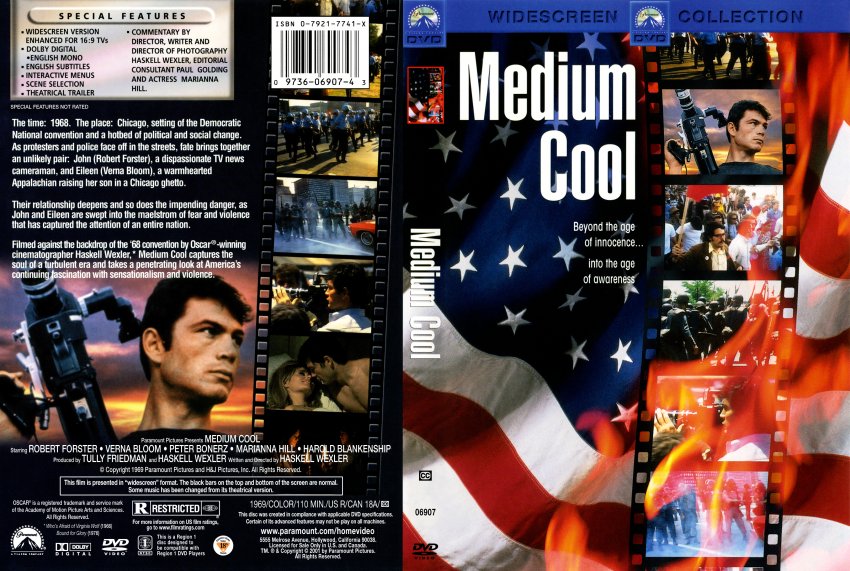
Medium Cool (1969) was a project shadowed by the FBI, saddled with a market-inhibiting X rating, and released with tepid support from a nervous studio. Not surprisingly, despite attracting very favorable reviews, it was not big hit at the box office. But over the years its reputation rose steadily, and eventually the movie found its proper place in the pantheon of the great films of the New Hollywood era. A worthy recipient, then, of the full Criterion Treatment, with a sparkling new special edition DVD and Blu-Ray; among its many features are a new interview with writer-director-cinematographer Haskell Wexler and the very welcome inclusion of (a slightly edited version of) the valuable but obscure 2001 BBC television documentary about the film, Look Out Haskell, It's Real."
As his triple-threat credits suggest, Medium Cool was very much Wexler's project. One of the hottest cinematographers in the business — just off an academy-award winning turn for Who's Afraid of Virginia Wolf (1966) and the big hit In the Heat of the Night (1967) — and with the emergence of a New American Cinema that took low-budget chances on new talent, Wexler was given a shot at the director's chair. And to his credit, the ambitious, confident cameraman didn't play it safe but threw everything he had into a risky project that he believed in.
With a background in documentary filmmaking, Wexler was influenced by a philosophy associated with the French New Wave (many of whose participants had similar apprenticeships), that challenged the reification of a divide between "fiction" and "non-fiction" films. Documentaries, they insisted, could not show an objective truth but offered only one interpretation of events, presented as a narrative following classical storytelling rules; realities that were, moreover, altered by the presence of cameras that produced self-consciousness and performance. Conversely, fiction films, especially those made on locations and with a new wave sensibility designed to reflect the personal experiences of their creators, were in many ways also documentary records of a certain type of reality. With Medium Cool, Wexler dove headlong into the blurry intersection between the two, embedding a fictional (and often improvised) story within very real situations. Often featuring non-actors going about their unscripted business, in many scenes only the principal players are aware that a movie is being made. At times those actors were exposed to real danger — placed, for example, in the midst of what the report of a National Commission would describe a few months afterwards as a "police riot." On the streets of Chicago, Wexler's camera became one among many that were capturing the events as they unfolded — and he was among those tear gassed, and was blinded for twenty-four hours.
The politically sensitive Wexler was irresistibly drawn from Hollywood back to his home town, Chicago, and the Democratic National Convention that would be held there in August 1968. Convinced that "something" would happen there — a violent confrontation, of some type, seemed certain — he crafted a story that could be interwoven into those events, unforeseeable in their specifics, as they unfolded. Wexler was later accused of incitement, but his cameras did little more than anticipate the inevitable explosion. Nineteen sixty-eight took care of the rest.
It was a very bad year. In January, the surprise Tet Offensive fundamentally altered the trajectory of the Vietnam War. The unprecedented communist strikes failed to achieve their military goals, but they made plain that no matter how many troops it poured in, the United States was not going to achieve its political objectives in the war, despite the unceasingly optimistic reports previously proffered by the Johnson Administration. (The U.S. would suffer over 4,700 combat deaths in the first three months of 1968. And with 500,000 American troops in the country, the war was being fought — at best — to a bloody stalemate.) In March, Johnson was embarrassed in the New Hampshire democratic primary by the strong showing of anti-war candidate Eugene McCarthy; within days, Robert Kennedy dropped into the race; within weeks, LBJ shocked the nation by dropping out. In April, Martin Luther King was assassinated. Kennedy, campaigning in Indianapolis, delivered the news to a stunned, mostly black audience, and delivered a short, moving speech appealing for calm. Scores of American cities erupted in riots that night, but Indianapolis was not one of them. In June, Kennedy would be assassinated moments after celebrating victory in the crucial California primary, his final words, "on to Chicago and let's win there," still hanging in the air as the shots rang out.
To Read the Rest
by Jonathan Kirshner
Bright Lights Film Journal
Medium Cool (1969) was a project shadowed by the FBI, saddled with a market-inhibiting X rating, and released with tepid support from a nervous studio. Not surprisingly, despite attracting very favorable reviews, it was not big hit at the box office. But over the years its reputation rose steadily, and eventually the movie found its proper place in the pantheon of the great films of the New Hollywood era. A worthy recipient, then, of the full Criterion Treatment, with a sparkling new special edition DVD and Blu-Ray; among its many features are a new interview with writer-director-cinematographer Haskell Wexler and the very welcome inclusion of (a slightly edited version of) the valuable but obscure 2001 BBC television documentary about the film, Look Out Haskell, It's Real."
As his triple-threat credits suggest, Medium Cool was very much Wexler's project. One of the hottest cinematographers in the business — just off an academy-award winning turn for Who's Afraid of Virginia Wolf (1966) and the big hit In the Heat of the Night (1967) — and with the emergence of a New American Cinema that took low-budget chances on new talent, Wexler was given a shot at the director's chair. And to his credit, the ambitious, confident cameraman didn't play it safe but threw everything he had into a risky project that he believed in.
With a background in documentary filmmaking, Wexler was influenced by a philosophy associated with the French New Wave (many of whose participants had similar apprenticeships), that challenged the reification of a divide between "fiction" and "non-fiction" films. Documentaries, they insisted, could not show an objective truth but offered only one interpretation of events, presented as a narrative following classical storytelling rules; realities that were, moreover, altered by the presence of cameras that produced self-consciousness and performance. Conversely, fiction films, especially those made on locations and with a new wave sensibility designed to reflect the personal experiences of their creators, were in many ways also documentary records of a certain type of reality. With Medium Cool, Wexler dove headlong into the blurry intersection between the two, embedding a fictional (and often improvised) story within very real situations. Often featuring non-actors going about their unscripted business, in many scenes only the principal players are aware that a movie is being made. At times those actors were exposed to real danger — placed, for example, in the midst of what the report of a National Commission would describe a few months afterwards as a "police riot." On the streets of Chicago, Wexler's camera became one among many that were capturing the events as they unfolded — and he was among those tear gassed, and was blinded for twenty-four hours.
The politically sensitive Wexler was irresistibly drawn from Hollywood back to his home town, Chicago, and the Democratic National Convention that would be held there in August 1968. Convinced that "something" would happen there — a violent confrontation, of some type, seemed certain — he crafted a story that could be interwoven into those events, unforeseeable in their specifics, as they unfolded. Wexler was later accused of incitement, but his cameras did little more than anticipate the inevitable explosion. Nineteen sixty-eight took care of the rest.
It was a very bad year. In January, the surprise Tet Offensive fundamentally altered the trajectory of the Vietnam War. The unprecedented communist strikes failed to achieve their military goals, but they made plain that no matter how many troops it poured in, the United States was not going to achieve its political objectives in the war, despite the unceasingly optimistic reports previously proffered by the Johnson Administration. (The U.S. would suffer over 4,700 combat deaths in the first three months of 1968. And with 500,000 American troops in the country, the war was being fought — at best — to a bloody stalemate.) In March, Johnson was embarrassed in the New Hampshire democratic primary by the strong showing of anti-war candidate Eugene McCarthy; within days, Robert Kennedy dropped into the race; within weeks, LBJ shocked the nation by dropping out. In April, Martin Luther King was assassinated. Kennedy, campaigning in Indianapolis, delivered the news to a stunned, mostly black audience, and delivered a short, moving speech appealing for calm. Scores of American cities erupted in riots that night, but Indianapolis was not one of them. In June, Kennedy would be assassinated moments after celebrating victory in the crucial California primary, his final words, "on to Chicago and let's win there," still hanging in the air as the shots rang out.
To Read the Rest
Saturday, August 17, 2013
Thursday, August 15, 2013
Harvard University Press Blog: Catherine MacKinnon on Lovelace
Catharine MacKinnon on Lovelace
Harvard University Press
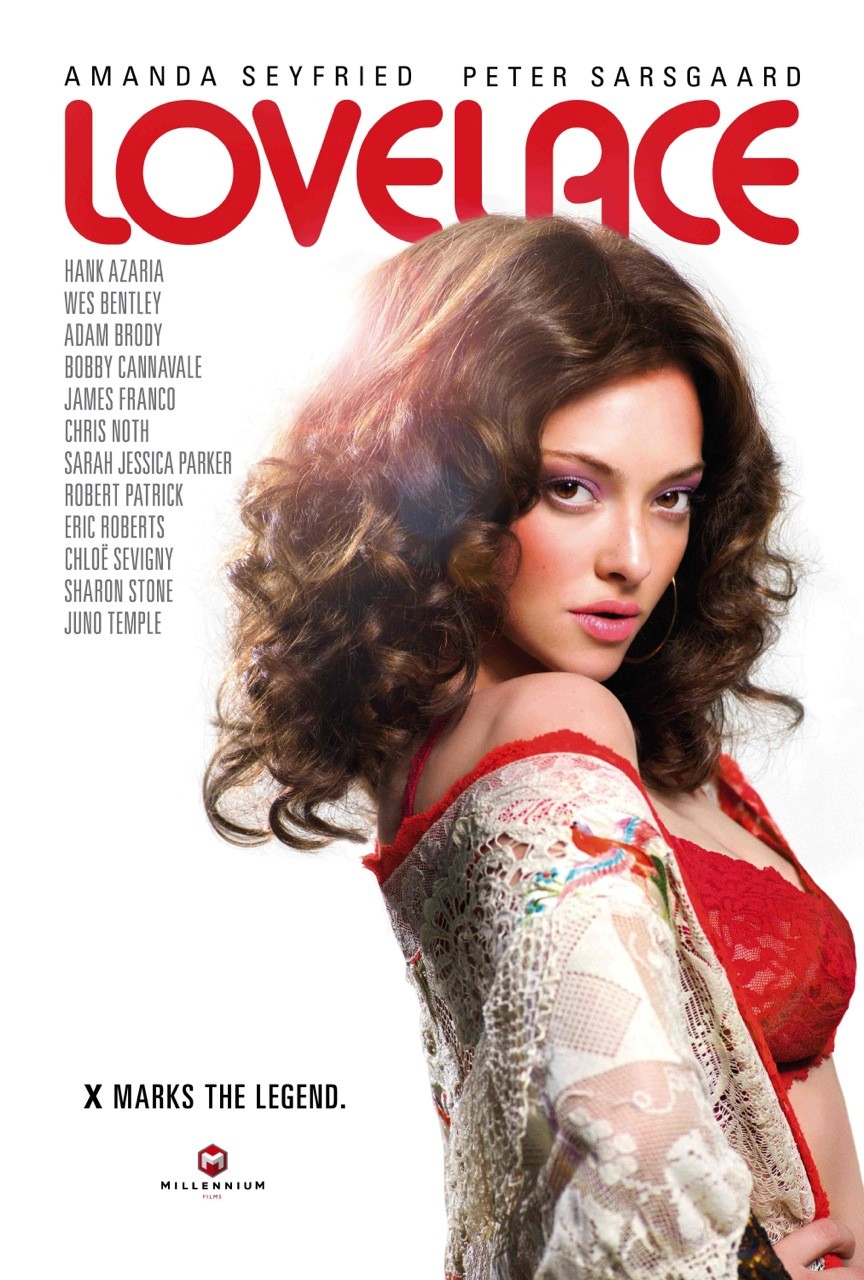
The pornographic film Deep Throat, released in 1972, was a cultural sensation whose star, “Linda Lovelace,” was said to put a girl-next-door face on the sexual revolution. But the actual life of Linda Boreman, as depicted in the new biopic Lovelace, was one of beatings, rape, and terror. Feminist legal scholar Catharine MacKinnon, author of such works as Toward a Feminist Theory of the State and Only Words, represented Boreman after she came forward with her story, and later, with Andrea Dworkin, pursued civil rights litigation as a means to fight pornography. We asked MacKinnon about Boreman, Lovelace, and the potential impact of the film.
To Read the Interview
Harvard University Press
The pornographic film Deep Throat, released in 1972, was a cultural sensation whose star, “Linda Lovelace,” was said to put a girl-next-door face on the sexual revolution. But the actual life of Linda Boreman, as depicted in the new biopic Lovelace, was one of beatings, rape, and terror. Feminist legal scholar Catharine MacKinnon, author of such works as Toward a Feminist Theory of the State and Only Words, represented Boreman after she came forward with her story, and later, with Andrea Dworkin, pursued civil rights litigation as a means to fight pornography. We asked MacKinnon about Boreman, Lovelace, and the potential impact of the film.
To Read the Interview
Wednesday, August 14, 2013
(Not) Love and Death: On Michael Haneke's Amour
(Not) Love and Death: On Michael Haneke's Amour
by Vlad Dima
Bright Lights Film Journal

Michael Haneke's latest film begins abruptly with the police breaking down the door to the apartment of the two octogenarian protagonists, Georges and Anne. The violent intrusion is underlined by the fact that we go, with no transition effect, from complete silence and black screen to noise and color. This type of intense narrative shift is common in Haneke's films. Long periods of apparent stability and quiet are followed by sudden spurts of incredible viciousness, in The White Ribbon (2009), Funny Games (2007, and 1997), or Caché (2005). I say "apparent" because violence lurks just beneath the narrative surface of Haneke's films, its presence felt constantly. So when it does emerge, it is not just for shock value. Oddly, it soothes us, providing momentary relief from the stress accumulated throughout the film. Child beatings, shootings, throat slashing are part of the director's repertoire that may force the audience into a sadistic position, but we avoid them in Amour. Or so it seems. Make no mistake, this is a violent film, but its ferocity comes from being forced to confront our own mortality. This is not a film about love, as the title purposely misleads us. This is a film about death, and worse, our death.
The inclusion of "us," the audience, in the film's thematic concerns commences immediately following the sequence in which the police find Anne's rotted body in the apartment. We begin with a flashback to a night when the couple went out to a classical music concert given by one of Anne's old students, Alexandre. In a beautiful fixed shot, we can see the spectators in the theater as they are waiting for the show to start. After a long moment, as the shot turns into a long take, we become aware of the missing reverse shot. The stage is never shown. We, the "real" audience, are suddenly facing the diegetic audience. We are the reverse shot. So we are pulled into the narrative through a counter-cinema artifice. The lack of reverse shot also points to the impossibility of suture; thus the very beginning of the film points to breakdowns, some literal (the door), some metaphorical (the apparatus of cinema and, by extension, life).
To Read the Rest
by Vlad Dima
Bright Lights Film Journal
Michael Haneke's latest film begins abruptly with the police breaking down the door to the apartment of the two octogenarian protagonists, Georges and Anne. The violent intrusion is underlined by the fact that we go, with no transition effect, from complete silence and black screen to noise and color. This type of intense narrative shift is common in Haneke's films. Long periods of apparent stability and quiet are followed by sudden spurts of incredible viciousness, in The White Ribbon (2009), Funny Games (2007, and 1997), or Caché (2005). I say "apparent" because violence lurks just beneath the narrative surface of Haneke's films, its presence felt constantly. So when it does emerge, it is not just for shock value. Oddly, it soothes us, providing momentary relief from the stress accumulated throughout the film. Child beatings, shootings, throat slashing are part of the director's repertoire that may force the audience into a sadistic position, but we avoid them in Amour. Or so it seems. Make no mistake, this is a violent film, but its ferocity comes from being forced to confront our own mortality. This is not a film about love, as the title purposely misleads us. This is a film about death, and worse, our death.
The inclusion of "us," the audience, in the film's thematic concerns commences immediately following the sequence in which the police find Anne's rotted body in the apartment. We begin with a flashback to a night when the couple went out to a classical music concert given by one of Anne's old students, Alexandre. In a beautiful fixed shot, we can see the spectators in the theater as they are waiting for the show to start. After a long moment, as the shot turns into a long take, we become aware of the missing reverse shot. The stage is never shown. We, the "real" audience, are suddenly facing the diegetic audience. We are the reverse shot. So we are pulled into the narrative through a counter-cinema artifice. The lack of reverse shot also points to the impossibility of suture; thus the very beginning of the film points to breakdowns, some literal (the door), some metaphorical (the apparatus of cinema and, by extension, life).
To Read the Rest
Monday, August 12, 2013
Irreversible (France: Gaspar Noé, 2002)

Irreversible (France: Gaspar Noé, 2002: 97 mins)
Britt, Thomas R. "Lower Depths and Higher Aims: Death, Excess and Discontinuity in Irreversible and Visitor Q." Cinephile 5.1 (2009)
Krautheim, Graeme. "Aspiring to the Void: The Collapse of Genre and Erasure of Body in Gaspar Noé’s Irreversible." Cinephile #4 (Summer 2008)
Palmer, Tim. Brutal Intimacy: Analyzing Contemporary French Cinema. Middletown, CT: Wesleyan University Press, 2011. [Professor has a copy]
Sharett, Christopher. "The Function of Film Criticism at Any Time." Film International (April 29, 2017)
Tuesday, July 16, 2013
Thursday, July 11, 2013
J. Hoberman: Prague's Savage Spring
Prague’s Savage Spring
by J. Hoberman
The New York Review of Books
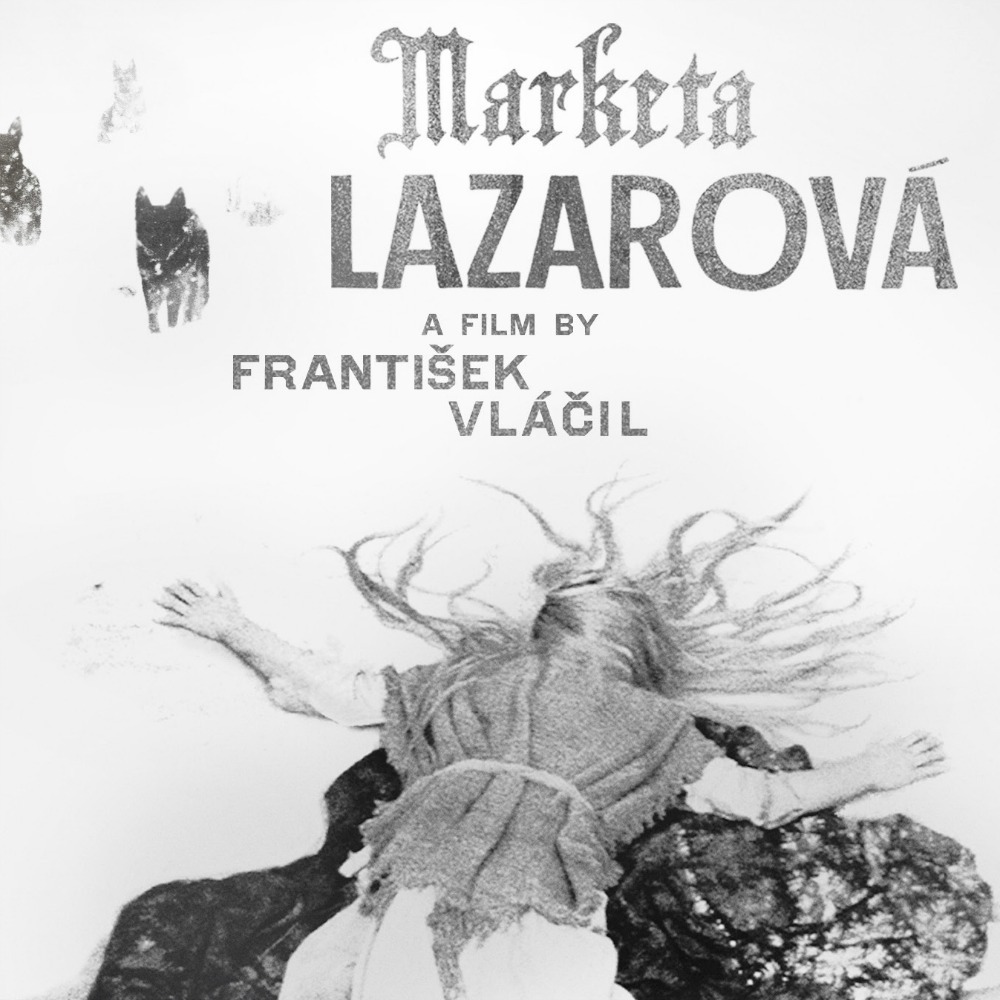
František Vláčil’s Marketa Lazarová (1967) is a virtual terra incognita. Thirty years after its release, it was named overwhelmingly by a poll of Czech critics and filmmakers as the best movie ever produced in Czechoslovakia, yet it remains little known outside its native land. Even as national epics go, Marketa Lazarová is unusually off-putting to outsiders. Violent and anti-heroic, the movie opens on a note of mordant self-deprecation (“This tale was cobbled together and hardly merits praise”) and goes on to represent thirteenth-century Bohemia as a backwater of Conan the Barbarian’s Hyperborean Age—the province of halfwits, rapists, and brutes.
Aside from repeated, if intermittent, screenings at the Brooklyn Academy of Music (and a relatively recent Vláčil retrospective at the Film Society of Lincoln Center), the movie has hardly been shown in the United States since its 1974 American release, for which it was shortened by over an hour. (Supremely unimpressed, The New York Times at the time characterized Marketa as “a colossal—and very near interminable—hodgepodge of medieval mayhem and myth, leaden symbolism and bloated piety,” featuring characters of “such unmitigated savagery that next to them the Visigoths would resemble a Red Cross mercy mission.”) Now released as a Criterion DVD in its full 165 minutes, Marketa Lazarová may finally reach a wider American audiences in all its sprawling glory.
Certainly, the film has an impressive pedigree. Vláčil adapted his labor of love from a 1931 novel by Vladislav Vančura (1891–1942), an expressionist Czech writer, avant-garde activist, independent filmmaker, and (per the movie’s credits) “people’s artist.” In addition to being a pre-war Communist (though he was expelled from the Party in 1939), Vančura was also a wartime martyr, one of many Czech partisans who were executed in reprisal for the assassination in Prague of Reichsprotektor Reinhard Heydrich.
Vančura’s Marketa Lazarová is a mock epic, depicting the savage feud between two rival brigand families, the pagan Kozlíks and nominally Christian Lazars, in the wilds of medieval Bohemia. Vančura was an almost untranslatable master of word play, and here invented a new Czech idiom, at once modernist and archaic, to create, in effect, a new shared geneology. The Czech writer and film historian Josef Škvorecký called Vančura’s lusty yarn a “novel of momentous importance in the history of Czech literature.” Evidently, the novel also had much to say to the young, multinational state that was interwar Czechoslovakia; despite its avant-garde underpinnings, it was his most popular and commercially successful work.
To Read the Rest
by J. Hoberman
The New York Review of Books
František Vláčil’s Marketa Lazarová (1967) is a virtual terra incognita. Thirty years after its release, it was named overwhelmingly by a poll of Czech critics and filmmakers as the best movie ever produced in Czechoslovakia, yet it remains little known outside its native land. Even as national epics go, Marketa Lazarová is unusually off-putting to outsiders. Violent and anti-heroic, the movie opens on a note of mordant self-deprecation (“This tale was cobbled together and hardly merits praise”) and goes on to represent thirteenth-century Bohemia as a backwater of Conan the Barbarian’s Hyperborean Age—the province of halfwits, rapists, and brutes.
Aside from repeated, if intermittent, screenings at the Brooklyn Academy of Music (and a relatively recent Vláčil retrospective at the Film Society of Lincoln Center), the movie has hardly been shown in the United States since its 1974 American release, for which it was shortened by over an hour. (Supremely unimpressed, The New York Times at the time characterized Marketa as “a colossal—and very near interminable—hodgepodge of medieval mayhem and myth, leaden symbolism and bloated piety,” featuring characters of “such unmitigated savagery that next to them the Visigoths would resemble a Red Cross mercy mission.”) Now released as a Criterion DVD in its full 165 minutes, Marketa Lazarová may finally reach a wider American audiences in all its sprawling glory.
Certainly, the film has an impressive pedigree. Vláčil adapted his labor of love from a 1931 novel by Vladislav Vančura (1891–1942), an expressionist Czech writer, avant-garde activist, independent filmmaker, and (per the movie’s credits) “people’s artist.” In addition to being a pre-war Communist (though he was expelled from the Party in 1939), Vančura was also a wartime martyr, one of many Czech partisans who were executed in reprisal for the assassination in Prague of Reichsprotektor Reinhard Heydrich.
Vančura’s Marketa Lazarová is a mock epic, depicting the savage feud between two rival brigand families, the pagan Kozlíks and nominally Christian Lazars, in the wilds of medieval Bohemia. Vančura was an almost untranslatable master of word play, and here invented a new Czech idiom, at once modernist and archaic, to create, in effect, a new shared geneology. The Czech writer and film historian Josef Škvorecký called Vančura’s lusty yarn a “novel of momentous importance in the history of Czech literature.” Evidently, the novel also had much to say to the young, multinational state that was interwar Czechoslovakia; despite its avant-garde underpinnings, it was his most popular and commercially successful work.
To Read the Rest
Wednesday, July 3, 2013
Time of the Wolf (France/Austria/Germany: Michael Haneke, 2003)

Time of the Wolf (France/Austria/Germany: Michael Haneke, 2003: 113 mins)
Bingham, Adam. "Long Night's Journey Into Day." Kinoeye 4.1 (March 2004)
Brunette, Peter. Michael Haneke. Urbana, IL: University of Illinois, 2010.
Frey, Mattias. "Great Directors: Michael Haneke." Senses of Cinema #57 (2010)
Grundman, Roy. A Companion to Michael Haneke. Malden, MA: Wiley Blackwell, 2010.
"Michael Haneke Studies: Videos, Podcasts and Article Links." Film Studies for Free (June 26, 2010)
Price, Brian and John David Rhodes, ed. On Michael Haneke. Detroit, MI: Wayne State University, 2010.
Sorfa, David. "Uneasy domesticity in the films of Michael Haneke." Studies in European Cinema 3.2 (2006)
Wheatley, Catherine. Michael Haneke's Cinema: The Ethic of the Image. NY: Bergahn Books, 2009. [BCTC Library PN 1998.3 H36 W44 2009]
Sunday, June 23, 2013
The Passion of the Christ (USA: Mel Gibson, 2004)

The Passion of the Christ (USA: Mel Gibson, 2004: 127 mins)
Aslan, Reza. "Zealot." Radio West (October 18, 2013)
Deacy, Chris. "A Time to Kill?: Theological Perspectives on Violence and Film." Theology and Film: Challenging the Sacred/Secular Divide. ed. Christopher Deacy & Gaye Williams Oritz. Malden, MA: Blackwell, 2008: 123-142. [Professor has copy]
Hauka, David. "'Christ That Hurts': Rewriting the Jesus Narrative -- Violence and the Language of Action Cinema in Mel Gibson's The Passion of the Christ Cinephile #2 (March 2006)
Phillips, Kendall R. "Religion: Mel Gibson's The Passion of the Christ." Controversial Cinema: The Films That Outraged America. Westport, CT: Preager, 2008: 127-152.[in BCTC Library PN1995,9 S284P452008}
Koresky, Michael. "Consider the Source: The Passion of the Christ." Reverse Shot (Spring 2004)
Reichert, Jeff. Jesus Christ: Superman (or Every Man for Himself and Armond Against All)>" Reverse Shot (Spring 2004)
Walsh, David. "Why has The Passion of the Christ evoked such a popular response in America?" World Socialist Web Site (March 5, 2004)
Walter, Brian. "Love In The Time of Calvary: Romance and Family Values in Crucifixion Films." Cineaction #88 (2012)
Moolaadé (Senegal/France/Burkina Faso/Cameroon/Morocco/Tunisia: Ousmane Sembene, 2004)

Moolaadé (Senegal/France/Burkina Faso/Cameroon/Morocco/Tunisia: Ousmane Sembene, 2004: 124 mins)
Bartlet, Olivier. "Adventures and Misadventures of African Cinema." Cinemas of the South (2006)
Borden, Amy. "At the global market: Ousmane Sembène’s Moolaadé and the economics of women’s rights." Jump Cut #53 (Summer 2011)
Bug Girl. Is My Vuvulzela Too Big?" Skepchick (June 20, 2010)
Coventry, Martha. "Making the Cut: It's a Girl! ... Or is it? When in doubt, why are surgeons calling the shots?" Ms. (Oct/Nov 2000)
Diop, Baba. "Ousmane Sembene: The Elder of Elders." Cinemas of the South (February 15, 2009)
Dotson-Newman, Nzinga. "Family Pressure on Young Girls for Genitalia Mutilation Continues in Kenya." Project Censored (2012)
Finney, Nikki. "The Greatest Show On Earth." (Read the poem/read an analysis of the poem/and listen to Nikki read it)
Halpern, Sue. "Breaking a Conspiracy of Silence." The New York Times Book Review 56.18 (November 19, 2009)
Marzana, Nicola. "The Art of Hunger: Re-Defining Third Cinema." 16:9 (November 2009)
Pride, Ray. "Woman is the Future of Man: Ousmane Sembene on Moolaade." Cinema Scope #21 (2004)
Santur, Hassan Ghedi. "On Being a Muslim in the West." Ideas (June 1, 2011)
Turkewitz, Julie. "Effects of Ancient Custom Present New Challenge to U.S. Doctors: Genital Cutting Cases Seen More as Immigration Rises." The New York Times (February 6, 2015)
Wednesday, May 15, 2013
Jose Teodoro -- Miss Bala: Nightmare State
Miss Bala: Nightmare State
Mexican director Gerardo Naranjo upends his filmmaking to show a country torn apart
by José Teodoro
Film Comment

Most existences on earth are marginal; the majority of people live on the edges of some kind of war. That the woman and man at the center of Miss Bala swing into each other’s orbit is itself no great coincidence. She’s Laura (Stephanie Sigman), the cheerful 23-year-old daughter of a Tijuana clothing merchant, and he’s Lino (Noe Hernandez), a taciturn, hard-eyed, soft-voiced drug trafficker about whose past we glean almost nothing. Both hail from humble if not desperate backgrounds; both aspire to transcend social determinism via archetypal routes to glamour and power: just as Lino asserts himself through terror and illegal commerce, Laura, however haphazardly, hopes to embody someone’s notion of the ideal woman by entering the Miss Baja California competition. Her first, fleeting encounter with him occurs when a dance party is turned into a massacre by Lino and his confederates. They meet again when she is so naïve as to seek out the police for help. In some perverse variation on the romantic comedy, the two keep crossing paths. Laura spends much of Miss Bala in a state of shock, while Lino seems to quickly intuit how best to exploit her allure while ostentatiously exchanging favors. He can ensure she wins the Miss Baja crown; she can serve as a gorgeous decoy in his criminal dealings.
A fascinating about-face for Mexican director Gerardo Naranjo, Miss Bala—co-written by Naranjo and Mauricio Katz and loosely based on actual events—surveys the current state of play in the drug war and offers commentary through a procession of absurdities, ironies, and largely uncontextualized mayhem. The gangsters and the DEA agents are equally menacing and seem to favor the same black SUVs; a beauty contest audience bursts into wild applause for a catatonic contestant; a flaming tire rolls by during an urban shoot-out as though it has emerged from a cartoon, traversing a stretch of asphalt covered in blood, bullet casings, and gasoline. Despite an incongruous, statistics-heavy closing title card, Miss Bala can no more be reduced to a hand-wringing docudrama about the escalation of Mexico’s drug-related violence than Take Shelter can be called a treatise on overcoming mental illness. These films are personal statements about individuals ceding control to forces beyond their comprehension—personal statements that just happen to dovetail nicely with urgent social issues.
“I’d arrived at a place where I felt like I wasn’t challenging myself that much,” says Naranjo, “so I decided to do something that I really didn’t know how to do. My previous films had a little bit of social commentary, but it was from a bourgeois point of view, trying to denounce commodification or conservatism. When I started to develop Miss Bala I felt I was responding to something far more urgent that’s in the air. To the fear.” Speaking during the Toronto International Film Festival last September, by which point Miss Bala had already seen its share of plaudits and detractors, Naranjo emphasized his latest film’s conspicuous shift in both style and content from his preceding work, whether the privileged teens playing out lovers-on-the-run melodrama under a mesh of Godardian alienation techniques (the deliriously stylish and witty 2008 I’m Gonna Explode) or privileged young adults negotiating disastrous relationships (the clever but flat 2006 Drama/Mex). “The directors I admire tend to change a lot between films,” says Naranjo. “Maybe not often with regards to form, but with subject matter for sure. Before, I felt that I was a filmmaker but had yet to really show it. I trusted so deeply in the present, in improvisation. I know I’m shifting. The question now, for me, has to do with whether or not I can maintain this.”
...
To Read the Rest
Mexican director Gerardo Naranjo upends his filmmaking to show a country torn apart
by José Teodoro
Film Comment
Most existences on earth are marginal; the majority of people live on the edges of some kind of war. That the woman and man at the center of Miss Bala swing into each other’s orbit is itself no great coincidence. She’s Laura (Stephanie Sigman), the cheerful 23-year-old daughter of a Tijuana clothing merchant, and he’s Lino (Noe Hernandez), a taciturn, hard-eyed, soft-voiced drug trafficker about whose past we glean almost nothing. Both hail from humble if not desperate backgrounds; both aspire to transcend social determinism via archetypal routes to glamour and power: just as Lino asserts himself through terror and illegal commerce, Laura, however haphazardly, hopes to embody someone’s notion of the ideal woman by entering the Miss Baja California competition. Her first, fleeting encounter with him occurs when a dance party is turned into a massacre by Lino and his confederates. They meet again when she is so naïve as to seek out the police for help. In some perverse variation on the romantic comedy, the two keep crossing paths. Laura spends much of Miss Bala in a state of shock, while Lino seems to quickly intuit how best to exploit her allure while ostentatiously exchanging favors. He can ensure she wins the Miss Baja crown; she can serve as a gorgeous decoy in his criminal dealings.
A fascinating about-face for Mexican director Gerardo Naranjo, Miss Bala—co-written by Naranjo and Mauricio Katz and loosely based on actual events—surveys the current state of play in the drug war and offers commentary through a procession of absurdities, ironies, and largely uncontextualized mayhem. The gangsters and the DEA agents are equally menacing and seem to favor the same black SUVs; a beauty contest audience bursts into wild applause for a catatonic contestant; a flaming tire rolls by during an urban shoot-out as though it has emerged from a cartoon, traversing a stretch of asphalt covered in blood, bullet casings, and gasoline. Despite an incongruous, statistics-heavy closing title card, Miss Bala can no more be reduced to a hand-wringing docudrama about the escalation of Mexico’s drug-related violence than Take Shelter can be called a treatise on overcoming mental illness. These films are personal statements about individuals ceding control to forces beyond their comprehension—personal statements that just happen to dovetail nicely with urgent social issues.
“I’d arrived at a place where I felt like I wasn’t challenging myself that much,” says Naranjo, “so I decided to do something that I really didn’t know how to do. My previous films had a little bit of social commentary, but it was from a bourgeois point of view, trying to denounce commodification or conservatism. When I started to develop Miss Bala I felt I was responding to something far more urgent that’s in the air. To the fear.” Speaking during the Toronto International Film Festival last September, by which point Miss Bala had already seen its share of plaudits and detractors, Naranjo emphasized his latest film’s conspicuous shift in both style and content from his preceding work, whether the privileged teens playing out lovers-on-the-run melodrama under a mesh of Godardian alienation techniques (the deliriously stylish and witty 2008 I’m Gonna Explode) or privileged young adults negotiating disastrous relationships (the clever but flat 2006 Drama/Mex). “The directors I admire tend to change a lot between films,” says Naranjo. “Maybe not often with regards to form, but with subject matter for sure. Before, I felt that I was a filmmaker but had yet to really show it. I trusted so deeply in the present, in improvisation. I know I’m shifting. The question now, for me, has to do with whether or not I can maintain this.”
...
To Read the Rest
Saturday, April 20, 2013
Hostel (USA: Eli Roth, 2005)
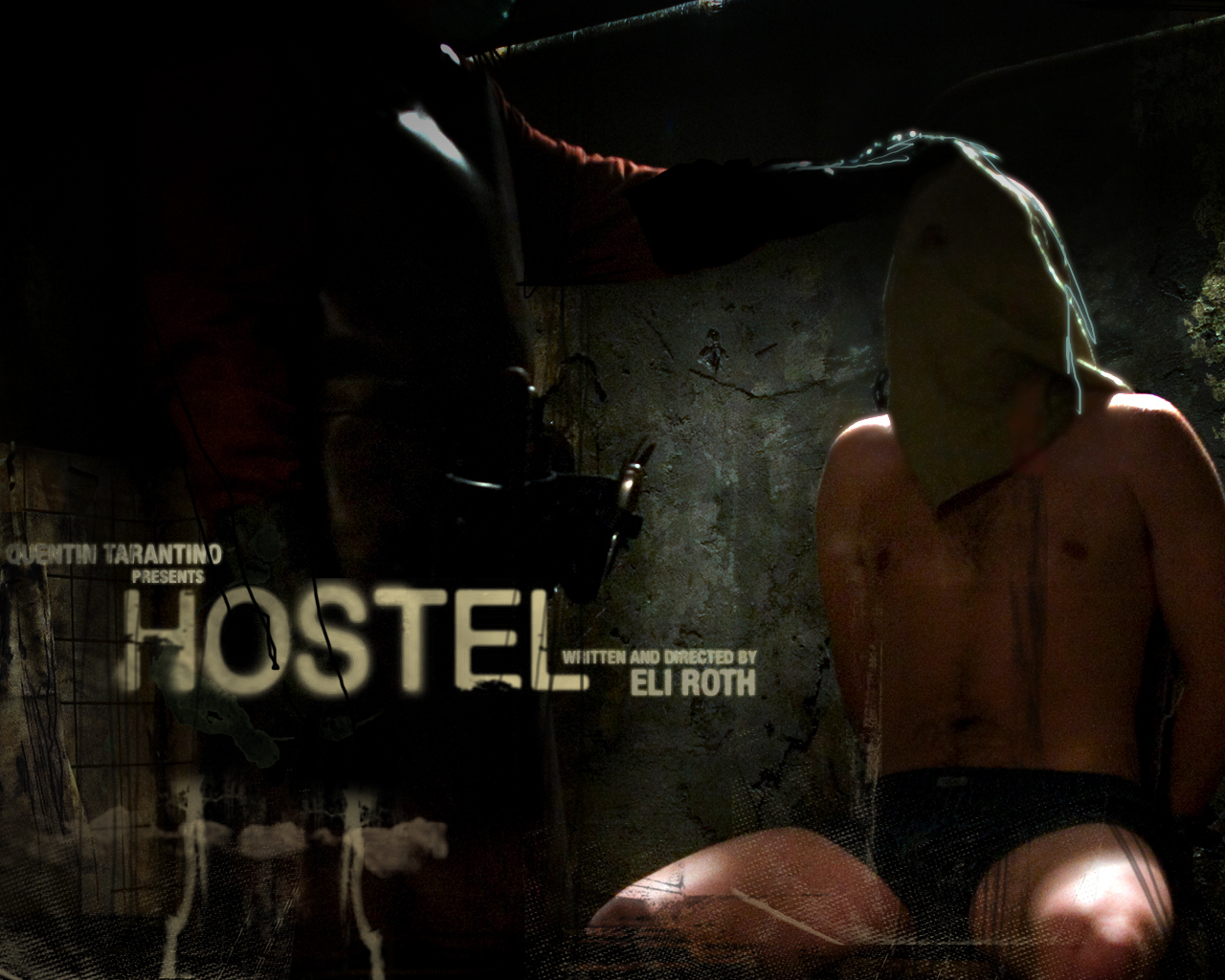
Hostel (USA: Eli Roth, 2005: 94 mins)
Burris, Gregory A. "Shocked and Awed?: Hostel and the Spectacle of Self-Mutilation." Cine-Action #80 (2010) [Available from your teacher]
Cromb, Brenda. "Gorno: Violence, Shock and Comedy." Cinephile #4 (Summer 2008)
Fletcher, Phoebe. “Fucking Americans”: Postmodern Nationalisms in the Contemporary Splatter Film #18 (December 2009)
Hilden, Julie. "Free Speech and the Concept of "Torture Porn": Why are Critics So Hostile to Hostel II?" Find Law (July 16, 2007)
Kleinhans, Chuck. "Imagining Torture." Jump Cut #51 (Spring 2009)
Kleinhans, Chuck, John Hess and Julia Lesage. "The Last Word: Torture and the National Imagination." Jump Cut #50 (Summer 2008)
Lesage, Julie. "Torture Documentaries." Jump Cut #51 (Spring 2009)
Murray, Gabrielle. "Images of Torture, Images of Terror: Post 9/11 and the Escalation of Screen Violence." Monash University Film and TV Studies (Podcast of a Lecture: March 20, 2008)
Rosler, Martha. "A Simple Case for Torture." Jump Cut #51 (Spring 2009)
Torture (Archive on Dialogic: The culture and politics of "torture.")
Subscribe to:
Posts (Atom)