Showing posts with label Stereotypes. Show all posts

Saturday, April 20, 2013

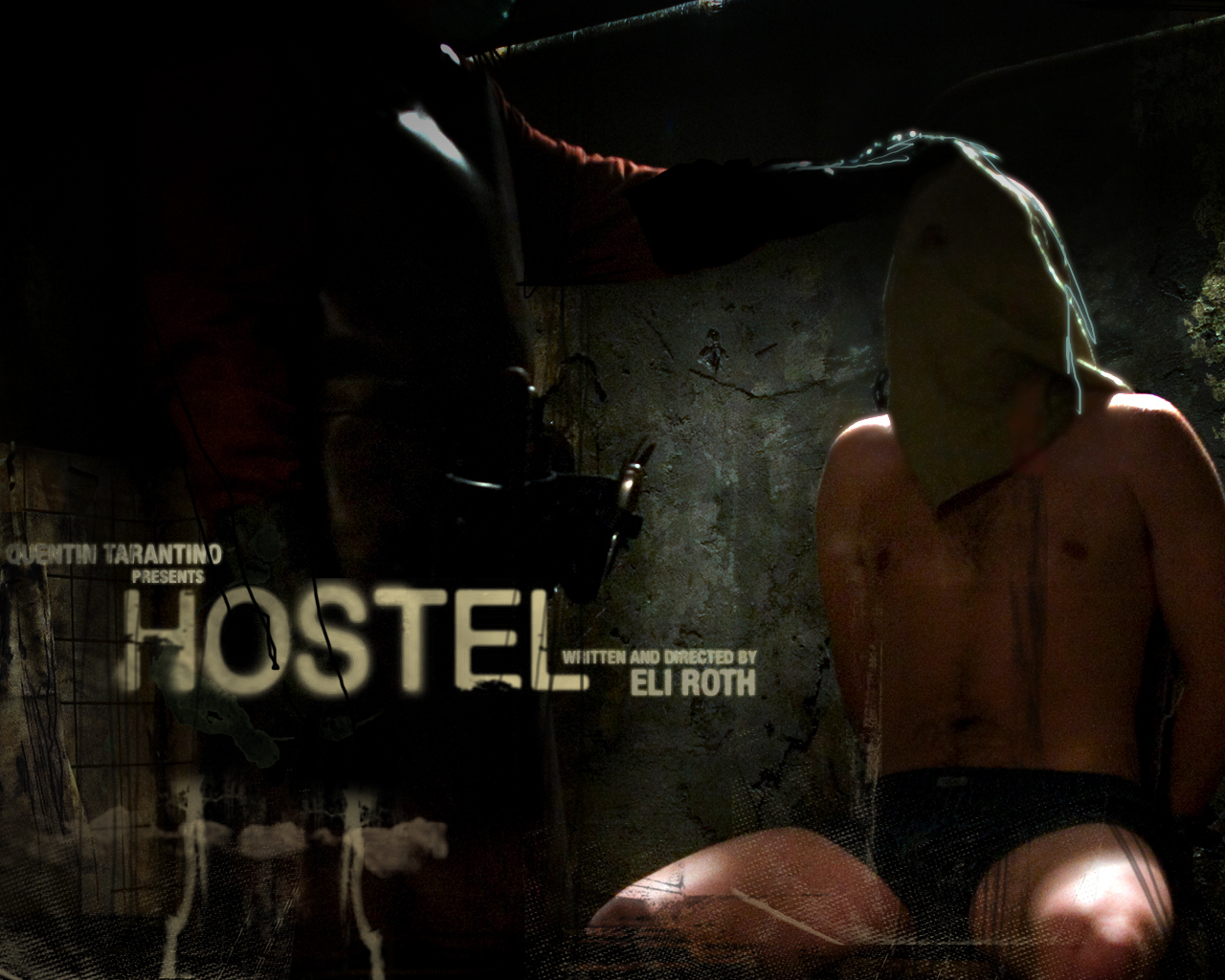
Hostel (USA: Eli Roth, 2005)


Hostel (USA: Eli Roth, 2005: 94 mins)

Burris, Gregory A. "Shocked and Awed?: Hostel and the Spectacle of Self-Mutilation." Cine-Action #80 (2010) [Available from your teacher]

Cromb, Brenda. "Gorno: Violence, Shock and Comedy." Cinephile #4 (Summer 2008)

Fletcher, Phoebe. “Fucking Americans”: Postmodern Nationalisms in the Contemporary Splatter Film #18 (December 2009)

Hilden, Julie. "Free Speech and the Concept of "Torture Porn": Why are Critics So Hostile to Hostel II?" Find Law (July 16, 2007)

Kleinhans, Chuck. "Imagining Torture." Jump Cut #51 (Spring 2009)

Kleinhans, Chuck, John Hess and Julia Lesage. "The Last Word: Torture and the National Imagination." Jump Cut #50 (Summer 2008)

Lesage, Julie. "Torture Documentaries." Jump Cut #51 (Spring 2009)

Murray, Gabrielle. "Images of Torture, Images of Terror: Post 9/11 and the Escalation of Screen Violence." Monash University Film and TV Studies (Podcast of a Lecture: March 20, 2008)

Rosler, Martha. "A Simple Case for Torture." Jump Cut #51 (Spring 2009)

Torture (Archive on Dialogic: The culture and politics of "torture.")

Wednesday, January 2, 2013

Cecil Brown: Tarantino's Django: Unchained - Hollywood’s Nigger Joke

Tarantino's Django: Unchained: Hollywood’s Nigger Joke
by Cecil Brown
Counterpunch


In order for a joke to work, Mary Douglas, the eminent British anthropologist, wrote that one had to have a social context for it to operate in. “We must ask what are the social conditions for a joke to be both perceived and permitted,” she asked in her wonderful little essay, “Jokes.”

“My hypothesis,” she writes“is that a joke is seen and allowed when it offers a symbolic pattern of a social pattern occurring at the same time.”

With Django: Unchained, the symbolic pattern–I’d call it historical context–is Hollywood itself. “If there is no joke in the social structure,” Mrs Douglas observed, “no other joke can appear.” In Hollywood, there are lots of jokes in the system!

The social pattern that allows Quentin Tarantino’s “Nigger joke” to work is set in the South, two years before the Civil War, but my point is that this is only a pretext for Hollywood itself.

Some critics, like Betsy Sharkey in the Times, think this film is a masterpiece. Sharkey calls it, “the most articulate, intriguing, provoking, appalling, hilarious, exhilarating, scathing and downright entertaining film yet.”

African American critic Wesley Morris hated it. He called it “unrelenting tastelessness — [...] exclamatory kitsch — on a subject as loaded, gruesome, and dishonorable as American slavery.”

Ishmael Reed, the novelist, pointed out how the Weinstein Company promoted an advertising campaign to get a black audience by promoting Jamie Foxx as the star. In fact, Foxx is only one of the stars, along with Christoph Waltz and Leonardo DiCaprio. As Reed points out, Foxx spends most of his time looking at Mr.Waltz and then looking at Mr. DiCaprio, with a puzzled look on his face, as if to say, What’s dese white folks, talkin ‘bout?

My aim in his essay is to examine the way in which the symbolic system is a reflection of the social system. “What are the social conditions for a joke to be both perceived and permitted,” Mrs Douglass wrote in that little essay, “Jokes.”

What are the social conditions that would permit Django to be the big howling, empty nigger joke that it is?

One of these social conditions, certainly, involves the relationship between black actors and Hollywood as a symbol of the plantation system.

In his review of the film, for example, Mr. Reed said that Sam Jackson, in the role of the conniving, omnipresent, evil slave, is “playing himself.”

If Jackson had not dominated the Hollywood system in such a sly way, then his role as Stephen, the master-worshipping house slave to Calvin Candie (Leonardo DiCaprio) would not have its loaded, edgy, uncanny realism. The plantation is called CandieLand (Candyland) and is meant to refer to Hollywood itself as a producer of entertainment (Candy). Get it?

If Jamie Foxx is not known in Hollywood as a resourceful hustler, who will play almost any role, then his part as the “bad nigger” Django would not be so compelling (and lubricous). If he was not the “New nigger on the block,” then the confrontation between him and Sam Jackson’s character, Stephen, the off-the-hook house slave, the scene would not be powerful (and dumb) at the same time.

The dramatis persona forms a homology with the enacted characters on the screen. The key that unlocks Tarantino’s sensationalistic mosaic is that it reveals the inner game of how the Hollywood studio and the plantation slave institution exploited black people.

To Read the Rest of the Essay
Wednesday, September 5, 2012

Lila Kitaeff: Three Kings -- Neocolonial Arab Representation

Three Kings: Neocolonial Arab Representation
by Lila Kitaeff
Jump Cut


...

Non-oppositional critique of the Gulf War

In general, Three Kings’ marketing and reception dwelt on its supposedly unconventional nature. By unconventional, I mean “oppositional” discourse and imagery in the sense of contrasting to those found in dominant cultural productions. Although I will argue that the film does not, in fact, deviate from a typical Hollywood film in its basic message and structure, Three Kings does occupy a somewhat tenuous position in terms of Hollywood-type unconventionality. At first glance, viewers might expect the film to be an action-packed adventure and war movie. The main actors are blockbuster action stars (with the exception of Spike Jonze, director of Being John Malkovich and several “Beastie Boys” videos). And director Russell’s previous films, Spanking the Monkey and Flirting with Disaster, were offbeat in their brand of dark comedy, if not particularly unconventional in form or plot.

Initially film reviewers considered the story original. They said this film had more to it than met the eye, that its message and structure differed from most Hollywood films. A typical review praised Three Kings for its “genre subversion, anarchic attitude and barbed political commentary… making cogent points about… America’s role as the world’s policeman.” This same reviewer even suggested that the film addressed “the amorality and lack of consistent principles in American foreign policy. No Hollywood film in memory has addressed such an issue” (McCarthy par. 4 and 18).

However, although Russell does make a certain social critique of the Gulf War, as I will explore below, it is based in mainstream rather than oppositional discourses. For example, he explained this as his goal:

Taking people’s perceptions of this war, and turning them on their head… all the assumptions that you had about this war need to be looked at and turned over, including the sense of satisfaction you had as a moral victor, as an American.


However, if one were to make an explanatory critique subverting mainstream perceptions of the Gulf War, one would have to take into account the struggle’s historical context and the economic and ideological interests behind U.S. intervention. Such an argument was made by Noam Chomsky and Michael Albert, for example, when they asserted that “the real reason for U.S. opposition to Iraqi occupation of Kuwait is… to keep Washington, Wall Street, and their allies in charge of setting oil prices” (par. 5). And as Chomsky and Albert further pointed out, the U.S. government also has an ideological interest in perpetuating militarism in order to maintain the status quo of military spending and interventionist foreign policy.

Three Kings does not offer this sort of explanatory critique. Instead, the film presents the protagonists as coming to a realization that the United States has failed to save Iraq and destroy Hussein’s regime. According to the film, the United States is mistaken not because it intervened in the Middle East but rather because it did not follow through in its mission to save the good Arabs and crush the bad Arabs, a mission perpetuating neocolonial ideals. The heroes of Three Kings, in terms of the film’s logic, right the wrongs of the United States by saving a small group of Iraqi civilians, thus reproducing “the [neo]colonialist structure of the heroes’ relation to the native… [to] sort out the problems of people who cannot sort things out for themselves” (Dyer 156).

Neocolonial themes and traditional cinematic themes

Neocolonial cinema encourages the spectator to identify with representations of the colonizing subject and, by partaking of the trajectory set up by the storyline, to posit the colonial project itself as desirable. For example, in the scene in which the U.S. soldier protagonists are shown first entering the village, the images largely present their point of view, inviting identification by literally allowing the spectator to see through their eyes. In this scene the Iraqi civilians are portrayed as dominated and submissive as they beg the Americans to stay and help them. Other Iraqis who want to fight seem incapable of acting on their own as they cry out, “The Americans are here. It’s okay to come out. We can fight Saddam!” Thus, all Iraqi civilians—those beaten down and those who are still resistant—are presented as entirely dependent on U.S. help.

As Shohat and Stam put it, such a scene functions to “mobilize” spectatorial desire to participate in the narrative line about the protagonists’successful “neo-colonial mission.” The mobilization of desire works in tandem with spectator positions. Just as the cinematic apparatus interpellates the viewer to identify with the characters and narrative, the desire for which the protagonists strive also becomes the viewer’s desire .

In its ties with other fictions, including novels, drama, and song lyrics, Three Kings integrates traditional U.S. cultural and cinematic themes, especially about the outlaw hero. The film also uses a common Hollywood script format for dealing with cultural crises, that of the “problem picture.” These script strategies further weaken the film’s critique of United States ideals. In terms of screenwriting, Robert Ray discusses narrative strategies common in Hollywood in which morally centered characters enact a drama against a background of contemporary social issues. This kind of script development is common in what Ray terms “problem pictures,” films that critique large social issues but ultimately have happy endings that belie those problems (147).

In films like these, the outlaw hero is a common character. Such a figure possesses his own moral code and works to “correct” socially unjust laws and authority figures (Ray 15). For example, as Richard Dyer describes the genre, in the Rambo movies that attempt to critique the Vietnam War, the protagonist Rambo is

doing the job… that the United States government should be doing. Thus he repeatedly upholds basic American values against the actuality of America” (Dyer 159-160).


In this way, Hollywood’s use of the outlaw hero as a solution to historical events distorts perceptions of those events as part of social history, that is, outside of their filmic portrayals (Ray 59-62).

To Read the Entire Essay

Saturday, April 28, 2012

Adam Cook: Drew Goddard's The Cabin in the Woods

Drew Goddard's "The Cabin in the Woods"
by Adam Cook
Notebook

"The horror film to end all horror films."
—Joss Whedon


The man wasn’t lying. It didn’t seem all that likely that he could deliver on that tongue-in-cheek statement, but Drew Goddard and Joss Whedon’s deconstruction of the genre is so complete and sophisticated, and the ending of The Cabin in the Woods literally shakes the foundation of the “horror film”—just before annihilating it altogether. Once the film approaches its conclusion, and the mechanics of the horror genre that have been manipulating the cabin in the woods have all been made explicit, the cine-commentary matches/exceeds that of Michael Haneke’s Funny Games, and a with sense of humor intact (“Funnier Games”). The key difference is that Goddard and Whedon do it with intelligence, wit and compassion in equal measure. The film is not condescending to its audience, but rather counts on their own knowledge, and, refreshingly, on their own playfulness. It would seem that Haneke would condemn the shameless voyeurism of the horror-viewer, whereas the filmmakers behind The Cabin in the Woods celebrate the fun of horror films while still indicting its more vapid sadistic tendencies seen in recent years. One senses a love and respect for humanity beaming through the final moments of Cabin, rather than the coldness Haneke purposefully substitutes for sincerity, in order to distance himself from his subject, even as he falls prey to the same dynamic between torturer, tortured, and viewer, that he seeks to chastise. Without the same deliberate “arthouse” tactics, Goddard and Whedon are self-reflexive at every turn, questioning the clichés and tropes the genre is built on. And they have so much fun doing it.

The film’s one central shortcoming may be its inability to work as a horror film itself. Goddard has a visual intelligence—in one sequence, he emulates J-Horror with smashing results—and successfully generates suspense, but the tension that drives the film comes from the mystery's unfolding. Cabin's strength is in its satire, and the film is too funny, too often, for its supposed scares to operate successfully. Nevertheless, if we can count it somewhere among horror films for categorical purposes it joins a shortlist of significant contemporary works in American cinema. Only Rob Zombie comes to mind (though Ti West has his supporters), whose recent Halloween films have challenged the slasher genre with doses of humanism, grotesque aesthetic beauty, and a punishing brutality not meant to satisfy sadistic desires. The inner-workings of the “horror film” are actually built into Cabin's narrative. In a secret facility, two normal looking men-in-ties, played by Richard Jenkins and Bradley Whitford, are working at some sort of control panel. They have access to actors, cameras, monsters, etc. Anything they need to reach their goal of having five twentysomethings meet their end in a cabin in the woods. These unsuspecting young people are not only lured and trapped but actually altered so as to become the stereotypes deemed necessary by the horror genre. They are stripped of their personalities, uniqueness and intelligence, which are replaced by archetypal models of “the slut”, “the athlete”, “the fool (stoner)”, “the scholar”, and, of course, “the virgin”. The so-called "slut" is, unbeknownst to her, forced to dye her hair blonde before the cabin excursion begins. The “athlete” is actually a sociology major dumbed down and costumed in a letterman jacket. The virgin is not so much a virgin, but as “The Director” (an alluring allusion, I realize) will elaborate near the film’s closing, those pulling the strings “work with what they have”. The five young people are afforded some freedom however. They unknowingly select what will kill them. Meanwhile, back at the facility, co-workers take bets on what it will be. Bradley Whitford's character hopes that it will be a Merman that will cruelly dispose of the victims. On multiple screens, these men observe as each character is killed, almost bored with what to them seems a merciless necessity.

To Read the Rest of the Response

More:

MUBI Forum discussion about The Cabin in the Woods

Thursday, January 26, 2012

Claudia Springer: Taken by Muslims -- Captivity Narratives in The Lives of a Bengal Lancer and Prisoner of the Mountains

Taken by Muslims: captivity narratives in The Lives of a Bengal Lancer
and Prisoner of the Mountains
by Claudia Springer
Jump Cut


Prisoner of the Mountains does not simply reverse the terms of typical Muslim captivity narratives and naively assert that all Russians are destructive and all Chechens are kindhearted. Quite the contrary: there are trigger-happy Chechens eager to kill the two captive soldiers, and a Chechen man shoots his own son for the offense of working for the Russian police. Their violence, though, is shown in the context of their motivations, not as resulting from sadistic impulses. On the Russian side, even the Commander seems to have a change of heart and indicates that he may be ready to trade Abdoul-Mourat's son, an event that is foiled when the son tries to escape and is shot. Rather than paint a simplistic picture, the film suggests that empathy becomes possible when people learn about the realities of others' lives.

In Vanya's friendship with Dina, we see the film reject Orientalist divisiveness and replace it with what philosopher Martin Buber calls an "I and thou" relationship based on nonjudgmental respect. Vanya and Dina overcome inherited cultural myths that would make them enemies and learn to perceive each other as individuals, not symbols. This is the type of connection called for by Czech theorist Vilém Flusser, who critiques the insularity of people who identify too strongly with their homelands—their heimats—to the point that they reject foreigners and anyone with unfamiliar customs. Flusser offers as a solution to intolerance the condition of the migrant, a person who is not anchored to any one place and who "carries in his unconscious bits and pieces of the mysteries of all the heimats through which he has wandered" (14). The migrant, Flusser writes, works on "the mystery of living together with others" and poses the following challenge to all of us:

"how can I overcome the prejudices of the bits and pieces of mysteries that reside within me, and how can I break through the prejudices that are anchored in the mysteries of others, so that together with them we may create something beautiful out of something that is ugly?" (15).

Prisoner of the Mountains gives us a glimpse of two people—Vanya and Dina—who break through prejudices and briefly create something beautiful. Their friendship develops awkwardly and tentatively, initiated by curiosity and followed by small acts of generosity, leading up to her secret visits to the deep pit within which Vanya is chained after his failed attempt to escape with Sacha. In addition to lowering bread and water to him on a rope, Dina informs him of his fate, standing above him at the edge of the pit: "My brother is dead. You have one more night to live." Her elevation indicates her power over him, but their conversation reveals mutual respect, she by acknowledging that he has a right to know what lies ahead, and he by responding patiently. Their cultural differences are apparent, because her idea of being helpful originates in her beliefs about the afterlife, which are meaningless to him, but his responses, while indicating his despair, avoid undermining her. She says, "Usually they throw the enemies' bodies to the jackals. But I will bury yours." He asks her to bring the key to release him. She says, "No. I will dig a wide grave for you. And you will see the Angel of Death. I'll put my necklace in the grave as your wedding gift. Maybe your soul will find a bride in heaven." He responds with a gentle smile: "I don't think so."

Later, she does bring him the key to his leg shackle after finding it hidden in a box while the film crosscuts to her father returning to the village with his son's body in the back of a truck. Before she throws the key to Vanya, she says to him, "Don't kill any more people, promise?" Her request represents a significant shift away from her former acculturated hatred for Russians as well as an attempt to break the cycle of revenge that has trapped both sides in the conflict. She has learned through her friendship with Vanya to respect life—everyone's life. Vanya responds in kind when he refuses to leave in order to protect her from punishment. Her father, Abdoul-Mourat, finds the two of them together at the edge of the pit and sends her home after scolding her for being more concerned about Vanya than about her own dead brother. But even Abdoul-Mourat—perhaps following his daughter's example—rejects vengeance when he lets Vanya go after marching him into the mountains.

Vanya's respect for Dina extends to the film's refusal to eroticize her. Even when she dances for him, she is not objectified; her dance is grave and earnest and shot from a respectful distance. She wears a headscarf and boots and an ankle-length red dress with a dark jacket. Her dance is accompanied by wailing diegetic music from a funeral procession winding its way through the village. She and the other Chechen women—most of them weather-beaten and wearing headscarves—are frequently seen at work. It is their labor, not their sexuality, that defines them. Dina is seen working with donkeys, preparing food, cleaning up, knitting—preparing for life as a village woman—and she calmly explains her future to Vanya before she dances for him. He asks her, "Did you get married yet?" She replies, "No." He says, "I would marry you." She says, "We cannot get married. I can get married next year. We marry early here." Later, when she returns to the pit to tell Vanya that he has one more night to live, she is dressed entirely in black to show that she is in mourning for her brother but also suggesting that she is preparing to mourn for Vanya, taking on the role of his widow although they have never even exchanged a kiss. She stands above him in her black robe, embodying the Angel of Death as well as the bride she speculates he might find in the afterlife. Their union is symbolic, impossible in the world they inhabit but indicative of the connection they have made.

The film also treats the Chechen landscape, customs, and music, all initially strange and unfamiliar to the Russian captives, with respect. Perched on rocky cliffs, the village is both precarious and solid, built of stone to withstand the ferocious winds. A song sung by the village children tells of the longevity of the Chechen culture and the inability of visitors to tolerate the wind. The film was shot on location in the Russian Republic of Dagestan, neighboring Chechnya, just twenty miles from where fighting was taking place at the time. (Ironically and sadly, the region's harsh conditions proved fatal for the actor Sergei Bodrov Jr. a few years later when he returned to direct a film and was killed by an avalanche.) The music, cinematography, and editing combine to emphasize endurance. But it is all obliterated at the end with the offscreen Russian assault. Vanya's inability to conjure up the villagers in his dreams symbolizes the military attack's total erasure of their existence, eliminating their history along with their future. Instead of exalting military might—as does The Lives of a Bengal Lancer—the film raises questions about the morality of bombing raids on civilian targets as a military strategy.

The final crucial element that sets this film apart is its slow, deliberate pacing, counteracting the speed with which the Bengal Lancers engage in their adventures. Unhurried panning shots linger over the mountains and valleys and the village's worn cobblestone streets. It takes time to overcome enmity, and Prisoner of the Mountains measures time very slowly. Its choices provide a cinematic model for relinquishing Hollywood's tired anti-Muslim clichés.[2]

To Read the Entire Essay