Showing posts with label Class. Show all posts

Sunday, January 12, 2014

Blue is the Warmest Color (France/Belgium/Spain: Abdellatif Kechiche, 2013)

“Few films dig so deeply (and with such sense of intimacy) into the complexities of human relations, the joys and pains of self discovery and the hurtful realisation that our bodies and mind can yearn opposite things.” — Fernanda Solórzano


Blue is the Warmest Color (France/Belgium/Spain: Abdellatif Kechiche, 2013: 179 mins)

Beauvoir, Simone de. The Second Sex (1949: PDF copy)

Bell, Nicholas. "Blue is the Color of My True Love’s Hair: Kechiche Takes Us Deep Sea, Baby." Ion Cinema (October 25, 2013)

Berger, John. The Ways of Seeing. (1972: Summary/outline of this important book that studied how we are position to observe people and objects in art)

Blue is the Warmest Color Critic's Roundup (No Date)

Blue is the Warmest Color (Graphic Novel) Wikipedia (No Date)

Dargis, Manohla. "Seeing You Seeing Me: The Trouble With Blue Is the Warmest Color." The New York Times (October 27, 2013)

Dayoub, Tony. "The 51st New York Film Festival #3." The Cinephiliacs (October 13, 2013)

Hudson, David. "Abdellatif Kechiche’s BLUE IS THE WARMEST COLOR: A coy coming-out drama this most definitely isn’t.” Keyframe (May 23, 2013)

---. "Abdellatif Kechiche’s BLUE IS THE WARMEST COLOR: 'The experience of the film transcends flaws both real and imagined.'" Keyframe (October 11, 2013)

Ildari, Max. "Blue Is the Warmest Color 2: A Response to Lorrie Moore’s Review in the New York Review of Books." Bright Lights After Dark (January 10, 2014)

Jones, Kristin M. ""Review: Blue Is the Warmest Color." Film Comment (2013)

Kennedy, A.L. "Sartre and the Individual." A History of Ideas (April 15, 2015) ["Writer AL Kennedy on Existentialist ideas about the individual. Jean Paul Sartre argued that, for humans, 'existence preceded essence'. This means that there is no blueprint or template from which to work - humans are free to make themselves up as they go along. Being an individual comes from the way you negotiate this freedom and the choices you make in the face of it."]
Lee, Janet. "'Blue Is The Warmest Color'." Neon Tommy (October 22, 2013)

Mayer, Sophie. "Blue is the Warmest Colour: This part-adaptation of Julie Maroh’s graphic-novel saga of a lesbian love affair trades a new voice for the same old male gaze." Sight and Sound (February 20, 2015)

McCahill, Mike. "21st Century Directors You Need to Know About: Abdellatif Kechiche." Movie Mail (May 2, 2014)

McNeil, Jeremiah. "Blue is the Warmest Color" Dialogic Cinephilia (December 21, 2013)

Moore, Lorrie. "Gazing at Love: Blue is the Warmest Color." The New York Review of Books (December 19, 2013)

Rich, B. Ruby. "Blue Is the Warmest Color: Feeling Blue." The Current (February 24, 2014)

Roberts, Soraya. "Blue Is the Warmest Color is about class, not just sex." Salon (November 3, 2013) ["Sex and sexuality are only half the film's story. It's also about lovers from different economic worlds."]

Sartre, Jean-Paul. "Existentialism is a Humanism." (Lecture given in 1946: published in Existentialism from Dostoyevsky to Sartre, ed. Walter Kaufman, Meridian Publishing Company, 1989) Marxist Archive (2005)

Stern, Marlowe. "‘Blue is the Warmest Color’: See What the Sex Scene Looks Like In the Graphic Novel." The Daily Beast (October 28, 2013)

Thompson, Martha. "Blue Is the Warmest Color 1: Unresolved Alienations of Class." Bright Lights After Dark (January 2014)

Zaman, Farihah. "The Pleasure Principle: Blue is the Warmest Color." Reverse Shot #33 (2013)


Wednesday, October 30, 2013

The American Nightmare (USA/UK: Adam Simon, 2000: 73 mins)

I just found the documentary "The American Nightmare" for a student writing about horror films -- highly recommended look at the epic changes in the genre in the early 70s.

Thursday, October 24, 2013

Cemetery Man (Italy/France/Germany: Michele Soavi, 1994)


Cemetery Man (Italy/France/Germany: Michele Soavi, 1994: 105 mins)
The excellently named Francesco Dellamorte (Rupert Everett, never better) is the moody caretaker of a small-town Italian cemetery where the dead just keep coming back to life, much to his annoyance. His everyday tedium of reading phone books and killing zombies is broken when he falls madly in love with a nameless beautiful widow. Unfortunately, she too perishes and returns as a zombie. A strange and entertaining erotic-horror-comedy, Cemetery Man (titled Dellamorte Dellamore in Italian) is required viewing for anyone of the sadboi persuasion. – Anna Bogutskaya
Dumas, Andre. "Cemetery Man: By Keeping Things the Same, We Can Change More Effectively." Horror Digest (March 30, 2011)

Kuersten, Erich. "The Shrouds of Soavi: Cemetery Man, The Devil's Daughter." Acidemic (September 8, 2016)

Seda, Alex. "Dellamorte Dellamore (a.k.a. Cemetery Man) Review." Midnight Showing (July 10, 2009)

"TGIF #5: CEMETERY MAN (aka DELLAMORTE DELLAMORE)" Adamantium Bullet (July 24, 2009)


Bring Your Own Doc: The Square Egypt's Revolution Documentary with Sundance Winner Director Jehane Noujaim

The Square, Egypt's Revolution Doc with Sundance Winner Dir Jehane Noujaim
Bring Your Own Doc

Fresh from winning the best World Documentary award at Sundance, The Square director Jehane Noujaim comes to BYOD to discuss her background in film and the process of telling the story of the Egyptian revolution. Jehane also shares the feeling she had of crawling through the dark while filming, and still managing to make a film that is recognized and appreciated.

GUEST BIO:

Jehane Noujaim is an Egyptian-American filmmaker who began her career with the MTV documentary series, Unfiltered. She left her post as segment producer to work with the legendary Chris Hegedus and D.A. Pennebaker on the film STARTUP.COM, which led to numerous nominations and won awards at The International Documentary Association, Philadelphia, Doubletake Documentary Film Festival, and a DGA Award.

Jehane followed the success of the film with the equally acclaimed CONTROL ROOM, which won awards at Full Frame, Boston Society of Film Critics, International Documentary Association, Seattle Film Critics, and Sydney Film Festival.

Continuing her work in both the United States and The Middle East, Jehane is back with a new film, THE SQUARE, depicting the revolution in Egypt's famous Tahrir Square. She is back, fresh from Park City, where she was awarded the World Documentary Audience Award at Sundance for her magnificent work on this film.

Tuesday, October 22, 2013

The "Business Card scene" from American Psycho

I'm an anarchist with a low monetary need and a low investment in hierarchical struggles that depend on investment in status symbols. I believe our actions and thoughts/beliefs/perspectives are more important than what we own (or how much we own).

There is nothing wrong with considering the exchange value along with the use value... but the anxiety and confusion is inherent in consumer fantasies that buying things will make you more important, interesting and/or intelligent. What if it isn't the right thing, what if people scoff about my purchase, what if.....

Reminds me of the brilliant scenes in American Psycho (the book and the film) that skewer this over-investment in material goods as symbols that construct a sense of one's importance:

To Watch the Business Card scene from American Psycho

Tuesday, September 3, 2013

Films We Want To See #33: Under the Skin (UK: Jonathan Glazer, 2013)


I read Michael Faber's mind blowing novel Under the Skin in 2002 while traveling through Europe -- it has always stayed with me (and definitely changed the way I perceive the world). I have just found out that Jonathan Glazer has made a film loosely adapted from the novel. This is one of those stories it is best to not know to much about the plot. I didn't when I read the book because I picked it up on impulse in a London bookstore:

Sunday, June 30, 2013

Yes (UK: Sally Potter, 2004)


Yes (UK: Sally Potter, 2004: 100 mins)

"Angelism and Rage: Sally Potter Links." Film Studies for Free (September 21, 2009)

Mayer, Sophie. "The Films of Sally Potter." Electric Sheep Magazine (October 1, 2009)

McKim, Kristi. "Great Directors: Sally Potter." Senses of Cinema #40 (July 2006)

Oppenheimer, Jean. "Production Slate: Yes - A Cross Cultural Romance." American Cinematographer (July 2005)

"Please go in two by two! Sally Potter's Fabulous Ark." Film Studies for Free (November 4, 2008)

Monday, May 13, 2013

John Engle -- August and Everything After: A Half-Century of Surfing in Cinema

August and Everything After: A Half-Century of Surfing in Cinema
by John Engle
Bright Lights Film Journal


...

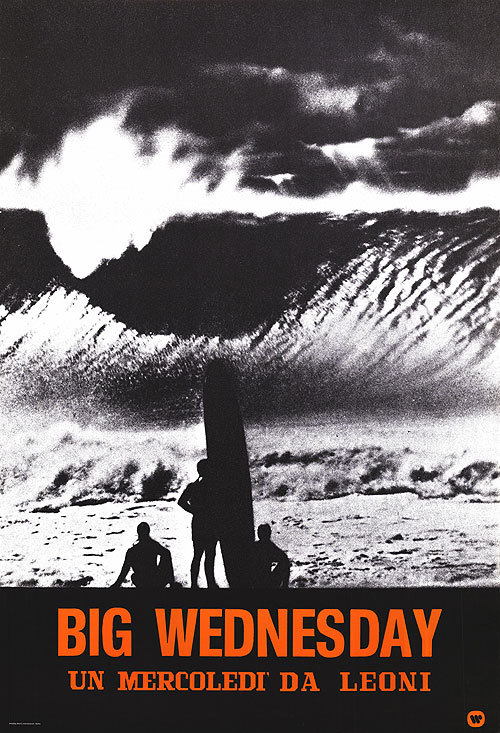
The tensions of these real and screen lives have in large part remained those of the film genre Gidget engendered. In the half-century since, from the Beach Party franchise and its early '60s spin-offs, through Big Wednesday, Point Break, Blue Crush, and many others, and on to Chasing Mavericks in 2012, filmmakers have gone to the sand a couple dozen times to produce narratives either focused expressively on surfing as sport or obsessive life choice, or at least as significant background informing and directing the film's meaning. The result has been movies that are often more incisively pertinent in their treatment of growing up, family tensions, a world of dizzying social change, race and class, and the seductive lure of commerce and appearance than their wicked barrels, great tans, and dudespeak might presage. With an eye to the meanings behind their attractive surfaces, I'll be looking at a handful of these, at least one from each decade, for the most part relatively high-profile examples of a film type that, if rarely the source of smash hits, has generally met with commercial success. Hardening firmly in place by the 1970s, a highly restrictive formula thereafter rules the near totality of these films: given their interest in young people on the cusp of adult life, it's not without a certain logic that they return repeatedly to such story elements as the wise mentor, the temptation to sell out, the preparation sequence, and the concluding challenge or competition. The remarks to follow will examine the genre's creation in the beach-craze '60s, then turn to its elaboration in what one might consider the main line of "classic" surf films, with their reliably formulaic focus on childhood's end; the conclusion will explore how, while remaining generally faithful to established patterns, certain films have brought within their widened purview broader social and political issues. With the exception of Bruce Brown's The Endless Summer (1966) — a documentary but vaguely story-centered and, in any case, so iconic as to be compulsory — all of the films under discussion are pure narratives. As such, they should be distinguished from the grainy collections of hot rides Greg Noll brought to stoked kids in countless multipurpose halls and their often lyrical or thrilling cinematic descendants. Whether big deals like Riding Giants and Step into Liquid, or smaller, edgier efforts like BS!, these documentaries are absolutely central to the surfing subculture and merit separate study, with their specialist target audience, their shared values, and visual assumptions.

Unsurprisingly perhaps, the first treatments of waveriding were documentary in nature and aimed at the widest possible audience. Like les Pathé-Frères, who put together 100 minutes on Le Surfing: Sport national des iles Hawaii in 1911, filmmakers in the first half of the century responded periodically to a curious public's hunger for images of exotic locales and practices that, even in the era of grand liners and early aviation, remained largely inaccessible. By the thirties, in any case, the word on surfing was getting out, if Hawaiian Holiday, the first cinematic narrative treatment of the sport, is any indication. In this 1937 Mickey Mouse featurette, Goofy recklessly challenges waves that, with the typical extraordinary range of Disney's animation teams, manage at once to be dumb funny, anthropomorphically nasty, and possessed of a frothy, sculpted loveliness drawn straight from Hokusai. While the cartoon is (somewhat speciously) considered the source of the term goofy-footed for surfers who, like its hero, lead with their right foot, its variation on the timeless theme of the arrogant individual chastised by a recalcitrant natural world in fact says little more about surfing than that it was just edging into the public consciousness. It would take the '50s and early '60s and the sport's headlong drop into popular culture before filmmakers would begin to recognize and exploit its rich visual and thematic possibilities.

And what visuals, for there is something basically unbelievable about human beings standing up on a tumbling wave, not to mention carving sleek sweeps and tight reverses back up its face. Cinematically, what's not to like about good-looking kids in a dream locale practicing a potentially dangerous sport that, even straight-on from a fixed shore location in black and white, films like a million bucks? Considered a moment, however, the scene is much more than its very pretty pictures, in large part because of the richly conflicting signals it emits. As sport, identity definer, and style locus, the surfing we have come to know these last decades is a space of, variously, big-money competition, reverent communication with the natural world, heavy partying, one-to-one confrontation with appalling physical force, proprietary localism of the ugliest sort, New Age self-discovery. It is a counterculture and a culture, a way to rebel and a way to grow up, and some live an entire adult life, work and all, still somehow rhythmed by the daily wave report. Surfing is the Beach Boys sweet in their striped Kingston Trio short-sleeve button-downs, and it's Dora dive-bombing kooks and bouncing checks. It's the garden and the salesmen who slither into it. Let's go surfin' now, everybody's learnin' how, we are joyfully urged, but to paddle out as the new guy is in fact to try entering the most closed of societies. Surfing can seem like an ocean of style, posing, and attitude, but out in the impact zone and beyond, the superficial abruptly washes off. To choose a short board or long, three fins or one, can be no less than to define different selves and value systems.

The very physical space offers an equally rich palette of thematic opportunity. From knee-high kids' stuff to Fukushima, pure fluid energy rears in defiance at sudden, solid resistance. The arriving swell is pattern and endless variety, or as Laird Hamilton says of the big ones in The Wave, "it's never the same mountain" (72). Proceeding in stately sequence, breakers seem all ruler-edged order, but of course they are also sites of chaos and fear. There the simple can become "in practice immediately complex," writes Woolf in To the Lighthouse, "as the waves shape themselves symmetrically from the cliff top, but to the swimmer among them are divided by steep gulfs, and foaming crests." Wild swings of perspective rule the sand as well, for what place is more one for sun-drenched, thought-free lotus-eating than the beach. Yet on that thin strip of dry land the tragic drama of our collective addiction to fossil fuels will play out first. And even carefree Waikiki lies hard by an ocean's unfathomable mass with its troubling, timeless reach of myth and suggestion. It is on the shore after all that Wordsworth rejects that world that is too much with us, yearning seaward to affirm the deeper truths of Proteus and Triton. The beach is just the beach, and it is much more than that. The greatest of the wavewriters, Daniel Duane, recognizes the way the surf scene can encode paradox, locate that sweet spot where the deeply complex and the unreflective simple both somehow find their footing.

...

To Read the Entire Essay

Monday, April 8, 2013

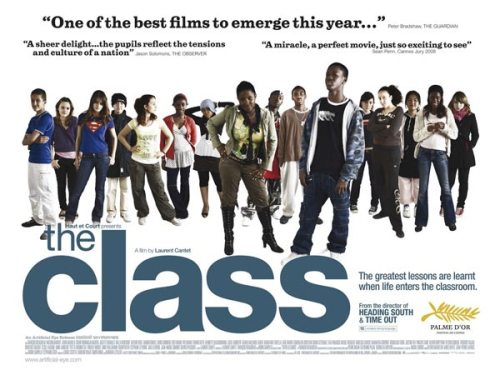
The Class (France: Laurent Cantent, 2008)


The Class (France: Laurent Cantent, 2008: 128 mins)

Ashbury, Roy. "Schools and Teachers." Understanding Representation. ed. Wendy Helsby. London: BFI, 2005: 51-74. [Available in BCTC library PN1995 U4977 2005]

Chen, Lu. "I Hate Mathematics and Racists." The Brooklyn Rail (March 2009)

Livingston, Jessica. "Global capital’s false choices in the films of Laurent Cantet." Jump Cut #53 (Summer 2012)

Wednesday, January 2, 2013

Erin Aubry Kaplan: 'Django' an unsettling experience for many blacks

'Django' an unsettling experience for many blacks
by Erin Aubry Kaplan
LA Times

Quentin Tarantino's slave-era spaghetti western has some questioning the propriety of using a still-festering period of U.S. history as a platform for a bloody, profanely comic pop entertainment.

Tracey White's initial impression of "Django Unchained," Quentin Tarantino's new slave-era shoot-'em-up extravaganza, could be summed up in three words: smart, funny and ugly. Sitting through a recent screening in Beverly Hills, the L.A. costume designer was mostly absorbed and found herself laughing aloud at particularly outrageous moments.

But White, who is black, said her feelings evolved significantly. Two days after reflecting on the matter of slavery and Tarantino's treatment, she pronounced the movie mostly ugly.

"He [Tarantino] gets a good product out of it in terms of wit and a visual look," said White. "But when it was over I found myself wondering, 'What is he trying to do?' I enjoyed the movie when I was in there, but I still have a problem with Tarantino when he deals with our race."

White will certainly not be alone among African Americans in her ambivalence about the gleefully outrageous film. While "Django" has nabbed almost uniformly warm reviews and four NAACP Image Award nominations (including for best picture), the fact is that it is an extremely Hollywood-ized vision of a critical black American experience.

Some blacks are already calling the revenge-fantasy movie, especially its graphic and highly stylized violence, insensitive, exploitative and ahistorical. Filmmaker Spike Lee, a longtime critic of Tarantino, said this month that he refuses to see the movie, and calls his spaghetti-western approach to slave history "disrespectful."

Many moviegoers will know something of what they're getting into. Violence and the liberal use of black idioms and so-called urban culture are Tarantino hallmarks, notably in early films such as "Pulp Fiction" and "Jackie Brown," and they've always stirred controversy. But this movie is different because it mines slavery, the complicated source material for so much black culture and fountain of violence in American history.

It is an institution whose horrors need no exaggerating, yet "Django" does exactly that, either to enlighten or entertain. A white director slinging around the n-word in a homage to '70s blaxploitation à la "Jackie Brown" is one thing, but the same director turning the savageness of slavery into pulp fiction is quite another.

To Read the Rest of the Article

Cecil Brown: Tarantino's Django: Unchained - Hollywood’s Nigger Joke

Tarantino's Django: Unchained: Hollywood’s Nigger Joke
by Cecil Brown
Counterpunch


In order for a joke to work, Mary Douglas, the eminent British anthropologist, wrote that one had to have a social context for it to operate in. “We must ask what are the social conditions for a joke to be both perceived and permitted,” she asked in her wonderful little essay, “Jokes.”

“My hypothesis,” she writes“is that a joke is seen and allowed when it offers a symbolic pattern of a social pattern occurring at the same time.”

With Django: Unchained, the symbolic pattern–I’d call it historical context–is Hollywood itself. “If there is no joke in the social structure,” Mrs Douglas observed, “no other joke can appear.” In Hollywood, there are lots of jokes in the system!

The social pattern that allows Quentin Tarantino’s “Nigger joke” to work is set in the South, two years before the Civil War, but my point is that this is only a pretext for Hollywood itself.

Some critics, like Betsy Sharkey in the Times, think this film is a masterpiece. Sharkey calls it, “the most articulate, intriguing, provoking, appalling, hilarious, exhilarating, scathing and downright entertaining film yet.”

African American critic Wesley Morris hated it. He called it “unrelenting tastelessness — [...] exclamatory kitsch — on a subject as loaded, gruesome, and dishonorable as American slavery.”

Ishmael Reed, the novelist, pointed out how the Weinstein Company promoted an advertising campaign to get a black audience by promoting Jamie Foxx as the star. In fact, Foxx is only one of the stars, along with Christoph Waltz and Leonardo DiCaprio. As Reed points out, Foxx spends most of his time looking at Mr.Waltz and then looking at Mr. DiCaprio, with a puzzled look on his face, as if to say, What’s dese white folks, talkin ‘bout?

My aim in his essay is to examine the way in which the symbolic system is a reflection of the social system. “What are the social conditions for a joke to be both perceived and permitted,” Mrs Douglass wrote in that little essay, “Jokes.”

What are the social conditions that would permit Django to be the big howling, empty nigger joke that it is?

One of these social conditions, certainly, involves the relationship between black actors and Hollywood as a symbol of the plantation system.

In his review of the film, for example, Mr. Reed said that Sam Jackson, in the role of the conniving, omnipresent, evil slave, is “playing himself.”

If Jackson had not dominated the Hollywood system in such a sly way, then his role as Stephen, the master-worshipping house slave to Calvin Candie (Leonardo DiCaprio) would not have its loaded, edgy, uncanny realism. The plantation is called CandieLand (Candyland) and is meant to refer to Hollywood itself as a producer of entertainment (Candy). Get it?

If Jamie Foxx is not known in Hollywood as a resourceful hustler, who will play almost any role, then his part as the “bad nigger” Django would not be so compelling (and lubricous). If he was not the “New nigger on the block,” then the confrontation between him and Sam Jackson’s character, Stephen, the off-the-hook house slave, the scene would not be powerful (and dumb) at the same time.

The dramatis persona forms a homology with the enacted characters on the screen. The key that unlocks Tarantino’s sensationalistic mosaic is that it reveals the inner game of how the Hollywood studio and the plantation slave institution exploited black people.

To Read the Rest of the Essay

Monday, December 31, 2012

Julia Leyda: "Something That Is Dangerous and Arousing and Transgressive" - An Interview with Todd Haynes

"Something That Is Dangerous and Arousing and Transgressive": An Interview with Todd Haynes
by Julia Leyda
Bright Lights Film Journal


JULIA LEYDA: You've done several movies that are very clearly woman's films, but the movie that I am most fascinated with in terms of gender is Velvet Goldmine, which is not usually interpreted in that context.

TODD HAYNES: No, except it's probably gotten the strongest female fan base of any of my films. And what's wonderful for me is to see new generations of young women, even as we think we progress as a society and there are new options available to each new generation that seem to be catering to that market more acutely, still Velvet Goldmine offers that market something that they're not getting elsewhere. I always love it when girls come up to me at festivals and that's the one, that's the movie that really turned them around.

JL: I'm interested in how you use the trope of playing with dolls in Superstar and Velvet Goldmine as a way to figure gender, embodiment, desire, identification. You said in an interview that playing with dolls is what you're doing in Velvet Goldmine, using it as a metaphor for the filmmaking process, to play with the characters of the idols more than making an actual biopic about bisexual pop stars. So what about the female characters in Velvet Goldmine? Fans, rock and roll girls like Mandy — talk a bit about them.

TH: Interesting question. The character of Mandy was probably one of the hardest roles I've ever had to cast. We did a really thorough, international search for who could play Mandy. When I look back on the experience, I'm amazed at how many actresses agreed to read for the role who don't often do so. I think what was difficult about Mandy was that she, and the Angela Bowie template for that character, harkened back to a kind of performative femininity of which there are very few contemporary examples anymore. I see it as the Patti Smith divide in terms of rock and roll and public depictions of femininity, whose image emerged finally, after so many variations on the codified mannerisms that were available to women in midcentury American film, for instance, and popular music (although there have always been interesting deviations from this). I think over time a lot of the affectations associated with performing femininity had fallen away, to the point where you came to this iconic figure of Patti Smith, whom I see as similar in a way to the Jude figure in I'm Not There, a very androgynous, more masculine-identified figure. For young actresses reading the role of Mandy it became clear that recent examples of that kind of almost camp presentation of an affected, theatrical persona were very hard to locate; I think of Liza Minnelli, and maybe Parker Posey was one of the later examples, of almost a gay male idea of femininity.

One thing that was very interesting about Angela Bowie is the way she navigated the English and American influences and her accent would come and go, and that was one of the things we wanted to incorporate into the performance, but that's very tough on an actor. We wanted to make it understood that it's a mutable way of fixing into each culture with some fluidity. I mean, there's no question that Angela Bowie was a central driving engine — her autobiography is amazing, and it's supported by most of the documentation and oral histories of those years — in the transformation of David Bowie, who was experimenting with different kinds of feminine representations but ultimately fixed on this Warhol-infused figure of the Ziggy Stardust character. It was really Angela Bowie who championed these kinds of characters, part of the second-generation Warhol clan, who made their way to the UK and appeared in this play Pork in 1971. They just loved her and she loved them, and in a weird way Bowie was sort of a spectator, an observer of this love and energy. And I think, based on what she wrote in her book and other documentation, she was very interested in the gay liberation movement that was burgeoning at the time and she wanted to appropriate it, take it on, and become the spokesperson in a rock and roll vernacular for those ideas.

I don't know if this relates directly to doll-playing except that it really might be the last time that you see an active female figure freely utilizing artificial terms of self-expression and persona in an unembarrassed, unabashed, almost radical way. That was in a way the fascinating counterpart to the more aloof, silent, objectified figure that Bowie assumed as Ziggy Stardust. Of course, there was also that hardcore influence from the American music that he loved — the Stooges, the MC5, and the Velvet Underground and Lou Reed — as the final ingredient to give it that kind of duality, the cross between English musical traditions and this American hardcore, a direct assault. He needed both of those, but there was still a kind of passivity and object-ness of that figure that seemed more quiet, and more comfortable being an image, an idealized beautiful façade that people could project onto; whereas Angela Bowie was active, pulling the strings and moving the levers — in that way, I think, making him up so that he was the doll that she was playing with. So a lot of that energy and that fire and fearlessness I think could be attributed to her.

To Read the Rest of the Essay

Thursday, November 29, 2012

Marilyn Adler Papayanis: Sex on the Beach - The Yin Yang of Female Sex Tourism in Two Films

Sex on the Beach: The Yin Yang of Female Sex Tourism in Two Films
by Marilyn Adler Papayanis
Bright Lights Film Journal


With the recent screening of Ulrich Seidl's Paradise: Love at the 2012 Cannes Film Festival, the spectacle of female sex tourism has washed up, once again, on the shoals of popular culture. According to reviewers, it is not a pretty sight. Women who travel to the spaces peripheral to "modernity" and, by the way, have sex with the natives are not rare; however, in the continuum of capital expansion that stretches from colonialism to globalization, such practices tend to lose their luster as a kind of radical cultural immersion. For men, of course, such sexual adventurism would hardly qualify as a narrative with anything new to say. The notion, however, that women would travel to remote or less developed parts of the world for the express purpose of having sex with men who are, in many cases, younger and poorer than they are seems to cut against the grain. Yet many studies show this to be the case. Whether characterized as "sex" tourism (commercial sex with the locals) or "romance" tourism (commercial sex with the trappings of a "real" relationship), this practice has inspired a good deal of academic research in the social sciences and in popular literature as well. In her 2006 book Romance on the Road: Traveling Women Who Love Foreign Men, journalist Jeanette Belliveau describes her subjects as "sex pilgrims." According to the Amazon review, her book is "the complete reference for anyone who wants to learn about a hidden phenomenon that affects hundreds of thousands of traveling women and foreign men: Instant vacation love affairs that banish loneliness, provide cultural insights, offer one-on-one, hand-to-hand foreign aid to the world's poor, create international children and sometimes even change the course of history."

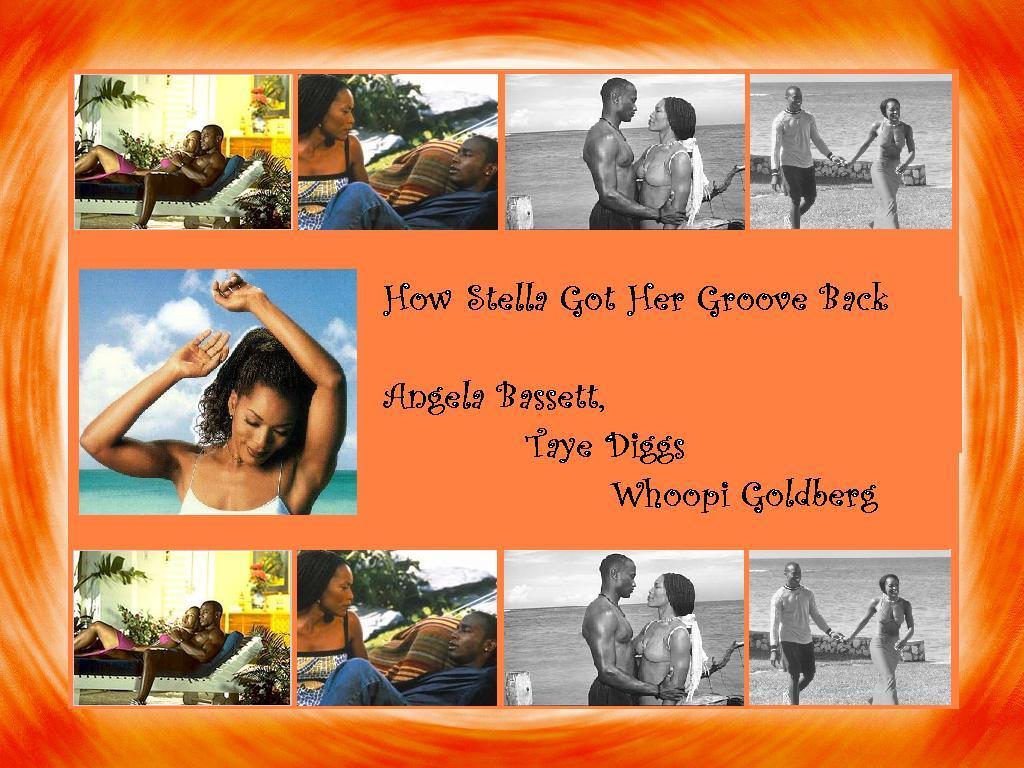
Who can beat that? I believe, however, that the representation of female sex tourism in the cultural imagination is also worthy of study, as such depictions reveal a great deal about the anxieties aroused by the "aging" woman's sexuality. The staging of this cultural moment is explored in two radically different films, both, coincidentally, derived from works of fiction: the breezy How Stella Got Her Groove Back (1998), based on the book by Terry McMillan, and the far more disturbing French film Heading South (2005), based, in large part, on a short story by the Haitian writer Dany Laferrière. Both films indulge the notion that sex in the tropics with a dark-skinned exotic youth is all it takes to cure the malaise of the older woman. In one sense, the autonomy of the woman traveler is a real marker of progress. Sadly, though, the representation of female empowerment in these films is either complicit with racist attitudes still fraught with the lingering spirit of colonialism (Heading South) or in thrall to patriarchal norms (Stella.) In the former, sex tourism is punished; in the latter, it is celebrated.

We learn from the literature that women who sleep with the locals are not a uniform class. They vary in age and in their choice of destination; they vary in terms of their motivations and attitudes toward both their exotic partners and the imaginative geographies in which their partners are embedded. Improbably, for example, the Sinai is a popular venue for cross-cultural couplings. Some "ethnosexual" boundary crossings appear to pass unnoticed, while others are more disturbing, usually because they involve pairings between privileged white tourists of a certain age and marginal youths who navigate the interstices of the official institutions of tourism. Joane Nagel first used the term "ethnosexual" to describe "the intersection and interaction between ethnicity and sexuality and the ways each defines and depends on the other for its meaning and power" (10). In the Americas, Jamaica, the Dominican Republic, and Costa Rica are popular venues for the pursuit of ethnosexual adventurism. These are destinations where the opportunity for women to have sexual or romantic liaisons with exotic Others further complicates the shadowy social relations in the "contact zone" where, for centuries, sexual commerce between male travelers and the natives, male or female, have followed, roughly, the contours of imperial power. The term "contact zone" was coined by Mary Louise Pratt in her groundbreaking study Imperial Eyes: Travel Writing and Transculturation to describe "social spaces where disparate cultures meet, clash, and grapple with each other, often in highly asymmetrical relations of domination and subordination, like colonialism, slavery, or their aftermaths as they are lived out across the globe today" (3).

To Read the Rest of the Essay

Wednesday, November 28, 2012

Aaron Bady: Lincoln Against the Radicals

Lincoln Against the Radicals
by Aaron Bady
Jacobin


...

In short, if you widen your field of view, you will discover that W.E.B. Du Bois argued a century ago—and as the historical scholarship has increasingly come to agree—that slavery was already all but dead by the time Lincoln got around to declaring himself an abolitionist, far less because the North gave slaves their legal freedom than because they had already effectively taken it, because it had become the new status quo that would have required force to dislodge. At the end of the Civil War, with the South defeated, the choice for the north was not to end slavery or leave it; the choice was to ratify the fact that it was already dead or to re-impose it by military force.

In short, the idea that the white north “gave” freedom to the slaves draws from and reinforces an attractively simple and flattering myth, one which formed around the old historiography of the period like a noose cutting off oxygen to the brain: the myth that black slaves were rendered passive by their condition, and that—absent an outside force interrupting their state of un-freedom—they would simply have continued, as slaves, indefinitely. It’s only in this narrative that freedom can be a thing which is given to them: because they are essentially passive and inert, they require someone else—say, a great emancipator—to step in and raise them up.

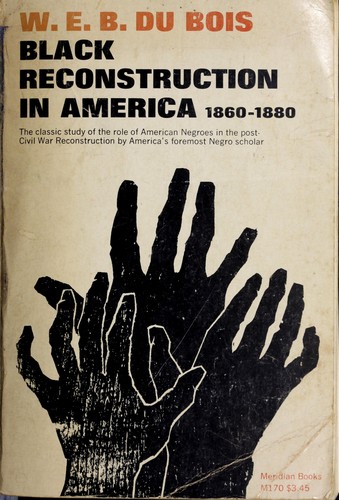
W.E.B. Du Bois was already chipping away at this myth in 1909, but when scholars in the post-Civil Rights era started taking him and his 1935 Black Reconstruction seriously, the historiographic mainstream turned this myth on its head. Slaves were not and could not be “given” their freedom because they had always had it: it had required a great deal of violent force and political work to keep them enslaved, and when that force was removed—as the South collapsed politically and militarily—they began to act like the human beings they always already were, organizing, moving, and seizing their destinies in their own hands. At this point, the game was up; just as the institution of slavery had always depended on substantial governmental enforcement and support, it would have taken a substantial amount of violent force to re-impose it, a concerted project to re-establish slavery that no one in the north had any particular stomach for. At the end of the Civil War, to put it simply, the North had a simple choice: re-imposing slavery by force or accept the new reality. They chose the latter.

If you read these books, however, you’d gain a sense of perspective that the film works to make impossible. Spielberg and Kushner are interested in a kind of scrupulous (almost farcical) accuracy about things that do not matter, while working very hard to place everything else that was going on in the period—and everything else Lincoln was responding to—off camera. “The nation’s capital was transformed by the migration of fugitive slaves from the South during the war, but you’d never know it from this film,” as Kate Masur points out, and Lincoln’s own servants were leaders and organizers in this community, something of which Lincoln simply could not have been unaware. But the film makes a point of not showing any of this: while the vast majority of the movie takes place in cramped and smoky rooms, even the exterior shots (usually of conversations in moving wagons) show us very little of what was going on in the streets and neighborhoods of Washington (much less what was going on in the South). Which is to say: they give us the illusion of perspective without giving us its substance. They show you the elephant’s tail quite accurately, and then they declare, on that basis, that the entire beast is a snake.

In the big picture, the Thirteenth Amendment, on its own, just isn’t that important, and much of the forced suspense of the movie—will they pass it?—comes from an artificial sense that more is at stake in a single congressional bill than there actually was. As Eric Foner pointed out when he was asked about the movie, if it hadn’t passed when it did, Lincoln had pledged to call Congress into special session in March; “[a]nd there, the Republicans had a two-thirds majority and would ratify in a minute…It’s not this giant crisis in the way that the film’s portraying it.” This is important because the small picture is not the big picture in miniature, and taking it to be—taking the passage of the Thirteenth Amendment to be 19th centuries democratic turning point, as this movie clearly does—will cause us to subordinate the big picture to the small picture.

To Read the Entire Essay

Wednesday, October 3, 2012

Dennis Lim: Time Has Been Kind to Heaven's Gate

Time Has Been Kind to Heaven's Gate
by Dennis Lim
The New York Times


...

Lee Kline, the technical director at Criterion, said, “It wasn’t an option to go back to the original negative because that was what was cut down to the short version.” The original 70-millimeter prints were also in poor shape. So in a costly, complicated process, the restoration team scanned each color separation negative individually and recombined them.

“Heaven’s Gate” may be a subject Mr. Cimino has avoided for years, but once he gets going, the floodgates open. He spoke fondly of the performances of Kris Kristofferson, Christopher Walken and Isabelle Huppert, which he feels have never gotten their due. And he recalled the genesis of the project: Researching the history of barbed wire and the cattle industry, he came upon an incident known as the Johnson County War involving cattlemen, hired killers and local ranchers. He described the epilogue — the weary hero, James Averill (Mr. Kristofferson), on a yacht off the New England coast — as “a prelude to ‘The Great Gatsby,’ ” with Averill as the mogul awaiting the arrival of the young James Gatz.

Mr. Cimino also recalled his obsessive quest for authenticity that led many to characterize “Heaven’s Gate” as a runaway production. (First budgeted at less than $10 million, the film grew to a cost of $35 million, or $44 million including promotional costs, according to Mr. Bach’s book. Mr. Cimino maintains that it was “all in $32 million.”) As he put it, “Everything was problematical”: the locomotive that had to be transported to the Montana location from a Denver museum; a horse-drawn buggy whose spokes and upholstery had to be made in different states. “The movie could not be made today, even if you threw $300 million at it,” he said. “All of that is being lost. The wagons don’t exist, the skills are gone.”

Present-day viewers may well find that time has been kind to “Heaven’s Gate,” which plays more than ever like a fittingly bleak apotheosis of the New Hollywood, an eccentric yet elegiac rethinking of the myths of the West and the western, with an uncommonly blunt take on class in America. (“It’s getting dangerous to be poor in this country,” someone says. The rejoinder: “It always was.”) But this defiant last gasp of the downbeat ’70s, opening two weeks after Ronald Reagan was elected president, was plainly a movie at odds with its time.

Reached at his home in Hawaii, Mr. Kristofferson said he believes the themes of the film, with its grim view of American capitalism, were what made it so unpalatable. “It was a political assassination,” he said. He recalled getting word that Reagan’s first attorney general, William French Smith, had told studio heads that “there should be no more pictures made with a negative view of American history.”

Mr. Kristofferson, sounding more rueful than bitter, said that the reception to “Heaven’s Gate” knocked him off the Hollywood A-list for good. “I never really recovered from that,” he said, but he acknowledged that it was worse for Mr. Cimino. “It completely destroyed him.”

Mr. Cimino continued to work, albeit infrequently; he has made four features since “Heaven’s Gate,” the last one, “Sunchaser,” in 1996. A painter who began his directing career in advertising, he said that at home in Los Angeles he rarely watches movies now (and prefers to reread Pushkin and Flaubert). But he does have a film project in mind, which he hopes to shoot in digital soon.

Ms. Carelli, who was with Mr. Cimino in Venice, said that while there remain misconceptions about the making of “Heaven’s Gate,” “I don’t want to revisit old erroneous stories and try to correct them.” She added, “Now the film finally speaks for itself, and it has the final word.”

To Read the Entire Article

More Resources:

The Making and Unmaking of Heaven's Gate


Friday, August 10, 2012

Carl Freedman: Hobbes After Marx, Scorsese After Coppola -- On GoodFellas

Hobbes After Marx, Scorsese After Coppola: On GoodFellas
by Carl Freedman
Originally published in Film International 9.1 (2011): 42-62.


From Coppola to Scorsese

GoodFellas--which I take to be the absolute summit of Martin Scorsese’s filmmaking career, surpassing even Mean Streets (1973), Taxi Driver (1976),Raging Bull (1980), The King of Comedy (1983), The Last Temptation of Christ (1988), The Age of Innocence (1993), Casino (1995), and Bringing Out the Dead (1999) among his other strongest works--came out in 1990, the same year as the final third of Francis Coppola’s Godfather trilogy. Though the timing is almost certainly a co-incidence, it is a highly appropriate one. For Scorsese’s film of 1990 is, like Coppola’s, defined--though of course it is much less obviously or directly defined--by the first two installments of the Godfather series. This is not to deny that some of the seeds of GoodFellas can be found in Scorsese’s earlier work and also, for that matter, in films by other directors as well. Raoul Walsh’s White Heat (1949), in which James Cagney’s character is clearly the direct model for Joe Pesci’s in GoodFellas (and also for Pesci’s character in Casino), is one especially pertinent example. But GoodFellas is a mob movie in a way and to a degree that White Heat and even Mean Streets are not, and, indeed, that hardly any really first-rate Hollywood film before The Godfather (1972) is. In White Heat, for example, there is no real “mob,” no large-scale criminal organization--just a small, mobile band of robbers. As for Mean Streets, most of its action (like some of the action of Raging Bull) takes place on the fringes of the Mafia. But the inner workings of organized crime are incidental--not, as in the genuine mob movie, central--to the film’s narrative and character development. Indeed, Coppola’s overwhelming success has made it easy to forget that, prior to 1972, the mob movie was a relatively minor genre. It had a certain presence in the Hollywood repertoire, but had never attained the kind of major success enjoyed by the Western or by film noir. As a matter of fact, the genre’s relatively undistinguished history helped to make for considerable studio resistance, at first, to turning Mario Puzo’s novel into a big-budget film.

The Godfather and its immediate sequel, The Godfather, Part Two (1974), changed all that, of course; and by 1990 the pre-eminence of Coppola’s masterpieces within the genre of the mob film was incontestable (though Brian De Palma had made an important contribution to the form with Scarface [1983]--a remake vastly superior to Howard Hawks’s 1932 film of the same name--as had Sergio Leone with Once Upon a Time in America [1984]). The best way, I think, to understand GoodFellas is to see it as the only successful attempt to make a mob movie of stature truly comparable to that of the Godfather films: and, moreover, one that understands that it would have been quite impossible to rival Coppola’s work by attempting anything profoundly similar to it. Samuel Beckett famously maintained that James Joyce had written literature that expanded the resources of language to the utmost, beyond what any other author could hope to do; and that, therefore, the only way to follow Joyce’s incomparable achievement was to go in the exactly opposite direction and to contract language to the maximum extent feasible. In somewhat the same way, Scorsese (whether with full self-consciousness or not) implicitly offers to rival Coppola by making a mob movie that is as much opposed as possible to the Godfather films.1 Scorsese himself has, in fact, more than once seemed to imply as much.

In the following pages I will keep the antithetical precedent of the Godfather trilogy steadily in view as I analyze what seem to me the three most important aspects of the mob lifeworld as represented by GoodFellas: the essentially proletarian nature of the stratum of the Mafia inhabited by the film’s characters, where the rewards of crime generally turn out to be considerably more meager than they may at first seem; the Hobbesian near-anarchy of violence, fear, and insecurity that characterizes everyday life in this proletarian stratum of the mob; and the attendant solitariness in which the characters of GoodFellas necessarily live.

The View from the Mafia’s Factory Floor

Perhaps the most obvious way that GoodFellas adopts a strategy opposite to that of the Godfather films concerns the radically different coigns of vantage from which the two filmmakers examine the workings of the Mafia. Coppola’s interest is almost entirely in top management: the Corleones themselves are the main examples, of course, but other examples include such secondary characters as the Tattaglias (the Corleones’ arch-rivals in New York in the first film), Virgil “the Turk” Sollozzo, Moe Greene, Don Barzini, Don Tommasino (Michael’s protector in Sicilian exile in the first film, who returns in the third), Hyman Roth, Frankie Pentangeli, and, in the third film, Don Altobello and Don Lucchesi. Such ruling-class types prefer to conduct business in private, and the spaces most prominently featured in the Godfather films are indeed private ones: especially fortress-like mansions, but also the offices, suites, and conference rooms of the mighty. In few respects is Coppola’s trilogy more profoundly a saga of American big business from the perspective of the boardroom than in the rigorous separation it observes between the machinations of the top bosses and the actual work on which all the wealth of the enterprise ultimately depends. Don Vito Corleone’s fortune is based primarily on businesses like bootlegging and illegal gambling; but never do we see a bet taken or a drink served. Coppola’s interest in the Mafia is macroeconomic (and macropolitical). GoodFellas, by contrast, is very much a street-level film, with a keen interest in the microeconomics of organized crime.3 Much of the action takes place literally on the streets of New York City (mainly the unfashionable borough of Queens), and most of the rest is set in places like bars, inexpensive restaurants, airports, and prisons: all public spaces in which privacy is at a minimum. The highest-ranking Mafia executive in the movie is Paulie Cicero (Paul Sorvino), a mere neighborhood boss who, on a hypothetical organization chart of the mob, would surely be placed at least two or three levels below Michael Corleone; and even he is a secondary character. The protagonist is one Henry Hill (based on an actual person of the same name and played by Ray Liotta as an adult, by Christopher Serrone as a youngster), a proletarian type who, far from being born into Mafia aristocracy, is not even born into the Mafia at all. Coming from working-class poverty in a mixed Irish-Italian family, Henry as a child just happens to live across the street from a cabstand and a pizzeria that function as mob fronts and hang-outs for lower-level Mafiosi. Observing the goings-on there from his parents’ front window, Henry aspires to what he imagines to be the free, easy, and glamorous life of the mobsters: “I mean, they did whatever they wanted. They double-parked in front of a hydrant, and nobody ever gave them a ticket. In the summer, when they played cards all night, nobody ever called the cops.” It is striking how pathetically modest are these examples of privilege, cited by Henry in voice-over, that convince him that being a gangster is somehow “better than being President of the United States.” As a schoolboy, he crosses the street to join the mob at the lowest possible level--doing such odd jobs as parking cars, serving food, and delivering messages--and gradually works his way up to modest success as the owner of a mob-connected restaurant and, later, as a dealer in cocaine.

To Read the Rest of the Essay

Thursday, June 28, 2012

Erich Kuersten: Sex is a Hen Decapitated -- Bluebeard and the Eroticism of Catherin Breillat

Sex is a Hen Decapitated: Bluebeard and the Eroticism of Catherine Breillat
by Erich Kuersten
Acidemic


The ancient tale of Bluebeard is rife with archetypal resonance for the budding feminine psyche: it's a rite of passage myth, a map of patriarchal oppression's mine field, an initiation into sexual maturity, where the fear of pain is enough to make actual pain a relief in contrast; a color-symbolic dream where the blood of menstruation anxiety (the redness of the clitoral "riding" hood) and the swollen purples of honeymoon savagery (the black and blueness of the groom's bristly beard) mix and match. Like many fairy tales centered on a young girl, it encodes the onset of menstruation into a Pandora's Box moment of discovery, from which innocence can never return, leading inexorably into the scary rites of the marital bed, the agonies of childbirth, and so forth. Do we not, in associating white for virginity and purity, forget that red means the alchemical opening up of that purity into the raw violence of procreation? So what does that third color of the French flag--blue--represent? Naturally, the cooling rescue of death--or rather as symbolized in the 'bloody chamber' where all the previous brides are stored, a suspended animation, a sleeping beauty status wherein the enslaving agonies of childbirth and old age are forever kept at bay, in short, the blue represents frozen death and timeless decadence, pleasure and a disruption of the natural enslavement process of patriarchy. Bluebeard postpones sexual relations in order to keep romance forever young.

The coming of age girl myth tends to focus on the moment of the first dripping eradicable red stain, one that no amount of Clorox will undo. Such a moment--loss and gain coagulated into one crimson blotch --seems to obsess French director Catherine Breillat, a female auteur as detached and horrified in her existential search for meaning as her fellow Frenchmen Gasper Noe, Jean-Paul Sartre, and Claire Denis [note from Michael Benton: Denis is a French woman]. But as Breillat is a woman, her take on femininity is free to delve much much deeper into waters too cold and dangerous to ever be known to men. Eagerly complicit with the grotesque truths of feminine sexuality, Breillat's eyes are not blurred by the glamor and beauty that hypnotize most male directors. Rather than 'fall' for the genetic con job of desire, she focuses on her gender's fascination with the gross otherness of the male body, and vice versa - she wants to explore her own body--stripped of its veils and glamor-- through male eyes. Men after all aren't as obligated to be beautiful. They're position as desirable or beautiful is seldom considered in a marriage. If a woman can't learn to love ugliness, she never gets a prince and stays forever turned off; the beast stays a beast.

For his part, when Bluebeard spots the telltale blood stain on the key to the forbidden chamber, he is sad and disappointed, once again his bride has been unable to remain 'unopened' and so must be literally opened, as in decapitated. But Breillat's crafty beauty knows to stall, to feign compliance with her impending death on certain conditions, and to seek help from the passing musketeer/woodsman(the woodsman gets all the girls because he's already 'slain' his own wolf). If she merely screams and cringes, she's devoured. This is a valuable honeymoon lesson considering the absurdly young marriage ages of our forebears, one surely told by moms of old: do not resist or cringe when your new husband advance; instead, flatter, and stall him. If he will but relent today he shall get double tomorrow, and so on until a nice woodsman can rescue her, or she can develop enough that her deflowering is less of a painful, traumatizing violation.

The patriarchal readings of these tales runs counter to this approach, flipping the beast into a prince with a magic (phallic) wand and happily ever aftering the story before the children reading can learn that the magic wand's spell fades in a matter of hours. Soon enough the hair begins to creep back on their prince and his fangs grow long with the full moon. He seems to get uglier and more ill-tempered as the marriage marches on; that's the part Disney rolls its credits over. Only Breillat dares see not just the beast, but the frog, the vile toad still dwelling behind the sparkly eyes of the prince, and only Breillat nonetheless finds a way to love the thing, proverbial warts and all.

In her fearless approach towards this taboo subject, Breillat seems to possess an ambivalent--if not outright hostile--attitude towards sex. Her liberated female characters are often accused of being masochist subjects. But we have to dig deeper for her real reaction, perhaps a way would be to see her as the French female version of Lars Von Trier. But where Lars uses the D.W. Griffith / Sirkian soap opera woman's story in his savage deconstruction of innocence, purity, deflowering and sex, Breillat eschews any direct relation with 'woman's picture' trappings, to shoot for pure myth, looking past Griffith all the way back to the dawn of the printing press. Her cinema is--in Bluebeard literally--like the pages of a storybook that shows everything the normal books do not.

To Read the Rest of the Essay

Thursday, June 21, 2012

Surviving Progress (Canada: Mathieu Roy and Harold Crooks, 2011: 86 mins)

[via Documentary Heaven]

Film about the risks we pose to our own survival in the name of progress; connecting financial collapse, growing inequality and global oligarchy with the sustainability of mankind.


Tuesday, May 29, 2012

Inside Job Director Charles Ferguson: Predator Nation: Corporate Criminals, Political Corruption, and the Hijacking of America

"Inside Job" Director Charles Ferguson: Wall Street Has Turned the U.S. into a "Predatory Nation"
Democracy Now

Two years after directing the Academy Award-winning documentary, “Inside Job,” filmmaker Charles Ferguson returns with a new book, “Predator Nation: Corporate Criminals, Political Corruption, and the Hijacking of America.” Ferguson explores why no top financial executives have been jailed for their role in the nation’s worst economic crisis since the Great Depression. We also discuss Larry Summers and the revolving door between academia and Wall Street, as well as the key role Democrats have played in deregulating the financial industry. According to Ferguson, a "predatory elite" has "taken over significant portions of economic policy and of the political system, and also, unfortunately, major portions of the economics discipline."

Guest:

Charles Ferguson, the Academy Award-winning director of Inside Job, a documentary about the financial crisis. His film on the war in Iraq, No End in Sight, was nominated for an Academy Award. His new book is called Predator Nation: Corporate Criminals, Political Corruption, and the Hijacking of America.


To Watch the Interview


Part 2: “Predator Nation: Corporate Criminals, Political Corruption, and the Hijacking of America”

We continue our conversation with Charles Ferguson, director of the Oscar award-winning documentary, “Inside Job,” about the 2008 financial crisis. In his new book, “Predator Nation,” he argues “the role of Democrats has been at least as great as the role of Republicans” in causing the crisis. Ferguson notes the Clinton administration oversaw the most important financial deregulation, and since then, “we’ve seen in the Obama administration very little reform and no criminal prosecutions, and the appointment of a very large number of Wall Street executives to senior positions in the government, including some people who were directly responsible for causing significant portions of the crisis.” Ferguson also calls for raising the salaries of senior regulators and imposing stricter rules for how soon they can lobby for the private sector after leaving the public sector.

To Watch the Interview

Trailer for Inside Job


2010 Oscar Winner for Best Documentary, 'Inside Job' provides a comprehensive analysis of the global financial crisis of 2008, which at a cost over $20 trillion, caused millions of people to lose their jobs and homes in the worst recession since the Great Depression, and nearly resulted in a global financial collapse. Through exhaustive research and extensive interviews with key financial insiders, politicians, journalists, and academics, the film traces the rise of a rogue industry which has corrupted politics, regulation, and academia. It was made on location in the United States, Iceland, England, France, Singapore, and China.


Watch Inside Job online for free at Film for Action