The Square, Egypt's Revolution Doc with Sundance Winner Dir Jehane Noujaim
Bring Your Own Doc
Fresh from winning the best World Documentary award at Sundance, The Square director Jehane Noujaim comes to BYOD to discuss her background in film and the process of telling the story of the Egyptian revolution.
Jehane also shares the feeling she had of crawling through the dark while filming, and still managing to make a film that is recognized and appreciated.
GUEST BIO:
Jehane Noujaim is an Egyptian-American filmmaker who began her career with the MTV documentary series, Unfiltered. She left her post as segment producer to work with the legendary Chris Hegedus and D.A. Pennebaker on the film STARTUP.COM, which led to numerous nominations and won awards at The International Documentary Association, Philadelphia, Doubletake Documentary Film Festival, and a DGA Award.
Jehane followed the success of the film with the equally acclaimed CONTROL ROOM, which won awards at Full Frame, Boston Society of Film Critics, International Documentary Association, Seattle Film Critics, and Sydney Film Festival.
Continuing her work in both the United States and The Middle East, Jehane is back with a new film, THE SQUARE, depicting the revolution in Egypt's famous Tahrir Square. She is back, fresh from Park City, where she was awarded the World Documentary Audience Award at Sundance for her magnificent work on this film.
Showing posts with label Civil/Human Rights. Show all posts
Showing posts with label Civil/Human Rights. Show all posts
Thursday, October 24, 2013

Sunday, October 20, 2013
Thursday, August 15, 2013
Harvard University Press Blog: Catherine MacKinnon on Lovelace
Catharine MacKinnon on Lovelace
Harvard University Press

The pornographic film Deep Throat, released in 1972, was a cultural sensation whose star, “Linda Lovelace,” was said to put a girl-next-door face on the sexual revolution. But the actual life of Linda Boreman, as depicted in the new biopic Lovelace, was one of beatings, rape, and terror. Feminist legal scholar Catharine MacKinnon, author of such works as Toward a Feminist Theory of the State and Only Words, represented Boreman after she came forward with her story, and later, with Andrea Dworkin, pursued civil rights litigation as a means to fight pornography. We asked MacKinnon about Boreman, Lovelace, and the potential impact of the film.
To Read the Interview
Harvard University Press
The pornographic film Deep Throat, released in 1972, was a cultural sensation whose star, “Linda Lovelace,” was said to put a girl-next-door face on the sexual revolution. But the actual life of Linda Boreman, as depicted in the new biopic Lovelace, was one of beatings, rape, and terror. Feminist legal scholar Catharine MacKinnon, author of such works as Toward a Feminist Theory of the State and Only Words, represented Boreman after she came forward with her story, and later, with Andrea Dworkin, pursued civil rights litigation as a means to fight pornography. We asked MacKinnon about Boreman, Lovelace, and the potential impact of the film.
To Read the Interview
Sunday, June 23, 2013
Moolaadé (Senegal/France/Burkina Faso/Cameroon/Morocco/Tunisia: Ousmane Sembene, 2004)

Moolaadé (Senegal/France/Burkina Faso/Cameroon/Morocco/Tunisia: Ousmane Sembene, 2004: 124 mins)
Bartlet, Olivier. "Adventures and Misadventures of African Cinema." Cinemas of the South (2006)
Borden, Amy. "At the global market: Ousmane Sembène’s Moolaadé and the economics of women’s rights." Jump Cut #53 (Summer 2011)
Bug Girl. Is My Vuvulzela Too Big?" Skepchick (June 20, 2010)
Coventry, Martha. "Making the Cut: It's a Girl! ... Or is it? When in doubt, why are surgeons calling the shots?" Ms. (Oct/Nov 2000)
Diop, Baba. "Ousmane Sembene: The Elder of Elders." Cinemas of the South (February 15, 2009)
Dotson-Newman, Nzinga. "Family Pressure on Young Girls for Genitalia Mutilation Continues in Kenya." Project Censored (2012)
Finney, Nikki. "The Greatest Show On Earth." (Read the poem/read an analysis of the poem/and listen to Nikki read it)
Halpern, Sue. "Breaking a Conspiracy of Silence." The New York Times Book Review 56.18 (November 19, 2009)
Marzana, Nicola. "The Art of Hunger: Re-Defining Third Cinema." 16:9 (November 2009)
Pride, Ray. "Woman is the Future of Man: Ousmane Sembene on Moolaade." Cinema Scope #21 (2004)
Santur, Hassan Ghedi. "On Being a Muslim in the West." Ideas (June 1, 2011)
Turkewitz, Julie. "Effects of Ancient Custom Present New Challenge to U.S. Doctors: Genital Cutting Cases Seen More as Immigration Rises." The New York Times (February 6, 2015)
Tuesday, April 16, 2013
Offside (Iran: Jafar Panahi, 2006)

Offside (Iran: Jafar Panahi, 2006: 93 mins)
Ferdinand, Marilyn. Offside Ferdy on Films (May 23, 2010)
Hudson, David. "Jafar Panahi Sentenced to 6 Years in Jail, 20 Years of Silence." MUBI (December 20, 2010)
"Studies of Censorship and Cinema: In Solidarity with Jafar Panahi." Film Studies for Free (April 6, 2010)
Saturday, April 6, 2013
Long Distance Revolutionary: A Journey with Mumia Abu-Jamal (USA: Stephen Vittoria, 2013)

Long Distance Revolutionary: A Journey with Mumia Abu-Jamal (USA: Stephen Vittoria, 2013: 120 mins)
Abu-Jamal, Mumia. "The United States Is Fast Becoming One of the Biggest Open-Air Prisons on Earth." Democracy Now (February 1, 2013)
Hanarahan, Noelle and Stephen Vittoria. "'Long Distance Revolutionary': Mumia Abu-Jamal’s Journey from Black Panthers to Prison Journalist." Democracy Now (February 1, 2013)
Hedges, Chris. The Unsilenced Voice of a 'Long-Distance Revolutionary.'" TruthDig (December 9, 2012)
Wednesday, February 20, 2013
Democracy Now Headlines: Palestinian Filmmaker Behind "5 Broken Cameras" Detained at LAX Ahead of Oscars
Palestinian Filmmaker Behind "5 Broken Cameras" Detained at LAX Ahead of Oscars
Democracy Now

A Palestinian filmmaker and his family were detained at Los Angeles International Airport on Tuesday after arriving to attend this weekend’s Academy Awards. The filmmaker, Emad Burnat, is nominated in the Best Documentary category for "5 Broken Cameras," which documents the growth of a resistance movement to the Israeli separation wall in the West Bank village of Bil’in. In a series of Twitter messages, the filmmaker Michael Moore said immigration officers told Burnat he would not be allowed to enter the country even after he showed them his Oscar invite. Burnat and his family were eventually released after Moore phoned Academy attorneys. Moore quoted Burnat as saying: "It’s nothing I’m not already used to. When [you] live under occupation, with no rights, this is a daily occurrence."
Link to Today's Headlines
Democracy Now
A Palestinian filmmaker and his family were detained at Los Angeles International Airport on Tuesday after arriving to attend this weekend’s Academy Awards. The filmmaker, Emad Burnat, is nominated in the Best Documentary category for "5 Broken Cameras," which documents the growth of a resistance movement to the Israeli separation wall in the West Bank village of Bil’in. In a series of Twitter messages, the filmmaker Michael Moore said immigration officers told Burnat he would not be allowed to enter the country even after he showed them his Oscar invite. Burnat and his family were eventually released after Moore phoned Academy attorneys. Moore quoted Burnat as saying: "It’s nothing I’m not already used to. When [you] live under occupation, with no rights, this is a daily occurrence."
Link to Today's Headlines
Wednesday, December 12, 2012
Chris Hedges: The Unsilenced Voice of a "Long-Distance Revolutionary"
The Unsilenced Voice of a "Long-Distance Revolutionary"
by Chris Hedges
TruthDig
I am sitting in the visiting area of the SCI Mahanoy prison in Frackville, Pa., on a rainy, cold Friday morning with Mumia Abu-Jamal, America’s most famous political prisoner and one of its few authentic revolutionaries. He is hunched forward on the gray plastic table, his dreadlocks cascading down the sides of his face, in a room that looks like a high school cafeteria. He is talking intently about the nature of empire, which he is currently reading voraciously about, and effective forms of resistance to tyranny throughout history. Small children, visiting their fathers or brothers, race around the floor, wail or clamber on the plastic chairs. Abu-Jamal, like the other prisoners in the room, is wearing a brown jumpsuit bearing the letters DOC—for Department of Corrections.
Abu-Jamal was transferred in January to the general prison population after nearly 30 years in solitary confinement on death row and was permitted physical contact with his wife, children and other visitors for the first time in three decades. He had been sentenced to death in 1982 for the Dec. 9, 1981, killing of Philadelphia police officer Daniel Faulkner. His sentence was recently amended to life without parole. The misconduct of the judge, flagrant irregularities in his trial and tainted evidence have been criticized by numerous human rights organizations, including Amnesty International.
Abu-Jamal, who was a young activist in the Black Panthers and later one of the most important radical journalists in Philadelphia, a city that a few decades earlier produced I.F. Stone, has long been the bête noire of the state. The FBI opened a file on him when he was 15, when he started working with the local chapter of the Black Panthers. He was suspended from his Philadelphia high school when he campaigned to rename the school for Malcolm X and distributed “black revolutionary student power” literature.
Stephen Vittoria’s new film documentary about Abu-Jamal, “Long Distance Revolutionary,” rather than revisit the case, chronicles his importance and life as an American journalist, radical and intellectual under the harsh realities of Pennsylvania’s death row. Abu-Jamal has published seven books in prison, including his searing and best-selling “Live From Death Row.” The film features the voices of Cornel West, James Cone, Dick Gregory, Angela Davis, Alice Walker and others. It opens in theaters Feb. 1, starting in New York City. In the film Gregory says that Abu-Jamal has single-handedly brought “dignity to the whole death row.”
The late historian Manning Marable says in the film: “The voice of black journalism in the struggle for the liberation of African-American people has always proved to be decisive throughout black history. When you listen to Mumia Abu-Jamal you hear the echoes of David Walker, Frederick Douglass, W.E.B. Du Bois, Paul Robeson, and the sisters and brothers who kept the faith with struggle, who kept the faith with resistance.”
The authorities, as they did before he was convicted, have attempted to silence him in prison. Pennsylvania banned all recorded interviews with Abu-Jamal after 1996. In response to protests over the singling out of one inmate in the Pennsylvania correction system, the state simply banned recorded access to all its inmates. The ban is nicknamed “the Mumia rule.”
“I was punished for communicating,” Abu-Jamal says.
Cornel West says in the film: “The state is very clever in terms of keeping track, especially [of] the courageous and visionary ones, the ones that are long-distance runners. You can keep track of them, absorb ’em, dilute ’em, or outright kill ’em—you don’t have to worry about opposition to ’em.”
To Read the Rest of the Essay

by Chris Hedges
TruthDig
I am sitting in the visiting area of the SCI Mahanoy prison in Frackville, Pa., on a rainy, cold Friday morning with Mumia Abu-Jamal, America’s most famous political prisoner and one of its few authentic revolutionaries. He is hunched forward on the gray plastic table, his dreadlocks cascading down the sides of his face, in a room that looks like a high school cafeteria. He is talking intently about the nature of empire, which he is currently reading voraciously about, and effective forms of resistance to tyranny throughout history. Small children, visiting their fathers or brothers, race around the floor, wail or clamber on the plastic chairs. Abu-Jamal, like the other prisoners in the room, is wearing a brown jumpsuit bearing the letters DOC—for Department of Corrections.
Abu-Jamal was transferred in January to the general prison population after nearly 30 years in solitary confinement on death row and was permitted physical contact with his wife, children and other visitors for the first time in three decades. He had been sentenced to death in 1982 for the Dec. 9, 1981, killing of Philadelphia police officer Daniel Faulkner. His sentence was recently amended to life without parole. The misconduct of the judge, flagrant irregularities in his trial and tainted evidence have been criticized by numerous human rights organizations, including Amnesty International.
Abu-Jamal, who was a young activist in the Black Panthers and later one of the most important radical journalists in Philadelphia, a city that a few decades earlier produced I.F. Stone, has long been the bête noire of the state. The FBI opened a file on him when he was 15, when he started working with the local chapter of the Black Panthers. He was suspended from his Philadelphia high school when he campaigned to rename the school for Malcolm X and distributed “black revolutionary student power” literature.
Stephen Vittoria’s new film documentary about Abu-Jamal, “Long Distance Revolutionary,” rather than revisit the case, chronicles his importance and life as an American journalist, radical and intellectual under the harsh realities of Pennsylvania’s death row. Abu-Jamal has published seven books in prison, including his searing and best-selling “Live From Death Row.” The film features the voices of Cornel West, James Cone, Dick Gregory, Angela Davis, Alice Walker and others. It opens in theaters Feb. 1, starting in New York City. In the film Gregory says that Abu-Jamal has single-handedly brought “dignity to the whole death row.”
The late historian Manning Marable says in the film: “The voice of black journalism in the struggle for the liberation of African-American people has always proved to be decisive throughout black history. When you listen to Mumia Abu-Jamal you hear the echoes of David Walker, Frederick Douglass, W.E.B. Du Bois, Paul Robeson, and the sisters and brothers who kept the faith with struggle, who kept the faith with resistance.”
The authorities, as they did before he was convicted, have attempted to silence him in prison. Pennsylvania banned all recorded interviews with Abu-Jamal after 1996. In response to protests over the singling out of one inmate in the Pennsylvania correction system, the state simply banned recorded access to all its inmates. The ban is nicknamed “the Mumia rule.”
“I was punished for communicating,” Abu-Jamal says.
Cornel West says in the film: “The state is very clever in terms of keeping track, especially [of] the courageous and visionary ones, the ones that are long-distance runners. You can keep track of them, absorb ’em, dilute ’em, or outright kill ’em—you don’t have to worry about opposition to ’em.”
To Read the Rest of the Essay
Thursday, November 29, 2012
Maximilian Yoshioka: History or Humanity? On Lu Chuan's City of Life and Death - A Nietzschean Perspective on Nanjing
History or Humanity? On Lu Chuan's City of Life and Death: A Nietzschean Perspective on Nanjing
by Maximilian Yoshioka
Bright Lights Film Journal

In 1937, the Imperial Japanese Army stormed into the city of Nanjing in China, causing massive physical and human devastation, in what is now known as the "Rape of Nanjing." The incident, and the broader scheme of Japanese militarism and imperialism in which it took place, is today still a constant source of political tension between the two nation-states and their respective citizens. The 2009 film City of Life and Death, by Chinese auteur Lu-Chuan, is a bold attempt to dig up and redefine the specter of Nanjing that continues to haunt the East Asian consciousness. But instead of ideologically measuring one side or the other on a Manichean scale, Lu chooses to focus on the instances of human compassion and solidarity that are able to manifest themselves even in the mindless, brutal atmosphere he so effectively creates within the cinematic world.
What one comes to grasp after seeing the film is the ultimate importance of history as first and foremost a study of the human condition, and of the art of living itself, as opposed to scientifically detached observation and categorization. The continuities of human consciousness and memory mean that our experiences of the past are necessarily intertwined with those of the present; as individuals inescapably grounded in a specific historical period, we are unable to avoid this contemporizing process. Furthermore, it is something that must be embraced, for it allows us to incorporate these historical "peaks" (and crevasses) of human experience into our future actions and values. But in this integration of the present with the past there is the danger of a selective blindness toward the past that must be understood and overcome. However, the purpose of history as a guide to the present and the future, to "life," must still be emphasized over the "neutral," "objective" study of history as "fact," "statistic," or what Nietzsche, in his essay "The Use and Abuse of History, refers to disparagingly as the "World Process" — that is, an attitude of detached passivity toward a historical narrative that is falsely seen as predetermined and unalterable.
City of Life and Death's narrative shifts between several characters on both sides of the conflict, which allows the film to largely transcend distinctions of nationality and ideology and focus on the more basic human tragedy underlying it. One is never informed of the strategic or ideological Japanese justifications for the various massacres and battles throughout the film; there is no attempt to rationalize the violence. Instead the viewer is presented with a war that is absurd, irrational, and pointless, and this nonpartisan alignment allows for the emergence of a more universal, humanistic perspective that links the various key characters in the film through their shared ethical commitments. These include Kadokawa, a Japanese soldier (Hideo Nakaizumi), Lu Jianxiong (Liu Ye), a Chinese resistance fighter, John Rabe (John Paisley), a German who ran a demilitarized safety zone within Nanjing, his assistant, Mr. Tang (Fan Wei), and several female characters of both Japanese and Chinese origin, all of whom are faced with sexual violence and slavery due to the notorious Japanese "comfort women" policies.
This humanistic impulse manifests itself in various ways, but is mostly emphasized in authentic moments of kindness, empathy, and bravery that shine through the madness. At the end of the film, Kadokawa, under orders to execute two Chinese civilians, one of whom is a young boy, instead decides to release them into the wilderness, much to the amazement but also admiration of his inferior officer. Yet even this act of compassion is insignificant in comparison to what he has previously been required to do and see; under the weight of an intolerable conscience, he kills himself. Earlier in the film he also falls in love with a Japanese prostitute brought in to satisfy the soldiers' animalistic needs; his genuine feelings of care and affection for her contrast strikingly with the objectifying and dehumanizing attitudes of the other soldiers. John Rabe, the only nonfictional character in the film, was a member of the Nazi Party, a group, like the Japanese, condemned for its role in the Second World War. Along with several other missionaries, he saved large numbers of Chinese civilians by instating a safety zone within Nanjing, and his inclusion further demonstrates the director's commitment to a study of war centered on individual human beings rather than political identities.
To Read the Rest of the Essay
by Maximilian Yoshioka
Bright Lights Film Journal
In 1937, the Imperial Japanese Army stormed into the city of Nanjing in China, causing massive physical and human devastation, in what is now known as the "Rape of Nanjing." The incident, and the broader scheme of Japanese militarism and imperialism in which it took place, is today still a constant source of political tension between the two nation-states and their respective citizens. The 2009 film City of Life and Death, by Chinese auteur Lu-Chuan, is a bold attempt to dig up and redefine the specter of Nanjing that continues to haunt the East Asian consciousness. But instead of ideologically measuring one side or the other on a Manichean scale, Lu chooses to focus on the instances of human compassion and solidarity that are able to manifest themselves even in the mindless, brutal atmosphere he so effectively creates within the cinematic world.
What one comes to grasp after seeing the film is the ultimate importance of history as first and foremost a study of the human condition, and of the art of living itself, as opposed to scientifically detached observation and categorization. The continuities of human consciousness and memory mean that our experiences of the past are necessarily intertwined with those of the present; as individuals inescapably grounded in a specific historical period, we are unable to avoid this contemporizing process. Furthermore, it is something that must be embraced, for it allows us to incorporate these historical "peaks" (and crevasses) of human experience into our future actions and values. But in this integration of the present with the past there is the danger of a selective blindness toward the past that must be understood and overcome. However, the purpose of history as a guide to the present and the future, to "life," must still be emphasized over the "neutral," "objective" study of history as "fact," "statistic," or what Nietzsche, in his essay "The Use and Abuse of History, refers to disparagingly as the "World Process" — that is, an attitude of detached passivity toward a historical narrative that is falsely seen as predetermined and unalterable.
City of Life and Death's narrative shifts between several characters on both sides of the conflict, which allows the film to largely transcend distinctions of nationality and ideology and focus on the more basic human tragedy underlying it. One is never informed of the strategic or ideological Japanese justifications for the various massacres and battles throughout the film; there is no attempt to rationalize the violence. Instead the viewer is presented with a war that is absurd, irrational, and pointless, and this nonpartisan alignment allows for the emergence of a more universal, humanistic perspective that links the various key characters in the film through their shared ethical commitments. These include Kadokawa, a Japanese soldier (Hideo Nakaizumi), Lu Jianxiong (Liu Ye), a Chinese resistance fighter, John Rabe (John Paisley), a German who ran a demilitarized safety zone within Nanjing, his assistant, Mr. Tang (Fan Wei), and several female characters of both Japanese and Chinese origin, all of whom are faced with sexual violence and slavery due to the notorious Japanese "comfort women" policies.
This humanistic impulse manifests itself in various ways, but is mostly emphasized in authentic moments of kindness, empathy, and bravery that shine through the madness. At the end of the film, Kadokawa, under orders to execute two Chinese civilians, one of whom is a young boy, instead decides to release them into the wilderness, much to the amazement but also admiration of his inferior officer. Yet even this act of compassion is insignificant in comparison to what he has previously been required to do and see; under the weight of an intolerable conscience, he kills himself. Earlier in the film he also falls in love with a Japanese prostitute brought in to satisfy the soldiers' animalistic needs; his genuine feelings of care and affection for her contrast strikingly with the objectifying and dehumanizing attitudes of the other soldiers. John Rabe, the only nonfictional character in the film, was a member of the Nazi Party, a group, like the Japanese, condemned for its role in the Second World War. Along with several other missionaries, he saved large numbers of Chinese civilians by instating a safety zone within Nanjing, and his inclusion further demonstrates the director's commitment to a study of war centered on individual human beings rather than political identities.
To Read the Rest of the Essay
Monday, November 12, 2012
Wednesday, October 31, 2012
Freedom Rides (USA: Stanley Nelson, 2012: 117 mins)
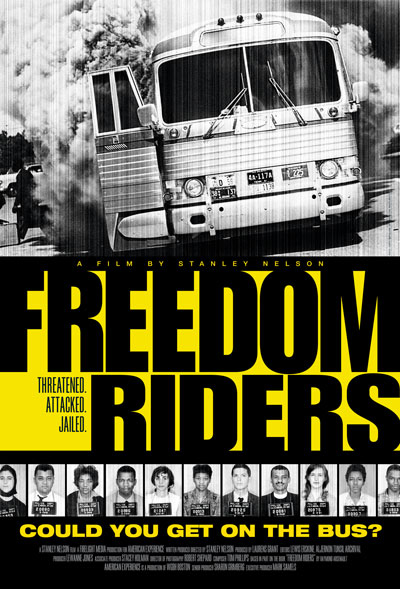
I was working with this documentary with Peace Studies students last week and I was amazed, inspired and awed at the courage and passion of the students who participated in the Freedom Rides.
To watch it online
Wednesday, April 18, 2012
Uprising Radio: A special one-hour program on the South Central Farm in Los Angeles – lessons in human rights, immigrant rights, ecological sustainability, and activism. We’ll hear from farmers, organizers, local reporters, and more.
A special one-hour program on the South Central Farm in Los Angeles – lessons in human rights, immigrant rights, ecological sustainability, and activism. We’ll hear from farmers, organizers, local reporters, and more.
Uprising Radio

GUESTS: Fernando Flores, Rosa Romero, Alberto Taltoa, members of the South Central Farmers Support Committee, Aura Bogado, Anchor of Free Speech Radio News, Daniel Hernandez, LA Weekly Reporters, Peter Camejo, Green Party Candidate for Vice President (2004).
After weeks of nightly vigils and high tension, the South Central Farmers in Los Angeles were forcibly from the largest urban community garden in the United States.
For fourteen years poor, immigrant farmers from Los Angeles have been cultivating 14 acres of uninhabited land in the middle of an industrial region in South Central. They have grown rare, heirloom plants from Latin America, naturally and organically, feeding 350 families. The land was originally cultivated after the Rodney King uprising in 1992, when it was given to the neighborhood. The city of Los Angeles instead turned around and sold the land to a developer named Ralph Horowitz in a “backroom deal” for about $5 million.
Since [2005] the farmers have been struggling to save their garden from Horowitz who was ready to develop the land. They got organized and elected representatives who functioned as full time organizers and campaigned to save the farm. They campaigned for LA Mayor Antonio Villaraigosa, the city’s first Mexican American mayor, to save the farm.
The link between immigrant rights and environmental activism has attracted widespread support for the South Central farm. Horowitz initially agreed to sell the farm for $16.5 million and gave the farmers a March deadline to raise the cash. The deadline came and went, at which point LA Sheriffs were called upon to evict the farmers. Finally, in early June the Annenberg Foundation, teaming with the Trust for Public Land managed to pledge the amount that Horowitz was asking for. But Horowitz turned down the offer and on Tuesday June 13th, police forcibly evicted the farmers and the dozens of activists that had been camping on the farm.
The story initially got little national attention. But when Actress Daryl Hannah sat in a tree to protest the eviction, national media rushed to cover it. On Uprising, we’ve been covering the story of the South Central Farm for many months in our local programming. It is a profound story with many lessons for linking issues, sustainability, human rights, and activism. Today we present a special program on the South Central farm, with interviews from as early as this March to just a few days ago.
We begin with in interview with Fernando Flores, a member of the South Central Farm Support Coalition. Green Party Vice Presidential candidate Peter Camejo visited the farm and explained its the significance in our organizing.
We turn next to Rosa Romero and Alberto Taltoa who spoke with us on May 17th about the struggle to raise enough money to buy the farm from the developer, Ralph Horowitz.
Aura Bogado, the anchor for Free Speech Radio News, had been reporting from the farm. As the eviction became more imminent, activists began camping out at the farm. Bogado spent the night on May 25th and reported to us about what was taking place.
In the middle of the impending eviction, LA Weekly reporter Daniel Hernandez wrote a controversial article about some of the internal problems at the farm. Some farmers who had left the farm claimed that they were kicked out by the farm leadership. He joined us on Uprising on June 12th to explain the situation, as well as help see the South Central Farm in a broader context.
I asked Rosa Romero to respond to the allegations that Daniel Hernandez had made about internal problems among the farmers.
Finally, on the morning of June 13th, the sheriffs arrived and began evicting the farmers. After months of organizing, and finally raising the money needed, the developer Ralph Horowitz, decided not to sell the farm to the farmers. Again, FSRN’s Aura Bogado reported from the farm on the day of the eviction.
More than 40 arrests were made. Horowitz told the Los Angeles Times, “If the farmers got a donation and said, `We got $50 million, would you sell it to us?’ I would say no. Not a chance… It’s not about the money.” Mayor Antonio Villaraigosa released a statement calling the eviction “disheartening and unnecessary.” He went to on say that “I understand a businessman’s need to invest and make a profit… But I also believe that we are called upon by a sense of community and civic duty to do the just and right thing. I had hoped that the landowner would have heeded that call.”
Aura Bogado put together this montage of sounds and interviews from the day of the eviction.
The struggle to save the farm continues with regular vigils being held in front of the farm and the LA City Hall. For more information on the South Central Farmers.
Sonali’s Subversive Thought for the Day:
We play an excerpt from a recent talk by Vandana Shiva on the “mono-culture of the mind.”
To Listen to the Episode
Uprising Radio
GUESTS: Fernando Flores, Rosa Romero, Alberto Taltoa, members of the South Central Farmers Support Committee, Aura Bogado, Anchor of Free Speech Radio News, Daniel Hernandez, LA Weekly Reporters, Peter Camejo, Green Party Candidate for Vice President (2004).
After weeks of nightly vigils and high tension, the South Central Farmers in Los Angeles were forcibly from the largest urban community garden in the United States.
For fourteen years poor, immigrant farmers from Los Angeles have been cultivating 14 acres of uninhabited land in the middle of an industrial region in South Central. They have grown rare, heirloom plants from Latin America, naturally and organically, feeding 350 families. The land was originally cultivated after the Rodney King uprising in 1992, when it was given to the neighborhood. The city of Los Angeles instead turned around and sold the land to a developer named Ralph Horowitz in a “backroom deal” for about $5 million.
Since [2005] the farmers have been struggling to save their garden from Horowitz who was ready to develop the land. They got organized and elected representatives who functioned as full time organizers and campaigned to save the farm. They campaigned for LA Mayor Antonio Villaraigosa, the city’s first Mexican American mayor, to save the farm.
The link between immigrant rights and environmental activism has attracted widespread support for the South Central farm. Horowitz initially agreed to sell the farm for $16.5 million and gave the farmers a March deadline to raise the cash. The deadline came and went, at which point LA Sheriffs were called upon to evict the farmers. Finally, in early June the Annenberg Foundation, teaming with the Trust for Public Land managed to pledge the amount that Horowitz was asking for. But Horowitz turned down the offer and on Tuesday June 13th, police forcibly evicted the farmers and the dozens of activists that had been camping on the farm.
The story initially got little national attention. But when Actress Daryl Hannah sat in a tree to protest the eviction, national media rushed to cover it. On Uprising, we’ve been covering the story of the South Central Farm for many months in our local programming. It is a profound story with many lessons for linking issues, sustainability, human rights, and activism. Today we present a special program on the South Central farm, with interviews from as early as this March to just a few days ago.
We begin with in interview with Fernando Flores, a member of the South Central Farm Support Coalition. Green Party Vice Presidential candidate Peter Camejo visited the farm and explained its the significance in our organizing.
We turn next to Rosa Romero and Alberto Taltoa who spoke with us on May 17th about the struggle to raise enough money to buy the farm from the developer, Ralph Horowitz.
Aura Bogado, the anchor for Free Speech Radio News, had been reporting from the farm. As the eviction became more imminent, activists began camping out at the farm. Bogado spent the night on May 25th and reported to us about what was taking place.
In the middle of the impending eviction, LA Weekly reporter Daniel Hernandez wrote a controversial article about some of the internal problems at the farm. Some farmers who had left the farm claimed that they were kicked out by the farm leadership. He joined us on Uprising on June 12th to explain the situation, as well as help see the South Central Farm in a broader context.
I asked Rosa Romero to respond to the allegations that Daniel Hernandez had made about internal problems among the farmers.
Finally, on the morning of June 13th, the sheriffs arrived and began evicting the farmers. After months of organizing, and finally raising the money needed, the developer Ralph Horowitz, decided not to sell the farm to the farmers. Again, FSRN’s Aura Bogado reported from the farm on the day of the eviction.
More than 40 arrests were made. Horowitz told the Los Angeles Times, “If the farmers got a donation and said, `We got $50 million, would you sell it to us?’ I would say no. Not a chance… It’s not about the money.” Mayor Antonio Villaraigosa released a statement calling the eviction “disheartening and unnecessary.” He went to on say that “I understand a businessman’s need to invest and make a profit… But I also believe that we are called upon by a sense of community and civic duty to do the just and right thing. I had hoped that the landowner would have heeded that call.”
Aura Bogado put together this montage of sounds and interviews from the day of the eviction.
The struggle to save the farm continues with regular vigils being held in front of the farm and the LA City Hall. For more information on the South Central Farmers.
Sonali’s Subversive Thought for the Day:
We play an excerpt from a recent talk by Vandana Shiva on the “mono-culture of the mind.”
To Listen to the Episode
Thursday, February 2, 2012
Amy E. Borden: At the global market -- Ousmane Sembène’s Moolaadé and the economics of women’s rights
At the global market: Ousmane Sembène’s Moolaadé and the economics of women’s rights
by Amy E. Borden
Jump Cut
In Moolaadé Sembène considers how women may effect change in their communities and families if given access to the economic and cultural power that had in previous generations been reserved for men. Focusing on both Moolaadé’s narrative and its funding history, I argue that Sembène uses a narrative form that features the development from individual activist to collective force to depict the potentially liberating force of internationally defined human rights in a West African context when used by local activists. His depiction of women as collective and individual forces for change touches on questions of the libratory potential of capitalism and media as modernizing forces for a contemporary generation of African community leaders.
The depiction of modern activism within the Islamic, West African community depicted in the film is presented diegetically via the narrative construction of the film’s main character, Collé, played by renowned Malian women’s rights activist, Fatoumata Coulibaly. Collé is constructed as an individual whose personal experiences offer an interiorized psychological depiction and history of a woman now advocating for cultural change; she uses her personal experiences to change community practice and belief. In the script, Collé’s ability to assert her personal experiences and values within the community may best be understood as a staging of the drama of human rights activism. In some ways, the character exemplifies ways in which contemporary human rights declarations and proclamations issued by, for example, the United Nations; additional NGOs, such as Tostan — a Senegalese women’s rights NGO; and various African continental human rights treaties, such as the African Banjul Charter, may be translated into local action on the part of activists and grass-roots campaigns aimed at ending FGC, and, by extension, advance West African women’s rights.[10]
J. Hoberman describes the film as “diagrammatic” in its approach to women’s rights in a review prior to the film’s New York theatrical run (“Auteurs”). He particularly cites the rousing rally staged in front of the community’s male elders at the end of the film where the majority of the village women adopt Collé’s position against genital cutting. The rally is staged and shot as a public performance; it mimics events sponsored by anti-FGC NGO Tostan, which has held rallies celebrating the decision by local women to end FGC in communities throughout Senegal.[11] In the scene’s staging, the village elders occupy one third of the on-screen space, the pro-Collé supporters another third, and the salindana occupy the final third, eventually joining the community’s women creating a division between the sexes in the blocking of the sequence. The lesson of this rally is bolstered by a mother, Salba, who holds her infant godchild in the air while chanting alongside the other village women that this girl will not be “cut,” that no girls will ever be “cut” again.
In addition to the film’s conclusion, Hoberman is perhaps more correct in his reading than he imagined. As I will argue, the plot of Sembène’s final feature film strongly resonates with articles inscribed in the 1948 United Nations Universal Declaration of Human Rights as well as the 1980 establishment and 1993 strengthening of provisions for the rights of women in the UN the Convention on the Elimination of Discrimination Against Women (CEDAW).[12] The entire premise of the film — the right of protection or moolaadé — is specifically covered in the UN Universal Human Rights Declaration as the right of seeking and enjoying in other countries “asylum from persecution.”[13] If one accepts the film’s central thesis that ritual “purification” is a form of persecution, Collé is justified in creating a free space beyond the rules confining conduct in the village (Moolaadé). The sanctuary she creates via the moolaadé is akin to a nation-state with its distinct but permeable boundary — members of the community may move between it and the village at large. They may not, however, remove the young girls who have sought sanctuary from the space without Collé’s permission. Much like a sovereign authority, it is only Collé’s “word” that may release the girls from their protected space (Moolaadé). Additionally, the space Collé creates emerges from a historical tradition understood as juridical within the village because of its ability to punish or allow clemency. This tradition is substantiated in the community via the cultural memory marked in the village by the termite mound.
Sembène’s career-long critique of nation as a corrupted patriarchal institution that denies equal rights to women complicates the idea that a sovereign space akin to a nation-state may provide safety. The fact, then, that this asylum is enacted by and controlled by Collé, a woman, is significant because it asserts the ability of women to claim sovereign power from local, cultural traditions. Collé’s ability to provide asylum and to assert that ability within the community may be seen as a performance of the provision in the UN human rights’ declaration that states, “Everyone has the right freely to participate in the cultural life of the community” and guarantees “the right to…security of person.”[14] The fact that both the men and women of the community respect the sanctity of the moolaadé regardless of the gender of its enactor points to local cultural traditions on which activists may build in the pursuit of women’s rights.
Anthropologist Ellen Gruenbaum describes how asylum has become an effective means for women to remain in first world countries — “Canada, Australia, Sweden, and others” to avoid FGC in their home nation.[15] It is an increasingly useful tool for women to gain protection for themselves and for parents to gain protection for their female children. While limited, the practice has received a lot of press coverage, particularly following Togo citizen Fauziya Kassindja’s and Ghanian citizen Adelaide Abankwah’s applications for US asylum in the late-1990s and Malian Aminata Diop’s application for asylum in France in the early-1990s.[16] Citing the increased recognition of cultural practices as a basis for asylum, Gruenbaum argues,
“The use of asylum provisions for cultural, rather than strictly political, risks is a remarkable development, giving new stature to the human rights of women and children to be protected from the effects of their social and economic disempowerment. The basis for such claims to asylum is the 1951 UN Refugee Convention, on the grounds that these women would be at risk of grievous harm in the forms of FGM [female genital mutilation] if they were to return home.” (217)
By enacting a local cultural custom to create an asylum within the community, Collé effectively relocates an international anti-FGC human rights tool at the local level. This staging allows Sembène to provide an argument for local change that does not draw directly on the authority of the laws of other nations, as is the case with the asylum cases mentioned previously, nor directly on international conventions, such as the UN Refugee Convention Gruenbaum cites. Sembène’s use of asylum as a juridical form of protection indirectly draws from the discourse surrounding international efforts to end FGC, yet forcefully argues for local, community-driven actions.
To Read the Rest of the Essay
by Amy E. Borden
Jump Cut
In Moolaadé Sembène considers how women may effect change in their communities and families if given access to the economic and cultural power that had in previous generations been reserved for men. Focusing on both Moolaadé’s narrative and its funding history, I argue that Sembène uses a narrative form that features the development from individual activist to collective force to depict the potentially liberating force of internationally defined human rights in a West African context when used by local activists. His depiction of women as collective and individual forces for change touches on questions of the libratory potential of capitalism and media as modernizing forces for a contemporary generation of African community leaders.
The depiction of modern activism within the Islamic, West African community depicted in the film is presented diegetically via the narrative construction of the film’s main character, Collé, played by renowned Malian women’s rights activist, Fatoumata Coulibaly. Collé is constructed as an individual whose personal experiences offer an interiorized psychological depiction and history of a woman now advocating for cultural change; she uses her personal experiences to change community practice and belief. In the script, Collé’s ability to assert her personal experiences and values within the community may best be understood as a staging of the drama of human rights activism. In some ways, the character exemplifies ways in which contemporary human rights declarations and proclamations issued by, for example, the United Nations; additional NGOs, such as Tostan — a Senegalese women’s rights NGO; and various African continental human rights treaties, such as the African Banjul Charter, may be translated into local action on the part of activists and grass-roots campaigns aimed at ending FGC, and, by extension, advance West African women’s rights.[10]
J. Hoberman describes the film as “diagrammatic” in its approach to women’s rights in a review prior to the film’s New York theatrical run (“Auteurs”). He particularly cites the rousing rally staged in front of the community’s male elders at the end of the film where the majority of the village women adopt Collé’s position against genital cutting. The rally is staged and shot as a public performance; it mimics events sponsored by anti-FGC NGO Tostan, which has held rallies celebrating the decision by local women to end FGC in communities throughout Senegal.[11] In the scene’s staging, the village elders occupy one third of the on-screen space, the pro-Collé supporters another third, and the salindana occupy the final third, eventually joining the community’s women creating a division between the sexes in the blocking of the sequence. The lesson of this rally is bolstered by a mother, Salba, who holds her infant godchild in the air while chanting alongside the other village women that this girl will not be “cut,” that no girls will ever be “cut” again.
In addition to the film’s conclusion, Hoberman is perhaps more correct in his reading than he imagined. As I will argue, the plot of Sembène’s final feature film strongly resonates with articles inscribed in the 1948 United Nations Universal Declaration of Human Rights as well as the 1980 establishment and 1993 strengthening of provisions for the rights of women in the UN the Convention on the Elimination of Discrimination Against Women (CEDAW).[12] The entire premise of the film — the right of protection or moolaadé — is specifically covered in the UN Universal Human Rights Declaration as the right of seeking and enjoying in other countries “asylum from persecution.”[13] If one accepts the film’s central thesis that ritual “purification” is a form of persecution, Collé is justified in creating a free space beyond the rules confining conduct in the village (Moolaadé). The sanctuary she creates via the moolaadé is akin to a nation-state with its distinct but permeable boundary — members of the community may move between it and the village at large. They may not, however, remove the young girls who have sought sanctuary from the space without Collé’s permission. Much like a sovereign authority, it is only Collé’s “word” that may release the girls from their protected space (Moolaadé). Additionally, the space Collé creates emerges from a historical tradition understood as juridical within the village because of its ability to punish or allow clemency. This tradition is substantiated in the community via the cultural memory marked in the village by the termite mound.
Sembène’s career-long critique of nation as a corrupted patriarchal institution that denies equal rights to women complicates the idea that a sovereign space akin to a nation-state may provide safety. The fact, then, that this asylum is enacted by and controlled by Collé, a woman, is significant because it asserts the ability of women to claim sovereign power from local, cultural traditions. Collé’s ability to provide asylum and to assert that ability within the community may be seen as a performance of the provision in the UN human rights’ declaration that states, “Everyone has the right freely to participate in the cultural life of the community” and guarantees “the right to…security of person.”[14] The fact that both the men and women of the community respect the sanctity of the moolaadé regardless of the gender of its enactor points to local cultural traditions on which activists may build in the pursuit of women’s rights.
Anthropologist Ellen Gruenbaum describes how asylum has become an effective means for women to remain in first world countries — “Canada, Australia, Sweden, and others” to avoid FGC in their home nation.[15] It is an increasingly useful tool for women to gain protection for themselves and for parents to gain protection for their female children. While limited, the practice has received a lot of press coverage, particularly following Togo citizen Fauziya Kassindja’s and Ghanian citizen Adelaide Abankwah’s applications for US asylum in the late-1990s and Malian Aminata Diop’s application for asylum in France in the early-1990s.[16] Citing the increased recognition of cultural practices as a basis for asylum, Gruenbaum argues,
“The use of asylum provisions for cultural, rather than strictly political, risks is a remarkable development, giving new stature to the human rights of women and children to be protected from the effects of their social and economic disempowerment. The basis for such claims to asylum is the 1951 UN Refugee Convention, on the grounds that these women would be at risk of grievous harm in the forms of FGM [female genital mutilation] if they were to return home.” (217)
By enacting a local cultural custom to create an asylum within the community, Collé effectively relocates an international anti-FGC human rights tool at the local level. This staging allows Sembène to provide an argument for local change that does not draw directly on the authority of the laws of other nations, as is the case with the asylum cases mentioned previously, nor directly on international conventions, such as the UN Refugee Convention Gruenbaum cites. Sembène’s use of asylum as a juridical form of protection indirectly draws from the discourse surrounding international efforts to end FGC, yet forcefully argues for local, community-driven actions.
To Read the Rest of the Essay
Sunday, December 18, 2011
Greg Tate: Fight for rights, will to power -- The Black Power Mixtape 1967-1975
Fight for rights, will to power: The Black Power Mixtape 1967-1975
by Greg Tate
Sight and Sound (British Film Institute)

...
The Black Power Mixtape Remixed 1967-1975 is an exotic document of this turbulent, extremely violent transitional moment in American race history. Exotic because it’s the culmination of the near-decade an intrepid Swedish TV news team spent interviewing prominent Black American radicals of the day – Stokley Carmichael, Huey Newton, Bobby Seale, Eldridge Cleaver, Elaine Brown and Angela Davis. All were dramatic, eloquent, charismatic figures of their time who, except for the still-active Davis, are today hardly household names to the average black American under 40.
Like Jimi Hendrix or Bob Dylan, they all seem incredibly well-prepared in their mid 20s to set the world aflame intellectually and dominate the media – but far less prepared than the Viet Cong or Fidel Castro to withstand the withering, brute and constitutionally illegal attacks directed at them and theirs by the US government, especially the FBI’s fascistic overlord J Edgar Hoover.
Time has not diminished their critiques of American power or racism, nor their undeniable star power – any of them and their radical histories could easily sustain a documentary or narrative feature film of its own. Mixtape captures most of them in the short period before they would be tried, convicted or exiled by Hoover’s stated and manically implemented obsession with preventing the “rise of another black prophet” after King.
The footage of Carmichael and Davis is the most poignant and illuminating. Though the film doesn’t say so, it was Carmichael who brought the phrase ‘Black Power’ into vogue, famously goading King to give it airtime near the end of the two-week-long march to Selma, Alabama. The film demands that those who don’t know these figures investigate them afterwards for more background and context. On film the jocular Carmichael proves so at ease in his own skin that he could have given Sidney Poitier competition as a leading man, and challenged Bob Marley as a lyrical protest balladeer.
Carmichael invites himself to take over an interview the news crew had wrangled with his mother in the Chicago-projects apartment in which he was raised. He then patiently extracts from her the pained admission that his Trinidadian immigrant father, a skilled carpenter, was a lifelong victim of employment discrimination.
As noted by progressive hip-hop MC Talib Kweli in his voiceover, Carmichael emerges here as a “regular guy” who also happened to be a incendiary and mesmerising speaker – one still so provocative that Kweli recalls being accosted by FBI and TSA agents at an airport after 9/11 for merely listening to a 40-year-old Carmichael speech. Some may take Kweli’s intimation of wiretaps as conspiratorial and apocryphal, but no-one familiar with Hoover’s paranoia and surveillance of black progressives will be among them. (The biggest laugh in the film comes from Hoover’s claim that the most dangerous threat to the internal security of the United States was the Black Panther party’s free breakfast program. But Hoover was not joking.)
The progress of the film is also a tacit record of the Panther’s off-screen dismantling by Nixon and Hoover’s COINTELPRO conspiracy against black leadership. The Panther’s demise by exile, imprisonment and judicial malfeasance is presented at a glance, but the Panthers expended all their political capital on the campaigns to Free Huey Newton, Bobby Seale and Angela Davis.
Davis’s prison interview here offers the most astute and moving rationale for extreme black retaliation to American racial extremists. When asked to justify the advocacy of black violence, Davis recalls her childhood experience of her Birmingham, Alabama community being routinely bombed by Klansmen at the behest of notorious county sheriff Bull Connor. Davis recalls this motherfucker using local radio to promote and direct such violence on a weekly basis. The extreme close-up of her angry, watering eyes when she speaks of the discovery of four classmates’ body parts after the infamous 1963 Birmingham church bombing provides all the justification for retribution any rational person should need.
To Read the Rest of the Commentary
by Greg Tate
Sight and Sound (British Film Institute)
...
The Black Power Mixtape Remixed 1967-1975 is an exotic document of this turbulent, extremely violent transitional moment in American race history. Exotic because it’s the culmination of the near-decade an intrepid Swedish TV news team spent interviewing prominent Black American radicals of the day – Stokley Carmichael, Huey Newton, Bobby Seale, Eldridge Cleaver, Elaine Brown and Angela Davis. All were dramatic, eloquent, charismatic figures of their time who, except for the still-active Davis, are today hardly household names to the average black American under 40.
Like Jimi Hendrix or Bob Dylan, they all seem incredibly well-prepared in their mid 20s to set the world aflame intellectually and dominate the media – but far less prepared than the Viet Cong or Fidel Castro to withstand the withering, brute and constitutionally illegal attacks directed at them and theirs by the US government, especially the FBI’s fascistic overlord J Edgar Hoover.
Time has not diminished their critiques of American power or racism, nor their undeniable star power – any of them and their radical histories could easily sustain a documentary or narrative feature film of its own. Mixtape captures most of them in the short period before they would be tried, convicted or exiled by Hoover’s stated and manically implemented obsession with preventing the “rise of another black prophet” after King.
The footage of Carmichael and Davis is the most poignant and illuminating. Though the film doesn’t say so, it was Carmichael who brought the phrase ‘Black Power’ into vogue, famously goading King to give it airtime near the end of the two-week-long march to Selma, Alabama. The film demands that those who don’t know these figures investigate them afterwards for more background and context. On film the jocular Carmichael proves so at ease in his own skin that he could have given Sidney Poitier competition as a leading man, and challenged Bob Marley as a lyrical protest balladeer.
Carmichael invites himself to take over an interview the news crew had wrangled with his mother in the Chicago-projects apartment in which he was raised. He then patiently extracts from her the pained admission that his Trinidadian immigrant father, a skilled carpenter, was a lifelong victim of employment discrimination.
As noted by progressive hip-hop MC Talib Kweli in his voiceover, Carmichael emerges here as a “regular guy” who also happened to be a incendiary and mesmerising speaker – one still so provocative that Kweli recalls being accosted by FBI and TSA agents at an airport after 9/11 for merely listening to a 40-year-old Carmichael speech. Some may take Kweli’s intimation of wiretaps as conspiratorial and apocryphal, but no-one familiar with Hoover’s paranoia and surveillance of black progressives will be among them. (The biggest laugh in the film comes from Hoover’s claim that the most dangerous threat to the internal security of the United States was the Black Panther party’s free breakfast program. But Hoover was not joking.)
The progress of the film is also a tacit record of the Panther’s off-screen dismantling by Nixon and Hoover’s COINTELPRO conspiracy against black leadership. The Panther’s demise by exile, imprisonment and judicial malfeasance is presented at a glance, but the Panthers expended all their political capital on the campaigns to Free Huey Newton, Bobby Seale and Angela Davis.
Davis’s prison interview here offers the most astute and moving rationale for extreme black retaliation to American racial extremists. When asked to justify the advocacy of black violence, Davis recalls her childhood experience of her Birmingham, Alabama community being routinely bombed by Klansmen at the behest of notorious county sheriff Bull Connor. Davis recalls this motherfucker using local radio to promote and direct such violence on a weekly basis. The extreme close-up of her angry, watering eyes when she speaks of the discovery of four classmates’ body parts after the infamous 1963 Birmingham church bombing provides all the justification for retribution any rational person should need.
To Read the Rest of the Commentary
Subscribe to:
Posts (Atom)