I just found the documentary "The American Nightmare" for a student writing about horror films -- highly recommended look at the epic changes in the genre in the early 70s.
Showing posts with label War. Show all posts
Showing posts with label War. Show all posts
Wednesday, October 30, 2013

Monday, July 15, 2013
Left Field Cinema -- Documentary Milestone: The Fog of War – Eleven Lessons From the Life of Robert S. McNamara
Documentary Milestone: The Fog of War – Eleven Lessons From the Life of Robert S. McNamara
Left Field Cinema

The Fog of War is Directed by Errol Morris perhaps the most celebrated American documentarian, if not as well known as Michael Moore by the public, Morris is certainly a critical darling. Roger Ebert considers Morris’s first film Gates of Heaven, a documentary about pet cemeteries, as one of his top ten films of all time. Gates of Heaven also provides an entertaining anecdote, in which Werner Herzog promised if Morris ever finished the film he would eat his shoe. Herzog’s insanity can be seen in the short film Werner Herzog Eats His Shoe. Morris’s third feature remains his best known. Thin Blue Line, which followed Vernon, Florida, remains one of the most powerful artistic statements by any filmmaker. Thin Blue Line lead to the subject of the film to have his death row sentence changed to life in prison, then subsequently the initial verdict was over turned. Morris’s documentary directly contributed to this result. The style of the film relies on interviews and re-creations. This emphasis on non-fiction as a documentary style would become Morris’s calling card. Morris went to direct a series of further documentaries including 2008’s War on Terror documentary Standard Operating Procedure. Although Standard Operating Procedure has not been received as well as the earlier documentary Taxi to the Darkside by Alex Gibney which was also released last year it remains an interesting piece of work which focuses on Morris’s typical themes of the deceptive nature of what is considered to be “true”. Morris’s friendship with Werner Herzog makes a great deal of thematic sense, both men search for the ecstatic truth within their respective subjects often at the expense of what could be considered the conventional approach.
The Fog of War presents Morris on top form, a self-proclaimed detective director (which suits him well as he previously worked as a private eye) Morris constructs The Fog of War in such a simplistic manner that it baffles the mind to witness how compelling it is. The entire film is essentially a one-hundred and five minute interview with its subject. The subject being Robert Strange McNamara the Secretary of Defense for John F. Kennedy and Lyndon B. Johnson, and previously an analyst for the Japanese bombings in World War Two and briefly the first President of Ford motors to not belong to the Ford family. He is a man who’s life begins at the end of the first World War, indeed he is adamant that his first memory was that of the victory parades, the celebrations at the end of the “War to end all Wars” following this we witness the part he played in World War II, the Cold war, and the Cuban Missile Crisis, then finally the Vietnam War. McNamara is a man who’s been surrounded by war all of his life. His contribution to the global politics over the 20th Century is a matter for speculation, by that I mean what real effect he had on events, of which McNamara himself is often uncertain. But as a witness to some of the pivotal events in recent history, you’ll be hard pressed to find a man alive who’s seen so much, witnessed such extremes of human behaviour, or gained such a vast understanding of the moral, amoral, and immoral tapestry that is war. McNamara has amazing recall for a man aged eighty-five casting his mind back more than forty years. He is charismatic figure, who sense of irony and wit cannot be denied. However, the man remains even now the consummate politician.
To Read the Rest
Left Field Cinema
The Fog of War is Directed by Errol Morris perhaps the most celebrated American documentarian, if not as well known as Michael Moore by the public, Morris is certainly a critical darling. Roger Ebert considers Morris’s first film Gates of Heaven, a documentary about pet cemeteries, as one of his top ten films of all time. Gates of Heaven also provides an entertaining anecdote, in which Werner Herzog promised if Morris ever finished the film he would eat his shoe. Herzog’s insanity can be seen in the short film Werner Herzog Eats His Shoe. Morris’s third feature remains his best known. Thin Blue Line, which followed Vernon, Florida, remains one of the most powerful artistic statements by any filmmaker. Thin Blue Line lead to the subject of the film to have his death row sentence changed to life in prison, then subsequently the initial verdict was over turned. Morris’s documentary directly contributed to this result. The style of the film relies on interviews and re-creations. This emphasis on non-fiction as a documentary style would become Morris’s calling card. Morris went to direct a series of further documentaries including 2008’s War on Terror documentary Standard Operating Procedure. Although Standard Operating Procedure has not been received as well as the earlier documentary Taxi to the Darkside by Alex Gibney which was also released last year it remains an interesting piece of work which focuses on Morris’s typical themes of the deceptive nature of what is considered to be “true”. Morris’s friendship with Werner Herzog makes a great deal of thematic sense, both men search for the ecstatic truth within their respective subjects often at the expense of what could be considered the conventional approach.
The Fog of War presents Morris on top form, a self-proclaimed detective director (which suits him well as he previously worked as a private eye) Morris constructs The Fog of War in such a simplistic manner that it baffles the mind to witness how compelling it is. The entire film is essentially a one-hundred and five minute interview with its subject. The subject being Robert Strange McNamara the Secretary of Defense for John F. Kennedy and Lyndon B. Johnson, and previously an analyst for the Japanese bombings in World War Two and briefly the first President of Ford motors to not belong to the Ford family. He is a man who’s life begins at the end of the first World War, indeed he is adamant that his first memory was that of the victory parades, the celebrations at the end of the “War to end all Wars” following this we witness the part he played in World War II, the Cold war, and the Cuban Missile Crisis, then finally the Vietnam War. McNamara is a man who’s been surrounded by war all of his life. His contribution to the global politics over the 20th Century is a matter for speculation, by that I mean what real effect he had on events, of which McNamara himself is often uncertain. But as a witness to some of the pivotal events in recent history, you’ll be hard pressed to find a man alive who’s seen so much, witnessed such extremes of human behaviour, or gained such a vast understanding of the moral, amoral, and immoral tapestry that is war. McNamara has amazing recall for a man aged eighty-five casting his mind back more than forty years. He is charismatic figure, who sense of irony and wit cannot be denied. However, the man remains even now the consummate politician.
To Read the Rest
Thursday, March 21, 2013
Democracy Now: Dying Iraq War Veteran Tomas Young Explains Decision to End His Life
Exclusive: Dying Iraq War Veteran Tomas Young Explains Decision to End His Life
Democracy Now
In the week marking the 10th anniversary of the U.S. invasion of Iraq, we spend the hour looking at the remarkable life and imminent death of Iraq War veteran Tomas Young. Citing his overwhelming physical pain from wounds that left him paralyzed in Iraq, Young recently announced he has decided to end his life by discontinuing his medicine and nourishment, which comes in the form of liquid through a feeding tube. Young joins to explain his decision from his home in Kansas City, along with his wife Claudia Cuellar. We’re also joined by Phil Donahue, the legendary TV talk show host, whose 2007 documentary, "Body of War," follows Tomas’ rehabilitation and his political awakening to become one of the most prominent antiwar U.S. veterans speaking out against the invasion and occupation of Iraq. "I am, on one hand, sick and tired of being sick and tired," Young says. "And on the other, I don’t want to watch my body waste away." Donahue calls Tomas’ announcement "a very unusual act of moral courage. He wants people to see this, because he came home from the most sanitized war of my lifetime. We don’t see this. But less than 5 percent of us, maybe 1 percent ... have made a personal sacrifice for this war. And Tomas is one of them."
Guests:
Tomas Young, Iraq War veteran and the main subject of the documentary, Body of War. On April 4, 2004, his fifth day in Iraq, Young’s unit came under fire in the Sadr City neighborhood of Baghdad. Young was left paralyzed, never to walk again. Released from medical care three months later, Young returned home to become an active member in Iraq Veterans Against the War. He recently announced that he will stop his nourishment, which comes in the form of liquid through a feeding tube — a decision which will hasten his death.
Phil Donahue, one of the best-known talk show hosts in U.S. television history, his show was on the air for more than 29 years. In 2002, he returned to the airwaves, but he was fired in 2003 on the eve of the war by MSNBC because he was allowing antiwar voices on the air. Along with Ellen Spiro, he directed the documentary, Body of War, which tells the story of Tomas Young, an Iraq War veteran paralyzed from a bullet to the spine. Now, at the age of 33, Tomas has decided to end his life.
Claudia Cuellar, the wife and primary caregiver of Tomas Young.
To Watch the Episode
Democracy Now
In the week marking the 10th anniversary of the U.S. invasion of Iraq, we spend the hour looking at the remarkable life and imminent death of Iraq War veteran Tomas Young. Citing his overwhelming physical pain from wounds that left him paralyzed in Iraq, Young recently announced he has decided to end his life by discontinuing his medicine and nourishment, which comes in the form of liquid through a feeding tube. Young joins to explain his decision from his home in Kansas City, along with his wife Claudia Cuellar. We’re also joined by Phil Donahue, the legendary TV talk show host, whose 2007 documentary, "Body of War," follows Tomas’ rehabilitation and his political awakening to become one of the most prominent antiwar U.S. veterans speaking out against the invasion and occupation of Iraq. "I am, on one hand, sick and tired of being sick and tired," Young says. "And on the other, I don’t want to watch my body waste away." Donahue calls Tomas’ announcement "a very unusual act of moral courage. He wants people to see this, because he came home from the most sanitized war of my lifetime. We don’t see this. But less than 5 percent of us, maybe 1 percent ... have made a personal sacrifice for this war. And Tomas is one of them."
Guests:
Tomas Young, Iraq War veteran and the main subject of the documentary, Body of War. On April 4, 2004, his fifth day in Iraq, Young’s unit came under fire in the Sadr City neighborhood of Baghdad. Young was left paralyzed, never to walk again. Released from medical care three months later, Young returned home to become an active member in Iraq Veterans Against the War. He recently announced that he will stop his nourishment, which comes in the form of liquid through a feeding tube — a decision which will hasten his death.
Phil Donahue, one of the best-known talk show hosts in U.S. television history, his show was on the air for more than 29 years. In 2002, he returned to the airwaves, but he was fired in 2003 on the eve of the war by MSNBC because he was allowing antiwar voices on the air. Along with Ellen Spiro, he directed the documentary, Body of War, which tells the story of Tomas Young, an Iraq War veteran paralyzed from a bullet to the spine. Now, at the age of 33, Tomas has decided to end his life.
Claudia Cuellar, the wife and primary caregiver of Tomas Young.
To Watch the Episode
Wednesday, February 13, 2013
Sunday, February 10, 2013
Little Atoms Interviews of Journalist/Filmmaker Adam Curtis
"Adam Curtis is a producer, writer and director of television documentaries such as Pandora's Box, The Mayfair Set, The Century of the Self, The Power of Nightmares and The Trap. Curtis' programs, though always about serious issues, maintain a sense of tongue-in-cheek humor and are characteristic in their extensive use of archive footage. In his film making, Curtis strives to find meaningful connections between historical situations and often focuses on the impact different ideologies have had on modern society. Adam's latest series, All Watched Over by Machines of Loving Grace..."
Link to the Two Interviews at Little Atoms
More resources:
Pt 1 of the Little Atoms Interview explores his earlier documentaries, including his influential The Power of Nightmares

The Power of Nightmares: The Rise of the Politics of Fear
Is the threat of radical Islamism as a massive sinister organised force of destruction, specifically in the form of al-Qaeda, a myth perpetrated by politicians in many countries—and particularly American Neo-Conservatives—in an attempt to ‘unite and inspire’ people following the failure of earlier, more utopian ideologies?
To Watch the 3 Part Series
Part 1 — Baby It’s Cold Outside
The first part of the series explains the origin of Islamism and Neo-Conservatism and draws the parallels between the two of their “optimistic visions to change the world”. It shows Egyptian civil servant Sayyid Qutb, depicted as the founder of modern Islamist thought, visiting the US to learn about the education system, but becoming disgusted with what he saw as a corruption of morals and virtues in western society through consumerism. When he returns to Egypt, he is disturbed by westernisation and becomes convinced that in order to save society it must be completely restructured along the lines of Islamic law while still using western technology. He also becomes convinced that this can only be accomplished through the use of an elite “vanguard” to lead a revolution against the established order. Qutb becomes a leader of the Muslim Brotherhood and, after being tortured in one of Nasser’s jails, comes to believe that western-influenced leaders can justly be killed for the sake of removing their corruption. Qutb is executed in 1966, but he influences the future mentor of Osama bin Laden, Ayman al-Zawahiri, to start his own secret Islamist group. Inspired by the 1979 Iranian revolution, Zawahiri and his allies assassinate Egyptian president Anwar Al Sadat, in 1981, in hopes of starting their own revolution. The revolution does not materialise and Zawahiri comes to believe that the majority of Muslims have been corrupted not only by their western-inspired leaders, but Muslims themselves have been affected by jahilliyah and thus both may be legitimate targets of violence if they do not join him. They continued to have the belief that a vanguard was necessary to rise up and overthrow the corrupt regime and replace with a pure Islamist state. At the same time in the United States, a group of disillusioned liberals, including Irving Kristol and Paul Wolfowitz, look to the political thinking of Leo Strauss after the perceived failure of President Johnson’s “Great Society”. They come to the conclusion that the emphasis on individual liberty was the undoing of the plan. They envisioned restructuring America by uniting the American people against a common evil, and set about creating a mythical enemy. These factions, the Neo-Conservatives, came to power under the Reagan administration, with their allies Dick Cheney and Donald Rumsfeld, and work to unite the United States in fear of the Soviet Union. The Neo-Conservatives allege the Soviet Union is not following the terms of disarmament between the two countries, and, with the investigation of “Team B”, they accumulate a case to prove this with dubious evidence and methods…
Part 2 — The Phantom Victory
The Soviet invasion of Afghanistan on 25 December 1979 gives a common cause to an extraordinary alliance of radical Islamists in Afghanistan and around the world and to the neo-conservatives in the US, as a key battleground of the Cold War. As the United States provides funding and arms–including even Stinger missiles capable of shooting down Soviet helicopters–to Islamic Mujahideen fighters who would fire them, a young wealthy Saudi called Osama Bin Laden is among the many foreigners drawn to Afghanistan. When the Soviets eventually pull out and when the Eastern Bloc begins to collapse in the late 1980s, both groups falsely believe they are the primary architects of the “Evil Empire’s” defeat. Back in America, the Neo-Conservatives’ aspirations to continue to use the United States military power for further destruction of evils are thrown off track by the ascent of George H. W. Bush to the presidency, followed by the 1992 election of Bill Clinton leaving them out of power. The Neo-Conservatives, with their conservative Christian allies, attempt to ‘demonise’ Clinton throughout his presidency with various real and fabricated stories of corruption and immorality, but to their disappointment, the American people do not turn against Clinton. The Islamist attempts at revolution end in massive bloodshed, leaving the Islamists without popular support. Zawahiri and bin Laden flee to the sufficiently safe Afghanistan and declare a new strategy; to fight Western-inspired moral decay they must deal a blow to its source — the United States.
Part 3 — The Shadows In The Cave
This final episode addresses the actual rise of al-Qaeda, in particular by examining the United States’ role in its creation: After their failed revolutions, bin Laden and Zawahiri had little or no popular support, let alone a serious complex organisation of terrorists, and were dependent upon independent operatives to carry out their new call for jihad. In order to prosecute bin Laden for the 1998 US embassy bombings, US prosecutors had to prove he was the head of a criminal organisation responsible for the bombings. They find a former associate of bin Laden, Jamal al-Fadl, and pay him to testify that bin Laden was the head of a massive terrorist organisation called “al-Qaeda”. With the September 11th attacks, Neo-Conservatives in the new Republican government of George W. Bush use this created concept of an organisation to justify another crusade against a new evil enemy, leading to the launch of the War on Terrorism. But after the American invasion of Afghanistan fails to uproot the alleged terrorist network, the Neo-Conservatives focus inwards, searching unsuccessfully for terrorist sleeper cells in America. They then extend the war on “terror” to a war against general perceived evils with the invasion of Iraq in 2003. The ideas and tactics also spread to the United Kingdom where Tony Blair uses the threat of terrorism to give him a new moral authority. The repercussions of the Neo-Conservative strategy are also explored with an investigation of indefinitely-detained terrorist suspects in Guantanamo Bay, many allegedly taken on the word of the anti-Taliban Northern Alliance without actual investigation on the part of the United States military, and other forms of “pre-emption” against non-existent and unlikely threats made simply on the grounds that the parties involved could later become a threat…
Pt 2 of the Little Atoms Interview above is about his documentary series: All Watched Over by Machines of Loving Grace

All Watched Over By Machines Of Loving Grace is a series about how humans have been colonised by the machines they have built — “Although we don’t realise it, the way we see everything in the world today is through the eyes of the computers.”
To Watch the 3 Part Series
Part 1 — Love and Power
Part one explores the dream that rose up in the 1990s that computers could create a new kind of stable world. They would bring about a new kind global capitalism free of all risk and without the boom and bust of the past. They would also abolish political power and create a new kind of democracy through the internet where millions of individuals would be connected as nodes in cybernetic systems – without hierarchy. The film tells the story of two perfect worlds. One is the small group of disciples around the novelist Ayn Rand in the 1950s. They saw themselves as a prototype for a future society where everyone could follow their own selfish desires. The other is the global utopia that digital entrepreneurs in Silicon Valley set out to create in the 1990s. Many of them were also disciples of Ayn Rand. They believed that the new computer networks would allow the creation of a society where everyone could follow their own desires, yet there would not be anarchy. They were joined by Alan Greenspan who had also been a disciple of Ayn Rand. He became convinced that the computers were creating a new kind of stable capitalism. But the dream of stability in both worlds would be torn apart by the two dynamic human forces – love and power.
Part 2 — The Use and Abuse of Vegetational Concepts
Part two shows how our modern scientific idea of nature, the self-regulating ecosystem, is actually a machine fantasy. It has little to do with the real complexity of nature. It is based on cybernetic ideas that were projected on to nature in the 1950s by ambitious scientists. A static machine theory of order that sees humans, and everything else on the planet, as components–cogs–in a system. But in an age disillusioned with politics, the self-regulating ecosystem has again become the model for utopian ideas of human “self-organising networks”, with dreams of new ways of organising societies without leaders and in global visions of connectivity like the Gaia theory. This powerful idea emerged out of the hippie communes in America in the 1960s, and from counter-culture computer scientists who believed that global webs of computers could liberate the world. But, at the very moment this was happening, the science of ecology discovered that the theory of the self-regulating ecosystem wasn’t true. Instead they found that nature was really dynamic and constantly changing in unpredictable ways. But it was too late, the dream of the self-organising network had by now captured imaginations…
Part 3 — The Monkey in the Machine and the Machine in the Monkey
This episode looks at why popular culture finds this machine vision so beguiling. The film argues it is because all political dreams of changing the world for the better seem to have failed, meaning the retreat into machine-fantasies that say we have no control over our actions because they excuse our failure. At the heart of the film is Bill Hamilton, a scientist. He argued that human behaviour is really guided by codes buried deep within us–a theory later popularised by Richard Dawkins as the “selfish gene”. It said that individual human beings are really just machines whose only job is to make sure the codes are passed on for eternity. This final part begins in 2000 in the jungles of the Congo and Rwanda, where Hamilton is to help prove his dark theories. But all around him the Congo is being torn apart. The film then interweaves the two stories–the strange roots of Hamilton’s theories, and the history of the West’s tortured relationship with the Congo and technology…
Adam Curtis: Journalist and Filmmaker (Dialogic Archive)
Link to the Two Interviews at Little Atoms
More resources:
Pt 1 of the Little Atoms Interview explores his earlier documentaries, including his influential The Power of Nightmares
The Power of Nightmares: The Rise of the Politics of Fear
Is the threat of radical Islamism as a massive sinister organised force of destruction, specifically in the form of al-Qaeda, a myth perpetrated by politicians in many countries—and particularly American Neo-Conservatives—in an attempt to ‘unite and inspire’ people following the failure of earlier, more utopian ideologies?
To Watch the 3 Part Series
Part 1 — Baby It’s Cold Outside
The first part of the series explains the origin of Islamism and Neo-Conservatism and draws the parallels between the two of their “optimistic visions to change the world”. It shows Egyptian civil servant Sayyid Qutb, depicted as the founder of modern Islamist thought, visiting the US to learn about the education system, but becoming disgusted with what he saw as a corruption of morals and virtues in western society through consumerism. When he returns to Egypt, he is disturbed by westernisation and becomes convinced that in order to save society it must be completely restructured along the lines of Islamic law while still using western technology. He also becomes convinced that this can only be accomplished through the use of an elite “vanguard” to lead a revolution against the established order. Qutb becomes a leader of the Muslim Brotherhood and, after being tortured in one of Nasser’s jails, comes to believe that western-influenced leaders can justly be killed for the sake of removing their corruption. Qutb is executed in 1966, but he influences the future mentor of Osama bin Laden, Ayman al-Zawahiri, to start his own secret Islamist group. Inspired by the 1979 Iranian revolution, Zawahiri and his allies assassinate Egyptian president Anwar Al Sadat, in 1981, in hopes of starting their own revolution. The revolution does not materialise and Zawahiri comes to believe that the majority of Muslims have been corrupted not only by their western-inspired leaders, but Muslims themselves have been affected by jahilliyah and thus both may be legitimate targets of violence if they do not join him. They continued to have the belief that a vanguard was necessary to rise up and overthrow the corrupt regime and replace with a pure Islamist state. At the same time in the United States, a group of disillusioned liberals, including Irving Kristol and Paul Wolfowitz, look to the political thinking of Leo Strauss after the perceived failure of President Johnson’s “Great Society”. They come to the conclusion that the emphasis on individual liberty was the undoing of the plan. They envisioned restructuring America by uniting the American people against a common evil, and set about creating a mythical enemy. These factions, the Neo-Conservatives, came to power under the Reagan administration, with their allies Dick Cheney and Donald Rumsfeld, and work to unite the United States in fear of the Soviet Union. The Neo-Conservatives allege the Soviet Union is not following the terms of disarmament between the two countries, and, with the investigation of “Team B”, they accumulate a case to prove this with dubious evidence and methods…
Part 2 — The Phantom Victory
The Soviet invasion of Afghanistan on 25 December 1979 gives a common cause to an extraordinary alliance of radical Islamists in Afghanistan and around the world and to the neo-conservatives in the US, as a key battleground of the Cold War. As the United States provides funding and arms–including even Stinger missiles capable of shooting down Soviet helicopters–to Islamic Mujahideen fighters who would fire them, a young wealthy Saudi called Osama Bin Laden is among the many foreigners drawn to Afghanistan. When the Soviets eventually pull out and when the Eastern Bloc begins to collapse in the late 1980s, both groups falsely believe they are the primary architects of the “Evil Empire’s” defeat. Back in America, the Neo-Conservatives’ aspirations to continue to use the United States military power for further destruction of evils are thrown off track by the ascent of George H. W. Bush to the presidency, followed by the 1992 election of Bill Clinton leaving them out of power. The Neo-Conservatives, with their conservative Christian allies, attempt to ‘demonise’ Clinton throughout his presidency with various real and fabricated stories of corruption and immorality, but to their disappointment, the American people do not turn against Clinton. The Islamist attempts at revolution end in massive bloodshed, leaving the Islamists without popular support. Zawahiri and bin Laden flee to the sufficiently safe Afghanistan and declare a new strategy; to fight Western-inspired moral decay they must deal a blow to its source — the United States.
Part 3 — The Shadows In The Cave
This final episode addresses the actual rise of al-Qaeda, in particular by examining the United States’ role in its creation: After their failed revolutions, bin Laden and Zawahiri had little or no popular support, let alone a serious complex organisation of terrorists, and were dependent upon independent operatives to carry out their new call for jihad. In order to prosecute bin Laden for the 1998 US embassy bombings, US prosecutors had to prove he was the head of a criminal organisation responsible for the bombings. They find a former associate of bin Laden, Jamal al-Fadl, and pay him to testify that bin Laden was the head of a massive terrorist organisation called “al-Qaeda”. With the September 11th attacks, Neo-Conservatives in the new Republican government of George W. Bush use this created concept of an organisation to justify another crusade against a new evil enemy, leading to the launch of the War on Terrorism. But after the American invasion of Afghanistan fails to uproot the alleged terrorist network, the Neo-Conservatives focus inwards, searching unsuccessfully for terrorist sleeper cells in America. They then extend the war on “terror” to a war against general perceived evils with the invasion of Iraq in 2003. The ideas and tactics also spread to the United Kingdom where Tony Blair uses the threat of terrorism to give him a new moral authority. The repercussions of the Neo-Conservative strategy are also explored with an investigation of indefinitely-detained terrorist suspects in Guantanamo Bay, many allegedly taken on the word of the anti-Taliban Northern Alliance without actual investigation on the part of the United States military, and other forms of “pre-emption” against non-existent and unlikely threats made simply on the grounds that the parties involved could later become a threat…
Pt 2 of the Little Atoms Interview above is about his documentary series: All Watched Over by Machines of Loving Grace
All Watched Over By Machines Of Loving Grace is a series about how humans have been colonised by the machines they have built — “Although we don’t realise it, the way we see everything in the world today is through the eyes of the computers.”
To Watch the 3 Part Series
Part 1 — Love and Power
Part one explores the dream that rose up in the 1990s that computers could create a new kind of stable world. They would bring about a new kind global capitalism free of all risk and without the boom and bust of the past. They would also abolish political power and create a new kind of democracy through the internet where millions of individuals would be connected as nodes in cybernetic systems – without hierarchy. The film tells the story of two perfect worlds. One is the small group of disciples around the novelist Ayn Rand in the 1950s. They saw themselves as a prototype for a future society where everyone could follow their own selfish desires. The other is the global utopia that digital entrepreneurs in Silicon Valley set out to create in the 1990s. Many of them were also disciples of Ayn Rand. They believed that the new computer networks would allow the creation of a society where everyone could follow their own desires, yet there would not be anarchy. They were joined by Alan Greenspan who had also been a disciple of Ayn Rand. He became convinced that the computers were creating a new kind of stable capitalism. But the dream of stability in both worlds would be torn apart by the two dynamic human forces – love and power.
Part 2 — The Use and Abuse of Vegetational Concepts
Part two shows how our modern scientific idea of nature, the self-regulating ecosystem, is actually a machine fantasy. It has little to do with the real complexity of nature. It is based on cybernetic ideas that were projected on to nature in the 1950s by ambitious scientists. A static machine theory of order that sees humans, and everything else on the planet, as components–cogs–in a system. But in an age disillusioned with politics, the self-regulating ecosystem has again become the model for utopian ideas of human “self-organising networks”, with dreams of new ways of organising societies without leaders and in global visions of connectivity like the Gaia theory. This powerful idea emerged out of the hippie communes in America in the 1960s, and from counter-culture computer scientists who believed that global webs of computers could liberate the world. But, at the very moment this was happening, the science of ecology discovered that the theory of the self-regulating ecosystem wasn’t true. Instead they found that nature was really dynamic and constantly changing in unpredictable ways. But it was too late, the dream of the self-organising network had by now captured imaginations…
Part 3 — The Monkey in the Machine and the Machine in the Monkey
This episode looks at why popular culture finds this machine vision so beguiling. The film argues it is because all political dreams of changing the world for the better seem to have failed, meaning the retreat into machine-fantasies that say we have no control over our actions because they excuse our failure. At the heart of the film is Bill Hamilton, a scientist. He argued that human behaviour is really guided by codes buried deep within us–a theory later popularised by Richard Dawkins as the “selfish gene”. It said that individual human beings are really just machines whose only job is to make sure the codes are passed on for eternity. This final part begins in 2000 in the jungles of the Congo and Rwanda, where Hamilton is to help prove his dark theories. But all around him the Congo is being torn apart. The film then interweaves the two stories–the strange roots of Hamilton’s theories, and the history of the West’s tortured relationship with the Congo and technology…
Adam Curtis: Journalist and Filmmaker (Dialogic Archive)
Friday, February 1, 2013
Nick Turse: Kill Anything That Moves - New Book Exposes Hidden Crimes of the War Kerry, Hagel Fought in Vietnam
"Kill Anything That Moves": New Book Exposes Hidden Crimes of the War Kerry, Hagel Fought in Vietnam
Democracy Now

Two of the leading figures nominated to head President Obama’s second-term foreign policy establishment have their political roots in the Vietnam War. If confirmed, Chuck Hagel will become the first Vietnam War veteran to head the Pentagon, while John Kerry will helm the State Department after becoming one of the most prominent veterans to oppose the Vietnam War upon his return from duty. Although Vietnam is far behind them, Kerry and Hagel will now have to contend with the longest-running war in U.S. history: Afghanistan. We’re joined by Nick Turse, managing editor of TomDispatch.com and author of the new book, "Kill Anything That Moves: The Real American War in Vietnam." The title is taken from an order given to the U.S. forces who slaughtered more than 500 Vietnamese civilians in the notorious My Lai massacre of 1968. Drawing on interviews in Vietnam and a trove of previously unknown U.S. government documents — including internal military investigations of alleged war crimes in Vietnam — Turse argues that U.S. atrocities in Vietnam were not just isolated incidents, but "the inevitable outcome of deliberate policies, dictated at the highest levels of the military."
Guest:
Nick Turse, author, journalist, and managing editor of TomDispatch.com. His new book is Kill Anything That Moves: The Real American War in Vietnam. Other books include The Case for Withdrawal from Afghanistan and The Complex.
To Watch the Episode

Democracy Now
Two of the leading figures nominated to head President Obama’s second-term foreign policy establishment have their political roots in the Vietnam War. If confirmed, Chuck Hagel will become the first Vietnam War veteran to head the Pentagon, while John Kerry will helm the State Department after becoming one of the most prominent veterans to oppose the Vietnam War upon his return from duty. Although Vietnam is far behind them, Kerry and Hagel will now have to contend with the longest-running war in U.S. history: Afghanistan. We’re joined by Nick Turse, managing editor of TomDispatch.com and author of the new book, "Kill Anything That Moves: The Real American War in Vietnam." The title is taken from an order given to the U.S. forces who slaughtered more than 500 Vietnamese civilians in the notorious My Lai massacre of 1968. Drawing on interviews in Vietnam and a trove of previously unknown U.S. government documents — including internal military investigations of alleged war crimes in Vietnam — Turse argues that U.S. atrocities in Vietnam were not just isolated incidents, but "the inevitable outcome of deliberate policies, dictated at the highest levels of the military."
Guest:
Nick Turse, author, journalist, and managing editor of TomDispatch.com. His new book is Kill Anything That Moves: The Real American War in Vietnam. Other books include The Case for Withdrawal from Afghanistan and The Complex.
To Watch the Episode
Wednesday, January 9, 2013
Ray McGovern: Excusing Torture, Again
Excusing Torture, Again
by Ray McGovern
Common Dreams

...
The Downside of Torture
Besides the moral opprobrium that the practices brought upon the United States, the CIA’s use of torture alienated many Muslims who otherwise would have felt no sympathy for Islamic extremists. For example, U.S. military interrogators report that the vast majority of jihadists who came to fight against U.S. forces in Iraq were motivated by the disclosures about torture at Abu Ghraib and Guantanamo.
FBI interrogators also have said their rapport-building techniques with an early detainee, logistics specialist Abu Zubaydah, were succeeding in eliciting important information from him before the CIA interrogators arrived and insisted on applying their brutal methods.
Author Jane Mayer in her book The Dark Side writes that the two FBI agents, Ali Soufan and Steve Gaudin, “sent back early cables describing Zubayda as revealing inside details of the [9/11] attacks on New York and Washington, including the nickname of its central planner, ‘Mukhtar,’ who was identified as Khalid Sheikh Mohammad [KSM]. …
“During this period, Zubayda also described an Al Qaeda associate whose physical description matched that of Jose Padilla. The information led to the arrest of the slow-witted American gang member in May 2002, at O’Hare International Airport in Chicago. …
“Abu Zubayda disclosed Padilla’s role accidentally, apparently. While making small talk, he described an Al Qaeda associate he said had just visited the U.S. embassy in Pakistan. That scrap was enough for authorities to find and arrest Padilla” who was suspected of plotting a “dirty bomb” attack inside the United States (although he was never charged with that offense).
In 2009, Soufan broke his personal silence on the topic in an op-ed in the New York Times, citing Zubaydah’s cooperation in providing information about Padilla and KSM before the CIA began the harsh tactics. “It is inaccurate … to say that Abu Zubaydah had been uncooperative,” Soufan wrote. “Under traditional interrogation methods, he provided us with important actionable intelligence.” [NYT, April 23, 2009]
Nevertheless, Bush administration defenders have cited the information wrested from Zubaydah — who was waterboarded at least 83 times in August 2002 — as justification for the interrogation tactics that have been widely denounced as torture.
The problem of eliciting false intelligence was demonstrated by the handling of another al-Qaeda captive, Ibn al-Shaykh al-Libi, who responded to threats of torture by fabricating an operational link between Saddam Hussein’s government and al-Qaeda. It was exactly the kind of information that the Bush administration had been seeking to justify its desired invasion of Iraq.
By Feb. 11, 2003, as the countdown to the U.S. invasion progressed, CIA Director George Tenet began treating al-Libi’s assertions as fact. At a Senate Intelligence Committee hearing, Tenet said Iraq “has also provided training in poisons and gases to two al-Qa’ida associates. One of these associates characterized the relationship he forged with Iraqi officials as successful.”
But the CIA’s promotion of al-Libi’s information ignored the well-founded suspicions voiced by the Defense Intelligence Agency. “He lacks specific details” about the supposed training, the DIA observed. “It is possible he does not know any further details; it is more likely this individual is intentionally misleading the debriefers.”
The DIA’s doubts proved prescient. In January 2004, al-Libi recanted his statements and claimed that he had lied because of both actual and anticipated abuse. In September 2006, the Senate Intelligence Committee criticized the CIA for accepting al-Libi’s claims as credible. “No postwar information has been found that indicates CBW training occurred and the detainee who provided the key prewar reporting about this training recanted his claims after the war,” the committee report said.
Al-Libi ended up in a Libyan prison during the period when Col. Muammar Gaddafi was cooperating with the U.S. in hunting down “terrorists.” Al-Libi “committed suicide” just two weeks after being visited in the Libyan prison by a team from Human Rights Watch in April 2009.
‘No Good Intelligence’
The al-Libi case demonstrated one of the practical risks of coercing a witness to talk. To avoid pain, people often make stuff up, an obvious point that other truth-tellers also have noted. On Sept. 6, 2006, for example, Gen. John Kimmons, then head of Army intelligence told reporters at the Pentagon, in unmistakable language:
“No good intelligence is going to come from abusive practices. I think history tells us that. I think the empirical evidence of the last five years, hard years, tells us that.”
Gen. Kimmons is a rare species – a general officer with guts, not to mention an intelligence career focusing mostly on interrogation practices. He was well aware that President George W. Bush had decided to claim publicly, just two hours later, that the “alternative set of procedures” for interrogation – methods that Bush had approved, like waterboarding – were effective.
So the real experts say one cannot acquire “good intelligence” from torture, i.e. an empirical reality upon which to base sound policy. But what about bad intelligence, especially preferred bad intelligence? If your goal in 2002 and 2003 was to make a case showing operational ties between al-Qaeda and Iraq – when none existed – well, then, torture works like a charm.
Yet, Jose Rodriguez now seeks to rewrite this sordid chapter in the CIA’s history and put his own complicity in a more favorable light.
One could say his first major move in this cover-up came in 2005 when he ordered the destruction of videotaped evidence of these “enhanced interrogation techniques.” Surely, it is easier to soft-pedal the cruel reality of waterboarding and other abusive tactics if people can’t actually see the human suffering.
And, the Washington Post, which once basked in the glory of its investigation of the Watergate cover-up, now gives generous space for a practitioner of both waterboarding and destruction of evidence to make excuses without challenge.
Just think how Official Washington’s attitude toward respect for the law has degraded over the past three decades or so. Not even President Richard Nixon dared to destroy the incriminating tapes of Watergate, even though he knew only too well that the evidence on them would be his undoing.
Yet, Rodriguez never faced criminal charges for destroying 92 videotapes recording hundreds of hours worth of CIA black-site interrogation footage. Rodriguez ordered the tapes destroyed at precisely the time when Congress and the courts were intensifying their scrutiny of the CIA interrogation program. Yet – surprise, surprise – nowhere in Sunday’s Post is there mention of that felony fact.
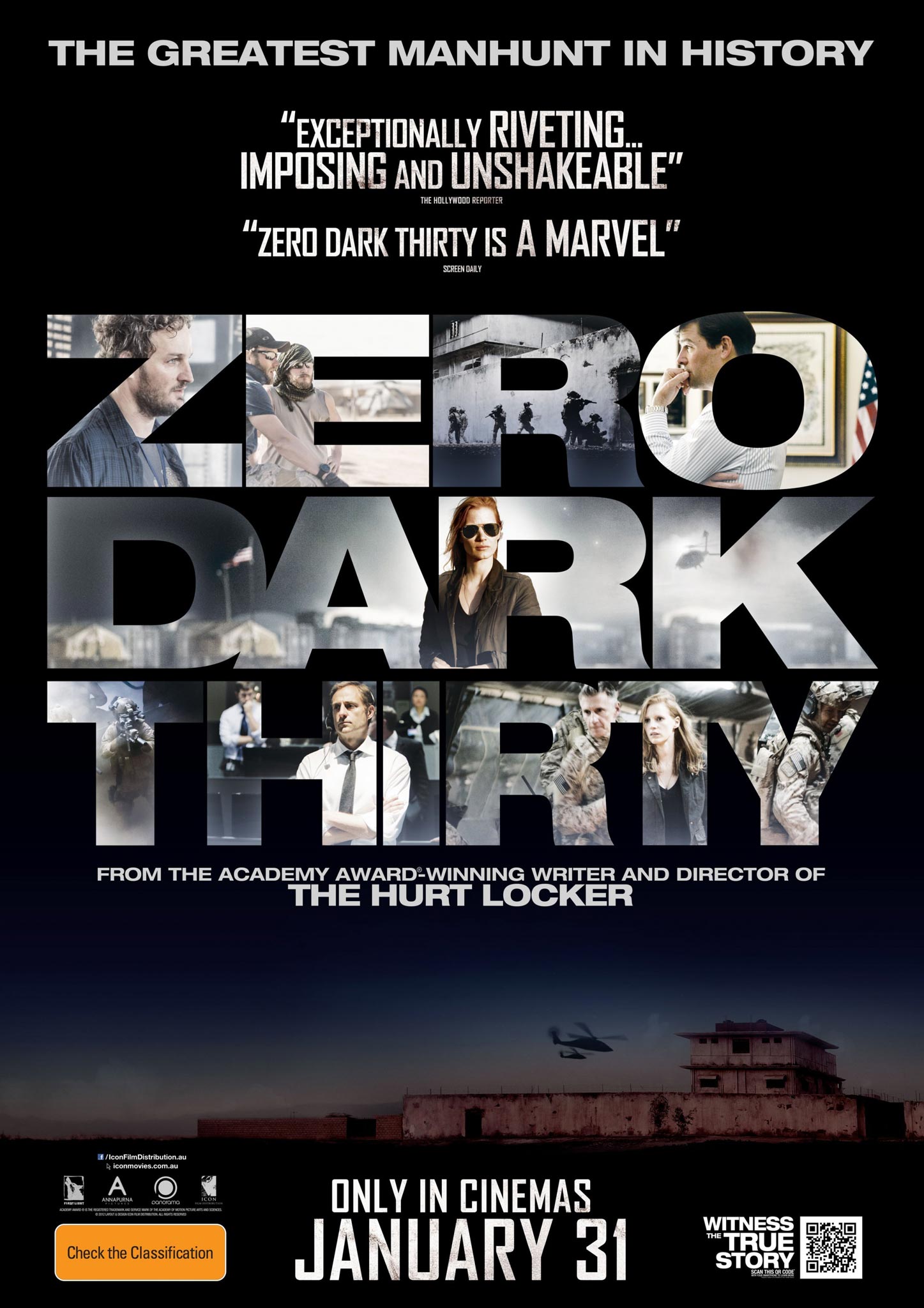
Indeed, as Rodriguez and his torture-friendly colleagues seek to use the occasion of the new Hollywood blockbuster to burnish their image, they are getting a helping hand from neocon newspapers like the Washington Post.
To Read the entire essay
by Ray McGovern
Common Dreams
...
The Downside of Torture
Besides the moral opprobrium that the practices brought upon the United States, the CIA’s use of torture alienated many Muslims who otherwise would have felt no sympathy for Islamic extremists. For example, U.S. military interrogators report that the vast majority of jihadists who came to fight against U.S. forces in Iraq were motivated by the disclosures about torture at Abu Ghraib and Guantanamo.
FBI interrogators also have said their rapport-building techniques with an early detainee, logistics specialist Abu Zubaydah, were succeeding in eliciting important information from him before the CIA interrogators arrived and insisted on applying their brutal methods.
Author Jane Mayer in her book The Dark Side writes that the two FBI agents, Ali Soufan and Steve Gaudin, “sent back early cables describing Zubayda as revealing inside details of the [9/11] attacks on New York and Washington, including the nickname of its central planner, ‘Mukhtar,’ who was identified as Khalid Sheikh Mohammad [KSM]. …
“During this period, Zubayda also described an Al Qaeda associate whose physical description matched that of Jose Padilla. The information led to the arrest of the slow-witted American gang member in May 2002, at O’Hare International Airport in Chicago. …
“Abu Zubayda disclosed Padilla’s role accidentally, apparently. While making small talk, he described an Al Qaeda associate he said had just visited the U.S. embassy in Pakistan. That scrap was enough for authorities to find and arrest Padilla” who was suspected of plotting a “dirty bomb” attack inside the United States (although he was never charged with that offense).
In 2009, Soufan broke his personal silence on the topic in an op-ed in the New York Times, citing Zubaydah’s cooperation in providing information about Padilla and KSM before the CIA began the harsh tactics. “It is inaccurate … to say that Abu Zubaydah had been uncooperative,” Soufan wrote. “Under traditional interrogation methods, he provided us with important actionable intelligence.” [NYT, April 23, 2009]
Nevertheless, Bush administration defenders have cited the information wrested from Zubaydah — who was waterboarded at least 83 times in August 2002 — as justification for the interrogation tactics that have been widely denounced as torture.
The problem of eliciting false intelligence was demonstrated by the handling of another al-Qaeda captive, Ibn al-Shaykh al-Libi, who responded to threats of torture by fabricating an operational link between Saddam Hussein’s government and al-Qaeda. It was exactly the kind of information that the Bush administration had been seeking to justify its desired invasion of Iraq.
By Feb. 11, 2003, as the countdown to the U.S. invasion progressed, CIA Director George Tenet began treating al-Libi’s assertions as fact. At a Senate Intelligence Committee hearing, Tenet said Iraq “has also provided training in poisons and gases to two al-Qa’ida associates. One of these associates characterized the relationship he forged with Iraqi officials as successful.”
But the CIA’s promotion of al-Libi’s information ignored the well-founded suspicions voiced by the Defense Intelligence Agency. “He lacks specific details” about the supposed training, the DIA observed. “It is possible he does not know any further details; it is more likely this individual is intentionally misleading the debriefers.”
The DIA’s doubts proved prescient. In January 2004, al-Libi recanted his statements and claimed that he had lied because of both actual and anticipated abuse. In September 2006, the Senate Intelligence Committee criticized the CIA for accepting al-Libi’s claims as credible. “No postwar information has been found that indicates CBW training occurred and the detainee who provided the key prewar reporting about this training recanted his claims after the war,” the committee report said.
Al-Libi ended up in a Libyan prison during the period when Col. Muammar Gaddafi was cooperating with the U.S. in hunting down “terrorists.” Al-Libi “committed suicide” just two weeks after being visited in the Libyan prison by a team from Human Rights Watch in April 2009.
‘No Good Intelligence’
The al-Libi case demonstrated one of the practical risks of coercing a witness to talk. To avoid pain, people often make stuff up, an obvious point that other truth-tellers also have noted. On Sept. 6, 2006, for example, Gen. John Kimmons, then head of Army intelligence told reporters at the Pentagon, in unmistakable language:
“No good intelligence is going to come from abusive practices. I think history tells us that. I think the empirical evidence of the last five years, hard years, tells us that.”
Gen. Kimmons is a rare species – a general officer with guts, not to mention an intelligence career focusing mostly on interrogation practices. He was well aware that President George W. Bush had decided to claim publicly, just two hours later, that the “alternative set of procedures” for interrogation – methods that Bush had approved, like waterboarding – were effective.
So the real experts say one cannot acquire “good intelligence” from torture, i.e. an empirical reality upon which to base sound policy. But what about bad intelligence, especially preferred bad intelligence? If your goal in 2002 and 2003 was to make a case showing operational ties between al-Qaeda and Iraq – when none existed – well, then, torture works like a charm.
Yet, Jose Rodriguez now seeks to rewrite this sordid chapter in the CIA’s history and put his own complicity in a more favorable light.
One could say his first major move in this cover-up came in 2005 when he ordered the destruction of videotaped evidence of these “enhanced interrogation techniques.” Surely, it is easier to soft-pedal the cruel reality of waterboarding and other abusive tactics if people can’t actually see the human suffering.
And, the Washington Post, which once basked in the glory of its investigation of the Watergate cover-up, now gives generous space for a practitioner of both waterboarding and destruction of evidence to make excuses without challenge.
Just think how Official Washington’s attitude toward respect for the law has degraded over the past three decades or so. Not even President Richard Nixon dared to destroy the incriminating tapes of Watergate, even though he knew only too well that the evidence on them would be his undoing.
Yet, Rodriguez never faced criminal charges for destroying 92 videotapes recording hundreds of hours worth of CIA black-site interrogation footage. Rodriguez ordered the tapes destroyed at precisely the time when Congress and the courts were intensifying their scrutiny of the CIA interrogation program. Yet – surprise, surprise – nowhere in Sunday’s Post is there mention of that felony fact.
Indeed, as Rodriguez and his torture-friendly colleagues seek to use the occasion of the new Hollywood blockbuster to burnish their image, they are getting a helping hand from neocon newspapers like the Washington Post.
To Read the entire essay
Friday, November 30, 2012
Connor Kilpatrick: The Night They Drove Old Dixie Down
The Night They Drove Old Dixie Down
by Connor Kilpatrick
Jacobin
Whatever Spielberg says — there’s no comparing an empty-suit like Obama to a radical like Lincoln.
I thought about writing a critique of Aaron Bady’s mostly very good review of Lincoln for a long time this morning. It was a tough call: I do have some enamel left on my teeth and I can think of nothing else that could threaten to grind it all down to dust than publicly saying anything —anything at all — that could be construed as a defense of either Steven Spielberg’s politics or Barack Obama.
So I don’t want to defend the movie, which I thought was fine for what it was. Actually, by the standards of Hollywood history flicks, I thought it was more than fine.
Bady’s right to call out Kushner and Spielberg as card-carrying Obamaphiles. And it’s more than clear, particularly through interviews, that Kushner and Spielberg want us to connect the dots they’ve carefully laid out between Abe and Barack. Obama himself has done everything possible to encourage the comparison—even being sworn into office on Lincoln’s very own bible.
In their shared liberal revisionism, the Thirteenth Amendment becomes ObamaCare. The Emancipation Proclamation becomes a return to the marginal tax rates of the Clinton era. Thaddeus Stevens morphs into a fantasy of Bernie Sanders “doing the right thing” and sitting down with the prez to cut healthcare for the poor and elderly.
It’s laughable. But instead of calling them out, too many leftists concede this characterization of Lincoln and the Republicans to the Obamaphiles. They seem to believe that the first crop of Republicans did little more than press an official rubber stamp on “history from below” which had already delivered its verdict across the land.
The argument seems to be: “Spielberg says Lincoln and Obama are rubber-stampers. They are. But he’s wrong when he says that such men are the true makers of history.” Then they go looking elsewhere for the real revolutionaries, who can’t possibly have anything to do with these mere ‘stampers.
The question is why are we letting Spielberg, Kushner, and Obama get away with this?
Abraham Lincoln and the early Republicans (to say nothing of the Liberty Party or Free Soilers before them) shared a vision of a radically different society. Wiping out slavery — either through immediate abolition or through the “cordon of freedom” policy of the Republican Party — was hardly a technocratic reform.
And when it became clear that the only way to get there would be through revolutionary means, they took it without flinching: slaves were being emancipated as “contraband” by the summer of 1861, with the first Confiscation Act — written and debated in Congress explicitly as an emancipation act — signed into law that August, less than four months after the start of the war. The endgame of military emancipation had long been on the minds of antislavery politicians, all the way back to John Quincy Adams who first laid out such a scenario in 1836.
To Read the Rest of the Essay
by Connor Kilpatrick
Jacobin
Whatever Spielberg says — there’s no comparing an empty-suit like Obama to a radical like Lincoln.
I thought about writing a critique of Aaron Bady’s mostly very good review of Lincoln for a long time this morning. It was a tough call: I do have some enamel left on my teeth and I can think of nothing else that could threaten to grind it all down to dust than publicly saying anything —anything at all — that could be construed as a defense of either Steven Spielberg’s politics or Barack Obama.
So I don’t want to defend the movie, which I thought was fine for what it was. Actually, by the standards of Hollywood history flicks, I thought it was more than fine.
Bady’s right to call out Kushner and Spielberg as card-carrying Obamaphiles. And it’s more than clear, particularly through interviews, that Kushner and Spielberg want us to connect the dots they’ve carefully laid out between Abe and Barack. Obama himself has done everything possible to encourage the comparison—even being sworn into office on Lincoln’s very own bible.
In their shared liberal revisionism, the Thirteenth Amendment becomes ObamaCare. The Emancipation Proclamation becomes a return to the marginal tax rates of the Clinton era. Thaddeus Stevens morphs into a fantasy of Bernie Sanders “doing the right thing” and sitting down with the prez to cut healthcare for the poor and elderly.
It’s laughable. But instead of calling them out, too many leftists concede this characterization of Lincoln and the Republicans to the Obamaphiles. They seem to believe that the first crop of Republicans did little more than press an official rubber stamp on “history from below” which had already delivered its verdict across the land.
The argument seems to be: “Spielberg says Lincoln and Obama are rubber-stampers. They are. But he’s wrong when he says that such men are the true makers of history.” Then they go looking elsewhere for the real revolutionaries, who can’t possibly have anything to do with these mere ‘stampers.
The question is why are we letting Spielberg, Kushner, and Obama get away with this?
Abraham Lincoln and the early Republicans (to say nothing of the Liberty Party or Free Soilers before them) shared a vision of a radically different society. Wiping out slavery — either through immediate abolition or through the “cordon of freedom” policy of the Republican Party — was hardly a technocratic reform.
And when it became clear that the only way to get there would be through revolutionary means, they took it without flinching: slaves were being emancipated as “contraband” by the summer of 1861, with the first Confiscation Act — written and debated in Congress explicitly as an emancipation act — signed into law that August, less than four months after the start of the war. The endgame of military emancipation had long been on the minds of antislavery politicians, all the way back to John Quincy Adams who first laid out such a scenario in 1836.
To Read the Rest of the Essay
Thursday, November 29, 2012
Maximilian Yoshioka: History or Humanity? On Lu Chuan's City of Life and Death - A Nietzschean Perspective on Nanjing
History or Humanity? On Lu Chuan's City of Life and Death: A Nietzschean Perspective on Nanjing
by Maximilian Yoshioka
Bright Lights Film Journal

In 1937, the Imperial Japanese Army stormed into the city of Nanjing in China, causing massive physical and human devastation, in what is now known as the "Rape of Nanjing." The incident, and the broader scheme of Japanese militarism and imperialism in which it took place, is today still a constant source of political tension between the two nation-states and their respective citizens. The 2009 film City of Life and Death, by Chinese auteur Lu-Chuan, is a bold attempt to dig up and redefine the specter of Nanjing that continues to haunt the East Asian consciousness. But instead of ideologically measuring one side or the other on a Manichean scale, Lu chooses to focus on the instances of human compassion and solidarity that are able to manifest themselves even in the mindless, brutal atmosphere he so effectively creates within the cinematic world.
What one comes to grasp after seeing the film is the ultimate importance of history as first and foremost a study of the human condition, and of the art of living itself, as opposed to scientifically detached observation and categorization. The continuities of human consciousness and memory mean that our experiences of the past are necessarily intertwined with those of the present; as individuals inescapably grounded in a specific historical period, we are unable to avoid this contemporizing process. Furthermore, it is something that must be embraced, for it allows us to incorporate these historical "peaks" (and crevasses) of human experience into our future actions and values. But in this integration of the present with the past there is the danger of a selective blindness toward the past that must be understood and overcome. However, the purpose of history as a guide to the present and the future, to "life," must still be emphasized over the "neutral," "objective" study of history as "fact," "statistic," or what Nietzsche, in his essay "The Use and Abuse of History, refers to disparagingly as the "World Process" — that is, an attitude of detached passivity toward a historical narrative that is falsely seen as predetermined and unalterable.
City of Life and Death's narrative shifts between several characters on both sides of the conflict, which allows the film to largely transcend distinctions of nationality and ideology and focus on the more basic human tragedy underlying it. One is never informed of the strategic or ideological Japanese justifications for the various massacres and battles throughout the film; there is no attempt to rationalize the violence. Instead the viewer is presented with a war that is absurd, irrational, and pointless, and this nonpartisan alignment allows for the emergence of a more universal, humanistic perspective that links the various key characters in the film through their shared ethical commitments. These include Kadokawa, a Japanese soldier (Hideo Nakaizumi), Lu Jianxiong (Liu Ye), a Chinese resistance fighter, John Rabe (John Paisley), a German who ran a demilitarized safety zone within Nanjing, his assistant, Mr. Tang (Fan Wei), and several female characters of both Japanese and Chinese origin, all of whom are faced with sexual violence and slavery due to the notorious Japanese "comfort women" policies.
This humanistic impulse manifests itself in various ways, but is mostly emphasized in authentic moments of kindness, empathy, and bravery that shine through the madness. At the end of the film, Kadokawa, under orders to execute two Chinese civilians, one of whom is a young boy, instead decides to release them into the wilderness, much to the amazement but also admiration of his inferior officer. Yet even this act of compassion is insignificant in comparison to what he has previously been required to do and see; under the weight of an intolerable conscience, he kills himself. Earlier in the film he also falls in love with a Japanese prostitute brought in to satisfy the soldiers' animalistic needs; his genuine feelings of care and affection for her contrast strikingly with the objectifying and dehumanizing attitudes of the other soldiers. John Rabe, the only nonfictional character in the film, was a member of the Nazi Party, a group, like the Japanese, condemned for its role in the Second World War. Along with several other missionaries, he saved large numbers of Chinese civilians by instating a safety zone within Nanjing, and his inclusion further demonstrates the director's commitment to a study of war centered on individual human beings rather than political identities.
To Read the Rest of the Essay
by Maximilian Yoshioka
Bright Lights Film Journal
In 1937, the Imperial Japanese Army stormed into the city of Nanjing in China, causing massive physical and human devastation, in what is now known as the "Rape of Nanjing." The incident, and the broader scheme of Japanese militarism and imperialism in which it took place, is today still a constant source of political tension between the two nation-states and their respective citizens. The 2009 film City of Life and Death, by Chinese auteur Lu-Chuan, is a bold attempt to dig up and redefine the specter of Nanjing that continues to haunt the East Asian consciousness. But instead of ideologically measuring one side or the other on a Manichean scale, Lu chooses to focus on the instances of human compassion and solidarity that are able to manifest themselves even in the mindless, brutal atmosphere he so effectively creates within the cinematic world.
What one comes to grasp after seeing the film is the ultimate importance of history as first and foremost a study of the human condition, and of the art of living itself, as opposed to scientifically detached observation and categorization. The continuities of human consciousness and memory mean that our experiences of the past are necessarily intertwined with those of the present; as individuals inescapably grounded in a specific historical period, we are unable to avoid this contemporizing process. Furthermore, it is something that must be embraced, for it allows us to incorporate these historical "peaks" (and crevasses) of human experience into our future actions and values. But in this integration of the present with the past there is the danger of a selective blindness toward the past that must be understood and overcome. However, the purpose of history as a guide to the present and the future, to "life," must still be emphasized over the "neutral," "objective" study of history as "fact," "statistic," or what Nietzsche, in his essay "The Use and Abuse of History, refers to disparagingly as the "World Process" — that is, an attitude of detached passivity toward a historical narrative that is falsely seen as predetermined and unalterable.
City of Life and Death's narrative shifts between several characters on both sides of the conflict, which allows the film to largely transcend distinctions of nationality and ideology and focus on the more basic human tragedy underlying it. One is never informed of the strategic or ideological Japanese justifications for the various massacres and battles throughout the film; there is no attempt to rationalize the violence. Instead the viewer is presented with a war that is absurd, irrational, and pointless, and this nonpartisan alignment allows for the emergence of a more universal, humanistic perspective that links the various key characters in the film through their shared ethical commitments. These include Kadokawa, a Japanese soldier (Hideo Nakaizumi), Lu Jianxiong (Liu Ye), a Chinese resistance fighter, John Rabe (John Paisley), a German who ran a demilitarized safety zone within Nanjing, his assistant, Mr. Tang (Fan Wei), and several female characters of both Japanese and Chinese origin, all of whom are faced with sexual violence and slavery due to the notorious Japanese "comfort women" policies.
This humanistic impulse manifests itself in various ways, but is mostly emphasized in authentic moments of kindness, empathy, and bravery that shine through the madness. At the end of the film, Kadokawa, under orders to execute two Chinese civilians, one of whom is a young boy, instead decides to release them into the wilderness, much to the amazement but also admiration of his inferior officer. Yet even this act of compassion is insignificant in comparison to what he has previously been required to do and see; under the weight of an intolerable conscience, he kills himself. Earlier in the film he also falls in love with a Japanese prostitute brought in to satisfy the soldiers' animalistic needs; his genuine feelings of care and affection for her contrast strikingly with the objectifying and dehumanizing attitudes of the other soldiers. John Rabe, the only nonfictional character in the film, was a member of the Nazi Party, a group, like the Japanese, condemned for its role in the Second World War. Along with several other missionaries, he saved large numbers of Chinese civilians by instating a safety zone within Nanjing, and his inclusion further demonstrates the director's commitment to a study of war centered on individual human beings rather than political identities.
To Read the Rest of the Essay
Wednesday, November 28, 2012
Aaron Bady: Lincoln Against the Radicals
Lincoln Against the Radicals
by Aaron Bady
Jacobin

...
In short, if you widen your field of view, you will discover that W.E.B. Du Bois argued a century ago—and as the historical scholarship has increasingly come to agree—that slavery was already all but dead by the time Lincoln got around to declaring himself an abolitionist, far less because the North gave slaves their legal freedom than because they had already effectively taken it, because it had become the new status quo that would have required force to dislodge. At the end of the Civil War, with the South defeated, the choice for the north was not to end slavery or leave it; the choice was to ratify the fact that it was already dead or to re-impose it by military force.
In short, the idea that the white north “gave” freedom to the slaves draws from and reinforces an attractively simple and flattering myth, one which formed around the old historiography of the period like a noose cutting off oxygen to the brain: the myth that black slaves were rendered passive by their condition, and that—absent an outside force interrupting their state of un-freedom—they would simply have continued, as slaves, indefinitely. It’s only in this narrative that freedom can be a thing which is given to them: because they are essentially passive and inert, they require someone else—say, a great emancipator—to step in and raise them up.
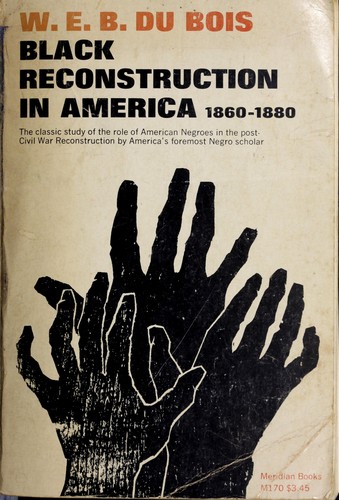
W.E.B. Du Bois was already chipping away at this myth in 1909, but when scholars in the post-Civil Rights era started taking him and his 1935 Black Reconstruction seriously, the historiographic mainstream turned this myth on its head. Slaves were not and could not be “given” their freedom because they had always had it: it had required a great deal of violent force and political work to keep them enslaved, and when that force was removed—as the South collapsed politically and militarily—they began to act like the human beings they always already were, organizing, moving, and seizing their destinies in their own hands. At this point, the game was up; just as the institution of slavery had always depended on substantial governmental enforcement and support, it would have taken a substantial amount of violent force to re-impose it, a concerted project to re-establish slavery that no one in the north had any particular stomach for. At the end of the Civil War, to put it simply, the North had a simple choice: re-imposing slavery by force or accept the new reality. They chose the latter.
If you read these books, however, you’d gain a sense of perspective that the film works to make impossible. Spielberg and Kushner are interested in a kind of scrupulous (almost farcical) accuracy about things that do not matter, while working very hard to place everything else that was going on in the period—and everything else Lincoln was responding to—off camera. “The nation’s capital was transformed by the migration of fugitive slaves from the South during the war, but you’d never know it from this film,” as Kate Masur points out, and Lincoln’s own servants were leaders and organizers in this community, something of which Lincoln simply could not have been unaware. But the film makes a point of not showing any of this: while the vast majority of the movie takes place in cramped and smoky rooms, even the exterior shots (usually of conversations in moving wagons) show us very little of what was going on in the streets and neighborhoods of Washington (much less what was going on in the South). Which is to say: they give us the illusion of perspective without giving us its substance. They show you the elephant’s tail quite accurately, and then they declare, on that basis, that the entire beast is a snake.
In the big picture, the Thirteenth Amendment, on its own, just isn’t that important, and much of the forced suspense of the movie—will they pass it?—comes from an artificial sense that more is at stake in a single congressional bill than there actually was. As Eric Foner pointed out when he was asked about the movie, if it hadn’t passed when it did, Lincoln had pledged to call Congress into special session in March; “[a]nd there, the Republicans had a two-thirds majority and would ratify in a minute…It’s not this giant crisis in the way that the film’s portraying it.” This is important because the small picture is not the big picture in miniature, and taking it to be—taking the passage of the Thirteenth Amendment to be 19th centuries democratic turning point, as this movie clearly does—will cause us to subordinate the big picture to the small picture.
To Read the Entire Essay
by Aaron Bady
Jacobin
...
In short, if you widen your field of view, you will discover that W.E.B. Du Bois argued a century ago—and as the historical scholarship has increasingly come to agree—that slavery was already all but dead by the time Lincoln got around to declaring himself an abolitionist, far less because the North gave slaves their legal freedom than because they had already effectively taken it, because it had become the new status quo that would have required force to dislodge. At the end of the Civil War, with the South defeated, the choice for the north was not to end slavery or leave it; the choice was to ratify the fact that it was already dead or to re-impose it by military force.
In short, the idea that the white north “gave” freedom to the slaves draws from and reinforces an attractively simple and flattering myth, one which formed around the old historiography of the period like a noose cutting off oxygen to the brain: the myth that black slaves were rendered passive by their condition, and that—absent an outside force interrupting their state of un-freedom—they would simply have continued, as slaves, indefinitely. It’s only in this narrative that freedom can be a thing which is given to them: because they are essentially passive and inert, they require someone else—say, a great emancipator—to step in and raise them up.
W.E.B. Du Bois was already chipping away at this myth in 1909, but when scholars in the post-Civil Rights era started taking him and his 1935 Black Reconstruction seriously, the historiographic mainstream turned this myth on its head. Slaves were not and could not be “given” their freedom because they had always had it: it had required a great deal of violent force and political work to keep them enslaved, and when that force was removed—as the South collapsed politically and militarily—they began to act like the human beings they always already were, organizing, moving, and seizing their destinies in their own hands. At this point, the game was up; just as the institution of slavery had always depended on substantial governmental enforcement and support, it would have taken a substantial amount of violent force to re-impose it, a concerted project to re-establish slavery that no one in the north had any particular stomach for. At the end of the Civil War, to put it simply, the North had a simple choice: re-imposing slavery by force or accept the new reality. They chose the latter.
If you read these books, however, you’d gain a sense of perspective that the film works to make impossible. Spielberg and Kushner are interested in a kind of scrupulous (almost farcical) accuracy about things that do not matter, while working very hard to place everything else that was going on in the period—and everything else Lincoln was responding to—off camera. “The nation’s capital was transformed by the migration of fugitive slaves from the South during the war, but you’d never know it from this film,” as Kate Masur points out, and Lincoln’s own servants were leaders and organizers in this community, something of which Lincoln simply could not have been unaware. But the film makes a point of not showing any of this: while the vast majority of the movie takes place in cramped and smoky rooms, even the exterior shots (usually of conversations in moving wagons) show us very little of what was going on in the streets and neighborhoods of Washington (much less what was going on in the South). Which is to say: they give us the illusion of perspective without giving us its substance. They show you the elephant’s tail quite accurately, and then they declare, on that basis, that the entire beast is a snake.
In the big picture, the Thirteenth Amendment, on its own, just isn’t that important, and much of the forced suspense of the movie—will they pass it?—comes from an artificial sense that more is at stake in a single congressional bill than there actually was. As Eric Foner pointed out when he was asked about the movie, if it hadn’t passed when it did, Lincoln had pledged to call Congress into special session in March; “[a]nd there, the Republicans had a two-thirds majority and would ratify in a minute…It’s not this giant crisis in the way that the film’s portraying it.” This is important because the small picture is not the big picture in miniature, and taking it to be—taking the passage of the Thirteenth Amendment to be 19th centuries democratic turning point, as this movie clearly does—will cause us to subordinate the big picture to the small picture.
To Read the Entire Essay
Tuesday, November 27, 2012
Norman Ball: The Power of Auteurs and the Last Man Standing -- Adam Curtis' Documentary Nightmares
The Power of Auteurs and the Last Man Standing: Adam Curtis' Documentary Nightmares
by Norman Ball
Bright Lights Film Journal

Before this essay interrogates Adam Curtis' hidden vestibules, gimpy tripods, and grassy knolls, I'd like to say that any book or film that keeps me thinking a year after I encounter it passes my substantiality test. The Power of Nightmares and The Century of the Self easily fit this category. (I saw All Watched Over by Machines of Loving Grace, The Living Dead, and bits of The Trap only last week.) To survive the immediate frame of the modern attention span is to escape the charge of empty spectacle. You can't fake sustained recollection.
Substance need not equate to wholesale affirmation, however. A good polemic dusts off the thinking caps even of its opponents. Curtis' films provide, at the very least, dialectical lightning rods for alternate narrative threads. Can the same be said for (insert any American TV show)?
In recent weeks Curtis has been arguing for television (BBC being the originating medium for his documentary films, though an American audience can view them on Youtube and Vimeo) to refashion its storytelling techniques ("Adam Curtis Argues TV Needs 'New Tools' to Tell Its Stories," The Guardian, August 22, 2012). It should be fascinating to see where Curtis' films conduct television in the coming months and years. Now, if we could only get American TV to mosey on over to where Curtis has already been, that would be advancement indeed. Right now, stateside viewers are All Kvetched Over by Whole Reams of Will and Grace, but only on DVD due to some contractual disputes that preclude syndication and broadcast. Curtis offers many of his films for free on the Internet. Need I kvetch more?
The award-winning The Century of the Self (2002) offers a devastating critique of our subliminal cooptation from a lifetime's exposure to "father of public relations" Eddie Bernays' propaganda techniques. Whoops, did I just say propaganda? Bernays' most diligent pupil, Josef Goebbels, is rolling over in his hell-pit right now. Let's leave it at public relations. I'm particularly fond of Bernays' quote (very crudely paraphrased here) that democracy is a wonderful system so long as he, Bernays, exerted final subliminal pull over the lever pulled inside the voting booth. Historian Carroll Quigley (mentor of a certain Rhodes Scholar, Bill Clinton), upon being made privy to the papers of the American elite, realized that nothing was left to chance, not even 50-50 propositions. In what's often referred to as the Quigley Principle, this Georgetown professor torpedoed the notion of a vigorous two-party system. Both levers are vetted and fixed. Here he is paraphrasing the mindset of the government behind the government: "The argument that the two parties should represent opposed ideals and policies, one, perhaps, of the Right and the other of the Left, is a foolish idea acceptable only to the doctrinaire and academic thinkers. Instead, the two parties should be almost identical, so that the American people can 'throw the rascals out' at any election without leading to any profound or extreme shifts in policy" (Carroll Quigley, from Tragedy and Hope).
This is not a call to embrace monolithic conspiracy theories. There often is, as Quigley went on to suggest, dissension at the highest levels of power. Jealousy is after all a facet of power. Bernays too saw the value of ostensible choice in a democratic-capitalist system where everything boils down to packaging anyway. A typical Bernays adBy the end of WWII, needs in America had, by and large, been put to bed. Desire was the ultimate lever, a grail of incalculable dual potential. Freud's irrational man, with his limitless storehouse of appetites and anxieties, would furnish economic growth ad infinitum. Never mind that natural resources such as oil and copper are ultimately finite. For the moment, sustainment models such as that proposed by Jay Forrester and the Club of Rome's 1972 Limits to Growth (covered extensively in All Watched Over by Machines of Loving Grace) loomed in the near-distance.
To Read the Rest of the Essay

More Resources on Adam Curtis:
The Guardian: Adam Curtis argues TV needs 'new tools' to tell its stories
by Norman Ball
Bright Lights Film Journal
Before this essay interrogates Adam Curtis' hidden vestibules, gimpy tripods, and grassy knolls, I'd like to say that any book or film that keeps me thinking a year after I encounter it passes my substantiality test. The Power of Nightmares and The Century of the Self easily fit this category. (I saw All Watched Over by Machines of Loving Grace, The Living Dead, and bits of The Trap only last week.) To survive the immediate frame of the modern attention span is to escape the charge of empty spectacle. You can't fake sustained recollection.
Substance need not equate to wholesale affirmation, however. A good polemic dusts off the thinking caps even of its opponents. Curtis' films provide, at the very least, dialectical lightning rods for alternate narrative threads. Can the same be said for (insert any American TV show)?
In recent weeks Curtis has been arguing for television (BBC being the originating medium for his documentary films, though an American audience can view them on Youtube and Vimeo) to refashion its storytelling techniques ("Adam Curtis Argues TV Needs 'New Tools' to Tell Its Stories," The Guardian, August 22, 2012). It should be fascinating to see where Curtis' films conduct television in the coming months and years. Now, if we could only get American TV to mosey on over to where Curtis has already been, that would be advancement indeed. Right now, stateside viewers are All Kvetched Over by Whole Reams of Will and Grace, but only on DVD due to some contractual disputes that preclude syndication and broadcast. Curtis offers many of his films for free on the Internet. Need I kvetch more?
The award-winning The Century of the Self (2002) offers a devastating critique of our subliminal cooptation from a lifetime's exposure to "father of public relations" Eddie Bernays' propaganda techniques. Whoops, did I just say propaganda? Bernays' most diligent pupil, Josef Goebbels, is rolling over in his hell-pit right now. Let's leave it at public relations. I'm particularly fond of Bernays' quote (very crudely paraphrased here) that democracy is a wonderful system so long as he, Bernays, exerted final subliminal pull over the lever pulled inside the voting booth. Historian Carroll Quigley (mentor of a certain Rhodes Scholar, Bill Clinton), upon being made privy to the papers of the American elite, realized that nothing was left to chance, not even 50-50 propositions. In what's often referred to as the Quigley Principle, this Georgetown professor torpedoed the notion of a vigorous two-party system. Both levers are vetted and fixed. Here he is paraphrasing the mindset of the government behind the government: "The argument that the two parties should represent opposed ideals and policies, one, perhaps, of the Right and the other of the Left, is a foolish idea acceptable only to the doctrinaire and academic thinkers. Instead, the two parties should be almost identical, so that the American people can 'throw the rascals out' at any election without leading to any profound or extreme shifts in policy" (Carroll Quigley, from Tragedy and Hope).
This is not a call to embrace monolithic conspiracy theories. There often is, as Quigley went on to suggest, dissension at the highest levels of power. Jealousy is after all a facet of power. Bernays too saw the value of ostensible choice in a democratic-capitalist system where everything boils down to packaging anyway. A typical Bernays adBy the end of WWII, needs in America had, by and large, been put to bed. Desire was the ultimate lever, a grail of incalculable dual potential. Freud's irrational man, with his limitless storehouse of appetites and anxieties, would furnish economic growth ad infinitum. Never mind that natural resources such as oil and copper are ultimately finite. For the moment, sustainment models such as that proposed by Jay Forrester and the Club of Rome's 1972 Limits to Growth (covered extensively in All Watched Over by Machines of Loving Grace) loomed in the near-distance.
To Read the Rest of the Essay
More Resources on Adam Curtis:
The Guardian: Adam Curtis argues TV needs 'new tools' to tell its stories
Wednesday, June 6, 2012
War Made Easy: How Presidents & Pundits Keep Spinning Us to Death (USA: Loretta Alper and Jeremy Earp, 2007)
War Made Easy reaches into the Orwellian memory hole to expose a 50-year pattern of government deception and media spin that has dragged the United States into one war after another from Vietnam to Iraq. Narrated by actor and activist Sean Penn, the film exhumes remarkable archival footage of official distortion and exaggeration from LBJ to George W. Bush, revealing in stunning detail how the American news media have uncritically disseminated the pro-war messages of successive presidential administrations.
Wednesday, May 16, 2012
Michael Atkinson: Archival Trouble -- The fiction-free science fiction of Adam Curtis
Archival Trouble: The fiction-free science fiction of Adam Curtis
by Michael Atkinson
Moving Image Source
...
Curtis's brand of deep politics isn't theorist Peter Dale Scott's—he's concerned less with deliberate conspiracy than with the cascade of sociopolitical dominoes, beginning somewhere mysteriously decades ago, tumbling in a semi-secret dialectical train of disaster since, and culminating in flat-out catastrophe, be it 9/11 or the world economic meltdown or merely the Reagan-era state of rampaging consumerist narcissism. Formally, Curtis manufactures his flowcharts with the simplest means available: archival footage, talking heads, calm but ominous narration, associative montage, a pervasive sense of doomsday. All Watched Over by Machines of Loving Grace is paradigmatic: Curtis begins, as his Richard Brautigan-quoting title suggests, with the familiar suspicion that the mechanization of our lives is winding inexorably toward a dystopian nightmare in which the matrix of microprocessors and A.I.'s will end up commanding us, not vice versa.
But right away it's clear that Curtis isn't hypothesizing about a terrifying future, but unearthing the hidden patterns that have created the present moment. The villains are not machines. Curtis trips backward, as is his wont, to the '50s and the rise of Ayn Rand, whose Objectivist creed in turn gave fitful birth to a spate of influential ideologies, all of which decided that both nature and human society were essentially self-sustaining, equilibrium-seeking logical mechanisms, and could be managed thus. "This is the story," Curtis intones, "of the rise of the dream of the self-organizing system, and the strange machine fantasy of nature that underpins it." The tales he tells to illustrate this harrowing and almost completely overlooked social saga all intertwine, and run from the "spaceship Earth" ideas of Buckminster Fuller, the communes that followed, the pessimistic forecasts of the Club of Rome, the rise and fall of Patrice Lumumba in the Congo, the genesis of the wholly fabricated Tutsi-Hutu dichotomy that turned Rwanda into a killing field more than once, the career of Dian Fossey, the late-century rollercoaster of economic feast and famine, and the work of theorist/geneticist George Price, who believed that humans were ultimately the slaves of their own genetic imperatives, and who demonstrated mathematically that both altruism and genocide were therefore rational acts, from "a gene's eye view" of things.
There's more, all of it reflecting back upon now; Curtis is nothing if not a staunch proselytizer for the idea of the past never being quite past. All Watched Over is more than a counter-story. Like all of Curtis's work it is approximately half well-circulated history and half "deep" background—that is, storylines and historical angles that have been pervasively and deliberately neglected by the gatekeepers of knowledge and information. The film feels something like a Craig Baldwin delusion-farce turned chillingly, menacingly factual, and the facts accrete into an interrogation of psychotic hubris. The Frankenstein monster constructed by the scientists and demagogues and politicians in All Watched Over is the last half-century or so of life on Earth, which in its ultimate tally amounts to a scoresheet of unimaginable injustice, mountains of bodies, and untold environmental ruin.
Curtis is in reality telling just one story, again and again in various threads and tangents and in dazzling three- or four-hour chunks, reaching back to the immediate postwar years and then forward to the present over and over, limning an infinitely complex genogram of our present existence. Ironically, for a history-rewriting filmmaker/producer boxing so much information into evenings of television, Curtis is fierce about the disastrous effects brought about by the artificial and intellectualized imposition of order. He began in his present mode with 1992's Pandora's Box, a massive autopsy on the worldwide cataclysms that unrolled as a result of every kind of postwar effort to systematize, organize, compel, and codify humanity, from Soviet over-industrialization to game-theory Cold War strategies to Keynesian economics to nuclear-power utopianism. Politically, this is a rocket targeted not at the Right per se, but upward, at the power elite, whose perpetual folly in trying to maximize profit and control leads ceaselessly to societal breakdown—a condition very often beside the point for the elite in question, once they've stood to benefit. The Century of the Self (2002) goes all attack-ad on this dynamic, specifically homing in on propagandist/marketing mahatma Edward Bernays, and how he used Freudian psychoanalytic insights to initiate the gold rush of institutionalized thought control—advertising, propaganda, public relations—that could be said to absolutely dominate 20th-century public discourse.
Curtis's vision seemed wholly formed at first, despite the fact that he's obviously digging up unknown connections with each new project. But it took the spiral mindquake of 9/11 for Curtis's reverse-engineered prophecies to gain a global profile. The Power of Nightmares (2004) follows the gunpowder trails from the mid-century (uniting Muslim Brotherhood messiah Sayyid Qutb and neocon pope-king Leo Strauss as complementary agents of desolation) to the attacks of 2001, and then maintains that, just as the farcical depiction of the USSR as a global spider kingdom of evil influence is destroyed by direct testimony from CIA agents and a lying Donald Rumsfeld in old news footage, the sudden postulation of Al Qaeda as a terrifying, organized worldwide threat was a manufactured myth used by Western governments and agencies to broaden and tighten their grip on international power systems and the profit to be gained therein.
To Read the Rest of the Essay
To watch Adam Curtis's documentaries online:
Pandora's Box: A Fable From the Age of Science (1992)
The Living Dead: Three Films About the Power of the Past (1995)
The Century of the Self (2002)
The Power of Nightmares: The Rise of the Politics of Fear (2004)
The Trap: What Happened to Our Dream of Freedom (2007)
All Watched Over by Machines of Loving Grace (2011)
by Michael Atkinson
Moving Image Source
...
Curtis's brand of deep politics isn't theorist Peter Dale Scott's—he's concerned less with deliberate conspiracy than with the cascade of sociopolitical dominoes, beginning somewhere mysteriously decades ago, tumbling in a semi-secret dialectical train of disaster since, and culminating in flat-out catastrophe, be it 9/11 or the world economic meltdown or merely the Reagan-era state of rampaging consumerist narcissism. Formally, Curtis manufactures his flowcharts with the simplest means available: archival footage, talking heads, calm but ominous narration, associative montage, a pervasive sense of doomsday. All Watched Over by Machines of Loving Grace is paradigmatic: Curtis begins, as his Richard Brautigan-quoting title suggests, with the familiar suspicion that the mechanization of our lives is winding inexorably toward a dystopian nightmare in which the matrix of microprocessors and A.I.'s will end up commanding us, not vice versa.
But right away it's clear that Curtis isn't hypothesizing about a terrifying future, but unearthing the hidden patterns that have created the present moment. The villains are not machines. Curtis trips backward, as is his wont, to the '50s and the rise of Ayn Rand, whose Objectivist creed in turn gave fitful birth to a spate of influential ideologies, all of which decided that both nature and human society were essentially self-sustaining, equilibrium-seeking logical mechanisms, and could be managed thus. "This is the story," Curtis intones, "of the rise of the dream of the self-organizing system, and the strange machine fantasy of nature that underpins it." The tales he tells to illustrate this harrowing and almost completely overlooked social saga all intertwine, and run from the "spaceship Earth" ideas of Buckminster Fuller, the communes that followed, the pessimistic forecasts of the Club of Rome, the rise and fall of Patrice Lumumba in the Congo, the genesis of the wholly fabricated Tutsi-Hutu dichotomy that turned Rwanda into a killing field more than once, the career of Dian Fossey, the late-century rollercoaster of economic feast and famine, and the work of theorist/geneticist George Price, who believed that humans were ultimately the slaves of their own genetic imperatives, and who demonstrated mathematically that both altruism and genocide were therefore rational acts, from "a gene's eye view" of things.
There's more, all of it reflecting back upon now; Curtis is nothing if not a staunch proselytizer for the idea of the past never being quite past. All Watched Over is more than a counter-story. Like all of Curtis's work it is approximately half well-circulated history and half "deep" background—that is, storylines and historical angles that have been pervasively and deliberately neglected by the gatekeepers of knowledge and information. The film feels something like a Craig Baldwin delusion-farce turned chillingly, menacingly factual, and the facts accrete into an interrogation of psychotic hubris. The Frankenstein monster constructed by the scientists and demagogues and politicians in All Watched Over is the last half-century or so of life on Earth, which in its ultimate tally amounts to a scoresheet of unimaginable injustice, mountains of bodies, and untold environmental ruin.
Curtis is in reality telling just one story, again and again in various threads and tangents and in dazzling three- or four-hour chunks, reaching back to the immediate postwar years and then forward to the present over and over, limning an infinitely complex genogram of our present existence. Ironically, for a history-rewriting filmmaker/producer boxing so much information into evenings of television, Curtis is fierce about the disastrous effects brought about by the artificial and intellectualized imposition of order. He began in his present mode with 1992's Pandora's Box, a massive autopsy on the worldwide cataclysms that unrolled as a result of every kind of postwar effort to systematize, organize, compel, and codify humanity, from Soviet over-industrialization to game-theory Cold War strategies to Keynesian economics to nuclear-power utopianism. Politically, this is a rocket targeted not at the Right per se, but upward, at the power elite, whose perpetual folly in trying to maximize profit and control leads ceaselessly to societal breakdown—a condition very often beside the point for the elite in question, once they've stood to benefit. The Century of the Self (2002) goes all attack-ad on this dynamic, specifically homing in on propagandist/marketing mahatma Edward Bernays, and how he used Freudian psychoanalytic insights to initiate the gold rush of institutionalized thought control—advertising, propaganda, public relations—that could be said to absolutely dominate 20th-century public discourse.
Curtis's vision seemed wholly formed at first, despite the fact that he's obviously digging up unknown connections with each new project. But it took the spiral mindquake of 9/11 for Curtis's reverse-engineered prophecies to gain a global profile. The Power of Nightmares (2004) follows the gunpowder trails from the mid-century (uniting Muslim Brotherhood messiah Sayyid Qutb and neocon pope-king Leo Strauss as complementary agents of desolation) to the attacks of 2001, and then maintains that, just as the farcical depiction of the USSR as a global spider kingdom of evil influence is destroyed by direct testimony from CIA agents and a lying Donald Rumsfeld in old news footage, the sudden postulation of Al Qaeda as a terrifying, organized worldwide threat was a manufactured myth used by Western governments and agencies to broaden and tighten their grip on international power systems and the profit to be gained therein.
To Read the Rest of the Essay
To watch Adam Curtis's documentaries online:
Pandora's Box: A Fable From the Age of Science (1992)
The Living Dead: Three Films About the Power of the Past (1995)
The Century of the Self (2002)
The Power of Nightmares: The Rise of the Politics of Fear (2004)
The Trap: What Happened to Our Dream of Freedom (2007)
All Watched Over by Machines of Loving Grace (2011)
Subscribe to:
Posts (Atom)