The Supplement of Coppola: Primitive Accumulation and the Godfather Trilogy
by Carl Freedman
Originally published in Film International #49 (2011): 8-41.
...
The first words uttered in The Godfather are, “I believe in America.” It is an audacious opening scene in several respects. The initial line is spoken over a completely dark screen. Then the light comes up to reveal, in extreme close-up, the speaker: a homely, nondescript middle-aged man who (as we will soon learn) is the undertaker Bonasera (Salvatore Corsitto). As the camera gradually zooms out from close-up to middle distance, Bonasera continues to talk, though it remains unclear for a brief while to whom he is speaking. He tells the story of his beautiful daughter, who had acquired a boyfriend, one not, as Bonasera is careful to make clear, of Italian background. While out on a drive with the boyfriend and another male friend, she found that she was expected to provide sexual favors to both boys; and, when she refused, they beat her viciously, disfiguring her for life (“Now she will never be beautiful again,” sobs Bonasera). Her father, “like a good American,” duly reported the crime to the police, and the boys were arrested, indicted, tried, and convicted—but given a suspended sentence. “Suspended the sentence!” says the undertaker in incredulity and disgust that the judge could have punished such a vile crime so lightly. Now he has come to the local crime boss, Don Vito Corleone, for justice. After some preliminary conversation between Bonasera and Corleone during which the camera remains behind the Don’s right shoulder, the angle of the shot reverses, and reveals, in a sumptuously lit medium close-up, Marlon Brando in his greatest role. Don Corleone chides and humiliates Bonasera for never having sought his friendship before; but he does finally agree to see to it that the two boys will be made to suffer (though not killed, as he judges that too harsh a punishment, since the undertaker’s daughter is still alive). Throughout most of the scene, Brando has been gently caressing a small cat that is squirming and playing in his lap.
Given the centrality of Bonasera and his story to this opening scene, the first-time viewer might well suppose, at this point, that the undertaker is to be one of the principal characters of The Godfather and that the story of his daughter and her attackers is to become one of the film’s main narrative strands. Such is not the case. In the nearly three hours (actually 175 minutes) of the film, Bonasera makes only one more, quite brief appearance, and the daughter and the attackers are never heard of again. It is, nonetheless, a sound cinematic strategy that leads Coppola to begin The Godfather as he does: for it is part and parcel of the film’s epic sweep that some of its major concerns can be introduced with a scene that is, at most, tangential to the main action. Precisely because the scene is of little intrinsic narrative significance, it helps to highlight how omnipresent and thematically important are the motifs that it introduces.
The most foregrounded of these motifs, the one announced in the first line of dialogue, is the theme of America and, more narrowly, the ambiguities of the American immigrant’s lifeworld. In his second line, Bonasera (whose first name is never mentioned in the film but is significantly given as Amerigo in Mario Puzo’s 1969 novel, The Godfather, on which the film is based) adds, “America has made my fortune.” The bourgeois commercial society of the United States has enabled him to become an evidently prosperous small businessman (he is wearing a well-tailored suit), whereas he would, perhaps, have been doing well to avoid starvation back in Italy. His belief in America has led him to raise his daughter “in the American fashion,” allowing her more freedom than would have been considered appropriate in the old country, and trusting, at first, to the institutionalized American system of law and justice. When this system fails him, he must turn to a much older and more personal kind of authority, one that derives from the almost pre-capitalist regime of rural Sicily that will be explored in detail in The Godfather, Part II (1974; hereafter referred to as The Godfather II). When Don Corleone chastises the undertaker, he does so not only for Bonasera’s prior aloofness to him personally but also for the naïve overinvestment in his adopted land that has led Bonasera to trust the American police and the American courts in the first place. “You found paradise in America,” says the Don sarcastically.
Yet there is a certain unconscious irony in Don Corleone’s sarcasm. It is, after all, he himself who has more triumphantly “found paradise in America” (after rising from beginnings that one would guess, in this film, to be unpromising and that are clearly shown, in The Godfather II, to be, indeed, about as unpromising as can easily be imagined). Amerigo Bonasera is a relatively affluent petty-bourgeois, but Vito Corleone is a member of the real ruling class: a man of immense wealth and power, who famously keeps judges and politicians in his pocket, and who, as we will soon see, is capable of winning a battle of will against one of the richest, most influential, and most determined studio bosses in Hollywood. Nonetheless, as an Italian immigrant, Don Corleone remains, like Bonasera, only ambiguously American. One suspects that the non-Italian boyfriend of Bonasera’s daughter has walked free at least in part because of a more unequivocally American identity (and in Puzo’s novel the judge, indeed, explicitly says that he is extending lenience partly because of the defendants’ “fine families,”5 a phrase that in context almost certainly denotes a WASP background). Likewise, though Vito can afford to put on a spectacular wedding celebration for his daughter on the grounds of his luxurious mansion—several outdoor scenes of the wedding immediately follow the indoor scene with Bonasera in the Don’s study—he must submit to the presence of FBI agents who mar the festivities by snooping around and writing down the license-plate numbers of the guests’ cars. True enough, the FBI’s interest is due to Don Corleone’s being a crime boss rather than an Italian immigrant as such. But, of course, it was his ethnicity and impoverished immigrant status that led him, indeed nearly compelled him, to exercise his skills of leadership and entrepreneurialism in the Mafia rather than, say, in such (then) WASP near-monopolies and “legitimate” enterprises as Wall Street or the CIA.
This ambiguity in the identity of the Italian Catholic immigrant—nominally American and yet not American in the strongest, most unqualified sense—interlocks with an even more important ambiguity concerning the nature of crime itself. What, really, is crime? Or, to put the question another way, what is the relation between the law and the justice that the law is meant to serve? Once again, the opening scene with the Don and Bonasera is exemplary. The judge who allows the attackers of Bonasera’s daughter to go free is almost certainly acting within the letter of the law; but the viewer must agree that the suspended sentence is far from just. Even more ironically, in order to seek the justice that the law has denied, the undertaker must go to a crime boss. Though Don Corleone’s power derives from illegal enterprises, his response to Bonasera—as he decides on corporal but not capital punishment for the two attackers—arguably displays not only a certain moral order but also quasi-judicial sobriety, restraint, and moderation.
The ambiguity that thus complicates any conventional axiological dichotomy between lawfulness and crime is intensified further after Don Corleone dismisses Bonasera and summons another supplicant into his study (there is quite a parade of them, all taking advantage of the Sicilian custom that prohibits one from refusing any favor on the day that one’s daughter is married). This is another successful petty-bourgeois, the baker Nazorine (Vito Scotti), who, like Bonasera, also has a daughter. The US immigration authorities are planning to deport his assistant Enzo (Gabriele Torrei), whom Nazorine wishes to stay in America so that he can marry Nazorine’s daughter and, presumably, eventually take over the family business. The Don promises to take care of things, and, after the baker and Enzo exit, tells Tom Hagen (Robert Duvall), his consigliere and adoptive son, to turn the matter over to “a Jew congressman in another district,” evidently one of the numerous office-holders who do the Don’s bidding. This is the first of many references to the Godfather’s political connections; and it presents us with the irony of a professional lawbreaker who not only gives orders to a professional lawmaker but who at least sometimes, as in the case of Enzo, does so in order to accomplish the right and just, if perhaps not strictly legal, thing. In addition, the overt reference to the unnamed congressman’s Jewishness obliquely announces that the theme of ethnicity is not restricted exclusively to Italian immigrants. The Las Vegas casino owner Moe Greene (Alex Rocco) constitutes a minor Jewish presence in the film; and, in The Godfather II, Hyman Roth (Lee Strasberg)—a powerful Mafia financier based on Meyer Lansky, as Greene is based on Bugsy Siegel—constitutes a major one. Moreover, Tom Hagen’s Irish background is given some importance as well (though less than in Puzo’s novel). The comparative marginalization, in WASP-dominated America, of more recent arrivals of non-WASP ethnicity, is of course unjust according to the universalistic Jeffersonian principles on which the US is officially founded; and so the resulting uncertainty as to whether Italian and Jewish—and even Irish—immigrants are “truly” American is integral to the larger indeterminacy that renders hopelessly fuzzy the officially clear-cut categories of law, justice, and criminality.
It is, then, here, in the opening scenes of The Godfather in Vito’s study, that primitive accumulation makes its first and most deeply allegorical appearance. For primitive accumulation is, after all, the necessary basis of any deconstruction of the binary opposition between legality and criminality as understood in bourgeois society. Capitalist legality attempts to draw an absolutely clear iron line between itself and the criminality to which it opposes itself, so that the legitimacy of private property and the right of contract can be grounded as securely as possible. But the attempt never quite succeeds—the line is always, in fact, a permeable membrane—because capitalist legality is itself based (in its origins but also, as we have seen, to some degree as an ongoing enterprise) on massive crime, on the unilateral abrogation of property and contractual rights as well as on brute physical force. Such is the intrinsic instability—the potential moral, conceptual, and physical anarchy—that afflicts the fundamental presuppositions of capitalist society. And Don Corleone enacts this instability, this tissue of ambiguities, in the calm and shadowy luxury of his study, whose furnishings—the large wooden desk, the Persian carpet, the leather-lined chairs—all bespeak affluent bourgeois solidity even though, or rather precisely because, they are all the fruits of crime.
To Read the Entire Essay
Showing posts with label Economics. Show all posts
Showing posts with label Economics. Show all posts
Sunday, September 8, 2013

Saturday, June 29, 2013
Critical Strands: On the Beach with Ulrich Seidl and Martin Parr
Critical Strands: On the Beach with Ulrich Seidl and Martin Parr
by retinalechoes
Notebook
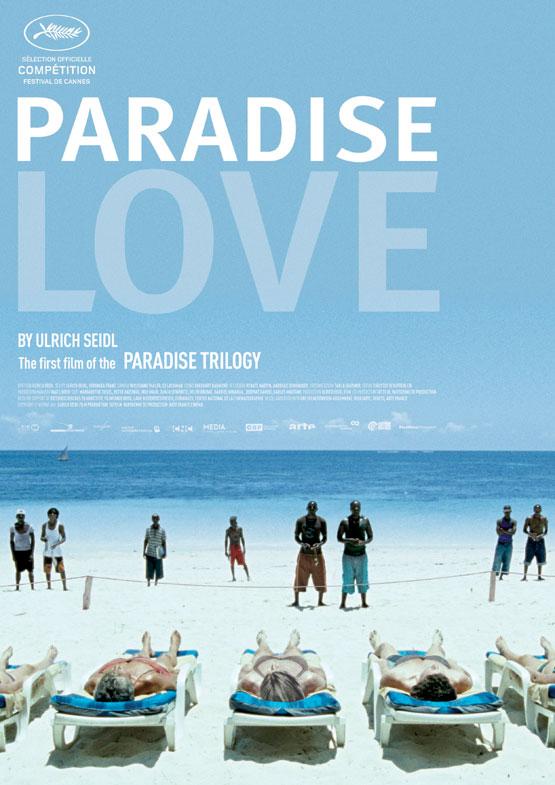
Some films you watch. Others you live. In Ulrich Seidl's films you suffer. You suffer and laugh, and laugh and suffer, until tears pour from your eyes, until out from laughter arises guilt. Guilt for having suffered. Guilt for having laughed. And only then, when you emerge from the guilt, wipe the film from your eyes, do you realize that the naïve 200-pound quinquagenarian Austrian sex-tourist on holiday in Kenya is none other then yourself, if not your sister or perhaps mother. Only then does the comfort of guilt morph into the vexation of shame as you understand that the buffoon you saw on the screen was wearing what turned out to be your face for a mask.
But don’t say you weren’t forewarned. The ballsy and shameless opening scene of Paradise: Love, should have given notice enough. After all, away from the scrutinizing eyes of society it becomes too easy to indulge in the visual pleasure of watching warped grimaces twisting in glee and shock across the faces of the spasmodic, the abnormal, the mongoloid. Hidden behind the comfort of our screen (for it is always our screen, and never just yours or mine) it becomes all too simple to relish images of the rejected visages of the mentally retarded contorting themselves in farcical masks as their bumper cars smash into each other, watching Teresa, our fat Austrian heroine, watch them. Our white-winged socially-implanted moral warden hanging over our right shoulder like a wee angel warns us against laughter, but in the liberty and obscurity of the cinematic chamber, we let loose with a laughter poised on the razor's edge between discomfort and hilarity. Paradise: Love’s opening scene is a warning, a provocation, a contract of the film to come, and it reads: “I will force you to laugh at things not only which you do not want to laugh at, but which you know you should not.” But laugh we do, and in so doing become accomplices to the film. Seidl’s humor is not the innocent cathartic guffaw of slapstick, nor the healing chortle of satire. It is a blow aimed to crack open a chink in the armor of our self-righteousness to make way for the stiletto of shame to slide in more easily.
By naming our tender, pale, gullible heroine Teresa after the famed Mother Superior of Christian fame, Seidl sticks a knife in the back of the charitable West’s self-congratulatory sentiments for the aid it provides the (usually somewhat darker-skinned) third-world. (Do we hear the rational arguments of capitalist economics buzzing in the background? Business for the locals? Improvements to infrastructure? Exchange of goods?) The tourist, a missionary of modernity, never meets the third-world inhabitants on equal terms, never enters their world, but rather travels to other lands with the goal of extracting as many resources as possible, be it gold, souls or sex. The images of Teresa’s travels to this land of alterity in Paradise: Love are no reflections of a “mirror being carried along a high road,” but rather visions which barely pierce the thick and muggy waters of the aquarium in which her head is enclosed: Omnia mea mecum porto - when the European travels she takes her whole world with her wrapped around her head, aquarium, water and fish too. Teresa’s ‘omnia’, the civilized rectangular glassed cage is exemplified by the space of the European room (and the cinematic frame?). As Teresa prepares for her trip, she appears in one chamber after another in her Austrian apartment, preparing food, folding laundry, packing bags and the rectangle in which she moves is the one the camera will bring with her (and us) on holiday to Kenya, with its centralized perspective and weight, and its ordered compositions, signs of the European’s efficiency and rationality.
But no matter, for the tourist’s mission is not to see unseen landscapes but rather to ignore the distinctiveness of the travel destination so as to better wrench maximum ‘fun’ from the exotic (what else would make tourism the largest industry worldwide?). So, even when Teresa and her Austrian compatriots travel thousands of kilometers to reach a new panorama, the only landscape they can perceive is the one they brought with them, with its ordered lines, sparkling clean toilet bowls, and secure walled-off pleasures.
To Read the Rest
by retinalechoes
Notebook
Some films you watch. Others you live. In Ulrich Seidl's films you suffer. You suffer and laugh, and laugh and suffer, until tears pour from your eyes, until out from laughter arises guilt. Guilt for having suffered. Guilt for having laughed. And only then, when you emerge from the guilt, wipe the film from your eyes, do you realize that the naïve 200-pound quinquagenarian Austrian sex-tourist on holiday in Kenya is none other then yourself, if not your sister or perhaps mother. Only then does the comfort of guilt morph into the vexation of shame as you understand that the buffoon you saw on the screen was wearing what turned out to be your face for a mask.
But don’t say you weren’t forewarned. The ballsy and shameless opening scene of Paradise: Love, should have given notice enough. After all, away from the scrutinizing eyes of society it becomes too easy to indulge in the visual pleasure of watching warped grimaces twisting in glee and shock across the faces of the spasmodic, the abnormal, the mongoloid. Hidden behind the comfort of our screen (for it is always our screen, and never just yours or mine) it becomes all too simple to relish images of the rejected visages of the mentally retarded contorting themselves in farcical masks as their bumper cars smash into each other, watching Teresa, our fat Austrian heroine, watch them. Our white-winged socially-implanted moral warden hanging over our right shoulder like a wee angel warns us against laughter, but in the liberty and obscurity of the cinematic chamber, we let loose with a laughter poised on the razor's edge between discomfort and hilarity. Paradise: Love’s opening scene is a warning, a provocation, a contract of the film to come, and it reads: “I will force you to laugh at things not only which you do not want to laugh at, but which you know you should not.” But laugh we do, and in so doing become accomplices to the film. Seidl’s humor is not the innocent cathartic guffaw of slapstick, nor the healing chortle of satire. It is a blow aimed to crack open a chink in the armor of our self-righteousness to make way for the stiletto of shame to slide in more easily.
By naming our tender, pale, gullible heroine Teresa after the famed Mother Superior of Christian fame, Seidl sticks a knife in the back of the charitable West’s self-congratulatory sentiments for the aid it provides the (usually somewhat darker-skinned) third-world. (Do we hear the rational arguments of capitalist economics buzzing in the background? Business for the locals? Improvements to infrastructure? Exchange of goods?) The tourist, a missionary of modernity, never meets the third-world inhabitants on equal terms, never enters their world, but rather travels to other lands with the goal of extracting as many resources as possible, be it gold, souls or sex. The images of Teresa’s travels to this land of alterity in Paradise: Love are no reflections of a “mirror being carried along a high road,” but rather visions which barely pierce the thick and muggy waters of the aquarium in which her head is enclosed: Omnia mea mecum porto - when the European travels she takes her whole world with her wrapped around her head, aquarium, water and fish too. Teresa’s ‘omnia’, the civilized rectangular glassed cage is exemplified by the space of the European room (and the cinematic frame?). As Teresa prepares for her trip, she appears in one chamber after another in her Austrian apartment, preparing food, folding laundry, packing bags and the rectangle in which she moves is the one the camera will bring with her (and us) on holiday to Kenya, with its centralized perspective and weight, and its ordered compositions, signs of the European’s efficiency and rationality.
But no matter, for the tourist’s mission is not to see unseen landscapes but rather to ignore the distinctiveness of the travel destination so as to better wrench maximum ‘fun’ from the exotic (what else would make tourism the largest industry worldwide?). So, even when Teresa and her Austrian compatriots travel thousands of kilometers to reach a new panorama, the only landscape they can perceive is the one they brought with them, with its ordered lines, sparkling clean toilet bowls, and secure walled-off pleasures.
To Read the Rest
Sunday, June 23, 2013
Moolaadé (Senegal/France/Burkina Faso/Cameroon/Morocco/Tunisia: Ousmane Sembene, 2004)

Moolaadé (Senegal/France/Burkina Faso/Cameroon/Morocco/Tunisia: Ousmane Sembene, 2004: 124 mins)
Bartlet, Olivier. "Adventures and Misadventures of African Cinema." Cinemas of the South (2006)
Borden, Amy. "At the global market: Ousmane Sembène’s Moolaadé and the economics of women’s rights." Jump Cut #53 (Summer 2011)
Bug Girl. Is My Vuvulzela Too Big?" Skepchick (June 20, 2010)
Coventry, Martha. "Making the Cut: It's a Girl! ... Or is it? When in doubt, why are surgeons calling the shots?" Ms. (Oct/Nov 2000)
Diop, Baba. "Ousmane Sembene: The Elder of Elders." Cinemas of the South (February 15, 2009)
Dotson-Newman, Nzinga. "Family Pressure on Young Girls for Genitalia Mutilation Continues in Kenya." Project Censored (2012)
Finney, Nikki. "The Greatest Show On Earth." (Read the poem/read an analysis of the poem/and listen to Nikki read it)
Halpern, Sue. "Breaking a Conspiracy of Silence." The New York Times Book Review 56.18 (November 19, 2009)
Marzana, Nicola. "The Art of Hunger: Re-Defining Third Cinema." 16:9 (November 2009)
Pride, Ray. "Woman is the Future of Man: Ousmane Sembene on Moolaade." Cinema Scope #21 (2004)
Santur, Hassan Ghedi. "On Being a Muslim in the West." Ideas (June 1, 2011)
Turkewitz, Julie. "Effects of Ancient Custom Present New Challenge to U.S. Doctors: Genital Cutting Cases Seen More as Immigration Rises." The New York Times (February 6, 2015)
Wednesday, March 27, 2013
Anjali Pandey: The Million Dollar Question: How Do You Sell English on the Silver Screen? - A Socio-Linguistic Analysis of Slumdog Millionaire
The Million Dollar Question: How Do You Sell English on the Silver Screen? - A Socio-Linguistic Analysis of Slumdog Millionaire
by Anjali Pandey
Americana
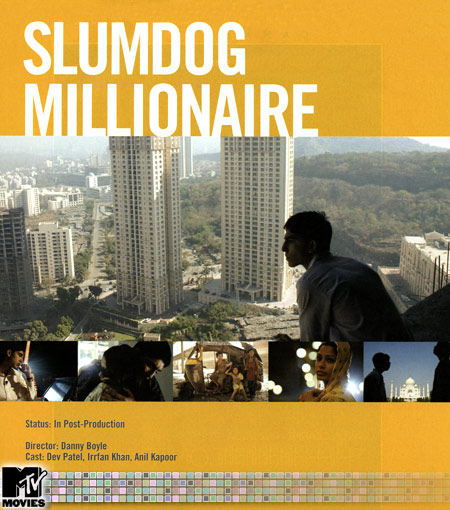
Introduction
Years ago authors Barnet and Cavanagh portended: “The new world economy rests largely on global bazaars” (15). Today, India is a major economic promontory in the voyage of western filmic expansion into the East. As a “movie-mad country” (Chopra 18), with its own yearly production output of “over a thousand movies in Mumbai alone” (Beaufoy, Boyle and Feld 142) - numerically translated as “3 billion movie tickets per annum” (Lakshmi 8) - Bollywood unlike Hollywood boasts a 13% increase in movie ticket sales since 2007 (Chopra 18). Film scholars have for years tracked the so-called “economic moribundity” (Cowen 73) of European cinema. In contrast, “India’s film industry, now at $2.2 billion, is estimated to grow to 3.3 billion by 2013” (Lakshmi 8).
Cowen claims that the "English language, combined with America’s role as a world leader, has strengthened Hollywood exports” (75). In India, the linguistic “legacy of English” (Bhatia and Baumgardner 384) makes the economic venture eastward into “the prized Indian market” (Tyrrell 260) a viable option as increasing economic research confirms that “the global market has generated more dependable returns than the local market” (Dissanayake 405). Esteemed linguist, David Crystal calls India “a linguistic paradise” (173) with “a special place in the record books” as a country with “the largest English-speaking population in the world” (173) at “350 million speakers” (173). This figure is “far more than the combined English-speaking populations of Britain and the USA” (173). Two decades ago in a comprehensive analysis of Hollywood versus Bollywood, Tyrrell claimed that “Hollywood has not defined what makes a film work in India” (260). Twenty years later, Slumdog Millionaire has demonstrated that when it comes to “the battle of the dream factories” (Tyrrell 260), “Hollywood’s colonization of Bollywood” (Tyrrell 272) can indeed be achieved via a twin strategy of linguistic and cultural syncretism.
The filmic genius of Slumdog Millionaire lies in the meticulous manner in which the hybridity of language and lore of both West and East have been glocalized to suit “the viewing tastes and linguistic preferences” (Bhatia and Baumgardner 380) of cross-continental audiences. Film critics are unanimous in their praise: “Slumdog Millionaire is the film world’s first globalized masterpiece” (Morgenstern 1) raves the economically savvy Wall Street Journal. How did Slumdog Millionaire do it? The answer lies in the innovative use of verbal and visual English as cinematic strategy - as “an aural and visual spectacle” (Garwood 174) within the “diegetic space of film” (Garwood 179). Visual English consistently dominates screen-space in Slumdog. The film’s economic and aesthetic genius rests on the nuanced, multiplex manner in which visual English “functions in the ever-evolving techno-aesthetic space of cinema” (Dissanayake 406) - as a filmic device which reflects at the very same time as it sustains a place for global English evanescence. The effective incorporation of tokenized Hindi in the movie as a vehicle for highlighting verbal and visual English is accomplished in and through a plethora of potent filmic strategies including but not limited to: spotlighting, achieved via filmic prominence given to visual English; synchronization, accomplished via a savvy glocalization of tokenized local linguistic content in the service of linguistically dominant global interests; spectacularization, realized via an intelligent use of selective adaptation strategies which simultaneously translate and transliterate "Indian figurehead" novel-writing and music-making potential into globally appealing cultural products, and finally, syncretization - filmmaking strategies which “utilize an economic and cultural dynamic that combines both commercialism and creativity” (Cowen 101) - four cultural production strategies which use the local to sell the global. All four strategies are detailed below.
To Read the Rest of the Essay
by Anjali Pandey
Americana
Introduction
Years ago authors Barnet and Cavanagh portended: “The new world economy rests largely on global bazaars” (15). Today, India is a major economic promontory in the voyage of western filmic expansion into the East. As a “movie-mad country” (Chopra 18), with its own yearly production output of “over a thousand movies in Mumbai alone” (Beaufoy, Boyle and Feld 142) - numerically translated as “3 billion movie tickets per annum” (Lakshmi 8) - Bollywood unlike Hollywood boasts a 13% increase in movie ticket sales since 2007 (Chopra 18). Film scholars have for years tracked the so-called “economic moribundity” (Cowen 73) of European cinema. In contrast, “India’s film industry, now at $2.2 billion, is estimated to grow to 3.3 billion by 2013” (Lakshmi 8).
Cowen claims that the "English language, combined with America’s role as a world leader, has strengthened Hollywood exports” (75). In India, the linguistic “legacy of English” (Bhatia and Baumgardner 384) makes the economic venture eastward into “the prized Indian market” (Tyrrell 260) a viable option as increasing economic research confirms that “the global market has generated more dependable returns than the local market” (Dissanayake 405). Esteemed linguist, David Crystal calls India “a linguistic paradise” (173) with “a special place in the record books” as a country with “the largest English-speaking population in the world” (173) at “350 million speakers” (173). This figure is “far more than the combined English-speaking populations of Britain and the USA” (173). Two decades ago in a comprehensive analysis of Hollywood versus Bollywood, Tyrrell claimed that “Hollywood has not defined what makes a film work in India” (260). Twenty years later, Slumdog Millionaire has demonstrated that when it comes to “the battle of the dream factories” (Tyrrell 260), “Hollywood’s colonization of Bollywood” (Tyrrell 272) can indeed be achieved via a twin strategy of linguistic and cultural syncretism.
The filmic genius of Slumdog Millionaire lies in the meticulous manner in which the hybridity of language and lore of both West and East have been glocalized to suit “the viewing tastes and linguistic preferences” (Bhatia and Baumgardner 380) of cross-continental audiences. Film critics are unanimous in their praise: “Slumdog Millionaire is the film world’s first globalized masterpiece” (Morgenstern 1) raves the economically savvy Wall Street Journal. How did Slumdog Millionaire do it? The answer lies in the innovative use of verbal and visual English as cinematic strategy - as “an aural and visual spectacle” (Garwood 174) within the “diegetic space of film” (Garwood 179). Visual English consistently dominates screen-space in Slumdog. The film’s economic and aesthetic genius rests on the nuanced, multiplex manner in which visual English “functions in the ever-evolving techno-aesthetic space of cinema” (Dissanayake 406) - as a filmic device which reflects at the very same time as it sustains a place for global English evanescence. The effective incorporation of tokenized Hindi in the movie as a vehicle for highlighting verbal and visual English is accomplished in and through a plethora of potent filmic strategies including but not limited to: spotlighting, achieved via filmic prominence given to visual English; synchronization, accomplished via a savvy glocalization of tokenized local linguistic content in the service of linguistically dominant global interests; spectacularization, realized via an intelligent use of selective adaptation strategies which simultaneously translate and transliterate "Indian figurehead" novel-writing and music-making potential into globally appealing cultural products, and finally, syncretization - filmmaking strategies which “utilize an economic and cultural dynamic that combines both commercialism and creativity” (Cowen 101) - four cultural production strategies which use the local to sell the global. All four strategies are detailed below.
To Read the Rest of the Essay
Wednesday, February 13, 2013
Wednesday, January 2, 2013
Cecil Brown: Tarantino's Django: Unchained - Hollywood’s Nigger Joke
Tarantino's Django: Unchained: Hollywood’s Nigger Joke
by Cecil Brown
Counterpunch

In order for a joke to work, Mary Douglas, the eminent British anthropologist, wrote that one had to have a social context for it to operate in. “We must ask what are the social conditions for a joke to be both perceived and permitted,” she asked in her wonderful little essay, “Jokes.”
“My hypothesis,” she writes“is that a joke is seen and allowed when it offers a symbolic pattern of a social pattern occurring at the same time.”
With Django: Unchained, the symbolic pattern–I’d call it historical context–is Hollywood itself. “If there is no joke in the social structure,” Mrs Douglas observed, “no other joke can appear.” In Hollywood, there are lots of jokes in the system!
The social pattern that allows Quentin Tarantino’s “Nigger joke” to work is set in the South, two years before the Civil War, but my point is that this is only a pretext for Hollywood itself.
Some critics, like Betsy Sharkey in the Times, think this film is a masterpiece. Sharkey calls it, “the most articulate, intriguing, provoking, appalling, hilarious, exhilarating, scathing and downright entertaining film yet.”
African American critic Wesley Morris hated it. He called it “unrelenting tastelessness — [...] exclamatory kitsch — on a subject as loaded, gruesome, and dishonorable as American slavery.”
Ishmael Reed, the novelist, pointed out how the Weinstein Company promoted an advertising campaign to get a black audience by promoting Jamie Foxx as the star. In fact, Foxx is only one of the stars, along with Christoph Waltz and Leonardo DiCaprio. As Reed points out, Foxx spends most of his time looking at Mr.Waltz and then looking at Mr. DiCaprio, with a puzzled look on his face, as if to say, What’s dese white folks, talkin ‘bout?
My aim in his essay is to examine the way in which the symbolic system is a reflection of the social system. “What are the social conditions for a joke to be both perceived and permitted,” Mrs Douglass wrote in that little essay, “Jokes.”
What are the social conditions that would permit Django to be the big howling, empty nigger joke that it is?
One of these social conditions, certainly, involves the relationship between black actors and Hollywood as a symbol of the plantation system.
In his review of the film, for example, Mr. Reed said that Sam Jackson, in the role of the conniving, omnipresent, evil slave, is “playing himself.”
If Jackson had not dominated the Hollywood system in such a sly way, then his role as Stephen, the master-worshipping house slave to Calvin Candie (Leonardo DiCaprio) would not have its loaded, edgy, uncanny realism. The plantation is called CandieLand (Candyland) and is meant to refer to Hollywood itself as a producer of entertainment (Candy). Get it?
If Jamie Foxx is not known in Hollywood as a resourceful hustler, who will play almost any role, then his part as the “bad nigger” Django would not be so compelling (and lubricous). If he was not the “New nigger on the block,” then the confrontation between him and Sam Jackson’s character, Stephen, the off-the-hook house slave, the scene would not be powerful (and dumb) at the same time.
The dramatis persona forms a homology with the enacted characters on the screen. The key that unlocks Tarantino’s sensationalistic mosaic is that it reveals the inner game of how the Hollywood studio and the plantation slave institution exploited black people.
To Read the Rest of the Essay
by Cecil Brown
Counterpunch
In order for a joke to work, Mary Douglas, the eminent British anthropologist, wrote that one had to have a social context for it to operate in. “We must ask what are the social conditions for a joke to be both perceived and permitted,” she asked in her wonderful little essay, “Jokes.”
“My hypothesis,” she writes“is that a joke is seen and allowed when it offers a symbolic pattern of a social pattern occurring at the same time.”
With Django: Unchained, the symbolic pattern–I’d call it historical context–is Hollywood itself. “If there is no joke in the social structure,” Mrs Douglas observed, “no other joke can appear.” In Hollywood, there are lots of jokes in the system!
The social pattern that allows Quentin Tarantino’s “Nigger joke” to work is set in the South, two years before the Civil War, but my point is that this is only a pretext for Hollywood itself.
Some critics, like Betsy Sharkey in the Times, think this film is a masterpiece. Sharkey calls it, “the most articulate, intriguing, provoking, appalling, hilarious, exhilarating, scathing and downright entertaining film yet.”
African American critic Wesley Morris hated it. He called it “unrelenting tastelessness — [...] exclamatory kitsch — on a subject as loaded, gruesome, and dishonorable as American slavery.”
Ishmael Reed, the novelist, pointed out how the Weinstein Company promoted an advertising campaign to get a black audience by promoting Jamie Foxx as the star. In fact, Foxx is only one of the stars, along with Christoph Waltz and Leonardo DiCaprio. As Reed points out, Foxx spends most of his time looking at Mr.Waltz and then looking at Mr. DiCaprio, with a puzzled look on his face, as if to say, What’s dese white folks, talkin ‘bout?
My aim in his essay is to examine the way in which the symbolic system is a reflection of the social system. “What are the social conditions for a joke to be both perceived and permitted,” Mrs Douglass wrote in that little essay, “Jokes.”
What are the social conditions that would permit Django to be the big howling, empty nigger joke that it is?
One of these social conditions, certainly, involves the relationship between black actors and Hollywood as a symbol of the plantation system.
In his review of the film, for example, Mr. Reed said that Sam Jackson, in the role of the conniving, omnipresent, evil slave, is “playing himself.”
If Jackson had not dominated the Hollywood system in such a sly way, then his role as Stephen, the master-worshipping house slave to Calvin Candie (Leonardo DiCaprio) would not have its loaded, edgy, uncanny realism. The plantation is called CandieLand (Candyland) and is meant to refer to Hollywood itself as a producer of entertainment (Candy). Get it?
If Jamie Foxx is not known in Hollywood as a resourceful hustler, who will play almost any role, then his part as the “bad nigger” Django would not be so compelling (and lubricous). If he was not the “New nigger on the block,” then the confrontation between him and Sam Jackson’s character, Stephen, the off-the-hook house slave, the scene would not be powerful (and dumb) at the same time.
The dramatis persona forms a homology with the enacted characters on the screen. The key that unlocks Tarantino’s sensationalistic mosaic is that it reveals the inner game of how the Hollywood studio and the plantation slave institution exploited black people.
To Read the Rest of the Essay
Wednesday, October 3, 2012
Dennis Lim: Time Has Been Kind to Heaven's Gate
Time Has Been Kind to Heaven's Gate
by Dennis Lim
The New York Times

...
Lee Kline, the technical director at Criterion, said, “It wasn’t an option to go back to the original negative because that was what was cut down to the short version.” The original 70-millimeter prints were also in poor shape. So in a costly, complicated process, the restoration team scanned each color separation negative individually and recombined them.
“Heaven’s Gate” may be a subject Mr. Cimino has avoided for years, but once he gets going, the floodgates open. He spoke fondly of the performances of Kris Kristofferson, Christopher Walken and Isabelle Huppert, which he feels have never gotten their due. And he recalled the genesis of the project: Researching the history of barbed wire and the cattle industry, he came upon an incident known as the Johnson County War involving cattlemen, hired killers and local ranchers. He described the epilogue — the weary hero, James Averill (Mr. Kristofferson), on a yacht off the New England coast — as “a prelude to ‘The Great Gatsby,’ ” with Averill as the mogul awaiting the arrival of the young James Gatz.
Mr. Cimino also recalled his obsessive quest for authenticity that led many to characterize “Heaven’s Gate” as a runaway production. (First budgeted at less than $10 million, the film grew to a cost of $35 million, or $44 million including promotional costs, according to Mr. Bach’s book. Mr. Cimino maintains that it was “all in $32 million.”) As he put it, “Everything was problematical”: the locomotive that had to be transported to the Montana location from a Denver museum; a horse-drawn buggy whose spokes and upholstery had to be made in different states. “The movie could not be made today, even if you threw $300 million at it,” he said. “All of that is being lost. The wagons don’t exist, the skills are gone.”
Present-day viewers may well find that time has been kind to “Heaven’s Gate,” which plays more than ever like a fittingly bleak apotheosis of the New Hollywood, an eccentric yet elegiac rethinking of the myths of the West and the western, with an uncommonly blunt take on class in America. (“It’s getting dangerous to be poor in this country,” someone says. The rejoinder: “It always was.”) But this defiant last gasp of the downbeat ’70s, opening two weeks after Ronald Reagan was elected president, was plainly a movie at odds with its time.
Reached at his home in Hawaii, Mr. Kristofferson said he believes the themes of the film, with its grim view of American capitalism, were what made it so unpalatable. “It was a political assassination,” he said. He recalled getting word that Reagan’s first attorney general, William French Smith, had told studio heads that “there should be no more pictures made with a negative view of American history.”
Mr. Kristofferson, sounding more rueful than bitter, said that the reception to “Heaven’s Gate” knocked him off the Hollywood A-list for good. “I never really recovered from that,” he said, but he acknowledged that it was worse for Mr. Cimino. “It completely destroyed him.”
Mr. Cimino continued to work, albeit infrequently; he has made four features since “Heaven’s Gate,” the last one, “Sunchaser,” in 1996. A painter who began his directing career in advertising, he said that at home in Los Angeles he rarely watches movies now (and prefers to reread Pushkin and Flaubert). But he does have a film project in mind, which he hopes to shoot in digital soon.
Ms. Carelli, who was with Mr. Cimino in Venice, said that while there remain misconceptions about the making of “Heaven’s Gate,” “I don’t want to revisit old erroneous stories and try to correct them.” She added, “Now the film finally speaks for itself, and it has the final word.”
To Read the Entire Article
More Resources:
The Making and Unmaking of Heaven's Gate

by Dennis Lim
The New York Times
...
Lee Kline, the technical director at Criterion, said, “It wasn’t an option to go back to the original negative because that was what was cut down to the short version.” The original 70-millimeter prints were also in poor shape. So in a costly, complicated process, the restoration team scanned each color separation negative individually and recombined them.
“Heaven’s Gate” may be a subject Mr. Cimino has avoided for years, but once he gets going, the floodgates open. He spoke fondly of the performances of Kris Kristofferson, Christopher Walken and Isabelle Huppert, which he feels have never gotten their due. And he recalled the genesis of the project: Researching the history of barbed wire and the cattle industry, he came upon an incident known as the Johnson County War involving cattlemen, hired killers and local ranchers. He described the epilogue — the weary hero, James Averill (Mr. Kristofferson), on a yacht off the New England coast — as “a prelude to ‘The Great Gatsby,’ ” with Averill as the mogul awaiting the arrival of the young James Gatz.
Mr. Cimino also recalled his obsessive quest for authenticity that led many to characterize “Heaven’s Gate” as a runaway production. (First budgeted at less than $10 million, the film grew to a cost of $35 million, or $44 million including promotional costs, according to Mr. Bach’s book. Mr. Cimino maintains that it was “all in $32 million.”) As he put it, “Everything was problematical”: the locomotive that had to be transported to the Montana location from a Denver museum; a horse-drawn buggy whose spokes and upholstery had to be made in different states. “The movie could not be made today, even if you threw $300 million at it,” he said. “All of that is being lost. The wagons don’t exist, the skills are gone.”
Present-day viewers may well find that time has been kind to “Heaven’s Gate,” which plays more than ever like a fittingly bleak apotheosis of the New Hollywood, an eccentric yet elegiac rethinking of the myths of the West and the western, with an uncommonly blunt take on class in America. (“It’s getting dangerous to be poor in this country,” someone says. The rejoinder: “It always was.”) But this defiant last gasp of the downbeat ’70s, opening two weeks after Ronald Reagan was elected president, was plainly a movie at odds with its time.
Reached at his home in Hawaii, Mr. Kristofferson said he believes the themes of the film, with its grim view of American capitalism, were what made it so unpalatable. “It was a political assassination,” he said. He recalled getting word that Reagan’s first attorney general, William French Smith, had told studio heads that “there should be no more pictures made with a negative view of American history.”
Mr. Kristofferson, sounding more rueful than bitter, said that the reception to “Heaven’s Gate” knocked him off the Hollywood A-list for good. “I never really recovered from that,” he said, but he acknowledged that it was worse for Mr. Cimino. “It completely destroyed him.”
Mr. Cimino continued to work, albeit infrequently; he has made four features since “Heaven’s Gate,” the last one, “Sunchaser,” in 1996. A painter who began his directing career in advertising, he said that at home in Los Angeles he rarely watches movies now (and prefers to reread Pushkin and Flaubert). But he does have a film project in mind, which he hopes to shoot in digital soon.
Ms. Carelli, who was with Mr. Cimino in Venice, said that while there remain misconceptions about the making of “Heaven’s Gate,” “I don’t want to revisit old erroneous stories and try to correct them.” She added, “Now the film finally speaks for itself, and it has the final word.”
To Read the Entire Article
More Resources:
The Making and Unmaking of Heaven's Gate
Thursday, June 21, 2012
Surviving Progress (Canada: Mathieu Roy and Harold Crooks, 2011: 86 mins)
[via Documentary Heaven]
Film about the risks we pose to our own survival in the name of progress; connecting financial collapse, growing inequality and global oligarchy with the sustainability of mankind.
Sunday, June 10, 2012
Steven Shaviro: After Hope - The Life and Death of a Porno Gang
After Hope: The Life and Death of a Porno Gang
by Steven Shaviro
Acidemic

Mladen Djordjevic's Life and Death of a Porno Gang (Serbia, 2009) contains explicit representations of sex and violence, including scenes of golden showers, zoophilia, animal slaughter, rape, murder, wartime atrocities, the production of snuff films, and suicide. In its extremity, Porno Gang has a lot in common with its sister film, Srdjan Spasojevic's A Serbian Film (2010), with which it shares a cinematographer (Nemanja Jovanov), as well as the plot premise of porno actors lured into making snuff films. Both of these movies allude, at least implicitly, to the American torture porn franchises of the past decade (the Hostel series and the Saw series). They also bring to mind the controversial but highly visible and critically acclaimed transgressive art cinema of Western Europe and East Asia, including such works as Gaspar Noë's Irreversible (2002), Pascal Laugiers's Martyrs (2008), Lars von Trier's Antichrist (2009, below), Takashi Miike's Audition (2000), and Park Chan-wook's Vengeance trilogy (2002-2005).
However, Life and Death of a Porno Gang stands out among all these films for a number of reasons. It is unique in terms of its style, in terms of its particular geographical and historical location, and in terms of the types of social and economic conditions that it explores. In the first place, Porno Gang rejects both the commercial-genre functionalism of movies like Hostel, and the art-film self-consciousness of directors like Noë and von Trier. Instead, it adopts an informal, low-budget aesthetic; it has the look and feel of a video documentary. The film is largely shot in natural light, in real locations, with small, handheld video cameras, the same kind of cameras that the characters within the film themselves use. In this way, Porno Gang picks up from Djordjevic's previous film, Made in Serbia (2005), a downbeat documentary about the small size and limited horizons of the Serbian porn industry. Porno Gang retains its predecessors' look and feel, as well as subject matter, even though it is a fictional film, entirely scripted and staged.
Life and Death of a Porno Gang also stands out for the way that it tends to shy away from, and representationally underplay the horrific violence that it nonetheless explicitly depicts. This is its biggest difference from A Serbian Film, which presents its depraved visions with a hallucinatory hyperrealism, often pushed to the point of campy excess. In contrast, Life and Death of a Porno Gang remains largely naturalistic, and is not edited for shock value. Indeed, Djordjevic's editing style is oddly elliptical; it gives us buildups, but it often cuts away before the horror it depicts has had enough time to register in its full intensity. Porno Gang neither dwells on its carnage with long takes and a fixed or slow-moving camera, nor riles up its viewers with rapid, disjunctive montage. Instead, there is a kind of everydayness to its horror. The film records the experiences of its characters in a manner reminiscent sometimes of a first-person video diary, and other times of reality television. The film's most shocking moments emerge from this background of everydayness, and then quickly recede back into it.
To Read the Rest of the Essay
by Steven Shaviro
Acidemic
Mladen Djordjevic's Life and Death of a Porno Gang (Serbia, 2009) contains explicit representations of sex and violence, including scenes of golden showers, zoophilia, animal slaughter, rape, murder, wartime atrocities, the production of snuff films, and suicide. In its extremity, Porno Gang has a lot in common with its sister film, Srdjan Spasojevic's A Serbian Film (2010), with which it shares a cinematographer (Nemanja Jovanov), as well as the plot premise of porno actors lured into making snuff films. Both of these movies allude, at least implicitly, to the American torture porn franchises of the past decade (the Hostel series and the Saw series). They also bring to mind the controversial but highly visible and critically acclaimed transgressive art cinema of Western Europe and East Asia, including such works as Gaspar Noë's Irreversible (2002), Pascal Laugiers's Martyrs (2008), Lars von Trier's Antichrist (2009, below), Takashi Miike's Audition (2000), and Park Chan-wook's Vengeance trilogy (2002-2005).
However, Life and Death of a Porno Gang stands out among all these films for a number of reasons. It is unique in terms of its style, in terms of its particular geographical and historical location, and in terms of the types of social and economic conditions that it explores. In the first place, Porno Gang rejects both the commercial-genre functionalism of movies like Hostel, and the art-film self-consciousness of directors like Noë and von Trier. Instead, it adopts an informal, low-budget aesthetic; it has the look and feel of a video documentary. The film is largely shot in natural light, in real locations, with small, handheld video cameras, the same kind of cameras that the characters within the film themselves use. In this way, Porno Gang picks up from Djordjevic's previous film, Made in Serbia (2005), a downbeat documentary about the small size and limited horizons of the Serbian porn industry. Porno Gang retains its predecessors' look and feel, as well as subject matter, even though it is a fictional film, entirely scripted and staged.
Life and Death of a Porno Gang also stands out for the way that it tends to shy away from, and representationally underplay the horrific violence that it nonetheless explicitly depicts. This is its biggest difference from A Serbian Film, which presents its depraved visions with a hallucinatory hyperrealism, often pushed to the point of campy excess. In contrast, Life and Death of a Porno Gang remains largely naturalistic, and is not edited for shock value. Indeed, Djordjevic's editing style is oddly elliptical; it gives us buildups, but it often cuts away before the horror it depicts has had enough time to register in its full intensity. Porno Gang neither dwells on its carnage with long takes and a fixed or slow-moving camera, nor riles up its viewers with rapid, disjunctive montage. Instead, there is a kind of everydayness to its horror. The film records the experiences of its characters in a manner reminiscent sometimes of a first-person video diary, and other times of reality television. The film's most shocking moments emerge from this background of everydayness, and then quickly recede back into it.
To Read the Rest of the Essay
Tuesday, May 29, 2012
Inside Job Director Charles Ferguson: Predator Nation: Corporate Criminals, Political Corruption, and the Hijacking of America
"Inside Job" Director Charles Ferguson: Wall Street Has Turned the U.S. into a "Predatory Nation"
Democracy Now
Two years after directing the Academy Award-winning documentary, “Inside Job,” filmmaker Charles Ferguson returns with a new book, “Predator Nation: Corporate Criminals, Political Corruption, and the Hijacking of America.” Ferguson explores why no top financial executives have been jailed for their role in the nation’s worst economic crisis since the Great Depression. We also discuss Larry Summers and the revolving door between academia and Wall Street, as well as the key role Democrats have played in deregulating the financial industry. According to Ferguson, a "predatory elite" has "taken over significant portions of economic policy and of the political system, and also, unfortunately, major portions of the economics discipline."
Guest:
Charles Ferguson, the Academy Award-winning director of Inside Job, a documentary about the financial crisis. His film on the war in Iraq, No End in Sight, was nominated for an Academy Award. His new book is called Predator Nation: Corporate Criminals, Political Corruption, and the Hijacking of America.
To Watch the Interview

Part 2: “Predator Nation: Corporate Criminals, Political Corruption, and the Hijacking of America”
We continue our conversation with Charles Ferguson, director of the Oscar award-winning documentary, “Inside Job,” about the 2008 financial crisis. In his new book, “Predator Nation,” he argues “the role of Democrats has been at least as great as the role of Republicans” in causing the crisis. Ferguson notes the Clinton administration oversaw the most important financial deregulation, and since then, “we’ve seen in the Obama administration very little reform and no criminal prosecutions, and the appointment of a very large number of Wall Street executives to senior positions in the government, including some people who were directly responsible for causing significant portions of the crisis.” Ferguson also calls for raising the salaries of senior regulators and imposing stricter rules for how soon they can lobby for the private sector after leaving the public sector.
To Watch the Interview
Trailer for Inside Job
Watch Inside Job online for free at Film for Action
Democracy Now
Two years after directing the Academy Award-winning documentary, “Inside Job,” filmmaker Charles Ferguson returns with a new book, “Predator Nation: Corporate Criminals, Political Corruption, and the Hijacking of America.” Ferguson explores why no top financial executives have been jailed for their role in the nation’s worst economic crisis since the Great Depression. We also discuss Larry Summers and the revolving door between academia and Wall Street, as well as the key role Democrats have played in deregulating the financial industry. According to Ferguson, a "predatory elite" has "taken over significant portions of economic policy and of the political system, and also, unfortunately, major portions of the economics discipline."
Guest:
Charles Ferguson, the Academy Award-winning director of Inside Job, a documentary about the financial crisis. His film on the war in Iraq, No End in Sight, was nominated for an Academy Award. His new book is called Predator Nation: Corporate Criminals, Political Corruption, and the Hijacking of America.
To Watch the Interview
Part 2: “Predator Nation: Corporate Criminals, Political Corruption, and the Hijacking of America”
We continue our conversation with Charles Ferguson, director of the Oscar award-winning documentary, “Inside Job,” about the 2008 financial crisis. In his new book, “Predator Nation,” he argues “the role of Democrats has been at least as great as the role of Republicans” in causing the crisis. Ferguson notes the Clinton administration oversaw the most important financial deregulation, and since then, “we’ve seen in the Obama administration very little reform and no criminal prosecutions, and the appointment of a very large number of Wall Street executives to senior positions in the government, including some people who were directly responsible for causing significant portions of the crisis.” Ferguson also calls for raising the salaries of senior regulators and imposing stricter rules for how soon they can lobby for the private sector after leaving the public sector.
To Watch the Interview
Trailer for Inside Job
2010 Oscar Winner for Best Documentary, 'Inside Job' provides a comprehensive analysis of the global financial crisis of 2008, which at a cost over $20 trillion, caused millions of people to lose their jobs and homes in the worst recession since the Great Depression, and nearly resulted in a global financial collapse. Through exhaustive research and extensive interviews with key financial insiders, politicians, journalists, and academics, the film traces the rise of a rogue industry which has corrupted politics, regulation, and academia. It was made on location in the United States, Iceland, England, France, Singapore, and China.
Watch Inside Job online for free at Film for Action
Monday, May 28, 2012
Joshua Clover: Fall and Rise
Fall and Rise
by Joshua Clover
Film Quarterly

...
But Toyota-ization too reached its limits. “Tokyo drift” describes a style of street racing where the cars are made to slide almost frictionlessly through corners, with the low impact grace of a tap dancer in a sandbox. It might just as well be a rubric for the Japanese economy of the ongoing “lost decade”—having avoided a massive economic crash, it is still unable to get back on track or restore profitability, and drifts endlessly through the long turn of late capitalism.
A consultation with reference materials suggests that Tokyo Drift was meant to be out of series and out of time; Fast Five, a less nimble film, takes place earlier. Looks like the present. So Han, a ghost of the Lost Decade, walks into a garage in the emerging economy of Brazil to take his place in the team assembled by Dom (Vin Diesel), who looks like a muscle car with legs, and Brian (Paul Walker), former federal agent. Our heroic band’s admixture of criminal and lawman is matched by the villains: the caper involves a crime lord who is also a political boss. All parties meet at money, obviously. The boss has $100 million socked away in a police station vault. Being street racers, our crew proposes to prise the vault forth from the station cabled to a couple of their vehicles, then flee through downtown Rio. But first they lay hands on an identical vault: a salute to the (remade) Ocean’s Eleven, where the team acquires a replica of the casino vault so as to practice their mechanics. In the event of it, eluding unencumbered pursuit while dragging an enormous steel oblong across pavement proves easier said than done. Call it Rio Friction, the very inverse of Tokyo Drift. Or call it Attack of the BRIC. Abandoning all hope of escape, Dom turns to use the vault as a weapon. Indeed, it has been functioning as such all along; the flight to safety, even before it becomes a demolition derby, has managed to obliterate considerable swaths of the world capital.
Not only is it impossible to imagine the characters thinking this was a good or even plausible idea for getting the dough, it is also impossible to imagine the screenwriters thinking this would make for a good caper. The ten-minute sequence is finally a bit dull; absurdity does have a way of turning to boredom.
But what if we have been thinking of this all wrong, and the entire movie is just a pretext for something else altogether? It may be narrative idiocy of the first water—but it is, we must admit, the single best cinematic representation of the global financial crisis yet contrived, immeasurably better than Inside Job or Capitalism: A Love Story.
A weaponized concentration of capital seems to be dragged about by supermen; it is in fact dragging them around, laying waste to the world before it, destroying houses and urban centers and bodies as it races for safety—before recognizing that there is no safety and it should just turn violently on its pursuers in a festival of destruction.
In the textbook definition, capital is generally self-valorizing value; in a crisis it is inverted, and becomes self-annihilating value. The supermoney that seemed to run the world is revealed as “fictitious capital,” unrealized and finally unrealizable, but still in its auto-destruction capable of laying low the world around it. Which explains what would otherwise be the most intolerable plot device. In the end, it turns out that Dom and Brian have been hauling the fake vault through the city, while the actual box is spirited away, loot enclosed. As a scheme, it’s ludicrous. As a reading of crisis in the world system, it’s immaculate—as if Hollywood had come to an intimate knowledge of volume 3 of Capital without reading, simply by bathing in the current of world money—and should complete the contemporary genre. I am seriously considering renaming this column “The Marx and the Furious.”
Now that we no longer want for figurations of the financial crisis, we can turn to what comes next, if anything, and how one imagines the vectors and contexts of an adequate response. In this arena apocalyptic pictures continue to hold us captive. The signal version this season is Contagion—arriving as an updating of the 1970s disaster flick, and bearing with it some backdated ideas indeed.
To Read the Entire Essay


by Joshua Clover
Film Quarterly
...
But Toyota-ization too reached its limits. “Tokyo drift” describes a style of street racing where the cars are made to slide almost frictionlessly through corners, with the low impact grace of a tap dancer in a sandbox. It might just as well be a rubric for the Japanese economy of the ongoing “lost decade”—having avoided a massive economic crash, it is still unable to get back on track or restore profitability, and drifts endlessly through the long turn of late capitalism.
A consultation with reference materials suggests that Tokyo Drift was meant to be out of series and out of time; Fast Five, a less nimble film, takes place earlier. Looks like the present. So Han, a ghost of the Lost Decade, walks into a garage in the emerging economy of Brazil to take his place in the team assembled by Dom (Vin Diesel), who looks like a muscle car with legs, and Brian (Paul Walker), former federal agent. Our heroic band’s admixture of criminal and lawman is matched by the villains: the caper involves a crime lord who is also a political boss. All parties meet at money, obviously. The boss has $100 million socked away in a police station vault. Being street racers, our crew proposes to prise the vault forth from the station cabled to a couple of their vehicles, then flee through downtown Rio. But first they lay hands on an identical vault: a salute to the (remade) Ocean’s Eleven, where the team acquires a replica of the casino vault so as to practice their mechanics. In the event of it, eluding unencumbered pursuit while dragging an enormous steel oblong across pavement proves easier said than done. Call it Rio Friction, the very inverse of Tokyo Drift. Or call it Attack of the BRIC. Abandoning all hope of escape, Dom turns to use the vault as a weapon. Indeed, it has been functioning as such all along; the flight to safety, even before it becomes a demolition derby, has managed to obliterate considerable swaths of the world capital.
Not only is it impossible to imagine the characters thinking this was a good or even plausible idea for getting the dough, it is also impossible to imagine the screenwriters thinking this would make for a good caper. The ten-minute sequence is finally a bit dull; absurdity does have a way of turning to boredom.
But what if we have been thinking of this all wrong, and the entire movie is just a pretext for something else altogether? It may be narrative idiocy of the first water—but it is, we must admit, the single best cinematic representation of the global financial crisis yet contrived, immeasurably better than Inside Job or Capitalism: A Love Story.
A weaponized concentration of capital seems to be dragged about by supermen; it is in fact dragging them around, laying waste to the world before it, destroying houses and urban centers and bodies as it races for safety—before recognizing that there is no safety and it should just turn violently on its pursuers in a festival of destruction.
In the textbook definition, capital is generally self-valorizing value; in a crisis it is inverted, and becomes self-annihilating value. The supermoney that seemed to run the world is revealed as “fictitious capital,” unrealized and finally unrealizable, but still in its auto-destruction capable of laying low the world around it. Which explains what would otherwise be the most intolerable plot device. In the end, it turns out that Dom and Brian have been hauling the fake vault through the city, while the actual box is spirited away, loot enclosed. As a scheme, it’s ludicrous. As a reading of crisis in the world system, it’s immaculate—as if Hollywood had come to an intimate knowledge of volume 3 of Capital without reading, simply by bathing in the current of world money—and should complete the contemporary genre. I am seriously considering renaming this column “The Marx and the Furious.”
Now that we no longer want for figurations of the financial crisis, we can turn to what comes next, if anything, and how one imagines the vectors and contexts of an adequate response. In this arena apocalyptic pictures continue to hold us captive. The signal version this season is Contagion—arriving as an updating of the 1970s disaster flick, and bearing with it some backdated ideas indeed.
To Read the Entire Essay
Wednesday, May 23, 2012
Matthew J. Iannucci: Postmodern Antihero -- Capitalism and Heroism in Taxi Driver
Postmodern Antihero: Capitalism and Heroism in Taxi Driver
by Matthew J. Iannucci
Bright Lights Film Journal

Martin Scorsese's Taxi Driver is a gritty, disturbing, nightmarish modern film classic that examines alienation in urban society. From a postmodernist's perspective, it combines the elements of noir, the Western, horror, and urban melodrama as it explores the psychological madness within an obsessed, inarticulate, lonely antihero cab driver, Travis Bickle (Robert De Niro). The plotline is simple: Travis directs his frustrated anger at the street dwellers of New York and a presidential candidate, and his unhinging assault is paired with an attempt to rescue a young prostitute, Iris (Jodie Foster), from her predatory pimp. Historically, Taxi Driver appeared after a decade of war in Vietnam (1976), and after the Watergate crisis and subsequent resignation of Nixon. Five years later, when it was linked to would-be presidential assassin John Hinckley and his obsession with Jodie Foster, it became prima facie evidence for those on the political right who believed that violence in film translates into crime in real life. It is now almost impossible to separate Taxi Driver from this debate. However, Bickle's antiheroic character is more directly related to a failure of a capitalist system that pits his working-class position as a cab driver against those who have already been disenfranchised according to socioeconomic class, gender, and/or race.
As the film opens, Travis emerges from a forgotten Midwestern form of Americana that appears as obsolete as Travis himself in a big city heterogeneously composed of corporate financiers, political patrons, gun dealers, and prostitutes. In order to survive, he wants to "become a person like other people" as he puts it, but his own disenfranchisement from this nation has left him both intellectually and emotionally bankrupt from the Vietnam War. Freedom, the very nucleus of the American dream, is dependent on individual socioeconomic choices that inform and shape one's identity. But Travis's lack of a distinct identity compels him to cut and paste together what he believes is a heroic identity from an external menu of personages such as the "gunslinger" and the Indian. In actuality, what he does is stitch together a postmodern antiheroic identity that is nostalgic and pop culture-oriented, evidenced by the Mohawk haircut that he sports in the penultimate sequences — because he possesses no internal self.
Taxi Driver implies that identity is not genuine but always synergistic, a kind of potpourri of idolatry and maxims drawn from popular culture, especially from violent movies and television news. In this vein, Robert Ray views Taxi Driver as a postmodern "corrected" Right film, the type of film generally aimed at a naïve audience. Ray explains that a "Right" film presents a traditional conservative philosophy that promotes the application of Western-style, individual solutions to complex contemporary problems. He writes, "Taxi Driver's basic story followed the right wing's loyalty to the classic Western formula: a reluctant individual, confronted by evil, acts on his own to rid society of spoilers. As played by Robert De Niro, Taxi Driver's protagonist had obvious connections with Western heroes…even his name, Travis, linked him to the defender of the Alamo."1 Ray's notion that the film is a "correction" of the right-wing concept of justice is accurate because of its odd plot twist at the conclusion. Normally, such a story would identify Travis's complicity with these criminals and thereby relegate him to some form of institutional punishment. But the film's underlying theme reveals how absurd the Western idealistic depiction of heroism is because the news media in the film not only ignores his actions but also glorifies a psychopathic killer as a noble warrior.
To Read the Rest of the Essay
by Matthew J. Iannucci
Bright Lights Film Journal
Martin Scorsese's Taxi Driver is a gritty, disturbing, nightmarish modern film classic that examines alienation in urban society. From a postmodernist's perspective, it combines the elements of noir, the Western, horror, and urban melodrama as it explores the psychological madness within an obsessed, inarticulate, lonely antihero cab driver, Travis Bickle (Robert De Niro). The plotline is simple: Travis directs his frustrated anger at the street dwellers of New York and a presidential candidate, and his unhinging assault is paired with an attempt to rescue a young prostitute, Iris (Jodie Foster), from her predatory pimp. Historically, Taxi Driver appeared after a decade of war in Vietnam (1976), and after the Watergate crisis and subsequent resignation of Nixon. Five years later, when it was linked to would-be presidential assassin John Hinckley and his obsession with Jodie Foster, it became prima facie evidence for those on the political right who believed that violence in film translates into crime in real life. It is now almost impossible to separate Taxi Driver from this debate. However, Bickle's antiheroic character is more directly related to a failure of a capitalist system that pits his working-class position as a cab driver against those who have already been disenfranchised according to socioeconomic class, gender, and/or race.
As the film opens, Travis emerges from a forgotten Midwestern form of Americana that appears as obsolete as Travis himself in a big city heterogeneously composed of corporate financiers, political patrons, gun dealers, and prostitutes. In order to survive, he wants to "become a person like other people" as he puts it, but his own disenfranchisement from this nation has left him both intellectually and emotionally bankrupt from the Vietnam War. Freedom, the very nucleus of the American dream, is dependent on individual socioeconomic choices that inform and shape one's identity. But Travis's lack of a distinct identity compels him to cut and paste together what he believes is a heroic identity from an external menu of personages such as the "gunslinger" and the Indian. In actuality, what he does is stitch together a postmodern antiheroic identity that is nostalgic and pop culture-oriented, evidenced by the Mohawk haircut that he sports in the penultimate sequences — because he possesses no internal self.
Taxi Driver implies that identity is not genuine but always synergistic, a kind of potpourri of idolatry and maxims drawn from popular culture, especially from violent movies and television news. In this vein, Robert Ray views Taxi Driver as a postmodern "corrected" Right film, the type of film generally aimed at a naïve audience. Ray explains that a "Right" film presents a traditional conservative philosophy that promotes the application of Western-style, individual solutions to complex contemporary problems. He writes, "Taxi Driver's basic story followed the right wing's loyalty to the classic Western formula: a reluctant individual, confronted by evil, acts on his own to rid society of spoilers. As played by Robert De Niro, Taxi Driver's protagonist had obvious connections with Western heroes…even his name, Travis, linked him to the defender of the Alamo."1 Ray's notion that the film is a "correction" of the right-wing concept of justice is accurate because of its odd plot twist at the conclusion. Normally, such a story would identify Travis's complicity with these criminals and thereby relegate him to some form of institutional punishment. But the film's underlying theme reveals how absurd the Western idealistic depiction of heroism is because the news media in the film not only ignores his actions but also glorifies a psychopathic killer as a noble warrior.
To Read the Rest of the Essay
Wednesday, May 16, 2012
Michael Atkinson: Archival Trouble -- The fiction-free science fiction of Adam Curtis
Archival Trouble: The fiction-free science fiction of Adam Curtis
by Michael Atkinson
Moving Image Source
...
Curtis's brand of deep politics isn't theorist Peter Dale Scott's—he's concerned less with deliberate conspiracy than with the cascade of sociopolitical dominoes, beginning somewhere mysteriously decades ago, tumbling in a semi-secret dialectical train of disaster since, and culminating in flat-out catastrophe, be it 9/11 or the world economic meltdown or merely the Reagan-era state of rampaging consumerist narcissism. Formally, Curtis manufactures his flowcharts with the simplest means available: archival footage, talking heads, calm but ominous narration, associative montage, a pervasive sense of doomsday. All Watched Over by Machines of Loving Grace is paradigmatic: Curtis begins, as his Richard Brautigan-quoting title suggests, with the familiar suspicion that the mechanization of our lives is winding inexorably toward a dystopian nightmare in which the matrix of microprocessors and A.I.'s will end up commanding us, not vice versa.
But right away it's clear that Curtis isn't hypothesizing about a terrifying future, but unearthing the hidden patterns that have created the present moment. The villains are not machines. Curtis trips backward, as is his wont, to the '50s and the rise of Ayn Rand, whose Objectivist creed in turn gave fitful birth to a spate of influential ideologies, all of which decided that both nature and human society were essentially self-sustaining, equilibrium-seeking logical mechanisms, and could be managed thus. "This is the story," Curtis intones, "of the rise of the dream of the self-organizing system, and the strange machine fantasy of nature that underpins it." The tales he tells to illustrate this harrowing and almost completely overlooked social saga all intertwine, and run from the "spaceship Earth" ideas of Buckminster Fuller, the communes that followed, the pessimistic forecasts of the Club of Rome, the rise and fall of Patrice Lumumba in the Congo, the genesis of the wholly fabricated Tutsi-Hutu dichotomy that turned Rwanda into a killing field more than once, the career of Dian Fossey, the late-century rollercoaster of economic feast and famine, and the work of theorist/geneticist George Price, who believed that humans were ultimately the slaves of their own genetic imperatives, and who demonstrated mathematically that both altruism and genocide were therefore rational acts, from "a gene's eye view" of things.
There's more, all of it reflecting back upon now; Curtis is nothing if not a staunch proselytizer for the idea of the past never being quite past. All Watched Over is more than a counter-story. Like all of Curtis's work it is approximately half well-circulated history and half "deep" background—that is, storylines and historical angles that have been pervasively and deliberately neglected by the gatekeepers of knowledge and information. The film feels something like a Craig Baldwin delusion-farce turned chillingly, menacingly factual, and the facts accrete into an interrogation of psychotic hubris. The Frankenstein monster constructed by the scientists and demagogues and politicians in All Watched Over is the last half-century or so of life on Earth, which in its ultimate tally amounts to a scoresheet of unimaginable injustice, mountains of bodies, and untold environmental ruin.
Curtis is in reality telling just one story, again and again in various threads and tangents and in dazzling three- or four-hour chunks, reaching back to the immediate postwar years and then forward to the present over and over, limning an infinitely complex genogram of our present existence. Ironically, for a history-rewriting filmmaker/producer boxing so much information into evenings of television, Curtis is fierce about the disastrous effects brought about by the artificial and intellectualized imposition of order. He began in his present mode with 1992's Pandora's Box, a massive autopsy on the worldwide cataclysms that unrolled as a result of every kind of postwar effort to systematize, organize, compel, and codify humanity, from Soviet over-industrialization to game-theory Cold War strategies to Keynesian economics to nuclear-power utopianism. Politically, this is a rocket targeted not at the Right per se, but upward, at the power elite, whose perpetual folly in trying to maximize profit and control leads ceaselessly to societal breakdown—a condition very often beside the point for the elite in question, once they've stood to benefit. The Century of the Self (2002) goes all attack-ad on this dynamic, specifically homing in on propagandist/marketing mahatma Edward Bernays, and how he used Freudian psychoanalytic insights to initiate the gold rush of institutionalized thought control—advertising, propaganda, public relations—that could be said to absolutely dominate 20th-century public discourse.
Curtis's vision seemed wholly formed at first, despite the fact that he's obviously digging up unknown connections with each new project. But it took the spiral mindquake of 9/11 for Curtis's reverse-engineered prophecies to gain a global profile. The Power of Nightmares (2004) follows the gunpowder trails from the mid-century (uniting Muslim Brotherhood messiah Sayyid Qutb and neocon pope-king Leo Strauss as complementary agents of desolation) to the attacks of 2001, and then maintains that, just as the farcical depiction of the USSR as a global spider kingdom of evil influence is destroyed by direct testimony from CIA agents and a lying Donald Rumsfeld in old news footage, the sudden postulation of Al Qaeda as a terrifying, organized worldwide threat was a manufactured myth used by Western governments and agencies to broaden and tighten their grip on international power systems and the profit to be gained therein.
To Read the Rest of the Essay
To watch Adam Curtis's documentaries online:
Pandora's Box: A Fable From the Age of Science (1992)
The Living Dead: Three Films About the Power of the Past (1995)
The Century of the Self (2002)
The Power of Nightmares: The Rise of the Politics of Fear (2004)
The Trap: What Happened to Our Dream of Freedom (2007)
All Watched Over by Machines of Loving Grace (2011)
by Michael Atkinson
Moving Image Source
...
Curtis's brand of deep politics isn't theorist Peter Dale Scott's—he's concerned less with deliberate conspiracy than with the cascade of sociopolitical dominoes, beginning somewhere mysteriously decades ago, tumbling in a semi-secret dialectical train of disaster since, and culminating in flat-out catastrophe, be it 9/11 or the world economic meltdown or merely the Reagan-era state of rampaging consumerist narcissism. Formally, Curtis manufactures his flowcharts with the simplest means available: archival footage, talking heads, calm but ominous narration, associative montage, a pervasive sense of doomsday. All Watched Over by Machines of Loving Grace is paradigmatic: Curtis begins, as his Richard Brautigan-quoting title suggests, with the familiar suspicion that the mechanization of our lives is winding inexorably toward a dystopian nightmare in which the matrix of microprocessors and A.I.'s will end up commanding us, not vice versa.
But right away it's clear that Curtis isn't hypothesizing about a terrifying future, but unearthing the hidden patterns that have created the present moment. The villains are not machines. Curtis trips backward, as is his wont, to the '50s and the rise of Ayn Rand, whose Objectivist creed in turn gave fitful birth to a spate of influential ideologies, all of which decided that both nature and human society were essentially self-sustaining, equilibrium-seeking logical mechanisms, and could be managed thus. "This is the story," Curtis intones, "of the rise of the dream of the self-organizing system, and the strange machine fantasy of nature that underpins it." The tales he tells to illustrate this harrowing and almost completely overlooked social saga all intertwine, and run from the "spaceship Earth" ideas of Buckminster Fuller, the communes that followed, the pessimistic forecasts of the Club of Rome, the rise and fall of Patrice Lumumba in the Congo, the genesis of the wholly fabricated Tutsi-Hutu dichotomy that turned Rwanda into a killing field more than once, the career of Dian Fossey, the late-century rollercoaster of economic feast and famine, and the work of theorist/geneticist George Price, who believed that humans were ultimately the slaves of their own genetic imperatives, and who demonstrated mathematically that both altruism and genocide were therefore rational acts, from "a gene's eye view" of things.
There's more, all of it reflecting back upon now; Curtis is nothing if not a staunch proselytizer for the idea of the past never being quite past. All Watched Over is more than a counter-story. Like all of Curtis's work it is approximately half well-circulated history and half "deep" background—that is, storylines and historical angles that have been pervasively and deliberately neglected by the gatekeepers of knowledge and information. The film feels something like a Craig Baldwin delusion-farce turned chillingly, menacingly factual, and the facts accrete into an interrogation of psychotic hubris. The Frankenstein monster constructed by the scientists and demagogues and politicians in All Watched Over is the last half-century or so of life on Earth, which in its ultimate tally amounts to a scoresheet of unimaginable injustice, mountains of bodies, and untold environmental ruin.
Curtis is in reality telling just one story, again and again in various threads and tangents and in dazzling three- or four-hour chunks, reaching back to the immediate postwar years and then forward to the present over and over, limning an infinitely complex genogram of our present existence. Ironically, for a history-rewriting filmmaker/producer boxing so much information into evenings of television, Curtis is fierce about the disastrous effects brought about by the artificial and intellectualized imposition of order. He began in his present mode with 1992's Pandora's Box, a massive autopsy on the worldwide cataclysms that unrolled as a result of every kind of postwar effort to systematize, organize, compel, and codify humanity, from Soviet over-industrialization to game-theory Cold War strategies to Keynesian economics to nuclear-power utopianism. Politically, this is a rocket targeted not at the Right per se, but upward, at the power elite, whose perpetual folly in trying to maximize profit and control leads ceaselessly to societal breakdown—a condition very often beside the point for the elite in question, once they've stood to benefit. The Century of the Self (2002) goes all attack-ad on this dynamic, specifically homing in on propagandist/marketing mahatma Edward Bernays, and how he used Freudian psychoanalytic insights to initiate the gold rush of institutionalized thought control—advertising, propaganda, public relations—that could be said to absolutely dominate 20th-century public discourse.
Curtis's vision seemed wholly formed at first, despite the fact that he's obviously digging up unknown connections with each new project. But it took the spiral mindquake of 9/11 for Curtis's reverse-engineered prophecies to gain a global profile. The Power of Nightmares (2004) follows the gunpowder trails from the mid-century (uniting Muslim Brotherhood messiah Sayyid Qutb and neocon pope-king Leo Strauss as complementary agents of desolation) to the attacks of 2001, and then maintains that, just as the farcical depiction of the USSR as a global spider kingdom of evil influence is destroyed by direct testimony from CIA agents and a lying Donald Rumsfeld in old news footage, the sudden postulation of Al Qaeda as a terrifying, organized worldwide threat was a manufactured myth used by Western governments and agencies to broaden and tighten their grip on international power systems and the profit to be gained therein.
To Read the Rest of the Essay
To watch Adam Curtis's documentaries online:
Pandora's Box: A Fable From the Age of Science (1992)
The Living Dead: Three Films About the Power of the Past (1995)
The Century of the Self (2002)
The Power of Nightmares: The Rise of the Politics of Fear (2004)
The Trap: What Happened to Our Dream of Freedom (2007)
All Watched Over by Machines of Loving Grace (2011)
Friday, April 20, 2012
Koch Brothers Exposed: The 1% at its Very Worst
Uprising Radio
When the Occupy Movement speaks about the 1 percent which has wreaked havoc on this country’s financial system, the billionaire Koch brothers immediately come to mind. Charles and David Koch have given hundreds of million dollars to fund a conservative agenda which promotes the interests of the richest 1 percent of Americans. Now, in Robert Greenwald’s new documentary, “Koch Brothers Exposed: The 1% at its very Worst” we get an incisive look at the tentacles of the Kochs’ influence throughout the American political and cultural landscape.
After inheriting the family oil business from their father, Charles and David Koch amassed an estimated fortune of $60 billion dollars through Koch Industries. The company has become the 2nd largest privately held multi-national corporation in the world owning companies that range from Georgia-Pacific paper company to fertilizers, chemicals, ranching, manufacturing and oil pipelines. Veteran film maker Robert Greenwald, in his film, shows how the Koch Brothers have spent their money to wield enormous power and advance an extreme right wing political agenda through massive donations to think tanks, legislators and political groups like Americans for Prosperity.
Employing more than 50,000 people in the US, Koch-funded think tanks, according to Greenwald, are working to dismantle unions, weaken social security and deregulate government to dilute environmental protections around the country. In fact, Koch Industries is one of the top ten polluters in the United States. Not satisfied with influencing the economic system within which their companies operate, the brothers also aspire to shape the cultural fabric of the country. Through groups like Americans for Prosperity, the Kochs are working to demolish the public school system by funding efforts to resegregate schools in places like Wake County North Carolina and undermine minority voting rights in dozens of states.
GUEST: Robert Greenwald, producer and director of Koch Brothers Exposed, also founder of Brave New Films, which has produced such hard-hitting documentaries as as Outfoxed: Rupert Murdoch’s War on Journalism Iraq for Sale: The War Profiteers and Wal-Mart: The High Cost of Low Price.
To Listen to the Episode and To See a Preview of the Documentary
Uprising Radio
When the Occupy Movement speaks about the 1 percent which has wreaked havoc on this country’s financial system, the billionaire Koch brothers immediately come to mind. Charles and David Koch have given hundreds of million dollars to fund a conservative agenda which promotes the interests of the richest 1 percent of Americans. Now, in Robert Greenwald’s new documentary, “Koch Brothers Exposed: The 1% at its very Worst” we get an incisive look at the tentacles of the Kochs’ influence throughout the American political and cultural landscape.
After inheriting the family oil business from their father, Charles and David Koch amassed an estimated fortune of $60 billion dollars through Koch Industries. The company has become the 2nd largest privately held multi-national corporation in the world owning companies that range from Georgia-Pacific paper company to fertilizers, chemicals, ranching, manufacturing and oil pipelines. Veteran film maker Robert Greenwald, in his film, shows how the Koch Brothers have spent their money to wield enormous power and advance an extreme right wing political agenda through massive donations to think tanks, legislators and political groups like Americans for Prosperity.
Employing more than 50,000 people in the US, Koch-funded think tanks, according to Greenwald, are working to dismantle unions, weaken social security and deregulate government to dilute environmental protections around the country. In fact, Koch Industries is one of the top ten polluters in the United States. Not satisfied with influencing the economic system within which their companies operate, the brothers also aspire to shape the cultural fabric of the country. Through groups like Americans for Prosperity, the Kochs are working to demolish the public school system by funding efforts to resegregate schools in places like Wake County North Carolina and undermine minority voting rights in dozens of states.
GUEST: Robert Greenwald, producer and director of Koch Brothers Exposed, also founder of Brave New Films, which has produced such hard-hitting documentaries as as Outfoxed: Rupert Murdoch’s War on Journalism Iraq for Sale: The War Profiteers and Wal-Mart: The High Cost of Low Price.
To Listen to the Episode and To See a Preview of the Documentary
Sunday, February 12, 2012
Eric Dalle: Narrating changes in topography - Still Life and the cinema of Jia Zhangke
Narrating changes in topography: Still Life and the cinema of Jia Zhangke
by Eric Dalle
Jump Cut

The construction of the Three Gorges Dam on the Yangtze River, which reached various levels of completion during the first decade of the 21st century, has become an intensely controversial issue among environmentalists, the government of the People’s Republic of China, and the millions of residents who have been displaced due to flooding caused by the dam’s construction. Set upon the backdrop of Three Gorges Dam, Jia Zhangke’s 2006 film Still Life follows the interpersonal intricacies of two couples from opposite sides of the economic divide of an industrializing China. The characters’ lives play out in relation to the construction and demolition associated with the damming project. Furthermore, the film explores how the impending flood highlights the complexities of the socio-economic while contemplating the human limits of comprehending massive changes in topography.
One prominent long take occurs after Han Sanming and Missy, two of the main characters from an initial narrative thread, reunite after sixteen years of being apart. The estranged pair dawdles in a gutted building. The man and woman are placed in the right–hand side of the frame of this long shot: she standing to his left, and he squatting. To the left of this pair, a wide hole made by the demolition process exposes the backdrop of the city. Missy gives Sanming a piece of candy, and she squats facing him—he continuously smoking a cigarette. The only diagetic sounds within this minute-long shot are distant car horns and even more distant sounds of mallets striking concrete buildings. Suddenly within the panorama of the cityscape, of which the viewer has access through the gap in the wall in the background, one of the larger buildings falls—hiccupping ash and rubble along its rumbling descent. The two characters stand and turn in the direction of the massive movement and accompanying noise that invades the city view. Sanming gently places his hands on Missy’s arms from behind.
When taken in context of the overall plot of the film, this particular shot narrates an implosion of disparate forces in terms of labor, migration, human trafficking, and environmental destruction that is exposed by the vanishing topography as a result of the Three Gorges Dam. Missy’s original home has now been submerged by the rising waters. It is also revealed in the film that she is a victim of human trafficking because Sanming had originally purchased her from that area. The nostalgic Sanming, though, hopes to return to Shanxi with his estranged wife and continue working in the dangerous coal mines to pay off the debt to the man that purchased Missy from her brother. The predicament of the two characters projects an endemic situation of the economics of the locale—they are physically relocated by the commerce environmentally affecting the area of Fengjie and the economics of an industrializing China.
Still Life encapsulates the environmental side of Jia Zhangke’s larger filmic project. Since the beginning of his career, Jia’s works have sought to expose the evolution of China in relation to rapid economic development, the aesthetic implications of globalization, and the human toll of environmental degradation. Jia’s preoccupation with change allows for the vestiges of human resolve to survive among the shifting socio-economics of contemporary society, all wrought by larger interrelated forces, that are state-sponsored, global, and imposed through economic structures. Ultimately, Jia Zhangke’s filmic project sets to critique the very notion of representing the changes in topography by pushing the limits of narrative and documentary film in turn exposing the conceptual holes in comprehending vast ecological change.
This article offers a reading of Jia Zhangke’s films in relation to how his career is invested in narrating changing topography. Jia, as director, embodies many of the influences he describes. His hometown becomes his first major thematic subject, and he is able to utilize the advancement and availability of digital technologies to craft and promote his work. An introduction to Jia’s early films sets the foundation for a reading of his 2006 work Still Life which will be approached from three perspectives: the heterogeneity of environmental impact understood through the migrant experience, the way in which Jia understands nostalgia as a crisis in signification, and the manner in which the film de-centers the notion of home and homelessness. Finally, the conclusion will demonstrate how Jia’s Still Life, when read against his companion documentary Dong, implodes the boundaries of documentary and narrative. Jia Zhangke’s work exposes the limits of logic in comprehending changes in landscape and engages in the act of narrating topography.
To Read the Rest of the Essay
by Eric Dalle
Jump Cut
The construction of the Three Gorges Dam on the Yangtze River, which reached various levels of completion during the first decade of the 21st century, has become an intensely controversial issue among environmentalists, the government of the People’s Republic of China, and the millions of residents who have been displaced due to flooding caused by the dam’s construction. Set upon the backdrop of Three Gorges Dam, Jia Zhangke’s 2006 film Still Life follows the interpersonal intricacies of two couples from opposite sides of the economic divide of an industrializing China. The characters’ lives play out in relation to the construction and demolition associated with the damming project. Furthermore, the film explores how the impending flood highlights the complexities of the socio-economic while contemplating the human limits of comprehending massive changes in topography.
One prominent long take occurs after Han Sanming and Missy, two of the main characters from an initial narrative thread, reunite after sixteen years of being apart. The estranged pair dawdles in a gutted building. The man and woman are placed in the right–hand side of the frame of this long shot: she standing to his left, and he squatting. To the left of this pair, a wide hole made by the demolition process exposes the backdrop of the city. Missy gives Sanming a piece of candy, and she squats facing him—he continuously smoking a cigarette. The only diagetic sounds within this minute-long shot are distant car horns and even more distant sounds of mallets striking concrete buildings. Suddenly within the panorama of the cityscape, of which the viewer has access through the gap in the wall in the background, one of the larger buildings falls—hiccupping ash and rubble along its rumbling descent. The two characters stand and turn in the direction of the massive movement and accompanying noise that invades the city view. Sanming gently places his hands on Missy’s arms from behind.
When taken in context of the overall plot of the film, this particular shot narrates an implosion of disparate forces in terms of labor, migration, human trafficking, and environmental destruction that is exposed by the vanishing topography as a result of the Three Gorges Dam. Missy’s original home has now been submerged by the rising waters. It is also revealed in the film that she is a victim of human trafficking because Sanming had originally purchased her from that area. The nostalgic Sanming, though, hopes to return to Shanxi with his estranged wife and continue working in the dangerous coal mines to pay off the debt to the man that purchased Missy from her brother. The predicament of the two characters projects an endemic situation of the economics of the locale—they are physically relocated by the commerce environmentally affecting the area of Fengjie and the economics of an industrializing China.
Still Life encapsulates the environmental side of Jia Zhangke’s larger filmic project. Since the beginning of his career, Jia’s works have sought to expose the evolution of China in relation to rapid economic development, the aesthetic implications of globalization, and the human toll of environmental degradation. Jia’s preoccupation with change allows for the vestiges of human resolve to survive among the shifting socio-economics of contemporary society, all wrought by larger interrelated forces, that are state-sponsored, global, and imposed through economic structures. Ultimately, Jia Zhangke’s filmic project sets to critique the very notion of representing the changes in topography by pushing the limits of narrative and documentary film in turn exposing the conceptual holes in comprehending vast ecological change.
This article offers a reading of Jia Zhangke’s films in relation to how his career is invested in narrating changing topography. Jia, as director, embodies many of the influences he describes. His hometown becomes his first major thematic subject, and he is able to utilize the advancement and availability of digital technologies to craft and promote his work. An introduction to Jia’s early films sets the foundation for a reading of his 2006 work Still Life which will be approached from three perspectives: the heterogeneity of environmental impact understood through the migrant experience, the way in which Jia understands nostalgia as a crisis in signification, and the manner in which the film de-centers the notion of home and homelessness. Finally, the conclusion will demonstrate how Jia’s Still Life, when read against his companion documentary Dong, implodes the boundaries of documentary and narrative. Jia Zhangke’s work exposes the limits of logic in comprehending changes in landscape and engages in the act of narrating topography.
To Read the Rest of the Essay
Saturday, February 11, 2012
Jessica Livingston: Global capital’s false choices in the films of Laurent Cantet
Global capital’s false choices in the films of Laurent Cantet
by Jessica Livingston
Jump Cut


Laurent Cantet has emerged as a major film director in the last decade, writing and directing Ressources humaines/Human Resources (1999), Emploi du Temps/Time Out (2001), Vers le Sud/Heading South (2005), and Entre Les Murs/The Class (2008). His films have received both critical and popular attention in France and globally, winning numerous awards on the international and art-house festival circuits and attracting attention for the political relevance of his subject matter. Cantet describes his films as dealing with “how the nature of intimacy and private life is shaped by social issues and the way social issues are connected to private life,” which is revealed through their consistent engagement with the subjects of work, class, and leisure.[1] [open endnotes in new window]
Film scholars Martin O’Shaughnessy in The New Face of Political Cinema and Will Higbee in “The Social-Realist Melodramas of Laurent Cantet” have included Cantet within a new generation of politically committed filmmakers in France.[2] Following the massive public sector strikes in 1995, films addressing the changing socioeconomic conditions of the country began emerging in the late 1990s and 2000s.[3] The term “New Realism” is loosely used to characterize these films that explore themes such as unemployment, immigration, and cultural exclusion and give voice to marginalized minorities.[4] Unlike the films of other New Realist filmmakers, Cantet’s films portray people both at the margins and at the center of the economic system. Interestingly, each of Cantet’s four films portrays a different sector of the global economy: a working-class factory in Human Resources; a laid-off, middle-class consultant in Time Out; the tourist industry in the Third World in Heading South; and Parisian multi-ethnic immigrant students in France in The Class. A trajectory throughout all these films is their understanding of global capital—more specifically, of neoliberalism, the political and economic philosophy of free markets and free trade that dominated conventional wisdom in the late twentieth century.
Stylistically, Cantet’s films share traits with other “New Realist” films. To varying degrees in his different films, Cantet uses a naturalized mis-en-scene, shoots on location and improvises dialogue throughout the filming process. He provides basic guidelines or a rough script to the actors, they improvise, and then he re-writes the script including their improvisations.[5] All of his films include both professional and non-professional actors. He states that some roles
New Realist films, however, do more than just “capture” reality. O’ Shaugnessy addresses the new use of melodrama in the contemporary context. While melodrama has typically not been used for radical purposes because of its focus on the individual and its emphasis on emotional involvement, O’Shaugnessy argues that its use is productive in the contemporary context because it “allows both for an acerbic critique of the individual and for a dramatization of the monstrosity of the current order.”[7] Both O’Shaugnessy and Higbee highlight the elements of melodrama in Cantet’s films.
To Read the Rest of the Essay


by Jessica Livingston
Jump Cut
Laurent Cantet has emerged as a major film director in the last decade, writing and directing Ressources humaines/Human Resources (1999), Emploi du Temps/Time Out (2001), Vers le Sud/Heading South (2005), and Entre Les Murs/The Class (2008). His films have received both critical and popular attention in France and globally, winning numerous awards on the international and art-house festival circuits and attracting attention for the political relevance of his subject matter. Cantet describes his films as dealing with “how the nature of intimacy and private life is shaped by social issues and the way social issues are connected to private life,” which is revealed through their consistent engagement with the subjects of work, class, and leisure.[1] [open endnotes in new window]
Film scholars Martin O’Shaughnessy in The New Face of Political Cinema and Will Higbee in “The Social-Realist Melodramas of Laurent Cantet” have included Cantet within a new generation of politically committed filmmakers in France.[2] Following the massive public sector strikes in 1995, films addressing the changing socioeconomic conditions of the country began emerging in the late 1990s and 2000s.[3] The term “New Realism” is loosely used to characterize these films that explore themes such as unemployment, immigration, and cultural exclusion and give voice to marginalized minorities.[4] Unlike the films of other New Realist filmmakers, Cantet’s films portray people both at the margins and at the center of the economic system. Interestingly, each of Cantet’s four films portrays a different sector of the global economy: a working-class factory in Human Resources; a laid-off, middle-class consultant in Time Out; the tourist industry in the Third World in Heading South; and Parisian multi-ethnic immigrant students in France in The Class. A trajectory throughout all these films is their understanding of global capital—more specifically, of neoliberalism, the political and economic philosophy of free markets and free trade that dominated conventional wisdom in the late twentieth century.
Stylistically, Cantet’s films share traits with other “New Realist” films. To varying degrees in his different films, Cantet uses a naturalized mis-en-scene, shoots on location and improvises dialogue throughout the filming process. He provides basic guidelines or a rough script to the actors, they improvise, and then he re-writes the script including their improvisations.[5] All of his films include both professional and non-professional actors. He states that some roles
“can be greatly enriched by the experience of the ‘real people’ who embody them…Non-professional actors walk on to the set carrying their own past, with a block of reality around them which the film must integrate. I’m interested in capturing things rather than in fabricating them.”[6]
New Realist films, however, do more than just “capture” reality. O’ Shaugnessy addresses the new use of melodrama in the contemporary context. While melodrama has typically not been used for radical purposes because of its focus on the individual and its emphasis on emotional involvement, O’Shaugnessy argues that its use is productive in the contemporary context because it “allows both for an acerbic critique of the individual and for a dramatization of the monstrosity of the current order.”[7] Both O’Shaugnessy and Higbee highlight the elements of melodrama in Cantet’s films.
To Read the Rest of the Essay
Wednesday, February 8, 2012
Andrew O'Hehir: A Clever British Horror-Thriller Nods to Tarantino
A clever British horror-thriller nods to Tarantino
By Andrew O'Hehir
Salon
Ben Wheatley's "Kill List" is part recession-era drama, part violent insanity

Ben Wheatley certainly isn’t the only filmmaker who built his reputation making wannabe-viral video clips for the Internet, but he might be the most talented one, and the one who’s made the most impressive transition to the big screen. A 39-year-old from suburban London, Wheatley will perhaps never attain the heights of popular success he hit in 2005 with a 10-second video titled “Cunning Stunt” (it’s a spoonerism — get it?), which I should not spoil in case you haven’t seen it. Go ahead, the rest of us will wait. Honestly, the combination of good cheer, cleverness and outright cruelty achieved in “Cunning Stunt” pretty much tells you what you need to know about Wheatley. You’ll either conclude, hell yeah, I want to watch whatever that dude makes next, or you’ll say get me the Sam Hill out of here. In either case, I understand.
Wheatley’s debut feature, “Down Terrace,” was a bizarre, bleak and hilarious blend of genres, starting out as a Mike Leigh-style working-class family drama and ending up as an especially gruesome “Sopranos” episode, transported to the south coast of England. Let me introduce “Kill List,” Wheatley’s highly touted second film, by admitting that I’m infinitesimally disappointed that it’s not as funny as “Down Terrace” (though it definitely has its moments) and also that he’s gone so deep into the tradition of creepazoid British genre movies. (Rather than, you know, making the kind of depressing, no-audience films I like better.) But there’s no disputing the ingenuity and even the brilliance of this mind-bending mashup, which begins as a gritty recession-era marriage drama — the opening scene features a couple arguing about whether they have the money to get the Jacuzzi fixed — and then descends into ominous violence and finally total insanity.
I suppose you could say that the way Wheatley splices incompatible kinds of movies together into one story, like some demented mad scientist, has an Internet-age flavor to it. But that’s not something entirely new, and he actually comes off more as a hardcore fan of British independent and low-budget cinema, who loves the kitchen-sink realism of the ’60s and also loves a bunch of well-known horror movies and thrillers that I’d better not mention right now. Love it or hate it, “Kill List” is a definite widescreen cinematic experience loaded with delicious details, from the hotel clerk who holds a conversation without really listening to the sound of someone getting his brains beaten out against a concrete wall. He’s like a faux-Cockney Quentin Tarantino, passionate about the things he loves and also dedicated to the Anglo-Saxon tradition of “taking the piss” — and believe it or not, I mean that as a compliment.
To Read the Rest of the Response
By Andrew O'Hehir
Salon
Ben Wheatley's "Kill List" is part recession-era drama, part violent insanity
Ben Wheatley certainly isn’t the only filmmaker who built his reputation making wannabe-viral video clips for the Internet, but he might be the most talented one, and the one who’s made the most impressive transition to the big screen. A 39-year-old from suburban London, Wheatley will perhaps never attain the heights of popular success he hit in 2005 with a 10-second video titled “Cunning Stunt” (it’s a spoonerism — get it?), which I should not spoil in case you haven’t seen it. Go ahead, the rest of us will wait. Honestly, the combination of good cheer, cleverness and outright cruelty achieved in “Cunning Stunt” pretty much tells you what you need to know about Wheatley. You’ll either conclude, hell yeah, I want to watch whatever that dude makes next, or you’ll say get me the Sam Hill out of here. In either case, I understand.
Wheatley’s debut feature, “Down Terrace,” was a bizarre, bleak and hilarious blend of genres, starting out as a Mike Leigh-style working-class family drama and ending up as an especially gruesome “Sopranos” episode, transported to the south coast of England. Let me introduce “Kill List,” Wheatley’s highly touted second film, by admitting that I’m infinitesimally disappointed that it’s not as funny as “Down Terrace” (though it definitely has its moments) and also that he’s gone so deep into the tradition of creepazoid British genre movies. (Rather than, you know, making the kind of depressing, no-audience films I like better.) But there’s no disputing the ingenuity and even the brilliance of this mind-bending mashup, which begins as a gritty recession-era marriage drama — the opening scene features a couple arguing about whether they have the money to get the Jacuzzi fixed — and then descends into ominous violence and finally total insanity.
I suppose you could say that the way Wheatley splices incompatible kinds of movies together into one story, like some demented mad scientist, has an Internet-age flavor to it. But that’s not something entirely new, and he actually comes off more as a hardcore fan of British independent and low-budget cinema, who loves the kitchen-sink realism of the ’60s and also loves a bunch of well-known horror movies and thrillers that I’d better not mention right now. Love it or hate it, “Kill List” is a definite widescreen cinematic experience loaded with delicious details, from the hotel clerk who holds a conversation without really listening to the sound of someone getting his brains beaten out against a concrete wall. He’s like a faux-Cockney Quentin Tarantino, passionate about the things he loves and also dedicated to the Anglo-Saxon tradition of “taking the piss” — and believe it or not, I mean that as a compliment.
To Read the Rest of the Response
Thursday, February 2, 2012
Amy E. Borden: At the global market -- Ousmane Sembène’s Moolaadé and the economics of women’s rights
At the global market: Ousmane Sembène’s Moolaadé and the economics of women’s rights
by Amy E. Borden
Jump Cut
In Moolaadé Sembène considers how women may effect change in their communities and families if given access to the economic and cultural power that had in previous generations been reserved for men. Focusing on both Moolaadé’s narrative and its funding history, I argue that Sembène uses a narrative form that features the development from individual activist to collective force to depict the potentially liberating force of internationally defined human rights in a West African context when used by local activists. His depiction of women as collective and individual forces for change touches on questions of the libratory potential of capitalism and media as modernizing forces for a contemporary generation of African community leaders.
The depiction of modern activism within the Islamic, West African community depicted in the film is presented diegetically via the narrative construction of the film’s main character, Collé, played by renowned Malian women’s rights activist, Fatoumata Coulibaly. Collé is constructed as an individual whose personal experiences offer an interiorized psychological depiction and history of a woman now advocating for cultural change; she uses her personal experiences to change community practice and belief. In the script, Collé’s ability to assert her personal experiences and values within the community may best be understood as a staging of the drama of human rights activism. In some ways, the character exemplifies ways in which contemporary human rights declarations and proclamations issued by, for example, the United Nations; additional NGOs, such as Tostan — a Senegalese women’s rights NGO; and various African continental human rights treaties, such as the African Banjul Charter, may be translated into local action on the part of activists and grass-roots campaigns aimed at ending FGC, and, by extension, advance West African women’s rights.[10]
J. Hoberman describes the film as “diagrammatic” in its approach to women’s rights in a review prior to the film’s New York theatrical run (“Auteurs”). He particularly cites the rousing rally staged in front of the community’s male elders at the end of the film where the majority of the village women adopt Collé’s position against genital cutting. The rally is staged and shot as a public performance; it mimics events sponsored by anti-FGC NGO Tostan, which has held rallies celebrating the decision by local women to end FGC in communities throughout Senegal.[11] In the scene’s staging, the village elders occupy one third of the on-screen space, the pro-Collé supporters another third, and the salindana occupy the final third, eventually joining the community’s women creating a division between the sexes in the blocking of the sequence. The lesson of this rally is bolstered by a mother, Salba, who holds her infant godchild in the air while chanting alongside the other village women that this girl will not be “cut,” that no girls will ever be “cut” again.
In addition to the film’s conclusion, Hoberman is perhaps more correct in his reading than he imagined. As I will argue, the plot of Sembène’s final feature film strongly resonates with articles inscribed in the 1948 United Nations Universal Declaration of Human Rights as well as the 1980 establishment and 1993 strengthening of provisions for the rights of women in the UN the Convention on the Elimination of Discrimination Against Women (CEDAW).[12] The entire premise of the film — the right of protection or moolaadé — is specifically covered in the UN Universal Human Rights Declaration as the right of seeking and enjoying in other countries “asylum from persecution.”[13] If one accepts the film’s central thesis that ritual “purification” is a form of persecution, Collé is justified in creating a free space beyond the rules confining conduct in the village (Moolaadé). The sanctuary she creates via the moolaadé is akin to a nation-state with its distinct but permeable boundary — members of the community may move between it and the village at large. They may not, however, remove the young girls who have sought sanctuary from the space without Collé’s permission. Much like a sovereign authority, it is only Collé’s “word” that may release the girls from their protected space (Moolaadé). Additionally, the space Collé creates emerges from a historical tradition understood as juridical within the village because of its ability to punish or allow clemency. This tradition is substantiated in the community via the cultural memory marked in the village by the termite mound.
Sembène’s career-long critique of nation as a corrupted patriarchal institution that denies equal rights to women complicates the idea that a sovereign space akin to a nation-state may provide safety. The fact, then, that this asylum is enacted by and controlled by Collé, a woman, is significant because it asserts the ability of women to claim sovereign power from local, cultural traditions. Collé’s ability to provide asylum and to assert that ability within the community may be seen as a performance of the provision in the UN human rights’ declaration that states, “Everyone has the right freely to participate in the cultural life of the community” and guarantees “the right to…security of person.”[14] The fact that both the men and women of the community respect the sanctity of the moolaadé regardless of the gender of its enactor points to local cultural traditions on which activists may build in the pursuit of women’s rights.
Anthropologist Ellen Gruenbaum describes how asylum has become an effective means for women to remain in first world countries — “Canada, Australia, Sweden, and others” to avoid FGC in their home nation.[15] It is an increasingly useful tool for women to gain protection for themselves and for parents to gain protection for their female children. While limited, the practice has received a lot of press coverage, particularly following Togo citizen Fauziya Kassindja’s and Ghanian citizen Adelaide Abankwah’s applications for US asylum in the late-1990s and Malian Aminata Diop’s application for asylum in France in the early-1990s.[16] Citing the increased recognition of cultural practices as a basis for asylum, Gruenbaum argues,
“The use of asylum provisions for cultural, rather than strictly political, risks is a remarkable development, giving new stature to the human rights of women and children to be protected from the effects of their social and economic disempowerment. The basis for such claims to asylum is the 1951 UN Refugee Convention, on the grounds that these women would be at risk of grievous harm in the forms of FGM [female genital mutilation] if they were to return home.” (217)
By enacting a local cultural custom to create an asylum within the community, Collé effectively relocates an international anti-FGC human rights tool at the local level. This staging allows Sembène to provide an argument for local change that does not draw directly on the authority of the laws of other nations, as is the case with the asylum cases mentioned previously, nor directly on international conventions, such as the UN Refugee Convention Gruenbaum cites. Sembène’s use of asylum as a juridical form of protection indirectly draws from the discourse surrounding international efforts to end FGC, yet forcefully argues for local, community-driven actions.
To Read the Rest of the Essay
by Amy E. Borden
Jump Cut
In Moolaadé Sembène considers how women may effect change in their communities and families if given access to the economic and cultural power that had in previous generations been reserved for men. Focusing on both Moolaadé’s narrative and its funding history, I argue that Sembène uses a narrative form that features the development from individual activist to collective force to depict the potentially liberating force of internationally defined human rights in a West African context when used by local activists. His depiction of women as collective and individual forces for change touches on questions of the libratory potential of capitalism and media as modernizing forces for a contemporary generation of African community leaders.
The depiction of modern activism within the Islamic, West African community depicted in the film is presented diegetically via the narrative construction of the film’s main character, Collé, played by renowned Malian women’s rights activist, Fatoumata Coulibaly. Collé is constructed as an individual whose personal experiences offer an interiorized psychological depiction and history of a woman now advocating for cultural change; she uses her personal experiences to change community practice and belief. In the script, Collé’s ability to assert her personal experiences and values within the community may best be understood as a staging of the drama of human rights activism. In some ways, the character exemplifies ways in which contemporary human rights declarations and proclamations issued by, for example, the United Nations; additional NGOs, such as Tostan — a Senegalese women’s rights NGO; and various African continental human rights treaties, such as the African Banjul Charter, may be translated into local action on the part of activists and grass-roots campaigns aimed at ending FGC, and, by extension, advance West African women’s rights.[10]
J. Hoberman describes the film as “diagrammatic” in its approach to women’s rights in a review prior to the film’s New York theatrical run (“Auteurs”). He particularly cites the rousing rally staged in front of the community’s male elders at the end of the film where the majority of the village women adopt Collé’s position against genital cutting. The rally is staged and shot as a public performance; it mimics events sponsored by anti-FGC NGO Tostan, which has held rallies celebrating the decision by local women to end FGC in communities throughout Senegal.[11] In the scene’s staging, the village elders occupy one third of the on-screen space, the pro-Collé supporters another third, and the salindana occupy the final third, eventually joining the community’s women creating a division between the sexes in the blocking of the sequence. The lesson of this rally is bolstered by a mother, Salba, who holds her infant godchild in the air while chanting alongside the other village women that this girl will not be “cut,” that no girls will ever be “cut” again.
In addition to the film’s conclusion, Hoberman is perhaps more correct in his reading than he imagined. As I will argue, the plot of Sembène’s final feature film strongly resonates with articles inscribed in the 1948 United Nations Universal Declaration of Human Rights as well as the 1980 establishment and 1993 strengthening of provisions for the rights of women in the UN the Convention on the Elimination of Discrimination Against Women (CEDAW).[12] The entire premise of the film — the right of protection or moolaadé — is specifically covered in the UN Universal Human Rights Declaration as the right of seeking and enjoying in other countries “asylum from persecution.”[13] If one accepts the film’s central thesis that ritual “purification” is a form of persecution, Collé is justified in creating a free space beyond the rules confining conduct in the village (Moolaadé). The sanctuary she creates via the moolaadé is akin to a nation-state with its distinct but permeable boundary — members of the community may move between it and the village at large. They may not, however, remove the young girls who have sought sanctuary from the space without Collé’s permission. Much like a sovereign authority, it is only Collé’s “word” that may release the girls from their protected space (Moolaadé). Additionally, the space Collé creates emerges from a historical tradition understood as juridical within the village because of its ability to punish or allow clemency. This tradition is substantiated in the community via the cultural memory marked in the village by the termite mound.
Sembène’s career-long critique of nation as a corrupted patriarchal institution that denies equal rights to women complicates the idea that a sovereign space akin to a nation-state may provide safety. The fact, then, that this asylum is enacted by and controlled by Collé, a woman, is significant because it asserts the ability of women to claim sovereign power from local, cultural traditions. Collé’s ability to provide asylum and to assert that ability within the community may be seen as a performance of the provision in the UN human rights’ declaration that states, “Everyone has the right freely to participate in the cultural life of the community” and guarantees “the right to…security of person.”[14] The fact that both the men and women of the community respect the sanctity of the moolaadé regardless of the gender of its enactor points to local cultural traditions on which activists may build in the pursuit of women’s rights.
Anthropologist Ellen Gruenbaum describes how asylum has become an effective means for women to remain in first world countries — “Canada, Australia, Sweden, and others” to avoid FGC in their home nation.[15] It is an increasingly useful tool for women to gain protection for themselves and for parents to gain protection for their female children. While limited, the practice has received a lot of press coverage, particularly following Togo citizen Fauziya Kassindja’s and Ghanian citizen Adelaide Abankwah’s applications for US asylum in the late-1990s and Malian Aminata Diop’s application for asylum in France in the early-1990s.[16] Citing the increased recognition of cultural practices as a basis for asylum, Gruenbaum argues,
“The use of asylum provisions for cultural, rather than strictly political, risks is a remarkable development, giving new stature to the human rights of women and children to be protected from the effects of their social and economic disempowerment. The basis for such claims to asylum is the 1951 UN Refugee Convention, on the grounds that these women would be at risk of grievous harm in the forms of FGM [female genital mutilation] if they were to return home.” (217)
By enacting a local cultural custom to create an asylum within the community, Collé effectively relocates an international anti-FGC human rights tool at the local level. This staging allows Sembène to provide an argument for local change that does not draw directly on the authority of the laws of other nations, as is the case with the asylum cases mentioned previously, nor directly on international conventions, such as the UN Refugee Convention Gruenbaum cites. Sembène’s use of asylum as a juridical form of protection indirectly draws from the discourse surrounding international efforts to end FGC, yet forcefully argues for local, community-driven actions.
To Read the Rest of the Essay
Wednesday, December 21, 2011
Tim Hjersted: The Top 10 Films that Explain Why Occupy Wall St. Exists
The Top 10 Films that Explain Why Occupy Wall St. Exists
by Tim Hjersted
Films for Action
One of the most entertaining yet unsurprising aspects of Occupy Wall St has been the response from traditional media. Whether intentionally playing dumb or genuinely clueless, the mainstream media has failed to inform the public and substantially address the key issues. But why are tens of thousands of people risking arrest all over the world, setting up encampments and protesting the status quo?
For everyone who has been following independent, alternative media, the answer is obvious. People who have been clued in to what's been going on in this country for the last decade are responding: Finally! A movement to match the scale of the problem is taking root here in America!
A new cultural zeitgeist is growing increasingly more visible in the shadow of the old - one that is steadily zeroing in on the root problems that are paralyzing the prosperity of our future: corporate personhood, an undemocratic system of government, a centralized fractional-reserve banking system, neoclassical economics and capitalism itself.
Seen in this light, it's understandable that the press would feign confusion. Unlike the now co-opted Tea Party movement, which has sadly only served to bolster the corporate welfare state and the interests of the 1%, the problems OWS are exposing are too threatening to the established powers to critically examine. Our demands are too big to be mentioned. And so from the media: We have no demands. We do not know what the problem is. We want handouts from government and simply want a free ride. However, as more people get tuned into alternative media and see the disparity between the reality and what the pundits have to say, the comical theater of the mass media only ingrains its own irrelevance.
Of course, for all the people who still get informed by the mass media, there is much work to do. To combat the misinformation, we need to become the media ourselves, and we have ample tools at our disposal. The biggest memes behind OWS - the ideas and analysis of the problem that gives the movement its inspiration - have been amply documented in several amazing documentaries that are freely available online.
So, following, are the top 10 films that capture the spirit and motivation of the movement. They are the heavy-weight truth bombs which provide the intellectual backing and substance to the slogans and chants. Watch these films. Share them with friends. By breaking the bottleneck the mass media holds on the flow of information and turning people on to alternative channels, we'll be able to build the collective understanding necessary to realize the ambitious goals of OWS.
To Read About the Films
by Tim Hjersted
Films for Action
One of the most entertaining yet unsurprising aspects of Occupy Wall St has been the response from traditional media. Whether intentionally playing dumb or genuinely clueless, the mainstream media has failed to inform the public and substantially address the key issues. But why are tens of thousands of people risking arrest all over the world, setting up encampments and protesting the status quo?
For everyone who has been following independent, alternative media, the answer is obvious. People who have been clued in to what's been going on in this country for the last decade are responding: Finally! A movement to match the scale of the problem is taking root here in America!
A new cultural zeitgeist is growing increasingly more visible in the shadow of the old - one that is steadily zeroing in on the root problems that are paralyzing the prosperity of our future: corporate personhood, an undemocratic system of government, a centralized fractional-reserve banking system, neoclassical economics and capitalism itself.
Seen in this light, it's understandable that the press would feign confusion. Unlike the now co-opted Tea Party movement, which has sadly only served to bolster the corporate welfare state and the interests of the 1%, the problems OWS are exposing are too threatening to the established powers to critically examine. Our demands are too big to be mentioned. And so from the media: We have no demands. We do not know what the problem is. We want handouts from government and simply want a free ride. However, as more people get tuned into alternative media and see the disparity between the reality and what the pundits have to say, the comical theater of the mass media only ingrains its own irrelevance.
Of course, for all the people who still get informed by the mass media, there is much work to do. To combat the misinformation, we need to become the media ourselves, and we have ample tools at our disposal. The biggest memes behind OWS - the ideas and analysis of the problem that gives the movement its inspiration - have been amply documented in several amazing documentaries that are freely available online.
So, following, are the top 10 films that capture the spirit and motivation of the movement. They are the heavy-weight truth bombs which provide the intellectual backing and substance to the slogans and chants. Watch these films. Share them with friends. By breaking the bottleneck the mass media holds on the flow of information and turning people on to alternative channels, we'll be able to build the collective understanding necessary to realize the ambitious goals of OWS.
To Read About the Films
Subscribe to:
Posts (Atom)