Showing posts with label Action Films. Show all posts

Monday, September 23, 2013

David Bordwell - The Grandmaster: Moving forward, turning back

THE GRANDMASTER: Moving forward, turning back
by David Bordwell
Observations on Film Art


The summer has brought us two major films by the two leading Hong Kong directors. I’ve discussed Johnnie To’s fine Drug War earlier. Now it’s time for some ideas about The Grandmaster. Wong Kar-wai’s film displays, in fairly straightforward ways, some of his typical artistic and commercial strategies. Here he adapts his characteristic approach to style and form to a classic genre—and to the demands of the marketplace.

On kung-fu considered as one of the fine arts

Wing Chun is the best-known and most influential Chinese martial art in the world. It owes its renown to two women and two men. In the 1700s the Buddhist nun Ng Mui developed a style called Plum Flower Fist, and a young woman named Yim Wing Chun adapted it into something requiring less strength. Bruce Lee trained in the style, revised it according to his interests, and popularized it in films that reached millions of viewers. Lee’s teacher was Ip Man, a master who settled in Hong Kong after World War II and set up a school. Ip made public a Southern fighting technique that had previously been shared among families and friends.

As both a mainlander and a Hong Konger, Ip is a good symbol of the union of two Chinas. Given the stunning rise of China’s economic and cultural power since the 1980s, it’s not surprising that someone would come up with the idea of a film about him.

Wong Kar-wai claims to have had that idea in the late 1990s. In 2002, he announced that a film about Ip was on his agenda. After finishing 2046 (2004) and an episode for the portmanteau film Eros (2004), he seemed to move forward, slating Tony Leung Chiu-wai as the star and bringing Ip’s family aboard as consultants. But other activities intervened, including an ill-fated three-picture deal with Fox Searchlight. Wong continued to occupy himself with his other businesses, including his lucrative talent-management firm and his advertising unit, for which he made commercials for Dior, Lacote, Motorola, and other companies. He also directed My Blueberry Nights (2007) and recast Ashes of Time (1994) as Ashes of Time Redux (2008).

In 2009 he got to work on the Ip Man film, eventually bringing in funding from many sources, including mainland Chinese companies, Fortissimo, The Weinstein Company, and Annapurna Pictures. Scheduled for a premiere in late 2010, then late 2012, it didn’t appear until January of 2013. It seems that he was still doing postproduction in Thailand hours before its first press screening in Beijing.

During the ten years that The Grandmaster took to reach the screen, other filmmakers had seized on the great man’s life. Two popular Donnie Yen vehicles, Ip Man (2008) and Ip Man 2 (2010), were followed by a prequel The Legend Is Born: Ip Man (2010), and this year, after Wong’s film was released, Ip Man: The Final Fight.

However much Wong fiddles with his movies, in this case he kept the title fixed: Yi Dai Zong Shi. It literally means “The Grandmaster of That Era,” or—since Chinese doesn’t mark plurals in the noun—“The Grandmasters of That Era.” It’s significant that in early publicity, the project was known as The Grandmasters. Wong says his son talked him out of that title. Now, in non-Chinese-speaking countries, it’s The Grandmaster.

The ambiguity about the title takes on special relevance because we have several Grandmasters. After the Beijing premiere, The Grandmaster was released throughout China and in Hong Kong. It did good business, earning over US $47 million in those territories. Wong made a shorter version for the European market, and that was apparently the one premiered at the Berlin Film Festival in February. A still shorter version was prepared for the U.S., with The Weinstein Company as distributor. It opened in August, to mostly good reviews, and it has currently reaped about $6 million at the American box office. So far, the film’s worldwide gross is nearly $63 million, making it by far Wong’s most commercially successful theatrical release.

To Read the Rest

Sunday, June 23, 2013

The Passion of the Christ (USA: Mel Gibson, 2004)


The Passion of the Christ (USA: Mel Gibson, 2004: 127 mins)

Aslan, Reza. "Zealot." Radio West (October 18, 2013)

Deacy, Chris. "A Time to Kill?: Theological Perspectives on Violence and Film." Theology and Film: Challenging the Sacred/Secular Divide. ed. Christopher Deacy & Gaye Williams Oritz. Malden, MA: Blackwell, 2008: 123-142. [Professor has copy]

Hauka, David. "'Christ That Hurts': Rewriting the Jesus Narrative -- Violence and the Language of Action Cinema in Mel Gibson's The Passion of the Christ Cinephile #2 (March 2006)

Phillips, Kendall R. "Religion: Mel Gibson's The Passion of the Christ." Controversial Cinema: The Films That Outraged America. Westport, CT: Preager, 2008: 127-152.[in BCTC Library PN1995,9 S284P452008}

Koresky, Michael. "Consider the Source: The Passion of the Christ." Reverse Shot (Spring 2004)

Reichert, Jeff. Jesus Christ: Superman (or Every Man for Himself and Armond Against All)>" Reverse Shot (Spring 2004)

Walsh, David. "Why has The Passion of the Christ evoked such a popular response in America?" World Socialist Web Site (March 5, 2004)

Walter, Brian. "Love In The Time of Calvary: Romance and Family Values in Crucifixion Films." Cineaction #88 (2012)

Monday, May 13, 2013

John Engle -- August and Everything After: A Half-Century of Surfing in Cinema

August and Everything After: A Half-Century of Surfing in Cinema
by John Engle
Bright Lights Film Journal


...

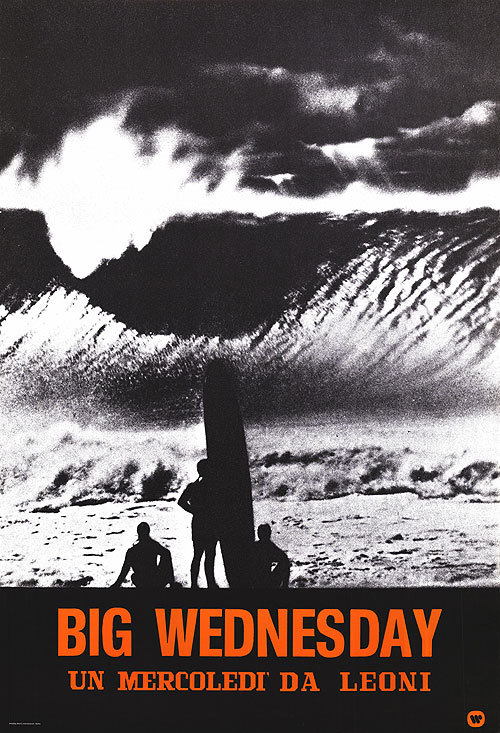
The tensions of these real and screen lives have in large part remained those of the film genre Gidget engendered. In the half-century since, from the Beach Party franchise and its early '60s spin-offs, through Big Wednesday, Point Break, Blue Crush, and many others, and on to Chasing Mavericks in 2012, filmmakers have gone to the sand a couple dozen times to produce narratives either focused expressively on surfing as sport or obsessive life choice, or at least as significant background informing and directing the film's meaning. The result has been movies that are often more incisively pertinent in their treatment of growing up, family tensions, a world of dizzying social change, race and class, and the seductive lure of commerce and appearance than their wicked barrels, great tans, and dudespeak might presage. With an eye to the meanings behind their attractive surfaces, I'll be looking at a handful of these, at least one from each decade, for the most part relatively high-profile examples of a film type that, if rarely the source of smash hits, has generally met with commercial success. Hardening firmly in place by the 1970s, a highly restrictive formula thereafter rules the near totality of these films: given their interest in young people on the cusp of adult life, it's not without a certain logic that they return repeatedly to such story elements as the wise mentor, the temptation to sell out, the preparation sequence, and the concluding challenge or competition. The remarks to follow will examine the genre's creation in the beach-craze '60s, then turn to its elaboration in what one might consider the main line of "classic" surf films, with their reliably formulaic focus on childhood's end; the conclusion will explore how, while remaining generally faithful to established patterns, certain films have brought within their widened purview broader social and political issues. With the exception of Bruce Brown's The Endless Summer (1966) — a documentary but vaguely story-centered and, in any case, so iconic as to be compulsory — all of the films under discussion are pure narratives. As such, they should be distinguished from the grainy collections of hot rides Greg Noll brought to stoked kids in countless multipurpose halls and their often lyrical or thrilling cinematic descendants. Whether big deals like Riding Giants and Step into Liquid, or smaller, edgier efforts like BS!, these documentaries are absolutely central to the surfing subculture and merit separate study, with their specialist target audience, their shared values, and visual assumptions.

Unsurprisingly perhaps, the first treatments of waveriding were documentary in nature and aimed at the widest possible audience. Like les Pathé-Frères, who put together 100 minutes on Le Surfing: Sport national des iles Hawaii in 1911, filmmakers in the first half of the century responded periodically to a curious public's hunger for images of exotic locales and practices that, even in the era of grand liners and early aviation, remained largely inaccessible. By the thirties, in any case, the word on surfing was getting out, if Hawaiian Holiday, the first cinematic narrative treatment of the sport, is any indication. In this 1937 Mickey Mouse featurette, Goofy recklessly challenges waves that, with the typical extraordinary range of Disney's animation teams, manage at once to be dumb funny, anthropomorphically nasty, and possessed of a frothy, sculpted loveliness drawn straight from Hokusai. While the cartoon is (somewhat speciously) considered the source of the term goofy-footed for surfers who, like its hero, lead with their right foot, its variation on the timeless theme of the arrogant individual chastised by a recalcitrant natural world in fact says little more about surfing than that it was just edging into the public consciousness. It would take the '50s and early '60s and the sport's headlong drop into popular culture before filmmakers would begin to recognize and exploit its rich visual and thematic possibilities.

And what visuals, for there is something basically unbelievable about human beings standing up on a tumbling wave, not to mention carving sleek sweeps and tight reverses back up its face. Cinematically, what's not to like about good-looking kids in a dream locale practicing a potentially dangerous sport that, even straight-on from a fixed shore location in black and white, films like a million bucks? Considered a moment, however, the scene is much more than its very pretty pictures, in large part because of the richly conflicting signals it emits. As sport, identity definer, and style locus, the surfing we have come to know these last decades is a space of, variously, big-money competition, reverent communication with the natural world, heavy partying, one-to-one confrontation with appalling physical force, proprietary localism of the ugliest sort, New Age self-discovery. It is a counterculture and a culture, a way to rebel and a way to grow up, and some live an entire adult life, work and all, still somehow rhythmed by the daily wave report. Surfing is the Beach Boys sweet in their striped Kingston Trio short-sleeve button-downs, and it's Dora dive-bombing kooks and bouncing checks. It's the garden and the salesmen who slither into it. Let's go surfin' now, everybody's learnin' how, we are joyfully urged, but to paddle out as the new guy is in fact to try entering the most closed of societies. Surfing can seem like an ocean of style, posing, and attitude, but out in the impact zone and beyond, the superficial abruptly washes off. To choose a short board or long, three fins or one, can be no less than to define different selves and value systems.

The very physical space offers an equally rich palette of thematic opportunity. From knee-high kids' stuff to Fukushima, pure fluid energy rears in defiance at sudden, solid resistance. The arriving swell is pattern and endless variety, or as Laird Hamilton says of the big ones in The Wave, "it's never the same mountain" (72). Proceeding in stately sequence, breakers seem all ruler-edged order, but of course they are also sites of chaos and fear. There the simple can become "in practice immediately complex," writes Woolf in To the Lighthouse, "as the waves shape themselves symmetrically from the cliff top, but to the swimmer among them are divided by steep gulfs, and foaming crests." Wild swings of perspective rule the sand as well, for what place is more one for sun-drenched, thought-free lotus-eating than the beach. Yet on that thin strip of dry land the tragic drama of our collective addiction to fossil fuels will play out first. And even carefree Waikiki lies hard by an ocean's unfathomable mass with its troubling, timeless reach of myth and suggestion. It is on the shore after all that Wordsworth rejects that world that is too much with us, yearning seaward to affirm the deeper truths of Proteus and Triton. The beach is just the beach, and it is much more than that. The greatest of the wavewriters, Daniel Duane, recognizes the way the surf scene can encode paradox, locate that sweet spot where the deeply complex and the unreflective simple both somehow find their footing.

...

To Read the Entire Essay

Tuesday, April 9, 2013

The Hurt Locker (USA: Kathryn Bigelow, 2008)


The Hurt Locker (USA: Kathryn Bigelow, 2008: 131 mins)

Alpert, Robert. "The Hurt Locker litigation: An adult’s story—part 2." Jump Cut #57 (Fall 2016)

Benton, Michael Dean. "Kathryn Bigelow's Wild Men: Gender in The Hurt Locker." North of Center (2008: Reposted on The Smirking Chimp, March 4, 2010)

Kemp, Philip. "Directors of the Year: Kathryn Bigelow." International Film Guide:2010 ed. Ian Hadyn Smith. NY: Wallflower Press, 2010: 17-24. [Professor has copy]

Kinder, Bill. "When Soldiers Come Home in the Movies: The post-war experience as told in tropes." Keyframe (November 11, 2015)

Peebles, Stacey. "Stories from the Suck: The First Wave of Iraq War Narratives." Berfois (April 15, 2011)

Stork, Mattias. "Chaos Cinema: The Decline and Fall of Action Filmmaking." Press Play (August 22, 2011)

Wednesday, January 2, 2013

Erin Aubry Kaplan: 'Django' an unsettling experience for many blacks

'Django' an unsettling experience for many blacks
by Erin Aubry Kaplan
LA Times

Quentin Tarantino's slave-era spaghetti western has some questioning the propriety of using a still-festering period of U.S. history as a platform for a bloody, profanely comic pop entertainment.

Tracey White's initial impression of "Django Unchained," Quentin Tarantino's new slave-era shoot-'em-up extravaganza, could be summed up in three words: smart, funny and ugly. Sitting through a recent screening in Beverly Hills, the L.A. costume designer was mostly absorbed and found herself laughing aloud at particularly outrageous moments.

But White, who is black, said her feelings evolved significantly. Two days after reflecting on the matter of slavery and Tarantino's treatment, she pronounced the movie mostly ugly.

"He [Tarantino] gets a good product out of it in terms of wit and a visual look," said White. "But when it was over I found myself wondering, 'What is he trying to do?' I enjoyed the movie when I was in there, but I still have a problem with Tarantino when he deals with our race."

White will certainly not be alone among African Americans in her ambivalence about the gleefully outrageous film. While "Django" has nabbed almost uniformly warm reviews and four NAACP Image Award nominations (including for best picture), the fact is that it is an extremely Hollywood-ized vision of a critical black American experience.

Some blacks are already calling the revenge-fantasy movie, especially its graphic and highly stylized violence, insensitive, exploitative and ahistorical. Filmmaker Spike Lee, a longtime critic of Tarantino, said this month that he refuses to see the movie, and calls his spaghetti-western approach to slave history "disrespectful."

Many moviegoers will know something of what they're getting into. Violence and the liberal use of black idioms and so-called urban culture are Tarantino hallmarks, notably in early films such as "Pulp Fiction" and "Jackie Brown," and they've always stirred controversy. But this movie is different because it mines slavery, the complicated source material for so much black culture and fountain of violence in American history.

It is an institution whose horrors need no exaggerating, yet "Django" does exactly that, either to enlighten or entertain. A white director slinging around the n-word in a homage to '70s blaxploitation à la "Jackie Brown" is one thing, but the same director turning the savageness of slavery into pulp fiction is quite another.

To Read the Rest of the Article

Cecil Brown: Tarantino's Django: Unchained - Hollywood’s Nigger Joke

Tarantino's Django: Unchained: Hollywood’s Nigger Joke
by Cecil Brown
Counterpunch


In order for a joke to work, Mary Douglas, the eminent British anthropologist, wrote that one had to have a social context for it to operate in. “We must ask what are the social conditions for a joke to be both perceived and permitted,” she asked in her wonderful little essay, “Jokes.”

“My hypothesis,” she writes“is that a joke is seen and allowed when it offers a symbolic pattern of a social pattern occurring at the same time.”

With Django: Unchained, the symbolic pattern–I’d call it historical context–is Hollywood itself. “If there is no joke in the social structure,” Mrs Douglas observed, “no other joke can appear.” In Hollywood, there are lots of jokes in the system!

The social pattern that allows Quentin Tarantino’s “Nigger joke” to work is set in the South, two years before the Civil War, but my point is that this is only a pretext for Hollywood itself.

Some critics, like Betsy Sharkey in the Times, think this film is a masterpiece. Sharkey calls it, “the most articulate, intriguing, provoking, appalling, hilarious, exhilarating, scathing and downright entertaining film yet.”

African American critic Wesley Morris hated it. He called it “unrelenting tastelessness — [...] exclamatory kitsch — on a subject as loaded, gruesome, and dishonorable as American slavery.”

Ishmael Reed, the novelist, pointed out how the Weinstein Company promoted an advertising campaign to get a black audience by promoting Jamie Foxx as the star. In fact, Foxx is only one of the stars, along with Christoph Waltz and Leonardo DiCaprio. As Reed points out, Foxx spends most of his time looking at Mr.Waltz and then looking at Mr. DiCaprio, with a puzzled look on his face, as if to say, What’s dese white folks, talkin ‘bout?

My aim in his essay is to examine the way in which the symbolic system is a reflection of the social system. “What are the social conditions for a joke to be both perceived and permitted,” Mrs Douglass wrote in that little essay, “Jokes.”

What are the social conditions that would permit Django to be the big howling, empty nigger joke that it is?

One of these social conditions, certainly, involves the relationship between black actors and Hollywood as a symbol of the plantation system.

In his review of the film, for example, Mr. Reed said that Sam Jackson, in the role of the conniving, omnipresent, evil slave, is “playing himself.”

If Jackson had not dominated the Hollywood system in such a sly way, then his role as Stephen, the master-worshipping house slave to Calvin Candie (Leonardo DiCaprio) would not have its loaded, edgy, uncanny realism. The plantation is called CandieLand (Candyland) and is meant to refer to Hollywood itself as a producer of entertainment (Candy). Get it?

If Jamie Foxx is not known in Hollywood as a resourceful hustler, who will play almost any role, then his part as the “bad nigger” Django would not be so compelling (and lubricous). If he was not the “New nigger on the block,” then the confrontation between him and Sam Jackson’s character, Stephen, the off-the-hook house slave, the scene would not be powerful (and dumb) at the same time.

The dramatis persona forms a homology with the enacted characters on the screen. The key that unlocks Tarantino’s sensationalistic mosaic is that it reveals the inner game of how the Hollywood studio and the plantation slave institution exploited black people.

To Read the Rest of the Essay

Monday, November 12, 2012

Two Upcoming Zombie Films: World War Z and Warm Bodies

This one looks like a wretched horror film playing on elite fears of the "unwashed masses."

World War Z (USA: Marc Forster, 2013)


This one looks like it is coming from a different direction.

Warm Bodies (USA: Jonathan Levine, 2013)

Monday, September 10, 2012

American Cinematographer: Seamus McGarvey brings the Earth’s mightiest heroes to the big screen for Joss Whedon’s The Avengers

Seamus McGarvey, ASC, BSC brings the Earth’s mightiest heroes to the big screen for Joss Whedon’s The Avengers.
by Jon D. Witmer
American Cinematographer

Dirt and soot blanket six lanes of smoldering rubble that run the length of a city block, and burned husks of cars and trucks lie atop slabs of concrete jutting skyward in front of shattered storefronts. The street signs indicate this is what’s left of Manhattan’s 42nd Street and Vanderbilt Avenue intersection, but in actuality it’s East 9th Street in Cleveland, Ohio, on the 79th day of principal photography on The Avengers.

In a nearby alleyway, Captain America (Chris Evans) stands near a row of cameras amid the bustling crew, and not far away, director Joss Whedon is consulting with cinematographer Seamus McGarvey, ASC, BSC in video village. When both filmmakers come over to greet AC, Whedon says of his director of photography, “Seamus is very fast, which I love, and his style is very particular. It’s not over-thought, but it’s just hyperbolic enough for this kind of movie, which is insanity grounded in reality.”

The Avengers builds on the foundation laid by the Marvel Studios features Iron Man (AC May ’08), Iron Man 2 (AC May ’10), The Incredible Hulk, Thor (AC June ’11) and Captain America: The First Avenger (AC Aug. ’11), and takes its cues from the long-running Avengers comic-book series, which first hit newsstands in 1963. In the film, Strategic Homeland Intervention, Enforcement and Logistics Division leader Nick Fury (Samuel L. Jackson) assembles Captain America, Thor (Chris Hemsworth), Iron Man (Robert Downey Jr.), Hulk (Mark Ruffalo), Hawkeye (Jeremy Renner) and Black Widow (Scarlett Johansson) to face the global menace posed by Thor’s nefarious brother, Loki (Tom Hiddleston), who unleashes an extraterrestrial army in a bid to rule the world.

Principal photography began in April 2011 in New Mexico, and McGarvey says his three months of preproduction were “vital in terms of getting to grips with the scale of the project, and planning how we’d achieve certain sequences.” Shooting digitally was a given because of the extensive digital effects and the producers’ original plan to capture in 3-D. But when the crew tested a 3-D workflow by shooting the “tag” that followed the end titles of Thor with Red Epic cameras and Panavision Primo lenses in an Element Technica rig, “it was not a successful day of shooting,” says McGarvey.

“Although the native 3-D looked great, each setup took too long,” he explains. “I love when a crew picks up speed and creates its own inner dynamic. Joss, too, likes to keep the momentum up on the set. Shooting 3-D is like throwing treacle bombs into that beautiful élan. It wasn’t going to afford us the impetus and dynamism we needed.”

Marvel subsequently decided to capture in 2-D and convert to 3-D in post, and McGarvey abandoned the Epic for the Arri Alexa. “I preferred the look of the Alexa in terms of its range and its ‘roundness,’” he says. “I recognize [its image] as more akin to a film look.”

In fact, McGarvey was so impressed with the Alexa’s performance in his tests that he bought his own; christened “Schatzi de Bayer,” it served as the production’s A camera. The main unit also carried three Alexas (rented from Panavision Woodland Hills), one of which “was always rigged in Steadicam mode, and the other two were in studio mode and could easily be switched for handheld,” says the cinematographer.

“We shot with Primos, predominantly primes, but we also used 19-90mm and 24-270mm zooms, and occasionally we got a 3:1 long zoom,” he continues. “[With the zooms,] we tended to stay around 21mm and 27mm, or at the longer end, like 100mm.”

McGarvey typically maintained a T4 or T5.6 for day exteriors, and T2.8½ in other situations. “I shot everything at [the Alexa’s base ISO of] 800. When I tried to rate it lower, like at 400, it seemed to build up in the shadows, and I didn’t feel it had the same range. So I simply used IR neutral-density filters to bring down the stop for exteriors.”

The production also carried 10 Canon DSLR cameras, eight EOS 5D Mark IIs and two EOS 7Ds, all fitted with Canon EF lenses. Their footage was recorded to SanDisk Extreme Pro memory cards. “I prefer the 5D to the 7D,” McGarvey notes. “I like its larger sensor and the way the depth of field falls off quicker. But we used the 7Ds for any slow-motion work [that involved DSLRs].”

To Read the Rest of the Article

Wednesday, September 5, 2012

Lila Kitaeff: Three Kings -- Neocolonial Arab Representation

Three Kings: Neocolonial Arab Representation
by Lila Kitaeff
Jump Cut


...

Non-oppositional critique of the Gulf War

In general, Three Kings’ marketing and reception dwelt on its supposedly unconventional nature. By unconventional, I mean “oppositional” discourse and imagery in the sense of contrasting to those found in dominant cultural productions. Although I will argue that the film does not, in fact, deviate from a typical Hollywood film in its basic message and structure, Three Kings does occupy a somewhat tenuous position in terms of Hollywood-type unconventionality. At first glance, viewers might expect the film to be an action-packed adventure and war movie. The main actors are blockbuster action stars (with the exception of Spike Jonze, director of Being John Malkovich and several “Beastie Boys” videos). And director Russell’s previous films, Spanking the Monkey and Flirting with Disaster, were offbeat in their brand of dark comedy, if not particularly unconventional in form or plot.

Initially film reviewers considered the story original. They said this film had more to it than met the eye, that its message and structure differed from most Hollywood films. A typical review praised Three Kings for its “genre subversion, anarchic attitude and barbed political commentary… making cogent points about… America’s role as the world’s policeman.” This same reviewer even suggested that the film addressed “the amorality and lack of consistent principles in American foreign policy. No Hollywood film in memory has addressed such an issue” (McCarthy par. 4 and 18).

However, although Russell does make a certain social critique of the Gulf War, as I will explore below, it is based in mainstream rather than oppositional discourses. For example, he explained this as his goal:

Taking people’s perceptions of this war, and turning them on their head… all the assumptions that you had about this war need to be looked at and turned over, including the sense of satisfaction you had as a moral victor, as an American.


However, if one were to make an explanatory critique subverting mainstream perceptions of the Gulf War, one would have to take into account the struggle’s historical context and the economic and ideological interests behind U.S. intervention. Such an argument was made by Noam Chomsky and Michael Albert, for example, when they asserted that “the real reason for U.S. opposition to Iraqi occupation of Kuwait is… to keep Washington, Wall Street, and their allies in charge of setting oil prices” (par. 5). And as Chomsky and Albert further pointed out, the U.S. government also has an ideological interest in perpetuating militarism in order to maintain the status quo of military spending and interventionist foreign policy.

Three Kings does not offer this sort of explanatory critique. Instead, the film presents the protagonists as coming to a realization that the United States has failed to save Iraq and destroy Hussein’s regime. According to the film, the United States is mistaken not because it intervened in the Middle East but rather because it did not follow through in its mission to save the good Arabs and crush the bad Arabs, a mission perpetuating neocolonial ideals. The heroes of Three Kings, in terms of the film’s logic, right the wrongs of the United States by saving a small group of Iraqi civilians, thus reproducing “the [neo]colonialist structure of the heroes’ relation to the native… [to] sort out the problems of people who cannot sort things out for themselves” (Dyer 156).

Neocolonial themes and traditional cinematic themes

Neocolonial cinema encourages the spectator to identify with representations of the colonizing subject and, by partaking of the trajectory set up by the storyline, to posit the colonial project itself as desirable. For example, in the scene in which the U.S. soldier protagonists are shown first entering the village, the images largely present their point of view, inviting identification by literally allowing the spectator to see through their eyes. In this scene the Iraqi civilians are portrayed as dominated and submissive as they beg the Americans to stay and help them. Other Iraqis who want to fight seem incapable of acting on their own as they cry out, “The Americans are here. It’s okay to come out. We can fight Saddam!” Thus, all Iraqi civilians—those beaten down and those who are still resistant—are presented as entirely dependent on U.S. help.

As Shohat and Stam put it, such a scene functions to “mobilize” spectatorial desire to participate in the narrative line about the protagonists’successful “neo-colonial mission.” The mobilization of desire works in tandem with spectator positions. Just as the cinematic apparatus interpellates the viewer to identify with the characters and narrative, the desire for which the protagonists strive also becomes the viewer’s desire .

In its ties with other fictions, including novels, drama, and song lyrics, Three Kings integrates traditional U.S. cultural and cinematic themes, especially about the outlaw hero. The film also uses a common Hollywood script format for dealing with cultural crises, that of the “problem picture.” These script strategies further weaken the film’s critique of United States ideals. In terms of screenwriting, Robert Ray discusses narrative strategies common in Hollywood in which morally centered characters enact a drama against a background of contemporary social issues. This kind of script development is common in what Ray terms “problem pictures,” films that critique large social issues but ultimately have happy endings that belie those problems (147).

In films like these, the outlaw hero is a common character. Such a figure possesses his own moral code and works to “correct” socially unjust laws and authority figures (Ray 15). For example, as Richard Dyer describes the genre, in the Rambo movies that attempt to critique the Vietnam War, the protagonist Rambo is

doing the job… that the United States government should be doing. Thus he repeatedly upholds basic American values against the actuality of America” (Dyer 159-160).


In this way, Hollywood’s use of the outlaw hero as a solution to historical events distorts perceptions of those events as part of social history, that is, outside of their filmic portrayals (Ray 59-62).

To Read the Entire Essay

Wednesday, August 22, 2012

Ignatiy Vishnevetsky, Adam Cook, Mike Archibald and Josh Timmerman: The Big Murk - A Conversation About Christopher Nolan's The Dark Knight Rises

The Big Murk: A Conversation About Christopher Nolan's "The Dark Knight Rises"
by Ignatiy Vishnevetsky, Adam Cook, Mike Archibald and Josh Timmerman
Notebook (MUBI)

The Dark Knight Rises: a big pop-cultural event, the epicenter of a tragedy that has (unfortunately, inadvertently) become 24-hour news cycle fodder, an illustration of what is (and isn't) meant by the word "ambitious" in today's Hollywood, a much-anticipated sequel to a film that's popularly seen as the superhero-flick-to-end-all-superhero-flicks, a major talking point in the ongoing discussion of what film criticism means to audiences at large. It's easy to forget that it is, first and foremost, a movie. And as a movie, it happens to be a mess—long, loud, and full of seemingly contradictory ideas and plot threads.

In the following exchange, Adam Cook, Mike Archibald, Josh Timmermann, and I try to make sense of the film, its politics, and its director.

***

Ignatiy Vishnevetsky: Positives first. I liked the first half of the film the most. It has all of these different threads of intrigue going on: Jim Gordon hunting criminals down drainage pipes, Bane putting together his master plan, Bruce Wayne living as a doomed-romantic recluse in his mansion, Selina Kyle's burglaries, corporate skulduggery. I like the crazy-quilt way in which Nolan uses IMAX, switching aspect ratios shot to shot. I like the Revolutionary Tribunal-style courtroom scenes with Cillian Murphy's Scarecrow presiding as judge, even though the narrative context within which they appear leaves a sour taste in my mouth. I like the image—almost Monty Python material—of policemen living in sewers, huddling together, keeping their uniforms clean for the day when they can step out into the daylight again and arrest people. In other words, I like the silliest, cartooniest, most out-there things about the film. I like the detailing. The grand design is a totally different matter.

The three most common complaints about Christopher Nolan's movies that you're likely to hear are: (1) they have a shoddy grasp of space and time, despite always being centered around chronologies and intercut action; (2) they use political issues and reference-points and take contradictory stances on them (this point applies only to The Dark Knight and The Dark Knight Rises); and (3) most of them use personal traumas (more often than not, Nolan's "dead wife" motif, which appears twice in The Dark Knight Rises) and public tragedies as plot points, but have no sense of the emotional. I think Nolan's best movies are the ones that turn points 1 & 3 into strengths; to me, the appeal of The Prestige, my personal favorite of his films, rests in its which-story-within-a-story-is-being-told? spatial slipperiness and its coldness. In The Dark Knight Rises, however, all three of these points are liabilities.

Since it's specific to Nolan's Batman films, I'd like to start with point 2: the politics. I know that for some people, the ending of The Dark Knight was a big problem; it appears to celebrate surveillance and the necessity of lying to the general public for their good (through the Joker / Batman / Harvey Dent narrative thread) while at the same time preaching about the general goodness of people and the ability of a group to make the right decision (the "two boats, two detonators" dilemma).

The Dark Knight Rises is even more self-contradictory. The images of this film are constantly cancelling each other out. There is Bane's attack on the stock exchange, while plays out as an Occupy-era revenge fantasy—and yet, of course, Bane is the bad guy. Group solidarity is celebrated (the marching policemen, for example) and many jabs are taken at wealth and business, yet the hero is a lone billionaire. Batman operates outside the law, yet law enforcement is fetishized. Scarecrow's revolutionary court is presented as a sort of nightmare—yet it rightly convicts a slimy villain. You have the suggestion (which I actually think is a smart move on Nolan's part) that The Dark Knight's "print the legend" ending was a bad idea—and yet when the Joseph Gordon Levitt character essentially repeats the same "lie to give them hope" move late in the film (to a busload of orphans, no less!), it's presented as the right thing to do. Every image seems charged for maximum political impact—with references to the images and words of the French Revolution, fascist Italy, the Bush administration, the War on Terror, the Occupy movement—but there is nothing like a coherent ideology. Nolan strikes me as either apathetic—using whatever ideology fits for any given scene—or politically schizophrenic.

To Read the Rest of the Conversation

Monday, May 28, 2012

Joshua Clover: Fall and Rise

Fall and Rise
by Joshua Clover
Film Quarterly


...

But Toyota-ization too reached its limits. “Tokyo drift” describes a style of street racing where the cars are made to slide almost frictionlessly through corners, with the low impact grace of a tap dancer in a sandbox. It might just as well be a rubric for the Japanese economy of the ongoing “lost decade”—having avoided a massive economic crash, it is still unable to get back on track or restore profitability, and drifts endlessly through the long turn of late capitalism.

A consultation with reference materials suggests that Tokyo Drift was meant to be out of series and out of time; Fast Five, a less nimble film, takes place earlier. Looks like the present. So Han, a ghost of the Lost Decade, walks into a garage in the emerging economy of Brazil to take his place in the team assembled by Dom (Vin Diesel), who looks like a muscle car with legs, and Brian (Paul Walker), former federal agent. Our heroic band’s admixture of criminal and lawman is matched by the villains: the caper involves a crime lord who is also a political boss. All parties meet at money, obviously. The boss has $100 million socked away in a police station vault. Being street racers, our crew proposes to prise the vault forth from the station cabled to a couple of their vehicles, then flee through downtown Rio. But first they lay hands on an identical vault: a salute to the (remade) Ocean’s Eleven, where the team acquires a replica of the casino vault so as to practice their mechanics. In the event of it, eluding unencumbered pursuit while dragging an enormous steel oblong across pavement proves easier said than done. Call it Rio Friction, the very inverse of Tokyo Drift. Or call it Attack of the BRIC. Abandoning all hope of escape, Dom turns to use the vault as a weapon. Indeed, it has been functioning as such all along; the flight to safety, even before it becomes a demolition derby, has managed to obliterate considerable swaths of the world capital.

Not only is it impossible to imagine the characters thinking this was a good or even plausible idea for getting the dough, it is also impossible to imagine the screenwriters thinking this would make for a good caper. The ten-minute sequence is finally a bit dull; absurdity does have a way of turning to boredom.

But what if we have been thinking of this all wrong, and the entire movie is just a pretext for something else altogether? It may be narrative idiocy of the first water—but it is, we must admit, the single best cinematic representation of the global financial crisis yet contrived, immeasurably better than Inside Job or Capitalism: A Love Story.

A weaponized concentration of capital seems to be dragged about by supermen; it is in fact dragging them around, laying waste to the world before it, destroying houses and urban centers and bodies as it races for safety—before recognizing that there is no safety and it should just turn violently on its pursuers in a festival of destruction.

In the textbook definition, capital is generally self-valorizing value; in a crisis it is inverted, and becomes self-annihilating value. The supermoney that seemed to run the world is revealed as “fictitious capital,” unrealized and finally unrealizable, but still in its auto-destruction capable of laying low the world around it. Which explains what would otherwise be the most intolerable plot device. In the end, it turns out that Dom and Brian have been hauling the fake vault through the city, while the actual box is spirited away, loot enclosed. As a scheme, it’s ludicrous. As a reading of crisis in the world system, it’s immaculate—as if Hollywood had come to an intimate knowledge of volume 3 of Capital without reading, simply by bathing in the current of world money—and should complete the contemporary genre. I am seriously considering renaming this column “The Marx and the Furious.”

Now that we no longer want for figurations of the financial crisis, we can turn to what comes next, if anything, and how one imagines the vectors and contexts of an adequate response. In this arena apocalyptic pictures continue to hold us captive. The signal version this season is Contagion—arriving as an updating of the 1970s disaster flick, and bearing with it some backdated ideas indeed.

To Read the Entire Essay


Friday, May 25, 2012

Ian Grey: Black Widow Spins Webs Around THE AVENGERS

Black Widow Spins Webs Around THE AVENGERS by Ian Grey Press Play Black Widow is the first hero seen in The Avengers, the latest entry in Joss Whedon's career-long feminist project. She does not immediately display the super powers enjoyed by the other Avengers—Captain America’s unnatural super-strength, The Hulk gamma-ray rage giant, Iron Man’s wearable rock ‘em, sock ‘em robot suit, or Thor’s hammer of the demi-gods. The only visibly super things about Black Widow are the latest in cat suit couture and a striking asymmetrical crimson bob. And yet she’s still able to trash a clutch of Russian scumbags with her hands tied behind her back. With a chair tied to her rear. While talking on her cell phone. She’s also the sole Avenger that S.H.I.E.L.D. leader Nick Fury (Samuel Jackson) trusts to convince Bruce Banner (Mark Ruffalo) to join Thor (Chris Hemsworth), Iron Man (Robert Downey, Jr.), and Captain America (Chris Evans) in the fight against Thor’s psychotic brother Loki (Tom Hiddleston) who, having stolen the ultimate source of power in the universe, the Tesseract, plans to use an alien army to devastate the Earth. (The plot ends there.) As egos collide, Black Widow—street name, Natasha Romanova—is the only character who does not throw a monstrous hissyfit. The only character to gather actionable intelligence against Loki from Loki. The character who not only literally kicks sense back into the brainwashed Hawkeye, but then absolves him of any sins performed while under the loony god’s spell. You want fearless? When midtown Manhattan is swarming with thousands of robo-aliens, the dreaded Chitauri, Black Widow commandeers one of their slippery aero-sleds and flies it to steal Loki’s glowing phallic scimitar so as to save the world so Iron Man can blow up the aliens. Oh—and the Tesseract? It’s female. I know this because everyone calls it by female pronouns—respectfully. How does that work? Well, the way all Whedon works: second viewings reveal not only layer after layer of multiple meanings, jokes piled on jokes, but seemingly random elements that are actual thematic glue. Nothing is never there without a reason. Anyway, Black Widow! A worthy addition to Whedon’s female action bloodline, right? The flame-haired heir to Buffy, Faith, Kendra, River, Echo, Zoe, Fred, and Illyria, right? No. To Read the Rest of the Essay

Sunday, April 15, 2012

Richard Koehler: Nicholas Winding Refn and the Search for a Real Hero

Nicholas Winding Refn and the Search for a Real Hero
by Robert Koehler
Cinema Scope


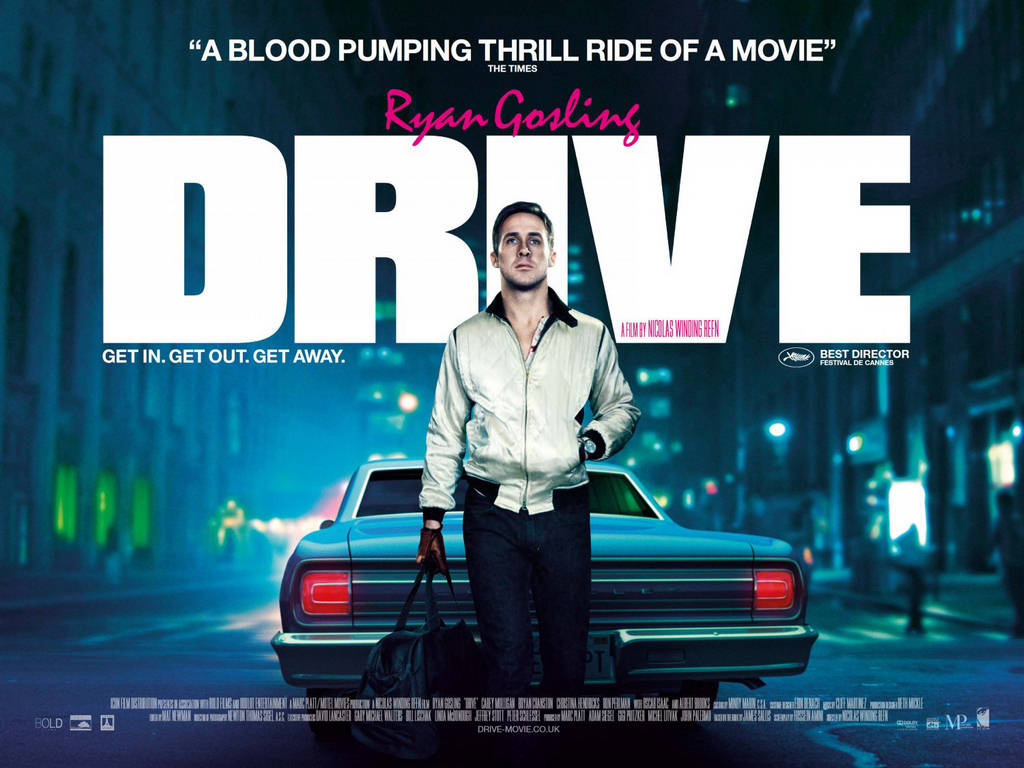
In the middle of Nicolas Winding Refn’s Drive, a film punctuated by extreme flourishes of violence and vengeance, there is a period of peace. It occurs when Driver (Ryan Gosling), a quietly contained guy who holds down three jobs—auto mechanic, movie stunt driver, and getaway driver-for-hire—is asked by his auto-shop boss (Bryan Cranston) to drive home customer and Driver’s neighbour Irene (Carey Mulligan) and her little boy. En route, Driver takes a surprising detour from the street down to the concrete banks of the Los Angeles River, one of the city’s most iconic images, a grand public-works project born out of vast and tragic flooding the city endured generations ago. The river, choked into a narrow canal and surrounded by an elegantly paved canyon, has been used in too many movies and TV shows to possibly count, most recently by Bruce La Bruce for daytime sequences of L.A. Zombie (2010). Driver, true to character, uses it as a racetrack and as a bit of stunt track—mildly, as a kid’s in the car, and he’s a gentleman at heart—but also as a road to get somewhere.

The typical deployment of the Los Angeles River in cinema is as a symbol of dead ends, final stops, the place where the city dies, and people along with it. Not so for Refn, for whom Los Angeles is a new city, a place of discovery. Viewed from the majestic prospect of a high angle in long-shot widescreen, Driver stops at the place where the concrete river ends and gives way to the wild river, a startling image even for native Angelenos. He knows these kinds of places, having driven everywhere (so, in reality, does Gosling, who knows the city expertly and drove Refn around town as research, inspiration, and preparation). Refn understands those many places in Los Angeles that make it fairly unique, and reverses the usual clichéd knock on the place as one long paved sprawl. Constantly, the paved cityscape surrenders to the natural world, sidewalks dissolve into dirt trails, roads simply stop, buildings reach their limit when faced with cliffsides, massive chaparral, impregnable mountain ranges that cut through the metropolitan area. Driver leads mother and son to the wild river for a Tom Sawyer afternoon under the sun, a Southern California utopia—the ultimate getaway—an idyll that defines Drive and Driver in fundamental ways.

Superficially an action movie, Drive is actually a film in search of romance, zigzagging through an obstacle course of fairy tale and myth, and a hall of mirrors in which characters can be read as fantasy projections of others while being aware of themselves as figures inside a myth. Beloved in Cannes after days of disappointing films in the competition, Drive was perhaps welcomed by some for the wrong reason: as some kind of new read on Melville’s Le samourai (1967), with Gosling processing Alain Delon’s stoic killer. For once, the director has a sound interpretation that he’s willing to share with whomever cares to listen: Refn correctly argues that Drive’s foundation is in fairy tale, particularly its thematic of a character’s discovery of his own heroism, which Driver finds through the course of nurturing and protecting Irene, who’s made paradoxically more vulnerable when her convict husband returns home from prison. The necessary elimination of dragons—in the form of Albert Brooks’ ice-cold mobster Bernie Rose and Ron Perlman’s put-upon mobster Nino, to say nothing of a few nameless hitmen along the way—doesn’t so much make Driver into a killer, although he wreaks revenge with frighteningly intelligent brutality. Rather, it transforms him into a mythical figure who satisfies the imaginings of those around him, including Irene, who can nevertheless only marvel at him while knowing she can never have him. This is vastly different from Melville’s heightened existential world of professional killers who function by a code and live like lone wolves, apparently free of the need for genuine and reciprocal human contact. Delon’s Samourai is a corporeal killing machine; Gosling’s Driver is a young man in formation, whose work comprises (per his three jobs) repair, escape, and entertainment, and who finds his self during a gauntlet that perhaps only he can survive—an accidental knight who slays the beast.

This is a far stretch from James Sallis’ novel on which Hossein Amini’s screenplay is based, and, as Refn describes it, wildly different from Amini’s previous drafts written as a potential Universal franchise for Hugh Jackman. Sallis’ superb, laconic book, hardboiled to the core, as affectionate toward its city as it is cynical about the city’s most famous (show) business, could have been adapted pretty closely, even with its obsessive (and perhaps needless) jumps in chronology. But a knowledge of the book is helpful in appreciating the grand achievement in American cinema that Drive is. Hollywood has always been open to the invasive notions of outsiders, particularly European directors with strong points of view. Lubitsch, Lang, Boorman, Preminger, Wilder, von Sternberg, Herzog, Verhoeven, and von Stroheim all managed to import their native sensibilities with little compromise into the Hollywood system, and generally thrived intact. Refn’s ambition is clearly to make big movies for large audiences by his own sometimes-radical standards, which include mixing the hyper-violent ecstasies of the Pusher trilogy (1996, 2004, 2005), highly theatrical characters like Tom Hardy’s Bronson (2008), dreamlike dances of death as in Valhalla Rising (2009), and the romance of transformation in Drive. His new film is an act of will, pulling a fine but fairly standard piece of high-class pulp into something richer and more dynamic, modern in its self-consciousness as a work of art and entertainment, and Wellesian in its capacity to astonish, shock, and tease the mind’s perceptions. The fact that Refn is soon making a re-do of Logan’s Run with Gosling is a suggestion of a large-scaled cinema that’s aware of its kinetic powers, its artistic breadth, and its ability to kick it into the fifth gear.

To Read the Interview

Wednesday, March 28, 2012

On the Media: The Reel Sounds of Violence

The Reel Sounds of Violence
On the Media (WNYC: New York City public radio)


Most of us have been lucky enough to never witness someone's innards being spliced out of their body. Or someone's head being smashed into a wall. But in an action or horror film, we often believe that that's what actual violence sounds like. Deep in the Hollywood studios, sound editors have to create these sounds. How do they know what gruesome violence really sounds like? Brooke talks with Slate senior editor Daniel Engber who wrote about the battle between the real and created sound of violence.

To Listen to the episode