David Frost, 74, Remembered by Director Ron Howard For Historic Interview with Richard Nixon
Democracy Now
British broadcasting legend David Frost has died at the age of 74 after a heart attack. He spent more than 50 years as a television personality best known for his signature long-form interviews. He is best known for a series of historic interviews he conducted in 1977 with the disgraced former president Richard Nixon who had resigned three years earlier. The interviews lasted more than 28 hours and ended with Nixon making a tacit admission of guilt regarding his role in the bugging of Democratic rivals at Washington’s Watergate building and the later cover-up. The interview was later dramatized in the 2008 film "Frost/Nixon,” directed by the Academy Award-winning filmmaker Ron Howard. In December 2008, Democracy Now! interviewed Howard about the film.
To Watch the Episode
Showing posts with label Celebrity. Show all posts
Showing posts with label Celebrity. Show all posts
Tuesday, September 3, 2013

Tuesday, August 13, 2013
Christina Marie Newland -- Satirical Excess and Empty Vessels: Martin Scorsese's The King of Comedy
Satirical Excess and Empty Vessels: Martin Scorsese's The King of Comedy
by Christina Marie Newland
Bright Lights Film Journal
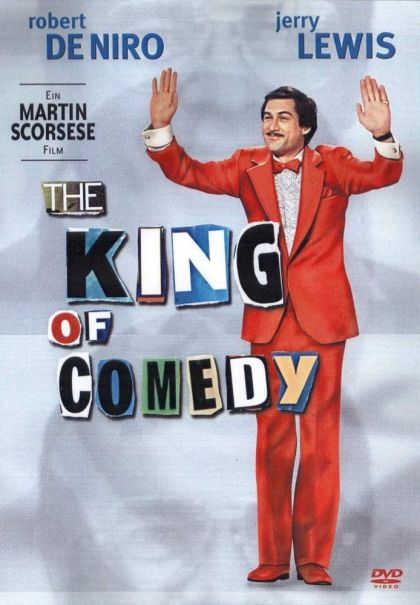
Robert De Niro as delusional acolyte to the stars, Rupert Pupkin, and Jerry Lewis as a mirror-image of his own talk-show comedian persona, Jerry Langford. Sandra Bernhard plays a supporting role as another hyperactive super-fan, Masha. The King of Comedy, written by Paul D. Zimmerman, does not resemble a typical Scorsese picture; the camera is pinned in place instead of roving around. This is seemingly to facilitate our unflinching stare into the lives and behaviour of the characters, when often we want nothing more than to look away. Scorsese's films usually teem with passion and activity, but Pupkin's world is more sedate, colder. Scorsese's go-to director of photography, Michael Chapman, turned down work on the film because of the director's choice of style: "His plan was to use largely empty sets, flat lighting, and old-fashioned box-like framing" (Rausch 102). Essentially, it was filmed to look like television.
Scorsese once again deals with an obsessional pursuit, a common theme in his work. Rupert Pupkin's obsession is particularly emblematic of the twenty-first century; it extends beyond the traditional pursuits of money and power, pursuing instead something more fleeting and all too modern: fame. More specifically, fame for fame's sake: fame predicated not on riches nor on talent but merely on the desire to be seen and idolized. This desire is what consumes De Niro's Rupert, a twitchy, perennially polite wannabe comedian who refuses to take no for answer when he meets his idol, Jerry Langford. He misunderstands Langford and his entourage's continual brush-offs, revealing his desire not merely to be around Jerry but to emulate him and eventually usurp him. He begs Langford for a guest spot on his hit television show, fantasises about Langford deferring to his ego, and eventually becomes deluded enough to appear uninvited at the celebrity's country house, only to be humiliatingly turned away in front of his crush, Rita (Diahnne Abbott). He and Masha then decide to take matters into their own hands and kidnap Jerry with a toy gun, demanding a spot on the show in exchange for Jerry's safety. Rupert is then allowed to perform his comedy routine on television. With startling irony, Rupert's bid for fame works, and although he is sentenced to prison for kidnapping, he is given a short sentence and comes out of prison famous, writing a best-selling book and receiving his own television show. The ironic conclusion to the film emphasizes its satirical look at the American obsession with empty fame, owing some debt to the 1976 Sidney Lumet film, Network.
The rise of consumerism and tabloid celebrity culture in the late 1970s and '80s is dealt with in both Network and The King of Comedy, but they become uncannily more accurate as time has passed, predicting the rise of reality television, social networking, and the disposable celebrity. Rupert simply decides, in the same aggressive manner as his Scorsesean compatriots, that his 15 minutes will be gained at any and all costs. The overnight celebrity becomes the new fixation of the American dream. The King of Comedy was poorly received, both by audiences and critics. "Unlike the context for Scorsese's earlier films, by the time of The King of Comedy, there was no longer an American film culture that encouraged or even allowed for challenging work" (Raymond 30). Considering the context of 1980s Hollywood and its "Reaganite entertainment" — escapist, often anti-intellectual blockbusters that provided happy endings and visceral enjoyment, it is easy to understand why the vulnerability and discomfort in The King of Comedy missed the mark with audiences. The overall cost of the film was recorded at $20 million; its domestic gross was roughly $2.5 million. It didn't do the film any favors that it was marketed as an outright comedy; it certainly is not that, though it has many darkly comic moments. Critics were more generous than audiences, but also offered some intriguing clues as to why the film flopped. Roger Ebert, for example (typically a Scorsese enthusiast), called the movie, "unsatisfying," "frustrating," and an "emotional desert," though he goes on to say that it is not by any means a "bad movie." Pauline Kael called it precisely that, going on to say that it gave her "cold creeps" and that it was "empty" (458). It is interesting that there seems to be a level of discomfort with both critics about the feelings the film evokes; both rightly refer to its unexpected coldness and the emotional distance of its characters, but another aspect also seems at play, one that William Ian Miller suggests: "the unfunny comedian humiliates himself and one of the sure indications that you are watching someone humiliate himself is that you will be embarrassed by the display" (329).
To Read the Rest

by Christina Marie Newland
Bright Lights Film Journal
Robert De Niro as delusional acolyte to the stars, Rupert Pupkin, and Jerry Lewis as a mirror-image of his own talk-show comedian persona, Jerry Langford. Sandra Bernhard plays a supporting role as another hyperactive super-fan, Masha. The King of Comedy, written by Paul D. Zimmerman, does not resemble a typical Scorsese picture; the camera is pinned in place instead of roving around. This is seemingly to facilitate our unflinching stare into the lives and behaviour of the characters, when often we want nothing more than to look away. Scorsese's films usually teem with passion and activity, but Pupkin's world is more sedate, colder. Scorsese's go-to director of photography, Michael Chapman, turned down work on the film because of the director's choice of style: "His plan was to use largely empty sets, flat lighting, and old-fashioned box-like framing" (Rausch 102). Essentially, it was filmed to look like television.
Scorsese once again deals with an obsessional pursuit, a common theme in his work. Rupert Pupkin's obsession is particularly emblematic of the twenty-first century; it extends beyond the traditional pursuits of money and power, pursuing instead something more fleeting and all too modern: fame. More specifically, fame for fame's sake: fame predicated not on riches nor on talent but merely on the desire to be seen and idolized. This desire is what consumes De Niro's Rupert, a twitchy, perennially polite wannabe comedian who refuses to take no for answer when he meets his idol, Jerry Langford. He misunderstands Langford and his entourage's continual brush-offs, revealing his desire not merely to be around Jerry but to emulate him and eventually usurp him. He begs Langford for a guest spot on his hit television show, fantasises about Langford deferring to his ego, and eventually becomes deluded enough to appear uninvited at the celebrity's country house, only to be humiliatingly turned away in front of his crush, Rita (Diahnne Abbott). He and Masha then decide to take matters into their own hands and kidnap Jerry with a toy gun, demanding a spot on the show in exchange for Jerry's safety. Rupert is then allowed to perform his comedy routine on television. With startling irony, Rupert's bid for fame works, and although he is sentenced to prison for kidnapping, he is given a short sentence and comes out of prison famous, writing a best-selling book and receiving his own television show. The ironic conclusion to the film emphasizes its satirical look at the American obsession with empty fame, owing some debt to the 1976 Sidney Lumet film, Network.
The rise of consumerism and tabloid celebrity culture in the late 1970s and '80s is dealt with in both Network and The King of Comedy, but they become uncannily more accurate as time has passed, predicting the rise of reality television, social networking, and the disposable celebrity. Rupert simply decides, in the same aggressive manner as his Scorsesean compatriots, that his 15 minutes will be gained at any and all costs. The overnight celebrity becomes the new fixation of the American dream. The King of Comedy was poorly received, both by audiences and critics. "Unlike the context for Scorsese's earlier films, by the time of The King of Comedy, there was no longer an American film culture that encouraged or even allowed for challenging work" (Raymond 30). Considering the context of 1980s Hollywood and its "Reaganite entertainment" — escapist, often anti-intellectual blockbusters that provided happy endings and visceral enjoyment, it is easy to understand why the vulnerability and discomfort in The King of Comedy missed the mark with audiences. The overall cost of the film was recorded at $20 million; its domestic gross was roughly $2.5 million. It didn't do the film any favors that it was marketed as an outright comedy; it certainly is not that, though it has many darkly comic moments. Critics were more generous than audiences, but also offered some intriguing clues as to why the film flopped. Roger Ebert, for example (typically a Scorsese enthusiast), called the movie, "unsatisfying," "frustrating," and an "emotional desert," though he goes on to say that it is not by any means a "bad movie." Pauline Kael called it precisely that, going on to say that it gave her "cold creeps" and that it was "empty" (458). It is interesting that there seems to be a level of discomfort with both critics about the feelings the film evokes; both rightly refer to its unexpected coldness and the emotional distance of its characters, but another aspect also seems at play, one that William Ian Miller suggests: "the unfunny comedian humiliates himself and one of the sure indications that you are watching someone humiliate himself is that you will be embarrassed by the display" (329).
To Read the Rest
Sunday, October 14, 2012
Tuesday, August 7, 2012
Christina Riley: Billy Wilder's A Foreign Affair -- Marlene Dietrich's Star Persona and American Interventionist Strategies in Postwar Berlin
Billy Wilder's A Foreign Affair: Marlene Dietrich's Star Persona and American Interventionist Strategies in Postwar Berlin
by Christina Riley
Bright Lights Film Journal

Marlene Dietrich's distance from the term "immigrant" represents her unique approach to conceptions of the home, nationalism, and citizenship. Throughout her life, the star moved as fluidly through countries as she did the screen. Upon Dietrich's arrival in Hollywood in 1930, her work with Josef Von Sternberg in The Blue Angel(1929) had been held back for its U.S. release due to Paramount's insistence that the star first be introduced to the public in an American production, ironically Sternberg's Morocco (1930). Dietrich starred as the ubiquitously "foreign" cabaret singer opposite America's hero Gary Cooper. Dietrich's star status quickly exploded, and when The Blue Angel was released that same year, audiences began to construct a composite picture of the actress: at once representative of Weimar Republic's decadence (Blue Angel) mixed with the connotations of the alien seductress (Morocco), while simultaneously acknowledging the star's new Hollywood home.
Along with Sternberg and Dietrich, another young cinema maverick fled Berlin for the safety of Hollywood: Billy Wilder. He arrived in 1934, and immediately began working as a screenwriter. Along with other émigrés, Wilder and company began to employ their alien influences across the American cinematic machine. Wilder first worked with Dietrich in A Foreign Affair (1948). The film focused on the American reconstruction of postwar Berlin, with Dietrich playing an ex-Nazi seductress opposite Frank Capra's girl next door, Jean Arthur, and Joseph Lund, a poor man's Gary Cooper. The film, with its manifold ur-texts and multinational insights, provides a cinematic exposé that attempts to deconstruct codified notions of nations and their people while exposing the jingoism of postwar U.S. interventionist policies. Revolutionary in its cinematic and historical context, A Foreign Affair wryly questions American interventionist policies in postwar Berlin, while Dietrich's Erika von Schlütow works as a tool to dislocate conceptions of a fixed national identity.
Wilder's film was born amidst the didactic rulings outlined in The Government Manual for the Motion Picture Industry released in 1942 by the Office of War Information. This document established ways in which American productions should and would uniformly applaud the U.S. war effort. Clayton R. Koppes and Gregory D. Blackexplore the OWI's disputes and persuasions with Hollywoodites, writing of the U.S. film industry under OWI influence, "Interwoven with economic realities, censorship laid the basis for an eventual resolution of the conflict between propaganda and mass entertainment" (112). The OWI's efforts to publicize Roosevelt's Four Freedoms in film began on the hope that pure patriotism would autonomously spur such cinematic devotion. The OWI's unrealized hopes quickly devolved into governmentally imposed censorship for Hollywood-produced pictures. If patriotic pictures would not naturally spring forth from the émigrés of Hollywood, then the OWI would un-surreptitiously thwart film productions that did not espouse the flag-waving of post-WWII America.
Upon Germany's collapse in WWII, the United States adopted the Marshall Plan, which focused on the economic reconstruction of Western European states. With the U.S. settlement in bombed-out Berlin, Americans attempted to usher in a new era in German-American film relations. Joseph Lowenstein and Lynne Tatlock's article "The Marshall Plan at the Movies" considers how American manipulation of Germany's postwar film industry proffered the transmission of American ideals to German audiences. Lowenstein and Tatlock write, "In place of German-made films, American movies flooded the German market, and Hollywood taught Germans about the American way of life, inculcating the values ostensibly necessary to the success of the Marshall Plan, the plan that this time would enable the Americans to save the Germans from themselves" (432). Thus, under the rubric of denazification, Americans set about disassembling the former Nazi state, focusing great attention on the now defunct German film industry.
Billy Wilder was given the task of returning to his former home of Berlin to aid the military in its reconstruction of the German cinema. Films that occupied Berlin's theaters carried two goals: to serve as diversions from the horrid conditions of Germany; and to provide educational, democratizing tools for the German public. Gerd Gemünden, a Wilder scholar, considered his role in Germany's cinematic restructuring, writing, "Wilder postponed his actual task . . . which was to write a report on the state of the production facilities and personnel available for use in the industry, and instead pitched his own idea about a film to the Office of Military Government in Germany" (58). What the director actually wrote became known as the "Wilder Memorandum," elucidating his beliefs regarding the politics of filmic propaganda. While discussing the shortcomings of Gene Kelly and Rita Hayworth's Cover Girl (1944), Wilder's profound understanding of the potentiality of filmic indoctrination was exhibited by his call for "an entertainment film with Rita Hayworth or Ingrid Bergman . . . with Gary Cooper if you wish . . . and with a love story — only with a very special love story, cleverly devised to sell us a few ideological items — such a film would provide us with a serious piece of propaganda" (58). Wilder then goes on to outline the plotline of what was to be A Foreign Affair — a film that was a commercially viable option while simultaneously incorporating Wilder's own brand of au courant propaganda.
To Read the Rest of the Essay
by Christina Riley
Bright Lights Film Journal
Marlene Dietrich's distance from the term "immigrant" represents her unique approach to conceptions of the home, nationalism, and citizenship. Throughout her life, the star moved as fluidly through countries as she did the screen. Upon Dietrich's arrival in Hollywood in 1930, her work with Josef Von Sternberg in The Blue Angel(1929) had been held back for its U.S. release due to Paramount's insistence that the star first be introduced to the public in an American production, ironically Sternberg's Morocco (1930). Dietrich starred as the ubiquitously "foreign" cabaret singer opposite America's hero Gary Cooper. Dietrich's star status quickly exploded, and when The Blue Angel was released that same year, audiences began to construct a composite picture of the actress: at once representative of Weimar Republic's decadence (Blue Angel) mixed with the connotations of the alien seductress (Morocco), while simultaneously acknowledging the star's new Hollywood home.
Along with Sternberg and Dietrich, another young cinema maverick fled Berlin for the safety of Hollywood: Billy Wilder. He arrived in 1934, and immediately began working as a screenwriter. Along with other émigrés, Wilder and company began to employ their alien influences across the American cinematic machine. Wilder first worked with Dietrich in A Foreign Affair (1948). The film focused on the American reconstruction of postwar Berlin, with Dietrich playing an ex-Nazi seductress opposite Frank Capra's girl next door, Jean Arthur, and Joseph Lund, a poor man's Gary Cooper. The film, with its manifold ur-texts and multinational insights, provides a cinematic exposé that attempts to deconstruct codified notions of nations and their people while exposing the jingoism of postwar U.S. interventionist policies. Revolutionary in its cinematic and historical context, A Foreign Affair wryly questions American interventionist policies in postwar Berlin, while Dietrich's Erika von Schlütow works as a tool to dislocate conceptions of a fixed national identity.
Wilder's film was born amidst the didactic rulings outlined in The Government Manual for the Motion Picture Industry released in 1942 by the Office of War Information. This document established ways in which American productions should and would uniformly applaud the U.S. war effort. Clayton R. Koppes and Gregory D. Blackexplore the OWI's disputes and persuasions with Hollywoodites, writing of the U.S. film industry under OWI influence, "Interwoven with economic realities, censorship laid the basis for an eventual resolution of the conflict between propaganda and mass entertainment" (112). The OWI's efforts to publicize Roosevelt's Four Freedoms in film began on the hope that pure patriotism would autonomously spur such cinematic devotion. The OWI's unrealized hopes quickly devolved into governmentally imposed censorship for Hollywood-produced pictures. If patriotic pictures would not naturally spring forth from the émigrés of Hollywood, then the OWI would un-surreptitiously thwart film productions that did not espouse the flag-waving of post-WWII America.
Upon Germany's collapse in WWII, the United States adopted the Marshall Plan, which focused on the economic reconstruction of Western European states. With the U.S. settlement in bombed-out Berlin, Americans attempted to usher in a new era in German-American film relations. Joseph Lowenstein and Lynne Tatlock's article "The Marshall Plan at the Movies" considers how American manipulation of Germany's postwar film industry proffered the transmission of American ideals to German audiences. Lowenstein and Tatlock write, "In place of German-made films, American movies flooded the German market, and Hollywood taught Germans about the American way of life, inculcating the values ostensibly necessary to the success of the Marshall Plan, the plan that this time would enable the Americans to save the Germans from themselves" (432). Thus, under the rubric of denazification, Americans set about disassembling the former Nazi state, focusing great attention on the now defunct German film industry.
Billy Wilder was given the task of returning to his former home of Berlin to aid the military in its reconstruction of the German cinema. Films that occupied Berlin's theaters carried two goals: to serve as diversions from the horrid conditions of Germany; and to provide educational, democratizing tools for the German public. Gerd Gemünden, a Wilder scholar, considered his role in Germany's cinematic restructuring, writing, "Wilder postponed his actual task . . . which was to write a report on the state of the production facilities and personnel available for use in the industry, and instead pitched his own idea about a film to the Office of Military Government in Germany" (58). What the director actually wrote became known as the "Wilder Memorandum," elucidating his beliefs regarding the politics of filmic propaganda. While discussing the shortcomings of Gene Kelly and Rita Hayworth's Cover Girl (1944), Wilder's profound understanding of the potentiality of filmic indoctrination was exhibited by his call for "an entertainment film with Rita Hayworth or Ingrid Bergman . . . with Gary Cooper if you wish . . . and with a love story — only with a very special love story, cleverly devised to sell us a few ideological items — such a film would provide us with a serious piece of propaganda" (58). Wilder then goes on to outline the plotline of what was to be A Foreign Affair — a film that was a commercially viable option while simultaneously incorporating Wilder's own brand of au courant propaganda.
To Read the Rest of the Essay
Friday, June 22, 2012
Erich Kuersten: The Veronica Lake Effect
The Veronica Lake Effect
by Erich Kuersten
Acidemic
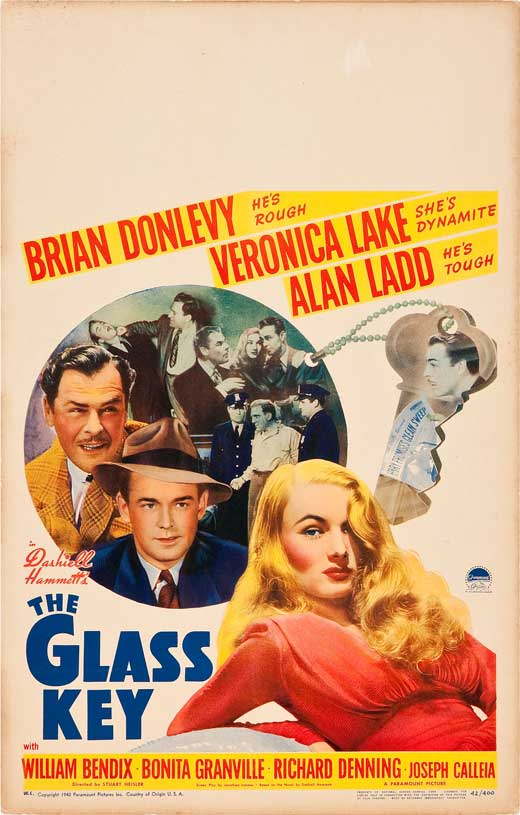
What is it about Veronica Lake that makes her so completely unlike all the other leggy 1940s blondes of Hollywood? We know a few things: she was short, had an abusive childhood, was hell to work with, and spent her retirement years tending bar in a cheap women-only hotel. But none of that helps explain her unique, otherworldly effect, which is akin to a whisper silencing a crowded baseball stadium, or the voice you remember from dreams as you wake up late for work. Something in her gaze reflects a sweet tender concern for even the lowliest of creatures. Something in her voice always seems distant and far away as if it was dubbed by the ghost of an angel drowned years ago. Her eyes show a tenderness unbowed, a calmness around psychopathic behavior as if it reminded her of home. Hers is a warm shoulder to weep yourself to sleep into on flu-addled nights even as her aura, remoteness, impassive face, and beautiful blonde hair freeze you where you sit like a blast of Arctic air.
Women doing wartime factory work in WW2 caught their hair in the machines trying to emulate her, so with the cooperation of her studio, Lake's magnificent hair was kept locked up tight in buns and bizarre hats. One can only imagine who unbearably awesome films like The Glass Key would be if her hair could breath and fall and bounce. When Lake's hair was free it could wash all the sins of war away, as in the amazing bathrobe scene of Sullivan's Travels or any shot of her in This Gun for Hire.
She was a very heavy drinker who once noted that her co-star and fellow drunk Ladd seemed a bit of a zombie himself. Maybe that's why they were so perfect together, undead outsiders in a noir world never quite asleep enough to match them. The public sensed they had something special whenever paired, and since they were so short they matched each other the way few others could. Part of the appeal lies in Alan Ladd's stoic rejection of destiny: in Key he's meant to be with the much richer Veronica Lake (he's a political thug; she's an heiress) or in his This Gun for Hire acceptance of her affection for the cop trying to catch him, "You love that guy?" It's all okay with him, for immediately upon being accepted by her, warts and all, he's saved. Her renouncement of the 'peek-a-boo' hairstyle is a similar bit of stoicism. Like many film lovers, I've long been fascinated by the weird chemistry the pair exhibit, and how other similar pairs, such as Gene Tierney and Dana Andrews (Laura), lack that same chemistry, much as the ingredients are there. Ladd and Lake seem to be born in a different time, on a slower projection speed. They're blonde beauties used to having to look up and speak up to talk to people, who suddenly find one another and are thrilled to able to whisper and look straight into each others' eyes, like two kids in a room full of adults, but reversed: the only adults for miles. Together they were like a misfit Adam and Eve from an alien galaxy. Lake was an astonishing 4'11" which made her one of the few women who could play opposite the 5'5" Ladd but it's so much more, and bravely less, than that.
In Glass Key they have such a great sleepy chemistry it's like they're dreaming while awake and whenever they're together they're packing or leaving or otherwise hanging out in empty rooms. You just get used to seeing one or the other's leaving trunks dead center in the room whenever they're together. They both had tough childhoods and you can feel it in their shy delivery and wary glares, like two damaged souls recognizing each themselves in one another, and the aloof posturing, verbal attacks and avoidance strategies they use to keep the world at bay couldn't fool each other for a minute. In This Gun For Hire they're never even close to lovers but spend the night sleeping on each others' shoulders on a moving train, just pals who come to trust each other in a world full of duplicitous poisonous, peppermint-eating snakes which in a way makes it even sexier (and sadder). Normal sex and marriage is stale by comparison.
To Read the Rest of the Essay
by Erich Kuersten
Acidemic
What is it about Veronica Lake that makes her so completely unlike all the other leggy 1940s blondes of Hollywood? We know a few things: she was short, had an abusive childhood, was hell to work with, and spent her retirement years tending bar in a cheap women-only hotel. But none of that helps explain her unique, otherworldly effect, which is akin to a whisper silencing a crowded baseball stadium, or the voice you remember from dreams as you wake up late for work. Something in her gaze reflects a sweet tender concern for even the lowliest of creatures. Something in her voice always seems distant and far away as if it was dubbed by the ghost of an angel drowned years ago. Her eyes show a tenderness unbowed, a calmness around psychopathic behavior as if it reminded her of home. Hers is a warm shoulder to weep yourself to sleep into on flu-addled nights even as her aura, remoteness, impassive face, and beautiful blonde hair freeze you where you sit like a blast of Arctic air.
Women doing wartime factory work in WW2 caught their hair in the machines trying to emulate her, so with the cooperation of her studio, Lake's magnificent hair was kept locked up tight in buns and bizarre hats. One can only imagine who unbearably awesome films like The Glass Key would be if her hair could breath and fall and bounce. When Lake's hair was free it could wash all the sins of war away, as in the amazing bathrobe scene of Sullivan's Travels or any shot of her in This Gun for Hire.
She was a very heavy drinker who once noted that her co-star and fellow drunk Ladd seemed a bit of a zombie himself. Maybe that's why they were so perfect together, undead outsiders in a noir world never quite asleep enough to match them. The public sensed they had something special whenever paired, and since they were so short they matched each other the way few others could. Part of the appeal lies in Alan Ladd's stoic rejection of destiny: in Key he's meant to be with the much richer Veronica Lake (he's a political thug; she's an heiress) or in his This Gun for Hire acceptance of her affection for the cop trying to catch him, "You love that guy?" It's all okay with him, for immediately upon being accepted by her, warts and all, he's saved. Her renouncement of the 'peek-a-boo' hairstyle is a similar bit of stoicism. Like many film lovers, I've long been fascinated by the weird chemistry the pair exhibit, and how other similar pairs, such as Gene Tierney and Dana Andrews (Laura), lack that same chemistry, much as the ingredients are there. Ladd and Lake seem to be born in a different time, on a slower projection speed. They're blonde beauties used to having to look up and speak up to talk to people, who suddenly find one another and are thrilled to able to whisper and look straight into each others' eyes, like two kids in a room full of adults, but reversed: the only adults for miles. Together they were like a misfit Adam and Eve from an alien galaxy. Lake was an astonishing 4'11" which made her one of the few women who could play opposite the 5'5" Ladd but it's so much more, and bravely less, than that.
In Glass Key they have such a great sleepy chemistry it's like they're dreaming while awake and whenever they're together they're packing or leaving or otherwise hanging out in empty rooms. You just get used to seeing one or the other's leaving trunks dead center in the room whenever they're together. They both had tough childhoods and you can feel it in their shy delivery and wary glares, like two damaged souls recognizing each themselves in one another, and the aloof posturing, verbal attacks and avoidance strategies they use to keep the world at bay couldn't fool each other for a minute. In This Gun For Hire they're never even close to lovers but spend the night sleeping on each others' shoulders on a moving train, just pals who come to trust each other in a world full of duplicitous poisonous, peppermint-eating snakes which in a way makes it even sexier (and sadder). Normal sex and marriage is stale by comparison.
To Read the Rest of the Essay
Wednesday, May 23, 2012
Willie Tolliver: Postlude to a Kiss -- Will Smith's Performances of Race and Sexuality in Fred Schepisi's Six Degrees of Separation
Postlude to a Kiss: Will Smith's Performances of Race and Sexuality in Fred Schepisi's Six Degrees of Separation
by Willie Tolliver
Bright Lights Film Journal

Will Smith now occupies a position in Hollywood that is unrivaled by any other black performer. His films over the last eighteen years have grossed more than $5.3 billion, more than any other actor, with the exception of Johnny Depp (Smith 31). He commands a salary in excess of $20 million per film, which places him in the highest stratum of bankable actors. Consistently over the last decade he has been the highest ranking black star on annual lists of power figures in Hollywood.1 His success is in certain ways unprecedented. Even more than this, the meaning of his star status has historical and cultural implications that have not been fully examined. Smith's ability to reach such varied audiences, both domestic and global, is an indicator of evolving attitudes about race. The types of roles he has accepted and in which audiences are willing to accept him (savior of mankind, the last man on earth) have done interesting cultural work in terms of redefining concepts of black identity in general and of black masculinity specifically.
This discussion contributes to an examination of the Smith phenomenon by taking another look at his first major film performance in Fred Schepisi's Six Degrees of Separation (1993). Smith's casting as the hustler who impersonates the son of Sidney Poitier has a particular rightness; Smith is indeed the inheritor of Poitier's legacy in terms of breaking new ground for blacks in film.2 Poitier won visibility and dignity for black representation in Hollywood film; Smith extends and complicates this legacy as his performances engage racial representation as it intersects with class, gender, and sexuality. This complex of issues contained within Smith's screen personae sustains his iconicity, and these valances of significance find their source in his seminal performance as Paul Poitier in Six Degrees of Separation.
Based on a series of actual incidents reported in The New York Times in 1983, the story of the film and the play details the encounter of a New York power couple with a young black man who cons and charms his way into their lives for an evening by impersonating the fictional son of Sidney Poitier.3 Flan and Ouisa Kittredge (Donald Sutherland and Stockard Channing) are a private art dealer and his wife who are entertaining a possible investor in a crucial sale. They are burst in upon by the doorman and a young black man (Will Smith) who is bleeding from a knife wound to his side. It turns out that the intruder is a Harvard classmate of their children. They administer first aid, and he begins to talk. He persuades them to stay in, and he will prepare a meal. This he does and in the process dazzles them with his conversation. He discourses on The Catcher in the Rye and the death of the imagination. On top of this, it turns out that his name is "Paul," and he is the son of Sidney Poitier. It is a magical evening, and the deal is sealed. Subsequently, they discover that Paul Poitier is not who he claims to be and that several of their friends have had similar experiences with him. The path of their investigation into the real identity of this strange young man leads them to a friend of their children named Trent (Anthony Michael Hall), a student at M.I.T. He admits to befriending this Paul and sharing his knowledge of their lives with him. This seems to be the answer, but it doesn't begin to explain what has happened to them and how their lives have been profoundly affected.
Paul also seems to have had an effect on Smith as there are distinct parallels between their narratives. I argue that in his ascendant trajectory Smith replicates Paul Poitier's project of attaining celebrity and social status. Indeed it could be said that Smith learns valuable lessons about how to succeed in the mainstream from the character he portrays, and then he surpasses him. Paul insinuates himself into the white and privileged world of the Kittredges through canny and deliberate strategies to overcome the two salient aspects of his identity that might otherwise prove to be barriers: his race and his sexuality. He does so through a process of minimizing his race and sexuality while at the same time subverting conventional notions of those identities. Similarly, Smith's broad-based stardom is predicated on his choice of film characters whose racial identities are non-threatening and whose sexuality is muted or erased, especially given the hyper-sexualized stereotype of black men in film.
To Read the Rest of the Essay
by Willie Tolliver
Bright Lights Film Journal
Will Smith now occupies a position in Hollywood that is unrivaled by any other black performer. His films over the last eighteen years have grossed more than $5.3 billion, more than any other actor, with the exception of Johnny Depp (Smith 31). He commands a salary in excess of $20 million per film, which places him in the highest stratum of bankable actors. Consistently over the last decade he has been the highest ranking black star on annual lists of power figures in Hollywood.1 His success is in certain ways unprecedented. Even more than this, the meaning of his star status has historical and cultural implications that have not been fully examined. Smith's ability to reach such varied audiences, both domestic and global, is an indicator of evolving attitudes about race. The types of roles he has accepted and in which audiences are willing to accept him (savior of mankind, the last man on earth) have done interesting cultural work in terms of redefining concepts of black identity in general and of black masculinity specifically.
This discussion contributes to an examination of the Smith phenomenon by taking another look at his first major film performance in Fred Schepisi's Six Degrees of Separation (1993). Smith's casting as the hustler who impersonates the son of Sidney Poitier has a particular rightness; Smith is indeed the inheritor of Poitier's legacy in terms of breaking new ground for blacks in film.2 Poitier won visibility and dignity for black representation in Hollywood film; Smith extends and complicates this legacy as his performances engage racial representation as it intersects with class, gender, and sexuality. This complex of issues contained within Smith's screen personae sustains his iconicity, and these valances of significance find their source in his seminal performance as Paul Poitier in Six Degrees of Separation.
Based on a series of actual incidents reported in The New York Times in 1983, the story of the film and the play details the encounter of a New York power couple with a young black man who cons and charms his way into their lives for an evening by impersonating the fictional son of Sidney Poitier.3 Flan and Ouisa Kittredge (Donald Sutherland and Stockard Channing) are a private art dealer and his wife who are entertaining a possible investor in a crucial sale. They are burst in upon by the doorman and a young black man (Will Smith) who is bleeding from a knife wound to his side. It turns out that the intruder is a Harvard classmate of their children. They administer first aid, and he begins to talk. He persuades them to stay in, and he will prepare a meal. This he does and in the process dazzles them with his conversation. He discourses on The Catcher in the Rye and the death of the imagination. On top of this, it turns out that his name is "Paul," and he is the son of Sidney Poitier. It is a magical evening, and the deal is sealed. Subsequently, they discover that Paul Poitier is not who he claims to be and that several of their friends have had similar experiences with him. The path of their investigation into the real identity of this strange young man leads them to a friend of their children named Trent (Anthony Michael Hall), a student at M.I.T. He admits to befriending this Paul and sharing his knowledge of their lives with him. This seems to be the answer, but it doesn't begin to explain what has happened to them and how their lives have been profoundly affected.
Paul also seems to have had an effect on Smith as there are distinct parallels between their narratives. I argue that in his ascendant trajectory Smith replicates Paul Poitier's project of attaining celebrity and social status. Indeed it could be said that Smith learns valuable lessons about how to succeed in the mainstream from the character he portrays, and then he surpasses him. Paul insinuates himself into the white and privileged world of the Kittredges through canny and deliberate strategies to overcome the two salient aspects of his identity that might otherwise prove to be barriers: his race and his sexuality. He does so through a process of minimizing his race and sexuality while at the same time subverting conventional notions of those identities. Similarly, Smith's broad-based stardom is predicated on his choice of film characters whose racial identities are non-threatening and whose sexuality is muted or erased, especially given the hyper-sexualized stereotype of black men in film.
To Read the Rest of the Essay
Monday, March 26, 2012
Melissa Anderson: Belle de Siècle -- From jeune fille to mother superior, the many faces of Catherine Deneuve
Belle de Siècle: From jeune fille to mother superior, the many faces of Catherine Deneuve
by Melissa Anderson
Moving Image Source


...
For all the degradations Deneuve endures in these movies, it's worth remembering that in the first decade of her nearly 50-year career, she became famous by starring in films that were either captivating debasements or wholesome fantasias (and sometimes a mixture of the two). But in an oeuvre that encompasses more than 100 films, Deneuve can hardly be limited to Catherine the pure or Catherine the perverted. At times she's superseded mere celebrity and stood in for an entire nation: From 1985-89, her visage was used for Marianne, the national symbol of France. Shortly after, in 1992, she starred as a grande dame colonialist in Régis Wargnier's 1992 historical melodrama Indochine, the only role for which Deneuve has been nominated for an Academy Award. And yet Deneuve, born in 1943, has refused to calcify. Since Indochine, she has shown a fearlessness in her roles—no matter how small, as witnessed by her highly memorable motorcycle mama in Leos Carax's Pola X (1999) and her imperturbable hospital psychiatrist in Desplechin's Kings and Queen (2004).
Then again, that temerity existed from the start. Repulsion (1965), Deneuve's first English-language film, came out only a year after her breakout role as Geneviève, the melancholic jeune fille in Jacques Demy's lollipop-hued, entirely sung melodrama, The Umbrellas of Cherbourg. While certainly somber (some have likened Demy's film to a musical about the Algerian War), Umbrellas is far sunnier than Roman Polanski's horror show, which begins with an extremely tight close-up of Deneuve—several shots of her eyeball, her pupil dominating the entire screen. Despite the camera's proximity, Deneuve, the height of inscrutable blankness, remains remarkably distant—a damaged beauty hiding under a mane of luxuriant blond hair, her delicate, accented English rarely registering above a whisper. Plummeting into psychosis, she becomes glacially catatonic; her character, Carole, spends hours staring motionless at a crack in a sidewalk. Soon she's gazing at a slowly putrefying rabbit carcass; next she's seeing menacing shadows outside her bedroom door. Then viewers see Carole being raped—a violation that may be real or imagined.
In the recently published English translation of The Private Diaries of Catherine Deneuve Close Up and Personal (Pegasus Books), screenwriter Pascal Bonitzer asks the actress if she was "freaked out" by the role of Carole. "Absolutely not, I thought it was fantastic, I was very pleased," she responds. Her unflappable commitment to roles in which she is debauched must have been helpful when shooting Luis Buñuel's Belle de Jour (1967)—which, notably, was released in France less than three months after Demy's radiant, MGM-inspired musical The Young Girls of Rochefort, starring Deneuve and her real-life sister Françoise Dorléac, who died shortly after Rochefort opened. In Belle de Jour, Deneuve is Séverine, a deeply disenchanted Parisian housewife frequently trussed up and mussed up while sporting the smartest Yves Saint Laurent finery. She emits frost: "I feel this coldness from you," laments Pierre (Jean Sorel), her doting doctor husband. In an unconsummated marriage, Séverine finds liberation through byzantine psychosexual fantasies—and the 2 to 5 shift at a brothel. As in Repulsion, there are fleeting flashbacks to childhood trauma. Yet in Buñuel's film, these scenes are almost non sequiturs, presented not as psychological "explanation" but as blips in a baroque sexual surrealism. Bondage, defilement, debasement: Séverine revels in it all.
Deneuve, however, did not. "I felt they showed more of me than they'd said they were going to," she tells Bonitzer. "There were moments when I felt totally used." Yet that didn't stop her from starring three years later in Buñuel's equally bizarre Tristana, in which she plays a motherless innocent lusted after by a well-respected gentlemen (Deneuve's diary entry from October 4, 1969, while filming Tristana: "Have to toss my underwear on to my artificial leg lying on the bed, and it's a real challenge making the lace fall exactly on the shoed foot"). Curiously, eight months after Tristana's release in France, Demy's Donkey Skin—his third musical with Deneuve—came out. Based on a popular 17th-century fable by Charles Perrault, Donkey Skin has psychosexual perversions worthy of Buñuel: As the Queen (a brunette Deneuve) lies on her deathbed, her grieving king (Jean Marais) promises he will remarry only if he finds a princess more beautiful than she. And who could be more fetching than a dark-haired Deneuve? A blonde Catherine, of course, the demure royal daughter who's baffled by Dad's planned nuptials. Soon she's on the lam as a sullied, smelly scullion draped in an ass's pelt.
Just as significant as her work onscreen is Deneuve's unassailable role as sapphic idol. Although same-sex titillation is hinted at in Belle de Jour, Deneuve's status as lesbian icon was indelibly cemented with Tony Scott's The Hunger (1983), in which her vampiress, Miriam Blaylock, seduces a sweat-soaked Susan Sarandon. In André Téchiné's Thieves (1996), Deneuve is a whiskey-swilling philosophy prof shown enjoying some bathtub splashing with her decades-younger girlfriend (soft butch Laurence Côte). François Ozon, in 8 Women (2002), staged a memorable tussle and smooch between Deneuve and Fanny Ardant, the two actresses linked offscreen by their respective films and romances with François Truffaut. A San Francisco–based lesbian magazine was once called Deneuve until a trademark dispute with the actress (who was hawking her own line of perfume with her surname) led to a title change to Curve in 1995.
To Read the Entire Essay


by Melissa Anderson
Moving Image Source
...
For all the degradations Deneuve endures in these movies, it's worth remembering that in the first decade of her nearly 50-year career, she became famous by starring in films that were either captivating debasements or wholesome fantasias (and sometimes a mixture of the two). But in an oeuvre that encompasses more than 100 films, Deneuve can hardly be limited to Catherine the pure or Catherine the perverted. At times she's superseded mere celebrity and stood in for an entire nation: From 1985-89, her visage was used for Marianne, the national symbol of France. Shortly after, in 1992, she starred as a grande dame colonialist in Régis Wargnier's 1992 historical melodrama Indochine, the only role for which Deneuve has been nominated for an Academy Award. And yet Deneuve, born in 1943, has refused to calcify. Since Indochine, she has shown a fearlessness in her roles—no matter how small, as witnessed by her highly memorable motorcycle mama in Leos Carax's Pola X (1999) and her imperturbable hospital psychiatrist in Desplechin's Kings and Queen (2004).
Then again, that temerity existed from the start. Repulsion (1965), Deneuve's first English-language film, came out only a year after her breakout role as Geneviève, the melancholic jeune fille in Jacques Demy's lollipop-hued, entirely sung melodrama, The Umbrellas of Cherbourg. While certainly somber (some have likened Demy's film to a musical about the Algerian War), Umbrellas is far sunnier than Roman Polanski's horror show, which begins with an extremely tight close-up of Deneuve—several shots of her eyeball, her pupil dominating the entire screen. Despite the camera's proximity, Deneuve, the height of inscrutable blankness, remains remarkably distant—a damaged beauty hiding under a mane of luxuriant blond hair, her delicate, accented English rarely registering above a whisper. Plummeting into psychosis, she becomes glacially catatonic; her character, Carole, spends hours staring motionless at a crack in a sidewalk. Soon she's gazing at a slowly putrefying rabbit carcass; next she's seeing menacing shadows outside her bedroom door. Then viewers see Carole being raped—a violation that may be real or imagined.
In the recently published English translation of The Private Diaries of Catherine Deneuve Close Up and Personal (Pegasus Books), screenwriter Pascal Bonitzer asks the actress if she was "freaked out" by the role of Carole. "Absolutely not, I thought it was fantastic, I was very pleased," she responds. Her unflappable commitment to roles in which she is debauched must have been helpful when shooting Luis Buñuel's Belle de Jour (1967)—which, notably, was released in France less than three months after Demy's radiant, MGM-inspired musical The Young Girls of Rochefort, starring Deneuve and her real-life sister Françoise Dorléac, who died shortly after Rochefort opened. In Belle de Jour, Deneuve is Séverine, a deeply disenchanted Parisian housewife frequently trussed up and mussed up while sporting the smartest Yves Saint Laurent finery. She emits frost: "I feel this coldness from you," laments Pierre (Jean Sorel), her doting doctor husband. In an unconsummated marriage, Séverine finds liberation through byzantine psychosexual fantasies—and the 2 to 5 shift at a brothel. As in Repulsion, there are fleeting flashbacks to childhood trauma. Yet in Buñuel's film, these scenes are almost non sequiturs, presented not as psychological "explanation" but as blips in a baroque sexual surrealism. Bondage, defilement, debasement: Séverine revels in it all.
Deneuve, however, did not. "I felt they showed more of me than they'd said they were going to," she tells Bonitzer. "There were moments when I felt totally used." Yet that didn't stop her from starring three years later in Buñuel's equally bizarre Tristana, in which she plays a motherless innocent lusted after by a well-respected gentlemen (Deneuve's diary entry from October 4, 1969, while filming Tristana: "Have to toss my underwear on to my artificial leg lying on the bed, and it's a real challenge making the lace fall exactly on the shoed foot"). Curiously, eight months after Tristana's release in France, Demy's Donkey Skin—his third musical with Deneuve—came out. Based on a popular 17th-century fable by Charles Perrault, Donkey Skin has psychosexual perversions worthy of Buñuel: As the Queen (a brunette Deneuve) lies on her deathbed, her grieving king (Jean Marais) promises he will remarry only if he finds a princess more beautiful than she. And who could be more fetching than a dark-haired Deneuve? A blonde Catherine, of course, the demure royal daughter who's baffled by Dad's planned nuptials. Soon she's on the lam as a sullied, smelly scullion draped in an ass's pelt.
Just as significant as her work onscreen is Deneuve's unassailable role as sapphic idol. Although same-sex titillation is hinted at in Belle de Jour, Deneuve's status as lesbian icon was indelibly cemented with Tony Scott's The Hunger (1983), in which her vampiress, Miriam Blaylock, seduces a sweat-soaked Susan Sarandon. In André Téchiné's Thieves (1996), Deneuve is a whiskey-swilling philosophy prof shown enjoying some bathtub splashing with her decades-younger girlfriend (soft butch Laurence Côte). François Ozon, in 8 Women (2002), staged a memorable tussle and smooch between Deneuve and Fanny Ardant, the two actresses linked offscreen by their respective films and romances with François Truffaut. A San Francisco–based lesbian magazine was once called Deneuve until a trademark dispute with the actress (who was hawking her own line of perfume with her surname) led to a title change to Curve in 1995.
To Read the Entire Essay
Tuesday, February 7, 2012
Felix Wilder: The Artist, The Most Emasculating Movie of the Year
[Spoiler Alert -- you should wait until after you have seen the film. I just watched this film and I have to say Felix completely misses the mark and allows his own insecurities to lead him to a gross misreading of the film.]
The Artist, the Most Emasculating Movie of the Year
by Felix Wilder
Omega Level

Though the movie industry’s year-end tradition—pummeling moviegoers every winter with “Oscar-worthy” products like some cinematic blizzard of unbearable mawkishness and half-baked messages about human nature—has thankfully come to an end, we’ve reached that unfortunate stretch when the industry congratulates itself by doling out unwarranted accolades. And the film that is getting most of the love (winning a Golden Globe for Best Picture last night) is the one that is the least understood: Michel Hazanavicius’ The Artist. Widely hailed as a feel-good comedy about a silent-movie star’s transition with the help of a good and loving lady into talking pictures, The Artist is actually a far more tragic tale about a once burly, proud, and charismatic man of few—or, rather, no—words who is methodically broken down by the women in his life, mostly by his supposed love interest who wants him to open up and talk. And by the time he finally does express himself, articulating his feelings, he has become a shell of his former (and better) self. In turn, if the film indeed warrants any accolade, it should be for the Most Emasculating Movie of the Year.
When we are first introduced to the protagonist George Valentin (Jean Dujardin), he is the center of attention, the main man, a huge star of adventure films (think Douglas Fairbanks). The Artist opens at the premiere of his new film, in which he is being tortured so that he will “talk” and divulge important information. But, like the heroic character that he is, he resists the temptation to externalize. Moreover, as The Artist’s striking symbol for all men, he remains mum about what he’s all about, because by opening up and sharing this guarded information, thus revealing what lies within, it also opens up the possibility of losing himself entirely.
In this film-within-a-film, the actor does not give up the information. Instead, with the assistance of his trusted canine companion, in and out of the movies (a constant reminder of the battle between cats and dogs), George saves his co-star played by Constance (Missi Pyle), outwits and outworks his enemies, and finally soars to freedom on the plane he pilots. The character, like the actor, wins on his own terms, and quite handily at that. He makes it look easy, and the audience at the premiere loves him (and the film) for it. They give him a long standing ovation for his performance, which he duly relishes by himself until he begrudgingly allows his co-star to bask in the overwhelming response. But make no mistake: The audience cheers for him, and him alone.
To Read the Rest of the Response
The Artist, the Most Emasculating Movie of the Year
by Felix Wilder
Omega Level
Though the movie industry’s year-end tradition—pummeling moviegoers every winter with “Oscar-worthy” products like some cinematic blizzard of unbearable mawkishness and half-baked messages about human nature—has thankfully come to an end, we’ve reached that unfortunate stretch when the industry congratulates itself by doling out unwarranted accolades. And the film that is getting most of the love (winning a Golden Globe for Best Picture last night) is the one that is the least understood: Michel Hazanavicius’ The Artist. Widely hailed as a feel-good comedy about a silent-movie star’s transition with the help of a good and loving lady into talking pictures, The Artist is actually a far more tragic tale about a once burly, proud, and charismatic man of few—or, rather, no—words who is methodically broken down by the women in his life, mostly by his supposed love interest who wants him to open up and talk. And by the time he finally does express himself, articulating his feelings, he has become a shell of his former (and better) self. In turn, if the film indeed warrants any accolade, it should be for the Most Emasculating Movie of the Year.
When we are first introduced to the protagonist George Valentin (Jean Dujardin), he is the center of attention, the main man, a huge star of adventure films (think Douglas Fairbanks). The Artist opens at the premiere of his new film, in which he is being tortured so that he will “talk” and divulge important information. But, like the heroic character that he is, he resists the temptation to externalize. Moreover, as The Artist’s striking symbol for all men, he remains mum about what he’s all about, because by opening up and sharing this guarded information, thus revealing what lies within, it also opens up the possibility of losing himself entirely.
In this film-within-a-film, the actor does not give up the information. Instead, with the assistance of his trusted canine companion, in and out of the movies (a constant reminder of the battle between cats and dogs), George saves his co-star played by Constance (Missi Pyle), outwits and outworks his enemies, and finally soars to freedom on the plane he pilots. The character, like the actor, wins on his own terms, and quite handily at that. He makes it look easy, and the audience at the premiere loves him (and the film) for it. They give him a long standing ovation for his performance, which he duly relishes by himself until he begrudgingly allows his co-star to bask in the overwhelming response. But make no mistake: The audience cheers for him, and him alone.
To Read the Rest of the Response
Subscribe to:
Posts (Atom)