The Square, Egypt's Revolution Doc with Sundance Winner Dir Jehane Noujaim
Bring Your Own Doc
Fresh from winning the best World Documentary award at Sundance, The Square director Jehane Noujaim comes to BYOD to discuss her background in film and the process of telling the story of the Egyptian revolution.
Jehane also shares the feeling she had of crawling through the dark while filming, and still managing to make a film that is recognized and appreciated.
GUEST BIO:
Jehane Noujaim is an Egyptian-American filmmaker who began her career with the MTV documentary series, Unfiltered. She left her post as segment producer to work with the legendary Chris Hegedus and D.A. Pennebaker on the film STARTUP.COM, which led to numerous nominations and won awards at The International Documentary Association, Philadelphia, Doubletake Documentary Film Festival, and a DGA Award.
Jehane followed the success of the film with the equally acclaimed CONTROL ROOM, which won awards at Full Frame, Boston Society of Film Critics, International Documentary Association, Seattle Film Critics, and Sydney Film Festival.
Continuing her work in both the United States and The Middle East, Jehane is back with a new film, THE SQUARE, depicting the revolution in Egypt's famous Tahrir Square. She is back, fresh from Park City, where she was awarded the World Documentary Audience Award at Sundance for her magnificent work on this film.
Showing posts with label Gender. Show all posts
Showing posts with label Gender. Show all posts
Thursday, October 24, 2013

Tuesday, October 22, 2013
Radio West: Frederick Wiseman's Crazy Horse
Frederick Wiseman's "Crazy Horse"
By Doug Fabrizio
Radio West

Tuesday, Doug is joined by legendary filmmaker Frederick Wiseman. A year ago, RadioWest and the Utah Film Center began our Through the Lens documentary film series with a conversation with Wiseman. His latest work is set to open later this month around the country. It's called "Crazy Horse," and it's a spare, unfiltered look inside a Parisian nude cabaret. Doug talks to Wiseman and others about his 44 year career and what the new film reveals about Wiseman's unique process.
To Listen to the Interviews
By Doug Fabrizio
Radio West
Tuesday, Doug is joined by legendary filmmaker Frederick Wiseman. A year ago, RadioWest and the Utah Film Center began our Through the Lens documentary film series with a conversation with Wiseman. His latest work is set to open later this month around the country. It's called "Crazy Horse," and it's a spare, unfiltered look inside a Parisian nude cabaret. Doug talks to Wiseman and others about his 44 year career and what the new film reveals about Wiseman's unique process.
To Listen to the Interviews
Tuesday, September 3, 2013
Films We Want To See #33: Under the Skin (UK: Jonathan Glazer, 2013)

I read Michael Faber's mind blowing novel Under the Skin in 2002 while traveling through Europe -- it has always stayed with me (and definitely changed the way I perceive the world). I have just found out that Jonathan Glazer has made a film loosely adapted from the novel. This is one of those stories it is best to not know to much about the plot. I didn't when I read the book because I picked it up on impulse in a London bookstore:
Wednesday, August 28, 2013
Sunday, August 25, 2013
Saturday, August 17, 2013
Thursday, August 15, 2013
Harvard University Press Blog: Catherine MacKinnon on Lovelace
Catharine MacKinnon on Lovelace
Harvard University Press
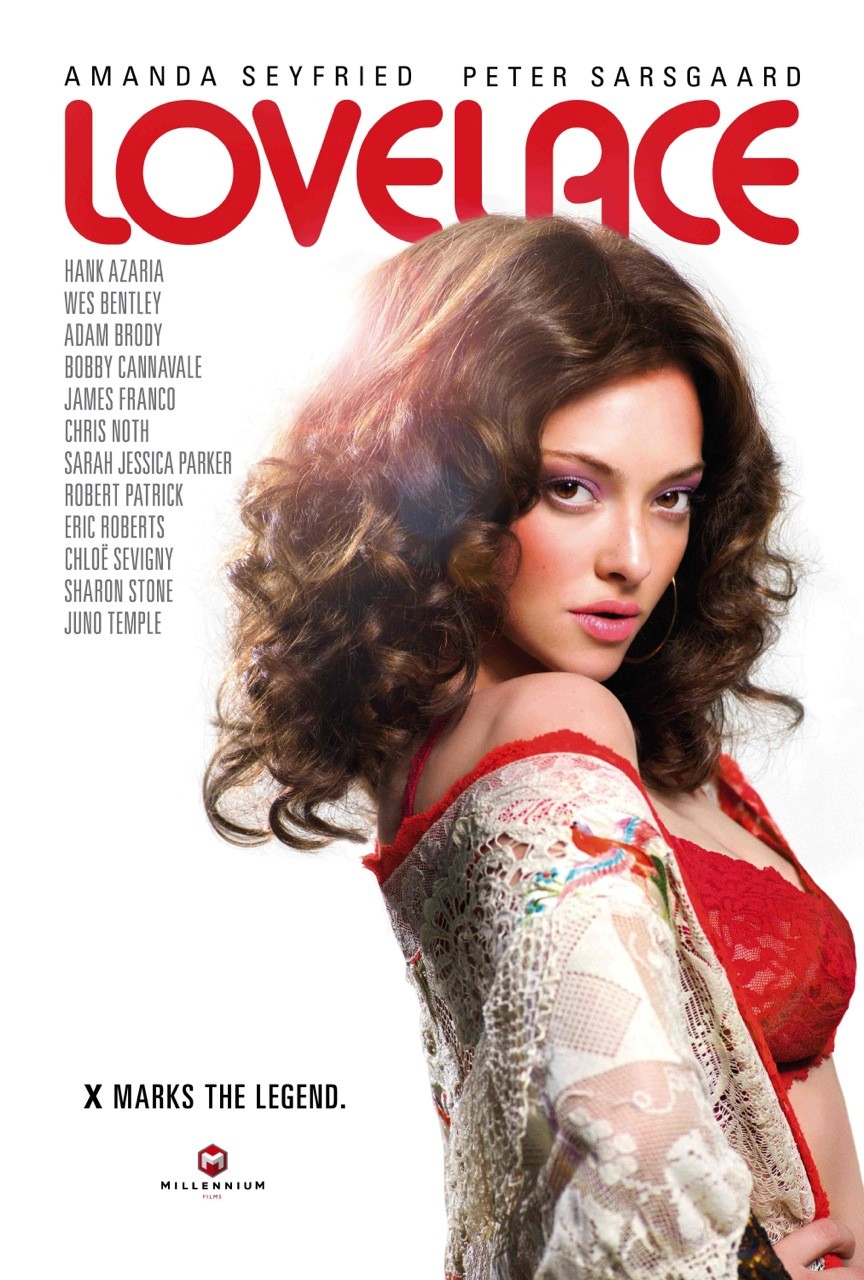
The pornographic film Deep Throat, released in 1972, was a cultural sensation whose star, “Linda Lovelace,” was said to put a girl-next-door face on the sexual revolution. But the actual life of Linda Boreman, as depicted in the new biopic Lovelace, was one of beatings, rape, and terror. Feminist legal scholar Catharine MacKinnon, author of such works as Toward a Feminist Theory of the State and Only Words, represented Boreman after she came forward with her story, and later, with Andrea Dworkin, pursued civil rights litigation as a means to fight pornography. We asked MacKinnon about Boreman, Lovelace, and the potential impact of the film.
To Read the Interview
Harvard University Press
The pornographic film Deep Throat, released in 1972, was a cultural sensation whose star, “Linda Lovelace,” was said to put a girl-next-door face on the sexual revolution. But the actual life of Linda Boreman, as depicted in the new biopic Lovelace, was one of beatings, rape, and terror. Feminist legal scholar Catharine MacKinnon, author of such works as Toward a Feminist Theory of the State and Only Words, represented Boreman after she came forward with her story, and later, with Andrea Dworkin, pursued civil rights litigation as a means to fight pornography. We asked MacKinnon about Boreman, Lovelace, and the potential impact of the film.
To Read the Interview
Sunday, June 30, 2013
Yes (UK: Sally Potter, 2004)

Yes (UK: Sally Potter, 2004: 100 mins)
"Angelism and Rage: Sally Potter Links." Film Studies for Free (September 21, 2009)
Mayer, Sophie. "The Films of Sally Potter." Electric Sheep Magazine (October 1, 2009)
McKim, Kristi. "Great Directors: Sally Potter." Senses of Cinema #40 (July 2006)
"Please go in two by two! Sally Potter's Fabulous Ark." Film Studies for Free (November 4, 2008)
Sunday, June 23, 2013
Moolaadé (Senegal/France/Burkina Faso/Cameroon/Morocco/Tunisia: Ousmane Sembene, 2004)

Moolaadé (Senegal/France/Burkina Faso/Cameroon/Morocco/Tunisia: Ousmane Sembene, 2004: 124 mins)
Bartlet, Olivier. "Adventures and Misadventures of African Cinema." Cinemas of the South (2006)
Borden, Amy. "At the global market: Ousmane Sembène’s Moolaadé and the economics of women’s rights." Jump Cut #53 (Summer 2011)
Bug Girl. Is My Vuvulzela Too Big?" Skepchick (June 20, 2010)
Coventry, Martha. "Making the Cut: It's a Girl! ... Or is it? When in doubt, why are surgeons calling the shots?" Ms. (Oct/Nov 2000)
Diop, Baba. "Ousmane Sembene: The Elder of Elders." Cinemas of the South (February 15, 2009)
Dotson-Newman, Nzinga. "Family Pressure on Young Girls for Genitalia Mutilation Continues in Kenya." Project Censored (2012)
Finney, Nikki. "The Greatest Show On Earth." (Read the poem/read an analysis of the poem/and listen to Nikki read it)
Halpern, Sue. "Breaking a Conspiracy of Silence." The New York Times Book Review 56.18 (November 19, 2009)
Marzana, Nicola. "The Art of Hunger: Re-Defining Third Cinema." 16:9 (November 2009)
Pride, Ray. "Woman is the Future of Man: Ousmane Sembene on Moolaade." Cinema Scope #21 (2004)
Santur, Hassan Ghedi. "On Being a Muslim in the West." Ideas (June 1, 2011)
Turkewitz, Julie. "Effects of Ancient Custom Present New Challenge to U.S. Doctors: Genital Cutting Cases Seen More as Immigration Rises." The New York Times (February 6, 2015)
Wednesday, May 15, 2013
Jose Teodoro -- Miss Bala: Nightmare State
Miss Bala: Nightmare State
Mexican director Gerardo Naranjo upends his filmmaking to show a country torn apart
by José Teodoro
Film Comment

Most existences on earth are marginal; the majority of people live on the edges of some kind of war. That the woman and man at the center of Miss Bala swing into each other’s orbit is itself no great coincidence. She’s Laura (Stephanie Sigman), the cheerful 23-year-old daughter of a Tijuana clothing merchant, and he’s Lino (Noe Hernandez), a taciturn, hard-eyed, soft-voiced drug trafficker about whose past we glean almost nothing. Both hail from humble if not desperate backgrounds; both aspire to transcend social determinism via archetypal routes to glamour and power: just as Lino asserts himself through terror and illegal commerce, Laura, however haphazardly, hopes to embody someone’s notion of the ideal woman by entering the Miss Baja California competition. Her first, fleeting encounter with him occurs when a dance party is turned into a massacre by Lino and his confederates. They meet again when she is so naïve as to seek out the police for help. In some perverse variation on the romantic comedy, the two keep crossing paths. Laura spends much of Miss Bala in a state of shock, while Lino seems to quickly intuit how best to exploit her allure while ostentatiously exchanging favors. He can ensure she wins the Miss Baja crown; she can serve as a gorgeous decoy in his criminal dealings.
A fascinating about-face for Mexican director Gerardo Naranjo, Miss Bala—co-written by Naranjo and Mauricio Katz and loosely based on actual events—surveys the current state of play in the drug war and offers commentary through a procession of absurdities, ironies, and largely uncontextualized mayhem. The gangsters and the DEA agents are equally menacing and seem to favor the same black SUVs; a beauty contest audience bursts into wild applause for a catatonic contestant; a flaming tire rolls by during an urban shoot-out as though it has emerged from a cartoon, traversing a stretch of asphalt covered in blood, bullet casings, and gasoline. Despite an incongruous, statistics-heavy closing title card, Miss Bala can no more be reduced to a hand-wringing docudrama about the escalation of Mexico’s drug-related violence than Take Shelter can be called a treatise on overcoming mental illness. These films are personal statements about individuals ceding control to forces beyond their comprehension—personal statements that just happen to dovetail nicely with urgent social issues.
“I’d arrived at a place where I felt like I wasn’t challenging myself that much,” says Naranjo, “so I decided to do something that I really didn’t know how to do. My previous films had a little bit of social commentary, but it was from a bourgeois point of view, trying to denounce commodification or conservatism. When I started to develop Miss Bala I felt I was responding to something far more urgent that’s in the air. To the fear.” Speaking during the Toronto International Film Festival last September, by which point Miss Bala had already seen its share of plaudits and detractors, Naranjo emphasized his latest film’s conspicuous shift in both style and content from his preceding work, whether the privileged teens playing out lovers-on-the-run melodrama under a mesh of Godardian alienation techniques (the deliriously stylish and witty 2008 I’m Gonna Explode) or privileged young adults negotiating disastrous relationships (the clever but flat 2006 Drama/Mex). “The directors I admire tend to change a lot between films,” says Naranjo. “Maybe not often with regards to form, but with subject matter for sure. Before, I felt that I was a filmmaker but had yet to really show it. I trusted so deeply in the present, in improvisation. I know I’m shifting. The question now, for me, has to do with whether or not I can maintain this.”
...
To Read the Rest
Mexican director Gerardo Naranjo upends his filmmaking to show a country torn apart
by José Teodoro
Film Comment
Most existences on earth are marginal; the majority of people live on the edges of some kind of war. That the woman and man at the center of Miss Bala swing into each other’s orbit is itself no great coincidence. She’s Laura (Stephanie Sigman), the cheerful 23-year-old daughter of a Tijuana clothing merchant, and he’s Lino (Noe Hernandez), a taciturn, hard-eyed, soft-voiced drug trafficker about whose past we glean almost nothing. Both hail from humble if not desperate backgrounds; both aspire to transcend social determinism via archetypal routes to glamour and power: just as Lino asserts himself through terror and illegal commerce, Laura, however haphazardly, hopes to embody someone’s notion of the ideal woman by entering the Miss Baja California competition. Her first, fleeting encounter with him occurs when a dance party is turned into a massacre by Lino and his confederates. They meet again when she is so naïve as to seek out the police for help. In some perverse variation on the romantic comedy, the two keep crossing paths. Laura spends much of Miss Bala in a state of shock, while Lino seems to quickly intuit how best to exploit her allure while ostentatiously exchanging favors. He can ensure she wins the Miss Baja crown; she can serve as a gorgeous decoy in his criminal dealings.
A fascinating about-face for Mexican director Gerardo Naranjo, Miss Bala—co-written by Naranjo and Mauricio Katz and loosely based on actual events—surveys the current state of play in the drug war and offers commentary through a procession of absurdities, ironies, and largely uncontextualized mayhem. The gangsters and the DEA agents are equally menacing and seem to favor the same black SUVs; a beauty contest audience bursts into wild applause for a catatonic contestant; a flaming tire rolls by during an urban shoot-out as though it has emerged from a cartoon, traversing a stretch of asphalt covered in blood, bullet casings, and gasoline. Despite an incongruous, statistics-heavy closing title card, Miss Bala can no more be reduced to a hand-wringing docudrama about the escalation of Mexico’s drug-related violence than Take Shelter can be called a treatise on overcoming mental illness. These films are personal statements about individuals ceding control to forces beyond their comprehension—personal statements that just happen to dovetail nicely with urgent social issues.
“I’d arrived at a place where I felt like I wasn’t challenging myself that much,” says Naranjo, “so I decided to do something that I really didn’t know how to do. My previous films had a little bit of social commentary, but it was from a bourgeois point of view, trying to denounce commodification or conservatism. When I started to develop Miss Bala I felt I was responding to something far more urgent that’s in the air. To the fear.” Speaking during the Toronto International Film Festival last September, by which point Miss Bala had already seen its share of plaudits and detractors, Naranjo emphasized his latest film’s conspicuous shift in both style and content from his preceding work, whether the privileged teens playing out lovers-on-the-run melodrama under a mesh of Godardian alienation techniques (the deliriously stylish and witty 2008 I’m Gonna Explode) or privileged young adults negotiating disastrous relationships (the clever but flat 2006 Drama/Mex). “The directors I admire tend to change a lot between films,” says Naranjo. “Maybe not often with regards to form, but with subject matter for sure. Before, I felt that I was a filmmaker but had yet to really show it. I trusted so deeply in the present, in improvisation. I know I’m shifting. The question now, for me, has to do with whether or not I can maintain this.”
...
To Read the Rest
Monday, May 13, 2013
John Engle -- August and Everything After: A Half-Century of Surfing in Cinema
August and Everything After: A Half-Century of Surfing in Cinema
by John Engle
Bright Lights Film Journal
...
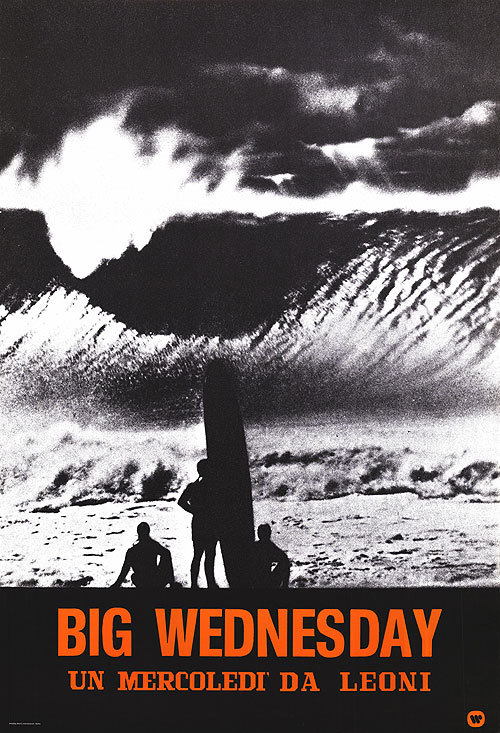
The tensions of these real and screen lives have in large part remained those of the film genre Gidget engendered. In the half-century since, from the Beach Party franchise and its early '60s spin-offs, through Big Wednesday, Point Break, Blue Crush, and many others, and on to Chasing Mavericks in 2012, filmmakers have gone to the sand a couple dozen times to produce narratives either focused expressively on surfing as sport or obsessive life choice, or at least as significant background informing and directing the film's meaning. The result has been movies that are often more incisively pertinent in their treatment of growing up, family tensions, a world of dizzying social change, race and class, and the seductive lure of commerce and appearance than their wicked barrels, great tans, and dudespeak might presage. With an eye to the meanings behind their attractive surfaces, I'll be looking at a handful of these, at least one from each decade, for the most part relatively high-profile examples of a film type that, if rarely the source of smash hits, has generally met with commercial success. Hardening firmly in place by the 1970s, a highly restrictive formula thereafter rules the near totality of these films: given their interest in young people on the cusp of adult life, it's not without a certain logic that they return repeatedly to such story elements as the wise mentor, the temptation to sell out, the preparation sequence, and the concluding challenge or competition. The remarks to follow will examine the genre's creation in the beach-craze '60s, then turn to its elaboration in what one might consider the main line of "classic" surf films, with their reliably formulaic focus on childhood's end; the conclusion will explore how, while remaining generally faithful to established patterns, certain films have brought within their widened purview broader social and political issues. With the exception of Bruce Brown's The Endless Summer (1966) — a documentary but vaguely story-centered and, in any case, so iconic as to be compulsory — all of the films under discussion are pure narratives. As such, they should be distinguished from the grainy collections of hot rides Greg Noll brought to stoked kids in countless multipurpose halls and their often lyrical or thrilling cinematic descendants. Whether big deals like Riding Giants and Step into Liquid, or smaller, edgier efforts like BS!, these documentaries are absolutely central to the surfing subculture and merit separate study, with their specialist target audience, their shared values, and visual assumptions.
Unsurprisingly perhaps, the first treatments of waveriding were documentary in nature and aimed at the widest possible audience. Like les Pathé-Frères, who put together 100 minutes on Le Surfing: Sport national des iles Hawaii in 1911, filmmakers in the first half of the century responded periodically to a curious public's hunger for images of exotic locales and practices that, even in the era of grand liners and early aviation, remained largely inaccessible. By the thirties, in any case, the word on surfing was getting out, if Hawaiian Holiday, the first cinematic narrative treatment of the sport, is any indication. In this 1937 Mickey Mouse featurette, Goofy recklessly challenges waves that, with the typical extraordinary range of Disney's animation teams, manage at once to be dumb funny, anthropomorphically nasty, and possessed of a frothy, sculpted loveliness drawn straight from Hokusai. While the cartoon is (somewhat speciously) considered the source of the term goofy-footed for surfers who, like its hero, lead with their right foot, its variation on the timeless theme of the arrogant individual chastised by a recalcitrant natural world in fact says little more about surfing than that it was just edging into the public consciousness. It would take the '50s and early '60s and the sport's headlong drop into popular culture before filmmakers would begin to recognize and exploit its rich visual and thematic possibilities.
And what visuals, for there is something basically unbelievable about human beings standing up on a tumbling wave, not to mention carving sleek sweeps and tight reverses back up its face. Cinematically, what's not to like about good-looking kids in a dream locale practicing a potentially dangerous sport that, even straight-on from a fixed shore location in black and white, films like a million bucks? Considered a moment, however, the scene is much more than its very pretty pictures, in large part because of the richly conflicting signals it emits. As sport, identity definer, and style locus, the surfing we have come to know these last decades is a space of, variously, big-money competition, reverent communication with the natural world, heavy partying, one-to-one confrontation with appalling physical force, proprietary localism of the ugliest sort, New Age self-discovery. It is a counterculture and a culture, a way to rebel and a way to grow up, and some live an entire adult life, work and all, still somehow rhythmed by the daily wave report. Surfing is the Beach Boys sweet in their striped Kingston Trio short-sleeve button-downs, and it's Dora dive-bombing kooks and bouncing checks. It's the garden and the salesmen who slither into it. Let's go surfin' now, everybody's learnin' how, we are joyfully urged, but to paddle out as the new guy is in fact to try entering the most closed of societies. Surfing can seem like an ocean of style, posing, and attitude, but out in the impact zone and beyond, the superficial abruptly washes off. To choose a short board or long, three fins or one, can be no less than to define different selves and value systems.
The very physical space offers an equally rich palette of thematic opportunity. From knee-high kids' stuff to Fukushima, pure fluid energy rears in defiance at sudden, solid resistance. The arriving swell is pattern and endless variety, or as Laird Hamilton says of the big ones in The Wave, "it's never the same mountain" (72). Proceeding in stately sequence, breakers seem all ruler-edged order, but of course they are also sites of chaos and fear. There the simple can become "in practice immediately complex," writes Woolf in To the Lighthouse, "as the waves shape themselves symmetrically from the cliff top, but to the swimmer among them are divided by steep gulfs, and foaming crests." Wild swings of perspective rule the sand as well, for what place is more one for sun-drenched, thought-free lotus-eating than the beach. Yet on that thin strip of dry land the tragic drama of our collective addiction to fossil fuels will play out first. And even carefree Waikiki lies hard by an ocean's unfathomable mass with its troubling, timeless reach of myth and suggestion. It is on the shore after all that Wordsworth rejects that world that is too much with us, yearning seaward to affirm the deeper truths of Proteus and Triton. The beach is just the beach, and it is much more than that. The greatest of the wavewriters, Daniel Duane, recognizes the way the surf scene can encode paradox, locate that sweet spot where the deeply complex and the unreflective simple both somehow find their footing.
...
To Read the Entire Essay

by John Engle
Bright Lights Film Journal
...
The tensions of these real and screen lives have in large part remained those of the film genre Gidget engendered. In the half-century since, from the Beach Party franchise and its early '60s spin-offs, through Big Wednesday, Point Break, Blue Crush, and many others, and on to Chasing Mavericks in 2012, filmmakers have gone to the sand a couple dozen times to produce narratives either focused expressively on surfing as sport or obsessive life choice, or at least as significant background informing and directing the film's meaning. The result has been movies that are often more incisively pertinent in their treatment of growing up, family tensions, a world of dizzying social change, race and class, and the seductive lure of commerce and appearance than their wicked barrels, great tans, and dudespeak might presage. With an eye to the meanings behind their attractive surfaces, I'll be looking at a handful of these, at least one from each decade, for the most part relatively high-profile examples of a film type that, if rarely the source of smash hits, has generally met with commercial success. Hardening firmly in place by the 1970s, a highly restrictive formula thereafter rules the near totality of these films: given their interest in young people on the cusp of adult life, it's not without a certain logic that they return repeatedly to such story elements as the wise mentor, the temptation to sell out, the preparation sequence, and the concluding challenge or competition. The remarks to follow will examine the genre's creation in the beach-craze '60s, then turn to its elaboration in what one might consider the main line of "classic" surf films, with their reliably formulaic focus on childhood's end; the conclusion will explore how, while remaining generally faithful to established patterns, certain films have brought within their widened purview broader social and political issues. With the exception of Bruce Brown's The Endless Summer (1966) — a documentary but vaguely story-centered and, in any case, so iconic as to be compulsory — all of the films under discussion are pure narratives. As such, they should be distinguished from the grainy collections of hot rides Greg Noll brought to stoked kids in countless multipurpose halls and their often lyrical or thrilling cinematic descendants. Whether big deals like Riding Giants and Step into Liquid, or smaller, edgier efforts like BS!, these documentaries are absolutely central to the surfing subculture and merit separate study, with their specialist target audience, their shared values, and visual assumptions.
Unsurprisingly perhaps, the first treatments of waveriding were documentary in nature and aimed at the widest possible audience. Like les Pathé-Frères, who put together 100 minutes on Le Surfing: Sport national des iles Hawaii in 1911, filmmakers in the first half of the century responded periodically to a curious public's hunger for images of exotic locales and practices that, even in the era of grand liners and early aviation, remained largely inaccessible. By the thirties, in any case, the word on surfing was getting out, if Hawaiian Holiday, the first cinematic narrative treatment of the sport, is any indication. In this 1937 Mickey Mouse featurette, Goofy recklessly challenges waves that, with the typical extraordinary range of Disney's animation teams, manage at once to be dumb funny, anthropomorphically nasty, and possessed of a frothy, sculpted loveliness drawn straight from Hokusai. While the cartoon is (somewhat speciously) considered the source of the term goofy-footed for surfers who, like its hero, lead with their right foot, its variation on the timeless theme of the arrogant individual chastised by a recalcitrant natural world in fact says little more about surfing than that it was just edging into the public consciousness. It would take the '50s and early '60s and the sport's headlong drop into popular culture before filmmakers would begin to recognize and exploit its rich visual and thematic possibilities.
And what visuals, for there is something basically unbelievable about human beings standing up on a tumbling wave, not to mention carving sleek sweeps and tight reverses back up its face. Cinematically, what's not to like about good-looking kids in a dream locale practicing a potentially dangerous sport that, even straight-on from a fixed shore location in black and white, films like a million bucks? Considered a moment, however, the scene is much more than its very pretty pictures, in large part because of the richly conflicting signals it emits. As sport, identity definer, and style locus, the surfing we have come to know these last decades is a space of, variously, big-money competition, reverent communication with the natural world, heavy partying, one-to-one confrontation with appalling physical force, proprietary localism of the ugliest sort, New Age self-discovery. It is a counterculture and a culture, a way to rebel and a way to grow up, and some live an entire adult life, work and all, still somehow rhythmed by the daily wave report. Surfing is the Beach Boys sweet in their striped Kingston Trio short-sleeve button-downs, and it's Dora dive-bombing kooks and bouncing checks. It's the garden and the salesmen who slither into it. Let's go surfin' now, everybody's learnin' how, we are joyfully urged, but to paddle out as the new guy is in fact to try entering the most closed of societies. Surfing can seem like an ocean of style, posing, and attitude, but out in the impact zone and beyond, the superficial abruptly washes off. To choose a short board or long, three fins or one, can be no less than to define different selves and value systems.
The very physical space offers an equally rich palette of thematic opportunity. From knee-high kids' stuff to Fukushima, pure fluid energy rears in defiance at sudden, solid resistance. The arriving swell is pattern and endless variety, or as Laird Hamilton says of the big ones in The Wave, "it's never the same mountain" (72). Proceeding in stately sequence, breakers seem all ruler-edged order, but of course they are also sites of chaos and fear. There the simple can become "in practice immediately complex," writes Woolf in To the Lighthouse, "as the waves shape themselves symmetrically from the cliff top, but to the swimmer among them are divided by steep gulfs, and foaming crests." Wild swings of perspective rule the sand as well, for what place is more one for sun-drenched, thought-free lotus-eating than the beach. Yet on that thin strip of dry land the tragic drama of our collective addiction to fossil fuels will play out first. And even carefree Waikiki lies hard by an ocean's unfathomable mass with its troubling, timeless reach of myth and suggestion. It is on the shore after all that Wordsworth rejects that world that is too much with us, yearning seaward to affirm the deeper truths of Proteus and Triton. The beach is just the beach, and it is much more than that. The greatest of the wavewriters, Daniel Duane, recognizes the way the surf scene can encode paradox, locate that sweet spot where the deeply complex and the unreflective simple both somehow find their footing.
...
To Read the Entire Essay
Tuesday, April 16, 2013
Offside (Iran: Jafar Panahi, 2006)

Offside (Iran: Jafar Panahi, 2006: 93 mins)
Ferdinand, Marilyn. Offside Ferdy on Films (May 23, 2010)
Hudson, David. "Jafar Panahi Sentenced to 6 Years in Jail, 20 Years of Silence." MUBI (December 20, 2010)
"Studies of Censorship and Cinema: In Solidarity with Jafar Panahi." Film Studies for Free (April 6, 2010)
Sunday, April 14, 2013
4 Months, 3 Weeks, and 2 Days (Romania: Cristian Mungiu, 2007)

4 Months, 3 Weeks, and 2 Days (Romania: Cristian Mungiu, 2007: 113 mins)
Mungiu, Cristian. "Oppression and Abortion in Mungiu's '4 Months'." Fresh Air (February 7, 2008)
Parvulescu, Consantin. "The cold world behind the window: 4 Months, 3 Weeks and 2 Days and Romanian cinema’s return to real-existing communism." Jump Cut #51 (Spring 2009)
Ratner, Megan. "Stunted Lives: Unsettling and Unmissable. Bright Lights Film Journal #59 (February 2008)
Roddick, Nick. "Eastern Promise." Sight and Sound (October 2007)
Roman, Denise. "Film Notes: Three Romanian Movies (On Belonging and Corporeality in the New Wave of Romanian Cinema)." UC Los Angeles: UCLA Center for the Study of Women. (April 1, 2008)
Tuesday, April 9, 2013
The Hurt Locker (USA: Kathryn Bigelow, 2008)

The Hurt Locker (USA: Kathryn Bigelow, 2008: 131 mins)
Alpert, Robert. "The Hurt Locker litigation: An adult’s story—part 2." Jump Cut #57 (Fall 2016)
Benton, Michael Dean. "Kathryn Bigelow's Wild Men: Gender in The Hurt Locker." North of Center (2008: Reposted on The Smirking Chimp, March 4, 2010)
Kemp, Philip. "Directors of the Year: Kathryn Bigelow." International Film Guide:2010 ed. Ian Hadyn Smith. NY: Wallflower Press, 2010: 17-24. [Professor has copy]
Kinder, Bill. "When Soldiers Come Home in the Movies: The post-war experience as told in tropes." Keyframe (November 11, 2015)
Peebles, Stacey. "Stories from the Suck: The First Wave of Iraq War Narratives." Berfois (April 15, 2011)
Stork, Mattias. "Chaos Cinema: The Decline and Fall of Action Filmmaking." Press Play (August 22, 2011)
Thursday, April 4, 2013
Thursday, February 21, 2013
Colin Stokes: How Movies Teach Manhood
Colin Stokes: How movies teach manhood
TED Talks
When Colin Stokes’ 3-year-old son caught a glimpse of Star Wars, he was instantly obsessed. But what messages did he absorb from the sci-fi classic? Stokes asks for more movies that send positive messages to boys: that cooperation is heroic, and respecting women is as manly as defeating the villain.
To Watch the Talk
TED Talks
When Colin Stokes’ 3-year-old son caught a glimpse of Star Wars, he was instantly obsessed. But what messages did he absorb from the sci-fi classic? Stokes asks for more movies that send positive messages to boys: that cooperation is heroic, and respecting women is as manly as defeating the villain.
To Watch the Talk
Monday, December 31, 2012
Julia Leyda: "Something That Is Dangerous and Arousing and Transgressive" - An Interview with Todd Haynes
"Something That Is Dangerous and Arousing and Transgressive": An Interview with Todd Haynes
by Julia Leyda
Bright Lights Film Journal
JULIA LEYDA: You've done several movies that are very clearly woman's films, but the movie that I am most fascinated with in terms of gender is Velvet Goldmine, which is not usually interpreted in that context.
TODD HAYNES: No, except it's probably gotten the strongest female fan base of any of my films. And what's wonderful for me is to see new generations of young women, even as we think we progress as a society and there are new options available to each new generation that seem to be catering to that market more acutely, still Velvet Goldmine offers that market something that they're not getting elsewhere. I always love it when girls come up to me at festivals and that's the one, that's the movie that really turned them around.
JL: I'm interested in how you use the trope of playing with dolls in Superstar and Velvet Goldmine as a way to figure gender, embodiment, desire, identification. You said in an interview that playing with dolls is what you're doing in Velvet Goldmine, using it as a metaphor for the filmmaking process, to play with the characters of the idols more than making an actual biopic about bisexual pop stars. So what about the female characters in Velvet Goldmine? Fans, rock and roll girls like Mandy — talk a bit about them.
TH: Interesting question. The character of Mandy was probably one of the hardest roles I've ever had to cast. We did a really thorough, international search for who could play Mandy. When I look back on the experience, I'm amazed at how many actresses agreed to read for the role who don't often do so. I think what was difficult about Mandy was that she, and the Angela Bowie template for that character, harkened back to a kind of performative femininity of which there are very few contemporary examples anymore. I see it as the Patti Smith divide in terms of rock and roll and public depictions of femininity, whose image emerged finally, after so many variations on the codified mannerisms that were available to women in midcentury American film, for instance, and popular music (although there have always been interesting deviations from this). I think over time a lot of the affectations associated with performing femininity had fallen away, to the point where you came to this iconic figure of Patti Smith, whom I see as similar in a way to the Jude figure in I'm Not There, a very androgynous, more masculine-identified figure. For young actresses reading the role of Mandy it became clear that recent examples of that kind of almost camp presentation of an affected, theatrical persona were very hard to locate; I think of Liza Minnelli, and maybe Parker Posey was one of the later examples, of almost a gay male idea of femininity.
One thing that was very interesting about Angela Bowie is the way she navigated the English and American influences and her accent would come and go, and that was one of the things we wanted to incorporate into the performance, but that's very tough on an actor. We wanted to make it understood that it's a mutable way of fixing into each culture with some fluidity. I mean, there's no question that Angela Bowie was a central driving engine — her autobiography is amazing, and it's supported by most of the documentation and oral histories of those years — in the transformation of David Bowie, who was experimenting with different kinds of feminine representations but ultimately fixed on this Warhol-infused figure of the Ziggy Stardust character. It was really Angela Bowie who championed these kinds of characters, part of the second-generation Warhol clan, who made their way to the UK and appeared in this play Pork in 1971. They just loved her and she loved them, and in a weird way Bowie was sort of a spectator, an observer of this love and energy. And I think, based on what she wrote in her book and other documentation, she was very interested in the gay liberation movement that was burgeoning at the time and she wanted to appropriate it, take it on, and become the spokesperson in a rock and roll vernacular for those ideas.
I don't know if this relates directly to doll-playing except that it really might be the last time that you see an active female figure freely utilizing artificial terms of self-expression and persona in an unembarrassed, unabashed, almost radical way. That was in a way the fascinating counterpart to the more aloof, silent, objectified figure that Bowie assumed as Ziggy Stardust. Of course, there was also that hardcore influence from the American music that he loved — the Stooges, the MC5, and the Velvet Underground and Lou Reed — as the final ingredient to give it that kind of duality, the cross between English musical traditions and this American hardcore, a direct assault. He needed both of those, but there was still a kind of passivity and object-ness of that figure that seemed more quiet, and more comfortable being an image, an idealized beautiful façade that people could project onto; whereas Angela Bowie was active, pulling the strings and moving the levers — in that way, I think, making him up so that he was the doll that she was playing with. So a lot of that energy and that fire and fearlessness I think could be attributed to her.
To Read the Rest of the Essay

by Julia Leyda
Bright Lights Film Journal
JULIA LEYDA: You've done several movies that are very clearly woman's films, but the movie that I am most fascinated with in terms of gender is Velvet Goldmine, which is not usually interpreted in that context.
TODD HAYNES: No, except it's probably gotten the strongest female fan base of any of my films. And what's wonderful for me is to see new generations of young women, even as we think we progress as a society and there are new options available to each new generation that seem to be catering to that market more acutely, still Velvet Goldmine offers that market something that they're not getting elsewhere. I always love it when girls come up to me at festivals and that's the one, that's the movie that really turned them around.
JL: I'm interested in how you use the trope of playing with dolls in Superstar and Velvet Goldmine as a way to figure gender, embodiment, desire, identification. You said in an interview that playing with dolls is what you're doing in Velvet Goldmine, using it as a metaphor for the filmmaking process, to play with the characters of the idols more than making an actual biopic about bisexual pop stars. So what about the female characters in Velvet Goldmine? Fans, rock and roll girls like Mandy — talk a bit about them.
TH: Interesting question. The character of Mandy was probably one of the hardest roles I've ever had to cast. We did a really thorough, international search for who could play Mandy. When I look back on the experience, I'm amazed at how many actresses agreed to read for the role who don't often do so. I think what was difficult about Mandy was that she, and the Angela Bowie template for that character, harkened back to a kind of performative femininity of which there are very few contemporary examples anymore. I see it as the Patti Smith divide in terms of rock and roll and public depictions of femininity, whose image emerged finally, after so many variations on the codified mannerisms that were available to women in midcentury American film, for instance, and popular music (although there have always been interesting deviations from this). I think over time a lot of the affectations associated with performing femininity had fallen away, to the point where you came to this iconic figure of Patti Smith, whom I see as similar in a way to the Jude figure in I'm Not There, a very androgynous, more masculine-identified figure. For young actresses reading the role of Mandy it became clear that recent examples of that kind of almost camp presentation of an affected, theatrical persona were very hard to locate; I think of Liza Minnelli, and maybe Parker Posey was one of the later examples, of almost a gay male idea of femininity.
One thing that was very interesting about Angela Bowie is the way she navigated the English and American influences and her accent would come and go, and that was one of the things we wanted to incorporate into the performance, but that's very tough on an actor. We wanted to make it understood that it's a mutable way of fixing into each culture with some fluidity. I mean, there's no question that Angela Bowie was a central driving engine — her autobiography is amazing, and it's supported by most of the documentation and oral histories of those years — in the transformation of David Bowie, who was experimenting with different kinds of feminine representations but ultimately fixed on this Warhol-infused figure of the Ziggy Stardust character. It was really Angela Bowie who championed these kinds of characters, part of the second-generation Warhol clan, who made their way to the UK and appeared in this play Pork in 1971. They just loved her and she loved them, and in a weird way Bowie was sort of a spectator, an observer of this love and energy. And I think, based on what she wrote in her book and other documentation, she was very interested in the gay liberation movement that was burgeoning at the time and she wanted to appropriate it, take it on, and become the spokesperson in a rock and roll vernacular for those ideas.
I don't know if this relates directly to doll-playing except that it really might be the last time that you see an active female figure freely utilizing artificial terms of self-expression and persona in an unembarrassed, unabashed, almost radical way. That was in a way the fascinating counterpart to the more aloof, silent, objectified figure that Bowie assumed as Ziggy Stardust. Of course, there was also that hardcore influence from the American music that he loved — the Stooges, the MC5, and the Velvet Underground and Lou Reed — as the final ingredient to give it that kind of duality, the cross between English musical traditions and this American hardcore, a direct assault. He needed both of those, but there was still a kind of passivity and object-ness of that figure that seemed more quiet, and more comfortable being an image, an idealized beautiful façade that people could project onto; whereas Angela Bowie was active, pulling the strings and moving the levers — in that way, I think, making him up so that he was the doll that she was playing with. So a lot of that energy and that fire and fearlessness I think could be attributed to her.
To Read the Rest of the Essay
Saturday, December 29, 2012
Ingrid Fernandez: Visions of the Other: The Return of the Abject in Roman Polanski's The Tenant
Visions of the Other: The Return of the Abject in Roman Polanski's The Tenant
by Ingrid Fernandez
Bright Lights Film Journal

Perhaps one of the highest achievements — and casualties — of Western philosophy lies in its complete denial of the body as a conduit for knowledge and self-discovery. The body has been excluded from discourse, always positioned as a threat to the higher instincts of the intellect. It is an unwanted part of the self: the polluted, the irrational, the animalistic that mars the path to enlightenment. It has thus been sentenced to represent the space of the abject, that which is always pushing the socially constructed subject to the edge of the abyss and hence threatens the law. However, a higher truth can be sought in the order of Nature. If we embrace the corporeal, we no longer negate death, decay, sickness — the filth burgeoning inside the self and forever constituting its powerful force. I accept my frailty, the instability of my identity, and I mourn for what I have lost when I achieved the status of subject. For that part of myself always creeps back into my existence as a shadow, a hidden desire I can never satisfy, that of life and death merging into pure being. I mourn the Other. I carry it within me but can never access it in life, for it might destroy me, I have been told; or perhaps it might complete me once it undoes all I have learned to be. Julia Kristeva describes fully experiencing the body as causing a rupture within signification, unacceptable because it eradicates the socially constructed boundaries regulating identity. She states:
It is precisely in this foreign land, in this dark continent shunned by rational thought, that we might best find ourselves. The real truth of life is most acutely revealed at a corporeal level, where primal vulnerabilities such as the fear of illness and decay, the violated body, and the body in pain constitute the essence of being human, of being a part of a larger world where "the Other" is a reflection of the self. Moreover, our very physical existence and relation to others stem from a common bond of blood that predates the social apparatus. After all, social identity is easily stripped, uncovering a universal truth — the fact we are all mortal and subject to the violation of our physical space. At its most basic, the bond between humans is forged by the organic — sinews, muscle, bones, and the burden of the body. The instability of physical existence lies in its constant metamorphosis, its ability to simultaneously enrich and destroy intellectual activity, and the presence of elusive desire and the remnants of a fear that remain locked in the moment prior to our existence as social subjects. These concepts are best illustrated in cinema because of the power of the image to enter the viscera, elide intellectual resistance, and elicit an authentic and unmediated, sometimes even involuntary, reaction. The cinematic image penetrates the space of the abject and brings it to life. It is the return of the repressed and allows us to once again inhabit "uncomfortable spaces" we thought were closed off to our senses. Starting from these premises, I propose to revisit the concept of knowledge gained through the saturation of the body by outside stimuli, in this case film images, and how this experience results in a form of transcendence, a deeper understanding of our relation to ourselves and "the Other."
Roman Polanski's 1976 film The Tenant can be seen as a meditation on the fate of the abject body and how it is marked, regulated, and finally obliterated by the social apparatus. However, it also emphasizes how the repressed eludes the symbolic law and allows us to encounter its terrifying shadow, the periphery of existence that always manages to break through. Additionally, Polanski brings in the concept of bare life as stipulated by critics like Giorgio Agamben and Judith Butler, inquiring into the way a social subject is constituted and given a voice or utterly silenced and excluded from the circle of the human. The film's main focus remains on the body as undesirable, non-ideal, open to external aggression and pollution. In typical Polanski fashion, the audience is trapped in an "uncomfortable visual space" where the concept of a stable individual identity is never a matter of choice, but instead constituted by our surroundings and forces well beyond our grasp. The Tenant's crowning achievement is its use of the subjective camera, to the extent the audience is literally involved in the action through the vision of its main character, Trelkovsky. We see what he sees, fear what he fears, and eventually become him. Through this process, we experience the frailty of subjecthood and the ability of the cinematic image to rouse in us a dialogue with the innermost recesses of ourselves, the abject within us that, when we acknowledge it, sets us on the path to enlightenment and self-discovery.
To Read the Rest of the Essay
by Ingrid Fernandez
Bright Lights Film Journal
Perhaps one of the highest achievements — and casualties — of Western philosophy lies in its complete denial of the body as a conduit for knowledge and self-discovery. The body has been excluded from discourse, always positioned as a threat to the higher instincts of the intellect. It is an unwanted part of the self: the polluted, the irrational, the animalistic that mars the path to enlightenment. It has thus been sentenced to represent the space of the abject, that which is always pushing the socially constructed subject to the edge of the abyss and hence threatens the law. However, a higher truth can be sought in the order of Nature. If we embrace the corporeal, we no longer negate death, decay, sickness — the filth burgeoning inside the self and forever constituting its powerful force. I accept my frailty, the instability of my identity, and I mourn for what I have lost when I achieved the status of subject. For that part of myself always creeps back into my existence as a shadow, a hidden desire I can never satisfy, that of life and death merging into pure being. I mourn the Other. I carry it within me but can never access it in life, for it might destroy me, I have been told; or perhaps it might complete me once it undoes all I have learned to be. Julia Kristeva describes fully experiencing the body as causing a rupture within signification, unacceptable because it eradicates the socially constructed boundaries regulating identity. She states:
A wound with blood and pus, or the sickly, acrid smell of sweat, does not signify death. In the presence of signified de'ath — a flat encephalograph, for instance — I would understand, react, or accept. No, as in true theater, without makeup or masks, refuse and corpses show me what I permanently thrust aside in order to live . . . My body extricates itself, as being alive, from that border . . . It is thus not lack of cleanliness or health that causes abjection but what disturbs identity, system, order. What does not respect borders, positions, rules. The in-between, the ambiguous, the composite. (Kristeva)
It is precisely in this foreign land, in this dark continent shunned by rational thought, that we might best find ourselves. The real truth of life is most acutely revealed at a corporeal level, where primal vulnerabilities such as the fear of illness and decay, the violated body, and the body in pain constitute the essence of being human, of being a part of a larger world where "the Other" is a reflection of the self. Moreover, our very physical existence and relation to others stem from a common bond of blood that predates the social apparatus. After all, social identity is easily stripped, uncovering a universal truth — the fact we are all mortal and subject to the violation of our physical space. At its most basic, the bond between humans is forged by the organic — sinews, muscle, bones, and the burden of the body. The instability of physical existence lies in its constant metamorphosis, its ability to simultaneously enrich and destroy intellectual activity, and the presence of elusive desire and the remnants of a fear that remain locked in the moment prior to our existence as social subjects. These concepts are best illustrated in cinema because of the power of the image to enter the viscera, elide intellectual resistance, and elicit an authentic and unmediated, sometimes even involuntary, reaction. The cinematic image penetrates the space of the abject and brings it to life. It is the return of the repressed and allows us to once again inhabit "uncomfortable spaces" we thought were closed off to our senses. Starting from these premises, I propose to revisit the concept of knowledge gained through the saturation of the body by outside stimuli, in this case film images, and how this experience results in a form of transcendence, a deeper understanding of our relation to ourselves and "the Other."
Roman Polanski's 1976 film The Tenant can be seen as a meditation on the fate of the abject body and how it is marked, regulated, and finally obliterated by the social apparatus. However, it also emphasizes how the repressed eludes the symbolic law and allows us to encounter its terrifying shadow, the periphery of existence that always manages to break through. Additionally, Polanski brings in the concept of bare life as stipulated by critics like Giorgio Agamben and Judith Butler, inquiring into the way a social subject is constituted and given a voice or utterly silenced and excluded from the circle of the human. The film's main focus remains on the body as undesirable, non-ideal, open to external aggression and pollution. In typical Polanski fashion, the audience is trapped in an "uncomfortable visual space" where the concept of a stable individual identity is never a matter of choice, but instead constituted by our surroundings and forces well beyond our grasp. The Tenant's crowning achievement is its use of the subjective camera, to the extent the audience is literally involved in the action through the vision of its main character, Trelkovsky. We see what he sees, fear what he fears, and eventually become him. Through this process, we experience the frailty of subjecthood and the ability of the cinematic image to rouse in us a dialogue with the innermost recesses of ourselves, the abject within us that, when we acknowledge it, sets us on the path to enlightenment and self-discovery.
To Read the Rest of the Essay
Friday, December 7, 2012
A. Loudermilk: Last to Leave the Theater
Last to Leave the Theater: Sissy Spectatorship of Stalker Movies and the "Final Girls" Who Survive Them
by A. Loudermilk
Bright Lights Film Journal

She's a virgin who won't get stoned (Sleepaway Camp II). She does get stoned and plays strip Monopoly (Friday the 13th). She's not a virgin and wears a tie (April Fool's Day). She's a pregnant sorority sister holding tight to her little gold cross (Black Christmas). She's teacher's pet and basketball star (Slumber Party Massacre). She's prom queen, head of dance club and all-around athlete (Prom Night). Yet she wasn't invited to an important party (Happy Birthday to Me). She knows how to fix a car and disparages capitalism (Hell Night). She's majoring in psychology (Friday the 13th II). She's a divorcee who writes an advice column (Schizoid). She's a naval officer with a mysterious position overseas (Graduation Day). She's the one who says, "We're supposed to be mature adults" (House on Sorority Row). She's the one who says, "We should be prepared to fight" (Hide and Go Shriek). She's the one who says, "I'll put the gun down when the police get here" (Hard to Die). In order to protect herself, she pulls the Stalker's knife from a dead friend's back (Friday the 13th III). "I don't feel any safer here with you," she weighs her options: "I can run cross-country. I'll get to the highway and call for help" (Blood Sisters). She drags herself down corridors to save herself from the Stalker (Halloween II). She saves herself and her wounded boyfriend from the Stalker (Mutilator). She's not the Stalker though she seemed to be the Stalker (Curtains; Nail Gun Massacre). She is the Stalker (Night School) and not exactly a girl (Sleepaway Camp). She's upset about forgetting her chemistry book (Halloween).
Since Tobe Hooper's The Texas Chain Saw Massacre (1974) and John Carpenter's Halloween (1978), the survivor figure in horror has been female. "We belong in the end to the Final Girl," declares film theorist Carol Clover in her groundbreaking book Men, Women, and Chainsaws (1992). Clover refers to the Final Girl as a "victim-hero," a character who shifts between these traditionally gendered roles — increasingly toward the masculine (in her argument) as the story culminates. A smart and observant girl who either fights off the killer long enough to be rescued or kills the killer herself, the Final Girl is not typically feminine in her interests/skills, experiences an apartness from other girls, and possesses an active gaze that registers signs of danger others ignore (35, 39-40, 44, 48). For instance Halloween's Laurie (Jamie Lee Curtis), teased by her sex-obsessed peers as the bookish virgin1 who doesn't date, is first to see the blankly masked man watching from the hedges.
In the opening scene of the original Night of the Living Dead (1968), one now might spot Barbara as Final Girl. Director George Romero positions us to identify with Barbara more so than her brother who jokes about the strange man in the cemetery who's "coming to get her." He is coming — to get both of them. While her paranoia saves her, her brother's flippancy gets him killed. After Barbara's initial ingenuity evading the zombie, alas, she goes catatonic and a male character assumes the hero role. For Tom Savini's 1990 remake of Night of the Living Dead, scriptwriter Romero, responding to feminist criticism of Barbara's hysterical passivity, revises her as Final Girl. She is now "an active, assertive character, not only within the diegesis but as a narrative agent as well." In other words, according to Barry Keith Grant's essay "Taking Back the Night of the Living Dead" (1992), she not only takes action to save herself in the story, those actions impact the direction, outcome, and meaning of the story (200).
At large in horror, a revision of the damsel as survivor marks a new era for the genre, and much has been written about it. What's yet to be addressed, though, is a specifically "sissy spectatorship" of the Final Girl during an era of intense homophobia and misogyny. I grew up with the Final Girl, or maybe I should say that I grew up with the genre fans who primarily witnessed the Final Girl. And I want to embrace fan subjectivity to help elucidate my own queer relationship with horror as framed by the straight audience I sat with. To come back, ultimately, to the very theater in which I sat — watching and being watched.
To Read the Rest of the Essay

by A. Loudermilk
Bright Lights Film Journal
She's a virgin who won't get stoned (Sleepaway Camp II). She does get stoned and plays strip Monopoly (Friday the 13th). She's not a virgin and wears a tie (April Fool's Day). She's a pregnant sorority sister holding tight to her little gold cross (Black Christmas). She's teacher's pet and basketball star (Slumber Party Massacre). She's prom queen, head of dance club and all-around athlete (Prom Night). Yet she wasn't invited to an important party (Happy Birthday to Me). She knows how to fix a car and disparages capitalism (Hell Night). She's majoring in psychology (Friday the 13th II). She's a divorcee who writes an advice column (Schizoid). She's a naval officer with a mysterious position overseas (Graduation Day). She's the one who says, "We're supposed to be mature adults" (House on Sorority Row). She's the one who says, "We should be prepared to fight" (Hide and Go Shriek). She's the one who says, "I'll put the gun down when the police get here" (Hard to Die). In order to protect herself, she pulls the Stalker's knife from a dead friend's back (Friday the 13th III). "I don't feel any safer here with you," she weighs her options: "I can run cross-country. I'll get to the highway and call for help" (Blood Sisters). She drags herself down corridors to save herself from the Stalker (Halloween II). She saves herself and her wounded boyfriend from the Stalker (Mutilator). She's not the Stalker though she seemed to be the Stalker (Curtains; Nail Gun Massacre). She is the Stalker (Night School) and not exactly a girl (Sleepaway Camp). She's upset about forgetting her chemistry book (Halloween).
Since Tobe Hooper's The Texas Chain Saw Massacre (1974) and John Carpenter's Halloween (1978), the survivor figure in horror has been female. "We belong in the end to the Final Girl," declares film theorist Carol Clover in her groundbreaking book Men, Women, and Chainsaws (1992). Clover refers to the Final Girl as a "victim-hero," a character who shifts between these traditionally gendered roles — increasingly toward the masculine (in her argument) as the story culminates. A smart and observant girl who either fights off the killer long enough to be rescued or kills the killer herself, the Final Girl is not typically feminine in her interests/skills, experiences an apartness from other girls, and possesses an active gaze that registers signs of danger others ignore (35, 39-40, 44, 48). For instance Halloween's Laurie (Jamie Lee Curtis), teased by her sex-obsessed peers as the bookish virgin1 who doesn't date, is first to see the blankly masked man watching from the hedges.
In the opening scene of the original Night of the Living Dead (1968), one now might spot Barbara as Final Girl. Director George Romero positions us to identify with Barbara more so than her brother who jokes about the strange man in the cemetery who's "coming to get her." He is coming — to get both of them. While her paranoia saves her, her brother's flippancy gets him killed. After Barbara's initial ingenuity evading the zombie, alas, she goes catatonic and a male character assumes the hero role. For Tom Savini's 1990 remake of Night of the Living Dead, scriptwriter Romero, responding to feminist criticism of Barbara's hysterical passivity, revises her as Final Girl. She is now "an active, assertive character, not only within the diegesis but as a narrative agent as well." In other words, according to Barry Keith Grant's essay "Taking Back the Night of the Living Dead" (1992), she not only takes action to save herself in the story, those actions impact the direction, outcome, and meaning of the story (200).
At large in horror, a revision of the damsel as survivor marks a new era for the genre, and much has been written about it. What's yet to be addressed, though, is a specifically "sissy spectatorship" of the Final Girl during an era of intense homophobia and misogyny. I grew up with the Final Girl, or maybe I should say that I grew up with the genre fans who primarily witnessed the Final Girl. And I want to embrace fan subjectivity to help elucidate my own queer relationship with horror as framed by the straight audience I sat with. To come back, ultimately, to the very theater in which I sat — watching and being watched.
To Read the Rest of the Essay
Thursday, November 29, 2012
Marilyn Adler Papayanis: Sex on the Beach - The Yin Yang of Female Sex Tourism in Two Films
Sex on the Beach: The Yin Yang of Female Sex Tourism in Two Films
by Marilyn Adler Papayanis
Bright Lights Film Journal

With the recent screening of Ulrich Seidl's Paradise: Love at the 2012 Cannes Film Festival, the spectacle of female sex tourism has washed up, once again, on the shoals of popular culture. According to reviewers, it is not a pretty sight. Women who travel to the spaces peripheral to "modernity" and, by the way, have sex with the natives are not rare; however, in the continuum of capital expansion that stretches from colonialism to globalization, such practices tend to lose their luster as a kind of radical cultural immersion. For men, of course, such sexual adventurism would hardly qualify as a narrative with anything new to say. The notion, however, that women would travel to remote or less developed parts of the world for the express purpose of having sex with men who are, in many cases, younger and poorer than they are seems to cut against the grain. Yet many studies show this to be the case. Whether characterized as "sex" tourism (commercial sex with the locals) or "romance" tourism (commercial sex with the trappings of a "real" relationship), this practice has inspired a good deal of academic research in the social sciences and in popular literature as well. In her 2006 book Romance on the Road: Traveling Women Who Love Foreign Men, journalist Jeanette Belliveau describes her subjects as "sex pilgrims." According to the Amazon review, her book is "the complete reference for anyone who wants to learn about a hidden phenomenon that affects hundreds of thousands of traveling women and foreign men: Instant vacation love affairs that banish loneliness, provide cultural insights, offer one-on-one, hand-to-hand foreign aid to the world's poor, create international children and sometimes even change the course of history."
Who can beat that? I believe, however, that the representation of female sex tourism in the cultural imagination is also worthy of study, as such depictions reveal a great deal about the anxieties aroused by the "aging" woman's sexuality. The staging of this cultural moment is explored in two radically different films, both, coincidentally, derived from works of fiction: the breezy How Stella Got Her Groove Back (1998), based on the book by Terry McMillan, and the far more disturbing French film Heading South (2005), based, in large part, on a short story by the Haitian writer Dany Laferrière. Both films indulge the notion that sex in the tropics with a dark-skinned exotic youth is all it takes to cure the malaise of the older woman. In one sense, the autonomy of the woman traveler is a real marker of progress. Sadly, though, the representation of female empowerment in these films is either complicit with racist attitudes still fraught with the lingering spirit of colonialism (Heading South) or in thrall to patriarchal norms (Stella.) In the former, sex tourism is punished; in the latter, it is celebrated.
We learn from the literature that women who sleep with the locals are not a uniform class. They vary in age and in their choice of destination; they vary in terms of their motivations and attitudes toward both their exotic partners and the imaginative geographies in which their partners are embedded. Improbably, for example, the Sinai is a popular venue for cross-cultural couplings. Some "ethnosexual" boundary crossings appear to pass unnoticed, while others are more disturbing, usually because they involve pairings between privileged white tourists of a certain age and marginal youths who navigate the interstices of the official institutions of tourism. Joane Nagel first used the term "ethnosexual" to describe "the intersection and interaction between ethnicity and sexuality and the ways each defines and depends on the other for its meaning and power" (10). In the Americas, Jamaica, the Dominican Republic, and Costa Rica are popular venues for the pursuit of ethnosexual adventurism. These are destinations where the opportunity for women to have sexual or romantic liaisons with exotic Others further complicates the shadowy social relations in the "contact zone" where, for centuries, sexual commerce between male travelers and the natives, male or female, have followed, roughly, the contours of imperial power. The term "contact zone" was coined by Mary Louise Pratt in her groundbreaking study Imperial Eyes: Travel Writing and Transculturation to describe "social spaces where disparate cultures meet, clash, and grapple with each other, often in highly asymmetrical relations of domination and subordination, like colonialism, slavery, or their aftermaths as they are lived out across the globe today" (3).
To Read the Rest of the Essay

by Marilyn Adler Papayanis
Bright Lights Film Journal
With the recent screening of Ulrich Seidl's Paradise: Love at the 2012 Cannes Film Festival, the spectacle of female sex tourism has washed up, once again, on the shoals of popular culture. According to reviewers, it is not a pretty sight. Women who travel to the spaces peripheral to "modernity" and, by the way, have sex with the natives are not rare; however, in the continuum of capital expansion that stretches from colonialism to globalization, such practices tend to lose their luster as a kind of radical cultural immersion. For men, of course, such sexual adventurism would hardly qualify as a narrative with anything new to say. The notion, however, that women would travel to remote or less developed parts of the world for the express purpose of having sex with men who are, in many cases, younger and poorer than they are seems to cut against the grain. Yet many studies show this to be the case. Whether characterized as "sex" tourism (commercial sex with the locals) or "romance" tourism (commercial sex with the trappings of a "real" relationship), this practice has inspired a good deal of academic research in the social sciences and in popular literature as well. In her 2006 book Romance on the Road: Traveling Women Who Love Foreign Men, journalist Jeanette Belliveau describes her subjects as "sex pilgrims." According to the Amazon review, her book is "the complete reference for anyone who wants to learn about a hidden phenomenon that affects hundreds of thousands of traveling women and foreign men: Instant vacation love affairs that banish loneliness, provide cultural insights, offer one-on-one, hand-to-hand foreign aid to the world's poor, create international children and sometimes even change the course of history."
Who can beat that? I believe, however, that the representation of female sex tourism in the cultural imagination is also worthy of study, as such depictions reveal a great deal about the anxieties aroused by the "aging" woman's sexuality. The staging of this cultural moment is explored in two radically different films, both, coincidentally, derived from works of fiction: the breezy How Stella Got Her Groove Back (1998), based on the book by Terry McMillan, and the far more disturbing French film Heading South (2005), based, in large part, on a short story by the Haitian writer Dany Laferrière. Both films indulge the notion that sex in the tropics with a dark-skinned exotic youth is all it takes to cure the malaise of the older woman. In one sense, the autonomy of the woman traveler is a real marker of progress. Sadly, though, the representation of female empowerment in these films is either complicit with racist attitudes still fraught with the lingering spirit of colonialism (Heading South) or in thrall to patriarchal norms (Stella.) In the former, sex tourism is punished; in the latter, it is celebrated.
We learn from the literature that women who sleep with the locals are not a uniform class. They vary in age and in their choice of destination; they vary in terms of their motivations and attitudes toward both their exotic partners and the imaginative geographies in which their partners are embedded. Improbably, for example, the Sinai is a popular venue for cross-cultural couplings. Some "ethnosexual" boundary crossings appear to pass unnoticed, while others are more disturbing, usually because they involve pairings between privileged white tourists of a certain age and marginal youths who navigate the interstices of the official institutions of tourism. Joane Nagel first used the term "ethnosexual" to describe "the intersection and interaction between ethnicity and sexuality and the ways each defines and depends on the other for its meaning and power" (10). In the Americas, Jamaica, the Dominican Republic, and Costa Rica are popular venues for the pursuit of ethnosexual adventurism. These are destinations where the opportunity for women to have sexual or romantic liaisons with exotic Others further complicates the shadowy social relations in the "contact zone" where, for centuries, sexual commerce between male travelers and the natives, male or female, have followed, roughly, the contours of imperial power. The term "contact zone" was coined by Mary Louise Pratt in her groundbreaking study Imperial Eyes: Travel Writing and Transculturation to describe "social spaces where disparate cultures meet, clash, and grapple with each other, often in highly asymmetrical relations of domination and subordination, like colonialism, slavery, or their aftermaths as they are lived out across the globe today" (3).
To Read the Rest of the Essay
Subscribe to:
Posts (Atom)