Showing posts with label Relationships. Show all posts

Sunday, January 12, 2014

Blue is the Warmest Color (France/Belgium/Spain: Abdellatif Kechiche, 2013)

“Few films dig so deeply (and with such sense of intimacy) into the complexities of human relations, the joys and pains of self discovery and the hurtful realisation that our bodies and mind can yearn opposite things.” — Fernanda Solórzano


Blue is the Warmest Color (France/Belgium/Spain: Abdellatif Kechiche, 2013: 179 mins)

Beauvoir, Simone de. The Second Sex (1949: PDF copy)

Bell, Nicholas. "Blue is the Color of My True Love’s Hair: Kechiche Takes Us Deep Sea, Baby." Ion Cinema (October 25, 2013)

Berger, John. The Ways of Seeing. (1972: Summary/outline of this important book that studied how we are position to observe people and objects in art)

Blue is the Warmest Color Critic's Roundup (No Date)

Blue is the Warmest Color (Graphic Novel) Wikipedia (No Date)

Dargis, Manohla. "Seeing You Seeing Me: The Trouble With Blue Is the Warmest Color." The New York Times (October 27, 2013)

Dayoub, Tony. "The 51st New York Film Festival #3." The Cinephiliacs (October 13, 2013)

Hudson, David. "Abdellatif Kechiche’s BLUE IS THE WARMEST COLOR: A coy coming-out drama this most definitely isn’t.” Keyframe (May 23, 2013)

---. "Abdellatif Kechiche’s BLUE IS THE WARMEST COLOR: 'The experience of the film transcends flaws both real and imagined.'" Keyframe (October 11, 2013)

Ildari, Max. "Blue Is the Warmest Color 2: A Response to Lorrie Moore’s Review in the New York Review of Books." Bright Lights After Dark (January 10, 2014)

Jones, Kristin M. ""Review: Blue Is the Warmest Color." Film Comment (2013)

Kennedy, A.L. "Sartre and the Individual." A History of Ideas (April 15, 2015) ["Writer AL Kennedy on Existentialist ideas about the individual. Jean Paul Sartre argued that, for humans, 'existence preceded essence'. This means that there is no blueprint or template from which to work - humans are free to make themselves up as they go along. Being an individual comes from the way you negotiate this freedom and the choices you make in the face of it."]
Lee, Janet. "'Blue Is The Warmest Color'." Neon Tommy (October 22, 2013)

Mayer, Sophie. "Blue is the Warmest Colour: This part-adaptation of Julie Maroh’s graphic-novel saga of a lesbian love affair trades a new voice for the same old male gaze." Sight and Sound (February 20, 2015)

McCahill, Mike. "21st Century Directors You Need to Know About: Abdellatif Kechiche." Movie Mail (May 2, 2014)

McNeil, Jeremiah. "Blue is the Warmest Color" Dialogic Cinephilia (December 21, 2013)

Moore, Lorrie. "Gazing at Love: Blue is the Warmest Color." The New York Review of Books (December 19, 2013)

Rich, B. Ruby. "Blue Is the Warmest Color: Feeling Blue." The Current (February 24, 2014)

Roberts, Soraya. "Blue Is the Warmest Color is about class, not just sex." Salon (November 3, 2013) ["Sex and sexuality are only half the film's story. It's also about lovers from different economic worlds."]

Sartre, Jean-Paul. "Existentialism is a Humanism." (Lecture given in 1946: published in Existentialism from Dostoyevsky to Sartre, ed. Walter Kaufman, Meridian Publishing Company, 1989) Marxist Archive (2005)

Stern, Marlowe. "‘Blue is the Warmest Color’: See What the Sex Scene Looks Like In the Graphic Novel." The Daily Beast (October 28, 2013)

Thompson, Martha. "Blue Is the Warmest Color 1: Unresolved Alienations of Class." Bright Lights After Dark (January 2014)

Zaman, Farihah. "The Pleasure Principle: Blue is the Warmest Color." Reverse Shot #33 (2013)


Wednesday, October 16, 2013

Liza Bear: Christopher Boe on Love and Personal Identity in Reconstruction

Christopher Boe on Love and Personal Identity in "Reconstruction"
by Liza Bear
Indiewire


Inspired by a Jacques-Henri Lartigue photograph of a woman standing in a room with empty bookcases, Danish director Christoffer Boe's first feature "Reconstruction" fittingly won the prestigious Camera D'or at Cannes in 2003 and a Golden Plaque for Manuel Alberto Claro's luminous wide-screen cinematography. It brings closure to the exploration of themes of love and personal identity begun in three earlier shorts, "Obsession," "Virginity" and "Anxiety."

"They're all about a young male being obsessed by a beautiful woman and then being trapped in his own logic of what love is," says Boe, 30, a passionate still photographer as well as moviemaker. It's that logic which Boe dissects in "Reconstruction."

As its title suggests, Boe uses a fractured narrative and startling visuals to create a haunting rumination on the mysteries of desire (and the consequences of acting them out), rather than a romantic comedy. A kind of triangular square dance, "Reconstruction" sports excellent performances from its leads, with Nikolaj Lie Kaas playing Alex as a cypher and Maria Bonnevie doubling up as both Alex's steady girl-friend Simone and his new flame Aimee. It doesn't help Alex that Aimee is married to older man August (Krister Henriksson), who happens to be a writer. But it does give a few extra twists to the narrative. August is the film's narrator. There are echoes of Francois Ozon's cryptic thriller "Swimming Pool" here, though style and sensibility are poles apart. Having an attractive live-in girl-friend doesn't stop Alex from one day falling for Aimee, August's wife. A narrator who's also a character in the film naturally raises questions about what's real and what's imaginary. But then, so does being in love. The next day, Alex's world has changed, literally. His apartment has disappeared and so have his friends. An existential conundrum? Maybe. Or rather an attempt to create a metaphor for the paradigm shift that love induces.

To Read the Interview

Sunday, September 8, 2013

Carl Freedman -- The Supplement of Coppola: Primitive Accumulation and the Godfather Trilogy

The Supplement of Coppola: Primitive Accumulation and the Godfather Trilogy
by Carl Freedman
Originally published in Film International #49 (2011): 8-41.

...

The first words uttered in The Godfather are, “I believe in America.” It is an audacious opening scene in several respects. The initial line is spoken over a completely dark screen. Then the light comes up to reveal, in extreme close-up, the speaker: a homely, nondescript middle-aged man who (as we will soon learn) is the undertaker Bonasera (Salvatore Corsitto). As the camera gradually zooms out from close-up to middle distance, Bonasera continues to talk, though it remains unclear for a brief while to whom he is speaking. He tells the story of his beautiful daughter, who had acquired a boyfriend, one not, as Bonasera is careful to make clear, of Italian background. While out on a drive with the boyfriend and another male friend, she found that she was expected to provide sexual favors to both boys; and, when she refused, they beat her viciously, disfiguring her for life (“Now she will never be beautiful again,” sobs Bonasera). Her father, “like a good American,” duly reported the crime to the police, and the boys were arrested, indicted, tried, and convicted—but given a suspended sentence. “Suspended the sentence!” says the undertaker in incredulity and disgust that the judge could have punished such a vile crime so lightly. Now he has come to the local crime boss, Don Vito Corleone, for justice. After some preliminary conversation between Bonasera and Corleone during which the camera remains behind the Don’s right shoulder, the angle of the shot reverses, and reveals, in a sumptuously lit medium close-up, Marlon Brando in his greatest role. Don Corleone chides and humiliates Bonasera for never having sought his friendship before; but he does finally agree to see to it that the two boys will be made to suffer (though not killed, as he judges that too harsh a punishment, since the undertaker’s daughter is still alive). Throughout most of the scene, Brando has been gently caressing a small cat that is squirming and playing in his lap.

Given the centrality of Bonasera and his story to this opening scene, the first-time viewer might well suppose, at this point, that the undertaker is to be one of the principal characters of The Godfather and that the story of his daughter and her attackers is to become one of the film’s main narrative strands. Such is not the case. In the nearly three hours (actually 175 minutes) of the film, Bonasera makes only one more, quite brief appearance, and the daughter and the attackers are never heard of again. It is, nonetheless, a sound cinematic strategy that leads Coppola to begin The Godfather as he does: for it is part and parcel of the film’s epic sweep that some of its major concerns can be introduced with a scene that is, at most, tangential to the main action. Precisely because the scene is of little intrinsic narrative significance, it helps to highlight how omnipresent and thematically important are the motifs that it introduces.

The most foregrounded of these motifs, the one announced in the first line of dialogue, is the theme of America and, more narrowly, the ambiguities of the American immigrant’s lifeworld. In his second line, Bonasera (whose first name is never mentioned in the film but is significantly given as Amerigo in Mario Puzo’s 1969 novel, The Godfather, on which the film is based) adds, “America has made my fortune.” The bourgeois commercial society of the United States has enabled him to become an evidently prosperous small businessman (he is wearing a well-tailored suit), whereas he would, perhaps, have been doing well to avoid starvation back in Italy. His belief in America has led him to raise his daughter “in the American fashion,” allowing her more freedom than would have been considered appropriate in the old country, and trusting, at first, to the institutionalized American system of law and justice. When this system fails him, he must turn to a much older and more personal kind of authority, one that derives from the almost pre-capitalist regime of rural Sicily that will be explored in detail in The Godfather, Part II (1974; hereafter referred to as The Godfather II). When Don Corleone chastises the undertaker, he does so not only for Bonasera’s prior aloofness to him personally but also for the naïve overinvestment in his adopted land that has led Bonasera to trust the American police and the American courts in the first place. “You found paradise in America,” says the Don sarcastically.

Yet there is a certain unconscious irony in Don Corleone’s sarcasm. It is, after all, he himself who has more triumphantly “found paradise in America” (after rising from beginnings that one would guess, in this film, to be unpromising and that are clearly shown, in The Godfather II, to be, indeed, about as unpromising as can easily be imagined). Amerigo Bonasera is a relatively affluent petty-bourgeois, but Vito Corleone is a member of the real ruling class: a man of immense wealth and power, who famously keeps judges and politicians in his pocket, and who, as we will soon see, is capable of winning a battle of will against one of the richest, most influential, and most determined studio bosses in Hollywood. Nonetheless, as an Italian immigrant, Don Corleone remains, like Bonasera, only ambiguously American. One suspects that the non-Italian boyfriend of Bonasera’s daughter has walked free at least in part because of a more unequivocally American identity (and in Puzo’s novel the judge, indeed, explicitly says that he is extending lenience partly because of the defendants’ “fine families,”5 a phrase that in context almost certainly denotes a WASP background). Likewise, though Vito can afford to put on a spectacular wedding celebration for his daughter on the grounds of his luxurious mansion—several outdoor scenes of the wedding immediately follow the indoor scene with Bonasera in the Don’s study—he must submit to the presence of FBI agents who mar the festivities by snooping around and writing down the license-plate numbers of the guests’ cars. True enough, the FBI’s interest is due to Don Corleone’s being a crime boss rather than an Italian immigrant as such. But, of course, it was his ethnicity and impoverished immigrant status that led him, indeed nearly compelled him, to exercise his skills of leadership and entrepreneurialism in the Mafia rather than, say, in such (then) WASP near-monopolies and “legitimate” enterprises as Wall Street or the CIA.

This ambiguity in the identity of the Italian Catholic immigrant—nominally American and yet not American in the strongest, most unqualified sense—interlocks with an even more important ambiguity concerning the nature of crime itself. What, really, is crime? Or, to put the question another way, what is the relation between the law and the justice that the law is meant to serve? Once again, the opening scene with the Don and Bonasera is exemplary. The judge who allows the attackers of Bonasera’s daughter to go free is almost certainly acting within the letter of the law; but the viewer must agree that the suspended sentence is far from just. Even more ironically, in order to seek the justice that the law has denied, the undertaker must go to a crime boss. Though Don Corleone’s power derives from illegal enterprises, his response to Bonasera—as he decides on corporal but not capital punishment for the two attackers—arguably displays not only a certain moral order but also quasi-judicial sobriety, restraint, and moderation.

The ambiguity that thus complicates any conventional axiological dichotomy between lawfulness and crime is intensified further after Don Corleone dismisses Bonasera and summons another supplicant into his study (there is quite a parade of them, all taking advantage of the Sicilian custom that prohibits one from refusing any favor on the day that one’s daughter is married). This is another successful petty-bourgeois, the baker Nazorine (Vito Scotti), who, like Bonasera, also has a daughter. The US immigration authorities are planning to deport his assistant Enzo (Gabriele Torrei), whom Nazorine wishes to stay in America so that he can marry Nazorine’s daughter and, presumably, eventually take over the family business. The Don promises to take care of things, and, after the baker and Enzo exit, tells Tom Hagen (Robert Duvall), his consigliere and adoptive son, to turn the matter over to “a Jew congressman in another district,” evidently one of the numerous office-holders who do the Don’s bidding. This is the first of many references to the Godfather’s political connections; and it presents us with the irony of a professional lawbreaker who not only gives orders to a professional lawmaker but who at least sometimes, as in the case of Enzo, does so in order to accomplish the right and just, if perhaps not strictly legal, thing. In addition, the overt reference to the unnamed congressman’s Jewishness obliquely announces that the theme of ethnicity is not restricted exclusively to Italian immigrants. The Las Vegas casino owner Moe Greene (Alex Rocco) constitutes a minor Jewish presence in the film; and, in The Godfather II, Hyman Roth (Lee Strasberg)—a powerful Mafia financier based on Meyer Lansky, as Greene is based on Bugsy Siegel—constitutes a major one. Moreover, Tom Hagen’s Irish background is given some importance as well (though less than in Puzo’s novel). The comparative marginalization, in WASP-dominated America, of more recent arrivals of non-WASP ethnicity, is of course unjust according to the universalistic Jeffersonian principles on which the US is officially founded; and so the resulting uncertainty as to whether Italian and Jewish—and even Irish—immigrants are “truly” American is integral to the larger indeterminacy that renders hopelessly fuzzy the officially clear-cut categories of law, justice, and criminality.

It is, then, here, in the opening scenes of The Godfather in Vito’s study, that primitive accumulation makes its first and most deeply allegorical appearance. For primitive accumulation is, after all, the necessary basis of any deconstruction of the binary opposition between legality and criminality as understood in bourgeois society. Capitalist legality attempts to draw an absolutely clear iron line between itself and the criminality to which it opposes itself, so that the legitimacy of private property and the right of contract can be grounded as securely as possible. But the attempt never quite succeeds—the line is always, in fact, a permeable membrane—because capitalist legality is itself based (in its origins but also, as we have seen, to some degree as an ongoing enterprise) on massive crime, on the unilateral abrogation of property and contractual rights as well as on brute physical force. Such is the intrinsic instability—the potential moral, conceptual, and physical anarchy—that afflicts the fundamental presuppositions of capitalist society. And Don Corleone enacts this instability, this tissue of ambiguities, in the calm and shadowy luxury of his study, whose furnishings—the large wooden desk, the Persian carpet, the leather-lined chairs—all bespeak affluent bourgeois solidity even though, or rather precisely because, they are all the fruits of crime.

To Read the Entire Essay

Monday, September 2, 2013

The Piano Teacher (Austria/France/Germany: Michael Haneke, 2001)


The Piano Teacher (Austria/France/Germany: Michael Haneke, 2001: 131 mins)

Bradley, S.A. "Killed by Death." Hellbent for Horror #33 (February 27, 2017)

Brunette, Peter. Michael Haneke. Urbana, IL: University of Illinois, 2010.

Frey, Mattias. "Great Directors: Michael Haneke." Senses of Cinema #57 (2010)

Grundman, Roy. A Companion to Michael Haneke. Malden, MA: Wiley Blackwell, 2010.

"Michael Haneke Studies: Videos, Podcasts and Article Links." Film Studies for Free (June 26, 2010)

Price, Brian and John David Rhodes, ed. On Michael Haneke. Detroit, MI: Wayne State University, 2010.

Sorfa, David. "Uneasy domesticity in the films of Michael Haneke." Studies in European Cinema 3.2 (2006)

Wheatley, Catherine. Michael Haneke's Cinema: The Ethic of the Image. NY: Bergahn Books, 2009. [BCTC Library PN 1998.3 H36 W44 2009]


Wednesday, August 21, 2013

Vlad Dima - Perpetual Motion: The Dardenne Brothers' The Kid with a Bike

Perpetual Motion: The Dardenne Brothers' The Kid with a Bike
by Vlad Dima
Bright Lights Film Journal


The latest film by Belgian brothers Jean-Pierre and Luc Dardenne is oddly both fast and slow. Cyril, the main character (played wonderfully by Thomas Douret), looks for his father who had abandoned him, but connects with a benevolent hairdresser, Samantha, who eventually becomes his legal guardian. The kid is moving constantly, mostly on his bicycle the English translation of the original title, "Le Gamin au vélo," misses out on a nuance, that of possession, which is under question at the beginning of the film; but it is his bike — "au vélo" — not "avec"/with a random bicycle). As Cyril's frenetic movement appears to up the tempo of the film, the directors drastically slow down the pace by using long takes, and as little cutting as possible. It is amid the two contrasting tendencies that Cyril's story finds the perfect narrative balance.

Naturally, even the mention of the word "bike" in a film makes us recall Vittorio de Sica's Bicycle Thief (1948): a kid, a bike, a father. De Sica's film indeed hovers over the narrative of The Kid with a Bike, but the latter goes in new directions. The stolen Italian bicycle is connected to the destinies of an entire family, while Cyril's bike evolves from signifying his lost connection to a father who does not want him to the object that offers him freedom. The theme of independence appears from the beginning when we witness Cyril attempting to escape the children's home in which he had been placed. In fact, in this instance we are reminded more of Antoine Doinel from Truffaut's 400 Blows (1959) than Antonio or Bruno from Bicycle Thief. The emblematic final run at the end of 400 Blows is essentially an interminable, uninterrupted travelling shot of Antoine running toward the sea. Cyril's story almost picks up where Truffaut had decided to open end Antoine's odyssey. The direction of Cyril's movement is rather significant, too. Antoine runs left to right, a direction associated with Western movement; he is headed toward a conclusion. Cyril's movement, conversely, is chaotic and goes both directions. Interestingly, when he is about to get into trouble (riding toward the gas station, running away etc.), he goes in the opposite direction, right to left. When the film reaches some sense of normality, and we see both Samantha and Cyril ride together, they go in the "correct" direction, left to right.

There are many other connections to Truffaut's film, and even to Godard's Breathless (1960). Cyril, like Antoine, lies about obvious truths; there are several references to a psychologist Cyril presumably talks with at the children's home, although we never see him or her. Truffaut's film famously chooses to show only Antoine during the conversation with the psychologist, completely ignoring the counter shot. When Samantha and Cyril are in a car, we often only see Cyril and hear Samantha's voice (the opposite happens in Godard's Breathless in which we see Patricia talk to Michel in the car, but we do not see the latter). Even though there are a few people influencing him, Cyril comes off as independent for the most part. Initially, though, he cannot think of anything but being reunited with his father (in another departure from Bicycle Thief, the father had sold his son's bicycle when he found himself financially strapped). At the crucial moment of acceptance that his father is no longer interested in taking care of him, Cyril finds himself on the other side of a metaphorical wall. However, this happens to be also an actual wall that he had to climb in order to get to his dad. When the father pushes him back to the other side, for a brief moment they are literally separated by a wall. For a moment, we fear for Cyril, for his fate, until we realize that he is on the open side of the wall, the side from which he can escape.

To Read the Rest

Wednesday, August 14, 2013

(Not) Love and Death: On Michael Haneke's Amour

(Not) Love and Death: On Michael Haneke's Amour
by Vlad Dima
Bright Lights Film Journal


Michael Haneke's latest film begins abruptly with the police breaking down the door to the apartment of the two octogenarian protagonists, Georges and Anne. The violent intrusion is underlined by the fact that we go, with no transition effect, from complete silence and black screen to noise and color. This type of intense narrative shift is common in Haneke's films. Long periods of apparent stability and quiet are followed by sudden spurts of incredible viciousness, in The White Ribbon (2009), Funny Games (2007, and 1997), or Caché (2005). I say "apparent" because violence lurks just beneath the narrative surface of Haneke's films, its presence felt constantly. So when it does emerge, it is not just for shock value. Oddly, it soothes us, providing momentary relief from the stress accumulated throughout the film. Child beatings, shootings, throat slashing are part of the director's repertoire that may force the audience into a sadistic position, but we avoid them in Amour. Or so it seems. Make no mistake, this is a violent film, but its ferocity comes from being forced to confront our own mortality. This is not a film about love, as the title purposely misleads us. This is a film about death, and worse, our death.

The inclusion of "us," the audience, in the film's thematic concerns commences immediately following the sequence in which the police find Anne's rotted body in the apartment. We begin with a flashback to a night when the couple went out to a classical music concert given by one of Anne's old students, Alexandre. In a beautiful fixed shot, we can see the spectators in the theater as they are waiting for the show to start. After a long moment, as the shot turns into a long take, we become aware of the missing reverse shot. The stage is never shown. We, the "real" audience, are suddenly facing the diegetic audience. We are the reverse shot. So we are pulled into the narrative through a counter-cinema artifice. The lack of reverse shot also points to the impossibility of suture; thus the very beginning of the film points to breakdowns, some literal (the door), some metaphorical (the apparatus of cinema and, by extension, life).

To Read the Rest

Monday, August 12, 2013

Irreversible (France: Gaspar Noé, 2002)


Irreversible (France: Gaspar Noé, 2002: 97 mins)

Britt, Thomas R. "Lower Depths and Higher Aims: Death, Excess and Discontinuity in Irreversible and Visitor Q." Cinephile 5.1 (2009)

Krautheim, Graeme. "Aspiring to the Void: The Collapse of Genre and Erasure of Body in Gaspar Noé’s Irreversible." Cinephile #4 (Summer 2008)

Palmer, Tim. Brutal Intimacy: Analyzing Contemporary French Cinema. Middletown, CT: Wesleyan University Press, 2011. [Professor has a copy]

Sharett, Christopher. "The Function of Film Criticism at Any Time." Film International (April 29, 2017)

Wood, Robin. "Against and For Irreversible." Film International (April 5, 2011)

Tuesday, July 2, 2013

The Dreamers (France/UK/Italy: Bernardo Bertolucci, 2003)


The Dreamers (France/UK/Italy: Bernardo Bertolucci, 2003: 115 mins)

Buchanan, Ian. "Bernardo Bertolucci's The Dreamers; Kristin Ross' May 68 & Its Afterlives; Deleuze & Guattari's Anti-Oedipus." excerpt from Deleuze and Guattari's Anti-Oedipus. NY: Continuum, 2008: 13-19. Posted on Dialogic (July 2010)

Dyson, Jake. "The Dreamers (2003)." Film Matters (February 20, 2018)

Fletcher, Stephen Q. "The Dreamers: Revolution as a Gala Dinner and a Game." Metaphilm (May 4, 2008)

Hudson, David. "Sex in the Movies." Green Cine (2005)

Ross, Kristin. May '68 and Its Afterlives. Chicago: University of Chicago Press, 2002.

Sunday, June 23, 2013

Moolaadé (Senegal/France/Burkina Faso/Cameroon/Morocco/Tunisia: Ousmane Sembene, 2004)


Moolaadé (Senegal/France/Burkina Faso/Cameroon/Morocco/Tunisia: Ousmane Sembene, 2004: 124 mins)

Bartlet, Olivier. "Adventures and Misadventures of African Cinema." Cinemas of the South (2006)

Borden, Amy. "At the global market: Ousmane Sembène’s Moolaadé and the economics of women’s rights." Jump Cut #53 (Summer 2011)

Bug Girl. Is My Vuvulzela Too Big?" Skepchick (June 20, 2010)

Coventry, Martha. "Making the Cut: It's a Girl! ... Or is it? When in doubt, why are surgeons calling the shots?" Ms. (Oct/Nov 2000)

Diop, Baba. "Ousmane Sembene: The Elder of Elders." Cinemas of the South (February 15, 2009)

Dotson-Newman, Nzinga. "Family Pressure on Young Girls for Genitalia Mutilation Continues in Kenya." Project Censored (2012)

Finney, Nikki. "The Greatest Show On Earth." (Read the poem/read an analysis of the poem/and listen to Nikki read it)

Halpern, Sue. "Breaking a Conspiracy of Silence." The New York Times Book Review 56.18 (November 19, 2009)

Marzana, Nicola. "The Art of Hunger: Re-Defining Third Cinema." 16:9 (November 2009)

Pride, Ray. "Woman is the Future of Man: Ousmane Sembene on Moolaade." Cinema Scope #21 (2004)

Santur, Hassan Ghedi. "On Being a Muslim in the West." Ideas (June 1, 2011)

Turkewitz, Julie. "Effects of Ancient Custom Present New Challenge to U.S. Doctors: Genital Cutting Cases Seen More as Immigration Rises." The New York Times (February 6, 2015)


Sunday, April 21, 2013

Rob White: Interview with Manuel Alberto Claro

Interview with Manuel Alberto Claro
by Rob White
Film Quarterly


Cinematographer for Lars von Trier’s Melancholia, Manuel Alberto Claro was born in Santiago, Chile in 1970. His family moved to Denmark in 1974, after the Pinochet coup. Having graduated from the European Design Institute, Milan, he worked in his twenties as a photographer’s assistant in Copenhagen and New York. At age 27, he changed tack and studied cinematography at the Danish National Film School. His second feature in his new professional capacity, Reconstruction (Christoffer Boe, 2003), gained the Caméra d’Or at Cannes, and Claro’s career has gone from strength to strength. Melancholia won the award for best film at the 2011 European Film Awards, with Claro taking the cinematography prize. He is due to collaborate again with von Trier on the director’s next project, The Nymphomaniac.

“My aim is to make images that are in love with the story and not with themselves,” Claro told Idol Magazine, adding that his professional role model is Harris Savides, whose credits include Margot at the Wedding (Noah Baumbach, 2007) and Last Days (Gus Van Sant, 2005): “If you can create poetic images, full of texture and emotional presence, out of something trivial, then you are good,” said Claro.

Melancholia has its own wedding and last day, and neither event ends in celebration. The marriage between Justine (Kirsten Dunst) and Michael (Alexander Skarsgård) goes off the rails before it can even be consummated (Justine prefers a roll in the golf-bunker sand with one of Michael’s colleagues), and Melancholia is bookended by slow-motion collisions between the eponymous renegade planet and Earth. Yet von Trier’s anti-disaster film is neither tragic nor miserable. “When I left the theater and exited out into Cannes, I felt light, rejuvenated and unconscionably happy,” wrote the Village Voice’s J. Hoberman after a festival screening. My own reaction was rather similar. Despite its chaotic nuptials and global wipeout, Melancholia does not induce melancholia, at least if Freud’s description of the state in “Mourning and Melancholia” is to be taken as gospel: “profoundly painful dejection, cessation of interest in the outside world, loss of the capacity to love.”

Von Trier’s wry DVD commentary (in conversation with University of Copenhagen professor Peter Schepelern, included on the U.K. edition published by Artificial Eye) often zeroes in on transient pleasures, such as the improvised moment when Udo Kier, in the role of the thin-skinned Wedding Planner, lumbers after a flaming paper lantern as if out of empathy for the object’s own flimsy epidermis. The director also rues small infelicities that most viewers would never notice, such as CGI complexion-smoothing (“skin fixes”) that he now considers unsatisfactory. Since he also admits to so-called Obsessive Compulsive Disorder, perhaps his focus on minutiae should be classed as pathological persnicketiness—but that would be to prefer armchair psychoanalysis to the beautiful variegation of Melancholia, to which Claro’s cinematography contributes so much.

It is an eccentric, rogue film that never obeys the usual rules of stylistic and emotional consistency. Paradoxes and incongruities abound from the start: the miniature drama of Justine opening her eyes against a background of avian rainfall is juxtaposed with a cosmic conflagration rendered as one liquescent heavenly body plunging into another. And if von Trier’s film embraces sci-fi, Wagner, uncanny tableaux, homages to Bergman and Tarkovsky, Dogme-style handheld jitteriness, there is also a long take of summer quiet as Claire (Charlotte Gainsbourg) dozes which is reminiscent, as Schepelern suggests during the commentary, of Rohmer’s bittersweet idylls. To dwell on such a detail, and to go further and think it more notable than the ensuing celestial firestorm, might after all involve a kind of melancholy, though one quite unfit for Freudianism.

To Read the Interview

Wednesday, April 17, 2013

Brokeback Mountain (Canada/USA: Ang Lee, 2005)


Brokeback Mountain (Canada/USA: Ang Lee, 2005)

Benshoff, Harry M. "Brokering Brokeback Mountain — a local reception study." Jump Cut (2008)

Garrett, Daniel. "You Don't Know What Love Is." Film International #21 (2006)

Koziak, Barbara. "Shepherding Romance: Reviving the Politics of Romantic Love in Brokeback Mountain." Genders #50 (2009)

"Queer Cowboys: Alternative Space in "Brokeback Mountain." Film International (2006)

Schneider, Richard, Jr., et al. "Not Quitting Brokeback/Lost in Adaptation/The Hate Crime/Beyond the Mountain." Gay & Lesbian Review (May/June 2006): Reprinted in Annual Editions: Film 07/08 170-174 [Available in BCTC Library PN1993 A6285]

Sharrett, Christopher. "Death of the Strong, Silent Type: The Achievement of Brokeback Mountain." Film International 7.1 (February 2009)

Stamatopoulos, Irini. "Ang Lee's Cowboys: Fallen from Brokeback’s Paradise Lost." Offscreen (February 28, 2007)

Vicari, Justin. "Discovering America: Reflections on Brokeback Mountain." Jump Cut #49 (Spring 2007)

Still Life (China/Hong Kong: Jia Zhangke, 2006)


Still Life (China/Hong Kong: Jia Zhangke, 2006: 111 mins)

Dalle, Eric. "Narrating changes in topography: Still Life and the cinema of Jia Zhangke." Jump Cut #53 (Summer 2012)

Sukhdev, Sandhu. "'Slow cinema' fights back against Bourne's supremacy." The Guardian (March 9, 2012)

Xiao, Jiwei. "The Quest for Memory: Documentary and Fiction in Jia Zhangke’s Films." Senses of Cinema #59 (2011)

Wednesday, April 10, 2013

Revanche (Austria: Götz Spielmann, 2008)


Revanche (Austria: Götz Spielmann, 2008: 121 mins)

Ashbury, Roy. "Prostitution." Understanding Representation. ed. Wendy Helsby. London: BFI, 2005: 115-142. [Available in BCTC Library PN 1995 U4977 2005]

Spielman, Götz. "DVD OF THE WEEK & PODCAST: Revanche (Gotz Spielmann)." Green Cine Daily (February 18, 2009)

Totaro, Donato. "Revanche (2008, Götz Spielman)-- A Matter of Stillness." Offscreen (February 28, 2010)

White, Armond. "Revanche:
Revival of the Fittest."
The Criterion Collection (February 11, 2010)

Thursday, November 29, 2012

Marilyn Adler Papayanis: Sex on the Beach - The Yin Yang of Female Sex Tourism in Two Films

Sex on the Beach: The Yin Yang of Female Sex Tourism in Two Films
by Marilyn Adler Papayanis
Bright Lights Film Journal


With the recent screening of Ulrich Seidl's Paradise: Love at the 2012 Cannes Film Festival, the spectacle of female sex tourism has washed up, once again, on the shoals of popular culture. According to reviewers, it is not a pretty sight. Women who travel to the spaces peripheral to "modernity" and, by the way, have sex with the natives are not rare; however, in the continuum of capital expansion that stretches from colonialism to globalization, such practices tend to lose their luster as a kind of radical cultural immersion. For men, of course, such sexual adventurism would hardly qualify as a narrative with anything new to say. The notion, however, that women would travel to remote or less developed parts of the world for the express purpose of having sex with men who are, in many cases, younger and poorer than they are seems to cut against the grain. Yet many studies show this to be the case. Whether characterized as "sex" tourism (commercial sex with the locals) or "romance" tourism (commercial sex with the trappings of a "real" relationship), this practice has inspired a good deal of academic research in the social sciences and in popular literature as well. In her 2006 book Romance on the Road: Traveling Women Who Love Foreign Men, journalist Jeanette Belliveau describes her subjects as "sex pilgrims." According to the Amazon review, her book is "the complete reference for anyone who wants to learn about a hidden phenomenon that affects hundreds of thousands of traveling women and foreign men: Instant vacation love affairs that banish loneliness, provide cultural insights, offer one-on-one, hand-to-hand foreign aid to the world's poor, create international children and sometimes even change the course of history."

Who can beat that? I believe, however, that the representation of female sex tourism in the cultural imagination is also worthy of study, as such depictions reveal a great deal about the anxieties aroused by the "aging" woman's sexuality. The staging of this cultural moment is explored in two radically different films, both, coincidentally, derived from works of fiction: the breezy How Stella Got Her Groove Back (1998), based on the book by Terry McMillan, and the far more disturbing French film Heading South (2005), based, in large part, on a short story by the Haitian writer Dany Laferrière. Both films indulge the notion that sex in the tropics with a dark-skinned exotic youth is all it takes to cure the malaise of the older woman. In one sense, the autonomy of the woman traveler is a real marker of progress. Sadly, though, the representation of female empowerment in these films is either complicit with racist attitudes still fraught with the lingering spirit of colonialism (Heading South) or in thrall to patriarchal norms (Stella.) In the former, sex tourism is punished; in the latter, it is celebrated.

We learn from the literature that women who sleep with the locals are not a uniform class. They vary in age and in their choice of destination; they vary in terms of their motivations and attitudes toward both their exotic partners and the imaginative geographies in which their partners are embedded. Improbably, for example, the Sinai is a popular venue for cross-cultural couplings. Some "ethnosexual" boundary crossings appear to pass unnoticed, while others are more disturbing, usually because they involve pairings between privileged white tourists of a certain age and marginal youths who navigate the interstices of the official institutions of tourism. Joane Nagel first used the term "ethnosexual" to describe "the intersection and interaction between ethnicity and sexuality and the ways each defines and depends on the other for its meaning and power" (10). In the Americas, Jamaica, the Dominican Republic, and Costa Rica are popular venues for the pursuit of ethnosexual adventurism. These are destinations where the opportunity for women to have sexual or romantic liaisons with exotic Others further complicates the shadowy social relations in the "contact zone" where, for centuries, sexual commerce between male travelers and the natives, male or female, have followed, roughly, the contours of imperial power. The term "contact zone" was coined by Mary Louise Pratt in her groundbreaking study Imperial Eyes: Travel Writing and Transculturation to describe "social spaces where disparate cultures meet, clash, and grapple with each other, often in highly asymmetrical relations of domination and subordination, like colonialism, slavery, or their aftermaths as they are lived out across the globe today" (3).

To Read the Rest of the Essay

Tuesday, October 23, 2012

Richard Porton: A Dangerous Method

The Dangerous Method
by Richard Porton
Cinema Scope


The title of Russell Jacoby’s 1983 polemic, The Repression of Psychoanalysis, suggests that the radical implications of the Freudian tradition have become muddled in an era where nothing seems more safely middle-class than a session on the couch with the shrink of one’s choice. In evoking a juncture at the turn of the 20th century when psychoanalysis still seemed subversive and a riposte to bourgeois complacency, David Cronenberg’s A Dangerous Method, with its curious tone pitched between placid costume drama and the threat of domestic horror, also seeks to rehabilitate the “talking cure” as a radical, even potentially incendiary, concept.

Inspired by John Kerr’s A Most Dangerous Method, a study of the complex relationship between Carl Jung, his patient (and mistress) Sabina Spielrein, and Jung’s mentor, and eventual adversary, Sigmund Freud—and more directly based on screenwriter Christopher Hampton’s play The Talking Cure—Cronenberg tackles one of his favourite themes: the toll exacted by sexual repression and the danger, as well as frisson, of shedding the weight of such repression. Just as these themes were delineated with the aid of generic horror tropes in Shivers (1975), A Dangerous Method reveals the emotional violence that bubbles below the surface of Hampton’s witty repartee.

It’s no secret that intellectual controversies often escalate into verbal sparring that mimics actual warfare. From the outset, the theoretical challenges posed to young Dr. Jung by the beautiful and brilliant Spielrein’s bout of “hysteria” (the Victorians’ favorite diagnosis for troubled women) take on a quality that is almost as feral and uncontrollable as the effects of those notorious parasites in Shivers. When the Russian-Jewish Spielrein (Keira Knightley) arrives by coach at Dr. Jung’s (Michael Fassbender) Zurich clinic in 1904, she might as well be the reincarnation of Jane Eyre’s madwoman in the attic. Yet as we soon learn, she’s sophisticated and erudite—as well as the intellectual equal of her rather stuffy doctor and mentor.

Spielrein’s journey from apparent lunatic to autonomous woman (and eventually to a career as a distinguished analyst in her own right) encourages Cronenberg to impose a deceptively restrained classical style (large swatches of shot-reverse shot) on feverish subject matter. The film mixes genres so unobtrusively that it’s barely noticeable. As the origins of Spielrein’s physical and psychological symptoms gradually emerge, we are lulled into believing that Cronenberg is dispassionately preoccupied with an intellectual detective story: locating the source of the patient’s trauma (a struggle with painful, as well as pleasurable, memories of her father’s beatings) and moving on to a satisfyingly dramatic “abreaction.” Yet when Jung plunges into an affair with Spielrein (professional ethics were less codified in the early days of psychoanalysis), a brief shot of the besotted doctor engaging in sadomasochistic sex with his corseted patient resembles an outtake from a Liliana Cavani film. The uptight analyst’s surface rectitude is unmasked with one succinct image.

For those of us who prefer Freudian rigour to Jung’s proto-New Age wooliness, it’s heartening that Viggo Mortensen’s portrayal of Freud is endearingly complex. If Mortensen’s cigar-puffing Freud at times seems inordinately stiff (perhaps reinforced by the fact that Hampton’s script has Jung accusing him of “rigid pragmatism”), he’s at least witty. Although Freud’s initial meetings with Jung are cordial, there are certainly intimations of their epochal rupture. When Jung claims not to understand why the Viennese psychoanalysts are vulnerable to criticism because of their Jewish origins, Freud terms his friend’s demurral “an exquisitely Protestant remark.” In Cronenberg on Cronenberg, the director remarks that his parents, who celebrated Christmas, “invented their own version of what it is to be Jewish.” The same could well be said of Freud, a defiantly secular Jew, whose claustrophobic, cluttered home presents a sharp contrast to Jung’s relatively palatial digs.

To Read the Rest

Thursday, October 18, 2012

Current: Sight & Sound Poll 2012 -- Tokyo Story

Sight & Sound Poll 2012: Tokyo Story
Current

Not only was Yasujiro Ozu’s Tokyo Story ranked the third greatest film ever made in the critics’ poll (right below Vertigo and Citizen Kane), it came in first place in the directors’ poll. It’s clear: filmmakers continue to be influenced by Ozu, whose astonishing insights into the human condition are reflected in all his works. Tokyo Story, though, has long been held in particular esteem. Its every elegantly composed shot contains some poignant truth. Following an aging couple from the country as they visit their grown children in the city, only to be disillusioned by their offspring’s neglectful treatment of them, it’s a perfect distillation of Ozu’s pet theme of generational divide. Among its many filmmaking champions was the late Lindsay Anderson (If….), who in this 1993 interview (part of the documentary Talking with Ozu, available on our release of Tokyo Story) reminisces about first encountering Ozu in the fifties, thanks to a screening of Tokyo Story, and discusses the profound effect it had on him and on film itself.

To Read the rest and to watch video clips

Monday, October 15, 2012

Spoiler Alert Radio: Sean Kirby - Cinematographer on Police Beat, Zoo, Lovely Still, Against The Current and The Tillman Story

Sean Kirby - Cinematographer - Police Beat, Zoo, Lovely Still, Against The Current, The Tillman Story
Spoiler Alert Radio


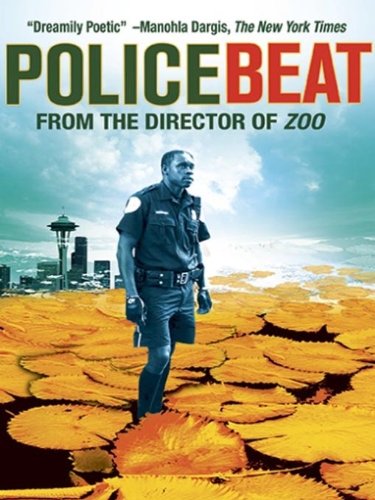
Cinematographer Sean Kirby shot the surreal film Police Beat, about an African-born bicycle cop encounters strange and mysterious situations on his police beat in urban Seattle.

In 2007, he re-teamed with writer/director team Robinson Devor and Charles Mudede and realized the controversial documentary Zoo about the life of an Enumclaw, Washington man who died as a result of an unusual encounter with a horse.

Some of his later credits include: Lovely Still, an emotionally moving holiday fable that tells the story of an elderly man discovering love for the first time, Against the Current, about a man, struggling with a tragic past, with an urgent calling who enlists two friends to help him swim the length of the Hudson River, starring Joseph Fiennes, and The Tillman Story, a documentary on the story of Pat Tillman.

To Listen to the Episode

Monday, October 1, 2012

Democracy Now: Alice Walker on 30th Anniv. of "The Color Purple" -- Racism, Violence Against Women Are Global Issues; Palestine Conditions "More Brutal" Than in U.S. South of 50 Years Ago; "Democratic Womanism" -- Women Rising, Obama and the 2012 Election

To watch all three episodes together: September 28, 2012: Democracy Now

Democracy Now


Alice Walker on 30th Anniv. of "The Color Purple": Racism, Violence Against Women Are Global Issues

On the 30th anniversary of the publication of "The Color Purple," we speak with author, poet and activist Alice Walker about her groundbreaking novel and its enduring legacy. Set mainly in rural Georgia in the 1930s, the book tells the story of a young, poor African-American woman named Celie and her struggle for empowerment in a world marked by sexism, racism and patriarchy. The novel earned Walker a Pulitzer Prize in 1983, making her the first African-American woman to win the Pulitzer for fiction. Walker explains the origin of the book’s title and explores some of its central characters and their connection to her own family history.

Alice Walker, award-winning author, poet and activist. Her book The Color Purple was published 30 years ago. It won the 1983 Pulitzer Prize for Fiction and the National Book Award for Fiction, and was later adapted into a film directed by Steven Spielberg, starring Whoopi Goldberg and Oprah Winfrey, and into a musical of the same name. Her latest book is The Chicken Chronicles, and before that, Overcoming Speechlessness: A Poet Encounters the Horror in Rwanda, Eastern Congo and Palestine/Israel. She is set to participate next week in the fourth session of the Russell Tribunal on Palestine.

To Watch the Episode


Palestine Conditions "More Brutal" Than in U.S. South of 50 Years Ago, Says Author Alice Walker

We continue our conversation with the legendary poet, author and activist, Alice Walker, who has also been a longtime advocate for the rights of Palestinians. Last summer, she was one of the activists on the U.S. ship that attempted to sail to Gaza as part of the Freedom Flotilla aimed at challenging Israel’s embargo of the Gaza Strip. Alice Walker also serves on the jury of the Russell Tribunal on Palestine, an international people’s tribunal created in 2009 to bring attention to the responsibility other states bear for Israel’s violations of international law. Walker describes her upbringing in the segregated South, then goes on to discuss today’s segregation in the Occupied Territories. "The unfairness of it is so much like the South. It’s so much like the South of 50 years ago, really, and actually more brutal, because in Palestine so many more people are wounded, shot, shot, killed, imprisoned. You know, there are thousands of Palestinians in prison virtually for no reason,” Walker says

To Watch the Episode

"Democratic Womanism": Poet and Activist Alice Walker on Women Rising, Obama and the 2012 Election

With less than 40 days to go before the 2012 presidential election, poet and activist Alice Walker reads her new poem, "Democratic Womanism," and discusses her thoughts on President Obama’s legacy, including his use of drone strikes. "You ask me why I smile when you tell me you intend in the coming national elections to hold your nose and vote for the lesser of two evils," reads Walker. "There are more than two evils out there, is one reason I smile."

To Watch the Episode