Showing posts with label Youth. Show all posts

Sunday, January 12, 2014

Blue is the Warmest Color (France/Belgium/Spain: Abdellatif Kechiche, 2013)

“Few films dig so deeply (and with such sense of intimacy) into the complexities of human relations, the joys and pains of self discovery and the hurtful realisation that our bodies and mind can yearn opposite things.” — Fernanda Solórzano


Blue is the Warmest Color (France/Belgium/Spain: Abdellatif Kechiche, 2013: 179 mins)

Beauvoir, Simone de. The Second Sex (1949: PDF copy)

Bell, Nicholas. "Blue is the Color of My True Love’s Hair: Kechiche Takes Us Deep Sea, Baby." Ion Cinema (October 25, 2013)

Berger, John. The Ways of Seeing. (1972: Summary/outline of this important book that studied how we are position to observe people and objects in art)

Blue is the Warmest Color Critic's Roundup (No Date)

Blue is the Warmest Color (Graphic Novel) Wikipedia (No Date)

Dargis, Manohla. "Seeing You Seeing Me: The Trouble With Blue Is the Warmest Color." The New York Times (October 27, 2013)

Dayoub, Tony. "The 51st New York Film Festival #3." The Cinephiliacs (October 13, 2013)

Hudson, David. "Abdellatif Kechiche’s BLUE IS THE WARMEST COLOR: A coy coming-out drama this most definitely isn’t.” Keyframe (May 23, 2013)

---. "Abdellatif Kechiche’s BLUE IS THE WARMEST COLOR: 'The experience of the film transcends flaws both real and imagined.'" Keyframe (October 11, 2013)

Ildari, Max. "Blue Is the Warmest Color 2: A Response to Lorrie Moore’s Review in the New York Review of Books." Bright Lights After Dark (January 10, 2014)

Jones, Kristin M. ""Review: Blue Is the Warmest Color." Film Comment (2013)

Kennedy, A.L. "Sartre and the Individual." A History of Ideas (April 15, 2015) ["Writer AL Kennedy on Existentialist ideas about the individual. Jean Paul Sartre argued that, for humans, 'existence preceded essence'. This means that there is no blueprint or template from which to work - humans are free to make themselves up as they go along. Being an individual comes from the way you negotiate this freedom and the choices you make in the face of it."]
Lee, Janet. "'Blue Is The Warmest Color'." Neon Tommy (October 22, 2013)

Mayer, Sophie. "Blue is the Warmest Colour: This part-adaptation of Julie Maroh’s graphic-novel saga of a lesbian love affair trades a new voice for the same old male gaze." Sight and Sound (February 20, 2015)

McCahill, Mike. "21st Century Directors You Need to Know About: Abdellatif Kechiche." Movie Mail (May 2, 2014)

McNeil, Jeremiah. "Blue is the Warmest Color" Dialogic Cinephilia (December 21, 2013)

Moore, Lorrie. "Gazing at Love: Blue is the Warmest Color." The New York Review of Books (December 19, 2013)

Rich, B. Ruby. "Blue Is the Warmest Color: Feeling Blue." The Current (February 24, 2014)

Roberts, Soraya. "Blue Is the Warmest Color is about class, not just sex." Salon (November 3, 2013) ["Sex and sexuality are only half the film's story. It's also about lovers from different economic worlds."]

Sartre, Jean-Paul. "Existentialism is a Humanism." (Lecture given in 1946: published in Existentialism from Dostoyevsky to Sartre, ed. Walter Kaufman, Meridian Publishing Company, 1989) Marxist Archive (2005)

Stern, Marlowe. "‘Blue is the Warmest Color’: See What the Sex Scene Looks Like In the Graphic Novel." The Daily Beast (October 28, 2013)

Thompson, Martha. "Blue Is the Warmest Color 1: Unresolved Alienations of Class." Bright Lights After Dark (January 2014)

Zaman, Farihah. "The Pleasure Principle: Blue is the Warmest Color." Reverse Shot #33 (2013)


Friday, November 1, 2013

Radio West: Steve James on The Interrupters

The Interrupters
Radio West

Steve James made the extraordinary documentary "Hoop Dreams" in 1994. His most recent film, The Interrupters, premiered last year at Sundance and it's airing on PBS tonight. The film examines the complexities and realities of inner-city violence by following three violence prevention workers on the streets of Chicago. James spoke with Doug last year about the ideas in his films and the craft of making them.

To Listen to the Episode

Thursday, September 26, 2013

Sean Smithson: We Are What We Are, Tastefully Macabre

WE ARE WHAT WE ARE, Tastefully Macabre
by Sean Smithson
Twitch


Let's get this out of the way right off the bat: We Are What We Are is not a remake. Differing greatly from the original Jorge Michel Grau Spanish-language version, the creative team of Jim Mickle (writer/director) and Nick Damici (writer/co-star) have taken the original concept of ritual cannibalism and inverted it, switching almost every trope in the initial version, and spinning it into something completely their own.

In this Americanized take, Iris and Rose Parker (Ambyr Childers and Julia Garner) are two young girls living in a rural community who have recently lost their mother, and are now left to tend to the needs of their little brother Rory, and ailing father Frank (Jack Gore and Bill Sage). Stand-offish and a mystery to the local citizens, the Parkers have kept to themselves, labelled strange, eccentric, and a bit fanatical by their neighbors and fellow townsfolk. As an on-going storm rages, causing flooding and immobility, slowly the long standing mystery of a number of disappearances in the area begins to unravel.

A local coroner, Doc Barrow (played by scene stealer extraordinaire Michael Parks), whose daughter had gone missing the season before, slowly begins to suspect the anti-social Parker family of being involved, and tells the local sheriff (Nick Damici) of his feelings. Young Deputy Anders (Wyatt Russell, son of Kurt) meanwhile has an infatuation with the beautiful Iris, who obviously wants to return his affections but keeps her suitor at a distance because of her duty to her family. When a human finger bone is discovered, evidence starts pointing to foul play in the small community, and the tourniquet on the Parkers slowly tightens, as dark secrets (and worse) are threatened to be revealed. Plot elements are deftly juggled by Mickle, as the storm worsens, the clues amass, and tensions mount.

The raging storm brings flood waters that threaten to literally dig up long-buried secrets. Caught in the spiral is caring neighbor Marge (Kelly McGillis) a bit of an old maid who has taken to watching over the girls and their little brother, and helping them through the trial of losing their mother. Let me say here, it's so great to see McGillis become a Mickle cast regular, this being her second film with him, and proves that real screen talent elevates material (which the genre sorely needs right now).

This is a horror movie, so it goes without saying, things don't end well for many of the characters in We Are What We Are. Thankfully, director Mickle never goes for the cheap shot or easy gore, instead methodically building a tale of a family in pain and turmoil, who happen to have some very strange practices and ideas of what worship is.

The most overt change is the family structure being shifted from young teenaged boys, a little sister, and a mother trying to keep things together (as in the original) to a literal "flip," where now we have a widowed father, his two young daughters on the verge of womanhood, and their little brother. It seems a bit literal on paper, but in the context of Mickle's vision it's actually a revelation. Changing the setting from a city to a small almost Norman Rockwell-esque Any Town, America strengthens the backstory and brings it all "home," so to speak.

To Read the Rest of the Review

Monday, September 23, 2013

Making Contact - Room To Breathe: From Chaos to Peace in the Classroom

Room To Breathe: From Chaos to Peace in the Classroom
Making Contact


At overcrowded and underfunded public schools across the country high suspension rates are exacerbating existing achievement gaps. Often, chaos in the classroom is to blame, keeping students from concentrating on their classes. On this edition we’ll hear excerpts from Russell Long’s film “Room to Breathe” which takes us to a middle school in San Francisco, California, that began teaching mindfulness in the hopes of giving students the skills they need to focus on learning.

Featuring:

Ling Busch, guidance counselor at Marina Middle School; Megan Cowan, mindfulness teacher, students and teachers at Marina Middle School in San Francisco

To Listen to the Episode

Wednesday, August 21, 2013

Vlad Dima - Perpetual Motion: The Dardenne Brothers' The Kid with a Bike

Perpetual Motion: The Dardenne Brothers' The Kid with a Bike
by Vlad Dima
Bright Lights Film Journal


The latest film by Belgian brothers Jean-Pierre and Luc Dardenne is oddly both fast and slow. Cyril, the main character (played wonderfully by Thomas Douret), looks for his father who had abandoned him, but connects with a benevolent hairdresser, Samantha, who eventually becomes his legal guardian. The kid is moving constantly, mostly on his bicycle the English translation of the original title, "Le Gamin au vélo," misses out on a nuance, that of possession, which is under question at the beginning of the film; but it is his bike — "au vélo" — not "avec"/with a random bicycle). As Cyril's frenetic movement appears to up the tempo of the film, the directors drastically slow down the pace by using long takes, and as little cutting as possible. It is amid the two contrasting tendencies that Cyril's story finds the perfect narrative balance.

Naturally, even the mention of the word "bike" in a film makes us recall Vittorio de Sica's Bicycle Thief (1948): a kid, a bike, a father. De Sica's film indeed hovers over the narrative of The Kid with a Bike, but the latter goes in new directions. The stolen Italian bicycle is connected to the destinies of an entire family, while Cyril's bike evolves from signifying his lost connection to a father who does not want him to the object that offers him freedom. The theme of independence appears from the beginning when we witness Cyril attempting to escape the children's home in which he had been placed. In fact, in this instance we are reminded more of Antoine Doinel from Truffaut's 400 Blows (1959) than Antonio or Bruno from Bicycle Thief. The emblematic final run at the end of 400 Blows is essentially an interminable, uninterrupted travelling shot of Antoine running toward the sea. Cyril's story almost picks up where Truffaut had decided to open end Antoine's odyssey. The direction of Cyril's movement is rather significant, too. Antoine runs left to right, a direction associated with Western movement; he is headed toward a conclusion. Cyril's movement, conversely, is chaotic and goes both directions. Interestingly, when he is about to get into trouble (riding toward the gas station, running away etc.), he goes in the opposite direction, right to left. When the film reaches some sense of normality, and we see both Samantha and Cyril ride together, they go in the "correct" direction, left to right.

There are many other connections to Truffaut's film, and even to Godard's Breathless (1960). Cyril, like Antoine, lies about obvious truths; there are several references to a psychologist Cyril presumably talks with at the children's home, although we never see him or her. Truffaut's film famously chooses to show only Antoine during the conversation with the psychologist, completely ignoring the counter shot. When Samantha and Cyril are in a car, we often only see Cyril and hear Samantha's voice (the opposite happens in Godard's Breathless in which we see Patricia talk to Michel in the car, but we do not see the latter). Even though there are a few people influencing him, Cyril comes off as independent for the most part. Initially, though, he cannot think of anything but being reunited with his father (in another departure from Bicycle Thief, the father had sold his son's bicycle when he found himself financially strapped). At the crucial moment of acceptance that his father is no longer interested in taking care of him, Cyril finds himself on the other side of a metaphorical wall. However, this happens to be also an actual wall that he had to climb in order to get to his dad. When the father pushes him back to the other side, for a brief moment they are literally separated by a wall. For a moment, we fear for Cyril, for his fate, until we realize that he is on the open side of the wall, the side from which he can escape.

To Read the Rest

Thursday, August 15, 2013

Metaphilm -- Monsters Inc., Moslems, Inc.: The Uses of Disenchantment in the film that is set after but made before Monsters University

Monsters Inc., Moslems, Inc.: The Uses of Disenchantment in the film that is set after but made before Monsters University.
by Snodgrass
Metaphilm


We know that children’s films can be tools for introducing the unpleasant realities of the adult world. Witness Chicken Run, a claymation film from the creators of Wallace and Gromit, in which the World War Two story of the Jews’ imprisonment, forced labor, and then systematic destruction is told through a parallel tale of chickens’ forced imprisonment, mandatory egg laying, and then systematic destruction when the egg farm converts to a chicken pot-pie factory. It is all right there, right down to the propagandistic American hero, whose heroics are in fact very chicken-hawkish, much the way the reality of Nazi Germany’s defeat was thanks more to the Russians than the good ole U.S. of A. So if children’s cinema can be used to explain harsh political realities from a past that the children are currently unaware of but which still retains currency in living cultural memory, how far-fetched is it to imagine that a film could describe harsh political realities while they were happening, so as to soothe the psychic feathers of children as they are experiencing them? Especially if those children are, in fact, the necessary voters and taxpayers your system is going to need to sustain the fictional fantasy by which you run global politics.

To Read the Rest

Tuesday, July 2, 2013

The Dreamers (France/UK/Italy: Bernardo Bertolucci, 2003)


The Dreamers (France/UK/Italy: Bernardo Bertolucci, 2003: 115 mins)

Buchanan, Ian. "Bernardo Bertolucci's The Dreamers; Kristin Ross' May 68 & Its Afterlives; Deleuze & Guattari's Anti-Oedipus." excerpt from Deleuze and Guattari's Anti-Oedipus. NY: Continuum, 2008: 13-19. Posted on Dialogic (July 2010)

Dyson, Jake. "The Dreamers (2003)." Film Matters (February 20, 2018)

Fletcher, Stephen Q. "The Dreamers: Revolution as a Gala Dinner and a Game." Metaphilm (May 4, 2008)

Hudson, David. "Sex in the Movies." Green Cine (2005)

Ross, Kristin. May '68 and Its Afterlives. Chicago: University of Chicago Press, 2002.

Sunday, June 23, 2013

Moolaadé (Senegal/France/Burkina Faso/Cameroon/Morocco/Tunisia: Ousmane Sembene, 2004)


Moolaadé (Senegal/France/Burkina Faso/Cameroon/Morocco/Tunisia: Ousmane Sembene, 2004: 124 mins)

Bartlet, Olivier. "Adventures and Misadventures of African Cinema." Cinemas of the South (2006)

Borden, Amy. "At the global market: Ousmane Sembène’s Moolaadé and the economics of women’s rights." Jump Cut #53 (Summer 2011)

Bug Girl. Is My Vuvulzela Too Big?" Skepchick (June 20, 2010)

Coventry, Martha. "Making the Cut: It's a Girl! ... Or is it? When in doubt, why are surgeons calling the shots?" Ms. (Oct/Nov 2000)

Diop, Baba. "Ousmane Sembene: The Elder of Elders." Cinemas of the South (February 15, 2009)

Dotson-Newman, Nzinga. "Family Pressure on Young Girls for Genitalia Mutilation Continues in Kenya." Project Censored (2012)

Finney, Nikki. "The Greatest Show On Earth." (Read the poem/read an analysis of the poem/and listen to Nikki read it)

Halpern, Sue. "Breaking a Conspiracy of Silence." The New York Times Book Review 56.18 (November 19, 2009)

Marzana, Nicola. "The Art of Hunger: Re-Defining Third Cinema." 16:9 (November 2009)

Pride, Ray. "Woman is the Future of Man: Ousmane Sembene on Moolaade." Cinema Scope #21 (2004)

Santur, Hassan Ghedi. "On Being a Muslim in the West." Ideas (June 1, 2011)

Turkewitz, Julie. "Effects of Ancient Custom Present New Challenge to U.S. Doctors: Genital Cutting Cases Seen More as Immigration Rises." The New York Times (February 6, 2015)


Monday, May 13, 2013

John Engle -- August and Everything After: A Half-Century of Surfing in Cinema

August and Everything After: A Half-Century of Surfing in Cinema
by John Engle
Bright Lights Film Journal


...

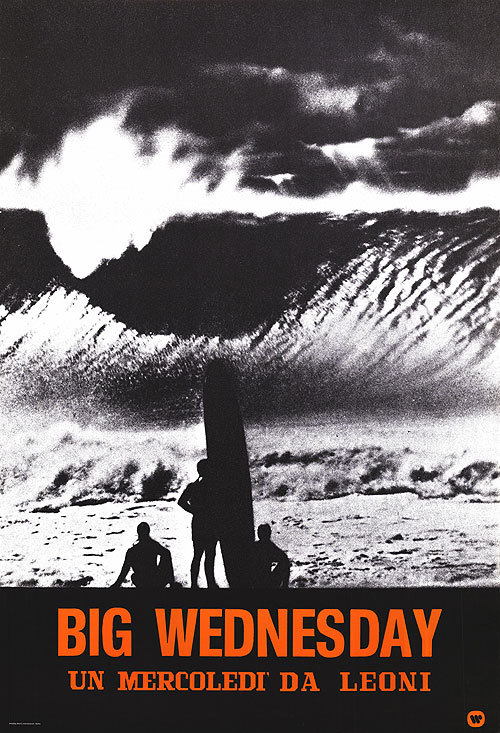
The tensions of these real and screen lives have in large part remained those of the film genre Gidget engendered. In the half-century since, from the Beach Party franchise and its early '60s spin-offs, through Big Wednesday, Point Break, Blue Crush, and many others, and on to Chasing Mavericks in 2012, filmmakers have gone to the sand a couple dozen times to produce narratives either focused expressively on surfing as sport or obsessive life choice, or at least as significant background informing and directing the film's meaning. The result has been movies that are often more incisively pertinent in their treatment of growing up, family tensions, a world of dizzying social change, race and class, and the seductive lure of commerce and appearance than their wicked barrels, great tans, and dudespeak might presage. With an eye to the meanings behind their attractive surfaces, I'll be looking at a handful of these, at least one from each decade, for the most part relatively high-profile examples of a film type that, if rarely the source of smash hits, has generally met with commercial success. Hardening firmly in place by the 1970s, a highly restrictive formula thereafter rules the near totality of these films: given their interest in young people on the cusp of adult life, it's not without a certain logic that they return repeatedly to such story elements as the wise mentor, the temptation to sell out, the preparation sequence, and the concluding challenge or competition. The remarks to follow will examine the genre's creation in the beach-craze '60s, then turn to its elaboration in what one might consider the main line of "classic" surf films, with their reliably formulaic focus on childhood's end; the conclusion will explore how, while remaining generally faithful to established patterns, certain films have brought within their widened purview broader social and political issues. With the exception of Bruce Brown's The Endless Summer (1966) — a documentary but vaguely story-centered and, in any case, so iconic as to be compulsory — all of the films under discussion are pure narratives. As such, they should be distinguished from the grainy collections of hot rides Greg Noll brought to stoked kids in countless multipurpose halls and their often lyrical or thrilling cinematic descendants. Whether big deals like Riding Giants and Step into Liquid, or smaller, edgier efforts like BS!, these documentaries are absolutely central to the surfing subculture and merit separate study, with their specialist target audience, their shared values, and visual assumptions.

Unsurprisingly perhaps, the first treatments of waveriding were documentary in nature and aimed at the widest possible audience. Like les Pathé-Frères, who put together 100 minutes on Le Surfing: Sport national des iles Hawaii in 1911, filmmakers in the first half of the century responded periodically to a curious public's hunger for images of exotic locales and practices that, even in the era of grand liners and early aviation, remained largely inaccessible. By the thirties, in any case, the word on surfing was getting out, if Hawaiian Holiday, the first cinematic narrative treatment of the sport, is any indication. In this 1937 Mickey Mouse featurette, Goofy recklessly challenges waves that, with the typical extraordinary range of Disney's animation teams, manage at once to be dumb funny, anthropomorphically nasty, and possessed of a frothy, sculpted loveliness drawn straight from Hokusai. While the cartoon is (somewhat speciously) considered the source of the term goofy-footed for surfers who, like its hero, lead with their right foot, its variation on the timeless theme of the arrogant individual chastised by a recalcitrant natural world in fact says little more about surfing than that it was just edging into the public consciousness. It would take the '50s and early '60s and the sport's headlong drop into popular culture before filmmakers would begin to recognize and exploit its rich visual and thematic possibilities.

And what visuals, for there is something basically unbelievable about human beings standing up on a tumbling wave, not to mention carving sleek sweeps and tight reverses back up its face. Cinematically, what's not to like about good-looking kids in a dream locale practicing a potentially dangerous sport that, even straight-on from a fixed shore location in black and white, films like a million bucks? Considered a moment, however, the scene is much more than its very pretty pictures, in large part because of the richly conflicting signals it emits. As sport, identity definer, and style locus, the surfing we have come to know these last decades is a space of, variously, big-money competition, reverent communication with the natural world, heavy partying, one-to-one confrontation with appalling physical force, proprietary localism of the ugliest sort, New Age self-discovery. It is a counterculture and a culture, a way to rebel and a way to grow up, and some live an entire adult life, work and all, still somehow rhythmed by the daily wave report. Surfing is the Beach Boys sweet in their striped Kingston Trio short-sleeve button-downs, and it's Dora dive-bombing kooks and bouncing checks. It's the garden and the salesmen who slither into it. Let's go surfin' now, everybody's learnin' how, we are joyfully urged, but to paddle out as the new guy is in fact to try entering the most closed of societies. Surfing can seem like an ocean of style, posing, and attitude, but out in the impact zone and beyond, the superficial abruptly washes off. To choose a short board or long, three fins or one, can be no less than to define different selves and value systems.

The very physical space offers an equally rich palette of thematic opportunity. From knee-high kids' stuff to Fukushima, pure fluid energy rears in defiance at sudden, solid resistance. The arriving swell is pattern and endless variety, or as Laird Hamilton says of the big ones in The Wave, "it's never the same mountain" (72). Proceeding in stately sequence, breakers seem all ruler-edged order, but of course they are also sites of chaos and fear. There the simple can become "in practice immediately complex," writes Woolf in To the Lighthouse, "as the waves shape themselves symmetrically from the cliff top, but to the swimmer among them are divided by steep gulfs, and foaming crests." Wild swings of perspective rule the sand as well, for what place is more one for sun-drenched, thought-free lotus-eating than the beach. Yet on that thin strip of dry land the tragic drama of our collective addiction to fossil fuels will play out first. And even carefree Waikiki lies hard by an ocean's unfathomable mass with its troubling, timeless reach of myth and suggestion. It is on the shore after all that Wordsworth rejects that world that is too much with us, yearning seaward to affirm the deeper truths of Proteus and Triton. The beach is just the beach, and it is much more than that. The greatest of the wavewriters, Daniel Duane, recognizes the way the surf scene can encode paradox, locate that sweet spot where the deeply complex and the unreflective simple both somehow find their footing.

...

To Read the Entire Essay

Monday, April 8, 2013

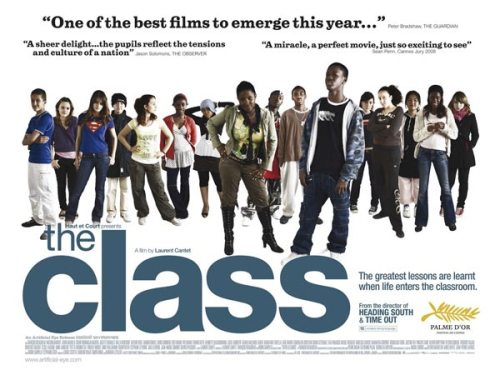
The Class (France: Laurent Cantent, 2008)


The Class (France: Laurent Cantent, 2008: 128 mins)

Ashbury, Roy. "Schools and Teachers." Understanding Representation. ed. Wendy Helsby. London: BFI, 2005: 51-74. [Available in BCTC library PN1995 U4977 2005]

Chen, Lu. "I Hate Mathematics and Racists." The Brooklyn Rail (March 2009)

Livingston, Jessica. "Global capital’s false choices in the films of Laurent Cantet." Jump Cut #53 (Summer 2012)

Sunday, April 7, 2013

Where the Wild Things Are (USA/Germany: Spike Jonze, 2009)

"I remember my own childhood vividly ... I knew terrible things. But I knew I mustn't let adults know I knew. It would scare them." -- Maurice Sendak in conversation with Art Spiegelman, The New Yorker (September 27, 1993)


Where the Wild Things Are (USA/Germany: Spike Jonze, 2009: 101 mins)

Accord, Lance. "Where The Wild Things Are, Part 1." American Cinematographer (February 2010) ["Lance Acord, ASC, cinematographer of Spike Jonze’ adaptation of Maurice Sendak’s Where the Wild Things Are, discusses the creative underpinnings of this film and the techniques he used to tackle its artistic challenges with fellow ASC member Rodney Taylor."]

---. "Where The Wild Things Are, Part 2." American Cinematographer (February 2010)
["Lance Acord ... continues his conversation with fellow ASC member Rodney Taylor, focusing on his career and the art scene in Los Angeles and San Francisco in the 80s."]

Sicinski, Michael. "25 Songs of Innocence & Experience: Spike Jonze, Wes Anderson and the Post-Boomer." Cinema Scope #41 (2009)

The Where the Wild Things Are Issue Little White Lies #26 (2009)

Monday, March 18, 2013

Matt Zoller Seitz -- Harold and Maude: Life and How to Live It

Harold and Maude: Life and How to Live It
By Matt Zoller Seitz
Current


Hal Ashby’s Harold and Maude, about the love between a suicidal young man of about twenty and an almost eighty-year-old widow, is timeless in part because it never quite belonged to its own time. Conceived in the late 1960s, at the height of the counterculture, it was released in 1971, when the political narrative of peaceful rebels versus the jackbooted establishment had lost what little mainstream appeal it had briefly enjoyed. In the popular imagination, the March on Washington and the Summer of Love had been displaced by Woodstock, Altamont, Kent State, and a string of assassinations and riots. Richard Nixon had ridden into office in 1968 on a wave of law-and-order sentiment and was about to cakewalk into a second term (and unprecedented shame). The counterculture was in retreat. As Peter Fonda’s record producer tells his young girlfriend in 1999’s The Limey, the sixties were “really . . . just ’66 and early ’67. That’s all it was.”

But the movement’s ideals lived on, in a disguised and ultimately more daring form, in Harold and Maude, which took values that had been expressed by youthful rebels and dropouts in the late 1960s—peace, love, understanding, distrust of authority, a determination to march to the beat of a different drummer—and put them in the mouth of an old woman embroiled in one of the oddest and most original love stories ever filmed. The movie’s apoplectic authority figures, dotty old-money types, poetic interludes, and trance-inducing folk-rock soundtrack (by Cat Stevens) may seem typical of earlier hippie flicks. But its two central premises—that an elderly woman could embody the most unguarded, delicate variety of Summer of Love openness and that she and a much younger man should be able to fall in love and get married without being judged, much less stopped—are anything but. Harold and Maude was shocking by the standards of 1971 Hollywood movies, even the ones that styled themselves as adventurous or hip. But it is so ideologically and emotionally consistent, and weaves such a gentle spell, that we can accept the central romance as a metaphor for beleaguered political and social sentiments even as we get to know Harold (Bud Cort) and Maude (Ruth Gordon) as individuals and root for their happiness. It’s a romance, a tragedy, a satire, a paean to eccentricity, a philosophical statement, and a “trip” film whose music montages seem to roll in like waves. Its mix of elements felt strange and new at the time, and still does, even though the film’s characters, tone, and soundtrack have been referenced and plundered by many modern directors, including Wes Anderson, who used two Stevens songs in Rushmore; P. T. Anderson, whose first four features are filled with Ashby-like innocents stumbling through cruel worlds; and David Fincher, whose Fight Club features a misfit couple flirting at self-help groups that they don’t even belong to, as Harold and Maude do at strangers’ funerals.

Ashby was a former editor and one of the staunchest exemplars of countercultural values ever to work in Hollywood. He debuted with 1970’s The Landlord, starring Beau Bridges as a white preppy who buys a brownstone in then black Park Slope, Brooklyn, alienates his stuck-up family, and learns what really matters in life: love, honesty, and spontaneity. He followed it with an impressive string of pictures that rank among the decade’s best, including Harold and Maude, The Last Detail (1973), Shampoo (1975), Coming Home (1978), and Being There (1979). The films vary widely in subject matter, style, and tone. But they all share a fascination with naive outsiders who are part of a larger system or machine, even if they don’t realize it, and who inspire others, accidentally or on purpose.

In all these movies, but especially in Harold and Maude, Ashby displays an extraordinary sensitivity to the spectrum of human experience. Both The Landlord and Harold and Maude are built around disaffected young men who act out against lives of stifling privilege and ossified values, but the latter film is simpler and more direct, and less tied to ripped-from-the-headlines issues. Building on the innovations of the landmark releases The Graduate (1967) and Easy Rider (1969), Harold and Maude explores outsider mentalities through fragmented cutting, using those music montages to embellish its themes and create a feeling of emotional suspension. But Harold and Maude is ultimately a richer, deeper movie, less measured and a lot more meandering, and also warmer, weirder, and tougher to reduce to catchphrases. It doesn’t position rebels against the establishment, or any group against any other group. It just wants people to be themselves and to be appreciated instead of judged—and to spread bliss by reaching out.

To Read the Rest of the Essay

Friday, December 7, 2012

A. Loudermilk: Last to Leave the Theater

Last to Leave the Theater: Sissy Spectatorship of Stalker Movies and the "Final Girls" Who Survive Them
by A. Loudermilk
Bright Lights Film Journal


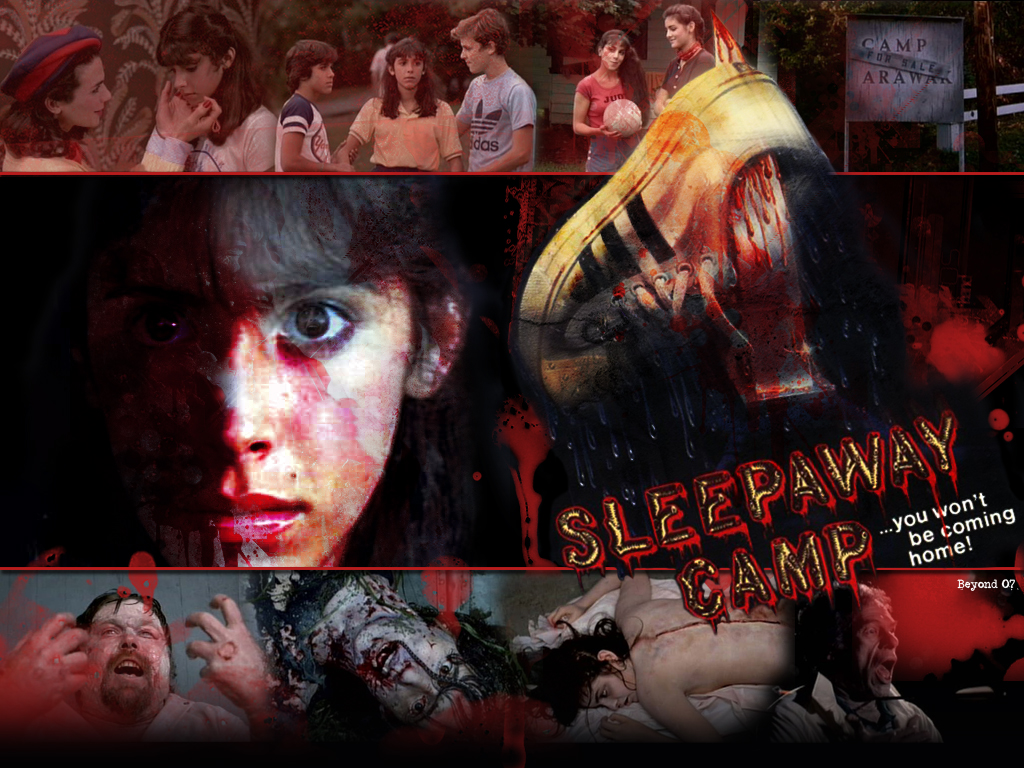
She's a virgin who won't get stoned (Sleepaway Camp II). She does get stoned and plays strip Monopoly (Friday the 13th). She's not a virgin and wears a tie (April Fool's Day). She's a pregnant sorority sister holding tight to her little gold cross (Black Christmas). She's teacher's pet and basketball star (Slumber Party Massacre). She's prom queen, head of dance club and all-around athlete (Prom Night). Yet she wasn't invited to an important party (Happy Birthday to Me). She knows how to fix a car and disparages capitalism (Hell Night). She's majoring in psychology (Friday the 13th II). She's a divorcee who writes an advice column (Schizoid). She's a naval officer with a mysterious position overseas (Graduation Day). She's the one who says, "We're supposed to be mature adults" (House on Sorority Row). She's the one who says, "We should be prepared to fight" (Hide and Go Shriek). She's the one who says, "I'll put the gun down when the police get here" (Hard to Die). In order to protect herself, she pulls the Stalker's knife from a dead friend's back (Friday the 13th III). "I don't feel any safer here with you," she weighs her options: "I can run cross-country. I'll get to the highway and call for help" (Blood Sisters). She drags herself down corridors to save herself from the Stalker (Halloween II). She saves herself and her wounded boyfriend from the Stalker (Mutilator). She's not the Stalker though she seemed to be the Stalker (Curtains; Nail Gun Massacre). She is the Stalker (Night School) and not exactly a girl (Sleepaway Camp). She's upset about forgetting her chemistry book (Halloween).

Since Tobe Hooper's The Texas Chain Saw Massacre (1974) and John Carpenter's Halloween (1978), the survivor figure in horror has been female. "We belong in the end to the Final Girl," declares film theorist Carol Clover in her groundbreaking book Men, Women, and Chainsaws (1992). Clover refers to the Final Girl as a "victim-hero," a character who shifts between these traditionally gendered roles — increasingly toward the masculine (in her argument) as the story culminates. A smart and observant girl who either fights off the killer long enough to be rescued or kills the killer herself, the Final Girl is not typically feminine in her interests/skills, experiences an apartness from other girls, and possesses an active gaze that registers signs of danger others ignore (35, 39-40, 44, 48). For instance Halloween's Laurie (Jamie Lee Curtis), teased by her sex-obsessed peers as the bookish virgin1 who doesn't date, is first to see the blankly masked man watching from the hedges.

In the opening scene of the original Night of the Living Dead (1968), one now might spot Barbara as Final Girl. Director George Romero positions us to identify with Barbara more so than her brother who jokes about the strange man in the cemetery who's "coming to get her." He is coming — to get both of them. While her paranoia saves her, her brother's flippancy gets him killed. After Barbara's initial ingenuity evading the zombie, alas, she goes catatonic and a male character assumes the hero role. For Tom Savini's 1990 remake of Night of the Living Dead, scriptwriter Romero, responding to feminist criticism of Barbara's hysterical passivity, revises her as Final Girl. She is now "an active, assertive character, not only within the diegesis but as a narrative agent as well." In other words, according to Barry Keith Grant's essay "Taking Back the Night of the Living Dead" (1992), she not only takes action to save herself in the story, those actions impact the direction, outcome, and meaning of the story (200).

At large in horror, a revision of the damsel as survivor marks a new era for the genre, and much has been written about it. What's yet to be addressed, though, is a specifically "sissy spectatorship" of the Final Girl during an era of intense homophobia and misogyny. I grew up with the Final Girl, or maybe I should say that I grew up with the genre fans who primarily witnessed the Final Girl. And I want to embrace fan subjectivity to help elucidate my own queer relationship with horror as framed by the straight audience I sat with. To come back, ultimately, to the very theater in which I sat — watching and being watched.

To Read the Rest of the Essay

Sunday, July 29, 2012

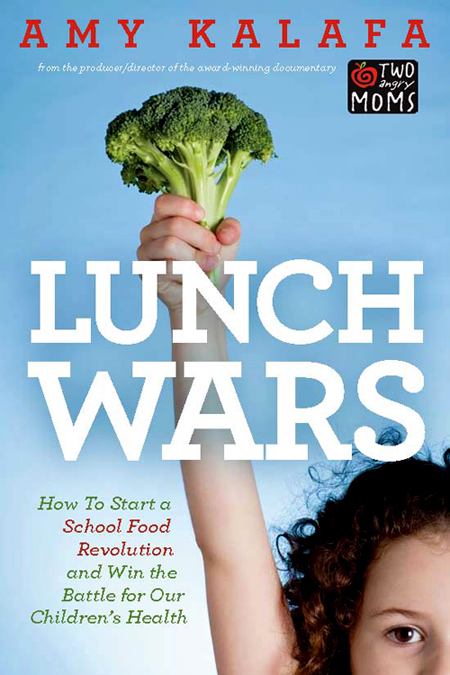
Radio West: Amy Kalafa -- Lunch Wars

Lunch Wars
Radio West (KUER: Utah Public Media)


The average American kid will have some 3,000 school lunches by the twelfth grade. But what are they eating? When filmmaker and author Amy Kalafa went into school cafeterias, she found lunch trays laden with chicken nuggets and French fries, but little in the way of healthy choices. The question she kept hearing from parents though was "What do we do about it?" Kalafa has written a book called "Lunch Wars," and ... she joins us to explain how to start a school food revolution.

To Listen to the Episode

Thursday, June 28, 2012

Erich Kuersten: Sex is a Hen Decapitated -- Bluebeard and the Eroticism of Catherin Breillat

Sex is a Hen Decapitated: Bluebeard and the Eroticism of Catherine Breillat
by Erich Kuersten
Acidemic


The ancient tale of Bluebeard is rife with archetypal resonance for the budding feminine psyche: it's a rite of passage myth, a map of patriarchal oppression's mine field, an initiation into sexual maturity, where the fear of pain is enough to make actual pain a relief in contrast; a color-symbolic dream where the blood of menstruation anxiety (the redness of the clitoral "riding" hood) and the swollen purples of honeymoon savagery (the black and blueness of the groom's bristly beard) mix and match. Like many fairy tales centered on a young girl, it encodes the onset of menstruation into a Pandora's Box moment of discovery, from which innocence can never return, leading inexorably into the scary rites of the marital bed, the agonies of childbirth, and so forth. Do we not, in associating white for virginity and purity, forget that red means the alchemical opening up of that purity into the raw violence of procreation? So what does that third color of the French flag--blue--represent? Naturally, the cooling rescue of death--or rather as symbolized in the 'bloody chamber' where all the previous brides are stored, a suspended animation, a sleeping beauty status wherein the enslaving agonies of childbirth and old age are forever kept at bay, in short, the blue represents frozen death and timeless decadence, pleasure and a disruption of the natural enslavement process of patriarchy. Bluebeard postpones sexual relations in order to keep romance forever young.

The coming of age girl myth tends to focus on the moment of the first dripping eradicable red stain, one that no amount of Clorox will undo. Such a moment--loss and gain coagulated into one crimson blotch --seems to obsess French director Catherine Breillat, a female auteur as detached and horrified in her existential search for meaning as her fellow Frenchmen Gasper Noe, Jean-Paul Sartre, and Claire Denis [note from Michael Benton: Denis is a French woman]. But as Breillat is a woman, her take on femininity is free to delve much much deeper into waters too cold and dangerous to ever be known to men. Eagerly complicit with the grotesque truths of feminine sexuality, Breillat's eyes are not blurred by the glamor and beauty that hypnotize most male directors. Rather than 'fall' for the genetic con job of desire, she focuses on her gender's fascination with the gross otherness of the male body, and vice versa - she wants to explore her own body--stripped of its veils and glamor-- through male eyes. Men after all aren't as obligated to be beautiful. They're position as desirable or beautiful is seldom considered in a marriage. If a woman can't learn to love ugliness, she never gets a prince and stays forever turned off; the beast stays a beast.

For his part, when Bluebeard spots the telltale blood stain on the key to the forbidden chamber, he is sad and disappointed, once again his bride has been unable to remain 'unopened' and so must be literally opened, as in decapitated. But Breillat's crafty beauty knows to stall, to feign compliance with her impending death on certain conditions, and to seek help from the passing musketeer/woodsman(the woodsman gets all the girls because he's already 'slain' his own wolf). If she merely screams and cringes, she's devoured. This is a valuable honeymoon lesson considering the absurdly young marriage ages of our forebears, one surely told by moms of old: do not resist or cringe when your new husband advance; instead, flatter, and stall him. If he will but relent today he shall get double tomorrow, and so on until a nice woodsman can rescue her, or she can develop enough that her deflowering is less of a painful, traumatizing violation.

The patriarchal readings of these tales runs counter to this approach, flipping the beast into a prince with a magic (phallic) wand and happily ever aftering the story before the children reading can learn that the magic wand's spell fades in a matter of hours. Soon enough the hair begins to creep back on their prince and his fangs grow long with the full moon. He seems to get uglier and more ill-tempered as the marriage marches on; that's the part Disney rolls its credits over. Only Breillat dares see not just the beast, but the frog, the vile toad still dwelling behind the sparkly eyes of the prince, and only Breillat nonetheless finds a way to love the thing, proverbial warts and all.

In her fearless approach towards this taboo subject, Breillat seems to possess an ambivalent--if not outright hostile--attitude towards sex. Her liberated female characters are often accused of being masochist subjects. But we have to dig deeper for her real reaction, perhaps a way would be to see her as the French female version of Lars Von Trier. But where Lars uses the D.W. Griffith / Sirkian soap opera woman's story in his savage deconstruction of innocence, purity, deflowering and sex, Breillat eschews any direct relation with 'woman's picture' trappings, to shoot for pure myth, looking past Griffith all the way back to the dawn of the printing press. Her cinema is--in Bluebeard literally--like the pages of a storybook that shows everything the normal books do not.

To Read the Rest of the Essay

Monday, June 18, 2012

Erich Kuersten: Swedish Death, American Style

Swedish Death, American Style
by Erich Kuersten
Acidemic


"A film by Matt Reeves" (Cloverfield), Let Me In (2010) barely even acknowledges it's a remake of a 2008 Swedish film, Let the Right One In (dir. Thomas Alfredson), which was an adaptation of a book by John Ajvide Lindqvist, also from Sweden. The American version keeps the snowy, desolate, alien mood via wintry Los Alamos, New Mexico, with Kodi Smith McPhee as the human boy, and the startling Chloe Grace Moretz as the vampire. One of the changes from the original are scenes were Moretz morphs into the CGI silhouette of a flying pit bull. In quieter moments she's startlingly ageless and we're forced to contend with the idea that she could be five or five hundred; she may have picked her young girl form the way a Venus flytrap picks its sticky sweet scent. In the book, I'm told, she's not even a real girl, but a castrated boy. She could be a thousand year old shapeshifting venus fly cactus. This mystery enhances the bizarre love story at the film's heart. It's one we all know- the old lover making way for the new - but in this case, oh man, we're talking some serious age differences.

Perhaps I mention all this to show how having a Swedish original to work from enables American filmmakers to explore the darker side of childhood, the place where empathy is easily drowned by the desire for companionship, safety, validation, power, and revenge against one's enemies. If the motivation for these remakes boils down to middle America's hatred of subtitles, the ability to depict things American films never could otherwise is surely a close, unspoken second. Ever since Spielberg's E.T. set the tone for the 1980s, movie audiences have reveled in their horror over child abuse scandals and as a result have shied away from portraying kids as anything but saints or, occasionally, evil demons... but either way beset on all sides by skeevy male abductors. Never are they allowed to be sexual and/or ignored - is neglect 'worse' than 'physical' abuse? Is there even a difference?

Having these topics come from Sweden washes the blood off our hands as nervous Yanks. We can do more dark stuff with kids, because hey, it's a remake, of a Swedish film. I have a feeling the same marker of moral responsibility exemption will accompany the sexual violence in Fincher's Girl with the Dragon Tattoo remake. Thus the Swedish cinema has re-attained its status as America's go-to taboo breaker, a status it won back in 1967 with I am Curious... Yellow, a film that dared to not just show sex, but to show realistic sex, as part of the experiences of a young leftist blonde girl and her older lover filmmaker. The protagonist's sexual openness isn't 'titillating' as much as a provocation . Americans were allowed to see it as 'art' and since it made money, the stage was set for the XXX boom. The leftist politics and new wave handheld style was forgotten but the sex was kept. The phrase 'Swedish erotica' became a redundancy, like American jazz, or Argentine tango.

The original Let the Right One In (2008) dared to assume the American art house market would abandon prurience and moral outrage over the whole child sexuality angle and remember instead the mix of loneliness and exalted terror that is being a child, those pre-empathic Lord of the Flies, Over the Edge kind of feelings from the days when we were sent to our rooms for trying to rebel, and we rolled around in bed and wished we could just kill our parents and be free to eat candy all the time; the agony of being called in by your parents, right when you were about to play a game of 'doctor' with your hot neighbor. When you ran outside after wolfing down your warm milk and yucky vegetables, she was gone.

To Read the Rest of the Essay