Showing posts with label Sweden. Show all posts
Showing posts with label Sweden. Show all posts
Tuesday, November 20, 2012

Monday, June 18, 2012
Erich Kuersten: Swedish Death, American Style
Swedish Death, American Style
by Erich Kuersten
Acidemic

"A film by Matt Reeves" (Cloverfield), Let Me In (2010) barely even acknowledges it's a remake of a 2008 Swedish film, Let the Right One In (dir. Thomas Alfredson), which was an adaptation of a book by John Ajvide Lindqvist, also from Sweden. The American version keeps the snowy, desolate, alien mood via wintry Los Alamos, New Mexico, with Kodi Smith McPhee as the human boy, and the startling Chloe Grace Moretz as the vampire. One of the changes from the original are scenes were Moretz morphs into the CGI silhouette of a flying pit bull. In quieter moments she's startlingly ageless and we're forced to contend with the idea that she could be five or five hundred; she may have picked her young girl form the way a Venus flytrap picks its sticky sweet scent. In the book, I'm told, she's not even a real girl, but a castrated boy. She could be a thousand year old shapeshifting venus fly cactus. This mystery enhances the bizarre love story at the film's heart. It's one we all know- the old lover making way for the new - but in this case, oh man, we're talking some serious age differences.
Perhaps I mention all this to show how having a Swedish original to work from enables American filmmakers to explore the darker side of childhood, the place where empathy is easily drowned by the desire for companionship, safety, validation, power, and revenge against one's enemies. If the motivation for these remakes boils down to middle America's hatred of subtitles, the ability to depict things American films never could otherwise is surely a close, unspoken second. Ever since Spielberg's E.T. set the tone for the 1980s, movie audiences have reveled in their horror over child abuse scandals and as a result have shied away from portraying kids as anything but saints or, occasionally, evil demons... but either way beset on all sides by skeevy male abductors. Never are they allowed to be sexual and/or ignored - is neglect 'worse' than 'physical' abuse? Is there even a difference?
Having these topics come from Sweden washes the blood off our hands as nervous Yanks. We can do more dark stuff with kids, because hey, it's a remake, of a Swedish film. I have a feeling the same marker of moral responsibility exemption will accompany the sexual violence in Fincher's Girl with the Dragon Tattoo remake. Thus the Swedish cinema has re-attained its status as America's go-to taboo breaker, a status it won back in 1967 with I am Curious... Yellow, a film that dared to not just show sex, but to show realistic sex, as part of the experiences of a young leftist blonde girl and her older lover filmmaker. The protagonist's sexual openness isn't 'titillating' as much as a provocation . Americans were allowed to see it as 'art' and since it made money, the stage was set for the XXX boom. The leftist politics and new wave handheld style was forgotten but the sex was kept. The phrase 'Swedish erotica' became a redundancy, like American jazz, or Argentine tango.
The original Let the Right One In (2008) dared to assume the American art house market would abandon prurience and moral outrage over the whole child sexuality angle and remember instead the mix of loneliness and exalted terror that is being a child, those pre-empathic Lord of the Flies, Over the Edge kind of feelings from the days when we were sent to our rooms for trying to rebel, and we rolled around in bed and wished we could just kill our parents and be free to eat candy all the time; the agony of being called in by your parents, right when you were about to play a game of 'doctor' with your hot neighbor. When you ran outside after wolfing down your warm milk and yucky vegetables, she was gone.
To Read the Rest of the Essay

by Erich Kuersten
Acidemic
"A film by Matt Reeves" (Cloverfield), Let Me In (2010) barely even acknowledges it's a remake of a 2008 Swedish film, Let the Right One In (dir. Thomas Alfredson), which was an adaptation of a book by John Ajvide Lindqvist, also from Sweden. The American version keeps the snowy, desolate, alien mood via wintry Los Alamos, New Mexico, with Kodi Smith McPhee as the human boy, and the startling Chloe Grace Moretz as the vampire. One of the changes from the original are scenes were Moretz morphs into the CGI silhouette of a flying pit bull. In quieter moments she's startlingly ageless and we're forced to contend with the idea that she could be five or five hundred; she may have picked her young girl form the way a Venus flytrap picks its sticky sweet scent. In the book, I'm told, she's not even a real girl, but a castrated boy. She could be a thousand year old shapeshifting venus fly cactus. This mystery enhances the bizarre love story at the film's heart. It's one we all know- the old lover making way for the new - but in this case, oh man, we're talking some serious age differences.
Perhaps I mention all this to show how having a Swedish original to work from enables American filmmakers to explore the darker side of childhood, the place where empathy is easily drowned by the desire for companionship, safety, validation, power, and revenge against one's enemies. If the motivation for these remakes boils down to middle America's hatred of subtitles, the ability to depict things American films never could otherwise is surely a close, unspoken second. Ever since Spielberg's E.T. set the tone for the 1980s, movie audiences have reveled in their horror over child abuse scandals and as a result have shied away from portraying kids as anything but saints or, occasionally, evil demons... but either way beset on all sides by skeevy male abductors. Never are they allowed to be sexual and/or ignored - is neglect 'worse' than 'physical' abuse? Is there even a difference?
Having these topics come from Sweden washes the blood off our hands as nervous Yanks. We can do more dark stuff with kids, because hey, it's a remake, of a Swedish film. I have a feeling the same marker of moral responsibility exemption will accompany the sexual violence in Fincher's Girl with the Dragon Tattoo remake. Thus the Swedish cinema has re-attained its status as America's go-to taboo breaker, a status it won back in 1967 with I am Curious... Yellow, a film that dared to not just show sex, but to show realistic sex, as part of the experiences of a young leftist blonde girl and her older lover filmmaker. The protagonist's sexual openness isn't 'titillating' as much as a provocation . Americans were allowed to see it as 'art' and since it made money, the stage was set for the XXX boom. The leftist politics and new wave handheld style was forgotten but the sex was kept. The phrase 'Swedish erotica' became a redundancy, like American jazz, or Argentine tango.
The original Let the Right One In (2008) dared to assume the American art house market would abandon prurience and moral outrage over the whole child sexuality angle and remember instead the mix of loneliness and exalted terror that is being a child, those pre-empathic Lord of the Flies, Over the Edge kind of feelings from the days when we were sent to our rooms for trying to rebel, and we rolled around in bed and wished we could just kill our parents and be free to eat candy all the time; the agony of being called in by your parents, right when you were about to play a game of 'doctor' with your hot neighbor. When you ran outside after wolfing down your warm milk and yucky vegetables, she was gone.
To Read the Rest of the Essay
J.M. Tyree: Archive Fighter
Archive Fighter: The Girl with the Dragon Tattoo (David Fincher)
by J.M. Tyree
Film Quarterly
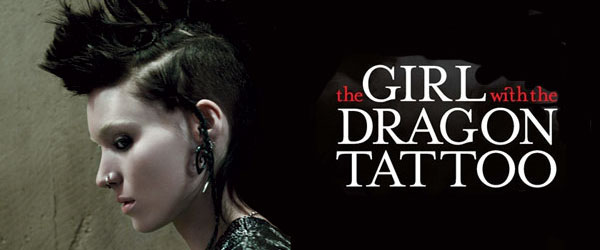
The Girl with the Dragon Tattoo, David Fincher’s latest antiblockbuster, is a baroque rethink of the serial-killer subgenre; a subtly retuned adaptation of the first novel in Stieg Larsson’s penny-dreadful Millennium trilogy; a technical achievement of narrative compression and pacing in a mainstream thriller; and the most recent proof of the director’s trademark habit of unleashing bad vibes in the multiplex. It’s a sick kind of holiday movie. The story is bookended by two Christmases—a year its two protagonists pass among murderers, sexual predators, and a wealthy family with a history of sadistic brutality (and Nazi sympathies), all stirred up by a cold case involving the disappearance of a sixteen-year-old girl from a private island. With good reason, Fincher called The Girl with the Dragon Tattoo “the feel-bad movie of the season.” The director renders its source material in the coolly droll yet fundamentally shocking and disturbing style of his previous films about psychos, Seven (1995), Fight Club (1999), and Zodiac (2007). In the manner of Tod Browning’s subversive 1931 take on Dracula, The Girl with the Dragon Tattoo frightens the viewer while injecting grimly fiendish jokes into an earnest literary artifact with an intractably complicated storyline.
Like Zodiac, The Curious Case of Benjamin Button (2008), and The Social Network (2010), The Girl with the Dragon Tattoo is a movie subdivided into dozens of impeccable segments, some lavishly arranged shots lasting no more than a flashing second or two. Among the first in this series of mini-films is the peculiar titles sequence that recalls both Fincher’s early days as a director of music videos and the James Bond movies’ graphic set pieces. It features a fittingly icy cover of Led Zeppelin’s “Immigrant Song,” vocalized by the Yeah Yeah Yeahs’ Karen O. Along with this gender-bending, the song’s lyrics provide signposts for interpretation of a film that will “whisper tales of gore” set in remixed Viking landscapes. The sequence’s images of black sludge dripping from motorcycle tires, laptop keyboards, electronic wires, deadly flowers, dark phoenixes, and faces vomiting coins and stinging insects (a reference to the pseudonym, Wasp, of the eponymous hacker in Larsson’s novel) suggest the stylized iconography of a world drowning in liquid evil. These and other touches of deliberate artifice—Polaroid-tinted flashbacks, talking text from the primary victim’s diary, establishing shots of moving trains and snowbound houses that turn landscapes into glimpses from nightmares, multitasking montages that playfully detach sight and sound, and Fincher’s toxic light filters—at once encapsulate and provide layers of chill to distance the awful horrors in store. The movie’s sound design often intrudes, consistently and violently, in ways that lend a surreal aura to the noise of passing trains, closing doors, and moving elevators.
These reminders of unreality also might serve as annotations to a story that is about acts of reading and misreading. Both the novel and the movie begin with a major interpretative mistake. Harriet Vanger (Moa Garpendal), missing for forty years from her wealthy family’s enclave, is presumed murdered. Her uncle, Henrik Vanger (Christopher Plummer), has been receiving mysterious packages each year containing pressed flowers, posted from around the world. He hires a disgraced investigative journalist, Mikael Blomkvist (Daniel Craig), to look into Harriet’s case, and Blomkvist takes on freelance security consultant and computer hacker Lisbeth Salander (Rooney Mara) as his research assistant. Together, they uncover what Blomkvist describes as a story of “rape, torture, fire, animals, religion— am I missing anything?” Of course, everyone is missing something in this thriller, namely that the flowers are being sent by Harriet herself to let her beloved uncle know that she remains alive, rather than by a clever killer attempting to torment Henrik.
Why the most obvious assumption about these secret messages is never made could be the focus of a Derridean highlight reel about the slipperiness of writing, from the expanded definition of the word in 1967′s Of Grammatology (the flowers form a kind of living hieroglyph) to the games about letters in 1980′s The Post Card (Harriet’s flowers are messages mailed but not adequately received). Fincher’s emphasis on textual instability and the control of documents intersects with what Derrida calls the “politics of the archive” in his 1995 essay Archive Fever: A Freudian Impression (translated by Eric Prenowitz, University of Chicago Press, 1996, 4). In Melancholy and the Archive (Continuum, 2011), Jonathan Boulter calls archive fever “an addiction to past events which transforms the subject into a crypt” (141), and in Fincher’s film all manner of often macabre texts, images, and objects entomb as much as they disclose, as if attesting to a semantic death drive and to haunted memory. Newspaper clippings, crime-scene pictures, binders of family snapshots or tourist photographs, corporate files and libraries, Bible codes, encrypted documents, video surveillance clips, scars, and of course tattoos record—even if they do not always spell out—nightmare crimes. Larsson’s novel mentions a “death book” that Martin Vanger (Stellan Skarsgård) fills with research on his potential victims, but in a way the whole story is an elaborate memento mori.
To Read the Rest of the Essay
by J.M. Tyree
Film Quarterly
The Girl with the Dragon Tattoo, David Fincher’s latest antiblockbuster, is a baroque rethink of the serial-killer subgenre; a subtly retuned adaptation of the first novel in Stieg Larsson’s penny-dreadful Millennium trilogy; a technical achievement of narrative compression and pacing in a mainstream thriller; and the most recent proof of the director’s trademark habit of unleashing bad vibes in the multiplex. It’s a sick kind of holiday movie. The story is bookended by two Christmases—a year its two protagonists pass among murderers, sexual predators, and a wealthy family with a history of sadistic brutality (and Nazi sympathies), all stirred up by a cold case involving the disappearance of a sixteen-year-old girl from a private island. With good reason, Fincher called The Girl with the Dragon Tattoo “the feel-bad movie of the season.” The director renders its source material in the coolly droll yet fundamentally shocking and disturbing style of his previous films about psychos, Seven (1995), Fight Club (1999), and Zodiac (2007). In the manner of Tod Browning’s subversive 1931 take on Dracula, The Girl with the Dragon Tattoo frightens the viewer while injecting grimly fiendish jokes into an earnest literary artifact with an intractably complicated storyline.
Like Zodiac, The Curious Case of Benjamin Button (2008), and The Social Network (2010), The Girl with the Dragon Tattoo is a movie subdivided into dozens of impeccable segments, some lavishly arranged shots lasting no more than a flashing second or two. Among the first in this series of mini-films is the peculiar titles sequence that recalls both Fincher’s early days as a director of music videos and the James Bond movies’ graphic set pieces. It features a fittingly icy cover of Led Zeppelin’s “Immigrant Song,” vocalized by the Yeah Yeah Yeahs’ Karen O. Along with this gender-bending, the song’s lyrics provide signposts for interpretation of a film that will “whisper tales of gore” set in remixed Viking landscapes. The sequence’s images of black sludge dripping from motorcycle tires, laptop keyboards, electronic wires, deadly flowers, dark phoenixes, and faces vomiting coins and stinging insects (a reference to the pseudonym, Wasp, of the eponymous hacker in Larsson’s novel) suggest the stylized iconography of a world drowning in liquid evil. These and other touches of deliberate artifice—Polaroid-tinted flashbacks, talking text from the primary victim’s diary, establishing shots of moving trains and snowbound houses that turn landscapes into glimpses from nightmares, multitasking montages that playfully detach sight and sound, and Fincher’s toxic light filters—at once encapsulate and provide layers of chill to distance the awful horrors in store. The movie’s sound design often intrudes, consistently and violently, in ways that lend a surreal aura to the noise of passing trains, closing doors, and moving elevators.
These reminders of unreality also might serve as annotations to a story that is about acts of reading and misreading. Both the novel and the movie begin with a major interpretative mistake. Harriet Vanger (Moa Garpendal), missing for forty years from her wealthy family’s enclave, is presumed murdered. Her uncle, Henrik Vanger (Christopher Plummer), has been receiving mysterious packages each year containing pressed flowers, posted from around the world. He hires a disgraced investigative journalist, Mikael Blomkvist (Daniel Craig), to look into Harriet’s case, and Blomkvist takes on freelance security consultant and computer hacker Lisbeth Salander (Rooney Mara) as his research assistant. Together, they uncover what Blomkvist describes as a story of “rape, torture, fire, animals, religion— am I missing anything?” Of course, everyone is missing something in this thriller, namely that the flowers are being sent by Harriet herself to let her beloved uncle know that she remains alive, rather than by a clever killer attempting to torment Henrik.
Why the most obvious assumption about these secret messages is never made could be the focus of a Derridean highlight reel about the slipperiness of writing, from the expanded definition of the word in 1967′s Of Grammatology (the flowers form a kind of living hieroglyph) to the games about letters in 1980′s The Post Card (Harriet’s flowers are messages mailed but not adequately received). Fincher’s emphasis on textual instability and the control of documents intersects with what Derrida calls the “politics of the archive” in his 1995 essay Archive Fever: A Freudian Impression (translated by Eric Prenowitz, University of Chicago Press, 1996, 4). In Melancholy and the Archive (Continuum, 2011), Jonathan Boulter calls archive fever “an addiction to past events which transforms the subject into a crypt” (141), and in Fincher’s film all manner of often macabre texts, images, and objects entomb as much as they disclose, as if attesting to a semantic death drive and to haunted memory. Newspaper clippings, crime-scene pictures, binders of family snapshots or tourist photographs, corporate files and libraries, Bible codes, encrypted documents, video surveillance clips, scars, and of course tattoos record—even if they do not always spell out—nightmare crimes. Larsson’s novel mentions a “death book” that Martin Vanger (Stellan Skarsgård) fills with research on his potential victims, but in a way the whole story is an elaborate memento mori.
To Read the Rest of the Essay
Monday, April 23, 2012
Film Quarterly: Interview with Göran Hugo Olsson
Interview with Göran Hugo Olsson
by Rob White
Film Quarterly

The Black Power Mixtape 1967–1975 is a chronologically presented assemblage of re-edited documentary film from the archive of the Swedish National Broadcast Company. To this original material director Göran Hugo Olsson has added explanatory titles and a soundtrack that consists of original music by Ahmir “Questlove” Thompson and Om’Mas Keith together with voiceover commentary by (among others) musicians Erykah Badu and Talib Kweli as well as professors Angela Davis, Robin Kelley, and Sonia Sanchez. Davis’s participation is noteworthy because The Black Power Mixtape includes an electrifying clip of her being interviewed in San Rafael County Prison in 1972 and rounding on the questioner, Bo Holmström: “you ask me whether I approve of violence,” she says, going on to recount the experience of seeing childhood friends of hers murdered in bomb attacks in Birmingham, Alabama, “limbs and heads strewn all over the place.” “When someone asks me about violence,” she adds, “what it means is the person who’s asking that question has absolutely no idea … what black people have experienced in this country since the time the first black person was kidnapped from the shores of Africa.”
Though it has nine main segments, one for each year recorded, The Black Power Mixtape can be described as a kind of three-act tragedy. The first phase is one of radical eloquence and increasingly bold, militant organization. Stokely Carmichael is the star of the proceedings but we also see a grassroots Black Panther schoolroom in Oakland and hear Panther co-founder Bobby Seale declare that “we will defend ourselves, we will shoot … because we are bent on survival.” Crackdown occurs in the next phase: Eldridge Cleaver speaks unconvincingly from Algiers about “government-in-exile” but at home thousands of activists are imprisoned and scores killed. (When we see Davis after her release she is speaking from a platform that appears to be protected by bulletproof glass.) The final part of the film relies heavily on Lars Ulvestam’s documentary Harlem: Voices, Faces which dwells on the spreading blight of heroin. In one clip a young former prostitute and addict talks to camera about turning her life around, but it is arguably the discourse of self-betterment itself that contributes to an impression of isolation and vulnerability. The language of politics and the idea of a mass movement are no longer present. Although the voiceover commentators shortly afterwards discuss the lasting achievements of the struggle for black liberation in the 1960s and 70s, I could not shake a feeling of loss which emerged from the gulf between the defiant confidence of Davis’s jail-cell remarks and the suffering words of this lonely Harlem woman.
The film’s relationship to history is ruminative. Because of the audio commentary The Black Power Mixtape stages a “moving conversation between past and present,” as B. Rich put it in her spring 2011 Film Quarterly Sundance report. The dialogic mode of presentation means that it would be hard to watch the film without reflecting on the question of viewpoint. The Swedish crews who filmed the source footage were visitors to the U.S., reporting from a country in crisis and at war, their sympathies evidently extended to such people as the Hallandale, Florida veteran who speaks near the start of The Black Power Mixtape about being “ridiculed, discriminated, treated as less than a man … the environment has a whole lot to do with keeping a man down.” But is there truly an outsider perspective on such a history? When Olsson includes 1973 footage of a tourist bus tour of Harlem, its Swedish guide talking up the danger of street crime, before cutting to a camera position inside a police car, the question no longer permits of an easy answer—and that is how it should be.
To Read the Interview
by Rob White
Film Quarterly
The Black Power Mixtape 1967–1975 is a chronologically presented assemblage of re-edited documentary film from the archive of the Swedish National Broadcast Company. To this original material director Göran Hugo Olsson has added explanatory titles and a soundtrack that consists of original music by Ahmir “Questlove” Thompson and Om’Mas Keith together with voiceover commentary by (among others) musicians Erykah Badu and Talib Kweli as well as professors Angela Davis, Robin Kelley, and Sonia Sanchez. Davis’s participation is noteworthy because The Black Power Mixtape includes an electrifying clip of her being interviewed in San Rafael County Prison in 1972 and rounding on the questioner, Bo Holmström: “you ask me whether I approve of violence,” she says, going on to recount the experience of seeing childhood friends of hers murdered in bomb attacks in Birmingham, Alabama, “limbs and heads strewn all over the place.” “When someone asks me about violence,” she adds, “what it means is the person who’s asking that question has absolutely no idea … what black people have experienced in this country since the time the first black person was kidnapped from the shores of Africa.”
Though it has nine main segments, one for each year recorded, The Black Power Mixtape can be described as a kind of three-act tragedy. The first phase is one of radical eloquence and increasingly bold, militant organization. Stokely Carmichael is the star of the proceedings but we also see a grassroots Black Panther schoolroom in Oakland and hear Panther co-founder Bobby Seale declare that “we will defend ourselves, we will shoot … because we are bent on survival.” Crackdown occurs in the next phase: Eldridge Cleaver speaks unconvincingly from Algiers about “government-in-exile” but at home thousands of activists are imprisoned and scores killed. (When we see Davis after her release she is speaking from a platform that appears to be protected by bulletproof glass.) The final part of the film relies heavily on Lars Ulvestam’s documentary Harlem: Voices, Faces which dwells on the spreading blight of heroin. In one clip a young former prostitute and addict talks to camera about turning her life around, but it is arguably the discourse of self-betterment itself that contributes to an impression of isolation and vulnerability. The language of politics and the idea of a mass movement are no longer present. Although the voiceover commentators shortly afterwards discuss the lasting achievements of the struggle for black liberation in the 1960s and 70s, I could not shake a feeling of loss which emerged from the gulf between the defiant confidence of Davis’s jail-cell remarks and the suffering words of this lonely Harlem woman.
The film’s relationship to history is ruminative. Because of the audio commentary The Black Power Mixtape stages a “moving conversation between past and present,” as B. Rich put it in her spring 2011 Film Quarterly Sundance report. The dialogic mode of presentation means that it would be hard to watch the film without reflecting on the question of viewpoint. The Swedish crews who filmed the source footage were visitors to the U.S., reporting from a country in crisis and at war, their sympathies evidently extended to such people as the Hallandale, Florida veteran who speaks near the start of The Black Power Mixtape about being “ridiculed, discriminated, treated as less than a man … the environment has a whole lot to do with keeping a man down.” But is there truly an outsider perspective on such a history? When Olsson includes 1973 footage of a tourist bus tour of Harlem, its Swedish guide talking up the danger of street crime, before cutting to a camera position inside a police car, the question no longer permits of an easy answer—and that is how it should be.
To Read the Interview
Sunday, February 26, 2012
Michael Dean Benton: "Be Me, for Awhile" -- Ideological Becoming and Future Objectivity in Let the Right One In
"Be Me, for Awhile": Ideological Becoming and Future Objectivity in Let the Right One In
by Michael Dean Benton
[As for the controversy of the altered English translation on the current Magnolia DVD consult Icons of Frights thorough analysis and Jeffrey Wells conclusion that it is a case of the continual dumbing-it-down for the American consumer :P My inclination is that all Magnolia and Magnet film releases should be considered problematic.]
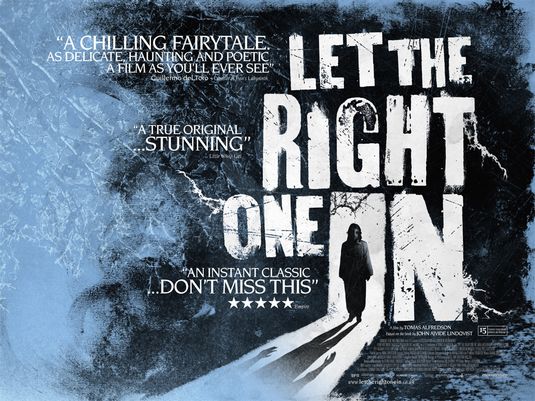
I'm working a lot with Bakhtin's conception of the dialogical process of ideological becoming, so I am always fascinated by how people learn new ways of being.
Film (or, if you prefer, art) in this sense can be a tool that allows us to step into the shoes of beings we do not know and for a time wonder how they may perceive the world. International film provides us with a plurality of voices (polylogical discourse) that can provide important counters to the dominant (possibly controlling) narratives of our own culture and/or perspectives. My critique of films, then, always involves a sense of the authenticity of the performative act. Does the film(makers) allow me to authentically experience a different/unique reality? That doesn't mean it has to be purely naturalistic/realism. What it does mean is that the film(makers) does not grossly manipulate the audience, that the film is open to interpretation, and, yet, the voices/actions of the characters are authentic. You may reply to this statement, that these distinctions would rest on a subjective analysis and thus would be open to interpretation, and I would say yes, exactly, let the dialogue begin!
Last night I watched the Swedish vampire film Let the Right One In for the third time. The film is a good example of what I am thinking of when I talk about ideological becoming. So let me explore a few of the aspects that I think relates to my sense of Bakhtin's concept of "ideological becoming." These are beginning notes:
1) Oskar is constantly bullied by his peers and is unable to develop his own authentic voice. We see him struggling to say something to defend himself against the sadistic trio that make his life hell, but he is unable to give "voice" to his pain/anger. A particularly pitiful scene is when he goes out into the frozen courtyard with the fetishistic knife and, in a manner reminiscent of Travis Bickle, acts out his revenge fantasies on a frozen telephone pole. This is a familiar character in the many post-Columbine teen revenge stories, an inarticulate, geeky, passive kid overwhelmed with the desire for revenge against aggressively conformist social peers who ignore or degrade him (and it is generally boys enacting these violent fantasies?). In this sense we can understand the "aggressively conformist social peers" as the dominant monologic discourse that seeks to control the narrative of reality and the maladjusted kid struggling to "authentically" challenge this controlling narrative. Sadly, this can often takes the route of mindless, destructive violence, in which "innocents," perhaps other struggling kids seeking their own authentic voice, are struck down by the random violence of the frustrated victim.

2) Destructive power. The bullies insist that Oskar is a pathetic animal not worthy of their respect. This is repeatedly acted out by them upon Oskar's being on a daily basis. They taunt him with pig-like noises, command him physically in a degrading manner, and violently beat on him. Oskar begins to internalize the "controlling" narrative of his oppressors, and his violent fantasies are re-enactments of the only source of power he recognizes--the physical violence of his torturers/oppressors.

3) Authentic engagement. In essence this film is about the human need to authentically connect with other beings. Eli becomes the representation of a powerful alternative to the controlling narrative of Oskar's torturers. Eli, a vampire, is a wise observer of her surroundings and of other people. She is also much more empathetic than any human we see in the film. She feels deeply the pain of Oskar and demonstrates her awareness of it when she repeats his words from earlier in the film when he was acting out his revenge fantasies in the frozen courtyard:
Eli the vampire is much more sympathetic than any of the other characters in the film. The sadistic trio of kids torture Oskar for no apparent reason other than they get off on this false power of controlling a weaker being. The group of addled adults that increasingly become central to the narrative are all grotesquely alienated from each other while fearfully huddling together, or, as in the case of semi-responsible authority figures, completely oblivious to the cruelties of the children in their care. Most of the adults use intoxicants to escape from their stark reality rather than develop an authentic sense of another way of being. This is also glimpsed in the ruins of the fractured marriage of Oskar's parents when his father shuns Oskar in order to mindlessly get drunk with a creepy friend.
When Eli suggests to Oskar "Be me, for a while" she is asking him to ideologically "become" her for awhile, to step into her shoes and see what she sees. To authentically open himself up to seeing from another position.

4) So how do we begin to develop a method of being and observing that resists the ordering tendencies of controlling narratives? How could we ever accomplish anything practical without attempts to “master” the essence of beings? How can we open up a space within which new forms of knowledge can be observed and formulated? One starting point is the development of a new form of objectivity that recognizes the benefits of the development of a radical transperspectivity:
This radical transperspectivity expresses a recognition of human sense of objectivity as “already” informed so that it can only authentically be developed through the attempt at developing many perspectives. In this way will one move closer toward an always out-of-reach objective sense. Of course this is a constantly evolving process in which we must continue to re-fresh our perspectives as our environments and our situations change. As Maurice Blanchot has argued, language and truth always simultaneously involves both a revealing and a reveiling. Exposure and masking are also the dual operation of all presentation and re-presentation. When we seek to understand the “essence” of a being we must clear a space through re-thinking our positions/situations. This openness allows for the “possibility” of unconcealment because we do not close up in our own solipsistic view, rather we desire to strive towards a Heideggerian entschlossen—a resolve to remain “un-closed” (Translator notes, “On The Essence of Truth”: 131). In order to remain “un-closed” we attempt to answer the Nietzschean call to resist the “Human, All Too Human” urge to “cling to what is readily available and controllable.” So, through the clearing away of objective traditions and the development of a transperspective we open up spaces that allow for the “essence of freedom to be thought” (“On the Essence of Truth”: 125). This is very important because only through the “freedom” to “be” will any “being” begin to reveal its “essence”. We are at a key point here because this freedom is produced through an engagement that “withdraws in the face of beings in order that they might reveal themselves with respect to what and how they are, and in order that presentative correspondence might take its standard from them.” This is the sublime moment that Bataille describes in The Impossible (1991): “As I was staring at the void in front of me, a touch – immediately violent and excessive – joined me to that void. I saw that void and saw nothing, but it, the void, was embracing me” (143). The void is the “clearing” space that will provide the freedom for unconcealment. This void terrifies many because it is the point when one must be secure with(in) themselves in order to “let beings be.” This openness to experience, this desire to rigorously interrogate one’s own beliefs, this desire for a “vision of excess”, leads to the moment in which we must be prepared for the “void” to look back at us. Through a radical “self-subversion” (Bataille) of subjectivity we can begin to prepare ourselves for this fateful experience when we stare into the void of our inner selves. By a new recognition of truth as involving concealment and errancy we enter a stage of “becoming” whereby it becomes possible to rethink our positions/conclusions. We gain another step in our becoming by examining what our own situated truth(s) cover or suppress. Hence, when we arrive at a truth we must have the courage and fortitude to uncover/expose what our truths conceal. In this we can begin to understand that as beings we are involved in a continual process of “becoming” and that our own sense of “becoming” rests upon our ability to clear a space for the “essence” of being to be revealed.
4) A final question: Why would the author of the source novel create this vampire in the manner he has (vaguely hinted at in one quick shot in the film) and why would it become so central to Eli's character? "Would you love me if I wasn't a girl?" This is a radical question that flies in the face of controlling narratives that seek to limit the way we interact with beings in our world. The question asks if Oskar is strong enough to reject the terroristic/monologic narrative that seeks to set limits upon our ability to love freely. Yes, love freely... You will only love what we tell you to love and you will only feel desire for what we say is proper for you to desire and you will only have sex within the limits we seek to impose on you. If you defy these controlling moral edicts, then your eternal soul will be damned forever, if you flaunt your defiance of this controlling narrative we may be forced to pre-empt God's future judgment and beat/kill you here-and-now.

5) "Be me, for awhile" ... powerful plea to step into another's shoes and experience the world as they do.
“Perhaps the impossible is the only chance of something new, of some new philosophy of the new … Perhaps friendship, if there is such a thing, must honor [faire droit] what appears impossible here” (Derrida,1998: 36).
I have no doubt ran off the road in my response to the film, perhaps you might help me to get back on track :)
by Michael Dean Benton
[As for the controversy of the altered English translation on the current Magnolia DVD consult Icons of Frights thorough analysis and Jeffrey Wells conclusion that it is a case of the continual dumbing-it-down for the American consumer :P My inclination is that all Magnolia and Magnet film releases should be considered problematic.]
I'm working a lot with Bakhtin's conception of the dialogical process of ideological becoming, so I am always fascinated by how people learn new ways of being.
Film (or, if you prefer, art) in this sense can be a tool that allows us to step into the shoes of beings we do not know and for a time wonder how they may perceive the world. International film provides us with a plurality of voices (polylogical discourse) that can provide important counters to the dominant (possibly controlling) narratives of our own culture and/or perspectives. My critique of films, then, always involves a sense of the authenticity of the performative act. Does the film(makers) allow me to authentically experience a different/unique reality? That doesn't mean it has to be purely naturalistic/realism. What it does mean is that the film(makers) does not grossly manipulate the audience, that the film is open to interpretation, and, yet, the voices/actions of the characters are authentic. You may reply to this statement, that these distinctions would rest on a subjective analysis and thus would be open to interpretation, and I would say yes, exactly, let the dialogue begin!
Last night I watched the Swedish vampire film Let the Right One In for the third time. The film is a good example of what I am thinking of when I talk about ideological becoming. So let me explore a few of the aspects that I think relates to my sense of Bakhtin's concept of "ideological becoming." These are beginning notes:
The monster is that uncertain cultural body in which is condensed an intriguing simultaneity or doubleness: like the ghost of Hamlet, it introjects the disturbing, repressed, but formative traumas or "pre-" into the sensory moment of "post-," binding the one irrevocably to the other. The monster commands, "Remember me": restore my fragmented body, piece me back together, allow the past its eternal return. The monster haunts; it does not simply bring past and present together, but destroys the boundary that demanded their twinned foreclosure. (Cohen, Jeffrey Jerome. Preface: In a Time of Monsters. Monster Theory: Reading Culture, 1996:ix-x)
1) Oskar is constantly bullied by his peers and is unable to develop his own authentic voice. We see him struggling to say something to defend himself against the sadistic trio that make his life hell, but he is unable to give "voice" to his pain/anger. A particularly pitiful scene is when he goes out into the frozen courtyard with the fetishistic knife and, in a manner reminiscent of Travis Bickle, acts out his revenge fantasies on a frozen telephone pole. This is a familiar character in the many post-Columbine teen revenge stories, an inarticulate, geeky, passive kid overwhelmed with the desire for revenge against aggressively conformist social peers who ignore or degrade him (and it is generally boys enacting these violent fantasies?). In this sense we can understand the "aggressively conformist social peers" as the dominant monologic discourse that seeks to control the narrative of reality and the maladjusted kid struggling to "authentically" challenge this controlling narrative. Sadly, this can often takes the route of mindless, destructive violence, in which "innocents," perhaps other struggling kids seeking their own authentic voice, are struck down by the random violence of the frustrated victim.
2) Destructive power. The bullies insist that Oskar is a pathetic animal not worthy of their respect. This is repeatedly acted out by them upon Oskar's being on a daily basis. They taunt him with pig-like noises, command him physically in a degrading manner, and violently beat on him. Oskar begins to internalize the "controlling" narrative of his oppressors, and his violent fantasies are re-enactments of the only source of power he recognizes--the physical violence of his torturers/oppressors.
3) Authentic engagement. In essence this film is about the human need to authentically connect with other beings. Eli becomes the representation of a powerful alternative to the controlling narrative of Oskar's torturers. Eli, a vampire, is a wise observer of her surroundings and of other people. She is also much more empathetic than any human we see in the film. She feels deeply the pain of Oskar and demonstrates her awareness of it when she repeats his words from earlier in the film when he was acting out his revenge fantasies in the frozen courtyard:
Oskar: Who are you?
Eli: I'm like you.
Oskar: What do you mean?
Eli: [accusing tone] What are you staring at? Well?
Eli: Are you looking at me?
Eli: [points her finger at Oskar] So scream! Squeal!
Eli: Those were the first words I heard you say.
Oskar: I don't kill people.
Eli: No, but you'd like to. If you could... To get revenge. Right?
Oskar: Yes.
Eli: Oskar, I do it because I have to.
Eli: Be me, for a while.
[pause]
Eli: Please Oskar... Be me, for a little while.
Eli the vampire is much more sympathetic than any of the other characters in the film. The sadistic trio of kids torture Oskar for no apparent reason other than they get off on this false power of controlling a weaker being. The group of addled adults that increasingly become central to the narrative are all grotesquely alienated from each other while fearfully huddling together, or, as in the case of semi-responsible authority figures, completely oblivious to the cruelties of the children in their care. Most of the adults use intoxicants to escape from their stark reality rather than develop an authentic sense of another way of being. This is also glimpsed in the ruins of the fractured marriage of Oskar's parents when his father shuns Oskar in order to mindlessly get drunk with a creepy friend.
When Eli suggests to Oskar "Be me, for a while" she is asking him to ideologically "become" her for awhile, to step into her shoes and see what she sees. To authentically open himself up to seeing from another position.
4) So how do we begin to develop a method of being and observing that resists the ordering tendencies of controlling narratives? How could we ever accomplish anything practical without attempts to “master” the essence of beings? How can we open up a space within which new forms of knowledge can be observed and formulated? One starting point is the development of a new form of objectivity that recognizes the benefits of the development of a radical transperspectivity:
… to see differently in this way for once, to want to see differently, is no small discipline and preparation of the intellect for its future “objectivity”—the latter understood not as “contemplation without interest” (which is a nonsensical absurdity), but as the ability to control one’s Pro and Con and to dispose of them, so that one knows how to employ a variety of perspectives and affective interpretations in the service of knowledge.
… There is only a perspective seeing, only a perspective “knowing”; and the more affects we allow to speak about one thing, the more eyes, different eyes, we can use to observe one thing, the more complete will our “concept” of this thing, our “objectivity,” be” (Nietzsche, On the Genealogy of Morals: 555).
This radical transperspectivity expresses a recognition of human sense of objectivity as “already” informed so that it can only authentically be developed through the attempt at developing many perspectives. In this way will one move closer toward an always out-of-reach objective sense. Of course this is a constantly evolving process in which we must continue to re-fresh our perspectives as our environments and our situations change. As Maurice Blanchot has argued, language and truth always simultaneously involves both a revealing and a reveiling. Exposure and masking are also the dual operation of all presentation and re-presentation. When we seek to understand the “essence” of a being we must clear a space through re-thinking our positions/situations. This openness allows for the “possibility” of unconcealment because we do not close up in our own solipsistic view, rather we desire to strive towards a Heideggerian entschlossen—a resolve to remain “un-closed” (Translator notes, “On The Essence of Truth”: 131). In order to remain “un-closed” we attempt to answer the Nietzschean call to resist the “Human, All Too Human” urge to “cling to what is readily available and controllable.” So, through the clearing away of objective traditions and the development of a transperspective we open up spaces that allow for the “essence of freedom to be thought” (“On the Essence of Truth”: 125). This is very important because only through the “freedom” to “be” will any “being” begin to reveal its “essence”. We are at a key point here because this freedom is produced through an engagement that “withdraws in the face of beings in order that they might reveal themselves with respect to what and how they are, and in order that presentative correspondence might take its standard from them.” This is the sublime moment that Bataille describes in The Impossible (1991): “As I was staring at the void in front of me, a touch – immediately violent and excessive – joined me to that void. I saw that void and saw nothing, but it, the void, was embracing me” (143). The void is the “clearing” space that will provide the freedom for unconcealment. This void terrifies many because it is the point when one must be secure with(in) themselves in order to “let beings be.” This openness to experience, this desire to rigorously interrogate one’s own beliefs, this desire for a “vision of excess”, leads to the moment in which we must be prepared for the “void” to look back at us. Through a radical “self-subversion” (Bataille) of subjectivity we can begin to prepare ourselves for this fateful experience when we stare into the void of our inner selves. By a new recognition of truth as involving concealment and errancy we enter a stage of “becoming” whereby it becomes possible to rethink our positions/conclusions. We gain another step in our becoming by examining what our own situated truth(s) cover or suppress. Hence, when we arrive at a truth we must have the courage and fortitude to uncover/expose what our truths conceal. In this we can begin to understand that as beings we are involved in a continual process of “becoming” and that our own sense of “becoming” rests upon our ability to clear a space for the “essence” of being to be revealed.
4) A final question: Why would the author of the source novel create this vampire in the manner he has (vaguely hinted at in one quick shot in the film) and why would it become so central to Eli's character? "Would you love me if I wasn't a girl?" This is a radical question that flies in the face of controlling narratives that seek to limit the way we interact with beings in our world. The question asks if Oskar is strong enough to reject the terroristic/monologic narrative that seeks to set limits upon our ability to love freely. Yes, love freely... You will only love what we tell you to love and you will only feel desire for what we say is proper for you to desire and you will only have sex within the limits we seek to impose on you. If you defy these controlling moral edicts, then your eternal soul will be damned forever, if you flaunt your defiance of this controlling narrative we may be forced to pre-empt God's future judgment and beat/kill you here-and-now.
5) "Be me, for awhile" ... powerful plea to step into another's shoes and experience the world as they do.
“Perhaps the impossible is the only chance of something new, of some new philosophy of the new … Perhaps friendship, if there is such a thing, must honor [faire droit] what appears impossible here” (Derrida,1998: 36).
I have no doubt ran off the road in my response to the film, perhaps you might help me to get back on track :)
Sunday, December 18, 2011
Greg Tate: Fight for rights, will to power -- The Black Power Mixtape 1967-1975
Fight for rights, will to power: The Black Power Mixtape 1967-1975
by Greg Tate
Sight and Sound (British Film Institute)

...
The Black Power Mixtape Remixed 1967-1975 is an exotic document of this turbulent, extremely violent transitional moment in American race history. Exotic because it’s the culmination of the near-decade an intrepid Swedish TV news team spent interviewing prominent Black American radicals of the day – Stokley Carmichael, Huey Newton, Bobby Seale, Eldridge Cleaver, Elaine Brown and Angela Davis. All were dramatic, eloquent, charismatic figures of their time who, except for the still-active Davis, are today hardly household names to the average black American under 40.
Like Jimi Hendrix or Bob Dylan, they all seem incredibly well-prepared in their mid 20s to set the world aflame intellectually and dominate the media – but far less prepared than the Viet Cong or Fidel Castro to withstand the withering, brute and constitutionally illegal attacks directed at them and theirs by the US government, especially the FBI’s fascistic overlord J Edgar Hoover.
Time has not diminished their critiques of American power or racism, nor their undeniable star power – any of them and their radical histories could easily sustain a documentary or narrative feature film of its own. Mixtape captures most of them in the short period before they would be tried, convicted or exiled by Hoover’s stated and manically implemented obsession with preventing the “rise of another black prophet” after King.
The footage of Carmichael and Davis is the most poignant and illuminating. Though the film doesn’t say so, it was Carmichael who brought the phrase ‘Black Power’ into vogue, famously goading King to give it airtime near the end of the two-week-long march to Selma, Alabama. The film demands that those who don’t know these figures investigate them afterwards for more background and context. On film the jocular Carmichael proves so at ease in his own skin that he could have given Sidney Poitier competition as a leading man, and challenged Bob Marley as a lyrical protest balladeer.
Carmichael invites himself to take over an interview the news crew had wrangled with his mother in the Chicago-projects apartment in which he was raised. He then patiently extracts from her the pained admission that his Trinidadian immigrant father, a skilled carpenter, was a lifelong victim of employment discrimination.
As noted by progressive hip-hop MC Talib Kweli in his voiceover, Carmichael emerges here as a “regular guy” who also happened to be a incendiary and mesmerising speaker – one still so provocative that Kweli recalls being accosted by FBI and TSA agents at an airport after 9/11 for merely listening to a 40-year-old Carmichael speech. Some may take Kweli’s intimation of wiretaps as conspiratorial and apocryphal, but no-one familiar with Hoover’s paranoia and surveillance of black progressives will be among them. (The biggest laugh in the film comes from Hoover’s claim that the most dangerous threat to the internal security of the United States was the Black Panther party’s free breakfast program. But Hoover was not joking.)
The progress of the film is also a tacit record of the Panther’s off-screen dismantling by Nixon and Hoover’s COINTELPRO conspiracy against black leadership. The Panther’s demise by exile, imprisonment and judicial malfeasance is presented at a glance, but the Panthers expended all their political capital on the campaigns to Free Huey Newton, Bobby Seale and Angela Davis.
Davis’s prison interview here offers the most astute and moving rationale for extreme black retaliation to American racial extremists. When asked to justify the advocacy of black violence, Davis recalls her childhood experience of her Birmingham, Alabama community being routinely bombed by Klansmen at the behest of notorious county sheriff Bull Connor. Davis recalls this motherfucker using local radio to promote and direct such violence on a weekly basis. The extreme close-up of her angry, watering eyes when she speaks of the discovery of four classmates’ body parts after the infamous 1963 Birmingham church bombing provides all the justification for retribution any rational person should need.
To Read the Rest of the Commentary
by Greg Tate
Sight and Sound (British Film Institute)
...
The Black Power Mixtape Remixed 1967-1975 is an exotic document of this turbulent, extremely violent transitional moment in American race history. Exotic because it’s the culmination of the near-decade an intrepid Swedish TV news team spent interviewing prominent Black American radicals of the day – Stokley Carmichael, Huey Newton, Bobby Seale, Eldridge Cleaver, Elaine Brown and Angela Davis. All were dramatic, eloquent, charismatic figures of their time who, except for the still-active Davis, are today hardly household names to the average black American under 40.
Like Jimi Hendrix or Bob Dylan, they all seem incredibly well-prepared in their mid 20s to set the world aflame intellectually and dominate the media – but far less prepared than the Viet Cong or Fidel Castro to withstand the withering, brute and constitutionally illegal attacks directed at them and theirs by the US government, especially the FBI’s fascistic overlord J Edgar Hoover.
Time has not diminished their critiques of American power or racism, nor their undeniable star power – any of them and their radical histories could easily sustain a documentary or narrative feature film of its own. Mixtape captures most of them in the short period before they would be tried, convicted or exiled by Hoover’s stated and manically implemented obsession with preventing the “rise of another black prophet” after King.
The footage of Carmichael and Davis is the most poignant and illuminating. Though the film doesn’t say so, it was Carmichael who brought the phrase ‘Black Power’ into vogue, famously goading King to give it airtime near the end of the two-week-long march to Selma, Alabama. The film demands that those who don’t know these figures investigate them afterwards for more background and context. On film the jocular Carmichael proves so at ease in his own skin that he could have given Sidney Poitier competition as a leading man, and challenged Bob Marley as a lyrical protest balladeer.
Carmichael invites himself to take over an interview the news crew had wrangled with his mother in the Chicago-projects apartment in which he was raised. He then patiently extracts from her the pained admission that his Trinidadian immigrant father, a skilled carpenter, was a lifelong victim of employment discrimination.
As noted by progressive hip-hop MC Talib Kweli in his voiceover, Carmichael emerges here as a “regular guy” who also happened to be a incendiary and mesmerising speaker – one still so provocative that Kweli recalls being accosted by FBI and TSA agents at an airport after 9/11 for merely listening to a 40-year-old Carmichael speech. Some may take Kweli’s intimation of wiretaps as conspiratorial and apocryphal, but no-one familiar with Hoover’s paranoia and surveillance of black progressives will be among them. (The biggest laugh in the film comes from Hoover’s claim that the most dangerous threat to the internal security of the United States was the Black Panther party’s free breakfast program. But Hoover was not joking.)
The progress of the film is also a tacit record of the Panther’s off-screen dismantling by Nixon and Hoover’s COINTELPRO conspiracy against black leadership. The Panther’s demise by exile, imprisonment and judicial malfeasance is presented at a glance, but the Panthers expended all their political capital on the campaigns to Free Huey Newton, Bobby Seale and Angela Davis.
Davis’s prison interview here offers the most astute and moving rationale for extreme black retaliation to American racial extremists. When asked to justify the advocacy of black violence, Davis recalls her childhood experience of her Birmingham, Alabama community being routinely bombed by Klansmen at the behest of notorious county sheriff Bull Connor. Davis recalls this motherfucker using local radio to promote and direct such violence on a weekly basis. The extreme close-up of her angry, watering eyes when she speaks of the discovery of four classmates’ body parts after the infamous 1963 Birmingham church bombing provides all the justification for retribution any rational person should need.
To Read the Rest of the Commentary
Subscribe to:
Posts (Atom)