Showing posts with label Race. Show all posts

Monday, April 8, 2013

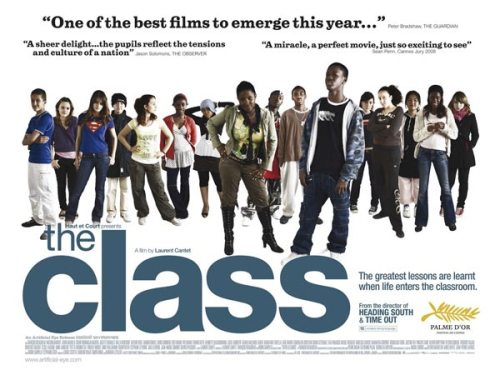
The Class (France: Laurent Cantent, 2008)


The Class (France: Laurent Cantent, 2008: 128 mins)

Ashbury, Roy. "Schools and Teachers." Understanding Representation. ed. Wendy Helsby. London: BFI, 2005: 51-74. [Available in BCTC library PN1995 U4977 2005]

Chen, Lu. "I Hate Mathematics and Racists." The Brooklyn Rail (March 2009)

Livingston, Jessica. "Global capital’s false choices in the films of Laurent Cantet." Jump Cut #53 (Summer 2012)

Friday, February 22, 2013

Gabriella Coleman: Coding Freedom: The Ethics and Aesthetics of Hacking; Steve Vittoria: Long Distance Revolutionary: A Journey with Mumia Abu-Jamal

Law and Disorder Radio


Coding Freedom: The Ethics and Aesthetics of Hacking


In the past 2 years, we’ve discussed in many interviews and updates, the attacks on whistle-blowers and hackers. The emerging movement of programmers, hackers, open source software, online communities has challenged and exposed corporate and government control and surveillance, making them targets of prosecution. As many may know, our own Michael Ratner has represented whistle-blower Julian Assange, computer activist Jeremy Hammond, and has been a legal adviser to many others including the late Aaron Swartz. Today we talk with author Gabriella Coleman about her recently published book Encoding Freedom: The Ethics and Aesthetics of Hacking. It’s a good place to start for those learning about the political significance of free software, intellectual property and the morality of computer hacking.

Guest – Gabriella Coleman, Wolfe Chair in Scientific and Technological Literacy in the Art History and Communication Studies Department at McGill University. Trained as an anthropologist, she researches, writes, and teaches on hackers and digital activism.

Long Distance Revolutionary: A Journey with Mumia Abu-Jamal

The new documentary, “Long Distance Revolutionary: A Journey with Mumia Abu-Jamal,” is premiering across the country. The film includes interviews from Cornel West, Alice Walker, Ruby Dee, Dick Gregory, Amy Goodman, Michael Parenti, writers Tariq Ali, and Michelle Alexander. This film beautifully captures the importance of Mumia Abu-Jamal’s life as an American journalist, and radical. He published seven books in prison including the best selling “Live From Death Row.”

In Chris Hedges’ review he points out what Cornel West says in the film: “The state is very clever in terms of keeping track, especially [of] the courageous and visionary ones, the ones that are long-distance runners. You can keep track of them, absorb ’em, dilute ’em, or outright kill ’em—you don’t have to worry about opposition to ’em.”
Guest – Steve Vittoria, the writer, director, producer and editor of Long Distance Revolutionary: A Journey with Mumia Abu-Jamal. The film premiered in theaters in New York City earlier this month.

To Listen to the Episode

Saturday, February 2, 2013

Mumia Abu-Jamal: "The United States Is Fast Becoming One of the Biggest Open-Air Prisons on Earth"; Noelle Hanrahan & Stephen Vittoria: "Long Distance Revolutionary" - Mumia Abu-Jamal’s Journey from Black Panthers to Prison Journalist

Mumia Abu-Jamal: "The United States Is Fast Becoming One of the Biggest Open-Air Prisons on Earth"
Democracy Now


In a rare live interview, Mumia Abu-Jamal calls into Democracy Now! as the new film, "Long Distance Revolutionary," about his life premieres in New York City this weekend. After 29 years on death row, he is now being held in general population at the Pennsylvania State Correctional Institution – Mahanoy. "How free are we today, those who claim to be non-prisoners? Your computers are being read by others in government. Your letters, your phone calls are being intercepted," says Mumia Abu-Jamal. "We live now in a national security state, where the United States is fast becoming one of the biggest open-air prisons on earth. We can speak about freedom, and the United States has a long and distinguished history of talking about freedom, but have we exampled freedom? And I think the answer should be very clear: We have not." In 1982, Mumia was sentenced to die for killing Philadelphia police officer Daniel Faulkner. He has always maintained his innocence and is perhaps America’s most famous political prisoner. In 2011, an appeals court upheld his conviction, but also vacated his death sentence. It found jurors were given confusing instructions.

Guest:

Mumia Abu-Jamal, former death row prisoner. For decades, Abu-Jamal has argued racism by the trial judge and prosecutors led to his conviction for the killing of Philadelphia police officer Daniel Faulkner. Last year, the 3rd U.S. Circuit Court of Appeals set aside his death sentence after finding jurors were given confusing instructions that encouraged them to choose the death penalty rather than a life sentence.

To Watch the Interview

"Long Distance Revolutionary": Mumia Abu-Jamal’s Journey from Black Panthers to Prison Journalist

The new documentary, "Long Distance Revolutionary: A Journey with Mumia Abu-Jamal," premieres today in New York City. We play an excerpt of the film and speak to writer, producer and director Steve Vittoria, as well as Noelle Hanrahan of Prison Radio, who has interviewed Abu-Jamal many times over the years. The film features many supporters of Mumia, including actress Ruby Dee, writer Tariq Ali, and author Michelle Alexander.

Guests:

Stephen Vittoria, longtime documentary filmmaker. Most recently, he is the writer, director, producer and editor of Long Distance Revolutionary: A Journey with Mumia Abu-Jamal. The film premiers in theaters in New York City Feb. 1-3. We recently featured his 2005 documentary, One Bright Shining Moment, about Senator George McGovern.

Noelle Hanrahan, director of Prison Radio and a producer of Long Distance Revolutionary.

To Watch the Conversation

Wednesday, January 9, 2013

Henry A. Giroux: Racism and the Aesthetic of Hyperreal Violence - Pulp Fiction and Other Visual Tragedies

Racism and the Aesthetic of Hyperreal Violence: Pulp Fiction and Other Visual Tragedies
by Henry A. Giroux
Social Identities 1:2 (1995): 333-354

...

Violence, Race, and the Politics of Realism

I have no more of a problem with violence that I do with people who like bedroom comedy versus slapstick comedy. It's an aesthetic thing. -- Quentin Tarantino


Extreme violence in Tarantino's films represents a central element in his cinematic style. Tarantino first generated a great deal of controversy through the comic-book style of torture in Reservoir Dogs, gruesomely played out by Michael Madsen who cuts off a hostage policeman's ear and then holds it in his hand while talking to it. Pulp Fiction continues the tradition of hyperreal violence, for example, when Jules just for effect shoots a defenseless college kid. This act of sudden violence is not aimed at some wooden, Hollywood gangsta. On the contrary, the victim is a scared kid and his random murder is senseless and disturbing. Of course, the effects are no less shocking when Vincent accidently blows off the head of a black kid who appears to be barely 17 or 18 years old. These are disturbing representations of violence, endorsed by a director who appears to have "turned murder into performance art."

Tarantino makes no attempts cinematically to rupture or contest the patterns of violence that his films produce or claim to represent. On the contrary, he empties violence of any critical social consequences, offering viewers only the immediacy of shock, humor, and irony as elements of mediation. And none of these elements get beyond the seduction of voyeuristic gazing so as to demand critical involvement. In this sense, the facile consumption of shocking images and hallucinatory delight that is provoked undercut the possibility of educating audiences to "comment on the image instead of allowing it to pass," there is virtually no space in which the audience can unsettle the "`moment of violence' [to allow it to] resonate meaningfully and demand our critical involvement."

Tarantino employs cruelty, humor, and postmodern parody to parade visually his extensive knowledge of film history and to rewrite the dynamic of repetition and difference. For example, the male rape scene in Pulp Fiction does homage to the classic film, Deliverance (1972), but in the end Tarantino's use of parody is about repetition, transgression, and a softening the face of violence by reducing it to the property of film history. In this case, aesthetics is about reordering the audience's sense of trauma through a formalism that denies any vestige of politics. This is violence with an escape hatch, one that suggests that violence is a "force over which we have no control" based on a aesthetics that promotes the false assumption that "violence can be distanced from reality through its apparent autonomy of signs." This is what Tarantino suggests when he claims that:

Violence in real life is one of the worst aspects of America. But in movies-It's fucking fun! One of the funniest, coolest things for me to watch. I get a kick out of it-all right?


Tarantino's comments reveal more than a hip aesthetics that infantalizes violence by reducing it to an arid formalism and slapstick humor, it is also about a cinematic amoralism which separates the representation of violence from real life. His films offer no language for rendering ruthless violence dangerous in its ability to numb us to the senseless brutality that has become a part of everyday life, especially for children and youth. Tarantino justifies his graphic representations of violence through an appeal to realism. He argues that his violent depiction and deceleration of pain is about "stopping movie time and playing the violence out in real time. Letting nothing get in the way of it and letting it happen the way real violence does." But "real" violence comes from somewhere; it is neither innocent, nor does it emerge outside of existing historical contexts and social relationships. More fundamentally, representations of violence, regardless of how realistically they are portrayed, do not rupture or challenge automatically the dominant ideologies that often justify or celebrate violence in real life. An uncritical appeal to realism does not allow audiences to think imaginatively about ways to disrupt conventional patterns of violence. Tarantino's celebration of realism does not offer any normative grounds on which to challenge violence or to resist power that is oppressive and brutal; on the contrary, the aesthetic of realism serves pedagogically to justify abstracting the representation of violence from the ethical responsibility of both filmmakers and the audience to challenge it as an established social practice.

Tarantino's view of violence represents more than bad politics, it also breeds a dead-end cynicism. His films are filled with characters who have flimsy histories, are going no where, and live out their lives without any sense of morality or justice. In Tarantino's celluloid world, the pursuit of happiness is a bad dream and violence is one of the few options for exercising any sense of human agency. Tarantino acknowledges that his own twenty-something sense of the world was informed less by the social and political events of the `60's and `70s than by French thrillers and Hollywood gangster movies: "The attitude I grew up with was that everything you've heard is lies." In the end, violence for Tarantino submits to the demands of a publicly celebrated, stylized formalism, but the price that is exacted exceeds instant notoriety. What Tarantino ends up with are films in which ultra violence serves as a gateway to sadistic humor at everyone's expense, a chance to depict brutality while assuring the audience that its own complicity and involvement, whether in symbolic terms or in real life, can be avoided.

Tarantino's fame, in part, is due to his willingness to substitute an aesthetic radicalism for a political and moral one. For all of his technical, cinematic virtuosity, he cannot escape the surfacing of his own politics and values conveyed through his storytelling and the dialogue he gives to his characters. What betrays Tarantino's attempts to render the underbelly of society on its own terms is the overt racism that informs his films, evident on a number of registers. First, there is the racist language that streams forth from his characters in Reservoir Dogs and Pulp Fiction. Racist slurs and verbal assaults abound in these films, especially in Pulp Fiction. There is a disturbing quality to this language, especially in a film that represents a cinematic tradition that Amy Taubin calls a "new acceptable white male art form." The use of supposedly naturalist, racist language aimed largely at white audiences appears to have a jokey quality about it, a kind of porno subtext that suggest that as whites "we're saying something really nasty and really evil, and let's share this secret thrill." This form of verbal racist violence did not escape Allen and Albert Hughes, the black film directors behind Menace II Society , who challenge Tarantino's repeated use of the word "nigger" in Pulp Fiction. Tarantino has defended himself against the use of racist language in his films. He response is worth quoting at length:

My feeling is the word nigger is probably the most volatile word in the English language. The minute any word has that much power, as far as I'm concerned, everyone on the planet should scream it. No word deserves that much power. I'm not afraid of it. That's the only way I know how to explain it.


What Tarantino fails to acknowledge is the history that informs the term and how the power of the word "nigger" is tied to the power of white dominant groups who traditionally control how meanings are produced, circulated, and rewarded. The point being that the term is powerful for a set of complex reasons that cannot be left unexplained. Moreover, the use of the terms by different groups of whites and blacks has different connotations. The rapper, Ice Cube, makes this clear in his comment "Look, when we call each other nigger it means no harm, in fact in Compton [CA] it is a friendly word. But if a white person uses it, it's something different, it's a racist word." Similarly, as Robin Kelly points out in Race Rebels the word "nigger" has multiple meanings in black history and in the current context of black popular culture. Unaware of the complex nuances associated with the different contextual uses of the word "nigger," Tarantino parades the term unself-consciously before audiences for whom the signifying power of the term is far from open-ended. For many whites, the word "nigger" is deeply inscribed in their memories and minds less as a term of cultural resistance than as an expression of their support for racist discourse and values. Bell hooks captures the racist implications of the use of the word nigger by white men in films such as Pulp Fiction. She writes:

Yet the film (via these...white men) can also legitimate racist folks by providing a public space where suppressed racist slurs and verbal assaults can be voiced and heard. No one seemed to worry that the film would offer white folks license to verbalize racist aggression.


Link to Read the Entire Essay

Wednesday, January 2, 2013

Erin Aubry Kaplan: 'Django' an unsettling experience for many blacks

'Django' an unsettling experience for many blacks
by Erin Aubry Kaplan
LA Times

Quentin Tarantino's slave-era spaghetti western has some questioning the propriety of using a still-festering period of U.S. history as a platform for a bloody, profanely comic pop entertainment.

Tracey White's initial impression of "Django Unchained," Quentin Tarantino's new slave-era shoot-'em-up extravaganza, could be summed up in three words: smart, funny and ugly. Sitting through a recent screening in Beverly Hills, the L.A. costume designer was mostly absorbed and found herself laughing aloud at particularly outrageous moments.

But White, who is black, said her feelings evolved significantly. Two days after reflecting on the matter of slavery and Tarantino's treatment, she pronounced the movie mostly ugly.

"He [Tarantino] gets a good product out of it in terms of wit and a visual look," said White. "But when it was over I found myself wondering, 'What is he trying to do?' I enjoyed the movie when I was in there, but I still have a problem with Tarantino when he deals with our race."

White will certainly not be alone among African Americans in her ambivalence about the gleefully outrageous film. While "Django" has nabbed almost uniformly warm reviews and four NAACP Image Award nominations (including for best picture), the fact is that it is an extremely Hollywood-ized vision of a critical black American experience.

Some blacks are already calling the revenge-fantasy movie, especially its graphic and highly stylized violence, insensitive, exploitative and ahistorical. Filmmaker Spike Lee, a longtime critic of Tarantino, said this month that he refuses to see the movie, and calls his spaghetti-western approach to slave history "disrespectful."

Many moviegoers will know something of what they're getting into. Violence and the liberal use of black idioms and so-called urban culture are Tarantino hallmarks, notably in early films such as "Pulp Fiction" and "Jackie Brown," and they've always stirred controversy. But this movie is different because it mines slavery, the complicated source material for so much black culture and fountain of violence in American history.

It is an institution whose horrors need no exaggerating, yet "Django" does exactly that, either to enlighten or entertain. A white director slinging around the n-word in a homage to '70s blaxploitation à la "Jackie Brown" is one thing, but the same director turning the savageness of slavery into pulp fiction is quite another.

To Read the Rest of the Article

Cecil Brown: Tarantino's Django: Unchained - Hollywood’s Nigger Joke

Tarantino's Django: Unchained: Hollywood’s Nigger Joke
by Cecil Brown
Counterpunch


In order for a joke to work, Mary Douglas, the eminent British anthropologist, wrote that one had to have a social context for it to operate in. “We must ask what are the social conditions for a joke to be both perceived and permitted,” she asked in her wonderful little essay, “Jokes.”

“My hypothesis,” she writes“is that a joke is seen and allowed when it offers a symbolic pattern of a social pattern occurring at the same time.”

With Django: Unchained, the symbolic pattern–I’d call it historical context–is Hollywood itself. “If there is no joke in the social structure,” Mrs Douglas observed, “no other joke can appear.” In Hollywood, there are lots of jokes in the system!

The social pattern that allows Quentin Tarantino’s “Nigger joke” to work is set in the South, two years before the Civil War, but my point is that this is only a pretext for Hollywood itself.

Some critics, like Betsy Sharkey in the Times, think this film is a masterpiece. Sharkey calls it, “the most articulate, intriguing, provoking, appalling, hilarious, exhilarating, scathing and downright entertaining film yet.”

African American critic Wesley Morris hated it. He called it “unrelenting tastelessness — [...] exclamatory kitsch — on a subject as loaded, gruesome, and dishonorable as American slavery.”

Ishmael Reed, the novelist, pointed out how the Weinstein Company promoted an advertising campaign to get a black audience by promoting Jamie Foxx as the star. In fact, Foxx is only one of the stars, along with Christoph Waltz and Leonardo DiCaprio. As Reed points out, Foxx spends most of his time looking at Mr.Waltz and then looking at Mr. DiCaprio, with a puzzled look on his face, as if to say, What’s dese white folks, talkin ‘bout?

My aim in his essay is to examine the way in which the symbolic system is a reflection of the social system. “What are the social conditions for a joke to be both perceived and permitted,” Mrs Douglass wrote in that little essay, “Jokes.”

What are the social conditions that would permit Django to be the big howling, empty nigger joke that it is?

One of these social conditions, certainly, involves the relationship between black actors and Hollywood as a symbol of the plantation system.

In his review of the film, for example, Mr. Reed said that Sam Jackson, in the role of the conniving, omnipresent, evil slave, is “playing himself.”

If Jackson had not dominated the Hollywood system in such a sly way, then his role as Stephen, the master-worshipping house slave to Calvin Candie (Leonardo DiCaprio) would not have its loaded, edgy, uncanny realism. The plantation is called CandieLand (Candyland) and is meant to refer to Hollywood itself as a producer of entertainment (Candy). Get it?

If Jamie Foxx is not known in Hollywood as a resourceful hustler, who will play almost any role, then his part as the “bad nigger” Django would not be so compelling (and lubricous). If he was not the “New nigger on the block,” then the confrontation between him and Sam Jackson’s character, Stephen, the off-the-hook house slave, the scene would not be powerful (and dumb) at the same time.

The dramatis persona forms a homology with the enacted characters on the screen. The key that unlocks Tarantino’s sensationalistic mosaic is that it reveals the inner game of how the Hollywood studio and the plantation slave institution exploited black people.

To Read the Rest of the Essay
Wednesday, December 12, 2012

Chris Hedges: The Unsilenced Voice of a "Long-Distance Revolutionary"

The Unsilenced Voice of a "Long-Distance Revolutionary"
by Chris Hedges
TruthDig


I am sitting in the visiting area of the SCI Mahanoy prison in Frackville, Pa., on a rainy, cold Friday morning with Mumia Abu-Jamal, America’s most famous political prisoner and one of its few authentic revolutionaries. He is hunched forward on the gray plastic table, his dreadlocks cascading down the sides of his face, in a room that looks like a high school cafeteria. He is talking intently about the nature of empire, which he is currently reading voraciously about, and effective forms of resistance to tyranny throughout history. Small children, visiting their fathers or brothers, race around the floor, wail or clamber on the plastic chairs. Abu-Jamal, like the other prisoners in the room, is wearing a brown jumpsuit bearing the letters DOC—for Department of Corrections.

Abu-Jamal was transferred in January to the general prison population after nearly 30 years in solitary confinement on death row and was permitted physical contact with his wife, children and other visitors for the first time in three decades. He had been sentenced to death in 1982 for the Dec. 9, 1981, killing of Philadelphia police officer Daniel Faulkner. His sentence was recently amended to life without parole. The misconduct of the judge, flagrant irregularities in his trial and tainted evidence have been criticized by numerous human rights organizations, including Amnesty International.

Abu-Jamal, who was a young activist in the Black Panthers and later one of the most important radical journalists in Philadelphia, a city that a few decades earlier produced I.F. Stone, has long been the bête noire of the state. The FBI opened a file on him when he was 15, when he started working with the local chapter of the Black Panthers. He was suspended from his Philadelphia high school when he campaigned to rename the school for Malcolm X and distributed “black revolutionary student power” literature.

Stephen Vittoria’s new film documentary about Abu-Jamal, “Long Distance Revolutionary,” rather than revisit the case, chronicles his importance and life as an American journalist, radical and intellectual under the harsh realities of Pennsylvania’s death row. Abu-Jamal has published seven books in prison, including his searing and best-selling “Live From Death Row.” The film features the voices of Cornel West, James Cone, Dick Gregory, Angela Davis, Alice Walker and others. It opens in theaters Feb. 1, starting in New York City. In the film Gregory says that Abu-Jamal has single-handedly brought “dignity to the whole death row.”

The late historian Manning Marable says in the film: “The voice of black journalism in the struggle for the liberation of African-American people has always proved to be decisive throughout black history. When you listen to Mumia Abu-Jamal you hear the echoes of David Walker, Frederick Douglass, W.E.B. Du Bois, Paul Robeson, and the sisters and brothers who kept the faith with struggle, who kept the faith with resistance.”

The authorities, as they did before he was convicted, have attempted to silence him in prison. Pennsylvania banned all recorded interviews with Abu-Jamal after 1996. In response to protests over the singling out of one inmate in the Pennsylvania correction system, the state simply banned recorded access to all its inmates. The ban is nicknamed “the Mumia rule.”

“I was punished for communicating,” Abu-Jamal says.

Cornel West says in the film: “The state is very clever in terms of keeping track, especially [of] the courageous and visionary ones, the ones that are long-distance runners. You can keep track of them, absorb ’em, dilute ’em, or outright kill ’em—you don’t have to worry about opposition to ’em.”

To Read the Rest of the Essay

Wednesday, November 28, 2012

Aaron Bady: Lincoln Against the Radicals

Lincoln Against the Radicals
by Aaron Bady
Jacobin


...

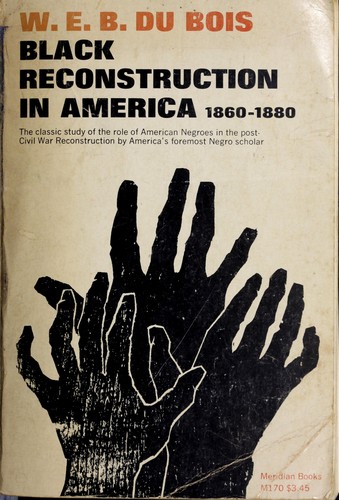
In short, if you widen your field of view, you will discover that W.E.B. Du Bois argued a century ago—and as the historical scholarship has increasingly come to agree—that slavery was already all but dead by the time Lincoln got around to declaring himself an abolitionist, far less because the North gave slaves their legal freedom than because they had already effectively taken it, because it had become the new status quo that would have required force to dislodge. At the end of the Civil War, with the South defeated, the choice for the north was not to end slavery or leave it; the choice was to ratify the fact that it was already dead or to re-impose it by military force.

In short, the idea that the white north “gave” freedom to the slaves draws from and reinforces an attractively simple and flattering myth, one which formed around the old historiography of the period like a noose cutting off oxygen to the brain: the myth that black slaves were rendered passive by their condition, and that—absent an outside force interrupting their state of un-freedom—they would simply have continued, as slaves, indefinitely. It’s only in this narrative that freedom can be a thing which is given to them: because they are essentially passive and inert, they require someone else—say, a great emancipator—to step in and raise them up.

W.E.B. Du Bois was already chipping away at this myth in 1909, but when scholars in the post-Civil Rights era started taking him and his 1935 Black Reconstruction seriously, the historiographic mainstream turned this myth on its head. Slaves were not and could not be “given” their freedom because they had always had it: it had required a great deal of violent force and political work to keep them enslaved, and when that force was removed—as the South collapsed politically and militarily—they began to act like the human beings they always already were, organizing, moving, and seizing their destinies in their own hands. At this point, the game was up; just as the institution of slavery had always depended on substantial governmental enforcement and support, it would have taken a substantial amount of violent force to re-impose it, a concerted project to re-establish slavery that no one in the north had any particular stomach for. At the end of the Civil War, to put it simply, the North had a simple choice: re-imposing slavery by force or accept the new reality. They chose the latter.

If you read these books, however, you’d gain a sense of perspective that the film works to make impossible. Spielberg and Kushner are interested in a kind of scrupulous (almost farcical) accuracy about things that do not matter, while working very hard to place everything else that was going on in the period—and everything else Lincoln was responding to—off camera. “The nation’s capital was transformed by the migration of fugitive slaves from the South during the war, but you’d never know it from this film,” as Kate Masur points out, and Lincoln’s own servants were leaders and organizers in this community, something of which Lincoln simply could not have been unaware. But the film makes a point of not showing any of this: while the vast majority of the movie takes place in cramped and smoky rooms, even the exterior shots (usually of conversations in moving wagons) show us very little of what was going on in the streets and neighborhoods of Washington (much less what was going on in the South). Which is to say: they give us the illusion of perspective without giving us its substance. They show you the elephant’s tail quite accurately, and then they declare, on that basis, that the entire beast is a snake.

In the big picture, the Thirteenth Amendment, on its own, just isn’t that important, and much of the forced suspense of the movie—will they pass it?—comes from an artificial sense that more is at stake in a single congressional bill than there actually was. As Eric Foner pointed out when he was asked about the movie, if it hadn’t passed when it did, Lincoln had pledged to call Congress into special session in March; “[a]nd there, the Republicans had a two-thirds majority and would ratify in a minute…It’s not this giant crisis in the way that the film’s portraying it.” This is important because the small picture is not the big picture in miniature, and taking it to be—taking the passage of the Thirteenth Amendment to be 19th centuries democratic turning point, as this movie clearly does—will cause us to subordinate the big picture to the small picture.

To Read the Entire Essay

Wednesday, October 31, 2012

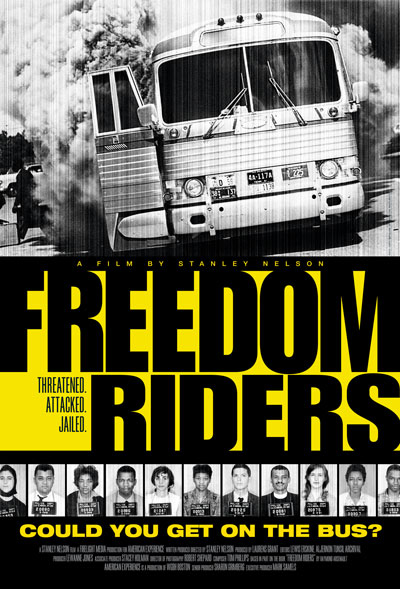
Freedom Rides (USA: Stanley Nelson, 2012: 117 mins)


I was working with this documentary with Peace Studies students last week and I was amazed, inspired and awed at the courage and passion of the students who participated in the Freedom Rides.

To watch it online

Monday, October 1, 2012

Democracy Now: Alice Walker on 30th Anniv. of "The Color Purple" -- Racism, Violence Against Women Are Global Issues; Palestine Conditions "More Brutal" Than in U.S. South of 50 Years Ago; "Democratic Womanism" -- Women Rising, Obama and the 2012 Election

To watch all three episodes together: September 28, 2012: Democracy Now

Democracy Now


Alice Walker on 30th Anniv. of "The Color Purple": Racism, Violence Against Women Are Global Issues

On the 30th anniversary of the publication of "The Color Purple," we speak with author, poet and activist Alice Walker about her groundbreaking novel and its enduring legacy. Set mainly in rural Georgia in the 1930s, the book tells the story of a young, poor African-American woman named Celie and her struggle for empowerment in a world marked by sexism, racism and patriarchy. The novel earned Walker a Pulitzer Prize in 1983, making her the first African-American woman to win the Pulitzer for fiction. Walker explains the origin of the book’s title and explores some of its central characters and their connection to her own family history.

Alice Walker, award-winning author, poet and activist. Her book The Color Purple was published 30 years ago. It won the 1983 Pulitzer Prize for Fiction and the National Book Award for Fiction, and was later adapted into a film directed by Steven Spielberg, starring Whoopi Goldberg and Oprah Winfrey, and into a musical of the same name. Her latest book is The Chicken Chronicles, and before that, Overcoming Speechlessness: A Poet Encounters the Horror in Rwanda, Eastern Congo and Palestine/Israel. She is set to participate next week in the fourth session of the Russell Tribunal on Palestine.

To Watch the Episode


Palestine Conditions "More Brutal" Than in U.S. South of 50 Years Ago, Says Author Alice Walker

We continue our conversation with the legendary poet, author and activist, Alice Walker, who has also been a longtime advocate for the rights of Palestinians. Last summer, she was one of the activists on the U.S. ship that attempted to sail to Gaza as part of the Freedom Flotilla aimed at challenging Israel’s embargo of the Gaza Strip. Alice Walker also serves on the jury of the Russell Tribunal on Palestine, an international people’s tribunal created in 2009 to bring attention to the responsibility other states bear for Israel’s violations of international law. Walker describes her upbringing in the segregated South, then goes on to discuss today’s segregation in the Occupied Territories. "The unfairness of it is so much like the South. It’s so much like the South of 50 years ago, really, and actually more brutal, because in Palestine so many more people are wounded, shot, shot, killed, imprisoned. You know, there are thousands of Palestinians in prison virtually for no reason,” Walker says

To Watch the Episode

"Democratic Womanism": Poet and Activist Alice Walker on Women Rising, Obama and the 2012 Election

With less than 40 days to go before the 2012 presidential election, poet and activist Alice Walker reads her new poem, "Democratic Womanism," and discusses her thoughts on President Obama’s legacy, including his use of drone strikes. "You ask me why I smile when you tell me you intend in the coming national elections to hold your nose and vote for the lesser of two evils," reads Walker. "There are more than two evils out there, is one reason I smile."

To Watch the Episode

Wednesday, September 5, 2012

Lila Kitaeff: Three Kings -- Neocolonial Arab Representation

Three Kings: Neocolonial Arab Representation
by Lila Kitaeff
Jump Cut


...

Non-oppositional critique of the Gulf War

In general, Three Kings’ marketing and reception dwelt on its supposedly unconventional nature. By unconventional, I mean “oppositional” discourse and imagery in the sense of contrasting to those found in dominant cultural productions. Although I will argue that the film does not, in fact, deviate from a typical Hollywood film in its basic message and structure, Three Kings does occupy a somewhat tenuous position in terms of Hollywood-type unconventionality. At first glance, viewers might expect the film to be an action-packed adventure and war movie. The main actors are blockbuster action stars (with the exception of Spike Jonze, director of Being John Malkovich and several “Beastie Boys” videos). And director Russell’s previous films, Spanking the Monkey and Flirting with Disaster, were offbeat in their brand of dark comedy, if not particularly unconventional in form or plot.

Initially film reviewers considered the story original. They said this film had more to it than met the eye, that its message and structure differed from most Hollywood films. A typical review praised Three Kings for its “genre subversion, anarchic attitude and barbed political commentary… making cogent points about… America’s role as the world’s policeman.” This same reviewer even suggested that the film addressed “the amorality and lack of consistent principles in American foreign policy. No Hollywood film in memory has addressed such an issue” (McCarthy par. 4 and 18).

However, although Russell does make a certain social critique of the Gulf War, as I will explore below, it is based in mainstream rather than oppositional discourses. For example, he explained this as his goal:

Taking people’s perceptions of this war, and turning them on their head… all the assumptions that you had about this war need to be looked at and turned over, including the sense of satisfaction you had as a moral victor, as an American.


However, if one were to make an explanatory critique subverting mainstream perceptions of the Gulf War, one would have to take into account the struggle’s historical context and the economic and ideological interests behind U.S. intervention. Such an argument was made by Noam Chomsky and Michael Albert, for example, when they asserted that “the real reason for U.S. opposition to Iraqi occupation of Kuwait is… to keep Washington, Wall Street, and their allies in charge of setting oil prices” (par. 5). And as Chomsky and Albert further pointed out, the U.S. government also has an ideological interest in perpetuating militarism in order to maintain the status quo of military spending and interventionist foreign policy.

Three Kings does not offer this sort of explanatory critique. Instead, the film presents the protagonists as coming to a realization that the United States has failed to save Iraq and destroy Hussein’s regime. According to the film, the United States is mistaken not because it intervened in the Middle East but rather because it did not follow through in its mission to save the good Arabs and crush the bad Arabs, a mission perpetuating neocolonial ideals. The heroes of Three Kings, in terms of the film’s logic, right the wrongs of the United States by saving a small group of Iraqi civilians, thus reproducing “the [neo]colonialist structure of the heroes’ relation to the native… [to] sort out the problems of people who cannot sort things out for themselves” (Dyer 156).

Neocolonial themes and traditional cinematic themes

Neocolonial cinema encourages the spectator to identify with representations of the colonizing subject and, by partaking of the trajectory set up by the storyline, to posit the colonial project itself as desirable. For example, in the scene in which the U.S. soldier protagonists are shown first entering the village, the images largely present their point of view, inviting identification by literally allowing the spectator to see through their eyes. In this scene the Iraqi civilians are portrayed as dominated and submissive as they beg the Americans to stay and help them. Other Iraqis who want to fight seem incapable of acting on their own as they cry out, “The Americans are here. It’s okay to come out. We can fight Saddam!” Thus, all Iraqi civilians—those beaten down and those who are still resistant—are presented as entirely dependent on U.S. help.

As Shohat and Stam put it, such a scene functions to “mobilize” spectatorial desire to participate in the narrative line about the protagonists’successful “neo-colonial mission.” The mobilization of desire works in tandem with spectator positions. Just as the cinematic apparatus interpellates the viewer to identify with the characters and narrative, the desire for which the protagonists strive also becomes the viewer’s desire .

In its ties with other fictions, including novels, drama, and song lyrics, Three Kings integrates traditional U.S. cultural and cinematic themes, especially about the outlaw hero. The film also uses a common Hollywood script format for dealing with cultural crises, that of the “problem picture.” These script strategies further weaken the film’s critique of United States ideals. In terms of screenwriting, Robert Ray discusses narrative strategies common in Hollywood in which morally centered characters enact a drama against a background of contemporary social issues. This kind of script development is common in what Ray terms “problem pictures,” films that critique large social issues but ultimately have happy endings that belie those problems (147).

In films like these, the outlaw hero is a common character. Such a figure possesses his own moral code and works to “correct” socially unjust laws and authority figures (Ray 15). For example, as Richard Dyer describes the genre, in the Rambo movies that attempt to critique the Vietnam War, the protagonist Rambo is

doing the job… that the United States government should be doing. Thus he repeatedly upholds basic American values against the actuality of America” (Dyer 159-160).


In this way, Hollywood’s use of the outlaw hero as a solution to historical events distorts perceptions of those events as part of social history, that is, outside of their filmic portrayals (Ray 59-62).

To Read the Entire Essay

Wednesday, May 30, 2012

Stephen Handzo: Going Through the Devil’s Doorway -- The Early Westerns Of Anthony Mann

Going Through the Devil’s Doorway: The Early Westerns Of Anthony Mann
by Stephen Handzo
Bright Lights Film Journal

...


Mann's 1950 threesome was the most auspicious quantum jump by an American director since John Ford's equivalent Americana triumvirate of 1939 (Stage Coach, Young Mr. Lincoln, Drums Along the Mohawk) lifted him into the major phase of his career. Yet Mann's achievements seem destined to remain unappreciated and the director himself obscure.

Those who disdain lightweight entertainment and sugary optimism usually prefer the cynical derisiveness of a Kubrick to a vision as uncompromisingly bleak and austere as Mann at his best. If people do not actually like Bresson or Dreyer at least they respect them; Mann has the generic disreputability of Westerns going against him as well.

And yet the Western was the perfect form for Mann. As George Robinson has observed, the protagonists of T-Men and Border Incident incur a moral debt while watching helplessly as their partners are murdered. In Mann's Westerns, the dual roles are combined in a hero who is both martyr and avenger.

Given Mann's own pessimism and the developing ambiguity of the post-war Western, it was perhaps inevitable that Mann's first Western (and arguably his best film) should be a tragic epitaph for the West's ultimate loser, the Indian.

Pro-Indian sentiment had appeared previously on the screen. Long before the alleged discovery of Monument Valley by John Ford, its buttes and mesas were mute witnesses to the epic silent version of The Vanishing American (1926). In both this and 1934's Massacre, the setting was contemporary and the Indian was already humiliated, displaced and long since reduced to reservation chattel. Billy Jack, Flap, The Outsider (about Ira Hayes) are later examples of this type. The other major schools of pro-Indian Westerns, such as 1970's Soldier Blue or the made-for-television Massacre at Sand Creek (1956) are set in the period of the Indian Wars and engage liberal guilt by focusing on a single spectacular atrocity.

Mann's Devil's Doorway is possibly unique in that it calls the ideal of Manifest Destiny itself into question by portraying the colonization of the West from the point of view of the defeated before the doom of the Indian was sealed.

The film opens with Robert Taylor in a Civil War uniform riding into a Wyoming town in which everything — including him — is coated with dust. He is returning from the Civil War having distinguished himself by winning the Congressional Medal of Honor at Gettysburg. Like Richard Dix in The Vanishing American, he assumes that war service will result in improved treatment for the Indian. (Devil's Doorway closely follows a cycle of contemporary racially-conscious films — Crossfire, Gentlemen's Agreement, Home of the Brave, in which members of the armed forces were subjected to discrimination. These films and President Truman's 1947 desegregation of the military reflected the obvious irony in America's fighting Nazi Master Race ideology with a Jim Crow army.) Taylor has a drink in a bar where he is greeted as a hero by the sheriff (Edgar Buchanan). "In my army, we were particular who we let in" observes cigar-smoking lawyer Verne Cooley (Louis Calhern) whose presence in the scene Mann skillfully withholds. (Calhern in this period had become MGM's all-purpose character actor — a combined replacement for Lionel Barrymore, Edward Arnold and Lewis Stone — portraying all the Establishment figures not played by Walter Pidgeon.) "Ever notice how you can always smell 'em?" asks Calhern, unheard by Taylor who walks out of the bar with Buchanan. "The Union Pacific's going to make a lot of changes," is Buchanan's prophetic parting comment.

To Read the Entire Essay


Wednesday, May 23, 2012

Willie Tolliver: Postlude to a Kiss -- Will Smith's Performances of Race and Sexuality in Fred Schepisi's Six Degrees of Separation

Postlude to a Kiss: Will Smith's Performances of Race and Sexuality in Fred Schepisi's Six Degrees of Separation
by Willie Tolliver
Bright Lights Film Journal


Will Smith now occupies a position in Hollywood that is unrivaled by any other black performer. His films over the last eighteen years have grossed more than $5.3 billion, more than any other actor, with the exception of Johnny Depp (Smith 31). He commands a salary in excess of $20 million per film, which places him in the highest stratum of bankable actors. Consistently over the last decade he has been the highest ranking black star on annual lists of power figures in Hollywood.1 His success is in certain ways unprecedented. Even more than this, the meaning of his star status has historical and cultural implications that have not been fully examined. Smith's ability to reach such varied audiences, both domestic and global, is an indicator of evolving attitudes about race. The types of roles he has accepted and in which audiences are willing to accept him (savior of mankind, the last man on earth) have done interesting cultural work in terms of redefining concepts of black identity in general and of black masculinity specifically.

This discussion contributes to an examination of the Smith phenomenon by taking another look at his first major film performance in Fred Schepisi's Six Degrees of Separation (1993). Smith's casting as the hustler who impersonates the son of Sidney Poitier has a particular rightness; Smith is indeed the inheritor of Poitier's legacy in terms of breaking new ground for blacks in film.2 Poitier won visibility and dignity for black representation in Hollywood film; Smith extends and complicates this legacy as his performances engage racial representation as it intersects with class, gender, and sexuality. This complex of issues contained within Smith's screen personae sustains his iconicity, and these valances of significance find their source in his seminal performance as Paul Poitier in Six Degrees of Separation.

Based on a series of actual incidents reported in The New York Times in 1983, the story of the film and the play details the encounter of a New York power couple with a young black man who cons and charms his way into their lives for an evening by impersonating the fictional son of Sidney Poitier.3 Flan and Ouisa Kittredge (Donald Sutherland and Stockard Channing) are a private art dealer and his wife who are entertaining a possible investor in a crucial sale. They are burst in upon by the doorman and a young black man (Will Smith) who is bleeding from a knife wound to his side. It turns out that the intruder is a Harvard classmate of their children. They administer first aid, and he begins to talk. He persuades them to stay in, and he will prepare a meal. This he does and in the process dazzles them with his conversation. He discourses on The Catcher in the Rye and the death of the imagination. On top of this, it turns out that his name is "Paul," and he is the son of Sidney Poitier. It is a magical evening, and the deal is sealed. Subsequently, they discover that Paul Poitier is not who he claims to be and that several of their friends have had similar experiences with him. The path of their investigation into the real identity of this strange young man leads them to a friend of their children named Trent (Anthony Michael Hall), a student at M.I.T. He admits to befriending this Paul and sharing his knowledge of their lives with him. This seems to be the answer, but it doesn't begin to explain what has happened to them and how their lives have been profoundly affected.

Paul also seems to have had an effect on Smith as there are distinct parallels between their narratives. I argue that in his ascendant trajectory Smith replicates Paul Poitier's project of attaining celebrity and social status. Indeed it could be said that Smith learns valuable lessons about how to succeed in the mainstream from the character he portrays, and then he surpasses him. Paul insinuates himself into the white and privileged world of the Kittredges through canny and deliberate strategies to overcome the two salient aspects of his identity that might otherwise prove to be barriers: his race and his sexuality. He does so through a process of minimizing his race and sexuality while at the same time subverting conventional notions of those identities. Similarly, Smith's broad-based stardom is predicated on his choice of film characters whose racial identities are non-threatening and whose sexuality is muted or erased, especially given the hyper-sexualized stereotype of black men in film.

To Read the Rest of the Essay
Matthew J. Iannucci: Postmodern Antihero -- Capitalism and Heroism in Taxi Driver

Postmodern Antihero: Capitalism and Heroism in Taxi Driver
by Matthew J. Iannucci
Bright Lights Film Journal


Martin Scorsese's Taxi Driver is a gritty, disturbing, nightmarish modern film classic that examines alienation in urban society. From a postmodernist's perspective, it combines the elements of noir, the Western, horror, and urban melodrama as it explores the psychological madness within an obsessed, inarticulate, lonely antihero cab driver, Travis Bickle (Robert De Niro). The plotline is simple: Travis directs his frustrated anger at the street dwellers of New York and a presidential candidate, and his unhinging assault is paired with an attempt to rescue a young prostitute, Iris (Jodie Foster), from her predatory pimp. Historically, Taxi Driver appeared after a decade of war in Vietnam (1976), and after the Watergate crisis and subsequent resignation of Nixon. Five years later, when it was linked to would-be presidential assassin John Hinckley and his obsession with Jodie Foster, it became prima facie evidence for those on the political right who believed that violence in film translates into crime in real life. It is now almost impossible to separate Taxi Driver from this debate. However, Bickle's antiheroic character is more directly related to a failure of a capitalist system that pits his working-class position as a cab driver against those who have already been disenfranchised according to socioeconomic class, gender, and/or race.

As the film opens, Travis emerges from a forgotten Midwestern form of Americana that appears as obsolete as Travis himself in a big city heterogeneously composed of corporate financiers, political patrons, gun dealers, and prostitutes. In order to survive, he wants to "become a person like other people" as he puts it, but his own disenfranchisement from this nation has left him both intellectually and emotionally bankrupt from the Vietnam War. Freedom, the very nucleus of the American dream, is dependent on individual socioeconomic choices that inform and shape one's identity. But Travis's lack of a distinct identity compels him to cut and paste together what he believes is a heroic identity from an external menu of personages such as the "gunslinger" and the Indian. In actuality, what he does is stitch together a postmodern antiheroic identity that is nostalgic and pop culture-oriented, evidenced by the Mohawk haircut that he sports in the penultimate sequences — because he possesses no internal self.

Taxi Driver implies that identity is not genuine but always synergistic, a kind of potpourri of idolatry and maxims drawn from popular culture, especially from violent movies and television news. In this vein, Robert Ray views Taxi Driver as a postmodern "corrected" Right film, the type of film generally aimed at a naïve audience. Ray explains that a "Right" film presents a traditional conservative philosophy that promotes the application of Western-style, individual solutions to complex contemporary problems. He writes, "Taxi Driver's basic story followed the right wing's loyalty to the classic Western formula: a reluctant individual, confronted by evil, acts on his own to rid society of spoilers. As played by Robert De Niro, Taxi Driver's protagonist had obvious connections with Western heroes…even his name, Travis, linked him to the defender of the Alamo."1 Ray's notion that the film is a "correction" of the right-wing concept of justice is accurate because of its odd plot twist at the conclusion. Normally, such a story would identify Travis's complicity with these criminals and thereby relegate him to some form of institutional punishment. But the film's underlying theme reveals how absurd the Western idealistic depiction of heroism is because the news media in the film not only ignores his actions but also glorifies a psychopathic killer as a noble warrior.

To Read the Rest of the Essay

Monday, April 23, 2012

Film Quarterly: Interview with Göran Hugo Olsson

Interview with Göran Hugo Olsson
by Rob White
Film Quarterly


The Black Power Mixtape 1967–1975 is a chronologically presented assemblage of re-edited documentary film from the archive of the Swedish National Broadcast Company. To this original material director Göran Hugo Olsson has added explanatory titles and a soundtrack that consists of original music by Ahmir “Questlove” Thompson and Om’Mas Keith together with voiceover commentary by (among others) musicians Erykah Badu and Talib Kweli as well as professors Angela Davis, Robin Kelley, and Sonia Sanchez. Davis’s participation is noteworthy because The Black Power Mixtape includes an electrifying clip of her being interviewed in San Rafael County Prison in 1972 and rounding on the questioner, Bo Holmström: “you ask me whether I approve of violence,” she says, going on to recount the experience of seeing childhood friends of hers murdered in bomb attacks in Birmingham, Alabama, “limbs and heads strewn all over the place.” “When someone asks me about violence,” she adds, “what it means is the person who’s asking that question has absolutely no idea … what black people have experienced in this country since the time the first black person was kidnapped from the shores of Africa.”

Though it has nine main segments, one for each year recorded, The Black Power Mixtape can be described as a kind of three-act tragedy. The first phase is one of radical eloquence and increasingly bold, militant organization. Stokely Carmichael is the star of the proceedings but we also see a grassroots Black Panther schoolroom in Oakland and hear Panther co-founder Bobby Seale declare that “we will defend ourselves, we will shoot … because we are bent on survival.” Crackdown occurs in the next phase: Eldridge Cleaver speaks unconvincingly from Algiers about “government-in-exile” but at home thousands of activists are imprisoned and scores killed. (When we see Davis after her release she is speaking from a platform that appears to be protected by bulletproof glass.) The final part of the film relies heavily on Lars Ulvestam’s documentary Harlem: Voices, Faces which dwells on the spreading blight of heroin. In one clip a young former prostitute and addict talks to camera about turning her life around, but it is arguably the discourse of self-betterment itself that contributes to an impression of isolation and vulnerability. The language of politics and the idea of a mass movement are no longer present. Although the voiceover commentators shortly afterwards discuss the lasting achievements of the struggle for black liberation in the 1960s and 70s, I could not shake a feeling of loss which emerged from the gulf between the defiant confidence of Davis’s jail-cell remarks and the suffering words of this lonely Harlem woman.

The film’s relationship to history is ruminative. Because of the audio commentary The Black Power Mixtape stages a “moving conversation between past and present,” as B. Rich put it in her spring 2011 Film Quarterly Sundance report. The dialogic mode of presentation means that it would be hard to watch the film without reflecting on the question of viewpoint. The Swedish crews who filmed the source footage were visitors to the U.S., reporting from a country in crisis and at war, their sympathies evidently extended to such people as the Hallandale, Florida veteran who speaks near the start of The Black Power Mixtape about being “ridiculed, discriminated, treated as less than a man … the environment has a whole lot to do with keeping a man down.” But is there truly an outsider perspective on such a history? When Olsson includes 1973 footage of a tourist bus tour of Harlem, its Swedish guide talking up the danger of street crime, before cutting to a camera position inside a police car, the question no longer permits of an easy answer—and that is how it should be.

To Read the Interview

Thursday, January 26, 2012

Claudia Springer: Taken by Muslims -- Captivity Narratives in The Lives of a Bengal Lancer and Prisoner of the Mountains

Taken by Muslims: captivity narratives in The Lives of a Bengal Lancer
and Prisoner of the Mountains
by Claudia Springer
Jump Cut


Prisoner of the Mountains does not simply reverse the terms of typical Muslim captivity narratives and naively assert that all Russians are destructive and all Chechens are kindhearted. Quite the contrary: there are trigger-happy Chechens eager to kill the two captive soldiers, and a Chechen man shoots his own son for the offense of working for the Russian police. Their violence, though, is shown in the context of their motivations, not as resulting from sadistic impulses. On the Russian side, even the Commander seems to have a change of heart and indicates that he may be ready to trade Abdoul-Mourat's son, an event that is foiled when the son tries to escape and is shot. Rather than paint a simplistic picture, the film suggests that empathy becomes possible when people learn about the realities of others' lives.

In Vanya's friendship with Dina, we see the film reject Orientalist divisiveness and replace it with what philosopher Martin Buber calls an "I and thou" relationship based on nonjudgmental respect. Vanya and Dina overcome inherited cultural myths that would make them enemies and learn to perceive each other as individuals, not symbols. This is the type of connection called for by Czech theorist Vilém Flusser, who critiques the insularity of people who identify too strongly with their homelands—their heimats—to the point that they reject foreigners and anyone with unfamiliar customs. Flusser offers as a solution to intolerance the condition of the migrant, a person who is not anchored to any one place and who "carries in his unconscious bits and pieces of the mysteries of all the heimats through which he has wandered" (14). The migrant, Flusser writes, works on "the mystery of living together with others" and poses the following challenge to all of us:

"how can I overcome the prejudices of the bits and pieces of mysteries that reside within me, and how can I break through the prejudices that are anchored in the mysteries of others, so that together with them we may create something beautiful out of something that is ugly?" (15).

Prisoner of the Mountains gives us a glimpse of two people—Vanya and Dina—who break through prejudices and briefly create something beautiful. Their friendship develops awkwardly and tentatively, initiated by curiosity and followed by small acts of generosity, leading up to her secret visits to the deep pit within which Vanya is chained after his failed attempt to escape with Sacha. In addition to lowering bread and water to him on a rope, Dina informs him of his fate, standing above him at the edge of the pit: "My brother is dead. You have one more night to live." Her elevation indicates her power over him, but their conversation reveals mutual respect, she by acknowledging that he has a right to know what lies ahead, and he by responding patiently. Their cultural differences are apparent, because her idea of being helpful originates in her beliefs about the afterlife, which are meaningless to him, but his responses, while indicating his despair, avoid undermining her. She says, "Usually they throw the enemies' bodies to the jackals. But I will bury yours." He asks her to bring the key to release him. She says, "No. I will dig a wide grave for you. And you will see the Angel of Death. I'll put my necklace in the grave as your wedding gift. Maybe your soul will find a bride in heaven." He responds with a gentle smile: "I don't think so."

Later, she does bring him the key to his leg shackle after finding it hidden in a box while the film crosscuts to her father returning to the village with his son's body in the back of a truck. Before she throws the key to Vanya, she says to him, "Don't kill any more people, promise?" Her request represents a significant shift away from her former acculturated hatred for Russians as well as an attempt to break the cycle of revenge that has trapped both sides in the conflict. She has learned through her friendship with Vanya to respect life—everyone's life. Vanya responds in kind when he refuses to leave in order to protect her from punishment. Her father, Abdoul-Mourat, finds the two of them together at the edge of the pit and sends her home after scolding her for being more concerned about Vanya than about her own dead brother. But even Abdoul-Mourat—perhaps following his daughter's example—rejects vengeance when he lets Vanya go after marching him into the mountains.

Vanya's respect for Dina extends to the film's refusal to eroticize her. Even when she dances for him, she is not objectified; her dance is grave and earnest and shot from a respectful distance. She wears a headscarf and boots and an ankle-length red dress with a dark jacket. Her dance is accompanied by wailing diegetic music from a funeral procession winding its way through the village. She and the other Chechen women—most of them weather-beaten and wearing headscarves—are frequently seen at work. It is their labor, not their sexuality, that defines them. Dina is seen working with donkeys, preparing food, cleaning up, knitting—preparing for life as a village woman—and she calmly explains her future to Vanya before she dances for him. He asks her, "Did you get married yet?" She replies, "No." He says, "I would marry you." She says, "We cannot get married. I can get married next year. We marry early here." Later, when she returns to the pit to tell Vanya that he has one more night to live, she is dressed entirely in black to show that she is in mourning for her brother but also suggesting that she is preparing to mourn for Vanya, taking on the role of his widow although they have never even exchanged a kiss. She stands above him in her black robe, embodying the Angel of Death as well as the bride she speculates he might find in the afterlife. Their union is symbolic, impossible in the world they inhabit but indicative of the connection they have made.

The film also treats the Chechen landscape, customs, and music, all initially strange and unfamiliar to the Russian captives, with respect. Perched on rocky cliffs, the village is both precarious and solid, built of stone to withstand the ferocious winds. A song sung by the village children tells of the longevity of the Chechen culture and the inability of visitors to tolerate the wind. The film was shot on location in the Russian Republic of Dagestan, neighboring Chechnya, just twenty miles from where fighting was taking place at the time. (Ironically and sadly, the region's harsh conditions proved fatal for the actor Sergei Bodrov Jr. a few years later when he returned to direct a film and was killed by an avalanche.) The music, cinematography, and editing combine to emphasize endurance. But it is all obliterated at the end with the offscreen Russian assault. Vanya's inability to conjure up the villagers in his dreams symbolizes the military attack's total erasure of their existence, eliminating their history along with their future. Instead of exalting military might—as does The Lives of a Bengal Lancer—the film raises questions about the morality of bombing raids on civilian targets as a military strategy.

The final crucial element that sets this film apart is its slow, deliberate pacing, counteracting the speed with which the Bengal Lancers engage in their adventures. Unhurried panning shots linger over the mountains and valleys and the village's worn cobblestone streets. It takes time to overcome enmity, and Prisoner of the Mountains measures time very slowly. Its choices provide a cinematic model for relinquishing Hollywood's tired anti-Muslim clichés.[2]

To Read the Entire Essay

Wednesday, January 4, 2012

Roger Ebert: "Nobody has the right to take another life"

"Nobody has the right to take another life"
by Roger Ebert
Chicago Sun-Times


Yesterday I read this in an article in the British Guardian newspaper:

"Twelve of the last 13 people condemned to death in Harris County, Texas were black. After Texas itself, Harris County is the national leader in its number of executions.

"Over one third of Texas's 305 death row inmates - and half of the state's 121 black death row prisoners - are from Harris County.

"One of those African Americans, Duane Buck, was sentenced based on the testimony of an expert psychologist who maintained that blacks are prone to violence. In 2008, Harris County District Attorney Chuck Rosenthal resigned after sending an email message titled 'fatal overdose,' featuring a photo of a black man lying on the ground surrounded by watermelons and a bucket of chicken."

I could pause at this point, type "case closed," and consider this a blog entry. But that would be too simple. White people are also executed at an efficient pace in Texas. The odds of being given the death penalty in that state are fearsome, and the chances of having your sentence overturned on appeal are dismaying. So far in his two terms in office, Rick Perry has declined to commute the sentences of 235 condemned prisoners. During George W. Bush's time in office, Texas executed 152 prisoners, more than any other governor in modern American history before Perry.

Bush commuted the death sentence of one prisoner, Henry Lee Lucas, who had been charged with murder in 189 cases and "was once listed as America's most prolific serial killer." (Wikipedia.) His decision was recommended by the Texas Board of Pardons and Paroles, based on evidence that on the day of the specific murder Lucas was convicted of, he was not in Texas. Perry has commuted the death sentences of two prisoners, both also on the recommendation of the Board of Pardons and Paroles. It would appear that if the board rejected your appeal, your chance of having the sentence overturned by Bush or Perry was zero.

In 2000, Illinois Governor George Ryan, a Republican, declared a moratorium on the death penalty in Illinois. In one fell swoop he commuted 160 death sentences to life sentences. Ryan explained that he believed execution was appropriate in the case of "heinous crimes," but noted that during his first year in office "Thirteen people were released from jail after appealing their convictions based on new evidence." (Wikipedia) I was at a dinner party with Ryan at about that time, and he told us, "The possibility that we would be executing an innocent man made it impossible for me to sleep at night."

To Read the Rest of the Commentary

Sunday, December 18, 2011

Greg Tate: Fight for rights, will to power -- The Black Power Mixtape 1967-1975

Fight for rights, will to power: The Black Power Mixtape 1967-1975
by Greg Tate
Sight and Sound (British Film Institute)


...

The Black Power Mixtape Remixed 1967-1975 is an exotic document of this turbulent, extremely violent transitional moment in American race history. Exotic because it’s the culmination of the near-decade an intrepid Swedish TV news team spent interviewing prominent Black American radicals of the day – Stokley Carmichael, Huey Newton, Bobby Seale, Eldridge Cleaver, Elaine Brown and Angela Davis. All were dramatic, eloquent, charismatic figures of their time who, except for the still-active Davis, are today hardly household names to the average black American under 40.

Like Jimi Hendrix or Bob Dylan, they all seem incredibly well-prepared in their mid 20s to set the world aflame intellectually and dominate the media – but far less prepared than the Viet Cong or Fidel Castro to withstand the withering, brute and constitutionally illegal attacks directed at them and theirs by the US government, especially the FBI’s fascistic overlord J Edgar Hoover.

Time has not diminished their critiques of American power or racism, nor their undeniable star power – any of them and their radical histories could easily sustain a documentary or narrative feature film of its own. Mixtape captures most of them in the short period before they would be tried, convicted or exiled by Hoover’s stated and manically implemented obsession with preventing the “rise of another black prophet” after King.

The footage of Carmichael and Davis is the most poignant and illuminating. Though the film doesn’t say so, it was Carmichael who brought the phrase ‘Black Power’ into vogue, famously goading King to give it airtime near the end of the two-week-long march to Selma, Alabama. The film demands that those who don’t know these figures investigate them afterwards for more background and context. On film the jocular Carmichael proves so at ease in his own skin that he could have given Sidney Poitier competition as a leading man, and challenged Bob Marley as a lyrical protest balladeer.

Carmichael invites himself to take over an interview the news crew had wrangled with his mother in the Chicago-projects apartment in which he was raised. He then patiently extracts from her the pained admission that his Trinidadian immigrant father, a skilled carpenter, was a lifelong victim of employment discrimination.

As noted by progressive hip-hop MC Talib Kweli in his voiceover, Carmichael emerges here as a “regular guy” who also happened to be a incendiary and mesmerising speaker – one still so provocative that Kweli recalls being accosted by FBI and TSA agents at an airport after 9/11 for merely listening to a 40-year-old Carmichael speech. Some may take Kweli’s intimation of wiretaps as conspiratorial and apocryphal, but no-one familiar with Hoover’s paranoia and surveillance of black progressives will be among them. (The biggest laugh in the film comes from Hoover’s claim that the most dangerous threat to the internal security of the United States was the Black Panther party’s free breakfast program. But Hoover was not joking.)

The progress of the film is also a tacit record of the Panther’s off-screen dismantling by Nixon and Hoover’s COINTELPRO conspiracy against black leadership. The Panther’s demise by exile, imprisonment and judicial malfeasance is presented at a glance, but the Panthers expended all their political capital on the campaigns to Free Huey Newton, Bobby Seale and Angela Davis.

Davis’s prison interview here offers the most astute and moving rationale for extreme black retaliation to American racial extremists. When asked to justify the advocacy of black violence, Davis recalls her childhood experience of her Birmingham, Alabama community being routinely bombed by Klansmen at the behest of notorious county sheriff Bull Connor. Davis recalls this motherfucker using local radio to promote and direct such violence on a weekly basis. The extreme close-up of her angry, watering eyes when she speaks of the discovery of four classmates’ body parts after the infamous 1963 Birmingham church bombing provides all the justification for retribution any rational person should need.

To Read the Rest of the Commentary