Showing posts with label France. Show all posts

Sunday, January 12, 2014

Blue is the Warmest Color (France/Belgium/Spain: Abdellatif Kechiche, 2013)

“Few films dig so deeply (and with such sense of intimacy) into the complexities of human relations, the joys and pains of self discovery and the hurtful realisation that our bodies and mind can yearn opposite things.” — Fernanda Solórzano


Blue is the Warmest Color (France/Belgium/Spain: Abdellatif Kechiche, 2013: 179 mins)

Beauvoir, Simone de. The Second Sex (1949: PDF copy)

Bell, Nicholas. "Blue is the Color of My True Love’s Hair: Kechiche Takes Us Deep Sea, Baby." Ion Cinema (October 25, 2013)

Berger, John. The Ways of Seeing. (1972: Summary/outline of this important book that studied how we are position to observe people and objects in art)

Blue is the Warmest Color Critic's Roundup (No Date)

Blue is the Warmest Color (Graphic Novel) Wikipedia (No Date)

Dargis, Manohla. "Seeing You Seeing Me: The Trouble With Blue Is the Warmest Color." The New York Times (October 27, 2013)

Dayoub, Tony. "The 51st New York Film Festival #3." The Cinephiliacs (October 13, 2013)

Hudson, David. "Abdellatif Kechiche’s BLUE IS THE WARMEST COLOR: A coy coming-out drama this most definitely isn’t.” Keyframe (May 23, 2013)

---. "Abdellatif Kechiche’s BLUE IS THE WARMEST COLOR: 'The experience of the film transcends flaws both real and imagined.'" Keyframe (October 11, 2013)

Ildari, Max. "Blue Is the Warmest Color 2: A Response to Lorrie Moore’s Review in the New York Review of Books." Bright Lights After Dark (January 10, 2014)

Jones, Kristin M. ""Review: Blue Is the Warmest Color." Film Comment (2013)

Kennedy, A.L. "Sartre and the Individual." A History of Ideas (April 15, 2015) ["Writer AL Kennedy on Existentialist ideas about the individual. Jean Paul Sartre argued that, for humans, 'existence preceded essence'. This means that there is no blueprint or template from which to work - humans are free to make themselves up as they go along. Being an individual comes from the way you negotiate this freedom and the choices you make in the face of it."]
Lee, Janet. "'Blue Is The Warmest Color'." Neon Tommy (October 22, 2013)

Mayer, Sophie. "Blue is the Warmest Colour: This part-adaptation of Julie Maroh’s graphic-novel saga of a lesbian love affair trades a new voice for the same old male gaze." Sight and Sound (February 20, 2015)

McCahill, Mike. "21st Century Directors You Need to Know About: Abdellatif Kechiche." Movie Mail (May 2, 2014)

McNeil, Jeremiah. "Blue is the Warmest Color" Dialogic Cinephilia (December 21, 2013)

Moore, Lorrie. "Gazing at Love: Blue is the Warmest Color." The New York Review of Books (December 19, 2013)

Rich, B. Ruby. "Blue Is the Warmest Color: Feeling Blue." The Current (February 24, 2014)

Roberts, Soraya. "Blue Is the Warmest Color is about class, not just sex." Salon (November 3, 2013) ["Sex and sexuality are only half the film's story. It's also about lovers from different economic worlds."]

Sartre, Jean-Paul. "Existentialism is a Humanism." (Lecture given in 1946: published in Existentialism from Dostoyevsky to Sartre, ed. Walter Kaufman, Meridian Publishing Company, 1989) Marxist Archive (2005)

Stern, Marlowe. "‘Blue is the Warmest Color’: See What the Sex Scene Looks Like In the Graphic Novel." The Daily Beast (October 28, 2013)

Thompson, Martha. "Blue Is the Warmest Color 1: Unresolved Alienations of Class." Bright Lights After Dark (January 2014)

Zaman, Farihah. "The Pleasure Principle: Blue is the Warmest Color." Reverse Shot #33 (2013)




Tuesday, October 22, 2013

Radio West: Frederick Wiseman's Crazy Horse

Frederick Wiseman's "Crazy Horse"
By Doug Fabrizio
Radio West


Tuesday, Doug is joined by legendary filmmaker Frederick Wiseman. A year ago, RadioWest and the Utah Film Center began our Through the Lens documentary film series with a conversation with Wiseman. His latest work is set to open later this month around the country. It's called "Crazy Horse," and it's a spare, unfiltered look inside a Parisian nude cabaret. Doug talks to Wiseman and others about his 44 year career and what the new film reveals about Wiseman's unique process.

To Listen to the Interviews

Monday, September 2, 2013

The Piano Teacher (Austria/France/Germany: Michael Haneke, 2001)


The Piano Teacher (Austria/France/Germany: Michael Haneke, 2001: 131 mins)

Bradley, S.A. "Killed by Death." Hellbent for Horror #33 (February 27, 2017)

Brunette, Peter. Michael Haneke. Urbana, IL: University of Illinois, 2010.

Frey, Mattias. "Great Directors: Michael Haneke." Senses of Cinema #57 (2010)

Grundman, Roy. A Companion to Michael Haneke. Malden, MA: Wiley Blackwell, 2010.

"Michael Haneke Studies: Videos, Podcasts and Article Links." Film Studies for Free (June 26, 2010)

Price, Brian and John David Rhodes, ed. On Michael Haneke. Detroit, MI: Wayne State University, 2010.

Sorfa, David. "Uneasy domesticity in the films of Michael Haneke." Studies in European Cinema 3.2 (2006)

Wheatley, Catherine. Michael Haneke's Cinema: The Ethic of the Image. NY: Bergahn Books, 2009. [BCTC Library PN 1998.3 H36 W44 2009]


Wednesday, August 14, 2013

(Not) Love and Death: On Michael Haneke's Amour

(Not) Love and Death: On Michael Haneke's Amour
by Vlad Dima
Bright Lights Film Journal


Michael Haneke's latest film begins abruptly with the police breaking down the door to the apartment of the two octogenarian protagonists, Georges and Anne. The violent intrusion is underlined by the fact that we go, with no transition effect, from complete silence and black screen to noise and color. This type of intense narrative shift is common in Haneke's films. Long periods of apparent stability and quiet are followed by sudden spurts of incredible viciousness, in The White Ribbon (2009), Funny Games (2007, and 1997), or Caché (2005). I say "apparent" because violence lurks just beneath the narrative surface of Haneke's films, its presence felt constantly. So when it does emerge, it is not just for shock value. Oddly, it soothes us, providing momentary relief from the stress accumulated throughout the film. Child beatings, shootings, throat slashing are part of the director's repertoire that may force the audience into a sadistic position, but we avoid them in Amour. Or so it seems. Make no mistake, this is a violent film, but its ferocity comes from being forced to confront our own mortality. This is not a film about love, as the title purposely misleads us. This is a film about death, and worse, our death.

The inclusion of "us," the audience, in the film's thematic concerns commences immediately following the sequence in which the police find Anne's rotted body in the apartment. We begin with a flashback to a night when the couple went out to a classical music concert given by one of Anne's old students, Alexandre. In a beautiful fixed shot, we can see the spectators in the theater as they are waiting for the show to start. After a long moment, as the shot turns into a long take, we become aware of the missing reverse shot. The stage is never shown. We, the "real" audience, are suddenly facing the diegetic audience. We are the reverse shot. So we are pulled into the narrative through a counter-cinema artifice. The lack of reverse shot also points to the impossibility of suture; thus the very beginning of the film points to breakdowns, some literal (the door), some metaphorical (the apparatus of cinema and, by extension, life).

To Read the Rest

Monday, August 12, 2013

Irreversible (France: Gaspar Noé, 2002)


Irreversible (France: Gaspar Noé, 2002: 97 mins)

Britt, Thomas R. "Lower Depths and Higher Aims: Death, Excess and Discontinuity in Irreversible and Visitor Q." Cinephile 5.1 (2009)

Krautheim, Graeme. "Aspiring to the Void: The Collapse of Genre and Erasure of Body in Gaspar Noé’s Irreversible." Cinephile #4 (Summer 2008)

Palmer, Tim. Brutal Intimacy: Analyzing Contemporary French Cinema. Middletown, CT: Wesleyan University Press, 2011. [Professor has a copy]

Sharett, Christopher. "The Function of Film Criticism at Any Time." Film International (April 29, 2017)

Wood, Robin. "Against and For Irreversible." Film International (April 5, 2011)

Wednesday, July 3, 2013

Time of the Wolf (France/Austria/Germany: Michael Haneke, 2003)


Time of the Wolf (France/Austria/Germany: Michael Haneke, 2003: 113 mins)

Bingham, Adam. "Long Night's Journey Into Day." Kinoeye 4.1 (March 2004)

Brunette, Peter. Michael Haneke. Urbana, IL: University of Illinois, 2010.

Frey, Mattias. "Great Directors: Michael Haneke." Senses of Cinema #57 (2010)

Grundman, Roy. A Companion to Michael Haneke. Malden, MA: Wiley Blackwell, 2010.

"Michael Haneke Studies: Videos, Podcasts and Article Links." Film Studies for Free (June 26, 2010)

Price, Brian and John David Rhodes, ed. On Michael Haneke. Detroit, MI: Wayne State University, 2010.

Sorfa, David. "Uneasy domesticity in the films of Michael Haneke." Studies in European Cinema 3.2 (2006)

Wheatley, Catherine. Michael Haneke's Cinema: The Ethic of the Image. NY: Bergahn Books, 2009. [BCTC Library PN 1998.3 H36 W44 2009]


Tuesday, July 2, 2013

The Dreamers (France/UK/Italy: Bernardo Bertolucci, 2003)


The Dreamers (France/UK/Italy: Bernardo Bertolucci, 2003: 115 mins)

Buchanan, Ian. "Bernardo Bertolucci's The Dreamers; Kristin Ross' May 68 & Its Afterlives; Deleuze & Guattari's Anti-Oedipus." excerpt from Deleuze and Guattari's Anti-Oedipus. NY: Continuum, 2008: 13-19. Posted on Dialogic (July 2010)

Dyson, Jake. "The Dreamers (2003)." Film Matters (February 20, 2018)

Fletcher, Stephen Q. "The Dreamers: Revolution as a Gala Dinner and a Game." Metaphilm (May 4, 2008)

Hudson, David. "Sex in the Movies." Green Cine (2005)

Ross, Kristin. May '68 and Its Afterlives. Chicago: University of Chicago Press, 2002.

Monday, April 8, 2013

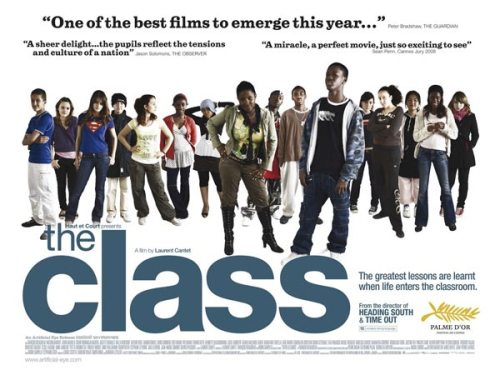
The Class (France: Laurent Cantent, 2008)


The Class (France: Laurent Cantent, 2008: 128 mins)

Ashbury, Roy. "Schools and Teachers." Understanding Representation. ed. Wendy Helsby. London: BFI, 2005: 51-74. [Available in BCTC library PN1995 U4977 2005]

Chen, Lu. "I Hate Mathematics and Racists." The Brooklyn Rail (March 2009)

Livingston, Jessica. "Global capital’s false choices in the films of Laurent Cantet." Jump Cut #53 (Summer 2012)

Saturday, December 29, 2012

Ingrid Fernandez: Visions of the Other: The Return of the Abject in Roman Polanski's The Tenant

Visions of the Other: The Return of the Abject in Roman Polanski's The Tenant
by Ingrid Fernandez
Bright Lights Film Journal


Perhaps one of the highest achievements — and casualties — of Western philosophy lies in its complete denial of the body as a conduit for knowledge and self-discovery. The body has been excluded from discourse, always positioned as a threat to the higher instincts of the intellect. It is an unwanted part of the self: the polluted, the irrational, the animalistic that mars the path to enlightenment. It has thus been sentenced to represent the space of the abject, that which is always pushing the socially constructed subject to the edge of the abyss and hence threatens the law. However, a higher truth can be sought in the order of Nature. If we embrace the corporeal, we no longer negate death, decay, sickness — the filth burgeoning inside the self and forever constituting its powerful force. I accept my frailty, the instability of my identity, and I mourn for what I have lost when I achieved the status of subject. For that part of myself always creeps back into my existence as a shadow, a hidden desire I can never satisfy, that of life and death merging into pure being. I mourn the Other. I carry it within me but can never access it in life, for it might destroy me, I have been told; or perhaps it might complete me once it undoes all I have learned to be. Julia Kristeva describes fully experiencing the body as causing a rupture within signification, unacceptable because it eradicates the socially constructed boundaries regulating identity. She states:

A wound with blood and pus, or the sickly, acrid smell of sweat, does not signify death. In the presence of signified de'ath — a flat encephalograph, for instance — I would understand, react, or accept. No, as in true theater, without makeup or masks, refuse and corpses show me what I permanently thrust aside in order to live . . . My body extricates itself, as being alive, from that border . . . It is thus not lack of cleanliness or health that causes abjection but what disturbs identity, system, order. What does not respect borders, positions, rules. The in-between, the ambiguous, the composite. (Kristeva)


It is precisely in this foreign land, in this dark continent shunned by rational thought, that we might best find ourselves. The real truth of life is most acutely revealed at a corporeal level, where primal vulnerabilities such as the fear of illness and decay, the violated body, and the body in pain constitute the essence of being human, of being a part of a larger world where "the Other" is a reflection of the self. Moreover, our very physical existence and relation to others stem from a common bond of blood that predates the social apparatus. After all, social identity is easily stripped, uncovering a universal truth — the fact we are all mortal and subject to the violation of our physical space. At its most basic, the bond between humans is forged by the organic — sinews, muscle, bones, and the burden of the body. The instability of physical existence lies in its constant metamorphosis, its ability to simultaneously enrich and destroy intellectual activity, and the presence of elusive desire and the remnants of a fear that remain locked in the moment prior to our existence as social subjects. These concepts are best illustrated in cinema because of the power of the image to enter the viscera, elide intellectual resistance, and elicit an authentic and unmediated, sometimes even involuntary, reaction. The cinematic image penetrates the space of the abject and brings it to life. It is the return of the repressed and allows us to once again inhabit "uncomfortable spaces" we thought were closed off to our senses. Starting from these premises, I propose to revisit the concept of knowledge gained through the saturation of the body by outside stimuli, in this case film images, and how this experience results in a form of transcendence, a deeper understanding of our relation to ourselves and "the Other."

Roman Polanski's 1976 film The Tenant can be seen as a meditation on the fate of the abject body and how it is marked, regulated, and finally obliterated by the social apparatus. However, it also emphasizes how the repressed eludes the symbolic law and allows us to encounter its terrifying shadow, the periphery of existence that always manages to break through. Additionally, Polanski brings in the concept of bare life as stipulated by critics like Giorgio Agamben and Judith Butler, inquiring into the way a social subject is constituted and given a voice or utterly silenced and excluded from the circle of the human. The film's main focus remains on the body as undesirable, non-ideal, open to external aggression and pollution. In typical Polanski fashion, the audience is trapped in an "uncomfortable visual space" where the concept of a stable individual identity is never a matter of choice, but instead constituted by our surroundings and forces well beyond our grasp. The Tenant's crowning achievement is its use of the subjective camera, to the extent the audience is literally involved in the action through the vision of its main character, Trelkovsky. We see what he sees, fear what he fears, and eventually become him. Through this process, we experience the frailty of subjecthood and the ability of the cinematic image to rouse in us a dialogue with the innermost recesses of ourselves, the abject within us that, when we acknowledge it, sets us on the path to enlightenment and self-discovery.

To Read the Rest of the Essay

Sunday, December 9, 2012

Maximilian Yoshioka: Technocratic Totalitarianism: One-Dimensional Thought in Jean-Luc Godard's Alphaville

Technocratic Totalitarianism: One-Dimensional Thought in Jean-Luc Godard's Alphaville
by Maximilian Yoshioka
Bright Lights Film Journal


...

These two mechanisms of symbolic coercion, the arrow and the equation, refer to a broader phenomenon of mindlessness in Alphaville, or what Herbert Marcuse calls "one-dimensional thought," meaning basically an inability to think critically or "negatively" about the conditions of one's own existence. For the person who thinks one-dimensionally, affirmative statements about what already exists (i.e., political institutions, class/wealth relations, dominant ideologies) are all that is possible; consequently, any thought or desire that transcends those existing structures is inconceivable. For Marcuse, the existence of this type of thinking is not so much intrinsic to human beings as it is a socially constructed mechanism built by those in power to reinforce the forms of domination particular to their existence. The dogmatic repetition of the commandment "One should never say why; but only because" by the inhabitants of Alphaville is the ultimate realization of such a system of thought control. Marcuse was writing about contemporary society in the 1960s, the same period in which Alphaville was released. While Marcuse tasked himself with describing the society he saw in front of him, Godard decided to imagine its logical consequence.

Signs of this mental indoctrination, of the subordination of critical thought and agency to rules, regulations, and ideology, are everywhere present in Caution's travels across Alphaville. When he first arrives at his hotel from the "Outlands," he is immediately hassled by staff offering to carry his luggage, direct him to the elevator, guide him to his room, all of which he bluntly refuses, thereby establishing an initial distinction for the viewer between the robotic behavior of the locals and Caution's brash individualism. He is escorted into his room by an attractive but lifeless woman who constantly asks him patronizingly if he is sleepy, if he needs to rest, and so on. Without even asking she begins to undress and offers to take a bath with him. Upon questioning, she reveals herself to be what is known in Alphaville as a "level three seductress," essentially a glamorized prostitute. The apotheosis of this type of mechanical conformism is the way that the locals say "I'm very well, thanks for asking" whenever they meet Caution, even though he never actually asks for such information. The traditional linguistic relationship between question and answer, where one waits until one is asked a question before responding, is replaced with preprogrammed utterances. What one observes here, in a form highly reminiscent of the brainless constant comfort of Huxley's Brave New World, is a society of total convenience and omnipresent guidance, where the strains of independent decision making are now relics of an unscientific past. As Caution himself aptly laments, "People have become slaves of probability."

The one-dimensionalization of thought in Alphaville is also implemented in a more direct fashion, in the control over language and concepts through ideology. As mentioned earlier, one of the main dogmas repeatedly uttered by the scientists and citizens of the city is that one must not ask why, only because. As one of the head scientists tells Caution, "All is linked, all is consequence." He describes the task of Alpha 60 as simply to calculate the consequences and chains of causality that Alphaville will then be bound to follow; in such a system of deterministic logic, there is no room for a "why" to emerge. When Caution responds that he is a "free man," the expression of utter confusion on the scientist's face is truly priceless. By forbidding the use of "why," the technocratic elite of Alphaville is able to insulate its self-contained ruling system from challenge or criticism. Along the same lines, one frequently hears, either from Alpha 60 or from equally robotized humans, the claim that "no one has lived in the past, and no one will live in the future. The present is the form of all life." It is instructive to return again to Marcuse, who in One Dimensional Thought describes the dehistoricization taking place in contemporary technological society, where an ahistorical attitude toward the past is slowly replacing a more holistic perspective that values and interprets the moral and intellectual contributions of historical individuals. Instead, an ideologically driven positivism suppresses the past in favor of a short-term, quantitatively driven measurement of neutral variables. Questions of where or how technological rationalism fits into a broader historical and political narrative are consequently ignored.

To Read the Entire Essay

Thursday, November 29, 2012

Marilyn Adler Papayanis: Sex on the Beach - The Yin Yang of Female Sex Tourism in Two Films

Sex on the Beach: The Yin Yang of Female Sex Tourism in Two Films
by Marilyn Adler Papayanis
Bright Lights Film Journal


With the recent screening of Ulrich Seidl's Paradise: Love at the 2012 Cannes Film Festival, the spectacle of female sex tourism has washed up, once again, on the shoals of popular culture. According to reviewers, it is not a pretty sight. Women who travel to the spaces peripheral to "modernity" and, by the way, have sex with the natives are not rare; however, in the continuum of capital expansion that stretches from colonialism to globalization, such practices tend to lose their luster as a kind of radical cultural immersion. For men, of course, such sexual adventurism would hardly qualify as a narrative with anything new to say. The notion, however, that women would travel to remote or less developed parts of the world for the express purpose of having sex with men who are, in many cases, younger and poorer than they are seems to cut against the grain. Yet many studies show this to be the case. Whether characterized as "sex" tourism (commercial sex with the locals) or "romance" tourism (commercial sex with the trappings of a "real" relationship), this practice has inspired a good deal of academic research in the social sciences and in popular literature as well. In her 2006 book Romance on the Road: Traveling Women Who Love Foreign Men, journalist Jeanette Belliveau describes her subjects as "sex pilgrims." According to the Amazon review, her book is "the complete reference for anyone who wants to learn about a hidden phenomenon that affects hundreds of thousands of traveling women and foreign men: Instant vacation love affairs that banish loneliness, provide cultural insights, offer one-on-one, hand-to-hand foreign aid to the world's poor, create international children and sometimes even change the course of history."

Who can beat that? I believe, however, that the representation of female sex tourism in the cultural imagination is also worthy of study, as such depictions reveal a great deal about the anxieties aroused by the "aging" woman's sexuality. The staging of this cultural moment is explored in two radically different films, both, coincidentally, derived from works of fiction: the breezy How Stella Got Her Groove Back (1998), based on the book by Terry McMillan, and the far more disturbing French film Heading South (2005), based, in large part, on a short story by the Haitian writer Dany Laferrière. Both films indulge the notion that sex in the tropics with a dark-skinned exotic youth is all it takes to cure the malaise of the older woman. In one sense, the autonomy of the woman traveler is a real marker of progress. Sadly, though, the representation of female empowerment in these films is either complicit with racist attitudes still fraught with the lingering spirit of colonialism (Heading South) or in thrall to patriarchal norms (Stella.) In the former, sex tourism is punished; in the latter, it is celebrated.

We learn from the literature that women who sleep with the locals are not a uniform class. They vary in age and in their choice of destination; they vary in terms of their motivations and attitudes toward both their exotic partners and the imaginative geographies in which their partners are embedded. Improbably, for example, the Sinai is a popular venue for cross-cultural couplings. Some "ethnosexual" boundary crossings appear to pass unnoticed, while others are more disturbing, usually because they involve pairings between privileged white tourists of a certain age and marginal youths who navigate the interstices of the official institutions of tourism. Joane Nagel first used the term "ethnosexual" to describe "the intersection and interaction between ethnicity and sexuality and the ways each defines and depends on the other for its meaning and power" (10). In the Americas, Jamaica, the Dominican Republic, and Costa Rica are popular venues for the pursuit of ethnosexual adventurism. These are destinations where the opportunity for women to have sexual or romantic liaisons with exotic Others further complicates the shadowy social relations in the "contact zone" where, for centuries, sexual commerce between male travelers and the natives, male or female, have followed, roughly, the contours of imperial power. The term "contact zone" was coined by Mary Louise Pratt in her groundbreaking study Imperial Eyes: Travel Writing and Transculturation to describe "social spaces where disparate cultures meet, clash, and grapple with each other, often in highly asymmetrical relations of domination and subordination, like colonialism, slavery, or their aftermaths as they are lived out across the globe today" (3).

To Read the Rest of the Essay

Thursday, September 6, 2012

ENG 281 Ethics/Film: Week 4 -- Beyond the Standard Feature Film

Wisconsin "Budget Repair Bill" Protest from Matt Wisniewski on Vimeo.


Wikipedia: 2011 Wisconsin Protests

"Background Materials for John Bellamy Foster's "Education and the Structural Crisis of Capital" Dialogic (September 7, 2011)

Benton, Michael. "Bill O'Reilly and FOX News: Propaganda Fails Miserably." Dialogic (March 2, 2011)

Burke, Mike and Harriet Brown Rowan. "Wisconsin’s Uprising: A Guided Tour of the 11-Day Protest Encampment Inside the State Capitol in Madison." Democracy Now (February 25, 2011)

Burke, Mike and Nicole Salazar. "Walkouts, Bank Boycotts and Recalls: Wisconsin Protests Intensify as Union-Busting Legislation Pushed through State Assembly." Democracy Now (March 11, 2011)

Dennis, Brady and Peter Wallenstein. "Wisconsin governor urging others to take stands against unions." Washington Post (February 23, 2011)

Graves, Lisa. "A CMD Special Report: Scott Walker Runs on Koch Money ." PR Watch (February 19, 2011)

Hudson, Michael and Jeffrey Sommers. "Wisconsin Death Trip: The Plan to Steal Everything and Sell the People into Slavery." Counterpunch (March 11, 2011)

"Lawmakers Flee Wisconsin Capitol, State Police Pursue; Protests Swell to 30,000." AlterNet (February 17, 2011)

Meyerson, Harold. "Workers toppled a dictator in Egypt, but might be silenced in Wisconsin." The Washington post (February 15, 2011)

Nichols, John. "Why a Wisconsin Sheriff Refuses to Serve as Governor Walker's 'Palace Guard'." The Nation (March 2, 2011)

Rickman, Peter, Chris Larson and Kelda Helen Roys. "Outrage in Wisconsin: Thousands Flood Capitol After GOP Strips Public Workers of Bargaining Rights in Surprise Senate Vote." Democracy Now (March 3, 2010)

Zirin, Dave. "Wisconsin: Solidarity Among Workers … And Football Players." Yes! (February 17, 2011)


La Jetée (1962) from Augustus Brightman on Vimeo.


Bullock, Tori. "La Jetee Film Analysis." Film and History (May 4, 2011)

Christley, Jamie N. "Great Directors: Chris Marker Senses of Cinema (July 19, 2002)

Dillon, Brian. "Fade away: Chris Marker's La Jetée, a half-hour futuristic film that explores time and memory, seems to conjure an entire century's romance with the moving image." The Guardian (March 28, 2009)

"Listening to La Jetee." The Current (June 21, 2012)

Perry, Canaan. "Time, Memory and Time Travel in Chris Marker’s La Jetée." Space Zoetrope (2007)

Rowan-Legg, Shelah M. "Chris Marker, Filmmaker Behind LA JETÉE, Dies at 91." Twitch (July 30, 2012)

Schefer, Jean-Louis. "On La Jetee." Passages of the Image (1991: hosted on Paul Smith's Website)

Sellars, Simon. "Retrospecto: La Jetee." Ballardian (October 7, 2005)


The Universal Clock - The Resistance of Peter Watkins by Geoff Bowie, National Film Board of Canada


Biographical Sites and Official Websites:

Wikipedia: Peter Watkins

Peter Watkins: Filmmaker/Media Critic (Official Site)

British Film Institute: Peter Watkins


Resources by and about Peter Watkins and his films:

Estrin, Marc. "Peter Watkins' La Commune." The Rag Blog (March 29, 2010)

Keser, Robert. "Edvard Munch." Senses of Cinema (February 7, 2006)

La Commune (Paris, 1871) (France: Peter Watkins, 2000: available on Google video in multiple parts)

"Peter Watkins: La Commune." Chtodelat (October 31, 2008)

Peter Watkins: The Media Crisis Dialogic (October 3, 2007)

Rapfogel, Jared. "The Cinema of Peter Watkins." Cineaste 32.2 (Spring 2007)

Rosenbaum, Jonathan. "The Revolution Has Been Televised [Peter Watkins’ LA COMMUNE]." Chicago Reader (May 17, 2002)

Watkins, Peter. "Notes on the Making of La Commune (Paris, 1871)." Peter Watkins: Filmmaker/Critic (2000)

---. "Notes on the Media Crisis." Barcelona, Spain: Quaderns portàtils, 2010.


Tuesday, August 14, 2012

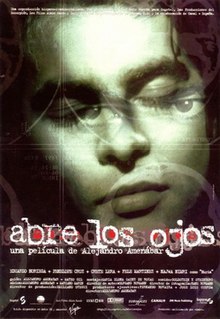
James Mooney: "Epistemology: Dreams and Demons -- Abre los ojos (Open your eyes)"

Epistemology: Dreams and Demons -- Abre los ojos (Open your eyes)
by James Mooney
Film and Philosophy


My aim here is to examine the arguments of French philosopher René Descartes (1596-1650) through the contemporary viewfinder of Alejandro Amenábar’s Abre los Ojos (1997). The intention, however, is not to use the film as a mere vehicle for conveying Descartes’ thought, but rather to consider whether the particular context that Amenábar provides, and the nature of film itself, can enhance our understanding and and provide fresh insight into the issues that Descartes raises.

Descartes is writing at a time of scientific revolution and upheaval – many doctrines which have hitherto been accepted as most certain have been overturned and, as such, he is struck by the instability and unreliability of scientific ‘knowledge’. In his First Meditation, Descartes aims to sweep away all of his previously held opinions and start afresh. Descartes’ ‘method of doubt’ entails that if anything can be doubted, however slightly, then we are to treat it as if it is manifestly false and reject it outright. It is not, however, necessary that we subject each and every one of our opinions to this hyperbolic (exaggerated) doubt, as this would be a Sisyphean task. Rather, Descartes aims to test the ‘foundations’ of what we claim to know – ‘as the removal from below of the foundation necessarily involves the downfall of the whole edifice’.

Descartes’ claim is that one of these foundations is the senses – that is to say, if we can cast any doubt whatsoever on the reliability of the senses then we should reject as false whatever we learn from them:

All that I have, up to this moment, accepted as possessed of the highest truth and certainty, I received either from or through the senses. I observed, however, that these sometimes misled us; and it is the part of prudence not to place absolute confidence in that by which we have even once been deceived.


After briefly considering optical illusions and madness, Descartes goes on to provide one of the most famous arguments in philosophy: the dream hypothesis. What Descartes hopes to establish via this argument is that, given any particular experience, we can never know that that experience is not a dream.

To Read the Rest of the Essay


Friday, July 13, 2012

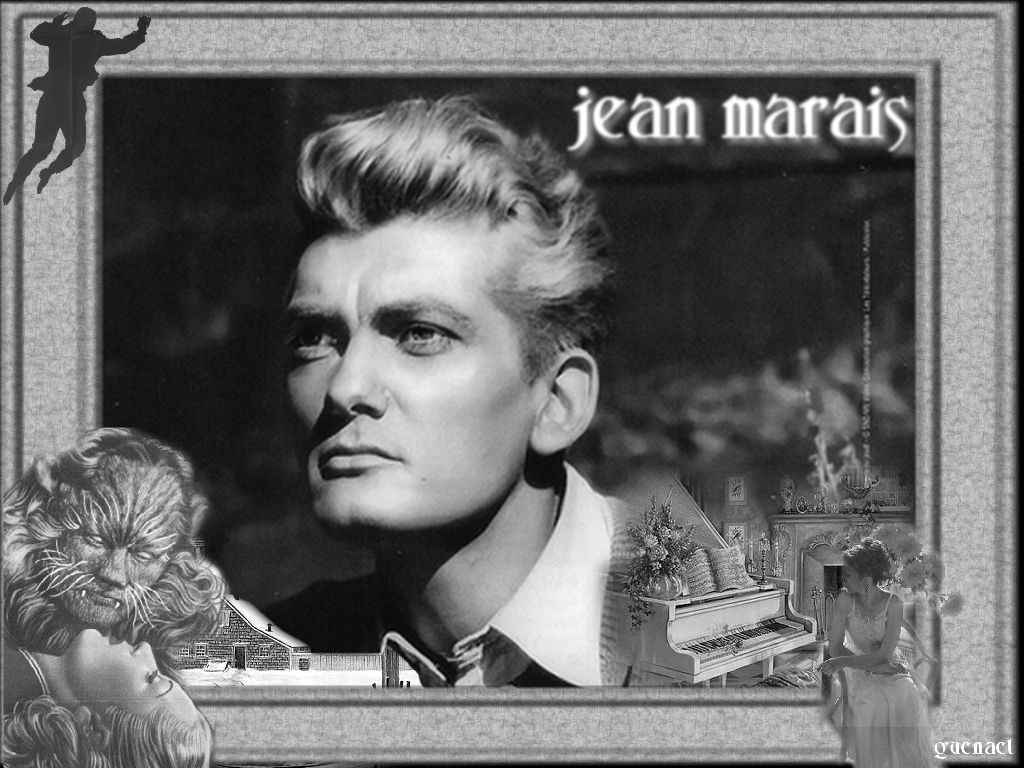
Severine Benzimra: Jean Marais -- Dream Lover

Jean Marais: Dream Lover
by Severine Benzimra
Acidemic


Jean Marais was a dream figure. An absolute hero. Americans had Kirk Douglas or Burt Lancaster, with whom to learn about history through westerns or peplums, we had a gay perfect blond male to learn about our history through swashbuckling adaptations from Alexandre Dumas or Théophile Gautier, classic theater plays by Racine, Corneille, Edmond Rostand or Victor Hugo.

Marais was une force qui va, a force that could quote Victor Hugo (Hernani). A force of nature who introduced generations of teenagers to the poetry, the ravishing quest of beauty and the incestuousness of Jean Cocteau. He became the ideal mature lover in the 50s. He incarnated the handsome, noble father, from whom young girls had to fly away to look for love, thanks to Jacques Demy.

Every French person might well have his/her own inner image of Jean Marais. He could make fun of himself. He played an evil green-skinned Fantomas, but unfortunately refused the part of the killing monk in The name of the Rose, Jean-Jacques Annaud's film. He had many faces, man/god, ancient/modern, lover/brother/father, artist/muse, actor, sculptor, etc. The fragrance the male, created by Jean-Paul Gaultier, might well be an homage to Jean Marais. He played in about 90 movies; eight TV series, 30 plays: his beauty and energy never faded, unlike Alain Delon's, like Burt Lancaster's. Like Lancaster, he played for Luchino Visconti. Lets be honest: impossible to imagine him as Il Gattopardo, Burt Lancaster imposed himself on Vischotni for that film, as well as in Gruppo di Famiglia in un interno and so did Dirk Bogarde in Death in Venice, though the role of Gustav von Aschenbach was firstly proposed to Jean Marais.

To Read the Rest of the Essay