Showing posts with label War Films. Show all posts

Monday, September 16, 2013

Haskell Wexler -- One Scene: The Cranes Are Flying

One Scene: The Cranes Are Flying
By Haskell Wexler
Current


I first saw Mikhail Kalatozov’s The Cranes Are Flying in Chicago in 1957. The film’s cinematography, by the great Sergei Urusevsky, has been a major influence on my career. The shot in the film that stands out most for me starts at about twenty-five minutes in. It begins handheld, when the character Veronica looks out the window of a bus, and continues out into a vast crowd of people. Then there’s a fast lateral movement going out of the bus and past a car, which could be just a great handheld move or was perhaps done on an improvised dolly. We can see a wide street through the crowd. Veronica stops for a beat of three seconds at the edge of the boulevard—at this moment, a crane seat was slipped under Sergei. The camera then cranes up to see the tanks and a wide view of the crowd.

To Read the Rest and to Watch a Video of the Shot

Thursday, July 11, 2013

J. Hoberman: Prague's Savage Spring

Prague’s Savage Spring
by J. Hoberman
The New York Review of Books


František Vláčil’s Marketa Lazarová (1967) is a virtual terra incognita. Thirty years after its release, it was named overwhelmingly by a poll of Czech critics and filmmakers as the best movie ever produced in Czechoslovakia, yet it remains little known outside its native land. Even as national epics go, Marketa Lazarová is unusually off-putting to outsiders. Violent and anti-heroic, the movie opens on a note of mordant self-deprecation (“This tale was cobbled together and hardly merits praise”) and goes on to represent thirteenth-century Bohemia as a backwater of Conan the Barbarian’s Hyperborean Age—the province of halfwits, rapists, and brutes.

Aside from repeated, if intermittent, screenings at the Brooklyn Academy of Music (and a relatively recent Vláčil retrospective at the Film Society of Lincoln Center), the movie has hardly been shown in the United States since its 1974 American release, for which it was shortened by over an hour. (Supremely unimpressed, The New York Times at the time characterized Marketa as “a colossal—and very near interminable—hodgepodge of medieval mayhem and myth, leaden symbolism and bloated piety,” featuring characters of “such unmitigated savagery that next to them the Visigoths would resemble a Red Cross mercy mission.”) Now released as a Criterion DVD in its full 165 minutes, Marketa Lazarová may finally reach a wider American audiences in all its sprawling glory.

Certainly, the film has an impressive pedigree. Vláčil adapted his labor of love from a 1931 novel by Vladislav Vančura (1891–1942), an expressionist Czech writer, avant-garde activist, independent filmmaker, and (per the movie’s credits) “people’s artist.” In addition to being a pre-war Communist (though he was expelled from the Party in 1939), Vančura was also a wartime martyr, one of many Czech partisans who were executed in reprisal for the assassination in Prague of Reichsprotektor Reinhard Heydrich.

Vančura’s Marketa Lazarová is a mock epic, depicting the savage feud between two rival brigand families, the pagan Kozlíks and nominally Christian Lazars, in the wilds of medieval Bohemia. Vančura was an almost untranslatable master of word play, and here invented a new Czech idiom, at once modernist and archaic, to create, in effect, a new shared geneology. The Czech writer and film historian Josef Škvorecký called Vančura’s lusty yarn a “novel of momentous importance in the history of Czech literature.” Evidently, the novel also had much to say to the young, multinational state that was interwar Czechoslovakia; despite its avant-garde underpinnings, it was his most popular and commercially successful work.

To Read the Rest

Wednesday, May 15, 2013

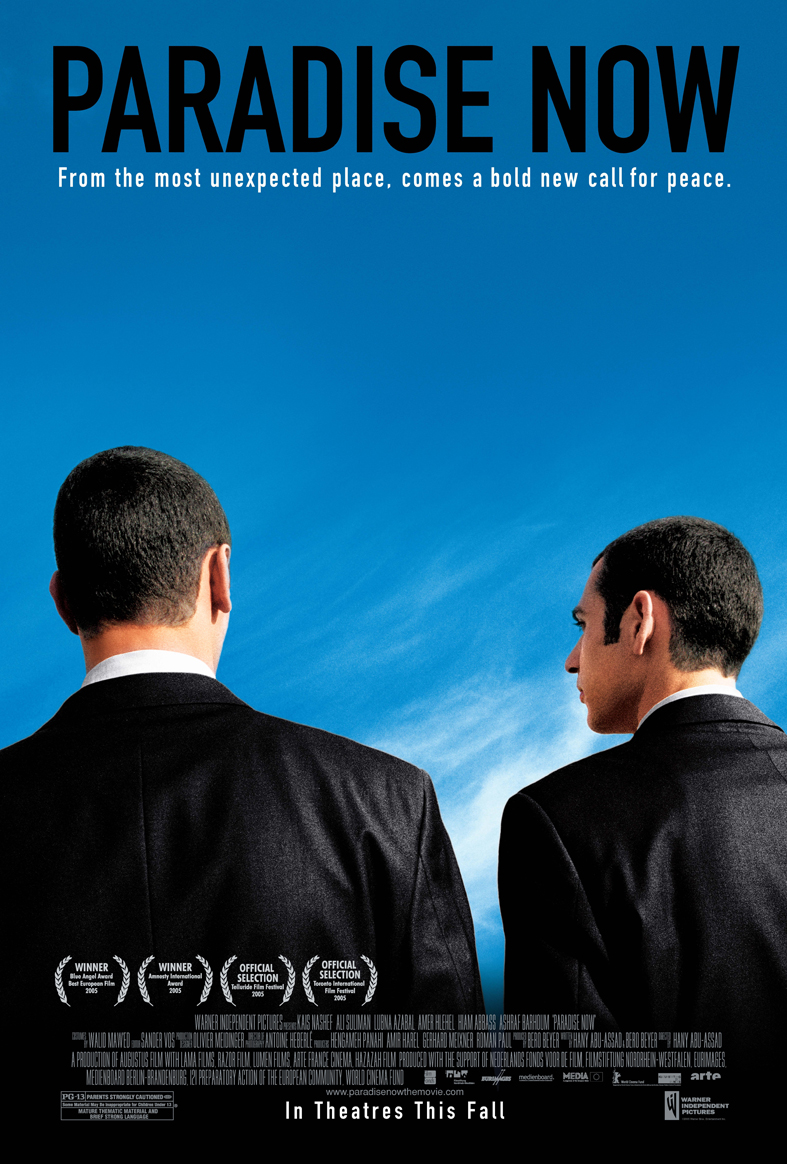
Paradise Now (Occupied Palestinian Territory/France/Germany/Netherlands/Israel: Hany Abu-Assad, 2005)


Paradise Now (Occupied Palestinian Territory/France/Germany/Netherlands/Israel: Hany Abu-Assad, 2005: 90 mins)

Bronstein, Phoebe. "Man-Made Martyrs in the Age of Mechanical Reproduction: Disturbing Manufactured Martyrdom in Paradise Now Jump Cut #52 (Summer 2010)

Jafaar, Ali. Paradise Now Sight and Sound (May 2006)

Ortiz, Gaye. "Dark Beauty: Theological Perspectives on War as Cinematic Mythology." Theology and Film: Challenging the Sacred/Secular Divide. ed. Christopher Deacy and Gaye Williams Ortiz. Malden, MA: Blackwell, 2008: 160-177.

Rich, B. Ruby. "Bomb Culture." Sight and Sound (April 2006)

Jose Teodoro -- Miss Bala: Nightmare State

Miss Bala: Nightmare State
Mexican director Gerardo Naranjo upends his filmmaking to show a country torn apart
by José Teodoro
Film Comment


Most existences on earth are marginal; the majority of people live on the edges of some kind of war. That the woman and man at the center of Miss Bala swing into each other’s orbit is itself no great coincidence. She’s Laura (Stephanie Sigman), the cheerful 23-year-old daughter of a Tijuana clothing merchant, and he’s Lino (Noe Hernandez), a taciturn, hard-eyed, soft-voiced drug trafficker about whose past we glean almost nothing. Both hail from humble if not desperate backgrounds; both aspire to transcend social determinism via archetypal routes to glamour and power: just as Lino asserts himself through terror and illegal commerce, Laura, however haphazardly, hopes to embody someone’s notion of the ideal woman by entering the Miss Baja California competition. Her first, fleeting encounter with him occurs when a dance party is turned into a massacre by Lino and his confederates. They meet again when she is so naïve as to seek out the police for help. In some perverse variation on the romantic comedy, the two keep crossing paths. Laura spends much of Miss Bala in a state of shock, while Lino seems to quickly intuit how best to exploit her allure while ostentatiously exchanging favors. He can ensure she wins the Miss Baja crown; she can serve as a gorgeous decoy in his criminal dealings.

A fascinating about-face for Mexican director Gerardo Naranjo, Miss Bala—co-written by Naranjo and Mauricio Katz and loosely based on actual events—surveys the current state of play in the drug war and offers commentary through a procession of absurdities, ironies, and largely uncontextualized mayhem. The gangsters and the DEA agents are equally menacing and seem to favor the same black SUVs; a beauty contest audience bursts into wild applause for a catatonic contestant; a flaming tire rolls by during an urban shoot-out as though it has emerged from a cartoon, traversing a stretch of asphalt covered in blood, bullet casings, and gasoline. Despite an incongruous, statistics-heavy closing title card, Miss Bala can no more be reduced to a hand-wringing docudrama about the escalation of Mexico’s drug-related violence than Take Shelter can be called a treatise on overcoming mental illness. These films are personal statements about individuals ceding control to forces beyond their comprehension—personal statements that just happen to dovetail nicely with urgent social issues.

“I’d arrived at a place where I felt like I wasn’t challenging myself that much,” says Naranjo, “so I decided to do something that I really didn’t know how to do. My previous films had a little bit of social commentary, but it was from a bourgeois point of view, trying to denounce commodification or conservatism. When I started to develop Miss Bala I felt I was responding to something far more urgent that’s in the air. To the fear.” Speaking during the Toronto International Film Festival last September, by which point Miss Bala had already seen its share of plaudits and detractors, Naranjo emphasized his latest film’s conspicuous shift in both style and content from his preceding work, whether the privileged teens playing out lovers-on-the-run melodrama under a mesh of Godardian alienation techniques (the deliriously stylish and witty 2008 I’m Gonna Explode) or privileged young adults negotiating disastrous relationships (the clever but flat 2006 Drama/Mex). “The directors I admire tend to change a lot between films,” says Naranjo. “Maybe not often with regards to form, but with subject matter for sure. Before, I felt that I was a filmmaker but had yet to really show it. I trusted so deeply in the present, in improvisation. I know I’m shifting. The question now, for me, has to do with whether or not I can maintain this.”

...

To Read the Rest

Monday, April 15, 2013

Black Book (Netherlands/Germany/Belgium: Paul Verhoeven, 2006)


Black Book (Netherlands/Germany/Belgium: Paul Verhoeven, 2006: 145 mins)


Barton-Fumo, Margaret. "Paul Verhoeven." The Film Comment (November 15, 2016) ["What are the uncanny forces at work behind Paul Verhoeven’s visceral and transgressive cinema? In anticipation of the Film Society’s complete retrospective of the Dutch master’s films and the U.S. release of Elle, this episode offers a comprehensive discussion of the director’s audacious and eclectic career encompassing art-house Dutch films (Turkish Delight [1971], Spetters [1980]) and big-budget Hollywood productions such as Basic Instinct (1992), Total Recall (1990) and Starship Troopers (1997). In the first part of the podcast, Film Comment Digital Editor Violet Lucca sits down with a panel of Verhoeven connoisseurs, including Cinema Scope critic Adam Nayman, Film Comment Deep Cuts columnist Margaret Barton-Fumo (also the editor of a forthcoming book of interviews with Verhoeven), and Fort Buchanan director Benjamin Crotty, to tackle the controversy that lies at the core of Verhoeven’s work. In the final part of the episode, Margaret Barton-Fumo speaks to Verhoeven about the uncomfortable eroticism that pervades Elle and his Brechtian influences."]

Carlin, Dan. "Logical Insanity." Hardcore History #42 (March 31. 2012)

Cribbs, John, James Hancock and Leanne Kubicz. "The Cinema of Paul Verhoeven." Wrong Reel #200 (November 2016)

Howard, Ed. "TOERIFIC: Black Book." Only the Cinema (July 20, 2009)

Judt, Tony. "The Legacy of War" and "Retribution" from Postwar: A History of Europe Since 1945. NY: Penguin, 2006: 13-63. [Your professor has a copy].

Sunday, April 14, 2013

Waltz With Bashir (Israel/France/Germany/USA/Finland/Switzerland/Belgium/Australia: Ari Folman, 2008)


Waltz With Bashir (Israel/France/Germany/USA/Finland/Switzerland/Belgium/Australia: Ari Folman, 2008: 90 Mins)

Baker, Nicholson, et al. "Autobiography/Biography: Narrating the Self." Philoctetes (December 13, 2008)

Barker, Jennifer Lynne. The Aesthetics of Antifascist Film: Radical Projection. Routledge, 2013. [Get through interlibrary loan]

Fainaru, Dan. "A Changing Landscape." International Film Guide: 2009. London: Wallflower Press, 2009: 53-63. [Available in BCTC Library PN1993.3 I544 2009]

Folman, Ari. "Waltz with Bashir." Worldview (January 23, 2009)

Hallinan, Chris. "The Lebanon Border: "Uniquely" Dangerous." Foreign Policy in Focus (September 1, 2010)

Kamiya, Gary. "What Waltz With Bashir can teach us about Gaza: The stunning new Israeli film reveals painful parallels between one of Israel's darkest moments and the current conflict." Salon (January 13, 2009)

Kinder, Bill. "When Soldiers Come Home in the Movies: The post-war experience as told in tropes." Keyframe (November 11, 2015)

Polonsky, David, et al. Waltz with Bashir: The Art Director’s Cut at War. Open Source (April 17, 2009)

Rozenkrantz, Jonathan. "Colourful Claims: towards a theory of animated documentary." Film International (May 6, 2011)

Tuesday, April 9, 2013

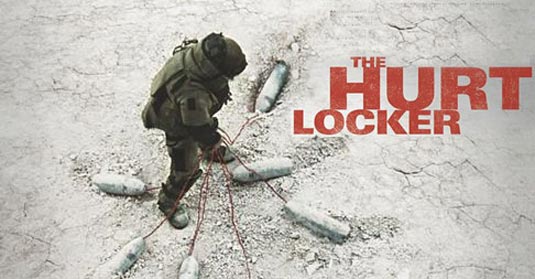
The Hurt Locker (USA: Kathryn Bigelow, 2008)


The Hurt Locker (USA: Kathryn Bigelow, 2008: 131 mins)

Alpert, Robert. "The Hurt Locker litigation: An adult’s story—part 2." Jump Cut #57 (Fall 2016)

Benton, Michael Dean. "Kathryn Bigelow's Wild Men: Gender in The Hurt Locker." North of Center (2008: Reposted on The Smirking Chimp, March 4, 2010)

Kemp, Philip. "Directors of the Year: Kathryn Bigelow." International Film Guide:2010 ed. Ian Hadyn Smith. NY: Wallflower Press, 2010: 17-24. [Professor has copy]

Kinder, Bill. "When Soldiers Come Home in the Movies: The post-war experience as told in tropes." Keyframe (November 11, 2015)

Peebles, Stacey. "Stories from the Suck: The First Wave of Iraq War Narratives." Berfois (April 15, 2011)

Stork, Mattias. "Chaos Cinema: The Decline and Fall of Action Filmmaking." Press Play (August 22, 2011)

Wednesday, January 9, 2013

Ray McGovern: Excusing Torture, Again

Excusing Torture, Again
by Ray McGovern
Common Dreams


...

The Downside of Torture

Besides the moral opprobrium that the practices brought upon the United States, the CIA’s use of torture alienated many Muslims who otherwise would have felt no sympathy for Islamic extremists. For example, U.S. military interrogators report that the vast majority of jihadists who came to fight against U.S. forces in Iraq were motivated by the disclosures about torture at Abu Ghraib and Guantanamo.

FBI interrogators also have said their rapport-building techniques with an early detainee, logistics specialist Abu Zubaydah, were succeeding in eliciting important information from him before the CIA interrogators arrived and insisted on applying their brutal methods.

Author Jane Mayer in her book The Dark Side writes that the two FBI agents, Ali Soufan and Steve Gaudin, “sent back early cables describing Zubayda as revealing inside details of the [9/11] attacks on New York and Washington, including the nickname of its central planner, ‘Mukhtar,’ who was identified as Khalid Sheikh Mohammad [KSM]. …

“During this period, Zubayda also described an Al Qaeda associate whose physical description matched that of Jose Padilla. The information led to the arrest of the slow-witted American gang member in May 2002, at O’Hare International Airport in Chicago. …

“Abu Zubayda disclosed Padilla’s role accidentally, apparently. While making small talk, he described an Al Qaeda associate he said had just visited the U.S. embassy in Pakistan. That scrap was enough for authorities to find and arrest Padilla” who was suspected of plotting a “dirty bomb” attack inside the United States (although he was never charged with that offense).

In 2009, Soufan broke his personal silence on the topic in an op-ed in the New York Times, citing Zubaydah’s cooperation in providing information about Padilla and KSM before the CIA began the harsh tactics. “It is inaccurate … to say that Abu Zubaydah had been uncooperative,” Soufan wrote. “Under traditional interrogation methods, he provided us with important actionable intelligence.” [NYT, April 23, 2009]

Nevertheless, Bush administration defenders have cited the information wrested from Zubaydah — who was waterboarded at least 83 times in August 2002 — as justification for the interrogation tactics that have been widely denounced as torture.

The problem of eliciting false intelligence was demonstrated by the handling of another al-Qaeda captive, Ibn al-Shaykh al-Libi, who responded to threats of torture by fabricating an operational link between Saddam Hussein’s government and al-Qaeda. It was exactly the kind of information that the Bush administration had been seeking to justify its desired invasion of Iraq.

By Feb. 11, 2003, as the countdown to the U.S. invasion progressed, CIA Director George Tenet began treating al-Libi’s assertions as fact. At a Senate Intelligence Committee hearing, Tenet said Iraq “has also provided training in poisons and gases to two al-Qa’ida associates. One of these associates characterized the relationship he forged with Iraqi officials as successful.”

But the CIA’s promotion of al-Libi’s information ignored the well-founded suspicions voiced by the Defense Intelligence Agency. “He lacks specific details” about the supposed training, the DIA observed. “It is possible he does not know any further details; it is more likely this individual is intentionally misleading the debriefers.”

The DIA’s doubts proved prescient. In January 2004, al-Libi recanted his statements and claimed that he had lied because of both actual and anticipated abuse. In September 2006, the Senate Intelligence Committee criticized the CIA for accepting al-Libi’s claims as credible. “No postwar information has been found that indicates CBW training occurred and the detainee who provided the key prewar reporting about this training recanted his claims after the war,” the committee report said.

Al-Libi ended up in a Libyan prison during the period when Col. Muammar Gaddafi was cooperating with the U.S. in hunting down “terrorists.” Al-Libi “committed suicide” just two weeks after being visited in the Libyan prison by a team from Human Rights Watch in April 2009.

‘No Good Intelligence’

The al-Libi case demonstrated one of the practical risks of coercing a witness to talk. To avoid pain, people often make stuff up, an obvious point that other truth-tellers also have noted. On Sept. 6, 2006, for example, Gen. John Kimmons, then head of Army intelligence told reporters at the Pentagon, in unmistakable language:

“No good intelligence is going to come from abusive practices. I think history tells us that. I think the empirical evidence of the last five years, hard years, tells us that.”

Gen. Kimmons is a rare species – a general officer with guts, not to mention an intelligence career focusing mostly on interrogation practices. He was well aware that President George W. Bush had decided to claim publicly, just two hours later, that the “alternative set of procedures” for interrogation – methods that Bush had approved, like waterboarding – were effective.

So the real experts say one cannot acquire “good intelligence” from torture, i.e. an empirical reality upon which to base sound policy. But what about bad intelligence, especially preferred bad intelligence? If your goal in 2002 and 2003 was to make a case showing operational ties between al-Qaeda and Iraq – when none existed – well, then, torture works like a charm.

Yet, Jose Rodriguez now seeks to rewrite this sordid chapter in the CIA’s history and put his own complicity in a more favorable light.

One could say his first major move in this cover-up came in 2005 when he ordered the destruction of videotaped evidence of these “enhanced interrogation techniques.” Surely, it is easier to soft-pedal the cruel reality of waterboarding and other abusive tactics if people can’t actually see the human suffering.

And, the Washington Post, which once basked in the glory of its investigation of the Watergate cover-up, now gives generous space for a practitioner of both waterboarding and destruction of evidence to make excuses without challenge.

Just think how Official Washington’s attitude toward respect for the law has degraded over the past three decades or so. Not even President Richard Nixon dared to destroy the incriminating tapes of Watergate, even though he knew only too well that the evidence on them would be his undoing.

Yet, Rodriguez never faced criminal charges for destroying 92 videotapes recording hundreds of hours worth of CIA black-site interrogation footage. Rodriguez ordered the tapes destroyed at precisely the time when Congress and the courts were intensifying their scrutiny of the CIA interrogation program. Yet – surprise, surprise – nowhere in Sunday’s Post is there mention of that felony fact.

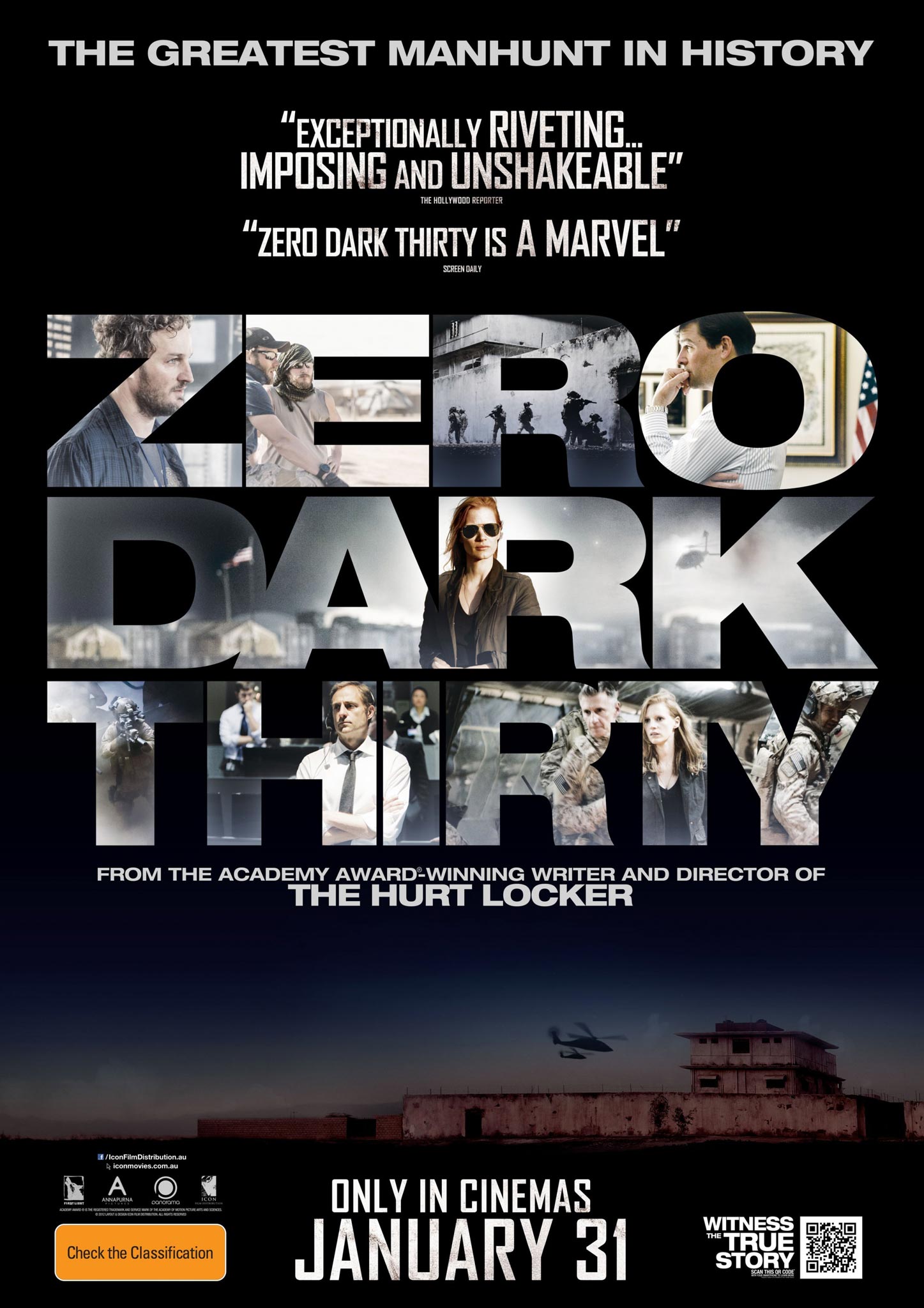
Indeed, as Rodriguez and his torture-friendly colleagues seek to use the occasion of the new Hollywood blockbuster to burnish their image, they are getting a helping hand from neocon newspapers like the Washington Post.

To Read the entire essay
Thursday, November 29, 2012

Maximilian Yoshioka: History or Humanity? On Lu Chuan's City of Life and Death - A Nietzschean Perspective on Nanjing

History or Humanity? On Lu Chuan's City of Life and Death: A Nietzschean Perspective on Nanjing
by Maximilian Yoshioka
Bright Lights Film Journal


In 1937, the Imperial Japanese Army stormed into the city of Nanjing in China, causing massive physical and human devastation, in what is now known as the "Rape of Nanjing." The incident, and the broader scheme of Japanese militarism and imperialism in which it took place, is today still a constant source of political tension between the two nation-states and their respective citizens. The 2009 film City of Life and Death, by Chinese auteur Lu-Chuan, is a bold attempt to dig up and redefine the specter of Nanjing that continues to haunt the East Asian consciousness. But instead of ideologically measuring one side or the other on a Manichean scale, Lu chooses to focus on the instances of human compassion and solidarity that are able to manifest themselves even in the mindless, brutal atmosphere he so effectively creates within the cinematic world.

What one comes to grasp after seeing the film is the ultimate importance of history as first and foremost a study of the human condition, and of the art of living itself, as opposed to scientifically detached observation and categorization. The continuities of human consciousness and memory mean that our experiences of the past are necessarily intertwined with those of the present; as individuals inescapably grounded in a specific historical period, we are unable to avoid this contemporizing process. Furthermore, it is something that must be embraced, for it allows us to incorporate these historical "peaks" (and crevasses) of human experience into our future actions and values. But in this integration of the present with the past there is the danger of a selective blindness toward the past that must be understood and overcome. However, the purpose of history as a guide to the present and the future, to "life," must still be emphasized over the "neutral," "objective" study of history as "fact," "statistic," or what Nietzsche, in his essay "The Use and Abuse of History, refers to disparagingly as the "World Process" — that is, an attitude of detached passivity toward a historical narrative that is falsely seen as predetermined and unalterable.

City of Life and Death's narrative shifts between several characters on both sides of the conflict, which allows the film to largely transcend distinctions of nationality and ideology and focus on the more basic human tragedy underlying it. One is never informed of the strategic or ideological Japanese justifications for the various massacres and battles throughout the film; there is no attempt to rationalize the violence. Instead the viewer is presented with a war that is absurd, irrational, and pointless, and this nonpartisan alignment allows for the emergence of a more universal, humanistic perspective that links the various key characters in the film through their shared ethical commitments. These include Kadokawa, a Japanese soldier (Hideo Nakaizumi), Lu Jianxiong (Liu Ye), a Chinese resistance fighter, John Rabe (John Paisley), a German who ran a demilitarized safety zone within Nanjing, his assistant, Mr. Tang (Fan Wei), and several female characters of both Japanese and Chinese origin, all of whom are faced with sexual violence and slavery due to the notorious Japanese "comfort women" policies.

This humanistic impulse manifests itself in various ways, but is mostly emphasized in authentic moments of kindness, empathy, and bravery that shine through the madness. At the end of the film, Kadokawa, under orders to execute two Chinese civilians, one of whom is a young boy, instead decides to release them into the wilderness, much to the amazement but also admiration of his inferior officer. Yet even this act of compassion is insignificant in comparison to what he has previously been required to do and see; under the weight of an intolerable conscience, he kills himself. Earlier in the film he also falls in love with a Japanese prostitute brought in to satisfy the soldiers' animalistic needs; his genuine feelings of care and affection for her contrast strikingly with the objectifying and dehumanizing attitudes of the other soldiers. John Rabe, the only nonfictional character in the film, was a member of the Nazi Party, a group, like the Japanese, condemned for its role in the Second World War. Along with several other missionaries, he saved large numbers of Chinese civilians by instating a safety zone within Nanjing, and his inclusion further demonstrates the director's commitment to a study of war centered on individual human beings rather than political identities.

To Read the Rest of the Essay

Monday, October 15, 2012

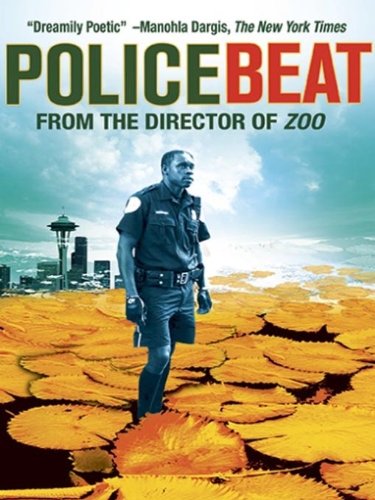
Spoiler Alert Radio: Sean Kirby - Cinematographer on Police Beat, Zoo, Lovely Still, Against The Current and The Tillman Story

Sean Kirby - Cinematographer - Police Beat, Zoo, Lovely Still, Against The Current, The Tillman Story
Spoiler Alert Radio


Cinematographer Sean Kirby shot the surreal film Police Beat, about an African-born bicycle cop encounters strange and mysterious situations on his police beat in urban Seattle.

In 2007, he re-teamed with writer/director team Robinson Devor and Charles Mudede and realized the controversial documentary Zoo about the life of an Enumclaw, Washington man who died as a result of an unusual encounter with a horse.

Some of his later credits include: Lovely Still, an emotionally moving holiday fable that tells the story of an elderly man discovering love for the first time, Against the Current, about a man, struggling with a tragic past, with an urgent calling who enlists two friends to help him swim the length of the Hudson River, starring Joseph Fiennes, and The Tillman Story, a documentary on the story of Pat Tillman.

To Listen to the Episode

Wednesday, October 3, 2012

Dennis Lim: Time Has Been Kind to Heaven's Gate

Time Has Been Kind to Heaven's Gate
by Dennis Lim
The New York Times


...

Lee Kline, the technical director at Criterion, said, “It wasn’t an option to go back to the original negative because that was what was cut down to the short version.” The original 70-millimeter prints were also in poor shape. So in a costly, complicated process, the restoration team scanned each color separation negative individually and recombined them.

“Heaven’s Gate” may be a subject Mr. Cimino has avoided for years, but once he gets going, the floodgates open. He spoke fondly of the performances of Kris Kristofferson, Christopher Walken and Isabelle Huppert, which he feels have never gotten their due. And he recalled the genesis of the project: Researching the history of barbed wire and the cattle industry, he came upon an incident known as the Johnson County War involving cattlemen, hired killers and local ranchers. He described the epilogue — the weary hero, James Averill (Mr. Kristofferson), on a yacht off the New England coast — as “a prelude to ‘The Great Gatsby,’ ” with Averill as the mogul awaiting the arrival of the young James Gatz.

Mr. Cimino also recalled his obsessive quest for authenticity that led many to characterize “Heaven’s Gate” as a runaway production. (First budgeted at less than $10 million, the film grew to a cost of $35 million, or $44 million including promotional costs, according to Mr. Bach’s book. Mr. Cimino maintains that it was “all in $32 million.”) As he put it, “Everything was problematical”: the locomotive that had to be transported to the Montana location from a Denver museum; a horse-drawn buggy whose spokes and upholstery had to be made in different states. “The movie could not be made today, even if you threw $300 million at it,” he said. “All of that is being lost. The wagons don’t exist, the skills are gone.”

Present-day viewers may well find that time has been kind to “Heaven’s Gate,” which plays more than ever like a fittingly bleak apotheosis of the New Hollywood, an eccentric yet elegiac rethinking of the myths of the West and the western, with an uncommonly blunt take on class in America. (“It’s getting dangerous to be poor in this country,” someone says. The rejoinder: “It always was.”) But this defiant last gasp of the downbeat ’70s, opening two weeks after Ronald Reagan was elected president, was plainly a movie at odds with its time.

Reached at his home in Hawaii, Mr. Kristofferson said he believes the themes of the film, with its grim view of American capitalism, were what made it so unpalatable. “It was a political assassination,” he said. He recalled getting word that Reagan’s first attorney general, William French Smith, had told studio heads that “there should be no more pictures made with a negative view of American history.”

Mr. Kristofferson, sounding more rueful than bitter, said that the reception to “Heaven’s Gate” knocked him off the Hollywood A-list for good. “I never really recovered from that,” he said, but he acknowledged that it was worse for Mr. Cimino. “It completely destroyed him.”

Mr. Cimino continued to work, albeit infrequently; he has made four features since “Heaven’s Gate,” the last one, “Sunchaser,” in 1996. A painter who began his directing career in advertising, he said that at home in Los Angeles he rarely watches movies now (and prefers to reread Pushkin and Flaubert). But he does have a film project in mind, which he hopes to shoot in digital soon.

Ms. Carelli, who was with Mr. Cimino in Venice, said that while there remain misconceptions about the making of “Heaven’s Gate,” “I don’t want to revisit old erroneous stories and try to correct them.” She added, “Now the film finally speaks for itself, and it has the final word.”

To Read the Entire Article

More Resources:

The Making and Unmaking of Heaven's Gate


Wednesday, September 5, 2012

Lila Kitaeff: Three Kings -- Neocolonial Arab Representation

Three Kings: Neocolonial Arab Representation
by Lila Kitaeff
Jump Cut


...

Non-oppositional critique of the Gulf War

In general, Three Kings’ marketing and reception dwelt on its supposedly unconventional nature. By unconventional, I mean “oppositional” discourse and imagery in the sense of contrasting to those found in dominant cultural productions. Although I will argue that the film does not, in fact, deviate from a typical Hollywood film in its basic message and structure, Three Kings does occupy a somewhat tenuous position in terms of Hollywood-type unconventionality. At first glance, viewers might expect the film to be an action-packed adventure and war movie. The main actors are blockbuster action stars (with the exception of Spike Jonze, director of Being John Malkovich and several “Beastie Boys” videos). And director Russell’s previous films, Spanking the Monkey and Flirting with Disaster, were offbeat in their brand of dark comedy, if not particularly unconventional in form or plot.

Initially film reviewers considered the story original. They said this film had more to it than met the eye, that its message and structure differed from most Hollywood films. A typical review praised Three Kings for its “genre subversion, anarchic attitude and barbed political commentary… making cogent points about… America’s role as the world’s policeman.” This same reviewer even suggested that the film addressed “the amorality and lack of consistent principles in American foreign policy. No Hollywood film in memory has addressed such an issue” (McCarthy par. 4 and 18).

However, although Russell does make a certain social critique of the Gulf War, as I will explore below, it is based in mainstream rather than oppositional discourses. For example, he explained this as his goal:

Taking people’s perceptions of this war, and turning them on their head… all the assumptions that you had about this war need to be looked at and turned over, including the sense of satisfaction you had as a moral victor, as an American.


However, if one were to make an explanatory critique subverting mainstream perceptions of the Gulf War, one would have to take into account the struggle’s historical context and the economic and ideological interests behind U.S. intervention. Such an argument was made by Noam Chomsky and Michael Albert, for example, when they asserted that “the real reason for U.S. opposition to Iraqi occupation of Kuwait is… to keep Washington, Wall Street, and their allies in charge of setting oil prices” (par. 5). And as Chomsky and Albert further pointed out, the U.S. government also has an ideological interest in perpetuating militarism in order to maintain the status quo of military spending and interventionist foreign policy.

Three Kings does not offer this sort of explanatory critique. Instead, the film presents the protagonists as coming to a realization that the United States has failed to save Iraq and destroy Hussein’s regime. According to the film, the United States is mistaken not because it intervened in the Middle East but rather because it did not follow through in its mission to save the good Arabs and crush the bad Arabs, a mission perpetuating neocolonial ideals. The heroes of Three Kings, in terms of the film’s logic, right the wrongs of the United States by saving a small group of Iraqi civilians, thus reproducing “the [neo]colonialist structure of the heroes’ relation to the native… [to] sort out the problems of people who cannot sort things out for themselves” (Dyer 156).

Neocolonial themes and traditional cinematic themes

Neocolonial cinema encourages the spectator to identify with representations of the colonizing subject and, by partaking of the trajectory set up by the storyline, to posit the colonial project itself as desirable. For example, in the scene in which the U.S. soldier protagonists are shown first entering the village, the images largely present their point of view, inviting identification by literally allowing the spectator to see through their eyes. In this scene the Iraqi civilians are portrayed as dominated and submissive as they beg the Americans to stay and help them. Other Iraqis who want to fight seem incapable of acting on their own as they cry out, “The Americans are here. It’s okay to come out. We can fight Saddam!” Thus, all Iraqi civilians—those beaten down and those who are still resistant—are presented as entirely dependent on U.S. help.

As Shohat and Stam put it, such a scene functions to “mobilize” spectatorial desire to participate in the narrative line about the protagonists’successful “neo-colonial mission.” The mobilization of desire works in tandem with spectator positions. Just as the cinematic apparatus interpellates the viewer to identify with the characters and narrative, the desire for which the protagonists strive also becomes the viewer’s desire .

In its ties with other fictions, including novels, drama, and song lyrics, Three Kings integrates traditional U.S. cultural and cinematic themes, especially about the outlaw hero. The film also uses a common Hollywood script format for dealing with cultural crises, that of the “problem picture.” These script strategies further weaken the film’s critique of United States ideals. In terms of screenwriting, Robert Ray discusses narrative strategies common in Hollywood in which morally centered characters enact a drama against a background of contemporary social issues. This kind of script development is common in what Ray terms “problem pictures,” films that critique large social issues but ultimately have happy endings that belie those problems (147).

In films like these, the outlaw hero is a common character. Such a figure possesses his own moral code and works to “correct” socially unjust laws and authority figures (Ray 15). For example, as Richard Dyer describes the genre, in the Rambo movies that attempt to critique the Vietnam War, the protagonist Rambo is

doing the job… that the United States government should be doing. Thus he repeatedly upholds basic American values against the actuality of America” (Dyer 159-160).


In this way, Hollywood’s use of the outlaw hero as a solution to historical events distorts perceptions of those events as part of social history, that is, outside of their filmic portrayals (Ray 59-62).

To Read the Entire Essay

Wednesday, August 1, 2012

Robert Castle: Two Cinematic Visions of the Inca Conquest -- The Royal Hunt of the Sun and Aguirre: Wrath of God

Two Cinematic Visions of the Inca Conquest: The Royal Hunt of the Sun and Aguirre: Wrath of God
by Robert Castle
Bright Lights Film Journal


...

The point of contact between Royal Hunt and Aguirre: Wrath of God is corresponding events: Atahualpa entering the courtyard in Cajamarca and an Indian approaching Aguirre's raft. The slaughter of the Inca king's imperial guard starts after the Spanish priest (Andrew Kier) has given him a Bible. Atahualpa is told that he holds the word of God, who speaks through the book. He puts the book to his ear and says that he hears nothing. Then he throws the Bible to the ground. The Spanish soldiers hidden around the courtyard emerge when the priest curses Atahualpa. The entire imperial guard, over a thousand men, are slaughtered without a single Spanish casualty.

In Aguirre, as the raft floats along a flaccid tributary of the Amazon River, Aguirre's soldiers spot a solitary canoe approaching. An old man and young woman are in the boat and subsequently brought aboard the raft. Brother Gaspar de Carvajal, just like Pizarro's priest, offers the Bible to the old man and tells him he holds the word of God. The old man, like Atahualpa, holds the Bible to his ear and then throws the book to the ground. The Spaniards, including Brother Gaspar, pierce the old man with several sword thrusts, killing him.

Aguirre, in Herzog's film, describes Cortes as his model for going against the Spanish authorities and conquering the land before him: "I am the great traitor. There must be no other. Anyone who even thinks about deserting this mission will be cut up into 198 pieces."

Aguirre views Cortes as a rebel who defied Velasquez, Spanish governor of Cuba who ordered Cortes not to go to Mexico, and the Spanish monarchy itself. When landing in Mexico, Cortes shackled all who were not with him and burned his ships to ensure no one could desert. The Spanish expedition over the Andes into the Amazon is led by Gonzalo Pizarro (Alejandro Repullés), Francisco's brother. The extreme conditions force Gonzalo to send a party of forty on rafts downriver in search of El Dorado, led by Don Pedro de Ursua (Ruy Guerra). After one raft is lost on a giant whirlpool and the others to a high tide, Ursua decides to return to the main force led by Pizarro. Aguirre and his henchmen take over, put Ursua on trial, and eventually hang him.

Where Pizarro sought his spiritual destiny through Atahualpa, Aguirre remains unaffected by the native Indians, who are portrayed as invisible antagonists with largely aggressive responses to the Spanish invaders (save for the two who came up to the raft in a canoe). What Aguirre finds is a world with no limits. Aguirre's world-weariness seems as inconsolable as Pizarro's in Royal Hunt, although Aguirre seeks the opposite form of meaning and fulfillment from his conquest. During his river expedition, Aguirre decrees all the land on both sides of the river theirs. His redemption comes in the form of personal empire-building. As the large raft comes to a halt in the dead waters, overrun by spider monkeys, Aguirre stands alone decrying himself the "Wrath of God" amidst the dead bodies of his followers. Aguirre seems to want to transpose his reality by this virtual conquest of the Amazon; likewise, Pizarro wants Atahualpa to resurrect himself after being strangled. Mutual delusions both.

Both films suggest Europe has run aground spiritually, as they both depict the Catholic Church and its representatives to be as bloodthirsty as the conquistadors. The Church sides cynically with the politically powerful. Brother Gaspar, for instance, does not try to save Ursua from execution. In Royal Hunt, Father Valverde signals the assault on the unarmed imperial guard. The films's respective responses to the spiritual crises divide their sensibilities. Aguirre: Wrath of God's postmodernist stance disdains psychological insight or drama. Royal Hunt of the Sun depicts Pizarro as a man torn between an old dead religion and the promise of a new revelation, an internal struggle that postmodernism rejects. Aguirre is driven by a single, narrow goal, albeit one that defines the Western sensibility. In this sense, the historicity of the film accurately gauges sixteenth-century psychology by denying Aguirre a modernist conscience. Cinematically, Herzog depicts the attitude of the Spaniards through the naturalistic settings. In particular, he holds one shot early in the film of the raging water flowing from the mountains symbolizing the power and the turmoil within the conquistadores.

To Read the Entire Essay

Saturday, March 3, 2012

Nick Turse: Death on Your Doorstep -- What Sebastian Junger and Restrepo Won’t Tell You About War

Death on Your Doorstep: What Sebastian Junger and Restrepo Won’t Tell You About War
By Nick Turse
TomDispatch


...

War on Your Doorstep

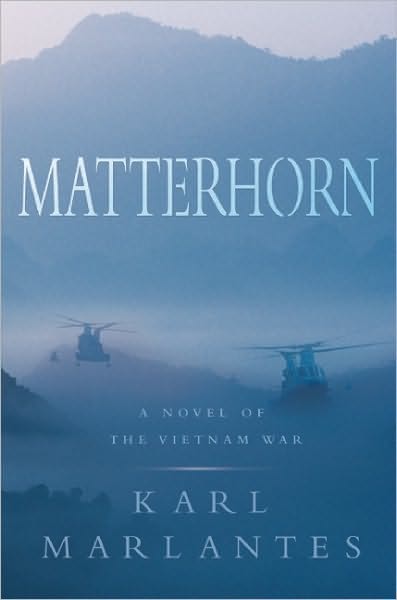
Earlier this year, Junger reviewed a new Vietnam War novel, veteran Karl Marlantes’s Matterhorn, for the New York Times Book Review. In a glowing front-page appraisal, he wrote, “Combat is not really what ‘Matterhorn’ is about; it is about war. And in Marlantes’s hands, war is a confusing and rich world where some men die heroically, others die because of bureaucratic stupidity, and a few are deliberately killed by platoon-mates bearing a grudge.” Analyzing Junger’s misreading of Matterhorn helps to unlock his misconceptions about war and explains the problems that dog his otherwise cinematically-pleasing, and in some ways useful, film.

Millions of Vietnamese were killed and wounded over the course of what the Vietnamese call the “American War” in Southeast Asia. About two million of those dead were Vietnamese civilians. They were blown to pieces by artillery, blasted by bombs, and massacred in hamlets and villages like My Lai, Son Thang, Thanh Phong, and Le Bac, in huge swaths of the Mekong Delta, and in little unnamed enclaves like one in Quang Nam Province. Matterhorn touches on none of this. Marlantes focuses tightly on a small unit of Americans in a remote location surrounded by armed enemy troops -- an episode that, while pitch perfect in depiction, represents only a sliver of a fraction of the conflict that was the Vietnam War.

It’s not surprising that this view of war appealed to Junger. In Restrepo, it’s his vision of war, too.

Restrepo’s repeated tight shots on the faces of earnest young American soldiers are the perfect metaphor for what’s lacking in the film and what makes it almost useless for telling us anything of note about the real war in Afghanistan. Only during wide shots in Restrepo do we catch fleeting glimpses of that real war.

In the opening scenes, shot from an armored vehicle (before an improvised explosive device halts a U.S. Army convoy), we catch sight of Afghan families in a village. When the camera pans across the Korengal Valley, we see simple homes on the hillsides. When men from Battle Company head to a house they targeted for an air strike and see dead locals and wounded children, when we see grainy footage of a farm family or watch a young lieutenant, a foreigner in a foreign land, intimidating and interrogating an even younger goat herder (whose hands he deems to be too clean to really belong to a goat herder) -- here is the real war. And here are the people Junger and Hetherington should have embedded with if they wanted to learn -- and wanted to teach us -- what American war is really all about.

Few Americans born after the Civil War know much about war. Real war. War that seeks you out. War that arrives on your doorstep -- not once in a blue moon, but once a month or a week or a day. The ever-present fear that just when you’re at the furthest point in your fields, just when you’re most exposed, most alone, most vulnerable, it will come roaring into your world.

Those Americans who have gone to war since the 1870s -- soldiers or civilians -- have been mostly combat tourists, even those who spent many tours under arms or with pen (or computer) in hand reporting from war zones. The troops among them, even the draftees or not-so-volunteers of past wars, always had a choice -- be it fleeing the country or going to prison. They never had to contemplate living out a significant part of their life in a basement bomb shelter or worry about scrambling out of it before a foreign soldier tossed in a grenade. They never had to go through the daily dance with doom, the sense of fear and powerlessness that comes when foreign troops and foreign technology hold the power of life and death over your village, your home, each and every day.

The ordinary people whom U.S. troops have exposed to decades of war and occupation, death and destruction, uncertainty, fear, and suffering -- in places like Vietnam, Laos, Cambodia, Iraq, and Afghanistan -- have had no such choice. They had no place else to go and no way to get there, unless as exiles and refugees in their own land or neighboring ones. They have instead been forced to live with the ever-present uncertainty that comes from having culturally strange, oddly attired, heavily armed American teenagers roaming their country, killing their countrymen, invading their homes, arresting their sons, and shouting incomprehensible commands laced with the word “fuck” or derivations thereof.

Since World War I, it’s been civilians who have most often born the disproportionate brunt of modern warfare. It’s been ordinary people who have lived with war day after day. In Restrepo such people -- Afghan elders seeking information on someone the Americans detained, villagers seeking compensation for an injured cow the Americans butchered into fresh steaks, and a man who angrily asks the Americans and their translator to point out the Taliban among civilians killed by a U.S. air strike -- are just supporting characters or extras.

To Read the Entire Essay

Wednesday, February 29, 2012

Michael Dean Benton: Quentin Tarantino, King of the Mooks -- One Basterd’s Inglourious Response

Quentin Tarantino, King of the Mooks: One Basterd’s Inglourious Response
By Michael Dean Benton
Originally published in North of Center 1.8 (2009)

"The Second World War could still deliver more stories and films, but I believe that Quentin put a cover on that pot. With 'Basterds,' everything that can be said to this genre has been said. The film destroys every symbol. The work is done, end of story ... “
--Brad Pitt (The German magazine Sterne)

“Historians must, as best we can, cast light into these shadows and account for these people. This we have not done. Auschwitz, generally taken to be an adequate or even a final symbol of the evil of mass killing, is in fact only the beginning of knowledge, a hint of the true reckoning with the past still to come.”
--Timothy Snyder “Holocaust: The Ignored Reality” (The New York Review of Books: July 16, 2009)


In media theorist Douglas Rushkoff’s 2001 Frontline documentary Merchants of Cool, he outlines the marketing category of “mooks” and “midriffs.” The mook is essentially an outgrowth of 1990s MTV Generation marketing that seeks to speak to the inner idiot of men. The mook, as a marketing image, is proudly ignorant and revels in displays of destruction. This standardized conformist dumbass-culture operates behind a veneer of exuberant irrationality. Emotional or intellectual content is rejected in favor of the “wow” factor of stylishly cool shocks to the system.

Quentin Tarantino rose to fame in the 1990s and is a leading purveyor of “mook” culture. From the beginning of his career he proudly cited his broad knowledge of obscure violent videos from long-forgotten genres. He has repetitively produced a series of imitative movies centered upon strings of stylish set scenes of violence. There generally is not a clear reason for the violence in his films, other than personal motivation. In his films (especially post Jackie Brown), style is supreme and overrides any concerns of meaning or narrative.

The last Tarantino film I watched in a theater was Kill Bill I (2003). It was a non-stop series of images of extreme violence, situated in a simplistic comic book format, with no thought or reflection. Even worse were the twisted attempts at humor. Particularly disturbing was the intended comedy of dry humping a comatose woman. I recall observing the negative impact this twisted attempt at humor had on some of the adult males in the audience, who laughed and jeered as if on cue. One male viewer next to me twitched and giggled throughout the movie, his leg jerking as heads flew and blood spurted. My companion, after the movie, said that my face during the viewing reflected my distaste and disgust. It was more my reaction toward the viewer's laughter than the movie.

Herein resides my main problem with Tarantino’s films. The simplistic nature of the cartoonish characters and plots of his films allow “any” viewer to seize upon the “story” as representing his (or her) own viewpoint. Furthermore, the absence of “effect” in regards to the hyper-violence removes any sense of context for the character’s actions beyond personal motivation. This keeps the characters from moving beyond their cartoon nature and allows the audience to revel in violence for violence’s sake.

In order to think about this I will outline some of the characters in his latest film Inglourious Basterds (2009). Most prominent, in the advertisements and trailers for the film, is Lt. Aldo Raine (Brad Pitt), the leader of the American assassination squad. He simply wants scalps of Nazis because they are “evil.” The only background we get in regards to Aldo is that he may or may not have been a moonshiner back in Tennessee. This characterization is so broadly drawn that this character could easily become a NAZI without any significant changes. Raine’s background and those of his men are never fleshed out.

In contrast to this cardboard character, I’m reminded of the economy of a classic pulp film like The Dirty Dozen (Robert Aldrich, 1967) in which the avenging men are introduced quickly and efficiently. It allows the characters to be more than interchangeable parts in a broadly drawn revenge thriller. The Dirty Dozen still operates within the genre conventions while allowing us to develop a sense of the people involved in the thriller.

Raine’s counterpart is the brilliantly deductive SS officer Hans Landa (Christoph Waltz). He is called the “Jewish Hunter” by the French Jews he hunts, and Tarantino states that he is intentionally a “brilliant detective.” He is the classic stereotype of the “cultured” NAZI monster that will be destroyed, or brought down, by his increasingly irrational hubris. Yes, his verbosity is amusing when we forget his sinister intent, but, as with Raines, with a change of clothes and era, Landa could be Detective Robert Green on Law and Order: Criminal Intent.

In American culture we are faced with a polarized political system in which all sides are calling their opponents fascists. We are slowly losing any sense of historical understanding of fascism as it becomes a derogatory term to be slung haphazardly at your opponents. Ripped from its context, the historical understanding of fascism, the sinister Landa, the hysterical Hitler, the effete Goebbels, simply become labels that can be applied to anyone we want.

Brad Pitt claims “that Quentin put a cover on that pot” and “the work is done” because they have destroyed all of the symbols associated with the WWII genre. The ignorance here is in assuming that this is simply a cultural genre that one can assault and failing to recognize that these are powerful symbols that have not been fully dealt with, because “the true reckoning with the past [is] still to come.” Perhaps, most irresponsible in this film, is the ignorance of the ultra-nationalist mentality of fascism, which encourages us to accept that anything done in the name of god, country, mom and apple pie, is ok.

Shoshana (Mélanie Laurent), who escapes an earlier massacre of her Jewish family by Landa’s men, is the hidden victim secretly plotting an extreme act of violence. She escapes and appears years later, without any explanation, magically acquiring a 350 seat cinema that will become the centerpiece for a fantasy plot to eliminate the NAZI hierarchy. Shoshana becomes a victim of convenience for Tarantino in this film. She has no purpose other than to facilitate the confrontation between the two main male protagonists. Sadly, we continue to hear the ridiculous assertion that Tarantino is producing positive female characters. Close reflection on this character will quickly show that she is but a sketch used to advance the plot.

Uniting the three character threads is a series of over-produced “set pieces” intended to move the plot. A few of them are powerful; if anything, Tarantino is a master of stylish set pieces. In particular, the opening scene and the later basement pub scene are effective tension moments. Unfortunately the book chapter style of the structure is riddled with holes and eventually collapses under the weight of a 158 minute pulp film.

At a pivotal moment near the end of the film, Shoshana prepares to burn down her cinema with the NAZI hierarchy inside. We see her applying her stylish costume for the night as the soundtrack begins playing “Putting Out the Fire” by David Bowie (from Paul Schraeder’s 1982 horror film remake Cat People). The song and music is inappropriate to the sense of drama and time, and the tracking crane shot through the hallway is awkward. This would have been the moment in which Tarantino’s characterization of Shoshana could have been powerful, but instead he is more concerned with producing hollow stylish effects than delving into his character’s mindset. Shoshana remains an empty cipher, and her ridiculous end becomes simply another set piece for Tarantino to act out his phallic fantasies.

Undoubtedly, for many Tarantino fans, this film will be a pleasure. I watched it twice this week in order to work out my reaction to the film. The first time was late on a Friday night, and the crowd laughed throughout the stylishly violent film. The second viewing was on a Sunday afternoon, and the theater was filled with two busloads of UK football players and staff. The football players were actually more restrained than the Friday night crowd. I talked to the man next to me after the Sunday repeat viewing, and he said that he enjoyed seeing good win and evil destroyed. As he walked away from me, I noticed the back of his shirt. It said, “Make war, not love” above the image of a firing machine gun. I wondered who he thought in this world were the deserving good, and who were the evil people that needed to be destroyed.

Saturday, February 18, 2012

Michael Dean Benton: Kathryn Bigelow's Wild Men -- Gender in The Hurt Locker

[This was a short review for North of Center when the film was first released in the theaters.]

Kathryn Bigelow's Wild Men: Gender in the Hurt Locker
by Michael Dean Benton
The Smirking Chimp


"Here’s a radical thought: She is, simply, a great filmmaker. Because while it is marginally interesting that she calls “action” and “cut” while in the possession of two X chromosomes, gender is the least remarkable thing about her kinetic filmmaking, which gets in your head even as it sends shock waves through your body." Manohla Dargis, “Action!” (The New York Times: June 18, 2009)

Manohla Dargis is both right and wrong in this statement about action film director Kathryn Bigelow. First, Darghis is right in reminding us we should be able to approach Bigelow’s oeuvre as the work of an auteur free from the fact that she is a woman. If we lived in the supposedly free and equal society that many believe we do, then this would not be a consideration. Unfortunately, we live in a culture in which female artists face considerable barriers in getting their work out to the public.

Consider that this “great filmmaker” is releasing her first feature film in the last seven years. When Entertainment Weekly posted their pick for the 25 Top Directors earlier this year, they did not choose one woman. No female director has ever won an Oscar for directing, and only three have been nominated. Less than ten percent of films yearly are made by women directors. The film industry is dominated by male executives, and like the art world in general, there is a long tradition of privileging the male gaze. The male domination of the film industry suggests the “extent to which the dreams that radiate off theater screens and into our culture are still almost exclusively the dreams of men” (Michelle Goldberg “Where are the Female Directors,” Salon, August 7, 2007).

Secondly, and this is where Darghis is clearly wrong, “gender” is extremely important to any consideration of Bigelow’s “kinetic filmmaking.” However, the gender that should be under consideration here is not female, rather it is Bigelow’s repeated construction of the aggressive, adrenaline-junky, male outsider.

There is a continuing series of charismatic, dangerous male characters in Bigelow’s films: Jesse Hooker (Lance Henriksen), the patriarch of the outlaw vampire clan in Near Dark (1987); the extreme-sport guru Bodhi (Patrick Swayze), who leads a gang of bank robbers in Point Break (1991); Lenny Nero (Ralph Fiennes), the ex-cop turned street hustler, who deals the adrenaline-junk vids that his consumers are addicted to in Strange Days (1995); and the unyielding Russian submarine Captain Alexi Vostrikov in K-19: The Widowmaker (2002).

In her latest film, The Hurt Locker (2008), this role is filled by the reckless, dangerous, yet sympathetic Staff Sergeant William James (Jeremy Renner). James is reckless in his disarming of bombs and in his pursuit of a sense of justice; he clearly follows Bohdi’s philosophy that “fear causes hesitation, and hesitation will cause your worst fears to come true.”

Usually these “wild” figures are opposed by more rational, empathetic and/or civilized counterparts, who alternate between worshipping these Alpha Males and seeking to end their reign. This is most fully brought to life in the classic Point Break through the figure of ex-college football star and undercover FBI agent Johnny Utah (Keanu Reeves), who develops what can be clearly defined as a romanticized love for the rogue outlaw Bodhi, who represents for him the ideal “wild” male figure. The eroticism of their relationship is clearly represented as Utah, while chasing the masked Bodhi after a bank robbery, falls down in pain as a result of his recurring, career-ending, football injury. Utah aims his gun at the retreating Bodhi, and has him clearly in sight. But at the last second, Utah lifts the gun skyward and shoots repeatedly into the air, screaming ecstatically, while Bodhi smiles back at him.

In The Hurt Locker, this role of the “civilized” male is filled by former intelligence operative, Sergeant JT Sanborn (Anthony Mackie). Sanborn is confused by his mixed feelings toward James. On the one hand, he admires the extreme bravery and capability of James in high intensity situations; on the other hand, he recognizes that this same aggressively gung ho attitude is a danger to the soldiers surrounding James.

A macho rivalry between James and Sanborn soon erupts into unexpected punches, drunken brawling, and even a scene where James literally mounts a prone Sanborn, riding him like a bronco as Sanborn reacts with killing force. Sanborn even openly considers putting James down like a dangerous animal in order to save others.

In these films, the audience is usually placed in the role of the civilized male counterpart. We are there to observe these men who refuse to bend to the rules of society. We marvel at their freedom to engage in behavior that most of us would be too timid to pursue. We alternate between envying, desiring, imitating and fearing their unbending attitude.

These violent Alpha Male leaders have long been adopted as a symbol of ideal maleness in patriarchal American culture, and Hollywood film culture has played a traditional role in influencing society to accept them as their leaders. It is in the swagger of George W. Bush as he states “you are either with us or against us.” It is in Ronald Reagan’s challenges to the “Evil Empire.”

However, there is a difference in the typical Bigelow hero from these presidential portrayals of “propertied individualism” (Michael Rogin: Ronald Reagan, the Movie, 1987). Unlike the traditional swaggering American leader, Bigelow’s heroes make no claim to the rewards or benefits of the society they struggle against or retreat from. In fact, like the tragic Western man of action, Shane, there is no place for them in proper society.

This is clearly exhibited in James’ experiences stateside in a store. He stands confused in the aisles and is overwhelmed by the programmed choices of the cereal aisle. Later, he speaks to his little son about the slow process of social erasure of pleasure. Bit by bit, as we are raised, as we conform, he tells his son, we lose each pleasure of life, until there is but one left, and that becomes your only reason for living. For James, his sole pleasure in life is the challenge of defusing a bomb. Tragically, nothing else matters.

The film opens with a Chris Hedges quote that “war is a drug” (from War is a Force That Gives Us Meaning) and this sets the tone for the addiction that James suffers from. He cannot find pleasure in civilized life and must resort to the addictive challenge of navigating the violent chaos of the Iraq War. The criminal surfer Bodhi would have understood the EOD Specialist James completely: “If you want the ultimate, you've got to be willing to pay the ultimate price. It's not tragic to die doing what you love.”

Link

Michael Dean Benton: Response to Jarhead (2005: Sam Mendes)

[Originally posted at the defunct website Bluegrass Film Society: November 6, 2005]


I went to see Jarhead on friday afternoon after reading the recent Harper's magazine profile essay on the film and the problems associated with anti-war films. I first became familiar with Swofford's memoirs about his service in the first Iraq War primarily because of Swofford's legendary party-session with University of Kentucky grad-students after a Lexington reading.

The setting:

I showed up at the 3:20 pm showing at the Regal theater (a typical shopping area multiplex). Arriving somewhat early, there were only two other people in the screening area and I thought that this might be a typical early-friday screening (the last afternoon showing we had experienced was The Constant Gardener which had only six people in the audience).

Slowly groups of 2-4 people filed into the theater until there was about 20+ people. At about 10 minutes before the showing three groups of 12+ people showed up, obviously, from overheard conversation and their collective-huddling, they were the local fraternities come to check out the latest war film.

The audience was easily 90% male and, as my companion noted, the testosterone blanketed the theater. One could sense that they were there for some action and some butt-kicking. In my imagination I heard them rallying the guys to go see the film: "Enough of the daily reports of violence and death in the current Iraq-war, lets go see a film about the one where we kicked some serious ass!"

The film (general comments because I don't want to ruin the plot):

This film is going to produce extreme reactions. It will be one of those polarizing films that will be an ideological litmus-test of the people who watch it (like Spike Lee's Do The Right Thing) because it doesn't make an explicit stand either way on this war, or war in general. It simply presents Swofford's personal story of training to be a Marine scout and his experiences in the first Gulf War.

A lot of commentary I have seen is that this film (and Swofford's book) is anti-military. I don't see it... yes it exposes the cruelties of collective male-bonding that is centered around the hatred of an "enemy-other," but is that really shocking to anyone? It portrays the insanity and dehumanization of contemporary warfare in which buttons are pushed and hundreds of people are immediately incinerated/blown-up, but is this unrealistic? It depicts the trauma experienced by those who serve in the military, but one only has to read studies of post-traumatic syndrome all the way back to WWI to realize this reality.

What I think is disturbing about this film for many of the people attacking it is that it de-mythologizes the glorification of personal combat--the individualistic hero-figure who rises above even the scewed-up absurdity of the military situation, bringing order to the madness. In this film there are no heroes. Even Apocalypse Now and Full Metal Jacket, perceived as anti-war films, allow us points of identification and characters we can "root" for in their quest to make sense of the insanity of war. In Jarhead, there are no places we can rest, we are kept disturbed, we are uneasy, we really don't know what is going on, perhaps the military terminology best suited to the atmosphere of the film is FUBAR.

The audience afterwards:

As we walked out you could sense the frustration of the bands of fraternity-boys who had sought the glories of represented warfare. They complained loudly that the film lacked the spectacle they had come to experience. I wondered, how many of these boys, from their fraternity-association and position of privilege in our society, would ever have to worry about serving in the military. Why, if they were so lucky to escape this service, unlike their less-fortunate peers in Iraq, Afghanistan and other parts of the world, was it so necessary for them to feel a part of the rituals of war, even if it was through the spectacle of a Hollywood film. As we walked out many of them were on phones planning the night's parties, their frustration so evident, I wondered how it would manifest in the night to come.
----------------------------------------------------------------

Since we are coming up on a week devoted to the military film I assigned Jarhead as an extra credit opportunity for my students. I will post some of the more interesting responses:

Leanne Harvey

Lance Cutshall

Stacey Peebles: Stories from the Suck -- The First Wave of Iraq War Narratives

Stories from the Suck: The First Wave of Iraq War Narratives
by Stacey Peebles
Berfrois


War stories have been with us forever, but at some points in human history they demand our attention more urgently than at others. Now would seem to be one of those times, as the United States remains deeply engaged in Iraq, Afghanistan, and now Libya, and—perhaps more importantly—welcomes home wave after wave of veterans whose military service has been quite different than that of their parents and grandparents. As a nation, we are only beginning to understand the nature of that service for the soldiers and how those combat experiences will shape the way our community as a whole thinks about the causes and effects of war.

A great deal of the way we think about war is the product of popular representations—the books, photographs, films, and (these days) online content that takes combat as its subject matter. Think of the Vietnam War, and you’re probably thinking as much (or more) about Full Metal Jacket, Platoon, Philip Caputo, Michael Herr, and Tim O’Brien as you are about first-hand stories from friends and family members. In film and text, young men are drafted into service and find themselves tangled in thick jungle and guerrilla warfare, gradually descending into disillusionment and political cynicism to the sound of a rock-and-roll soundtrack. Contemporary war is a different story.

Welcome to the Suck focuses on the soldier’s experience in the Persian Gulf War and the Iraq War as represented in prose, poetry, film, and new media. The war in Afghanistan predates the Iraq War and has officially outlasted it, as combat operations in Iraq were officially called to a close on August 31, 2010. But to date, that war has inspired fewer and less prominent war stories than the war in Iraq. This may change, as political and cultural attention shifts to Afghanistan during Obama’s presidency, and the ways in which this war blends with and differs from Iraq will be a compelling avenue of study in future years.

The American soldiers fighting in Iraq and represented in these new war stories have grown up in a culture of mediation, where it has been more acceptable than ever before to subvert or transcend traditional categories and norms of behavior, gender, and ethnicity. At the same time, new communications technologies have enabled people to experiment with virtual or alternate identities—in venues like blogs, forums, and more comprehensive online worlds like Second Life. Advances in battlefield technologies offer those interested in a military career the promise of a fighting self supplemented by things like GPS-guided Humvees, night-vision goggles, digital battle simulation, and robotics. As young people, these soldiers have been encouraged to revel in their individuality, challenge restrictive categories, and make ample use of technology to do so. Contemporary American culture traffics, after all, in identities that are cyborg, hybrid, avatar.

A film like Avatar, in fact, demonstrates this emphasis very well. The protagonist, Jake Sully, rises above the restrictions imposed on him by his nationality, his culture, his disability, and even his basic biology. It’s worth noting that he is a soldier, and that this is a war movie.

But it’s also a fantasy, and not just because of the blue skin and floating islands. The transcendence that Jake steps into like a warm bath proves to be frustratingly and even devastatingly elusive for soldiers fighting in Iraq. War—real war—enforces categorization even as it forces encounters across the boundaries of nation, the body, and technology.

Consider someone like Kayla Williams, who published her memoir Love My Rifle More Than You: Young and Female in the U.S. Army in 2005. Williams worked as an Arabic linguist and interpreter, a tough, smart soldier as eager for challenges as her male colleagues. She is female—and thus historically not typical American soldier material—but she has no doubts about her ability to do the job and do it well. What’s the currency of military masculinity, after all? Grit, brains, competence, and dedication to the group. Williams has all that in spades, and she goes to Iraq ready to take her place as a brother-in-arms. But it doesn’t work out as she’d like. Two instances of sexual assault shake her badly, but even more telling is her account of the fellow soldiers who treat her well. They pat each other on the ass to express acceptance and affection—a gesture called the “good game”—but they are extra careful not to touch her. “As a female,” she says, “I was not really a part of the ‘good game.’”

To Read the Rest of the Essay