Showing posts with label Police Procedural. Show all posts
Showing posts with label Police Procedural. Show all posts
Sunday, March 3, 2013
David Simon on The Wire (2002-2008)
Instead of the usual good-guys-chasing-bad-guys framework, questions would be raised about the very labels of good and bad, and, indeed, whether such distinctly moral notions were really the point. The show would instead be about untethered capitalism run amok, about how power and money actually root themselves in a postmodern American city, and, ultimately, about why we as an urban people are no longer able to solve our problems or heal our wounds. (36)
The Wire depicts a world in which capital has triumphed completely, labor has been marginalized and monied interests have purchased enough political infrastructure to prevent reform. It is a world in which the rules and values of the free market and maximized profit have been mistaken for a social framework, a world where institutions themselves are paramount and every day human beings matter less. (36)
But instead of the old gods, The Wire is a Greek Tragedy in which the postmodern institutions are the Olympian forces. It's the police department, or the drug economy, or the political structures, or the school administration, or the macroeconomic forces that are throwing the lightning bolts and hitting people in the ass for no decent reason. (37)
David Simon, quoted in Watson, Garry. "The Literary Critic, the Nineteenth Century Novel and The Wire." Cineaction #84 (2011): 32-40.

Monday, October 15, 2012
Spoiler Alert Radio: Sean Kirby - Cinematographer on Police Beat, Zoo, Lovely Still, Against The Current and The Tillman Story
Sean Kirby - Cinematographer - Police Beat, Zoo, Lovely Still, Against The Current, The Tillman Story
Spoiler Alert Radio
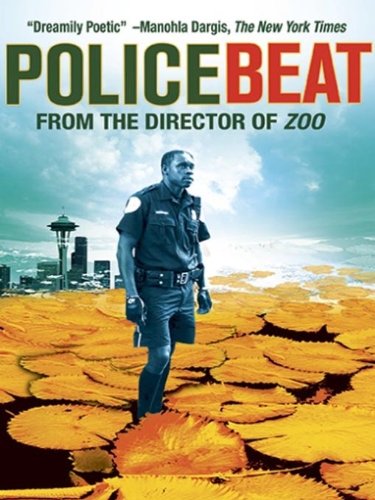
Cinematographer Sean Kirby shot the surreal film Police Beat, about an African-born bicycle cop encounters strange and mysterious situations on his police beat in urban Seattle.
In 2007, he re-teamed with writer/director team Robinson Devor and Charles Mudede and realized the controversial documentary Zoo about the life of an Enumclaw, Washington man who died as a result of an unusual encounter with a horse.
Some of his later credits include: Lovely Still, an emotionally moving holiday fable that tells the story of an elderly man discovering love for the first time, Against the Current, about a man, struggling with a tragic past, with an urgent calling who enlists two friends to help him swim the length of the Hudson River, starring Joseph Fiennes, and The Tillman Story, a documentary on the story of Pat Tillman.
To Listen to the Episode

Spoiler Alert Radio
Cinematographer Sean Kirby shot the surreal film Police Beat, about an African-born bicycle cop encounters strange and mysterious situations on his police beat in urban Seattle.
In 2007, he re-teamed with writer/director team Robinson Devor and Charles Mudede and realized the controversial documentary Zoo about the life of an Enumclaw, Washington man who died as a result of an unusual encounter with a horse.
Some of his later credits include: Lovely Still, an emotionally moving holiday fable that tells the story of an elderly man discovering love for the first time, Against the Current, about a man, struggling with a tragic past, with an urgent calling who enlists two friends to help him swim the length of the Hudson River, starring Joseph Fiennes, and The Tillman Story, a documentary on the story of Pat Tillman.
To Listen to the Episode
Saturday, July 21, 2012
Robert Farrow: The Wicker Man -- Games of truth, anthropology, and the death of ‘man’
The Wicker Man: Games of truth, anthropology, and the death of ‘man’
by Robert Farrow
Metaphilm

The Wicker Man, a cult classic of 1970s British cinema, portrays the investigation of an authoritarian police officer (played by Edward Woodward) into the mysterious disappearance of a young girl in the remote Scottish island of Summerisle. It becomes apparent that the islanders observe various ancient pagan traditions, and Sgt. Howie—a committed Christian—becomes increasingly suspicious of them. Eventually, he comes to suspect that she is somewhere imprisoned, earmarked as a human sacrifice for the Mayday festival of Beltane.
As the mystery unfolds, Howie comes to realizes the awful truth: the missing girl was a mystery fabricated in order to lure him to Summerisle, and it is in fact he who is to be burnt alive in the Wicker Man as an offering to the renewed cult of the old gods. This sinister ending has ensured this film a place in the annals of horror despite its divergence from the tropes of most horror films of the 1970s. The Wicker Man presents no bogeymen, no vampires, and no sinister music; its ending is all the more shocking, in fact, for the twee charm of the villagers and the folk-music score, which lead the audience into a false state of complacency that mirrors Sgt. Howie’s own vulnerability. And in a further departure from other examples of the genre, the antagonists are in no way demonized.
So, if The Wicker Man breaks so many of the genre rules, why is it such an unsettling film? One answer is illuminated by the complex matrices of truth, power, and knowledge made familiar by the French historian and philosopher, Michel Foucault: The Wicker Man presents us with an alarm call to wake us from “anthropological sleep,” and to tear down and burn our own false conceptions of “man.”
Foucault, a noted critic of the social sciences, rejected all positive notions of objectivity and human nature. For Foucault, we exist trapped within a kind of postmodern labyrinth (or “archive”), where truths are relative to the societies and practices that develop them. This is not a facile cultural relativism. Instead, we are invited to understand truths as problematized, colored by the contexts and subjects that produce them. The power structures that (so to speak) restrain us are also what makes our freedom possible, conditioning our thought at a collective, unconscious level.
Foucault’s own diagnosis of the present took the form of investigations into (often obscure) historical documents that aimed at exposing the implicit “truths” that underlie social practices and norms, thereby supporting his position as a thinker of social and historical relativity. As his work developed, it became clear that the driving force behind his work was an interest in how senses of identity are formed when the self is essentially a product of certain power/knowledge relationships, discourses, and games of truth.
Foucault’s early works—and The Wicker Man—offer this message: identity is best understood as an amorphous, shifting fiction, an “anthropology” that is to be exposed. When the full import of this becomes understood, the effect is rather more unsettling than the fraternity gorefests that typify many later horror films.
To Read the Rest of the Essay
by Robert Farrow
Metaphilm
The Wicker Man, a cult classic of 1970s British cinema, portrays the investigation of an authoritarian police officer (played by Edward Woodward) into the mysterious disappearance of a young girl in the remote Scottish island of Summerisle. It becomes apparent that the islanders observe various ancient pagan traditions, and Sgt. Howie—a committed Christian—becomes increasingly suspicious of them. Eventually, he comes to suspect that she is somewhere imprisoned, earmarked as a human sacrifice for the Mayday festival of Beltane.
As the mystery unfolds, Howie comes to realizes the awful truth: the missing girl was a mystery fabricated in order to lure him to Summerisle, and it is in fact he who is to be burnt alive in the Wicker Man as an offering to the renewed cult of the old gods. This sinister ending has ensured this film a place in the annals of horror despite its divergence from the tropes of most horror films of the 1970s. The Wicker Man presents no bogeymen, no vampires, and no sinister music; its ending is all the more shocking, in fact, for the twee charm of the villagers and the folk-music score, which lead the audience into a false state of complacency that mirrors Sgt. Howie’s own vulnerability. And in a further departure from other examples of the genre, the antagonists are in no way demonized.
So, if The Wicker Man breaks so many of the genre rules, why is it such an unsettling film? One answer is illuminated by the complex matrices of truth, power, and knowledge made familiar by the French historian and philosopher, Michel Foucault: The Wicker Man presents us with an alarm call to wake us from “anthropological sleep,” and to tear down and burn our own false conceptions of “man.”
Foucault, a noted critic of the social sciences, rejected all positive notions of objectivity and human nature. For Foucault, we exist trapped within a kind of postmodern labyrinth (or “archive”), where truths are relative to the societies and practices that develop them. This is not a facile cultural relativism. Instead, we are invited to understand truths as problematized, colored by the contexts and subjects that produce them. The power structures that (so to speak) restrain us are also what makes our freedom possible, conditioning our thought at a collective, unconscious level.
Foucault’s own diagnosis of the present took the form of investigations into (often obscure) historical documents that aimed at exposing the implicit “truths” that underlie social practices and norms, thereby supporting his position as a thinker of social and historical relativity. As his work developed, it became clear that the driving force behind his work was an interest in how senses of identity are formed when the self is essentially a product of certain power/knowledge relationships, discourses, and games of truth.
Foucault’s early works—and The Wicker Man—offer this message: identity is best understood as an amorphous, shifting fiction, an “anthropology” that is to be exposed. When the full import of this becomes understood, the effect is rather more unsettling than the fraternity gorefests that typify many later horror films.
To Read the Rest of the Essay
Monday, June 4, 2012
Audun Engelstad: It's not TV - or is it?
It's not TV - or is it?
by Audun Engelstad
16:9

. . .
TV vs. High Art
It is perhaps an outdated discussion, but there seems to be a repeated tendency to see quality and popular culture as two different and mutually exclusive entities. If a product of popular culture is endowed with an aura of quality, it ceases to exist as popular culture. Instead it moves to the realm of the art world. Historically, we can find this view expressed in W. H. Auden’s (1948: 151) classic article on the crime genre where he suggests that Raymond Chandler is not writing detective fiction, but rather serious studies of a criminal environment, and that his books “should be read and judged, not as escape literature, but as works of art.” And Tzvetan Todorov (1977), in his famous article “The Typology of Detective Fiction”, claimed that any experiment with the established features of the genre, in order to improve upon them, implied a move towards serious literature. In line with arguments like these, popular culture and high art exist as two different systems – and never shall the twain meet.
Needless to say, this position has been challenged, in particular as a consequence of the interest postmodern theory has taken in popular culture. Jim Collins (1989) has demonstrated how crime fiction applies many of the strategies that define the writings within a modernist realm, such as a highly sophisticated play on intertextuality and the foregrounding of a self-conscious style. Indeed, much of the postmodernist aesthetics have been invested in blurring the boundaries between high and low culture, re-circulating tropes, forms, and narrative schemes established by popular culture. Apparently, postmodernism has put an end to the divide between the two art systems, it is all one mix now. Or so it seems at times, but perhaps it is not that easy.
The reason for bringing this issue up again, even though it is easy to get the impression that it is settled, is that the conflict between high and low appears to be embedded in the slogan that defines HBO as different from television. And much of the literature on quality television, a term that until recently was something like an oxymoron, is bent on drawing attention to traits like narrative complexity, character density, and a distinctly defined style – traits that otherwise belong to the field of high art. At the peak of postmodernism, by the late 1980s and early 1990s, television looked quite different from today. Perhaps this is the reason why the notion of artworks within television comes so belatedly to television studies.
The notion that the HBO television drama raises above the medium seems to be advocated by the series’ creators as well as HBO’s advertising department. Both writer-producer of The Sopranos, David Chase, and writer-producer of The Wire, David Simon, have in several interviews expressed a general lack of interest in television drama, and, it seems, in television altogether. Such a position is quite puzzling when looking at the track record of the two of them. It is obvious that they are well-seasoned within the trade of serial television drama. Chase has a background as a writer and a producer for television series such as The Rockford Files and Northern Exposure. Originally, his ambitions for The Sopranos was for it to be a movie, and he has stated that he treated every single episode as an equivalent to a stand-alone film. Much can be said about such a claim, but it definitively works towards distinguishing The Sopranos as something other than ordinary television drama. As for Simon, he was a former crime reporter who was introduced to television as a writer and producer on Homicide: Life on the Street, based on his book Homocide: A Year on the Killing Street. As en executive producer and writer for The Wire he has made a point about bringing in creative people with little or no background in television. This, obviously, serves the impression that The Wire was conceived as unrelated to television. Both Chase and Simon, in their publically well-known statements, express a disdain towards television drama, what it is recognized by and what it achieves (see e.g. Biskind 2007 & Goldman 2006).
TV Auteurs
Whether or not Chase and Simon’s disdain for television is reasonable is beside the point. By their positions they – consciously, or not – apparently align themselves with the nouvelle vague filmmakers who revolted against the current state of French cinema and called for a politics of auteurs (fig. 4-5). If we follow this line of argument, Chase and Simon et al, do not necessarily express a desire to make something else than television – a film, a visualized novel, or something else – rather the goal is to make television drama into something other than what it is otherwise recognized as, yet still television drama. In other words, to explore and stretch the possibilities of television as an art form.
The idea of an auteur within television has been something of a contradiction in terms. The influence of auteur criticism arrived in USA in the 1960s at a time when cinema had lost the competition against television and found it necessary to distinguish itself from television. Ironically, some of the auteurs that came out of the period known as the Hollywood Renaissance had their background in television, such as Robert Altman, Bob Rafelson, Arthur Penn and John Cassavettes. Within cinema, the auteur is recognized as a person with a strong artistic impulse, the director who rises above the craftsmen on the film set, acting on an impulse to tell something of significance or of poetic value, and who is able to transform cinema to an art form worthy of serious debate. Television, on the other hand, is typically centered on personalities in front of the camera – the talk show host, the news anchor, the leading star of the soap series, and so forth. Take, say, The Late Show with David Letterman. The form follows a fairly strict format, and it really should make no difference who is doing the various jobs behind the camera. They are all replaceable. The only one that cannot be replaced without altering the show is David Letterman, the television personality. David Letterman can probably (and he once did) take his show to any other network channel, and it will still be recognized as The Late Show with David Letterman. The HBO drama series, by contrast, elevates the executive producer to the role of the artist. All though less pronounced, it is much the same position that Robert J. Thompson gives the producer in his study of quality television series of the 1980s and 1990s.
To Read the Rest of the Essay

by Audun Engelstad
16:9
. . .
TV vs. High Art
It is perhaps an outdated discussion, but there seems to be a repeated tendency to see quality and popular culture as two different and mutually exclusive entities. If a product of popular culture is endowed with an aura of quality, it ceases to exist as popular culture. Instead it moves to the realm of the art world. Historically, we can find this view expressed in W. H. Auden’s (1948: 151) classic article on the crime genre where he suggests that Raymond Chandler is not writing detective fiction, but rather serious studies of a criminal environment, and that his books “should be read and judged, not as escape literature, but as works of art.” And Tzvetan Todorov (1977), in his famous article “The Typology of Detective Fiction”, claimed that any experiment with the established features of the genre, in order to improve upon them, implied a move towards serious literature. In line with arguments like these, popular culture and high art exist as two different systems – and never shall the twain meet.
Needless to say, this position has been challenged, in particular as a consequence of the interest postmodern theory has taken in popular culture. Jim Collins (1989) has demonstrated how crime fiction applies many of the strategies that define the writings within a modernist realm, such as a highly sophisticated play on intertextuality and the foregrounding of a self-conscious style. Indeed, much of the postmodernist aesthetics have been invested in blurring the boundaries between high and low culture, re-circulating tropes, forms, and narrative schemes established by popular culture. Apparently, postmodernism has put an end to the divide between the two art systems, it is all one mix now. Or so it seems at times, but perhaps it is not that easy.
The reason for bringing this issue up again, even though it is easy to get the impression that it is settled, is that the conflict between high and low appears to be embedded in the slogan that defines HBO as different from television. And much of the literature on quality television, a term that until recently was something like an oxymoron, is bent on drawing attention to traits like narrative complexity, character density, and a distinctly defined style – traits that otherwise belong to the field of high art. At the peak of postmodernism, by the late 1980s and early 1990s, television looked quite different from today. Perhaps this is the reason why the notion of artworks within television comes so belatedly to television studies.
The notion that the HBO television drama raises above the medium seems to be advocated by the series’ creators as well as HBO’s advertising department. Both writer-producer of The Sopranos, David Chase, and writer-producer of The Wire, David Simon, have in several interviews expressed a general lack of interest in television drama, and, it seems, in television altogether. Such a position is quite puzzling when looking at the track record of the two of them. It is obvious that they are well-seasoned within the trade of serial television drama. Chase has a background as a writer and a producer for television series such as The Rockford Files and Northern Exposure. Originally, his ambitions for The Sopranos was for it to be a movie, and he has stated that he treated every single episode as an equivalent to a stand-alone film. Much can be said about such a claim, but it definitively works towards distinguishing The Sopranos as something other than ordinary television drama. As for Simon, he was a former crime reporter who was introduced to television as a writer and producer on Homicide: Life on the Street, based on his book Homocide: A Year on the Killing Street. As en executive producer and writer for The Wire he has made a point about bringing in creative people with little or no background in television. This, obviously, serves the impression that The Wire was conceived as unrelated to television. Both Chase and Simon, in their publically well-known statements, express a disdain towards television drama, what it is recognized by and what it achieves (see e.g. Biskind 2007 & Goldman 2006).
TV Auteurs
Whether or not Chase and Simon’s disdain for television is reasonable is beside the point. By their positions they – consciously, or not – apparently align themselves with the nouvelle vague filmmakers who revolted against the current state of French cinema and called for a politics of auteurs (fig. 4-5). If we follow this line of argument, Chase and Simon et al, do not necessarily express a desire to make something else than television – a film, a visualized novel, or something else – rather the goal is to make television drama into something other than what it is otherwise recognized as, yet still television drama. In other words, to explore and stretch the possibilities of television as an art form.
The idea of an auteur within television has been something of a contradiction in terms. The influence of auteur criticism arrived in USA in the 1960s at a time when cinema had lost the competition against television and found it necessary to distinguish itself from television. Ironically, some of the auteurs that came out of the period known as the Hollywood Renaissance had their background in television, such as Robert Altman, Bob Rafelson, Arthur Penn and John Cassavettes. Within cinema, the auteur is recognized as a person with a strong artistic impulse, the director who rises above the craftsmen on the film set, acting on an impulse to tell something of significance or of poetic value, and who is able to transform cinema to an art form worthy of serious debate. Television, on the other hand, is typically centered on personalities in front of the camera – the talk show host, the news anchor, the leading star of the soap series, and so forth. Take, say, The Late Show with David Letterman. The form follows a fairly strict format, and it really should make no difference who is doing the various jobs behind the camera. They are all replaceable. The only one that cannot be replaced without altering the show is David Letterman, the television personality. David Letterman can probably (and he once did) take his show to any other network channel, and it will still be recognized as The Late Show with David Letterman. The HBO drama series, by contrast, elevates the executive producer to the role of the artist. All though less pronounced, it is much the same position that Robert J. Thompson gives the producer in his study of quality television series of the 1980s and 1990s.
To Read the Rest of the Essay
Thursday, April 5, 2012
Thomas Doherty: Portraits of a Serial Killer -- A time-honored public enemy, from Dirty Harry to Zodiac
Portraits of a Serial Killer: A time-honored public enemy, from Dirty Harry to Zodiac
by Thomas Doherty
Moving Image Source

In Adaptation (2002), screenwriter Charlie Kaufman, the voice of weary experience, remarks that the serial killer is Hollywood’s hoariest cliché, the overexposed go-to-guy for the inspiration-impaired hack. Point taken—but the perp has certainly earned his star billing on the multiplex marquee. The serendipitous release in recent months of two serial-killer-centric DVDs—Don Siegel’s Dirty Harry (a two-disc edition and an "ultimate collector's edition" from Warner Home Video) and David Fincher’s Zodiac (Paramount Home Entertainment), a film from the 1970s and a film about the 1970s, both stalked by the same serial killer—traces the emergence of a predator whose criminal profile, once a blurry police sketch, has sharpened into a wanted poster more photogenic than the western outlaw, urban gangster, or corporate mobster.
The common source for both films—deep backstory for Dirty Harry (1971), narrative arc for Zodiac (2007)—is the Zodiac killer. In 1969, the Zodiac began a slow burn spree that claimed five (confirmed) murder victims in and around San Francisco, a relatively low body count that belies the city-wide terror incited by a territorial predator with a penchant for epistolary expression. Taking a page from Jack the Ripper, the self-christened Zodiac sent ominous ravings and coded messages to Bay Area newspapers, bragging of his homicides and threatening, in his most chilling taunt, to shoot children on school buses, or, as he phrased it, to "pick off kiddies as they come bouncing out.” Going on hiatus as suddenly as he opened fire, the Zodiac eluded capture and denied the reassurance of a case closed.
The investigation came to a more pleasing conclusion at the movies. In Dirty Harry, the opening salvo in what turned out to be a bellwether franchise for both Hollywood and Washington, a squinty, flinty Clint Eastwood incarnated a vigilante detective whose fidelity to Fourth Amendment niceties was retro even by 1972 standards. “Does Escobedo ring a bell? Miranda?” barks the exasperated DA after Harry tortures a confession out of his suspect-nemesis, a frothing psychopath named Scorpio (played with rabid relish by Andy Robinson), a Zodiac stand-in whose nom de plume also elegized an Age of Aquarius-Haight Ashbury scene gone bad. Though ripped from contemporary headlines, Scorpio could claim a long lineage in American cinema, from the psycho who pushed old ladies in wheelchairs down staircases (Richard Widmark in Kiss of Death, 1947) to the psycho who played old ladies in wheel chairs (Anthony Perkins in Psycho, 1960). In terms of temperament, MO, and clinical termscondition, Scorpio was a wack job, or, as Detective Callahan famously tagged him, a punk.
Yet even as Harry fired his .44 caliber Magnum into Scorpio’s chest, the smirking psychopath was being supplanted by a more lethal criminal type. Abetted by the mobility and anonymity of urban life, a feeding ground teeming with hapless prey (typically, young female hitchhikers), and a police force not yet equipped with computer databases, a cohort of less literary, publicity-shy serial killers thrived throughout the 1970s.
To Read the Rest of the Essay

by Thomas Doherty
Moving Image Source
In Adaptation (2002), screenwriter Charlie Kaufman, the voice of weary experience, remarks that the serial killer is Hollywood’s hoariest cliché, the overexposed go-to-guy for the inspiration-impaired hack. Point taken—but the perp has certainly earned his star billing on the multiplex marquee. The serendipitous release in recent months of two serial-killer-centric DVDs—Don Siegel’s Dirty Harry (a two-disc edition and an "ultimate collector's edition" from Warner Home Video) and David Fincher’s Zodiac (Paramount Home Entertainment), a film from the 1970s and a film about the 1970s, both stalked by the same serial killer—traces the emergence of a predator whose criminal profile, once a blurry police sketch, has sharpened into a wanted poster more photogenic than the western outlaw, urban gangster, or corporate mobster.
The common source for both films—deep backstory for Dirty Harry (1971), narrative arc for Zodiac (2007)—is the Zodiac killer. In 1969, the Zodiac began a slow burn spree that claimed five (confirmed) murder victims in and around San Francisco, a relatively low body count that belies the city-wide terror incited by a territorial predator with a penchant for epistolary expression. Taking a page from Jack the Ripper, the self-christened Zodiac sent ominous ravings and coded messages to Bay Area newspapers, bragging of his homicides and threatening, in his most chilling taunt, to shoot children on school buses, or, as he phrased it, to "pick off kiddies as they come bouncing out.” Going on hiatus as suddenly as he opened fire, the Zodiac eluded capture and denied the reassurance of a case closed.
The investigation came to a more pleasing conclusion at the movies. In Dirty Harry, the opening salvo in what turned out to be a bellwether franchise for both Hollywood and Washington, a squinty, flinty Clint Eastwood incarnated a vigilante detective whose fidelity to Fourth Amendment niceties was retro even by 1972 standards. “Does Escobedo ring a bell? Miranda?” barks the exasperated DA after Harry tortures a confession out of his suspect-nemesis, a frothing psychopath named Scorpio (played with rabid relish by Andy Robinson), a Zodiac stand-in whose nom de plume also elegized an Age of Aquarius-Haight Ashbury scene gone bad. Though ripped from contemporary headlines, Scorpio could claim a long lineage in American cinema, from the psycho who pushed old ladies in wheelchairs down staircases (Richard Widmark in Kiss of Death, 1947) to the psycho who played old ladies in wheel chairs (Anthony Perkins in Psycho, 1960). In terms of temperament, MO, and clinical termscondition, Scorpio was a wack job, or, as Detective Callahan famously tagged him, a punk.
Yet even as Harry fired his .44 caliber Magnum into Scorpio’s chest, the smirking psychopath was being supplanted by a more lethal criminal type. Abetted by the mobility and anonymity of urban life, a feeding ground teeming with hapless prey (typically, young female hitchhikers), and a police force not yet equipped with computer databases, a cohort of less literary, publicity-shy serial killers thrived throughout the 1970s.
To Read the Rest of the Essay
Wednesday, January 4, 2012
Steve Dollar: Film of the week -- Once Upon a Time in Anatolia
FILM OF THE WEEK: Once Upon a Time in Anatolia
by Steve Dollar
GreenCine Daily

Time's up, cinema aesthetes. Ring out the old, ring in the new. Stop looking at those 10 best lists and get on with your lives. The calendar has flipped over into 2012 and... I've already got a new #1. Nuri Bilge Ceylan's Once Upon a Time in Anatolia, which opens today in New York, will have plenty of competition throughout the coming year. Guaranteed, though, you will see very few films as masterfully designed and executed, or so heavy with thought that the extended silences that suspend the characters in time and space make even the most seemingly mundane interludes of dialogue (and there's a ton of dialogue by Ceylan's minimalist standard) feel loaded with quietly devastating significance. Imagine, for the sake of cultural transliteration, the banal, jocular nature of—say, a traveling salesman joke—shared between two gruff men, strangers yoked together by professional duty, breaking the boredom of a marathon overnight detail that threatens not to end with the dawn. On one level, it's just a little rough humor to pass time, break ice. But in this scenario, lines that might be throwaway someplace else turn resonant, the lure of hidden meanings plunged like an anchor against the elliptical drift.
Ceylan proposes a mystery, even though the crime has been solved. Much as in his 2008 Three Monkeys, there's a dead body to kick the story into motion. In that earlier film, a tragic accident and a cover-up set the stage for a domestic meltdown. Here, the corpse is the focus of an arduous search. As the film opens, a tiny caravan of cars winds slowly along an isolated road that curves through the Anatolian steppes. Dusk settles into night, the yellow glare of headlights illuminating a tall tree that divides the purple horizon, limbs rustling in the breeze. The stationary camera sits far enough away from the action that the entire scene unfolds against a painterly tableaux, the dialogue and slamming car doors close-miked so that you hear the terse, impatient voices before matching them to any faces.
To Read the Rest of the Review
by Steve Dollar
GreenCine Daily
Time's up, cinema aesthetes. Ring out the old, ring in the new. Stop looking at those 10 best lists and get on with your lives. The calendar has flipped over into 2012 and... I've already got a new #1. Nuri Bilge Ceylan's Once Upon a Time in Anatolia, which opens today in New York, will have plenty of competition throughout the coming year. Guaranteed, though, you will see very few films as masterfully designed and executed, or so heavy with thought that the extended silences that suspend the characters in time and space make even the most seemingly mundane interludes of dialogue (and there's a ton of dialogue by Ceylan's minimalist standard) feel loaded with quietly devastating significance. Imagine, for the sake of cultural transliteration, the banal, jocular nature of—say, a traveling salesman joke—shared between two gruff men, strangers yoked together by professional duty, breaking the boredom of a marathon overnight detail that threatens not to end with the dawn. On one level, it's just a little rough humor to pass time, break ice. But in this scenario, lines that might be throwaway someplace else turn resonant, the lure of hidden meanings plunged like an anchor against the elliptical drift.
Ceylan proposes a mystery, even though the crime has been solved. Much as in his 2008 Three Monkeys, there's a dead body to kick the story into motion. In that earlier film, a tragic accident and a cover-up set the stage for a domestic meltdown. Here, the corpse is the focus of an arduous search. As the film opens, a tiny caravan of cars winds slowly along an isolated road that curves through the Anatolian steppes. Dusk settles into night, the yellow glare of headlights illuminating a tall tree that divides the purple horizon, limbs rustling in the breeze. The stationary camera sits far enough away from the action that the entire scene unfolds against a painterly tableaux, the dialogue and slamming car doors close-miked so that you hear the terse, impatient voices before matching them to any faces.
To Read the Rest of the Review
Subscribe to:
Posts (Atom)