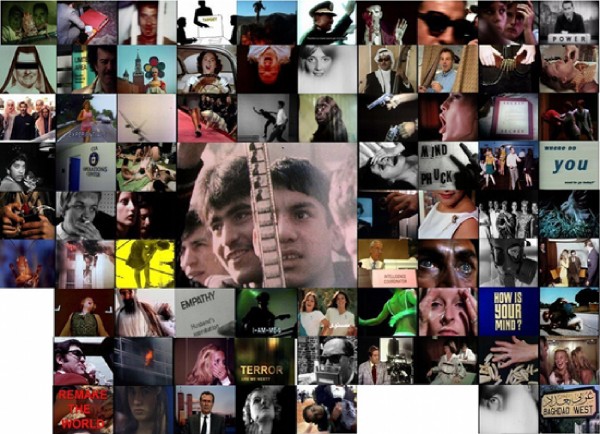
I just found the documentary "The American Nightmare" for a student writing about horror films -- highly recommended look at the epic changes in the genre in the early 70s.
Showing posts with label Auteurism. Show all posts
Showing posts with label Auteurism. Show all posts
Wednesday, October 30, 2013

Tuesday, October 29, 2013
Wednesday, August 14, 2013
(Not) Love and Death: On Michael Haneke's Amour
(Not) Love and Death: On Michael Haneke's Amour
by Vlad Dima
Bright Lights Film Journal

Michael Haneke's latest film begins abruptly with the police breaking down the door to the apartment of the two octogenarian protagonists, Georges and Anne. The violent intrusion is underlined by the fact that we go, with no transition effect, from complete silence and black screen to noise and color. This type of intense narrative shift is common in Haneke's films. Long periods of apparent stability and quiet are followed by sudden spurts of incredible viciousness, in The White Ribbon (2009), Funny Games (2007, and 1997), or Caché (2005). I say "apparent" because violence lurks just beneath the narrative surface of Haneke's films, its presence felt constantly. So when it does emerge, it is not just for shock value. Oddly, it soothes us, providing momentary relief from the stress accumulated throughout the film. Child beatings, shootings, throat slashing are part of the director's repertoire that may force the audience into a sadistic position, but we avoid them in Amour. Or so it seems. Make no mistake, this is a violent film, but its ferocity comes from being forced to confront our own mortality. This is not a film about love, as the title purposely misleads us. This is a film about death, and worse, our death.
The inclusion of "us," the audience, in the film's thematic concerns commences immediately following the sequence in which the police find Anne's rotted body in the apartment. We begin with a flashback to a night when the couple went out to a classical music concert given by one of Anne's old students, Alexandre. In a beautiful fixed shot, we can see the spectators in the theater as they are waiting for the show to start. After a long moment, as the shot turns into a long take, we become aware of the missing reverse shot. The stage is never shown. We, the "real" audience, are suddenly facing the diegetic audience. We are the reverse shot. So we are pulled into the narrative through a counter-cinema artifice. The lack of reverse shot also points to the impossibility of suture; thus the very beginning of the film points to breakdowns, some literal (the door), some metaphorical (the apparatus of cinema and, by extension, life).
To Read the Rest
by Vlad Dima
Bright Lights Film Journal
Michael Haneke's latest film begins abruptly with the police breaking down the door to the apartment of the two octogenarian protagonists, Georges and Anne. The violent intrusion is underlined by the fact that we go, with no transition effect, from complete silence and black screen to noise and color. This type of intense narrative shift is common in Haneke's films. Long periods of apparent stability and quiet are followed by sudden spurts of incredible viciousness, in The White Ribbon (2009), Funny Games (2007, and 1997), or Caché (2005). I say "apparent" because violence lurks just beneath the narrative surface of Haneke's films, its presence felt constantly. So when it does emerge, it is not just for shock value. Oddly, it soothes us, providing momentary relief from the stress accumulated throughout the film. Child beatings, shootings, throat slashing are part of the director's repertoire that may force the audience into a sadistic position, but we avoid them in Amour. Or so it seems. Make no mistake, this is a violent film, but its ferocity comes from being forced to confront our own mortality. This is not a film about love, as the title purposely misleads us. This is a film about death, and worse, our death.
The inclusion of "us," the audience, in the film's thematic concerns commences immediately following the sequence in which the police find Anne's rotted body in the apartment. We begin with a flashback to a night when the couple went out to a classical music concert given by one of Anne's old students, Alexandre. In a beautiful fixed shot, we can see the spectators in the theater as they are waiting for the show to start. After a long moment, as the shot turns into a long take, we become aware of the missing reverse shot. The stage is never shown. We, the "real" audience, are suddenly facing the diegetic audience. We are the reverse shot. So we are pulled into the narrative through a counter-cinema artifice. The lack of reverse shot also points to the impossibility of suture; thus the very beginning of the film points to breakdowns, some literal (the door), some metaphorical (the apparatus of cinema and, by extension, life).
To Read the Rest
Friday, April 5, 2013
Naked Lunch #1: Divine Trash (John Waters special)
Divine Trash (John Waters special)
Naked Lunch #1

John Waters is a prolific film director, author, photographer and sometimes actor best known for his controversial films, the content of which have sometimes shocked and always entertained an international audience. Listen to the first episode of the Naked Lunch as we look over the director’s career in which nothing is sacred in his field of vision.
To Listen to the Episode

Naked Lunch #1
John Waters is a prolific film director, author, photographer and sometimes actor best known for his controversial films, the content of which have sometimes shocked and always entertained an international audience. Listen to the first episode of the Naked Lunch as we look over the director’s career in which nothing is sacred in his field of vision.
To Listen to the Episode
Tuesday, November 27, 2012
Norman Ball: The Power of Auteurs and the Last Man Standing -- Adam Curtis' Documentary Nightmares
The Power of Auteurs and the Last Man Standing: Adam Curtis' Documentary Nightmares
by Norman Ball
Bright Lights Film Journal

Before this essay interrogates Adam Curtis' hidden vestibules, gimpy tripods, and grassy knolls, I'd like to say that any book or film that keeps me thinking a year after I encounter it passes my substantiality test. The Power of Nightmares and The Century of the Self easily fit this category. (I saw All Watched Over by Machines of Loving Grace, The Living Dead, and bits of The Trap only last week.) To survive the immediate frame of the modern attention span is to escape the charge of empty spectacle. You can't fake sustained recollection.
Substance need not equate to wholesale affirmation, however. A good polemic dusts off the thinking caps even of its opponents. Curtis' films provide, at the very least, dialectical lightning rods for alternate narrative threads. Can the same be said for (insert any American TV show)?
In recent weeks Curtis has been arguing for television (BBC being the originating medium for his documentary films, though an American audience can view them on Youtube and Vimeo) to refashion its storytelling techniques ("Adam Curtis Argues TV Needs 'New Tools' to Tell Its Stories," The Guardian, August 22, 2012). It should be fascinating to see where Curtis' films conduct television in the coming months and years. Now, if we could only get American TV to mosey on over to where Curtis has already been, that would be advancement indeed. Right now, stateside viewers are All Kvetched Over by Whole Reams of Will and Grace, but only on DVD due to some contractual disputes that preclude syndication and broadcast. Curtis offers many of his films for free on the Internet. Need I kvetch more?
The award-winning The Century of the Self (2002) offers a devastating critique of our subliminal cooptation from a lifetime's exposure to "father of public relations" Eddie Bernays' propaganda techniques. Whoops, did I just say propaganda? Bernays' most diligent pupil, Josef Goebbels, is rolling over in his hell-pit right now. Let's leave it at public relations. I'm particularly fond of Bernays' quote (very crudely paraphrased here) that democracy is a wonderful system so long as he, Bernays, exerted final subliminal pull over the lever pulled inside the voting booth. Historian Carroll Quigley (mentor of a certain Rhodes Scholar, Bill Clinton), upon being made privy to the papers of the American elite, realized that nothing was left to chance, not even 50-50 propositions. In what's often referred to as the Quigley Principle, this Georgetown professor torpedoed the notion of a vigorous two-party system. Both levers are vetted and fixed. Here he is paraphrasing the mindset of the government behind the government: "The argument that the two parties should represent opposed ideals and policies, one, perhaps, of the Right and the other of the Left, is a foolish idea acceptable only to the doctrinaire and academic thinkers. Instead, the two parties should be almost identical, so that the American people can 'throw the rascals out' at any election without leading to any profound or extreme shifts in policy" (Carroll Quigley, from Tragedy and Hope).
This is not a call to embrace monolithic conspiracy theories. There often is, as Quigley went on to suggest, dissension at the highest levels of power. Jealousy is after all a facet of power. Bernays too saw the value of ostensible choice in a democratic-capitalist system where everything boils down to packaging anyway. A typical Bernays adBy the end of WWII, needs in America had, by and large, been put to bed. Desire was the ultimate lever, a grail of incalculable dual potential. Freud's irrational man, with his limitless storehouse of appetites and anxieties, would furnish economic growth ad infinitum. Never mind that natural resources such as oil and copper are ultimately finite. For the moment, sustainment models such as that proposed by Jay Forrester and the Club of Rome's 1972 Limits to Growth (covered extensively in All Watched Over by Machines of Loving Grace) loomed in the near-distance.
To Read the Rest of the Essay
More Resources on Adam Curtis:
The Guardian: Adam Curtis argues TV needs 'new tools' to tell its stories
by Norman Ball
Bright Lights Film Journal
Before this essay interrogates Adam Curtis' hidden vestibules, gimpy tripods, and grassy knolls, I'd like to say that any book or film that keeps me thinking a year after I encounter it passes my substantiality test. The Power of Nightmares and The Century of the Self easily fit this category. (I saw All Watched Over by Machines of Loving Grace, The Living Dead, and bits of The Trap only last week.) To survive the immediate frame of the modern attention span is to escape the charge of empty spectacle. You can't fake sustained recollection.
Substance need not equate to wholesale affirmation, however. A good polemic dusts off the thinking caps even of its opponents. Curtis' films provide, at the very least, dialectical lightning rods for alternate narrative threads. Can the same be said for (insert any American TV show)?
In recent weeks Curtis has been arguing for television (BBC being the originating medium for his documentary films, though an American audience can view them on Youtube and Vimeo) to refashion its storytelling techniques ("Adam Curtis Argues TV Needs 'New Tools' to Tell Its Stories," The Guardian, August 22, 2012). It should be fascinating to see where Curtis' films conduct television in the coming months and years. Now, if we could only get American TV to mosey on over to where Curtis has already been, that would be advancement indeed. Right now, stateside viewers are All Kvetched Over by Whole Reams of Will and Grace, but only on DVD due to some contractual disputes that preclude syndication and broadcast. Curtis offers many of his films for free on the Internet. Need I kvetch more?
The award-winning The Century of the Self (2002) offers a devastating critique of our subliminal cooptation from a lifetime's exposure to "father of public relations" Eddie Bernays' propaganda techniques. Whoops, did I just say propaganda? Bernays' most diligent pupil, Josef Goebbels, is rolling over in his hell-pit right now. Let's leave it at public relations. I'm particularly fond of Bernays' quote (very crudely paraphrased here) that democracy is a wonderful system so long as he, Bernays, exerted final subliminal pull over the lever pulled inside the voting booth. Historian Carroll Quigley (mentor of a certain Rhodes Scholar, Bill Clinton), upon being made privy to the papers of the American elite, realized that nothing was left to chance, not even 50-50 propositions. In what's often referred to as the Quigley Principle, this Georgetown professor torpedoed the notion of a vigorous two-party system. Both levers are vetted and fixed. Here he is paraphrasing the mindset of the government behind the government: "The argument that the two parties should represent opposed ideals and policies, one, perhaps, of the Right and the other of the Left, is a foolish idea acceptable only to the doctrinaire and academic thinkers. Instead, the two parties should be almost identical, so that the American people can 'throw the rascals out' at any election without leading to any profound or extreme shifts in policy" (Carroll Quigley, from Tragedy and Hope).
This is not a call to embrace monolithic conspiracy theories. There often is, as Quigley went on to suggest, dissension at the highest levels of power. Jealousy is after all a facet of power. Bernays too saw the value of ostensible choice in a democratic-capitalist system where everything boils down to packaging anyway. A typical Bernays adBy the end of WWII, needs in America had, by and large, been put to bed. Desire was the ultimate lever, a grail of incalculable dual potential. Freud's irrational man, with his limitless storehouse of appetites and anxieties, would furnish economic growth ad infinitum. Never mind that natural resources such as oil and copper are ultimately finite. For the moment, sustainment models such as that proposed by Jay Forrester and the Club of Rome's 1972 Limits to Growth (covered extensively in All Watched Over by Machines of Loving Grace) loomed in the near-distance.
To Read the Rest of the Essay
More Resources on Adam Curtis:
The Guardian: Adam Curtis argues TV needs 'new tools' to tell its stories
Friday, September 28, 2012
Sound on Sight Podcast #309: Director Alfred Hitchcock’s ‘Shadow of a Doubt’ – ‘Psycho’ – ‘The Birds’
Sound on Sight Podcast #309: Director Alfred Hitchcock’s ‘Shadow of a Doubt’ – ‘Psycho’ – ‘The Birds’
Sound on Sight
Every month the Sound On Sight staff bands together to tackle a specific filmmaker, event and/or some sort of movie related theme. This month our focus shifts towards the “Master of Suspense”, Alfred Hitchcock.
After years of us promising to get off our asses and get it done, we’ve finally gotten our long-awaited Hitchcock episode done! Special guest and all-around movie knowledge hound Bill Mesce joins Ricky D and Justine Smith to chat up three of the maestro’s most famous chillers: Shadow of a Doubt, Psycho and The Birds.
To Listen to the Episode
Sound on Sight
Every month the Sound On Sight staff bands together to tackle a specific filmmaker, event and/or some sort of movie related theme. This month our focus shifts towards the “Master of Suspense”, Alfred Hitchcock.
After years of us promising to get off our asses and get it done, we’ve finally gotten our long-awaited Hitchcock episode done! Special guest and all-around movie knowledge hound Bill Mesce joins Ricky D and Justine Smith to chat up three of the maestro’s most famous chillers: Shadow of a Doubt, Psycho and The Birds.
To Listen to the Episode
Tuesday, August 21, 2012
Mark Chapman: Clashing Harmonics -- The Characteristics of Sound in Orson Welles' Touch of Evil
Clashing Harmonics: The Characteristics of Sound in Orson Welles' Touch of Evil
by Mark Chapman
Bright Lights Film Journal

Although much has been written about the expressive visual language in the films directed by Orson Welles, comparatively little attention has been paid to their sensual auditory landscapes. Critical analysis of Touch of Evil (1958), a film Paul Schrader famously described as the "epitaph of film noir" (Schrader 1972: 61), has tended to be no different in perpetuating this apparent domination of the image. In this article, I will identify Welles' auditory strategies through a discussion of their formal characteristics and then examine how they elucidate the film's narrative and thematic concerns.
When film sound is discussed, it is most often referred to in terms of what it adds to the image, so my comments in this essay regarding the film's visual qualities will be purposefully limited in order to counteract this tendency in film scholarship. Aside from innovative and detailed work by Rick Altman and Michel Chion,1 the vocabulary of sound theory is not as established as the accepted visual terminology of cinematic discourse. This perhaps suggests that our auditory imaginations are not as well developed with regard to filmic technique. Chion argues that one of the reasons for this is that sound has no audio unit comparable to the specifically cinematic unit of the visual "shot." Instead, the listener has to break a film text down into elements of everyday experience such as verbal sentences, musical themes, and individual noises (Chion 1994: 45). Therefore sound will remain perceived as secondary to the image even though it is audio, to a considerable degree, which gives the cinema's large flat screen its three-dimensionality by way of the illusory audiovisual contract with the spectator.2
Touch of Evil is a heated crime noir story of police corruption and murder set against the seedy backdrop of a fictitious Mexican American border town called Los Robles. After a car bomb kills an influential local businessman and his young girlfriend, newlyweds Mike (a Mexican narcotics enforcement official played by Charlton Heston) and Susan Vargas (Janet Leigh) become embroiled in a furious chain of events that leads Mike into a direct confrontation with the town's morally and physically grotesque police captain, Hank Quinlan (Orson Welles).
The main obstacle in building a consistent discourse on Touch of Evil is that there are three versions presently available; the original theatrical release, the "preview version" discovered deep inside the Universal archives in 1975, and the 1998 "restored cut" produced by Rick Schmidlin and re-edited by Walter Murch following notes made by Welles in his now legendary 58-page memo. The document was written after Universal had dismissed Welles from post-production but was contractually obliged to show the director a studio-approved assembly of his footage — for a single screening. The version I have chosen to focus on is the 1998 re-edit because, though not a complete director's cut, it is the closest to Welles' intentions for the film.3 For this important restoration, Murch was able to obtain an original monaural optical print that had been created from a magnetic mix consisting of three separate tracks: music, dialogue, and sound effects (Murch 1998: 83-102). This simple component breakdown will inform the structure of my essay.
One of Welles' primary audio strategies in Touch of Evil is the use of acousmatic source music to create a sense of depth and perspective to articulate the fictional border town of Los Robles. After the brief overture accompanying the Universal logo, Welles makes extensive use of diegetic music (all compositions by Henry Mancini) from local bars, nightclubs, and car stereos as the camera weaves through the border town, switching perspective from the unidentified bomber onto the car as it steadily moves through the town, finally settling on Mike and Susan Vargas before the explosion.4 As Welles described in his memo, "Underscoring... is to be most sparingly used, and should never give a busy, elaborate, orchestrated effect. What we want is musical color rather than movement; sustained washes of sound rather than... melodramatic or operatic scoring" (Tully 1999). This multileveled mix of rock and roll and Latino dance numbers effectively comes to replace conventional "thriller" underscoring, and it is a full twenty minutes before the first non-diegetic music is used, occurring during a verbal confrontation between Vargas and Quinlan. The harmonics of these culturally distinct musical styles are clashed forcefully together to create a thematic foreshadowing of the divisive role that race will have in the story, whilst at the same time revealing the director's hyper-realist sensibility. Welles' technique — a kind of deep spatial and temporal focus — pursues realism only to exaggerate it and draw attention to itself as a filmic construct.
Welles familiarizes us with the geography of the town largely through source music. Los Robles is presented as a labyrinth, an inter-place where physical and moral borders are erased. There are few conventional transitions; scenes tend to leak into each other. However, the acoustic space is often divided within scenes, the music synchronously creating a sonic partition that is slowly erected as the narrative progresses. The breaking down of physical borders is, throughout the film, used as a metaphor for the moral crumbling of its protagonists. In the final sequence, Vargas and Menzies (Joseph Calleia) are required to lure Quinlan away from Tanya's (Marlene Dietrich) bordello in order to obtain a clean recording of his confession (because Quinlan would "never stand" for the music to be turned off). At the end, we are cut adrift from the music and lost geographically in a field of oil derricks indicating that each character is collapsing into their own moral abyss. The musical compositions gradually become leitmotifs assigned to a particular character or thematic idea. For example, the pianola theme is continuously linked to notions of nostalgia and usually precedes an appearance of Tanya — except when it is played in a modified form in the bar as the scheming Grandi feeds Quinlan shots of bourbon. The theme is reprised for a final time after Quinlan's death; as Tanya walks away into the night, it becomes a shatteringly poignant coronach for lost innocence.
To Read the Rest of the Essay
by Mark Chapman
Bright Lights Film Journal
Although much has been written about the expressive visual language in the films directed by Orson Welles, comparatively little attention has been paid to their sensual auditory landscapes. Critical analysis of Touch of Evil (1958), a film Paul Schrader famously described as the "epitaph of film noir" (Schrader 1972: 61), has tended to be no different in perpetuating this apparent domination of the image. In this article, I will identify Welles' auditory strategies through a discussion of their formal characteristics and then examine how they elucidate the film's narrative and thematic concerns.
When film sound is discussed, it is most often referred to in terms of what it adds to the image, so my comments in this essay regarding the film's visual qualities will be purposefully limited in order to counteract this tendency in film scholarship. Aside from innovative and detailed work by Rick Altman and Michel Chion,1 the vocabulary of sound theory is not as established as the accepted visual terminology of cinematic discourse. This perhaps suggests that our auditory imaginations are not as well developed with regard to filmic technique. Chion argues that one of the reasons for this is that sound has no audio unit comparable to the specifically cinematic unit of the visual "shot." Instead, the listener has to break a film text down into elements of everyday experience such as verbal sentences, musical themes, and individual noises (Chion 1994: 45). Therefore sound will remain perceived as secondary to the image even though it is audio, to a considerable degree, which gives the cinema's large flat screen its three-dimensionality by way of the illusory audiovisual contract with the spectator.2
Touch of Evil is a heated crime noir story of police corruption and murder set against the seedy backdrop of a fictitious Mexican American border town called Los Robles. After a car bomb kills an influential local businessman and his young girlfriend, newlyweds Mike (a Mexican narcotics enforcement official played by Charlton Heston) and Susan Vargas (Janet Leigh) become embroiled in a furious chain of events that leads Mike into a direct confrontation with the town's morally and physically grotesque police captain, Hank Quinlan (Orson Welles).
The main obstacle in building a consistent discourse on Touch of Evil is that there are three versions presently available; the original theatrical release, the "preview version" discovered deep inside the Universal archives in 1975, and the 1998 "restored cut" produced by Rick Schmidlin and re-edited by Walter Murch following notes made by Welles in his now legendary 58-page memo. The document was written after Universal had dismissed Welles from post-production but was contractually obliged to show the director a studio-approved assembly of his footage — for a single screening. The version I have chosen to focus on is the 1998 re-edit because, though not a complete director's cut, it is the closest to Welles' intentions for the film.3 For this important restoration, Murch was able to obtain an original monaural optical print that had been created from a magnetic mix consisting of three separate tracks: music, dialogue, and sound effects (Murch 1998: 83-102). This simple component breakdown will inform the structure of my essay.
One of Welles' primary audio strategies in Touch of Evil is the use of acousmatic source music to create a sense of depth and perspective to articulate the fictional border town of Los Robles. After the brief overture accompanying the Universal logo, Welles makes extensive use of diegetic music (all compositions by Henry Mancini) from local bars, nightclubs, and car stereos as the camera weaves through the border town, switching perspective from the unidentified bomber onto the car as it steadily moves through the town, finally settling on Mike and Susan Vargas before the explosion.4 As Welles described in his memo, "Underscoring... is to be most sparingly used, and should never give a busy, elaborate, orchestrated effect. What we want is musical color rather than movement; sustained washes of sound rather than... melodramatic or operatic scoring" (Tully 1999). This multileveled mix of rock and roll and Latino dance numbers effectively comes to replace conventional "thriller" underscoring, and it is a full twenty minutes before the first non-diegetic music is used, occurring during a verbal confrontation between Vargas and Quinlan. The harmonics of these culturally distinct musical styles are clashed forcefully together to create a thematic foreshadowing of the divisive role that race will have in the story, whilst at the same time revealing the director's hyper-realist sensibility. Welles' technique — a kind of deep spatial and temporal focus — pursues realism only to exaggerate it and draw attention to itself as a filmic construct.
Welles familiarizes us with the geography of the town largely through source music. Los Robles is presented as a labyrinth, an inter-place where physical and moral borders are erased. There are few conventional transitions; scenes tend to leak into each other. However, the acoustic space is often divided within scenes, the music synchronously creating a sonic partition that is slowly erected as the narrative progresses. The breaking down of physical borders is, throughout the film, used as a metaphor for the moral crumbling of its protagonists. In the final sequence, Vargas and Menzies (Joseph Calleia) are required to lure Quinlan away from Tanya's (Marlene Dietrich) bordello in order to obtain a clean recording of his confession (because Quinlan would "never stand" for the music to be turned off). At the end, we are cut adrift from the music and lost geographically in a field of oil derricks indicating that each character is collapsing into their own moral abyss. The musical compositions gradually become leitmotifs assigned to a particular character or thematic idea. For example, the pianola theme is continuously linked to notions of nostalgia and usually precedes an appearance of Tanya — except when it is played in a modified form in the bar as the scheming Grandi feeds Quinlan shots of bourbon. The theme is reprised for a final time after Quinlan's death; as Tanya walks away into the night, it becomes a shatteringly poignant coronach for lost innocence.
To Read the Rest of the Essay
Friday, August 10, 2012
Tuesday, July 31, 2012
Reverse Shot: Deep Red -- Joanne Nucho on The Color of Pomegranates
Deep Red: Joanne Nucho on The Color of Pomegranates
Reverse Shot
 Steeped in religious iconography, The Color of Pomegranates is a deeply spiritual testament to director Sergei Parajanov’s fascination with Armenian folk art and culture. It is also a controversial work, which, coupled with another of his films, Shadows of our Forgotten Ancestors, led to his arrest and imprisonment in a Soviet Gulag for four years. The Soviets insisted he was guilty of selling gold and icons illegally and committing “homosexual acts.” In reality, his only crime was offending the tenets of socialist realism, both in his daring surrealistic form and in his choice of subject matter. While many of the popular films of this era in Soviet cinema were largely propaganda designed to serve the ideological interests of the regime, Parajanov chose to focus on the ethnography and spirituality of the Ukraine, Armenia, and Georgia.
The Color of Pomegranates is a poetic, dreamlike film that sought to portray the life of Armenian troubadour Sayat Nova through images inspired by his life and poetry. Born Haroutiun Sayakian, he is remembered as Sayat Nova or “king of songs.” Raised in the Georgian city of Tiflis (as was Sergei Parajanov himself), Sayat Nova performed in the Armenian, Azerbaijani, and Persian languages. This brought him fame beyond the Armenian community and he was summoned to serve as Court Musician and Poet by Heracle II, the 18th- century king of Georgia. After falling in love with the king’s sister, Princess Anna, he was expelled from the court. He spent the rest of his life as a monk where he continued to write poetry and music. To the Armenian people, Sayat Nova is considered a martyr because he was executed by the invading Persians for refusing to renounce his Christian faith.
Parajanov’s decision to make a film about the life of an Armenian poet and martyr was a dangerous one. Armenian national identity was not to be prioritized—it was viewed as only a part of the Soviet Union. The idea of Armenian independence and secession from the Soviet Union was still dangerous and punishable by death. The lack of a Soviet presence, or any other typical themes of the propaganda films of the time, marked The Color of Pomegranates as a subversive work.
The text of the film, the poetry of Sayat Nova, and the life of director Sergei Parajanov are all reflections of the Armenian national identity, which is itself deeply connected to the Christian faith, as they were the first “nation” in the world to adopt the religion, in the year 301. Surrounded by largely Muslim populations, they were an easy target for invasion and subjugation by their neighbors. The paradigm of Christianity, the images of the suffering of Christ and subsequent salvation—most recently exacerbated by the Armenian genocide perpetrated by Turkey at the beginning of the last century—are at the core of Armenian individuality.
So what is the color of pomegranates? As the film opens, we see thorns intercut with images of pomegranates soaking a white cloth with their juice, a deep blood red. Then we see a dagger resting upon this same, stained cloth. A voice reads from the poetry of Sayat Nova: “I am a man whose soul is tormented.” In Armenian mythology, the pomegranate was a symbol of fertility, literally fruitfulness—it is said that a ripe pomegranate contains 365 seeds, one for each day of the year. The thorns are those of the crown that Christ wore as he suffered on the cross. The two are inseparable, bound closely by the image of bloodshed, the inevitable fate of the Armenian people—here there is only sacrifice and suffering. Later in the film a priest wearing the traditional black garb of the Armenian apostolic church utters “heaven has deemed that sorrow be our lot.” With the camera set at a distance, the monks gather before him, also cloaked in black, shroud-like robes fall on their knees. Everywhere there is death, darkness, disaster—and yet, a feeling that the biggest disaster, the ultimate catastrophe is still to come.
To Read the Rest of the Essay
Reverse Shot
Steeped in religious iconography, The Color of Pomegranates is a deeply spiritual testament to director Sergei Parajanov’s fascination with Armenian folk art and culture. It is also a controversial work, which, coupled with another of his films, Shadows of our Forgotten Ancestors, led to his arrest and imprisonment in a Soviet Gulag for four years. The Soviets insisted he was guilty of selling gold and icons illegally and committing “homosexual acts.” In reality, his only crime was offending the tenets of socialist realism, both in his daring surrealistic form and in his choice of subject matter. While many of the popular films of this era in Soviet cinema were largely propaganda designed to serve the ideological interests of the regime, Parajanov chose to focus on the ethnography and spirituality of the Ukraine, Armenia, and Georgia.The Color of Pomegranates is a poetic, dreamlike film that sought to portray the life of Armenian troubadour Sayat Nova through images inspired by his life and poetry. Born Haroutiun Sayakian, he is remembered as Sayat Nova or “king of songs.” Raised in the Georgian city of Tiflis (as was Sergei Parajanov himself), Sayat Nova performed in the Armenian, Azerbaijani, and Persian languages. This brought him fame beyond the Armenian community and he was summoned to serve as Court Musician and Poet by Heracle II, the 18th- century king of Georgia. After falling in love with the king’s sister, Princess Anna, he was expelled from the court. He spent the rest of his life as a monk where he continued to write poetry and music. To the Armenian people, Sayat Nova is considered a martyr because he was executed by the invading Persians for refusing to renounce his Christian faith.
Parajanov’s decision to make a film about the life of an Armenian poet and martyr was a dangerous one. Armenian national identity was not to be prioritized—it was viewed as only a part of the Soviet Union. The idea of Armenian independence and secession from the Soviet Union was still dangerous and punishable by death. The lack of a Soviet presence, or any other typical themes of the propaganda films of the time, marked The Color of Pomegranates as a subversive work.
The text of the film, the poetry of Sayat Nova, and the life of director Sergei Parajanov are all reflections of the Armenian national identity, which is itself deeply connected to the Christian faith, as they were the first “nation” in the world to adopt the religion, in the year 301. Surrounded by largely Muslim populations, they were an easy target for invasion and subjugation by their neighbors. The paradigm of Christianity, the images of the suffering of Christ and subsequent salvation—most recently exacerbated by the Armenian genocide perpetrated by Turkey at the beginning of the last century—are at the core of Armenian individuality.
So what is the color of pomegranates? As the film opens, we see thorns intercut with images of pomegranates soaking a white cloth with their juice, a deep blood red. Then we see a dagger resting upon this same, stained cloth. A voice reads from the poetry of Sayat Nova: “I am a man whose soul is tormented.” In Armenian mythology, the pomegranate was a symbol of fertility, literally fruitfulness—it is said that a ripe pomegranate contains 365 seeds, one for each day of the year. The thorns are those of the crown that Christ wore as he suffered on the cross. The two are inseparable, bound closely by the image of bloodshed, the inevitable fate of the Armenian people—here there is only sacrifice and suffering. Later in the film a priest wearing the traditional black garb of the Armenian apostolic church utters “heaven has deemed that sorrow be our lot.” With the camera set at a distance, the monks gather before him, also cloaked in black, shroud-like robes fall on their knees. Everywhere there is death, darkness, disaster—and yet, a feeling that the biggest disaster, the ultimate catastrophe is still to come.
To Read the Rest of the Essay
Michael J. Anderson on Moonrise Kingdom
Moonrise Kingdom (2012)
by Michael J. Anderson
Tativille

A gesamtkunstwerk or 'total art work' constructed from American folk and craft traditions much more than the classical arts, Wes Anderson's Moonrise Kingdom (2012), from an original screenplay by Anderson and Roman Coppola, builds its diegetic world of hobbyist watercolors and kitsch nautical prints, primary school literature and amateur theatrics, homemade costuming and mass-manufactured Davy Crockett coonskin, Protestant church architecture and stained glass, Hank Williams and children's records. Moonrise Kingdom, however, is also dominated by mid-century English composer Benjamin Britten, who provides the most conspicuous exception to the picture's cultivated, if still semi-fictionalized 'Americanness,' not to mention its clear preference for more popular lower forms. In fact, it is Britten's modernist art foremost that provides Anderson's film with its governing aesthetic principles and climactic subject matter.
As to the former, it is Britten, along with the name-checked Gilbert and Sullivan - Moonrise Kingdom largely is set on the fictional island of New Penzance - who offers a model for artistic synthesis in the operatic form that is presented in the in-film production of Noye's Fludde. (Britten also composed original music for that other total art, cinema, with his collaborations on Alberto Cavalcanti's 1935 Coal Face and Basil Wright and Henry Watt's 1936 Night Mail being the most notable.) Likewise, it is the diegetic presentation of Britten's pedagogical-experimental Young Person's Guide to the Orchestra, early and late in the film, which telegraphs Moonrise Kingdom's own quasi-Brechtian separation of elements, with Mainer-type Bob Balaban, for example, presenting the film's narration in omniscient, on-screen direct address rather than in the more traditional voice-over.
With respect to the film's subject, it is Noye's Fludde, a "miracle play" that the director acted in during his adolescent years - in this sense it provides a means of accessing the filmmaker's personal history; a means of conjugating the aesthetic with the autobiographic - which is refashioned in the image of Anderson's arch narrative: the broken, in one sense or another, family unit that is reaffirmed if not actually reconstituted at picture's end. In Moonrise Kingdom we have both examples - however tentatively in the case of the former - with twelve year-old runaway "khaki scout" Sam (Jared Gilman) ultimately finding a new foster father in bachelor police-captain Sharp (Bruce Willis). Anderson indeed recomposes his new family following "the region's worst meteorological disaster of the second half of the twentieth century," a 1965 hurricane of Biblical proportions that comes as the small island community is preparing for its annual production of the Britten opera. In Max Fischer lookalike Sam and the clear-rimmed spectacled Captain Sharp (see the director), Anderson seems to be replaying both his own biographical-cinematic past, while also filtering his personal experience of divorce during his childhood years through the young lead. Moonrise Kingdom certainly qualifies as a deeply psychoanalytic cinema, though a cinema that has been displaced not only onto a faux-New England setting, but also four years before the Texan Anderson's birth.
Moonrise Kingdom is no less notable as an emblematic narrative for Anderson's "Generation X," both in terms of that familial breakdown that disproportionately impacted the children of the 1970s and also of the post-modern culture that would reach its cinematic apogee amid and immediately after the peak of the VHS era. Anderson's postmodernism to be sure is ever apparent in Moonrise Kingdom's constituent combination of high art and kitsch, in his narrative taste for inventory (and letter writing) and what amounts on some level to his construction of joke diegetic worlds. In his exploration of the latter, Anderson shows a predilection for fluid, metronymic camera movements, flash pans and hard comedic cuts, whether he is mapping the dollhouse-like space in which the lead Bishop family resides at Summer's End or showcasing Camp Ivanhoe to the rhythmic beat of a snare drum. As with Rushmore (1998) and the four features that would follow it, Moonrise Kingdom emphasizes the artifice which provides the major-key for Anderson's art; there is in his latest, as ever, a very strong sense of an extrinsic narrator behind this fetishized, if still largely invented world. His is a cinema of aesthetic mediation.
To Read the Rest of the Essay
by Michael J. Anderson
Tativille
A gesamtkunstwerk or 'total art work' constructed from American folk and craft traditions much more than the classical arts, Wes Anderson's Moonrise Kingdom (2012), from an original screenplay by Anderson and Roman Coppola, builds its diegetic world of hobbyist watercolors and kitsch nautical prints, primary school literature and amateur theatrics, homemade costuming and mass-manufactured Davy Crockett coonskin, Protestant church architecture and stained glass, Hank Williams and children's records. Moonrise Kingdom, however, is also dominated by mid-century English composer Benjamin Britten, who provides the most conspicuous exception to the picture's cultivated, if still semi-fictionalized 'Americanness,' not to mention its clear preference for more popular lower forms. In fact, it is Britten's modernist art foremost that provides Anderson's film with its governing aesthetic principles and climactic subject matter.
As to the former, it is Britten, along with the name-checked Gilbert and Sullivan - Moonrise Kingdom largely is set on the fictional island of New Penzance - who offers a model for artistic synthesis in the operatic form that is presented in the in-film production of Noye's Fludde. (Britten also composed original music for that other total art, cinema, with his collaborations on Alberto Cavalcanti's 1935 Coal Face and Basil Wright and Henry Watt's 1936 Night Mail being the most notable.) Likewise, it is the diegetic presentation of Britten's pedagogical-experimental Young Person's Guide to the Orchestra, early and late in the film, which telegraphs Moonrise Kingdom's own quasi-Brechtian separation of elements, with Mainer-type Bob Balaban, for example, presenting the film's narration in omniscient, on-screen direct address rather than in the more traditional voice-over.
With respect to the film's subject, it is Noye's Fludde, a "miracle play" that the director acted in during his adolescent years - in this sense it provides a means of accessing the filmmaker's personal history; a means of conjugating the aesthetic with the autobiographic - which is refashioned in the image of Anderson's arch narrative: the broken, in one sense or another, family unit that is reaffirmed if not actually reconstituted at picture's end. In Moonrise Kingdom we have both examples - however tentatively in the case of the former - with twelve year-old runaway "khaki scout" Sam (Jared Gilman) ultimately finding a new foster father in bachelor police-captain Sharp (Bruce Willis). Anderson indeed recomposes his new family following "the region's worst meteorological disaster of the second half of the twentieth century," a 1965 hurricane of Biblical proportions that comes as the small island community is preparing for its annual production of the Britten opera. In Max Fischer lookalike Sam and the clear-rimmed spectacled Captain Sharp (see the director), Anderson seems to be replaying both his own biographical-cinematic past, while also filtering his personal experience of divorce during his childhood years through the young lead. Moonrise Kingdom certainly qualifies as a deeply psychoanalytic cinema, though a cinema that has been displaced not only onto a faux-New England setting, but also four years before the Texan Anderson's birth.
Moonrise Kingdom is no less notable as an emblematic narrative for Anderson's "Generation X," both in terms of that familial breakdown that disproportionately impacted the children of the 1970s and also of the post-modern culture that would reach its cinematic apogee amid and immediately after the peak of the VHS era. Anderson's postmodernism to be sure is ever apparent in Moonrise Kingdom's constituent combination of high art and kitsch, in his narrative taste for inventory (and letter writing) and what amounts on some level to his construction of joke diegetic worlds. In his exploration of the latter, Anderson shows a predilection for fluid, metronymic camera movements, flash pans and hard comedic cuts, whether he is mapping the dollhouse-like space in which the lead Bishop family resides at Summer's End or showcasing Camp Ivanhoe to the rhythmic beat of a snare drum. As with Rushmore (1998) and the four features that would follow it, Moonrise Kingdom emphasizes the artifice which provides the major-key for Anderson's art; there is in his latest, as ever, a very strong sense of an extrinsic narrator behind this fetishized, if still largely invented world. His is a cinema of aesthetic mediation.
To Read the Rest of the Essay
Friday, July 20, 2012
Michael Koresky: Consider the Source -- On The Passion of the Christ
Consider the Source: On The Passion of the Christ
by Michael Koresky
Reverse Shot
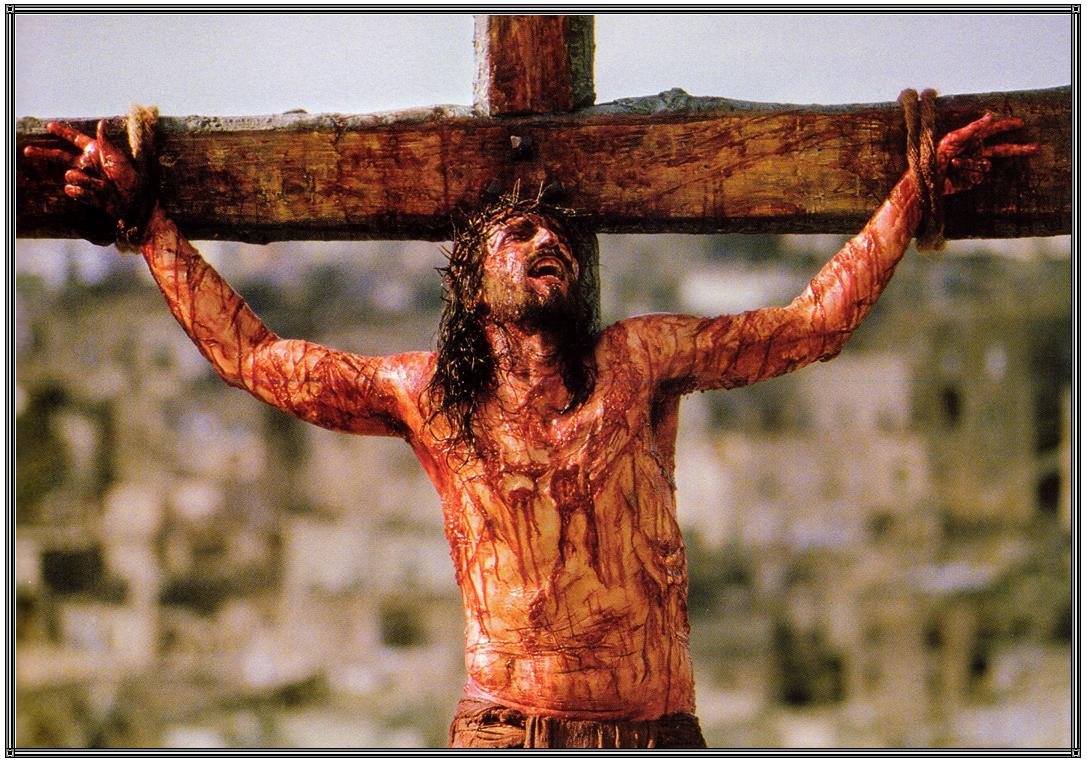
I opened my wallet for Jesus. And then, after paying the ten dollars and twenty-five cents, sitting through the ear-splitting, retina-scalding Regal Cinemas’ 2wenty (“Remember to arrive at the theater early!”), ads for Eclipse breath-freshener and Coca-Cola, bulbous oversized M&M men and a TNT “We Know Drama” sensory overload, I was ready to be saved. Lifted out of my seat, perhaps, and brought back down into my chair just in time for the beginning of lent.
Alas, in the end, it was a movie. A mere movie. Mel Gibson’s brilliantly cynical marketing strategy, buoyed by the ADL’s advance work, lured even us non-believers (sinners) into the theater; certainly we didn’t expect to emerge as right-wing Christian fundamentalist converts, but we had every right to think we would be witnessing an honest representation of human and artistic faith, a spiritual roadmap to the psyche of a filmmaker and actor who felt driven, even instructed by God, as he has claimed, to create a cinematic likeness of the divine. It’s not essential that a moviegoer agrees with the political or religious implications of the images emblazoned on the screen, but that the images translate as a response from the filmmaker’s soul, that we believe we are witnessing the gospels as Mel himself sees them. The sheer divine force offered by Pasolini, Scorsese, by Bresson and Burnett and Spielberg, by Alexanders Payne and Sokurov, manifest in images that relinquish themselves to whatever artistic means necessary, not in shameless grandiosity that wishes to pummel the viewer into submission, into terrified acceptance. Gibson may find disingenuous the earthy benevolence of Pasolini’s Christ and the psychological torment of Scorsese’s, the lyrical allegory of Bresson’s Balthazar and Spielberg’s E.T., the spiritual personification of Payne’s Warren Schmidt or Sokurov’s cancer-ravaged saint-mother; he wants a more direct address, to make you feel every thrust of the rusty nail as it’s hammered into Jesus’s palms, to clutch your own shoulders as Jesus’s arm is ripped out of its socket, to cover your eyes in gratitude when the crucified thief’s eye is plucked out by a vengeful crow, to reverently ooh, aah, and shriek when Jesus is scourged, his back torn and ripped open into a hundred fleshy strips. Apparently to Gibson, there is no metaphor in religion; faith manifests itself as a spiritual dead-end, a believe-it-or-be-damned expression of finality. Of course Gibson, progeny of his fundamentalist missionary father’s terrifyingly stubborn outmoded beliefs, ended up a Hollywood actor—that particular “dream factory” churns out endless expressions of American complacency every year, cheerless damning spectacles of moral righteousness and unambigious carnal pleasures. Of course Mel Gibson, though a self-avowed man of endless spiritual vitality, can only depict the divine through the employment of hundreds of buckets of stage-blood. With its ludicrous, Hollywood-fortified conviction (not the same thing as faith, incidentally), Passion may be the world’s first completely banal Jesus Christ film. And though it’s remarkably, hopelessly literal, it was certainly waiting to happen. It had to happen.
If 2000’s Gladiator ushered in the new Bush regime, then perhaps Gibson’s blockbuster is the new 21st-century’s first true coercively conservative “classic.” Rarely has a film with a fundamentalist core been so blatantly conceived, so forthright in its admissions. Every decade of American film, though never preoccupied with anything grander than itself, nonetheless ends up a product of its own political backdrop. First Blood and its subsequent sequels became emblematic of the Reagan era, literally winning Vietnam back from the liberals, reasserting the swaggering machismo of the American hero that Seventies Hollywood attempted to all but decimate. And just as Stallone enacted Reagan’s cloudy-headed right-wing version of recent history, Gibson’s Christ—“compassionate” Conservative, deliverer of that old-tyme religion—emerges from the tomb at just the moment of the Bush administration’s attack on civil liberties, and the attack on the Civil Rights of American gays launched by Dubya himself with full-on, unabashed old-testament condemnation. Those who speak out against Gibson’s film are automatically stigmatized as leftist rabble-rousers and hapless atheists; to deny its physical impact or so-called technical grandeur is to supposedly denounce Gibson’s personal belief system. What’s more essential is to realize that when Gibson’s savvy propaganda piece, meant to inflict a tough-love Jesus on the nation’s wayward souls, floods into 4,000 screens, another dam between Church and State begins to crumble. The youngsters of the Clintonian Nineties, finding solace in the emergence of a truly multicultural pop mainstream, need to be reclaimed by the right, shorn of their piercings and tattoos, and brought back to Sunday school; who better to do that than Jesus himself, this time, like Rambo, stripped to the waist, chained and whipped, flesh torn and limbs broken, but never down for the count?
To Read the Rest of the Essay More: Jeff Reichert: Jesus Christ Superman
by Michael Koresky
Reverse Shot
I opened my wallet for Jesus. And then, after paying the ten dollars and twenty-five cents, sitting through the ear-splitting, retina-scalding Regal Cinemas’ 2wenty (“Remember to arrive at the theater early!”), ads for Eclipse breath-freshener and Coca-Cola, bulbous oversized M&M men and a TNT “We Know Drama” sensory overload, I was ready to be saved. Lifted out of my seat, perhaps, and brought back down into my chair just in time for the beginning of lent.
Alas, in the end, it was a movie. A mere movie. Mel Gibson’s brilliantly cynical marketing strategy, buoyed by the ADL’s advance work, lured even us non-believers (sinners) into the theater; certainly we didn’t expect to emerge as right-wing Christian fundamentalist converts, but we had every right to think we would be witnessing an honest representation of human and artistic faith, a spiritual roadmap to the psyche of a filmmaker and actor who felt driven, even instructed by God, as he has claimed, to create a cinematic likeness of the divine. It’s not essential that a moviegoer agrees with the political or religious implications of the images emblazoned on the screen, but that the images translate as a response from the filmmaker’s soul, that we believe we are witnessing the gospels as Mel himself sees them. The sheer divine force offered by Pasolini, Scorsese, by Bresson and Burnett and Spielberg, by Alexanders Payne and Sokurov, manifest in images that relinquish themselves to whatever artistic means necessary, not in shameless grandiosity that wishes to pummel the viewer into submission, into terrified acceptance. Gibson may find disingenuous the earthy benevolence of Pasolini’s Christ and the psychological torment of Scorsese’s, the lyrical allegory of Bresson’s Balthazar and Spielberg’s E.T., the spiritual personification of Payne’s Warren Schmidt or Sokurov’s cancer-ravaged saint-mother; he wants a more direct address, to make you feel every thrust of the rusty nail as it’s hammered into Jesus’s palms, to clutch your own shoulders as Jesus’s arm is ripped out of its socket, to cover your eyes in gratitude when the crucified thief’s eye is plucked out by a vengeful crow, to reverently ooh, aah, and shriek when Jesus is scourged, his back torn and ripped open into a hundred fleshy strips. Apparently to Gibson, there is no metaphor in religion; faith manifests itself as a spiritual dead-end, a believe-it-or-be-damned expression of finality. Of course Gibson, progeny of his fundamentalist missionary father’s terrifyingly stubborn outmoded beliefs, ended up a Hollywood actor—that particular “dream factory” churns out endless expressions of American complacency every year, cheerless damning spectacles of moral righteousness and unambigious carnal pleasures. Of course Mel Gibson, though a self-avowed man of endless spiritual vitality, can only depict the divine through the employment of hundreds of buckets of stage-blood. With its ludicrous, Hollywood-fortified conviction (not the same thing as faith, incidentally), Passion may be the world’s first completely banal Jesus Christ film. And though it’s remarkably, hopelessly literal, it was certainly waiting to happen. It had to happen.
If 2000’s Gladiator ushered in the new Bush regime, then perhaps Gibson’s blockbuster is the new 21st-century’s first true coercively conservative “classic.” Rarely has a film with a fundamentalist core been so blatantly conceived, so forthright in its admissions. Every decade of American film, though never preoccupied with anything grander than itself, nonetheless ends up a product of its own political backdrop. First Blood and its subsequent sequels became emblematic of the Reagan era, literally winning Vietnam back from the liberals, reasserting the swaggering machismo of the American hero that Seventies Hollywood attempted to all but decimate. And just as Stallone enacted Reagan’s cloudy-headed right-wing version of recent history, Gibson’s Christ—“compassionate” Conservative, deliverer of that old-tyme religion—emerges from the tomb at just the moment of the Bush administration’s attack on civil liberties, and the attack on the Civil Rights of American gays launched by Dubya himself with full-on, unabashed old-testament condemnation. Those who speak out against Gibson’s film are automatically stigmatized as leftist rabble-rousers and hapless atheists; to deny its physical impact or so-called technical grandeur is to supposedly denounce Gibson’s personal belief system. What’s more essential is to realize that when Gibson’s savvy propaganda piece, meant to inflict a tough-love Jesus on the nation’s wayward souls, floods into 4,000 screens, another dam between Church and State begins to crumble. The youngsters of the Clintonian Nineties, finding solace in the emergence of a truly multicultural pop mainstream, need to be reclaimed by the right, shorn of their piercings and tattoos, and brought back to Sunday school; who better to do that than Jesus himself, this time, like Rambo, stripped to the waist, chained and whipped, flesh torn and limbs broken, but never down for the count?
To Read the Rest of the Essay More: Jeff Reichert: Jesus Christ Superman
Sunday, July 15, 2012
J. Hoberman: The Single Antidote to Thoughts of Suicide -- Rainer Werner Fassbinder’s American friends
The Single Antidote to Thoughts of Suicide: Rainer Werner Fassbinder’s American friends
by J. Hoberman
Moving Image Source

...
My thanks for inviting me to participate in this event as well as facilitating that participation by having this part of the program in a foreign language, English. I hope I won’t offend you if I begin by observing that for an American of my generation, born shortly after World War II, the sound of conversational German emanating from the screen was uncanny and even menacing, a vehicle for barked Gestapo torturers or sneering East German spies. As late as 1976, Village Voice critic Andrew Sarris would cite "a commercial jinx against German-language films in the New York area, at least partly for reasons that are too painfully obvious to mention."
"Jinx," which connotes "bad luck," is too coy a word to account for this provincialism, as is the reference to the New York area. The German language was stigmatized by powerful negative associations particularly but not exclusively among Jews and political leftists. German silent cinema was enshrined but the entirety of German talkies was reduced to a single letter M, which also happened to be a movie about the worst sort of human monster, a serial child killer. M opened up on the void and there was nothing like it…until Fassbinder. He dispelled the jinx.
I’m talking from the perspective of a civilian filmgoer rather than a professional movie critic. I did not review any of the movies I’ll be citing. In fact, the first thing I ever wrote about Fassbinder was an obituary for a no-longer extant journal, American Film. But I did follow Fassbinder’s American career from the cheap seats. I saw The Bitter Tears of Petra von Kant, The Merchant of Four Seasons, Ali: Fear Eats the Soul, and Fox and His Friends more or less in that order in the mid-’70s when I was in my mid-twenties. What I remember impressing me was their strange affect. The language was part of it but, more generally, it was unclear whether the movies were funny or sad. They were certainly not bittersweet. There was a lugubrious quality that was also disconcertingly, irresistibly comic.
Not understanding the language or appreciating the context can sharpen other forms of attention. I was struck by Thomas Elsaesser’s comment [in the preceding presentation] that Fassbinder seldom included the German landscape because one of the things that initially impressed me about his films was their emptied-out, blandly paranoid urban settings. I thought these were a humorous invention until I spent a few days in Frankfurt in 1979. Then I discovered that these stylizations were actually a form of documentary truth. [silence]
Now, Fassbinder was not entirely unique. Between 1967-71, which is to say at the height of the ’60s, the New York Film Festival showed nine German-language features, three by Werner Herzog, two each by Alexander Kluge and Jean-Marie Straub, one by Volker Schlöndorff and one by Fassbinder. I did see most of these. Kluge appeared to be a more pedantic Godard, Straub seemed a lighter Bresson. Herzog was too freakish to be anything other than himself—definitely strange but not necessarily German—which is to say that the dwarfs were more striking than the language they spoke. In terms of the so-called New German Cinema, Fassbinder was something of a late addition, although Susan Sontag would later maintain that New York Film Festival director Richard Roud turned down her suggestion to show Fassbinder’s first feature Love is Colder Than Death.
Fassbinder made his debut two years later at the 1971 New York Film Festival with Recruits in Ingolstadt. Response was dismissive, even hostile. The lone exception was the New York Times lead critic Vincent Canby, whose review linked Fassbinder’s direction to "the methods and the manner of early Brecht" (a good and very fashionable German whose name was strategically dropped in the NYFF blurb). Canby deemed Recruits to be "an oddly unfocused satire but one that has many lovely moments….The movie fails, but it’s a failure of concept, not of intelligence, nor of style and performance." In sort, he recognized something.
To Read the Entire Presentation

by J. Hoberman
Moving Image Source
...
My thanks for inviting me to participate in this event as well as facilitating that participation by having this part of the program in a foreign language, English. I hope I won’t offend you if I begin by observing that for an American of my generation, born shortly after World War II, the sound of conversational German emanating from the screen was uncanny and even menacing, a vehicle for barked Gestapo torturers or sneering East German spies. As late as 1976, Village Voice critic Andrew Sarris would cite "a commercial jinx against German-language films in the New York area, at least partly for reasons that are too painfully obvious to mention."
"Jinx," which connotes "bad luck," is too coy a word to account for this provincialism, as is the reference to the New York area. The German language was stigmatized by powerful negative associations particularly but not exclusively among Jews and political leftists. German silent cinema was enshrined but the entirety of German talkies was reduced to a single letter M, which also happened to be a movie about the worst sort of human monster, a serial child killer. M opened up on the void and there was nothing like it…until Fassbinder. He dispelled the jinx.
I’m talking from the perspective of a civilian filmgoer rather than a professional movie critic. I did not review any of the movies I’ll be citing. In fact, the first thing I ever wrote about Fassbinder was an obituary for a no-longer extant journal, American Film. But I did follow Fassbinder’s American career from the cheap seats. I saw The Bitter Tears of Petra von Kant, The Merchant of Four Seasons, Ali: Fear Eats the Soul, and Fox and His Friends more or less in that order in the mid-’70s when I was in my mid-twenties. What I remember impressing me was their strange affect. The language was part of it but, more generally, it was unclear whether the movies were funny or sad. They were certainly not bittersweet. There was a lugubrious quality that was also disconcertingly, irresistibly comic.
Not understanding the language or appreciating the context can sharpen other forms of attention. I was struck by Thomas Elsaesser’s comment [in the preceding presentation] that Fassbinder seldom included the German landscape because one of the things that initially impressed me about his films was their emptied-out, blandly paranoid urban settings. I thought these were a humorous invention until I spent a few days in Frankfurt in 1979. Then I discovered that these stylizations were actually a form of documentary truth. [silence]
Now, Fassbinder was not entirely unique. Between 1967-71, which is to say at the height of the ’60s, the New York Film Festival showed nine German-language features, three by Werner Herzog, two each by Alexander Kluge and Jean-Marie Straub, one by Volker Schlöndorff and one by Fassbinder. I did see most of these. Kluge appeared to be a more pedantic Godard, Straub seemed a lighter Bresson. Herzog was too freakish to be anything other than himself—definitely strange but not necessarily German—which is to say that the dwarfs were more striking than the language they spoke. In terms of the so-called New German Cinema, Fassbinder was something of a late addition, although Susan Sontag would later maintain that New York Film Festival director Richard Roud turned down her suggestion to show Fassbinder’s first feature Love is Colder Than Death.
Fassbinder made his debut two years later at the 1971 New York Film Festival with Recruits in Ingolstadt. Response was dismissive, even hostile. The lone exception was the New York Times lead critic Vincent Canby, whose review linked Fassbinder’s direction to "the methods and the manner of early Brecht" (a good and very fashionable German whose name was strategically dropped in the NYFF blurb). Canby deemed Recruits to be "an oddly unfocused satire but one that has many lovely moments….The movie fails, but it’s a failure of concept, not of intelligence, nor of style and performance." In sort, he recognized something.
To Read the Entire Presentation
Monday, July 9, 2012
Kim Morgan: You Have 30 Seconds to Leave the Theater" - Gaspar Noe's I Stand Alone
You Have 30 Seconds to Leave the Theater" - Gaspar Noe's I Stand Alone
by Kim Morgan
Sunset Gun

I have missed Gaspar Noé.
The French enfant terrible who helmed one of the greatest pictures of the 1990’s, I Stand Alone, and who, with Irreversible, placed Monica Bellucci in a situation that angered even those OK with Susan George’s episode in Straw Dogs, had been absent from the screen far too long. Yes, he made a short for the sexually explicit Destricted project, and yes there are the condom commercials from years back, but Mr. Noé needed another full length feature under his (whipping) belt. To say I'm greatly anticipating his newest, Enter the Void would be an understatement.
The director, heavily influenced by '70s cinema, William Castle shock-a-tude, pornography, Godard, Céline, Nietzsche and (as I have argued, whether he knows this or not), even Thomas Hardy, was the great Gallic hope for a new generation of savage filmmaking. Unlike some current filmmakers who traffic in mere shock, or art house directors striking a transgressive pose, Noé is a genuine artist, but unpretentious -- a man who loves nothing more than upsetting his audience (or, in the case of Irreversible, making some faint), while injecting his screaming compositions with substantive thought, intelligence and philosophy.
So hearing that Noé will be releasing a new Noé vision got me excited, and in the mood to re-visit his debut blast of brilliance, over ten years later, 1998’s I Stand Alone. This is the movie that caused a daily critic to walk out during the screening I attended, this is the movie that bonded me with my sister (long story), and this is the film that I told a colleague to see on a date. That advice didn’t work out so well.
When first reviewing the blisteringly brilliant picture, I quoted an anecdote by director Paul Schrader. Schrader said:
“I had an interesting lunch recently with a French director named Gaspar Noé who wanted to do a film with me, something with violence and pornography and all that. And I said to him, 'I don't think anyone's shockable anymore.'"
Now I admire, sometimes revere Paul Schrader, and I would probably agree with him at that moment, but with I Stand Alone (and the latter Irreversible) he was positively wrong. For Noé had not only made one of the most shocking pictures in decades, but also one of the most stylistically impressive, emotionally challenging, thematically intimidating, astoundingly touching and, in its own warped way, weirdly funny. I Stand Alone, or Seul Contre Tous (Alone Against All) is a hair grabber that drags you around the muck and pushes your face into its world so far that -- and this is rare with such hard cinema -- you’ll experience moments of such bizarre, hideous beauty that you’re left significantly moved. It attacks one's senses with such transgressive power that by its end, one feels flustered, simultaneously full and empty. I Stand Alone rattles in your brain long after the movie's disquieting end.
To Read the Rest of the Essay
by Kim Morgan
Sunset Gun
I have missed Gaspar Noé.
The French enfant terrible who helmed one of the greatest pictures of the 1990’s, I Stand Alone, and who, with Irreversible, placed Monica Bellucci in a situation that angered even those OK with Susan George’s episode in Straw Dogs, had been absent from the screen far too long. Yes, he made a short for the sexually explicit Destricted project, and yes there are the condom commercials from years back, but Mr. Noé needed another full length feature under his (whipping) belt. To say I'm greatly anticipating his newest, Enter the Void would be an understatement.
The director, heavily influenced by '70s cinema, William Castle shock-a-tude, pornography, Godard, Céline, Nietzsche and (as I have argued, whether he knows this or not), even Thomas Hardy, was the great Gallic hope for a new generation of savage filmmaking. Unlike some current filmmakers who traffic in mere shock, or art house directors striking a transgressive pose, Noé is a genuine artist, but unpretentious -- a man who loves nothing more than upsetting his audience (or, in the case of Irreversible, making some faint), while injecting his screaming compositions with substantive thought, intelligence and philosophy.
So hearing that Noé will be releasing a new Noé vision got me excited, and in the mood to re-visit his debut blast of brilliance, over ten years later, 1998’s I Stand Alone. This is the movie that caused a daily critic to walk out during the screening I attended, this is the movie that bonded me with my sister (long story), and this is the film that I told a colleague to see on a date. That advice didn’t work out so well.
When first reviewing the blisteringly brilliant picture, I quoted an anecdote by director Paul Schrader. Schrader said:
“I had an interesting lunch recently with a French director named Gaspar Noé who wanted to do a film with me, something with violence and pornography and all that. And I said to him, 'I don't think anyone's shockable anymore.'"
Now I admire, sometimes revere Paul Schrader, and I would probably agree with him at that moment, but with I Stand Alone (and the latter Irreversible) he was positively wrong. For Noé had not only made one of the most shocking pictures in decades, but also one of the most stylistically impressive, emotionally challenging, thematically intimidating, astoundingly touching and, in its own warped way, weirdly funny. I Stand Alone, or Seul Contre Tous (Alone Against All) is a hair grabber that drags you around the muck and pushes your face into its world so far that -- and this is rare with such hard cinema -- you’ll experience moments of such bizarre, hideous beauty that you’re left significantly moved. It attacks one's senses with such transgressive power that by its end, one feels flustered, simultaneously full and empty. I Stand Alone rattles in your brain long after the movie's disquieting end.
To Read the Rest of the Essay
Thursday, June 28, 2012
Erich Kuersten: Sex is a Hen Decapitated -- Bluebeard and the Eroticism of Catherin Breillat
Sex is a Hen Decapitated: Bluebeard and the Eroticism of Catherine Breillat
by Erich Kuersten
Acidemic

The ancient tale of Bluebeard is rife with archetypal resonance for the budding feminine psyche: it's a rite of passage myth, a map of patriarchal oppression's mine field, an initiation into sexual maturity, where the fear of pain is enough to make actual pain a relief in contrast; a color-symbolic dream where the blood of menstruation anxiety (the redness of the clitoral "riding" hood) and the swollen purples of honeymoon savagery (the black and blueness of the groom's bristly beard) mix and match. Like many fairy tales centered on a young girl, it encodes the onset of menstruation into a Pandora's Box moment of discovery, from which innocence can never return, leading inexorably into the scary rites of the marital bed, the agonies of childbirth, and so forth. Do we not, in associating white for virginity and purity, forget that red means the alchemical opening up of that purity into the raw violence of procreation? So what does that third color of the French flag--blue--represent? Naturally, the cooling rescue of death--or rather as symbolized in the 'bloody chamber' where all the previous brides are stored, a suspended animation, a sleeping beauty status wherein the enslaving agonies of childbirth and old age are forever kept at bay, in short, the blue represents frozen death and timeless decadence, pleasure and a disruption of the natural enslavement process of patriarchy. Bluebeard postpones sexual relations in order to keep romance forever young.
The coming of age girl myth tends to focus on the moment of the first dripping eradicable red stain, one that no amount of Clorox will undo. Such a moment--loss and gain coagulated into one crimson blotch --seems to obsess French director Catherine Breillat, a female auteur as detached and horrified in her existential search for meaning as her fellow Frenchmen Gasper Noe, Jean-Paul Sartre, and Claire Denis [note from Michael Benton: Denis is a French woman]. But as Breillat is a woman, her take on femininity is free to delve much much deeper into waters too cold and dangerous to ever be known to men. Eagerly complicit with the grotesque truths of feminine sexuality, Breillat's eyes are not blurred by the glamor and beauty that hypnotize most male directors. Rather than 'fall' for the genetic con job of desire, she focuses on her gender's fascination with the gross otherness of the male body, and vice versa - she wants to explore her own body--stripped of its veils and glamor-- through male eyes. Men after all aren't as obligated to be beautiful. They're position as desirable or beautiful is seldom considered in a marriage. If a woman can't learn to love ugliness, she never gets a prince and stays forever turned off; the beast stays a beast.
For his part, when Bluebeard spots the telltale blood stain on the key to the forbidden chamber, he is sad and disappointed, once again his bride has been unable to remain 'unopened' and so must be literally opened, as in decapitated. But Breillat's crafty beauty knows to stall, to feign compliance with her impending death on certain conditions, and to seek help from the passing musketeer/woodsman(the woodsman gets all the girls because he's already 'slain' his own wolf). If she merely screams and cringes, she's devoured. This is a valuable honeymoon lesson considering the absurdly young marriage ages of our forebears, one surely told by moms of old: do not resist or cringe when your new husband advance; instead, flatter, and stall him. If he will but relent today he shall get double tomorrow, and so on until a nice woodsman can rescue her, or she can develop enough that her deflowering is less of a painful, traumatizing violation.
The patriarchal readings of these tales runs counter to this approach, flipping the beast into a prince with a magic (phallic) wand and happily ever aftering the story before the children reading can learn that the magic wand's spell fades in a matter of hours. Soon enough the hair begins to creep back on their prince and his fangs grow long with the full moon. He seems to get uglier and more ill-tempered as the marriage marches on; that's the part Disney rolls its credits over. Only Breillat dares see not just the beast, but the frog, the vile toad still dwelling behind the sparkly eyes of the prince, and only Breillat nonetheless finds a way to love the thing, proverbial warts and all.
In her fearless approach towards this taboo subject, Breillat seems to possess an ambivalent--if not outright hostile--attitude towards sex. Her liberated female characters are often accused of being masochist subjects. But we have to dig deeper for her real reaction, perhaps a way would be to see her as the French female version of Lars Von Trier. But where Lars uses the D.W. Griffith / Sirkian soap opera woman's story in his savage deconstruction of innocence, purity, deflowering and sex, Breillat eschews any direct relation with 'woman's picture' trappings, to shoot for pure myth, looking past Griffith all the way back to the dawn of the printing press. Her cinema is--in Bluebeard literally--like the pages of a storybook that shows everything the normal books do not.
To Read the Rest of the Essay
by Erich Kuersten
Acidemic
The ancient tale of Bluebeard is rife with archetypal resonance for the budding feminine psyche: it's a rite of passage myth, a map of patriarchal oppression's mine field, an initiation into sexual maturity, where the fear of pain is enough to make actual pain a relief in contrast; a color-symbolic dream where the blood of menstruation anxiety (the redness of the clitoral "riding" hood) and the swollen purples of honeymoon savagery (the black and blueness of the groom's bristly beard) mix and match. Like many fairy tales centered on a young girl, it encodes the onset of menstruation into a Pandora's Box moment of discovery, from which innocence can never return, leading inexorably into the scary rites of the marital bed, the agonies of childbirth, and so forth. Do we not, in associating white for virginity and purity, forget that red means the alchemical opening up of that purity into the raw violence of procreation? So what does that third color of the French flag--blue--represent? Naturally, the cooling rescue of death--or rather as symbolized in the 'bloody chamber' where all the previous brides are stored, a suspended animation, a sleeping beauty status wherein the enslaving agonies of childbirth and old age are forever kept at bay, in short, the blue represents frozen death and timeless decadence, pleasure and a disruption of the natural enslavement process of patriarchy. Bluebeard postpones sexual relations in order to keep romance forever young.
The coming of age girl myth tends to focus on the moment of the first dripping eradicable red stain, one that no amount of Clorox will undo. Such a moment--loss and gain coagulated into one crimson blotch --seems to obsess French director Catherine Breillat, a female auteur as detached and horrified in her existential search for meaning as her fellow Frenchmen Gasper Noe, Jean-Paul Sartre, and Claire Denis [note from Michael Benton: Denis is a French woman]. But as Breillat is a woman, her take on femininity is free to delve much much deeper into waters too cold and dangerous to ever be known to men. Eagerly complicit with the grotesque truths of feminine sexuality, Breillat's eyes are not blurred by the glamor and beauty that hypnotize most male directors. Rather than 'fall' for the genetic con job of desire, she focuses on her gender's fascination with the gross otherness of the male body, and vice versa - she wants to explore her own body--stripped of its veils and glamor-- through male eyes. Men after all aren't as obligated to be beautiful. They're position as desirable or beautiful is seldom considered in a marriage. If a woman can't learn to love ugliness, she never gets a prince and stays forever turned off; the beast stays a beast.
For his part, when Bluebeard spots the telltale blood stain on the key to the forbidden chamber, he is sad and disappointed, once again his bride has been unable to remain 'unopened' and so must be literally opened, as in decapitated. But Breillat's crafty beauty knows to stall, to feign compliance with her impending death on certain conditions, and to seek help from the passing musketeer/woodsman(the woodsman gets all the girls because he's already 'slain' his own wolf). If she merely screams and cringes, she's devoured. This is a valuable honeymoon lesson considering the absurdly young marriage ages of our forebears, one surely told by moms of old: do not resist or cringe when your new husband advance; instead, flatter, and stall him. If he will but relent today he shall get double tomorrow, and so on until a nice woodsman can rescue her, or she can develop enough that her deflowering is less of a painful, traumatizing violation.
The patriarchal readings of these tales runs counter to this approach, flipping the beast into a prince with a magic (phallic) wand and happily ever aftering the story before the children reading can learn that the magic wand's spell fades in a matter of hours. Soon enough the hair begins to creep back on their prince and his fangs grow long with the full moon. He seems to get uglier and more ill-tempered as the marriage marches on; that's the part Disney rolls its credits over. Only Breillat dares see not just the beast, but the frog, the vile toad still dwelling behind the sparkly eyes of the prince, and only Breillat nonetheless finds a way to love the thing, proverbial warts and all.
In her fearless approach towards this taboo subject, Breillat seems to possess an ambivalent--if not outright hostile--attitude towards sex. Her liberated female characters are often accused of being masochist subjects. But we have to dig deeper for her real reaction, perhaps a way would be to see her as the French female version of Lars Von Trier. But where Lars uses the D.W. Griffith / Sirkian soap opera woman's story in his savage deconstruction of innocence, purity, deflowering and sex, Breillat eschews any direct relation with 'woman's picture' trappings, to shoot for pure myth, looking past Griffith all the way back to the dawn of the printing press. Her cinema is--in Bluebeard literally--like the pages of a storybook that shows everything the normal books do not.
To Read the Rest of the Essay
Monday, June 18, 2012
J.M. Tyree: Archive Fighter
Archive Fighter: The Girl with the Dragon Tattoo (David Fincher)
by J.M. Tyree
Film Quarterly

The Girl with the Dragon Tattoo, David Fincher’s latest antiblockbuster, is a baroque rethink of the serial-killer subgenre; a subtly retuned adaptation of the first novel in Stieg Larsson’s penny-dreadful Millennium trilogy; a technical achievement of narrative compression and pacing in a mainstream thriller; and the most recent proof of the director’s trademark habit of unleashing bad vibes in the multiplex. It’s a sick kind of holiday movie. The story is bookended by two Christmases—a year its two protagonists pass among murderers, sexual predators, and a wealthy family with a history of sadistic brutality (and Nazi sympathies), all stirred up by a cold case involving the disappearance of a sixteen-year-old girl from a private island. With good reason, Fincher called The Girl with the Dragon Tattoo “the feel-bad movie of the season.” The director renders its source material in the coolly droll yet fundamentally shocking and disturbing style of his previous films about psychos, Seven (1995), Fight Club (1999), and Zodiac (2007). In the manner of Tod Browning’s subversive 1931 take on Dracula, The Girl with the Dragon Tattoo frightens the viewer while injecting grimly fiendish jokes into an earnest literary artifact with an intractably complicated storyline.
Like Zodiac, The Curious Case of Benjamin Button (2008), and The Social Network (2010), The Girl with the Dragon Tattoo is a movie subdivided into dozens of impeccable segments, some lavishly arranged shots lasting no more than a flashing second or two. Among the first in this series of mini-films is the peculiar titles sequence that recalls both Fincher’s early days as a director of music videos and the James Bond movies’ graphic set pieces. It features a fittingly icy cover of Led Zeppelin’s “Immigrant Song,” vocalized by the Yeah Yeah Yeahs’ Karen O. Along with this gender-bending, the song’s lyrics provide signposts for interpretation of a film that will “whisper tales of gore” set in remixed Viking landscapes. The sequence’s images of black sludge dripping from motorcycle tires, laptop keyboards, electronic wires, deadly flowers, dark phoenixes, and faces vomiting coins and stinging insects (a reference to the pseudonym, Wasp, of the eponymous hacker in Larsson’s novel) suggest the stylized iconography of a world drowning in liquid evil. These and other touches of deliberate artifice—Polaroid-tinted flashbacks, talking text from the primary victim’s diary, establishing shots of moving trains and snowbound houses that turn landscapes into glimpses from nightmares, multitasking montages that playfully detach sight and sound, and Fincher’s toxic light filters—at once encapsulate and provide layers of chill to distance the awful horrors in store. The movie’s sound design often intrudes, consistently and violently, in ways that lend a surreal aura to the noise of passing trains, closing doors, and moving elevators.
These reminders of unreality also might serve as annotations to a story that is about acts of reading and misreading. Both the novel and the movie begin with a major interpretative mistake. Harriet Vanger (Moa Garpendal), missing for forty years from her wealthy family’s enclave, is presumed murdered. Her uncle, Henrik Vanger (Christopher Plummer), has been receiving mysterious packages each year containing pressed flowers, posted from around the world. He hires a disgraced investigative journalist, Mikael Blomkvist (Daniel Craig), to look into Harriet’s case, and Blomkvist takes on freelance security consultant and computer hacker Lisbeth Salander (Rooney Mara) as his research assistant. Together, they uncover what Blomkvist describes as a story of “rape, torture, fire, animals, religion— am I missing anything?” Of course, everyone is missing something in this thriller, namely that the flowers are being sent by Harriet herself to let her beloved uncle know that she remains alive, rather than by a clever killer attempting to torment Henrik.
Why the most obvious assumption about these secret messages is never made could be the focus of a Derridean highlight reel about the slipperiness of writing, from the expanded definition of the word in 1967′s Of Grammatology (the flowers form a kind of living hieroglyph) to the games about letters in 1980′s The Post Card (Harriet’s flowers are messages mailed but not adequately received). Fincher’s emphasis on textual instability and the control of documents intersects with what Derrida calls the “politics of the archive” in his 1995 essay Archive Fever: A Freudian Impression (translated by Eric Prenowitz, University of Chicago Press, 1996, 4). In Melancholy and the Archive (Continuum, 2011), Jonathan Boulter calls archive fever “an addiction to past events which transforms the subject into a crypt” (141), and in Fincher’s film all manner of often macabre texts, images, and objects entomb as much as they disclose, as if attesting to a semantic death drive and to haunted memory. Newspaper clippings, crime-scene pictures, binders of family snapshots or tourist photographs, corporate files and libraries, Bible codes, encrypted documents, video surveillance clips, scars, and of course tattoos record—even if they do not always spell out—nightmare crimes. Larsson’s novel mentions a “death book” that Martin Vanger (Stellan Skarsgård) fills with research on his potential victims, but in a way the whole story is an elaborate memento mori.
To Read the Rest of the Essay
by J.M. Tyree
Film Quarterly
The Girl with the Dragon Tattoo, David Fincher’s latest antiblockbuster, is a baroque rethink of the serial-killer subgenre; a subtly retuned adaptation of the first novel in Stieg Larsson’s penny-dreadful Millennium trilogy; a technical achievement of narrative compression and pacing in a mainstream thriller; and the most recent proof of the director’s trademark habit of unleashing bad vibes in the multiplex. It’s a sick kind of holiday movie. The story is bookended by two Christmases—a year its two protagonists pass among murderers, sexual predators, and a wealthy family with a history of sadistic brutality (and Nazi sympathies), all stirred up by a cold case involving the disappearance of a sixteen-year-old girl from a private island. With good reason, Fincher called The Girl with the Dragon Tattoo “the feel-bad movie of the season.” The director renders its source material in the coolly droll yet fundamentally shocking and disturbing style of his previous films about psychos, Seven (1995), Fight Club (1999), and Zodiac (2007). In the manner of Tod Browning’s subversive 1931 take on Dracula, The Girl with the Dragon Tattoo frightens the viewer while injecting grimly fiendish jokes into an earnest literary artifact with an intractably complicated storyline.
Like Zodiac, The Curious Case of Benjamin Button (2008), and The Social Network (2010), The Girl with the Dragon Tattoo is a movie subdivided into dozens of impeccable segments, some lavishly arranged shots lasting no more than a flashing second or two. Among the first in this series of mini-films is the peculiar titles sequence that recalls both Fincher’s early days as a director of music videos and the James Bond movies’ graphic set pieces. It features a fittingly icy cover of Led Zeppelin’s “Immigrant Song,” vocalized by the Yeah Yeah Yeahs’ Karen O. Along with this gender-bending, the song’s lyrics provide signposts for interpretation of a film that will “whisper tales of gore” set in remixed Viking landscapes. The sequence’s images of black sludge dripping from motorcycle tires, laptop keyboards, electronic wires, deadly flowers, dark phoenixes, and faces vomiting coins and stinging insects (a reference to the pseudonym, Wasp, of the eponymous hacker in Larsson’s novel) suggest the stylized iconography of a world drowning in liquid evil. These and other touches of deliberate artifice—Polaroid-tinted flashbacks, talking text from the primary victim’s diary, establishing shots of moving trains and snowbound houses that turn landscapes into glimpses from nightmares, multitasking montages that playfully detach sight and sound, and Fincher’s toxic light filters—at once encapsulate and provide layers of chill to distance the awful horrors in store. The movie’s sound design often intrudes, consistently and violently, in ways that lend a surreal aura to the noise of passing trains, closing doors, and moving elevators.
These reminders of unreality also might serve as annotations to a story that is about acts of reading and misreading. Both the novel and the movie begin with a major interpretative mistake. Harriet Vanger (Moa Garpendal), missing for forty years from her wealthy family’s enclave, is presumed murdered. Her uncle, Henrik Vanger (Christopher Plummer), has been receiving mysterious packages each year containing pressed flowers, posted from around the world. He hires a disgraced investigative journalist, Mikael Blomkvist (Daniel Craig), to look into Harriet’s case, and Blomkvist takes on freelance security consultant and computer hacker Lisbeth Salander (Rooney Mara) as his research assistant. Together, they uncover what Blomkvist describes as a story of “rape, torture, fire, animals, religion— am I missing anything?” Of course, everyone is missing something in this thriller, namely that the flowers are being sent by Harriet herself to let her beloved uncle know that she remains alive, rather than by a clever killer attempting to torment Henrik.
Why the most obvious assumption about these secret messages is never made could be the focus of a Derridean highlight reel about the slipperiness of writing, from the expanded definition of the word in 1967′s Of Grammatology (the flowers form a kind of living hieroglyph) to the games about letters in 1980′s The Post Card (Harriet’s flowers are messages mailed but not adequately received). Fincher’s emphasis on textual instability and the control of documents intersects with what Derrida calls the “politics of the archive” in his 1995 essay Archive Fever: A Freudian Impression (translated by Eric Prenowitz, University of Chicago Press, 1996, 4). In Melancholy and the Archive (Continuum, 2011), Jonathan Boulter calls archive fever “an addiction to past events which transforms the subject into a crypt” (141), and in Fincher’s film all manner of often macabre texts, images, and objects entomb as much as they disclose, as if attesting to a semantic death drive and to haunted memory. Newspaper clippings, crime-scene pictures, binders of family snapshots or tourist photographs, corporate files and libraries, Bible codes, encrypted documents, video surveillance clips, scars, and of course tattoos record—even if they do not always spell out—nightmare crimes. Larsson’s novel mentions a “death book” that Martin Vanger (Stellan Skarsgård) fills with research on his potential victims, but in a way the whole story is an elaborate memento mori.
To Read the Rest of the Essay
Tuesday, June 12, 2012
Erich Kuersten: All Tomorrow's Playground Narratives -- Stanley Kubrick's Lolita
All Tomorrow's Playground Narratives: Stanley Kubrick's Lolita
by Erich Kuersten
Bright Lights Film Journal

One of the many things that make Stanley Kubrick's best films so endlessly re-watchable is how he makes cultural artifacts (hairstyles, wallpapers, furniture, etc.) that might normally date the film archetypal and uncanny. In his insane formal rigor he warps what passes for "normal" until the word loses meaning. He does this through circular movement: from strange to familiar and back again, slowly like the various orbits in 2001: A Space Odyssey (1967), In the ever-widening gap of time since that film's release, our judgment of the red and white space station decor, such as the pop-art red furniture, has revolved all the way around from cool and contemporary (for 1967) to joltingly anachronistic (1980s) to back in retro Urban Outfitters-style vogue all over again (1990s), and now (2009) on its way into postmodern super breakdown overdrive; everything is now both in and out, all the time.
DVDs have put all of the century at our disposal — as Marlene Dietrich said to Orson Welles in Touch of Evil: "It's so old it's new." Kids are becoming infatuated with manual typewriters and LPs. Having been born in 1967 myself, I now get a weird pang of nostalgic warmth from 2001's 1960s decor, as if revisiting the cosmic playground of youth, wherein parents and monkey bars loomed tall as obelisks and one wasn't expected to understand anything in any adult movie, let alone 2001. The very title of the film reverberates with this weird time loop frisson when you examine it in 2009, wherein humans may not be traveling to Jupiter, but we've got cool stuff Bowman and Arthur C. Clarke never dreamt of, like video camera-cell phones the size of a credit card. But with Kubrick, a 1970s sweater — even seen in the 1970s — or period modular furniture are as alien as if they were from the distant future or prehistoric past. Kubrick gives us nothing that is coincidental; everything is made frisson-laden, down to the last prop. Everything becomes referential to itself, or what Lacan calls a sinthom.
As with a child's misinterpretations of real-life adult symbols and signifiers (why is daddy hurting mommy in the primal scene, etc.), childhood misunderstandings of popular movies form the basis of our pop mythology, much more than the actual films' intended meanings. As a child, my friends and I regularly synopsized R-rated movies to each other, freaking ourselves out as films like Carrie, the Exorcist, Jaws, The Sentinel, Texas Chainsaw Massacre or The Omen grew scarier with each embellished telling. That may have changed now that kids can call up any movie anytime on their wristwatches, but in the pre-VCR 1970s, to kids like me, these rehashes of R-rated films were urban myths, campfire ghost stories (which survives to some extent in the whistling in the dark horror blog approach of, say, Stacie Ponder or Tenebrous Kate). If you saw the movies in person, an inevitable initial disappointment was bound to occur. No amount of special effects can measure up to the full lurid breadth of a child's imagination when told of a glass pane slicing a guy's head off in The Omen (above). The actual Omen itself doesn't come close; it's quite laughably fake, actually.
In a land before VCRs and political correctness, these kinds of imagined fears were a great turn-on, the sublimated jouissance that was once focused around the threat of spankings, the sadomasochistic pulls of infantile sexual dread/desire. The myths of this age are the urban legends (the LSD babysitter microwave infant combo) and the R-rated horror movies. These films had a role in our lives, a giddy terror of inevitable initiation-style rites of pain and passage; they needed to seem terrifying, like a rollercoaster that sends an electric charge up your spine even while waiting in line. But once you rode it or saw the film, you were cool for life. The reality always turned out to be not scary or traumatizing after all; it was just a spook show.
To Read the Rest of the Essay

by Erich Kuersten
Bright Lights Film Journal
One of the many things that make Stanley Kubrick's best films so endlessly re-watchable is how he makes cultural artifacts (hairstyles, wallpapers, furniture, etc.) that might normally date the film archetypal and uncanny. In his insane formal rigor he warps what passes for "normal" until the word loses meaning. He does this through circular movement: from strange to familiar and back again, slowly like the various orbits in 2001: A Space Odyssey (1967), In the ever-widening gap of time since that film's release, our judgment of the red and white space station decor, such as the pop-art red furniture, has revolved all the way around from cool and contemporary (for 1967) to joltingly anachronistic (1980s) to back in retro Urban Outfitters-style vogue all over again (1990s), and now (2009) on its way into postmodern super breakdown overdrive; everything is now both in and out, all the time.
DVDs have put all of the century at our disposal — as Marlene Dietrich said to Orson Welles in Touch of Evil: "It's so old it's new." Kids are becoming infatuated with manual typewriters and LPs. Having been born in 1967 myself, I now get a weird pang of nostalgic warmth from 2001's 1960s decor, as if revisiting the cosmic playground of youth, wherein parents and monkey bars loomed tall as obelisks and one wasn't expected to understand anything in any adult movie, let alone 2001. The very title of the film reverberates with this weird time loop frisson when you examine it in 2009, wherein humans may not be traveling to Jupiter, but we've got cool stuff Bowman and Arthur C. Clarke never dreamt of, like video camera-cell phones the size of a credit card. But with Kubrick, a 1970s sweater — even seen in the 1970s — or period modular furniture are as alien as if they were from the distant future or prehistoric past. Kubrick gives us nothing that is coincidental; everything is made frisson-laden, down to the last prop. Everything becomes referential to itself, or what Lacan calls a sinthom.
As with a child's misinterpretations of real-life adult symbols and signifiers (why is daddy hurting mommy in the primal scene, etc.), childhood misunderstandings of popular movies form the basis of our pop mythology, much more than the actual films' intended meanings. As a child, my friends and I regularly synopsized R-rated movies to each other, freaking ourselves out as films like Carrie, the Exorcist, Jaws, The Sentinel, Texas Chainsaw Massacre or The Omen grew scarier with each embellished telling. That may have changed now that kids can call up any movie anytime on their wristwatches, but in the pre-VCR 1970s, to kids like me, these rehashes of R-rated films were urban myths, campfire ghost stories (which survives to some extent in the whistling in the dark horror blog approach of, say, Stacie Ponder or Tenebrous Kate). If you saw the movies in person, an inevitable initial disappointment was bound to occur. No amount of special effects can measure up to the full lurid breadth of a child's imagination when told of a glass pane slicing a guy's head off in The Omen (above). The actual Omen itself doesn't come close; it's quite laughably fake, actually.
In a land before VCRs and political correctness, these kinds of imagined fears were a great turn-on, the sublimated jouissance that was once focused around the threat of spankings, the sadomasochistic pulls of infantile sexual dread/desire. The myths of this age are the urban legends (the LSD babysitter microwave infant combo) and the R-rated horror movies. These films had a role in our lives, a giddy terror of inevitable initiation-style rites of pain and passage; they needed to seem terrifying, like a rollercoaster that sends an electric charge up your spine even while waiting in line. But once you rode it or saw the film, you were cool for life. The reality always turned out to be not scary or traumatizing after all; it was just a spook show.
To Read the Rest of the Essay
Wednesday, June 6, 2012
Lee Weston Sabo: Auteurs in the Arena -- Anthony Mann's The Fall of the Roman Empire
Auteurs in the Arena: Anthony Mann's The Fall of the Roman Empire
by Lee Weston Sabo
Bright Lights Film Journal
It's difficult to think of an unpopular film by a major Hollywood auteur more ambitious or awe-inspiring than Anthony Mann's The Fall of the Roman Empire. Certainly it was one of the most ambitious films of any kind in terms of production: not only was it one of the most expensive ever made, with the largest set ever built, but it was made entirely outside the studio system. It was the penultimate achievement of Samuel Bronston's independent production company, and, today, it is more well known for bankrupting Bronston than it is for any artistic achievement. Its massive financial failure was probably inevitable, considering how difficult it would be to turn a profit on such an over-budgeted colossus under even ideal circumstances, but, after a lukewarm reception at Cannes and a handful of snarky reviews from the likes of Bosley Crowther, the film was saddled with a long-lasting reputation for being a giant turkey. It has slowly earned some status as a lost classic, but audiences and critics alike overwhelmingly prefer El Cid, the previous collaboration between Mann and Bronston. El Cid may have reached a greater apotheosis of Mann's style, but for its auteurist pleasures and smart entertainment, The Fall of the Roman Empire is an unpolished 30-carat gem.
The grandiose title bites off a fair bit more than it can chew — promising nothing less than a narrative about the downfall of an entire civilization — but Mann consistently grounds the film with his usual termite art preoccupations. The plot is expansive and has quite a few vestigial subplots, but Mann localizes the drama around the shifting psychologies of a small group of flawed people in or close to the royal family. The Stoic emperor Marcus Aurelius (Alec Guinness) decides he will pass on the crown to his beloved general Livius (Stephen Boyd) rather than his son, Commodus (Christopher Plummer), whom he loves but considers unfit for government. Livius and Commodus have been lifelong friends, and Livius is romantically involved with Commodus' sister, Lucilla (Sophia Loren), though there seems to be an unspoken consensus that things will never work out between them. Aurelius dies before he can finalize Livius' succession, and the plot bursts like a can of spring snakes when Livius hands the throne over to Commodus anyway, the characters scattering to the winds as they work their private political machinations until the final act brings them all crashing back together in a prolonged bloodbath. The opening and closing monologues by an unidentified narrator weakly frame the film as a pivotal series of events in the course of Western civilization, but Mann treats it like an isolated and incestuous Greek tragedy. During the climactic gladiator fight between Commodus and Livius in the middle of the Roman forum, soldiers form a square around them and box them in by forming a wall with their interlocking shields. The fate of the empire is on the line, but the dramatic weight of the scene is limited to this microcosm where the main thing at stake is how much pain these two friends are willing to inflict on one another. The surrounding mobs, raised up on temple stairs, clearly suggest an amphitheatre.
Mann's obsession with classical tragedy was most obvious in his fixation on King Lear as an unending source of dramatic material, and Mann used The Fall of the Roman Empire as his final experiment in formula tinkering, rearranging the iconography of Lear to see how they manifest in different environments. Even more than The Furies and Man of the West, two Mann westerns that involve aging patriarchs trying to choose their heirs, The Fall of the Roman Empire borrows and alters most of the key components of the Lear story to satisfy its own dramatic needs. The Fool, for instance, is transfigured into a Stoic philosopher named Timonides (James Mason), and Lear's descent into madness is transferred onto his son. Mann also continues his interpretation of Cordelia-like figures as avatars of Electra. The incestuous subtext between Barbara Stanwyck and Walter Huston in The Furies is more frenzied and, consequently, more interesting, but there's an air of romantic (if not outright erotic) tension between Aurelius and Lucilla that fuses Shakespearean poetic loftiness with Euripidean psychological darkness. The ending is one of Mann's most pessimistic, closer to the total tragic implosion at the end of Lear than any of his other endings: the hero lives, but he existentially disappears by abandoning the world to its own self-destructive drives. I suspect that Akira Kurosawa took inspiration from Mann when shooting his own Lear adaptation, the masterful and equally pessimistic Ran, which visually resembles the first half of The Fall of the Roman Empire in how it treats isolated fortresses in barbarian-infested wildernesses as spatial reflections of Lear himself (this is especially true regarding Mann's use of natural height variation and horizontal spaces, which seems closer to Japanese 'Scope films of the time than typical Hollywood epics).
While the level-headedness and integrity of Marcus Aurelius is almost a perfect inversion of Lee J. Cobb's apocalyptic bluster in Man of the West, Livius is cut from the same cloth as Gary Cooper's Link in the same film: a thoughtful, compassionate, and quiet man with a violent streak and dark secrets whose principal story arc involves his private struggle between personal grudges and social obligations. In other words, a typical Mann hero, a character type with no analogue in Lear that Mann frequently used to make his sources texts his own. The final confrontation between Livius and Commodus is essentially a restaging of similar showdowns between Mann's heroes and villains, wherein the hero is forced to commit an act of vengeance, which is always portrayed as ugly, infantile, and pathetic. Mann's refusal to glorify revenge as either a character motive or a plot device criticizes the popularity of revenge tragedies in classical theatre, which he seems to consider barbaric and crude compared to psychologically insightful works like King Lear. In The Fall of the Roman Empire, this specifically manifests as a partial fusion of Lear with Shakespeare's gruesome and much maligned Titus Andronicus, which Mann tries to both elevate and critique by reinterpreting some of its plot elements in terms outside the context of revenge tragedy. Livius, like Andronicus, is set to become the new emperor after fighting the Goths for a decade when the dead emperor's impetuous son claims the throne, but, unlike Andronicus, he retains enough humanity by the end both to survive his world's deterioration into violence and to be utterly repulsed by it. The mass execution of rebels in the film's final moments might technically be as bloody as the end of Titus Andronicus, but its gravity and tone completely deny the farcical nature of the play's climactic cannibal feast.
To Read the Rest of the Essay
by Lee Weston Sabo
Bright Lights Film Journal
It's difficult to think of an unpopular film by a major Hollywood auteur more ambitious or awe-inspiring than Anthony Mann's The Fall of the Roman Empire. Certainly it was one of the most ambitious films of any kind in terms of production: not only was it one of the most expensive ever made, with the largest set ever built, but it was made entirely outside the studio system. It was the penultimate achievement of Samuel Bronston's independent production company, and, today, it is more well known for bankrupting Bronston than it is for any artistic achievement. Its massive financial failure was probably inevitable, considering how difficult it would be to turn a profit on such an over-budgeted colossus under even ideal circumstances, but, after a lukewarm reception at Cannes and a handful of snarky reviews from the likes of Bosley Crowther, the film was saddled with a long-lasting reputation for being a giant turkey. It has slowly earned some status as a lost classic, but audiences and critics alike overwhelmingly prefer El Cid, the previous collaboration between Mann and Bronston. El Cid may have reached a greater apotheosis of Mann's style, but for its auteurist pleasures and smart entertainment, The Fall of the Roman Empire is an unpolished 30-carat gem.
The grandiose title bites off a fair bit more than it can chew — promising nothing less than a narrative about the downfall of an entire civilization — but Mann consistently grounds the film with his usual termite art preoccupations. The plot is expansive and has quite a few vestigial subplots, but Mann localizes the drama around the shifting psychologies of a small group of flawed people in or close to the royal family. The Stoic emperor Marcus Aurelius (Alec Guinness) decides he will pass on the crown to his beloved general Livius (Stephen Boyd) rather than his son, Commodus (Christopher Plummer), whom he loves but considers unfit for government. Livius and Commodus have been lifelong friends, and Livius is romantically involved with Commodus' sister, Lucilla (Sophia Loren), though there seems to be an unspoken consensus that things will never work out between them. Aurelius dies before he can finalize Livius' succession, and the plot bursts like a can of spring snakes when Livius hands the throne over to Commodus anyway, the characters scattering to the winds as they work their private political machinations until the final act brings them all crashing back together in a prolonged bloodbath. The opening and closing monologues by an unidentified narrator weakly frame the film as a pivotal series of events in the course of Western civilization, but Mann treats it like an isolated and incestuous Greek tragedy. During the climactic gladiator fight between Commodus and Livius in the middle of the Roman forum, soldiers form a square around them and box them in by forming a wall with their interlocking shields. The fate of the empire is on the line, but the dramatic weight of the scene is limited to this microcosm where the main thing at stake is how much pain these two friends are willing to inflict on one another. The surrounding mobs, raised up on temple stairs, clearly suggest an amphitheatre.
Mann's obsession with classical tragedy was most obvious in his fixation on King Lear as an unending source of dramatic material, and Mann used The Fall of the Roman Empire as his final experiment in formula tinkering, rearranging the iconography of Lear to see how they manifest in different environments. Even more than The Furies and Man of the West, two Mann westerns that involve aging patriarchs trying to choose their heirs, The Fall of the Roman Empire borrows and alters most of the key components of the Lear story to satisfy its own dramatic needs. The Fool, for instance, is transfigured into a Stoic philosopher named Timonides (James Mason), and Lear's descent into madness is transferred onto his son. Mann also continues his interpretation of Cordelia-like figures as avatars of Electra. The incestuous subtext between Barbara Stanwyck and Walter Huston in The Furies is more frenzied and, consequently, more interesting, but there's an air of romantic (if not outright erotic) tension between Aurelius and Lucilla that fuses Shakespearean poetic loftiness with Euripidean psychological darkness. The ending is one of Mann's most pessimistic, closer to the total tragic implosion at the end of Lear than any of his other endings: the hero lives, but he existentially disappears by abandoning the world to its own self-destructive drives. I suspect that Akira Kurosawa took inspiration from Mann when shooting his own Lear adaptation, the masterful and equally pessimistic Ran, which visually resembles the first half of The Fall of the Roman Empire in how it treats isolated fortresses in barbarian-infested wildernesses as spatial reflections of Lear himself (this is especially true regarding Mann's use of natural height variation and horizontal spaces, which seems closer to Japanese 'Scope films of the time than typical Hollywood epics).
While the level-headedness and integrity of Marcus Aurelius is almost a perfect inversion of Lee J. Cobb's apocalyptic bluster in Man of the West, Livius is cut from the same cloth as Gary Cooper's Link in the same film: a thoughtful, compassionate, and quiet man with a violent streak and dark secrets whose principal story arc involves his private struggle between personal grudges and social obligations. In other words, a typical Mann hero, a character type with no analogue in Lear that Mann frequently used to make his sources texts his own. The final confrontation between Livius and Commodus is essentially a restaging of similar showdowns between Mann's heroes and villains, wherein the hero is forced to commit an act of vengeance, which is always portrayed as ugly, infantile, and pathetic. Mann's refusal to glorify revenge as either a character motive or a plot device criticizes the popularity of revenge tragedies in classical theatre, which he seems to consider barbaric and crude compared to psychologically insightful works like King Lear. In The Fall of the Roman Empire, this specifically manifests as a partial fusion of Lear with Shakespeare's gruesome and much maligned Titus Andronicus, which Mann tries to both elevate and critique by reinterpreting some of its plot elements in terms outside the context of revenge tragedy. Livius, like Andronicus, is set to become the new emperor after fighting the Goths for a decade when the dead emperor's impetuous son claims the throne, but, unlike Andronicus, he retains enough humanity by the end both to survive his world's deterioration into violence and to be utterly repulsed by it. The mass execution of rebels in the film's final moments might technically be as bloody as the end of Titus Andronicus, but its gravity and tone completely deny the farcical nature of the play's climactic cannibal feast.
To Read the Rest of the Essay
Monday, June 4, 2012
Audun Engelstad: It's not TV - or is it?
It's not TV - or is it?
by Audun Engelstad
16:9

. . .
TV vs. High Art
It is perhaps an outdated discussion, but there seems to be a repeated tendency to see quality and popular culture as two different and mutually exclusive entities. If a product of popular culture is endowed with an aura of quality, it ceases to exist as popular culture. Instead it moves to the realm of the art world. Historically, we can find this view expressed in W. H. Auden’s (1948: 151) classic article on the crime genre where he suggests that Raymond Chandler is not writing detective fiction, but rather serious studies of a criminal environment, and that his books “should be read and judged, not as escape literature, but as works of art.” And Tzvetan Todorov (1977), in his famous article “The Typology of Detective Fiction”, claimed that any experiment with the established features of the genre, in order to improve upon them, implied a move towards serious literature. In line with arguments like these, popular culture and high art exist as two different systems – and never shall the twain meet.
Needless to say, this position has been challenged, in particular as a consequence of the interest postmodern theory has taken in popular culture. Jim Collins (1989) has demonstrated how crime fiction applies many of the strategies that define the writings within a modernist realm, such as a highly sophisticated play on intertextuality and the foregrounding of a self-conscious style. Indeed, much of the postmodernist aesthetics have been invested in blurring the boundaries between high and low culture, re-circulating tropes, forms, and narrative schemes established by popular culture. Apparently, postmodernism has put an end to the divide between the two art systems, it is all one mix now. Or so it seems at times, but perhaps it is not that easy.
The reason for bringing this issue up again, even though it is easy to get the impression that it is settled, is that the conflict between high and low appears to be embedded in the slogan that defines HBO as different from television. And much of the literature on quality television, a term that until recently was something like an oxymoron, is bent on drawing attention to traits like narrative complexity, character density, and a distinctly defined style – traits that otherwise belong to the field of high art. At the peak of postmodernism, by the late 1980s and early 1990s, television looked quite different from today. Perhaps this is the reason why the notion of artworks within television comes so belatedly to television studies.
The notion that the HBO television drama raises above the medium seems to be advocated by the series’ creators as well as HBO’s advertising department. Both writer-producer of The Sopranos, David Chase, and writer-producer of The Wire, David Simon, have in several interviews expressed a general lack of interest in television drama, and, it seems, in television altogether. Such a position is quite puzzling when looking at the track record of the two of them. It is obvious that they are well-seasoned within the trade of serial television drama. Chase has a background as a writer and a producer for television series such as The Rockford Files and Northern Exposure. Originally, his ambitions for The Sopranos was for it to be a movie, and he has stated that he treated every single episode as an equivalent to a stand-alone film. Much can be said about such a claim, but it definitively works towards distinguishing The Sopranos as something other than ordinary television drama. As for Simon, he was a former crime reporter who was introduced to television as a writer and producer on Homicide: Life on the Street, based on his book Homocide: A Year on the Killing Street. As en executive producer and writer for The Wire he has made a point about bringing in creative people with little or no background in television. This, obviously, serves the impression that The Wire was conceived as unrelated to television. Both Chase and Simon, in their publically well-known statements, express a disdain towards television drama, what it is recognized by and what it achieves (see e.g. Biskind 2007 & Goldman 2006).
TV Auteurs
Whether or not Chase and Simon’s disdain for television is reasonable is beside the point. By their positions they – consciously, or not – apparently align themselves with the nouvelle vague filmmakers who revolted against the current state of French cinema and called for a politics of auteurs (fig. 4-5). If we follow this line of argument, Chase and Simon et al, do not necessarily express a desire to make something else than television – a film, a visualized novel, or something else – rather the goal is to make television drama into something other than what it is otherwise recognized as, yet still television drama. In other words, to explore and stretch the possibilities of television as an art form.
The idea of an auteur within television has been something of a contradiction in terms. The influence of auteur criticism arrived in USA in the 1960s at a time when cinema had lost the competition against television and found it necessary to distinguish itself from television. Ironically, some of the auteurs that came out of the period known as the Hollywood Renaissance had their background in television, such as Robert Altman, Bob Rafelson, Arthur Penn and John Cassavettes. Within cinema, the auteur is recognized as a person with a strong artistic impulse, the director who rises above the craftsmen on the film set, acting on an impulse to tell something of significance or of poetic value, and who is able to transform cinema to an art form worthy of serious debate. Television, on the other hand, is typically centered on personalities in front of the camera – the talk show host, the news anchor, the leading star of the soap series, and so forth. Take, say, The Late Show with David Letterman. The form follows a fairly strict format, and it really should make no difference who is doing the various jobs behind the camera. They are all replaceable. The only one that cannot be replaced without altering the show is David Letterman, the television personality. David Letterman can probably (and he once did) take his show to any other network channel, and it will still be recognized as The Late Show with David Letterman. The HBO drama series, by contrast, elevates the executive producer to the role of the artist. All though less pronounced, it is much the same position that Robert J. Thompson gives the producer in his study of quality television series of the 1980s and 1990s.
To Read the Rest of the Essay

by Audun Engelstad
16:9
. . .
TV vs. High Art
It is perhaps an outdated discussion, but there seems to be a repeated tendency to see quality and popular culture as two different and mutually exclusive entities. If a product of popular culture is endowed with an aura of quality, it ceases to exist as popular culture. Instead it moves to the realm of the art world. Historically, we can find this view expressed in W. H. Auden’s (1948: 151) classic article on the crime genre where he suggests that Raymond Chandler is not writing detective fiction, but rather serious studies of a criminal environment, and that his books “should be read and judged, not as escape literature, but as works of art.” And Tzvetan Todorov (1977), in his famous article “The Typology of Detective Fiction”, claimed that any experiment with the established features of the genre, in order to improve upon them, implied a move towards serious literature. In line with arguments like these, popular culture and high art exist as two different systems – and never shall the twain meet.
Needless to say, this position has been challenged, in particular as a consequence of the interest postmodern theory has taken in popular culture. Jim Collins (1989) has demonstrated how crime fiction applies many of the strategies that define the writings within a modernist realm, such as a highly sophisticated play on intertextuality and the foregrounding of a self-conscious style. Indeed, much of the postmodernist aesthetics have been invested in blurring the boundaries between high and low culture, re-circulating tropes, forms, and narrative schemes established by popular culture. Apparently, postmodernism has put an end to the divide between the two art systems, it is all one mix now. Or so it seems at times, but perhaps it is not that easy.
The reason for bringing this issue up again, even though it is easy to get the impression that it is settled, is that the conflict between high and low appears to be embedded in the slogan that defines HBO as different from television. And much of the literature on quality television, a term that until recently was something like an oxymoron, is bent on drawing attention to traits like narrative complexity, character density, and a distinctly defined style – traits that otherwise belong to the field of high art. At the peak of postmodernism, by the late 1980s and early 1990s, television looked quite different from today. Perhaps this is the reason why the notion of artworks within television comes so belatedly to television studies.
The notion that the HBO television drama raises above the medium seems to be advocated by the series’ creators as well as HBO’s advertising department. Both writer-producer of The Sopranos, David Chase, and writer-producer of The Wire, David Simon, have in several interviews expressed a general lack of interest in television drama, and, it seems, in television altogether. Such a position is quite puzzling when looking at the track record of the two of them. It is obvious that they are well-seasoned within the trade of serial television drama. Chase has a background as a writer and a producer for television series such as The Rockford Files and Northern Exposure. Originally, his ambitions for The Sopranos was for it to be a movie, and he has stated that he treated every single episode as an equivalent to a stand-alone film. Much can be said about such a claim, but it definitively works towards distinguishing The Sopranos as something other than ordinary television drama. As for Simon, he was a former crime reporter who was introduced to television as a writer and producer on Homicide: Life on the Street, based on his book Homocide: A Year on the Killing Street. As en executive producer and writer for The Wire he has made a point about bringing in creative people with little or no background in television. This, obviously, serves the impression that The Wire was conceived as unrelated to television. Both Chase and Simon, in their publically well-known statements, express a disdain towards television drama, what it is recognized by and what it achieves (see e.g. Biskind 2007 & Goldman 2006).
TV Auteurs
Whether or not Chase and Simon’s disdain for television is reasonable is beside the point. By their positions they – consciously, or not – apparently align themselves with the nouvelle vague filmmakers who revolted against the current state of French cinema and called for a politics of auteurs (fig. 4-5). If we follow this line of argument, Chase and Simon et al, do not necessarily express a desire to make something else than television – a film, a visualized novel, or something else – rather the goal is to make television drama into something other than what it is otherwise recognized as, yet still television drama. In other words, to explore and stretch the possibilities of television as an art form.
The idea of an auteur within television has been something of a contradiction in terms. The influence of auteur criticism arrived in USA in the 1960s at a time when cinema had lost the competition against television and found it necessary to distinguish itself from television. Ironically, some of the auteurs that came out of the period known as the Hollywood Renaissance had their background in television, such as Robert Altman, Bob Rafelson, Arthur Penn and John Cassavettes. Within cinema, the auteur is recognized as a person with a strong artistic impulse, the director who rises above the craftsmen on the film set, acting on an impulse to tell something of significance or of poetic value, and who is able to transform cinema to an art form worthy of serious debate. Television, on the other hand, is typically centered on personalities in front of the camera – the talk show host, the news anchor, the leading star of the soap series, and so forth. Take, say, The Late Show with David Letterman. The form follows a fairly strict format, and it really should make no difference who is doing the various jobs behind the camera. They are all replaceable. The only one that cannot be replaced without altering the show is David Letterman, the television personality. David Letterman can probably (and he once did) take his show to any other network channel, and it will still be recognized as The Late Show with David Letterman. The HBO drama series, by contrast, elevates the executive producer to the role of the artist. All though less pronounced, it is much the same position that Robert J. Thompson gives the producer in his study of quality television series of the 1980s and 1990s.
To Read the Rest of the Essay
Wednesday, May 30, 2012
Stephen Handzo: Going Through the Devil’s Doorway -- The Early Westerns Of Anthony Mann
Going Through the Devil’s Doorway: The Early Westerns Of Anthony Mann
by Stephen Handzo
Bright Lights Film Journal
...

Mann's 1950 threesome was the most auspicious quantum jump by an American director since John Ford's equivalent Americana triumvirate of 1939 (Stage Coach, Young Mr. Lincoln, Drums Along the Mohawk) lifted him into the major phase of his career. Yet Mann's achievements seem destined to remain unappreciated and the director himself obscure.
Those who disdain lightweight entertainment and sugary optimism usually prefer the cynical derisiveness of a Kubrick to a vision as uncompromisingly bleak and austere as Mann at his best. If people do not actually like Bresson or Dreyer at least they respect them; Mann has the generic disreputability of Westerns going against him as well.
And yet the Western was the perfect form for Mann. As George Robinson has observed, the protagonists of T-Men and Border Incident incur a moral debt while watching helplessly as their partners are murdered. In Mann's Westerns, the dual roles are combined in a hero who is both martyr and avenger.
Given Mann's own pessimism and the developing ambiguity of the post-war Western, it was perhaps inevitable that Mann's first Western (and arguably his best film) should be a tragic epitaph for the West's ultimate loser, the Indian.
Pro-Indian sentiment had appeared previously on the screen. Long before the alleged discovery of Monument Valley by John Ford, its buttes and mesas were mute witnesses to the epic silent version of The Vanishing American (1926). In both this and 1934's Massacre, the setting was contemporary and the Indian was already humiliated, displaced and long since reduced to reservation chattel. Billy Jack, Flap, The Outsider (about Ira Hayes) are later examples of this type. The other major schools of pro-Indian Westerns, such as 1970's Soldier Blue or the made-for-television Massacre at Sand Creek (1956) are set in the period of the Indian Wars and engage liberal guilt by focusing on a single spectacular atrocity.
Mann's Devil's Doorway is possibly unique in that it calls the ideal of Manifest Destiny itself into question by portraying the colonization of the West from the point of view of the defeated before the doom of the Indian was sealed.
The film opens with Robert Taylor in a Civil War uniform riding into a Wyoming town in which everything — including him — is coated with dust. He is returning from the Civil War having distinguished himself by winning the Congressional Medal of Honor at Gettysburg. Like Richard Dix in The Vanishing American, he assumes that war service will result in improved treatment for the Indian. (Devil's Doorway closely follows a cycle of contemporary racially-conscious films — Crossfire, Gentlemen's Agreement, Home of the Brave, in which members of the armed forces were subjected to discrimination. These films and President Truman's 1947 desegregation of the military reflected the obvious irony in America's fighting Nazi Master Race ideology with a Jim Crow army.) Taylor has a drink in a bar where he is greeted as a hero by the sheriff (Edgar Buchanan). "In my army, we were particular who we let in" observes cigar-smoking lawyer Verne Cooley (Louis Calhern) whose presence in the scene Mann skillfully withholds. (Calhern in this period had become MGM's all-purpose character actor — a combined replacement for Lionel Barrymore, Edward Arnold and Lewis Stone — portraying all the Establishment figures not played by Walter Pidgeon.) "Ever notice how you can always smell 'em?" asks Calhern, unheard by Taylor who walks out of the bar with Buchanan. "The Union Pacific's going to make a lot of changes," is Buchanan's prophetic parting comment.
To Read the Entire Essay


by Stephen Handzo
Bright Lights Film Journal
...
Mann's 1950 threesome was the most auspicious quantum jump by an American director since John Ford's equivalent Americana triumvirate of 1939 (Stage Coach, Young Mr. Lincoln, Drums Along the Mohawk) lifted him into the major phase of his career. Yet Mann's achievements seem destined to remain unappreciated and the director himself obscure.
Those who disdain lightweight entertainment and sugary optimism usually prefer the cynical derisiveness of a Kubrick to a vision as uncompromisingly bleak and austere as Mann at his best. If people do not actually like Bresson or Dreyer at least they respect them; Mann has the generic disreputability of Westerns going against him as well.
And yet the Western was the perfect form for Mann. As George Robinson has observed, the protagonists of T-Men and Border Incident incur a moral debt while watching helplessly as their partners are murdered. In Mann's Westerns, the dual roles are combined in a hero who is both martyr and avenger.
Given Mann's own pessimism and the developing ambiguity of the post-war Western, it was perhaps inevitable that Mann's first Western (and arguably his best film) should be a tragic epitaph for the West's ultimate loser, the Indian.
Pro-Indian sentiment had appeared previously on the screen. Long before the alleged discovery of Monument Valley by John Ford, its buttes and mesas were mute witnesses to the epic silent version of The Vanishing American (1926). In both this and 1934's Massacre, the setting was contemporary and the Indian was already humiliated, displaced and long since reduced to reservation chattel. Billy Jack, Flap, The Outsider (about Ira Hayes) are later examples of this type. The other major schools of pro-Indian Westerns, such as 1970's Soldier Blue or the made-for-television Massacre at Sand Creek (1956) are set in the period of the Indian Wars and engage liberal guilt by focusing on a single spectacular atrocity.
Mann's Devil's Doorway is possibly unique in that it calls the ideal of Manifest Destiny itself into question by portraying the colonization of the West from the point of view of the defeated before the doom of the Indian was sealed.
The film opens with Robert Taylor in a Civil War uniform riding into a Wyoming town in which everything — including him — is coated with dust. He is returning from the Civil War having distinguished himself by winning the Congressional Medal of Honor at Gettysburg. Like Richard Dix in The Vanishing American, he assumes that war service will result in improved treatment for the Indian. (Devil's Doorway closely follows a cycle of contemporary racially-conscious films — Crossfire, Gentlemen's Agreement, Home of the Brave, in which members of the armed forces were subjected to discrimination. These films and President Truman's 1947 desegregation of the military reflected the obvious irony in America's fighting Nazi Master Race ideology with a Jim Crow army.) Taylor has a drink in a bar where he is greeted as a hero by the sheriff (Edgar Buchanan). "In my army, we were particular who we let in" observes cigar-smoking lawyer Verne Cooley (Louis Calhern) whose presence in the scene Mann skillfully withholds. (Calhern in this period had become MGM's all-purpose character actor — a combined replacement for Lionel Barrymore, Edward Arnold and Lewis Stone — portraying all the Establishment figures not played by Walter Pidgeon.) "Ever notice how you can always smell 'em?" asks Calhern, unheard by Taylor who walks out of the bar with Buchanan. "The Union Pacific's going to make a lot of changes," is Buchanan's prophetic parting comment.
To Read the Entire Essay
Monday, May 7, 2012
Aaron Cutler: Multiple Vision -- Deciphering the isolated gazes in the films of Béla Tarr
Multiple Vision: Deciphering the isolated gazes in the films of Béla Tarr
by Aaron Cutler
Moving Image Source

This scene arrives about 40 minutes into Béla Tarr's new and (as he has claimed) final film, The Turin Horse. The horse's refusal to move comes on the second day of the film's six, and is one of the most startling interruptions of the daily routines of its owners, a father and daughter, who spend their storm-swept days dressing themselves and cooking and eating potatoes. What's unnerving about this moment isn't just the cruelty that the man inflicts on the animal, which has been established from the opening, as the man drives his beast of burden forward. It's also the sensation, at several points throughout the scene, of the horse looking directly at us, and of its expression signaling nothing. As we stare at the stable door, long after the people leave, we might wonder: Is it possible to think nothing?
The question of whether people can actually live without thought, and the possible ramifications of such life, have arisen throughout his career, which began with straightforward social dramas in the late '70s and early '80s and then, as the Eastern bloc dissolved, pushed toward the abstract. The horror in his films changed from government agencies controlling characters' thoughts to characters suppressing their own. The horse is the extreme of emptiness. Its gaze disturbs because, in most movies, we expect to find motivation in characters' actions, and motives usually lie in the face. Whatever is in the horse's face, though, will stay a mystery.
"Men and animals regard each other across a gulf of mutual incomprehension," W.G. Sebald wrote. But Tarr's movies don't settle for just this moral—the horse's enormous, inscrutable expression is part of a large network of isolated gazes, including ours. Consider the ending of Tarr's previous film, The Man From London (2007), when a murderer comes face-to-face with his victim's wife. Mrs. Brown has seen things we haven't—her husband's body lies inside a shed we never enter, our eyes lingering on a wooden wall whenever characters go inside. When confronted with the killer, she doesn't seem sad, or angry. She's blank.
Both these gazes—the horse's, and the woman's—suggest violence internalized. Mrs. Brown's life has been obliterated as her husband's has been, but her fate is worse, because she has to keep living.
Nothing is either good or bad unless thinking makes it so. A terrible sight in a Tarr movie traumatizes because of how it wounds not the eyes, but the mind. The pre-London film, Werckmeister Harmonies (2000), shows a mob trashing a hospital until its members are shamed into leaving—an old man, trembling, looks at them, and by doing so makes them see themselves. We think we've watched everything. But then the camera shifts to a young witness, János, wide-eyed and trembling. He's seen something we haven't. What?
To Read the Rest of the Essay and to Access Clips of the Scenes Discussed

by Aaron Cutler
Moving Image Source
This scene arrives about 40 minutes into Béla Tarr's new and (as he has claimed) final film, The Turin Horse. The horse's refusal to move comes on the second day of the film's six, and is one of the most startling interruptions of the daily routines of its owners, a father and daughter, who spend their storm-swept days dressing themselves and cooking and eating potatoes. What's unnerving about this moment isn't just the cruelty that the man inflicts on the animal, which has been established from the opening, as the man drives his beast of burden forward. It's also the sensation, at several points throughout the scene, of the horse looking directly at us, and of its expression signaling nothing. As we stare at the stable door, long after the people leave, we might wonder: Is it possible to think nothing?
The question of whether people can actually live without thought, and the possible ramifications of such life, have arisen throughout his career, which began with straightforward social dramas in the late '70s and early '80s and then, as the Eastern bloc dissolved, pushed toward the abstract. The horror in his films changed from government agencies controlling characters' thoughts to characters suppressing their own. The horse is the extreme of emptiness. Its gaze disturbs because, in most movies, we expect to find motivation in characters' actions, and motives usually lie in the face. Whatever is in the horse's face, though, will stay a mystery.
"Men and animals regard each other across a gulf of mutual incomprehension," W.G. Sebald wrote. But Tarr's movies don't settle for just this moral—the horse's enormous, inscrutable expression is part of a large network of isolated gazes, including ours. Consider the ending of Tarr's previous film, The Man From London (2007), when a murderer comes face-to-face with his victim's wife. Mrs. Brown has seen things we haven't—her husband's body lies inside a shed we never enter, our eyes lingering on a wooden wall whenever characters go inside. When confronted with the killer, she doesn't seem sad, or angry. She's blank.
Both these gazes—the horse's, and the woman's—suggest violence internalized. Mrs. Brown's life has been obliterated as her husband's has been, but her fate is worse, because she has to keep living.
Nothing is either good or bad unless thinking makes it so. A terrible sight in a Tarr movie traumatizes because of how it wounds not the eyes, but the mind. The pre-London film, Werckmeister Harmonies (2000), shows a mob trashing a hospital until its members are shamed into leaving—an old man, trembling, looks at them, and by doing so makes them see themselves. We think we've watched everything. But then the camera shifts to a young witness, János, wide-eyed and trembling. He's seen something we haven't. What?
To Read the Rest of the Essay and to Access Clips of the Scenes Discussed
Subscribe to:
Posts (Atom)