Showing posts with label Torture. Show all posts

Sunday, June 23, 2013

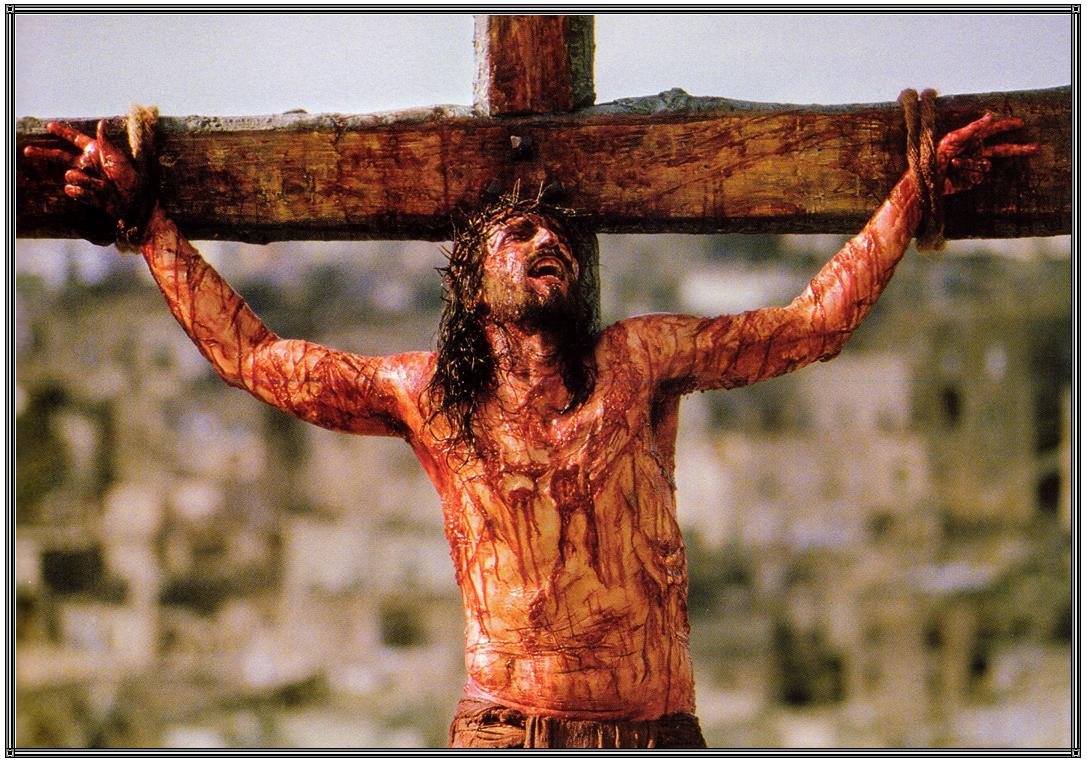
The Passion of the Christ (USA: Mel Gibson, 2004)


The Passion of the Christ (USA: Mel Gibson, 2004: 127 mins)

Aslan, Reza. "Zealot." Radio West (October 18, 2013)

Deacy, Chris. "A Time to Kill?: Theological Perspectives on Violence and Film." Theology and Film: Challenging the Sacred/Secular Divide. ed. Christopher Deacy & Gaye Williams Oritz. Malden, MA: Blackwell, 2008: 123-142. [Professor has copy]

Hauka, David. "'Christ That Hurts': Rewriting the Jesus Narrative -- Violence and the Language of Action Cinema in Mel Gibson's The Passion of the Christ Cinephile #2 (March 2006)

Phillips, Kendall R. "Religion: Mel Gibson's The Passion of the Christ." Controversial Cinema: The Films That Outraged America. Westport, CT: Preager, 2008: 127-152.[in BCTC Library PN1995,9 S284P452008}

Koresky, Michael. "Consider the Source: The Passion of the Christ." Reverse Shot (Spring 2004)

Reichert, Jeff. Jesus Christ: Superman (or Every Man for Himself and Armond Against All)>" Reverse Shot (Spring 2004)

Walsh, David. "Why has The Passion of the Christ evoked such a popular response in America?" World Socialist Web Site (March 5, 2004)

Walter, Brian. "Love In The Time of Calvary: Romance and Family Values in Crucifixion Films." Cineaction #88 (2012)

Saturday, April 20, 2013

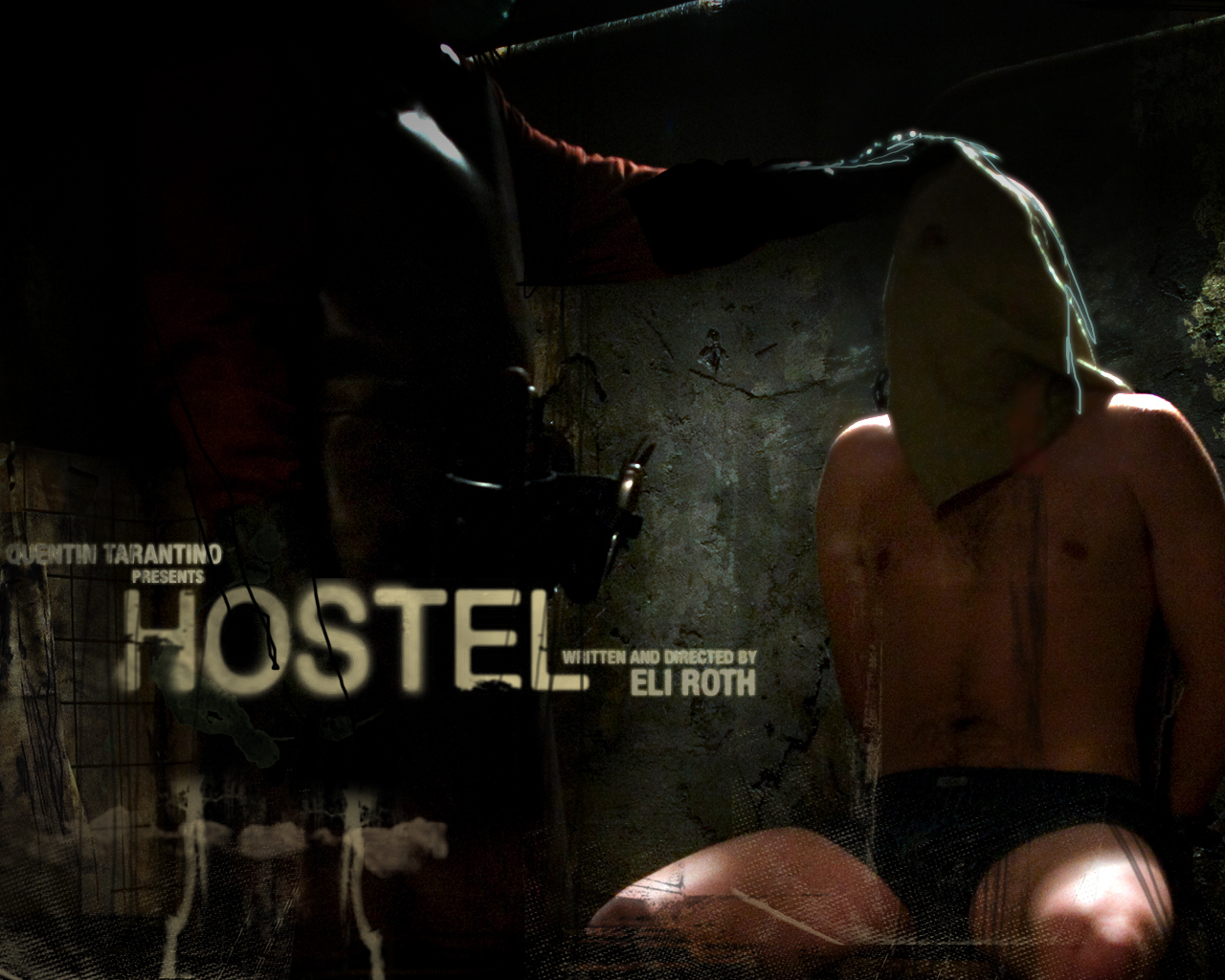
Hostel (USA: Eli Roth, 2005)


Hostel (USA: Eli Roth, 2005: 94 mins)

Burris, Gregory A. "Shocked and Awed?: Hostel and the Spectacle of Self-Mutilation." Cine-Action #80 (2010) [Available from your teacher]

Cromb, Brenda. "Gorno: Violence, Shock and Comedy." Cinephile #4 (Summer 2008)

Fletcher, Phoebe. “Fucking Americans”: Postmodern Nationalisms in the Contemporary Splatter Film #18 (December 2009)

Hilden, Julie. "Free Speech and the Concept of "Torture Porn": Why are Critics So Hostile to Hostel II?" Find Law (July 16, 2007)

Kleinhans, Chuck. "Imagining Torture." Jump Cut #51 (Spring 2009)

Kleinhans, Chuck, John Hess and Julia Lesage. "The Last Word: Torture and the National Imagination." Jump Cut #50 (Summer 2008)

Lesage, Julie. "Torture Documentaries." Jump Cut #51 (Spring 2009)

Murray, Gabrielle. "Images of Torture, Images of Terror: Post 9/11 and the Escalation of Screen Violence." Monash University Film and TV Studies (Podcast of a Lecture: March 20, 2008)

Rosler, Martha. "A Simple Case for Torture." Jump Cut #51 (Spring 2009)

Torture (Archive on Dialogic: The culture and politics of "torture.")

Wednesday, January 9, 2013

Ray McGovern: Excusing Torture, Again

Excusing Torture, Again
by Ray McGovern
Common Dreams


...

The Downside of Torture

Besides the moral opprobrium that the practices brought upon the United States, the CIA’s use of torture alienated many Muslims who otherwise would have felt no sympathy for Islamic extremists. For example, U.S. military interrogators report that the vast majority of jihadists who came to fight against U.S. forces in Iraq were motivated by the disclosures about torture at Abu Ghraib and Guantanamo.

FBI interrogators also have said their rapport-building techniques with an early detainee, logistics specialist Abu Zubaydah, were succeeding in eliciting important information from him before the CIA interrogators arrived and insisted on applying their brutal methods.

Author Jane Mayer in her book The Dark Side writes that the two FBI agents, Ali Soufan and Steve Gaudin, “sent back early cables describing Zubayda as revealing inside details of the [9/11] attacks on New York and Washington, including the nickname of its central planner, ‘Mukhtar,’ who was identified as Khalid Sheikh Mohammad [KSM]. …

“During this period, Zubayda also described an Al Qaeda associate whose physical description matched that of Jose Padilla. The information led to the arrest of the slow-witted American gang member in May 2002, at O’Hare International Airport in Chicago. …

“Abu Zubayda disclosed Padilla’s role accidentally, apparently. While making small talk, he described an Al Qaeda associate he said had just visited the U.S. embassy in Pakistan. That scrap was enough for authorities to find and arrest Padilla” who was suspected of plotting a “dirty bomb” attack inside the United States (although he was never charged with that offense).

In 2009, Soufan broke his personal silence on the topic in an op-ed in the New York Times, citing Zubaydah’s cooperation in providing information about Padilla and KSM before the CIA began the harsh tactics. “It is inaccurate … to say that Abu Zubaydah had been uncooperative,” Soufan wrote. “Under traditional interrogation methods, he provided us with important actionable intelligence.” [NYT, April 23, 2009]

Nevertheless, Bush administration defenders have cited the information wrested from Zubaydah — who was waterboarded at least 83 times in August 2002 — as justification for the interrogation tactics that have been widely denounced as torture.

The problem of eliciting false intelligence was demonstrated by the handling of another al-Qaeda captive, Ibn al-Shaykh al-Libi, who responded to threats of torture by fabricating an operational link between Saddam Hussein’s government and al-Qaeda. It was exactly the kind of information that the Bush administration had been seeking to justify its desired invasion of Iraq.

By Feb. 11, 2003, as the countdown to the U.S. invasion progressed, CIA Director George Tenet began treating al-Libi’s assertions as fact. At a Senate Intelligence Committee hearing, Tenet said Iraq “has also provided training in poisons and gases to two al-Qa’ida associates. One of these associates characterized the relationship he forged with Iraqi officials as successful.”

But the CIA’s promotion of al-Libi’s information ignored the well-founded suspicions voiced by the Defense Intelligence Agency. “He lacks specific details” about the supposed training, the DIA observed. “It is possible he does not know any further details; it is more likely this individual is intentionally misleading the debriefers.”

The DIA’s doubts proved prescient. In January 2004, al-Libi recanted his statements and claimed that he had lied because of both actual and anticipated abuse. In September 2006, the Senate Intelligence Committee criticized the CIA for accepting al-Libi’s claims as credible. “No postwar information has been found that indicates CBW training occurred and the detainee who provided the key prewar reporting about this training recanted his claims after the war,” the committee report said.

Al-Libi ended up in a Libyan prison during the period when Col. Muammar Gaddafi was cooperating with the U.S. in hunting down “terrorists.” Al-Libi “committed suicide” just two weeks after being visited in the Libyan prison by a team from Human Rights Watch in April 2009.

‘No Good Intelligence’

The al-Libi case demonstrated one of the practical risks of coercing a witness to talk. To avoid pain, people often make stuff up, an obvious point that other truth-tellers also have noted. On Sept. 6, 2006, for example, Gen. John Kimmons, then head of Army intelligence told reporters at the Pentagon, in unmistakable language:

“No good intelligence is going to come from abusive practices. I think history tells us that. I think the empirical evidence of the last five years, hard years, tells us that.”

Gen. Kimmons is a rare species – a general officer with guts, not to mention an intelligence career focusing mostly on interrogation practices. He was well aware that President George W. Bush had decided to claim publicly, just two hours later, that the “alternative set of procedures” for interrogation – methods that Bush had approved, like waterboarding – were effective.

So the real experts say one cannot acquire “good intelligence” from torture, i.e. an empirical reality upon which to base sound policy. But what about bad intelligence, especially preferred bad intelligence? If your goal in 2002 and 2003 was to make a case showing operational ties between al-Qaeda and Iraq – when none existed – well, then, torture works like a charm.

Yet, Jose Rodriguez now seeks to rewrite this sordid chapter in the CIA’s history and put his own complicity in a more favorable light.

One could say his first major move in this cover-up came in 2005 when he ordered the destruction of videotaped evidence of these “enhanced interrogation techniques.” Surely, it is easier to soft-pedal the cruel reality of waterboarding and other abusive tactics if people can’t actually see the human suffering.

And, the Washington Post, which once basked in the glory of its investigation of the Watergate cover-up, now gives generous space for a practitioner of both waterboarding and destruction of evidence to make excuses without challenge.

Just think how Official Washington’s attitude toward respect for the law has degraded over the past three decades or so. Not even President Richard Nixon dared to destroy the incriminating tapes of Watergate, even though he knew only too well that the evidence on them would be his undoing.

Yet, Rodriguez never faced criminal charges for destroying 92 videotapes recording hundreds of hours worth of CIA black-site interrogation footage. Rodriguez ordered the tapes destroyed at precisely the time when Congress and the courts were intensifying their scrutiny of the CIA interrogation program. Yet – surprise, surprise – nowhere in Sunday’s Post is there mention of that felony fact.

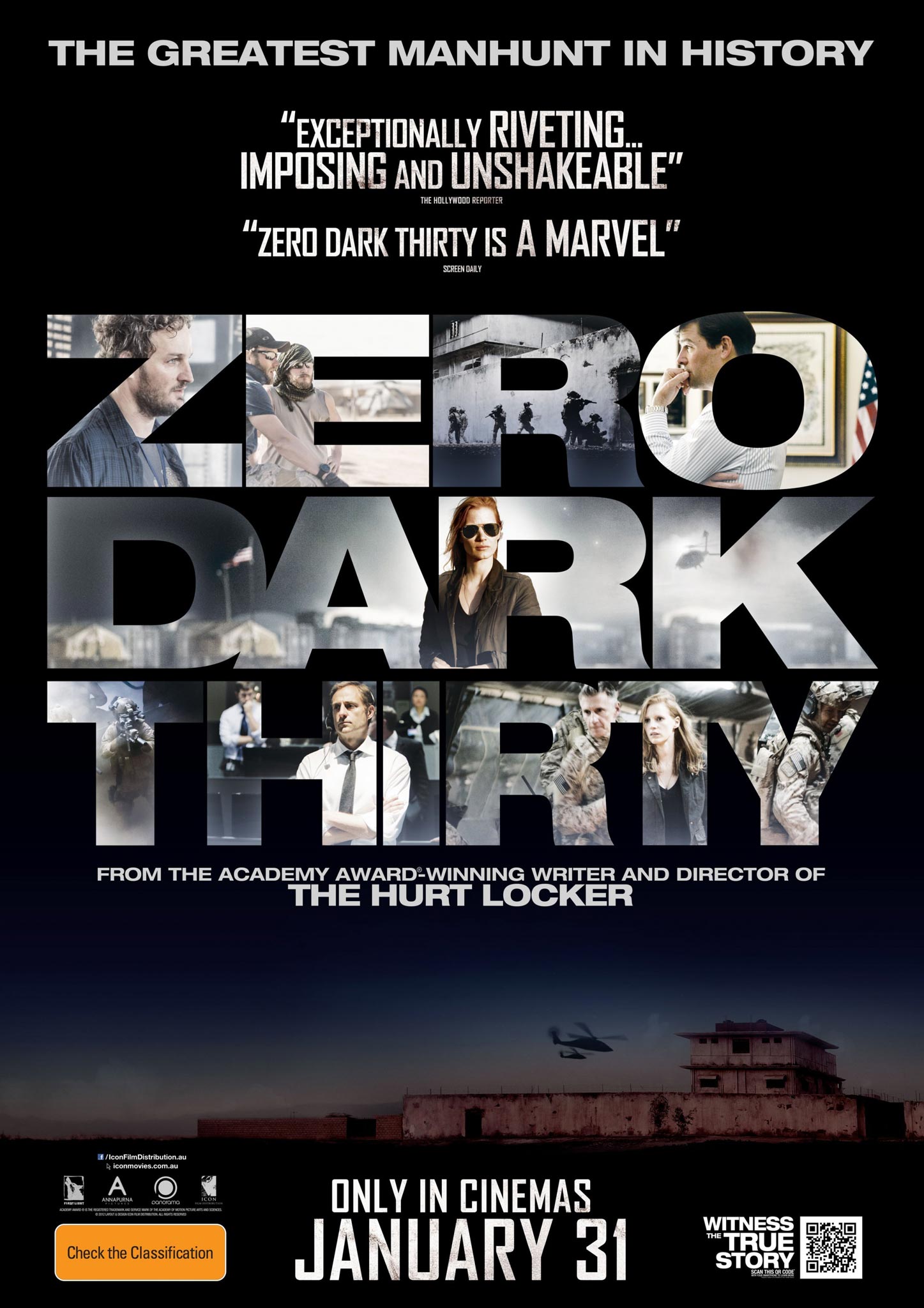
Indeed, as Rodriguez and his torture-friendly colleagues seek to use the occasion of the new Hollywood blockbuster to burnish their image, they are getting a helping hand from neocon newspapers like the Washington Post.

To Read the entire essay
Friday, July 20, 2012

Michael Koresky: Consider the Source -- On The Passion of the Christ

Consider the Source: On The Passion of the Christ
by Michael Koresky
Reverse Shot


I opened my wallet for Jesus. And then, after paying the ten dollars and twenty-five cents, sitting through the ear-splitting, retina-scalding Regal Cinemas’ 2wenty (“Remember to arrive at the theater early!”), ads for Eclipse breath-freshener and Coca-Cola, bulbous oversized M&M men and a TNT “We Know Drama” sensory overload, I was ready to be saved. Lifted out of my seat, perhaps, and brought back down into my chair just in time for the beginning of lent.

Alas, in the end, it was a movie. A mere movie. Mel Gibson’s brilliantly cynical marketing strategy, buoyed by the ADL’s advance work, lured even us non-believers (sinners) into the theater; certainly we didn’t expect to emerge as right-wing Christian fundamentalist converts, but we had every right to think we would be witnessing an honest representation of human and artistic faith, a spiritual roadmap to the psyche of a filmmaker and actor who felt driven, even instructed by God, as he has claimed, to create a cinematic likeness of the divine. It’s not essential that a moviegoer agrees with the political or religious implications of the images emblazoned on the screen, but that the images translate as a response from the filmmaker’s soul, that we believe we are witnessing the gospels as Mel himself sees them. The sheer divine force offered by Pasolini, Scorsese, by Bresson and Burnett and Spielberg, by Alexanders Payne and Sokurov, manifest in images that relinquish themselves to whatever artistic means necessary, not in shameless grandiosity that wishes to pummel the viewer into submission, into terrified acceptance. Gibson may find disingenuous the earthy benevolence of Pasolini’s Christ and the psychological torment of Scorsese’s, the lyrical allegory of Bresson’s Balthazar and Spielberg’s E.T., the spiritual personification of Payne’s Warren Schmidt or Sokurov’s cancer-ravaged saint-mother; he wants a more direct address, to make you feel every thrust of the rusty nail as it’s hammered into Jesus’s palms, to clutch your own shoulders as Jesus’s arm is ripped out of its socket, to cover your eyes in gratitude when the crucified thief’s eye is plucked out by a vengeful crow, to reverently ooh, aah, and shriek when Jesus is scourged, his back torn and ripped open into a hundred fleshy strips. Apparently to Gibson, there is no metaphor in religion; faith manifests itself as a spiritual dead-end, a believe-it-or-be-damned expression of finality. Of course Gibson, progeny of his fundamentalist missionary father’s terrifyingly stubborn outmoded beliefs, ended up a Hollywood actor—that particular “dream factory” churns out endless expressions of American complacency every year, cheerless damning spectacles of moral righteousness and unambigious carnal pleasures. Of course Mel Gibson, though a self-avowed man of endless spiritual vitality, can only depict the divine through the employment of hundreds of buckets of stage-blood. With its ludicrous, Hollywood-fortified conviction (not the same thing as faith, incidentally), Passion may be the world’s first completely banal Jesus Christ film. And though it’s remarkably, hopelessly literal, it was certainly waiting to happen. It had to happen.

If 2000’s Gladiator ushered in the new Bush regime, then perhaps Gibson’s blockbuster is the new 21st-century’s first true coercively conservative “classic.” Rarely has a film with a fundamentalist core been so blatantly conceived, so forthright in its admissions. Every decade of American film, though never preoccupied with anything grander than itself, nonetheless ends up a product of its own political backdrop. First Blood and its subsequent sequels became emblematic of the Reagan era, literally winning Vietnam back from the liberals, reasserting the swaggering machismo of the American hero that Seventies Hollywood attempted to all but decimate. And just as Stallone enacted Reagan’s cloudy-headed right-wing version of recent history, Gibson’s Christ—“compassionate” Conservative, deliverer of that old-tyme religion—emerges from the tomb at just the moment of the Bush administration’s attack on civil liberties, and the attack on the Civil Rights of American gays launched by Dubya himself with full-on, unabashed old-testament condemnation. Those who speak out against Gibson’s film are automatically stigmatized as leftist rabble-rousers and hapless atheists; to deny its physical impact or so-called technical grandeur is to supposedly denounce Gibson’s personal belief system. What’s more essential is to realize that when Gibson’s savvy propaganda piece, meant to inflict a tough-love Jesus on the nation’s wayward souls, floods into 4,000 screens, another dam between Church and State begins to crumble. The youngsters of the Clintonian Nineties, finding solace in the emergence of a truly multicultural pop mainstream, need to be reclaimed by the right, shorn of their piercings and tattoos, and brought back to Sunday school; who better to do that than Jesus himself, this time, like Rambo, stripped to the waist, chained and whipped, flesh torn and limbs broken, but never down for the count?

To Read the Rest of the Essay More: Jeff Reichert: Jesus Christ Superman

Sunday, June 10, 2012

Steven Shaviro: After Hope - The Life and Death of a Porno Gang

After Hope: The Life and Death of a Porno Gang
by Steven Shaviro
Acidemic


Mladen Djordjevic's Life and Death of a Porno Gang (Serbia, 2009) contains explicit representations of sex and violence, including scenes of golden showers, zoophilia, animal slaughter, rape, murder, wartime atrocities, the production of snuff films, and suicide. In its extremity, Porno Gang has a lot in common with its sister film, Srdjan Spasojevic's A Serbian Film (2010), with which it shares a cinematographer (Nemanja Jovanov), as well as the plot premise of porno actors lured into making snuff films. Both of these movies allude, at least implicitly, to the American torture porn franchises of the past decade (the Hostel series and the Saw series). They also bring to mind the controversial but highly visible and critically acclaimed transgressive art cinema of Western Europe and East Asia, including such works as Gaspar Noë's Irreversible (2002), Pascal Laugiers's Martyrs (2008), Lars von Trier's Antichrist (2009, below), Takashi Miike's Audition (2000), and Park Chan-wook's Vengeance trilogy (2002-2005).

However, Life and Death of a Porno Gang stands out among all these films for a number of reasons. It is unique in terms of its style, in terms of its particular geographical and historical location, and in terms of the types of social and economic conditions that it explores. In the first place, Porno Gang rejects both the commercial-genre functionalism of movies like Hostel, and the art-film self-consciousness of directors like Noë and von Trier. Instead, it adopts an informal, low-budget aesthetic; it has the look and feel of a video documentary. The film is largely shot in natural light, in real locations, with small, handheld video cameras, the same kind of cameras that the characters within the film themselves use. In this way, Porno Gang picks up from Djordjevic's previous film, Made in Serbia (2005), a downbeat documentary about the small size and limited horizons of the Serbian porn industry. Porno Gang retains its predecessors' look and feel, as well as subject matter, even though it is a fictional film, entirely scripted and staged.

Life and Death of a Porno Gang also stands out for the way that it tends to shy away from, and representationally underplay the horrific violence that it nonetheless explicitly depicts. This is its biggest difference from A Serbian Film, which presents its depraved visions with a hallucinatory hyperrealism, often pushed to the point of campy excess. In contrast, Life and Death of a Porno Gang remains largely naturalistic, and is not edited for shock value. Indeed, Djordjevic's editing style is oddly elliptical; it gives us buildups, but it often cuts away before the horror it depicts has had enough time to register in its full intensity. Porno Gang neither dwells on its carnage with long takes and a fixed or slow-moving camera, nor riles up its viewers with rapid, disjunctive montage. Instead, there is a kind of everydayness to its horror. The film records the experiences of its characters in a manner reminiscent sometimes of a first-person video diary, and other times of reality television. The film's most shocking moments emerge from this background of everydayness, and then quickly recede back into it.

To Read the Rest of the Essay