Showing posts with label Sexuality. Show all posts

Sunday, January 12, 2014

Blue is the Warmest Color (France/Belgium/Spain: Abdellatif Kechiche, 2013)

“Few films dig so deeply (and with such sense of intimacy) into the complexities of human relations, the joys and pains of self discovery and the hurtful realisation that our bodies and mind can yearn opposite things.” — Fernanda Solórzano


Blue is the Warmest Color (France/Belgium/Spain: Abdellatif Kechiche, 2013: 179 mins)

Beauvoir, Simone de. The Second Sex (1949: PDF copy)

Bell, Nicholas. "Blue is the Color of My True Love’s Hair: Kechiche Takes Us Deep Sea, Baby." Ion Cinema (October 25, 2013)

Berger, John. The Ways of Seeing. (1972: Summary/outline of this important book that studied how we are position to observe people and objects in art)

Blue is the Warmest Color Critic's Roundup (No Date)

Blue is the Warmest Color (Graphic Novel) Wikipedia (No Date)

Dargis, Manohla. "Seeing You Seeing Me: The Trouble With Blue Is the Warmest Color." The New York Times (October 27, 2013)

Dayoub, Tony. "The 51st New York Film Festival #3." The Cinephiliacs (October 13, 2013)

Hudson, David. "Abdellatif Kechiche’s BLUE IS THE WARMEST COLOR: A coy coming-out drama this most definitely isn’t.” Keyframe (May 23, 2013)

---. "Abdellatif Kechiche’s BLUE IS THE WARMEST COLOR: 'The experience of the film transcends flaws both real and imagined.'" Keyframe (October 11, 2013)

Ildari, Max. "Blue Is the Warmest Color 2: A Response to Lorrie Moore’s Review in the New York Review of Books." Bright Lights After Dark (January 10, 2014)

Jones, Kristin M. ""Review: Blue Is the Warmest Color." Film Comment (2013)

Kennedy, A.L. "Sartre and the Individual." A History of Ideas (April 15, 2015) ["Writer AL Kennedy on Existentialist ideas about the individual. Jean Paul Sartre argued that, for humans, 'existence preceded essence'. This means that there is no blueprint or template from which to work - humans are free to make themselves up as they go along. Being an individual comes from the way you negotiate this freedom and the choices you make in the face of it."]
Lee, Janet. "'Blue Is The Warmest Color'." Neon Tommy (October 22, 2013)

Mayer, Sophie. "Blue is the Warmest Colour: This part-adaptation of Julie Maroh’s graphic-novel saga of a lesbian love affair trades a new voice for the same old male gaze." Sight and Sound (February 20, 2015)

McCahill, Mike. "21st Century Directors You Need to Know About: Abdellatif Kechiche." Movie Mail (May 2, 2014)

McNeil, Jeremiah. "Blue is the Warmest Color" Dialogic Cinephilia (December 21, 2013)

Moore, Lorrie. "Gazing at Love: Blue is the Warmest Color." The New York Review of Books (December 19, 2013)

Rich, B. Ruby. "Blue Is the Warmest Color: Feeling Blue." The Current (February 24, 2014)

Roberts, Soraya. "Blue Is the Warmest Color is about class, not just sex." Salon (November 3, 2013) ["Sex and sexuality are only half the film's story. It's also about lovers from different economic worlds."]

Sartre, Jean-Paul. "Existentialism is a Humanism." (Lecture given in 1946: published in Existentialism from Dostoyevsky to Sartre, ed. Walter Kaufman, Meridian Publishing Company, 1989) Marxist Archive (2005)

Stern, Marlowe. "‘Blue is the Warmest Color’: See What the Sex Scene Looks Like In the Graphic Novel." The Daily Beast (October 28, 2013)

Thompson, Martha. "Blue Is the Warmest Color 1: Unresolved Alienations of Class." Bright Lights After Dark (January 2014)

Zaman, Farihah. "The Pleasure Principle: Blue is the Warmest Color." Reverse Shot #33 (2013)




Thursday, October 24, 2013

Cemetery Man (Italy/France/Germany: Michele Soavi, 1994)


Cemetery Man (Italy/France/Germany: Michele Soavi, 1994: 105 mins)
The excellently named Francesco Dellamorte (Rupert Everett, never better) is the moody caretaker of a small-town Italian cemetery where the dead just keep coming back to life, much to his annoyance. His everyday tedium of reading phone books and killing zombies is broken when he falls madly in love with a nameless beautiful widow. Unfortunately, she too perishes and returns as a zombie. A strange and entertaining erotic-horror-comedy, Cemetery Man (titled Dellamorte Dellamore in Italian) is required viewing for anyone of the sadboi persuasion. – Anna Bogutskaya
Dumas, Andre. "Cemetery Man: By Keeping Things the Same, We Can Change More Effectively." Horror Digest (March 30, 2011)

Kuersten, Erich. "The Shrouds of Soavi: Cemetery Man, The Devil's Daughter." Acidemic (September 8, 2016)

Seda, Alex. "Dellamorte Dellamore (a.k.a. Cemetery Man) Review." Midnight Showing (July 10, 2009)

"TGIF #5: CEMETERY MAN (aka DELLAMORTE DELLAMORE)" Adamantium Bullet (July 24, 2009)


Tuesday, October 22, 2013

Radio West: Frederick Wiseman's Crazy Horse

Frederick Wiseman's "Crazy Horse"
By Doug Fabrizio
Radio West


Tuesday, Doug is joined by legendary filmmaker Frederick Wiseman. A year ago, RadioWest and the Utah Film Center began our Through the Lens documentary film series with a conversation with Wiseman. His latest work is set to open later this month around the country. It's called "Crazy Horse," and it's a spare, unfiltered look inside a Parisian nude cabaret. Doug talks to Wiseman and others about his 44 year career and what the new film reveals about Wiseman's unique process.

To Listen to the Interviews

Monday, September 2, 2013

The Piano Teacher (Austria/France/Germany: Michael Haneke, 2001)


The Piano Teacher (Austria/France/Germany: Michael Haneke, 2001: 131 mins)

Bradley, S.A. "Killed by Death." Hellbent for Horror #33 (February 27, 2017)

Brunette, Peter. Michael Haneke. Urbana, IL: University of Illinois, 2010.

Frey, Mattias. "Great Directors: Michael Haneke." Senses of Cinema #57 (2010)

Grundman, Roy. A Companion to Michael Haneke. Malden, MA: Wiley Blackwell, 2010.

"Michael Haneke Studies: Videos, Podcasts and Article Links." Film Studies for Free (June 26, 2010)

Price, Brian and John David Rhodes, ed. On Michael Haneke. Detroit, MI: Wayne State University, 2010.

Sorfa, David. "Uneasy domesticity in the films of Michael Haneke." Studies in European Cinema 3.2 (2006)

Wheatley, Catherine. Michael Haneke's Cinema: The Ethic of the Image. NY: Bergahn Books, 2009. [BCTC Library PN 1998.3 H36 W44 2009]


Thursday, August 15, 2013

Harvard University Press Blog: Catherine MacKinnon on Lovelace

Catharine MacKinnon on Lovelace
Harvard University Press


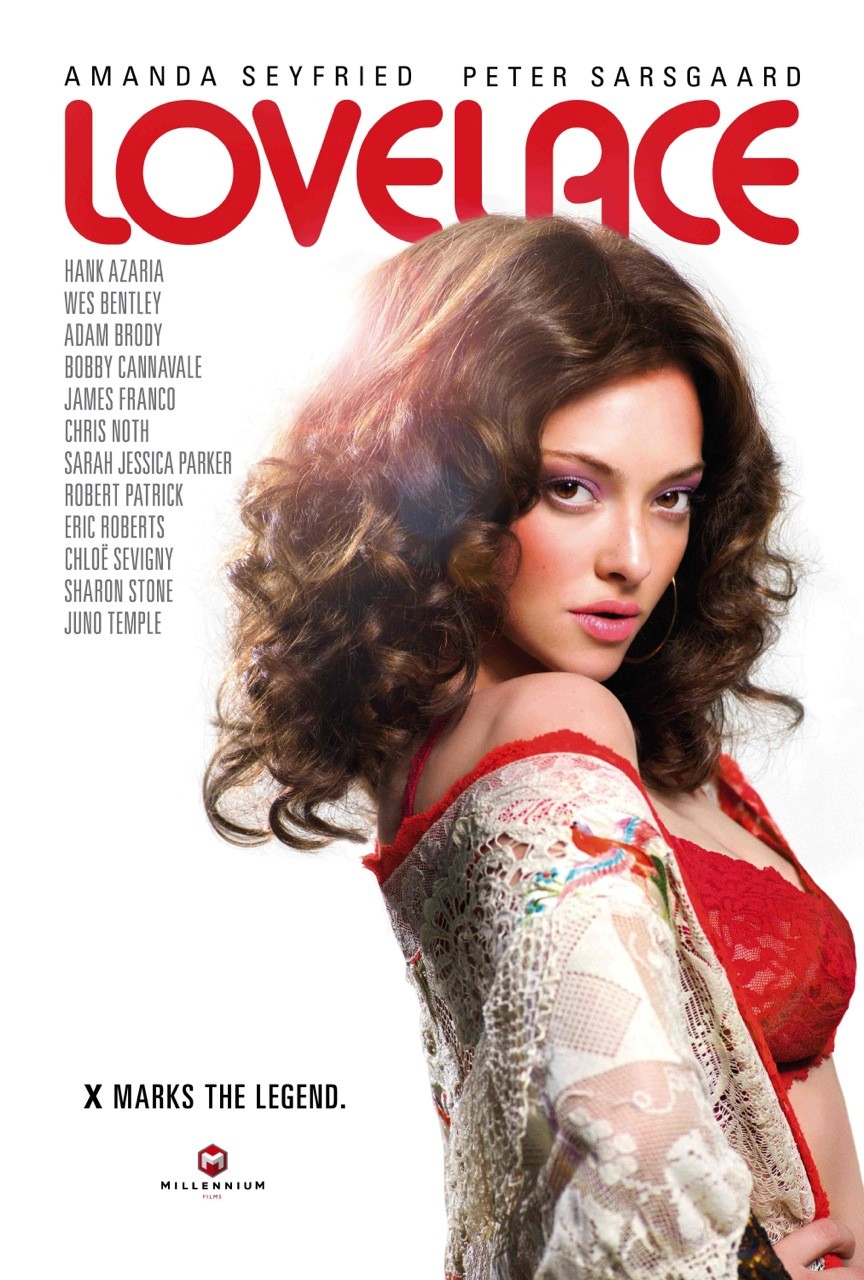
The pornographic film Deep Throat, released in 1972, was a cultural sensation whose star, “Linda Lovelace,” was said to put a girl-next-door face on the sexual revolution. But the actual life of Linda Boreman, as depicted in the new biopic Lovelace, was one of beatings, rape, and terror. Feminist legal scholar Catharine MacKinnon, author of such works as Toward a Feminist Theory of the State and Only Words, represented Boreman after she came forward with her story, and later, with Andrea Dworkin, pursued civil rights litigation as a means to fight pornography. We asked MacKinnon about Boreman, Lovelace, and the potential impact of the film.

To Read the Interview

Monday, August 12, 2013

Irreversible (France: Gaspar Noé, 2002)


Irreversible (France: Gaspar Noé, 2002: 97 mins)

Britt, Thomas R. "Lower Depths and Higher Aims: Death, Excess and Discontinuity in Irreversible and Visitor Q." Cinephile 5.1 (2009)

Krautheim, Graeme. "Aspiring to the Void: The Collapse of Genre and Erasure of Body in Gaspar Noé’s Irreversible." Cinephile #4 (Summer 2008)

Palmer, Tim. Brutal Intimacy: Analyzing Contemporary French Cinema. Middletown, CT: Wesleyan University Press, 2011. [Professor has a copy]

Sharett, Christopher. "The Function of Film Criticism at Any Time." Film International (April 29, 2017)

Wood, Robin. "Against and For Irreversible." Film International (April 5, 2011)

Tuesday, July 2, 2013

The Dreamers (France/UK/Italy: Bernardo Bertolucci, 2003)


The Dreamers (France/UK/Italy: Bernardo Bertolucci, 2003: 115 mins)

Buchanan, Ian. "Bernardo Bertolucci's The Dreamers; Kristin Ross' May 68 & Its Afterlives; Deleuze & Guattari's Anti-Oedipus." excerpt from Deleuze and Guattari's Anti-Oedipus. NY: Continuum, 2008: 13-19. Posted on Dialogic (July 2010)

Dyson, Jake. "The Dreamers (2003)." Film Matters (February 20, 2018)

Fletcher, Stephen Q. "The Dreamers: Revolution as a Gala Dinner and a Game." Metaphilm (May 4, 2008)

Hudson, David. "Sex in the Movies." Green Cine (2005)

Ross, Kristin. May '68 and Its Afterlives. Chicago: University of Chicago Press, 2002.

Sunday, June 30, 2013

Yes (UK: Sally Potter, 2004)


Yes (UK: Sally Potter, 2004: 100 mins)

"Angelism and Rage: Sally Potter Links." Film Studies for Free (September 21, 2009)

Mayer, Sophie. "The Films of Sally Potter." Electric Sheep Magazine (October 1, 2009)

McKim, Kristi. "Great Directors: Sally Potter." Senses of Cinema #40 (July 2006)

Oppenheimer, Jean. "Production Slate: Yes - A Cross Cultural Romance." American Cinematographer (July 2005)

"Please go in two by two! Sally Potter's Fabulous Ark." Film Studies for Free (November 4, 2008)

Saturday, June 29, 2013

Critical Strands: On the Beach with Ulrich Seidl and Martin Parr

Critical Strands: On the Beach with Ulrich Seidl and Martin Parr
by retinalechoes
Notebook


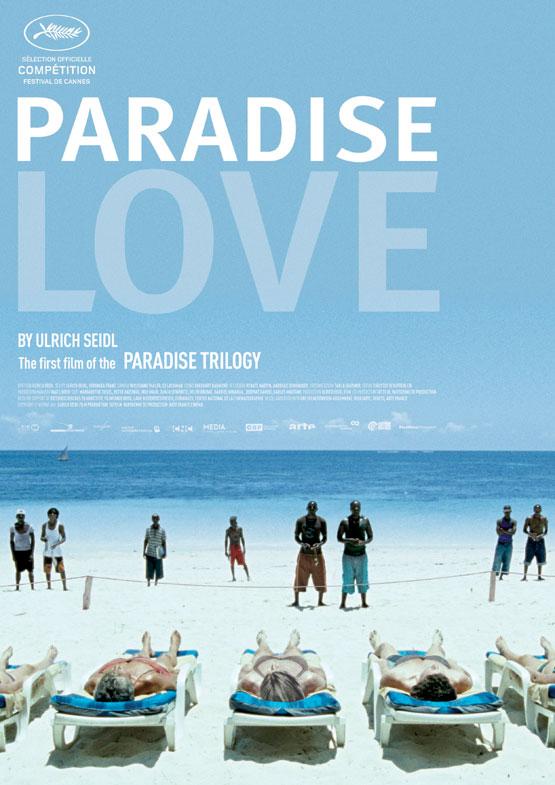
Some films you watch. Others you live. In Ulrich Seidl's films you suffer. You suffer and laugh, and laugh and suffer, until tears pour from your eyes, until out from laughter arises guilt. Guilt for having suffered. Guilt for having laughed. And only then, when you emerge from the guilt, wipe the film from your eyes, do you realize that the naïve 200-pound quinquagenarian Austrian sex-tourist on holiday in Kenya is none other then yourself, if not your sister or perhaps mother. Only then does the comfort of guilt morph into the vexation of shame as you understand that the buffoon you saw on the screen was wearing what turned out to be your face for a mask.

But don’t say you weren’t forewarned. The ballsy and shameless opening scene of Paradise: Love, should have given notice enough. After all, away from the scrutinizing eyes of society it becomes too easy to indulge in the visual pleasure of watching warped grimaces twisting in glee and shock across the faces of the spasmodic, the abnormal, the mongoloid. Hidden behind the comfort of our screen (for it is always our screen, and never just yours or mine) it becomes all too simple to relish images of the rejected visages of the mentally retarded contorting themselves in farcical masks as their bumper cars smash into each other, watching Teresa, our fat Austrian heroine, watch them. Our white-winged socially-implanted moral warden hanging over our right shoulder like a wee angel warns us against laughter, but in the liberty and obscurity of the cinematic chamber, we let loose with a laughter poised on the razor's edge between discomfort and hilarity. Paradise: Love’s opening scene is a warning, a provocation, a contract of the film to come, and it reads: “I will force you to laugh at things not only which you do not want to laugh at, but which you know you should not.” But laugh we do, and in so doing become accomplices to the film. Seidl’s humor is not the innocent cathartic guffaw of slapstick, nor the healing chortle of satire. It is a blow aimed to crack open a chink in the armor of our self-righteousness to make way for the stiletto of shame to slide in more easily.

By naming our tender, pale, gullible heroine Teresa after the famed Mother Superior of Christian fame, Seidl sticks a knife in the back of the charitable West’s self-congratulatory sentiments for the aid it provides the (usually somewhat darker-skinned) third-world. (Do we hear the rational arguments of capitalist economics buzzing in the background? Business for the locals? Improvements to infrastructure? Exchange of goods?) The tourist, a missionary of modernity, never meets the third-world inhabitants on equal terms, never enters their world, but rather travels to other lands with the goal of extracting as many resources as possible, be it gold, souls or sex. The images of Teresa’s travels to this land of alterity in Paradise: Love are no reflections of a “mirror being carried along a high road,” but rather visions which barely pierce the thick and muggy waters of the aquarium in which her head is enclosed: Omnia mea mecum porto - when the European travels she takes her whole world with her wrapped around her head, aquarium, water and fish too. Teresa’s ‘omnia’, the civilized rectangular glassed cage is exemplified by the space of the European room (and the cinematic frame?). As Teresa prepares for her trip, she appears in one chamber after another in her Austrian apartment, preparing food, folding laundry, packing bags and the rectangle in which she moves is the one the camera will bring with her (and us) on holiday to Kenya, with its centralized perspective and weight, and its ordered compositions, signs of the European’s efficiency and rationality.

But no matter, for the tourist’s mission is not to see unseen landscapes but rather to ignore the distinctiveness of the travel destination so as to better wrench maximum ‘fun’ from the exotic (what else would make tourism the largest industry worldwide?). So, even when Teresa and her Austrian compatriots travel thousands of kilometers to reach a new panorama, the only landscape they can perceive is the one they brought with them, with its ordered lines, sparkling clean toilet bowls, and secure walled-off pleasures.

To Read the Rest

Sunday, June 23, 2013

Moolaadé (Senegal/France/Burkina Faso/Cameroon/Morocco/Tunisia: Ousmane Sembene, 2004)


Moolaadé (Senegal/France/Burkina Faso/Cameroon/Morocco/Tunisia: Ousmane Sembene, 2004: 124 mins)

Bartlet, Olivier. "Adventures and Misadventures of African Cinema." Cinemas of the South (2006)

Borden, Amy. "At the global market: Ousmane Sembène’s Moolaadé and the economics of women’s rights." Jump Cut #53 (Summer 2011)

Bug Girl. Is My Vuvulzela Too Big?" Skepchick (June 20, 2010)

Coventry, Martha. "Making the Cut: It's a Girl! ... Or is it? When in doubt, why are surgeons calling the shots?" Ms. (Oct/Nov 2000)

Diop, Baba. "Ousmane Sembene: The Elder of Elders." Cinemas of the South (February 15, 2009)

Dotson-Newman, Nzinga. "Family Pressure on Young Girls for Genitalia Mutilation Continues in Kenya." Project Censored (2012)

Finney, Nikki. "The Greatest Show On Earth." (Read the poem/read an analysis of the poem/and listen to Nikki read it)

Halpern, Sue. "Breaking a Conspiracy of Silence." The New York Times Book Review 56.18 (November 19, 2009)

Marzana, Nicola. "The Art of Hunger: Re-Defining Third Cinema." 16:9 (November 2009)

Pride, Ray. "Woman is the Future of Man: Ousmane Sembene on Moolaade." Cinema Scope #21 (2004)

Santur, Hassan Ghedi. "On Being a Muslim in the West." Ideas (June 1, 2011)

Turkewitz, Julie. "Effects of Ancient Custom Present New Challenge to U.S. Doctors: Genital Cutting Cases Seen More as Immigration Rises." The New York Times (February 6, 2015)


Wednesday, April 17, 2013

Brokeback Mountain (Canada/USA: Ang Lee, 2005)


Brokeback Mountain (Canada/USA: Ang Lee, 2005)

Benshoff, Harry M. "Brokering Brokeback Mountain — a local reception study." Jump Cut (2008)

Garrett, Daniel. "You Don't Know What Love Is." Film International #21 (2006)

Koziak, Barbara. "Shepherding Romance: Reviving the Politics of Romantic Love in Brokeback Mountain." Genders #50 (2009)

"Queer Cowboys: Alternative Space in "Brokeback Mountain." Film International (2006)

Schneider, Richard, Jr., et al. "Not Quitting Brokeback/Lost in Adaptation/The Hate Crime/Beyond the Mountain." Gay & Lesbian Review (May/June 2006): Reprinted in Annual Editions: Film 07/08 170-174 [Available in BCTC Library PN1993 A6285]

Sharrett, Christopher. "Death of the Strong, Silent Type: The Achievement of Brokeback Mountain." Film International 7.1 (February 2009)

Stamatopoulos, Irini. "Ang Lee's Cowboys: Fallen from Brokeback’s Paradise Lost." Offscreen (February 28, 2007)

Vicari, Justin. "Discovering America: Reflections on Brokeback Mountain." Jump Cut #49 (Spring 2007)

Saturday, April 6, 2013

A Dangerous Method (UK/Canada/Switzerland: David Cronenberg, 2011)


A Dangerous Method (UK/Canada/Germany/Switzerland: David Cronenberg, 2011: 99 mins)

Bale, Miriam. "They Came From Within: Yonic symbolism in the films of David Cronenberg." Moving Image (January 20, 2012)

Bowen, Chuck. "The Films of David Cronenberg Ranked." Slant (February 24, 2015)

Chemaly, Soraya. "Virgins, Bondage and A Shameful Media Fail." Huffington Post (April 20, 2012)

"Explore the Making of ‘Cosmopolis,’ ‘Naked Lunch,’ ‘Spider,’ ‘Eastern Promises,’ and More." The Film Stage (January 13, 2016)

Flores, Steven. "The Auteurs: David Cronenberg (Part 1)." Cinema Axis (October 28, 2013)

---. "The Auteurs: David Cronenberg (Part 2)." Cinema Axis (October 30, 2013)

Heath, Roderick. "A Dangerous Method (2011)." Ferdy on Films (December 18, 2011)

"Intersubjectivity." Wikipedia (No Date)

Kuersten Erich. "CinemArchetype #6: The Intimidating Nymph." Acidemic (March 2, 2012)

Porton, Richard. "A Dangerous Method." Cinema-Scope #48 (Fall 2011)

Ratner, Megan. "David Cronenberg’s A Dangerous Method." Film Quarterly (November 2011)


Wednesday, February 27, 2013

David Parkinson: Oshima's Passions

Oshima's Passions
by David Parkinson
Movie Mail


Nagisa Oshima, who died last month, is best known for In the Realm of the Senses, a powerful tale of sexual obsession that retains much of its power 40 years on. David argues it becomes even more powerful when viewed with its less well-known sequel.

Nagisa Oshima, who died on 15 January at the age of 80, made several important films, yet he will probably be best remembered for one. During the nuberu bagu or new wave of the 1960s, he produced a clutch of furiously subversive denunciations of Japanese society that drew heavily on actual events and suggested that defeat in the Second World War had done little to discredit attitudes that had governed the national psyche since feudal times.

In later years, Oshima also achieved commercial success with the prison camp drama Merry Christmas Mr Lawrence (1983) and also proved himself adept at the samurai movie with Gohatto (1999). But, while his canon is admired for it trenchancy, artistic integrity and political courage, it is In the Realm of the Senses (1976) that commands the most attention. There is no question that it still has the power to compel, challenge and shock nearly four decades after its release. But this contentious picture, which has still to be shown in its entirety in Japan, acquires its greatest potency when seen in conjunction with Empire of Passion (1978), which similarly explores the ramifications of an intense amour fou, but does so with an increased control, maturity and compassion.

At the height of what might be deemed his 'angry young man' phase, Oshima produced a succession of uncompromising features for his own Sozo-sha company. As the traditional Japanese studios went into decline, Death By Hanging (1968), Diary of a Shinjuku Thief (1968), Boy (1969), The Man Who Left His Will on Film (1970) and The Ceremony (1971) matched anything being made in Europe for socio-political intrepidity and stylistic audacity.

To Read the Rest

Monday, December 31, 2012

Julia Leyda: "Something That Is Dangerous and Arousing and Transgressive" - An Interview with Todd Haynes

"Something That Is Dangerous and Arousing and Transgressive": An Interview with Todd Haynes
by Julia Leyda
Bright Lights Film Journal


JULIA LEYDA: You've done several movies that are very clearly woman's films, but the movie that I am most fascinated with in terms of gender is Velvet Goldmine, which is not usually interpreted in that context.

TODD HAYNES: No, except it's probably gotten the strongest female fan base of any of my films. And what's wonderful for me is to see new generations of young women, even as we think we progress as a society and there are new options available to each new generation that seem to be catering to that market more acutely, still Velvet Goldmine offers that market something that they're not getting elsewhere. I always love it when girls come up to me at festivals and that's the one, that's the movie that really turned them around.

JL: I'm interested in how you use the trope of playing with dolls in Superstar and Velvet Goldmine as a way to figure gender, embodiment, desire, identification. You said in an interview that playing with dolls is what you're doing in Velvet Goldmine, using it as a metaphor for the filmmaking process, to play with the characters of the idols more than making an actual biopic about bisexual pop stars. So what about the female characters in Velvet Goldmine? Fans, rock and roll girls like Mandy — talk a bit about them.

TH: Interesting question. The character of Mandy was probably one of the hardest roles I've ever had to cast. We did a really thorough, international search for who could play Mandy. When I look back on the experience, I'm amazed at how many actresses agreed to read for the role who don't often do so. I think what was difficult about Mandy was that she, and the Angela Bowie template for that character, harkened back to a kind of performative femininity of which there are very few contemporary examples anymore. I see it as the Patti Smith divide in terms of rock and roll and public depictions of femininity, whose image emerged finally, after so many variations on the codified mannerisms that were available to women in midcentury American film, for instance, and popular music (although there have always been interesting deviations from this). I think over time a lot of the affectations associated with performing femininity had fallen away, to the point where you came to this iconic figure of Patti Smith, whom I see as similar in a way to the Jude figure in I'm Not There, a very androgynous, more masculine-identified figure. For young actresses reading the role of Mandy it became clear that recent examples of that kind of almost camp presentation of an affected, theatrical persona were very hard to locate; I think of Liza Minnelli, and maybe Parker Posey was one of the later examples, of almost a gay male idea of femininity.

One thing that was very interesting about Angela Bowie is the way she navigated the English and American influences and her accent would come and go, and that was one of the things we wanted to incorporate into the performance, but that's very tough on an actor. We wanted to make it understood that it's a mutable way of fixing into each culture with some fluidity. I mean, there's no question that Angela Bowie was a central driving engine — her autobiography is amazing, and it's supported by most of the documentation and oral histories of those years — in the transformation of David Bowie, who was experimenting with different kinds of feminine representations but ultimately fixed on this Warhol-infused figure of the Ziggy Stardust character. It was really Angela Bowie who championed these kinds of characters, part of the second-generation Warhol clan, who made their way to the UK and appeared in this play Pork in 1971. They just loved her and she loved them, and in a weird way Bowie was sort of a spectator, an observer of this love and energy. And I think, based on what she wrote in her book and other documentation, she was very interested in the gay liberation movement that was burgeoning at the time and she wanted to appropriate it, take it on, and become the spokesperson in a rock and roll vernacular for those ideas.

I don't know if this relates directly to doll-playing except that it really might be the last time that you see an active female figure freely utilizing artificial terms of self-expression and persona in an unembarrassed, unabashed, almost radical way. That was in a way the fascinating counterpart to the more aloof, silent, objectified figure that Bowie assumed as Ziggy Stardust. Of course, there was also that hardcore influence from the American music that he loved — the Stooges, the MC5, and the Velvet Underground and Lou Reed — as the final ingredient to give it that kind of duality, the cross between English musical traditions and this American hardcore, a direct assault. He needed both of those, but there was still a kind of passivity and object-ness of that figure that seemed more quiet, and more comfortable being an image, an idealized beautiful façade that people could project onto; whereas Angela Bowie was active, pulling the strings and moving the levers — in that way, I think, making him up so that he was the doll that she was playing with. So a lot of that energy and that fire and fearlessness I think could be attributed to her.

To Read the Rest of the Essay

Saturday, December 29, 2012

Ingrid Fernandez: Visions of the Other: The Return of the Abject in Roman Polanski's The Tenant

Visions of the Other: The Return of the Abject in Roman Polanski's The Tenant
by Ingrid Fernandez
Bright Lights Film Journal


Perhaps one of the highest achievements — and casualties — of Western philosophy lies in its complete denial of the body as a conduit for knowledge and self-discovery. The body has been excluded from discourse, always positioned as a threat to the higher instincts of the intellect. It is an unwanted part of the self: the polluted, the irrational, the animalistic that mars the path to enlightenment. It has thus been sentenced to represent the space of the abject, that which is always pushing the socially constructed subject to the edge of the abyss and hence threatens the law. However, a higher truth can be sought in the order of Nature. If we embrace the corporeal, we no longer negate death, decay, sickness — the filth burgeoning inside the self and forever constituting its powerful force. I accept my frailty, the instability of my identity, and I mourn for what I have lost when I achieved the status of subject. For that part of myself always creeps back into my existence as a shadow, a hidden desire I can never satisfy, that of life and death merging into pure being. I mourn the Other. I carry it within me but can never access it in life, for it might destroy me, I have been told; or perhaps it might complete me once it undoes all I have learned to be. Julia Kristeva describes fully experiencing the body as causing a rupture within signification, unacceptable because it eradicates the socially constructed boundaries regulating identity. She states:

A wound with blood and pus, or the sickly, acrid smell of sweat, does not signify death. In the presence of signified de'ath — a flat encephalograph, for instance — I would understand, react, or accept. No, as in true theater, without makeup or masks, refuse and corpses show me what I permanently thrust aside in order to live . . . My body extricates itself, as being alive, from that border . . . It is thus not lack of cleanliness or health that causes abjection but what disturbs identity, system, order. What does not respect borders, positions, rules. The in-between, the ambiguous, the composite. (Kristeva)


It is precisely in this foreign land, in this dark continent shunned by rational thought, that we might best find ourselves. The real truth of life is most acutely revealed at a corporeal level, where primal vulnerabilities such as the fear of illness and decay, the violated body, and the body in pain constitute the essence of being human, of being a part of a larger world where "the Other" is a reflection of the self. Moreover, our very physical existence and relation to others stem from a common bond of blood that predates the social apparatus. After all, social identity is easily stripped, uncovering a universal truth — the fact we are all mortal and subject to the violation of our physical space. At its most basic, the bond between humans is forged by the organic — sinews, muscle, bones, and the burden of the body. The instability of physical existence lies in its constant metamorphosis, its ability to simultaneously enrich and destroy intellectual activity, and the presence of elusive desire and the remnants of a fear that remain locked in the moment prior to our existence as social subjects. These concepts are best illustrated in cinema because of the power of the image to enter the viscera, elide intellectual resistance, and elicit an authentic and unmediated, sometimes even involuntary, reaction. The cinematic image penetrates the space of the abject and brings it to life. It is the return of the repressed and allows us to once again inhabit "uncomfortable spaces" we thought were closed off to our senses. Starting from these premises, I propose to revisit the concept of knowledge gained through the saturation of the body by outside stimuli, in this case film images, and how this experience results in a form of transcendence, a deeper understanding of our relation to ourselves and "the Other."

Roman Polanski's 1976 film The Tenant can be seen as a meditation on the fate of the abject body and how it is marked, regulated, and finally obliterated by the social apparatus. However, it also emphasizes how the repressed eludes the symbolic law and allows us to encounter its terrifying shadow, the periphery of existence that always manages to break through. Additionally, Polanski brings in the concept of bare life as stipulated by critics like Giorgio Agamben and Judith Butler, inquiring into the way a social subject is constituted and given a voice or utterly silenced and excluded from the circle of the human. The film's main focus remains on the body as undesirable, non-ideal, open to external aggression and pollution. In typical Polanski fashion, the audience is trapped in an "uncomfortable visual space" where the concept of a stable individual identity is never a matter of choice, but instead constituted by our surroundings and forces well beyond our grasp. The Tenant's crowning achievement is its use of the subjective camera, to the extent the audience is literally involved in the action through the vision of its main character, Trelkovsky. We see what he sees, fear what he fears, and eventually become him. Through this process, we experience the frailty of subjecthood and the ability of the cinematic image to rouse in us a dialogue with the innermost recesses of ourselves, the abject within us that, when we acknowledge it, sets us on the path to enlightenment and self-discovery.

To Read the Rest of the Essay

Friday, December 7, 2012

A. Loudermilk: Last to Leave the Theater

Last to Leave the Theater: Sissy Spectatorship of Stalker Movies and the "Final Girls" Who Survive Them
by A. Loudermilk
Bright Lights Film Journal


She's a virgin who won't get stoned (Sleepaway Camp II). She does get stoned and plays strip Monopoly (Friday the 13th). She's not a virgin and wears a tie (April Fool's Day). She's a pregnant sorority sister holding tight to her little gold cross (Black Christmas). She's teacher's pet and basketball star (Slumber Party Massacre). She's prom queen, head of dance club and all-around athlete (Prom Night). Yet she wasn't invited to an important party (Happy Birthday to Me). She knows how to fix a car and disparages capitalism (Hell Night). She's majoring in psychology (Friday the 13th II). She's a divorcee who writes an advice column (Schizoid). She's a naval officer with a mysterious position overseas (Graduation Day). She's the one who says, "We're supposed to be mature adults" (House on Sorority Row). She's the one who says, "We should be prepared to fight" (Hide and Go Shriek). She's the one who says, "I'll put the gun down when the police get here" (Hard to Die). In order to protect herself, she pulls the Stalker's knife from a dead friend's back (Friday the 13th III). "I don't feel any safer here with you," she weighs her options: "I can run cross-country. I'll get to the highway and call for help" (Blood Sisters). She drags herself down corridors to save herself from the Stalker (Halloween II). She saves herself and her wounded boyfriend from the Stalker (Mutilator). She's not the Stalker though she seemed to be the Stalker (Curtains; Nail Gun Massacre). She is the Stalker (Night School) and not exactly a girl (Sleepaway Camp). She's upset about forgetting her chemistry book (Halloween).

Since Tobe Hooper's The Texas Chain Saw Massacre (1974) and John Carpenter's Halloween (1978), the survivor figure in horror has been female. "We belong in the end to the Final Girl," declares film theorist Carol Clover in her groundbreaking book Men, Women, and Chainsaws (1992). Clover refers to the Final Girl as a "victim-hero," a character who shifts between these traditionally gendered roles — increasingly toward the masculine (in her argument) as the story culminates. A smart and observant girl who either fights off the killer long enough to be rescued or kills the killer herself, the Final Girl is not typically feminine in her interests/skills, experiences an apartness from other girls, and possesses an active gaze that registers signs of danger others ignore (35, 39-40, 44, 48). For instance Halloween's Laurie (Jamie Lee Curtis), teased by her sex-obsessed peers as the bookish virgin1 who doesn't date, is first to see the blankly masked man watching from the hedges.

In the opening scene of the original Night of the Living Dead (1968), one now might spot Barbara as Final Girl. Director George Romero positions us to identify with Barbara more so than her brother who jokes about the strange man in the cemetery who's "coming to get her." He is coming — to get both of them. While her paranoia saves her, her brother's flippancy gets him killed. After Barbara's initial ingenuity evading the zombie, alas, she goes catatonic and a male character assumes the hero role. For Tom Savini's 1990 remake of Night of the Living Dead, scriptwriter Romero, responding to feminist criticism of Barbara's hysterical passivity, revises her as Final Girl. She is now "an active, assertive character, not only within the diegesis but as a narrative agent as well." In other words, according to Barry Keith Grant's essay "Taking Back the Night of the Living Dead" (1992), she not only takes action to save herself in the story, those actions impact the direction, outcome, and meaning of the story (200).

At large in horror, a revision of the damsel as survivor marks a new era for the genre, and much has been written about it. What's yet to be addressed, though, is a specifically "sissy spectatorship" of the Final Girl during an era of intense homophobia and misogyny. I grew up with the Final Girl, or maybe I should say that I grew up with the genre fans who primarily witnessed the Final Girl. And I want to embrace fan subjectivity to help elucidate my own queer relationship with horror as framed by the straight audience I sat with. To come back, ultimately, to the very theater in which I sat — watching and being watched.

To Read the Rest of the Essay

Thursday, November 29, 2012

Marilyn Adler Papayanis: Sex on the Beach - The Yin Yang of Female Sex Tourism in Two Films

Sex on the Beach: The Yin Yang of Female Sex Tourism in Two Films
by Marilyn Adler Papayanis
Bright Lights Film Journal


With the recent screening of Ulrich Seidl's Paradise: Love at the 2012 Cannes Film Festival, the spectacle of female sex tourism has washed up, once again, on the shoals of popular culture. According to reviewers, it is not a pretty sight. Women who travel to the spaces peripheral to "modernity" and, by the way, have sex with the natives are not rare; however, in the continuum of capital expansion that stretches from colonialism to globalization, such practices tend to lose their luster as a kind of radical cultural immersion. For men, of course, such sexual adventurism would hardly qualify as a narrative with anything new to say. The notion, however, that women would travel to remote or less developed parts of the world for the express purpose of having sex with men who are, in many cases, younger and poorer than they are seems to cut against the grain. Yet many studies show this to be the case. Whether characterized as "sex" tourism (commercial sex with the locals) or "romance" tourism (commercial sex with the trappings of a "real" relationship), this practice has inspired a good deal of academic research in the social sciences and in popular literature as well. In her 2006 book Romance on the Road: Traveling Women Who Love Foreign Men, journalist Jeanette Belliveau describes her subjects as "sex pilgrims." According to the Amazon review, her book is "the complete reference for anyone who wants to learn about a hidden phenomenon that affects hundreds of thousands of traveling women and foreign men: Instant vacation love affairs that banish loneliness, provide cultural insights, offer one-on-one, hand-to-hand foreign aid to the world's poor, create international children and sometimes even change the course of history."

Who can beat that? I believe, however, that the representation of female sex tourism in the cultural imagination is also worthy of study, as such depictions reveal a great deal about the anxieties aroused by the "aging" woman's sexuality. The staging of this cultural moment is explored in two radically different films, both, coincidentally, derived from works of fiction: the breezy How Stella Got Her Groove Back (1998), based on the book by Terry McMillan, and the far more disturbing French film Heading South (2005), based, in large part, on a short story by the Haitian writer Dany Laferrière. Both films indulge the notion that sex in the tropics with a dark-skinned exotic youth is all it takes to cure the malaise of the older woman. In one sense, the autonomy of the woman traveler is a real marker of progress. Sadly, though, the representation of female empowerment in these films is either complicit with racist attitudes still fraught with the lingering spirit of colonialism (Heading South) or in thrall to patriarchal norms (Stella.) In the former, sex tourism is punished; in the latter, it is celebrated.

We learn from the literature that women who sleep with the locals are not a uniform class. They vary in age and in their choice of destination; they vary in terms of their motivations and attitudes toward both their exotic partners and the imaginative geographies in which their partners are embedded. Improbably, for example, the Sinai is a popular venue for cross-cultural couplings. Some "ethnosexual" boundary crossings appear to pass unnoticed, while others are more disturbing, usually because they involve pairings between privileged white tourists of a certain age and marginal youths who navigate the interstices of the official institutions of tourism. Joane Nagel first used the term "ethnosexual" to describe "the intersection and interaction between ethnicity and sexuality and the ways each defines and depends on the other for its meaning and power" (10). In the Americas, Jamaica, the Dominican Republic, and Costa Rica are popular venues for the pursuit of ethnosexual adventurism. These are destinations where the opportunity for women to have sexual or romantic liaisons with exotic Others further complicates the shadowy social relations in the "contact zone" where, for centuries, sexual commerce between male travelers and the natives, male or female, have followed, roughly, the contours of imperial power. The term "contact zone" was coined by Mary Louise Pratt in her groundbreaking study Imperial Eyes: Travel Writing and Transculturation to describe "social spaces where disparate cultures meet, clash, and grapple with each other, often in highly asymmetrical relations of domination and subordination, like colonialism, slavery, or their aftermaths as they are lived out across the globe today" (3).

To Read the Rest of the Essay

Monday, November 19, 2012

Margy Rochlin: Who’s That Man in the Iron Lung? John Hawkes Brings Years of Film Work to ‘The Sessions’

Who’s That Man in the Iron Lung? John Hawkes Brings Years of Film Work to ‘The Sessions’
By Margy Rochlin
The New York Times


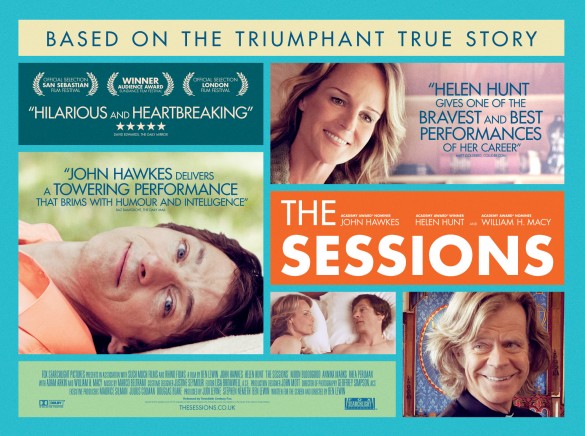
EARLY last year the director Ben Lewin was looking for an actor to play the lead in “The Sessions,” a film he wrote based on the true story of Mark O’Brien, a journalist and poet who had contracted polio as a young boy and spent most of his life in an iron lung. The casting director, Ronnie Yeskel, mentioned John Hawkes. “This is your man,” she assured him.

Unfamiliar with his work, Mr. Lewin watched “Winter’s Bone,” the drug thriller set in the Ozarks that won Mr. Hawkes an Oscar nomination. In it he plays a hard-mouthed meth dealer named Teardrop, a far cry from the severely disabled man of Mr. Lewin’s film, who with equal parts terror and courage seeks out a professional sex surrogate in order to lose his virginity. “What?” Mr. Lewin remembered thinking. “That creepy guy?”

Only after Mr. Lewin decided to check out some of the actor’s other films did he catch John Hawkes fever. “I thought, this guy’s incredible, just the diversity of what he can do.”

Mr. Lewin wouldn’t be the only one to have spent years seeing Mr. Hawkes in untold film and television appearances without being able to put a name to his thin, expressive face. Mr. Hawkes has worked steadily since the mid-’80s (his TV credits include “Wings,” “24” and “Deadwood”), yet when he received his dark-horse supporting-actor Oscar nomination in 2011, one headline seemed to sum it up: “Who Is John Hawkes, Anyway?”

Today it’s a different story: on the many blogs and Web sites devoted to predicting the winners of the 2013 Academy Awards, Mr. Hawkes’s name comes up frequently in conversations about best-actor nominations along with gold-star competition like Joaquin Phoenix (“The Master”) and Daniel Day-Lewis (“Lincoln”).

Mr. Hawkes likes to think of himself as an “overpreparer,” and he certainly went the distance for “The Sessions,” in which his character spends much of the film encased in a huge metal apparatus with only his head showing. To approximate Mr. O’Brien’s condition — he had feeling in his body but was paralyzed except for one muscle in his right foot, a muscle in his neck and one in his jaw — Mr. Hawkes did everything from studying Jessica Yu’s Oscar-winning documentary short (“Breathing Lessons: The Life and Work of Mark O’ Brien”) to devoting a week stretched out on a couch teaching himself to punch in a phone number using a stick held in his mouth. Then there was the actual shoot, which required spending long days completely still with his neck craned at a 90-degree angle while co-stars like Helen Hunt and William H. Macy hovered over him. “Lying down and literally not having movement below your neck?” Mr. Hawkes said. “It was a particular challenge.” Mr. Hawkes did not see a finished version of “The Sessions” (a Fox Searchlight release) until its premiere at this year’s Sundance Film Festival, where audience members leapt to their feet at the end. But Mr. Hawkes said he was most moved by what followed the applause: the sight of Mr. Lewin, who also had survived polio, coming to the front of the house for a postscreening discussion.

To Read the Rest of the Profile

Thursday, October 25, 2012

Women and Hollywood: Lana Wachowski Speaks About What It Means to Be Transgendered

[Discussion in another forum:
JV: Goddamn, what a fucking hero. It's not just the act but that she took the time to frame the social, ideological problem in such a vivid and remarkable way. One more [quote] I can't stop turning over: "the fundament upon which all our knowledge and learning rests is the inexplicable."
MB: That brief quote you highlight hits on what I have long been wrestling with in my own thoughts and writing. Developing the ability, creativity and courage to not fear the inexplicable (different), but instead engage with it to learn news ways of perceiving the world and as a method of making strange that which is familiar to me. I see a lot of the world's pain/violence as an inability to grapple with the inexplicable/different, especially when the reaction is fear/angry.... I really hope people take the time to listen to this whole acceptance speech -- it is very important.


" Invisibility is indivisible from visibility. For the transgendered this is not merely a philosophical conundrum, it can be the difference between life and death.

I am here because when I was young I wanted very badly to be a writer. I wanted to be a filmmaker but I couldn't find anyone like me in the world and it felt like my dreams were foreclosed simply because my gender was less typical than others.

If I can be that person for someone else then the sacrifice of my private civic life may have value."

Women and Hollywood: Lana Wachowski Speaks About What It Means to Be Transgendered