Showing posts with label Feminism. Show all posts

Thursday, August 15, 2013

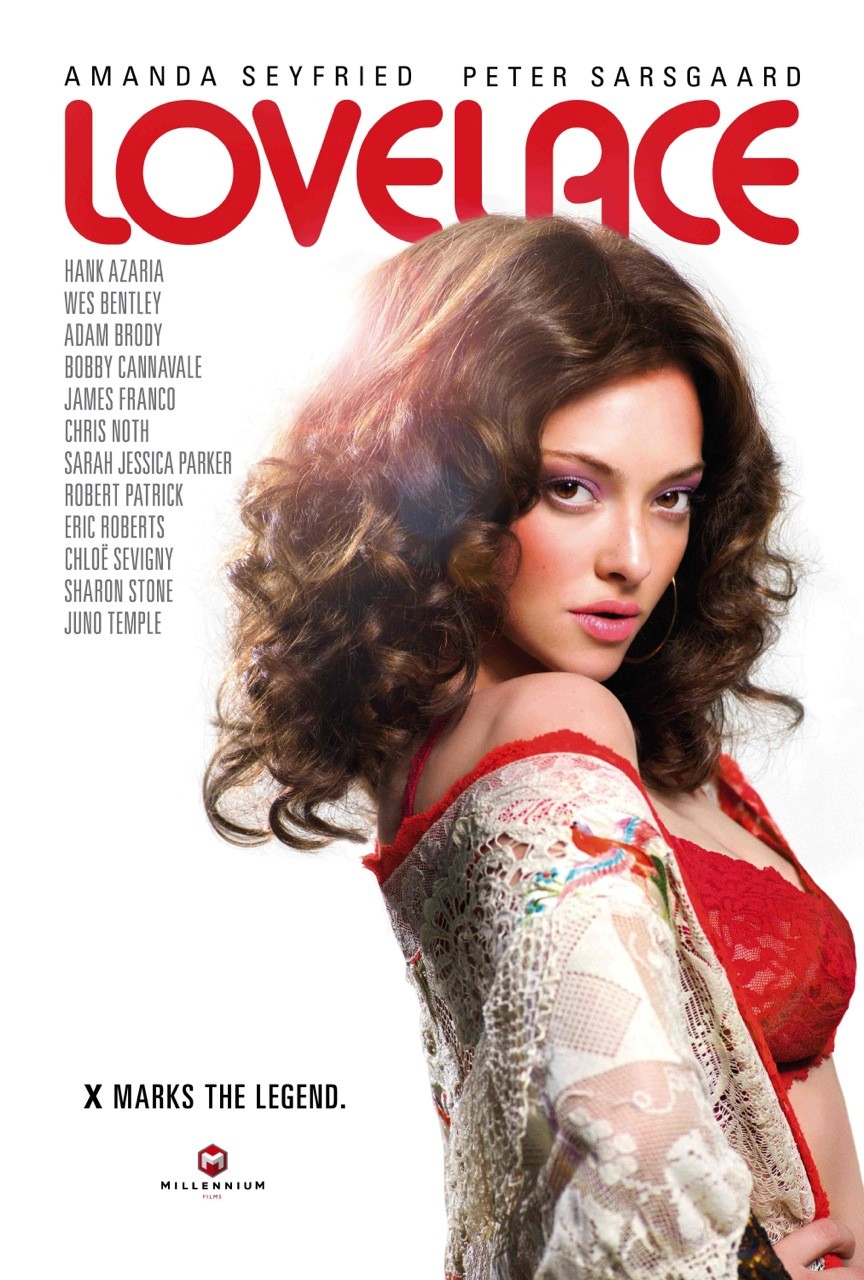
Harvard University Press Blog: Catherine MacKinnon on Lovelace

Catharine MacKinnon on Lovelace
Harvard University Press


The pornographic film Deep Throat, released in 1972, was a cultural sensation whose star, “Linda Lovelace,” was said to put a girl-next-door face on the sexual revolution. But the actual life of Linda Boreman, as depicted in the new biopic Lovelace, was one of beatings, rape, and terror. Feminist legal scholar Catharine MacKinnon, author of such works as Toward a Feminist Theory of the State and Only Words, represented Boreman after she came forward with her story, and later, with Andrea Dworkin, pursued civil rights litigation as a means to fight pornography. We asked MacKinnon about Boreman, Lovelace, and the potential impact of the film.

To Read the Interview

Friday, May 25, 2012

Ian Grey: Black Widow Spins Webs Around THE AVENGERS

Black Widow Spins Webs Around THE AVENGERS by Ian Grey Press Play Black Widow is the first hero seen in The Avengers, the latest entry in Joss Whedon's career-long feminist project. She does not immediately display the super powers enjoyed by the other Avengers—Captain America’s unnatural super-strength, The Hulk gamma-ray rage giant, Iron Man’s wearable rock ‘em, sock ‘em robot suit, or Thor’s hammer of the demi-gods. The only visibly super things about Black Widow are the latest in cat suit couture and a striking asymmetrical crimson bob. And yet she’s still able to trash a clutch of Russian scumbags with her hands tied behind her back. With a chair tied to her rear. While talking on her cell phone. She’s also the sole Avenger that S.H.I.E.L.D. leader Nick Fury (Samuel Jackson) trusts to convince Bruce Banner (Mark Ruffalo) to join Thor (Chris Hemsworth), Iron Man (Robert Downey, Jr.), and Captain America (Chris Evans) in the fight against Thor’s psychotic brother Loki (Tom Hiddleston) who, having stolen the ultimate source of power in the universe, the Tesseract, plans to use an alien army to devastate the Earth. (The plot ends there.) As egos collide, Black Widow—street name, Natasha Romanova—is the only character who does not throw a monstrous hissyfit. The only character to gather actionable intelligence against Loki from Loki. The character who not only literally kicks sense back into the brainwashed Hawkeye, but then absolves him of any sins performed while under the loony god’s spell. You want fearless? When midtown Manhattan is swarming with thousands of robo-aliens, the dreaded Chitauri, Black Widow commandeers one of their slippery aero-sleds and flies it to steal Loki’s glowing phallic scimitar so as to save the world so Iron Man can blow up the aliens. Oh—and the Tesseract? It’s female. I know this because everyone calls it by female pronouns—respectfully. How does that work? Well, the way all Whedon works: second viewings reveal not only layer after layer of multiple meanings, jokes piled on jokes, but seemingly random elements that are actual thematic glue. Nothing is never there without a reason. Anyway, Black Widow! A worthy addition to Whedon’s female action bloodline, right? The flame-haired heir to Buffy, Faith, Kendra, River, Echo, Zoe, Fred, and Illyria, right? No. To Read the Rest of the Essay

Wednesday, April 18, 2012

Miriam Bale: They Came From Within -- Yonic symbolism in the films of David Cronenberg

They Came From Within: Yonic symbolism in the films of David Cronenberg
by Miriam Bale
Moving Image


...

Cronenberg’s early career coincides with the publication of some significant feminist criticism on sexual difference. "A new morning of and for the world?" wrote Luce Irigaray in 1984. "A remaking of immanence and transcendence, notably through this threshold which has never been examined as such: the female sex. The threshold that gives access to the mucous...a threshold that is always half-open."

A more direct connection to Cronenberg's explorations on sexuality: the first test tube baby was born in 1978, three years after his first commercial film was released. Cronenberg commented later on this connection: "Well, I think, with Crash it was getting very focused on the idea that we are re-inventing sex. We are at a major epoch in human history, which is that we don’t need sex to recreate the race. You can have babies without sex. This is the first time in human history that has been true." In Crash, the yonic bleeding-wound symbolism takes on new significance, no longer the wound from penetration but a site of new pleasures, when a character has sexual intercourse with a gash in another character’s leg.

While Cronenberg has worked repeatedly with ideas about the awe and horrors of reproduction—most notably in The Brood and The Fly—more interesting are his explorations of a woman’s sex that have no connection to her womb, that are instead about complex pleasures, power, and fear. The most basic fact of horror is that we fear what we cannot see; Cronenberg has made a career of this vertiginous relationship to the abyss of the yonic. The most haunting scare scene in his first major movie, Shivers (or They Came From Within), which was also the poster image, is of a woman naked in a bathtub with her legs casually open and bent in the water. A slimy phallus-y horror invader crawls through the pipes of the haunted apartment building and exits through the hole of the bathtub drain, obviously heading toward the next opening. It is a terrifying reminder that there is no door to shut out entry to a woman’s body. Cronenberg’s fascination in this film is with these exposed openings to a closed system, where internal meets external. Where does the body end and the outside world begin? This fascination was taken further in eXistenZ. "How come bio-ports don’t get infected? They open right into your body," the inexperienced man played by Jude Law asks the woman—the expert—about the anus-like bio-port openings that are the site for head-fucking games for two. "Listen to what you’re saying, Pikul. Don't be ludicrous," she answers, as she opens her mouth and sticks out her tongue.

Cronenberg followed Shivers with Rabid, which starred porn star Marilyn Chambers as an affectionate woman with an anal opening in her armpit that hides a killer clit. Not since "Little Red Riding Hood" has the clitoris found a better metaphor: a small and pointed red appendage that pops out of hiding in an embrace to stab its victims and turn them into vampiric sex zombies. The film is an awestruck examination of the insatiability of female sexuality. "Do you feel weak?" Chambers is asked by a doctor after a string of attacks. "I feel strong. I feel very strong," she says slowly with a postcoital grin. But the film also addresses her guilt once this insatiability has been awakened. "It's your fault!" she screams at her boyfriend who caused this mutation, a surprising glimpse of rage in an appropriately flat performance. "I’m crazy, I’m a monster," she says later, the woman with girl-next-door looks who locks herself in a room with a victim to prove that she’s still innocent.

In underestimating the clitoris, this "obviously inferior" organ that has no purpose but pleasure, Freud confused size with power, not taking into account the limitless pleasure possible in that "little penis," nor realizing that it has 4,000 nerve endings to the 2,000 nerve endings spread out over a larger space in the male anatomy. (It’s notable, too that a Freud paperback makes an appearance early in Rabid, when a woman wants to know what her father’s interest in her nose symbolizes.)

In eXistenZ, Cronenberg creates one of cinema’s only visual metaphors for the next section of a woman’s sexual anatomy, the lower region of the vagina (the knobby section that contains the woman’s G-spot and other tender buttons) turned inside out, in horseshoe-shaped game pods used as remote controls for sexually metaphoric, virtual-reality games. Made of metaflesh, the pods are pink and wrinkled and make squishy little noises of their own accord once activated. "That's ugly even for a pod," says Jude Law’s character of a diseased pod. One person can play alone with the pod, but it’s no fun, says the gaming female cult leader played by Jennifer Jason Leigh. "Then you’re just a tourist." It takes two to play. "The only way I can tell if everything is OK is to play eXistenZ with somebody friendly. Are you friendly?" Leigh asks the uptight Law. But he is resistant to having a bio-port opening (complete with "Umbi-cord") installed in his lower back.

To Read the Entire Essay

Thursday, February 2, 2012

Amy E. Borden: At the global market -- Ousmane Sembène’s Moolaadé and the economics of women’s rights

At the global market: Ousmane Sembène’s Moolaadé and the economics of women’s rights
by Amy E. Borden
Jump Cut


In Moolaadé Sembène considers how women may effect change in their communities and families if given access to the economic and cultural power that had in previous generations been reserved for men. Focusing on both Moolaadé’s narrative and its funding history, I argue that Sembène uses a narrative form that features the development from individual activist to collective force to depict the potentially liberating force of internationally defined human rights in a West African context when used by local activists. His depiction of women as collective and individual forces for change touches on questions of the libratory potential of capitalism and media as modernizing forces for a contemporary generation of African community leaders.

The depiction of modern activism within the Islamic, West African community depicted in the film is presented diegetically via the narrative construction of the film’s main character, Collé, played by renowned Malian women’s rights activist, Fatoumata Coulibaly. Collé is constructed as an individual whose personal experiences offer an interiorized psychological depiction and history of a woman now advocating for cultural change; she uses her personal experiences to change community practice and belief. In the script, Collé’s ability to assert her personal experiences and values within the community may best be understood as a staging of the drama of human rights activism. In some ways, the character exemplifies ways in which contemporary human rights declarations and proclamations issued by, for example, the United Nations; additional NGOs, such as Tostan — a Senegalese women’s rights NGO; and various African continental human rights treaties, such as the African Banjul Charter, may be translated into local action on the part of activists and grass-roots campaigns aimed at ending FGC, and, by extension, advance West African women’s rights.[10]

J. Hoberman describes the film as “diagrammatic” in its approach to women’s rights in a review prior to the film’s New York theatrical run (“Auteurs”). He particularly cites the rousing rally staged in front of the community’s male elders at the end of the film where the majority of the village women adopt Collé’s position against genital cutting. The rally is staged and shot as a public performance; it mimics events sponsored by anti-FGC NGO Tostan, which has held rallies celebrating the decision by local women to end FGC in communities throughout Senegal.[11] In the scene’s staging, the village elders occupy one third of the on-screen space, the pro-Collé supporters another third, and the salindana occupy the final third, eventually joining the community’s women creating a division between the sexes in the blocking of the sequence. The lesson of this rally is bolstered by a mother, Salba, who holds her infant godchild in the air while chanting alongside the other village women that this girl will not be “cut,” that no girls will ever be “cut” again.

In addition to the film’s conclusion, Hoberman is perhaps more correct in his reading than he imagined. As I will argue, the plot of Sembène’s final feature film strongly resonates with articles inscribed in the 1948 United Nations Universal Declaration of Human Rights as well as the 1980 establishment and 1993 strengthening of provisions for the rights of women in the UN the Convention on the Elimination of Discrimination Against Women (CEDAW).[12] The entire premise of the film — the right of protection or moolaadé — is specifically covered in the UN Universal Human Rights Declaration as the right of seeking and enjoying in other countries “asylum from persecution.”[13] If one accepts the film’s central thesis that ritual “purification” is a form of persecution, Collé is justified in creating a free space beyond the rules confining conduct in the village (Moolaadé). The sanctuary she creates via the moolaadé is akin to a nation-state with its distinct but permeable boundary — members of the community may move between it and the village at large. They may not, however, remove the young girls who have sought sanctuary from the space without Collé’s permission. Much like a sovereign authority, it is only Collé’s “word” that may release the girls from their protected space (Moolaadé). Additionally, the space Collé creates emerges from a historical tradition understood as juridical within the village because of its ability to punish or allow clemency. This tradition is substantiated in the community via the cultural memory marked in the village by the termite mound.

Sembène’s career-long critique of nation as a corrupted patriarchal institution that denies equal rights to women complicates the idea that a sovereign space akin to a nation-state may provide safety. The fact, then, that this asylum is enacted by and controlled by Collé, a woman, is significant because it asserts the ability of women to claim sovereign power from local, cultural traditions. Collé’s ability to provide asylum and to assert that ability within the community may be seen as a performance of the provision in the UN human rights’ declaration that states, “Everyone has the right freely to participate in the cultural life of the community” and guarantees “the right to…security of person.”[14] The fact that both the men and women of the community respect the sanctity of the moolaadé regardless of the gender of its enactor points to local cultural traditions on which activists may build in the pursuit of women’s rights.

Anthropologist Ellen Gruenbaum describes how asylum has become an effective means for women to remain in first world countries — “Canada, Australia, Sweden, and others” to avoid FGC in their home nation.[15] It is an increasingly useful tool for women to gain protection for themselves and for parents to gain protection for their female children. While limited, the practice has received a lot of press coverage, particularly following Togo citizen Fauziya Kassindja’s and Ghanian citizen Adelaide Abankwah’s applications for US asylum in the late-1990s and Malian Aminata Diop’s application for asylum in France in the early-1990s.[16] Citing the increased recognition of cultural practices as a basis for asylum, Gruenbaum argues,

“The use of asylum provisions for cultural, rather than strictly political, risks is a remarkable development, giving new stature to the human rights of women and children to be protected from the effects of their social and economic disempowerment. The basis for such claims to asylum is the 1951 UN Refugee Convention, on the grounds that these women would be at risk of grievous harm in the forms of FGM [female genital mutilation] if they were to return home.” (217)

By enacting a local cultural custom to create an asylum within the community, Collé effectively relocates an international anti-FGC human rights tool at the local level. This staging allows Sembène to provide an argument for local change that does not draw directly on the authority of the laws of other nations, as is the case with the asylum cases mentioned previously, nor directly on international conventions, such as the UN Refugee Convention Gruenbaum cites. Sembène’s use of asylum as a juridical form of protection indirectly draws from the discourse surrounding international efforts to end FGC, yet forcefully argues for local, community-driven actions.

To Read the Rest of the Essay

Saturday, January 7, 2012

Selin Gulgoz: The Politics of Art -- Middle Eastern Women in Fiction and Film

The Politics of Art: Middle Eastern Women in Fiction and Film
By Selin Gulgoz
The Millions


The four-and-one-half-hour evening train ride from Ann Arbor, Mich., to Chicago marks the beginning of my occasional, brief getaways. I’ve devised my own routine: as soon as the conductor checks my ticket, I head to the food car to pick up a small bottle of Cabernet and a frozen pizza — something I’d hardly eat if it were elsewhere — to accompany the film I’ve already picked out. One time, the film I had chosen was The Stoning of Soraya M. It describes the real story of an Iranian woman named Soraya, who is stoned to death as required by the rules of Shari’a, when she is (wrongfully) accused by her husband of having committed adultery. It is a powerful and moving film — less because of its cinematography, and more due to the plot.

As I watched, I could tell that the woman sitting next to me was taking sneak peaks at the film every now and then. When I finished, she told me that she found the film to be really interesting, and asked me what the title is. At times like this, I find myself caught in a dilemma — a feeling I suspect many Middle Eastern women get. On the one hand, I too am enraged and have my feminist blood boil at how cruel certain Middle Eastern practices can be toward women. Yet, on the other hand, I worry about the tendency that people may have of succumbing all too easily to culture blaming, perceiving these practices as abstract and independent of historical and global relations. I struggle with the fine balance of condemning violations of human rights without accidentally submitting to contemporary extensions of Orientalism.

I was reminded of this dilemma during Nobel Laureate Tawakkol Karman’s speech at the University of Michigan on Nov. 14. Karman is a Yemeni feminist activist who played active roles before and during the Yemeni uprising, considered part of the Arab Spring. Throughout her speech, you could see Karman’s determination to bring democracy and gender equality to Yemen emanating from her whole being. She touched upon issues like how, during President Ali Abdullah Saleh’s rule, women were trapped in their homes under the veil of religion; whereas now, they were out on the streets, not only taking part, but leading the revolution in many aspects.

In popular culture, Middle Eastern women are rarely depicted as such — willful and agentic. Instead, we see them as a category, rather than individuals, that is surrounded by inhuman (male) oppression. We often receive depictions of Middle Eastern women as submissive and helpless, forced to hide their bodies, and we hardly ever discuss their determination as individuals. Indeed, as Turkish writer Elif Şafak mentions in her TED Talk of July 2010, when Middle Eastern women in literature do not fit these descriptions, they are found not to be “Middle Eastern enough.” Thus, it might surprise some that Karman, who stood strong as she chanted her slogans of peace to the auditorium, with her hands forcefully shooting high up in the air, still chooses to wear the headscarf.

Craig Thompson’s latest graphic novel Habibi, and Denis Villeneuve’s 2010 film Incendies are two recent narratives that I’ve very much enjoyed, which endorse counter-stereotypical portrayals for their respective Middle Eastern female protagonists, Dodola and Nawal. Both Dodola and Nawal are illustrated as determined individuals, who survive through hardships unimaginable to most of us. And while both women are strong, at a closer glance, there are subtle differences in terms of the perspectives these two depictions provide on Middle Eastern women. This is seen most vividly in the relationships the two women have with their own bodies.

cover Thompson’s Habibi takes place in a country named Wanatolia (a somewhat cheesy play on the word Anatolia). Wanatolia is portrayed as a timeless Middle Eastern country characterized by a water crisis surrounding a spectacular dam, with contrasting skylines of modern skyscrapers and neglected shantytowns, ruled by its insatiable sultan, constantly on the lookout for new gems to be added to his harem.

Dodola is one of the women kidnapped by the sultan’s guards for the harem. Being part of the harem means giving up ownership of one’s own body, readying it for service of the sultan’s lustful urges; whenever and wherever they may emerge. In contrast to the plump and outright unattractive sultan, Dodola is beautiful and skinny. Yet, in spite of how attractive she may seem to others, Dodola feels a strong disconnect with her own body. This feeling of disconnect is further enhanced when she’s impregnated by the sultan with the heir of Wanatolia, and as her body begins to accumulate fat. While it seems here that Thompson has yielded to the contemporary pressures of the slim and tender female body image, there is many a reason for Dodola to feel a disconnect with her body. As a nine-year-old girl, Dodola is sold into marriage by her parents, in order to survive the drought. And at 12, her husband is murdered by thieves, and Dodola is sold into slavery.

To Read the Rest of the Essay

Sunday, December 18, 2011

Mhairi Guild: The Skin We Live In -- The Mad, Bad World of Pedro Almodóvar

The skin we live in: the mad, bad world of Pedro Almodóvar

Remaining spooked and preoccupied, Mhairi Guild still appreciates density and creativity of Almodovar's latest grotesque fairytale of not-only-gender identity, desire and power

by Mhairi Guild
The F Word


We staggered out of Pedro Almodóvar's latest offering somewhat shell-shocked. There is a huge amount to get out of The Skin I Live In but goodness, is it profoundly dark. Generally well received, the film has nonetheless split critics, some seeing it as a fetishistic mess or empty stylistic exercise, others as a stunning horror of the mind. I think that your reception of the film is likely to depend on your prior relationship with Almodóvar and on how willing you are to go on this particular journey with him.

A dark alpha male Antonio Banderas plays the brooding, obsessive surgeon Robert Ledgard, bunkered in a grand Toledo mansion which offers a lush set for his initially unexplained experimentation on the beautiful captive Vera, played by the porcelain doll-like Elena Anaya. The perfection of Vera's flawless, synthetic skin and the charged secret of her relationship with Ledgard is the central riddle of a plot that weaves back and forth between earlier stages of the narrative and gradually takes us down to depths scarcely imaginable at the outset.

Despite not being familiar with Almodóvar's whole canon, his 2002 Talk To Her has long been one of my favourite films. I have also enjoyed - in different ways - All About My Mother (1999), Volver (2006) and some earlier works like 1990 Tie Me Up! Tie Me Down! (his last project with Banderas before the latter's defection to Hollywood).

One of the most striking things about The skin I live in is how it pulls together tropes and preoccupations from a number of the director's past films - being a sort of culmination of Almodóvar's body of work. A few of these themes were particularly resonant as the story developed.

Firstly, in Almodóvar's world there is normally an inherent brutality to the male sexual impulse, and it is present to such an extent that I was already squirming uncomfortably within the first half an hour of the film (little was I to know what Almodóvar had in store for me yet). The representation and frequent victory of this type of male sexuality, which is oft accompanied by casual violence, suggests that it is somehow a 'true' manifestation of male sexuality. Together with a forceful masculine possession of the female body, his male characters often exhibit an unreflective ignorance of the coercion present in their seductions. In the three central male figures in the film we get the full bleak spectrum: the boy (Vicente), the man (Ledgard) and the animal (Veco - the 'Tiger'). In this film Almodóvar more than insinuates the notion that heterosexual sex veers precipitously close to rape -, a particularly pessimistic and troubling theme.

More fundamentally, though, Almodóvar's work seems to suggest an impossibility of meaningful communication between the sexes within a certain society. This chasm between man and woman that can never be truly bridged lies at the centre of Talk To Her, where the one-sided relationship between the young coma patient Alicia and her besotted, delusional nurse Benigno is mirrored by the real relationship between Marco and injured bull-fighter Lydia. Almodóvar's men can only ever desire, fetishise and project onto their relations with women; women, in turn, in the male gaze are literally living dolls whose internal lives may be as real as theirs, but can never be truly apprehended. Women remain, as Simone de Beauvoir suggests, men's eternal 'others': an inherent mystery, in sharp distinction to the knowable Self of the male individual. This communication gap between the sexes - which after all has some undeniable, socialised roots - speaks in Almodóvar's work in dark and sometimes terrifying tones. It presents one of the most compelling and intriguing challenges posed by his films, seemingly portraying a gender dystopia we are prompted to remain ever-vigilant against.

To Read the Rest of the Essay

Saturday, December 17, 2011

Leanne Bibbey: Perfume: the Story of a Murderer -- The film adaptation of Patrick Süskind's novel Perfume is a stunning indictment of society's attitude towards women

Perfume: the Story of a Murderer: The film adaptation of Patrick Süskind's novel Perfume is a stunning indictment of society's attitude towards women.
by Leanne Bibby
The F Word (United Kingdom)


A film about a killer on a mission to murder women and harvest their scents might seem like a rather obvious choice of subject for a feminist review. Nonetheless, there are two reasons why I decided to write this and why I'd like to encourage you to see Tom Tykwer's 2006 adaptation of Patrick Süskind's novel Perfume: the Story of a Murderer. First of all, it's one of the most unusual and inventive films to appear in some time, in cinemas and DVD retailers currently glutted with sequels, prequels, remakes and other somewhat unimaginative fare.

The second reason I think it deserves our attention is its graphic and unflinching yet sophisticated representation of violence towards women. This struck me as having appeared at an ideal time, as debates on this and related issues rage on. Having not read Süskind's original novel, I'm in no position to comment on it and so this review is concerned exclusively with the film.

Ben Whishaw plays Jean-Baptiste Grenouille, an orphan born in 18th century Paris and possessed of a supernatural sense of smell. The film's early scenes, as sensuously fantastical as they are grim, follow him from a childhood of unimaginable poverty and social isolation up to the day his unique talent leads him to become apprentice to struggling perfumer Giuseppe Baldini, played to the hilt by a bewigged Dustin Hoffman. Having already suffocated to death a young woman with whose scent he'd become intoxicated, Grenouille embarks on a quest to create the ultimate perfume by infusing the essences of beautiful women - that is, their scents. To everyone outside his reclusive, amoral world, of course, this is a killing spree and nothing more.

Oblivious to this, Grenouille single-mindedly preys upon women for the "sublime beauty" of their scents. Their lives, personalities and, interestingly, their sexual attractions are inconsequential to him. By way of an omniscient narration, we are made privy to his thoughts and fixations as he commits his shocking acts, but I was intrigued to find that this is only one feature of a multi-layered film experience. The restrained and largely off-camera violence is at the tale's core, but ultimately secondary to our view of the women themselves.

Tykwer's dreamlike storytelling emphasises Grenouille's reveries of smell in the presence of doll-like women with uniformly porcelain skins and shining hair. In doing this, it also shows us a culture that holds women to be just that: dolls. Lovely, guileless and almost voiceless, they appear doomed to slip into the death-destiny planned for them and remain largely unchanged afterwards: their physical appeal - the only valued part of them - captured in scent.

To Read the Rest of the Review