A Klee painting named Angelus Novus shows an angel looking as though he is about to move away from something he is fixedly contemplating. His eyes are staring, his mouth is open, his wings are spread. This is how one pictures the angel of history. His face is turned toward the past. Where we perceive a chain of events, he sees one single catastrophe which keeps piling wreckage upon wreckage and hurls it in front of his feet. The angel would like to stay, awaken the dead, and make whole what has been smashed. But a storm is blowing from Paradise; it has got caught in his wings with such violence that the angel can no longer close them. This storm irresistibly propels him into the future to which his back is turned, while the pile of debris before him grows skyward. This storm is what we call progress.
Walter Benjamin, Illuminations
quoted in Barker, Jennifer Lynne. The Aesthetics of Antifascist Film: Radical Projection. Routledge, 2013: 1.
Showing posts with label History. Show all posts
Showing posts with label History. Show all posts
Monday, October 14, 2013

Monday, September 23, 2013
David Bordwell - The Grandmaster: Moving forward, turning back
THE GRANDMASTER: Moving forward, turning back
by David Bordwell
Observations on Film Art

The summer has brought us two major films by the two leading Hong Kong directors. I’ve discussed Johnnie To’s fine Drug War earlier. Now it’s time for some ideas about The Grandmaster. Wong Kar-wai’s film displays, in fairly straightforward ways, some of his typical artistic and commercial strategies. Here he adapts his characteristic approach to style and form to a classic genre—and to the demands of the marketplace.
On kung-fu considered as one of the fine arts
Wing Chun is the best-known and most influential Chinese martial art in the world. It owes its renown to two women and two men. In the 1700s the Buddhist nun Ng Mui developed a style called Plum Flower Fist, and a young woman named Yim Wing Chun adapted it into something requiring less strength. Bruce Lee trained in the style, revised it according to his interests, and popularized it in films that reached millions of viewers. Lee’s teacher was Ip Man, a master who settled in Hong Kong after World War II and set up a school. Ip made public a Southern fighting technique that had previously been shared among families and friends.
As both a mainlander and a Hong Konger, Ip is a good symbol of the union of two Chinas. Given the stunning rise of China’s economic and cultural power since the 1980s, it’s not surprising that someone would come up with the idea of a film about him.
Wong Kar-wai claims to have had that idea in the late 1990s. In 2002, he announced that a film about Ip was on his agenda. After finishing 2046 (2004) and an episode for the portmanteau film Eros (2004), he seemed to move forward, slating Tony Leung Chiu-wai as the star and bringing Ip’s family aboard as consultants. But other activities intervened, including an ill-fated three-picture deal with Fox Searchlight. Wong continued to occupy himself with his other businesses, including his lucrative talent-management firm and his advertising unit, for which he made commercials for Dior, Lacote, Motorola, and other companies. He also directed My Blueberry Nights (2007) and recast Ashes of Time (1994) as Ashes of Time Redux (2008).
In 2009 he got to work on the Ip Man film, eventually bringing in funding from many sources, including mainland Chinese companies, Fortissimo, The Weinstein Company, and Annapurna Pictures. Scheduled for a premiere in late 2010, then late 2012, it didn’t appear until January of 2013. It seems that he was still doing postproduction in Thailand hours before its first press screening in Beijing.
During the ten years that The Grandmaster took to reach the screen, other filmmakers had seized on the great man’s life. Two popular Donnie Yen vehicles, Ip Man (2008) and Ip Man 2 (2010), were followed by a prequel The Legend Is Born: Ip Man (2010), and this year, after Wong’s film was released, Ip Man: The Final Fight.
However much Wong fiddles with his movies, in this case he kept the title fixed: Yi Dai Zong Shi. It literally means “The Grandmaster of That Era,” or—since Chinese doesn’t mark plurals in the noun—“The Grandmasters of That Era.” It’s significant that in early publicity, the project was known as The Grandmasters. Wong says his son talked him out of that title. Now, in non-Chinese-speaking countries, it’s The Grandmaster.
The ambiguity about the title takes on special relevance because we have several Grandmasters. After the Beijing premiere, The Grandmaster was released throughout China and in Hong Kong. It did good business, earning over US $47 million in those territories. Wong made a shorter version for the European market, and that was apparently the one premiered at the Berlin Film Festival in February. A still shorter version was prepared for the U.S., with The Weinstein Company as distributor. It opened in August, to mostly good reviews, and it has currently reaped about $6 million at the American box office. So far, the film’s worldwide gross is nearly $63 million, making it by far Wong’s most commercially successful theatrical release.
To Read the Rest
by David Bordwell
Observations on Film Art
The summer has brought us two major films by the two leading Hong Kong directors. I’ve discussed Johnnie To’s fine Drug War earlier. Now it’s time for some ideas about The Grandmaster. Wong Kar-wai’s film displays, in fairly straightforward ways, some of his typical artistic and commercial strategies. Here he adapts his characteristic approach to style and form to a classic genre—and to the demands of the marketplace.
On kung-fu considered as one of the fine arts
Wing Chun is the best-known and most influential Chinese martial art in the world. It owes its renown to two women and two men. In the 1700s the Buddhist nun Ng Mui developed a style called Plum Flower Fist, and a young woman named Yim Wing Chun adapted it into something requiring less strength. Bruce Lee trained in the style, revised it according to his interests, and popularized it in films that reached millions of viewers. Lee’s teacher was Ip Man, a master who settled in Hong Kong after World War II and set up a school. Ip made public a Southern fighting technique that had previously been shared among families and friends.
As both a mainlander and a Hong Konger, Ip is a good symbol of the union of two Chinas. Given the stunning rise of China’s economic and cultural power since the 1980s, it’s not surprising that someone would come up with the idea of a film about him.
Wong Kar-wai claims to have had that idea in the late 1990s. In 2002, he announced that a film about Ip was on his agenda. After finishing 2046 (2004) and an episode for the portmanteau film Eros (2004), he seemed to move forward, slating Tony Leung Chiu-wai as the star and bringing Ip’s family aboard as consultants. But other activities intervened, including an ill-fated three-picture deal with Fox Searchlight. Wong continued to occupy himself with his other businesses, including his lucrative talent-management firm and his advertising unit, for which he made commercials for Dior, Lacote, Motorola, and other companies. He also directed My Blueberry Nights (2007) and recast Ashes of Time (1994) as Ashes of Time Redux (2008).
In 2009 he got to work on the Ip Man film, eventually bringing in funding from many sources, including mainland Chinese companies, Fortissimo, The Weinstein Company, and Annapurna Pictures. Scheduled for a premiere in late 2010, then late 2012, it didn’t appear until January of 2013. It seems that he was still doing postproduction in Thailand hours before its first press screening in Beijing.
During the ten years that The Grandmaster took to reach the screen, other filmmakers had seized on the great man’s life. Two popular Donnie Yen vehicles, Ip Man (2008) and Ip Man 2 (2010), were followed by a prequel The Legend Is Born: Ip Man (2010), and this year, after Wong’s film was released, Ip Man: The Final Fight.
However much Wong fiddles with his movies, in this case he kept the title fixed: Yi Dai Zong Shi. It literally means “The Grandmaster of That Era,” or—since Chinese doesn’t mark plurals in the noun—“The Grandmasters of That Era.” It’s significant that in early publicity, the project was known as The Grandmasters. Wong says his son talked him out of that title. Now, in non-Chinese-speaking countries, it’s The Grandmaster.
The ambiguity about the title takes on special relevance because we have several Grandmasters. After the Beijing premiere, The Grandmaster was released throughout China and in Hong Kong. It did good business, earning over US $47 million in those territories. Wong made a shorter version for the European market, and that was apparently the one premiered at the Berlin Film Festival in February. A still shorter version was prepared for the U.S., with The Weinstein Company as distributor. It opened in August, to mostly good reviews, and it has currently reaped about $6 million at the American box office. So far, the film’s worldwide gross is nearly $63 million, making it by far Wong’s most commercially successful theatrical release.
To Read the Rest
Tuesday, September 3, 2013
Democracy Now: David Frost, 74, Remembered by Director Ron Howard For Historic Interview with Richard Nixon
David Frost, 74, Remembered by Director Ron Howard For Historic Interview with Richard Nixon
Democracy Now
British broadcasting legend David Frost has died at the age of 74 after a heart attack. He spent more than 50 years as a television personality best known for his signature long-form interviews. He is best known for a series of historic interviews he conducted in 1977 with the disgraced former president Richard Nixon who had resigned three years earlier. The interviews lasted more than 28 hours and ended with Nixon making a tacit admission of guilt regarding his role in the bugging of Democratic rivals at Washington’s Watergate building and the later cover-up. The interview was later dramatized in the 2008 film "Frost/Nixon,” directed by the Academy Award-winning filmmaker Ron Howard. In December 2008, Democracy Now! interviewed Howard about the film.
To Watch the Episode
Democracy Now
British broadcasting legend David Frost has died at the age of 74 after a heart attack. He spent more than 50 years as a television personality best known for his signature long-form interviews. He is best known for a series of historic interviews he conducted in 1977 with the disgraced former president Richard Nixon who had resigned three years earlier. The interviews lasted more than 28 hours and ended with Nixon making a tacit admission of guilt regarding his role in the bugging of Democratic rivals at Washington’s Watergate building and the later cover-up. The interview was later dramatized in the 2008 film "Frost/Nixon,” directed by the Academy Award-winning filmmaker Ron Howard. In December 2008, Democracy Now! interviewed Howard about the film.
To Watch the Episode
Wednesday, August 28, 2013
Monday, July 15, 2013
Left Field Cinema -- Documentary Milestone: The Fog of War – Eleven Lessons From the Life of Robert S. McNamara
Documentary Milestone: The Fog of War – Eleven Lessons From the Life of Robert S. McNamara
Left Field Cinema

The Fog of War is Directed by Errol Morris perhaps the most celebrated American documentarian, if not as well known as Michael Moore by the public, Morris is certainly a critical darling. Roger Ebert considers Morris’s first film Gates of Heaven, a documentary about pet cemeteries, as one of his top ten films of all time. Gates of Heaven also provides an entertaining anecdote, in which Werner Herzog promised if Morris ever finished the film he would eat his shoe. Herzog’s insanity can be seen in the short film Werner Herzog Eats His Shoe. Morris’s third feature remains his best known. Thin Blue Line, which followed Vernon, Florida, remains one of the most powerful artistic statements by any filmmaker. Thin Blue Line lead to the subject of the film to have his death row sentence changed to life in prison, then subsequently the initial verdict was over turned. Morris’s documentary directly contributed to this result. The style of the film relies on interviews and re-creations. This emphasis on non-fiction as a documentary style would become Morris’s calling card. Morris went to direct a series of further documentaries including 2008’s War on Terror documentary Standard Operating Procedure. Although Standard Operating Procedure has not been received as well as the earlier documentary Taxi to the Darkside by Alex Gibney which was also released last year it remains an interesting piece of work which focuses on Morris’s typical themes of the deceptive nature of what is considered to be “true”. Morris’s friendship with Werner Herzog makes a great deal of thematic sense, both men search for the ecstatic truth within their respective subjects often at the expense of what could be considered the conventional approach.
The Fog of War presents Morris on top form, a self-proclaimed detective director (which suits him well as he previously worked as a private eye) Morris constructs The Fog of War in such a simplistic manner that it baffles the mind to witness how compelling it is. The entire film is essentially a one-hundred and five minute interview with its subject. The subject being Robert Strange McNamara the Secretary of Defense for John F. Kennedy and Lyndon B. Johnson, and previously an analyst for the Japanese bombings in World War Two and briefly the first President of Ford motors to not belong to the Ford family. He is a man who’s life begins at the end of the first World War, indeed he is adamant that his first memory was that of the victory parades, the celebrations at the end of the “War to end all Wars” following this we witness the part he played in World War II, the Cold war, and the Cuban Missile Crisis, then finally the Vietnam War. McNamara is a man who’s been surrounded by war all of his life. His contribution to the global politics over the 20th Century is a matter for speculation, by that I mean what real effect he had on events, of which McNamara himself is often uncertain. But as a witness to some of the pivotal events in recent history, you’ll be hard pressed to find a man alive who’s seen so much, witnessed such extremes of human behaviour, or gained such a vast understanding of the moral, amoral, and immoral tapestry that is war. McNamara has amazing recall for a man aged eighty-five casting his mind back more than forty years. He is charismatic figure, who sense of irony and wit cannot be denied. However, the man remains even now the consummate politician.
To Read the Rest
Left Field Cinema
The Fog of War is Directed by Errol Morris perhaps the most celebrated American documentarian, if not as well known as Michael Moore by the public, Morris is certainly a critical darling. Roger Ebert considers Morris’s first film Gates of Heaven, a documentary about pet cemeteries, as one of his top ten films of all time. Gates of Heaven also provides an entertaining anecdote, in which Werner Herzog promised if Morris ever finished the film he would eat his shoe. Herzog’s insanity can be seen in the short film Werner Herzog Eats His Shoe. Morris’s third feature remains his best known. Thin Blue Line, which followed Vernon, Florida, remains one of the most powerful artistic statements by any filmmaker. Thin Blue Line lead to the subject of the film to have his death row sentence changed to life in prison, then subsequently the initial verdict was over turned. Morris’s documentary directly contributed to this result. The style of the film relies on interviews and re-creations. This emphasis on non-fiction as a documentary style would become Morris’s calling card. Morris went to direct a series of further documentaries including 2008’s War on Terror documentary Standard Operating Procedure. Although Standard Operating Procedure has not been received as well as the earlier documentary Taxi to the Darkside by Alex Gibney which was also released last year it remains an interesting piece of work which focuses on Morris’s typical themes of the deceptive nature of what is considered to be “true”. Morris’s friendship with Werner Herzog makes a great deal of thematic sense, both men search for the ecstatic truth within their respective subjects often at the expense of what could be considered the conventional approach.
The Fog of War presents Morris on top form, a self-proclaimed detective director (which suits him well as he previously worked as a private eye) Morris constructs The Fog of War in such a simplistic manner that it baffles the mind to witness how compelling it is. The entire film is essentially a one-hundred and five minute interview with its subject. The subject being Robert Strange McNamara the Secretary of Defense for John F. Kennedy and Lyndon B. Johnson, and previously an analyst for the Japanese bombings in World War Two and briefly the first President of Ford motors to not belong to the Ford family. He is a man who’s life begins at the end of the first World War, indeed he is adamant that his first memory was that of the victory parades, the celebrations at the end of the “War to end all Wars” following this we witness the part he played in World War II, the Cold war, and the Cuban Missile Crisis, then finally the Vietnam War. McNamara is a man who’s been surrounded by war all of his life. His contribution to the global politics over the 20th Century is a matter for speculation, by that I mean what real effect he had on events, of which McNamara himself is often uncertain. But as a witness to some of the pivotal events in recent history, you’ll be hard pressed to find a man alive who’s seen so much, witnessed such extremes of human behaviour, or gained such a vast understanding of the moral, amoral, and immoral tapestry that is war. McNamara has amazing recall for a man aged eighty-five casting his mind back more than forty years. He is charismatic figure, who sense of irony and wit cannot be denied. However, the man remains even now the consummate politician.
To Read the Rest
Thursday, July 11, 2013
J. Hoberman: Prague's Savage Spring
Prague’s Savage Spring
by J. Hoberman
The New York Review of Books
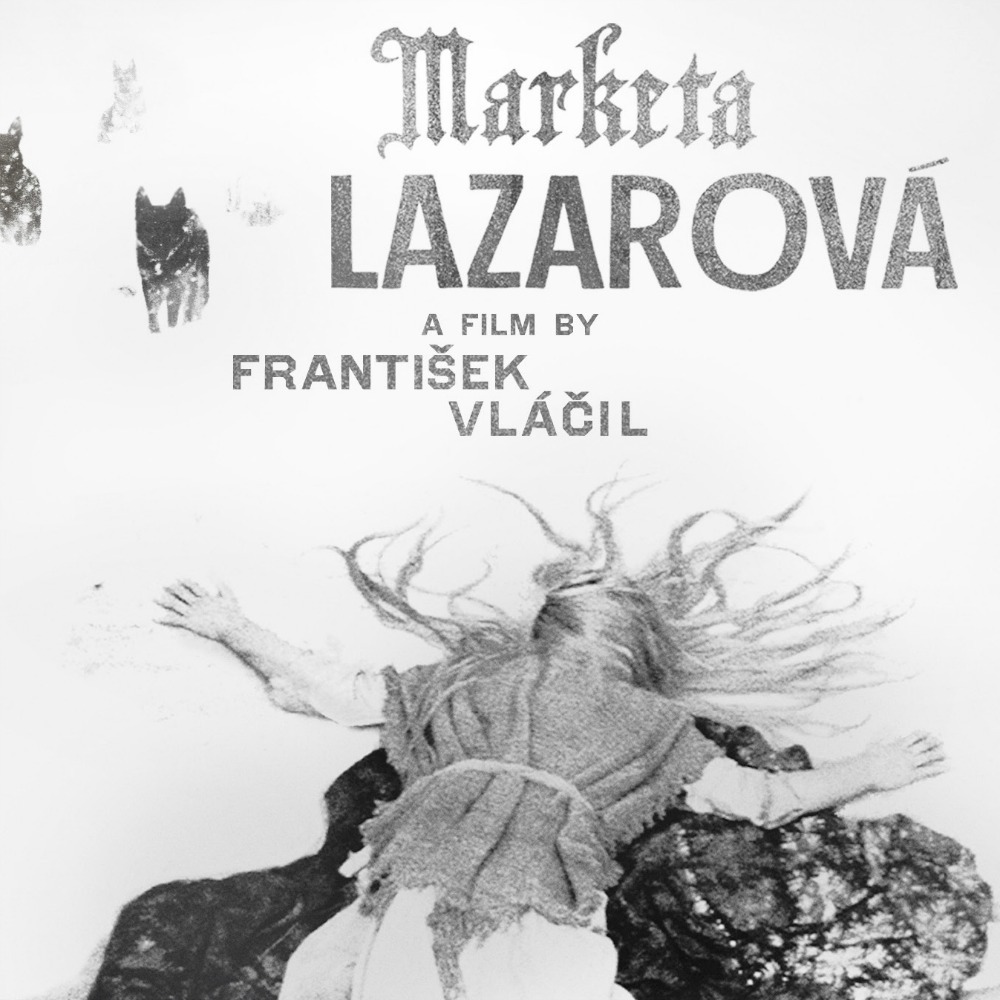
František Vláčil’s Marketa Lazarová (1967) is a virtual terra incognita. Thirty years after its release, it was named overwhelmingly by a poll of Czech critics and filmmakers as the best movie ever produced in Czechoslovakia, yet it remains little known outside its native land. Even as national epics go, Marketa Lazarová is unusually off-putting to outsiders. Violent and anti-heroic, the movie opens on a note of mordant self-deprecation (“This tale was cobbled together and hardly merits praise”) and goes on to represent thirteenth-century Bohemia as a backwater of Conan the Barbarian’s Hyperborean Age—the province of halfwits, rapists, and brutes.
Aside from repeated, if intermittent, screenings at the Brooklyn Academy of Music (and a relatively recent Vláčil retrospective at the Film Society of Lincoln Center), the movie has hardly been shown in the United States since its 1974 American release, for which it was shortened by over an hour. (Supremely unimpressed, The New York Times at the time characterized Marketa as “a colossal—and very near interminable—hodgepodge of medieval mayhem and myth, leaden symbolism and bloated piety,” featuring characters of “such unmitigated savagery that next to them the Visigoths would resemble a Red Cross mercy mission.”) Now released as a Criterion DVD in its full 165 minutes, Marketa Lazarová may finally reach a wider American audiences in all its sprawling glory.
Certainly, the film has an impressive pedigree. Vláčil adapted his labor of love from a 1931 novel by Vladislav Vančura (1891–1942), an expressionist Czech writer, avant-garde activist, independent filmmaker, and (per the movie’s credits) “people’s artist.” In addition to being a pre-war Communist (though he was expelled from the Party in 1939), Vančura was also a wartime martyr, one of many Czech partisans who were executed in reprisal for the assassination in Prague of Reichsprotektor Reinhard Heydrich.
Vančura’s Marketa Lazarová is a mock epic, depicting the savage feud between two rival brigand families, the pagan Kozlíks and nominally Christian Lazars, in the wilds of medieval Bohemia. Vančura was an almost untranslatable master of word play, and here invented a new Czech idiom, at once modernist and archaic, to create, in effect, a new shared geneology. The Czech writer and film historian Josef Škvorecký called Vančura’s lusty yarn a “novel of momentous importance in the history of Czech literature.” Evidently, the novel also had much to say to the young, multinational state that was interwar Czechoslovakia; despite its avant-garde underpinnings, it was his most popular and commercially successful work.
To Read the Rest
by J. Hoberman
The New York Review of Books
František Vláčil’s Marketa Lazarová (1967) is a virtual terra incognita. Thirty years after its release, it was named overwhelmingly by a poll of Czech critics and filmmakers as the best movie ever produced in Czechoslovakia, yet it remains little known outside its native land. Even as national epics go, Marketa Lazarová is unusually off-putting to outsiders. Violent and anti-heroic, the movie opens on a note of mordant self-deprecation (“This tale was cobbled together and hardly merits praise”) and goes on to represent thirteenth-century Bohemia as a backwater of Conan the Barbarian’s Hyperborean Age—the province of halfwits, rapists, and brutes.
Aside from repeated, if intermittent, screenings at the Brooklyn Academy of Music (and a relatively recent Vláčil retrospective at the Film Society of Lincoln Center), the movie has hardly been shown in the United States since its 1974 American release, for which it was shortened by over an hour. (Supremely unimpressed, The New York Times at the time characterized Marketa as “a colossal—and very near interminable—hodgepodge of medieval mayhem and myth, leaden symbolism and bloated piety,” featuring characters of “such unmitigated savagery that next to them the Visigoths would resemble a Red Cross mercy mission.”) Now released as a Criterion DVD in its full 165 minutes, Marketa Lazarová may finally reach a wider American audiences in all its sprawling glory.
Certainly, the film has an impressive pedigree. Vláčil adapted his labor of love from a 1931 novel by Vladislav Vančura (1891–1942), an expressionist Czech writer, avant-garde activist, independent filmmaker, and (per the movie’s credits) “people’s artist.” In addition to being a pre-war Communist (though he was expelled from the Party in 1939), Vančura was also a wartime martyr, one of many Czech partisans who were executed in reprisal for the assassination in Prague of Reichsprotektor Reinhard Heydrich.
Vančura’s Marketa Lazarová is a mock epic, depicting the savage feud between two rival brigand families, the pagan Kozlíks and nominally Christian Lazars, in the wilds of medieval Bohemia. Vančura was an almost untranslatable master of word play, and here invented a new Czech idiom, at once modernist and archaic, to create, in effect, a new shared geneology. The Czech writer and film historian Josef Škvorecký called Vančura’s lusty yarn a “novel of momentous importance in the history of Czech literature.” Evidently, the novel also had much to say to the young, multinational state that was interwar Czechoslovakia; despite its avant-garde underpinnings, it was his most popular and commercially successful work.
To Read the Rest
Wednesday, July 10, 2013
Tag Gallagher -- Eclipse Series 14: Rossellini’s History Films—Renaissance and Enlightenment
Eclipse Series 14: Rossellini’s History Films—Renaissance and Enlightenment
By Tag Gallagher
Current

RELIVING HISTORY
“At a certain point, I felt so useless!” said Roberto Rossellini. Never before had technology accomplished such miracles. Yet everywhere the world was confronting crises. Never before had civilization so needed us all to understand the great problems—food, water, energy. Yet everywhere, especially in contemporary art, there was nothing but cruelty and complaining. The mass media, Rossellini charged, were accomplishing “a sort of cretinization of adults.” Rather than illuminate people, their great effort seemed to be to subjugate them, “to create slaves who think they’re free.”
And Rossellini himself? He felt useless.
“By 1958,” said François Truffaut, “Rossellini was well aware that his films were not like those of other people, but he very sensibly decided that it was the others who ought to change.”
“There doesn’t exist a technique for grasping reality,” Rossellini insisted. “Only a moral position can do so. The camera’s a ballpoint pen, an imbecile; it’s not worth anything if you don’t have anything to say. To discuss cinema today in strictly aesthetic terms is arid and useless. There’s only a single question: how to awaken consciences? ‘Man is born free, and everywhere he is in chains,’ said Rousseau.”
He called a news conference and announced, “Cinema is dead.”
“He was as excited as a boy about television,” said director Ermanno Olmi, “but mostly he was fired up about putting history into images, the history of humanity, the facts, the fundamental and significant moments . . . And he told me about this history of iron, of how it had changed people’s economy and life.”
“A guy who starts filming the history of iron does look ridiculous,” Rossellini admitted.
Ridiculous or not, Rossellini’s efforts, from 1959 until halted by death in 1977, would yield some forty-two hours of “didactic” movies, mostly for television. Audiences would judge them boring, historians deficient, and critics unappealing; their emotional and artistic riches have still only begun to be acknowledged beyond a devout coterie. Even Truffaut told Rossellini he was wasting his time. And Rossellini, all the while denying (with patent hypocrisy) that he was trying to “make art,” would go ahead, determined to do what he could to “revise the whole conception of the universe,” as he put it.
Rossellini outlined a vast plan not to recount but to relive the history of human knowledge in hundreds of movies. “The slightest act of daily life contains extraordinary dramatic power,” he said. He wanted to send film crews all over the world. He could not understand why other filmmakers, Fellini in particular, were not willing to drop their own projects and undertake his instead. “The world should expect something from intellectuals and artists, a clarifying function, a compass,” Rossellini argued, not just navel-gazing.
To finance his project, Rossellini sought out corporations and appealed to the educational obligations of state television in Italy, France, Spain, Germany, Romania, and Egypt.
To say, as many have, that these movies lack acting, psychoanalysis, Murnau-like expressionism, overwhelming emotions, and the richest cinematic art is akin to closing one’s eyes at high noon and claiming the sun no longer exists.
THE AGE OF THE MEDICI
Said Rossellini around 1973: “I no longer consider myself to be an artist of the cinema, one of that godlike coterie of directors producing masterpieces to stun the world. I now see myself as scientist and craftsman. For me, Shakespeare and Rembrandt and Matisse were also scientists. The cinema must become scientific, it must learn to dispense knowledge and awareness.”
Accordingly, The Age of the Medici, made during the productive period of 1970–73, presents Renaissance art as an instrument of research rather than self-expression. Rossellini is attacking conventional attitudes toward art. His quattrocento Florentines admire Brunelleschi’s cathedral dome not for its beauty, like tourists today, but as a materialization of Brunelleschi’s wonderful calculations, which are wonderful because they show how intelligence can raise the level of human civilization. Art is politics. Obviously, too, it is money—“the root of all civilization,” according to Will Durant, an incomprehensible miracle, according to Rossellini: witness how the music chirps with delight at the apparition of a bag of gold.
A banker and an art theorist are the heroes of Rossellini’s movie: Cosimo de’ Medici (1389–1464) and Leon Battista Alberti (1404–72).
Is Rossellini’s reliving of Florence accurate? Of course not; how could it be? It is easy in a book to write, “Cosimo de’ Medici greeted the Venetian ambassador.” It is something else to provide the clothing, room, furnishings, ambience, lighting, not to mention the words, vocal tones, comportment, emotions, and actual bodies of Cosimo and the ambassador. All this must inevitably be inaccurate in a movie. What were people like then? What was Florence like? We can only imagine, like Walt Disney, Rossellini, or even Giotto.
To Read the Rest

By Tag Gallagher
Current
RELIVING HISTORY
“At a certain point, I felt so useless!” said Roberto Rossellini. Never before had technology accomplished such miracles. Yet everywhere the world was confronting crises. Never before had civilization so needed us all to understand the great problems—food, water, energy. Yet everywhere, especially in contemporary art, there was nothing but cruelty and complaining. The mass media, Rossellini charged, were accomplishing “a sort of cretinization of adults.” Rather than illuminate people, their great effort seemed to be to subjugate them, “to create slaves who think they’re free.”
And Rossellini himself? He felt useless.
“By 1958,” said François Truffaut, “Rossellini was well aware that his films were not like those of other people, but he very sensibly decided that it was the others who ought to change.”
“There doesn’t exist a technique for grasping reality,” Rossellini insisted. “Only a moral position can do so. The camera’s a ballpoint pen, an imbecile; it’s not worth anything if you don’t have anything to say. To discuss cinema today in strictly aesthetic terms is arid and useless. There’s only a single question: how to awaken consciences? ‘Man is born free, and everywhere he is in chains,’ said Rousseau.”
He called a news conference and announced, “Cinema is dead.”
“He was as excited as a boy about television,” said director Ermanno Olmi, “but mostly he was fired up about putting history into images, the history of humanity, the facts, the fundamental and significant moments . . . And he told me about this history of iron, of how it had changed people’s economy and life.”
“A guy who starts filming the history of iron does look ridiculous,” Rossellini admitted.
Ridiculous or not, Rossellini’s efforts, from 1959 until halted by death in 1977, would yield some forty-two hours of “didactic” movies, mostly for television. Audiences would judge them boring, historians deficient, and critics unappealing; their emotional and artistic riches have still only begun to be acknowledged beyond a devout coterie. Even Truffaut told Rossellini he was wasting his time. And Rossellini, all the while denying (with patent hypocrisy) that he was trying to “make art,” would go ahead, determined to do what he could to “revise the whole conception of the universe,” as he put it.
Rossellini outlined a vast plan not to recount but to relive the history of human knowledge in hundreds of movies. “The slightest act of daily life contains extraordinary dramatic power,” he said. He wanted to send film crews all over the world. He could not understand why other filmmakers, Fellini in particular, were not willing to drop their own projects and undertake his instead. “The world should expect something from intellectuals and artists, a clarifying function, a compass,” Rossellini argued, not just navel-gazing.
To finance his project, Rossellini sought out corporations and appealed to the educational obligations of state television in Italy, France, Spain, Germany, Romania, and Egypt.
To say, as many have, that these movies lack acting, psychoanalysis, Murnau-like expressionism, overwhelming emotions, and the richest cinematic art is akin to closing one’s eyes at high noon and claiming the sun no longer exists.
THE AGE OF THE MEDICI
Said Rossellini around 1973: “I no longer consider myself to be an artist of the cinema, one of that godlike coterie of directors producing masterpieces to stun the world. I now see myself as scientist and craftsman. For me, Shakespeare and Rembrandt and Matisse were also scientists. The cinema must become scientific, it must learn to dispense knowledge and awareness.”
Accordingly, The Age of the Medici, made during the productive period of 1970–73, presents Renaissance art as an instrument of research rather than self-expression. Rossellini is attacking conventional attitudes toward art. His quattrocento Florentines admire Brunelleschi’s cathedral dome not for its beauty, like tourists today, but as a materialization of Brunelleschi’s wonderful calculations, which are wonderful because they show how intelligence can raise the level of human civilization. Art is politics. Obviously, too, it is money—“the root of all civilization,” according to Will Durant, an incomprehensible miracle, according to Rossellini: witness how the music chirps with delight at the apparition of a bag of gold.
A banker and an art theorist are the heroes of Rossellini’s movie: Cosimo de’ Medici (1389–1464) and Leon Battista Alberti (1404–72).
Is Rossellini’s reliving of Florence accurate? Of course not; how could it be? It is easy in a book to write, “Cosimo de’ Medici greeted the Venetian ambassador.” It is something else to provide the clothing, room, furnishings, ambience, lighting, not to mention the words, vocal tones, comportment, emotions, and actual bodies of Cosimo and the ambassador. All this must inevitably be inaccurate in a movie. What were people like then? What was Florence like? We can only imagine, like Walt Disney, Rossellini, or even Giotto.
To Read the Rest
Sunday, April 14, 2013
Waltz With Bashir (Israel/France/Germany/USA/Finland/Switzerland/Belgium/Australia: Ari Folman, 2008)

Waltz With Bashir (Israel/France/Germany/USA/Finland/Switzerland/Belgium/Australia: Ari Folman, 2008: 90 Mins)
Baker, Nicholson, et al. "Autobiography/Biography: Narrating the Self." Philoctetes (December 13, 2008)
Barker, Jennifer Lynne. The Aesthetics of Antifascist Film: Radical Projection. Routledge, 2013. [Get through interlibrary loan]
Fainaru, Dan. "A Changing Landscape." International Film Guide: 2009. London: Wallflower Press, 2009: 53-63. [Available in BCTC Library PN1993.3 I544 2009]
Folman, Ari. "Waltz with Bashir." Worldview (January 23, 2009)
Hallinan, Chris. "The Lebanon Border: "Uniquely" Dangerous." Foreign Policy in Focus (September 1, 2010)
Kamiya, Gary. "What Waltz With Bashir can teach us about Gaza: The stunning new Israeli film reveals painful parallels between one of Israel's darkest moments and the current conflict." Salon (January 13, 2009)
Kinder, Bill. "When Soldiers Come Home in the Movies: The post-war experience as told in tropes." Keyframe (November 11, 2015)
Polonsky, David, et al. Waltz with Bashir: The Art Director’s Cut at War. Open Source (April 17, 2009)
Rozenkrantz, Jonathan. "Colourful Claims: towards a theory of animated documentary." Film International (May 6, 2011)
Friday, March 8, 2013
Extra Credit Opportunity for Students: Harvest of Empire
Harvest of Empire
WhenSun, March 10, 2:00pm – 3:30pm
WhereLexington Public Library Central Library Theater 140 East Main Street, Lexington KY
WhenSun, March 10, 2:00pm – 3:30pm
WhereLexington Public Library Central Library Theater 140 East Main Street, Lexington KY
Wednesday, March 6, 2013
Seth Rosenfeld: A Secret History of America in the 60s
Lynum had plenty of information to share. The FBI's files on Mario Savio, the brilliant philosophy student who was the spokesman for the Free Speech Movement, were especially detailed. Savio had a debilitating stutter when speaking to people in small groups, but when standing before a crowd and condemning his administration's latest injustice he spoke with divine fire. His words had inspired students to stage what was the largest campus protest in American history. Newspapers and magazines depicted him as the archetypal "angry young man," and it was true that he embodied a student movement fueled by anger at injustice, impatience for change, and a burning desire for personal freedom. Hoover ordered his agents to gather intelligence they could use to ruin his reputation or otherwise "neutralize" him, impatiently ordering them to expedite their efforts.
Hoover's agents had also compiled a bulging dossier on the man Savio saw as his enemy: Clark Kerr. As campus dissent mounted, Hoover came to blame the university president more than anyone else for not putting an end to it. Kerr had led UC to new academic heights, and he had played a key role in establishing the system that guaranteed all Californians access to higher education, a model adopted nationally and internationally. But in Hoover's eyes, Kerr confused academic freedom with academic license, coddled Communist faculty members, and failed to crack down on "young punks" like Savio. Hoover directed his agents to undermine the esteemed educator in myriad ways. He wanted Kerr removed from his post as university president. As he bluntly put it in a memo to his top aides, Kerr was "no good."
Reagan listened intently to Lynum's presentation, but he wanted more--much more. He asked for additional information on Kerr, for reports on liberal members of the Board of Regents who might oppose his policies, and for intelligence reports about any upcoming student protests. Just the week before, he had proposed charging tuition for the first time in the university's history, setting off a new wave of protests up and down the state. He told Lynum he feared subversives and liberals would attempt to misrepresent his efforts to establish fiscal responsibility, and that he hoped the FBI would share information about any upcoming demonstrations against him, whether on campus or at his press conferences. It was Reagan's fear, according to Lynum's subsequent report, "that some of his press conferences could be stacked with 'left wingers' who might make an attempt to embarrass him and the state government."
Lynum said he understood his concerns, but following Hoover's instructions he made no promises. Then he and Harter wished the ailing governor a speedy recovery, departed the mansion, slipped into their dark four-door Ford, and drove back to the San Francisco field office, where Lynum sent an urgent report to the director.
The bedside meeting was extraordinary, but so was the relationship between Reagan and Hoover. It had begun decades earlier, when the actor became an informer in the FBI's investigation of Hollywood Communists. When Reagan was elected president of the Screen Actors Guild, he secretly continued to help the FBI purge fellow actors from the union's rolls. Reagan's informing proved helpful to the House Un-American Activities Committee as well, since the bureau covertly passed along information that could help HUAC hold the hearings that wracked Hollywood and led to the blacklisting and ruin of many people in the film industry. Reagan took great satisfaction from his work with the FBI, which gave him a sense of security and mission during a period when his marriage to Jane Wyman was failing, his acting career faltering, and his faith in the Democratic Party of his father crumbling. In the following years, Reagan and FBI officials courted each other through a series of confidential contacts. And after Reagan emerged as a leading conservative spokesman in the fifties, Hoover went beyond the bounds of his jurisdiction and secretly gave him personal and political help. He even lent Reagan a hand in keeping track of his own wayward children, Maureen and Michael. Now the long courtship between the FBI director and the former movie star would pay off for them both.
The FBI would become deeply involved in the clash over free speech at Berkeley between the social forces represented by Reagan, Kerr, and Savio. Each of these men had a transforming vision of America and exerted extraordinary and lasting influence on the nation. By tracing the bureau's involvement with these iconic figures, this book reveals a secret history of America in the sixties. It shows how the FBI's dirty tricks at Berkeley helped fuel the student movement, damaged the Democratic Party, launched Ronald Reagan's political career, and exacerbate the nation's continuing culture wars. Above all, it illustrates the dangers that the combination of secrecy and power pose to democracy, especially during turbulent times. (7-8)
Rosenfeld, Seth. Subversives: The FBI's War on Student Radicals, and Reagan's Rise to Power. Farrar, Straus and Giroux, 2012.

Hoover's agents had also compiled a bulging dossier on the man Savio saw as his enemy: Clark Kerr. As campus dissent mounted, Hoover came to blame the university president more than anyone else for not putting an end to it. Kerr had led UC to new academic heights, and he had played a key role in establishing the system that guaranteed all Californians access to higher education, a model adopted nationally and internationally. But in Hoover's eyes, Kerr confused academic freedom with academic license, coddled Communist faculty members, and failed to crack down on "young punks" like Savio. Hoover directed his agents to undermine the esteemed educator in myriad ways. He wanted Kerr removed from his post as university president. As he bluntly put it in a memo to his top aides, Kerr was "no good."
Reagan listened intently to Lynum's presentation, but he wanted more--much more. He asked for additional information on Kerr, for reports on liberal members of the Board of Regents who might oppose his policies, and for intelligence reports about any upcoming student protests. Just the week before, he had proposed charging tuition for the first time in the university's history, setting off a new wave of protests up and down the state. He told Lynum he feared subversives and liberals would attempt to misrepresent his efforts to establish fiscal responsibility, and that he hoped the FBI would share information about any upcoming demonstrations against him, whether on campus or at his press conferences. It was Reagan's fear, according to Lynum's subsequent report, "that some of his press conferences could be stacked with 'left wingers' who might make an attempt to embarrass him and the state government."
Lynum said he understood his concerns, but following Hoover's instructions he made no promises. Then he and Harter wished the ailing governor a speedy recovery, departed the mansion, slipped into their dark four-door Ford, and drove back to the San Francisco field office, where Lynum sent an urgent report to the director.
The bedside meeting was extraordinary, but so was the relationship between Reagan and Hoover. It had begun decades earlier, when the actor became an informer in the FBI's investigation of Hollywood Communists. When Reagan was elected president of the Screen Actors Guild, he secretly continued to help the FBI purge fellow actors from the union's rolls. Reagan's informing proved helpful to the House Un-American Activities Committee as well, since the bureau covertly passed along information that could help HUAC hold the hearings that wracked Hollywood and led to the blacklisting and ruin of many people in the film industry. Reagan took great satisfaction from his work with the FBI, which gave him a sense of security and mission during a period when his marriage to Jane Wyman was failing, his acting career faltering, and his faith in the Democratic Party of his father crumbling. In the following years, Reagan and FBI officials courted each other through a series of confidential contacts. And after Reagan emerged as a leading conservative spokesman in the fifties, Hoover went beyond the bounds of his jurisdiction and secretly gave him personal and political help. He even lent Reagan a hand in keeping track of his own wayward children, Maureen and Michael. Now the long courtship between the FBI director and the former movie star would pay off for them both.
The FBI would become deeply involved in the clash over free speech at Berkeley between the social forces represented by Reagan, Kerr, and Savio. Each of these men had a transforming vision of America and exerted extraordinary and lasting influence on the nation. By tracing the bureau's involvement with these iconic figures, this book reveals a secret history of America in the sixties. It shows how the FBI's dirty tricks at Berkeley helped fuel the student movement, damaged the Democratic Party, launched Ronald Reagan's political career, and exacerbate the nation's continuing culture wars. Above all, it illustrates the dangers that the combination of secrecy and power pose to democracy, especially during turbulent times. (7-8)
Rosenfeld, Seth. Subversives: The FBI's War on Student Radicals, and Reagan's Rise to Power. Farrar, Straus and Giroux, 2012.
Tuesday, February 26, 2013
Films We Want to See #25: Let Fury Have the Hour (USA: Antonio D'Ambrosio, 2012)
Film Website
“Let fury have the hour/
Anger can be power/
Do you know that you can use it?”
– “The Clampdown,” The Clash
Rough, raw and unapologetically inspirational, LET FURY HAVE THE HOUR is a charged journey into the heart of the creative counter-culture in 2012. In a time of global challenges, big questions and by-the-numbers politics, this upbeat, outspoken film tracks the story of the artists, writers, thinkers and musicians who have gone underground to re-imagine the world – honing in on equality, community and engaged creativity – in exuberantly paradigm-busting ways.
Writer/director Antonino D’Ambrosio unites 50 powerful, of-the-moment voices –from street artist Shepard Fairey to rapper Chuck D to playwright Eve Ensler to musicians Tom Morello and Billy Bragg to novelist Edwidge Danticat to filmmaker John Sayles to comic Lewis Black – who share personal and powerful tales of how they transformed anger and angst into provocative art and ideas. Mix-mastered with historical footage, animation and performances, D’Ambrosio presents a visceral portrait of a generation looking to re-jigger a system that has failed to address the most pressing problems of our times . . . or human potential.
The story begins in the 1980s with the rise of Reagan and Thatcher — and a cultural shift towards fierce individualism and rampant consumerism. Coming of age in a world seemingly gone mad or at least gone shopping, some kids started searching for something more authentic. This was the start of a renegade movement D’Ambrosio calls “creative-response.” It was a hybrid, haphazard collective of skateboarders, punk rockers, rappers, street poets, feminists and graffitists whose reaction to this brave new world was not to turn away, but to turn up the volume and have their say.
Now that generation is coming to the fore, sparking a global movement focused not just on pushing the boundaries with guitars, paint, dance, storytelling, graphics and subcultural style – but on coming together around real reasons for hope.
Set to a stirring soundtrack from the film’s artists – including Rage Against The Machine, Public Enemy, Billy Bragg, Gogol Bordello, MC5, DJ Spooky and Sean Hayes – LET FURY HAVE THE HOUR is a fast and furious trip into the grass roots of art and activism, 21st Century style. The film is written and directed by author and visual artist Antonino D’Ambrosio in his feature debut. The producers are D’Ambrosio and James L. Reid and the executive producers are Jonathan Gray, Brian Devine, Rob McKay, Mark Urman and Chaz Zelus. The film features original music from composer and MC5 guitarist Wayne Kramer. A CAVU Pictures release.
“Let fury have the hour/
Anger can be power/
Do you know that you can use it?”
– “The Clampdown,” The Clash
Rough, raw and unapologetically inspirational, LET FURY HAVE THE HOUR is a charged journey into the heart of the creative counter-culture in 2012. In a time of global challenges, big questions and by-the-numbers politics, this upbeat, outspoken film tracks the story of the artists, writers, thinkers and musicians who have gone underground to re-imagine the world – honing in on equality, community and engaged creativity – in exuberantly paradigm-busting ways.
Writer/director Antonino D’Ambrosio unites 50 powerful, of-the-moment voices –from street artist Shepard Fairey to rapper Chuck D to playwright Eve Ensler to musicians Tom Morello and Billy Bragg to novelist Edwidge Danticat to filmmaker John Sayles to comic Lewis Black – who share personal and powerful tales of how they transformed anger and angst into provocative art and ideas. Mix-mastered with historical footage, animation and performances, D’Ambrosio presents a visceral portrait of a generation looking to re-jigger a system that has failed to address the most pressing problems of our times . . . or human potential.
The story begins in the 1980s with the rise of Reagan and Thatcher — and a cultural shift towards fierce individualism and rampant consumerism. Coming of age in a world seemingly gone mad or at least gone shopping, some kids started searching for something more authentic. This was the start of a renegade movement D’Ambrosio calls “creative-response.” It was a hybrid, haphazard collective of skateboarders, punk rockers, rappers, street poets, feminists and graffitists whose reaction to this brave new world was not to turn away, but to turn up the volume and have their say.
Now that generation is coming to the fore, sparking a global movement focused not just on pushing the boundaries with guitars, paint, dance, storytelling, graphics and subcultural style – but on coming together around real reasons for hope.
Set to a stirring soundtrack from the film’s artists – including Rage Against The Machine, Public Enemy, Billy Bragg, Gogol Bordello, MC5, DJ Spooky and Sean Hayes – LET FURY HAVE THE HOUR is a fast and furious trip into the grass roots of art and activism, 21st Century style. The film is written and directed by author and visual artist Antonino D’Ambrosio in his feature debut. The producers are D’Ambrosio and James L. Reid and the executive producers are Jonathan Gray, Brian Devine, Rob McKay, Mark Urman and Chaz Zelus. The film features original music from composer and MC5 guitarist Wayne Kramer. A CAVU Pictures release.
Wednesday, February 13, 2013
Sunday, February 10, 2013
Little Atoms Interviews of Journalist/Filmmaker Adam Curtis
"Adam Curtis is a producer, writer and director of television documentaries such as Pandora's Box, The Mayfair Set, The Century of the Self, The Power of Nightmares and The Trap. Curtis' programs, though always about serious issues, maintain a sense of tongue-in-cheek humor and are characteristic in their extensive use of archive footage. In his film making, Curtis strives to find meaningful connections between historical situations and often focuses on the impact different ideologies have had on modern society. Adam's latest series, All Watched Over by Machines of Loving Grace..."
Link to the Two Interviews at Little Atoms
More resources:
Pt 1 of the Little Atoms Interview explores his earlier documentaries, including his influential The Power of Nightmares

The Power of Nightmares: The Rise of the Politics of Fear
Is the threat of radical Islamism as a massive sinister organised force of destruction, specifically in the form of al-Qaeda, a myth perpetrated by politicians in many countries—and particularly American Neo-Conservatives—in an attempt to ‘unite and inspire’ people following the failure of earlier, more utopian ideologies?
To Watch the 3 Part Series
Part 1 — Baby It’s Cold Outside
The first part of the series explains the origin of Islamism and Neo-Conservatism and draws the parallels between the two of their “optimistic visions to change the world”. It shows Egyptian civil servant Sayyid Qutb, depicted as the founder of modern Islamist thought, visiting the US to learn about the education system, but becoming disgusted with what he saw as a corruption of morals and virtues in western society through consumerism. When he returns to Egypt, he is disturbed by westernisation and becomes convinced that in order to save society it must be completely restructured along the lines of Islamic law while still using western technology. He also becomes convinced that this can only be accomplished through the use of an elite “vanguard” to lead a revolution against the established order. Qutb becomes a leader of the Muslim Brotherhood and, after being tortured in one of Nasser’s jails, comes to believe that western-influenced leaders can justly be killed for the sake of removing their corruption. Qutb is executed in 1966, but he influences the future mentor of Osama bin Laden, Ayman al-Zawahiri, to start his own secret Islamist group. Inspired by the 1979 Iranian revolution, Zawahiri and his allies assassinate Egyptian president Anwar Al Sadat, in 1981, in hopes of starting their own revolution. The revolution does not materialise and Zawahiri comes to believe that the majority of Muslims have been corrupted not only by their western-inspired leaders, but Muslims themselves have been affected by jahilliyah and thus both may be legitimate targets of violence if they do not join him. They continued to have the belief that a vanguard was necessary to rise up and overthrow the corrupt regime and replace with a pure Islamist state. At the same time in the United States, a group of disillusioned liberals, including Irving Kristol and Paul Wolfowitz, look to the political thinking of Leo Strauss after the perceived failure of President Johnson’s “Great Society”. They come to the conclusion that the emphasis on individual liberty was the undoing of the plan. They envisioned restructuring America by uniting the American people against a common evil, and set about creating a mythical enemy. These factions, the Neo-Conservatives, came to power under the Reagan administration, with their allies Dick Cheney and Donald Rumsfeld, and work to unite the United States in fear of the Soviet Union. The Neo-Conservatives allege the Soviet Union is not following the terms of disarmament between the two countries, and, with the investigation of “Team B”, they accumulate a case to prove this with dubious evidence and methods…
Part 2 — The Phantom Victory
The Soviet invasion of Afghanistan on 25 December 1979 gives a common cause to an extraordinary alliance of radical Islamists in Afghanistan and around the world and to the neo-conservatives in the US, as a key battleground of the Cold War. As the United States provides funding and arms–including even Stinger missiles capable of shooting down Soviet helicopters–to Islamic Mujahideen fighters who would fire them, a young wealthy Saudi called Osama Bin Laden is among the many foreigners drawn to Afghanistan. When the Soviets eventually pull out and when the Eastern Bloc begins to collapse in the late 1980s, both groups falsely believe they are the primary architects of the “Evil Empire’s” defeat. Back in America, the Neo-Conservatives’ aspirations to continue to use the United States military power for further destruction of evils are thrown off track by the ascent of George H. W. Bush to the presidency, followed by the 1992 election of Bill Clinton leaving them out of power. The Neo-Conservatives, with their conservative Christian allies, attempt to ‘demonise’ Clinton throughout his presidency with various real and fabricated stories of corruption and immorality, but to their disappointment, the American people do not turn against Clinton. The Islamist attempts at revolution end in massive bloodshed, leaving the Islamists without popular support. Zawahiri and bin Laden flee to the sufficiently safe Afghanistan and declare a new strategy; to fight Western-inspired moral decay they must deal a blow to its source — the United States.
Part 3 — The Shadows In The Cave
This final episode addresses the actual rise of al-Qaeda, in particular by examining the United States’ role in its creation: After their failed revolutions, bin Laden and Zawahiri had little or no popular support, let alone a serious complex organisation of terrorists, and were dependent upon independent operatives to carry out their new call for jihad. In order to prosecute bin Laden for the 1998 US embassy bombings, US prosecutors had to prove he was the head of a criminal organisation responsible for the bombings. They find a former associate of bin Laden, Jamal al-Fadl, and pay him to testify that bin Laden was the head of a massive terrorist organisation called “al-Qaeda”. With the September 11th attacks, Neo-Conservatives in the new Republican government of George W. Bush use this created concept of an organisation to justify another crusade against a new evil enemy, leading to the launch of the War on Terrorism. But after the American invasion of Afghanistan fails to uproot the alleged terrorist network, the Neo-Conservatives focus inwards, searching unsuccessfully for terrorist sleeper cells in America. They then extend the war on “terror” to a war against general perceived evils with the invasion of Iraq in 2003. The ideas and tactics also spread to the United Kingdom where Tony Blair uses the threat of terrorism to give him a new moral authority. The repercussions of the Neo-Conservative strategy are also explored with an investigation of indefinitely-detained terrorist suspects in Guantanamo Bay, many allegedly taken on the word of the anti-Taliban Northern Alliance without actual investigation on the part of the United States military, and other forms of “pre-emption” against non-existent and unlikely threats made simply on the grounds that the parties involved could later become a threat…
Pt 2 of the Little Atoms Interview above is about his documentary series: All Watched Over by Machines of Loving Grace

All Watched Over By Machines Of Loving Grace is a series about how humans have been colonised by the machines they have built — “Although we don’t realise it, the way we see everything in the world today is through the eyes of the computers.”
To Watch the 3 Part Series
Part 1 — Love and Power
Part one explores the dream that rose up in the 1990s that computers could create a new kind of stable world. They would bring about a new kind global capitalism free of all risk and without the boom and bust of the past. They would also abolish political power and create a new kind of democracy through the internet where millions of individuals would be connected as nodes in cybernetic systems – without hierarchy. The film tells the story of two perfect worlds. One is the small group of disciples around the novelist Ayn Rand in the 1950s. They saw themselves as a prototype for a future society where everyone could follow their own selfish desires. The other is the global utopia that digital entrepreneurs in Silicon Valley set out to create in the 1990s. Many of them were also disciples of Ayn Rand. They believed that the new computer networks would allow the creation of a society where everyone could follow their own desires, yet there would not be anarchy. They were joined by Alan Greenspan who had also been a disciple of Ayn Rand. He became convinced that the computers were creating a new kind of stable capitalism. But the dream of stability in both worlds would be torn apart by the two dynamic human forces – love and power.
Part 2 — The Use and Abuse of Vegetational Concepts
Part two shows how our modern scientific idea of nature, the self-regulating ecosystem, is actually a machine fantasy. It has little to do with the real complexity of nature. It is based on cybernetic ideas that were projected on to nature in the 1950s by ambitious scientists. A static machine theory of order that sees humans, and everything else on the planet, as components–cogs–in a system. But in an age disillusioned with politics, the self-regulating ecosystem has again become the model for utopian ideas of human “self-organising networks”, with dreams of new ways of organising societies without leaders and in global visions of connectivity like the Gaia theory. This powerful idea emerged out of the hippie communes in America in the 1960s, and from counter-culture computer scientists who believed that global webs of computers could liberate the world. But, at the very moment this was happening, the science of ecology discovered that the theory of the self-regulating ecosystem wasn’t true. Instead they found that nature was really dynamic and constantly changing in unpredictable ways. But it was too late, the dream of the self-organising network had by now captured imaginations…
Part 3 — The Monkey in the Machine and the Machine in the Monkey
This episode looks at why popular culture finds this machine vision so beguiling. The film argues it is because all political dreams of changing the world for the better seem to have failed, meaning the retreat into machine-fantasies that say we have no control over our actions because they excuse our failure. At the heart of the film is Bill Hamilton, a scientist. He argued that human behaviour is really guided by codes buried deep within us–a theory later popularised by Richard Dawkins as the “selfish gene”. It said that individual human beings are really just machines whose only job is to make sure the codes are passed on for eternity. This final part begins in 2000 in the jungles of the Congo and Rwanda, where Hamilton is to help prove his dark theories. But all around him the Congo is being torn apart. The film then interweaves the two stories–the strange roots of Hamilton’s theories, and the history of the West’s tortured relationship with the Congo and technology…
Adam Curtis: Journalist and Filmmaker (Dialogic Archive)
Link to the Two Interviews at Little Atoms
More resources:
Pt 1 of the Little Atoms Interview explores his earlier documentaries, including his influential The Power of Nightmares
The Power of Nightmares: The Rise of the Politics of Fear
Is the threat of radical Islamism as a massive sinister organised force of destruction, specifically in the form of al-Qaeda, a myth perpetrated by politicians in many countries—and particularly American Neo-Conservatives—in an attempt to ‘unite and inspire’ people following the failure of earlier, more utopian ideologies?
To Watch the 3 Part Series
Part 1 — Baby It’s Cold Outside
The first part of the series explains the origin of Islamism and Neo-Conservatism and draws the parallels between the two of their “optimistic visions to change the world”. It shows Egyptian civil servant Sayyid Qutb, depicted as the founder of modern Islamist thought, visiting the US to learn about the education system, but becoming disgusted with what he saw as a corruption of morals and virtues in western society through consumerism. When he returns to Egypt, he is disturbed by westernisation and becomes convinced that in order to save society it must be completely restructured along the lines of Islamic law while still using western technology. He also becomes convinced that this can only be accomplished through the use of an elite “vanguard” to lead a revolution against the established order. Qutb becomes a leader of the Muslim Brotherhood and, after being tortured in one of Nasser’s jails, comes to believe that western-influenced leaders can justly be killed for the sake of removing their corruption. Qutb is executed in 1966, but he influences the future mentor of Osama bin Laden, Ayman al-Zawahiri, to start his own secret Islamist group. Inspired by the 1979 Iranian revolution, Zawahiri and his allies assassinate Egyptian president Anwar Al Sadat, in 1981, in hopes of starting their own revolution. The revolution does not materialise and Zawahiri comes to believe that the majority of Muslims have been corrupted not only by their western-inspired leaders, but Muslims themselves have been affected by jahilliyah and thus both may be legitimate targets of violence if they do not join him. They continued to have the belief that a vanguard was necessary to rise up and overthrow the corrupt regime and replace with a pure Islamist state. At the same time in the United States, a group of disillusioned liberals, including Irving Kristol and Paul Wolfowitz, look to the political thinking of Leo Strauss after the perceived failure of President Johnson’s “Great Society”. They come to the conclusion that the emphasis on individual liberty was the undoing of the plan. They envisioned restructuring America by uniting the American people against a common evil, and set about creating a mythical enemy. These factions, the Neo-Conservatives, came to power under the Reagan administration, with their allies Dick Cheney and Donald Rumsfeld, and work to unite the United States in fear of the Soviet Union. The Neo-Conservatives allege the Soviet Union is not following the terms of disarmament between the two countries, and, with the investigation of “Team B”, they accumulate a case to prove this with dubious evidence and methods…
Part 2 — The Phantom Victory
The Soviet invasion of Afghanistan on 25 December 1979 gives a common cause to an extraordinary alliance of radical Islamists in Afghanistan and around the world and to the neo-conservatives in the US, as a key battleground of the Cold War. As the United States provides funding and arms–including even Stinger missiles capable of shooting down Soviet helicopters–to Islamic Mujahideen fighters who would fire them, a young wealthy Saudi called Osama Bin Laden is among the many foreigners drawn to Afghanistan. When the Soviets eventually pull out and when the Eastern Bloc begins to collapse in the late 1980s, both groups falsely believe they are the primary architects of the “Evil Empire’s” defeat. Back in America, the Neo-Conservatives’ aspirations to continue to use the United States military power for further destruction of evils are thrown off track by the ascent of George H. W. Bush to the presidency, followed by the 1992 election of Bill Clinton leaving them out of power. The Neo-Conservatives, with their conservative Christian allies, attempt to ‘demonise’ Clinton throughout his presidency with various real and fabricated stories of corruption and immorality, but to their disappointment, the American people do not turn against Clinton. The Islamist attempts at revolution end in massive bloodshed, leaving the Islamists without popular support. Zawahiri and bin Laden flee to the sufficiently safe Afghanistan and declare a new strategy; to fight Western-inspired moral decay they must deal a blow to its source — the United States.
Part 3 — The Shadows In The Cave
This final episode addresses the actual rise of al-Qaeda, in particular by examining the United States’ role in its creation: After their failed revolutions, bin Laden and Zawahiri had little or no popular support, let alone a serious complex organisation of terrorists, and were dependent upon independent operatives to carry out their new call for jihad. In order to prosecute bin Laden for the 1998 US embassy bombings, US prosecutors had to prove he was the head of a criminal organisation responsible for the bombings. They find a former associate of bin Laden, Jamal al-Fadl, and pay him to testify that bin Laden was the head of a massive terrorist organisation called “al-Qaeda”. With the September 11th attacks, Neo-Conservatives in the new Republican government of George W. Bush use this created concept of an organisation to justify another crusade against a new evil enemy, leading to the launch of the War on Terrorism. But after the American invasion of Afghanistan fails to uproot the alleged terrorist network, the Neo-Conservatives focus inwards, searching unsuccessfully for terrorist sleeper cells in America. They then extend the war on “terror” to a war against general perceived evils with the invasion of Iraq in 2003. The ideas and tactics also spread to the United Kingdom where Tony Blair uses the threat of terrorism to give him a new moral authority. The repercussions of the Neo-Conservative strategy are also explored with an investigation of indefinitely-detained terrorist suspects in Guantanamo Bay, many allegedly taken on the word of the anti-Taliban Northern Alliance without actual investigation on the part of the United States military, and other forms of “pre-emption” against non-existent and unlikely threats made simply on the grounds that the parties involved could later become a threat…
Pt 2 of the Little Atoms Interview above is about his documentary series: All Watched Over by Machines of Loving Grace
All Watched Over By Machines Of Loving Grace is a series about how humans have been colonised by the machines they have built — “Although we don’t realise it, the way we see everything in the world today is through the eyes of the computers.”
To Watch the 3 Part Series
Part 1 — Love and Power
Part one explores the dream that rose up in the 1990s that computers could create a new kind of stable world. They would bring about a new kind global capitalism free of all risk and without the boom and bust of the past. They would also abolish political power and create a new kind of democracy through the internet where millions of individuals would be connected as nodes in cybernetic systems – without hierarchy. The film tells the story of two perfect worlds. One is the small group of disciples around the novelist Ayn Rand in the 1950s. They saw themselves as a prototype for a future society where everyone could follow their own selfish desires. The other is the global utopia that digital entrepreneurs in Silicon Valley set out to create in the 1990s. Many of them were also disciples of Ayn Rand. They believed that the new computer networks would allow the creation of a society where everyone could follow their own desires, yet there would not be anarchy. They were joined by Alan Greenspan who had also been a disciple of Ayn Rand. He became convinced that the computers were creating a new kind of stable capitalism. But the dream of stability in both worlds would be torn apart by the two dynamic human forces – love and power.
Part 2 — The Use and Abuse of Vegetational Concepts
Part two shows how our modern scientific idea of nature, the self-regulating ecosystem, is actually a machine fantasy. It has little to do with the real complexity of nature. It is based on cybernetic ideas that were projected on to nature in the 1950s by ambitious scientists. A static machine theory of order that sees humans, and everything else on the planet, as components–cogs–in a system. But in an age disillusioned with politics, the self-regulating ecosystem has again become the model for utopian ideas of human “self-organising networks”, with dreams of new ways of organising societies without leaders and in global visions of connectivity like the Gaia theory. This powerful idea emerged out of the hippie communes in America in the 1960s, and from counter-culture computer scientists who believed that global webs of computers could liberate the world. But, at the very moment this was happening, the science of ecology discovered that the theory of the self-regulating ecosystem wasn’t true. Instead they found that nature was really dynamic and constantly changing in unpredictable ways. But it was too late, the dream of the self-organising network had by now captured imaginations…
Part 3 — The Monkey in the Machine and the Machine in the Monkey
This episode looks at why popular culture finds this machine vision so beguiling. The film argues it is because all political dreams of changing the world for the better seem to have failed, meaning the retreat into machine-fantasies that say we have no control over our actions because they excuse our failure. At the heart of the film is Bill Hamilton, a scientist. He argued that human behaviour is really guided by codes buried deep within us–a theory later popularised by Richard Dawkins as the “selfish gene”. It said that individual human beings are really just machines whose only job is to make sure the codes are passed on for eternity. This final part begins in 2000 in the jungles of the Congo and Rwanda, where Hamilton is to help prove his dark theories. But all around him the Congo is being torn apart. The film then interweaves the two stories–the strange roots of Hamilton’s theories, and the history of the West’s tortured relationship with the Congo and technology…
Adam Curtis: Journalist and Filmmaker (Dialogic Archive)
Saturday, February 2, 2013
Mumia Abu-Jamal: "The United States Is Fast Becoming One of the Biggest Open-Air Prisons on Earth"; Noelle Hanrahan & Stephen Vittoria: "Long Distance Revolutionary" - Mumia Abu-Jamal’s Journey from Black Panthers to Prison Journalist
Mumia Abu-Jamal: "The United States Is Fast Becoming One of the Biggest Open-Air Prisons on Earth"
Democracy Now
In a rare live interview, Mumia Abu-Jamal calls into Democracy Now! as the new film, "Long Distance Revolutionary," about his life premieres in New York City this weekend. After 29 years on death row, he is now being held in general population at the Pennsylvania State Correctional Institution – Mahanoy. "How free are we today, those who claim to be non-prisoners? Your computers are being read by others in government. Your letters, your phone calls are being intercepted," says Mumia Abu-Jamal. "We live now in a national security state, where the United States is fast becoming one of the biggest open-air prisons on earth. We can speak about freedom, and the United States has a long and distinguished history of talking about freedom, but have we exampled freedom? And I think the answer should be very clear: We have not." In 1982, Mumia was sentenced to die for killing Philadelphia police officer Daniel Faulkner. He has always maintained his innocence and is perhaps America’s most famous political prisoner. In 2011, an appeals court upheld his conviction, but also vacated his death sentence. It found jurors were given confusing instructions.
Guest:
Mumia Abu-Jamal, former death row prisoner. For decades, Abu-Jamal has argued racism by the trial judge and prosecutors led to his conviction for the killing of Philadelphia police officer Daniel Faulkner. Last year, the 3rd U.S. Circuit Court of Appeals set aside his death sentence after finding jurors were given confusing instructions that encouraged them to choose the death penalty rather than a life sentence.
To Watch the Interview
"Long Distance Revolutionary": Mumia Abu-Jamal’s Journey from Black Panthers to Prison Journalist
The new documentary, "Long Distance Revolutionary: A Journey with Mumia Abu-Jamal," premieres today in New York City. We play an excerpt of the film and speak to writer, producer and director Steve Vittoria, as well as Noelle Hanrahan of Prison Radio, who has interviewed Abu-Jamal many times over the years. The film features many supporters of Mumia, including actress Ruby Dee, writer Tariq Ali, and author Michelle Alexander.
Guests:
Stephen Vittoria, longtime documentary filmmaker. Most recently, he is the writer, director, producer and editor of Long Distance Revolutionary: A Journey with Mumia Abu-Jamal. The film premiers in theaters in New York City Feb. 1-3. We recently featured his 2005 documentary, One Bright Shining Moment, about Senator George McGovern.
Noelle Hanrahan, director of Prison Radio and a producer of Long Distance Revolutionary.
To Watch the Conversation

Democracy Now
In a rare live interview, Mumia Abu-Jamal calls into Democracy Now! as the new film, "Long Distance Revolutionary," about his life premieres in New York City this weekend. After 29 years on death row, he is now being held in general population at the Pennsylvania State Correctional Institution – Mahanoy. "How free are we today, those who claim to be non-prisoners? Your computers are being read by others in government. Your letters, your phone calls are being intercepted," says Mumia Abu-Jamal. "We live now in a national security state, where the United States is fast becoming one of the biggest open-air prisons on earth. We can speak about freedom, and the United States has a long and distinguished history of talking about freedom, but have we exampled freedom? And I think the answer should be very clear: We have not." In 1982, Mumia was sentenced to die for killing Philadelphia police officer Daniel Faulkner. He has always maintained his innocence and is perhaps America’s most famous political prisoner. In 2011, an appeals court upheld his conviction, but also vacated his death sentence. It found jurors were given confusing instructions.
Guest:
Mumia Abu-Jamal, former death row prisoner. For decades, Abu-Jamal has argued racism by the trial judge and prosecutors led to his conviction for the killing of Philadelphia police officer Daniel Faulkner. Last year, the 3rd U.S. Circuit Court of Appeals set aside his death sentence after finding jurors were given confusing instructions that encouraged them to choose the death penalty rather than a life sentence.
To Watch the Interview
"Long Distance Revolutionary": Mumia Abu-Jamal’s Journey from Black Panthers to Prison Journalist
The new documentary, "Long Distance Revolutionary: A Journey with Mumia Abu-Jamal," premieres today in New York City. We play an excerpt of the film and speak to writer, producer and director Steve Vittoria, as well as Noelle Hanrahan of Prison Radio, who has interviewed Abu-Jamal many times over the years. The film features many supporters of Mumia, including actress Ruby Dee, writer Tariq Ali, and author Michelle Alexander.
Guests:
Stephen Vittoria, longtime documentary filmmaker. Most recently, he is the writer, director, producer and editor of Long Distance Revolutionary: A Journey with Mumia Abu-Jamal. The film premiers in theaters in New York City Feb. 1-3. We recently featured his 2005 documentary, One Bright Shining Moment, about Senator George McGovern.
Noelle Hanrahan, director of Prison Radio and a producer of Long Distance Revolutionary.
To Watch the Conversation
Friday, February 1, 2013
Nick Turse: Kill Anything That Moves - New Book Exposes Hidden Crimes of the War Kerry, Hagel Fought in Vietnam
"Kill Anything That Moves": New Book Exposes Hidden Crimes of the War Kerry, Hagel Fought in Vietnam
Democracy Now

Two of the leading figures nominated to head President Obama’s second-term foreign policy establishment have their political roots in the Vietnam War. If confirmed, Chuck Hagel will become the first Vietnam War veteran to head the Pentagon, while John Kerry will helm the State Department after becoming one of the most prominent veterans to oppose the Vietnam War upon his return from duty. Although Vietnam is far behind them, Kerry and Hagel will now have to contend with the longest-running war in U.S. history: Afghanistan. We’re joined by Nick Turse, managing editor of TomDispatch.com and author of the new book, "Kill Anything That Moves: The Real American War in Vietnam." The title is taken from an order given to the U.S. forces who slaughtered more than 500 Vietnamese civilians in the notorious My Lai massacre of 1968. Drawing on interviews in Vietnam and a trove of previously unknown U.S. government documents — including internal military investigations of alleged war crimes in Vietnam — Turse argues that U.S. atrocities in Vietnam were not just isolated incidents, but "the inevitable outcome of deliberate policies, dictated at the highest levels of the military."
Guest:
Nick Turse, author, journalist, and managing editor of TomDispatch.com. His new book is Kill Anything That Moves: The Real American War in Vietnam. Other books include The Case for Withdrawal from Afghanistan and The Complex.
To Watch the Episode

Democracy Now
Two of the leading figures nominated to head President Obama’s second-term foreign policy establishment have their political roots in the Vietnam War. If confirmed, Chuck Hagel will become the first Vietnam War veteran to head the Pentagon, while John Kerry will helm the State Department after becoming one of the most prominent veterans to oppose the Vietnam War upon his return from duty. Although Vietnam is far behind them, Kerry and Hagel will now have to contend with the longest-running war in U.S. history: Afghanistan. We’re joined by Nick Turse, managing editor of TomDispatch.com and author of the new book, "Kill Anything That Moves: The Real American War in Vietnam." The title is taken from an order given to the U.S. forces who slaughtered more than 500 Vietnamese civilians in the notorious My Lai massacre of 1968. Drawing on interviews in Vietnam and a trove of previously unknown U.S. government documents — including internal military investigations of alleged war crimes in Vietnam — Turse argues that U.S. atrocities in Vietnam were not just isolated incidents, but "the inevitable outcome of deliberate policies, dictated at the highest levels of the military."
Guest:
Nick Turse, author, journalist, and managing editor of TomDispatch.com. His new book is Kill Anything That Moves: The Real American War in Vietnam. Other books include The Case for Withdrawal from Afghanistan and The Complex.
To Watch the Episode
Friday, January 18, 2013
Peter Staley and David France: "How to Survive a Plague" - As ACT UP Turns 25, New Film Chronicles History of AIDS Activism in U.S.
[MB: Nominated by the Oscars for Best Documentary]
"How to Survive a Plague": As ACT UP Turns 25, New Film Chronicles History of AIDS Activism in U.S.
Democracy Now

This weekend marks the 25th anniversary of ACT UP — the AIDS Coalition to Unleash Power — an international direct action advocacy group formed by a coalition of activists outraged over the government’s mismanagement of the AIDS crisis. We speak with ACT UP founding member Peter Staley, one of the longest AIDS survivors in the country; and David France, director of the new documentary "How to Survive a Plague," which tells a remarkable history of AIDS activism and how it changed the country. "I’m alive because of that activism," Staley says of the triple drug therapy he was able to take. "This was a major victory this movie tells about getting these therapies. But that was only the beginning of the battle. Now we have these treatments that can keep people alive, and there are still two to three million dying every year. There are more dying now than when we actually got the therapies to save people. So it’s a huge failure of leadership internationally. And it shows a failure of our own healthcare system."
Guests:
Peter Staley, HIV/AIDS activist featured in How to Survive a Plague. In the mid-’80s, Staley was diagnosed with AIDS. He left his job as a bond trader in New York to work as a full-time activist. He became a founding member of ACT UP in 1987 and served on the board of the American Foundation for AIDS Research until 1991.
David France, director of the new AIDS activism documentary, How to Survive a Plague.
To Watch the Episode
"How to Survive a Plague": As ACT UP Turns 25, New Film Chronicles History of AIDS Activism in U.S.
Democracy Now
This weekend marks the 25th anniversary of ACT UP — the AIDS Coalition to Unleash Power — an international direct action advocacy group formed by a coalition of activists outraged over the government’s mismanagement of the AIDS crisis. We speak with ACT UP founding member Peter Staley, one of the longest AIDS survivors in the country; and David France, director of the new documentary "How to Survive a Plague," which tells a remarkable history of AIDS activism and how it changed the country. "I’m alive because of that activism," Staley says of the triple drug therapy he was able to take. "This was a major victory this movie tells about getting these therapies. But that was only the beginning of the battle. Now we have these treatments that can keep people alive, and there are still two to three million dying every year. There are more dying now than when we actually got the therapies to save people. So it’s a huge failure of leadership internationally. And it shows a failure of our own healthcare system."
Guests:
Peter Staley, HIV/AIDS activist featured in How to Survive a Plague. In the mid-’80s, Staley was diagnosed with AIDS. He left his job as a bond trader in New York to work as a full-time activist. He became a founding member of ACT UP in 1987 and served on the board of the American Foundation for AIDS Research until 1991.
David France, director of the new AIDS activism documentary, How to Survive a Plague.
To Watch the Episode
Wednesday, January 2, 2013
Erin Aubry Kaplan: 'Django' an unsettling experience for many blacks
'Django' an unsettling experience for many blacks
by Erin Aubry Kaplan
LA Times
Quentin Tarantino's slave-era spaghetti western has some questioning the propriety of using a still-festering period of U.S. history as a platform for a bloody, profanely comic pop entertainment.
Tracey White's initial impression of "Django Unchained," Quentin Tarantino's new slave-era shoot-'em-up extravaganza, could be summed up in three words: smart, funny and ugly. Sitting through a recent screening in Beverly Hills, the L.A. costume designer was mostly absorbed and found herself laughing aloud at particularly outrageous moments.
But White, who is black, said her feelings evolved significantly. Two days after reflecting on the matter of slavery and Tarantino's treatment, she pronounced the movie mostly ugly.
"He [Tarantino] gets a good product out of it in terms of wit and a visual look," said White. "But when it was over I found myself wondering, 'What is he trying to do?' I enjoyed the movie when I was in there, but I still have a problem with Tarantino when he deals with our race."
White will certainly not be alone among African Americans in her ambivalence about the gleefully outrageous film. While "Django" has nabbed almost uniformly warm reviews and four NAACP Image Award nominations (including for best picture), the fact is that it is an extremely Hollywood-ized vision of a critical black American experience.
Some blacks are already calling the revenge-fantasy movie, especially its graphic and highly stylized violence, insensitive, exploitative and ahistorical. Filmmaker Spike Lee, a longtime critic of Tarantino, said this month that he refuses to see the movie, and calls his spaghetti-western approach to slave history "disrespectful."
Many moviegoers will know something of what they're getting into. Violence and the liberal use of black idioms and so-called urban culture are Tarantino hallmarks, notably in early films such as "Pulp Fiction" and "Jackie Brown," and they've always stirred controversy. But this movie is different because it mines slavery, the complicated source material for so much black culture and fountain of violence in American history.
It is an institution whose horrors need no exaggerating, yet "Django" does exactly that, either to enlighten or entertain. A white director slinging around the n-word in a homage to '70s blaxploitation à la "Jackie Brown" is one thing, but the same director turning the savageness of slavery into pulp fiction is quite another.
To Read the Rest of the Article
by Erin Aubry Kaplan
LA Times
Quentin Tarantino's slave-era spaghetti western has some questioning the propriety of using a still-festering period of U.S. history as a platform for a bloody, profanely comic pop entertainment.
Tracey White's initial impression of "Django Unchained," Quentin Tarantino's new slave-era shoot-'em-up extravaganza, could be summed up in three words: smart, funny and ugly. Sitting through a recent screening in Beverly Hills, the L.A. costume designer was mostly absorbed and found herself laughing aloud at particularly outrageous moments.
But White, who is black, said her feelings evolved significantly. Two days after reflecting on the matter of slavery and Tarantino's treatment, she pronounced the movie mostly ugly.
"He [Tarantino] gets a good product out of it in terms of wit and a visual look," said White. "But when it was over I found myself wondering, 'What is he trying to do?' I enjoyed the movie when I was in there, but I still have a problem with Tarantino when he deals with our race."
White will certainly not be alone among African Americans in her ambivalence about the gleefully outrageous film. While "Django" has nabbed almost uniformly warm reviews and four NAACP Image Award nominations (including for best picture), the fact is that it is an extremely Hollywood-ized vision of a critical black American experience.
Some blacks are already calling the revenge-fantasy movie, especially its graphic and highly stylized violence, insensitive, exploitative and ahistorical. Filmmaker Spike Lee, a longtime critic of Tarantino, said this month that he refuses to see the movie, and calls his spaghetti-western approach to slave history "disrespectful."
Many moviegoers will know something of what they're getting into. Violence and the liberal use of black idioms and so-called urban culture are Tarantino hallmarks, notably in early films such as "Pulp Fiction" and "Jackie Brown," and they've always stirred controversy. But this movie is different because it mines slavery, the complicated source material for so much black culture and fountain of violence in American history.
It is an institution whose horrors need no exaggerating, yet "Django" does exactly that, either to enlighten or entertain. A white director slinging around the n-word in a homage to '70s blaxploitation à la "Jackie Brown" is one thing, but the same director turning the savageness of slavery into pulp fiction is quite another.
To Read the Rest of the Article
Cecil Brown: Tarantino's Django: Unchained - Hollywood’s Nigger Joke
Tarantino's Django: Unchained: Hollywood’s Nigger Joke
by Cecil Brown
Counterpunch

In order for a joke to work, Mary Douglas, the eminent British anthropologist, wrote that one had to have a social context for it to operate in. “We must ask what are the social conditions for a joke to be both perceived and permitted,” she asked in her wonderful little essay, “Jokes.”
“My hypothesis,” she writes“is that a joke is seen and allowed when it offers a symbolic pattern of a social pattern occurring at the same time.”
With Django: Unchained, the symbolic pattern–I’d call it historical context–is Hollywood itself. “If there is no joke in the social structure,” Mrs Douglas observed, “no other joke can appear.” In Hollywood, there are lots of jokes in the system!
The social pattern that allows Quentin Tarantino’s “Nigger joke” to work is set in the South, two years before the Civil War, but my point is that this is only a pretext for Hollywood itself.
Some critics, like Betsy Sharkey in the Times, think this film is a masterpiece. Sharkey calls it, “the most articulate, intriguing, provoking, appalling, hilarious, exhilarating, scathing and downright entertaining film yet.”
African American critic Wesley Morris hated it. He called it “unrelenting tastelessness — [...] exclamatory kitsch — on a subject as loaded, gruesome, and dishonorable as American slavery.”
Ishmael Reed, the novelist, pointed out how the Weinstein Company promoted an advertising campaign to get a black audience by promoting Jamie Foxx as the star. In fact, Foxx is only one of the stars, along with Christoph Waltz and Leonardo DiCaprio. As Reed points out, Foxx spends most of his time looking at Mr.Waltz and then looking at Mr. DiCaprio, with a puzzled look on his face, as if to say, What’s dese white folks, talkin ‘bout?
My aim in his essay is to examine the way in which the symbolic system is a reflection of the social system. “What are the social conditions for a joke to be both perceived and permitted,” Mrs Douglass wrote in that little essay, “Jokes.”
What are the social conditions that would permit Django to be the big howling, empty nigger joke that it is?
One of these social conditions, certainly, involves the relationship between black actors and Hollywood as a symbol of the plantation system.
In his review of the film, for example, Mr. Reed said that Sam Jackson, in the role of the conniving, omnipresent, evil slave, is “playing himself.”
If Jackson had not dominated the Hollywood system in such a sly way, then his role as Stephen, the master-worshipping house slave to Calvin Candie (Leonardo DiCaprio) would not have its loaded, edgy, uncanny realism. The plantation is called CandieLand (Candyland) and is meant to refer to Hollywood itself as a producer of entertainment (Candy). Get it?
If Jamie Foxx is not known in Hollywood as a resourceful hustler, who will play almost any role, then his part as the “bad nigger” Django would not be so compelling (and lubricous). If he was not the “New nigger on the block,” then the confrontation between him and Sam Jackson’s character, Stephen, the off-the-hook house slave, the scene would not be powerful (and dumb) at the same time.
The dramatis persona forms a homology with the enacted characters on the screen. The key that unlocks Tarantino’s sensationalistic mosaic is that it reveals the inner game of how the Hollywood studio and the plantation slave institution exploited black people.
To Read the Rest of the Essay
by Cecil Brown
Counterpunch
In order for a joke to work, Mary Douglas, the eminent British anthropologist, wrote that one had to have a social context for it to operate in. “We must ask what are the social conditions for a joke to be both perceived and permitted,” she asked in her wonderful little essay, “Jokes.”
“My hypothesis,” she writes“is that a joke is seen and allowed when it offers a symbolic pattern of a social pattern occurring at the same time.”
With Django: Unchained, the symbolic pattern–I’d call it historical context–is Hollywood itself. “If there is no joke in the social structure,” Mrs Douglas observed, “no other joke can appear.” In Hollywood, there are lots of jokes in the system!
The social pattern that allows Quentin Tarantino’s “Nigger joke” to work is set in the South, two years before the Civil War, but my point is that this is only a pretext for Hollywood itself.
Some critics, like Betsy Sharkey in the Times, think this film is a masterpiece. Sharkey calls it, “the most articulate, intriguing, provoking, appalling, hilarious, exhilarating, scathing and downright entertaining film yet.”
African American critic Wesley Morris hated it. He called it “unrelenting tastelessness — [...] exclamatory kitsch — on a subject as loaded, gruesome, and dishonorable as American slavery.”
Ishmael Reed, the novelist, pointed out how the Weinstein Company promoted an advertising campaign to get a black audience by promoting Jamie Foxx as the star. In fact, Foxx is only one of the stars, along with Christoph Waltz and Leonardo DiCaprio. As Reed points out, Foxx spends most of his time looking at Mr.Waltz and then looking at Mr. DiCaprio, with a puzzled look on his face, as if to say, What’s dese white folks, talkin ‘bout?
My aim in his essay is to examine the way in which the symbolic system is a reflection of the social system. “What are the social conditions for a joke to be both perceived and permitted,” Mrs Douglass wrote in that little essay, “Jokes.”
What are the social conditions that would permit Django to be the big howling, empty nigger joke that it is?
One of these social conditions, certainly, involves the relationship between black actors and Hollywood as a symbol of the plantation system.
In his review of the film, for example, Mr. Reed said that Sam Jackson, in the role of the conniving, omnipresent, evil slave, is “playing himself.”
If Jackson had not dominated the Hollywood system in such a sly way, then his role as Stephen, the master-worshipping house slave to Calvin Candie (Leonardo DiCaprio) would not have its loaded, edgy, uncanny realism. The plantation is called CandieLand (Candyland) and is meant to refer to Hollywood itself as a producer of entertainment (Candy). Get it?
If Jamie Foxx is not known in Hollywood as a resourceful hustler, who will play almost any role, then his part as the “bad nigger” Django would not be so compelling (and lubricous). If he was not the “New nigger on the block,” then the confrontation between him and Sam Jackson’s character, Stephen, the off-the-hook house slave, the scene would not be powerful (and dumb) at the same time.
The dramatis persona forms a homology with the enacted characters on the screen. The key that unlocks Tarantino’s sensationalistic mosaic is that it reveals the inner game of how the Hollywood studio and the plantation slave institution exploited black people.
To Read the Rest of the Essay
Wednesday, December 12, 2012
Chris Hedges: The Unsilenced Voice of a "Long-Distance Revolutionary"
The Unsilenced Voice of a "Long-Distance Revolutionary"
by Chris Hedges
TruthDig
I am sitting in the visiting area of the SCI Mahanoy prison in Frackville, Pa., on a rainy, cold Friday morning with Mumia Abu-Jamal, America’s most famous political prisoner and one of its few authentic revolutionaries. He is hunched forward on the gray plastic table, his dreadlocks cascading down the sides of his face, in a room that looks like a high school cafeteria. He is talking intently about the nature of empire, which he is currently reading voraciously about, and effective forms of resistance to tyranny throughout history. Small children, visiting their fathers or brothers, race around the floor, wail or clamber on the plastic chairs. Abu-Jamal, like the other prisoners in the room, is wearing a brown jumpsuit bearing the letters DOC—for Department of Corrections.
Abu-Jamal was transferred in January to the general prison population after nearly 30 years in solitary confinement on death row and was permitted physical contact with his wife, children and other visitors for the first time in three decades. He had been sentenced to death in 1982 for the Dec. 9, 1981, killing of Philadelphia police officer Daniel Faulkner. His sentence was recently amended to life without parole. The misconduct of the judge, flagrant irregularities in his trial and tainted evidence have been criticized by numerous human rights organizations, including Amnesty International.
Abu-Jamal, who was a young activist in the Black Panthers and later one of the most important radical journalists in Philadelphia, a city that a few decades earlier produced I.F. Stone, has long been the bête noire of the state. The FBI opened a file on him when he was 15, when he started working with the local chapter of the Black Panthers. He was suspended from his Philadelphia high school when he campaigned to rename the school for Malcolm X and distributed “black revolutionary student power” literature.
Stephen Vittoria’s new film documentary about Abu-Jamal, “Long Distance Revolutionary,” rather than revisit the case, chronicles his importance and life as an American journalist, radical and intellectual under the harsh realities of Pennsylvania’s death row. Abu-Jamal has published seven books in prison, including his searing and best-selling “Live From Death Row.” The film features the voices of Cornel West, James Cone, Dick Gregory, Angela Davis, Alice Walker and others. It opens in theaters Feb. 1, starting in New York City. In the film Gregory says that Abu-Jamal has single-handedly brought “dignity to the whole death row.”
The late historian Manning Marable says in the film: “The voice of black journalism in the struggle for the liberation of African-American people has always proved to be decisive throughout black history. When you listen to Mumia Abu-Jamal you hear the echoes of David Walker, Frederick Douglass, W.E.B. Du Bois, Paul Robeson, and the sisters and brothers who kept the faith with struggle, who kept the faith with resistance.”
The authorities, as they did before he was convicted, have attempted to silence him in prison. Pennsylvania banned all recorded interviews with Abu-Jamal after 1996. In response to protests over the singling out of one inmate in the Pennsylvania correction system, the state simply banned recorded access to all its inmates. The ban is nicknamed “the Mumia rule.”
“I was punished for communicating,” Abu-Jamal says.
Cornel West says in the film: “The state is very clever in terms of keeping track, especially [of] the courageous and visionary ones, the ones that are long-distance runners. You can keep track of them, absorb ’em, dilute ’em, or outright kill ’em—you don’t have to worry about opposition to ’em.”
To Read the Rest of the Essay

by Chris Hedges
TruthDig
I am sitting in the visiting area of the SCI Mahanoy prison in Frackville, Pa., on a rainy, cold Friday morning with Mumia Abu-Jamal, America’s most famous political prisoner and one of its few authentic revolutionaries. He is hunched forward on the gray plastic table, his dreadlocks cascading down the sides of his face, in a room that looks like a high school cafeteria. He is talking intently about the nature of empire, which he is currently reading voraciously about, and effective forms of resistance to tyranny throughout history. Small children, visiting their fathers or brothers, race around the floor, wail or clamber on the plastic chairs. Abu-Jamal, like the other prisoners in the room, is wearing a brown jumpsuit bearing the letters DOC—for Department of Corrections.
Abu-Jamal was transferred in January to the general prison population after nearly 30 years in solitary confinement on death row and was permitted physical contact with his wife, children and other visitors for the first time in three decades. He had been sentenced to death in 1982 for the Dec. 9, 1981, killing of Philadelphia police officer Daniel Faulkner. His sentence was recently amended to life without parole. The misconduct of the judge, flagrant irregularities in his trial and tainted evidence have been criticized by numerous human rights organizations, including Amnesty International.
Abu-Jamal, who was a young activist in the Black Panthers and later one of the most important radical journalists in Philadelphia, a city that a few decades earlier produced I.F. Stone, has long been the bête noire of the state. The FBI opened a file on him when he was 15, when he started working with the local chapter of the Black Panthers. He was suspended from his Philadelphia high school when he campaigned to rename the school for Malcolm X and distributed “black revolutionary student power” literature.
Stephen Vittoria’s new film documentary about Abu-Jamal, “Long Distance Revolutionary,” rather than revisit the case, chronicles his importance and life as an American journalist, radical and intellectual under the harsh realities of Pennsylvania’s death row. Abu-Jamal has published seven books in prison, including his searing and best-selling “Live From Death Row.” The film features the voices of Cornel West, James Cone, Dick Gregory, Angela Davis, Alice Walker and others. It opens in theaters Feb. 1, starting in New York City. In the film Gregory says that Abu-Jamal has single-handedly brought “dignity to the whole death row.”
The late historian Manning Marable says in the film: “The voice of black journalism in the struggle for the liberation of African-American people has always proved to be decisive throughout black history. When you listen to Mumia Abu-Jamal you hear the echoes of David Walker, Frederick Douglass, W.E.B. Du Bois, Paul Robeson, and the sisters and brothers who kept the faith with struggle, who kept the faith with resistance.”
The authorities, as they did before he was convicted, have attempted to silence him in prison. Pennsylvania banned all recorded interviews with Abu-Jamal after 1996. In response to protests over the singling out of one inmate in the Pennsylvania correction system, the state simply banned recorded access to all its inmates. The ban is nicknamed “the Mumia rule.”
“I was punished for communicating,” Abu-Jamal says.
Cornel West says in the film: “The state is very clever in terms of keeping track, especially [of] the courageous and visionary ones, the ones that are long-distance runners. You can keep track of them, absorb ’em, dilute ’em, or outright kill ’em—you don’t have to worry about opposition to ’em.”
To Read the Rest of the Essay
Subscribe to:
Posts (Atom)