I'm an anarchist with a low monetary need and a low investment in hierarchical struggles that depend on investment in status symbols. I believe our actions and thoughts/beliefs/perspectives are more important than what we own (or how much we own).
There is nothing wrong with considering the exchange value along with the use value... but the anxiety and confusion is inherent in consumer fantasies that buying things will make you more important, interesting and/or intelligent. What if it isn't the right thing, what if people scoff about my purchase, what if.....
Reminds me of the brilliant scenes in American Psycho (the book and the film) that skewer this over-investment in material goods as symbols that construct a sense of one's importance:
To Watch the Business Card scene from American Psycho
Showing posts with label Consumerism. Show all posts
Showing posts with label Consumerism. Show all posts
Tuesday, October 22, 2013

Tuesday, August 13, 2013
Christina Marie Newland -- Satirical Excess and Empty Vessels: Martin Scorsese's The King of Comedy
Satirical Excess and Empty Vessels: Martin Scorsese's The King of Comedy
by Christina Marie Newland
Bright Lights Film Journal
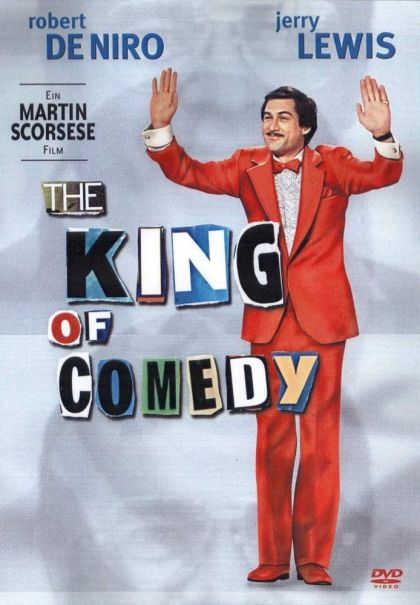
Robert De Niro as delusional acolyte to the stars, Rupert Pupkin, and Jerry Lewis as a mirror-image of his own talk-show comedian persona, Jerry Langford. Sandra Bernhard plays a supporting role as another hyperactive super-fan, Masha. The King of Comedy, written by Paul D. Zimmerman, does not resemble a typical Scorsese picture; the camera is pinned in place instead of roving around. This is seemingly to facilitate our unflinching stare into the lives and behaviour of the characters, when often we want nothing more than to look away. Scorsese's films usually teem with passion and activity, but Pupkin's world is more sedate, colder. Scorsese's go-to director of photography, Michael Chapman, turned down work on the film because of the director's choice of style: "His plan was to use largely empty sets, flat lighting, and old-fashioned box-like framing" (Rausch 102). Essentially, it was filmed to look like television.
Scorsese once again deals with an obsessional pursuit, a common theme in his work. Rupert Pupkin's obsession is particularly emblematic of the twenty-first century; it extends beyond the traditional pursuits of money and power, pursuing instead something more fleeting and all too modern: fame. More specifically, fame for fame's sake: fame predicated not on riches nor on talent but merely on the desire to be seen and idolized. This desire is what consumes De Niro's Rupert, a twitchy, perennially polite wannabe comedian who refuses to take no for answer when he meets his idol, Jerry Langford. He misunderstands Langford and his entourage's continual brush-offs, revealing his desire not merely to be around Jerry but to emulate him and eventually usurp him. He begs Langford for a guest spot on his hit television show, fantasises about Langford deferring to his ego, and eventually becomes deluded enough to appear uninvited at the celebrity's country house, only to be humiliatingly turned away in front of his crush, Rita (Diahnne Abbott). He and Masha then decide to take matters into their own hands and kidnap Jerry with a toy gun, demanding a spot on the show in exchange for Jerry's safety. Rupert is then allowed to perform his comedy routine on television. With startling irony, Rupert's bid for fame works, and although he is sentenced to prison for kidnapping, he is given a short sentence and comes out of prison famous, writing a best-selling book and receiving his own television show. The ironic conclusion to the film emphasizes its satirical look at the American obsession with empty fame, owing some debt to the 1976 Sidney Lumet film, Network.
The rise of consumerism and tabloid celebrity culture in the late 1970s and '80s is dealt with in both Network and The King of Comedy, but they become uncannily more accurate as time has passed, predicting the rise of reality television, social networking, and the disposable celebrity. Rupert simply decides, in the same aggressive manner as his Scorsesean compatriots, that his 15 minutes will be gained at any and all costs. The overnight celebrity becomes the new fixation of the American dream. The King of Comedy was poorly received, both by audiences and critics. "Unlike the context for Scorsese's earlier films, by the time of The King of Comedy, there was no longer an American film culture that encouraged or even allowed for challenging work" (Raymond 30). Considering the context of 1980s Hollywood and its "Reaganite entertainment" — escapist, often anti-intellectual blockbusters that provided happy endings and visceral enjoyment, it is easy to understand why the vulnerability and discomfort in The King of Comedy missed the mark with audiences. The overall cost of the film was recorded at $20 million; its domestic gross was roughly $2.5 million. It didn't do the film any favors that it was marketed as an outright comedy; it certainly is not that, though it has many darkly comic moments. Critics were more generous than audiences, but also offered some intriguing clues as to why the film flopped. Roger Ebert, for example (typically a Scorsese enthusiast), called the movie, "unsatisfying," "frustrating," and an "emotional desert," though he goes on to say that it is not by any means a "bad movie." Pauline Kael called it precisely that, going on to say that it gave her "cold creeps" and that it was "empty" (458). It is interesting that there seems to be a level of discomfort with both critics about the feelings the film evokes; both rightly refer to its unexpected coldness and the emotional distance of its characters, but another aspect also seems at play, one that William Ian Miller suggests: "the unfunny comedian humiliates himself and one of the sure indications that you are watching someone humiliate himself is that you will be embarrassed by the display" (329).
To Read the Rest

by Christina Marie Newland
Bright Lights Film Journal
Robert De Niro as delusional acolyte to the stars, Rupert Pupkin, and Jerry Lewis as a mirror-image of his own talk-show comedian persona, Jerry Langford. Sandra Bernhard plays a supporting role as another hyperactive super-fan, Masha. The King of Comedy, written by Paul D. Zimmerman, does not resemble a typical Scorsese picture; the camera is pinned in place instead of roving around. This is seemingly to facilitate our unflinching stare into the lives and behaviour of the characters, when often we want nothing more than to look away. Scorsese's films usually teem with passion and activity, but Pupkin's world is more sedate, colder. Scorsese's go-to director of photography, Michael Chapman, turned down work on the film because of the director's choice of style: "His plan was to use largely empty sets, flat lighting, and old-fashioned box-like framing" (Rausch 102). Essentially, it was filmed to look like television.
Scorsese once again deals with an obsessional pursuit, a common theme in his work. Rupert Pupkin's obsession is particularly emblematic of the twenty-first century; it extends beyond the traditional pursuits of money and power, pursuing instead something more fleeting and all too modern: fame. More specifically, fame for fame's sake: fame predicated not on riches nor on talent but merely on the desire to be seen and idolized. This desire is what consumes De Niro's Rupert, a twitchy, perennially polite wannabe comedian who refuses to take no for answer when he meets his idol, Jerry Langford. He misunderstands Langford and his entourage's continual brush-offs, revealing his desire not merely to be around Jerry but to emulate him and eventually usurp him. He begs Langford for a guest spot on his hit television show, fantasises about Langford deferring to his ego, and eventually becomes deluded enough to appear uninvited at the celebrity's country house, only to be humiliatingly turned away in front of his crush, Rita (Diahnne Abbott). He and Masha then decide to take matters into their own hands and kidnap Jerry with a toy gun, demanding a spot on the show in exchange for Jerry's safety. Rupert is then allowed to perform his comedy routine on television. With startling irony, Rupert's bid for fame works, and although he is sentenced to prison for kidnapping, he is given a short sentence and comes out of prison famous, writing a best-selling book and receiving his own television show. The ironic conclusion to the film emphasizes its satirical look at the American obsession with empty fame, owing some debt to the 1976 Sidney Lumet film, Network.
The rise of consumerism and tabloid celebrity culture in the late 1970s and '80s is dealt with in both Network and The King of Comedy, but they become uncannily more accurate as time has passed, predicting the rise of reality television, social networking, and the disposable celebrity. Rupert simply decides, in the same aggressive manner as his Scorsesean compatriots, that his 15 minutes will be gained at any and all costs. The overnight celebrity becomes the new fixation of the American dream. The King of Comedy was poorly received, both by audiences and critics. "Unlike the context for Scorsese's earlier films, by the time of The King of Comedy, there was no longer an American film culture that encouraged or even allowed for challenging work" (Raymond 30). Considering the context of 1980s Hollywood and its "Reaganite entertainment" — escapist, often anti-intellectual blockbusters that provided happy endings and visceral enjoyment, it is easy to understand why the vulnerability and discomfort in The King of Comedy missed the mark with audiences. The overall cost of the film was recorded at $20 million; its domestic gross was roughly $2.5 million. It didn't do the film any favors that it was marketed as an outright comedy; it certainly is not that, though it has many darkly comic moments. Critics were more generous than audiences, but also offered some intriguing clues as to why the film flopped. Roger Ebert, for example (typically a Scorsese enthusiast), called the movie, "unsatisfying," "frustrating," and an "emotional desert," though he goes on to say that it is not by any means a "bad movie." Pauline Kael called it precisely that, going on to say that it gave her "cold creeps" and that it was "empty" (458). It is interesting that there seems to be a level of discomfort with both critics about the feelings the film evokes; both rightly refer to its unexpected coldness and the emotional distance of its characters, but another aspect also seems at play, one that William Ian Miller suggests: "the unfunny comedian humiliates himself and one of the sure indications that you are watching someone humiliate himself is that you will be embarrassed by the display" (329).
To Read the Rest
Tuesday, February 26, 2013
Films We Want to See #25: Let Fury Have the Hour (USA: Antonio D'Ambrosio, 2012)
Film Website
“Let fury have the hour/
Anger can be power/
Do you know that you can use it?”
– “The Clampdown,” The Clash
Rough, raw and unapologetically inspirational, LET FURY HAVE THE HOUR is a charged journey into the heart of the creative counter-culture in 2012. In a time of global challenges, big questions and by-the-numbers politics, this upbeat, outspoken film tracks the story of the artists, writers, thinkers and musicians who have gone underground to re-imagine the world – honing in on equality, community and engaged creativity – in exuberantly paradigm-busting ways.
Writer/director Antonino D’Ambrosio unites 50 powerful, of-the-moment voices –from street artist Shepard Fairey to rapper Chuck D to playwright Eve Ensler to musicians Tom Morello and Billy Bragg to novelist Edwidge Danticat to filmmaker John Sayles to comic Lewis Black – who share personal and powerful tales of how they transformed anger and angst into provocative art and ideas. Mix-mastered with historical footage, animation and performances, D’Ambrosio presents a visceral portrait of a generation looking to re-jigger a system that has failed to address the most pressing problems of our times . . . or human potential.
The story begins in the 1980s with the rise of Reagan and Thatcher — and a cultural shift towards fierce individualism and rampant consumerism. Coming of age in a world seemingly gone mad or at least gone shopping, some kids started searching for something more authentic. This was the start of a renegade movement D’Ambrosio calls “creative-response.” It was a hybrid, haphazard collective of skateboarders, punk rockers, rappers, street poets, feminists and graffitists whose reaction to this brave new world was not to turn away, but to turn up the volume and have their say.
Now that generation is coming to the fore, sparking a global movement focused not just on pushing the boundaries with guitars, paint, dance, storytelling, graphics and subcultural style – but on coming together around real reasons for hope.
Set to a stirring soundtrack from the film’s artists – including Rage Against The Machine, Public Enemy, Billy Bragg, Gogol Bordello, MC5, DJ Spooky and Sean Hayes – LET FURY HAVE THE HOUR is a fast and furious trip into the grass roots of art and activism, 21st Century style. The film is written and directed by author and visual artist Antonino D’Ambrosio in his feature debut. The producers are D’Ambrosio and James L. Reid and the executive producers are Jonathan Gray, Brian Devine, Rob McKay, Mark Urman and Chaz Zelus. The film features original music from composer and MC5 guitarist Wayne Kramer. A CAVU Pictures release.
“Let fury have the hour/
Anger can be power/
Do you know that you can use it?”
– “The Clampdown,” The Clash
Rough, raw and unapologetically inspirational, LET FURY HAVE THE HOUR is a charged journey into the heart of the creative counter-culture in 2012. In a time of global challenges, big questions and by-the-numbers politics, this upbeat, outspoken film tracks the story of the artists, writers, thinkers and musicians who have gone underground to re-imagine the world – honing in on equality, community and engaged creativity – in exuberantly paradigm-busting ways.
Writer/director Antonino D’Ambrosio unites 50 powerful, of-the-moment voices –from street artist Shepard Fairey to rapper Chuck D to playwright Eve Ensler to musicians Tom Morello and Billy Bragg to novelist Edwidge Danticat to filmmaker John Sayles to comic Lewis Black – who share personal and powerful tales of how they transformed anger and angst into provocative art and ideas. Mix-mastered with historical footage, animation and performances, D’Ambrosio presents a visceral portrait of a generation looking to re-jigger a system that has failed to address the most pressing problems of our times . . . or human potential.
The story begins in the 1980s with the rise of Reagan and Thatcher — and a cultural shift towards fierce individualism and rampant consumerism. Coming of age in a world seemingly gone mad or at least gone shopping, some kids started searching for something more authentic. This was the start of a renegade movement D’Ambrosio calls “creative-response.” It was a hybrid, haphazard collective of skateboarders, punk rockers, rappers, street poets, feminists and graffitists whose reaction to this brave new world was not to turn away, but to turn up the volume and have their say.
Now that generation is coming to the fore, sparking a global movement focused not just on pushing the boundaries with guitars, paint, dance, storytelling, graphics and subcultural style – but on coming together around real reasons for hope.
Set to a stirring soundtrack from the film’s artists – including Rage Against The Machine, Public Enemy, Billy Bragg, Gogol Bordello, MC5, DJ Spooky and Sean Hayes – LET FURY HAVE THE HOUR is a fast and furious trip into the grass roots of art and activism, 21st Century style. The film is written and directed by author and visual artist Antonino D’Ambrosio in his feature debut. The producers are D’Ambrosio and James L. Reid and the executive producers are Jonathan Gray, Brian Devine, Rob McKay, Mark Urman and Chaz Zelus. The film features original music from composer and MC5 guitarist Wayne Kramer. A CAVU Pictures release.
Wednesday, May 16, 2012
Michael Atkinson: Archival Trouble -- The fiction-free science fiction of Adam Curtis
Archival Trouble: The fiction-free science fiction of Adam Curtis
by Michael Atkinson
Moving Image Source
...
Curtis's brand of deep politics isn't theorist Peter Dale Scott's—he's concerned less with deliberate conspiracy than with the cascade of sociopolitical dominoes, beginning somewhere mysteriously decades ago, tumbling in a semi-secret dialectical train of disaster since, and culminating in flat-out catastrophe, be it 9/11 or the world economic meltdown or merely the Reagan-era state of rampaging consumerist narcissism. Formally, Curtis manufactures his flowcharts with the simplest means available: archival footage, talking heads, calm but ominous narration, associative montage, a pervasive sense of doomsday. All Watched Over by Machines of Loving Grace is paradigmatic: Curtis begins, as his Richard Brautigan-quoting title suggests, with the familiar suspicion that the mechanization of our lives is winding inexorably toward a dystopian nightmare in which the matrix of microprocessors and A.I.'s will end up commanding us, not vice versa.
But right away it's clear that Curtis isn't hypothesizing about a terrifying future, but unearthing the hidden patterns that have created the present moment. The villains are not machines. Curtis trips backward, as is his wont, to the '50s and the rise of Ayn Rand, whose Objectivist creed in turn gave fitful birth to a spate of influential ideologies, all of which decided that both nature and human society were essentially self-sustaining, equilibrium-seeking logical mechanisms, and could be managed thus. "This is the story," Curtis intones, "of the rise of the dream of the self-organizing system, and the strange machine fantasy of nature that underpins it." The tales he tells to illustrate this harrowing and almost completely overlooked social saga all intertwine, and run from the "spaceship Earth" ideas of Buckminster Fuller, the communes that followed, the pessimistic forecasts of the Club of Rome, the rise and fall of Patrice Lumumba in the Congo, the genesis of the wholly fabricated Tutsi-Hutu dichotomy that turned Rwanda into a killing field more than once, the career of Dian Fossey, the late-century rollercoaster of economic feast and famine, and the work of theorist/geneticist George Price, who believed that humans were ultimately the slaves of their own genetic imperatives, and who demonstrated mathematically that both altruism and genocide were therefore rational acts, from "a gene's eye view" of things.
There's more, all of it reflecting back upon now; Curtis is nothing if not a staunch proselytizer for the idea of the past never being quite past. All Watched Over is more than a counter-story. Like all of Curtis's work it is approximately half well-circulated history and half "deep" background—that is, storylines and historical angles that have been pervasively and deliberately neglected by the gatekeepers of knowledge and information. The film feels something like a Craig Baldwin delusion-farce turned chillingly, menacingly factual, and the facts accrete into an interrogation of psychotic hubris. The Frankenstein monster constructed by the scientists and demagogues and politicians in All Watched Over is the last half-century or so of life on Earth, which in its ultimate tally amounts to a scoresheet of unimaginable injustice, mountains of bodies, and untold environmental ruin.
Curtis is in reality telling just one story, again and again in various threads and tangents and in dazzling three- or four-hour chunks, reaching back to the immediate postwar years and then forward to the present over and over, limning an infinitely complex genogram of our present existence. Ironically, for a history-rewriting filmmaker/producer boxing so much information into evenings of television, Curtis is fierce about the disastrous effects brought about by the artificial and intellectualized imposition of order. He began in his present mode with 1992's Pandora's Box, a massive autopsy on the worldwide cataclysms that unrolled as a result of every kind of postwar effort to systematize, organize, compel, and codify humanity, from Soviet over-industrialization to game-theory Cold War strategies to Keynesian economics to nuclear-power utopianism. Politically, this is a rocket targeted not at the Right per se, but upward, at the power elite, whose perpetual folly in trying to maximize profit and control leads ceaselessly to societal breakdown—a condition very often beside the point for the elite in question, once they've stood to benefit. The Century of the Self (2002) goes all attack-ad on this dynamic, specifically homing in on propagandist/marketing mahatma Edward Bernays, and how he used Freudian psychoanalytic insights to initiate the gold rush of institutionalized thought control—advertising, propaganda, public relations—that could be said to absolutely dominate 20th-century public discourse.
Curtis's vision seemed wholly formed at first, despite the fact that he's obviously digging up unknown connections with each new project. But it took the spiral mindquake of 9/11 for Curtis's reverse-engineered prophecies to gain a global profile. The Power of Nightmares (2004) follows the gunpowder trails from the mid-century (uniting Muslim Brotherhood messiah Sayyid Qutb and neocon pope-king Leo Strauss as complementary agents of desolation) to the attacks of 2001, and then maintains that, just as the farcical depiction of the USSR as a global spider kingdom of evil influence is destroyed by direct testimony from CIA agents and a lying Donald Rumsfeld in old news footage, the sudden postulation of Al Qaeda as a terrifying, organized worldwide threat was a manufactured myth used by Western governments and agencies to broaden and tighten their grip on international power systems and the profit to be gained therein.
To Read the Rest of the Essay
To watch Adam Curtis's documentaries online:
Pandora's Box: A Fable From the Age of Science (1992)
The Living Dead: Three Films About the Power of the Past (1995)
The Century of the Self (2002)
The Power of Nightmares: The Rise of the Politics of Fear (2004)
The Trap: What Happened to Our Dream of Freedom (2007)
All Watched Over by Machines of Loving Grace (2011)
by Michael Atkinson
Moving Image Source
...
Curtis's brand of deep politics isn't theorist Peter Dale Scott's—he's concerned less with deliberate conspiracy than with the cascade of sociopolitical dominoes, beginning somewhere mysteriously decades ago, tumbling in a semi-secret dialectical train of disaster since, and culminating in flat-out catastrophe, be it 9/11 or the world economic meltdown or merely the Reagan-era state of rampaging consumerist narcissism. Formally, Curtis manufactures his flowcharts with the simplest means available: archival footage, talking heads, calm but ominous narration, associative montage, a pervasive sense of doomsday. All Watched Over by Machines of Loving Grace is paradigmatic: Curtis begins, as his Richard Brautigan-quoting title suggests, with the familiar suspicion that the mechanization of our lives is winding inexorably toward a dystopian nightmare in which the matrix of microprocessors and A.I.'s will end up commanding us, not vice versa.
But right away it's clear that Curtis isn't hypothesizing about a terrifying future, but unearthing the hidden patterns that have created the present moment. The villains are not machines. Curtis trips backward, as is his wont, to the '50s and the rise of Ayn Rand, whose Objectivist creed in turn gave fitful birth to a spate of influential ideologies, all of which decided that both nature and human society were essentially self-sustaining, equilibrium-seeking logical mechanisms, and could be managed thus. "This is the story," Curtis intones, "of the rise of the dream of the self-organizing system, and the strange machine fantasy of nature that underpins it." The tales he tells to illustrate this harrowing and almost completely overlooked social saga all intertwine, and run from the "spaceship Earth" ideas of Buckminster Fuller, the communes that followed, the pessimistic forecasts of the Club of Rome, the rise and fall of Patrice Lumumba in the Congo, the genesis of the wholly fabricated Tutsi-Hutu dichotomy that turned Rwanda into a killing field more than once, the career of Dian Fossey, the late-century rollercoaster of economic feast and famine, and the work of theorist/geneticist George Price, who believed that humans were ultimately the slaves of their own genetic imperatives, and who demonstrated mathematically that both altruism and genocide were therefore rational acts, from "a gene's eye view" of things.
There's more, all of it reflecting back upon now; Curtis is nothing if not a staunch proselytizer for the idea of the past never being quite past. All Watched Over is more than a counter-story. Like all of Curtis's work it is approximately half well-circulated history and half "deep" background—that is, storylines and historical angles that have been pervasively and deliberately neglected by the gatekeepers of knowledge and information. The film feels something like a Craig Baldwin delusion-farce turned chillingly, menacingly factual, and the facts accrete into an interrogation of psychotic hubris. The Frankenstein monster constructed by the scientists and demagogues and politicians in All Watched Over is the last half-century or so of life on Earth, which in its ultimate tally amounts to a scoresheet of unimaginable injustice, mountains of bodies, and untold environmental ruin.
Curtis is in reality telling just one story, again and again in various threads and tangents and in dazzling three- or four-hour chunks, reaching back to the immediate postwar years and then forward to the present over and over, limning an infinitely complex genogram of our present existence. Ironically, for a history-rewriting filmmaker/producer boxing so much information into evenings of television, Curtis is fierce about the disastrous effects brought about by the artificial and intellectualized imposition of order. He began in his present mode with 1992's Pandora's Box, a massive autopsy on the worldwide cataclysms that unrolled as a result of every kind of postwar effort to systematize, organize, compel, and codify humanity, from Soviet over-industrialization to game-theory Cold War strategies to Keynesian economics to nuclear-power utopianism. Politically, this is a rocket targeted not at the Right per se, but upward, at the power elite, whose perpetual folly in trying to maximize profit and control leads ceaselessly to societal breakdown—a condition very often beside the point for the elite in question, once they've stood to benefit. The Century of the Self (2002) goes all attack-ad on this dynamic, specifically homing in on propagandist/marketing mahatma Edward Bernays, and how he used Freudian psychoanalytic insights to initiate the gold rush of institutionalized thought control—advertising, propaganda, public relations—that could be said to absolutely dominate 20th-century public discourse.
Curtis's vision seemed wholly formed at first, despite the fact that he's obviously digging up unknown connections with each new project. But it took the spiral mindquake of 9/11 for Curtis's reverse-engineered prophecies to gain a global profile. The Power of Nightmares (2004) follows the gunpowder trails from the mid-century (uniting Muslim Brotherhood messiah Sayyid Qutb and neocon pope-king Leo Strauss as complementary agents of desolation) to the attacks of 2001, and then maintains that, just as the farcical depiction of the USSR as a global spider kingdom of evil influence is destroyed by direct testimony from CIA agents and a lying Donald Rumsfeld in old news footage, the sudden postulation of Al Qaeda as a terrifying, organized worldwide threat was a manufactured myth used by Western governments and agencies to broaden and tighten their grip on international power systems and the profit to be gained therein.
To Read the Rest of the Essay
To watch Adam Curtis's documentaries online:
Pandora's Box: A Fable From the Age of Science (1992)
The Living Dead: Three Films About the Power of the Past (1995)
The Century of the Self (2002)
The Power of Nightmares: The Rise of the Politics of Fear (2004)
The Trap: What Happened to Our Dream of Freedom (2007)
All Watched Over by Machines of Loving Grace (2011)
Subscribe to:
Posts (Atom)