Showing posts with label Philosophy. Show all posts

Sunday, January 12, 2014

Blue is the Warmest Color (France/Belgium/Spain: Abdellatif Kechiche, 2013)

“Few films dig so deeply (and with such sense of intimacy) into the complexities of human relations, the joys and pains of self discovery and the hurtful realisation that our bodies and mind can yearn opposite things.” — Fernanda Solórzano


Blue is the Warmest Color (France/Belgium/Spain: Abdellatif Kechiche, 2013: 179 mins)

Beauvoir, Simone de. The Second Sex (1949: PDF copy)

Bell, Nicholas. "Blue is the Color of My True Love’s Hair: Kechiche Takes Us Deep Sea, Baby." Ion Cinema (October 25, 2013)

Berger, John. The Ways of Seeing. (1972: Summary/outline of this important book that studied how we are position to observe people and objects in art)

Blue is the Warmest Color Critic's Roundup (No Date)

Blue is the Warmest Color (Graphic Novel) Wikipedia (No Date)

Dargis, Manohla. "Seeing You Seeing Me: The Trouble With Blue Is the Warmest Color." The New York Times (October 27, 2013)

Dayoub, Tony. "The 51st New York Film Festival #3." The Cinephiliacs (October 13, 2013)

Hudson, David. "Abdellatif Kechiche’s BLUE IS THE WARMEST COLOR: A coy coming-out drama this most definitely isn’t.” Keyframe (May 23, 2013)

---. "Abdellatif Kechiche’s BLUE IS THE WARMEST COLOR: 'The experience of the film transcends flaws both real and imagined.'" Keyframe (October 11, 2013)

Ildari, Max. "Blue Is the Warmest Color 2: A Response to Lorrie Moore’s Review in the New York Review of Books." Bright Lights After Dark (January 10, 2014)

Jones, Kristin M. ""Review: Blue Is the Warmest Color." Film Comment (2013)

Kennedy, A.L. "Sartre and the Individual." A History of Ideas (April 15, 2015) ["Writer AL Kennedy on Existentialist ideas about the individual. Jean Paul Sartre argued that, for humans, 'existence preceded essence'. This means that there is no blueprint or template from which to work - humans are free to make themselves up as they go along. Being an individual comes from the way you negotiate this freedom and the choices you make in the face of it."]
Lee, Janet. "'Blue Is The Warmest Color'." Neon Tommy (October 22, 2013)

Mayer, Sophie. "Blue is the Warmest Colour: This part-adaptation of Julie Maroh’s graphic-novel saga of a lesbian love affair trades a new voice for the same old male gaze." Sight and Sound (February 20, 2015)

McCahill, Mike. "21st Century Directors You Need to Know About: Abdellatif Kechiche." Movie Mail (May 2, 2014)

McNeil, Jeremiah. "Blue is the Warmest Color" Dialogic Cinephilia (December 21, 2013)

Moore, Lorrie. "Gazing at Love: Blue is the Warmest Color." The New York Review of Books (December 19, 2013)

Rich, B. Ruby. "Blue Is the Warmest Color: Feeling Blue." The Current (February 24, 2014)

Roberts, Soraya. "Blue Is the Warmest Color is about class, not just sex." Salon (November 3, 2013) ["Sex and sexuality are only half the film's story. It's also about lovers from different economic worlds."]

Sartre, Jean-Paul. "Existentialism is a Humanism." (Lecture given in 1946: published in Existentialism from Dostoyevsky to Sartre, ed. Walter Kaufman, Meridian Publishing Company, 1989) Marxist Archive (2005)

Stern, Marlowe. "‘Blue is the Warmest Color’: See What the Sex Scene Looks Like In the Graphic Novel." The Daily Beast (October 28, 2013)

Thompson, Martha. "Blue Is the Warmest Color 1: Unresolved Alienations of Class." Bright Lights After Dark (January 2014)

Zaman, Farihah. "The Pleasure Principle: Blue is the Warmest Color." Reverse Shot #33 (2013)


Wednesday, October 30, 2013

The American Nightmare (USA/UK: Adam Simon, 2000: 73 mins)

I just found the documentary "The American Nightmare" for a student writing about horror films -- highly recommended look at the epic changes in the genre in the early 70s.

Thursday, October 24, 2013

Cemetery Man (Italy/France/Germany: Michele Soavi, 1994)


Cemetery Man (Italy/France/Germany: Michele Soavi, 1994: 105 mins)
The excellently named Francesco Dellamorte (Rupert Everett, never better) is the moody caretaker of a small-town Italian cemetery where the dead just keep coming back to life, much to his annoyance. His everyday tedium of reading phone books and killing zombies is broken when he falls madly in love with a nameless beautiful widow. Unfortunately, she too perishes and returns as a zombie. A strange and entertaining erotic-horror-comedy, Cemetery Man (titled Dellamorte Dellamore in Italian) is required viewing for anyone of the sadboi persuasion. – Anna Bogutskaya
Dumas, Andre. "Cemetery Man: By Keeping Things the Same, We Can Change More Effectively." Horror Digest (March 30, 2011)

Kuersten, Erich. "The Shrouds of Soavi: Cemetery Man, The Devil's Daughter." Acidemic (September 8, 2016)

Seda, Alex. "Dellamorte Dellamore (a.k.a. Cemetery Man) Review." Midnight Showing (July 10, 2009)

"TGIF #5: CEMETERY MAN (aka DELLAMORTE DELLAMORE)" Adamantium Bullet (July 24, 2009)


Monday, September 2, 2013

Christopher Falzon: Philosophy Through Film

Philosophy Through Film
by Christopher Falzon
Internet Encyclopedia of Philosophy

This article introduces the main perspectives concerning philosophy through film. Film is understood not so much as an object of philosophical reflection but as a medium for engaging in philosophy. Contributions to the area have flourished since the beginning of the 21st century, along with debates over the extent to which film can really be understood to be “doing” philosophy, as opposed to merely serving as a source of illustration or example for philosophical reflection. A number of objections have their origins in perceived similarities between the cinema and Plato’s cave; other objections have their origins in more general Platonic criticisms of fictive art’s capacity to reveal truth. Against these objections are some surprisingly bold views of film’s capacity to do philosophy, to the effect that much of what can be done in the verbal medium can also be done in the cinematic one; or that there is a distinctive kind of cinematic thinking that resists paraphrasing in traditional philosophical terms. There are also more moderate views, to the effect that film can be seen as engaging in certain recognizably philosophical activities, such as the thought experiment; or that they are able to present certain kinds of philosophical material better than standard philosophical genres. This article considers these views for and against the idea of philosophy through film. It also considers the “imposition” objection—that while film may serve to provide useful illustration, any philosophizing is in fact being done by the philosopher using the film.

1. What is Philosophy through Film?

This article introduces the main perspectives concerning the idea of doing philosophy through film. By film here is meant, primarily, narrative fiction film. The idea of doing, or at least engaging in some way with, philosophy through film can mean at least two things. Firstly, it may mean using film as a resource, a source of example and illustration, in order to illuminate philosophical positions, ideas and questions. Secondly, it may mean that film itself is to be understood as a medium for philosophising—doing philosophy in film or philosophy as film. The latter implies a more robust engagement of film with philosophy. The extent to which a film can be philosophical or contribute to philosophical knowledge has itself been a matter of some debate. However, what is broadly accepted is that many films ‘resonate in fruitful ways with traditional and contemporary philosophical issues’ (Livingston and Plantinga 2009: xi).

Consideration of film in its philosophical significance, and of philosophical issues through film, can be distinguished from more traditional philosophy of film, though in practice the two activities overlap. Both are subfields in the area of philosophical aesthetics. Philosophy of film traditionally concerns itself with the reflective study of the nature of film, aiming to spell out what film is, whether it is an art, how it differs from other arts, and so on. It is philosophy about film. Contrasted with this is the idea of film serving as a resource, means or medium for the illumination and exploration of philosophical ideas and questions. This is philosophy through film. Historically, philosophy through film is of a more recent vintage than philosophy of film, which enjoyed significant development in the 1980s. Philosophy through film has flourished mostly since 2000, although there were a number of important forerunners who promoted the idea that film can contribute to philosophy, including Cavell (1979), Jarvie (1987), Kupfer (1999) and Freeland (2000).

Since the turn of the century a significant amount of literature has emerged, devoted to the exploration of philosophical themes and questions through narrative films or genres of narrative film. The literature in this area includes more or less popular explorations of the philosophical dimensions of particular films and genres, and of the work of specific directors or writers (for example, Irwin 2002, Abrams 2007, Sanders 2007, Eaton 2008, LaRocca 2011). Along with them there are more pedagogically-oriented introductions to philosophy through film (for example, Litch 2002, Rowlands 2004, Falzon 2007, Cox and Levine 2012). There are also the more theoretical discussions defending the idea of philosophy through film (for example, Mulhall 2002, Wartenberg 2007, Sinnerbrink 2011), or criticising it (for example, Russell 2000, Smith 2006, Livingston 2009).

This article will discuss a range of philosophical positions that have emerged both for and against the idea of philosophy through film. It will proceed by considering a number of objections to the idea.

To Read the Rest

Thursday, June 13, 2013

I Heart Huckabees (USA/Germany: David O' Russell, 2004)


I Heart Huckabees (USA/Germany: David O' Russell, 2004: 107 minutes)


Garrett, Daniel. "Laughter and Philosophy: David Owen Russell’s I ♥ Huckabees." Offscreen (January 31, 2005)

Johnson, Mackenzie. "What Makes David O. Russell so David O. Russell." Film Stage (October 17, 2016)

Kennedy, A.L. "Sartre and the Individual." A History of Ideas (April 15, 2015) ["Writer AL Kennedy on Existentialist ideas about the individual. Jean Paul Sartre argued that, for humans, 'existence preceded essence'. This means that there is no blueprint or template from which to work - humans are free to make themselves up as they go along. Being an individual comes from the way you negotiate this freedom and the choices you make in the face of it."]

Kirby, Matt. "I Heart Huckabees: Premodern Help for Postmodern Times." Metaphilm (November 12, 2004)

Lee, Kevin B.. "The Wahlberg Effect." Keyframe (September 26, 2016)

MacDowell, James. "The 'Quirky' New Wave." Alternate Takes (July 21, 2005)

Ng, Edwin. "The (Zen) Buddhist Heart of I ♥ Huckabees." Journal of Religion & Film 14.1 (April 2010)

Shaw, Daniel. Film and Philosophy: Taking Movies Seriously. NY: Wallflower, 2008. [In BCTC Library]

Tait, R. Colin. "'Jesus is never mad at us if we live with him in our hearts': The Dialectical View of America in David O' Russell's I Heart Huckabees." Cinephile (March 2006)


Saturday, May 25, 2013

C. Jerry Kutner: Cinema du WTF – Upstream Color (Shane Carruth 2013)

Cinema du WTF – UPSTREAM COLOR (Shane Carruth 2013)
by C. Jerry Kutner
Bright Lights Film Journal


A singular and highly accomplished independent film, Upstream Color is philosophical science fiction in the tradition of the French nouvelle vague, seasoned with a dash of Cronenbergian body horror. Like the SF films that emerged from the nouvelle vague – Chris Marker’s La Jetée, Alain Resnais’s Je t'aime je t'aime, Godard’s Alphaville, Bertrand Tavernier’s Death Watch – Upstream Color foregoes studio sets and elaborate special effects in favor of real locations and a concern with fundamental existential issues like the nature of free will, memory, perception, and time – what Raymond Durgnat once called the science fiction of “inner space.”

The body horror, reminiscent of early Cronenberg films like Rabid and Shivers (aka They Came From Within), comes from the film’s MacGuffin, a worm or grub found in the roots of orchids that secretes a drug, prized in certain circles for its psychotropic properties. If the worm is implanted in a victim, he or she becomes a virtual zombie, susceptible to any suggestion, obeying any command.

To say the film is enigmatic is an understatement. This might be the WTF film of 2013. Its complex story is told almost entirely through its visuals. There is minimal dialogue, and what there is of it is fragmentary, heard – or overhead – in bits and pieces. The visuals themselves are elliptical – we might be shown only the beginning, the middle, or the end of an action and have to infer the rest of it. Sometimes it is uncertain whether what we are looking at is literal or metaphoric. Chronology is scrambled. But the effect is not off-putting. On the contrary, this is an extraordinarily compelling film. Because we have to piece the narrative together ourselves, we pay closer attention.

Moreover, there is a sound basis for the film’s peculiarities of style. The two main characters, Kris (Amy Seimetz) and Jeff (writer/director Shane Carruth) are both victims of the worm – both brain-damaged. Consequently, we experience reality as they do.

To Read the Rest

Thursday, April 4, 2013

Dario Llinares -- Adapting an Askance Perspective: Philip K. Dick on Film

Adapting an Askance Perspective: Philip K. Dick on Film
by Dario Llinares
Alternate Takes


This summer’s remake of Total Recall extends the list of films inspired by the writing of Philip K. Dick. His novels and short stories offer some of the most eccentric and imaginative conceits in American literature, and are designed to question the fundamental metaphysical realities upon which our perception of the world is based. To define PKD as merely a science-fiction writer fails to capture the intricacy of thought and unlimited possibilities that his stories evoke.

Flow my Tears, the Policeman Said, like many of his novels, envisages a technologically advanced dystopia where genetic engineering is the main tool of a repressive police state. Ubik and Valis display PKD’s interest in the transcendental mind and the human interpretation of God, and the classic The Man in the High Castle re-imagines a post-World War II era if the Nazis had been triumphant. The very strangeness of his titles reflect an author who looked at the world askance. It is not over-praising to mention him in the same breadth as Orwell, Huxley, Bradbury and Burgess; but while those authors are ostensibly influenced by the tumultuous events of the first half of the 20th century, PKD was more an évocateur-du-jour of the cultural turn of the 1960s and what has come to be termed postmodernism.

PKD’s somewhat tortured life contained episodes of paranoia and psychological uncertainty, which played out in the characters he created and the ephemeral situations they inhabited. His own experiences of drug use, religion, romantic relationships (he was married five times), and the tumult of the Nixon administration helped him to capture the dissolving vicissitudes of a shifting cultural zeitgeist. Loss of identity in an increasingly schizophrenic, technologically-led, drug-infused, media-saturated world underpins his allegorical stories, with protagonists searching for ‘truths’ that seem diffuse and ineffable. If there is one central theme running through his oeuvre it is the constant questioning of what constitutes a human being.

Although he was lauded in the esoteric sci-fi world, his books never achieved mainstream success and, in an almost conspiratorial twist of ‘fate’, he died of a stroke in March 1982, three months before the release of Blade Runner. PKD’s cinematic legacy is found not only in specific adaptations, but a wider saturation of his ideas through contemporary postmodern film aesthetics. David Cronenburg, The Wachowskis, David Fincher, Spike Jonze, Michel Gondry and Christopher Nolan are just a few directors clearly influenced by the author’s writing.

In exalting such a visionary mind and its influence on contemporary cinema, however, a cautioning question somewhat inconveniently comes to mind. Why do so many PKD adaptations fail to live up to the intelligence, acerbic wit, strange imaginativeness or political insight of his original texts? For it is my contention that, even in the best examples of PKD-inspired cinema, much of the heteroclite themes, astute social representations and ambivalent outcomes are at best smoothed out, at worse omitted.

Of course, in the era of the CGI-laden blockbuster the futuristic speculative fictions of PKD are easily co-opted into the testosterone infused visual spectacle of event cinema. For example, John Woo’s Paycheck (2003) and Lee Tamahori’s Next (2007) would be highly contemptuous if they weren’t so forgettable. Both films, like most PKD stories, have the seed of an interesting scenario which links allegorically to contemporary issues. The former deals with intellectual property rights and industrial espionage, with corporations protecting knowledge by wiping the memory of employees who work for them. The latter deals with a staple PKD trope: the ability to see into the future and its consequences for free will and moral decision-making. Yet the ideas behind both films, rather than being explored with any philosophical imagination, are simply used as the skeleton for a premise, largely overlooked in favour of a series of formulaic and largely uninvolving action scenes.

Minority Report (2002), directed by Steven Spielberg and starring Tom Cruise, does fall into a similar category in reducing its interesting premise into formulaic action/chase movie. However, there is a subtle evocation of mood here, with the cool washed-out palette imbuing a neo-noir atmosphere, which fits well with the conspiratorial vision of the original short story. The film also works on the level of future prognosis regarding the impact of foreseeable technological advances. Yet the final morality tale invokes a notion that free will wins, with Jon Anderton (Cruise) making the existential decision not to execute the murderer of his son. In the short story there is a sense that the protagonist’s journey is a complex, morally relative maze, where free will’s relationship to morality is wholly arbitrary and contingent. This Hollywood adaptation prefers the security of Manichean heroism underpinned by physical action and easy use of violence, thus eliding any real sense of danger or weakness. PKD protagonists are often weak (in PKD's Minority Report Jon Anderton is a fat, balding 50-year-old), uncertain and insecure. This is often tied to the shadowy conspiratorial milieu that is woven around them, where agents of the state, sinister scientists and androids with artificial intelligence inhabit an often surreal external world. Such an environment feeds into the internal psychosis of his characters, often leading them (and the reader) to the point of asking “do I really exist”? You never get the sense that Cruise’s Jon Anderton suffers from such existential angst.

To Read the Rest of the Essay

Monday, March 18, 2013

Matt Zoller Seitz -- Harold and Maude: Life and How to Live It

Harold and Maude: Life and How to Live It
By Matt Zoller Seitz
Current


Hal Ashby’s Harold and Maude, about the love between a suicidal young man of about twenty and an almost eighty-year-old widow, is timeless in part because it never quite belonged to its own time. Conceived in the late 1960s, at the height of the counterculture, it was released in 1971, when the political narrative of peaceful rebels versus the jackbooted establishment had lost what little mainstream appeal it had briefly enjoyed. In the popular imagination, the March on Washington and the Summer of Love had been displaced by Woodstock, Altamont, Kent State, and a string of assassinations and riots. Richard Nixon had ridden into office in 1968 on a wave of law-and-order sentiment and was about to cakewalk into a second term (and unprecedented shame). The counterculture was in retreat. As Peter Fonda’s record producer tells his young girlfriend in 1999’s The Limey, the sixties were “really . . . just ’66 and early ’67. That’s all it was.”

But the movement’s ideals lived on, in a disguised and ultimately more daring form, in Harold and Maude, which took values that had been expressed by youthful rebels and dropouts in the late 1960s—peace, love, understanding, distrust of authority, a determination to march to the beat of a different drummer—and put them in the mouth of an old woman embroiled in one of the oddest and most original love stories ever filmed. The movie’s apoplectic authority figures, dotty old-money types, poetic interludes, and trance-inducing folk-rock soundtrack (by Cat Stevens) may seem typical of earlier hippie flicks. But its two central premises—that an elderly woman could embody the most unguarded, delicate variety of Summer of Love openness and that she and a much younger man should be able to fall in love and get married without being judged, much less stopped—are anything but. Harold and Maude was shocking by the standards of 1971 Hollywood movies, even the ones that styled themselves as adventurous or hip. But it is so ideologically and emotionally consistent, and weaves such a gentle spell, that we can accept the central romance as a metaphor for beleaguered political and social sentiments even as we get to know Harold (Bud Cort) and Maude (Ruth Gordon) as individuals and root for their happiness. It’s a romance, a tragedy, a satire, a paean to eccentricity, a philosophical statement, and a “trip” film whose music montages seem to roll in like waves. Its mix of elements felt strange and new at the time, and still does, even though the film’s characters, tone, and soundtrack have been referenced and plundered by many modern directors, including Wes Anderson, who used two Stevens songs in Rushmore; P. T. Anderson, whose first four features are filled with Ashby-like innocents stumbling through cruel worlds; and David Fincher, whose Fight Club features a misfit couple flirting at self-help groups that they don’t even belong to, as Harold and Maude do at strangers’ funerals.

Ashby was a former editor and one of the staunchest exemplars of countercultural values ever to work in Hollywood. He debuted with 1970’s The Landlord, starring Beau Bridges as a white preppy who buys a brownstone in then black Park Slope, Brooklyn, alienates his stuck-up family, and learns what really matters in life: love, honesty, and spontaneity. He followed it with an impressive string of pictures that rank among the decade’s best, including Harold and Maude, The Last Detail (1973), Shampoo (1975), Coming Home (1978), and Being There (1979). The films vary widely in subject matter, style, and tone. But they all share a fascination with naive outsiders who are part of a larger system or machine, even if they don’t realize it, and who inspire others, accidentally or on purpose.

In all these movies, but especially in Harold and Maude, Ashby displays an extraordinary sensitivity to the spectrum of human experience. Both The Landlord and Harold and Maude are built around disaffected young men who act out against lives of stifling privilege and ossified values, but the latter film is simpler and more direct, and less tied to ripped-from-the-headlines issues. Building on the innovations of the landmark releases The Graduate (1967) and Easy Rider (1969), Harold and Maude explores outsider mentalities through fragmented cutting, using those music montages to embellish its themes and create a feeling of emotional suspension. But Harold and Maude is ultimately a richer, deeper movie, less measured and a lot more meandering, and also warmer, weirder, and tougher to reduce to catchphrases. It doesn’t position rebels against the establishment, or any group against any other group. It just wants people to be themselves and to be appreciated instead of judged—and to spread bliss by reaching out.

To Read the Rest of the Essay

Sunday, February 10, 2013

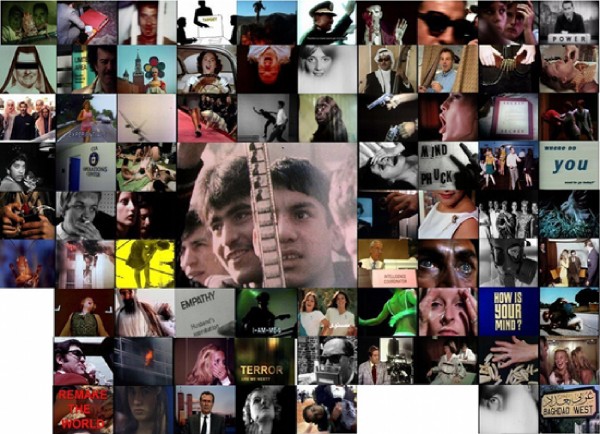
Little Atoms Interviews of Journalist/Filmmaker Adam Curtis

"Adam Curtis is a producer, writer and director of television documentaries such as Pandora's Box, The Mayfair Set, The Century of the Self, The Power of Nightmares and The Trap. Curtis' programs, though always about serious issues, maintain a sense of tongue-in-cheek humor and are characteristic in their extensive use of archive footage. In his film making, Curtis strives to find meaningful connections between historical situations and often focuses on the impact different ideologies have had on modern society. Adam's latest series, All Watched Over by Machines of Loving Grace..."

Link to the Two Interviews at Little Atoms

More resources:

Pt 1 of the Little Atoms Interview explores his earlier documentaries, including his influential The Power of Nightmares


The Power of Nightmares: The Rise of the Politics of Fear

Is the threat of radical Islamism as a massive sinister organised force of destruction, specifically in the form of al-Qaeda, a myth perpetrated by politicians in many countries—and particularly American Neo-Conservatives—in an attempt to ‘unite and inspire’ people following the failure of earlier, more utopian ideologies?

To Watch the 3 Part Series

Part 1 — Baby It’s Cold Outside

The first part of the series explains the origin of Islamism and Neo-Conservatism and draws the parallels between the two of their “optimistic visions to change the world”. It shows Egyptian civil servant Sayyid Qutb, depicted as the founder of modern Islamist thought, visiting the US to learn about the education system, but becoming disgusted with what he saw as a corruption of morals and virtues in western society through consumerism. When he returns to Egypt, he is disturbed by westernisation and becomes convinced that in order to save society it must be completely restructured along the lines of Islamic law while still using western technology. He also becomes convinced that this can only be accomplished through the use of an elite “vanguard” to lead a revolution against the established order. Qutb becomes a leader of the Muslim Brotherhood and, after being tortured in one of Nasser’s jails, comes to believe that western-influenced leaders can justly be killed for the sake of removing their corruption. Qutb is executed in 1966, but he influences the future mentor of Osama bin Laden, Ayman al-Zawahiri, to start his own secret Islamist group. Inspired by the 1979 Iranian revolution, Zawahiri and his allies assassinate Egyptian president Anwar Al Sadat, in 1981, in hopes of starting their own revolution. The revolution does not materialise and Zawahiri comes to believe that the majority of Muslims have been corrupted not only by their western-inspired leaders, but Muslims themselves have been affected by jahilliyah and thus both may be legitimate targets of violence if they do not join him. They continued to have the belief that a vanguard was necessary to rise up and overthrow the corrupt regime and replace with a pure Islamist state. At the same time in the United States, a group of disillusioned liberals, including Irving Kristol and Paul Wolfowitz, look to the political thinking of Leo Strauss after the perceived failure of President Johnson’s “Great Society”. They come to the conclusion that the emphasis on individual liberty was the undoing of the plan. They envisioned restructuring America by uniting the American people against a common evil, and set about creating a mythical enemy. These factions, the Neo-Conservatives, came to power under the Reagan administration, with their allies Dick Cheney and Donald Rumsfeld, and work to unite the United States in fear of the Soviet Union. The Neo-Conservatives allege the Soviet Union is not following the terms of disarmament between the two countries, and, with the investigation of “Team B”, they accumulate a case to prove this with dubious evidence and methods…

Part 2 — The Phantom Victory

The Soviet invasion of Afghanistan on 25 December 1979 gives a common cause to an extraordinary alliance of radical Islamists in Afghanistan and around the world and to the neo-conservatives in the US, as a key battleground of the Cold War. As the United States provides funding and arms–including even Stinger missiles capable of shooting down Soviet helicopters–to Islamic Mujahideen fighters who would fire them, a young wealthy Saudi called Osama Bin Laden is among the many foreigners drawn to Afghanistan. When the Soviets eventually pull out and when the Eastern Bloc begins to collapse in the late 1980s, both groups falsely believe they are the primary architects of the “Evil Empire’s” defeat. Back in America, the Neo-Conservatives’ aspirations to continue to use the United States military power for further destruction of evils are thrown off track by the ascent of George H. W. Bush to the presidency, followed by the 1992 election of Bill Clinton leaving them out of power. The Neo-Conservatives, with their conservative Christian allies, attempt to ‘demonise’ Clinton throughout his presidency with various real and fabricated stories of corruption and immorality, but to their disappointment, the American people do not turn against Clinton. The Islamist attempts at revolution end in massive bloodshed, leaving the Islamists without popular support. Zawahiri and bin Laden flee to the sufficiently safe Afghanistan and declare a new strategy; to fight Western-inspired moral decay they must deal a blow to its source — the United States.

Part 3 — The Shadows In The Cave

This final episode addresses the actual rise of al-Qaeda, in particular by examining the United States’ role in its creation: After their failed revolutions, bin Laden and Zawahiri had little or no popular support, let alone a serious complex organisation of terrorists, and were dependent upon independent operatives to carry out their new call for jihad. In order to prosecute bin Laden for the 1998 US embassy bombings, US prosecutors had to prove he was the head of a criminal organisation responsible for the bombings. They find a former associate of bin Laden, Jamal al-Fadl, and pay him to testify that bin Laden was the head of a massive terrorist organisation called “al-Qaeda”. With the September 11th attacks, Neo-Conservatives in the new Republican government of George W. Bush use this created concept of an organisation to justify another crusade against a new evil enemy, leading to the launch of the War on Terrorism. But after the American invasion of Afghanistan fails to uproot the alleged terrorist network, the Neo-Conservatives focus inwards, searching unsuccessfully for terrorist sleeper cells in America. They then extend the war on “terror” to a war against general perceived evils with the invasion of Iraq in 2003. The ideas and tactics also spread to the United Kingdom where Tony Blair uses the threat of terrorism to give him a new moral authority. The repercussions of the Neo-Conservative strategy are also explored with an investigation of indefinitely-detained terrorist suspects in Guantanamo Bay, many allegedly taken on the word of the anti-Taliban Northern Alliance without actual investigation on the part of the United States military, and other forms of “pre-emption” against non-existent and unlikely threats made simply on the grounds that the parties involved could later become a threat…


Pt 2 of the Little Atoms Interview above is about his documentary series: All Watched Over by Machines of Loving Grace


All Watched Over By Machines Of Loving Grace is a series about how humans have been colonised by the machines they have built — “Although we don’t realise it, the way we see everything in the world today is through the eyes of the computers.”

To Watch the 3 Part Series

Part 1 — Love and Power

Part one explores the dream that rose up in the 1990s that computers could create a new kind of stable world. They would bring about a new kind global capitalism free of all risk and without the boom and bust of the past. They would also abolish political power and create a new kind of democracy through the internet where millions of individuals would be connected as nodes in cybernetic systems – without hierarchy. The film tells the story of two perfect worlds. One is the small group of disciples around the novelist Ayn Rand in the 1950s. They saw themselves as a prototype for a future society where everyone could follow their own selfish desires. The other is the global utopia that digital entrepreneurs in Silicon Valley set out to create in the 1990s. Many of them were also disciples of Ayn Rand. They believed that the new computer networks would allow the creation of a society where everyone could follow their own desires, yet there would not be anarchy. They were joined by Alan Greenspan who had also been a disciple of Ayn Rand. He became convinced that the computers were creating a new kind of stable capitalism. But the dream of stability in both worlds would be torn apart by the two dynamic human forces – love and power.

Part 2 — The Use and Abuse of Vegetational Concepts

Part two shows how our modern scientific idea of nature, the self-regulating ecosystem, is actually a machine fantasy. It has little to do with the real complexity of nature. It is based on cybernetic ideas that were projected on to nature in the 1950s by ambitious scientists. A static machine theory of order that sees humans, and everything else on the planet, as components–cogs–in a system. But in an age disillusioned with politics, the self-regulating ecosystem has again become the model for utopian ideas of human “self-organising networks”, with dreams of new ways of organising societies without leaders and in global visions of connectivity like the Gaia theory. This powerful idea emerged out of the hippie communes in America in the 1960s, and from counter-culture computer scientists who believed that global webs of computers could liberate the world. But, at the very moment this was happening, the science of ecology discovered that the theory of the self-regulating ecosystem wasn’t true. Instead they found that nature was really dynamic and constantly changing in unpredictable ways. But it was too late, the dream of the self-organising network had by now captured imaginations…

Part 3 — The Monkey in the Machine and the Machine in the Monkey

This episode looks at why popular culture finds this machine vision so beguiling. The film argues it is because all political dreams of changing the world for the better seem to have failed, meaning the retreat into machine-fantasies that say we have no control over our actions because they excuse our failure. At the heart of the film is Bill Hamilton, a scientist. He argued that human behaviour is really guided by codes buried deep within us–a theory later popularised by Richard Dawkins as the “selfish gene”. It said that individual human beings are really just machines whose only job is to make sure the codes are passed on for eternity. This final part begins in 2000 in the jungles of the Congo and Rwanda, where Hamilton is to help prove his dark theories. But all around him the Congo is being torn apart. The film then interweaves the two stories–the strange roots of Hamilton’s theories, and the history of the West’s tortured relationship with the Congo and technology…


Adam Curtis: Journalist and Filmmaker (Dialogic Archive)

Saturday, December 29, 2012

Ingrid Fernandez: Visions of the Other: The Return of the Abject in Roman Polanski's The Tenant

Visions of the Other: The Return of the Abject in Roman Polanski's The Tenant
by Ingrid Fernandez
Bright Lights Film Journal


Perhaps one of the highest achievements — and casualties — of Western philosophy lies in its complete denial of the body as a conduit for knowledge and self-discovery. The body has been excluded from discourse, always positioned as a threat to the higher instincts of the intellect. It is an unwanted part of the self: the polluted, the irrational, the animalistic that mars the path to enlightenment. It has thus been sentenced to represent the space of the abject, that which is always pushing the socially constructed subject to the edge of the abyss and hence threatens the law. However, a higher truth can be sought in the order of Nature. If we embrace the corporeal, we no longer negate death, decay, sickness — the filth burgeoning inside the self and forever constituting its powerful force. I accept my frailty, the instability of my identity, and I mourn for what I have lost when I achieved the status of subject. For that part of myself always creeps back into my existence as a shadow, a hidden desire I can never satisfy, that of life and death merging into pure being. I mourn the Other. I carry it within me but can never access it in life, for it might destroy me, I have been told; or perhaps it might complete me once it undoes all I have learned to be. Julia Kristeva describes fully experiencing the body as causing a rupture within signification, unacceptable because it eradicates the socially constructed boundaries regulating identity. She states:

A wound with blood and pus, or the sickly, acrid smell of sweat, does not signify death. In the presence of signified de'ath — a flat encephalograph, for instance — I would understand, react, or accept. No, as in true theater, without makeup or masks, refuse and corpses show me what I permanently thrust aside in order to live . . . My body extricates itself, as being alive, from that border . . . It is thus not lack of cleanliness or health that causes abjection but what disturbs identity, system, order. What does not respect borders, positions, rules. The in-between, the ambiguous, the composite. (Kristeva)


It is precisely in this foreign land, in this dark continent shunned by rational thought, that we might best find ourselves. The real truth of life is most acutely revealed at a corporeal level, where primal vulnerabilities such as the fear of illness and decay, the violated body, and the body in pain constitute the essence of being human, of being a part of a larger world where "the Other" is a reflection of the self. Moreover, our very physical existence and relation to others stem from a common bond of blood that predates the social apparatus. After all, social identity is easily stripped, uncovering a universal truth — the fact we are all mortal and subject to the violation of our physical space. At its most basic, the bond between humans is forged by the organic — sinews, muscle, bones, and the burden of the body. The instability of physical existence lies in its constant metamorphosis, its ability to simultaneously enrich and destroy intellectual activity, and the presence of elusive desire and the remnants of a fear that remain locked in the moment prior to our existence as social subjects. These concepts are best illustrated in cinema because of the power of the image to enter the viscera, elide intellectual resistance, and elicit an authentic and unmediated, sometimes even involuntary, reaction. The cinematic image penetrates the space of the abject and brings it to life. It is the return of the repressed and allows us to once again inhabit "uncomfortable spaces" we thought were closed off to our senses. Starting from these premises, I propose to revisit the concept of knowledge gained through the saturation of the body by outside stimuli, in this case film images, and how this experience results in a form of transcendence, a deeper understanding of our relation to ourselves and "the Other."

Roman Polanski's 1976 film The Tenant can be seen as a meditation on the fate of the abject body and how it is marked, regulated, and finally obliterated by the social apparatus. However, it also emphasizes how the repressed eludes the symbolic law and allows us to encounter its terrifying shadow, the periphery of existence that always manages to break through. Additionally, Polanski brings in the concept of bare life as stipulated by critics like Giorgio Agamben and Judith Butler, inquiring into the way a social subject is constituted and given a voice or utterly silenced and excluded from the circle of the human. The film's main focus remains on the body as undesirable, non-ideal, open to external aggression and pollution. In typical Polanski fashion, the audience is trapped in an "uncomfortable visual space" where the concept of a stable individual identity is never a matter of choice, but instead constituted by our surroundings and forces well beyond our grasp. The Tenant's crowning achievement is its use of the subjective camera, to the extent the audience is literally involved in the action through the vision of its main character, Trelkovsky. We see what he sees, fear what he fears, and eventually become him. Through this process, we experience the frailty of subjecthood and the ability of the cinematic image to rouse in us a dialogue with the innermost recesses of ourselves, the abject within us that, when we acknowledge it, sets us on the path to enlightenment and self-discovery.

To Read the Rest of the Essay

Sunday, December 9, 2012

Maximilian Yoshioka: Technocratic Totalitarianism: One-Dimensional Thought in Jean-Luc Godard's Alphaville

Technocratic Totalitarianism: One-Dimensional Thought in Jean-Luc Godard's Alphaville
by Maximilian Yoshioka
Bright Lights Film Journal


...

These two mechanisms of symbolic coercion, the arrow and the equation, refer to a broader phenomenon of mindlessness in Alphaville, or what Herbert Marcuse calls "one-dimensional thought," meaning basically an inability to think critically or "negatively" about the conditions of one's own existence. For the person who thinks one-dimensionally, affirmative statements about what already exists (i.e., political institutions, class/wealth relations, dominant ideologies) are all that is possible; consequently, any thought or desire that transcends those existing structures is inconceivable. For Marcuse, the existence of this type of thinking is not so much intrinsic to human beings as it is a socially constructed mechanism built by those in power to reinforce the forms of domination particular to their existence. The dogmatic repetition of the commandment "One should never say why; but only because" by the inhabitants of Alphaville is the ultimate realization of such a system of thought control. Marcuse was writing about contemporary society in the 1960s, the same period in which Alphaville was released. While Marcuse tasked himself with describing the society he saw in front of him, Godard decided to imagine its logical consequence.

Signs of this mental indoctrination, of the subordination of critical thought and agency to rules, regulations, and ideology, are everywhere present in Caution's travels across Alphaville. When he first arrives at his hotel from the "Outlands," he is immediately hassled by staff offering to carry his luggage, direct him to the elevator, guide him to his room, all of which he bluntly refuses, thereby establishing an initial distinction for the viewer between the robotic behavior of the locals and Caution's brash individualism. He is escorted into his room by an attractive but lifeless woman who constantly asks him patronizingly if he is sleepy, if he needs to rest, and so on. Without even asking she begins to undress and offers to take a bath with him. Upon questioning, she reveals herself to be what is known in Alphaville as a "level three seductress," essentially a glamorized prostitute. The apotheosis of this type of mechanical conformism is the way that the locals say "I'm very well, thanks for asking" whenever they meet Caution, even though he never actually asks for such information. The traditional linguistic relationship between question and answer, where one waits until one is asked a question before responding, is replaced with preprogrammed utterances. What one observes here, in a form highly reminiscent of the brainless constant comfort of Huxley's Brave New World, is a society of total convenience and omnipresent guidance, where the strains of independent decision making are now relics of an unscientific past. As Caution himself aptly laments, "People have become slaves of probability."

The one-dimensionalization of thought in Alphaville is also implemented in a more direct fashion, in the control over language and concepts through ideology. As mentioned earlier, one of the main dogmas repeatedly uttered by the scientists and citizens of the city is that one must not ask why, only because. As one of the head scientists tells Caution, "All is linked, all is consequence." He describes the task of Alpha 60 as simply to calculate the consequences and chains of causality that Alphaville will then be bound to follow; in such a system of deterministic logic, there is no room for a "why" to emerge. When Caution responds that he is a "free man," the expression of utter confusion on the scientist's face is truly priceless. By forbidding the use of "why," the technocratic elite of Alphaville is able to insulate its self-contained ruling system from challenge or criticism. Along the same lines, one frequently hears, either from Alpha 60 or from equally robotized humans, the claim that "no one has lived in the past, and no one will live in the future. The present is the form of all life." It is instructive to return again to Marcuse, who in One Dimensional Thought describes the dehistoricization taking place in contemporary technological society, where an ahistorical attitude toward the past is slowly replacing a more holistic perspective that values and interprets the moral and intellectual contributions of historical individuals. Instead, an ideologically driven positivism suppresses the past in favor of a short-term, quantitatively driven measurement of neutral variables. Questions of where or how technological rationalism fits into a broader historical and political narrative are consequently ignored.

To Read the Entire Essay

Thursday, November 29, 2012

Maximilian Yoshioka: History or Humanity? On Lu Chuan's City of Life and Death - A Nietzschean Perspective on Nanjing

History or Humanity? On Lu Chuan's City of Life and Death: A Nietzschean Perspective on Nanjing
by Maximilian Yoshioka
Bright Lights Film Journal


In 1937, the Imperial Japanese Army stormed into the city of Nanjing in China, causing massive physical and human devastation, in what is now known as the "Rape of Nanjing." The incident, and the broader scheme of Japanese militarism and imperialism in which it took place, is today still a constant source of political tension between the two nation-states and their respective citizens. The 2009 film City of Life and Death, by Chinese auteur Lu-Chuan, is a bold attempt to dig up and redefine the specter of Nanjing that continues to haunt the East Asian consciousness. But instead of ideologically measuring one side or the other on a Manichean scale, Lu chooses to focus on the instances of human compassion and solidarity that are able to manifest themselves even in the mindless, brutal atmosphere he so effectively creates within the cinematic world.

What one comes to grasp after seeing the film is the ultimate importance of history as first and foremost a study of the human condition, and of the art of living itself, as opposed to scientifically detached observation and categorization. The continuities of human consciousness and memory mean that our experiences of the past are necessarily intertwined with those of the present; as individuals inescapably grounded in a specific historical period, we are unable to avoid this contemporizing process. Furthermore, it is something that must be embraced, for it allows us to incorporate these historical "peaks" (and crevasses) of human experience into our future actions and values. But in this integration of the present with the past there is the danger of a selective blindness toward the past that must be understood and overcome. However, the purpose of history as a guide to the present and the future, to "life," must still be emphasized over the "neutral," "objective" study of history as "fact," "statistic," or what Nietzsche, in his essay "The Use and Abuse of History, refers to disparagingly as the "World Process" — that is, an attitude of detached passivity toward a historical narrative that is falsely seen as predetermined and unalterable.

City of Life and Death's narrative shifts between several characters on both sides of the conflict, which allows the film to largely transcend distinctions of nationality and ideology and focus on the more basic human tragedy underlying it. One is never informed of the strategic or ideological Japanese justifications for the various massacres and battles throughout the film; there is no attempt to rationalize the violence. Instead the viewer is presented with a war that is absurd, irrational, and pointless, and this nonpartisan alignment allows for the emergence of a more universal, humanistic perspective that links the various key characters in the film through their shared ethical commitments. These include Kadokawa, a Japanese soldier (Hideo Nakaizumi), Lu Jianxiong (Liu Ye), a Chinese resistance fighter, John Rabe (John Paisley), a German who ran a demilitarized safety zone within Nanjing, his assistant, Mr. Tang (Fan Wei), and several female characters of both Japanese and Chinese origin, all of whom are faced with sexual violence and slavery due to the notorious Japanese "comfort women" policies.

This humanistic impulse manifests itself in various ways, but is mostly emphasized in authentic moments of kindness, empathy, and bravery that shine through the madness. At the end of the film, Kadokawa, under orders to execute two Chinese civilians, one of whom is a young boy, instead decides to release them into the wilderness, much to the amazement but also admiration of his inferior officer. Yet even this act of compassion is insignificant in comparison to what he has previously been required to do and see; under the weight of an intolerable conscience, he kills himself. Earlier in the film he also falls in love with a Japanese prostitute brought in to satisfy the soldiers' animalistic needs; his genuine feelings of care and affection for her contrast strikingly with the objectifying and dehumanizing attitudes of the other soldiers. John Rabe, the only nonfictional character in the film, was a member of the Nazi Party, a group, like the Japanese, condemned for its role in the Second World War. Along with several other missionaries, he saved large numbers of Chinese civilians by instating a safety zone within Nanjing, and his inclusion further demonstrates the director's commitment to a study of war centered on individual human beings rather than political identities.

To Read the Rest of the Essay

Tuesday, November 27, 2012

Norman Ball: The Power of Auteurs and the Last Man Standing -- Adam Curtis' Documentary Nightmares

The Power of Auteurs and the Last Man Standing: Adam Curtis' Documentary Nightmares
by Norman Ball
Bright Lights Film Journal


Before this essay interrogates Adam Curtis' hidden vestibules, gimpy tripods, and grassy knolls, I'd like to say that any book or film that keeps me thinking a year after I encounter it passes my substantiality test. The Power of Nightmares and The Century of the Self easily fit this category. (I saw All Watched Over by Machines of Loving Grace, The Living Dead, and bits of The Trap only last week.) To survive the immediate frame of the modern attention span is to escape the charge of empty spectacle. You can't fake sustained recollection.

Substance need not equate to wholesale affirmation, however. A good polemic dusts off the thinking caps even of its opponents. Curtis' films provide, at the very least, dialectical lightning rods for alternate narrative threads. Can the same be said for (insert any American TV show)?

In recent weeks Curtis has been arguing for television (BBC being the originating medium for his documentary films, though an American audience can view them on Youtube and Vimeo) to refashion its storytelling techniques ("Adam Curtis Argues TV Needs 'New Tools' to Tell Its Stories," The Guardian, August 22, 2012). It should be fascinating to see where Curtis' films conduct television in the coming months and years. Now, if we could only get American TV to mosey on over to where Curtis has already been, that would be advancement indeed. Right now, stateside viewers are All Kvetched Over by Whole Reams of Will and Grace, but only on DVD due to some contractual disputes that preclude syndication and broadcast. Curtis offers many of his films for free on the Internet. Need I kvetch more?

The award-winning The Century of the Self (2002) offers a devastating critique of our subliminal cooptation from a lifetime's exposure to "father of public relations" Eddie Bernays' propaganda techniques. Whoops, did I just say propaganda? Bernays' most diligent pupil, Josef Goebbels, is rolling over in his hell-pit right now. Let's leave it at public relations. I'm particularly fond of Bernays' quote (very crudely paraphrased here) that democracy is a wonderful system so long as he, Bernays, exerted final subliminal pull over the lever pulled inside the voting booth. Historian Carroll Quigley (mentor of a certain Rhodes Scholar, Bill Clinton), upon being made privy to the papers of the American elite, realized that nothing was left to chance, not even 50-50 propositions. In what's often referred to as the Quigley Principle, this Georgetown professor torpedoed the notion of a vigorous two-party system. Both levers are vetted and fixed. Here he is paraphrasing the mindset of the government behind the government: "The argument that the two parties should represent opposed ideals and policies, one, perhaps, of the Right and the other of the Left, is a foolish idea acceptable only to the doctrinaire and academic thinkers. Instead, the two parties should be almost identical, so that the American people can 'throw the rascals out' at any election without leading to any profound or extreme shifts in policy" (Carroll Quigley, from Tragedy and Hope).

This is not a call to embrace monolithic conspiracy theories. There often is, as Quigley went on to suggest, dissension at the highest levels of power. Jealousy is after all a facet of power. Bernays too saw the value of ostensible choice in a democratic-capitalist system where everything boils down to packaging anyway. A typical Bernays adBy the end of WWII, needs in America had, by and large, been put to bed. Desire was the ultimate lever, a grail of incalculable dual potential. Freud's irrational man, with his limitless storehouse of appetites and anxieties, would furnish economic growth ad infinitum. Never mind that natural resources such as oil and copper are ultimately finite. For the moment, sustainment models such as that proposed by Jay Forrester and the Club of Rome's 1972 Limits to Growth (covered extensively in All Watched Over by Machines of Loving Grace) loomed in the near-distance.

To Read the Rest of the Essay


More Resources on Adam Curtis:

The Guardian: Adam Curtis argues TV needs 'new tools' to tell its stories

Monday, October 8, 2012

Glenn Heath Jr. on Abel Ferrara's The Addiction (1995)

Glenn Heath Jr. on Abel Ferrara's The Addiction (1995)
Not Coming to a Theater Near You


It’s all theory and philosophy until someone gets bit. Abel Ferrara’s art/vampire film The Addiction, a dense and moody examination of fear and self-loathing in 1990s New York City, takes this credo to insane heights. In the beginning, words and ideas are modes of deflection used by characters living in an academic world where hypothetical thought rules. But their wake-up call sleeks through the night, appearing suddenly and without reproach, brutally executing a primal reckoning of faith. From here, a new language emerges written in jet-black blood, caked on the lips of sirens and streaming down the contours of swan-like necks. Here, the crisp texture of film and photographic images is crucial for Ferrara. He sees the jarringly blunt stylization of death and trauma as the only way to reveal highbrow banter as dangerous contradiction, doing so within a genre primed for social critique. But is the horror film itself part of the problem? It all starts simply enough with a nighttime stroll and a sudden proposition of fate.

“Tell me to leave you alone,” demands a stunningly calm vampire seductress to a shocked grad student in a dank New York City alley crisscrossed by sharp, bleeding shadows. What a dare! These haunting words are uttered before each brazen attack in The Addiction. It’s as if the various supernatural beings walking the dark streets must defy their prey to stand up for survival before jumping on a single bit of hesitation to justify the impending blood lust. But looking evil in the eye and failing to react is just one of the many philosophical and moral conundrums recycling throughout Ferrara’s black and white masterpiece about dependency, fear, and political outrage. In fact, there are so many competing ideological threads in The Addiction that the very act of verbal expression becomes a form of sadism.

Kathleen Conklin, the aforementioned tough-minded grad student played by Lili Taylor who gets attacked by a sleek vampire named Casanova in the opening moments of Ferrara’s film, initially defines her professional and personal life by historical revisionism. War crimes are her object of study, and she spends the film’s first moment studying graphic pictures documenting the Mai Lai Massacre. Kathleen views these images with cold detachment, listening intently to the droll voiceover of a lecturer: “The conscience of an outraged society was temporarily satisfied,” he dramatically muses, referencing the American public’s faux-appeasement after obtaining national justice against the guilty soldiers. But college life is just a façade, and Ferrara has big thematic plans for Kathleen. After being attacked, the deep bite marks on her neck and the blood streaming down her face, often framed within smooth, nearly slow motion dolly shots, begin a slow transition from theoretical dependency to literal acts of horror and extreme physical addiction.

To Read the Rest of the Response

Tuesday, August 14, 2012

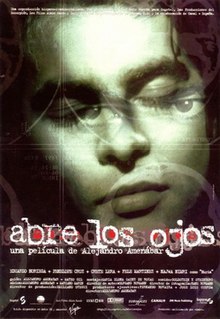
James Mooney: "Epistemology: Dreams and Demons -- Abre los ojos (Open your eyes)"

Epistemology: Dreams and Demons -- Abre los ojos (Open your eyes)
by James Mooney
Film and Philosophy


My aim here is to examine the arguments of French philosopher René Descartes (1596-1650) through the contemporary viewfinder of Alejandro Amenábar’s Abre los Ojos (1997). The intention, however, is not to use the film as a mere vehicle for conveying Descartes’ thought, but rather to consider whether the particular context that Amenábar provides, and the nature of film itself, can enhance our understanding and and provide fresh insight into the issues that Descartes raises.

Descartes is writing at a time of scientific revolution and upheaval – many doctrines which have hitherto been accepted as most certain have been overturned and, as such, he is struck by the instability and unreliability of scientific ‘knowledge’. In his First Meditation, Descartes aims to sweep away all of his previously held opinions and start afresh. Descartes’ ‘method of doubt’ entails that if anything can be doubted, however slightly, then we are to treat it as if it is manifestly false and reject it outright. It is not, however, necessary that we subject each and every one of our opinions to this hyperbolic (exaggerated) doubt, as this would be a Sisyphean task. Rather, Descartes aims to test the ‘foundations’ of what we claim to know – ‘as the removal from below of the foundation necessarily involves the downfall of the whole edifice’.

Descartes’ claim is that one of these foundations is the senses – that is to say, if we can cast any doubt whatsoever on the reliability of the senses then we should reject as false whatever we learn from them:

All that I have, up to this moment, accepted as possessed of the highest truth and certainty, I received either from or through the senses. I observed, however, that these sometimes misled us; and it is the part of prudence not to place absolute confidence in that by which we have even once been deceived.


After briefly considering optical illusions and madness, Descartes goes on to provide one of the most famous arguments in philosophy: the dream hypothesis. What Descartes hopes to establish via this argument is that, given any particular experience, we can never know that that experience is not a dream.

To Read the Rest of the Essay


Thursday, August 9, 2012

James Zborowski: The Dark Knight Rises

The Dark Knight Rises
by James Zborowski
Alternate Takes


...

Near the beginning of The Dark Knight Rises, we learn that we are rejoining Gotham City’s storyworld eight years after the events shown in The Dark Knight (meaning that roughly twice as much time has elapsed in the world on that side of the screen as in the one on this). At the end of that film, we saw Batman (Christian Bale) vow to Commissioner Gordon (Gary Oldman) that he would take the blame for the murders committed by Harvey Dent (Aaron Eckhart), the city’s one-time ‘White Knight’ politician driven to the dark side by the Joker (Heath Ledger). Here is Batman’s justification for what he proposes:

‘They must never know what he did. Gotham needs its true hero. You either die a hero, or you live long enough to see yourself become the villain. I can do those things, because I’m not a hero, not like Dent. I killed those people. That’s what I can be. [...] Sometimes the truth isn’t good enough. Sometimes people deserve more. Sometimes people deserve to have their faith rewarded.’


In a recent feature published on this site, John Bleasdale suggests that superhero movies ‘are almost fundamentally bound to be mendacious and reactionary.’ He cites the conclusion of The Dark Knight as ‘evidence [of] a distrust in society’:

‘In The Dark Knight, Batman conspires with Commissioner Gordon to cover up Harvey Dent’s crime, laying the blame on Batman. Why? Because the people need to be protected from the truth, we are solemnly told in the film’s final moments, via a child. But, again, why?’


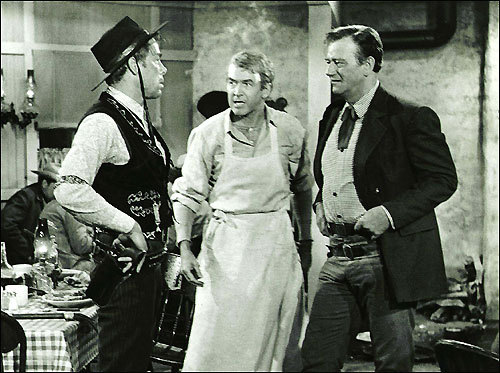
One way of answering this question is provided by an intriguing recent book written by Robert B Pippin, a professor of philosophy, entitled Hollywood Westerns and American Myth: The Importance of Howard Hawks and John Ford for Political Philosophy. One of the films that Pippin examines is John Ford’s great Western The Man Who Shot Liberty Valance (1962). In that film, John Wayne’s cowboy character Tom Doniphon shoots dead the murderous dandy Liberty Valance (Lee Marvin), but he lets the world believe that Eastern lawyer Ransom Stoddard (James Stewart) was the man who fired the fatal bullet. Ranse learns the truth shortly after the event but, with a little convincing from Tom, goes along with the story (which becomes a legend), and builds a long and successful political career on the basis of his false reputation as the man who shot Liberty Valance. When, towards the end of the film, Ranse tells the truth to the reporters at the newspaper of the town where the events occurred, the editor decides to consign the notes to the flames. Like Batman, he offers words that suggest, somewhat cryptically, what value there might be in perpetuating an untruth: ‘This is the West, sir. When the legend becomes fact, print the legend.’

Pippin’s interpretation of Liberty Valance is conscious of the fact that in most Westerns (and arguably, all great Westerns), what is at stake is never simply violence, but the meaning of violence - which is rarely simple. More important than the fact of Liberty Valance’s death is the meaning of this fact, which depends crucially on who killed him. By posing as the man who shot Liberty Valance, Ranse appears to synthesise two sets of qualities which are seen as valuable, but which are rarely found together in one person. As Dutton Peabody, Ranse’s most eloquent advocate at a political rally, tells the gathered crowd:

“He is a man who came to us not packing a gun, but carrying instead a bag of law books. Yes! He is a lawyer. And a teacher! The first west of the rosy buttes. But more important! He is a man who has come to be known throughout this territory, in the last few weeks, as a great champion of law and order!”


We see a similar thing going on in relation to Harvey Dent in The Dark Knight when (in a slightly hokey passage) he disarms a man who has managed to smuggle a gun into a criminal trial and barely stops to draw breath before continuing his display of legal brilliance. As Richard Dyer’s foundational work on film stardom demonstrates, the near-‘magical’ synthesis of the contradictory demands of a given culture is one very compelling way of explaining that elusive phenomenon called ‘charisma’.

In The Man Who Shot Liberty Valance, the death of Valance (or perhaps one should say, of Liberty) is shown to pave the way for the establishment of the rule of law and order, creating, eventually, a clean and prosperous town where, to quote another classical Hollywood Western, to which we shall return, a decent woman feels safe walking down the street. Robert Pippin has this to say about why it is crucial that it be believed that Liberty Valance was killed not by tough, self-reliant Westerner Tom Doniphon but Eastern attorney-at-law Ransom Stoddard:

‘A victory over Liberty Valance […] by Tom Doniphon would be just one more episode in a cycle of violence, revenge and intimidation. Valance must be killed by a representative of a new order; his death must mean that. So since Tom is unseen and quickly vanishes, everybody can think that Ransom Stoddard killed Valance and so can distinguish this act of violence from a personal one by associating it with Ranse’s ideals, can believe that the rule of law and democracy triumphed. Violence before there is law is unavoidably lawless, but if it is for the sake of law the paradox can be lessened if not eliminated.’


The legend of the man who shot Liberty Valance is used to help found a community based on values of property ownership, rule by law, and so on. Returning to The Dark Knight Rises: what is the legend of Harvey Dent used for? During Commissioner Gordon’s speech to mark ‘Harvey Dent Day’ (a public holiday - for Gotham City at least) he makes reference to the ‘Harvey Dent Act’. Although the details of this piece of legislation are never clarified, what does become clear is that it has extended the powers of the police, and been instrumental in ‘cleaning up the streets’ of Gotham. That is, this particular ‘champion of law and order’ is being used to shore up not liberal democracy, but something edging towards a police state.

The film’s attitude towards this (as towards many other things) is not one hundred per cent clear. Gary Oldman’s Gordon is unfailingly dignified, and his competence and fairness make it virtually impossible to imagine him arresting an innocent person. He expresses misgivings over his actions, but these misgivings seem to relate more to the lie behind the Harvey Dent Act, rather than what the Act has achieved. An analogous problem underpins another moment in the film, when Bruce attempts to justify his holding of extra-legal supergadgets and his withholding of them from others by declaring that ‘one man’s tool is another man’s weapon’. In both cases, the characters seem to believe that it is OK that these laws or weapons of mass destruction exist, as long as you have the right people in charge of them. Or the right country, perhaps: in this attitude to jurisdiction and weaponry, we can see an echo of American exceptionalism. It is a viewpoint that the film does not distance itself from, and therefore might be taken to tacitly endorse.

To Read the Rest of the Essay

Saturday, July 21, 2012

Robert Farrow: The Wicker Man -- Games of truth, anthropology, and the death of ‘man’

The Wicker Man: Games of truth, anthropology, and the death of ‘man’
by Robert Farrow
Metaphilm


The Wicker Man, a cult classic of 1970s British cinema, portrays the investigation of an authoritarian police officer (played by Edward Woodward) into the mysterious disappearance of a young girl in the remote Scottish island of Summerisle. It becomes apparent that the islanders observe various ancient pagan traditions, and Sgt. Howie—a committed Christian—becomes increasingly suspicious of them. Eventually, he comes to suspect that she is somewhere imprisoned, earmarked as a human sacrifice for the Mayday festival of Beltane.

As the mystery unfolds, Howie comes to realizes the awful truth: the missing girl was a mystery fabricated in order to lure him to Summerisle, and it is in fact he who is to be burnt alive in the Wicker Man as an offering to the renewed cult of the old gods. This sinister ending has ensured this film a place in the annals of horror despite its divergence from the tropes of most horror films of the 1970s. The Wicker Man presents no bogeymen, no vampires, and no sinister music; its ending is all the more shocking, in fact, for the twee charm of the villagers and the folk-music score, which lead the audience into a false state of complacency that mirrors Sgt. Howie’s own vulnerability. And in a further departure from other examples of the genre, the antagonists are in no way demonized.

So, if The Wicker Man breaks so many of the genre rules, why is it such an unsettling film? One answer is illuminated by the complex matrices of truth, power, and knowledge made familiar by the French historian and philosopher, Michel Foucault: The Wicker Man presents us with an alarm call to wake us from “anthropological sleep,” and to tear down and burn our own false conceptions of “man.”

Foucault, a noted critic of the social sciences, rejected all positive notions of objectivity and human nature. For Foucault, we exist trapped within a kind of postmodern labyrinth (or “archive”), where truths are relative to the societies and practices that develop them. This is not a facile cultural relativism. Instead, we are invited to understand truths as problematized, colored by the contexts and subjects that produce them. The power structures that (so to speak) restrain us are also what makes our freedom possible, conditioning our thought at a collective, unconscious level.

Foucault’s own diagnosis of the present took the form of investigations into (often obscure) historical documents that aimed at exposing the implicit “truths” that underlie social practices and norms, thereby supporting his position as a thinker of social and historical relativity. As his work developed, it became clear that the driving force behind his work was an interest in how senses of identity are formed when the self is essentially a product of certain power/knowledge relationships, discourses, and games of truth.

Foucault’s early works—and The Wicker Man—offer this message: identity is best understood as an amorphous, shifting fiction, an “anthropology” that is to be exposed. When the full import of this becomes understood, the effect is rather more unsettling than the fraternity gorefests that typify many later horror films.

To Read the Rest of the Essay