Showing posts with label TV. Show all posts
Showing posts with label TV. Show all posts
Tuesday, October 29, 2013

Wednesday, September 4, 2013
Nick Schager - Stylized Realism: The Cinematography of Breaking Bad, Season 1
Stylized Realism: The Cinematography of Breaking Bad, Season 1
by Nick Schager
Roger Ebert

While cinematographer Michael Slovis has, since he came aboard in season two, helped define the visual signatures of "Breaking Bad," the show's aesthetics were firmly established from the beginning. Over the course of its maiden seven episodes, AMC's hit series set itself apart from much of its small-screen competition via a distinctive and daring look, one whose bracing realism evolved to include ever-more-inventive stylization.
That development grew out of its narrative, which details high-school chemistry teacher Walter White (Bryan Cranston) entering the criminal world of meth production and sales alongside former student-turned-dealer Jesse Pinkman (Aaron Paul). Like its protagonist, "Breaking Bad"'s style is one that regularly segues between the mundane and the outrageous, charting its various characters' emotional, psychological and logistical circumstances through an exciting blend of anxious handheld camerawork, tense spatial compositions, evocative visual angles, and vibrant use of shadow and light.
Those hallmarks are present from the pilot, in which Walt, shortly after his 50th birthday, learns that he has lung cancer and strikes up a meth-cooking partnership with Jesse. Directed by creator Vince Gilligan and shot—on film, per the show's custom—by John Toll ("Braveheart," "The Thin Red Line"), this first episode sets up much of the show's formal template, including a palette of burned-in colors, textured chiaroscuro, frequent use of natural (or natural-looking) light, and cinematography that's alternately tranquil and edgy.
It's an aesthetic founded on contrasts, and mirrors both Walt's own state of mind and his literal caught-between-different-worlds situation. When Walt and Jesse first meet in the pilot, their faces are half masked in shadow—an expression of their good/bad duality, as well as their two-sides-of-the-same-coin kinship. And when Walt confronts bullies mocking his cerebral palsy-afflicted son Walt Jr. (RJ Mitte), Gilligan and Toll utilize a series of straightforward camera set-ups to highlight the humdrum ordinariness of the locale as a means of making Walt's ensuing violent outburst all the more shocking.
Season one's first episodes are typified by the deft interplay between visual stasis and bumpiness. While there's a constant restlessness to "Breaking Bad"'s handheld cinematography, more static compositions often reflect a given on-screen character's confidence, power or suppressed rage. There's virtually no movement when Walt—newly empowered by getting away with murder—potently pounces on Skylar (Anna Gunn) in bed at the close of episode one, or when an angry Walt patiently sits through his relatives' pleas and outbursts, and then asserts his own agency, during episode five's intervention. The stationary camera is one of control.
To Read the Rest and To Watch the Video
by Nick Schager
Roger Ebert
While cinematographer Michael Slovis has, since he came aboard in season two, helped define the visual signatures of "Breaking Bad," the show's aesthetics were firmly established from the beginning. Over the course of its maiden seven episodes, AMC's hit series set itself apart from much of its small-screen competition via a distinctive and daring look, one whose bracing realism evolved to include ever-more-inventive stylization.
That development grew out of its narrative, which details high-school chemistry teacher Walter White (Bryan Cranston) entering the criminal world of meth production and sales alongside former student-turned-dealer Jesse Pinkman (Aaron Paul). Like its protagonist, "Breaking Bad"'s style is one that regularly segues between the mundane and the outrageous, charting its various characters' emotional, psychological and logistical circumstances through an exciting blend of anxious handheld camerawork, tense spatial compositions, evocative visual angles, and vibrant use of shadow and light.
Those hallmarks are present from the pilot, in which Walt, shortly after his 50th birthday, learns that he has lung cancer and strikes up a meth-cooking partnership with Jesse. Directed by creator Vince Gilligan and shot—on film, per the show's custom—by John Toll ("Braveheart," "The Thin Red Line"), this first episode sets up much of the show's formal template, including a palette of burned-in colors, textured chiaroscuro, frequent use of natural (or natural-looking) light, and cinematography that's alternately tranquil and edgy.
It's an aesthetic founded on contrasts, and mirrors both Walt's own state of mind and his literal caught-between-different-worlds situation. When Walt and Jesse first meet in the pilot, their faces are half masked in shadow—an expression of their good/bad duality, as well as their two-sides-of-the-same-coin kinship. And when Walt confronts bullies mocking his cerebral palsy-afflicted son Walt Jr. (RJ Mitte), Gilligan and Toll utilize a series of straightforward camera set-ups to highlight the humdrum ordinariness of the locale as a means of making Walt's ensuing violent outburst all the more shocking.
Season one's first episodes are typified by the deft interplay between visual stasis and bumpiness. While there's a constant restlessness to "Breaking Bad"'s handheld cinematography, more static compositions often reflect a given on-screen character's confidence, power or suppressed rage. There's virtually no movement when Walt—newly empowered by getting away with murder—potently pounces on Skylar (Anna Gunn) in bed at the close of episode one, or when an angry Walt patiently sits through his relatives' pleas and outbursts, and then asserts his own agency, during episode five's intervention. The stationary camera is one of control.
To Read the Rest and To Watch the Video
Tuesday, August 13, 2013
Christina Marie Newland -- Satirical Excess and Empty Vessels: Martin Scorsese's The King of Comedy
Satirical Excess and Empty Vessels: Martin Scorsese's The King of Comedy
by Christina Marie Newland
Bright Lights Film Journal
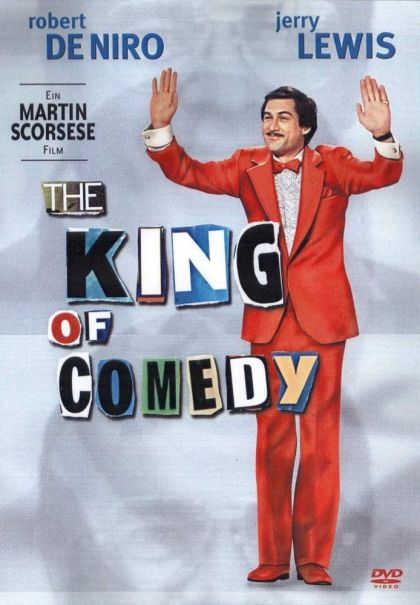
Robert De Niro as delusional acolyte to the stars, Rupert Pupkin, and Jerry Lewis as a mirror-image of his own talk-show comedian persona, Jerry Langford. Sandra Bernhard plays a supporting role as another hyperactive super-fan, Masha. The King of Comedy, written by Paul D. Zimmerman, does not resemble a typical Scorsese picture; the camera is pinned in place instead of roving around. This is seemingly to facilitate our unflinching stare into the lives and behaviour of the characters, when often we want nothing more than to look away. Scorsese's films usually teem with passion and activity, but Pupkin's world is more sedate, colder. Scorsese's go-to director of photography, Michael Chapman, turned down work on the film because of the director's choice of style: "His plan was to use largely empty sets, flat lighting, and old-fashioned box-like framing" (Rausch 102). Essentially, it was filmed to look like television.
Scorsese once again deals with an obsessional pursuit, a common theme in his work. Rupert Pupkin's obsession is particularly emblematic of the twenty-first century; it extends beyond the traditional pursuits of money and power, pursuing instead something more fleeting and all too modern: fame. More specifically, fame for fame's sake: fame predicated not on riches nor on talent but merely on the desire to be seen and idolized. This desire is what consumes De Niro's Rupert, a twitchy, perennially polite wannabe comedian who refuses to take no for answer when he meets his idol, Jerry Langford. He misunderstands Langford and his entourage's continual brush-offs, revealing his desire not merely to be around Jerry but to emulate him and eventually usurp him. He begs Langford for a guest spot on his hit television show, fantasises about Langford deferring to his ego, and eventually becomes deluded enough to appear uninvited at the celebrity's country house, only to be humiliatingly turned away in front of his crush, Rita (Diahnne Abbott). He and Masha then decide to take matters into their own hands and kidnap Jerry with a toy gun, demanding a spot on the show in exchange for Jerry's safety. Rupert is then allowed to perform his comedy routine on television. With startling irony, Rupert's bid for fame works, and although he is sentenced to prison for kidnapping, he is given a short sentence and comes out of prison famous, writing a best-selling book and receiving his own television show. The ironic conclusion to the film emphasizes its satirical look at the American obsession with empty fame, owing some debt to the 1976 Sidney Lumet film, Network.
The rise of consumerism and tabloid celebrity culture in the late 1970s and '80s is dealt with in both Network and The King of Comedy, but they become uncannily more accurate as time has passed, predicting the rise of reality television, social networking, and the disposable celebrity. Rupert simply decides, in the same aggressive manner as his Scorsesean compatriots, that his 15 minutes will be gained at any and all costs. The overnight celebrity becomes the new fixation of the American dream. The King of Comedy was poorly received, both by audiences and critics. "Unlike the context for Scorsese's earlier films, by the time of The King of Comedy, there was no longer an American film culture that encouraged or even allowed for challenging work" (Raymond 30). Considering the context of 1980s Hollywood and its "Reaganite entertainment" — escapist, often anti-intellectual blockbusters that provided happy endings and visceral enjoyment, it is easy to understand why the vulnerability and discomfort in The King of Comedy missed the mark with audiences. The overall cost of the film was recorded at $20 million; its domestic gross was roughly $2.5 million. It didn't do the film any favors that it was marketed as an outright comedy; it certainly is not that, though it has many darkly comic moments. Critics were more generous than audiences, but also offered some intriguing clues as to why the film flopped. Roger Ebert, for example (typically a Scorsese enthusiast), called the movie, "unsatisfying," "frustrating," and an "emotional desert," though he goes on to say that it is not by any means a "bad movie." Pauline Kael called it precisely that, going on to say that it gave her "cold creeps" and that it was "empty" (458). It is interesting that there seems to be a level of discomfort with both critics about the feelings the film evokes; both rightly refer to its unexpected coldness and the emotional distance of its characters, but another aspect also seems at play, one that William Ian Miller suggests: "the unfunny comedian humiliates himself and one of the sure indications that you are watching someone humiliate himself is that you will be embarrassed by the display" (329).
To Read the Rest

by Christina Marie Newland
Bright Lights Film Journal
Robert De Niro as delusional acolyte to the stars, Rupert Pupkin, and Jerry Lewis as a mirror-image of his own talk-show comedian persona, Jerry Langford. Sandra Bernhard plays a supporting role as another hyperactive super-fan, Masha. The King of Comedy, written by Paul D. Zimmerman, does not resemble a typical Scorsese picture; the camera is pinned in place instead of roving around. This is seemingly to facilitate our unflinching stare into the lives and behaviour of the characters, when often we want nothing more than to look away. Scorsese's films usually teem with passion and activity, but Pupkin's world is more sedate, colder. Scorsese's go-to director of photography, Michael Chapman, turned down work on the film because of the director's choice of style: "His plan was to use largely empty sets, flat lighting, and old-fashioned box-like framing" (Rausch 102). Essentially, it was filmed to look like television.
Scorsese once again deals with an obsessional pursuit, a common theme in his work. Rupert Pupkin's obsession is particularly emblematic of the twenty-first century; it extends beyond the traditional pursuits of money and power, pursuing instead something more fleeting and all too modern: fame. More specifically, fame for fame's sake: fame predicated not on riches nor on talent but merely on the desire to be seen and idolized. This desire is what consumes De Niro's Rupert, a twitchy, perennially polite wannabe comedian who refuses to take no for answer when he meets his idol, Jerry Langford. He misunderstands Langford and his entourage's continual brush-offs, revealing his desire not merely to be around Jerry but to emulate him and eventually usurp him. He begs Langford for a guest spot on his hit television show, fantasises about Langford deferring to his ego, and eventually becomes deluded enough to appear uninvited at the celebrity's country house, only to be humiliatingly turned away in front of his crush, Rita (Diahnne Abbott). He and Masha then decide to take matters into their own hands and kidnap Jerry with a toy gun, demanding a spot on the show in exchange for Jerry's safety. Rupert is then allowed to perform his comedy routine on television. With startling irony, Rupert's bid for fame works, and although he is sentenced to prison for kidnapping, he is given a short sentence and comes out of prison famous, writing a best-selling book and receiving his own television show. The ironic conclusion to the film emphasizes its satirical look at the American obsession with empty fame, owing some debt to the 1976 Sidney Lumet film, Network.
The rise of consumerism and tabloid celebrity culture in the late 1970s and '80s is dealt with in both Network and The King of Comedy, but they become uncannily more accurate as time has passed, predicting the rise of reality television, social networking, and the disposable celebrity. Rupert simply decides, in the same aggressive manner as his Scorsesean compatriots, that his 15 minutes will be gained at any and all costs. The overnight celebrity becomes the new fixation of the American dream. The King of Comedy was poorly received, both by audiences and critics. "Unlike the context for Scorsese's earlier films, by the time of The King of Comedy, there was no longer an American film culture that encouraged or even allowed for challenging work" (Raymond 30). Considering the context of 1980s Hollywood and its "Reaganite entertainment" — escapist, often anti-intellectual blockbusters that provided happy endings and visceral enjoyment, it is easy to understand why the vulnerability and discomfort in The King of Comedy missed the mark with audiences. The overall cost of the film was recorded at $20 million; its domestic gross was roughly $2.5 million. It didn't do the film any favors that it was marketed as an outright comedy; it certainly is not that, though it has many darkly comic moments. Critics were more generous than audiences, but also offered some intriguing clues as to why the film flopped. Roger Ebert, for example (typically a Scorsese enthusiast), called the movie, "unsatisfying," "frustrating," and an "emotional desert," though he goes on to say that it is not by any means a "bad movie." Pauline Kael called it precisely that, going on to say that it gave her "cold creeps" and that it was "empty" (458). It is interesting that there seems to be a level of discomfort with both critics about the feelings the film evokes; both rightly refer to its unexpected coldness and the emotional distance of its characters, but another aspect also seems at play, one that William Ian Miller suggests: "the unfunny comedian humiliates himself and one of the sure indications that you are watching someone humiliate himself is that you will be embarrassed by the display" (329).
To Read the Rest
Wednesday, July 10, 2013
Tag Gallagher -- Eclipse Series 14: Rossellini’s History Films—Renaissance and Enlightenment
Eclipse Series 14: Rossellini’s History Films—Renaissance and Enlightenment
By Tag Gallagher
Current

RELIVING HISTORY
“At a certain point, I felt so useless!” said Roberto Rossellini. Never before had technology accomplished such miracles. Yet everywhere the world was confronting crises. Never before had civilization so needed us all to understand the great problems—food, water, energy. Yet everywhere, especially in contemporary art, there was nothing but cruelty and complaining. The mass media, Rossellini charged, were accomplishing “a sort of cretinization of adults.” Rather than illuminate people, their great effort seemed to be to subjugate them, “to create slaves who think they’re free.”
And Rossellini himself? He felt useless.
“By 1958,” said François Truffaut, “Rossellini was well aware that his films were not like those of other people, but he very sensibly decided that it was the others who ought to change.”
“There doesn’t exist a technique for grasping reality,” Rossellini insisted. “Only a moral position can do so. The camera’s a ballpoint pen, an imbecile; it’s not worth anything if you don’t have anything to say. To discuss cinema today in strictly aesthetic terms is arid and useless. There’s only a single question: how to awaken consciences? ‘Man is born free, and everywhere he is in chains,’ said Rousseau.”
He called a news conference and announced, “Cinema is dead.”
“He was as excited as a boy about television,” said director Ermanno Olmi, “but mostly he was fired up about putting history into images, the history of humanity, the facts, the fundamental and significant moments . . . And he told me about this history of iron, of how it had changed people’s economy and life.”
“A guy who starts filming the history of iron does look ridiculous,” Rossellini admitted.
Ridiculous or not, Rossellini’s efforts, from 1959 until halted by death in 1977, would yield some forty-two hours of “didactic” movies, mostly for television. Audiences would judge them boring, historians deficient, and critics unappealing; their emotional and artistic riches have still only begun to be acknowledged beyond a devout coterie. Even Truffaut told Rossellini he was wasting his time. And Rossellini, all the while denying (with patent hypocrisy) that he was trying to “make art,” would go ahead, determined to do what he could to “revise the whole conception of the universe,” as he put it.
Rossellini outlined a vast plan not to recount but to relive the history of human knowledge in hundreds of movies. “The slightest act of daily life contains extraordinary dramatic power,” he said. He wanted to send film crews all over the world. He could not understand why other filmmakers, Fellini in particular, were not willing to drop their own projects and undertake his instead. “The world should expect something from intellectuals and artists, a clarifying function, a compass,” Rossellini argued, not just navel-gazing.
To finance his project, Rossellini sought out corporations and appealed to the educational obligations of state television in Italy, France, Spain, Germany, Romania, and Egypt.
To say, as many have, that these movies lack acting, psychoanalysis, Murnau-like expressionism, overwhelming emotions, and the richest cinematic art is akin to closing one’s eyes at high noon and claiming the sun no longer exists.
THE AGE OF THE MEDICI
Said Rossellini around 1973: “I no longer consider myself to be an artist of the cinema, one of that godlike coterie of directors producing masterpieces to stun the world. I now see myself as scientist and craftsman. For me, Shakespeare and Rembrandt and Matisse were also scientists. The cinema must become scientific, it must learn to dispense knowledge and awareness.”
Accordingly, The Age of the Medici, made during the productive period of 1970–73, presents Renaissance art as an instrument of research rather than self-expression. Rossellini is attacking conventional attitudes toward art. His quattrocento Florentines admire Brunelleschi’s cathedral dome not for its beauty, like tourists today, but as a materialization of Brunelleschi’s wonderful calculations, which are wonderful because they show how intelligence can raise the level of human civilization. Art is politics. Obviously, too, it is money—“the root of all civilization,” according to Will Durant, an incomprehensible miracle, according to Rossellini: witness how the music chirps with delight at the apparition of a bag of gold.
A banker and an art theorist are the heroes of Rossellini’s movie: Cosimo de’ Medici (1389–1464) and Leon Battista Alberti (1404–72).
Is Rossellini’s reliving of Florence accurate? Of course not; how could it be? It is easy in a book to write, “Cosimo de’ Medici greeted the Venetian ambassador.” It is something else to provide the clothing, room, furnishings, ambience, lighting, not to mention the words, vocal tones, comportment, emotions, and actual bodies of Cosimo and the ambassador. All this must inevitably be inaccurate in a movie. What were people like then? What was Florence like? We can only imagine, like Walt Disney, Rossellini, or even Giotto.
To Read the Rest

By Tag Gallagher
Current
RELIVING HISTORY
“At a certain point, I felt so useless!” said Roberto Rossellini. Never before had technology accomplished such miracles. Yet everywhere the world was confronting crises. Never before had civilization so needed us all to understand the great problems—food, water, energy. Yet everywhere, especially in contemporary art, there was nothing but cruelty and complaining. The mass media, Rossellini charged, were accomplishing “a sort of cretinization of adults.” Rather than illuminate people, their great effort seemed to be to subjugate them, “to create slaves who think they’re free.”
And Rossellini himself? He felt useless.
“By 1958,” said François Truffaut, “Rossellini was well aware that his films were not like those of other people, but he very sensibly decided that it was the others who ought to change.”
“There doesn’t exist a technique for grasping reality,” Rossellini insisted. “Only a moral position can do so. The camera’s a ballpoint pen, an imbecile; it’s not worth anything if you don’t have anything to say. To discuss cinema today in strictly aesthetic terms is arid and useless. There’s only a single question: how to awaken consciences? ‘Man is born free, and everywhere he is in chains,’ said Rousseau.”
He called a news conference and announced, “Cinema is dead.”
“He was as excited as a boy about television,” said director Ermanno Olmi, “but mostly he was fired up about putting history into images, the history of humanity, the facts, the fundamental and significant moments . . . And he told me about this history of iron, of how it had changed people’s economy and life.”
“A guy who starts filming the history of iron does look ridiculous,” Rossellini admitted.
Ridiculous or not, Rossellini’s efforts, from 1959 until halted by death in 1977, would yield some forty-two hours of “didactic” movies, mostly for television. Audiences would judge them boring, historians deficient, and critics unappealing; their emotional and artistic riches have still only begun to be acknowledged beyond a devout coterie. Even Truffaut told Rossellini he was wasting his time. And Rossellini, all the while denying (with patent hypocrisy) that he was trying to “make art,” would go ahead, determined to do what he could to “revise the whole conception of the universe,” as he put it.
Rossellini outlined a vast plan not to recount but to relive the history of human knowledge in hundreds of movies. “The slightest act of daily life contains extraordinary dramatic power,” he said. He wanted to send film crews all over the world. He could not understand why other filmmakers, Fellini in particular, were not willing to drop their own projects and undertake his instead. “The world should expect something from intellectuals and artists, a clarifying function, a compass,” Rossellini argued, not just navel-gazing.
To finance his project, Rossellini sought out corporations and appealed to the educational obligations of state television in Italy, France, Spain, Germany, Romania, and Egypt.
To say, as many have, that these movies lack acting, psychoanalysis, Murnau-like expressionism, overwhelming emotions, and the richest cinematic art is akin to closing one’s eyes at high noon and claiming the sun no longer exists.
THE AGE OF THE MEDICI
Said Rossellini around 1973: “I no longer consider myself to be an artist of the cinema, one of that godlike coterie of directors producing masterpieces to stun the world. I now see myself as scientist and craftsman. For me, Shakespeare and Rembrandt and Matisse were also scientists. The cinema must become scientific, it must learn to dispense knowledge and awareness.”
Accordingly, The Age of the Medici, made during the productive period of 1970–73, presents Renaissance art as an instrument of research rather than self-expression. Rossellini is attacking conventional attitudes toward art. His quattrocento Florentines admire Brunelleschi’s cathedral dome not for its beauty, like tourists today, but as a materialization of Brunelleschi’s wonderful calculations, which are wonderful because they show how intelligence can raise the level of human civilization. Art is politics. Obviously, too, it is money—“the root of all civilization,” according to Will Durant, an incomprehensible miracle, according to Rossellini: witness how the music chirps with delight at the apparition of a bag of gold.
A banker and an art theorist are the heroes of Rossellini’s movie: Cosimo de’ Medici (1389–1464) and Leon Battista Alberti (1404–72).
Is Rossellini’s reliving of Florence accurate? Of course not; how could it be? It is easy in a book to write, “Cosimo de’ Medici greeted the Venetian ambassador.” It is something else to provide the clothing, room, furnishings, ambience, lighting, not to mention the words, vocal tones, comportment, emotions, and actual bodies of Cosimo and the ambassador. All this must inevitably be inaccurate in a movie. What were people like then? What was Florence like? We can only imagine, like Walt Disney, Rossellini, or even Giotto.
To Read the Rest
Sunday, February 10, 2013
Little Atoms Interviews of Journalist/Filmmaker Adam Curtis
"Adam Curtis is a producer, writer and director of television documentaries such as Pandora's Box, The Mayfair Set, The Century of the Self, The Power of Nightmares and The Trap. Curtis' programs, though always about serious issues, maintain a sense of tongue-in-cheek humor and are characteristic in their extensive use of archive footage. In his film making, Curtis strives to find meaningful connections between historical situations and often focuses on the impact different ideologies have had on modern society. Adam's latest series, All Watched Over by Machines of Loving Grace..."
Link to the Two Interviews at Little Atoms
More resources:
Pt 1 of the Little Atoms Interview explores his earlier documentaries, including his influential The Power of Nightmares

The Power of Nightmares: The Rise of the Politics of Fear
Is the threat of radical Islamism as a massive sinister organised force of destruction, specifically in the form of al-Qaeda, a myth perpetrated by politicians in many countries—and particularly American Neo-Conservatives—in an attempt to ‘unite and inspire’ people following the failure of earlier, more utopian ideologies?
To Watch the 3 Part Series
Part 1 — Baby It’s Cold Outside
The first part of the series explains the origin of Islamism and Neo-Conservatism and draws the parallels between the two of their “optimistic visions to change the world”. It shows Egyptian civil servant Sayyid Qutb, depicted as the founder of modern Islamist thought, visiting the US to learn about the education system, but becoming disgusted with what he saw as a corruption of morals and virtues in western society through consumerism. When he returns to Egypt, he is disturbed by westernisation and becomes convinced that in order to save society it must be completely restructured along the lines of Islamic law while still using western technology. He also becomes convinced that this can only be accomplished through the use of an elite “vanguard” to lead a revolution against the established order. Qutb becomes a leader of the Muslim Brotherhood and, after being tortured in one of Nasser’s jails, comes to believe that western-influenced leaders can justly be killed for the sake of removing their corruption. Qutb is executed in 1966, but he influences the future mentor of Osama bin Laden, Ayman al-Zawahiri, to start his own secret Islamist group. Inspired by the 1979 Iranian revolution, Zawahiri and his allies assassinate Egyptian president Anwar Al Sadat, in 1981, in hopes of starting their own revolution. The revolution does not materialise and Zawahiri comes to believe that the majority of Muslims have been corrupted not only by their western-inspired leaders, but Muslims themselves have been affected by jahilliyah and thus both may be legitimate targets of violence if they do not join him. They continued to have the belief that a vanguard was necessary to rise up and overthrow the corrupt regime and replace with a pure Islamist state. At the same time in the United States, a group of disillusioned liberals, including Irving Kristol and Paul Wolfowitz, look to the political thinking of Leo Strauss after the perceived failure of President Johnson’s “Great Society”. They come to the conclusion that the emphasis on individual liberty was the undoing of the plan. They envisioned restructuring America by uniting the American people against a common evil, and set about creating a mythical enemy. These factions, the Neo-Conservatives, came to power under the Reagan administration, with their allies Dick Cheney and Donald Rumsfeld, and work to unite the United States in fear of the Soviet Union. The Neo-Conservatives allege the Soviet Union is not following the terms of disarmament between the two countries, and, with the investigation of “Team B”, they accumulate a case to prove this with dubious evidence and methods…
Part 2 — The Phantom Victory
The Soviet invasion of Afghanistan on 25 December 1979 gives a common cause to an extraordinary alliance of radical Islamists in Afghanistan and around the world and to the neo-conservatives in the US, as a key battleground of the Cold War. As the United States provides funding and arms–including even Stinger missiles capable of shooting down Soviet helicopters–to Islamic Mujahideen fighters who would fire them, a young wealthy Saudi called Osama Bin Laden is among the many foreigners drawn to Afghanistan. When the Soviets eventually pull out and when the Eastern Bloc begins to collapse in the late 1980s, both groups falsely believe they are the primary architects of the “Evil Empire’s” defeat. Back in America, the Neo-Conservatives’ aspirations to continue to use the United States military power for further destruction of evils are thrown off track by the ascent of George H. W. Bush to the presidency, followed by the 1992 election of Bill Clinton leaving them out of power. The Neo-Conservatives, with their conservative Christian allies, attempt to ‘demonise’ Clinton throughout his presidency with various real and fabricated stories of corruption and immorality, but to their disappointment, the American people do not turn against Clinton. The Islamist attempts at revolution end in massive bloodshed, leaving the Islamists without popular support. Zawahiri and bin Laden flee to the sufficiently safe Afghanistan and declare a new strategy; to fight Western-inspired moral decay they must deal a blow to its source — the United States.
Part 3 — The Shadows In The Cave
This final episode addresses the actual rise of al-Qaeda, in particular by examining the United States’ role in its creation: After their failed revolutions, bin Laden and Zawahiri had little or no popular support, let alone a serious complex organisation of terrorists, and were dependent upon independent operatives to carry out their new call for jihad. In order to prosecute bin Laden for the 1998 US embassy bombings, US prosecutors had to prove he was the head of a criminal organisation responsible for the bombings. They find a former associate of bin Laden, Jamal al-Fadl, and pay him to testify that bin Laden was the head of a massive terrorist organisation called “al-Qaeda”. With the September 11th attacks, Neo-Conservatives in the new Republican government of George W. Bush use this created concept of an organisation to justify another crusade against a new evil enemy, leading to the launch of the War on Terrorism. But after the American invasion of Afghanistan fails to uproot the alleged terrorist network, the Neo-Conservatives focus inwards, searching unsuccessfully for terrorist sleeper cells in America. They then extend the war on “terror” to a war against general perceived evils with the invasion of Iraq in 2003. The ideas and tactics also spread to the United Kingdom where Tony Blair uses the threat of terrorism to give him a new moral authority. The repercussions of the Neo-Conservative strategy are also explored with an investigation of indefinitely-detained terrorist suspects in Guantanamo Bay, many allegedly taken on the word of the anti-Taliban Northern Alliance without actual investigation on the part of the United States military, and other forms of “pre-emption” against non-existent and unlikely threats made simply on the grounds that the parties involved could later become a threat…
Pt 2 of the Little Atoms Interview above is about his documentary series: All Watched Over by Machines of Loving Grace

All Watched Over By Machines Of Loving Grace is a series about how humans have been colonised by the machines they have built — “Although we don’t realise it, the way we see everything in the world today is through the eyes of the computers.”
To Watch the 3 Part Series
Part 1 — Love and Power
Part one explores the dream that rose up in the 1990s that computers could create a new kind of stable world. They would bring about a new kind global capitalism free of all risk and without the boom and bust of the past. They would also abolish political power and create a new kind of democracy through the internet where millions of individuals would be connected as nodes in cybernetic systems – without hierarchy. The film tells the story of two perfect worlds. One is the small group of disciples around the novelist Ayn Rand in the 1950s. They saw themselves as a prototype for a future society where everyone could follow their own selfish desires. The other is the global utopia that digital entrepreneurs in Silicon Valley set out to create in the 1990s. Many of them were also disciples of Ayn Rand. They believed that the new computer networks would allow the creation of a society where everyone could follow their own desires, yet there would not be anarchy. They were joined by Alan Greenspan who had also been a disciple of Ayn Rand. He became convinced that the computers were creating a new kind of stable capitalism. But the dream of stability in both worlds would be torn apart by the two dynamic human forces – love and power.
Part 2 — The Use and Abuse of Vegetational Concepts
Part two shows how our modern scientific idea of nature, the self-regulating ecosystem, is actually a machine fantasy. It has little to do with the real complexity of nature. It is based on cybernetic ideas that were projected on to nature in the 1950s by ambitious scientists. A static machine theory of order that sees humans, and everything else on the planet, as components–cogs–in a system. But in an age disillusioned with politics, the self-regulating ecosystem has again become the model for utopian ideas of human “self-organising networks”, with dreams of new ways of organising societies without leaders and in global visions of connectivity like the Gaia theory. This powerful idea emerged out of the hippie communes in America in the 1960s, and from counter-culture computer scientists who believed that global webs of computers could liberate the world. But, at the very moment this was happening, the science of ecology discovered that the theory of the self-regulating ecosystem wasn’t true. Instead they found that nature was really dynamic and constantly changing in unpredictable ways. But it was too late, the dream of the self-organising network had by now captured imaginations…
Part 3 — The Monkey in the Machine and the Machine in the Monkey
This episode looks at why popular culture finds this machine vision so beguiling. The film argues it is because all political dreams of changing the world for the better seem to have failed, meaning the retreat into machine-fantasies that say we have no control over our actions because they excuse our failure. At the heart of the film is Bill Hamilton, a scientist. He argued that human behaviour is really guided by codes buried deep within us–a theory later popularised by Richard Dawkins as the “selfish gene”. It said that individual human beings are really just machines whose only job is to make sure the codes are passed on for eternity. This final part begins in 2000 in the jungles of the Congo and Rwanda, where Hamilton is to help prove his dark theories. But all around him the Congo is being torn apart. The film then interweaves the two stories–the strange roots of Hamilton’s theories, and the history of the West’s tortured relationship with the Congo and technology…
Adam Curtis: Journalist and Filmmaker (Dialogic Archive)
Link to the Two Interviews at Little Atoms
More resources:
Pt 1 of the Little Atoms Interview explores his earlier documentaries, including his influential The Power of Nightmares
The Power of Nightmares: The Rise of the Politics of Fear
Is the threat of radical Islamism as a massive sinister organised force of destruction, specifically in the form of al-Qaeda, a myth perpetrated by politicians in many countries—and particularly American Neo-Conservatives—in an attempt to ‘unite and inspire’ people following the failure of earlier, more utopian ideologies?
To Watch the 3 Part Series
Part 1 — Baby It’s Cold Outside
The first part of the series explains the origin of Islamism and Neo-Conservatism and draws the parallels between the two of their “optimistic visions to change the world”. It shows Egyptian civil servant Sayyid Qutb, depicted as the founder of modern Islamist thought, visiting the US to learn about the education system, but becoming disgusted with what he saw as a corruption of morals and virtues in western society through consumerism. When he returns to Egypt, he is disturbed by westernisation and becomes convinced that in order to save society it must be completely restructured along the lines of Islamic law while still using western technology. He also becomes convinced that this can only be accomplished through the use of an elite “vanguard” to lead a revolution against the established order. Qutb becomes a leader of the Muslim Brotherhood and, after being tortured in one of Nasser’s jails, comes to believe that western-influenced leaders can justly be killed for the sake of removing their corruption. Qutb is executed in 1966, but he influences the future mentor of Osama bin Laden, Ayman al-Zawahiri, to start his own secret Islamist group. Inspired by the 1979 Iranian revolution, Zawahiri and his allies assassinate Egyptian president Anwar Al Sadat, in 1981, in hopes of starting their own revolution. The revolution does not materialise and Zawahiri comes to believe that the majority of Muslims have been corrupted not only by their western-inspired leaders, but Muslims themselves have been affected by jahilliyah and thus both may be legitimate targets of violence if they do not join him. They continued to have the belief that a vanguard was necessary to rise up and overthrow the corrupt regime and replace with a pure Islamist state. At the same time in the United States, a group of disillusioned liberals, including Irving Kristol and Paul Wolfowitz, look to the political thinking of Leo Strauss after the perceived failure of President Johnson’s “Great Society”. They come to the conclusion that the emphasis on individual liberty was the undoing of the plan. They envisioned restructuring America by uniting the American people against a common evil, and set about creating a mythical enemy. These factions, the Neo-Conservatives, came to power under the Reagan administration, with their allies Dick Cheney and Donald Rumsfeld, and work to unite the United States in fear of the Soviet Union. The Neo-Conservatives allege the Soviet Union is not following the terms of disarmament between the two countries, and, with the investigation of “Team B”, they accumulate a case to prove this with dubious evidence and methods…
Part 2 — The Phantom Victory
The Soviet invasion of Afghanistan on 25 December 1979 gives a common cause to an extraordinary alliance of radical Islamists in Afghanistan and around the world and to the neo-conservatives in the US, as a key battleground of the Cold War. As the United States provides funding and arms–including even Stinger missiles capable of shooting down Soviet helicopters–to Islamic Mujahideen fighters who would fire them, a young wealthy Saudi called Osama Bin Laden is among the many foreigners drawn to Afghanistan. When the Soviets eventually pull out and when the Eastern Bloc begins to collapse in the late 1980s, both groups falsely believe they are the primary architects of the “Evil Empire’s” defeat. Back in America, the Neo-Conservatives’ aspirations to continue to use the United States military power for further destruction of evils are thrown off track by the ascent of George H. W. Bush to the presidency, followed by the 1992 election of Bill Clinton leaving them out of power. The Neo-Conservatives, with their conservative Christian allies, attempt to ‘demonise’ Clinton throughout his presidency with various real and fabricated stories of corruption and immorality, but to their disappointment, the American people do not turn against Clinton. The Islamist attempts at revolution end in massive bloodshed, leaving the Islamists without popular support. Zawahiri and bin Laden flee to the sufficiently safe Afghanistan and declare a new strategy; to fight Western-inspired moral decay they must deal a blow to its source — the United States.
Part 3 — The Shadows In The Cave
This final episode addresses the actual rise of al-Qaeda, in particular by examining the United States’ role in its creation: After their failed revolutions, bin Laden and Zawahiri had little or no popular support, let alone a serious complex organisation of terrorists, and were dependent upon independent operatives to carry out their new call for jihad. In order to prosecute bin Laden for the 1998 US embassy bombings, US prosecutors had to prove he was the head of a criminal organisation responsible for the bombings. They find a former associate of bin Laden, Jamal al-Fadl, and pay him to testify that bin Laden was the head of a massive terrorist organisation called “al-Qaeda”. With the September 11th attacks, Neo-Conservatives in the new Republican government of George W. Bush use this created concept of an organisation to justify another crusade against a new evil enemy, leading to the launch of the War on Terrorism. But after the American invasion of Afghanistan fails to uproot the alleged terrorist network, the Neo-Conservatives focus inwards, searching unsuccessfully for terrorist sleeper cells in America. They then extend the war on “terror” to a war against general perceived evils with the invasion of Iraq in 2003. The ideas and tactics also spread to the United Kingdom where Tony Blair uses the threat of terrorism to give him a new moral authority. The repercussions of the Neo-Conservative strategy are also explored with an investigation of indefinitely-detained terrorist suspects in Guantanamo Bay, many allegedly taken on the word of the anti-Taliban Northern Alliance without actual investigation on the part of the United States military, and other forms of “pre-emption” against non-existent and unlikely threats made simply on the grounds that the parties involved could later become a threat…
Pt 2 of the Little Atoms Interview above is about his documentary series: All Watched Over by Machines of Loving Grace
All Watched Over By Machines Of Loving Grace is a series about how humans have been colonised by the machines they have built — “Although we don’t realise it, the way we see everything in the world today is through the eyes of the computers.”
To Watch the 3 Part Series
Part 1 — Love and Power
Part one explores the dream that rose up in the 1990s that computers could create a new kind of stable world. They would bring about a new kind global capitalism free of all risk and without the boom and bust of the past. They would also abolish political power and create a new kind of democracy through the internet where millions of individuals would be connected as nodes in cybernetic systems – without hierarchy. The film tells the story of two perfect worlds. One is the small group of disciples around the novelist Ayn Rand in the 1950s. They saw themselves as a prototype for a future society where everyone could follow their own selfish desires. The other is the global utopia that digital entrepreneurs in Silicon Valley set out to create in the 1990s. Many of them were also disciples of Ayn Rand. They believed that the new computer networks would allow the creation of a society where everyone could follow their own desires, yet there would not be anarchy. They were joined by Alan Greenspan who had also been a disciple of Ayn Rand. He became convinced that the computers were creating a new kind of stable capitalism. But the dream of stability in both worlds would be torn apart by the two dynamic human forces – love and power.
Part 2 — The Use and Abuse of Vegetational Concepts
Part two shows how our modern scientific idea of nature, the self-regulating ecosystem, is actually a machine fantasy. It has little to do with the real complexity of nature. It is based on cybernetic ideas that were projected on to nature in the 1950s by ambitious scientists. A static machine theory of order that sees humans, and everything else on the planet, as components–cogs–in a system. But in an age disillusioned with politics, the self-regulating ecosystem has again become the model for utopian ideas of human “self-organising networks”, with dreams of new ways of organising societies without leaders and in global visions of connectivity like the Gaia theory. This powerful idea emerged out of the hippie communes in America in the 1960s, and from counter-culture computer scientists who believed that global webs of computers could liberate the world. But, at the very moment this was happening, the science of ecology discovered that the theory of the self-regulating ecosystem wasn’t true. Instead they found that nature was really dynamic and constantly changing in unpredictable ways. But it was too late, the dream of the self-organising network had by now captured imaginations…
Part 3 — The Monkey in the Machine and the Machine in the Monkey
This episode looks at why popular culture finds this machine vision so beguiling. The film argues it is because all political dreams of changing the world for the better seem to have failed, meaning the retreat into machine-fantasies that say we have no control over our actions because they excuse our failure. At the heart of the film is Bill Hamilton, a scientist. He argued that human behaviour is really guided by codes buried deep within us–a theory later popularised by Richard Dawkins as the “selfish gene”. It said that individual human beings are really just machines whose only job is to make sure the codes are passed on for eternity. This final part begins in 2000 in the jungles of the Congo and Rwanda, where Hamilton is to help prove his dark theories. But all around him the Congo is being torn apart. The film then interweaves the two stories–the strange roots of Hamilton’s theories, and the history of the West’s tortured relationship with the Congo and technology…
Adam Curtis: Journalist and Filmmaker (Dialogic Archive)
Tuesday, November 27, 2012
Norman Ball: The Power of Auteurs and the Last Man Standing -- Adam Curtis' Documentary Nightmares
The Power of Auteurs and the Last Man Standing: Adam Curtis' Documentary Nightmares
by Norman Ball
Bright Lights Film Journal

Before this essay interrogates Adam Curtis' hidden vestibules, gimpy tripods, and grassy knolls, I'd like to say that any book or film that keeps me thinking a year after I encounter it passes my substantiality test. The Power of Nightmares and The Century of the Self easily fit this category. (I saw All Watched Over by Machines of Loving Grace, The Living Dead, and bits of The Trap only last week.) To survive the immediate frame of the modern attention span is to escape the charge of empty spectacle. You can't fake sustained recollection.
Substance need not equate to wholesale affirmation, however. A good polemic dusts off the thinking caps even of its opponents. Curtis' films provide, at the very least, dialectical lightning rods for alternate narrative threads. Can the same be said for (insert any American TV show)?
In recent weeks Curtis has been arguing for television (BBC being the originating medium for his documentary films, though an American audience can view them on Youtube and Vimeo) to refashion its storytelling techniques ("Adam Curtis Argues TV Needs 'New Tools' to Tell Its Stories," The Guardian, August 22, 2012). It should be fascinating to see where Curtis' films conduct television in the coming months and years. Now, if we could only get American TV to mosey on over to where Curtis has already been, that would be advancement indeed. Right now, stateside viewers are All Kvetched Over by Whole Reams of Will and Grace, but only on DVD due to some contractual disputes that preclude syndication and broadcast. Curtis offers many of his films for free on the Internet. Need I kvetch more?
The award-winning The Century of the Self (2002) offers a devastating critique of our subliminal cooptation from a lifetime's exposure to "father of public relations" Eddie Bernays' propaganda techniques. Whoops, did I just say propaganda? Bernays' most diligent pupil, Josef Goebbels, is rolling over in his hell-pit right now. Let's leave it at public relations. I'm particularly fond of Bernays' quote (very crudely paraphrased here) that democracy is a wonderful system so long as he, Bernays, exerted final subliminal pull over the lever pulled inside the voting booth. Historian Carroll Quigley (mentor of a certain Rhodes Scholar, Bill Clinton), upon being made privy to the papers of the American elite, realized that nothing was left to chance, not even 50-50 propositions. In what's often referred to as the Quigley Principle, this Georgetown professor torpedoed the notion of a vigorous two-party system. Both levers are vetted and fixed. Here he is paraphrasing the mindset of the government behind the government: "The argument that the two parties should represent opposed ideals and policies, one, perhaps, of the Right and the other of the Left, is a foolish idea acceptable only to the doctrinaire and academic thinkers. Instead, the two parties should be almost identical, so that the American people can 'throw the rascals out' at any election without leading to any profound or extreme shifts in policy" (Carroll Quigley, from Tragedy and Hope).
This is not a call to embrace monolithic conspiracy theories. There often is, as Quigley went on to suggest, dissension at the highest levels of power. Jealousy is after all a facet of power. Bernays too saw the value of ostensible choice in a democratic-capitalist system where everything boils down to packaging anyway. A typical Bernays adBy the end of WWII, needs in America had, by and large, been put to bed. Desire was the ultimate lever, a grail of incalculable dual potential. Freud's irrational man, with his limitless storehouse of appetites and anxieties, would furnish economic growth ad infinitum. Never mind that natural resources such as oil and copper are ultimately finite. For the moment, sustainment models such as that proposed by Jay Forrester and the Club of Rome's 1972 Limits to Growth (covered extensively in All Watched Over by Machines of Loving Grace) loomed in the near-distance.
To Read the Rest of the Essay
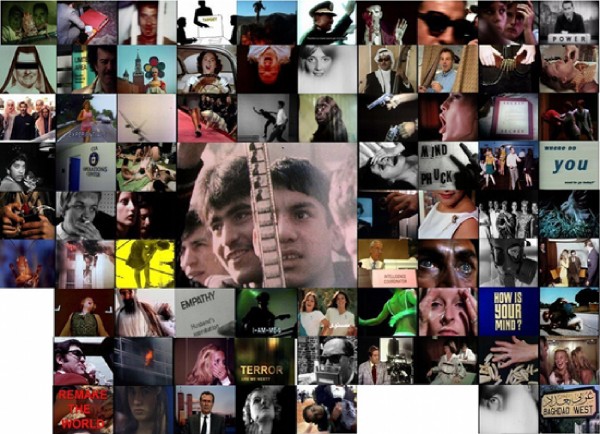
More Resources on Adam Curtis:
The Guardian: Adam Curtis argues TV needs 'new tools' to tell its stories
by Norman Ball
Bright Lights Film Journal
Before this essay interrogates Adam Curtis' hidden vestibules, gimpy tripods, and grassy knolls, I'd like to say that any book or film that keeps me thinking a year after I encounter it passes my substantiality test. The Power of Nightmares and The Century of the Self easily fit this category. (I saw All Watched Over by Machines of Loving Grace, The Living Dead, and bits of The Trap only last week.) To survive the immediate frame of the modern attention span is to escape the charge of empty spectacle. You can't fake sustained recollection.
Substance need not equate to wholesale affirmation, however. A good polemic dusts off the thinking caps even of its opponents. Curtis' films provide, at the very least, dialectical lightning rods for alternate narrative threads. Can the same be said for (insert any American TV show)?
In recent weeks Curtis has been arguing for television (BBC being the originating medium for his documentary films, though an American audience can view them on Youtube and Vimeo) to refashion its storytelling techniques ("Adam Curtis Argues TV Needs 'New Tools' to Tell Its Stories," The Guardian, August 22, 2012). It should be fascinating to see where Curtis' films conduct television in the coming months and years. Now, if we could only get American TV to mosey on over to where Curtis has already been, that would be advancement indeed. Right now, stateside viewers are All Kvetched Over by Whole Reams of Will and Grace, but only on DVD due to some contractual disputes that preclude syndication and broadcast. Curtis offers many of his films for free on the Internet. Need I kvetch more?
The award-winning The Century of the Self (2002) offers a devastating critique of our subliminal cooptation from a lifetime's exposure to "father of public relations" Eddie Bernays' propaganda techniques. Whoops, did I just say propaganda? Bernays' most diligent pupil, Josef Goebbels, is rolling over in his hell-pit right now. Let's leave it at public relations. I'm particularly fond of Bernays' quote (very crudely paraphrased here) that democracy is a wonderful system so long as he, Bernays, exerted final subliminal pull over the lever pulled inside the voting booth. Historian Carroll Quigley (mentor of a certain Rhodes Scholar, Bill Clinton), upon being made privy to the papers of the American elite, realized that nothing was left to chance, not even 50-50 propositions. In what's often referred to as the Quigley Principle, this Georgetown professor torpedoed the notion of a vigorous two-party system. Both levers are vetted and fixed. Here he is paraphrasing the mindset of the government behind the government: "The argument that the two parties should represent opposed ideals and policies, one, perhaps, of the Right and the other of the Left, is a foolish idea acceptable only to the doctrinaire and academic thinkers. Instead, the two parties should be almost identical, so that the American people can 'throw the rascals out' at any election without leading to any profound or extreme shifts in policy" (Carroll Quigley, from Tragedy and Hope).
This is not a call to embrace monolithic conspiracy theories. There often is, as Quigley went on to suggest, dissension at the highest levels of power. Jealousy is after all a facet of power. Bernays too saw the value of ostensible choice in a democratic-capitalist system where everything boils down to packaging anyway. A typical Bernays adBy the end of WWII, needs in America had, by and large, been put to bed. Desire was the ultimate lever, a grail of incalculable dual potential. Freud's irrational man, with his limitless storehouse of appetites and anxieties, would furnish economic growth ad infinitum. Never mind that natural resources such as oil and copper are ultimately finite. For the moment, sustainment models such as that proposed by Jay Forrester and the Club of Rome's 1972 Limits to Growth (covered extensively in All Watched Over by Machines of Loving Grace) loomed in the near-distance.
To Read the Rest of the Essay
More Resources on Adam Curtis:
The Guardian: Adam Curtis argues TV needs 'new tools' to tell its stories
Tuesday, September 11, 2012
Michael Goldman: Harsh Realms -- 5 cinematographers contribute to the new season of HBO’s fantasy-adventure series Game of Thrones
Harsh Realms: 5 cinematographers contribute to the new season of HBO’s fantasy-adventure series Game of Thrones.
by Michael Goldman
American Cinematographer
HBO’s series Game of Thrones documents the political, military and emotional entanglements between rival ancient kingdoms on a fictional continent. As such, it’s a period piece, a fantasy piece, an ensemble piece and a production that relies heavily on location, design and camerawork to pull off the illusion. The show is so big that it has required the efforts of multiple cinematographers; three shot season one, and five shot season two, which began airing last month.
After the production of its pilot, which involved some film capture, Game of Thrones evolved into the first hour-long HBO drama to be shot digitally. Every episode has been shot with Arri’s Alexa, and the cinematography team has relied on a state-of-the-art, data-centric workflow to shoot, process and assess imagery as the show traveled the globe from its home base in Northern Ireland to locations such as Malta, Croatia and Iceland.
“We were well into prep on season one [in the summer of 2010] before we decided to go with digital capture,” recalls co-producer Greg Spence. “After [cinematographers] Alik Sakharov [ASC] and Marco Pontecorvo [AIC] did three days of tests with 35mm, the Sony F35 and the Alexa, we chose the Alexa. Alik and Marco were impressed with its dynamic range and resolution, particularly in the highlights, and they felt it would pick up our costumes and textures nicely.”
For the show’s second season, the production switched to a file-based workflow. Footage was captured to Codex data recorders and taken to the dailies colorist and editors in the cutting room in Belfast, where most of the show was shot. (Season one was captured to HDCam-SR tape, and digital-imaging technicians did color correction on set.)
“We’ve had multiple cinematographers and DITs handling multiple units in different countries, so in season one we sometimes ended up with dailies that had divergent looks, which caused some confusion,” Spence explains. “Therefore, for season two, we brought [dailies colorist] Jon Reid to Belfast to operate alongside editorial at Yellowmoon, the post facility where the picture editors were based. Jon worked closely with our cinematographers during prep and shooting so they could get what they wanted, and we got a consistent look in the dailies.”
This season, Kramer Morgenthau, ASC shot the first two episodes and material featured in several others; P.J. Dillon shot episode three; Martin Kenzie shot episodes four through seven; and Jonathan Freeman, ASC shot episodes eight and ten. A stand-alone episode separate from the other locations (largely because of a major sea battle) became episode nine, shot by Sam McCurdy, BSC. This collection of cinematographers was necessary because extensive portions of the season were shot in Dubrovnik, Croatia, and Vatnajökull, Iceland, and that material was used for multiple episodes.
Therefore, says Morgenthau, the cinematographers did their best to “watch each other’s work and stay true to a cohesive look. No two directors of photography will shoot exactly the same way, but the material was so good, and there was such a consistent vision, that we were able to [maintain] a cohesive thread.” The cinematographers were frequently able to compare notes during prep before embarking on their separate shoots. They also used the Pix System online-dailies platform to view each other’s dailies through a secure connection, making Game of Thrones “a completely interconnected production” across the globe, in Morgenthau’s words.
To Read the Rest of the Article
by Michael Goldman
American Cinematographer
HBO’s series Game of Thrones documents the political, military and emotional entanglements between rival ancient kingdoms on a fictional continent. As such, it’s a period piece, a fantasy piece, an ensemble piece and a production that relies heavily on location, design and camerawork to pull off the illusion. The show is so big that it has required the efforts of multiple cinematographers; three shot season one, and five shot season two, which began airing last month.
After the production of its pilot, which involved some film capture, Game of Thrones evolved into the first hour-long HBO drama to be shot digitally. Every episode has been shot with Arri’s Alexa, and the cinematography team has relied on a state-of-the-art, data-centric workflow to shoot, process and assess imagery as the show traveled the globe from its home base in Northern Ireland to locations such as Malta, Croatia and Iceland.
“We were well into prep on season one [in the summer of 2010] before we decided to go with digital capture,” recalls co-producer Greg Spence. “After [cinematographers] Alik Sakharov [ASC] and Marco Pontecorvo [AIC] did three days of tests with 35mm, the Sony F35 and the Alexa, we chose the Alexa. Alik and Marco were impressed with its dynamic range and resolution, particularly in the highlights, and they felt it would pick up our costumes and textures nicely.”
For the show’s second season, the production switched to a file-based workflow. Footage was captured to Codex data recorders and taken to the dailies colorist and editors in the cutting room in Belfast, where most of the show was shot. (Season one was captured to HDCam-SR tape, and digital-imaging technicians did color correction on set.)
“We’ve had multiple cinematographers and DITs handling multiple units in different countries, so in season one we sometimes ended up with dailies that had divergent looks, which caused some confusion,” Spence explains. “Therefore, for season two, we brought [dailies colorist] Jon Reid to Belfast to operate alongside editorial at Yellowmoon, the post facility where the picture editors were based. Jon worked closely with our cinematographers during prep and shooting so they could get what they wanted, and we got a consistent look in the dailies.”
This season, Kramer Morgenthau, ASC shot the first two episodes and material featured in several others; P.J. Dillon shot episode three; Martin Kenzie shot episodes four through seven; and Jonathan Freeman, ASC shot episodes eight and ten. A stand-alone episode separate from the other locations (largely because of a major sea battle) became episode nine, shot by Sam McCurdy, BSC. This collection of cinematographers was necessary because extensive portions of the season were shot in Dubrovnik, Croatia, and Vatnajökull, Iceland, and that material was used for multiple episodes.
Therefore, says Morgenthau, the cinematographers did their best to “watch each other’s work and stay true to a cohesive look. No two directors of photography will shoot exactly the same way, but the material was so good, and there was such a consistent vision, that we were able to [maintain] a cohesive thread.” The cinematographers were frequently able to compare notes during prep before embarking on their separate shoots. They also used the Pix System online-dailies platform to view each other’s dailies through a secure connection, making Game of Thrones “a completely interconnected production” across the globe, in Morgenthau’s words.
To Read the Rest of the Article
Sunday, June 24, 2012
Severine Benzimra: French Cinema and French Sexual Attitudes and Culture
State of French Cinema: French cinema and French sexual attitudes and culture
by Severine Benzimra
Acidemic

French sexual attitudes and culture have wildly evolved within the last 20 years. A TV documentary which premiered on June 14th on M6, one of the free French channels, should help us grasp the breadth of the evolution.
Les Français, lamour et le sexe (French people, love and sex) is based on the latest statistics, interviews, and the analysis of sexologist Pascal de Sutter. The first episodes deal with the way French people make love: seduction, preliminaries, and positions; orgasm and fantasm. In the midst of the evening, more than 3 million people were watching - about 21% of the audience.
French cinema naturally mirrors these evolutions, sometimes in a confused way. Sexual repression provokes artistic provocation; cinema might seem less "advanced" (especially to people claiming for an equal treatment of teenagers and grown-ups, gays/lesbians and heterosexual people) in France than in the USA for this reason. Globalization can lead to self-reflection but also to some alienation. When watching US movies, French people often ignore that some scenes were censored in the USA or that a movie was X-rated. Some might consider a kind of race toward freedom is open.
Censorship officially disappeared in French cinema in 1974. It was the end of the Gaullist period and the first year of the presidency of Valéry Giscard d'Estaing; the government wasn't so liberal yet. At the end of 1975 a law was adopted concernng pornographic and extremely violent movies. Porno movies couldn't be shown in traditional movie theaters; they were reserved for specialized theaters. The next major move was made in 2000 with the restriction of some movies to those over 18 (after the Baise-moi affair). Before this, movies could be forbidden to viewers either under age 16 or 12.
French directors aren't interested in making familial movies, lets admit it. Movies for kids are mostly animated or made for TV. Beware if you want to take the pony-club class to see Dance with Him; they might leave laughing about the effects of some perfumes on a stallion or of a lady training with a mechanical horse, or the heated discussion of gluteal muscles. Some parents will consider these better topics than others, but there's no consensus. What Americans call family movies are called kid's movies or --exceptionally-- all-audience movies in France (for movies about nature especially, like Jacques Perrins' Peuple migrateur). In December 2009, the town of Libourne organized an election of the best family movie. Seven of the 16 selected films were foreign movies: Star Trek, Ice age 3, Slumdog millionnaire, Harry Potter and the half-blood prince, Up, the Imaginarium of Doctor Parnassus, and Gran Torino. The French movies selected were two movies on nature (Home, Loup), two movies inspired by mythical books (Le Petit Nicolas, Lucky-Lucke), some comedies (Neuilly ta mère, Rose et noir), the very funny French James Bond (OSS 117, Rio ne répond plus), a Jeunet movie (Micmacs à Tire-Larigot), and the very commercial Arthur et la vengeance de Malthazar (produced by Luc Besson).
The French approach to onscreen sex differs from the American approach mainly through its form rather than its content. American directors tend to make "pretty" scenes, while French people shoot them more naturally (less filters, music, cuts). An exception: love scenes in Claude Brisseaus movies, like between the actresses of Les anges exterminateurs.
Americans tend to shoot very handsome and young actors, which isn't the case in France. On the contrary, the representation of teenagers having sexual intercourse is considered more shocking. Ken Park was forbidden to the under-18, an exceptional measure: the sexual scenes were considered a bad encouragement for teenagers (risk of AIDS contamination, etc.) as for adults (pedophilia, etc.). Shouldn't sex be attractive? Oh, no but it must be personal. Sexual scenes aren't supposed to, on this side of the ocean, attract the audience. They represent a part of the life of the character that it is necessary to represent. They aren't meant to excite. Sexual excitation is linked to imagination to be provided by all-audience movies (meaning not the audience of pornographic/erotic movies) if it can be provided by a movie, an idea on which French people wildly discuss and disagree. Most French people would tell you that the image neutralizes the imagination in this field and suggest you to read, or ask someone to read you erotic littérature. It might seem that the subjectivity of beauty (its effect on libido) is much more emphasized in the USA. French actors and actresses don't wish to be called sex symbols. To be "attractive", "sexy", or "hot" is not a compliment in France - traduce it and it might well be received as an insult. Especially "hot." If you look hot because you want it, you are vulgar (and thus not so hot). If you're an actor/actress who looks hot without wanting it, you're a bad actor/actress. Cold can be hotter - see Grace Kelly in Hitchcock's movies, Romy Schneider in any movie, or Catherine Deneuve - they strike one's imagination. A perfect body is cold, secretive, tends to hide itself, while an overweighted, underweighted, aged body is seen as much hotter. The hero of Le roi de l'Evasion (below), a 2009 movie by Alain Guiraudie, a large 43 year old man, had four partners: a "beur" (French-North African) girl, and several elder men.
To Read the Rest of the Essay
by Severine Benzimra
Acidemic
French sexual attitudes and culture have wildly evolved within the last 20 years. A TV documentary which premiered on June 14th on M6, one of the free French channels, should help us grasp the breadth of the evolution.
Les Français, lamour et le sexe (French people, love and sex) is based on the latest statistics, interviews, and the analysis of sexologist Pascal de Sutter. The first episodes deal with the way French people make love: seduction, preliminaries, and positions; orgasm and fantasm. In the midst of the evening, more than 3 million people were watching - about 21% of the audience.
French cinema naturally mirrors these evolutions, sometimes in a confused way. Sexual repression provokes artistic provocation; cinema might seem less "advanced" (especially to people claiming for an equal treatment of teenagers and grown-ups, gays/lesbians and heterosexual people) in France than in the USA for this reason. Globalization can lead to self-reflection but also to some alienation. When watching US movies, French people often ignore that some scenes were censored in the USA or that a movie was X-rated. Some might consider a kind of race toward freedom is open.
Censorship officially disappeared in French cinema in 1974. It was the end of the Gaullist period and the first year of the presidency of Valéry Giscard d'Estaing; the government wasn't so liberal yet. At the end of 1975 a law was adopted concernng pornographic and extremely violent movies. Porno movies couldn't be shown in traditional movie theaters; they were reserved for specialized theaters. The next major move was made in 2000 with the restriction of some movies to those over 18 (after the Baise-moi affair). Before this, movies could be forbidden to viewers either under age 16 or 12.
French directors aren't interested in making familial movies, lets admit it. Movies for kids are mostly animated or made for TV. Beware if you want to take the pony-club class to see Dance with Him; they might leave laughing about the effects of some perfumes on a stallion or of a lady training with a mechanical horse, or the heated discussion of gluteal muscles. Some parents will consider these better topics than others, but there's no consensus. What Americans call family movies are called kid's movies or --exceptionally-- all-audience movies in France (for movies about nature especially, like Jacques Perrins' Peuple migrateur). In December 2009, the town of Libourne organized an election of the best family movie. Seven of the 16 selected films were foreign movies: Star Trek, Ice age 3, Slumdog millionnaire, Harry Potter and the half-blood prince, Up, the Imaginarium of Doctor Parnassus, and Gran Torino. The French movies selected were two movies on nature (Home, Loup), two movies inspired by mythical books (Le Petit Nicolas, Lucky-Lucke), some comedies (Neuilly ta mère, Rose et noir), the very funny French James Bond (OSS 117, Rio ne répond plus), a Jeunet movie (Micmacs à Tire-Larigot), and the very commercial Arthur et la vengeance de Malthazar (produced by Luc Besson).
The French approach to onscreen sex differs from the American approach mainly through its form rather than its content. American directors tend to make "pretty" scenes, while French people shoot them more naturally (less filters, music, cuts). An exception: love scenes in Claude Brisseaus movies, like between the actresses of Les anges exterminateurs.
Americans tend to shoot very handsome and young actors, which isn't the case in France. On the contrary, the representation of teenagers having sexual intercourse is considered more shocking. Ken Park was forbidden to the under-18, an exceptional measure: the sexual scenes were considered a bad encouragement for teenagers (risk of AIDS contamination, etc.) as for adults (pedophilia, etc.). Shouldn't sex be attractive? Oh, no but it must be personal. Sexual scenes aren't supposed to, on this side of the ocean, attract the audience. They represent a part of the life of the character that it is necessary to represent. They aren't meant to excite. Sexual excitation is linked to imagination to be provided by all-audience movies (meaning not the audience of pornographic/erotic movies) if it can be provided by a movie, an idea on which French people wildly discuss and disagree. Most French people would tell you that the image neutralizes the imagination in this field and suggest you to read, or ask someone to read you erotic littérature. It might seem that the subjectivity of beauty (its effect on libido) is much more emphasized in the USA. French actors and actresses don't wish to be called sex symbols. To be "attractive", "sexy", or "hot" is not a compliment in France - traduce it and it might well be received as an insult. Especially "hot." If you look hot because you want it, you are vulgar (and thus not so hot). If you're an actor/actress who looks hot without wanting it, you're a bad actor/actress. Cold can be hotter - see Grace Kelly in Hitchcock's movies, Romy Schneider in any movie, or Catherine Deneuve - they strike one's imagination. A perfect body is cold, secretive, tends to hide itself, while an overweighted, underweighted, aged body is seen as much hotter. The hero of Le roi de l'Evasion (below), a 2009 movie by Alain Guiraudie, a large 43 year old man, had four partners: a "beur" (French-North African) girl, and several elder men.
To Read the Rest of the Essay
Monday, June 4, 2012
Audun Engelstad: It's not TV - or is it?
It's not TV - or is it?
by Audun Engelstad
16:9

. . .
TV vs. High Art
It is perhaps an outdated discussion, but there seems to be a repeated tendency to see quality and popular culture as two different and mutually exclusive entities. If a product of popular culture is endowed with an aura of quality, it ceases to exist as popular culture. Instead it moves to the realm of the art world. Historically, we can find this view expressed in W. H. Auden’s (1948: 151) classic article on the crime genre where he suggests that Raymond Chandler is not writing detective fiction, but rather serious studies of a criminal environment, and that his books “should be read and judged, not as escape literature, but as works of art.” And Tzvetan Todorov (1977), in his famous article “The Typology of Detective Fiction”, claimed that any experiment with the established features of the genre, in order to improve upon them, implied a move towards serious literature. In line with arguments like these, popular culture and high art exist as two different systems – and never shall the twain meet.
Needless to say, this position has been challenged, in particular as a consequence of the interest postmodern theory has taken in popular culture. Jim Collins (1989) has demonstrated how crime fiction applies many of the strategies that define the writings within a modernist realm, such as a highly sophisticated play on intertextuality and the foregrounding of a self-conscious style. Indeed, much of the postmodernist aesthetics have been invested in blurring the boundaries between high and low culture, re-circulating tropes, forms, and narrative schemes established by popular culture. Apparently, postmodernism has put an end to the divide between the two art systems, it is all one mix now. Or so it seems at times, but perhaps it is not that easy.
The reason for bringing this issue up again, even though it is easy to get the impression that it is settled, is that the conflict between high and low appears to be embedded in the slogan that defines HBO as different from television. And much of the literature on quality television, a term that until recently was something like an oxymoron, is bent on drawing attention to traits like narrative complexity, character density, and a distinctly defined style – traits that otherwise belong to the field of high art. At the peak of postmodernism, by the late 1980s and early 1990s, television looked quite different from today. Perhaps this is the reason why the notion of artworks within television comes so belatedly to television studies.
The notion that the HBO television drama raises above the medium seems to be advocated by the series’ creators as well as HBO’s advertising department. Both writer-producer of The Sopranos, David Chase, and writer-producer of The Wire, David Simon, have in several interviews expressed a general lack of interest in television drama, and, it seems, in television altogether. Such a position is quite puzzling when looking at the track record of the two of them. It is obvious that they are well-seasoned within the trade of serial television drama. Chase has a background as a writer and a producer for television series such as The Rockford Files and Northern Exposure. Originally, his ambitions for The Sopranos was for it to be a movie, and he has stated that he treated every single episode as an equivalent to a stand-alone film. Much can be said about such a claim, but it definitively works towards distinguishing The Sopranos as something other than ordinary television drama. As for Simon, he was a former crime reporter who was introduced to television as a writer and producer on Homicide: Life on the Street, based on his book Homocide: A Year on the Killing Street. As en executive producer and writer for The Wire he has made a point about bringing in creative people with little or no background in television. This, obviously, serves the impression that The Wire was conceived as unrelated to television. Both Chase and Simon, in their publically well-known statements, express a disdain towards television drama, what it is recognized by and what it achieves (see e.g. Biskind 2007 & Goldman 2006).
TV Auteurs
Whether or not Chase and Simon’s disdain for television is reasonable is beside the point. By their positions they – consciously, or not – apparently align themselves with the nouvelle vague filmmakers who revolted against the current state of French cinema and called for a politics of auteurs (fig. 4-5). If we follow this line of argument, Chase and Simon et al, do not necessarily express a desire to make something else than television – a film, a visualized novel, or something else – rather the goal is to make television drama into something other than what it is otherwise recognized as, yet still television drama. In other words, to explore and stretch the possibilities of television as an art form.
The idea of an auteur within television has been something of a contradiction in terms. The influence of auteur criticism arrived in USA in the 1960s at a time when cinema had lost the competition against television and found it necessary to distinguish itself from television. Ironically, some of the auteurs that came out of the period known as the Hollywood Renaissance had their background in television, such as Robert Altman, Bob Rafelson, Arthur Penn and John Cassavettes. Within cinema, the auteur is recognized as a person with a strong artistic impulse, the director who rises above the craftsmen on the film set, acting on an impulse to tell something of significance or of poetic value, and who is able to transform cinema to an art form worthy of serious debate. Television, on the other hand, is typically centered on personalities in front of the camera – the talk show host, the news anchor, the leading star of the soap series, and so forth. Take, say, The Late Show with David Letterman. The form follows a fairly strict format, and it really should make no difference who is doing the various jobs behind the camera. They are all replaceable. The only one that cannot be replaced without altering the show is David Letterman, the television personality. David Letterman can probably (and he once did) take his show to any other network channel, and it will still be recognized as The Late Show with David Letterman. The HBO drama series, by contrast, elevates the executive producer to the role of the artist. All though less pronounced, it is much the same position that Robert J. Thompson gives the producer in his study of quality television series of the 1980s and 1990s.
To Read the Rest of the Essay

by Audun Engelstad
16:9
. . .
TV vs. High Art
It is perhaps an outdated discussion, but there seems to be a repeated tendency to see quality and popular culture as two different and mutually exclusive entities. If a product of popular culture is endowed with an aura of quality, it ceases to exist as popular culture. Instead it moves to the realm of the art world. Historically, we can find this view expressed in W. H. Auden’s (1948: 151) classic article on the crime genre where he suggests that Raymond Chandler is not writing detective fiction, but rather serious studies of a criminal environment, and that his books “should be read and judged, not as escape literature, but as works of art.” And Tzvetan Todorov (1977), in his famous article “The Typology of Detective Fiction”, claimed that any experiment with the established features of the genre, in order to improve upon them, implied a move towards serious literature. In line with arguments like these, popular culture and high art exist as two different systems – and never shall the twain meet.
Needless to say, this position has been challenged, in particular as a consequence of the interest postmodern theory has taken in popular culture. Jim Collins (1989) has demonstrated how crime fiction applies many of the strategies that define the writings within a modernist realm, such as a highly sophisticated play on intertextuality and the foregrounding of a self-conscious style. Indeed, much of the postmodernist aesthetics have been invested in blurring the boundaries between high and low culture, re-circulating tropes, forms, and narrative schemes established by popular culture. Apparently, postmodernism has put an end to the divide between the two art systems, it is all one mix now. Or so it seems at times, but perhaps it is not that easy.
The reason for bringing this issue up again, even though it is easy to get the impression that it is settled, is that the conflict between high and low appears to be embedded in the slogan that defines HBO as different from television. And much of the literature on quality television, a term that until recently was something like an oxymoron, is bent on drawing attention to traits like narrative complexity, character density, and a distinctly defined style – traits that otherwise belong to the field of high art. At the peak of postmodernism, by the late 1980s and early 1990s, television looked quite different from today. Perhaps this is the reason why the notion of artworks within television comes so belatedly to television studies.
The notion that the HBO television drama raises above the medium seems to be advocated by the series’ creators as well as HBO’s advertising department. Both writer-producer of The Sopranos, David Chase, and writer-producer of The Wire, David Simon, have in several interviews expressed a general lack of interest in television drama, and, it seems, in television altogether. Such a position is quite puzzling when looking at the track record of the two of them. It is obvious that they are well-seasoned within the trade of serial television drama. Chase has a background as a writer and a producer for television series such as The Rockford Files and Northern Exposure. Originally, his ambitions for The Sopranos was for it to be a movie, and he has stated that he treated every single episode as an equivalent to a stand-alone film. Much can be said about such a claim, but it definitively works towards distinguishing The Sopranos as something other than ordinary television drama. As for Simon, he was a former crime reporter who was introduced to television as a writer and producer on Homicide: Life on the Street, based on his book Homocide: A Year on the Killing Street. As en executive producer and writer for The Wire he has made a point about bringing in creative people with little or no background in television. This, obviously, serves the impression that The Wire was conceived as unrelated to television. Both Chase and Simon, in their publically well-known statements, express a disdain towards television drama, what it is recognized by and what it achieves (see e.g. Biskind 2007 & Goldman 2006).
TV Auteurs
Whether or not Chase and Simon’s disdain for television is reasonable is beside the point. By their positions they – consciously, or not – apparently align themselves with the nouvelle vague filmmakers who revolted against the current state of French cinema and called for a politics of auteurs (fig. 4-5). If we follow this line of argument, Chase and Simon et al, do not necessarily express a desire to make something else than television – a film, a visualized novel, or something else – rather the goal is to make television drama into something other than what it is otherwise recognized as, yet still television drama. In other words, to explore and stretch the possibilities of television as an art form.
The idea of an auteur within television has been something of a contradiction in terms. The influence of auteur criticism arrived in USA in the 1960s at a time when cinema had lost the competition against television and found it necessary to distinguish itself from television. Ironically, some of the auteurs that came out of the period known as the Hollywood Renaissance had their background in television, such as Robert Altman, Bob Rafelson, Arthur Penn and John Cassavettes. Within cinema, the auteur is recognized as a person with a strong artistic impulse, the director who rises above the craftsmen on the film set, acting on an impulse to tell something of significance or of poetic value, and who is able to transform cinema to an art form worthy of serious debate. Television, on the other hand, is typically centered on personalities in front of the camera – the talk show host, the news anchor, the leading star of the soap series, and so forth. Take, say, The Late Show with David Letterman. The form follows a fairly strict format, and it really should make no difference who is doing the various jobs behind the camera. They are all replaceable. The only one that cannot be replaced without altering the show is David Letterman, the television personality. David Letterman can probably (and he once did) take his show to any other network channel, and it will still be recognized as The Late Show with David Letterman. The HBO drama series, by contrast, elevates the executive producer to the role of the artist. All though less pronounced, it is much the same position that Robert J. Thompson gives the producer in his study of quality television series of the 1980s and 1990s.
To Read the Rest of the Essay
Wednesday, May 16, 2012
Michael Atkinson: Archival Trouble -- The fiction-free science fiction of Adam Curtis
Archival Trouble: The fiction-free science fiction of Adam Curtis
by Michael Atkinson
Moving Image Source
...
Curtis's brand of deep politics isn't theorist Peter Dale Scott's—he's concerned less with deliberate conspiracy than with the cascade of sociopolitical dominoes, beginning somewhere mysteriously decades ago, tumbling in a semi-secret dialectical train of disaster since, and culminating in flat-out catastrophe, be it 9/11 or the world economic meltdown or merely the Reagan-era state of rampaging consumerist narcissism. Formally, Curtis manufactures his flowcharts with the simplest means available: archival footage, talking heads, calm but ominous narration, associative montage, a pervasive sense of doomsday. All Watched Over by Machines of Loving Grace is paradigmatic: Curtis begins, as his Richard Brautigan-quoting title suggests, with the familiar suspicion that the mechanization of our lives is winding inexorably toward a dystopian nightmare in which the matrix of microprocessors and A.I.'s will end up commanding us, not vice versa.
But right away it's clear that Curtis isn't hypothesizing about a terrifying future, but unearthing the hidden patterns that have created the present moment. The villains are not machines. Curtis trips backward, as is his wont, to the '50s and the rise of Ayn Rand, whose Objectivist creed in turn gave fitful birth to a spate of influential ideologies, all of which decided that both nature and human society were essentially self-sustaining, equilibrium-seeking logical mechanisms, and could be managed thus. "This is the story," Curtis intones, "of the rise of the dream of the self-organizing system, and the strange machine fantasy of nature that underpins it." The tales he tells to illustrate this harrowing and almost completely overlooked social saga all intertwine, and run from the "spaceship Earth" ideas of Buckminster Fuller, the communes that followed, the pessimistic forecasts of the Club of Rome, the rise and fall of Patrice Lumumba in the Congo, the genesis of the wholly fabricated Tutsi-Hutu dichotomy that turned Rwanda into a killing field more than once, the career of Dian Fossey, the late-century rollercoaster of economic feast and famine, and the work of theorist/geneticist George Price, who believed that humans were ultimately the slaves of their own genetic imperatives, and who demonstrated mathematically that both altruism and genocide were therefore rational acts, from "a gene's eye view" of things.
There's more, all of it reflecting back upon now; Curtis is nothing if not a staunch proselytizer for the idea of the past never being quite past. All Watched Over is more than a counter-story. Like all of Curtis's work it is approximately half well-circulated history and half "deep" background—that is, storylines and historical angles that have been pervasively and deliberately neglected by the gatekeepers of knowledge and information. The film feels something like a Craig Baldwin delusion-farce turned chillingly, menacingly factual, and the facts accrete into an interrogation of psychotic hubris. The Frankenstein monster constructed by the scientists and demagogues and politicians in All Watched Over is the last half-century or so of life on Earth, which in its ultimate tally amounts to a scoresheet of unimaginable injustice, mountains of bodies, and untold environmental ruin.
Curtis is in reality telling just one story, again and again in various threads and tangents and in dazzling three- or four-hour chunks, reaching back to the immediate postwar years and then forward to the present over and over, limning an infinitely complex genogram of our present existence. Ironically, for a history-rewriting filmmaker/producer boxing so much information into evenings of television, Curtis is fierce about the disastrous effects brought about by the artificial and intellectualized imposition of order. He began in his present mode with 1992's Pandora's Box, a massive autopsy on the worldwide cataclysms that unrolled as a result of every kind of postwar effort to systematize, organize, compel, and codify humanity, from Soviet over-industrialization to game-theory Cold War strategies to Keynesian economics to nuclear-power utopianism. Politically, this is a rocket targeted not at the Right per se, but upward, at the power elite, whose perpetual folly in trying to maximize profit and control leads ceaselessly to societal breakdown—a condition very often beside the point for the elite in question, once they've stood to benefit. The Century of the Self (2002) goes all attack-ad on this dynamic, specifically homing in on propagandist/marketing mahatma Edward Bernays, and how he used Freudian psychoanalytic insights to initiate the gold rush of institutionalized thought control—advertising, propaganda, public relations—that could be said to absolutely dominate 20th-century public discourse.
Curtis's vision seemed wholly formed at first, despite the fact that he's obviously digging up unknown connections with each new project. But it took the spiral mindquake of 9/11 for Curtis's reverse-engineered prophecies to gain a global profile. The Power of Nightmares (2004) follows the gunpowder trails from the mid-century (uniting Muslim Brotherhood messiah Sayyid Qutb and neocon pope-king Leo Strauss as complementary agents of desolation) to the attacks of 2001, and then maintains that, just as the farcical depiction of the USSR as a global spider kingdom of evil influence is destroyed by direct testimony from CIA agents and a lying Donald Rumsfeld in old news footage, the sudden postulation of Al Qaeda as a terrifying, organized worldwide threat was a manufactured myth used by Western governments and agencies to broaden and tighten their grip on international power systems and the profit to be gained therein.
To Read the Rest of the Essay
To watch Adam Curtis's documentaries online:
Pandora's Box: A Fable From the Age of Science (1992)
The Living Dead: Three Films About the Power of the Past (1995)
The Century of the Self (2002)
The Power of Nightmares: The Rise of the Politics of Fear (2004)
The Trap: What Happened to Our Dream of Freedom (2007)
All Watched Over by Machines of Loving Grace (2011)
by Michael Atkinson
Moving Image Source
...
Curtis's brand of deep politics isn't theorist Peter Dale Scott's—he's concerned less with deliberate conspiracy than with the cascade of sociopolitical dominoes, beginning somewhere mysteriously decades ago, tumbling in a semi-secret dialectical train of disaster since, and culminating in flat-out catastrophe, be it 9/11 or the world economic meltdown or merely the Reagan-era state of rampaging consumerist narcissism. Formally, Curtis manufactures his flowcharts with the simplest means available: archival footage, talking heads, calm but ominous narration, associative montage, a pervasive sense of doomsday. All Watched Over by Machines of Loving Grace is paradigmatic: Curtis begins, as his Richard Brautigan-quoting title suggests, with the familiar suspicion that the mechanization of our lives is winding inexorably toward a dystopian nightmare in which the matrix of microprocessors and A.I.'s will end up commanding us, not vice versa.
But right away it's clear that Curtis isn't hypothesizing about a terrifying future, but unearthing the hidden patterns that have created the present moment. The villains are not machines. Curtis trips backward, as is his wont, to the '50s and the rise of Ayn Rand, whose Objectivist creed in turn gave fitful birth to a spate of influential ideologies, all of which decided that both nature and human society were essentially self-sustaining, equilibrium-seeking logical mechanisms, and could be managed thus. "This is the story," Curtis intones, "of the rise of the dream of the self-organizing system, and the strange machine fantasy of nature that underpins it." The tales he tells to illustrate this harrowing and almost completely overlooked social saga all intertwine, and run from the "spaceship Earth" ideas of Buckminster Fuller, the communes that followed, the pessimistic forecasts of the Club of Rome, the rise and fall of Patrice Lumumba in the Congo, the genesis of the wholly fabricated Tutsi-Hutu dichotomy that turned Rwanda into a killing field more than once, the career of Dian Fossey, the late-century rollercoaster of economic feast and famine, and the work of theorist/geneticist George Price, who believed that humans were ultimately the slaves of their own genetic imperatives, and who demonstrated mathematically that both altruism and genocide were therefore rational acts, from "a gene's eye view" of things.
There's more, all of it reflecting back upon now; Curtis is nothing if not a staunch proselytizer for the idea of the past never being quite past. All Watched Over is more than a counter-story. Like all of Curtis's work it is approximately half well-circulated history and half "deep" background—that is, storylines and historical angles that have been pervasively and deliberately neglected by the gatekeepers of knowledge and information. The film feels something like a Craig Baldwin delusion-farce turned chillingly, menacingly factual, and the facts accrete into an interrogation of psychotic hubris. The Frankenstein monster constructed by the scientists and demagogues and politicians in All Watched Over is the last half-century or so of life on Earth, which in its ultimate tally amounts to a scoresheet of unimaginable injustice, mountains of bodies, and untold environmental ruin.
Curtis is in reality telling just one story, again and again in various threads and tangents and in dazzling three- or four-hour chunks, reaching back to the immediate postwar years and then forward to the present over and over, limning an infinitely complex genogram of our present existence. Ironically, for a history-rewriting filmmaker/producer boxing so much information into evenings of television, Curtis is fierce about the disastrous effects brought about by the artificial and intellectualized imposition of order. He began in his present mode with 1992's Pandora's Box, a massive autopsy on the worldwide cataclysms that unrolled as a result of every kind of postwar effort to systematize, organize, compel, and codify humanity, from Soviet over-industrialization to game-theory Cold War strategies to Keynesian economics to nuclear-power utopianism. Politically, this is a rocket targeted not at the Right per se, but upward, at the power elite, whose perpetual folly in trying to maximize profit and control leads ceaselessly to societal breakdown—a condition very often beside the point for the elite in question, once they've stood to benefit. The Century of the Self (2002) goes all attack-ad on this dynamic, specifically homing in on propagandist/marketing mahatma Edward Bernays, and how he used Freudian psychoanalytic insights to initiate the gold rush of institutionalized thought control—advertising, propaganda, public relations—that could be said to absolutely dominate 20th-century public discourse.
Curtis's vision seemed wholly formed at first, despite the fact that he's obviously digging up unknown connections with each new project. But it took the spiral mindquake of 9/11 for Curtis's reverse-engineered prophecies to gain a global profile. The Power of Nightmares (2004) follows the gunpowder trails from the mid-century (uniting Muslim Brotherhood messiah Sayyid Qutb and neocon pope-king Leo Strauss as complementary agents of desolation) to the attacks of 2001, and then maintains that, just as the farcical depiction of the USSR as a global spider kingdom of evil influence is destroyed by direct testimony from CIA agents and a lying Donald Rumsfeld in old news footage, the sudden postulation of Al Qaeda as a terrifying, organized worldwide threat was a manufactured myth used by Western governments and agencies to broaden and tighten their grip on international power systems and the profit to be gained therein.
To Read the Rest of the Essay
To watch Adam Curtis's documentaries online:
Pandora's Box: A Fable From the Age of Science (1992)
The Living Dead: Three Films About the Power of the Past (1995)
The Century of the Self (2002)
The Power of Nightmares: The Rise of the Politics of Fear (2004)
The Trap: What Happened to Our Dream of Freedom (2007)
All Watched Over by Machines of Loving Grace (2011)
Sunday, December 18, 2011
Greg Tate: Fight for rights, will to power -- The Black Power Mixtape 1967-1975
Fight for rights, will to power: The Black Power Mixtape 1967-1975
by Greg Tate
Sight and Sound (British Film Institute)

...
The Black Power Mixtape Remixed 1967-1975 is an exotic document of this turbulent, extremely violent transitional moment in American race history. Exotic because it’s the culmination of the near-decade an intrepid Swedish TV news team spent interviewing prominent Black American radicals of the day – Stokley Carmichael, Huey Newton, Bobby Seale, Eldridge Cleaver, Elaine Brown and Angela Davis. All were dramatic, eloquent, charismatic figures of their time who, except for the still-active Davis, are today hardly household names to the average black American under 40.
Like Jimi Hendrix or Bob Dylan, they all seem incredibly well-prepared in their mid 20s to set the world aflame intellectually and dominate the media – but far less prepared than the Viet Cong or Fidel Castro to withstand the withering, brute and constitutionally illegal attacks directed at them and theirs by the US government, especially the FBI’s fascistic overlord J Edgar Hoover.
Time has not diminished their critiques of American power or racism, nor their undeniable star power – any of them and their radical histories could easily sustain a documentary or narrative feature film of its own. Mixtape captures most of them in the short period before they would be tried, convicted or exiled by Hoover’s stated and manically implemented obsession with preventing the “rise of another black prophet” after King.
The footage of Carmichael and Davis is the most poignant and illuminating. Though the film doesn’t say so, it was Carmichael who brought the phrase ‘Black Power’ into vogue, famously goading King to give it airtime near the end of the two-week-long march to Selma, Alabama. The film demands that those who don’t know these figures investigate them afterwards for more background and context. On film the jocular Carmichael proves so at ease in his own skin that he could have given Sidney Poitier competition as a leading man, and challenged Bob Marley as a lyrical protest balladeer.
Carmichael invites himself to take over an interview the news crew had wrangled with his mother in the Chicago-projects apartment in which he was raised. He then patiently extracts from her the pained admission that his Trinidadian immigrant father, a skilled carpenter, was a lifelong victim of employment discrimination.
As noted by progressive hip-hop MC Talib Kweli in his voiceover, Carmichael emerges here as a “regular guy” who also happened to be a incendiary and mesmerising speaker – one still so provocative that Kweli recalls being accosted by FBI and TSA agents at an airport after 9/11 for merely listening to a 40-year-old Carmichael speech. Some may take Kweli’s intimation of wiretaps as conspiratorial and apocryphal, but no-one familiar with Hoover’s paranoia and surveillance of black progressives will be among them. (The biggest laugh in the film comes from Hoover’s claim that the most dangerous threat to the internal security of the United States was the Black Panther party’s free breakfast program. But Hoover was not joking.)
The progress of the film is also a tacit record of the Panther’s off-screen dismantling by Nixon and Hoover’s COINTELPRO conspiracy against black leadership. The Panther’s demise by exile, imprisonment and judicial malfeasance is presented at a glance, but the Panthers expended all their political capital on the campaigns to Free Huey Newton, Bobby Seale and Angela Davis.
Davis’s prison interview here offers the most astute and moving rationale for extreme black retaliation to American racial extremists. When asked to justify the advocacy of black violence, Davis recalls her childhood experience of her Birmingham, Alabama community being routinely bombed by Klansmen at the behest of notorious county sheriff Bull Connor. Davis recalls this motherfucker using local radio to promote and direct such violence on a weekly basis. The extreme close-up of her angry, watering eyes when she speaks of the discovery of four classmates’ body parts after the infamous 1963 Birmingham church bombing provides all the justification for retribution any rational person should need.
To Read the Rest of the Commentary
by Greg Tate
Sight and Sound (British Film Institute)
...
The Black Power Mixtape Remixed 1967-1975 is an exotic document of this turbulent, extremely violent transitional moment in American race history. Exotic because it’s the culmination of the near-decade an intrepid Swedish TV news team spent interviewing prominent Black American radicals of the day – Stokley Carmichael, Huey Newton, Bobby Seale, Eldridge Cleaver, Elaine Brown and Angela Davis. All were dramatic, eloquent, charismatic figures of their time who, except for the still-active Davis, are today hardly household names to the average black American under 40.
Like Jimi Hendrix or Bob Dylan, they all seem incredibly well-prepared in their mid 20s to set the world aflame intellectually and dominate the media – but far less prepared than the Viet Cong or Fidel Castro to withstand the withering, brute and constitutionally illegal attacks directed at them and theirs by the US government, especially the FBI’s fascistic overlord J Edgar Hoover.
Time has not diminished their critiques of American power or racism, nor their undeniable star power – any of them and their radical histories could easily sustain a documentary or narrative feature film of its own. Mixtape captures most of them in the short period before they would be tried, convicted or exiled by Hoover’s stated and manically implemented obsession with preventing the “rise of another black prophet” after King.
The footage of Carmichael and Davis is the most poignant and illuminating. Though the film doesn’t say so, it was Carmichael who brought the phrase ‘Black Power’ into vogue, famously goading King to give it airtime near the end of the two-week-long march to Selma, Alabama. The film demands that those who don’t know these figures investigate them afterwards for more background and context. On film the jocular Carmichael proves so at ease in his own skin that he could have given Sidney Poitier competition as a leading man, and challenged Bob Marley as a lyrical protest balladeer.
Carmichael invites himself to take over an interview the news crew had wrangled with his mother in the Chicago-projects apartment in which he was raised. He then patiently extracts from her the pained admission that his Trinidadian immigrant father, a skilled carpenter, was a lifelong victim of employment discrimination.
As noted by progressive hip-hop MC Talib Kweli in his voiceover, Carmichael emerges here as a “regular guy” who also happened to be a incendiary and mesmerising speaker – one still so provocative that Kweli recalls being accosted by FBI and TSA agents at an airport after 9/11 for merely listening to a 40-year-old Carmichael speech. Some may take Kweli’s intimation of wiretaps as conspiratorial and apocryphal, but no-one familiar with Hoover’s paranoia and surveillance of black progressives will be among them. (The biggest laugh in the film comes from Hoover’s claim that the most dangerous threat to the internal security of the United States was the Black Panther party’s free breakfast program. But Hoover was not joking.)
The progress of the film is also a tacit record of the Panther’s off-screen dismantling by Nixon and Hoover’s COINTELPRO conspiracy against black leadership. The Panther’s demise by exile, imprisonment and judicial malfeasance is presented at a glance, but the Panthers expended all their political capital on the campaigns to Free Huey Newton, Bobby Seale and Angela Davis.
Davis’s prison interview here offers the most astute and moving rationale for extreme black retaliation to American racial extremists. When asked to justify the advocacy of black violence, Davis recalls her childhood experience of her Birmingham, Alabama community being routinely bombed by Klansmen at the behest of notorious county sheriff Bull Connor. Davis recalls this motherfucker using local radio to promote and direct such violence on a weekly basis. The extreme close-up of her angry, watering eyes when she speaks of the discovery of four classmates’ body parts after the infamous 1963 Birmingham church bombing provides all the justification for retribution any rational person should need.
To Read the Rest of the Commentary
Subscribe to:
Posts (Atom)