The Square, Egypt's Revolution Doc with Sundance Winner Dir Jehane Noujaim
Bring Your Own Doc
Fresh from winning the best World Documentary award at Sundance, The Square director Jehane Noujaim comes to BYOD to discuss her background in film and the process of telling the story of the Egyptian revolution.
Jehane also shares the feeling she had of crawling through the dark while filming, and still managing to make a film that is recognized and appreciated.
GUEST BIO:
Jehane Noujaim is an Egyptian-American filmmaker who began her career with the MTV documentary series, Unfiltered. She left her post as segment producer to work with the legendary Chris Hegedus and D.A. Pennebaker on the film STARTUP.COM, which led to numerous nominations and won awards at The International Documentary Association, Philadelphia, Doubletake Documentary Film Festival, and a DGA Award.
Jehane followed the success of the film with the equally acclaimed CONTROL ROOM, which won awards at Full Frame, Boston Society of Film Critics, International Documentary Association, Seattle Film Critics, and Sydney Film Festival.
Continuing her work in both the United States and The Middle East, Jehane is back with a new film, THE SQUARE, depicting the revolution in Egypt's famous Tahrir Square. She is back, fresh from Park City, where she was awarded the World Documentary Audience Award at Sundance for her magnificent work on this film.
Showing posts with label Social Movements. Show all posts
Showing posts with label Social Movements. Show all posts
Thursday, October 24, 2013

Sunday, October 20, 2013
Kahsatstenhsera: Indigenous Resistance to Tar Sands Pipelines
Kahsatstenhsera: Indigenous Resistance to Tar Sands Pipelines
Films For Action
Kahsatstenhsera (gah-sad-sdanh-se-ra) is a Kanienkeha:ka (Mohawk) word that means Strength in Unity. This short documentary details contemporary Indigenous resistance to tar sands pipeline expansion, in particular the Line 9 and Energy East pipelines, which threaten the health of our territories in the northeast of Turtle Island. This was a co-production with Amanda Lickers of Reclaim Turtle Island and subMedia.tv
Source link
Films For Action
Kahsatstenhsera (gah-sad-sdanh-se-ra) is a Kanienkeha:ka (Mohawk) word that means Strength in Unity. This short documentary details contemporary Indigenous resistance to tar sands pipeline expansion, in particular the Line 9 and Energy East pipelines, which threaten the health of our territories in the northeast of Turtle Island. This was a co-production with Amanda Lickers of Reclaim Turtle Island and subMedia.tv
Source link
Sunday, October 13, 2013
La Commune (Paris 1871) (France: Peter Watkins, 2000)

La Commune (Paris 1871) (France: Peter Watkins, 2000: 345 mins)
Ford, Hamish. "Producing revolutionary history on film: Henri Lefebvre’s urban space and Peter Watkins’ La Commune (Paris, 1871)." Jump Cut #57 (Fall 2016)
La Commune (Paris, 1871) (France: Peter Watkins, 2000: available on Google video in multiple parts)
"Peter Watkins: La Commune." Chtodelat (October 31, 2008)
Peter Watkins: The Media Crisis Dialogic (October 3, 2007)
Peter Watkins: Filmmaker/Media Critic." Dialogic (September 7, 2012)
Rapfogel, Jared. "The Cinema of Peter Watkins." Cineaste 32.2 (Spring 2007)
Rosenbaum, Jonathan. "The Revolution Has Been Televised [Peter Watkins’ LA COMMUNE]." Chicago Reader (May 17, 2002)
Watkins, Peter. "Notes on the Making of La Commune (Paris, 1871)." Peter Watkins: Filmmaker/Critic (2000)
---. "Notes on the Media Crisis." Barcelona, Spain: Quaderns portàtils, 2010.
Monday, October 7, 2013
Friday, August 23, 2013
Jonathan Kirshner - The Whole World Is Watching: Haskell Wexler's Medium Cool
The Whole World Is Watching: Haskell Wexler's Medium Cool on DVD
by Jonathan Kirshner
Bright Lights Film Journal
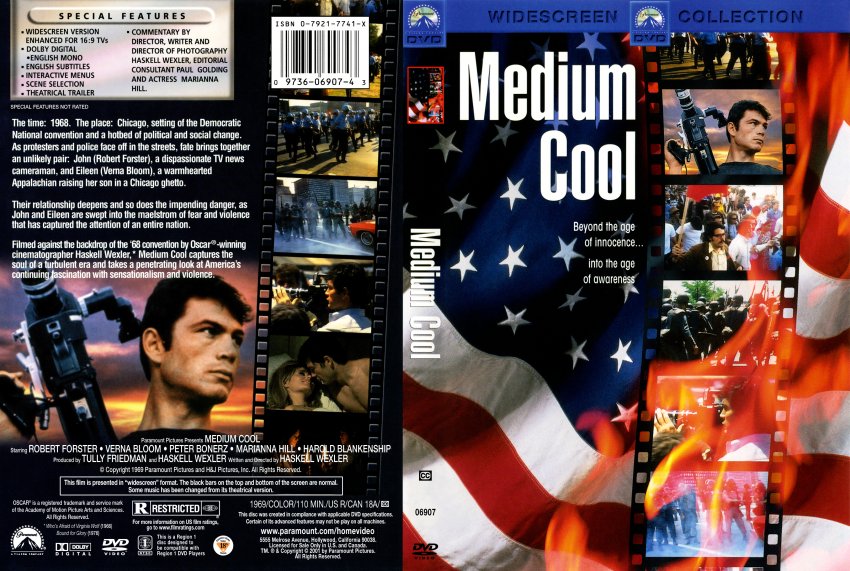
Medium Cool (1969) was a project shadowed by the FBI, saddled with a market-inhibiting X rating, and released with tepid support from a nervous studio. Not surprisingly, despite attracting very favorable reviews, it was not big hit at the box office. But over the years its reputation rose steadily, and eventually the movie found its proper place in the pantheon of the great films of the New Hollywood era. A worthy recipient, then, of the full Criterion Treatment, with a sparkling new special edition DVD and Blu-Ray; among its many features are a new interview with writer-director-cinematographer Haskell Wexler and the very welcome inclusion of (a slightly edited version of) the valuable but obscure 2001 BBC television documentary about the film, Look Out Haskell, It's Real."
As his triple-threat credits suggest, Medium Cool was very much Wexler's project. One of the hottest cinematographers in the business — just off an academy-award winning turn for Who's Afraid of Virginia Wolf (1966) and the big hit In the Heat of the Night (1967) — and with the emergence of a New American Cinema that took low-budget chances on new talent, Wexler was given a shot at the director's chair. And to his credit, the ambitious, confident cameraman didn't play it safe but threw everything he had into a risky project that he believed in.
With a background in documentary filmmaking, Wexler was influenced by a philosophy associated with the French New Wave (many of whose participants had similar apprenticeships), that challenged the reification of a divide between "fiction" and "non-fiction" films. Documentaries, they insisted, could not show an objective truth but offered only one interpretation of events, presented as a narrative following classical storytelling rules; realities that were, moreover, altered by the presence of cameras that produced self-consciousness and performance. Conversely, fiction films, especially those made on locations and with a new wave sensibility designed to reflect the personal experiences of their creators, were in many ways also documentary records of a certain type of reality. With Medium Cool, Wexler dove headlong into the blurry intersection between the two, embedding a fictional (and often improvised) story within very real situations. Often featuring non-actors going about their unscripted business, in many scenes only the principal players are aware that a movie is being made. At times those actors were exposed to real danger — placed, for example, in the midst of what the report of a National Commission would describe a few months afterwards as a "police riot." On the streets of Chicago, Wexler's camera became one among many that were capturing the events as they unfolded — and he was among those tear gassed, and was blinded for twenty-four hours.
The politically sensitive Wexler was irresistibly drawn from Hollywood back to his home town, Chicago, and the Democratic National Convention that would be held there in August 1968. Convinced that "something" would happen there — a violent confrontation, of some type, seemed certain — he crafted a story that could be interwoven into those events, unforeseeable in their specifics, as they unfolded. Wexler was later accused of incitement, but his cameras did little more than anticipate the inevitable explosion. Nineteen sixty-eight took care of the rest.
It was a very bad year. In January, the surprise Tet Offensive fundamentally altered the trajectory of the Vietnam War. The unprecedented communist strikes failed to achieve their military goals, but they made plain that no matter how many troops it poured in, the United States was not going to achieve its political objectives in the war, despite the unceasingly optimistic reports previously proffered by the Johnson Administration. (The U.S. would suffer over 4,700 combat deaths in the first three months of 1968. And with 500,000 American troops in the country, the war was being fought — at best — to a bloody stalemate.) In March, Johnson was embarrassed in the New Hampshire democratic primary by the strong showing of anti-war candidate Eugene McCarthy; within days, Robert Kennedy dropped into the race; within weeks, LBJ shocked the nation by dropping out. In April, Martin Luther King was assassinated. Kennedy, campaigning in Indianapolis, delivered the news to a stunned, mostly black audience, and delivered a short, moving speech appealing for calm. Scores of American cities erupted in riots that night, but Indianapolis was not one of them. In June, Kennedy would be assassinated moments after celebrating victory in the crucial California primary, his final words, "on to Chicago and let's win there," still hanging in the air as the shots rang out.
To Read the Rest
by Jonathan Kirshner
Bright Lights Film Journal
Medium Cool (1969) was a project shadowed by the FBI, saddled with a market-inhibiting X rating, and released with tepid support from a nervous studio. Not surprisingly, despite attracting very favorable reviews, it was not big hit at the box office. But over the years its reputation rose steadily, and eventually the movie found its proper place in the pantheon of the great films of the New Hollywood era. A worthy recipient, then, of the full Criterion Treatment, with a sparkling new special edition DVD and Blu-Ray; among its many features are a new interview with writer-director-cinematographer Haskell Wexler and the very welcome inclusion of (a slightly edited version of) the valuable but obscure 2001 BBC television documentary about the film, Look Out Haskell, It's Real."
As his triple-threat credits suggest, Medium Cool was very much Wexler's project. One of the hottest cinematographers in the business — just off an academy-award winning turn for Who's Afraid of Virginia Wolf (1966) and the big hit In the Heat of the Night (1967) — and with the emergence of a New American Cinema that took low-budget chances on new talent, Wexler was given a shot at the director's chair. And to his credit, the ambitious, confident cameraman didn't play it safe but threw everything he had into a risky project that he believed in.
With a background in documentary filmmaking, Wexler was influenced by a philosophy associated with the French New Wave (many of whose participants had similar apprenticeships), that challenged the reification of a divide between "fiction" and "non-fiction" films. Documentaries, they insisted, could not show an objective truth but offered only one interpretation of events, presented as a narrative following classical storytelling rules; realities that were, moreover, altered by the presence of cameras that produced self-consciousness and performance. Conversely, fiction films, especially those made on locations and with a new wave sensibility designed to reflect the personal experiences of their creators, were in many ways also documentary records of a certain type of reality. With Medium Cool, Wexler dove headlong into the blurry intersection between the two, embedding a fictional (and often improvised) story within very real situations. Often featuring non-actors going about their unscripted business, in many scenes only the principal players are aware that a movie is being made. At times those actors were exposed to real danger — placed, for example, in the midst of what the report of a National Commission would describe a few months afterwards as a "police riot." On the streets of Chicago, Wexler's camera became one among many that were capturing the events as they unfolded — and he was among those tear gassed, and was blinded for twenty-four hours.
The politically sensitive Wexler was irresistibly drawn from Hollywood back to his home town, Chicago, and the Democratic National Convention that would be held there in August 1968. Convinced that "something" would happen there — a violent confrontation, of some type, seemed certain — he crafted a story that could be interwoven into those events, unforeseeable in their specifics, as they unfolded. Wexler was later accused of incitement, but his cameras did little more than anticipate the inevitable explosion. Nineteen sixty-eight took care of the rest.
It was a very bad year. In January, the surprise Tet Offensive fundamentally altered the trajectory of the Vietnam War. The unprecedented communist strikes failed to achieve their military goals, but they made plain that no matter how many troops it poured in, the United States was not going to achieve its political objectives in the war, despite the unceasingly optimistic reports previously proffered by the Johnson Administration. (The U.S. would suffer over 4,700 combat deaths in the first three months of 1968. And with 500,000 American troops in the country, the war was being fought — at best — to a bloody stalemate.) In March, Johnson was embarrassed in the New Hampshire democratic primary by the strong showing of anti-war candidate Eugene McCarthy; within days, Robert Kennedy dropped into the race; within weeks, LBJ shocked the nation by dropping out. In April, Martin Luther King was assassinated. Kennedy, campaigning in Indianapolis, delivered the news to a stunned, mostly black audience, and delivered a short, moving speech appealing for calm. Scores of American cities erupted in riots that night, but Indianapolis was not one of them. In June, Kennedy would be assassinated moments after celebrating victory in the crucial California primary, his final words, "on to Chicago and let's win there," still hanging in the air as the shots rang out.
To Read the Rest
Tuesday, August 20, 2013
Tuesday, July 9, 2013
Tuesday, July 2, 2013
The Dreamers (France/UK/Italy: Bernardo Bertolucci, 2003)

The Dreamers (France/UK/Italy: Bernardo Bertolucci, 2003: 115 mins)
Buchanan, Ian. "Bernardo Bertolucci's The Dreamers; Kristin Ross' May 68 & Its Afterlives; Deleuze & Guattari's Anti-Oedipus." excerpt from Deleuze and Guattari's Anti-Oedipus. NY: Continuum, 2008: 13-19. Posted on Dialogic (July 2010)
Dyson, Jake. "The Dreamers (2003)." Film Matters (February 20, 2018)
Fletcher, Stephen Q. "The Dreamers: Revolution as a Gala Dinner and a Game." Metaphilm (May 4, 2008)
Hudson, David. "Sex in the Movies." Green Cine (2005)
Ross, Kristin. May '68 and Its Afterlives. Chicago: University of Chicago Press, 2002.
Saturday, April 6, 2013
Long Distance Revolutionary: A Journey with Mumia Abu-Jamal (USA: Stephen Vittoria, 2013)

Long Distance Revolutionary: A Journey with Mumia Abu-Jamal (USA: Stephen Vittoria, 2013: 120 mins)
Abu-Jamal, Mumia. "The United States Is Fast Becoming One of the Biggest Open-Air Prisons on Earth." Democracy Now (February 1, 2013)
Hanarahan, Noelle and Stephen Vittoria. "'Long Distance Revolutionary': Mumia Abu-Jamal’s Journey from Black Panthers to Prison Journalist." Democracy Now (February 1, 2013)
Hedges, Chris. The Unsilenced Voice of a 'Long-Distance Revolutionary.'" TruthDig (December 9, 2012)
Tuesday, April 2, 2013
Workers Unite: Mario Monicelli on The Organizer
Workers Unite: Mario Monicelli on The Organizer
The Current

The Organizer is a dramatically political statement from director Mario Monicelli. More commonly known for lighter films like Big Deal on Madonna Street, Monicelli created an expression of the necessity of collective action that is both gritty and entertaining. In making this period piece about a factory strike in turn-of-the-twentieth-century Turin (the rapidly industrializing Italian city that would come to be called “Italy’s Detroit”), Monicelli strove for the utmost realism, casting the film with actual workers and shooting on location in one of the area’s huge textile factories. In this 2006 interview, included as part of the film’s Criterion release, Monicelli (who died in 2010) talks about filming in the factory, along with the importance of creating an oppressive atmosphere and showing the reality of the working world.
To Watch the Clip
The Current
The Organizer is a dramatically political statement from director Mario Monicelli. More commonly known for lighter films like Big Deal on Madonna Street, Monicelli created an expression of the necessity of collective action that is both gritty and entertaining. In making this period piece about a factory strike in turn-of-the-twentieth-century Turin (the rapidly industrializing Italian city that would come to be called “Italy’s Detroit”), Monicelli strove for the utmost realism, casting the film with actual workers and shooting on location in one of the area’s huge textile factories. In this 2006 interview, included as part of the film’s Criterion release, Monicelli (who died in 2010) talks about filming in the factory, along with the importance of creating an oppressive atmosphere and showing the reality of the working world.
To Watch the Clip
Thursday, March 21, 2013
Democracy Now: Dying Iraq War Veteran Tomas Young Explains Decision to End His Life
Exclusive: Dying Iraq War Veteran Tomas Young Explains Decision to End His Life
Democracy Now
In the week marking the 10th anniversary of the U.S. invasion of Iraq, we spend the hour looking at the remarkable life and imminent death of Iraq War veteran Tomas Young. Citing his overwhelming physical pain from wounds that left him paralyzed in Iraq, Young recently announced he has decided to end his life by discontinuing his medicine and nourishment, which comes in the form of liquid through a feeding tube. Young joins to explain his decision from his home in Kansas City, along with his wife Claudia Cuellar. We’re also joined by Phil Donahue, the legendary TV talk show host, whose 2007 documentary, "Body of War," follows Tomas’ rehabilitation and his political awakening to become one of the most prominent antiwar U.S. veterans speaking out against the invasion and occupation of Iraq. "I am, on one hand, sick and tired of being sick and tired," Young says. "And on the other, I don’t want to watch my body waste away." Donahue calls Tomas’ announcement "a very unusual act of moral courage. He wants people to see this, because he came home from the most sanitized war of my lifetime. We don’t see this. But less than 5 percent of us, maybe 1 percent ... have made a personal sacrifice for this war. And Tomas is one of them."
Guests:
Tomas Young, Iraq War veteran and the main subject of the documentary, Body of War. On April 4, 2004, his fifth day in Iraq, Young’s unit came under fire in the Sadr City neighborhood of Baghdad. Young was left paralyzed, never to walk again. Released from medical care three months later, Young returned home to become an active member in Iraq Veterans Against the War. He recently announced that he will stop his nourishment, which comes in the form of liquid through a feeding tube — a decision which will hasten his death.
Phil Donahue, one of the best-known talk show hosts in U.S. television history, his show was on the air for more than 29 years. In 2002, he returned to the airwaves, but he was fired in 2003 on the eve of the war by MSNBC because he was allowing antiwar voices on the air. Along with Ellen Spiro, he directed the documentary, Body of War, which tells the story of Tomas Young, an Iraq War veteran paralyzed from a bullet to the spine. Now, at the age of 33, Tomas has decided to end his life.
Claudia Cuellar, the wife and primary caregiver of Tomas Young.
To Watch the Episode
Democracy Now
In the week marking the 10th anniversary of the U.S. invasion of Iraq, we spend the hour looking at the remarkable life and imminent death of Iraq War veteran Tomas Young. Citing his overwhelming physical pain from wounds that left him paralyzed in Iraq, Young recently announced he has decided to end his life by discontinuing his medicine and nourishment, which comes in the form of liquid through a feeding tube. Young joins to explain his decision from his home in Kansas City, along with his wife Claudia Cuellar. We’re also joined by Phil Donahue, the legendary TV talk show host, whose 2007 documentary, "Body of War," follows Tomas’ rehabilitation and his political awakening to become one of the most prominent antiwar U.S. veterans speaking out against the invasion and occupation of Iraq. "I am, on one hand, sick and tired of being sick and tired," Young says. "And on the other, I don’t want to watch my body waste away." Donahue calls Tomas’ announcement "a very unusual act of moral courage. He wants people to see this, because he came home from the most sanitized war of my lifetime. We don’t see this. But less than 5 percent of us, maybe 1 percent ... have made a personal sacrifice for this war. And Tomas is one of them."
Guests:
Tomas Young, Iraq War veteran and the main subject of the documentary, Body of War. On April 4, 2004, his fifth day in Iraq, Young’s unit came under fire in the Sadr City neighborhood of Baghdad. Young was left paralyzed, never to walk again. Released from medical care three months later, Young returned home to become an active member in Iraq Veterans Against the War. He recently announced that he will stop his nourishment, which comes in the form of liquid through a feeding tube — a decision which will hasten his death.
Phil Donahue, one of the best-known talk show hosts in U.S. television history, his show was on the air for more than 29 years. In 2002, he returned to the airwaves, but he was fired in 2003 on the eve of the war by MSNBC because he was allowing antiwar voices on the air. Along with Ellen Spiro, he directed the documentary, Body of War, which tells the story of Tomas Young, an Iraq War veteran paralyzed from a bullet to the spine. Now, at the age of 33, Tomas has decided to end his life.
Claudia Cuellar, the wife and primary caregiver of Tomas Young.
To Watch the Episode
Wednesday, March 6, 2013
Seth Rosenfeld: A Secret History of America in the 60s
Lynum had plenty of information to share. The FBI's files on Mario Savio, the brilliant philosophy student who was the spokesman for the Free Speech Movement, were especially detailed. Savio had a debilitating stutter when speaking to people in small groups, but when standing before a crowd and condemning his administration's latest injustice he spoke with divine fire. His words had inspired students to stage what was the largest campus protest in American history. Newspapers and magazines depicted him as the archetypal "angry young man," and it was true that he embodied a student movement fueled by anger at injustice, impatience for change, and a burning desire for personal freedom. Hoover ordered his agents to gather intelligence they could use to ruin his reputation or otherwise "neutralize" him, impatiently ordering them to expedite their efforts.
Hoover's agents had also compiled a bulging dossier on the man Savio saw as his enemy: Clark Kerr. As campus dissent mounted, Hoover came to blame the university president more than anyone else for not putting an end to it. Kerr had led UC to new academic heights, and he had played a key role in establishing the system that guaranteed all Californians access to higher education, a model adopted nationally and internationally. But in Hoover's eyes, Kerr confused academic freedom with academic license, coddled Communist faculty members, and failed to crack down on "young punks" like Savio. Hoover directed his agents to undermine the esteemed educator in myriad ways. He wanted Kerr removed from his post as university president. As he bluntly put it in a memo to his top aides, Kerr was "no good."
Reagan listened intently to Lynum's presentation, but he wanted more--much more. He asked for additional information on Kerr, for reports on liberal members of the Board of Regents who might oppose his policies, and for intelligence reports about any upcoming student protests. Just the week before, he had proposed charging tuition for the first time in the university's history, setting off a new wave of protests up and down the state. He told Lynum he feared subversives and liberals would attempt to misrepresent his efforts to establish fiscal responsibility, and that he hoped the FBI would share information about any upcoming demonstrations against him, whether on campus or at his press conferences. It was Reagan's fear, according to Lynum's subsequent report, "that some of his press conferences could be stacked with 'left wingers' who might make an attempt to embarrass him and the state government."
Lynum said he understood his concerns, but following Hoover's instructions he made no promises. Then he and Harter wished the ailing governor a speedy recovery, departed the mansion, slipped into their dark four-door Ford, and drove back to the San Francisco field office, where Lynum sent an urgent report to the director.
The bedside meeting was extraordinary, but so was the relationship between Reagan and Hoover. It had begun decades earlier, when the actor became an informer in the FBI's investigation of Hollywood Communists. When Reagan was elected president of the Screen Actors Guild, he secretly continued to help the FBI purge fellow actors from the union's rolls. Reagan's informing proved helpful to the House Un-American Activities Committee as well, since the bureau covertly passed along information that could help HUAC hold the hearings that wracked Hollywood and led to the blacklisting and ruin of many people in the film industry. Reagan took great satisfaction from his work with the FBI, which gave him a sense of security and mission during a period when his marriage to Jane Wyman was failing, his acting career faltering, and his faith in the Democratic Party of his father crumbling. In the following years, Reagan and FBI officials courted each other through a series of confidential contacts. And after Reagan emerged as a leading conservative spokesman in the fifties, Hoover went beyond the bounds of his jurisdiction and secretly gave him personal and political help. He even lent Reagan a hand in keeping track of his own wayward children, Maureen and Michael. Now the long courtship between the FBI director and the former movie star would pay off for them both.
The FBI would become deeply involved in the clash over free speech at Berkeley between the social forces represented by Reagan, Kerr, and Savio. Each of these men had a transforming vision of America and exerted extraordinary and lasting influence on the nation. By tracing the bureau's involvement with these iconic figures, this book reveals a secret history of America in the sixties. It shows how the FBI's dirty tricks at Berkeley helped fuel the student movement, damaged the Democratic Party, launched Ronald Reagan's political career, and exacerbate the nation's continuing culture wars. Above all, it illustrates the dangers that the combination of secrecy and power pose to democracy, especially during turbulent times. (7-8)
Rosenfeld, Seth. Subversives: The FBI's War on Student Radicals, and Reagan's Rise to Power. Farrar, Straus and Giroux, 2012.

Hoover's agents had also compiled a bulging dossier on the man Savio saw as his enemy: Clark Kerr. As campus dissent mounted, Hoover came to blame the university president more than anyone else for not putting an end to it. Kerr had led UC to new academic heights, and he had played a key role in establishing the system that guaranteed all Californians access to higher education, a model adopted nationally and internationally. But in Hoover's eyes, Kerr confused academic freedom with academic license, coddled Communist faculty members, and failed to crack down on "young punks" like Savio. Hoover directed his agents to undermine the esteemed educator in myriad ways. He wanted Kerr removed from his post as university president. As he bluntly put it in a memo to his top aides, Kerr was "no good."
Reagan listened intently to Lynum's presentation, but he wanted more--much more. He asked for additional information on Kerr, for reports on liberal members of the Board of Regents who might oppose his policies, and for intelligence reports about any upcoming student protests. Just the week before, he had proposed charging tuition for the first time in the university's history, setting off a new wave of protests up and down the state. He told Lynum he feared subversives and liberals would attempt to misrepresent his efforts to establish fiscal responsibility, and that he hoped the FBI would share information about any upcoming demonstrations against him, whether on campus or at his press conferences. It was Reagan's fear, according to Lynum's subsequent report, "that some of his press conferences could be stacked with 'left wingers' who might make an attempt to embarrass him and the state government."
Lynum said he understood his concerns, but following Hoover's instructions he made no promises. Then he and Harter wished the ailing governor a speedy recovery, departed the mansion, slipped into their dark four-door Ford, and drove back to the San Francisco field office, where Lynum sent an urgent report to the director.
The bedside meeting was extraordinary, but so was the relationship between Reagan and Hoover. It had begun decades earlier, when the actor became an informer in the FBI's investigation of Hollywood Communists. When Reagan was elected president of the Screen Actors Guild, he secretly continued to help the FBI purge fellow actors from the union's rolls. Reagan's informing proved helpful to the House Un-American Activities Committee as well, since the bureau covertly passed along information that could help HUAC hold the hearings that wracked Hollywood and led to the blacklisting and ruin of many people in the film industry. Reagan took great satisfaction from his work with the FBI, which gave him a sense of security and mission during a period when his marriage to Jane Wyman was failing, his acting career faltering, and his faith in the Democratic Party of his father crumbling. In the following years, Reagan and FBI officials courted each other through a series of confidential contacts. And after Reagan emerged as a leading conservative spokesman in the fifties, Hoover went beyond the bounds of his jurisdiction and secretly gave him personal and political help. He even lent Reagan a hand in keeping track of his own wayward children, Maureen and Michael. Now the long courtship between the FBI director and the former movie star would pay off for them both.
The FBI would become deeply involved in the clash over free speech at Berkeley between the social forces represented by Reagan, Kerr, and Savio. Each of these men had a transforming vision of America and exerted extraordinary and lasting influence on the nation. By tracing the bureau's involvement with these iconic figures, this book reveals a secret history of America in the sixties. It shows how the FBI's dirty tricks at Berkeley helped fuel the student movement, damaged the Democratic Party, launched Ronald Reagan's political career, and exacerbate the nation's continuing culture wars. Above all, it illustrates the dangers that the combination of secrecy and power pose to democracy, especially during turbulent times. (7-8)
Rosenfeld, Seth. Subversives: The FBI's War on Student Radicals, and Reagan's Rise to Power. Farrar, Straus and Giroux, 2012.
Tuesday, February 26, 2013
Films We Want to See #25: Let Fury Have the Hour (USA: Antonio D'Ambrosio, 2012)
Film Website
“Let fury have the hour/
Anger can be power/
Do you know that you can use it?”
– “The Clampdown,” The Clash
Rough, raw and unapologetically inspirational, LET FURY HAVE THE HOUR is a charged journey into the heart of the creative counter-culture in 2012. In a time of global challenges, big questions and by-the-numbers politics, this upbeat, outspoken film tracks the story of the artists, writers, thinkers and musicians who have gone underground to re-imagine the world – honing in on equality, community and engaged creativity – in exuberantly paradigm-busting ways.
Writer/director Antonino D’Ambrosio unites 50 powerful, of-the-moment voices –from street artist Shepard Fairey to rapper Chuck D to playwright Eve Ensler to musicians Tom Morello and Billy Bragg to novelist Edwidge Danticat to filmmaker John Sayles to comic Lewis Black – who share personal and powerful tales of how they transformed anger and angst into provocative art and ideas. Mix-mastered with historical footage, animation and performances, D’Ambrosio presents a visceral portrait of a generation looking to re-jigger a system that has failed to address the most pressing problems of our times . . . or human potential.
The story begins in the 1980s with the rise of Reagan and Thatcher — and a cultural shift towards fierce individualism and rampant consumerism. Coming of age in a world seemingly gone mad or at least gone shopping, some kids started searching for something more authentic. This was the start of a renegade movement D’Ambrosio calls “creative-response.” It was a hybrid, haphazard collective of skateboarders, punk rockers, rappers, street poets, feminists and graffitists whose reaction to this brave new world was not to turn away, but to turn up the volume and have their say.
Now that generation is coming to the fore, sparking a global movement focused not just on pushing the boundaries with guitars, paint, dance, storytelling, graphics and subcultural style – but on coming together around real reasons for hope.
Set to a stirring soundtrack from the film’s artists – including Rage Against The Machine, Public Enemy, Billy Bragg, Gogol Bordello, MC5, DJ Spooky and Sean Hayes – LET FURY HAVE THE HOUR is a fast and furious trip into the grass roots of art and activism, 21st Century style. The film is written and directed by author and visual artist Antonino D’Ambrosio in his feature debut. The producers are D’Ambrosio and James L. Reid and the executive producers are Jonathan Gray, Brian Devine, Rob McKay, Mark Urman and Chaz Zelus. The film features original music from composer and MC5 guitarist Wayne Kramer. A CAVU Pictures release.
“Let fury have the hour/
Anger can be power/
Do you know that you can use it?”
– “The Clampdown,” The Clash
Rough, raw and unapologetically inspirational, LET FURY HAVE THE HOUR is a charged journey into the heart of the creative counter-culture in 2012. In a time of global challenges, big questions and by-the-numbers politics, this upbeat, outspoken film tracks the story of the artists, writers, thinkers and musicians who have gone underground to re-imagine the world – honing in on equality, community and engaged creativity – in exuberantly paradigm-busting ways.
Writer/director Antonino D’Ambrosio unites 50 powerful, of-the-moment voices –from street artist Shepard Fairey to rapper Chuck D to playwright Eve Ensler to musicians Tom Morello and Billy Bragg to novelist Edwidge Danticat to filmmaker John Sayles to comic Lewis Black – who share personal and powerful tales of how they transformed anger and angst into provocative art and ideas. Mix-mastered with historical footage, animation and performances, D’Ambrosio presents a visceral portrait of a generation looking to re-jigger a system that has failed to address the most pressing problems of our times . . . or human potential.
The story begins in the 1980s with the rise of Reagan and Thatcher — and a cultural shift towards fierce individualism and rampant consumerism. Coming of age in a world seemingly gone mad or at least gone shopping, some kids started searching for something more authentic. This was the start of a renegade movement D’Ambrosio calls “creative-response.” It was a hybrid, haphazard collective of skateboarders, punk rockers, rappers, street poets, feminists and graffitists whose reaction to this brave new world was not to turn away, but to turn up the volume and have their say.
Now that generation is coming to the fore, sparking a global movement focused not just on pushing the boundaries with guitars, paint, dance, storytelling, graphics and subcultural style – but on coming together around real reasons for hope.
Set to a stirring soundtrack from the film’s artists – including Rage Against The Machine, Public Enemy, Billy Bragg, Gogol Bordello, MC5, DJ Spooky and Sean Hayes – LET FURY HAVE THE HOUR is a fast and furious trip into the grass roots of art and activism, 21st Century style. The film is written and directed by author and visual artist Antonino D’Ambrosio in his feature debut. The producers are D’Ambrosio and James L. Reid and the executive producers are Jonathan Gray, Brian Devine, Rob McKay, Mark Urman and Chaz Zelus. The film features original music from composer and MC5 guitarist Wayne Kramer. A CAVU Pictures release.
Friday, February 22, 2013
Gabriella Coleman: Coding Freedom: The Ethics and Aesthetics of Hacking; Steve Vittoria: Long Distance Revolutionary: A Journey with Mumia Abu-Jamal
Law and Disorder Radio
Coding Freedom: The Ethics and Aesthetics of Hacking

In the past 2 years, we’ve discussed in many interviews and updates, the attacks on whistle-blowers and hackers. The emerging movement of programmers, hackers, open source software, online communities has challenged and exposed corporate and government control and surveillance, making them targets of prosecution. As many may know, our own Michael Ratner has represented whistle-blower Julian Assange, computer activist Jeremy Hammond, and has been a legal adviser to many others including the late Aaron Swartz. Today we talk with author Gabriella Coleman about her recently published book Encoding Freedom: The Ethics and Aesthetics of Hacking. It’s a good place to start for those learning about the political significance of free software, intellectual property and the morality of computer hacking.
Guest – Gabriella Coleman, Wolfe Chair in Scientific and Technological Literacy in the Art History and Communication Studies Department at McGill University. Trained as an anthropologist, she researches, writes, and teaches on hackers and digital activism.
Long Distance Revolutionary: A Journey with Mumia Abu-Jamal
The new documentary, “Long Distance Revolutionary: A Journey with Mumia Abu-Jamal,” is premiering across the country. The film includes interviews from Cornel West, Alice Walker, Ruby Dee, Dick Gregory, Amy Goodman, Michael Parenti, writers Tariq Ali, and Michelle Alexander. This film beautifully captures the importance of Mumia Abu-Jamal’s life as an American journalist, and radical. He published seven books in prison including the best selling “Live From Death Row.”
In Chris Hedges’ review he points out what Cornel West says in the film: “The state is very clever in terms of keeping track, especially [of] the courageous and visionary ones, the ones that are long-distance runners. You can keep track of them, absorb ’em, dilute ’em, or outright kill ’em—you don’t have to worry about opposition to ’em.”
Guest – Steve Vittoria, the writer, director, producer and editor of Long Distance Revolutionary: A Journey with Mumia Abu-Jamal. The film premiered in theaters in New York City earlier this month.
To Listen to the Episode
Coding Freedom: The Ethics and Aesthetics of Hacking
In the past 2 years, we’ve discussed in many interviews and updates, the attacks on whistle-blowers and hackers. The emerging movement of programmers, hackers, open source software, online communities has challenged and exposed corporate and government control and surveillance, making them targets of prosecution. As many may know, our own Michael Ratner has represented whistle-blower Julian Assange, computer activist Jeremy Hammond, and has been a legal adviser to many others including the late Aaron Swartz. Today we talk with author Gabriella Coleman about her recently published book Encoding Freedom: The Ethics and Aesthetics of Hacking. It’s a good place to start for those learning about the political significance of free software, intellectual property and the morality of computer hacking.
Guest – Gabriella Coleman, Wolfe Chair in Scientific and Technological Literacy in the Art History and Communication Studies Department at McGill University. Trained as an anthropologist, she researches, writes, and teaches on hackers and digital activism.
Long Distance Revolutionary: A Journey with Mumia Abu-Jamal
The new documentary, “Long Distance Revolutionary: A Journey with Mumia Abu-Jamal,” is premiering across the country. The film includes interviews from Cornel West, Alice Walker, Ruby Dee, Dick Gregory, Amy Goodman, Michael Parenti, writers Tariq Ali, and Michelle Alexander. This film beautifully captures the importance of Mumia Abu-Jamal’s life as an American journalist, and radical. He published seven books in prison including the best selling “Live From Death Row.”
In Chris Hedges’ review he points out what Cornel West says in the film: “The state is very clever in terms of keeping track, especially [of] the courageous and visionary ones, the ones that are long-distance runners. You can keep track of them, absorb ’em, dilute ’em, or outright kill ’em—you don’t have to worry about opposition to ’em.”
Guest – Steve Vittoria, the writer, director, producer and editor of Long Distance Revolutionary: A Journey with Mumia Abu-Jamal. The film premiered in theaters in New York City earlier this month.
To Listen to the Episode
Wednesday, February 20, 2013
Democracy Now Headlines: Palestinian Filmmaker Behind "5 Broken Cameras" Detained at LAX Ahead of Oscars
Palestinian Filmmaker Behind "5 Broken Cameras" Detained at LAX Ahead of Oscars
Democracy Now

A Palestinian filmmaker and his family were detained at Los Angeles International Airport on Tuesday after arriving to attend this weekend’s Academy Awards. The filmmaker, Emad Burnat, is nominated in the Best Documentary category for "5 Broken Cameras," which documents the growth of a resistance movement to the Israeli separation wall in the West Bank village of Bil’in. In a series of Twitter messages, the filmmaker Michael Moore said immigration officers told Burnat he would not be allowed to enter the country even after he showed them his Oscar invite. Burnat and his family were eventually released after Moore phoned Academy attorneys. Moore quoted Burnat as saying: "It’s nothing I’m not already used to. When [you] live under occupation, with no rights, this is a daily occurrence."
Link to Today's Headlines
Democracy Now
A Palestinian filmmaker and his family were detained at Los Angeles International Airport on Tuesday after arriving to attend this weekend’s Academy Awards. The filmmaker, Emad Burnat, is nominated in the Best Documentary category for "5 Broken Cameras," which documents the growth of a resistance movement to the Israeli separation wall in the West Bank village of Bil’in. In a series of Twitter messages, the filmmaker Michael Moore said immigration officers told Burnat he would not be allowed to enter the country even after he showed them his Oscar invite. Burnat and his family were eventually released after Moore phoned Academy attorneys. Moore quoted Burnat as saying: "It’s nothing I’m not already used to. When [you] live under occupation, with no rights, this is a daily occurrence."
Link to Today's Headlines
Saturday, February 16, 2013
Saturday, February 2, 2013
Mumia Abu-Jamal: "The United States Is Fast Becoming One of the Biggest Open-Air Prisons on Earth"; Noelle Hanrahan & Stephen Vittoria: "Long Distance Revolutionary" - Mumia Abu-Jamal’s Journey from Black Panthers to Prison Journalist
Mumia Abu-Jamal: "The United States Is Fast Becoming One of the Biggest Open-Air Prisons on Earth"
Democracy Now
In a rare live interview, Mumia Abu-Jamal calls into Democracy Now! as the new film, "Long Distance Revolutionary," about his life premieres in New York City this weekend. After 29 years on death row, he is now being held in general population at the Pennsylvania State Correctional Institution – Mahanoy. "How free are we today, those who claim to be non-prisoners? Your computers are being read by others in government. Your letters, your phone calls are being intercepted," says Mumia Abu-Jamal. "We live now in a national security state, where the United States is fast becoming one of the biggest open-air prisons on earth. We can speak about freedom, and the United States has a long and distinguished history of talking about freedom, but have we exampled freedom? And I think the answer should be very clear: We have not." In 1982, Mumia was sentenced to die for killing Philadelphia police officer Daniel Faulkner. He has always maintained his innocence and is perhaps America’s most famous political prisoner. In 2011, an appeals court upheld his conviction, but also vacated his death sentence. It found jurors were given confusing instructions.
Guest:
Mumia Abu-Jamal, former death row prisoner. For decades, Abu-Jamal has argued racism by the trial judge and prosecutors led to his conviction for the killing of Philadelphia police officer Daniel Faulkner. Last year, the 3rd U.S. Circuit Court of Appeals set aside his death sentence after finding jurors were given confusing instructions that encouraged them to choose the death penalty rather than a life sentence.
To Watch the Interview
"Long Distance Revolutionary": Mumia Abu-Jamal’s Journey from Black Panthers to Prison Journalist
The new documentary, "Long Distance Revolutionary: A Journey with Mumia Abu-Jamal," premieres today in New York City. We play an excerpt of the film and speak to writer, producer and director Steve Vittoria, as well as Noelle Hanrahan of Prison Radio, who has interviewed Abu-Jamal many times over the years. The film features many supporters of Mumia, including actress Ruby Dee, writer Tariq Ali, and author Michelle Alexander.
Guests:
Stephen Vittoria, longtime documentary filmmaker. Most recently, he is the writer, director, producer and editor of Long Distance Revolutionary: A Journey with Mumia Abu-Jamal. The film premiers in theaters in New York City Feb. 1-3. We recently featured his 2005 documentary, One Bright Shining Moment, about Senator George McGovern.
Noelle Hanrahan, director of Prison Radio and a producer of Long Distance Revolutionary.
To Watch the Conversation

Democracy Now
In a rare live interview, Mumia Abu-Jamal calls into Democracy Now! as the new film, "Long Distance Revolutionary," about his life premieres in New York City this weekend. After 29 years on death row, he is now being held in general population at the Pennsylvania State Correctional Institution – Mahanoy. "How free are we today, those who claim to be non-prisoners? Your computers are being read by others in government. Your letters, your phone calls are being intercepted," says Mumia Abu-Jamal. "We live now in a national security state, where the United States is fast becoming one of the biggest open-air prisons on earth. We can speak about freedom, and the United States has a long and distinguished history of talking about freedom, but have we exampled freedom? And I think the answer should be very clear: We have not." In 1982, Mumia was sentenced to die for killing Philadelphia police officer Daniel Faulkner. He has always maintained his innocence and is perhaps America’s most famous political prisoner. In 2011, an appeals court upheld his conviction, but also vacated his death sentence. It found jurors were given confusing instructions.
Guest:
Mumia Abu-Jamal, former death row prisoner. For decades, Abu-Jamal has argued racism by the trial judge and prosecutors led to his conviction for the killing of Philadelphia police officer Daniel Faulkner. Last year, the 3rd U.S. Circuit Court of Appeals set aside his death sentence after finding jurors were given confusing instructions that encouraged them to choose the death penalty rather than a life sentence.
To Watch the Interview
"Long Distance Revolutionary": Mumia Abu-Jamal’s Journey from Black Panthers to Prison Journalist
The new documentary, "Long Distance Revolutionary: A Journey with Mumia Abu-Jamal," premieres today in New York City. We play an excerpt of the film and speak to writer, producer and director Steve Vittoria, as well as Noelle Hanrahan of Prison Radio, who has interviewed Abu-Jamal many times over the years. The film features many supporters of Mumia, including actress Ruby Dee, writer Tariq Ali, and author Michelle Alexander.
Guests:
Stephen Vittoria, longtime documentary filmmaker. Most recently, he is the writer, director, producer and editor of Long Distance Revolutionary: A Journey with Mumia Abu-Jamal. The film premiers in theaters in New York City Feb. 1-3. We recently featured his 2005 documentary, One Bright Shining Moment, about Senator George McGovern.
Noelle Hanrahan, director of Prison Radio and a producer of Long Distance Revolutionary.
To Watch the Conversation
Wednesday, December 12, 2012
Chris Hedges: The Unsilenced Voice of a "Long-Distance Revolutionary"
The Unsilenced Voice of a "Long-Distance Revolutionary"
by Chris Hedges
TruthDig
I am sitting in the visiting area of the SCI Mahanoy prison in Frackville, Pa., on a rainy, cold Friday morning with Mumia Abu-Jamal, America’s most famous political prisoner and one of its few authentic revolutionaries. He is hunched forward on the gray plastic table, his dreadlocks cascading down the sides of his face, in a room that looks like a high school cafeteria. He is talking intently about the nature of empire, which he is currently reading voraciously about, and effective forms of resistance to tyranny throughout history. Small children, visiting their fathers or brothers, race around the floor, wail or clamber on the plastic chairs. Abu-Jamal, like the other prisoners in the room, is wearing a brown jumpsuit bearing the letters DOC—for Department of Corrections.
Abu-Jamal was transferred in January to the general prison population after nearly 30 years in solitary confinement on death row and was permitted physical contact with his wife, children and other visitors for the first time in three decades. He had been sentenced to death in 1982 for the Dec. 9, 1981, killing of Philadelphia police officer Daniel Faulkner. His sentence was recently amended to life without parole. The misconduct of the judge, flagrant irregularities in his trial and tainted evidence have been criticized by numerous human rights organizations, including Amnesty International.
Abu-Jamal, who was a young activist in the Black Panthers and later one of the most important radical journalists in Philadelphia, a city that a few decades earlier produced I.F. Stone, has long been the bête noire of the state. The FBI opened a file on him when he was 15, when he started working with the local chapter of the Black Panthers. He was suspended from his Philadelphia high school when he campaigned to rename the school for Malcolm X and distributed “black revolutionary student power” literature.
Stephen Vittoria’s new film documentary about Abu-Jamal, “Long Distance Revolutionary,” rather than revisit the case, chronicles his importance and life as an American journalist, radical and intellectual under the harsh realities of Pennsylvania’s death row. Abu-Jamal has published seven books in prison, including his searing and best-selling “Live From Death Row.” The film features the voices of Cornel West, James Cone, Dick Gregory, Angela Davis, Alice Walker and others. It opens in theaters Feb. 1, starting in New York City. In the film Gregory says that Abu-Jamal has single-handedly brought “dignity to the whole death row.”
The late historian Manning Marable says in the film: “The voice of black journalism in the struggle for the liberation of African-American people has always proved to be decisive throughout black history. When you listen to Mumia Abu-Jamal you hear the echoes of David Walker, Frederick Douglass, W.E.B. Du Bois, Paul Robeson, and the sisters and brothers who kept the faith with struggle, who kept the faith with resistance.”
The authorities, as they did before he was convicted, have attempted to silence him in prison. Pennsylvania banned all recorded interviews with Abu-Jamal after 1996. In response to protests over the singling out of one inmate in the Pennsylvania correction system, the state simply banned recorded access to all its inmates. The ban is nicknamed “the Mumia rule.”
“I was punished for communicating,” Abu-Jamal says.
Cornel West says in the film: “The state is very clever in terms of keeping track, especially [of] the courageous and visionary ones, the ones that are long-distance runners. You can keep track of them, absorb ’em, dilute ’em, or outright kill ’em—you don’t have to worry about opposition to ’em.”
To Read the Rest of the Essay

by Chris Hedges
TruthDig
I am sitting in the visiting area of the SCI Mahanoy prison in Frackville, Pa., on a rainy, cold Friday morning with Mumia Abu-Jamal, America’s most famous political prisoner and one of its few authentic revolutionaries. He is hunched forward on the gray plastic table, his dreadlocks cascading down the sides of his face, in a room that looks like a high school cafeteria. He is talking intently about the nature of empire, which he is currently reading voraciously about, and effective forms of resistance to tyranny throughout history. Small children, visiting their fathers or brothers, race around the floor, wail or clamber on the plastic chairs. Abu-Jamal, like the other prisoners in the room, is wearing a brown jumpsuit bearing the letters DOC—for Department of Corrections.
Abu-Jamal was transferred in January to the general prison population after nearly 30 years in solitary confinement on death row and was permitted physical contact with his wife, children and other visitors for the first time in three decades. He had been sentenced to death in 1982 for the Dec. 9, 1981, killing of Philadelphia police officer Daniel Faulkner. His sentence was recently amended to life without parole. The misconduct of the judge, flagrant irregularities in his trial and tainted evidence have been criticized by numerous human rights organizations, including Amnesty International.
Abu-Jamal, who was a young activist in the Black Panthers and later one of the most important radical journalists in Philadelphia, a city that a few decades earlier produced I.F. Stone, has long been the bête noire of the state. The FBI opened a file on him when he was 15, when he started working with the local chapter of the Black Panthers. He was suspended from his Philadelphia high school when he campaigned to rename the school for Malcolm X and distributed “black revolutionary student power” literature.
Stephen Vittoria’s new film documentary about Abu-Jamal, “Long Distance Revolutionary,” rather than revisit the case, chronicles his importance and life as an American journalist, radical and intellectual under the harsh realities of Pennsylvania’s death row. Abu-Jamal has published seven books in prison, including his searing and best-selling “Live From Death Row.” The film features the voices of Cornel West, James Cone, Dick Gregory, Angela Davis, Alice Walker and others. It opens in theaters Feb. 1, starting in New York City. In the film Gregory says that Abu-Jamal has single-handedly brought “dignity to the whole death row.”
The late historian Manning Marable says in the film: “The voice of black journalism in the struggle for the liberation of African-American people has always proved to be decisive throughout black history. When you listen to Mumia Abu-Jamal you hear the echoes of David Walker, Frederick Douglass, W.E.B. Du Bois, Paul Robeson, and the sisters and brothers who kept the faith with struggle, who kept the faith with resistance.”
The authorities, as they did before he was convicted, have attempted to silence him in prison. Pennsylvania banned all recorded interviews with Abu-Jamal after 1996. In response to protests over the singling out of one inmate in the Pennsylvania correction system, the state simply banned recorded access to all its inmates. The ban is nicknamed “the Mumia rule.”
“I was punished for communicating,” Abu-Jamal says.
Cornel West says in the film: “The state is very clever in terms of keeping track, especially [of] the courageous and visionary ones, the ones that are long-distance runners. You can keep track of them, absorb ’em, dilute ’em, or outright kill ’em—you don’t have to worry about opposition to ’em.”
To Read the Rest of the Essay
Monday, November 12, 2012
Wednesday, October 31, 2012
Freedom Rides (USA: Stanley Nelson, 2012: 117 mins)
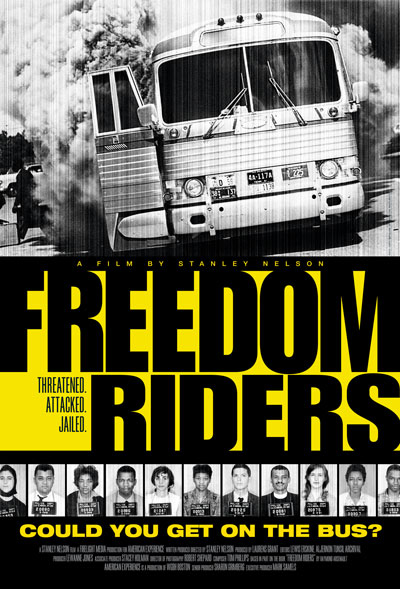
I was working with this documentary with Peace Studies students last week and I was amazed, inspired and awed at the courage and passion of the students who participated in the Freedom Rides.
To watch it online
Subscribe to:
Posts (Atom)