Showing posts with label Love. Show all posts

Sunday, January 12, 2014

Blue is the Warmest Color (France/Belgium/Spain: Abdellatif Kechiche, 2013)

“Few films dig so deeply (and with such sense of intimacy) into the complexities of human relations, the joys and pains of self discovery and the hurtful realisation that our bodies and mind can yearn opposite things.” — Fernanda Solórzano


Blue is the Warmest Color (France/Belgium/Spain: Abdellatif Kechiche, 2013: 179 mins)

Beauvoir, Simone de. The Second Sex (1949: PDF copy)

Bell, Nicholas. "Blue is the Color of My True Love’s Hair: Kechiche Takes Us Deep Sea, Baby." Ion Cinema (October 25, 2013)

Berger, John. The Ways of Seeing. (1972: Summary/outline of this important book that studied how we are position to observe people and objects in art)

Blue is the Warmest Color Critic's Roundup (No Date)

Blue is the Warmest Color (Graphic Novel) Wikipedia (No Date)

Dargis, Manohla. "Seeing You Seeing Me: The Trouble With Blue Is the Warmest Color." The New York Times (October 27, 2013)

Dayoub, Tony. "The 51st New York Film Festival #3." The Cinephiliacs (October 13, 2013)

Hudson, David. "Abdellatif Kechiche’s BLUE IS THE WARMEST COLOR: A coy coming-out drama this most definitely isn’t.” Keyframe (May 23, 2013)

---. "Abdellatif Kechiche’s BLUE IS THE WARMEST COLOR: 'The experience of the film transcends flaws both real and imagined.'" Keyframe (October 11, 2013)

Ildari, Max. "Blue Is the Warmest Color 2: A Response to Lorrie Moore’s Review in the New York Review of Books." Bright Lights After Dark (January 10, 2014)

Jones, Kristin M. ""Review: Blue Is the Warmest Color." Film Comment (2013)

Kennedy, A.L. "Sartre and the Individual." A History of Ideas (April 15, 2015) ["Writer AL Kennedy on Existentialist ideas about the individual. Jean Paul Sartre argued that, for humans, 'existence preceded essence'. This means that there is no blueprint or template from which to work - humans are free to make themselves up as they go along. Being an individual comes from the way you negotiate this freedom and the choices you make in the face of it."]
Lee, Janet. "'Blue Is The Warmest Color'." Neon Tommy (October 22, 2013)

Mayer, Sophie. "Blue is the Warmest Colour: This part-adaptation of Julie Maroh’s graphic-novel saga of a lesbian love affair trades a new voice for the same old male gaze." Sight and Sound (February 20, 2015)

McCahill, Mike. "21st Century Directors You Need to Know About: Abdellatif Kechiche." Movie Mail (May 2, 2014)

McNeil, Jeremiah. "Blue is the Warmest Color" Dialogic Cinephilia (December 21, 2013)

Moore, Lorrie. "Gazing at Love: Blue is the Warmest Color." The New York Review of Books (December 19, 2013)

Rich, B. Ruby. "Blue Is the Warmest Color: Feeling Blue." The Current (February 24, 2014)

Roberts, Soraya. "Blue Is the Warmest Color is about class, not just sex." Salon (November 3, 2013) ["Sex and sexuality are only half the film's story. It's also about lovers from different economic worlds."]

Sartre, Jean-Paul. "Existentialism is a Humanism." (Lecture given in 1946: published in Existentialism from Dostoyevsky to Sartre, ed. Walter Kaufman, Meridian Publishing Company, 1989) Marxist Archive (2005)

Stern, Marlowe. "‘Blue is the Warmest Color’: See What the Sex Scene Looks Like In the Graphic Novel." The Daily Beast (October 28, 2013)

Thompson, Martha. "Blue Is the Warmest Color 1: Unresolved Alienations of Class." Bright Lights After Dark (January 2014)

Zaman, Farihah. "The Pleasure Principle: Blue is the Warmest Color." Reverse Shot #33 (2013)




Wednesday, October 16, 2013

Liza Bear: Christopher Boe on Love and Personal Identity in Reconstruction

Christopher Boe on Love and Personal Identity in "Reconstruction"
by Liza Bear
Indiewire


Inspired by a Jacques-Henri Lartigue photograph of a woman standing in a room with empty bookcases, Danish director Christoffer Boe's first feature "Reconstruction" fittingly won the prestigious Camera D'or at Cannes in 2003 and a Golden Plaque for Manuel Alberto Claro's luminous wide-screen cinematography. It brings closure to the exploration of themes of love and personal identity begun in three earlier shorts, "Obsession," "Virginity" and "Anxiety."

"They're all about a young male being obsessed by a beautiful woman and then being trapped in his own logic of what love is," says Boe, 30, a passionate still photographer as well as moviemaker. It's that logic which Boe dissects in "Reconstruction."

As its title suggests, Boe uses a fractured narrative and startling visuals to create a haunting rumination on the mysteries of desire (and the consequences of acting them out), rather than a romantic comedy. A kind of triangular square dance, "Reconstruction" sports excellent performances from its leads, with Nikolaj Lie Kaas playing Alex as a cypher and Maria Bonnevie doubling up as both Alex's steady girl-friend Simone and his new flame Aimee. It doesn't help Alex that Aimee is married to older man August (Krister Henriksson), who happens to be a writer. But it does give a few extra twists to the narrative. August is the film's narrator. There are echoes of Francois Ozon's cryptic thriller "Swimming Pool" here, though style and sensibility are poles apart. Having an attractive live-in girl-friend doesn't stop Alex from one day falling for Aimee, August's wife. A narrator who's also a character in the film naturally raises questions about what's real and what's imaginary. But then, so does being in love. The next day, Alex's world has changed, literally. His apartment has disappeared and so have his friends. An existential conundrum? Maybe. Or rather an attempt to create a metaphor for the paradigm shift that love induces.

To Read the Interview

Wednesday, August 14, 2013

(Not) Love and Death: On Michael Haneke's Amour

(Not) Love and Death: On Michael Haneke's Amour
by Vlad Dima
Bright Lights Film Journal


Michael Haneke's latest film begins abruptly with the police breaking down the door to the apartment of the two octogenarian protagonists, Georges and Anne. The violent intrusion is underlined by the fact that we go, with no transition effect, from complete silence and black screen to noise and color. This type of intense narrative shift is common in Haneke's films. Long periods of apparent stability and quiet are followed by sudden spurts of incredible viciousness, in The White Ribbon (2009), Funny Games (2007, and 1997), or Caché (2005). I say "apparent" because violence lurks just beneath the narrative surface of Haneke's films, its presence felt constantly. So when it does emerge, it is not just for shock value. Oddly, it soothes us, providing momentary relief from the stress accumulated throughout the film. Child beatings, shootings, throat slashing are part of the director's repertoire that may force the audience into a sadistic position, but we avoid them in Amour. Or so it seems. Make no mistake, this is a violent film, but its ferocity comes from being forced to confront our own mortality. This is not a film about love, as the title purposely misleads us. This is a film about death, and worse, our death.

The inclusion of "us," the audience, in the film's thematic concerns commences immediately following the sequence in which the police find Anne's rotted body in the apartment. We begin with a flashback to a night when the couple went out to a classical music concert given by one of Anne's old students, Alexandre. In a beautiful fixed shot, we can see the spectators in the theater as they are waiting for the show to start. After a long moment, as the shot turns into a long take, we become aware of the missing reverse shot. The stage is never shown. We, the "real" audience, are suddenly facing the diegetic audience. We are the reverse shot. So we are pulled into the narrative through a counter-cinema artifice. The lack of reverse shot also points to the impossibility of suture; thus the very beginning of the film points to breakdowns, some literal (the door), some metaphorical (the apparatus of cinema and, by extension, life).

To Read the Rest

Wednesday, April 17, 2013

Brokeback Mountain (Canada/USA: Ang Lee, 2005)


Brokeback Mountain (Canada/USA: Ang Lee, 2005)

Benshoff, Harry M. "Brokering Brokeback Mountain — a local reception study." Jump Cut (2008)

Garrett, Daniel. "You Don't Know What Love Is." Film International #21 (2006)

Koziak, Barbara. "Shepherding Romance: Reviving the Politics of Romantic Love in Brokeback Mountain." Genders #50 (2009)

"Queer Cowboys: Alternative Space in "Brokeback Mountain." Film International (2006)

Schneider, Richard, Jr., et al. "Not Quitting Brokeback/Lost in Adaptation/The Hate Crime/Beyond the Mountain." Gay & Lesbian Review (May/June 2006): Reprinted in Annual Editions: Film 07/08 170-174 [Available in BCTC Library PN1993 A6285]

Sharrett, Christopher. "Death of the Strong, Silent Type: The Achievement of Brokeback Mountain." Film International 7.1 (February 2009)

Stamatopoulos, Irini. "Ang Lee's Cowboys: Fallen from Brokeback’s Paradise Lost." Offscreen (February 28, 2007)

Vicari, Justin. "Discovering America: Reflections on Brokeback Mountain." Jump Cut #49 (Spring 2007)

Monday, March 18, 2013

Matt Zoller Seitz -- Harold and Maude: Life and How to Live It

Harold and Maude: Life and How to Live It
By Matt Zoller Seitz
Current


Hal Ashby’s Harold and Maude, about the love between a suicidal young man of about twenty and an almost eighty-year-old widow, is timeless in part because it never quite belonged to its own time. Conceived in the late 1960s, at the height of the counterculture, it was released in 1971, when the political narrative of peaceful rebels versus the jackbooted establishment had lost what little mainstream appeal it had briefly enjoyed. In the popular imagination, the March on Washington and the Summer of Love had been displaced by Woodstock, Altamont, Kent State, and a string of assassinations and riots. Richard Nixon had ridden into office in 1968 on a wave of law-and-order sentiment and was about to cakewalk into a second term (and unprecedented shame). The counterculture was in retreat. As Peter Fonda’s record producer tells his young girlfriend in 1999’s The Limey, the sixties were “really . . . just ’66 and early ’67. That’s all it was.”

But the movement’s ideals lived on, in a disguised and ultimately more daring form, in Harold and Maude, which took values that had been expressed by youthful rebels and dropouts in the late 1960s—peace, love, understanding, distrust of authority, a determination to march to the beat of a different drummer—and put them in the mouth of an old woman embroiled in one of the oddest and most original love stories ever filmed. The movie’s apoplectic authority figures, dotty old-money types, poetic interludes, and trance-inducing folk-rock soundtrack (by Cat Stevens) may seem typical of earlier hippie flicks. But its two central premises—that an elderly woman could embody the most unguarded, delicate variety of Summer of Love openness and that she and a much younger man should be able to fall in love and get married without being judged, much less stopped—are anything but. Harold and Maude was shocking by the standards of 1971 Hollywood movies, even the ones that styled themselves as adventurous or hip. But it is so ideologically and emotionally consistent, and weaves such a gentle spell, that we can accept the central romance as a metaphor for beleaguered political and social sentiments even as we get to know Harold (Bud Cort) and Maude (Ruth Gordon) as individuals and root for their happiness. It’s a romance, a tragedy, a satire, a paean to eccentricity, a philosophical statement, and a “trip” film whose music montages seem to roll in like waves. Its mix of elements felt strange and new at the time, and still does, even though the film’s characters, tone, and soundtrack have been referenced and plundered by many modern directors, including Wes Anderson, who used two Stevens songs in Rushmore; P. T. Anderson, whose first four features are filled with Ashby-like innocents stumbling through cruel worlds; and David Fincher, whose Fight Club features a misfit couple flirting at self-help groups that they don’t even belong to, as Harold and Maude do at strangers’ funerals.

Ashby was a former editor and one of the staunchest exemplars of countercultural values ever to work in Hollywood. He debuted with 1970’s The Landlord, starring Beau Bridges as a white preppy who buys a brownstone in then black Park Slope, Brooklyn, alienates his stuck-up family, and learns what really matters in life: love, honesty, and spontaneity. He followed it with an impressive string of pictures that rank among the decade’s best, including Harold and Maude, The Last Detail (1973), Shampoo (1975), Coming Home (1978), and Being There (1979). The films vary widely in subject matter, style, and tone. But they all share a fascination with naive outsiders who are part of a larger system or machine, even if they don’t realize it, and who inspire others, accidentally or on purpose.

In all these movies, but especially in Harold and Maude, Ashby displays an extraordinary sensitivity to the spectrum of human experience. Both The Landlord and Harold and Maude are built around disaffected young men who act out against lives of stifling privilege and ossified values, but the latter film is simpler and more direct, and less tied to ripped-from-the-headlines issues. Building on the innovations of the landmark releases The Graduate (1967) and Easy Rider (1969), Harold and Maude explores outsider mentalities through fragmented cutting, using those music montages to embellish its themes and create a feeling of emotional suspension. But Harold and Maude is ultimately a richer, deeper movie, less measured and a lot more meandering, and also warmer, weirder, and tougher to reduce to catchphrases. It doesn’t position rebels against the establishment, or any group against any other group. It just wants people to be themselves and to be appreciated instead of judged—and to spread bliss by reaching out.

To Read the Rest of the Essay

Wednesday, February 27, 2013

David Parkinson: Oshima's Passions

Oshima's Passions
by David Parkinson
Movie Mail


Nagisa Oshima, who died last month, is best known for In the Realm of the Senses, a powerful tale of sexual obsession that retains much of its power 40 years on. David argues it becomes even more powerful when viewed with its less well-known sequel.

Nagisa Oshima, who died on 15 January at the age of 80, made several important films, yet he will probably be best remembered for one. During the nuberu bagu or new wave of the 1960s, he produced a clutch of furiously subversive denunciations of Japanese society that drew heavily on actual events and suggested that defeat in the Second World War had done little to discredit attitudes that had governed the national psyche since feudal times.

In later years, Oshima also achieved commercial success with the prison camp drama Merry Christmas Mr Lawrence (1983) and also proved himself adept at the samurai movie with Gohatto (1999). But, while his canon is admired for it trenchancy, artistic integrity and political courage, it is In the Realm of the Senses (1976) that commands the most attention. There is no question that it still has the power to compel, challenge and shock nearly four decades after its release. But this contentious picture, which has still to be shown in its entirety in Japan, acquires its greatest potency when seen in conjunction with Empire of Passion (1978), which similarly explores the ramifications of an intense amour fou, but does so with an increased control, maturity and compassion.

At the height of what might be deemed his 'angry young man' phase, Oshima produced a succession of uncompromising features for his own Sozo-sha company. As the traditional Japanese studios went into decline, Death By Hanging (1968), Diary of a Shinjuku Thief (1968), Boy (1969), The Man Who Left His Will on Film (1970) and The Ceremony (1971) matched anything being made in Europe for socio-political intrepidity and stylistic audacity.

To Read the Rest

Tuesday, February 7, 2012

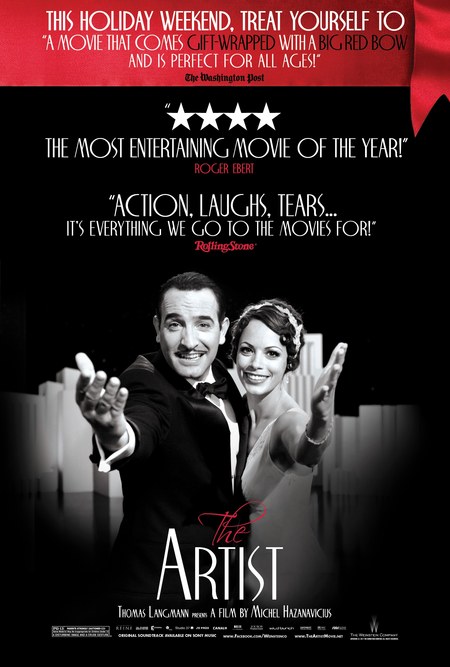
Felix Wilder: The Artist, The Most Emasculating Movie of the Year

[Spoiler Alert -- you should wait until after you have seen the film. I just watched this film and I have to say Felix completely misses the mark and allows his own insecurities to lead him to a gross misreading of the film.]

The Artist, the Most Emasculating Movie of the Year
by Felix Wilder
Omega Level


Though the movie industry’s year-end tradition—pummeling moviegoers every winter with “Oscar-worthy” products like some cinematic blizzard of unbearable mawkishness and half-baked messages about human nature—has thankfully come to an end, we’ve reached that unfortunate stretch when the industry congratulates itself by doling out unwarranted accolades. And the film that is getting most of the love (winning a Golden Globe for Best Picture last night) is the one that is the least understood: Michel Hazanavicius’ The Artist. Widely hailed as a feel-good comedy about a silent-movie star’s transition with the help of a good and loving lady into talking pictures, The Artist is actually a far more tragic tale about a once burly, proud, and charismatic man of few—or, rather, no—words who is methodically broken down by the women in his life, mostly by his supposed love interest who wants him to open up and talk. And by the time he finally does express himself, articulating his feelings, he has become a shell of his former (and better) self. In turn, if the film indeed warrants any accolade, it should be for the Most Emasculating Movie of the Year.

When we are first introduced to the protagonist George Valentin (Jean Dujardin), he is the center of attention, the main man, a huge star of adventure films (think Douglas Fairbanks). The Artist opens at the premiere of his new film, in which he is being tortured so that he will “talk” and divulge important information. But, like the heroic character that he is, he resists the temptation to externalize. Moreover, as The Artist’s striking symbol for all men, he remains mum about what he’s all about, because by opening up and sharing this guarded information, thus revealing what lies within, it also opens up the possibility of losing himself entirely.

In this film-within-a-film, the actor does not give up the information. Instead, with the assistance of his trusted canine companion, in and out of the movies (a constant reminder of the battle between cats and dogs), George saves his co-star played by Constance (Missi Pyle), outwits and outworks his enemies, and finally soars to freedom on the plane he pilots. The character, like the actor, wins on his own terms, and quite handily at that. He makes it look easy, and the audience at the premiere loves him (and the film) for it. They give him a long standing ovation for his performance, which he duly relishes by himself until he begrudgingly allows his co-star to bask in the overwhelming response. But make no mistake: The audience cheers for him, and him alone.

To Read the Rest of the Response