Showing posts with label Education. Show all posts

Sunday, January 12, 2014

Blue is the Warmest Color (France/Belgium/Spain: Abdellatif Kechiche, 2013)

“Few films dig so deeply (and with such sense of intimacy) into the complexities of human relations, the joys and pains of self discovery and the hurtful realisation that our bodies and mind can yearn opposite things.” — Fernanda Solórzano


Blue is the Warmest Color (France/Belgium/Spain: Abdellatif Kechiche, 2013: 179 mins)

Beauvoir, Simone de. The Second Sex (1949: PDF copy)

Bell, Nicholas. "Blue is the Color of My True Love’s Hair: Kechiche Takes Us Deep Sea, Baby." Ion Cinema (October 25, 2013)

Berger, John. The Ways of Seeing. (1972: Summary/outline of this important book that studied how we are position to observe people and objects in art)

Blue is the Warmest Color Critic's Roundup (No Date)

Blue is the Warmest Color (Graphic Novel) Wikipedia (No Date)

Dargis, Manohla. "Seeing You Seeing Me: The Trouble With Blue Is the Warmest Color." The New York Times (October 27, 2013)

Dayoub, Tony. "The 51st New York Film Festival #3." The Cinephiliacs (October 13, 2013)

Hudson, David. "Abdellatif Kechiche’s BLUE IS THE WARMEST COLOR: A coy coming-out drama this most definitely isn’t.” Keyframe (May 23, 2013)

---. "Abdellatif Kechiche’s BLUE IS THE WARMEST COLOR: 'The experience of the film transcends flaws both real and imagined.'" Keyframe (October 11, 2013)

Ildari, Max. "Blue Is the Warmest Color 2: A Response to Lorrie Moore’s Review in the New York Review of Books." Bright Lights After Dark (January 10, 2014)

Jones, Kristin M. ""Review: Blue Is the Warmest Color." Film Comment (2013)

Kennedy, A.L. "Sartre and the Individual." A History of Ideas (April 15, 2015) ["Writer AL Kennedy on Existentialist ideas about the individual. Jean Paul Sartre argued that, for humans, 'existence preceded essence'. This means that there is no blueprint or template from which to work - humans are free to make themselves up as they go along. Being an individual comes from the way you negotiate this freedom and the choices you make in the face of it."]
Lee, Janet. "'Blue Is The Warmest Color'." Neon Tommy (October 22, 2013)

Mayer, Sophie. "Blue is the Warmest Colour: This part-adaptation of Julie Maroh’s graphic-novel saga of a lesbian love affair trades a new voice for the same old male gaze." Sight and Sound (February 20, 2015)

McCahill, Mike. "21st Century Directors You Need to Know About: Abdellatif Kechiche." Movie Mail (May 2, 2014)

McNeil, Jeremiah. "Blue is the Warmest Color" Dialogic Cinephilia (December 21, 2013)

Moore, Lorrie. "Gazing at Love: Blue is the Warmest Color." The New York Review of Books (December 19, 2013)

Rich, B. Ruby. "Blue Is the Warmest Color: Feeling Blue." The Current (February 24, 2014)

Roberts, Soraya. "Blue Is the Warmest Color is about class, not just sex." Salon (November 3, 2013) ["Sex and sexuality are only half the film's story. It's also about lovers from different economic worlds."]

Sartre, Jean-Paul. "Existentialism is a Humanism." (Lecture given in 1946: published in Existentialism from Dostoyevsky to Sartre, ed. Walter Kaufman, Meridian Publishing Company, 1989) Marxist Archive (2005)

Stern, Marlowe. "‘Blue is the Warmest Color’: See What the Sex Scene Looks Like In the Graphic Novel." The Daily Beast (October 28, 2013)

Thompson, Martha. "Blue Is the Warmest Color 1: Unresolved Alienations of Class." Bright Lights After Dark (January 2014)

Zaman, Farihah. "The Pleasure Principle: Blue is the Warmest Color." Reverse Shot #33 (2013)


Monday, September 23, 2013

Making Contact - Room To Breathe: From Chaos to Peace in the Classroom

Room To Breathe: From Chaos to Peace in the Classroom
Making Contact


At overcrowded and underfunded public schools across the country high suspension rates are exacerbating existing achievement gaps. Often, chaos in the classroom is to blame, keeping students from concentrating on their classes. On this edition we’ll hear excerpts from Russell Long’s film “Room to Breathe” which takes us to a middle school in San Francisco, California, that began teaching mindfulness in the hopes of giving students the skills they need to focus on learning.

Featuring:

Ling Busch, guidance counselor at Marina Middle School; Megan Cowan, mindfulness teacher, students and teachers at Marina Middle School in San Francisco

To Listen to the Episode

Monday, April 8, 2013

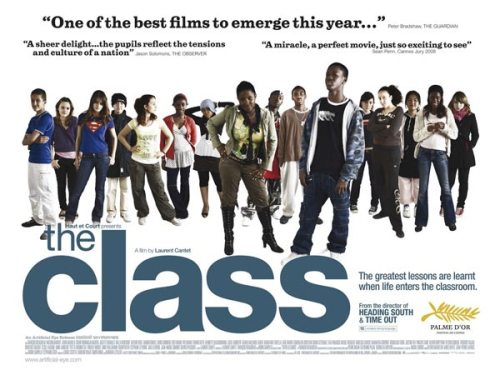
The Class (France: Laurent Cantent, 2008)


The Class (France: Laurent Cantent, 2008: 128 mins)

Ashbury, Roy. "Schools and Teachers." Understanding Representation. ed. Wendy Helsby. London: BFI, 2005: 51-74. [Available in BCTC library PN1995 U4977 2005]

Chen, Lu. "I Hate Mathematics and Racists." The Brooklyn Rail (March 2009)

Livingston, Jessica. "Global capital’s false choices in the films of Laurent Cantet." Jump Cut #53 (Summer 2012)

Wednesday, March 6, 2013

Seth Rosenfeld: A Secret History of America in the 60s

Lynum had plenty of information to share. The FBI's files on Mario Savio, the brilliant philosophy student who was the spokesman for the Free Speech Movement, were especially detailed. Savio had a debilitating stutter when speaking to people in small groups, but when standing before a crowd and condemning his administration's latest injustice he spoke with divine fire. His words had inspired students to stage what was the largest campus protest in American history. Newspapers and magazines depicted him as the archetypal "angry young man," and it was true that he embodied a student movement fueled by anger at injustice, impatience for change, and a burning desire for personal freedom. Hoover ordered his agents to gather intelligence they could use to ruin his reputation or otherwise "neutralize" him, impatiently ordering them to expedite their efforts.

Hoover's agents had also compiled a bulging dossier on the man Savio saw as his enemy: Clark Kerr. As campus dissent mounted, Hoover came to blame the university president more than anyone else for not putting an end to it. Kerr had led UC to new academic heights, and he had played a key role in establishing the system that guaranteed all Californians access to higher education, a model adopted nationally and internationally. But in Hoover's eyes, Kerr confused academic freedom with academic license, coddled Communist faculty members, and failed to crack down on "young punks" like Savio. Hoover directed his agents to undermine the esteemed educator in myriad ways. He wanted Kerr removed from his post as university president. As he bluntly put it in a memo to his top aides, Kerr was "no good."

Reagan listened intently to Lynum's presentation, but he wanted more--much more. He asked for additional information on Kerr, for reports on liberal members of the Board of Regents who might oppose his policies, and for intelligence reports about any upcoming student protests. Just the week before, he had proposed charging tuition for the first time in the university's history, setting off a new wave of protests up and down the state. He told Lynum he feared subversives and liberals would attempt to misrepresent his efforts to establish fiscal responsibility, and that he hoped the FBI would share information about any upcoming demonstrations against him, whether on campus or at his press conferences. It was Reagan's fear, according to Lynum's subsequent report, "that some of his press conferences could be stacked with 'left wingers' who might make an attempt to embarrass him and the state government."

Lynum said he understood his concerns, but following Hoover's instructions he made no promises. Then he and Harter wished the ailing governor a speedy recovery, departed the mansion, slipped into their dark four-door Ford, and drove back to the San Francisco field office, where Lynum sent an urgent report to the director.

The bedside meeting was extraordinary, but so was the relationship between Reagan and Hoover. It had begun decades earlier, when the actor became an informer in the FBI's investigation of Hollywood Communists. When Reagan was elected president of the Screen Actors Guild, he secretly continued to help the FBI purge fellow actors from the union's rolls. Reagan's informing proved helpful to the House Un-American Activities Committee as well, since the bureau covertly passed along information that could help HUAC hold the hearings that wracked Hollywood and led to the blacklisting and ruin of many people in the film industry. Reagan took great satisfaction from his work with the FBI, which gave him a sense of security and mission during a period when his marriage to Jane Wyman was failing, his acting career faltering, and his faith in the Democratic Party of his father crumbling. In the following years, Reagan and FBI officials courted each other through a series of confidential contacts. And after Reagan emerged as a leading conservative spokesman in the fifties, Hoover went beyond the bounds of his jurisdiction and secretly gave him personal and political help. He even lent Reagan a hand in keeping track of his own wayward children, Maureen and Michael. Now the long courtship between the FBI director and the former movie star would pay off for them both.

The FBI would become deeply involved in the clash over free speech at Berkeley between the social forces represented by Reagan, Kerr, and Savio. Each of these men had a transforming vision of America and exerted extraordinary and lasting influence on the nation. By tracing the bureau's involvement with these iconic figures, this book reveals a secret history of America in the sixties. It shows how the FBI's dirty tricks at Berkeley helped fuel the student movement, damaged the Democratic Party, launched Ronald Reagan's political career, and exacerbate the nation's continuing culture wars. Above all, it illustrates the dangers that the combination of secrecy and power pose to democracy, especially during turbulent times. (7-8)

Rosenfeld, Seth. Subversives: The FBI's War on Student Radicals, and Reagan's Rise to Power. Farrar, Straus and Giroux, 2012.

Sunday, March 3, 2013

David Simon on The Wire (2002-2008)


Instead of the usual good-guys-chasing-bad-guys framework, questions would be raised about the very labels of good and bad, and, indeed, whether such distinctly moral notions were really the point. The show would instead be about untethered capitalism run amok, about how power and money actually root themselves in a postmodern American city, and, ultimately, about why we as an urban people are no longer able to solve our problems or heal our wounds. (36)

The Wire depicts a world in which capital has triumphed completely, labor has been marginalized and monied interests have purchased enough political infrastructure to prevent reform. It is a world in which the rules and values of the free market and maximized profit have been mistaken for a social framework, a world where institutions themselves are paramount and every day human beings matter less. (36)

But instead of the old gods, The Wire is a Greek Tragedy in which the postmodern institutions are the Olympian forces. It's the police department, or the drug economy, or the political structures, or the school administration, or the macroeconomic forces that are throwing the lightning bolts and hitting people in the ass for no decent reason. (37)

David Simon, quoted in Watson, Garry. "The Literary Critic, the Nineteenth Century Novel and The Wire." Cineaction #84 (2011): 32-40.

Wednesday, October 17, 2012

Howard Zinn: Stories Hollywood Never Tells

As a teacher, I'm not interested in just reproducing class after class of graduates who will get out, become successful, and take their obedient places in the slots that society has prepared for them. What we must do--whether we teach or write or make films--is educate a new generation to do this very modest thing: change the world. (15)
---Zinn, Howard. "Stories Hollywood Never Tells." The Sun #343 (July 2004): 12-15.

Tuesday, October 2, 2012

Jeff Faux: Education Profiteering -- Wall Street's Next Big Thing?

Education Profiteering; Wall Street's Next Big Thing?
by Jeff Faux
The Real News Network

The end of the Chicago teachers' strike was but a temporary regional truce in the civil war that plagues the nation's public schools. There is no end in sight, in part because -- as often happens in wartime -- the conflict is increasingly being driven by profiteers.

The familiar media narrative tells us that this is a fight over how to improve our schools. On the one side are the self-styled reformers, who argue that the central problem with American K-12 education is low-quality teachers protected by their unions. Their solution is privatization, with its most common form being the privately run but publicly financed charter school. Because charter schools are mostly unregulated, nonunion and compete for students, their promoters claim they will, ipso facto, perform better than public schools.

On the other side are teachers and their unions who are cast as villains. The conventional plot line is that they resist change, blame poverty for their schools' failings and protect their jobs and turf.

It is well known, although rarely acknowledged in the press, that the reform movement has been financed and led by the corporate class. For over twenty years large business oriented foundations, such as Gates (Microsoft), Walton (Wal-Mart) and Broad (Sun Life) have poured billions into charter school start-ups, sympathetic academics and pundits, media campaigns (including Hollywood movies) and sophisticated nurturing of the careers of privatization promoters who now dominate the education policy debate from local school boards to the US Department of Education.

In recent years, hedge fund operators, leverage-buy-out artists and investment bankers have joined the crusade. They finance schools, sit on the boards of their associations and the management companies that run them, and -- most important -- have made support of charter schools one of the criteria for campaign giving in the post- Citizens United era. Since most Republicans are already on board for privatization, the political pressure has been mostly directed at Democrats.

Thus, for example, when Andrew Cuomo wanted to get the support of hedge fund managers for his run for governor of New York, he was told to talk to Joe Williams, director of Democrats for Education Reform, a group set up to lobby liberals on privatization. Cuomo is now a champion of charter schools. As Joanne Barkan noted in a Dissent Magazine report, privatizers are even targeting school board elections, in one case spending over $630,000 to elect two members in a local school board race last year in Colorado.

Wall Street's involvement in the charter school movement -- when the media acknowledges it -- is presented as an act of philanthropy. Perhaps, as critics claim, hedge funders are meddling in an area they know nothing about. But their motives are worthy. Indeed, since they send their own children to the best private schools, their concern for other people's children seems remarkably altruistic. "Wall Street has always put its money where its interests of beliefs lie," observed this New York Times article, "But it is far less common that so many financial heavyweights would adopt a social cause like charter schools and advance it with a laser like focus in the political realm."

Yet, with the wide variety of social causes and charitable needs -- poverty, health, housing, global warming, the arts, etc. -- why would so many Wall Streeters focus laser-like on this particular issue? The Times suggest two answers. One is that the money managers are hard-nosed, data-driven investors "drawn to the business-like way in which many charter schools are run; their focus on results primarily measured by test scores."

Twenty years ago, one might have reasonably believed that the private charter schools, which are managed to produce the numbers, would produce better outcomes -- as measured by the numbers. But the overwhelming evidence is that they do not. The single most comprehensive study, by researchers at Stanford University, found that 17 percent of charter school students performed better than their public school counterparts, 46 percent no better and 37 percent worse. Stanford's conclusions have been reinforced by virtually all of the serious research, including those at the University of California, the Economic Policy Institute and the policy research firm Mathematica.

Nor do charter schools seem more efficient. Those promoted as the most successful examples have been heavily subsidized by foundations and Wall Street donors. The film, Waiting for Superman that portrays a heroic charter school organizer fighting a selfish teachers union was widely hyped in the media -- including popular TV shows like Oprah Winfrey's. Yet, as Diane Ravitch, an assistant secretary of education under George H.W. Bush and a former charter school supporter turned critic, noted, the film neglected to report that the hero educator kicked out the entire first class of the school because their test scores were too low, that the school was heavily subsidized by the pro-reform foundations and that the hero took an annual salary of four hundred thousand dollars.

Neither do the data on international comparisons support either privatization in general or charter schools in particular. The foreign education systems that out score America's are government-run, unionized, monopolies. Ravitch asks: "I look around the world and I don't see any country doing this but us. Why is that?"

Good question. Although the data do not support the supposedly data-driven privatizers' claims, their enthusiasm is undiminished. In response to an op-ed by Bill Gates that crudely misrepresented the statistics on school performance, education policy analyst Richard Rothstein observed: "It is remarkable that someone associated with technology and progress should have such a careless disregard for accuracy when it comes to the education policy in which he is now so deeply involved."

The Times' other guess about Wall Street's motives was that hedge funders are attracted to the anti-union character of the charter schools. This is undoubtedly true; the attack on the pubic schools is clearly a part of the broad conservative campaign to discredit government.

Wall Street has always loathed the labor movement. And in the last decade it has had even more of a reason since corporate profits now depend more on cost cutting and less on the creation of new products. The Chief Finance Officer of JP Morgan reports that some 75% of the net increase in corporate profits between 2000 and 2007 -- before the financial crash -- was a result of cuts in workers' wages and benefits. Given that unions are the only serious vehicles for resistance to the corporate low-wage strategy, Wall Street's antipathy has become even stronger.

But today unions represent less than seven percent of private sector workers. And the influence of public sector unions on the bargaining position of workers in profit-making corporations is, certainly in the short run, negligible. So while hostility to unions plays a role, is it is not quite credible to believe that Wall Street profit maximizers would be spending so much of their time and money simply to beat up on a proxy for the private sector unions that they have already so beaten back.

As usual, when looking for what motivates capitalists in a market system, the answer is likely to have something to do with making money.

Having been rescued from the consequences of its own folly by the Bush/Obama bailouts with its de-regulated privileges intact, Wall Street is once more on the prowl for the new "big thing" -- a new source of potential profits upon which to build the next lucrative asset bubble.

To Read the Rest of the Essay

Sunday, July 29, 2012

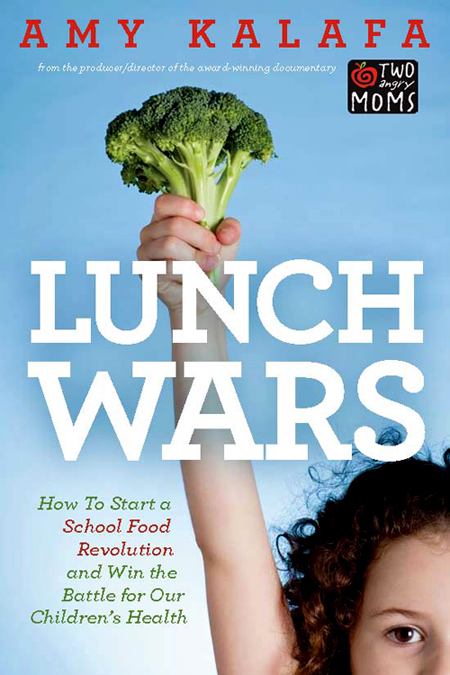
Radio West: Amy Kalafa -- Lunch Wars

Lunch Wars
Radio West (KUER: Utah Public Media)


The average American kid will have some 3,000 school lunches by the twelfth grade. But what are they eating? When filmmaker and author Amy Kalafa went into school cafeterias, she found lunch trays laden with chicken nuggets and French fries, but little in the way of healthy choices. The question she kept hearing from parents though was "What do we do about it?" Kalafa has written a book called "Lunch Wars," and ... she joins us to explain how to start a school food revolution.

To Listen to the Episode

Friday, April 20, 2012

Koch Brothers Exposed: The 1% at its Very Worst
Uprising Radio

When the Occupy Movement speaks about the 1 percent which has wreaked havoc on this country’s financial system, the billionaire Koch brothers immediately come to mind. Charles and David Koch have given hundreds of million dollars to fund a conservative agenda which promotes the interests of the richest 1 percent of Americans. Now, in Robert Greenwald’s new documentary, “Koch Brothers Exposed: The 1% at its very Worst” we get an incisive look at the tentacles of the Kochs’ influence throughout the American political and cultural landscape.

After inheriting the family oil business from their father, Charles and David Koch amassed an estimated fortune of $60 billion dollars through Koch Industries. The company has become the 2nd largest privately held multi-national corporation in the world owning companies that range from Georgia-Pacific paper company to fertilizers, chemicals, ranching, manufacturing and oil pipelines. Veteran film maker Robert Greenwald, in his film, shows how the Koch Brothers have spent their money to wield enormous power and advance an extreme right wing political agenda through massive donations to think tanks, legislators and political groups like Americans for Prosperity.

Employing more than 50,000 people in the US, Koch-funded think tanks, according to Greenwald, are working to dismantle unions, weaken social security and deregulate government to dilute environmental protections around the country. In fact, Koch Industries is one of the top ten polluters in the United States. Not satisfied with influencing the economic system within which their companies operate, the brothers also aspire to shape the cultural fabric of the country. Through groups like Americans for Prosperity, the Kochs are working to demolish the public school system by funding efforts to resegregate schools in places like Wake County North Carolina and undermine minority voting rights in dozens of states.

GUEST: Robert Greenwald, producer and director of Koch Brothers Exposed, also founder of Brave New Films, which has produced such hard-hitting documentaries as as Outfoxed: Rupert Murdoch’s War on Journalism Iraq for Sale: The War Profiteers and Wal-Mart: The High Cost of Low Price.

To Listen to the Episode and To See a Preview of the Documentary