The Interrupters
Radio West
Steve James made the extraordinary documentary "Hoop Dreams" in 1994. His most recent film, The Interrupters, premiered last year at Sundance and it's airing on PBS tonight. The film examines the complexities and realities of inner-city violence by following three violence prevention workers on the streets of Chicago. James spoke with Doug last year about the ideas in his films and the craft of making them.
To Listen to the Episode
Showing posts with label Urban. Show all posts
Showing posts with label Urban. Show all posts
Friday, November 1, 2013

Sunday, October 13, 2013
La Commune (Paris 1871) (France: Peter Watkins, 2000)

La Commune (Paris 1871) (France: Peter Watkins, 2000: 345 mins)
Ford, Hamish. "Producing revolutionary history on film: Henri Lefebvre’s urban space and Peter Watkins’ La Commune (Paris, 1871)." Jump Cut #57 (Fall 2016)
La Commune (Paris, 1871) (France: Peter Watkins, 2000: available on Google video in multiple parts)
"Peter Watkins: La Commune." Chtodelat (October 31, 2008)
Peter Watkins: The Media Crisis Dialogic (October 3, 2007)
Peter Watkins: Filmmaker/Media Critic." Dialogic (September 7, 2012)
Rapfogel, Jared. "The Cinema of Peter Watkins." Cineaste 32.2 (Spring 2007)
Rosenbaum, Jonathan. "The Revolution Has Been Televised [Peter Watkins’ LA COMMUNE]." Chicago Reader (May 17, 2002)
Watkins, Peter. "Notes on the Making of La Commune (Paris, 1871)." Peter Watkins: Filmmaker/Critic (2000)
---. "Notes on the Media Crisis." Barcelona, Spain: Quaderns portàtils, 2010.
Sunday, March 3, 2013
David Simon on The Wire (2002-2008)
Instead of the usual good-guys-chasing-bad-guys framework, questions would be raised about the very labels of good and bad, and, indeed, whether such distinctly moral notions were really the point. The show would instead be about untethered capitalism run amok, about how power and money actually root themselves in a postmodern American city, and, ultimately, about why we as an urban people are no longer able to solve our problems or heal our wounds. (36)
The Wire depicts a world in which capital has triumphed completely, labor has been marginalized and monied interests have purchased enough political infrastructure to prevent reform. It is a world in which the rules and values of the free market and maximized profit have been mistaken for a social framework, a world where institutions themselves are paramount and every day human beings matter less. (36)
But instead of the old gods, The Wire is a Greek Tragedy in which the postmodern institutions are the Olympian forces. It's the police department, or the drug economy, or the political structures, or the school administration, or the macroeconomic forces that are throwing the lightning bolts and hitting people in the ass for no decent reason. (37)
David Simon, quoted in Watson, Garry. "The Literary Critic, the Nineteenth Century Novel and The Wire." Cineaction #84 (2011): 32-40.
Wednesday, May 23, 2012
Matthew J. Iannucci: Postmodern Antihero -- Capitalism and Heroism in Taxi Driver
Postmodern Antihero: Capitalism and Heroism in Taxi Driver
by Matthew J. Iannucci
Bright Lights Film Journal

Martin Scorsese's Taxi Driver is a gritty, disturbing, nightmarish modern film classic that examines alienation in urban society. From a postmodernist's perspective, it combines the elements of noir, the Western, horror, and urban melodrama as it explores the psychological madness within an obsessed, inarticulate, lonely antihero cab driver, Travis Bickle (Robert De Niro). The plotline is simple: Travis directs his frustrated anger at the street dwellers of New York and a presidential candidate, and his unhinging assault is paired with an attempt to rescue a young prostitute, Iris (Jodie Foster), from her predatory pimp. Historically, Taxi Driver appeared after a decade of war in Vietnam (1976), and after the Watergate crisis and subsequent resignation of Nixon. Five years later, when it was linked to would-be presidential assassin John Hinckley and his obsession with Jodie Foster, it became prima facie evidence for those on the political right who believed that violence in film translates into crime in real life. It is now almost impossible to separate Taxi Driver from this debate. However, Bickle's antiheroic character is more directly related to a failure of a capitalist system that pits his working-class position as a cab driver against those who have already been disenfranchised according to socioeconomic class, gender, and/or race.
As the film opens, Travis emerges from a forgotten Midwestern form of Americana that appears as obsolete as Travis himself in a big city heterogeneously composed of corporate financiers, political patrons, gun dealers, and prostitutes. In order to survive, he wants to "become a person like other people" as he puts it, but his own disenfranchisement from this nation has left him both intellectually and emotionally bankrupt from the Vietnam War. Freedom, the very nucleus of the American dream, is dependent on individual socioeconomic choices that inform and shape one's identity. But Travis's lack of a distinct identity compels him to cut and paste together what he believes is a heroic identity from an external menu of personages such as the "gunslinger" and the Indian. In actuality, what he does is stitch together a postmodern antiheroic identity that is nostalgic and pop culture-oriented, evidenced by the Mohawk haircut that he sports in the penultimate sequences — because he possesses no internal self.
Taxi Driver implies that identity is not genuine but always synergistic, a kind of potpourri of idolatry and maxims drawn from popular culture, especially from violent movies and television news. In this vein, Robert Ray views Taxi Driver as a postmodern "corrected" Right film, the type of film generally aimed at a naïve audience. Ray explains that a "Right" film presents a traditional conservative philosophy that promotes the application of Western-style, individual solutions to complex contemporary problems. He writes, "Taxi Driver's basic story followed the right wing's loyalty to the classic Western formula: a reluctant individual, confronted by evil, acts on his own to rid society of spoilers. As played by Robert De Niro, Taxi Driver's protagonist had obvious connections with Western heroes…even his name, Travis, linked him to the defender of the Alamo."1 Ray's notion that the film is a "correction" of the right-wing concept of justice is accurate because of its odd plot twist at the conclusion. Normally, such a story would identify Travis's complicity with these criminals and thereby relegate him to some form of institutional punishment. But the film's underlying theme reveals how absurd the Western idealistic depiction of heroism is because the news media in the film not only ignores his actions but also glorifies a psychopathic killer as a noble warrior.
To Read the Rest of the Essay
by Matthew J. Iannucci
Bright Lights Film Journal
Martin Scorsese's Taxi Driver is a gritty, disturbing, nightmarish modern film classic that examines alienation in urban society. From a postmodernist's perspective, it combines the elements of noir, the Western, horror, and urban melodrama as it explores the psychological madness within an obsessed, inarticulate, lonely antihero cab driver, Travis Bickle (Robert De Niro). The plotline is simple: Travis directs his frustrated anger at the street dwellers of New York and a presidential candidate, and his unhinging assault is paired with an attempt to rescue a young prostitute, Iris (Jodie Foster), from her predatory pimp. Historically, Taxi Driver appeared after a decade of war in Vietnam (1976), and after the Watergate crisis and subsequent resignation of Nixon. Five years later, when it was linked to would-be presidential assassin John Hinckley and his obsession with Jodie Foster, it became prima facie evidence for those on the political right who believed that violence in film translates into crime in real life. It is now almost impossible to separate Taxi Driver from this debate. However, Bickle's antiheroic character is more directly related to a failure of a capitalist system that pits his working-class position as a cab driver against those who have already been disenfranchised according to socioeconomic class, gender, and/or race.
As the film opens, Travis emerges from a forgotten Midwestern form of Americana that appears as obsolete as Travis himself in a big city heterogeneously composed of corporate financiers, political patrons, gun dealers, and prostitutes. In order to survive, he wants to "become a person like other people" as he puts it, but his own disenfranchisement from this nation has left him both intellectually and emotionally bankrupt from the Vietnam War. Freedom, the very nucleus of the American dream, is dependent on individual socioeconomic choices that inform and shape one's identity. But Travis's lack of a distinct identity compels him to cut and paste together what he believes is a heroic identity from an external menu of personages such as the "gunslinger" and the Indian. In actuality, what he does is stitch together a postmodern antiheroic identity that is nostalgic and pop culture-oriented, evidenced by the Mohawk haircut that he sports in the penultimate sequences — because he possesses no internal self.
Taxi Driver implies that identity is not genuine but always synergistic, a kind of potpourri of idolatry and maxims drawn from popular culture, especially from violent movies and television news. In this vein, Robert Ray views Taxi Driver as a postmodern "corrected" Right film, the type of film generally aimed at a naïve audience. Ray explains that a "Right" film presents a traditional conservative philosophy that promotes the application of Western-style, individual solutions to complex contemporary problems. He writes, "Taxi Driver's basic story followed the right wing's loyalty to the classic Western formula: a reluctant individual, confronted by evil, acts on his own to rid society of spoilers. As played by Robert De Niro, Taxi Driver's protagonist had obvious connections with Western heroes…even his name, Travis, linked him to the defender of the Alamo."1 Ray's notion that the film is a "correction" of the right-wing concept of justice is accurate because of its odd plot twist at the conclusion. Normally, such a story would identify Travis's complicity with these criminals and thereby relegate him to some form of institutional punishment. But the film's underlying theme reveals how absurd the Western idealistic depiction of heroism is because the news media in the film not only ignores his actions but also glorifies a psychopathic killer as a noble warrior.
To Read the Rest of the Essay
Monday, April 30, 2012
Ahead of May Day, David Harvey Details Urban Uprisings from Occupy Wall Street to the Paris Commune
Ahead of May Day, David Harvey Details Urban Uprisings from Occupy Wall Street to the Paris Commune
Democracy Now
On Tuesday, May 1st, known as May Day or International Workers’ Day, Occupy Wall Street protesters hope to mobilize tens of thousands of people across the country under the slogan, "General Strike. No Work. No Shopping. Occupy Everywhere." Events are planned in 125 cities. We speak with leading social theorist David Harvey, distinguished professor of anthropology at the Graduate Center of the City University of New York, about how Occupy Wall Street compares to other large-scale grassroots movements throughout modern history. "It’s struck a chord," Harvey says of the Occupy movement. "I hope tomorrow there will be a situation in which many more people will say, 'Look, things have got to change. Something different has to happen.'" Harvey’s most recent book is "Rebel Cities: From the Right to the City to the Urban Revolution."
Guest:
David Harvey, distinguished professor of anthropology at the Graduate Center of the City University of New York. His most recent book is Rebel Cities: From the Right to the City to the Urban Revolution.
To Watch the Interview
More Resources:

Democracy Now
On Tuesday, May 1st, known as May Day or International Workers’ Day, Occupy Wall Street protesters hope to mobilize tens of thousands of people across the country under the slogan, "General Strike. No Work. No Shopping. Occupy Everywhere." Events are planned in 125 cities. We speak with leading social theorist David Harvey, distinguished professor of anthropology at the Graduate Center of the City University of New York, about how Occupy Wall Street compares to other large-scale grassroots movements throughout modern history. "It’s struck a chord," Harvey says of the Occupy movement. "I hope tomorrow there will be a situation in which many more people will say, 'Look, things have got to change. Something different has to happen.'" Harvey’s most recent book is "Rebel Cities: From the Right to the City to the Urban Revolution."
Guest:
David Harvey, distinguished professor of anthropology at the Graduate Center of the City University of New York. His most recent book is Rebel Cities: From the Right to the City to the Urban Revolution.
To Watch the Interview
More Resources:
Sunday, February 12, 2012
Eric Dalle: Narrating changes in topography - Still Life and the cinema of Jia Zhangke
Narrating changes in topography: Still Life and the cinema of Jia Zhangke
by Eric Dalle
Jump Cut

The construction of the Three Gorges Dam on the Yangtze River, which reached various levels of completion during the first decade of the 21st century, has become an intensely controversial issue among environmentalists, the government of the People’s Republic of China, and the millions of residents who have been displaced due to flooding caused by the dam’s construction. Set upon the backdrop of Three Gorges Dam, Jia Zhangke’s 2006 film Still Life follows the interpersonal intricacies of two couples from opposite sides of the economic divide of an industrializing China. The characters’ lives play out in relation to the construction and demolition associated with the damming project. Furthermore, the film explores how the impending flood highlights the complexities of the socio-economic while contemplating the human limits of comprehending massive changes in topography.
One prominent long take occurs after Han Sanming and Missy, two of the main characters from an initial narrative thread, reunite after sixteen years of being apart. The estranged pair dawdles in a gutted building. The man and woman are placed in the right–hand side of the frame of this long shot: she standing to his left, and he squatting. To the left of this pair, a wide hole made by the demolition process exposes the backdrop of the city. Missy gives Sanming a piece of candy, and she squats facing him—he continuously smoking a cigarette. The only diagetic sounds within this minute-long shot are distant car horns and even more distant sounds of mallets striking concrete buildings. Suddenly within the panorama of the cityscape, of which the viewer has access through the gap in the wall in the background, one of the larger buildings falls—hiccupping ash and rubble along its rumbling descent. The two characters stand and turn in the direction of the massive movement and accompanying noise that invades the city view. Sanming gently places his hands on Missy’s arms from behind.
When taken in context of the overall plot of the film, this particular shot narrates an implosion of disparate forces in terms of labor, migration, human trafficking, and environmental destruction that is exposed by the vanishing topography as a result of the Three Gorges Dam. Missy’s original home has now been submerged by the rising waters. It is also revealed in the film that she is a victim of human trafficking because Sanming had originally purchased her from that area. The nostalgic Sanming, though, hopes to return to Shanxi with his estranged wife and continue working in the dangerous coal mines to pay off the debt to the man that purchased Missy from her brother. The predicament of the two characters projects an endemic situation of the economics of the locale—they are physically relocated by the commerce environmentally affecting the area of Fengjie and the economics of an industrializing China.
Still Life encapsulates the environmental side of Jia Zhangke’s larger filmic project. Since the beginning of his career, Jia’s works have sought to expose the evolution of China in relation to rapid economic development, the aesthetic implications of globalization, and the human toll of environmental degradation. Jia’s preoccupation with change allows for the vestiges of human resolve to survive among the shifting socio-economics of contemporary society, all wrought by larger interrelated forces, that are state-sponsored, global, and imposed through economic structures. Ultimately, Jia Zhangke’s filmic project sets to critique the very notion of representing the changes in topography by pushing the limits of narrative and documentary film in turn exposing the conceptual holes in comprehending vast ecological change.
This article offers a reading of Jia Zhangke’s films in relation to how his career is invested in narrating changing topography. Jia, as director, embodies many of the influences he describes. His hometown becomes his first major thematic subject, and he is able to utilize the advancement and availability of digital technologies to craft and promote his work. An introduction to Jia’s early films sets the foundation for a reading of his 2006 work Still Life which will be approached from three perspectives: the heterogeneity of environmental impact understood through the migrant experience, the way in which Jia understands nostalgia as a crisis in signification, and the manner in which the film de-centers the notion of home and homelessness. Finally, the conclusion will demonstrate how Jia’s Still Life, when read against his companion documentary Dong, implodes the boundaries of documentary and narrative. Jia Zhangke’s work exposes the limits of logic in comprehending changes in landscape and engages in the act of narrating topography.
To Read the Rest of the Essay
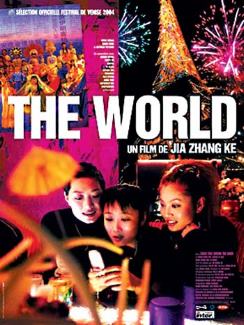
by Eric Dalle
Jump Cut
The construction of the Three Gorges Dam on the Yangtze River, which reached various levels of completion during the first decade of the 21st century, has become an intensely controversial issue among environmentalists, the government of the People’s Republic of China, and the millions of residents who have been displaced due to flooding caused by the dam’s construction. Set upon the backdrop of Three Gorges Dam, Jia Zhangke’s 2006 film Still Life follows the interpersonal intricacies of two couples from opposite sides of the economic divide of an industrializing China. The characters’ lives play out in relation to the construction and demolition associated with the damming project. Furthermore, the film explores how the impending flood highlights the complexities of the socio-economic while contemplating the human limits of comprehending massive changes in topography.
One prominent long take occurs after Han Sanming and Missy, two of the main characters from an initial narrative thread, reunite after sixteen years of being apart. The estranged pair dawdles in a gutted building. The man and woman are placed in the right–hand side of the frame of this long shot: she standing to his left, and he squatting. To the left of this pair, a wide hole made by the demolition process exposes the backdrop of the city. Missy gives Sanming a piece of candy, and she squats facing him—he continuously smoking a cigarette. The only diagetic sounds within this minute-long shot are distant car horns and even more distant sounds of mallets striking concrete buildings. Suddenly within the panorama of the cityscape, of which the viewer has access through the gap in the wall in the background, one of the larger buildings falls—hiccupping ash and rubble along its rumbling descent. The two characters stand and turn in the direction of the massive movement and accompanying noise that invades the city view. Sanming gently places his hands on Missy’s arms from behind.
When taken in context of the overall plot of the film, this particular shot narrates an implosion of disparate forces in terms of labor, migration, human trafficking, and environmental destruction that is exposed by the vanishing topography as a result of the Three Gorges Dam. Missy’s original home has now been submerged by the rising waters. It is also revealed in the film that she is a victim of human trafficking because Sanming had originally purchased her from that area. The nostalgic Sanming, though, hopes to return to Shanxi with his estranged wife and continue working in the dangerous coal mines to pay off the debt to the man that purchased Missy from her brother. The predicament of the two characters projects an endemic situation of the economics of the locale—they are physically relocated by the commerce environmentally affecting the area of Fengjie and the economics of an industrializing China.
Still Life encapsulates the environmental side of Jia Zhangke’s larger filmic project. Since the beginning of his career, Jia’s works have sought to expose the evolution of China in relation to rapid economic development, the aesthetic implications of globalization, and the human toll of environmental degradation. Jia’s preoccupation with change allows for the vestiges of human resolve to survive among the shifting socio-economics of contemporary society, all wrought by larger interrelated forces, that are state-sponsored, global, and imposed through economic structures. Ultimately, Jia Zhangke’s filmic project sets to critique the very notion of representing the changes in topography by pushing the limits of narrative and documentary film in turn exposing the conceptual holes in comprehending vast ecological change.
This article offers a reading of Jia Zhangke’s films in relation to how his career is invested in narrating changing topography. Jia, as director, embodies many of the influences he describes. His hometown becomes his first major thematic subject, and he is able to utilize the advancement and availability of digital technologies to craft and promote his work. An introduction to Jia’s early films sets the foundation for a reading of his 2006 work Still Life which will be approached from three perspectives: the heterogeneity of environmental impact understood through the migrant experience, the way in which Jia understands nostalgia as a crisis in signification, and the manner in which the film de-centers the notion of home and homelessness. Finally, the conclusion will demonstrate how Jia’s Still Life, when read against his companion documentary Dong, implodes the boundaries of documentary and narrative. Jia Zhangke’s work exposes the limits of logic in comprehending changes in landscape and engages in the act of narrating topography.
To Read the Rest of the Essay
Subscribe to:
Posts (Atom)