Showing posts with label Global Issues. Show all posts
Showing posts with label Global Issues. Show all posts
Wednesday, October 30, 2013

Sunday, October 13, 2013
La Commune (Paris 1871) (France: Peter Watkins, 2000)

La Commune (Paris 1871) (France: Peter Watkins, 2000: 345 mins)
Ford, Hamish. "Producing revolutionary history on film: Henri Lefebvre’s urban space and Peter Watkins’ La Commune (Paris, 1871)." Jump Cut #57 (Fall 2016)
La Commune (Paris, 1871) (France: Peter Watkins, 2000: available on Google video in multiple parts)
"Peter Watkins: La Commune." Chtodelat (October 31, 2008)
Peter Watkins: The Media Crisis Dialogic (October 3, 2007)
Peter Watkins: Filmmaker/Media Critic." Dialogic (September 7, 2012)
Rapfogel, Jared. "The Cinema of Peter Watkins." Cineaste 32.2 (Spring 2007)
Rosenbaum, Jonathan. "The Revolution Has Been Televised [Peter Watkins’ LA COMMUNE]." Chicago Reader (May 17, 2002)
Watkins, Peter. "Notes on the Making of La Commune (Paris, 1871)." Peter Watkins: Filmmaker/Critic (2000)
---. "Notes on the Media Crisis." Barcelona, Spain: Quaderns portàtils, 2010.
Sunday, August 25, 2013
Monday, July 15, 2013
Left Field Cinema -- Documentary Milestone: The Fog of War – Eleven Lessons From the Life of Robert S. McNamara
Documentary Milestone: The Fog of War – Eleven Lessons From the Life of Robert S. McNamara
Left Field Cinema

The Fog of War is Directed by Errol Morris perhaps the most celebrated American documentarian, if not as well known as Michael Moore by the public, Morris is certainly a critical darling. Roger Ebert considers Morris’s first film Gates of Heaven, a documentary about pet cemeteries, as one of his top ten films of all time. Gates of Heaven also provides an entertaining anecdote, in which Werner Herzog promised if Morris ever finished the film he would eat his shoe. Herzog’s insanity can be seen in the short film Werner Herzog Eats His Shoe. Morris’s third feature remains his best known. Thin Blue Line, which followed Vernon, Florida, remains one of the most powerful artistic statements by any filmmaker. Thin Blue Line lead to the subject of the film to have his death row sentence changed to life in prison, then subsequently the initial verdict was over turned. Morris’s documentary directly contributed to this result. The style of the film relies on interviews and re-creations. This emphasis on non-fiction as a documentary style would become Morris’s calling card. Morris went to direct a series of further documentaries including 2008’s War on Terror documentary Standard Operating Procedure. Although Standard Operating Procedure has not been received as well as the earlier documentary Taxi to the Darkside by Alex Gibney which was also released last year it remains an interesting piece of work which focuses on Morris’s typical themes of the deceptive nature of what is considered to be “true”. Morris’s friendship with Werner Herzog makes a great deal of thematic sense, both men search for the ecstatic truth within their respective subjects often at the expense of what could be considered the conventional approach.
The Fog of War presents Morris on top form, a self-proclaimed detective director (which suits him well as he previously worked as a private eye) Morris constructs The Fog of War in such a simplistic manner that it baffles the mind to witness how compelling it is. The entire film is essentially a one-hundred and five minute interview with its subject. The subject being Robert Strange McNamara the Secretary of Defense for John F. Kennedy and Lyndon B. Johnson, and previously an analyst for the Japanese bombings in World War Two and briefly the first President of Ford motors to not belong to the Ford family. He is a man who’s life begins at the end of the first World War, indeed he is adamant that his first memory was that of the victory parades, the celebrations at the end of the “War to end all Wars” following this we witness the part he played in World War II, the Cold war, and the Cuban Missile Crisis, then finally the Vietnam War. McNamara is a man who’s been surrounded by war all of his life. His contribution to the global politics over the 20th Century is a matter for speculation, by that I mean what real effect he had on events, of which McNamara himself is often uncertain. But as a witness to some of the pivotal events in recent history, you’ll be hard pressed to find a man alive who’s seen so much, witnessed such extremes of human behaviour, or gained such a vast understanding of the moral, amoral, and immoral tapestry that is war. McNamara has amazing recall for a man aged eighty-five casting his mind back more than forty years. He is charismatic figure, who sense of irony and wit cannot be denied. However, the man remains even now the consummate politician.
To Read the Rest
Left Field Cinema
The Fog of War is Directed by Errol Morris perhaps the most celebrated American documentarian, if not as well known as Michael Moore by the public, Morris is certainly a critical darling. Roger Ebert considers Morris’s first film Gates of Heaven, a documentary about pet cemeteries, as one of his top ten films of all time. Gates of Heaven also provides an entertaining anecdote, in which Werner Herzog promised if Morris ever finished the film he would eat his shoe. Herzog’s insanity can be seen in the short film Werner Herzog Eats His Shoe. Morris’s third feature remains his best known. Thin Blue Line, which followed Vernon, Florida, remains one of the most powerful artistic statements by any filmmaker. Thin Blue Line lead to the subject of the film to have his death row sentence changed to life in prison, then subsequently the initial verdict was over turned. Morris’s documentary directly contributed to this result. The style of the film relies on interviews and re-creations. This emphasis on non-fiction as a documentary style would become Morris’s calling card. Morris went to direct a series of further documentaries including 2008’s War on Terror documentary Standard Operating Procedure. Although Standard Operating Procedure has not been received as well as the earlier documentary Taxi to the Darkside by Alex Gibney which was also released last year it remains an interesting piece of work which focuses on Morris’s typical themes of the deceptive nature of what is considered to be “true”. Morris’s friendship with Werner Herzog makes a great deal of thematic sense, both men search for the ecstatic truth within their respective subjects often at the expense of what could be considered the conventional approach.
The Fog of War presents Morris on top form, a self-proclaimed detective director (which suits him well as he previously worked as a private eye) Morris constructs The Fog of War in such a simplistic manner that it baffles the mind to witness how compelling it is. The entire film is essentially a one-hundred and five minute interview with its subject. The subject being Robert Strange McNamara the Secretary of Defense for John F. Kennedy and Lyndon B. Johnson, and previously an analyst for the Japanese bombings in World War Two and briefly the first President of Ford motors to not belong to the Ford family. He is a man who’s life begins at the end of the first World War, indeed he is adamant that his first memory was that of the victory parades, the celebrations at the end of the “War to end all Wars” following this we witness the part he played in World War II, the Cold war, and the Cuban Missile Crisis, then finally the Vietnam War. McNamara is a man who’s been surrounded by war all of his life. His contribution to the global politics over the 20th Century is a matter for speculation, by that I mean what real effect he had on events, of which McNamara himself is often uncertain. But as a witness to some of the pivotal events in recent history, you’ll be hard pressed to find a man alive who’s seen so much, witnessed such extremes of human behaviour, or gained such a vast understanding of the moral, amoral, and immoral tapestry that is war. McNamara has amazing recall for a man aged eighty-five casting his mind back more than forty years. He is charismatic figure, who sense of irony and wit cannot be denied. However, the man remains even now the consummate politician.
To Read the Rest
Sunday, June 30, 2013
Yes (UK: Sally Potter, 2004)

Yes (UK: Sally Potter, 2004: 100 mins)
"Angelism and Rage: Sally Potter Links." Film Studies for Free (September 21, 2009)
Mayer, Sophie. "The Films of Sally Potter." Electric Sheep Magazine (October 1, 2009)
McKim, Kristi. "Great Directors: Sally Potter." Senses of Cinema #40 (July 2006)
"Please go in two by two! Sally Potter's Fabulous Ark." Film Studies for Free (November 4, 2008)
Saturday, June 29, 2013
Critical Strands: On the Beach with Ulrich Seidl and Martin Parr
Critical Strands: On the Beach with Ulrich Seidl and Martin Parr
by retinalechoes
Notebook
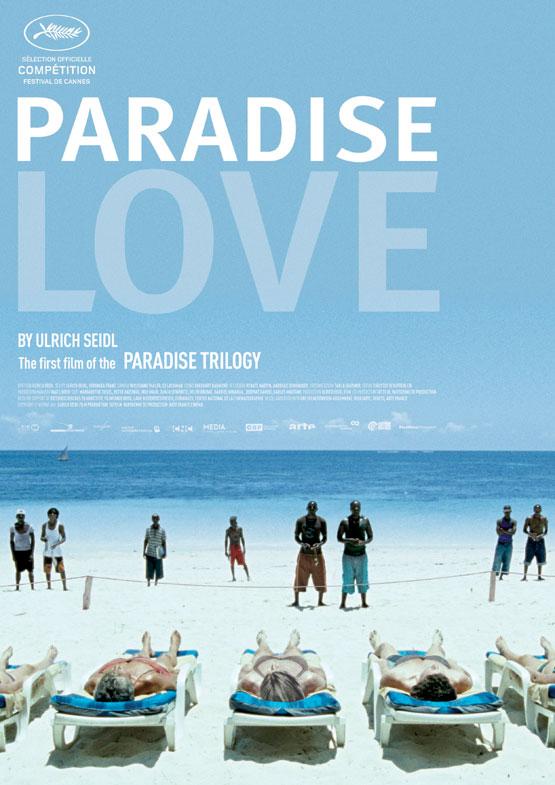
Some films you watch. Others you live. In Ulrich Seidl's films you suffer. You suffer and laugh, and laugh and suffer, until tears pour from your eyes, until out from laughter arises guilt. Guilt for having suffered. Guilt for having laughed. And only then, when you emerge from the guilt, wipe the film from your eyes, do you realize that the naïve 200-pound quinquagenarian Austrian sex-tourist on holiday in Kenya is none other then yourself, if not your sister or perhaps mother. Only then does the comfort of guilt morph into the vexation of shame as you understand that the buffoon you saw on the screen was wearing what turned out to be your face for a mask.
But don’t say you weren’t forewarned. The ballsy and shameless opening scene of Paradise: Love, should have given notice enough. After all, away from the scrutinizing eyes of society it becomes too easy to indulge in the visual pleasure of watching warped grimaces twisting in glee and shock across the faces of the spasmodic, the abnormal, the mongoloid. Hidden behind the comfort of our screen (for it is always our screen, and never just yours or mine) it becomes all too simple to relish images of the rejected visages of the mentally retarded contorting themselves in farcical masks as their bumper cars smash into each other, watching Teresa, our fat Austrian heroine, watch them. Our white-winged socially-implanted moral warden hanging over our right shoulder like a wee angel warns us against laughter, but in the liberty and obscurity of the cinematic chamber, we let loose with a laughter poised on the razor's edge between discomfort and hilarity. Paradise: Love’s opening scene is a warning, a provocation, a contract of the film to come, and it reads: “I will force you to laugh at things not only which you do not want to laugh at, but which you know you should not.” But laugh we do, and in so doing become accomplices to the film. Seidl’s humor is not the innocent cathartic guffaw of slapstick, nor the healing chortle of satire. It is a blow aimed to crack open a chink in the armor of our self-righteousness to make way for the stiletto of shame to slide in more easily.
By naming our tender, pale, gullible heroine Teresa after the famed Mother Superior of Christian fame, Seidl sticks a knife in the back of the charitable West’s self-congratulatory sentiments for the aid it provides the (usually somewhat darker-skinned) third-world. (Do we hear the rational arguments of capitalist economics buzzing in the background? Business for the locals? Improvements to infrastructure? Exchange of goods?) The tourist, a missionary of modernity, never meets the third-world inhabitants on equal terms, never enters their world, but rather travels to other lands with the goal of extracting as many resources as possible, be it gold, souls or sex. The images of Teresa’s travels to this land of alterity in Paradise: Love are no reflections of a “mirror being carried along a high road,” but rather visions which barely pierce the thick and muggy waters of the aquarium in which her head is enclosed: Omnia mea mecum porto - when the European travels she takes her whole world with her wrapped around her head, aquarium, water and fish too. Teresa’s ‘omnia’, the civilized rectangular glassed cage is exemplified by the space of the European room (and the cinematic frame?). As Teresa prepares for her trip, she appears in one chamber after another in her Austrian apartment, preparing food, folding laundry, packing bags and the rectangle in which she moves is the one the camera will bring with her (and us) on holiday to Kenya, with its centralized perspective and weight, and its ordered compositions, signs of the European’s efficiency and rationality.
But no matter, for the tourist’s mission is not to see unseen landscapes but rather to ignore the distinctiveness of the travel destination so as to better wrench maximum ‘fun’ from the exotic (what else would make tourism the largest industry worldwide?). So, even when Teresa and her Austrian compatriots travel thousands of kilometers to reach a new panorama, the only landscape they can perceive is the one they brought with them, with its ordered lines, sparkling clean toilet bowls, and secure walled-off pleasures.
To Read the Rest
by retinalechoes
Notebook
Some films you watch. Others you live. In Ulrich Seidl's films you suffer. You suffer and laugh, and laugh and suffer, until tears pour from your eyes, until out from laughter arises guilt. Guilt for having suffered. Guilt for having laughed. And only then, when you emerge from the guilt, wipe the film from your eyes, do you realize that the naïve 200-pound quinquagenarian Austrian sex-tourist on holiday in Kenya is none other then yourself, if not your sister or perhaps mother. Only then does the comfort of guilt morph into the vexation of shame as you understand that the buffoon you saw on the screen was wearing what turned out to be your face for a mask.
But don’t say you weren’t forewarned. The ballsy and shameless opening scene of Paradise: Love, should have given notice enough. After all, away from the scrutinizing eyes of society it becomes too easy to indulge in the visual pleasure of watching warped grimaces twisting in glee and shock across the faces of the spasmodic, the abnormal, the mongoloid. Hidden behind the comfort of our screen (for it is always our screen, and never just yours or mine) it becomes all too simple to relish images of the rejected visages of the mentally retarded contorting themselves in farcical masks as their bumper cars smash into each other, watching Teresa, our fat Austrian heroine, watch them. Our white-winged socially-implanted moral warden hanging over our right shoulder like a wee angel warns us against laughter, but in the liberty and obscurity of the cinematic chamber, we let loose with a laughter poised on the razor's edge between discomfort and hilarity. Paradise: Love’s opening scene is a warning, a provocation, a contract of the film to come, and it reads: “I will force you to laugh at things not only which you do not want to laugh at, but which you know you should not.” But laugh we do, and in so doing become accomplices to the film. Seidl’s humor is not the innocent cathartic guffaw of slapstick, nor the healing chortle of satire. It is a blow aimed to crack open a chink in the armor of our self-righteousness to make way for the stiletto of shame to slide in more easily.
By naming our tender, pale, gullible heroine Teresa after the famed Mother Superior of Christian fame, Seidl sticks a knife in the back of the charitable West’s self-congratulatory sentiments for the aid it provides the (usually somewhat darker-skinned) third-world. (Do we hear the rational arguments of capitalist economics buzzing in the background? Business for the locals? Improvements to infrastructure? Exchange of goods?) The tourist, a missionary of modernity, never meets the third-world inhabitants on equal terms, never enters their world, but rather travels to other lands with the goal of extracting as many resources as possible, be it gold, souls or sex. The images of Teresa’s travels to this land of alterity in Paradise: Love are no reflections of a “mirror being carried along a high road,” but rather visions which barely pierce the thick and muggy waters of the aquarium in which her head is enclosed: Omnia mea mecum porto - when the European travels she takes her whole world with her wrapped around her head, aquarium, water and fish too. Teresa’s ‘omnia’, the civilized rectangular glassed cage is exemplified by the space of the European room (and the cinematic frame?). As Teresa prepares for her trip, she appears in one chamber after another in her Austrian apartment, preparing food, folding laundry, packing bags and the rectangle in which she moves is the one the camera will bring with her (and us) on holiday to Kenya, with its centralized perspective and weight, and its ordered compositions, signs of the European’s efficiency and rationality.
But no matter, for the tourist’s mission is not to see unseen landscapes but rather to ignore the distinctiveness of the travel destination so as to better wrench maximum ‘fun’ from the exotic (what else would make tourism the largest industry worldwide?). So, even when Teresa and her Austrian compatriots travel thousands of kilometers to reach a new panorama, the only landscape they can perceive is the one they brought with them, with its ordered lines, sparkling clean toilet bowls, and secure walled-off pleasures.
To Read the Rest
Tuesday, June 25, 2013
The Power of Nightmares: The Rise of the Politics of Fear (United Kingdom: Adam Curtis, 2004)

The Power of Nightmares: The Rise of the Politics of Fear (United Kingdom: Adam Curtis, 2004: 180 mins)
"Adam Curtis (Filmmaker/Journalist)." Dialogic (Ongoing archive of resources: November 27, 2012)
Atkinson, Michael. "Archival Trouble: The fiction-free science fiction of Adam Curtis." Moving Image Source (February 16, 2012)
Ball, Norman. "The Power of Auteurs and the Last Man Standing: Adam Curtis' Documentary Nightmares." Bright Lights Film Journal #78 (November 2012)
Hoberman, J. "The Phantom Menace: Unclear and present danger -- Three-part polemic constructs novel narrative of neo-con game." The Village Voice (November 29, 2005)
To Watch The Power of Nightmares: The Rise of the Politics of Fear online
Friday, April 19, 2013
The Windup Girl (Paolo Bacigalupi, 2009)
 The Windup Girl by Paolo Bacigalupi
My rating: 5 of 5 stars
This is one of those books that come along at a certain moment in time and presents a finely tuned presentation of where we may be heading as a global society. For lack of imagination this could be defined as eco-punk, with its vision of a future ecological catastrophes, isolationist societies seeking to resist predatory multinational agri-businesses, gene-rippers mucking with DNA of living creatures creating wonders and pestilence, calorie-men combing the globe to seek out local seed banks, and the creation of new people that might present a new possibility for life on earth or be the final stake in its heart. The story takes place in Thailand and Bacigalupi is great at bringing to life the society and the competing interests. A powerful story and great reading experience all the way through to the last page!
View all my reviews
Wednesday, March 27, 2013
Anjali Pandey: The Million Dollar Question: How Do You Sell English on the Silver Screen? - A Socio-Linguistic Analysis of Slumdog Millionaire
The Million Dollar Question: How Do You Sell English on the Silver Screen? - A Socio-Linguistic Analysis of Slumdog Millionaire
by Anjali Pandey
Americana
Introduction
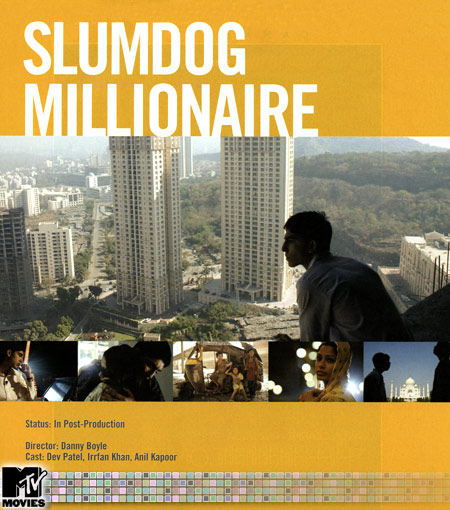
Years ago authors Barnet and Cavanagh portended: “The new world economy rests largely on global bazaars” (15). Today, India is a major economic promontory in the voyage of western filmic expansion into the East. As a “movie-mad country” (Chopra 18), with its own yearly production output of “over a thousand movies in Mumbai alone” (Beaufoy, Boyle and Feld 142) - numerically translated as “3 billion movie tickets per annum” (Lakshmi 8) - Bollywood unlike Hollywood boasts a 13% increase in movie ticket sales since 2007 (Chopra 18). Film scholars have for years tracked the so-called “economic moribundity” (Cowen 73) of European cinema. In contrast, “India’s film industry, now at $2.2 billion, is estimated to grow to 3.3 billion by 2013” (Lakshmi 8).
Cowen claims that the "English language, combined with America’s role as a world leader, has strengthened Hollywood exports” (75). In India, the linguistic “legacy of English” (Bhatia and Baumgardner 384) makes the economic venture eastward into “the prized Indian market” (Tyrrell 260) a viable option as increasing economic research confirms that “the global market has generated more dependable returns than the local market” (Dissanayake 405). Esteemed linguist, David Crystal calls India “a linguistic paradise” (173) with “a special place in the record books” as a country with “the largest English-speaking population in the world” (173) at “350 million speakers” (173). This figure is “far more than the combined English-speaking populations of Britain and the USA” (173). Two decades ago in a comprehensive analysis of Hollywood versus Bollywood, Tyrrell claimed that “Hollywood has not defined what makes a film work in India” (260). Twenty years later, Slumdog Millionaire has demonstrated that when it comes to “the battle of the dream factories” (Tyrrell 260), “Hollywood’s colonization of Bollywood” (Tyrrell 272) can indeed be achieved via a twin strategy of linguistic and cultural syncretism.
The filmic genius of Slumdog Millionaire lies in the meticulous manner in which the hybridity of language and lore of both West and East have been glocalized to suit “the viewing tastes and linguistic preferences” (Bhatia and Baumgardner 380) of cross-continental audiences. Film critics are unanimous in their praise: “Slumdog Millionaire is the film world’s first globalized masterpiece” (Morgenstern 1) raves the economically savvy Wall Street Journal. How did Slumdog Millionaire do it? The answer lies in the innovative use of verbal and visual English as cinematic strategy - as “an aural and visual spectacle” (Garwood 174) within the “diegetic space of film” (Garwood 179). Visual English consistently dominates screen-space in Slumdog. The film’s economic and aesthetic genius rests on the nuanced, multiplex manner in which visual English “functions in the ever-evolving techno-aesthetic space of cinema” (Dissanayake 406) - as a filmic device which reflects at the very same time as it sustains a place for global English evanescence. The effective incorporation of tokenized Hindi in the movie as a vehicle for highlighting verbal and visual English is accomplished in and through a plethora of potent filmic strategies including but not limited to: spotlighting, achieved via filmic prominence given to visual English; synchronization, accomplished via a savvy glocalization of tokenized local linguistic content in the service of linguistically dominant global interests; spectacularization, realized via an intelligent use of selective adaptation strategies which simultaneously translate and transliterate "Indian figurehead" novel-writing and music-making potential into globally appealing cultural products, and finally, syncretization - filmmaking strategies which “utilize an economic and cultural dynamic that combines both commercialism and creativity” (Cowen 101) - four cultural production strategies which use the local to sell the global. All four strategies are detailed below.
To Read the Rest of the Essay
by Anjali Pandey
Americana
Introduction
Years ago authors Barnet and Cavanagh portended: “The new world economy rests largely on global bazaars” (15). Today, India is a major economic promontory in the voyage of western filmic expansion into the East. As a “movie-mad country” (Chopra 18), with its own yearly production output of “over a thousand movies in Mumbai alone” (Beaufoy, Boyle and Feld 142) - numerically translated as “3 billion movie tickets per annum” (Lakshmi 8) - Bollywood unlike Hollywood boasts a 13% increase in movie ticket sales since 2007 (Chopra 18). Film scholars have for years tracked the so-called “economic moribundity” (Cowen 73) of European cinema. In contrast, “India’s film industry, now at $2.2 billion, is estimated to grow to 3.3 billion by 2013” (Lakshmi 8).
Cowen claims that the "English language, combined with America’s role as a world leader, has strengthened Hollywood exports” (75). In India, the linguistic “legacy of English” (Bhatia and Baumgardner 384) makes the economic venture eastward into “the prized Indian market” (Tyrrell 260) a viable option as increasing economic research confirms that “the global market has generated more dependable returns than the local market” (Dissanayake 405). Esteemed linguist, David Crystal calls India “a linguistic paradise” (173) with “a special place in the record books” as a country with “the largest English-speaking population in the world” (173) at “350 million speakers” (173). This figure is “far more than the combined English-speaking populations of Britain and the USA” (173). Two decades ago in a comprehensive analysis of Hollywood versus Bollywood, Tyrrell claimed that “Hollywood has not defined what makes a film work in India” (260). Twenty years later, Slumdog Millionaire has demonstrated that when it comes to “the battle of the dream factories” (Tyrrell 260), “Hollywood’s colonization of Bollywood” (Tyrrell 272) can indeed be achieved via a twin strategy of linguistic and cultural syncretism.
The filmic genius of Slumdog Millionaire lies in the meticulous manner in which the hybridity of language and lore of both West and East have been glocalized to suit “the viewing tastes and linguistic preferences” (Bhatia and Baumgardner 380) of cross-continental audiences. Film critics are unanimous in their praise: “Slumdog Millionaire is the film world’s first globalized masterpiece” (Morgenstern 1) raves the economically savvy Wall Street Journal. How did Slumdog Millionaire do it? The answer lies in the innovative use of verbal and visual English as cinematic strategy - as “an aural and visual spectacle” (Garwood 174) within the “diegetic space of film” (Garwood 179). Visual English consistently dominates screen-space in Slumdog. The film’s economic and aesthetic genius rests on the nuanced, multiplex manner in which visual English “functions in the ever-evolving techno-aesthetic space of cinema” (Dissanayake 406) - as a filmic device which reflects at the very same time as it sustains a place for global English evanescence. The effective incorporation of tokenized Hindi in the movie as a vehicle for highlighting verbal and visual English is accomplished in and through a plethora of potent filmic strategies including but not limited to: spotlighting, achieved via filmic prominence given to visual English; synchronization, accomplished via a savvy glocalization of tokenized local linguistic content in the service of linguistically dominant global interests; spectacularization, realized via an intelligent use of selective adaptation strategies which simultaneously translate and transliterate "Indian figurehead" novel-writing and music-making potential into globally appealing cultural products, and finally, syncretization - filmmaking strategies which “utilize an economic and cultural dynamic that combines both commercialism and creativity” (Cowen 101) - four cultural production strategies which use the local to sell the global. All four strategies are detailed below.
To Read the Rest of the Essay
Tuesday, February 26, 2013
Films We Want to See #25: Let Fury Have the Hour (USA: Antonio D'Ambrosio, 2012)
Film Website
“Let fury have the hour/
Anger can be power/
Do you know that you can use it?”
– “The Clampdown,” The Clash
Rough, raw and unapologetically inspirational, LET FURY HAVE THE HOUR is a charged journey into the heart of the creative counter-culture in 2012. In a time of global challenges, big questions and by-the-numbers politics, this upbeat, outspoken film tracks the story of the artists, writers, thinkers and musicians who have gone underground to re-imagine the world – honing in on equality, community and engaged creativity – in exuberantly paradigm-busting ways.
Writer/director Antonino D’Ambrosio unites 50 powerful, of-the-moment voices –from street artist Shepard Fairey to rapper Chuck D to playwright Eve Ensler to musicians Tom Morello and Billy Bragg to novelist Edwidge Danticat to filmmaker John Sayles to comic Lewis Black – who share personal and powerful tales of how they transformed anger and angst into provocative art and ideas. Mix-mastered with historical footage, animation and performances, D’Ambrosio presents a visceral portrait of a generation looking to re-jigger a system that has failed to address the most pressing problems of our times . . . or human potential.
The story begins in the 1980s with the rise of Reagan and Thatcher — and a cultural shift towards fierce individualism and rampant consumerism. Coming of age in a world seemingly gone mad or at least gone shopping, some kids started searching for something more authentic. This was the start of a renegade movement D’Ambrosio calls “creative-response.” It was a hybrid, haphazard collective of skateboarders, punk rockers, rappers, street poets, feminists and graffitists whose reaction to this brave new world was not to turn away, but to turn up the volume and have their say.
Now that generation is coming to the fore, sparking a global movement focused not just on pushing the boundaries with guitars, paint, dance, storytelling, graphics and subcultural style – but on coming together around real reasons for hope.
Set to a stirring soundtrack from the film’s artists – including Rage Against The Machine, Public Enemy, Billy Bragg, Gogol Bordello, MC5, DJ Spooky and Sean Hayes – LET FURY HAVE THE HOUR is a fast and furious trip into the grass roots of art and activism, 21st Century style. The film is written and directed by author and visual artist Antonino D’Ambrosio in his feature debut. The producers are D’Ambrosio and James L. Reid and the executive producers are Jonathan Gray, Brian Devine, Rob McKay, Mark Urman and Chaz Zelus. The film features original music from composer and MC5 guitarist Wayne Kramer. A CAVU Pictures release.
“Let fury have the hour/
Anger can be power/
Do you know that you can use it?”
– “The Clampdown,” The Clash
Rough, raw and unapologetically inspirational, LET FURY HAVE THE HOUR is a charged journey into the heart of the creative counter-culture in 2012. In a time of global challenges, big questions and by-the-numbers politics, this upbeat, outspoken film tracks the story of the artists, writers, thinkers and musicians who have gone underground to re-imagine the world – honing in on equality, community and engaged creativity – in exuberantly paradigm-busting ways.
Writer/director Antonino D’Ambrosio unites 50 powerful, of-the-moment voices –from street artist Shepard Fairey to rapper Chuck D to playwright Eve Ensler to musicians Tom Morello and Billy Bragg to novelist Edwidge Danticat to filmmaker John Sayles to comic Lewis Black – who share personal and powerful tales of how they transformed anger and angst into provocative art and ideas. Mix-mastered with historical footage, animation and performances, D’Ambrosio presents a visceral portrait of a generation looking to re-jigger a system that has failed to address the most pressing problems of our times . . . or human potential.
The story begins in the 1980s with the rise of Reagan and Thatcher — and a cultural shift towards fierce individualism and rampant consumerism. Coming of age in a world seemingly gone mad or at least gone shopping, some kids started searching for something more authentic. This was the start of a renegade movement D’Ambrosio calls “creative-response.” It was a hybrid, haphazard collective of skateboarders, punk rockers, rappers, street poets, feminists and graffitists whose reaction to this brave new world was not to turn away, but to turn up the volume and have their say.
Now that generation is coming to the fore, sparking a global movement focused not just on pushing the boundaries with guitars, paint, dance, storytelling, graphics and subcultural style – but on coming together around real reasons for hope.
Set to a stirring soundtrack from the film’s artists – including Rage Against The Machine, Public Enemy, Billy Bragg, Gogol Bordello, MC5, DJ Spooky and Sean Hayes – LET FURY HAVE THE HOUR is a fast and furious trip into the grass roots of art and activism, 21st Century style. The film is written and directed by author and visual artist Antonino D’Ambrosio in his feature debut. The producers are D’Ambrosio and James L. Reid and the executive producers are Jonathan Gray, Brian Devine, Rob McKay, Mark Urman and Chaz Zelus. The film features original music from composer and MC5 guitarist Wayne Kramer. A CAVU Pictures release.
Saturday, February 16, 2013
Monday, January 28, 2013
Tim Parks: In Praise of the Language Police
[Tim Parks is talking about translation of literary texts, but I think it is also useful in considering the translation of subtitles in cinema]
In Praise of the Language Police
by Tim Parks
New York Review of Books
...
By the same token, very little is said of the mediating work of translators, even though we know that where a great piece of literature has been translated more than once, the various versions can sound quite different and obviously owe a great deal not just to the technical expertise but also the personality and mindset of people we usually know nothing about. In general, we don’t like to think of creative writing as a joint venture, and when it emerges, for example, that Raymond Carver allowed his work to be drastically edited, our appreciation of him, and indeed the work, is at least temporarily diminished. We want to think of our writers as geniuses occupying positions of absolute independence in relation to a tediously conventional society. Conversely, we abhor, or believe we abhor, the standard and the commonplace.
Yet nobody requires the existence of a standard and a general pressure to conform more than the person who wishes to assume a position outside it. It is essential for the creative writer that there be, or be perceived to be, a usual way of saying things, if a new or unusual way is to stand out and to provoke some excitement. So when D. H. Lawrence in Women in Love writes of Gudrun’s insomnia after first making love to Gerald that she was “destroyed into perfect consciousness,” he needs the reader to sense at once that this is syntactically anomalous; a person can be “transformed into,” “turned into,” “changed into” but not “destroyed into.” The syntactical shock underlines Lawrence’s unconventional view of consciousness as a negative rather than positive state, which again is emphasized by the unexpected use of the word “perfect,” rather than a more immediately understandable and neutral “intense.”
Naturally, anyone writing with this level of creativity needs a copy editor willing to accept that rules can be bent and broken. But that doesn’t mean such editors have no role. It is important that the “special effect” stand out from a background of more conventional prose, and that a deliberate departure not be mistaken as something merely regional, British perhaps, or simply that there not be so much clutter around it of one kind or other that it is hardly noticed. George Orwell, a champion of strict grammar as a vehicle of clear thinking, memorably begins 1984 with a very simple, almost embarrassingly conventional novel-opener of a sentence in order that the anomaly constituted by the last word pack a big punch: “It was a bright cold day in April, and the clocks were striking thirteen.” In a different field, David Hume, when presenting his radical and unconventional philosophy, did everything to remove from his writing any indication of his Scottishness, sending drafts to friends to have them check his writing for “Scottishisms.” It was not that he thought standard English superior, just that he did not want a reader’s attention to be distracted from his main purpose.
The editor’s job then becomes one of helping the writer to see where an unessential, perhaps unconscious departure from the norm is actually draining energy away from places where the text is excitingly unconventional. That is, the editor reminds an author that to construct a coherent identity he has to remember his relationship with society and with the language we share and cannot express ourselves without. To go out on a limb linguistically, accepting no compromise and creating an idiolect that really is entirely your own, may win awed admiration, as did Finnegans Wake, but will likely not attract many readers, and arguably does not allow for the communication of nuance, since all the ordinary reader will understand is that you are indeed off on a trip on your own; even Joyce’s hitherto staunch supporter Pound had no truck with it.
...
To Read the Rest of the Essay
In Praise of the Language Police
by Tim Parks
New York Review of Books
...
By the same token, very little is said of the mediating work of translators, even though we know that where a great piece of literature has been translated more than once, the various versions can sound quite different and obviously owe a great deal not just to the technical expertise but also the personality and mindset of people we usually know nothing about. In general, we don’t like to think of creative writing as a joint venture, and when it emerges, for example, that Raymond Carver allowed his work to be drastically edited, our appreciation of him, and indeed the work, is at least temporarily diminished. We want to think of our writers as geniuses occupying positions of absolute independence in relation to a tediously conventional society. Conversely, we abhor, or believe we abhor, the standard and the commonplace.
Yet nobody requires the existence of a standard and a general pressure to conform more than the person who wishes to assume a position outside it. It is essential for the creative writer that there be, or be perceived to be, a usual way of saying things, if a new or unusual way is to stand out and to provoke some excitement. So when D. H. Lawrence in Women in Love writes of Gudrun’s insomnia after first making love to Gerald that she was “destroyed into perfect consciousness,” he needs the reader to sense at once that this is syntactically anomalous; a person can be “transformed into,” “turned into,” “changed into” but not “destroyed into.” The syntactical shock underlines Lawrence’s unconventional view of consciousness as a negative rather than positive state, which again is emphasized by the unexpected use of the word “perfect,” rather than a more immediately understandable and neutral “intense.”
Naturally, anyone writing with this level of creativity needs a copy editor willing to accept that rules can be bent and broken. But that doesn’t mean such editors have no role. It is important that the “special effect” stand out from a background of more conventional prose, and that a deliberate departure not be mistaken as something merely regional, British perhaps, or simply that there not be so much clutter around it of one kind or other that it is hardly noticed. George Orwell, a champion of strict grammar as a vehicle of clear thinking, memorably begins 1984 with a very simple, almost embarrassingly conventional novel-opener of a sentence in order that the anomaly constituted by the last word pack a big punch: “It was a bright cold day in April, and the clocks were striking thirteen.” In a different field, David Hume, when presenting his radical and unconventional philosophy, did everything to remove from his writing any indication of his Scottishness, sending drafts to friends to have them check his writing for “Scottishisms.” It was not that he thought standard English superior, just that he did not want a reader’s attention to be distracted from his main purpose.
The editor’s job then becomes one of helping the writer to see where an unessential, perhaps unconscious departure from the norm is actually draining energy away from places where the text is excitingly unconventional. That is, the editor reminds an author that to construct a coherent identity he has to remember his relationship with society and with the language we share and cannot express ourselves without. To go out on a limb linguistically, accepting no compromise and creating an idiolect that really is entirely your own, may win awed admiration, as did Finnegans Wake, but will likely not attract many readers, and arguably does not allow for the communication of nuance, since all the ordinary reader will understand is that you are indeed off on a trip on your own; even Joyce’s hitherto staunch supporter Pound had no truck with it.
...
To Read the Rest of the Essay
Thursday, November 29, 2012
Marilyn Adler Papayanis: Sex on the Beach - The Yin Yang of Female Sex Tourism in Two Films
Sex on the Beach: The Yin Yang of Female Sex Tourism in Two Films
by Marilyn Adler Papayanis
Bright Lights Film Journal
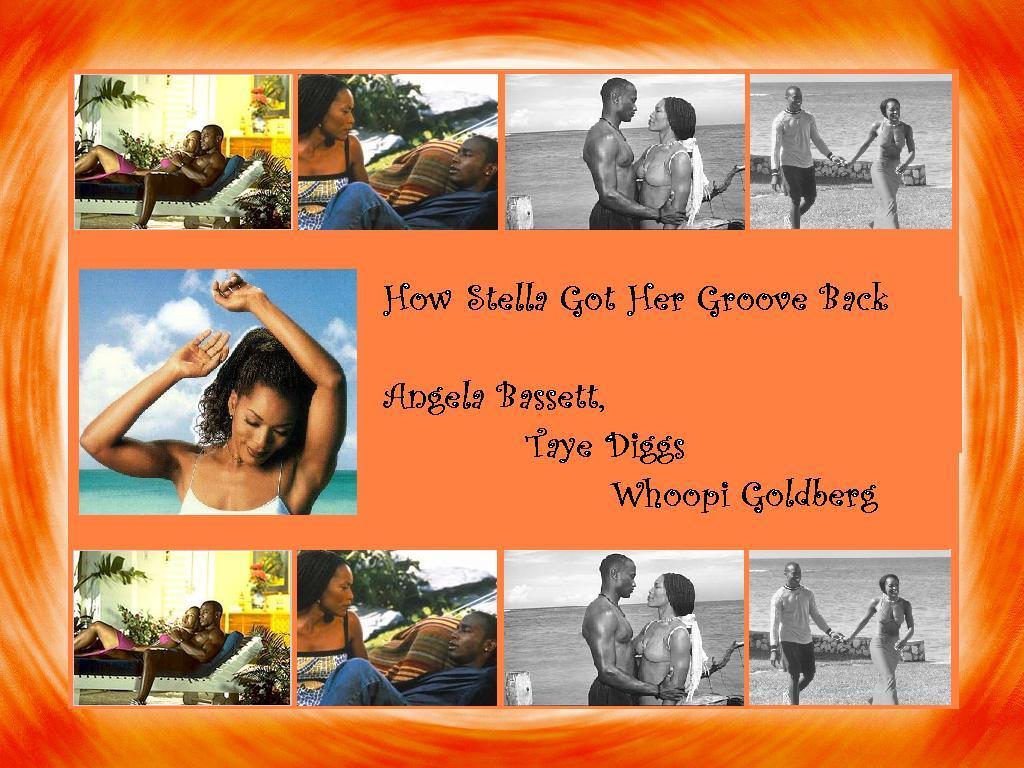
With the recent screening of Ulrich Seidl's Paradise: Love at the 2012 Cannes Film Festival, the spectacle of female sex tourism has washed up, once again, on the shoals of popular culture. According to reviewers, it is not a pretty sight. Women who travel to the spaces peripheral to "modernity" and, by the way, have sex with the natives are not rare; however, in the continuum of capital expansion that stretches from colonialism to globalization, such practices tend to lose their luster as a kind of radical cultural immersion. For men, of course, such sexual adventurism would hardly qualify as a narrative with anything new to say. The notion, however, that women would travel to remote or less developed parts of the world for the express purpose of having sex with men who are, in many cases, younger and poorer than they are seems to cut against the grain. Yet many studies show this to be the case. Whether characterized as "sex" tourism (commercial sex with the locals) or "romance" tourism (commercial sex with the trappings of a "real" relationship), this practice has inspired a good deal of academic research in the social sciences and in popular literature as well. In her 2006 book Romance on the Road: Traveling Women Who Love Foreign Men, journalist Jeanette Belliveau describes her subjects as "sex pilgrims." According to the Amazon review, her book is "the complete reference for anyone who wants to learn about a hidden phenomenon that affects hundreds of thousands of traveling women and foreign men: Instant vacation love affairs that banish loneliness, provide cultural insights, offer one-on-one, hand-to-hand foreign aid to the world's poor, create international children and sometimes even change the course of history."
Who can beat that? I believe, however, that the representation of female sex tourism in the cultural imagination is also worthy of study, as such depictions reveal a great deal about the anxieties aroused by the "aging" woman's sexuality. The staging of this cultural moment is explored in two radically different films, both, coincidentally, derived from works of fiction: the breezy How Stella Got Her Groove Back (1998), based on the book by Terry McMillan, and the far more disturbing French film Heading South (2005), based, in large part, on a short story by the Haitian writer Dany Laferrière. Both films indulge the notion that sex in the tropics with a dark-skinned exotic youth is all it takes to cure the malaise of the older woman. In one sense, the autonomy of the woman traveler is a real marker of progress. Sadly, though, the representation of female empowerment in these films is either complicit with racist attitudes still fraught with the lingering spirit of colonialism (Heading South) or in thrall to patriarchal norms (Stella.) In the former, sex tourism is punished; in the latter, it is celebrated.
We learn from the literature that women who sleep with the locals are not a uniform class. They vary in age and in their choice of destination; they vary in terms of their motivations and attitudes toward both their exotic partners and the imaginative geographies in which their partners are embedded. Improbably, for example, the Sinai is a popular venue for cross-cultural couplings. Some "ethnosexual" boundary crossings appear to pass unnoticed, while others are more disturbing, usually because they involve pairings between privileged white tourists of a certain age and marginal youths who navigate the interstices of the official institutions of tourism. Joane Nagel first used the term "ethnosexual" to describe "the intersection and interaction between ethnicity and sexuality and the ways each defines and depends on the other for its meaning and power" (10). In the Americas, Jamaica, the Dominican Republic, and Costa Rica are popular venues for the pursuit of ethnosexual adventurism. These are destinations where the opportunity for women to have sexual or romantic liaisons with exotic Others further complicates the shadowy social relations in the "contact zone" where, for centuries, sexual commerce between male travelers and the natives, male or female, have followed, roughly, the contours of imperial power. The term "contact zone" was coined by Mary Louise Pratt in her groundbreaking study Imperial Eyes: Travel Writing and Transculturation to describe "social spaces where disparate cultures meet, clash, and grapple with each other, often in highly asymmetrical relations of domination and subordination, like colonialism, slavery, or their aftermaths as they are lived out across the globe today" (3).
To Read the Rest of the Essay

by Marilyn Adler Papayanis
Bright Lights Film Journal
With the recent screening of Ulrich Seidl's Paradise: Love at the 2012 Cannes Film Festival, the spectacle of female sex tourism has washed up, once again, on the shoals of popular culture. According to reviewers, it is not a pretty sight. Women who travel to the spaces peripheral to "modernity" and, by the way, have sex with the natives are not rare; however, in the continuum of capital expansion that stretches from colonialism to globalization, such practices tend to lose their luster as a kind of radical cultural immersion. For men, of course, such sexual adventurism would hardly qualify as a narrative with anything new to say. The notion, however, that women would travel to remote or less developed parts of the world for the express purpose of having sex with men who are, in many cases, younger and poorer than they are seems to cut against the grain. Yet many studies show this to be the case. Whether characterized as "sex" tourism (commercial sex with the locals) or "romance" tourism (commercial sex with the trappings of a "real" relationship), this practice has inspired a good deal of academic research in the social sciences and in popular literature as well. In her 2006 book Romance on the Road: Traveling Women Who Love Foreign Men, journalist Jeanette Belliveau describes her subjects as "sex pilgrims." According to the Amazon review, her book is "the complete reference for anyone who wants to learn about a hidden phenomenon that affects hundreds of thousands of traveling women and foreign men: Instant vacation love affairs that banish loneliness, provide cultural insights, offer one-on-one, hand-to-hand foreign aid to the world's poor, create international children and sometimes even change the course of history."
Who can beat that? I believe, however, that the representation of female sex tourism in the cultural imagination is also worthy of study, as such depictions reveal a great deal about the anxieties aroused by the "aging" woman's sexuality. The staging of this cultural moment is explored in two radically different films, both, coincidentally, derived from works of fiction: the breezy How Stella Got Her Groove Back (1998), based on the book by Terry McMillan, and the far more disturbing French film Heading South (2005), based, in large part, on a short story by the Haitian writer Dany Laferrière. Both films indulge the notion that sex in the tropics with a dark-skinned exotic youth is all it takes to cure the malaise of the older woman. In one sense, the autonomy of the woman traveler is a real marker of progress. Sadly, though, the representation of female empowerment in these films is either complicit with racist attitudes still fraught with the lingering spirit of colonialism (Heading South) or in thrall to patriarchal norms (Stella.) In the former, sex tourism is punished; in the latter, it is celebrated.
We learn from the literature that women who sleep with the locals are not a uniform class. They vary in age and in their choice of destination; they vary in terms of their motivations and attitudes toward both their exotic partners and the imaginative geographies in which their partners are embedded. Improbably, for example, the Sinai is a popular venue for cross-cultural couplings. Some "ethnosexual" boundary crossings appear to pass unnoticed, while others are more disturbing, usually because they involve pairings between privileged white tourists of a certain age and marginal youths who navigate the interstices of the official institutions of tourism. Joane Nagel first used the term "ethnosexual" to describe "the intersection and interaction between ethnicity and sexuality and the ways each defines and depends on the other for its meaning and power" (10). In the Americas, Jamaica, the Dominican Republic, and Costa Rica are popular venues for the pursuit of ethnosexual adventurism. These are destinations where the opportunity for women to have sexual or romantic liaisons with exotic Others further complicates the shadowy social relations in the "contact zone" where, for centuries, sexual commerce between male travelers and the natives, male or female, have followed, roughly, the contours of imperial power. The term "contact zone" was coined by Mary Louise Pratt in her groundbreaking study Imperial Eyes: Travel Writing and Transculturation to describe "social spaces where disparate cultures meet, clash, and grapple with each other, often in highly asymmetrical relations of domination and subordination, like colonialism, slavery, or their aftermaths as they are lived out across the globe today" (3).
To Read the Rest of the Essay
Tuesday, November 20, 2012
Robert Fowler: Artifact - A musician’s struggle against a giant corporation
Artifact: A musician’s struggle against a giant corporation
By Robert Fowler
World Socialist Web Site
Jared Leto is perhaps best known to the general public for his work as a film actor, most notably in David Fincher’s Fight Club (1999) and Darren Aronofsky’s Requiem for a Dream (2000). However, in recent years he has devoted his attention to the world of music, as the lead singer of Thirty Seconds to Mars.
Artifact, directed by Leto himself, under the pseudonym Bartholomew Cubbins (of Dr. Seuss fame), revolves around major record label EMI’s decision to sue the band for $30 million in August 2008. The film was screened November 8 as part of the New York City documentary festival DOC NYC and previously, in September, at the Toronto film festival.
The “crime” committed by Leto’s group was simply wanting to excuse themselves from their existing, demonstrably illegitimate contract. EMI, however, claimed that Thirty Seconds to Mars had failed to deliver the three albums required by their agreement.
Leto and his band mates were understandably aggrieved at the fact that having sold over 2 million albums at the time of being taken to court, they had not received a penny in royalties and … were still $1.4 million in debt to EMI. This, as the film makes clear, is the standard operating procedure of the record companies, who are in the business, as one commentator notes, “of not paying musicians.”
Leto explained the predicament on the band’s web site: “We had been signed with them [EMI] for nine years. Under California law, where we lived and signed our deal one cannot be bound to a contract for more than seven years. …
“Yes, we have been sued by EMI. But NOT for failing to deliver music or for ‘quitting’. We have been sued by the corporation quite simply because roughly 45 days ago we exercised our legal right to terminate our old, out of date contract, which according to the law is null and void.
“We terminated for a number of reasons, which we won’t go into here (we’d rather not air dirty laundry) but basically our representatives could not get EMI to agree to make a fair and reasonable deal.”
Thirty Second to Mars’ struggle with EMI commenced just as the financial crisis erupted. The filming of what would become Artifact also began at that time and Leto, with a certain degree of self-importance, draws parallels between the plight of the band and global economic crisis. “As we are trying to make a deal with EMI the world is falling apart,” he comments. Nonetheless, insofar as the musician denounces the record giants and Wall Street as part of the same problem, he is on to something.
To Read the Rest of the Review
By Robert Fowler
World Socialist Web Site
Jared Leto is perhaps best known to the general public for his work as a film actor, most notably in David Fincher’s Fight Club (1999) and Darren Aronofsky’s Requiem for a Dream (2000). However, in recent years he has devoted his attention to the world of music, as the lead singer of Thirty Seconds to Mars.
Artifact, directed by Leto himself, under the pseudonym Bartholomew Cubbins (of Dr. Seuss fame), revolves around major record label EMI’s decision to sue the band for $30 million in August 2008. The film was screened November 8 as part of the New York City documentary festival DOC NYC and previously, in September, at the Toronto film festival.
The “crime” committed by Leto’s group was simply wanting to excuse themselves from their existing, demonstrably illegitimate contract. EMI, however, claimed that Thirty Seconds to Mars had failed to deliver the three albums required by their agreement.
Leto and his band mates were understandably aggrieved at the fact that having sold over 2 million albums at the time of being taken to court, they had not received a penny in royalties and … were still $1.4 million in debt to EMI. This, as the film makes clear, is the standard operating procedure of the record companies, who are in the business, as one commentator notes, “of not paying musicians.”
Leto explained the predicament on the band’s web site: “We had been signed with them [EMI] for nine years. Under California law, where we lived and signed our deal one cannot be bound to a contract for more than seven years. …
“Yes, we have been sued by EMI. But NOT for failing to deliver music or for ‘quitting’. We have been sued by the corporation quite simply because roughly 45 days ago we exercised our legal right to terminate our old, out of date contract, which according to the law is null and void.
“We terminated for a number of reasons, which we won’t go into here (we’d rather not air dirty laundry) but basically our representatives could not get EMI to agree to make a fair and reasonable deal.”
Thirty Second to Mars’ struggle with EMI commenced just as the financial crisis erupted. The filming of what would become Artifact also began at that time and Leto, with a certain degree of self-importance, draws parallels between the plight of the band and global economic crisis. “As we are trying to make a deal with EMI the world is falling apart,” he comments. Nonetheless, insofar as the musician denounces the record giants and Wall Street as part of the same problem, he is on to something.
To Read the Rest of the Review
Thursday, October 25, 2012
James Udden: Child of the Long Take: Alfonso Cuaron’s Film Aesthetics in the Shadow of Globalization
[Warning: the clip of the scene below gives away major plot details]
Child of the Long Take: Alfonso Cuaron’s Film Aesthetics in the Shadow of Globalization
by James Udden
Style

...
Given his Janus-faced career, it was hard to know what to expect stylistically from Cuaron in Children of Men given the direct involvement of Universal. He answers almost right away in the third shot of the opening scene as to how far he is now willing to go. Expertly introduced in this single shot is a grim, dying world in which the Clive Owen character is but one small, languid part. It is a tour de force in terms of its set design, lighting, camera movement and most of all its daringly intricate orchestration of multiple animate and inanimate elements. Yet the most telling sign is the duration of the shot: this is a long take of over fifty seconds, which with almost devious subtlety leads to a most unexpected denouement, an explosion segueing to a title shot with uncanny effect. It is an impressive beginning to a film which overall deeply impressed select viewers, critics and scholars alike. Alfonso Cuaron has accomplished the seemingly impossible: he proffers a dystopian message concerning globalization, yet he does it under the auspices of one of globalization’s key cultural players — Hollywood. Yet he also accomplishes this in indelible aesthetic terms. After seemingly reverting back to more conventional form with The Prisoner of Azkaban, the long take makes a roaring return in Children of Men, with an average shot length of just over sixteen seconds per, an astonishing figure for a present-day Hollywood feature which sometimes can average less than two seconds per shot (Hollywood 122). Moreover, even if slightly shorter on average than its Spanish-language predecessor a half a decade earlier, these long takes are more complex and more accomplished in their design. As we shall see, they are too good to be true. Indeed, these long takes are contrived spectacles in their own right.
There is an overall pattern for long take in Children of Men: the more action and violence a particular scene possesses, the longer the shot duration generally becomes. This does run counter to current Hollywood norms. Many have recently noted how big-budgeted, Hollywood action films in particular tend to lead the way in faster cutting rates which are often employed for maximum impact (Bordwell, Hollywood,122, 58-159; King, New Hollywood, 246). Children of Men, of course, is not a traditional action picture, but a science fiction work with deep philosophical underpinnings. Yet during its non-action scenes often involving conversations between characters, Cuaron is more likely to use conventional editing schemes, most of all the ever reliable shot/reverse shot. Cuaron saves his most audacious long takes for the sequences where violence and action are at their highest pitch, with the longest reserved for the prolonged battle at the refugee camp at the end. Despite their reliance on long takes in lieu of “impact” editing, it is these moments in the film which seem to be most memorable.
What is most telling is how these long takes give the appearance of taking place in “real” time and “continuous” space. Cleverly disguised is how they are often multiple shots melded together digitally in post-production. The above mentioned opening scene, for example, was shot over two days, the first day covering the indoor portion in the café, while the second day involved the complicated section outdoors. However, in the finished product, the third shot begins indoors and then proceeds seamlessly outdoors, meaning somehow a single, “continuous” long take was shot over two days time. Using the café doorframe at the moment Clive Owen leaves the frame, the camera is deviously slow to catch up, and the special effects crew disguised the cut digitally in post (Fordham 34). In short, the opening scene is not three shots, but four shots disguised as three with the last being a long take under false pretenses.
This is not an isolated instance in Children of Men. The now famous scene in the automobile took two months to plan, eight days to shoot on three separate locations. The camera’s impossibly free movements in the car were in fact impossible — they were only realized by being filmed in six separate sections where often not all of the actors were present at certain stages. Once again, this was all amalgamated into a single artificial long take by digital means (Fordham 39). Claiming to replicate the feel of a documentary, this shot is also impossibly precise for any documentary shooting as events transpire. True, they did use mostly available light in a real setting, allowing every flare and reflection on the glass to remain, much like in a documentary. But no documentarian has ever had the luxury of a twin-axis doggicam rigged above a missing car roof which is then digitally filled in during post-production. The resulting camera movements would also be impossible for a documentary — in fact in a way that has never been done by fictional filmmakers either. Particularly noteworthy is the powerful effect of that moment when the camera returns to the front and Julianne Moore reappears at the right edge of the frame, now undeniably no longer among the living. Documentarians are rarely able to be that measured, and are hardly that lucky.
The longest take in the film is over seven minutes in duration, occurring during the climatic battle at the refugee camp when Theo Faron attempts to rescue the kidnapped baby. Being one of the most complex long takes ever attempted, it is in fact too complicated to be a true “long take.” Instead, this was shot at two exterior locations plus a studio; the first major section was filmed at Bushey Hall, while the second part was shot two weeks later at Upper Heyford. This particular transition was digitally disguised using the corner of a building, much like what they had done with the doorframe of the café in the pre-credit sequence (Fordham 42). Additional elements added to the seemingly real but impossible spectacle: for example, no documentarian has been so fortuitous as to follow someone just as Theo Faron passes a soldier dying in his half-severed body, yet reaching out for him with one last moaning grasp at life. The three sections combined comprise a highly calculated, and remarkably well-orchestrated game of lost and found where Theo loses the mother and child to the engulfing chaos, only to find them again in that same chaos, all within this same faux long take. Meanwhile, by scanning this dense, dreary mise-en-scene, Cuaron and Lubezki not only disguise cuts, they continue a deeper strategy seen also in Y tu mama tambien: to show a much larger world than merely the characters themselves, a world that becomes almost hyper-real due to the careful construction of the long take coupled with other stylistic devices. So spectacular are these long takes that they become spectacles themselves which became endlessly talked about by reviewers, scholars and film aficionados alike. And that appears to have been precisely the reason why they are employed in the film during those particular sequences which proved to be the most challenging.
To Read the Entire Essay
Child of the Long Take: Alfonso Cuaron’s Film Aesthetics in the Shadow of Globalization
by James Udden
Style
...
Given his Janus-faced career, it was hard to know what to expect stylistically from Cuaron in Children of Men given the direct involvement of Universal. He answers almost right away in the third shot of the opening scene as to how far he is now willing to go. Expertly introduced in this single shot is a grim, dying world in which the Clive Owen character is but one small, languid part. It is a tour de force in terms of its set design, lighting, camera movement and most of all its daringly intricate orchestration of multiple animate and inanimate elements. Yet the most telling sign is the duration of the shot: this is a long take of over fifty seconds, which with almost devious subtlety leads to a most unexpected denouement, an explosion segueing to a title shot with uncanny effect. It is an impressive beginning to a film which overall deeply impressed select viewers, critics and scholars alike. Alfonso Cuaron has accomplished the seemingly impossible: he proffers a dystopian message concerning globalization, yet he does it under the auspices of one of globalization’s key cultural players — Hollywood. Yet he also accomplishes this in indelible aesthetic terms. After seemingly reverting back to more conventional form with The Prisoner of Azkaban, the long take makes a roaring return in Children of Men, with an average shot length of just over sixteen seconds per, an astonishing figure for a present-day Hollywood feature which sometimes can average less than two seconds per shot (Hollywood 122). Moreover, even if slightly shorter on average than its Spanish-language predecessor a half a decade earlier, these long takes are more complex and more accomplished in their design. As we shall see, they are too good to be true. Indeed, these long takes are contrived spectacles in their own right.
There is an overall pattern for long take in Children of Men: the more action and violence a particular scene possesses, the longer the shot duration generally becomes. This does run counter to current Hollywood norms. Many have recently noted how big-budgeted, Hollywood action films in particular tend to lead the way in faster cutting rates which are often employed for maximum impact (Bordwell, Hollywood,122, 58-159; King, New Hollywood, 246). Children of Men, of course, is not a traditional action picture, but a science fiction work with deep philosophical underpinnings. Yet during its non-action scenes often involving conversations between characters, Cuaron is more likely to use conventional editing schemes, most of all the ever reliable shot/reverse shot. Cuaron saves his most audacious long takes for the sequences where violence and action are at their highest pitch, with the longest reserved for the prolonged battle at the refugee camp at the end. Despite their reliance on long takes in lieu of “impact” editing, it is these moments in the film which seem to be most memorable.
What is most telling is how these long takes give the appearance of taking place in “real” time and “continuous” space. Cleverly disguised is how they are often multiple shots melded together digitally in post-production. The above mentioned opening scene, for example, was shot over two days, the first day covering the indoor portion in the café, while the second day involved the complicated section outdoors. However, in the finished product, the third shot begins indoors and then proceeds seamlessly outdoors, meaning somehow a single, “continuous” long take was shot over two days time. Using the café doorframe at the moment Clive Owen leaves the frame, the camera is deviously slow to catch up, and the special effects crew disguised the cut digitally in post (Fordham 34). In short, the opening scene is not three shots, but four shots disguised as three with the last being a long take under false pretenses.
This is not an isolated instance in Children of Men. The now famous scene in the automobile took two months to plan, eight days to shoot on three separate locations. The camera’s impossibly free movements in the car were in fact impossible — they were only realized by being filmed in six separate sections where often not all of the actors were present at certain stages. Once again, this was all amalgamated into a single artificial long take by digital means (Fordham 39). Claiming to replicate the feel of a documentary, this shot is also impossibly precise for any documentary shooting as events transpire. True, they did use mostly available light in a real setting, allowing every flare and reflection on the glass to remain, much like in a documentary. But no documentarian has ever had the luxury of a twin-axis doggicam rigged above a missing car roof which is then digitally filled in during post-production. The resulting camera movements would also be impossible for a documentary — in fact in a way that has never been done by fictional filmmakers either. Particularly noteworthy is the powerful effect of that moment when the camera returns to the front and Julianne Moore reappears at the right edge of the frame, now undeniably no longer among the living. Documentarians are rarely able to be that measured, and are hardly that lucky.
The longest take in the film is over seven minutes in duration, occurring during the climatic battle at the refugee camp when Theo Faron attempts to rescue the kidnapped baby. Being one of the most complex long takes ever attempted, it is in fact too complicated to be a true “long take.” Instead, this was shot at two exterior locations plus a studio; the first major section was filmed at Bushey Hall, while the second part was shot two weeks later at Upper Heyford. This particular transition was digitally disguised using the corner of a building, much like what they had done with the doorframe of the café in the pre-credit sequence (Fordham 42). Additional elements added to the seemingly real but impossible spectacle: for example, no documentarian has been so fortuitous as to follow someone just as Theo Faron passes a soldier dying in his half-severed body, yet reaching out for him with one last moaning grasp at life. The three sections combined comprise a highly calculated, and remarkably well-orchestrated game of lost and found where Theo loses the mother and child to the engulfing chaos, only to find them again in that same chaos, all within this same faux long take. Meanwhile, by scanning this dense, dreary mise-en-scene, Cuaron and Lubezki not only disguise cuts, they continue a deeper strategy seen also in Y tu mama tambien: to show a much larger world than merely the characters themselves, a world that becomes almost hyper-real due to the careful construction of the long take coupled with other stylistic devices. So spectacular are these long takes that they become spectacles themselves which became endlessly talked about by reviewers, scholars and film aficionados alike. And that appears to have been precisely the reason why they are employed in the film during those particular sequences which proved to be the most challenging.
To Read the Entire Essay
Monday, October 1, 2012
Democracy Now: Alice Walker on 30th Anniv. of "The Color Purple" -- Racism, Violence Against Women Are Global Issues; Palestine Conditions "More Brutal" Than in U.S. South of 50 Years Ago; "Democratic Womanism" -- Women Rising, Obama and the 2012 Election
To watch all three episodes together: September 28, 2012: Democracy Now
Democracy Now

Alice Walker on 30th Anniv. of "The Color Purple": Racism, Violence Against Women Are Global Issues
On the 30th anniversary of the publication of "The Color Purple," we speak with author, poet and activist Alice Walker about her groundbreaking novel and its enduring legacy. Set mainly in rural Georgia in the 1930s, the book tells the story of a young, poor African-American woman named Celie and her struggle for empowerment in a world marked by sexism, racism and patriarchy. The novel earned Walker a Pulitzer Prize in 1983, making her the first African-American woman to win the Pulitzer for fiction. Walker explains the origin of the book’s title and explores some of its central characters and their connection to her own family history.
Alice Walker, award-winning author, poet and activist. Her book The Color Purple was published 30 years ago. It won the 1983 Pulitzer Prize for Fiction and the National Book Award for Fiction, and was later adapted into a film directed by Steven Spielberg, starring Whoopi Goldberg and Oprah Winfrey, and into a musical of the same name. Her latest book is The Chicken Chronicles, and before that, Overcoming Speechlessness: A Poet Encounters the Horror in Rwanda, Eastern Congo and Palestine/Israel. She is set to participate next week in the fourth session of the Russell Tribunal on Palestine.
To Watch the Episode

Palestine Conditions "More Brutal" Than in U.S. South of 50 Years Ago, Says Author Alice Walker
We continue our conversation with the legendary poet, author and activist, Alice Walker, who has also been a longtime advocate for the rights of Palestinians. Last summer, she was one of the activists on the U.S. ship that attempted to sail to Gaza as part of the Freedom Flotilla aimed at challenging Israel’s embargo of the Gaza Strip. Alice Walker also serves on the jury of the Russell Tribunal on Palestine, an international people’s tribunal created in 2009 to bring attention to the responsibility other states bear for Israel’s violations of international law. Walker describes her upbringing in the segregated South, then goes on to discuss today’s segregation in the Occupied Territories. "The unfairness of it is so much like the South. It’s so much like the South of 50 years ago, really, and actually more brutal, because in Palestine so many more people are wounded, shot, shot, killed, imprisoned. You know, there are thousands of Palestinians in prison virtually for no reason,” Walker says
To Watch the Episode
"Democratic Womanism": Poet and Activist Alice Walker on Women Rising, Obama and the 2012 Election
With less than 40 days to go before the 2012 presidential election, poet and activist Alice Walker reads her new poem, "Democratic Womanism," and discusses her thoughts on President Obama’s legacy, including his use of drone strikes. "You ask me why I smile when you tell me you intend in the coming national elections to hold your nose and vote for the lesser of two evils," reads Walker. "There are more than two evils out there, is one reason I smile."
To Watch the Episode

Democracy Now
Alice Walker on 30th Anniv. of "The Color Purple": Racism, Violence Against Women Are Global Issues
On the 30th anniversary of the publication of "The Color Purple," we speak with author, poet and activist Alice Walker about her groundbreaking novel and its enduring legacy. Set mainly in rural Georgia in the 1930s, the book tells the story of a young, poor African-American woman named Celie and her struggle for empowerment in a world marked by sexism, racism and patriarchy. The novel earned Walker a Pulitzer Prize in 1983, making her the first African-American woman to win the Pulitzer for fiction. Walker explains the origin of the book’s title and explores some of its central characters and their connection to her own family history.
Alice Walker, award-winning author, poet and activist. Her book The Color Purple was published 30 years ago. It won the 1983 Pulitzer Prize for Fiction and the National Book Award for Fiction, and was later adapted into a film directed by Steven Spielberg, starring Whoopi Goldberg and Oprah Winfrey, and into a musical of the same name. Her latest book is The Chicken Chronicles, and before that, Overcoming Speechlessness: A Poet Encounters the Horror in Rwanda, Eastern Congo and Palestine/Israel. She is set to participate next week in the fourth session of the Russell Tribunal on Palestine.
To Watch the Episode
Palestine Conditions "More Brutal" Than in U.S. South of 50 Years Ago, Says Author Alice Walker
We continue our conversation with the legendary poet, author and activist, Alice Walker, who has also been a longtime advocate for the rights of Palestinians. Last summer, she was one of the activists on the U.S. ship that attempted to sail to Gaza as part of the Freedom Flotilla aimed at challenging Israel’s embargo of the Gaza Strip. Alice Walker also serves on the jury of the Russell Tribunal on Palestine, an international people’s tribunal created in 2009 to bring attention to the responsibility other states bear for Israel’s violations of international law. Walker describes her upbringing in the segregated South, then goes on to discuss today’s segregation in the Occupied Territories. "The unfairness of it is so much like the South. It’s so much like the South of 50 years ago, really, and actually more brutal, because in Palestine so many more people are wounded, shot, shot, killed, imprisoned. You know, there are thousands of Palestinians in prison virtually for no reason,” Walker says
To Watch the Episode
"Democratic Womanism": Poet and Activist Alice Walker on Women Rising, Obama and the 2012 Election
With less than 40 days to go before the 2012 presidential election, poet and activist Alice Walker reads her new poem, "Democratic Womanism," and discusses her thoughts on President Obama’s legacy, including his use of drone strikes. "You ask me why I smile when you tell me you intend in the coming national elections to hold your nose and vote for the lesser of two evils," reads Walker. "There are more than two evils out there, is one reason I smile."
To Watch the Episode
Thursday, June 21, 2012
Surviving Progress (Canada: Mathieu Roy and Harold Crooks, 2011: 86 mins)
[via Documentary Heaven]
Film about the risks we pose to our own survival in the name of progress; connecting financial collapse, growing inequality and global oligarchy with the sustainability of mankind.
Monday, April 30, 2012
Ahead of May Day, David Harvey Details Urban Uprisings from Occupy Wall Street to the Paris Commune
Ahead of May Day, David Harvey Details Urban Uprisings from Occupy Wall Street to the Paris Commune
Democracy Now
On Tuesday, May 1st, known as May Day or International Workers’ Day, Occupy Wall Street protesters hope to mobilize tens of thousands of people across the country under the slogan, "General Strike. No Work. No Shopping. Occupy Everywhere." Events are planned in 125 cities. We speak with leading social theorist David Harvey, distinguished professor of anthropology at the Graduate Center of the City University of New York, about how Occupy Wall Street compares to other large-scale grassroots movements throughout modern history. "It’s struck a chord," Harvey says of the Occupy movement. "I hope tomorrow there will be a situation in which many more people will say, 'Look, things have got to change. Something different has to happen.'" Harvey’s most recent book is "Rebel Cities: From the Right to the City to the Urban Revolution."
Guest:
David Harvey, distinguished professor of anthropology at the Graduate Center of the City University of New York. His most recent book is Rebel Cities: From the Right to the City to the Urban Revolution.
To Watch the Interview
More Resources:

Democracy Now
On Tuesday, May 1st, known as May Day or International Workers’ Day, Occupy Wall Street protesters hope to mobilize tens of thousands of people across the country under the slogan, "General Strike. No Work. No Shopping. Occupy Everywhere." Events are planned in 125 cities. We speak with leading social theorist David Harvey, distinguished professor of anthropology at the Graduate Center of the City University of New York, about how Occupy Wall Street compares to other large-scale grassroots movements throughout modern history. "It’s struck a chord," Harvey says of the Occupy movement. "I hope tomorrow there will be a situation in which many more people will say, 'Look, things have got to change. Something different has to happen.'" Harvey’s most recent book is "Rebel Cities: From the Right to the City to the Urban Revolution."
Guest:
David Harvey, distinguished professor of anthropology at the Graduate Center of the City University of New York. His most recent book is Rebel Cities: From the Right to the City to the Urban Revolution.
To Watch the Interview
More Resources:
Saturday, February 11, 2012
Jessica Livingston: Global capital’s false choices in the films of Laurent Cantet
Global capital’s false choices in the films of Laurent Cantet
by Jessica Livingston
Jump Cut


Laurent Cantet has emerged as a major film director in the last decade, writing and directing Ressources humaines/Human Resources (1999), Emploi du Temps/Time Out (2001), Vers le Sud/Heading South (2005), and Entre Les Murs/The Class (2008). His films have received both critical and popular attention in France and globally, winning numerous awards on the international and art-house festival circuits and attracting attention for the political relevance of his subject matter. Cantet describes his films as dealing with “how the nature of intimacy and private life is shaped by social issues and the way social issues are connected to private life,” which is revealed through their consistent engagement with the subjects of work, class, and leisure.[1] [open endnotes in new window]
Film scholars Martin O’Shaughnessy in The New Face of Political Cinema and Will Higbee in “The Social-Realist Melodramas of Laurent Cantet” have included Cantet within a new generation of politically committed filmmakers in France.[2] Following the massive public sector strikes in 1995, films addressing the changing socioeconomic conditions of the country began emerging in the late 1990s and 2000s.[3] The term “New Realism” is loosely used to characterize these films that explore themes such as unemployment, immigration, and cultural exclusion and give voice to marginalized minorities.[4] Unlike the films of other New Realist filmmakers, Cantet’s films portray people both at the margins and at the center of the economic system. Interestingly, each of Cantet’s four films portrays a different sector of the global economy: a working-class factory in Human Resources; a laid-off, middle-class consultant in Time Out; the tourist industry in the Third World in Heading South; and Parisian multi-ethnic immigrant students in France in The Class. A trajectory throughout all these films is their understanding of global capital—more specifically, of neoliberalism, the political and economic philosophy of free markets and free trade that dominated conventional wisdom in the late twentieth century.
Stylistically, Cantet’s films share traits with other “New Realist” films. To varying degrees in his different films, Cantet uses a naturalized mis-en-scene, shoots on location and improvises dialogue throughout the filming process. He provides basic guidelines or a rough script to the actors, they improvise, and then he re-writes the script including their improvisations.[5] All of his films include both professional and non-professional actors. He states that some roles
New Realist films, however, do more than just “capture” reality. O’ Shaugnessy addresses the new use of melodrama in the contemporary context. While melodrama has typically not been used for radical purposes because of its focus on the individual and its emphasis on emotional involvement, O’Shaugnessy argues that its use is productive in the contemporary context because it “allows both for an acerbic critique of the individual and for a dramatization of the monstrosity of the current order.”[7] Both O’Shaugnessy and Higbee highlight the elements of melodrama in Cantet’s films.
To Read the Rest of the Essay


by Jessica Livingston
Jump Cut
Laurent Cantet has emerged as a major film director in the last decade, writing and directing Ressources humaines/Human Resources (1999), Emploi du Temps/Time Out (2001), Vers le Sud/Heading South (2005), and Entre Les Murs/The Class (2008). His films have received both critical and popular attention in France and globally, winning numerous awards on the international and art-house festival circuits and attracting attention for the political relevance of his subject matter. Cantet describes his films as dealing with “how the nature of intimacy and private life is shaped by social issues and the way social issues are connected to private life,” which is revealed through their consistent engagement with the subjects of work, class, and leisure.[1] [open endnotes in new window]
Film scholars Martin O’Shaughnessy in The New Face of Political Cinema and Will Higbee in “The Social-Realist Melodramas of Laurent Cantet” have included Cantet within a new generation of politically committed filmmakers in France.[2] Following the massive public sector strikes in 1995, films addressing the changing socioeconomic conditions of the country began emerging in the late 1990s and 2000s.[3] The term “New Realism” is loosely used to characterize these films that explore themes such as unemployment, immigration, and cultural exclusion and give voice to marginalized minorities.[4] Unlike the films of other New Realist filmmakers, Cantet’s films portray people both at the margins and at the center of the economic system. Interestingly, each of Cantet’s four films portrays a different sector of the global economy: a working-class factory in Human Resources; a laid-off, middle-class consultant in Time Out; the tourist industry in the Third World in Heading South; and Parisian multi-ethnic immigrant students in France in The Class. A trajectory throughout all these films is their understanding of global capital—more specifically, of neoliberalism, the political and economic philosophy of free markets and free trade that dominated conventional wisdom in the late twentieth century.
Stylistically, Cantet’s films share traits with other “New Realist” films. To varying degrees in his different films, Cantet uses a naturalized mis-en-scene, shoots on location and improvises dialogue throughout the filming process. He provides basic guidelines or a rough script to the actors, they improvise, and then he re-writes the script including their improvisations.[5] All of his films include both professional and non-professional actors. He states that some roles
“can be greatly enriched by the experience of the ‘real people’ who embody them…Non-professional actors walk on to the set carrying their own past, with a block of reality around them which the film must integrate. I’m interested in capturing things rather than in fabricating them.”[6]
New Realist films, however, do more than just “capture” reality. O’ Shaugnessy addresses the new use of melodrama in the contemporary context. While melodrama has typically not been used for radical purposes because of its focus on the individual and its emphasis on emotional involvement, O’Shaugnessy argues that its use is productive in the contemporary context because it “allows both for an acerbic critique of the individual and for a dramatization of the monstrosity of the current order.”[7] Both O’Shaugnessy and Higbee highlight the elements of melodrama in Cantet’s films.
To Read the Rest of the Essay
Subscribe to:
Posts (Atom)