Showing posts with label United Kingdom. Show all posts

Sunday, June 30, 2013

Yes (UK: Sally Potter, 2004)


Yes (UK: Sally Potter, 2004: 100 mins)

"Angelism and Rage: Sally Potter Links." Film Studies for Free (September 21, 2009)

Mayer, Sophie. "The Films of Sally Potter." Electric Sheep Magazine (October 1, 2009)

McKim, Kristi. "Great Directors: Sally Potter." Senses of Cinema #40 (July 2006)

Oppenheimer, Jean. "Production Slate: Yes - A Cross Cultural Romance." American Cinematographer (July 2005)

"Please go in two by two! Sally Potter's Fabulous Ark." Film Studies for Free (November 4, 2008)

Wednesday, March 27, 2013

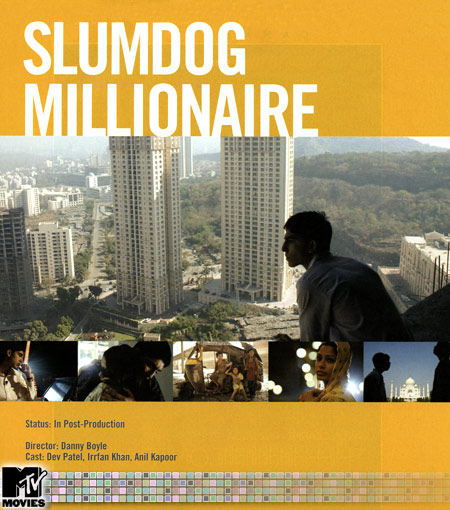
Anjali Pandey: The Million Dollar Question: How Do You Sell English on the Silver Screen? - A Socio-Linguistic Analysis of Slumdog Millionaire

The Million Dollar Question: How Do You Sell English on the Silver Screen? - A Socio-Linguistic Analysis of Slumdog Millionaire
by Anjali Pandey
Americana


Introduction

Years ago authors Barnet and Cavanagh portended: “The new world economy rests largely on global bazaars” (15). Today, India is a major economic promontory in the voyage of western filmic expansion into the East. As a “movie-mad country” (Chopra 18), with its own yearly production output of “over a thousand movies in Mumbai alone” (Beaufoy, Boyle and Feld 142) - numerically translated as “3 billion movie tickets per annum” (Lakshmi 8) - Bollywood unlike Hollywood boasts a 13% increase in movie ticket sales since 2007 (Chopra 18). Film scholars have for years tracked the so-called “economic moribundity” (Cowen 73) of European cinema. In contrast, “India’s film industry, now at $2.2 billion, is estimated to grow to 3.3 billion by 2013” (Lakshmi 8).

Cowen claims that the "English language, combined with America’s role as a world leader, has strengthened Hollywood exports” (75). In India, the linguistic “legacy of English” (Bhatia and Baumgardner 384) makes the economic venture eastward into “the prized Indian market” (Tyrrell 260) a viable option as increasing economic research confirms that “the global market has generated more dependable returns than the local market” (Dissanayake 405). Esteemed linguist, David Crystal calls India “a linguistic paradise” (173) with “a special place in the record books” as a country with “the largest English-speaking population in the world” (173) at “350 million speakers” (173). This figure is “far more than the combined English-speaking populations of Britain and the USA” (173). Two decades ago in a comprehensive analysis of Hollywood versus Bollywood, Tyrrell claimed that “Hollywood has not defined what makes a film work in India” (260). Twenty years later, Slumdog Millionaire has demonstrated that when it comes to “the battle of the dream factories” (Tyrrell 260), “Hollywood’s colonization of Bollywood” (Tyrrell 272) can indeed be achieved via a twin strategy of linguistic and cultural syncretism.

The filmic genius of Slumdog Millionaire lies in the meticulous manner in which the hybridity of language and lore of both West and East have been glocalized to suit “the viewing tastes and linguistic preferences” (Bhatia and Baumgardner 380) of cross-continental audiences. Film critics are unanimous in their praise: “Slumdog Millionaire is the film world’s first globalized masterpiece” (Morgenstern 1) raves the economically savvy Wall Street Journal. How did Slumdog Millionaire do it? The answer lies in the innovative use of verbal and visual English as cinematic strategy - as “an aural and visual spectacle” (Garwood 174) within the “diegetic space of film” (Garwood 179). Visual English consistently dominates screen-space in Slumdog. The film’s economic and aesthetic genius rests on the nuanced, multiplex manner in which visual English “functions in the ever-evolving techno-aesthetic space of cinema” (Dissanayake 406) - as a filmic device which reflects at the very same time as it sustains a place for global English evanescence. The effective incorporation of tokenized Hindi in the movie as a vehicle for highlighting verbal and visual English is accomplished in and through a plethora of potent filmic strategies including but not limited to: spotlighting, achieved via filmic prominence given to visual English; synchronization, accomplished via a savvy glocalization of tokenized local linguistic content in the service of linguistically dominant global interests; spectacularization, realized via an intelligent use of selective adaptation strategies which simultaneously translate and transliterate "Indian figurehead" novel-writing and music-making potential into globally appealing cultural products, and finally, syncretization - filmmaking strategies which “utilize an economic and cultural dynamic that combines both commercialism and creativity” (Cowen 101) - four cultural production strategies which use the local to sell the global. All four strategies are detailed below.

To Read the Rest of the Essay

Friday, February 22, 2013

Imogene Sara Smith: The Music of Words - Storytelling in Two Powell & Pressburger Films

The Music of Words: Storytelling in Two Powell & Pressburger Films
by Imogene Sara Smith
Bright Lights Film Journal


"In my films, images are everything," Michael Powell declares in his autobiography; "words are used like music to distill emotion." Powell was justly proud of tour-de-force sequences that rely exclusively on visuals, scoring, and editing, like the Red Shoes ballet or the climactic attempt by Sister Ruth to murder Sister Clodagh in Black Narcissus. These forays into what Powell called the "composed film" culminated in a feature-length cinematic opera, Tales of Hoffman (a film that, I must confess, I find airless.) With all respect, I would argue Powell's claim is too one-sided, and puzzling in some ways as well. What, for instance, does he mean when he says that the trial in heaven in A Matter of Life and Death — which involves extended speeches, battling wits, and even battling radios — is "essentially a silent film"?

For cinephiles, the silent era (when Powell got his start) can be a kind of lost Eden, a paradise of "pure cinema" from which the talkies have fallen. The conquest by sound, and the deadening limitations it initially placed on cameras, inspired many to reassert the primacy of images. Yet, given Powell's visual bent, it is striking how many scenes in earlier films by The Archers (as he and Emeric Pressburger named their filmmaking partnership) allow words to stand almost alone: Anton Walbrook's four-minute, single-take speech in the refugee office in Colonel Blimp; the anti- and pro-Nazi speeches by Walbrook and Eric Portman in The 49th Parallel; Portman's history lecture in A Canterbury Tale, Nancy Price's description of the Highland gathering at Oban in I Know Where I'm Going! While Powell and Pressburger were masters of the classic show-don't-tell method, they also daringly broke the rule by telling, not showing. Both techniques ultimately serve the same purpose. Despite the aesthetic of excess often attributed to the Archers' films, they gain power by withholding certain elements, requiring the audience to supply what's not there.

Powell and Pressburger both contributed to the scripts of their films, but Emeric Pressburger did the bulk of the writing. He is perennially overlooked and undervalued by fans of The Archers, partly because he was more retiring than Powell (spending his late years quietly in a cottage while his erstwhile partner hooked up with Scorsese and Coppola and produced his monumental autobiography), but also because the qualities he brought to their films were harder to define. Pressburger was a genius at structuring stories, a writer whose words have an extraordinary, multidimensional life, and who also knew when to use no words at all. David Low, creator of the Colonel Blimp character that inspired Pressburger's favorite Archers film, praised the screenwriter's "phenomenal power of story-telling," quipping, "He left Scheherezade standing." (Macdonald, 209) Scheherezade preserved her life by leaving her stories tantalizingly incomplete. Part of Pressburger's genius was to build into his screenplays chasms that the mind must leap, and blanks that the imagination must fill. These leaps of the mind create much of the joy and surprise you feel watching The Archers' movies: the thrill lies not in the arrow or in the target, but in the flight through space.

To Read the Rest of the Essay

Sunday, February 10, 2013

Little Atoms Interviews of Journalist/Filmmaker Adam Curtis

"Adam Curtis is a producer, writer and director of television documentaries such as Pandora's Box, The Mayfair Set, The Century of the Self, The Power of Nightmares and The Trap. Curtis' programs, though always about serious issues, maintain a sense of tongue-in-cheek humor and are characteristic in their extensive use of archive footage. In his film making, Curtis strives to find meaningful connections between historical situations and often focuses on the impact different ideologies have had on modern society. Adam's latest series, All Watched Over by Machines of Loving Grace..."

Link to the Two Interviews at Little Atoms

More resources:

Pt 1 of the Little Atoms Interview explores his earlier documentaries, including his influential The Power of Nightmares


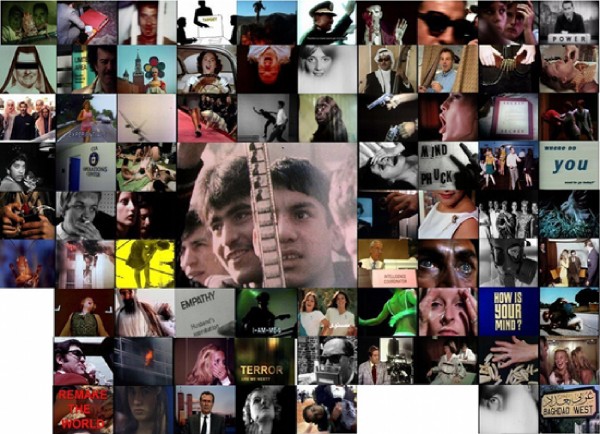
The Power of Nightmares: The Rise of the Politics of Fear

Is the threat of radical Islamism as a massive sinister organised force of destruction, specifically in the form of al-Qaeda, a myth perpetrated by politicians in many countries—and particularly American Neo-Conservatives—in an attempt to ‘unite and inspire’ people following the failure of earlier, more utopian ideologies?

To Watch the 3 Part Series

Part 1 — Baby It’s Cold Outside

The first part of the series explains the origin of Islamism and Neo-Conservatism and draws the parallels between the two of their “optimistic visions to change the world”. It shows Egyptian civil servant Sayyid Qutb, depicted as the founder of modern Islamist thought, visiting the US to learn about the education system, but becoming disgusted with what he saw as a corruption of morals and virtues in western society through consumerism. When he returns to Egypt, he is disturbed by westernisation and becomes convinced that in order to save society it must be completely restructured along the lines of Islamic law while still using western technology. He also becomes convinced that this can only be accomplished through the use of an elite “vanguard” to lead a revolution against the established order. Qutb becomes a leader of the Muslim Brotherhood and, after being tortured in one of Nasser’s jails, comes to believe that western-influenced leaders can justly be killed for the sake of removing their corruption. Qutb is executed in 1966, but he influences the future mentor of Osama bin Laden, Ayman al-Zawahiri, to start his own secret Islamist group. Inspired by the 1979 Iranian revolution, Zawahiri and his allies assassinate Egyptian president Anwar Al Sadat, in 1981, in hopes of starting their own revolution. The revolution does not materialise and Zawahiri comes to believe that the majority of Muslims have been corrupted not only by their western-inspired leaders, but Muslims themselves have been affected by jahilliyah and thus both may be legitimate targets of violence if they do not join him. They continued to have the belief that a vanguard was necessary to rise up and overthrow the corrupt regime and replace with a pure Islamist state. At the same time in the United States, a group of disillusioned liberals, including Irving Kristol and Paul Wolfowitz, look to the political thinking of Leo Strauss after the perceived failure of President Johnson’s “Great Society”. They come to the conclusion that the emphasis on individual liberty was the undoing of the plan. They envisioned restructuring America by uniting the American people against a common evil, and set about creating a mythical enemy. These factions, the Neo-Conservatives, came to power under the Reagan administration, with their allies Dick Cheney and Donald Rumsfeld, and work to unite the United States in fear of the Soviet Union. The Neo-Conservatives allege the Soviet Union is not following the terms of disarmament between the two countries, and, with the investigation of “Team B”, they accumulate a case to prove this with dubious evidence and methods…

Part 2 — The Phantom Victory

The Soviet invasion of Afghanistan on 25 December 1979 gives a common cause to an extraordinary alliance of radical Islamists in Afghanistan and around the world and to the neo-conservatives in the US, as a key battleground of the Cold War. As the United States provides funding and arms–including even Stinger missiles capable of shooting down Soviet helicopters–to Islamic Mujahideen fighters who would fire them, a young wealthy Saudi called Osama Bin Laden is among the many foreigners drawn to Afghanistan. When the Soviets eventually pull out and when the Eastern Bloc begins to collapse in the late 1980s, both groups falsely believe they are the primary architects of the “Evil Empire’s” defeat. Back in America, the Neo-Conservatives’ aspirations to continue to use the United States military power for further destruction of evils are thrown off track by the ascent of George H. W. Bush to the presidency, followed by the 1992 election of Bill Clinton leaving them out of power. The Neo-Conservatives, with their conservative Christian allies, attempt to ‘demonise’ Clinton throughout his presidency with various real and fabricated stories of corruption and immorality, but to their disappointment, the American people do not turn against Clinton. The Islamist attempts at revolution end in massive bloodshed, leaving the Islamists without popular support. Zawahiri and bin Laden flee to the sufficiently safe Afghanistan and declare a new strategy; to fight Western-inspired moral decay they must deal a blow to its source — the United States.

Part 3 — The Shadows In The Cave

This final episode addresses the actual rise of al-Qaeda, in particular by examining the United States’ role in its creation: After their failed revolutions, bin Laden and Zawahiri had little or no popular support, let alone a serious complex organisation of terrorists, and were dependent upon independent operatives to carry out their new call for jihad. In order to prosecute bin Laden for the 1998 US embassy bombings, US prosecutors had to prove he was the head of a criminal organisation responsible for the bombings. They find a former associate of bin Laden, Jamal al-Fadl, and pay him to testify that bin Laden was the head of a massive terrorist organisation called “al-Qaeda”. With the September 11th attacks, Neo-Conservatives in the new Republican government of George W. Bush use this created concept of an organisation to justify another crusade against a new evil enemy, leading to the launch of the War on Terrorism. But after the American invasion of Afghanistan fails to uproot the alleged terrorist network, the Neo-Conservatives focus inwards, searching unsuccessfully for terrorist sleeper cells in America. They then extend the war on “terror” to a war against general perceived evils with the invasion of Iraq in 2003. The ideas and tactics also spread to the United Kingdom where Tony Blair uses the threat of terrorism to give him a new moral authority. The repercussions of the Neo-Conservative strategy are also explored with an investigation of indefinitely-detained terrorist suspects in Guantanamo Bay, many allegedly taken on the word of the anti-Taliban Northern Alliance without actual investigation on the part of the United States military, and other forms of “pre-emption” against non-existent and unlikely threats made simply on the grounds that the parties involved could later become a threat…


Pt 2 of the Little Atoms Interview above is about his documentary series: All Watched Over by Machines of Loving Grace


All Watched Over By Machines Of Loving Grace is a series about how humans have been colonised by the machines they have built — “Although we don’t realise it, the way we see everything in the world today is through the eyes of the computers.”

To Watch the 3 Part Series

Part 1 — Love and Power

Part one explores the dream that rose up in the 1990s that computers could create a new kind of stable world. They would bring about a new kind global capitalism free of all risk and without the boom and bust of the past. They would also abolish political power and create a new kind of democracy through the internet where millions of individuals would be connected as nodes in cybernetic systems – without hierarchy. The film tells the story of two perfect worlds. One is the small group of disciples around the novelist Ayn Rand in the 1950s. They saw themselves as a prototype for a future society where everyone could follow their own selfish desires. The other is the global utopia that digital entrepreneurs in Silicon Valley set out to create in the 1990s. Many of them were also disciples of Ayn Rand. They believed that the new computer networks would allow the creation of a society where everyone could follow their own desires, yet there would not be anarchy. They were joined by Alan Greenspan who had also been a disciple of Ayn Rand. He became convinced that the computers were creating a new kind of stable capitalism. But the dream of stability in both worlds would be torn apart by the two dynamic human forces – love and power.

Part 2 — The Use and Abuse of Vegetational Concepts

Part two shows how our modern scientific idea of nature, the self-regulating ecosystem, is actually a machine fantasy. It has little to do with the real complexity of nature. It is based on cybernetic ideas that were projected on to nature in the 1950s by ambitious scientists. A static machine theory of order that sees humans, and everything else on the planet, as components–cogs–in a system. But in an age disillusioned with politics, the self-regulating ecosystem has again become the model for utopian ideas of human “self-organising networks”, with dreams of new ways of organising societies without leaders and in global visions of connectivity like the Gaia theory. This powerful idea emerged out of the hippie communes in America in the 1960s, and from counter-culture computer scientists who believed that global webs of computers could liberate the world. But, at the very moment this was happening, the science of ecology discovered that the theory of the self-regulating ecosystem wasn’t true. Instead they found that nature was really dynamic and constantly changing in unpredictable ways. But it was too late, the dream of the self-organising network had by now captured imaginations…

Part 3 — The Monkey in the Machine and the Machine in the Monkey

This episode looks at why popular culture finds this machine vision so beguiling. The film argues it is because all political dreams of changing the world for the better seem to have failed, meaning the retreat into machine-fantasies that say we have no control over our actions because they excuse our failure. At the heart of the film is Bill Hamilton, a scientist. He argued that human behaviour is really guided by codes buried deep within us–a theory later popularised by Richard Dawkins as the “selfish gene”. It said that individual human beings are really just machines whose only job is to make sure the codes are passed on for eternity. This final part begins in 2000 in the jungles of the Congo and Rwanda, where Hamilton is to help prove his dark theories. But all around him the Congo is being torn apart. The film then interweaves the two stories–the strange roots of Hamilton’s theories, and the history of the West’s tortured relationship with the Congo and technology…


Adam Curtis: Journalist and Filmmaker (Dialogic Archive)

Tuesday, November 27, 2012

Norman Ball: The Power of Auteurs and the Last Man Standing -- Adam Curtis' Documentary Nightmares

The Power of Auteurs and the Last Man Standing: Adam Curtis' Documentary Nightmares
by Norman Ball
Bright Lights Film Journal


Before this essay interrogates Adam Curtis' hidden vestibules, gimpy tripods, and grassy knolls, I'd like to say that any book or film that keeps me thinking a year after I encounter it passes my substantiality test. The Power of Nightmares and The Century of the Self easily fit this category. (I saw All Watched Over by Machines of Loving Grace, The Living Dead, and bits of The Trap only last week.) To survive the immediate frame of the modern attention span is to escape the charge of empty spectacle. You can't fake sustained recollection.

Substance need not equate to wholesale affirmation, however. A good polemic dusts off the thinking caps even of its opponents. Curtis' films provide, at the very least, dialectical lightning rods for alternate narrative threads. Can the same be said for (insert any American TV show)?

In recent weeks Curtis has been arguing for television (BBC being the originating medium for his documentary films, though an American audience can view them on Youtube and Vimeo) to refashion its storytelling techniques ("Adam Curtis Argues TV Needs 'New Tools' to Tell Its Stories," The Guardian, August 22, 2012). It should be fascinating to see where Curtis' films conduct television in the coming months and years. Now, if we could only get American TV to mosey on over to where Curtis has already been, that would be advancement indeed. Right now, stateside viewers are All Kvetched Over by Whole Reams of Will and Grace, but only on DVD due to some contractual disputes that preclude syndication and broadcast. Curtis offers many of his films for free on the Internet. Need I kvetch more?

The award-winning The Century of the Self (2002) offers a devastating critique of our subliminal cooptation from a lifetime's exposure to "father of public relations" Eddie Bernays' propaganda techniques. Whoops, did I just say propaganda? Bernays' most diligent pupil, Josef Goebbels, is rolling over in his hell-pit right now. Let's leave it at public relations. I'm particularly fond of Bernays' quote (very crudely paraphrased here) that democracy is a wonderful system so long as he, Bernays, exerted final subliminal pull over the lever pulled inside the voting booth. Historian Carroll Quigley (mentor of a certain Rhodes Scholar, Bill Clinton), upon being made privy to the papers of the American elite, realized that nothing was left to chance, not even 50-50 propositions. In what's often referred to as the Quigley Principle, this Georgetown professor torpedoed the notion of a vigorous two-party system. Both levers are vetted and fixed. Here he is paraphrasing the mindset of the government behind the government: "The argument that the two parties should represent opposed ideals and policies, one, perhaps, of the Right and the other of the Left, is a foolish idea acceptable only to the doctrinaire and academic thinkers. Instead, the two parties should be almost identical, so that the American people can 'throw the rascals out' at any election without leading to any profound or extreme shifts in policy" (Carroll Quigley, from Tragedy and Hope).

This is not a call to embrace monolithic conspiracy theories. There often is, as Quigley went on to suggest, dissension at the highest levels of power. Jealousy is after all a facet of power. Bernays too saw the value of ostensible choice in a democratic-capitalist system where everything boils down to packaging anyway. A typical Bernays adBy the end of WWII, needs in America had, by and large, been put to bed. Desire was the ultimate lever, a grail of incalculable dual potential. Freud's irrational man, with his limitless storehouse of appetites and anxieties, would furnish economic growth ad infinitum. Never mind that natural resources such as oil and copper are ultimately finite. For the moment, sustainment models such as that proposed by Jay Forrester and the Club of Rome's 1972 Limits to Growth (covered extensively in All Watched Over by Machines of Loving Grace) loomed in the near-distance.

To Read the Rest of the Essay


More Resources on Adam Curtis:

The Guardian: Adam Curtis argues TV needs 'new tools' to tell its stories

Tuesday, November 20, 2012

Robert Fowler: Artifact - A musician’s struggle against a giant corporation

Artifact: A musician’s struggle against a giant corporation
By Robert Fowler
World Socialist Web Site

Jared Leto is perhaps best known to the general public for his work as a film actor, most notably in David Fincher’s Fight Club (1999) and Darren Aronofsky’s Requiem for a Dream (2000). However, in recent years he has devoted his attention to the world of music, as the lead singer of Thirty Seconds to Mars.

Artifact, directed by Leto himself, under the pseudonym Bartholomew Cubbins (of Dr. Seuss fame), revolves around major record label EMI’s decision to sue the band for $30 million in August 2008. The film was screened November 8 as part of the New York City documentary festival DOC NYC and previously, in September, at the Toronto film festival.

The “crime” committed by Leto’s group was simply wanting to excuse themselves from their existing, demonstrably illegitimate contract. EMI, however, claimed that Thirty Seconds to Mars had failed to deliver the three albums required by their agreement.

Leto and his band mates were understandably aggrieved at the fact that having sold over 2 million albums at the time of being taken to court, they had not received a penny in royalties and … were still $1.4 million in debt to EMI. This, as the film makes clear, is the standard operating procedure of the record companies, who are in the business, as one commentator notes, “of not paying musicians.”

Leto explained the predicament on the band’s web site: “We had been signed with them [EMI] for nine years. Under California law, where we lived and signed our deal one cannot be bound to a contract for more than seven years. …

“Yes, we have been sued by EMI. But NOT for failing to deliver music or for ‘quitting’. We have been sued by the corporation quite simply because roughly 45 days ago we exercised our legal right to terminate our old, out of date contract, which according to the law is null and void.

“We terminated for a number of reasons, which we won’t go into here (we’d rather not air dirty laundry) but basically our representatives could not get EMI to agree to make a fair and reasonable deal.”

Thirty Second to Mars’ struggle with EMI commenced just as the financial crisis erupted. The filming of what would become Artifact also began at that time and Leto, with a certain degree of self-importance, draws parallels between the plight of the band and global economic crisis. “As we are trying to make a deal with EMI the world is falling apart,” he comments. Nonetheless, insofar as the musician denounces the record giants and Wall Street as part of the same problem, he is on to something.

To Read the Rest of the Review

Thursday, October 25, 2012

James Udden: Child of the Long Take: Alfonso Cuaron’s Film Aesthetics in the Shadow of Globalization

[Warning: the clip of the scene below gives away major plot details]

Child of the Long Take: Alfonso Cuaron’s Film Aesthetics in the Shadow of Globalization
by James Udden
Style


...

Given his Janus-faced career, it was hard to know what to expect stylistically from Cuaron in Children of Men given the direct involvement of Universal. He answers almost right away in the third shot of the opening scene as to how far he is now willing to go. Expertly introduced in this single shot is a grim, dying world in which the Clive Owen character is but one small, languid part. It is a tour de force in terms of its set design, lighting, camera movement and most of all its daringly intricate orchestration of multiple animate and inanimate elements. Yet the most telling sign is the duration of the shot: this is a long take of over fifty seconds, which with almost devious subtlety leads to a most unexpected denouement, an explosion segueing to a title shot with uncanny effect. It is an impressive beginning to a film which overall deeply impressed select viewers, critics and scholars alike. Alfonso Cuaron has accomplished the seemingly impossible: he proffers a dystopian message concerning globalization, yet he does it under the auspices of one of globalization’s key cultural players — Hollywood. Yet he also accomplishes this in indelible aesthetic terms. After seemingly reverting back to more conventional form with The Prisoner of Azkaban, the long take makes a roaring return in Children of Men, with an average shot length of just over sixteen seconds per, an astonishing figure for a present-day Hollywood feature which sometimes can average less than two seconds per shot (Hollywood 122). Moreover, even if slightly shorter on average than its Spanish-language predecessor a half a decade earlier, these long takes are more complex and more accomplished in their design. As we shall see, they are too good to be true. Indeed, these long takes are contrived spectacles in their own right.

There is an overall pattern for long take in Children of Men: the more action and violence a particular scene possesses, the longer the shot duration generally becomes. This does run counter to current Hollywood norms. Many have recently noted how big-budgeted, Hollywood action films in particular tend to lead the way in faster cutting rates which are often employed for maximum impact (Bordwell, Hollywood,122, 58-159; King, New Hollywood, 246). Children of Men, of course, is not a traditional action picture, but a science fiction work with deep philosophical underpinnings. Yet during its non-action scenes often involving conversations between characters, Cuaron is more likely to use conventional editing schemes, most of all the ever reliable shot/reverse shot. Cuaron saves his most audacious long takes for the sequences where violence and action are at their highest pitch, with the longest reserved for the prolonged battle at the refugee camp at the end. Despite their reliance on long takes in lieu of “impact” editing, it is these moments in the film which seem to be most memorable.

What is most telling is how these long takes give the appearance of taking place in “real” time and “continuous” space. Cleverly disguised is how they are often multiple shots melded together digitally in post-production. The above mentioned opening scene, for example, was shot over two days, the first day covering the indoor portion in the café, while the second day involved the complicated section outdoors. However, in the finished product, the third shot begins indoors and then proceeds seamlessly outdoors, meaning somehow a single, “continuous” long take was shot over two days time. Using the café doorframe at the moment Clive Owen leaves the frame, the camera is deviously slow to catch up, and the special effects crew disguised the cut digitally in post (Fordham 34). In short, the opening scene is not three shots, but four shots disguised as three with the last being a long take under false pretenses.

This is not an isolated instance in Children of Men. The now famous scene in the automobile took two months to plan, eight days to shoot on three separate locations. The camera’s impossibly free movements in the car were in fact impossible — they were only realized by being filmed in six separate sections where often not all of the actors were present at certain stages. Once again, this was all amalgamated into a single artificial long take by digital means (Fordham 39). Claiming to replicate the feel of a documentary, this shot is also impossibly precise for any documentary shooting as events transpire. True, they did use mostly available light in a real setting, allowing every flare and reflection on the glass to remain, much like in a documentary. But no documentarian has ever had the luxury of a twin-axis doggicam rigged above a missing car roof which is then digitally filled in during post-production. The resulting camera movements would also be impossible for a documentary — in fact in a way that has never been done by fictional filmmakers either. Particularly noteworthy is the powerful effect of that moment when the camera returns to the front and Julianne Moore reappears at the right edge of the frame, now undeniably no longer among the living. Documentarians are rarely able to be that measured, and are hardly that lucky.

The longest take in the film is over seven minutes in duration, occurring during the climatic battle at the refugee camp when Theo Faron attempts to rescue the kidnapped baby. Being one of the most complex long takes ever attempted, it is in fact too complicated to be a true “long take.” Instead, this was shot at two exterior locations plus a studio; the first major section was filmed at Bushey Hall, while the second part was shot two weeks later at Upper Heyford. This particular transition was digitally disguised using the corner of a building, much like what they had done with the doorframe of the café in the pre-credit sequence (Fordham 42). Additional elements added to the seemingly real but impossible spectacle: for example, no documentarian has been so fortuitous as to follow someone just as Theo Faron passes a soldier dying in his half-severed body, yet reaching out for him with one last moaning grasp at life. The three sections combined comprise a highly calculated, and remarkably well-orchestrated game of lost and found where Theo loses the mother and child to the engulfing chaos, only to find them again in that same chaos, all within this same faux long take. Meanwhile, by scanning this dense, dreary mise-en-scene, Cuaron and Lubezki not only disguise cuts, they continue a deeper strategy seen also in Y tu mama tambien: to show a much larger world than merely the characters themselves, a world that becomes almost hyper-real due to the careful construction of the long take coupled with other stylistic devices. So spectacular are these long takes that they become spectacles themselves which became endlessly talked about by reviewers, scholars and film aficionados alike. And that appears to have been precisely the reason why they are employed in the film during those particular sequences which proved to be the most challenging.

To Read the Entire Essay

Thursday, September 6, 2012

ENG 281 Ethics/Film: Week 4 -- Beyond the Standard Feature Film

Wisconsin "Budget Repair Bill" Protest from Matt Wisniewski on Vimeo.


Wikipedia: 2011 Wisconsin Protests

"Background Materials for John Bellamy Foster's "Education and the Structural Crisis of Capital" Dialogic (September 7, 2011)

Benton, Michael. "Bill O'Reilly and FOX News: Propaganda Fails Miserably." Dialogic (March 2, 2011)

Burke, Mike and Harriet Brown Rowan. "Wisconsin’s Uprising: A Guided Tour of the 11-Day Protest Encampment Inside the State Capitol in Madison." Democracy Now (February 25, 2011)

Burke, Mike and Nicole Salazar. "Walkouts, Bank Boycotts and Recalls: Wisconsin Protests Intensify as Union-Busting Legislation Pushed through State Assembly." Democracy Now (March 11, 2011)

Dennis, Brady and Peter Wallenstein. "Wisconsin governor urging others to take stands against unions." Washington Post (February 23, 2011)

Graves, Lisa. "A CMD Special Report: Scott Walker Runs on Koch Money ." PR Watch (February 19, 2011)

Hudson, Michael and Jeffrey Sommers. "Wisconsin Death Trip: The Plan to Steal Everything and Sell the People into Slavery." Counterpunch (March 11, 2011)

"Lawmakers Flee Wisconsin Capitol, State Police Pursue; Protests Swell to 30,000." AlterNet (February 17, 2011)

Meyerson, Harold. "Workers toppled a dictator in Egypt, but might be silenced in Wisconsin." The Washington post (February 15, 2011)

Nichols, John. "Why a Wisconsin Sheriff Refuses to Serve as Governor Walker's 'Palace Guard'." The Nation (March 2, 2011)

Rickman, Peter, Chris Larson and Kelda Helen Roys. "Outrage in Wisconsin: Thousands Flood Capitol After GOP Strips Public Workers of Bargaining Rights in Surprise Senate Vote." Democracy Now (March 3, 2010)

Zirin, Dave. "Wisconsin: Solidarity Among Workers … And Football Players." Yes! (February 17, 2011)


La Jetée (1962) from Augustus Brightman on Vimeo.


Bullock, Tori. "La Jetee Film Analysis." Film and History (May 4, 2011)

Christley, Jamie N. "Great Directors: Chris Marker Senses of Cinema (July 19, 2002)

Dillon, Brian. "Fade away: Chris Marker's La Jetée, a half-hour futuristic film that explores time and memory, seems to conjure an entire century's romance with the moving image." The Guardian (March 28, 2009)

"Listening to La Jetee." The Current (June 21, 2012)

Perry, Canaan. "Time, Memory and Time Travel in Chris Marker’s La Jetée." Space Zoetrope (2007)

Rowan-Legg, Shelah M. "Chris Marker, Filmmaker Behind LA JETÉE, Dies at 91." Twitch (July 30, 2012)

Schefer, Jean-Louis. "On La Jetee." Passages of the Image (1991: hosted on Paul Smith's Website)

Sellars, Simon. "Retrospecto: La Jetee." Ballardian (October 7, 2005)


The Universal Clock - The Resistance of Peter Watkins by Geoff Bowie, National Film Board of Canada


Biographical Sites and Official Websites:

Wikipedia: Peter Watkins

Peter Watkins: Filmmaker/Media Critic (Official Site)

British Film Institute: Peter Watkins


Resources by and about Peter Watkins and his films:

Estrin, Marc. "Peter Watkins' La Commune." The Rag Blog (March 29, 2010)

Keser, Robert. "Edvard Munch." Senses of Cinema (February 7, 2006)

La Commune (Paris, 1871) (France: Peter Watkins, 2000: available on Google video in multiple parts)

"Peter Watkins: La Commune." Chtodelat (October 31, 2008)

Peter Watkins: The Media Crisis Dialogic (October 3, 2007)

Rapfogel, Jared. "The Cinema of Peter Watkins." Cineaste 32.2 (Spring 2007)

Rosenbaum, Jonathan. "The Revolution Has Been Televised [Peter Watkins’ LA COMMUNE]." Chicago Reader (May 17, 2002)

Watkins, Peter. "Notes on the Making of La Commune (Paris, 1871)." Peter Watkins: Filmmaker/Critic (2000)

---. "Notes on the Media Crisis." Barcelona, Spain: Quaderns portàtils, 2010.


Saturday, August 25, 2012

British Film Institute: The Top 50 Greatest Films of All Time

The British Film Institute conducts a global poll of critics and filmmakers every decade and for the first time in a long, long time, Orson Welles Citizen Kane is not the number #1 film. To check out the 50 films that made the list and to see what film is now #1: The Top 50 Greatest Films of All Time

Saturday, July 21, 2012

Robert Farrow: The Wicker Man -- Games of truth, anthropology, and the death of ‘man’

The Wicker Man: Games of truth, anthropology, and the death of ‘man’
by Robert Farrow
Metaphilm


The Wicker Man, a cult classic of 1970s British cinema, portrays the investigation of an authoritarian police officer (played by Edward Woodward) into the mysterious disappearance of a young girl in the remote Scottish island of Summerisle. It becomes apparent that the islanders observe various ancient pagan traditions, and Sgt. Howie—a committed Christian—becomes increasingly suspicious of them. Eventually, he comes to suspect that she is somewhere imprisoned, earmarked as a human sacrifice for the Mayday festival of Beltane.

As the mystery unfolds, Howie comes to realizes the awful truth: the missing girl was a mystery fabricated in order to lure him to Summerisle, and it is in fact he who is to be burnt alive in the Wicker Man as an offering to the renewed cult of the old gods. This sinister ending has ensured this film a place in the annals of horror despite its divergence from the tropes of most horror films of the 1970s. The Wicker Man presents no bogeymen, no vampires, and no sinister music; its ending is all the more shocking, in fact, for the twee charm of the villagers and the folk-music score, which lead the audience into a false state of complacency that mirrors Sgt. Howie’s own vulnerability. And in a further departure from other examples of the genre, the antagonists are in no way demonized.

So, if The Wicker Man breaks so many of the genre rules, why is it such an unsettling film? One answer is illuminated by the complex matrices of truth, power, and knowledge made familiar by the French historian and philosopher, Michel Foucault: The Wicker Man presents us with an alarm call to wake us from “anthropological sleep,” and to tear down and burn our own false conceptions of “man.”

Foucault, a noted critic of the social sciences, rejected all positive notions of objectivity and human nature. For Foucault, we exist trapped within a kind of postmodern labyrinth (or “archive”), where truths are relative to the societies and practices that develop them. This is not a facile cultural relativism. Instead, we are invited to understand truths as problematized, colored by the contexts and subjects that produce them. The power structures that (so to speak) restrain us are also what makes our freedom possible, conditioning our thought at a collective, unconscious level.

Foucault’s own diagnosis of the present took the form of investigations into (often obscure) historical documents that aimed at exposing the implicit “truths” that underlie social practices and norms, thereby supporting his position as a thinker of social and historical relativity. As his work developed, it became clear that the driving force behind his work was an interest in how senses of identity are formed when the self is essentially a product of certain power/knowledge relationships, discourses, and games of truth.

Foucault’s early works—and The Wicker Man—offer this message: identity is best understood as an amorphous, shifting fiction, an “anthropology” that is to be exposed. When the full import of this becomes understood, the effect is rather more unsettling than the fraternity gorefests that typify many later horror films.

To Read the Rest of the Essay

Tuesday, June 12, 2012

Erich Kuersten: All Tomorrow's Playground Narratives -- Stanley Kubrick's Lolita

All Tomorrow's Playground Narratives: Stanley Kubrick's Lolita
by Erich Kuersten
Bright Lights Film Journal


One of the many things that make Stanley Kubrick's best films so endlessly re-watchable is how he makes cultural artifacts (hairstyles, wallpapers, furniture, etc.) that might normally date the film archetypal and uncanny. In his insane formal rigor he warps what passes for "normal" until the word loses meaning. He does this through circular movement: from strange to familiar and back again, slowly like the various orbits in 2001: A Space Odyssey (1967), In the ever-widening gap of time since that film's release, our judgment of the red and white space station decor, such as the pop-art red furniture, has revolved all the way around from cool and contemporary (for 1967) to joltingly anachronistic (1980s) to back in retro Urban Outfitters-style vogue all over again (1990s), and now (2009) on its way into postmodern super breakdown overdrive; everything is now both in and out, all the time.

DVDs have put all of the century at our disposal — as Marlene Dietrich said to Orson Welles in Touch of Evil: "It's so old it's new." Kids are becoming infatuated with manual typewriters and LPs. Having been born in 1967 myself, I now get a weird pang of nostalgic warmth from 2001's 1960s decor, as if revisiting the cosmic playground of youth, wherein parents and monkey bars loomed tall as obelisks and one wasn't expected to understand anything in any adult movie, let alone 2001. The very title of the film reverberates with this weird time loop frisson when you examine it in 2009, wherein humans may not be traveling to Jupiter, but we've got cool stuff Bowman and Arthur C. Clarke never dreamt of, like video camera-cell phones the size of a credit card. But with Kubrick, a 1970s sweater — even seen in the 1970s — or period modular furniture are as alien as if they were from the distant future or prehistoric past. Kubrick gives us nothing that is coincidental; everything is made frisson-laden, down to the last prop. Everything becomes referential to itself, or what Lacan calls a sinthom.

As with a child's misinterpretations of real-life adult symbols and signifiers (why is daddy hurting mommy in the primal scene, etc.), childhood misunderstandings of popular movies form the basis of our pop mythology, much more than the actual films' intended meanings. As a child, my friends and I regularly synopsized R-rated movies to each other, freaking ourselves out as films like Carrie, the Exorcist, Jaws, The Sentinel, Texas Chainsaw Massacre or The Omen grew scarier with each embellished telling. That may have changed now that kids can call up any movie anytime on their wristwatches, but in the pre-VCR 1970s, to kids like me, these rehashes of R-rated films were urban myths, campfire ghost stories (which survives to some extent in the whistling in the dark horror blog approach of, say, Stacie Ponder or Tenebrous Kate). If you saw the movies in person, an inevitable initial disappointment was bound to occur. No amount of special effects can measure up to the full lurid breadth of a child's imagination when told of a glass pane slicing a guy's head off in The Omen (above). The actual Omen itself doesn't come close; it's quite laughably fake, actually.

In a land before VCRs and political correctness, these kinds of imagined fears were a great turn-on, the sublimated jouissance that was once focused around the threat of spankings, the sadomasochistic pulls of infantile sexual dread/desire. The myths of this age are the urban legends (the LSD babysitter microwave infant combo) and the R-rated horror movies. These films had a role in our lives, a giddy terror of inevitable initiation-style rites of pain and passage; they needed to seem terrifying, like a rollercoaster that sends an electric charge up your spine even while waiting in line. But once you rode it or saw the film, you were cool for life. The reality always turned out to be not scary or traumatizing after all; it was just a spook show.

To Read the Rest of the Essay

Wednesday, May 16, 2012

Michael Atkinson: Archival Trouble -- The fiction-free science fiction of Adam Curtis

Archival Trouble: The fiction-free science fiction of Adam Curtis
by Michael Atkinson
Moving Image Source

...

Curtis's brand of deep politics isn't theorist Peter Dale Scott's—he's concerned less with deliberate conspiracy than with the cascade of sociopolitical dominoes, beginning somewhere mysteriously decades ago, tumbling in a semi-secret dialectical train of disaster since, and culminating in flat-out catastrophe, be it 9/11 or the world economic meltdown or merely the Reagan-era state of rampaging consumerist narcissism. Formally, Curtis manufactures his flowcharts with the simplest means available: archival footage, talking heads, calm but ominous narration, associative montage, a pervasive sense of doomsday. All Watched Over by Machines of Loving Grace is paradigmatic: Curtis begins, as his Richard Brautigan-quoting title suggests, with the familiar suspicion that the mechanization of our lives is winding inexorably toward a dystopian nightmare in which the matrix of microprocessors and A.I.'s will end up commanding us, not vice versa.

But right away it's clear that Curtis isn't hypothesizing about a terrifying future, but unearthing the hidden patterns that have created the present moment. The villains are not machines. Curtis trips backward, as is his wont, to the '50s and the rise of Ayn Rand, whose Objectivist creed in turn gave fitful birth to a spate of influential ideologies, all of which decided that both nature and human society were essentially self-sustaining, equilibrium-seeking logical mechanisms, and could be managed thus. "This is the story," Curtis intones, "of the rise of the dream of the self-organizing system, and the strange machine fantasy of nature that underpins it." The tales he tells to illustrate this harrowing and almost completely overlooked social saga all intertwine, and run from the "spaceship Earth" ideas of Buckminster Fuller, the communes that followed, the pessimistic forecasts of the Club of Rome, the rise and fall of Patrice Lumumba in the Congo, the genesis of the wholly fabricated Tutsi-Hutu dichotomy that turned Rwanda into a killing field more than once, the career of Dian Fossey, the late-century rollercoaster of economic feast and famine, and the work of theorist/geneticist George Price, who believed that humans were ultimately the slaves of their own genetic imperatives, and who demonstrated mathematically that both altruism and genocide were therefore rational acts, from "a gene's eye view" of things.

There's more, all of it reflecting back upon now; Curtis is nothing if not a staunch proselytizer for the idea of the past never being quite past. All Watched Over is more than a counter-story. Like all of Curtis's work it is approximately half well-circulated history and half "deep" background—that is, storylines and historical angles that have been pervasively and deliberately neglected by the gatekeepers of knowledge and information. The film feels something like a Craig Baldwin delusion-farce turned chillingly, menacingly factual, and the facts accrete into an interrogation of psychotic hubris. The Frankenstein monster constructed by the scientists and demagogues and politicians in All Watched Over is the last half-century or so of life on Earth, which in its ultimate tally amounts to a scoresheet of unimaginable injustice, mountains of bodies, and untold environmental ruin.

Curtis is in reality telling just one story, again and again in various threads and tangents and in dazzling three- or four-hour chunks, reaching back to the immediate postwar years and then forward to the present over and over, limning an infinitely complex genogram of our present existence. Ironically, for a history-rewriting filmmaker/producer boxing so much information into evenings of television, Curtis is fierce about the disastrous effects brought about by the artificial and intellectualized imposition of order. He began in his present mode with 1992's Pandora's Box, a massive autopsy on the worldwide cataclysms that unrolled as a result of every kind of postwar effort to systematize, organize, compel, and codify humanity, from Soviet over-industrialization to game-theory Cold War strategies to Keynesian economics to nuclear-power utopianism. Politically, this is a rocket targeted not at the Right per se, but upward, at the power elite, whose perpetual folly in trying to maximize profit and control leads ceaselessly to societal breakdown—a condition very often beside the point for the elite in question, once they've stood to benefit. The Century of the Self (2002) goes all attack-ad on this dynamic, specifically homing in on propagandist/marketing mahatma Edward Bernays, and how he used Freudian psychoanalytic insights to initiate the gold rush of institutionalized thought control—advertising, propaganda, public relations—that could be said to absolutely dominate 20th-century public discourse.

Curtis's vision seemed wholly formed at first, despite the fact that he's obviously digging up unknown connections with each new project. But it took the spiral mindquake of 9/11 for Curtis's reverse-engineered prophecies to gain a global profile. The Power of Nightmares (2004) follows the gunpowder trails from the mid-century (uniting Muslim Brotherhood messiah Sayyid Qutb and neocon pope-king Leo Strauss as complementary agents of desolation) to the attacks of 2001, and then maintains that, just as the farcical depiction of the USSR as a global spider kingdom of evil influence is destroyed by direct testimony from CIA agents and a lying Donald Rumsfeld in old news footage, the sudden postulation of Al Qaeda as a terrifying, organized worldwide threat was a manufactured myth used by Western governments and agencies to broaden and tighten their grip on international power systems and the profit to be gained therein.

To Read the Rest of the Essay

To watch Adam Curtis's documentaries online:

Pandora's Box: A Fable From the Age of Science (1992)

The Living Dead: Three Films About the Power of the Past (1995)

The Century of the Self (2002)

The Power of Nightmares: The Rise of the Politics of Fear (2004)

The Trap: What Happened to Our Dream of Freedom (2007)

All Watched Over by Machines of Loving Grace (2011)

Sunday, April 15, 2012

Ben Sachs: Second thoughts on British horror film Kill List

Second thoughts on British horror film Kill List
by Ben Sachs
The Bleader


...

Having thought about the movie for a couple weeks (it may be more accurate to say I’ve been unable not to think about it), I’ve come to admire it a good deal. Its nauseating violence now strikes me as purposeful, even necessary. Like Gaspar Noé’s 1998 I Stand Alone—the movie it reminds me of most—Kill List uses its horrifying imagery as part of a larger political provocation. If you have a strong stomach, I’d recommend attending one of the final shows at the Music Box tonight. Some further considerations—along with spoilers—follow the jump.

The movie follows Jay (Neil Maskell) and Gal (Michael Smiley), two former soldiers now working as hit men in England. Desperate for a job, they take a three-victim contract from a mysterious old man who refuses to disclose important details. Wheatly divides the story into a prologue and three chapters (each named after the profession of one of the victims), beginning with an atmosphere of strict realism and gradually introducing fantastical elements until the film reaches a plane of near abstraction. It seems worth noting that the violence becomes more gruesome as the story becomes more allegorical.

This progression allows Wheatly to cleverly manipulate audience sympathy as well as narrative form. The movie’s first extended sequence—probably its single most successful passage—plays on tropes of kitchen-sink realism to make us sympathize with Jay and Sam while hinting at the barbarism they’re capable of. It depicts an unpleasant get-together between the two men and their significant others, a long night that climaxes with an argument between Jay and his wife that nearly comes to blows. Wheatly and his actors carve out an impressive dramatic shape here, lunging from moments of reckless energy to violent anger to drunken reconciliation. The sequence places the characters in a familiar humanist tradition (think Arthur Miller’s The View From the Bridge), suggesting that beneath their lack of sophistication lies genuine feeling.

But like I Stand Alone, Kill List lays to waste any humanist interpretation—which may help to explain why I was so offended by it at first. Despite the fact that Jay wants to be a good father and Gal shows sympathy for devout Christians, there’s ultimately nothing that redeems these men. Their “talents” for torture and murder prove to be mere sadism, and they appear to have no remorse for killing anybody (in a Pinteresque touch, they sometimes allude, blithely, to committing unspecified war crimes in Kiev). The men are modern mercenaries: even their suburban lifestyles—which the observant production design stuffs with useless upper-middle-class trinkets—reflect unthinking greed.

To Read the Entire Review

Tuesday, April 3, 2012

Naked Lunch Radio #7 – Transmission

Naked Lunch Radio #7 – Transmission
Sound on Sight


Reviews on the movies Control, 24 Hour Party People and a look back at the Manchester music scene of the late 70`s and early 80`s.

To Listen to the Episode

Wednesday, February 8, 2012

Andrew O'Hehir: A Clever British Horror-Thriller Nods to Tarantino

A clever British horror-thriller nods to Tarantino
By Andrew O'Hehir
Salon

Ben Wheatley's "Kill List" is part recession-era drama, part violent insanity


Ben Wheatley certainly isn’t the only filmmaker who built his reputation making wannabe-viral video clips for the Internet, but he might be the most talented one, and the one who’s made the most impressive transition to the big screen. A 39-year-old from suburban London, Wheatley will perhaps never attain the heights of popular success he hit in 2005 with a 10-second video titled “Cunning Stunt” (it’s a spoonerism — get it?), which I should not spoil in case you haven’t seen it. Go ahead, the rest of us will wait. Honestly, the combination of good cheer, cleverness and outright cruelty achieved in “Cunning Stunt” pretty much tells you what you need to know about Wheatley. You’ll either conclude, hell yeah, I want to watch whatever that dude makes next, or you’ll say get me the Sam Hill out of here. In either case, I understand.

Wheatley’s debut feature, “Down Terrace,” was a bizarre, bleak and hilarious blend of genres, starting out as a Mike Leigh-style working-class family drama and ending up as an especially gruesome “Sopranos” episode, transported to the south coast of England. Let me introduce “Kill List,” Wheatley’s highly touted second film, by admitting that I’m infinitesimally disappointed that it’s not as funny as “Down Terrace” (though it definitely has its moments) and also that he’s gone so deep into the tradition of creepazoid British genre movies. (Rather than, you know, making the kind of depressing, no-audience films I like better.) But there’s no disputing the ingenuity and even the brilliance of this mind-bending mashup, which begins as a gritty recession-era marriage drama — the opening scene features a couple arguing about whether they have the money to get the Jacuzzi fixed — and then descends into ominous violence and finally total insanity.

I suppose you could say that the way Wheatley splices incompatible kinds of movies together into one story, like some demented mad scientist, has an Internet-age flavor to it. But that’s not something entirely new, and he actually comes off more as a hardcore fan of British independent and low-budget cinema, who loves the kitchen-sink realism of the ’60s and also loves a bunch of well-known horror movies and thrillers that I’d better not mention right now. Love it or hate it, “Kill List” is a definite widescreen cinematic experience loaded with delicious details, from the hotel clerk who holds a conversation without really listening to the sound of someone getting his brains beaten out against a concrete wall. He’s like a faux-Cockney Quentin Tarantino, passionate about the things he loves and also dedicated to the Anglo-Saxon tradition of “taking the piss” — and believe it or not, I mean that as a compliment.

To Read the Rest of the Response

Tuesday, February 7, 2012

Mark Fisher: Non-film -- Steve McQueen’s Shame

Non-film: Steve McQueen’s “Shame”
by Mark Fisher
Film Quarterly

Steve McQueen’s Shame, a study of sex addiction starring Michael Fassbender, is one of the talking-point films of the awards season.


In Shame, Steve McQueen transforms New York into a non-place. Marc Augé coined the term to refer to the anonymous and interchangeable zones of transit—retail parks, shopping malls, airports—which increasingly dominate contemporary culture. We learn that Shame’s lead character, sex addict Brandon (Michael Fassbender), was born in Ireland but grew up in New York, and his migration handily captures the transition between McQueen’s first feature, Hunger, which dealt with the 1981 hunger strikes in Northern Ireland, and the new film. McQueen has pointedly left behind the heavily coded, multiply overwritten territory of Northern Ireland’s Troubles in the 1980s for the bland vistas of upscale New York in the twenty-first century. These are quite clearly high-end non-places—the apartment in which Brandon lives, the office where he works, and the hotel where he takes a co-worker for a failed liaison have the unobtrusive minimalism which still connotes expensive taste. But they remain non-places: it’s sometimes difficult to know whether we’re in Brandon’s apartment or the hotel room. Shame’s New York is as lacking in temporal as spatial signifiers. At points, the film’s soundtrack pointedly calls up an older moment, when music could capture a particular time and place. The disco of Chic and the post-punk of Tom Tom Club and Blondie that Brandon hears in clubs and bars were once rooted in a specific New York era, but they’re now as “classic” in their own way as the Bach that Brandon prefers to listen to as he jogs through the city.

Apart from his sex addiction, practically everything about Brandon is generic, depersonalized. His job, never fully specified, seems to be something in advertising or branding. This vagueness profoundly irritated Ignatiy Vishnevetsky: “every scene ladled with big dollops of cinema’s most respectable cop-out: ambiguity … Shame wears its emptiness like a badge of honor; McQueen is trying for banal blankness, and though he succeeds in that respect, you kind of wish that a filmmaker (and one with a background as an artist at that) would aspire to do more than just say nothing.” But far from being something that you might expect an artist to refrain from, isn’t compulsory ambiguity precisely a signature of so much contemporary art, which regards “saying something” as an unpardonable vulgarity, and which would far rather “raise questions” than make any kind of determinate statement? When McQueen does try to say something, Vishnevetsky complains, it is staggeringly clichéd: “’sex can be both a dehumanizing and transcendent experience’ (you don’t say!), ‘addiction can take over a person’s life’ (really?), ‘people are often motivated by past trauma’ (well, I’ll be!), and ‘we live in a culture that nourishes emotional isolation.’” At its worst, Shame comes off like a standard melodrama remade with arthouse ellipses, complete with what Rob White called “conventional therapy-speak psychology that holds childhood responsible for adult compulsions.” At its best, however, Shame isn’t “saying nothing” so much as it is telling something about nothing, about the non- of the non-place.

To Read the Rest of the Response