Showing posts with label Thriller. Show all posts
Showing posts with label Thriller. Show all posts
Monday, October 28, 2013

Wednesday, September 18, 2013
Wednesday, May 15, 2013
Jose Teodoro -- Miss Bala: Nightmare State
Miss Bala: Nightmare State
Mexican director Gerardo Naranjo upends his filmmaking to show a country torn apart
by José Teodoro
Film Comment

Most existences on earth are marginal; the majority of people live on the edges of some kind of war. That the woman and man at the center of Miss Bala swing into each other’s orbit is itself no great coincidence. She’s Laura (Stephanie Sigman), the cheerful 23-year-old daughter of a Tijuana clothing merchant, and he’s Lino (Noe Hernandez), a taciturn, hard-eyed, soft-voiced drug trafficker about whose past we glean almost nothing. Both hail from humble if not desperate backgrounds; both aspire to transcend social determinism via archetypal routes to glamour and power: just as Lino asserts himself through terror and illegal commerce, Laura, however haphazardly, hopes to embody someone’s notion of the ideal woman by entering the Miss Baja California competition. Her first, fleeting encounter with him occurs when a dance party is turned into a massacre by Lino and his confederates. They meet again when she is so naïve as to seek out the police for help. In some perverse variation on the romantic comedy, the two keep crossing paths. Laura spends much of Miss Bala in a state of shock, while Lino seems to quickly intuit how best to exploit her allure while ostentatiously exchanging favors. He can ensure she wins the Miss Baja crown; she can serve as a gorgeous decoy in his criminal dealings.
A fascinating about-face for Mexican director Gerardo Naranjo, Miss Bala—co-written by Naranjo and Mauricio Katz and loosely based on actual events—surveys the current state of play in the drug war and offers commentary through a procession of absurdities, ironies, and largely uncontextualized mayhem. The gangsters and the DEA agents are equally menacing and seem to favor the same black SUVs; a beauty contest audience bursts into wild applause for a catatonic contestant; a flaming tire rolls by during an urban shoot-out as though it has emerged from a cartoon, traversing a stretch of asphalt covered in blood, bullet casings, and gasoline. Despite an incongruous, statistics-heavy closing title card, Miss Bala can no more be reduced to a hand-wringing docudrama about the escalation of Mexico’s drug-related violence than Take Shelter can be called a treatise on overcoming mental illness. These films are personal statements about individuals ceding control to forces beyond their comprehension—personal statements that just happen to dovetail nicely with urgent social issues.
“I’d arrived at a place where I felt like I wasn’t challenging myself that much,” says Naranjo, “so I decided to do something that I really didn’t know how to do. My previous films had a little bit of social commentary, but it was from a bourgeois point of view, trying to denounce commodification or conservatism. When I started to develop Miss Bala I felt I was responding to something far more urgent that’s in the air. To the fear.” Speaking during the Toronto International Film Festival last September, by which point Miss Bala had already seen its share of plaudits and detractors, Naranjo emphasized his latest film’s conspicuous shift in both style and content from his preceding work, whether the privileged teens playing out lovers-on-the-run melodrama under a mesh of Godardian alienation techniques (the deliriously stylish and witty 2008 I’m Gonna Explode) or privileged young adults negotiating disastrous relationships (the clever but flat 2006 Drama/Mex). “The directors I admire tend to change a lot between films,” says Naranjo. “Maybe not often with regards to form, but with subject matter for sure. Before, I felt that I was a filmmaker but had yet to really show it. I trusted so deeply in the present, in improvisation. I know I’m shifting. The question now, for me, has to do with whether or not I can maintain this.”
...
To Read the Rest
Mexican director Gerardo Naranjo upends his filmmaking to show a country torn apart
by José Teodoro
Film Comment
Most existences on earth are marginal; the majority of people live on the edges of some kind of war. That the woman and man at the center of Miss Bala swing into each other’s orbit is itself no great coincidence. She’s Laura (Stephanie Sigman), the cheerful 23-year-old daughter of a Tijuana clothing merchant, and he’s Lino (Noe Hernandez), a taciturn, hard-eyed, soft-voiced drug trafficker about whose past we glean almost nothing. Both hail from humble if not desperate backgrounds; both aspire to transcend social determinism via archetypal routes to glamour and power: just as Lino asserts himself through terror and illegal commerce, Laura, however haphazardly, hopes to embody someone’s notion of the ideal woman by entering the Miss Baja California competition. Her first, fleeting encounter with him occurs when a dance party is turned into a massacre by Lino and his confederates. They meet again when she is so naïve as to seek out the police for help. In some perverse variation on the romantic comedy, the two keep crossing paths. Laura spends much of Miss Bala in a state of shock, while Lino seems to quickly intuit how best to exploit her allure while ostentatiously exchanging favors. He can ensure she wins the Miss Baja crown; she can serve as a gorgeous decoy in his criminal dealings.
A fascinating about-face for Mexican director Gerardo Naranjo, Miss Bala—co-written by Naranjo and Mauricio Katz and loosely based on actual events—surveys the current state of play in the drug war and offers commentary through a procession of absurdities, ironies, and largely uncontextualized mayhem. The gangsters and the DEA agents are equally menacing and seem to favor the same black SUVs; a beauty contest audience bursts into wild applause for a catatonic contestant; a flaming tire rolls by during an urban shoot-out as though it has emerged from a cartoon, traversing a stretch of asphalt covered in blood, bullet casings, and gasoline. Despite an incongruous, statistics-heavy closing title card, Miss Bala can no more be reduced to a hand-wringing docudrama about the escalation of Mexico’s drug-related violence than Take Shelter can be called a treatise on overcoming mental illness. These films are personal statements about individuals ceding control to forces beyond their comprehension—personal statements that just happen to dovetail nicely with urgent social issues.
“I’d arrived at a place where I felt like I wasn’t challenging myself that much,” says Naranjo, “so I decided to do something that I really didn’t know how to do. My previous films had a little bit of social commentary, but it was from a bourgeois point of view, trying to denounce commodification or conservatism. When I started to develop Miss Bala I felt I was responding to something far more urgent that’s in the air. To the fear.” Speaking during the Toronto International Film Festival last September, by which point Miss Bala had already seen its share of plaudits and detractors, Naranjo emphasized his latest film’s conspicuous shift in both style and content from his preceding work, whether the privileged teens playing out lovers-on-the-run melodrama under a mesh of Godardian alienation techniques (the deliriously stylish and witty 2008 I’m Gonna Explode) or privileged young adults negotiating disastrous relationships (the clever but flat 2006 Drama/Mex). “The directors I admire tend to change a lot between films,” says Naranjo. “Maybe not often with regards to form, but with subject matter for sure. Before, I felt that I was a filmmaker but had yet to really show it. I trusted so deeply in the present, in improvisation. I know I’m shifting. The question now, for me, has to do with whether or not I can maintain this.”
...
To Read the Rest
Monday, April 15, 2013
Black Book (Netherlands/Germany/Belgium: Paul Verhoeven, 2006)

Black Book (Netherlands/Germany/Belgium: Paul Verhoeven, 2006: 145 mins)
Barton-Fumo, Margaret. "Paul Verhoeven." The Film Comment (November 15, 2016) ["What are the uncanny forces at work behind Paul Verhoeven’s visceral and transgressive cinema? In anticipation of the Film Society’s complete retrospective of the Dutch master’s films and the U.S. release of Elle, this episode offers a comprehensive discussion of the director’s audacious and eclectic career encompassing art-house Dutch films (Turkish Delight [1971], Spetters [1980]) and big-budget Hollywood productions such as Basic Instinct (1992), Total Recall (1990) and Starship Troopers (1997). In the first part of the podcast, Film Comment Digital Editor Violet Lucca sits down with a panel of Verhoeven connoisseurs, including Cinema Scope critic Adam Nayman, Film Comment Deep Cuts columnist Margaret Barton-Fumo (also the editor of a forthcoming book of interviews with Verhoeven), and Fort Buchanan director Benjamin Crotty, to tackle the controversy that lies at the core of Verhoeven’s work. In the final part of the episode, Margaret Barton-Fumo speaks to Verhoeven about the uncomfortable eroticism that pervades Elle and his Brechtian influences."]
Cribbs, John, James Hancock and Leanne Kubicz. "The Cinema of Paul Verhoeven." Wrong Reel #200 (November 2016)
Howard, Ed. "TOERIFIC: Black Book." Only the Cinema (July 20, 2009)
Judt, Tony. "The Legacy of War" and "Retribution" from Postwar: A History of Europe Since 1945. NY: Penguin, 2006: 13-63. [Your professor has a copy].
Wednesday, April 10, 2013
Revanche (Austria: Götz Spielmann, 2008)

Revanche (Austria: Götz Spielmann, 2008: 121 mins)
Ashbury, Roy. "Prostitution." Understanding Representation. ed. Wendy Helsby. London: BFI, 2005: 115-142. [Available in BCTC Library PN 1995 U4977 2005]
Spielman, Götz. "DVD OF THE WEEK & PODCAST: Revanche (Gotz Spielmann)." Green Cine Daily (February 18, 2009)
Totaro, Donato. "Revanche (2008, Götz Spielman)-- A Matter of Stillness." Offscreen (February 28, 2010)
White, Armond. "Revanche:
Revival of the Fittest." The Criterion Collection (February 11, 2010)
Sunday, April 7, 2013
Friday, April 5, 2013
Winter's Bone (USA: Debra Granik, 2010)

Winter's Bone (USA: Debra Granik, 2010: 100 mins)
Enelow, Shonni. "The Great Recession: Restrained but resilient, a style of acting has taken hold that speaks to an era’s anxieties." Film Quarterly (September-October 2016) ["This is another way to read the emotional withdrawal or refusal in these performances: as a response to a violent or chaotic environment, one that doesn’t offer an alternate vision of an open and embracing future. For even when representing an alienating or unfeeling world, actors of earlier eras generally appealed to the camera and their audiences to receive their feelings and implicitly trusted them to respond generously, either through vicarious sentiment or humanist compassion. Expressive acting—of which Method acting is one dominant form—is built on the conviction that audiences want an actor’s emotions to be in some way available to them. There’s a basic optimism in that conviction: the optimism that the world would be better if we all told each other the truth about what we feel. In contrast, many of today’s most lauded American film actors give performances that evince no such optimism about emotional expression. Returning to Winter’s Bone, for example, it’s clear that within the fiction of the film, Ree doesn’t trust the world to care about her well-being. But rather than contrast her character’s suspicion with an appeal to the (presumably) sympathetic film audience, Lawrence maintains her wariness throughout. Likewise, Mara doesn’t cut Lisbeth’s lowered gaze and near-inaudible, clipped speech with any revelation or outburst that would make us think she could be—or really is, deep down—other than she appears. There aren’t hidden motivations in these performances, and in fact, close to no subtext (the idea of subtext, with its inherently psychological schema, is parodied in Carol by a would-be writer who takes notes on the difference between what characters in movies say and what they really feel)."]
Winter’s Bone (US 2010) The Case for Global Film (October 6, 2010)
Zuckerman, Alex. "The Hills: Winter's Bone The Chances We Take (July 24, 2010)
Saturday, December 29, 2012
Ingrid Fernandez: Visions of the Other: The Return of the Abject in Roman Polanski's The Tenant
Visions of the Other: The Return of the Abject in Roman Polanski's The Tenant
by Ingrid Fernandez
Bright Lights Film Journal

Perhaps one of the highest achievements — and casualties — of Western philosophy lies in its complete denial of the body as a conduit for knowledge and self-discovery. The body has been excluded from discourse, always positioned as a threat to the higher instincts of the intellect. It is an unwanted part of the self: the polluted, the irrational, the animalistic that mars the path to enlightenment. It has thus been sentenced to represent the space of the abject, that which is always pushing the socially constructed subject to the edge of the abyss and hence threatens the law. However, a higher truth can be sought in the order of Nature. If we embrace the corporeal, we no longer negate death, decay, sickness — the filth burgeoning inside the self and forever constituting its powerful force. I accept my frailty, the instability of my identity, and I mourn for what I have lost when I achieved the status of subject. For that part of myself always creeps back into my existence as a shadow, a hidden desire I can never satisfy, that of life and death merging into pure being. I mourn the Other. I carry it within me but can never access it in life, for it might destroy me, I have been told; or perhaps it might complete me once it undoes all I have learned to be. Julia Kristeva describes fully experiencing the body as causing a rupture within signification, unacceptable because it eradicates the socially constructed boundaries regulating identity. She states:
It is precisely in this foreign land, in this dark continent shunned by rational thought, that we might best find ourselves. The real truth of life is most acutely revealed at a corporeal level, where primal vulnerabilities such as the fear of illness and decay, the violated body, and the body in pain constitute the essence of being human, of being a part of a larger world where "the Other" is a reflection of the self. Moreover, our very physical existence and relation to others stem from a common bond of blood that predates the social apparatus. After all, social identity is easily stripped, uncovering a universal truth — the fact we are all mortal and subject to the violation of our physical space. At its most basic, the bond between humans is forged by the organic — sinews, muscle, bones, and the burden of the body. The instability of physical existence lies in its constant metamorphosis, its ability to simultaneously enrich and destroy intellectual activity, and the presence of elusive desire and the remnants of a fear that remain locked in the moment prior to our existence as social subjects. These concepts are best illustrated in cinema because of the power of the image to enter the viscera, elide intellectual resistance, and elicit an authentic and unmediated, sometimes even involuntary, reaction. The cinematic image penetrates the space of the abject and brings it to life. It is the return of the repressed and allows us to once again inhabit "uncomfortable spaces" we thought were closed off to our senses. Starting from these premises, I propose to revisit the concept of knowledge gained through the saturation of the body by outside stimuli, in this case film images, and how this experience results in a form of transcendence, a deeper understanding of our relation to ourselves and "the Other."
Roman Polanski's 1976 film The Tenant can be seen as a meditation on the fate of the abject body and how it is marked, regulated, and finally obliterated by the social apparatus. However, it also emphasizes how the repressed eludes the symbolic law and allows us to encounter its terrifying shadow, the periphery of existence that always manages to break through. Additionally, Polanski brings in the concept of bare life as stipulated by critics like Giorgio Agamben and Judith Butler, inquiring into the way a social subject is constituted and given a voice or utterly silenced and excluded from the circle of the human. The film's main focus remains on the body as undesirable, non-ideal, open to external aggression and pollution. In typical Polanski fashion, the audience is trapped in an "uncomfortable visual space" where the concept of a stable individual identity is never a matter of choice, but instead constituted by our surroundings and forces well beyond our grasp. The Tenant's crowning achievement is its use of the subjective camera, to the extent the audience is literally involved in the action through the vision of its main character, Trelkovsky. We see what he sees, fear what he fears, and eventually become him. Through this process, we experience the frailty of subjecthood and the ability of the cinematic image to rouse in us a dialogue with the innermost recesses of ourselves, the abject within us that, when we acknowledge it, sets us on the path to enlightenment and self-discovery.
To Read the Rest of the Essay
by Ingrid Fernandez
Bright Lights Film Journal
Perhaps one of the highest achievements — and casualties — of Western philosophy lies in its complete denial of the body as a conduit for knowledge and self-discovery. The body has been excluded from discourse, always positioned as a threat to the higher instincts of the intellect. It is an unwanted part of the self: the polluted, the irrational, the animalistic that mars the path to enlightenment. It has thus been sentenced to represent the space of the abject, that which is always pushing the socially constructed subject to the edge of the abyss and hence threatens the law. However, a higher truth can be sought in the order of Nature. If we embrace the corporeal, we no longer negate death, decay, sickness — the filth burgeoning inside the self and forever constituting its powerful force. I accept my frailty, the instability of my identity, and I mourn for what I have lost when I achieved the status of subject. For that part of myself always creeps back into my existence as a shadow, a hidden desire I can never satisfy, that of life and death merging into pure being. I mourn the Other. I carry it within me but can never access it in life, for it might destroy me, I have been told; or perhaps it might complete me once it undoes all I have learned to be. Julia Kristeva describes fully experiencing the body as causing a rupture within signification, unacceptable because it eradicates the socially constructed boundaries regulating identity. She states:
A wound with blood and pus, or the sickly, acrid smell of sweat, does not signify death. In the presence of signified de'ath — a flat encephalograph, for instance — I would understand, react, or accept. No, as in true theater, without makeup or masks, refuse and corpses show me what I permanently thrust aside in order to live . . . My body extricates itself, as being alive, from that border . . . It is thus not lack of cleanliness or health that causes abjection but what disturbs identity, system, order. What does not respect borders, positions, rules. The in-between, the ambiguous, the composite. (Kristeva)
It is precisely in this foreign land, in this dark continent shunned by rational thought, that we might best find ourselves. The real truth of life is most acutely revealed at a corporeal level, where primal vulnerabilities such as the fear of illness and decay, the violated body, and the body in pain constitute the essence of being human, of being a part of a larger world where "the Other" is a reflection of the self. Moreover, our very physical existence and relation to others stem from a common bond of blood that predates the social apparatus. After all, social identity is easily stripped, uncovering a universal truth — the fact we are all mortal and subject to the violation of our physical space. At its most basic, the bond between humans is forged by the organic — sinews, muscle, bones, and the burden of the body. The instability of physical existence lies in its constant metamorphosis, its ability to simultaneously enrich and destroy intellectual activity, and the presence of elusive desire and the remnants of a fear that remain locked in the moment prior to our existence as social subjects. These concepts are best illustrated in cinema because of the power of the image to enter the viscera, elide intellectual resistance, and elicit an authentic and unmediated, sometimes even involuntary, reaction. The cinematic image penetrates the space of the abject and brings it to life. It is the return of the repressed and allows us to once again inhabit "uncomfortable spaces" we thought were closed off to our senses. Starting from these premises, I propose to revisit the concept of knowledge gained through the saturation of the body by outside stimuli, in this case film images, and how this experience results in a form of transcendence, a deeper understanding of our relation to ourselves and "the Other."
Roman Polanski's 1976 film The Tenant can be seen as a meditation on the fate of the abject body and how it is marked, regulated, and finally obliterated by the social apparatus. However, it also emphasizes how the repressed eludes the symbolic law and allows us to encounter its terrifying shadow, the periphery of existence that always manages to break through. Additionally, Polanski brings in the concept of bare life as stipulated by critics like Giorgio Agamben and Judith Butler, inquiring into the way a social subject is constituted and given a voice or utterly silenced and excluded from the circle of the human. The film's main focus remains on the body as undesirable, non-ideal, open to external aggression and pollution. In typical Polanski fashion, the audience is trapped in an "uncomfortable visual space" where the concept of a stable individual identity is never a matter of choice, but instead constituted by our surroundings and forces well beyond our grasp. The Tenant's crowning achievement is its use of the subjective camera, to the extent the audience is literally involved in the action through the vision of its main character, Trelkovsky. We see what he sees, fear what he fears, and eventually become him. Through this process, we experience the frailty of subjecthood and the ability of the cinematic image to rouse in us a dialogue with the innermost recesses of ourselves, the abject within us that, when we acknowledge it, sets us on the path to enlightenment and self-discovery.
To Read the Rest of the Essay
Friday, September 28, 2012
Sound on Sight Podcast #309: Director Alfred Hitchcock’s ‘Shadow of a Doubt’ – ‘Psycho’ – ‘The Birds’
Sound on Sight Podcast #309: Director Alfred Hitchcock’s ‘Shadow of a Doubt’ – ‘Psycho’ – ‘The Birds’
Sound on Sight
Every month the Sound On Sight staff bands together to tackle a specific filmmaker, event and/or some sort of movie related theme. This month our focus shifts towards the “Master of Suspense”, Alfred Hitchcock.
After years of us promising to get off our asses and get it done, we’ve finally gotten our long-awaited Hitchcock episode done! Special guest and all-around movie knowledge hound Bill Mesce joins Ricky D and Justine Smith to chat up three of the maestro’s most famous chillers: Shadow of a Doubt, Psycho and The Birds.
To Listen to the Episode
Sound on Sight
Every month the Sound On Sight staff bands together to tackle a specific filmmaker, event and/or some sort of movie related theme. This month our focus shifts towards the “Master of Suspense”, Alfred Hitchcock.
After years of us promising to get off our asses and get it done, we’ve finally gotten our long-awaited Hitchcock episode done! Special guest and all-around movie knowledge hound Bill Mesce joins Ricky D and Justine Smith to chat up three of the maestro’s most famous chillers: Shadow of a Doubt, Psycho and The Birds.
To Listen to the Episode
Tuesday, August 21, 2012
Mark Chapman: Clashing Harmonics -- The Characteristics of Sound in Orson Welles' Touch of Evil
Clashing Harmonics: The Characteristics of Sound in Orson Welles' Touch of Evil
by Mark Chapman
Bright Lights Film Journal

Although much has been written about the expressive visual language in the films directed by Orson Welles, comparatively little attention has been paid to their sensual auditory landscapes. Critical analysis of Touch of Evil (1958), a film Paul Schrader famously described as the "epitaph of film noir" (Schrader 1972: 61), has tended to be no different in perpetuating this apparent domination of the image. In this article, I will identify Welles' auditory strategies through a discussion of their formal characteristics and then examine how they elucidate the film's narrative and thematic concerns.
When film sound is discussed, it is most often referred to in terms of what it adds to the image, so my comments in this essay regarding the film's visual qualities will be purposefully limited in order to counteract this tendency in film scholarship. Aside from innovative and detailed work by Rick Altman and Michel Chion,1 the vocabulary of sound theory is not as established as the accepted visual terminology of cinematic discourse. This perhaps suggests that our auditory imaginations are not as well developed with regard to filmic technique. Chion argues that one of the reasons for this is that sound has no audio unit comparable to the specifically cinematic unit of the visual "shot." Instead, the listener has to break a film text down into elements of everyday experience such as verbal sentences, musical themes, and individual noises (Chion 1994: 45). Therefore sound will remain perceived as secondary to the image even though it is audio, to a considerable degree, which gives the cinema's large flat screen its three-dimensionality by way of the illusory audiovisual contract with the spectator.2
Touch of Evil is a heated crime noir story of police corruption and murder set against the seedy backdrop of a fictitious Mexican American border town called Los Robles. After a car bomb kills an influential local businessman and his young girlfriend, newlyweds Mike (a Mexican narcotics enforcement official played by Charlton Heston) and Susan Vargas (Janet Leigh) become embroiled in a furious chain of events that leads Mike into a direct confrontation with the town's morally and physically grotesque police captain, Hank Quinlan (Orson Welles).
The main obstacle in building a consistent discourse on Touch of Evil is that there are three versions presently available; the original theatrical release, the "preview version" discovered deep inside the Universal archives in 1975, and the 1998 "restored cut" produced by Rick Schmidlin and re-edited by Walter Murch following notes made by Welles in his now legendary 58-page memo. The document was written after Universal had dismissed Welles from post-production but was contractually obliged to show the director a studio-approved assembly of his footage — for a single screening. The version I have chosen to focus on is the 1998 re-edit because, though not a complete director's cut, it is the closest to Welles' intentions for the film.3 For this important restoration, Murch was able to obtain an original monaural optical print that had been created from a magnetic mix consisting of three separate tracks: music, dialogue, and sound effects (Murch 1998: 83-102). This simple component breakdown will inform the structure of my essay.
One of Welles' primary audio strategies in Touch of Evil is the use of acousmatic source music to create a sense of depth and perspective to articulate the fictional border town of Los Robles. After the brief overture accompanying the Universal logo, Welles makes extensive use of diegetic music (all compositions by Henry Mancini) from local bars, nightclubs, and car stereos as the camera weaves through the border town, switching perspective from the unidentified bomber onto the car as it steadily moves through the town, finally settling on Mike and Susan Vargas before the explosion.4 As Welles described in his memo, "Underscoring... is to be most sparingly used, and should never give a busy, elaborate, orchestrated effect. What we want is musical color rather than movement; sustained washes of sound rather than... melodramatic or operatic scoring" (Tully 1999). This multileveled mix of rock and roll and Latino dance numbers effectively comes to replace conventional "thriller" underscoring, and it is a full twenty minutes before the first non-diegetic music is used, occurring during a verbal confrontation between Vargas and Quinlan. The harmonics of these culturally distinct musical styles are clashed forcefully together to create a thematic foreshadowing of the divisive role that race will have in the story, whilst at the same time revealing the director's hyper-realist sensibility. Welles' technique — a kind of deep spatial and temporal focus — pursues realism only to exaggerate it and draw attention to itself as a filmic construct.
Welles familiarizes us with the geography of the town largely through source music. Los Robles is presented as a labyrinth, an inter-place where physical and moral borders are erased. There are few conventional transitions; scenes tend to leak into each other. However, the acoustic space is often divided within scenes, the music synchronously creating a sonic partition that is slowly erected as the narrative progresses. The breaking down of physical borders is, throughout the film, used as a metaphor for the moral crumbling of its protagonists. In the final sequence, Vargas and Menzies (Joseph Calleia) are required to lure Quinlan away from Tanya's (Marlene Dietrich) bordello in order to obtain a clean recording of his confession (because Quinlan would "never stand" for the music to be turned off). At the end, we are cut adrift from the music and lost geographically in a field of oil derricks indicating that each character is collapsing into their own moral abyss. The musical compositions gradually become leitmotifs assigned to a particular character or thematic idea. For example, the pianola theme is continuously linked to notions of nostalgia and usually precedes an appearance of Tanya — except when it is played in a modified form in the bar as the scheming Grandi feeds Quinlan shots of bourbon. The theme is reprised for a final time after Quinlan's death; as Tanya walks away into the night, it becomes a shatteringly poignant coronach for lost innocence.
To Read the Rest of the Essay
by Mark Chapman
Bright Lights Film Journal
Although much has been written about the expressive visual language in the films directed by Orson Welles, comparatively little attention has been paid to their sensual auditory landscapes. Critical analysis of Touch of Evil (1958), a film Paul Schrader famously described as the "epitaph of film noir" (Schrader 1972: 61), has tended to be no different in perpetuating this apparent domination of the image. In this article, I will identify Welles' auditory strategies through a discussion of their formal characteristics and then examine how they elucidate the film's narrative and thematic concerns.
When film sound is discussed, it is most often referred to in terms of what it adds to the image, so my comments in this essay regarding the film's visual qualities will be purposefully limited in order to counteract this tendency in film scholarship. Aside from innovative and detailed work by Rick Altman and Michel Chion,1 the vocabulary of sound theory is not as established as the accepted visual terminology of cinematic discourse. This perhaps suggests that our auditory imaginations are not as well developed with regard to filmic technique. Chion argues that one of the reasons for this is that sound has no audio unit comparable to the specifically cinematic unit of the visual "shot." Instead, the listener has to break a film text down into elements of everyday experience such as verbal sentences, musical themes, and individual noises (Chion 1994: 45). Therefore sound will remain perceived as secondary to the image even though it is audio, to a considerable degree, which gives the cinema's large flat screen its three-dimensionality by way of the illusory audiovisual contract with the spectator.2
Touch of Evil is a heated crime noir story of police corruption and murder set against the seedy backdrop of a fictitious Mexican American border town called Los Robles. After a car bomb kills an influential local businessman and his young girlfriend, newlyweds Mike (a Mexican narcotics enforcement official played by Charlton Heston) and Susan Vargas (Janet Leigh) become embroiled in a furious chain of events that leads Mike into a direct confrontation with the town's morally and physically grotesque police captain, Hank Quinlan (Orson Welles).
The main obstacle in building a consistent discourse on Touch of Evil is that there are three versions presently available; the original theatrical release, the "preview version" discovered deep inside the Universal archives in 1975, and the 1998 "restored cut" produced by Rick Schmidlin and re-edited by Walter Murch following notes made by Welles in his now legendary 58-page memo. The document was written after Universal had dismissed Welles from post-production but was contractually obliged to show the director a studio-approved assembly of his footage — for a single screening. The version I have chosen to focus on is the 1998 re-edit because, though not a complete director's cut, it is the closest to Welles' intentions for the film.3 For this important restoration, Murch was able to obtain an original monaural optical print that had been created from a magnetic mix consisting of three separate tracks: music, dialogue, and sound effects (Murch 1998: 83-102). This simple component breakdown will inform the structure of my essay.
One of Welles' primary audio strategies in Touch of Evil is the use of acousmatic source music to create a sense of depth and perspective to articulate the fictional border town of Los Robles. After the brief overture accompanying the Universal logo, Welles makes extensive use of diegetic music (all compositions by Henry Mancini) from local bars, nightclubs, and car stereos as the camera weaves through the border town, switching perspective from the unidentified bomber onto the car as it steadily moves through the town, finally settling on Mike and Susan Vargas before the explosion.4 As Welles described in his memo, "Underscoring... is to be most sparingly used, and should never give a busy, elaborate, orchestrated effect. What we want is musical color rather than movement; sustained washes of sound rather than... melodramatic or operatic scoring" (Tully 1999). This multileveled mix of rock and roll and Latino dance numbers effectively comes to replace conventional "thriller" underscoring, and it is a full twenty minutes before the first non-diegetic music is used, occurring during a verbal confrontation between Vargas and Quinlan. The harmonics of these culturally distinct musical styles are clashed forcefully together to create a thematic foreshadowing of the divisive role that race will have in the story, whilst at the same time revealing the director's hyper-realist sensibility. Welles' technique — a kind of deep spatial and temporal focus — pursues realism only to exaggerate it and draw attention to itself as a filmic construct.
Welles familiarizes us with the geography of the town largely through source music. Los Robles is presented as a labyrinth, an inter-place where physical and moral borders are erased. There are few conventional transitions; scenes tend to leak into each other. However, the acoustic space is often divided within scenes, the music synchronously creating a sonic partition that is slowly erected as the narrative progresses. The breaking down of physical borders is, throughout the film, used as a metaphor for the moral crumbling of its protagonists. In the final sequence, Vargas and Menzies (Joseph Calleia) are required to lure Quinlan away from Tanya's (Marlene Dietrich) bordello in order to obtain a clean recording of his confession (because Quinlan would "never stand" for the music to be turned off). At the end, we are cut adrift from the music and lost geographically in a field of oil derricks indicating that each character is collapsing into their own moral abyss. The musical compositions gradually become leitmotifs assigned to a particular character or thematic idea. For example, the pianola theme is continuously linked to notions of nostalgia and usually precedes an appearance of Tanya — except when it is played in a modified form in the bar as the scheming Grandi feeds Quinlan shots of bourbon. The theme is reprised for a final time after Quinlan's death; as Tanya walks away into the night, it becomes a shatteringly poignant coronach for lost innocence.
To Read the Rest of the Essay
Monday, August 6, 2012
Caetlin Benson-Allott: Out of Sight
Out of Sight: Contagion (Steven Soderbergh)
by Caetlin Benson-Allott
Film Quarterly

Since Marey’s motion studies at the end of the nineteenth century, film has been a tool for providing visible evidence, a record of things seen. The development of digital imaging technology over the past twenty years has transformed that original empirical function. Advancements in CGI enable convincing depictions of things impossible to see in everyday life: dinosaurs, hobbits, viruses. It has become necessary to speak of “hypervisibility” to describe the way movies can realistically render such previously hard-to-envision phenomena. Steven Soderbergh’s Contagion tries to contest this prevailing logic by insisting on the limits of visibility.
Contagion begins with a black screen and a cough; someone somewhere is sick—and spreading it—but we cannot see who. Characters spend much of the rest of the film staring into monitors, feverishly studying colorful computer-generated models of the mysterious virus or digital video of its victims, but however hard they look, their screens reveal only biological explanations for the epidemic. They inevitably exclude macroeconomic and social forces, which are even harder to picture than the microscopic disease but causally every bit as important. To represent the limits of visual inquiry, Soderbergh’s movie keeps its computer-generated models on monitors and within frames. By separating digital visual aids from the rest of the characters’ environments, Contagion indicates that seeing the virus—or even the moment of its transmission—can never fully explain the catalysts behind the epidemic. Digital models may help halt the spread of an outbreak, but they cannot convey why the virus entered the population. Ironically, Soderbergh does try to show us the forces behind these images, but in so doing, he runs into the same explanatory limitations as his characters.
As a medical thriller, Contagion participates in the venerable filmic tradition of searching for visual pleasure on—and even within—the human body. Writing about Contagion‘s nineteenth-century precedents, Tom Gunning invokes “the gnostic (from gnosis, knowledge) mission of early cinema” that imbricated “new methods for investigating the visual world” with the joys of spectacle (“In Your Face: Physiognomy, Photography, and the Gnostic Mission of Early Film,” Modernism/Modernity, winter 1997, 1, 3). In addition to Marey’s motion studies, “Fred Ott’s Sneeze” (1894) provides another important example of this early mixture of scientific inquiry and visual pleasure. A forty-eight-frame close-up of a lab assistant’s involuntary expulsion, the movie’s appeal comes from its framing. The close-up of the sneezing face captures the “microphysiologies” of facial musculature at work and turns the body’s compulsions into spectacle.
These edifying delights inspired subsequent filmmakers to imagine visual pleasures hiding beneath the body’s surfaces. By the mid-1960s, playful science-fiction films were using special effects to depict extraordinary internal environments. Fantastic Voyage (1966) and Innerspace (1987) employ spectacular sets and production designs to take us inside internal organs as foreign and mysterious as outer space. CGI continued this tendency to turn flesh into fantasy. However, the ease with which digital artists can peek beneath the skin has made flesh part of the story in a much wider variety of genres. Fight Club (1999) famously begins inside the brain of its protagonist; unpleasantly organic burblings and squelches introduce the camera’s zoom backwards along a neural path across the cerebrum, out a hair follicle, and up the barrel of a gun nestled in the protagonist’s mouth. More recently, 127 Hours (2011) travels inside its protagonist’s arm to underscore the difficulty of amputating a limb with a utility tool. Framed by reaction shots that convey the character’s suffering, the virtual camera shows the knife blade sliding through muscle to detach bone and tendon. Although a digital fiction, the effect is horribly believable: this must be what it really looks like to sever an arm. The sequence furthers our expectation of what computer animation can make visible. Blade: Trinity (2004) and the recent remake of The Thing (2011) similarly exploit CGI to portray viruses and aliens penetrating human cells. These movies teach viewers that computers can render truths our senses cannot, a proposition Contagion openly questions.
To Read the Rest of the Essay
by Caetlin Benson-Allott
Film Quarterly
Since Marey’s motion studies at the end of the nineteenth century, film has been a tool for providing visible evidence, a record of things seen. The development of digital imaging technology over the past twenty years has transformed that original empirical function. Advancements in CGI enable convincing depictions of things impossible to see in everyday life: dinosaurs, hobbits, viruses. It has become necessary to speak of “hypervisibility” to describe the way movies can realistically render such previously hard-to-envision phenomena. Steven Soderbergh’s Contagion tries to contest this prevailing logic by insisting on the limits of visibility.
Contagion begins with a black screen and a cough; someone somewhere is sick—and spreading it—but we cannot see who. Characters spend much of the rest of the film staring into monitors, feverishly studying colorful computer-generated models of the mysterious virus or digital video of its victims, but however hard they look, their screens reveal only biological explanations for the epidemic. They inevitably exclude macroeconomic and social forces, which are even harder to picture than the microscopic disease but causally every bit as important. To represent the limits of visual inquiry, Soderbergh’s movie keeps its computer-generated models on monitors and within frames. By separating digital visual aids from the rest of the characters’ environments, Contagion indicates that seeing the virus—or even the moment of its transmission—can never fully explain the catalysts behind the epidemic. Digital models may help halt the spread of an outbreak, but they cannot convey why the virus entered the population. Ironically, Soderbergh does try to show us the forces behind these images, but in so doing, he runs into the same explanatory limitations as his characters.
As a medical thriller, Contagion participates in the venerable filmic tradition of searching for visual pleasure on—and even within—the human body. Writing about Contagion‘s nineteenth-century precedents, Tom Gunning invokes “the gnostic (from gnosis, knowledge) mission of early cinema” that imbricated “new methods for investigating the visual world” with the joys of spectacle (“In Your Face: Physiognomy, Photography, and the Gnostic Mission of Early Film,” Modernism/Modernity, winter 1997, 1, 3). In addition to Marey’s motion studies, “Fred Ott’s Sneeze” (1894) provides another important example of this early mixture of scientific inquiry and visual pleasure. A forty-eight-frame close-up of a lab assistant’s involuntary expulsion, the movie’s appeal comes from its framing. The close-up of the sneezing face captures the “microphysiologies” of facial musculature at work and turns the body’s compulsions into spectacle.
These edifying delights inspired subsequent filmmakers to imagine visual pleasures hiding beneath the body’s surfaces. By the mid-1960s, playful science-fiction films were using special effects to depict extraordinary internal environments. Fantastic Voyage (1966) and Innerspace (1987) employ spectacular sets and production designs to take us inside internal organs as foreign and mysterious as outer space. CGI continued this tendency to turn flesh into fantasy. However, the ease with which digital artists can peek beneath the skin has made flesh part of the story in a much wider variety of genres. Fight Club (1999) famously begins inside the brain of its protagonist; unpleasantly organic burblings and squelches introduce the camera’s zoom backwards along a neural path across the cerebrum, out a hair follicle, and up the barrel of a gun nestled in the protagonist’s mouth. More recently, 127 Hours (2011) travels inside its protagonist’s arm to underscore the difficulty of amputating a limb with a utility tool. Framed by reaction shots that convey the character’s suffering, the virtual camera shows the knife blade sliding through muscle to detach bone and tendon. Although a digital fiction, the effect is horribly believable: this must be what it really looks like to sever an arm. The sequence furthers our expectation of what computer animation can make visible. Blade: Trinity (2004) and the recent remake of The Thing (2011) similarly exploit CGI to portray viruses and aliens penetrating human cells. These movies teach viewers that computers can render truths our senses cannot, a proposition Contagion openly questions.
To Read the Rest of the Essay
Monday, June 18, 2012
J.M. Tyree: Archive Fighter
Archive Fighter: The Girl with the Dragon Tattoo (David Fincher)
by J.M. Tyree
Film Quarterly

The Girl with the Dragon Tattoo, David Fincher’s latest antiblockbuster, is a baroque rethink of the serial-killer subgenre; a subtly retuned adaptation of the first novel in Stieg Larsson’s penny-dreadful Millennium trilogy; a technical achievement of narrative compression and pacing in a mainstream thriller; and the most recent proof of the director’s trademark habit of unleashing bad vibes in the multiplex. It’s a sick kind of holiday movie. The story is bookended by two Christmases—a year its two protagonists pass among murderers, sexual predators, and a wealthy family with a history of sadistic brutality (and Nazi sympathies), all stirred up by a cold case involving the disappearance of a sixteen-year-old girl from a private island. With good reason, Fincher called The Girl with the Dragon Tattoo “the feel-bad movie of the season.” The director renders its source material in the coolly droll yet fundamentally shocking and disturbing style of his previous films about psychos, Seven (1995), Fight Club (1999), and Zodiac (2007). In the manner of Tod Browning’s subversive 1931 take on Dracula, The Girl with the Dragon Tattoo frightens the viewer while injecting grimly fiendish jokes into an earnest literary artifact with an intractably complicated storyline.
Like Zodiac, The Curious Case of Benjamin Button (2008), and The Social Network (2010), The Girl with the Dragon Tattoo is a movie subdivided into dozens of impeccable segments, some lavishly arranged shots lasting no more than a flashing second or two. Among the first in this series of mini-films is the peculiar titles sequence that recalls both Fincher’s early days as a director of music videos and the James Bond movies’ graphic set pieces. It features a fittingly icy cover of Led Zeppelin’s “Immigrant Song,” vocalized by the Yeah Yeah Yeahs’ Karen O. Along with this gender-bending, the song’s lyrics provide signposts for interpretation of a film that will “whisper tales of gore” set in remixed Viking landscapes. The sequence’s images of black sludge dripping from motorcycle tires, laptop keyboards, electronic wires, deadly flowers, dark phoenixes, and faces vomiting coins and stinging insects (a reference to the pseudonym, Wasp, of the eponymous hacker in Larsson’s novel) suggest the stylized iconography of a world drowning in liquid evil. These and other touches of deliberate artifice—Polaroid-tinted flashbacks, talking text from the primary victim’s diary, establishing shots of moving trains and snowbound houses that turn landscapes into glimpses from nightmares, multitasking montages that playfully detach sight and sound, and Fincher’s toxic light filters—at once encapsulate and provide layers of chill to distance the awful horrors in store. The movie’s sound design often intrudes, consistently and violently, in ways that lend a surreal aura to the noise of passing trains, closing doors, and moving elevators.
These reminders of unreality also might serve as annotations to a story that is about acts of reading and misreading. Both the novel and the movie begin with a major interpretative mistake. Harriet Vanger (Moa Garpendal), missing for forty years from her wealthy family’s enclave, is presumed murdered. Her uncle, Henrik Vanger (Christopher Plummer), has been receiving mysterious packages each year containing pressed flowers, posted from around the world. He hires a disgraced investigative journalist, Mikael Blomkvist (Daniel Craig), to look into Harriet’s case, and Blomkvist takes on freelance security consultant and computer hacker Lisbeth Salander (Rooney Mara) as his research assistant. Together, they uncover what Blomkvist describes as a story of “rape, torture, fire, animals, religion— am I missing anything?” Of course, everyone is missing something in this thriller, namely that the flowers are being sent by Harriet herself to let her beloved uncle know that she remains alive, rather than by a clever killer attempting to torment Henrik.
Why the most obvious assumption about these secret messages is never made could be the focus of a Derridean highlight reel about the slipperiness of writing, from the expanded definition of the word in 1967′s Of Grammatology (the flowers form a kind of living hieroglyph) to the games about letters in 1980′s The Post Card (Harriet’s flowers are messages mailed but not adequately received). Fincher’s emphasis on textual instability and the control of documents intersects with what Derrida calls the “politics of the archive” in his 1995 essay Archive Fever: A Freudian Impression (translated by Eric Prenowitz, University of Chicago Press, 1996, 4). In Melancholy and the Archive (Continuum, 2011), Jonathan Boulter calls archive fever “an addiction to past events which transforms the subject into a crypt” (141), and in Fincher’s film all manner of often macabre texts, images, and objects entomb as much as they disclose, as if attesting to a semantic death drive and to haunted memory. Newspaper clippings, crime-scene pictures, binders of family snapshots or tourist photographs, corporate files and libraries, Bible codes, encrypted documents, video surveillance clips, scars, and of course tattoos record—even if they do not always spell out—nightmare crimes. Larsson’s novel mentions a “death book” that Martin Vanger (Stellan Skarsgård) fills with research on his potential victims, but in a way the whole story is an elaborate memento mori.
To Read the Rest of the Essay
by J.M. Tyree
Film Quarterly
The Girl with the Dragon Tattoo, David Fincher’s latest antiblockbuster, is a baroque rethink of the serial-killer subgenre; a subtly retuned adaptation of the first novel in Stieg Larsson’s penny-dreadful Millennium trilogy; a technical achievement of narrative compression and pacing in a mainstream thriller; and the most recent proof of the director’s trademark habit of unleashing bad vibes in the multiplex. It’s a sick kind of holiday movie. The story is bookended by two Christmases—a year its two protagonists pass among murderers, sexual predators, and a wealthy family with a history of sadistic brutality (and Nazi sympathies), all stirred up by a cold case involving the disappearance of a sixteen-year-old girl from a private island. With good reason, Fincher called The Girl with the Dragon Tattoo “the feel-bad movie of the season.” The director renders its source material in the coolly droll yet fundamentally shocking and disturbing style of his previous films about psychos, Seven (1995), Fight Club (1999), and Zodiac (2007). In the manner of Tod Browning’s subversive 1931 take on Dracula, The Girl with the Dragon Tattoo frightens the viewer while injecting grimly fiendish jokes into an earnest literary artifact with an intractably complicated storyline.
Like Zodiac, The Curious Case of Benjamin Button (2008), and The Social Network (2010), The Girl with the Dragon Tattoo is a movie subdivided into dozens of impeccable segments, some lavishly arranged shots lasting no more than a flashing second or two. Among the first in this series of mini-films is the peculiar titles sequence that recalls both Fincher’s early days as a director of music videos and the James Bond movies’ graphic set pieces. It features a fittingly icy cover of Led Zeppelin’s “Immigrant Song,” vocalized by the Yeah Yeah Yeahs’ Karen O. Along with this gender-bending, the song’s lyrics provide signposts for interpretation of a film that will “whisper tales of gore” set in remixed Viking landscapes. The sequence’s images of black sludge dripping from motorcycle tires, laptop keyboards, electronic wires, deadly flowers, dark phoenixes, and faces vomiting coins and stinging insects (a reference to the pseudonym, Wasp, of the eponymous hacker in Larsson’s novel) suggest the stylized iconography of a world drowning in liquid evil. These and other touches of deliberate artifice—Polaroid-tinted flashbacks, talking text from the primary victim’s diary, establishing shots of moving trains and snowbound houses that turn landscapes into glimpses from nightmares, multitasking montages that playfully detach sight and sound, and Fincher’s toxic light filters—at once encapsulate and provide layers of chill to distance the awful horrors in store. The movie’s sound design often intrudes, consistently and violently, in ways that lend a surreal aura to the noise of passing trains, closing doors, and moving elevators.
These reminders of unreality also might serve as annotations to a story that is about acts of reading and misreading. Both the novel and the movie begin with a major interpretative mistake. Harriet Vanger (Moa Garpendal), missing for forty years from her wealthy family’s enclave, is presumed murdered. Her uncle, Henrik Vanger (Christopher Plummer), has been receiving mysterious packages each year containing pressed flowers, posted from around the world. He hires a disgraced investigative journalist, Mikael Blomkvist (Daniel Craig), to look into Harriet’s case, and Blomkvist takes on freelance security consultant and computer hacker Lisbeth Salander (Rooney Mara) as his research assistant. Together, they uncover what Blomkvist describes as a story of “rape, torture, fire, animals, religion— am I missing anything?” Of course, everyone is missing something in this thriller, namely that the flowers are being sent by Harriet herself to let her beloved uncle know that she remains alive, rather than by a clever killer attempting to torment Henrik.
Why the most obvious assumption about these secret messages is never made could be the focus of a Derridean highlight reel about the slipperiness of writing, from the expanded definition of the word in 1967′s Of Grammatology (the flowers form a kind of living hieroglyph) to the games about letters in 1980′s The Post Card (Harriet’s flowers are messages mailed but not adequately received). Fincher’s emphasis on textual instability and the control of documents intersects with what Derrida calls the “politics of the archive” in his 1995 essay Archive Fever: A Freudian Impression (translated by Eric Prenowitz, University of Chicago Press, 1996, 4). In Melancholy and the Archive (Continuum, 2011), Jonathan Boulter calls archive fever “an addiction to past events which transforms the subject into a crypt” (141), and in Fincher’s film all manner of often macabre texts, images, and objects entomb as much as they disclose, as if attesting to a semantic death drive and to haunted memory. Newspaper clippings, crime-scene pictures, binders of family snapshots or tourist photographs, corporate files and libraries, Bible codes, encrypted documents, video surveillance clips, scars, and of course tattoos record—even if they do not always spell out—nightmare crimes. Larsson’s novel mentions a “death book” that Martin Vanger (Stellan Skarsgård) fills with research on his potential victims, but in a way the whole story is an elaborate memento mori.
To Read the Rest of the Essay
Wednesday, April 11, 2012
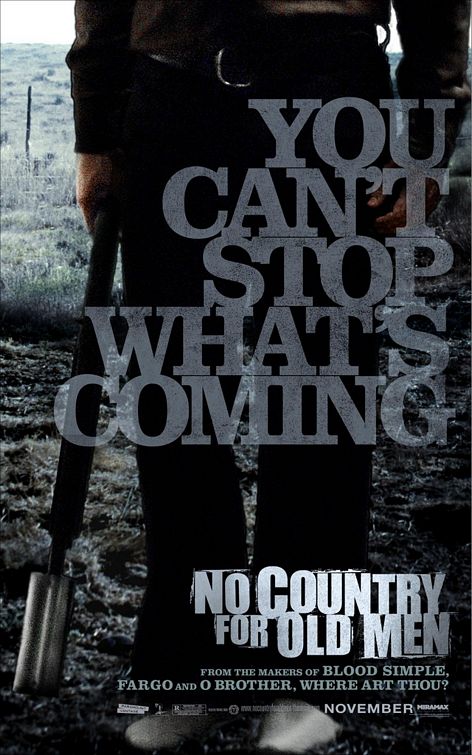
Naked Lunch Radio #9 – Minnesota Madness (Coen special)
[Discussion of the Coen Brothers more serious films up to No Country for Old Men with a healthy dose of music by Minnesota musicians]
Naked Lunch Radio #9 – Minnesota Madness (Coen special)
Sound on Sight
To Listen to the Episode
Naked Lunch Radio #9 – Minnesota Madness (Coen special)
Sound on Sight
To Listen to the Episode
Wednesday, February 8, 2012
Andrew O'Hehir: A Clever British Horror-Thriller Nods to Tarantino
A clever British horror-thriller nods to Tarantino
By Andrew O'Hehir
Salon
Ben Wheatley's "Kill List" is part recession-era drama, part violent insanity

Ben Wheatley certainly isn’t the only filmmaker who built his reputation making wannabe-viral video clips for the Internet, but he might be the most talented one, and the one who’s made the most impressive transition to the big screen. A 39-year-old from suburban London, Wheatley will perhaps never attain the heights of popular success he hit in 2005 with a 10-second video titled “Cunning Stunt” (it’s a spoonerism — get it?), which I should not spoil in case you haven’t seen it. Go ahead, the rest of us will wait. Honestly, the combination of good cheer, cleverness and outright cruelty achieved in “Cunning Stunt” pretty much tells you what you need to know about Wheatley. You’ll either conclude, hell yeah, I want to watch whatever that dude makes next, or you’ll say get me the Sam Hill out of here. In either case, I understand.
Wheatley’s debut feature, “Down Terrace,” was a bizarre, bleak and hilarious blend of genres, starting out as a Mike Leigh-style working-class family drama and ending up as an especially gruesome “Sopranos” episode, transported to the south coast of England. Let me introduce “Kill List,” Wheatley’s highly touted second film, by admitting that I’m infinitesimally disappointed that it’s not as funny as “Down Terrace” (though it definitely has its moments) and also that he’s gone so deep into the tradition of creepazoid British genre movies. (Rather than, you know, making the kind of depressing, no-audience films I like better.) But there’s no disputing the ingenuity and even the brilliance of this mind-bending mashup, which begins as a gritty recession-era marriage drama — the opening scene features a couple arguing about whether they have the money to get the Jacuzzi fixed — and then descends into ominous violence and finally total insanity.
I suppose you could say that the way Wheatley splices incompatible kinds of movies together into one story, like some demented mad scientist, has an Internet-age flavor to it. But that’s not something entirely new, and he actually comes off more as a hardcore fan of British independent and low-budget cinema, who loves the kitchen-sink realism of the ’60s and also loves a bunch of well-known horror movies and thrillers that I’d better not mention right now. Love it or hate it, “Kill List” is a definite widescreen cinematic experience loaded with delicious details, from the hotel clerk who holds a conversation without really listening to the sound of someone getting his brains beaten out against a concrete wall. He’s like a faux-Cockney Quentin Tarantino, passionate about the things he loves and also dedicated to the Anglo-Saxon tradition of “taking the piss” — and believe it or not, I mean that as a compliment.
To Read the Rest of the Response
By Andrew O'Hehir
Salon
Ben Wheatley's "Kill List" is part recession-era drama, part violent insanity
Ben Wheatley certainly isn’t the only filmmaker who built his reputation making wannabe-viral video clips for the Internet, but he might be the most talented one, and the one who’s made the most impressive transition to the big screen. A 39-year-old from suburban London, Wheatley will perhaps never attain the heights of popular success he hit in 2005 with a 10-second video titled “Cunning Stunt” (it’s a spoonerism — get it?), which I should not spoil in case you haven’t seen it. Go ahead, the rest of us will wait. Honestly, the combination of good cheer, cleverness and outright cruelty achieved in “Cunning Stunt” pretty much tells you what you need to know about Wheatley. You’ll either conclude, hell yeah, I want to watch whatever that dude makes next, or you’ll say get me the Sam Hill out of here. In either case, I understand.
Wheatley’s debut feature, “Down Terrace,” was a bizarre, bleak and hilarious blend of genres, starting out as a Mike Leigh-style working-class family drama and ending up as an especially gruesome “Sopranos” episode, transported to the south coast of England. Let me introduce “Kill List,” Wheatley’s highly touted second film, by admitting that I’m infinitesimally disappointed that it’s not as funny as “Down Terrace” (though it definitely has its moments) and also that he’s gone so deep into the tradition of creepazoid British genre movies. (Rather than, you know, making the kind of depressing, no-audience films I like better.) But there’s no disputing the ingenuity and even the brilliance of this mind-bending mashup, which begins as a gritty recession-era marriage drama — the opening scene features a couple arguing about whether they have the money to get the Jacuzzi fixed — and then descends into ominous violence and finally total insanity.
I suppose you could say that the way Wheatley splices incompatible kinds of movies together into one story, like some demented mad scientist, has an Internet-age flavor to it. But that’s not something entirely new, and he actually comes off more as a hardcore fan of British independent and low-budget cinema, who loves the kitchen-sink realism of the ’60s and also loves a bunch of well-known horror movies and thrillers that I’d better not mention right now. Love it or hate it, “Kill List” is a definite widescreen cinematic experience loaded with delicious details, from the hotel clerk who holds a conversation without really listening to the sound of someone getting his brains beaten out against a concrete wall. He’s like a faux-Cockney Quentin Tarantino, passionate about the things he loves and also dedicated to the Anglo-Saxon tradition of “taking the piss” — and believe it or not, I mean that as a compliment.
To Read the Rest of the Response
Subscribe to:
Posts (Atom)