Showing posts with label Animals. Show all posts

Wednesday, October 16, 2013

Werckmeister Harmonies (Hungary/Italy/Germany/France: Bela Tarr, 2000)


Werckmeister Harmonies (Hungary/Italy/Germany/France: Bela Tarr, 2000: 145 mins

Cutler, Aaron. "Multiple Vision: Deciphering the isolated gazes in the films of Béla Tarr." Multiple Image Source (February 2012)

Flanagan, Matthew. "Towards an Aesthetic of Slow in Contemporary Cinema." 16:9 (November 2008)

North, Dan. "“All a Man Can Do is Look Upon it”: What’s With the Werckmeister Whale?" Spectacular Attractions (December 3, 2009)

Romney, Jonathan. "Bela Tarr." Exile Cinema: Filmmakers at Work Beyond Hollywood ed. Michael Atkinson. Albany, NY: SUNY Press, 2008: 73-78. [Professor has copy]

Tuesday, September 3, 2013

Films We Want To See #33: Under the Skin (UK: Jonathan Glazer, 2013)


I read Michael Faber's mind blowing novel Under the Skin in 2002 while traveling through Europe -- it has always stayed with me (and definitely changed the way I perceive the world). I have just found out that Jonathan Glazer has made a film loosely adapted from the novel. This is one of those stories it is best to not know to much about the plot. I didn't when I read the book because I picked it up on impulse in a London bookstore:

Monday, October 15, 2012

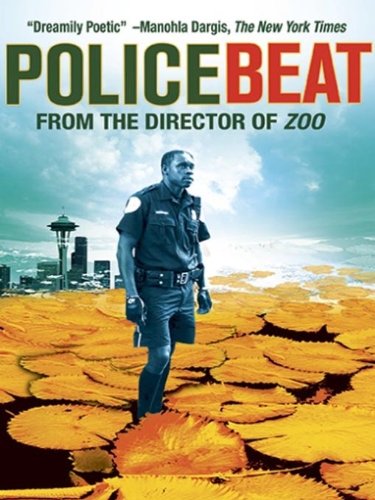
Spoiler Alert Radio: Sean Kirby - Cinematographer on Police Beat, Zoo, Lovely Still, Against The Current and The Tillman Story

Sean Kirby - Cinematographer - Police Beat, Zoo, Lovely Still, Against The Current, The Tillman Story
Spoiler Alert Radio


Cinematographer Sean Kirby shot the surreal film Police Beat, about an African-born bicycle cop encounters strange and mysterious situations on his police beat in urban Seattle.

In 2007, he re-teamed with writer/director team Robinson Devor and Charles Mudede and realized the controversial documentary Zoo about the life of an Enumclaw, Washington man who died as a result of an unusual encounter with a horse.

Some of his later credits include: Lovely Still, an emotionally moving holiday fable that tells the story of an elderly man discovering love for the first time, Against the Current, about a man, struggling with a tragic past, with an urgent calling who enlists two friends to help him swim the length of the Hudson River, starring Joseph Fiennes, and The Tillman Story, a documentary on the story of Pat Tillman.

To Listen to the Episode

Friday, September 28, 2012

Sound on Sight Podcast #309: Director Alfred Hitchcock’s ‘Shadow of a Doubt’ – ‘Psycho’ – ‘The Birds’

Sound on Sight Podcast #309: Director Alfred Hitchcock’s ‘Shadow of a Doubt’ – ‘Psycho’ – ‘The Birds’
Sound on Sight


Every month the Sound On Sight staff bands together to tackle a specific filmmaker, event and/or some sort of movie related theme. This month our focus shifts towards the “Master of Suspense”, Alfred Hitchcock.

After years of us promising to get off our asses and get it done, we’ve finally gotten our long-awaited Hitchcock episode done! Special guest and all-around movie knowledge hound Bill Mesce joins Ricky D and Justine Smith to chat up three of the maestro’s most famous chillers: Shadow of a Doubt, Psycho and The Birds.

To Listen to the Episode

Monday, May 7, 2012

Aaron Cutler: Multiple Vision -- Deciphering the isolated gazes in the films of Béla Tarr

Multiple Vision: Deciphering the isolated gazes in the films of Béla Tarr
by Aaron Cutler
Moving Image Source


This scene arrives about 40 minutes into Béla Tarr's new and (as he has claimed) final film, The Turin Horse. The horse's refusal to move comes on the second day of the film's six, and is one of the most startling interruptions of the daily routines of its owners, a father and daughter, who spend their storm-swept days dressing themselves and cooking and eating potatoes. What's unnerving about this moment isn't just the cruelty that the man inflicts on the animal, which has been established from the opening, as the man drives his beast of burden forward. It's also the sensation, at several points throughout the scene, of the horse looking directly at us, and of its expression signaling nothing. As we stare at the stable door, long after the people leave, we might wonder: Is it possible to think nothing?

The question of whether people can actually live without thought, and the possible ramifications of such life, have arisen throughout his career, which began with straightforward social dramas in the late '70s and early '80s and then, as the Eastern bloc dissolved, pushed toward the abstract. The horror in his films changed from government agencies controlling characters' thoughts to characters suppressing their own. The horse is the extreme of emptiness. Its gaze disturbs because, in most movies, we expect to find motivation in characters' actions, and motives usually lie in the face. Whatever is in the horse's face, though, will stay a mystery.

"Men and animals regard each other across a gulf of mutual incomprehension," W.G. Sebald wrote. But Tarr's movies don't settle for just this moral—the horse's enormous, inscrutable expression is part of a large network of isolated gazes, including ours. Consider the ending of Tarr's previous film, The Man From London (2007), when a murderer comes face-to-face with his victim's wife. Mrs. Brown has seen things we haven't—her husband's body lies inside a shed we never enter, our eyes lingering on a wooden wall whenever characters go inside. When confronted with the killer, she doesn't seem sad, or angry. She's blank.

Both these gazes—the horse's, and the woman's—suggest violence internalized. Mrs. Brown's life has been obliterated as her husband's has been, but her fate is worse, because she has to keep living.

Nothing is either good or bad unless thinking makes it so. A terrible sight in a Tarr movie traumatizes because of how it wounds not the eyes, but the mind. The pre-London film, Werckmeister Harmonies (2000), shows a mob trashing a hospital until its members are shamed into leaving—an old man, trembling, looks at them, and by doing so makes them see themselves. We think we've watched everything. But then the camera shifts to a young witness, János, wide-eyed and trembling. He's seen something we haven't. What?

To Read the Rest of the Essay and to Access Clips of the Scenes Discussed