Showing posts with label Surrealism. Show all posts
Showing posts with label Surrealism. Show all posts
Friday, October 19, 2012

Monday, October 15, 2012
Spoiler Alert Radio: Sean Kirby - Cinematographer on Police Beat, Zoo, Lovely Still, Against The Current and The Tillman Story
Sean Kirby - Cinematographer - Police Beat, Zoo, Lovely Still, Against The Current, The Tillman Story
Spoiler Alert Radio
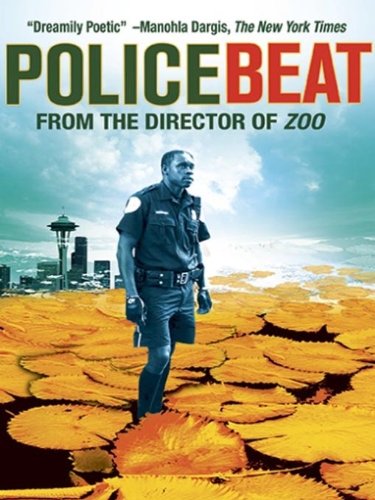
Cinematographer Sean Kirby shot the surreal film Police Beat, about an African-born bicycle cop encounters strange and mysterious situations on his police beat in urban Seattle.
In 2007, he re-teamed with writer/director team Robinson Devor and Charles Mudede and realized the controversial documentary Zoo about the life of an Enumclaw, Washington man who died as a result of an unusual encounter with a horse.
Some of his later credits include: Lovely Still, an emotionally moving holiday fable that tells the story of an elderly man discovering love for the first time, Against the Current, about a man, struggling with a tragic past, with an urgent calling who enlists two friends to help him swim the length of the Hudson River, starring Joseph Fiennes, and The Tillman Story, a documentary on the story of Pat Tillman.
To Listen to the Episode

Spoiler Alert Radio
Cinematographer Sean Kirby shot the surreal film Police Beat, about an African-born bicycle cop encounters strange and mysterious situations on his police beat in urban Seattle.
In 2007, he re-teamed with writer/director team Robinson Devor and Charles Mudede and realized the controversial documentary Zoo about the life of an Enumclaw, Washington man who died as a result of an unusual encounter with a horse.
Some of his later credits include: Lovely Still, an emotionally moving holiday fable that tells the story of an elderly man discovering love for the first time, Against the Current, about a man, struggling with a tragic past, with an urgent calling who enlists two friends to help him swim the length of the Hudson River, starring Joseph Fiennes, and The Tillman Story, a documentary on the story of Pat Tillman.
To Listen to the Episode
Tuesday, July 31, 2012
Reverse Shot: Deep Red -- Joanne Nucho on The Color of Pomegranates
Deep Red: Joanne Nucho on The Color of Pomegranates
Reverse Shot
 Steeped in religious iconography, The Color of Pomegranates is a deeply spiritual testament to director Sergei Parajanov’s fascination with Armenian folk art and culture. It is also a controversial work, which, coupled with another of his films, Shadows of our Forgotten Ancestors, led to his arrest and imprisonment in a Soviet Gulag for four years. The Soviets insisted he was guilty of selling gold and icons illegally and committing “homosexual acts.” In reality, his only crime was offending the tenets of socialist realism, both in his daring surrealistic form and in his choice of subject matter. While many of the popular films of this era in Soviet cinema were largely propaganda designed to serve the ideological interests of the regime, Parajanov chose to focus on the ethnography and spirituality of the Ukraine, Armenia, and Georgia.
The Color of Pomegranates is a poetic, dreamlike film that sought to portray the life of Armenian troubadour Sayat Nova through images inspired by his life and poetry. Born Haroutiun Sayakian, he is remembered as Sayat Nova or “king of songs.” Raised in the Georgian city of Tiflis (as was Sergei Parajanov himself), Sayat Nova performed in the Armenian, Azerbaijani, and Persian languages. This brought him fame beyond the Armenian community and he was summoned to serve as Court Musician and Poet by Heracle II, the 18th- century king of Georgia. After falling in love with the king’s sister, Princess Anna, he was expelled from the court. He spent the rest of his life as a monk where he continued to write poetry and music. To the Armenian people, Sayat Nova is considered a martyr because he was executed by the invading Persians for refusing to renounce his Christian faith.
Parajanov’s decision to make a film about the life of an Armenian poet and martyr was a dangerous one. Armenian national identity was not to be prioritized—it was viewed as only a part of the Soviet Union. The idea of Armenian independence and secession from the Soviet Union was still dangerous and punishable by death. The lack of a Soviet presence, or any other typical themes of the propaganda films of the time, marked The Color of Pomegranates as a subversive work.
The text of the film, the poetry of Sayat Nova, and the life of director Sergei Parajanov are all reflections of the Armenian national identity, which is itself deeply connected to the Christian faith, as they were the first “nation” in the world to adopt the religion, in the year 301. Surrounded by largely Muslim populations, they were an easy target for invasion and subjugation by their neighbors. The paradigm of Christianity, the images of the suffering of Christ and subsequent salvation—most recently exacerbated by the Armenian genocide perpetrated by Turkey at the beginning of the last century—are at the core of Armenian individuality.
So what is the color of pomegranates? As the film opens, we see thorns intercut with images of pomegranates soaking a white cloth with their juice, a deep blood red. Then we see a dagger resting upon this same, stained cloth. A voice reads from the poetry of Sayat Nova: “I am a man whose soul is tormented.” In Armenian mythology, the pomegranate was a symbol of fertility, literally fruitfulness—it is said that a ripe pomegranate contains 365 seeds, one for each day of the year. The thorns are those of the crown that Christ wore as he suffered on the cross. The two are inseparable, bound closely by the image of bloodshed, the inevitable fate of the Armenian people—here there is only sacrifice and suffering. Later in the film a priest wearing the traditional black garb of the Armenian apostolic church utters “heaven has deemed that sorrow be our lot.” With the camera set at a distance, the monks gather before him, also cloaked in black, shroud-like robes fall on their knees. Everywhere there is death, darkness, disaster—and yet, a feeling that the biggest disaster, the ultimate catastrophe is still to come.
To Read the Rest of the Essay
Reverse Shot
Steeped in religious iconography, The Color of Pomegranates is a deeply spiritual testament to director Sergei Parajanov’s fascination with Armenian folk art and culture. It is also a controversial work, which, coupled with another of his films, Shadows of our Forgotten Ancestors, led to his arrest and imprisonment in a Soviet Gulag for four years. The Soviets insisted he was guilty of selling gold and icons illegally and committing “homosexual acts.” In reality, his only crime was offending the tenets of socialist realism, both in his daring surrealistic form and in his choice of subject matter. While many of the popular films of this era in Soviet cinema were largely propaganda designed to serve the ideological interests of the regime, Parajanov chose to focus on the ethnography and spirituality of the Ukraine, Armenia, and Georgia.The Color of Pomegranates is a poetic, dreamlike film that sought to portray the life of Armenian troubadour Sayat Nova through images inspired by his life and poetry. Born Haroutiun Sayakian, he is remembered as Sayat Nova or “king of songs.” Raised in the Georgian city of Tiflis (as was Sergei Parajanov himself), Sayat Nova performed in the Armenian, Azerbaijani, and Persian languages. This brought him fame beyond the Armenian community and he was summoned to serve as Court Musician and Poet by Heracle II, the 18th- century king of Georgia. After falling in love with the king’s sister, Princess Anna, he was expelled from the court. He spent the rest of his life as a monk where he continued to write poetry and music. To the Armenian people, Sayat Nova is considered a martyr because he was executed by the invading Persians for refusing to renounce his Christian faith.
Parajanov’s decision to make a film about the life of an Armenian poet and martyr was a dangerous one. Armenian national identity was not to be prioritized—it was viewed as only a part of the Soviet Union. The idea of Armenian independence and secession from the Soviet Union was still dangerous and punishable by death. The lack of a Soviet presence, or any other typical themes of the propaganda films of the time, marked The Color of Pomegranates as a subversive work.
The text of the film, the poetry of Sayat Nova, and the life of director Sergei Parajanov are all reflections of the Armenian national identity, which is itself deeply connected to the Christian faith, as they were the first “nation” in the world to adopt the religion, in the year 301. Surrounded by largely Muslim populations, they were an easy target for invasion and subjugation by their neighbors. The paradigm of Christianity, the images of the suffering of Christ and subsequent salvation—most recently exacerbated by the Armenian genocide perpetrated by Turkey at the beginning of the last century—are at the core of Armenian individuality.
So what is the color of pomegranates? As the film opens, we see thorns intercut with images of pomegranates soaking a white cloth with their juice, a deep blood red. Then we see a dagger resting upon this same, stained cloth. A voice reads from the poetry of Sayat Nova: “I am a man whose soul is tormented.” In Armenian mythology, the pomegranate was a symbol of fertility, literally fruitfulness—it is said that a ripe pomegranate contains 365 seeds, one for each day of the year. The thorns are those of the crown that Christ wore as he suffered on the cross. The two are inseparable, bound closely by the image of bloodshed, the inevitable fate of the Armenian people—here there is only sacrifice and suffering. Later in the film a priest wearing the traditional black garb of the Armenian apostolic church utters “heaven has deemed that sorrow be our lot.” With the camera set at a distance, the monks gather before him, also cloaked in black, shroud-like robes fall on their knees. Everywhere there is death, darkness, disaster—and yet, a feeling that the biggest disaster, the ultimate catastrophe is still to come.
To Read the Rest of the Essay
Saturday, May 12, 2012
Graham Fuller: Jean Vigo -- Artist of the floating world
Jean Vigo: Artist of the floating world
by Graham Fuller
Sight and Sound

Jean Vigo’s great work about a pair of troubled newly-weds and the crusty old mate with the Hapsburg jaw and unfettered imagination who travels with them aboard the Normandy freight barge L’Atalante was based on a one-page scenario by Jean Guinée. This was the pen name of Roger de Guichen, who had been intrigued by the sight of a woman helming a barge on the Seine, and had named his fictional vessel after a frigate commanded by one of his ancestors in the Seven Years War. Following the banning of Vigo’s Zéro de conduite in 1933, the director’s supportive producer Jacques-Louis Nounez sent him Guinée’s scenario hoping it would deter him from the kind of radical experimentation that had illuminated Vigo’s scabrous 42-minute satire of boarding-school life.
“What the fuck do you want me to do with this? It’s Sunday-school stuff,” was Vigo’s response when he read the scenario. It was workaday melodrama. Juliette, the young wife, bored with the monotony and domestic drudgery of her life on the barge after the initial erotic charge of her marriage has dwindled, runs away from her conservative husband Jean, the skipper, for an afternoon of window-shopping in Paris, only to find herself stranded when he angrily takes off in the barge. Her handbag is stolen, she’s propositioned, she fears for her survival. The husband languishes, despite the kindly attempts of the mate, le père Jules, to rouse him. In Guinée’s scenario, Juliette is found by the old salt in a church. Penitent, she returns to Jean, confirming she is faithful. But Guinée pessimistically concluded in his synopsis, “Happiness has fled the vessel.”
Despite his reservations, Vigo sensed he could tell the story imaginatively. Nounez struck a deal whereby he would cover the running costs while Gaumont provided studio space, cameras and distribution. Vigo and his co-writer Albert Riéra would eliminate Guinée’s moralising, take advantage of the on-shore plight of Juliette (Dita Parlo) to show the inroads of the Depression and expose the spite of the petit bourgeois mob and the brutality of the police – and use music and magic to bring her home to Jean (Jean Dasté). The genie-like le père Jules (Michel Simon), who discovers her working in a palais de chansons instead of telling her rosary in a church, carries her out on his shoulder, as if she were one of the many cats that cling to him on the barge.
In October 1933, just before shooting, Vigo told a Belgian journalist that he was using Guinée’s scenario “merely as a loose frame allowing me to work with images of the waterways, the environment of the canal-workers, and the actors”. He was as good as his word. The connecting thread of L’Atalante is the realist footage depicting the harsh, unremitting lives of the crew and the waterfront folk as the barge heads to Paris and, minus Juliette, on to Le Havre. Contrasting with the voyage sequences, however, are exquisitely sensual flights into surrealism. Jean, believing an old wives’ tale told him by Juliette in the first days of their marriage, dives into the icy river to seek a glimpse of her underwater, whereupon she is magically superimposed over him in her wedding dress as he swims. (Vigo drew on his 1931 short about a swimming champion, Taris ou la Natation.) Then Jean and Juliette, though miles apart, ‘make love’ by dreaming erotically of each other in parallel scenes, their bodies impressionistically speckled in unifying dots of shadow. L’Atalante.
To Read the Rest of the Essay
by Graham Fuller
Sight and Sound
Jean Vigo’s great work about a pair of troubled newly-weds and the crusty old mate with the Hapsburg jaw and unfettered imagination who travels with them aboard the Normandy freight barge L’Atalante was based on a one-page scenario by Jean Guinée. This was the pen name of Roger de Guichen, who had been intrigued by the sight of a woman helming a barge on the Seine, and had named his fictional vessel after a frigate commanded by one of his ancestors in the Seven Years War. Following the banning of Vigo’s Zéro de conduite in 1933, the director’s supportive producer Jacques-Louis Nounez sent him Guinée’s scenario hoping it would deter him from the kind of radical experimentation that had illuminated Vigo’s scabrous 42-minute satire of boarding-school life.
“What the fuck do you want me to do with this? It’s Sunday-school stuff,” was Vigo’s response when he read the scenario. It was workaday melodrama. Juliette, the young wife, bored with the monotony and domestic drudgery of her life on the barge after the initial erotic charge of her marriage has dwindled, runs away from her conservative husband Jean, the skipper, for an afternoon of window-shopping in Paris, only to find herself stranded when he angrily takes off in the barge. Her handbag is stolen, she’s propositioned, she fears for her survival. The husband languishes, despite the kindly attempts of the mate, le père Jules, to rouse him. In Guinée’s scenario, Juliette is found by the old salt in a church. Penitent, she returns to Jean, confirming she is faithful. But Guinée pessimistically concluded in his synopsis, “Happiness has fled the vessel.”
Despite his reservations, Vigo sensed he could tell the story imaginatively. Nounez struck a deal whereby he would cover the running costs while Gaumont provided studio space, cameras and distribution. Vigo and his co-writer Albert Riéra would eliminate Guinée’s moralising, take advantage of the on-shore plight of Juliette (Dita Parlo) to show the inroads of the Depression and expose the spite of the petit bourgeois mob and the brutality of the police – and use music and magic to bring her home to Jean (Jean Dasté). The genie-like le père Jules (Michel Simon), who discovers her working in a palais de chansons instead of telling her rosary in a church, carries her out on his shoulder, as if she were one of the many cats that cling to him on the barge.
In October 1933, just before shooting, Vigo told a Belgian journalist that he was using Guinée’s scenario “merely as a loose frame allowing me to work with images of the waterways, the environment of the canal-workers, and the actors”. He was as good as his word. The connecting thread of L’Atalante is the realist footage depicting the harsh, unremitting lives of the crew and the waterfront folk as the barge heads to Paris and, minus Juliette, on to Le Havre. Contrasting with the voyage sequences, however, are exquisitely sensual flights into surrealism. Jean, believing an old wives’ tale told him by Juliette in the first days of their marriage, dives into the icy river to seek a glimpse of her underwater, whereupon she is magically superimposed over him in her wedding dress as he swims. (Vigo drew on his 1931 short about a swimming champion, Taris ou la Natation.) Then Jean and Juliette, though miles apart, ‘make love’ by dreaming erotically of each other in parallel scenes, their bodies impressionistically speckled in unifying dots of shadow. L’Atalante.
To Read the Rest of the Essay
Subscribe to:
Posts (Atom)